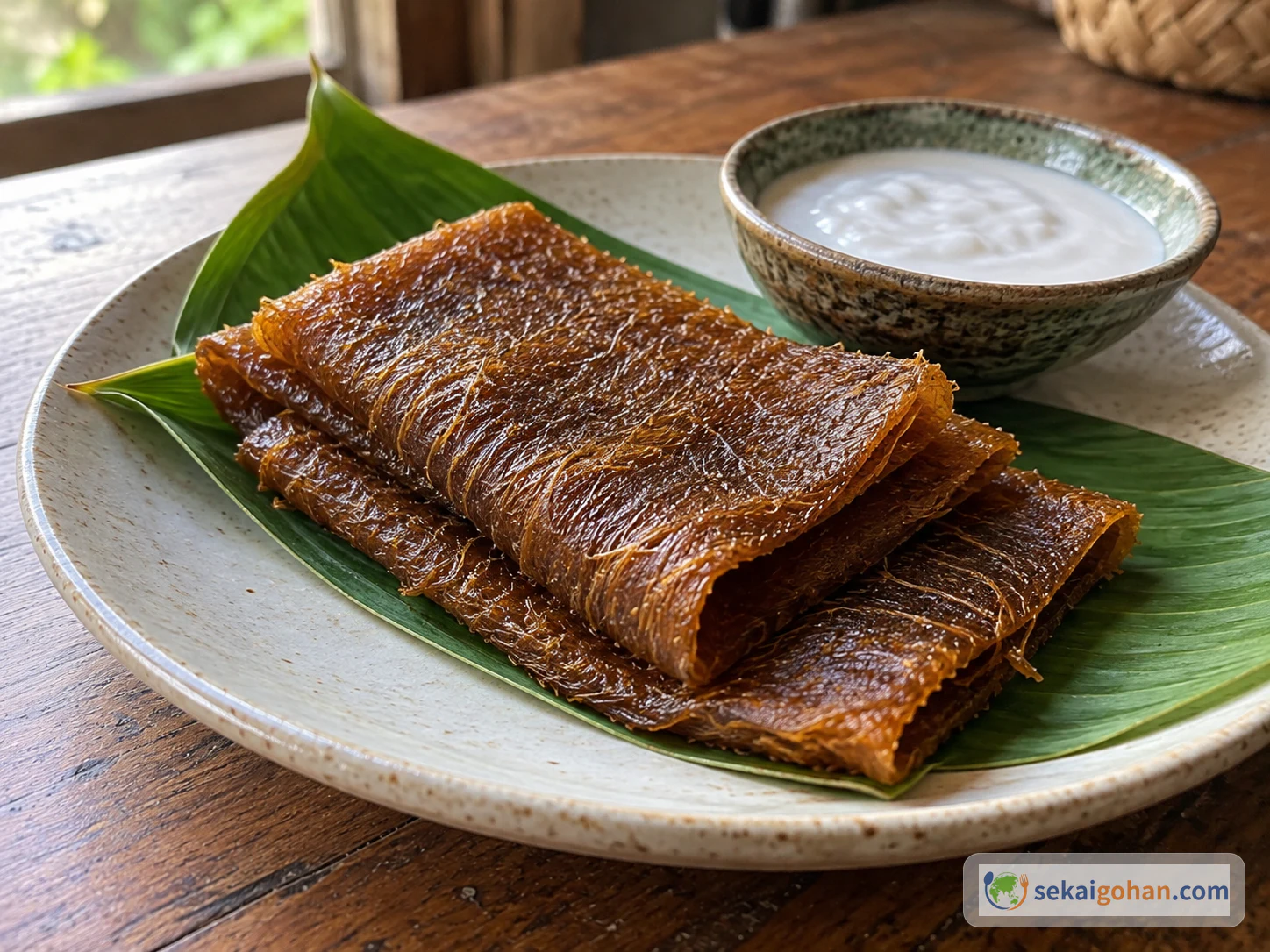
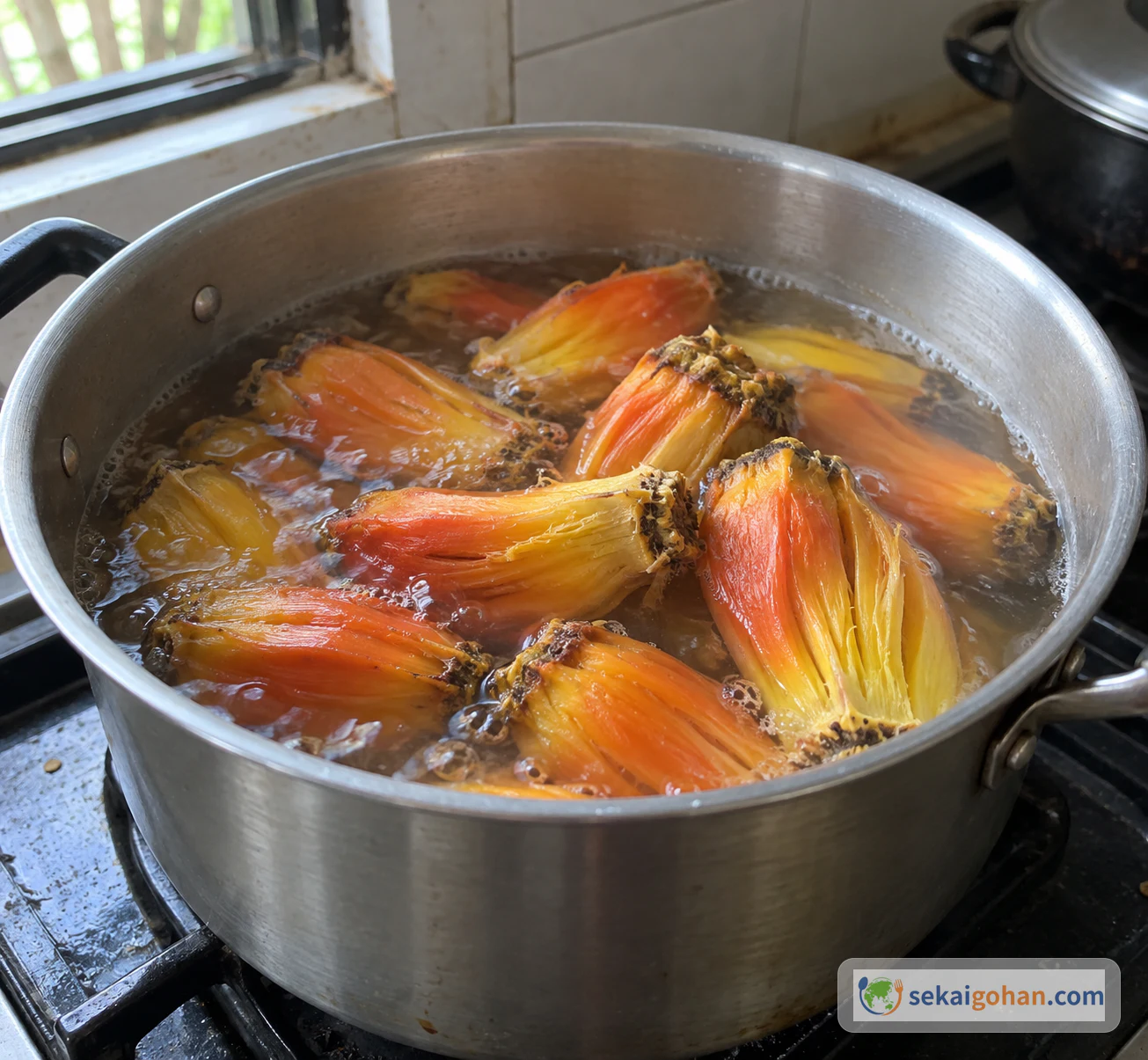
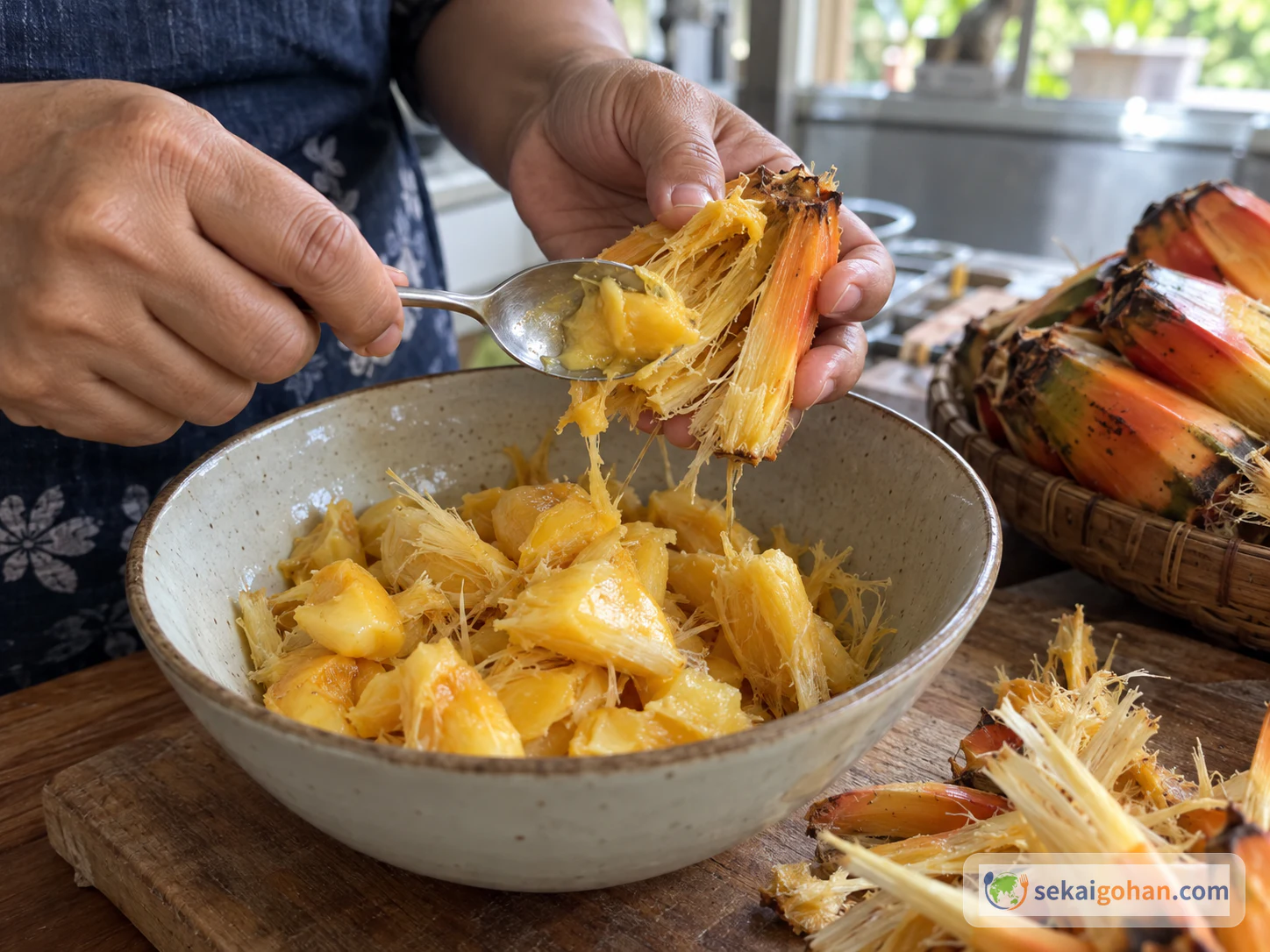
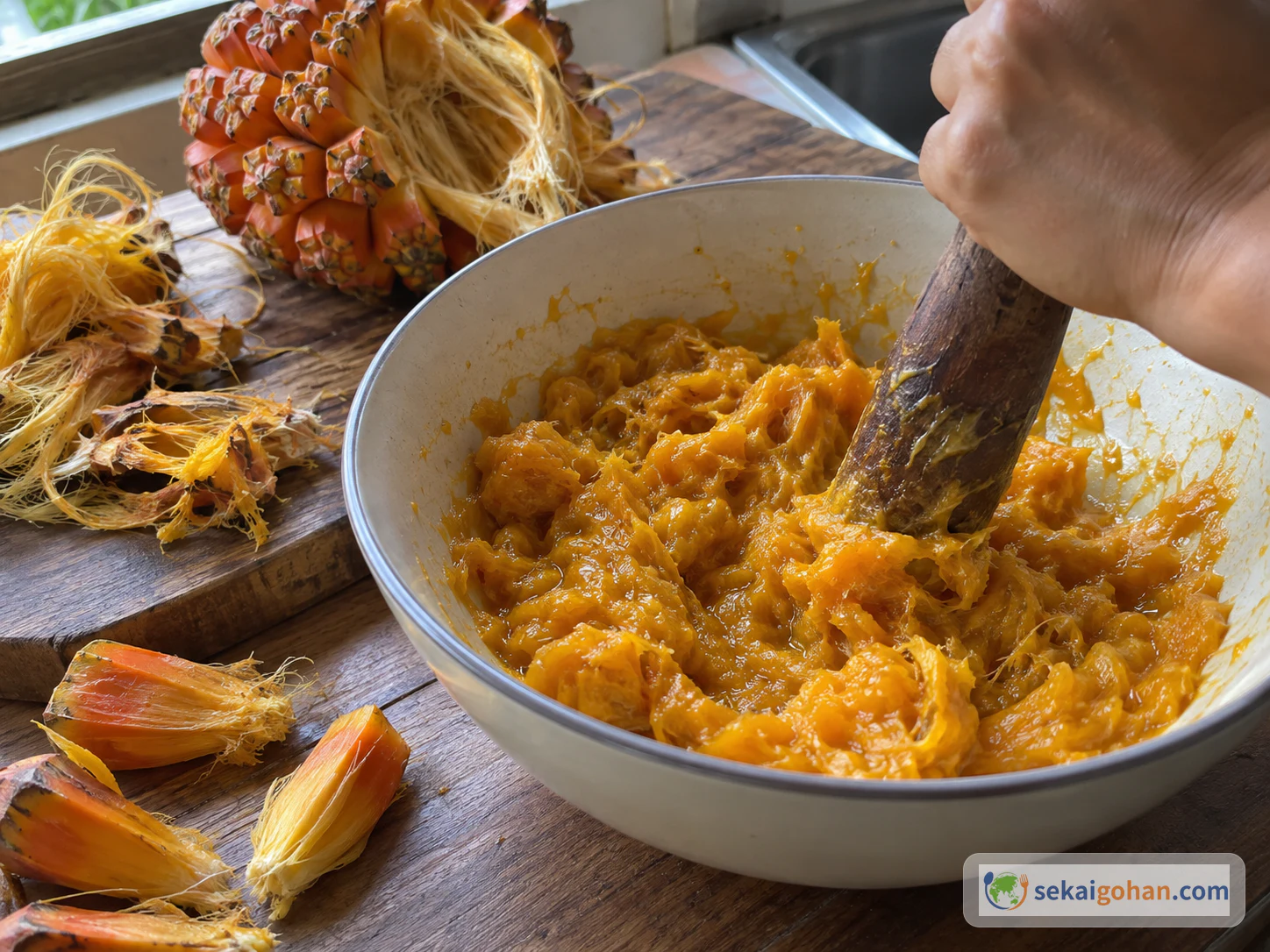
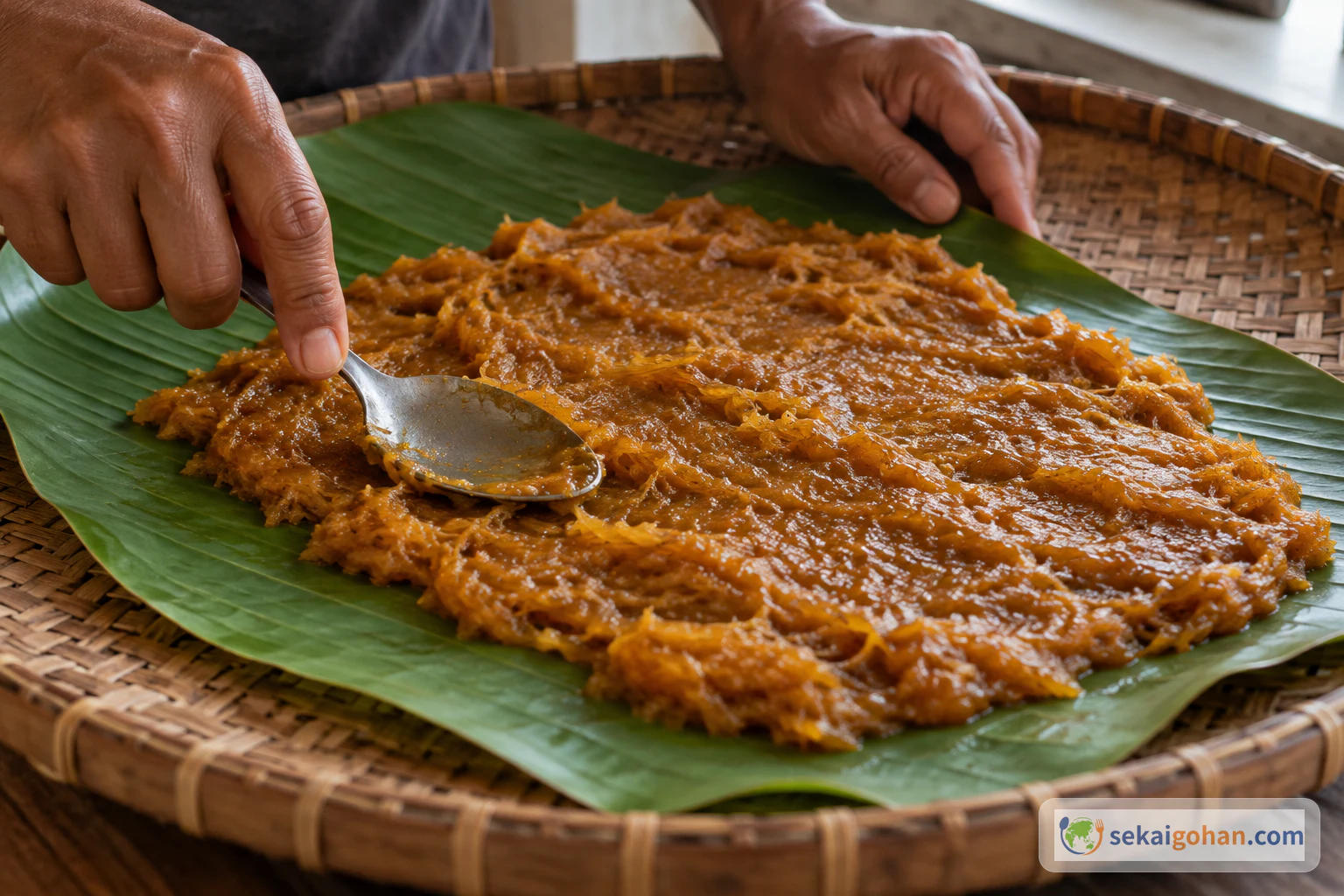
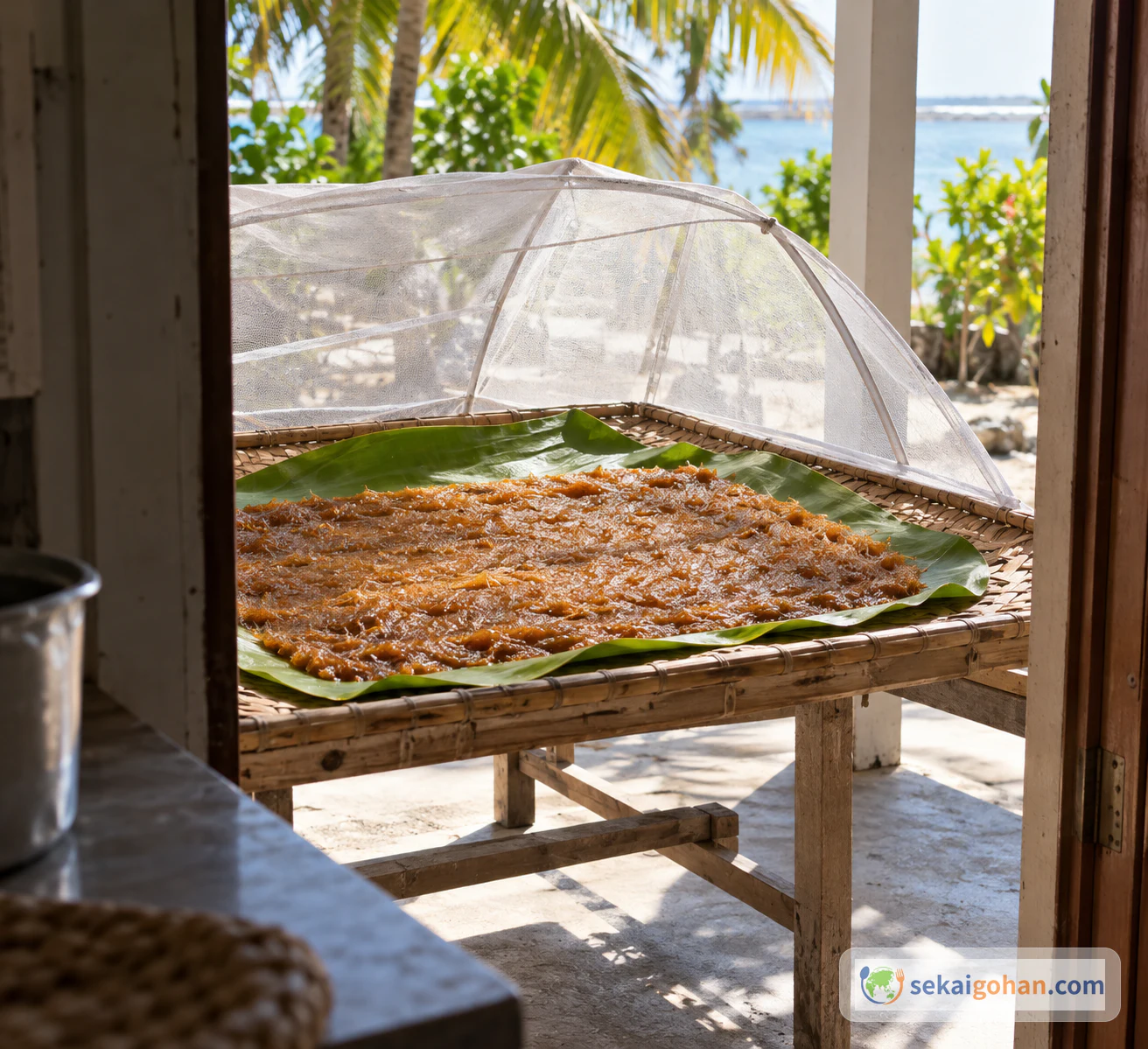
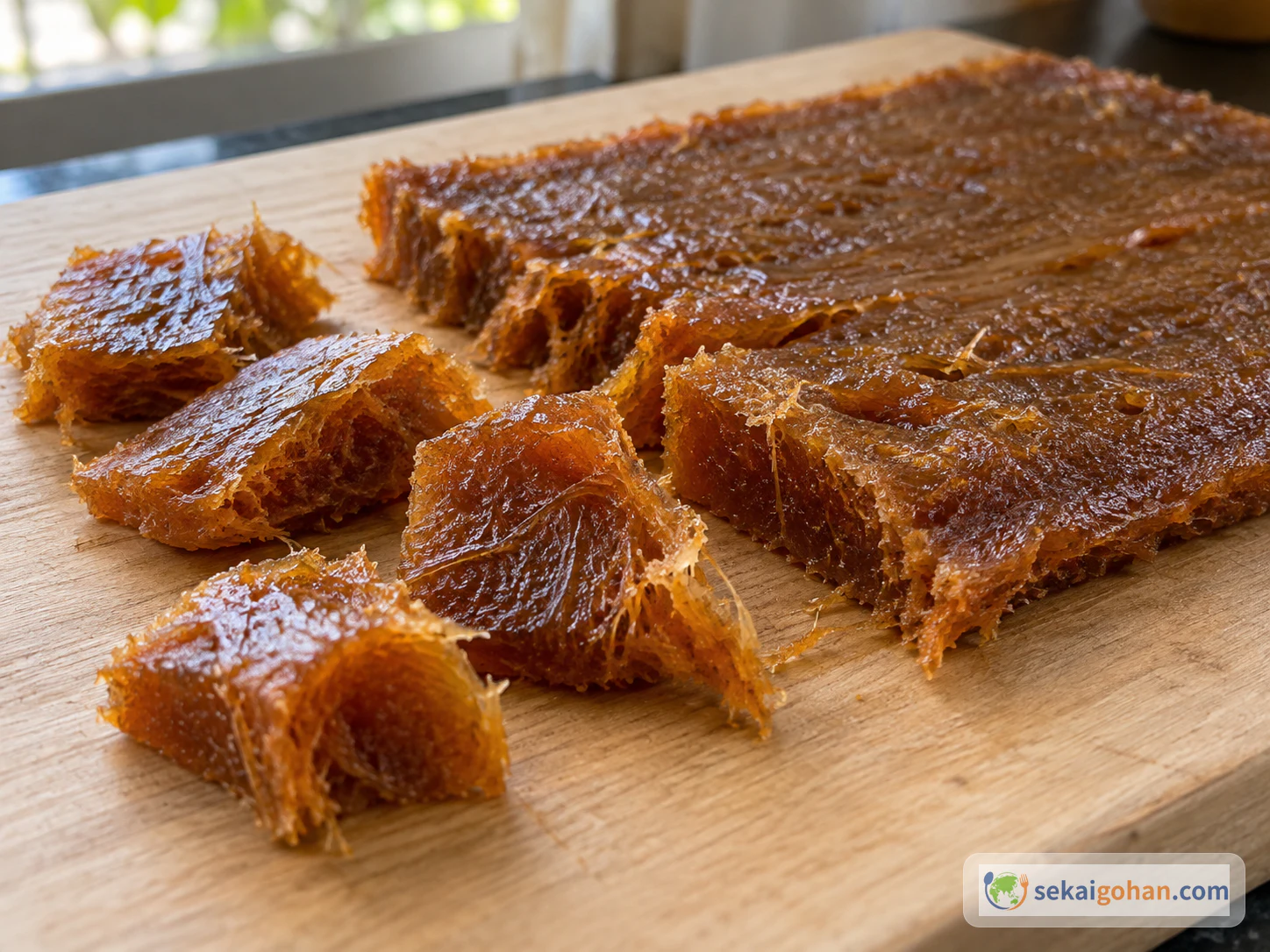
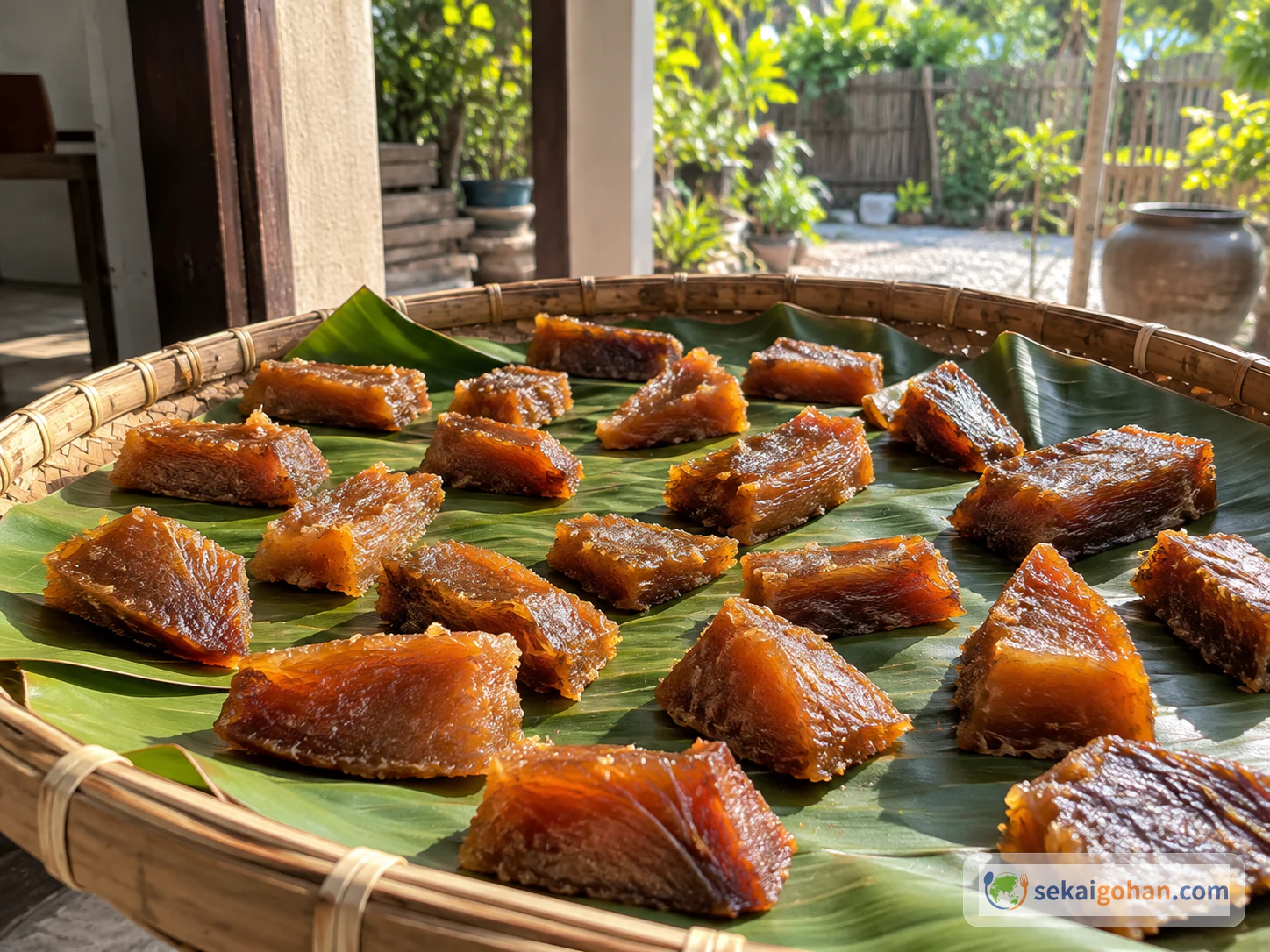
Ripe pandanus keys go into the pot, and once they're cooked, the soft, edible pulp is drawn away from the tough fibres and pressed into a thick paste. That paste is spread on leaves and left in the sun, then cut into pieces and dried again until it turns deep brown and folded. Te tuae comes from Kiribati, and it is less a dessert than a way of keeping fruit: the sweetness of a ripe harvest, held for the days ahead.
Be careful when drying in a humid climate. Do not keep the paste at room temperature unless it is fully dry.
Te Tuae in Kiribati
Pandanus fruit is an important food in Kiribati, where it and coconut are both key food plants. Te tuae is a preserved food made from processed pandanus fruit pulp, made from the pulp of many boiled keys. It can be eaten right away or stored for future needs, especially for droughts and special occasions. Turning fruit into food for leaner days and important gatherings is the point of the whole process.
The name has an everyday use, too. Te Tuae is also a favorite Kiribati dish of fresh pandanus fruit mixed with coconut cream just before serving, with no drying at all. Te kabubu is a different, powder-like preserved pandanus product made by its own process.
Ingredients and What the Sources Record
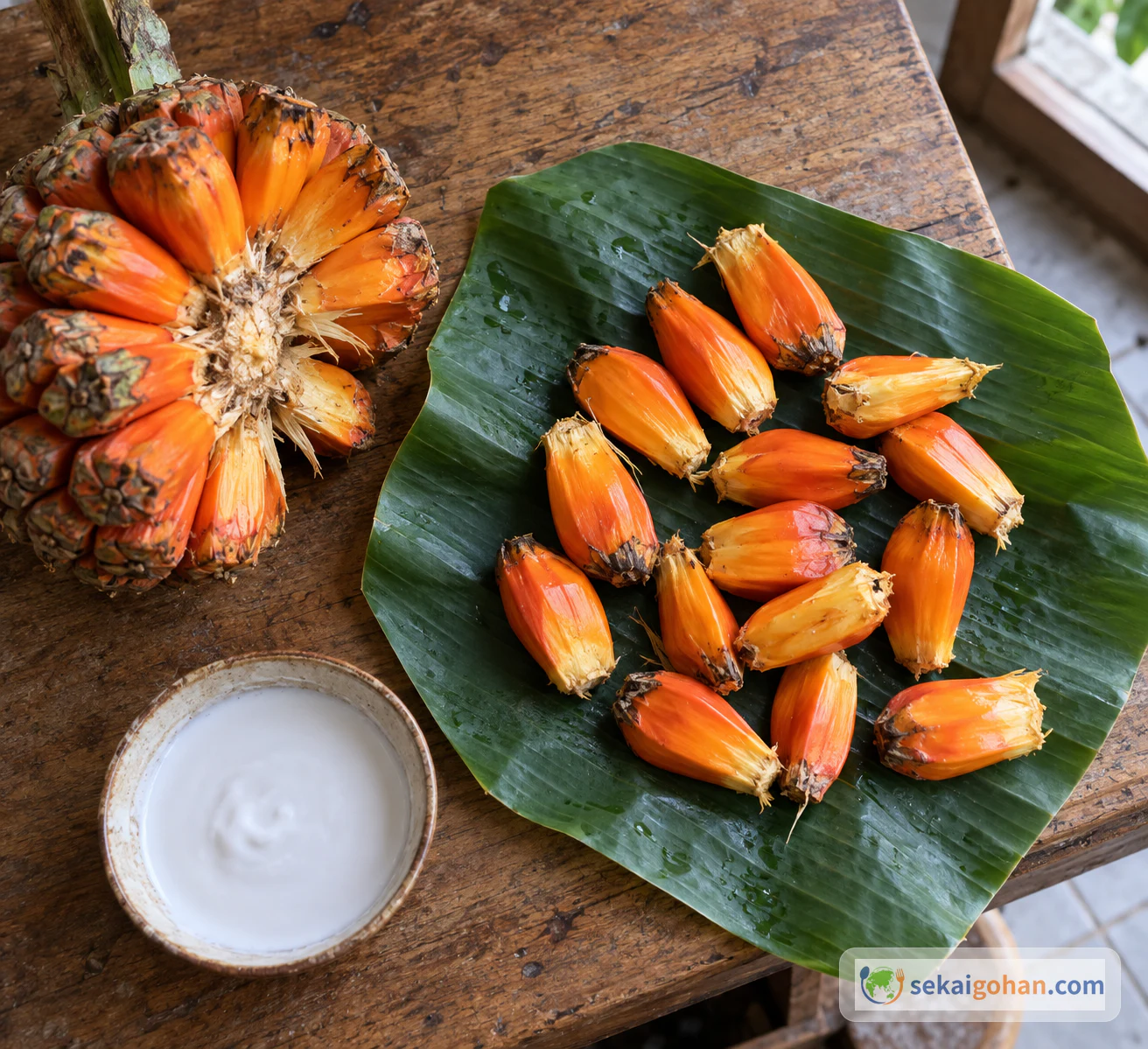
The main ingredient is ripe pandanus fruit. The cultivar, ripeness and drying conditions change how much paste you get and how it dries.
Equipment
- A pot for boiling the fruit
- Something to separate the pulp from the fibres
- A place to dry the paste in the sun
Choosing Ingredients for Te Tuae
Pandanus fruit. Fresh pandanus can be hard to find outside the Pacific, and no other fruit is an equivalent. Pandanus cultivars differ, so the fruit itself isn't uniform either. If you make something with a different fruit, think of it as a dish inspired by te tuae rather than te tuae itself.
Leaves. Use clean leaves; no particular species is named. Banana leaf or another leaf works, but it shouldn't be called the traditional material, and the same goes for a modern, hygienic drying surface.
Coconut. Coconut cream, coconut milk and grated coconut are different ingredients with different jobs: milk or grated coconut go with the preserved paste, and cream goes with the fresh fruit. If anyone at the table has a coconut allergy, check with them before serving either version.
The paste itself is pure fruit, with no salt, sugar or water added.
How Te Tuae Is Made
Common Problems with Te Tuae
| Situation | What to do |
|---|---|
| Some fibre remains in the paste | Most of the fibre is removed, not all of it, so a little will always remain |
| The paste is still soft or sticky after drying | No endpoint is set. Keep drying it, and don't treat it as preserved or keep it at room temperature |
| Your climate is humid or the weather turns wet | Sun-drying in humid or wet weather is not proven safe, and no indoor drying temperature is given |
Serving and Storing Te Tuae
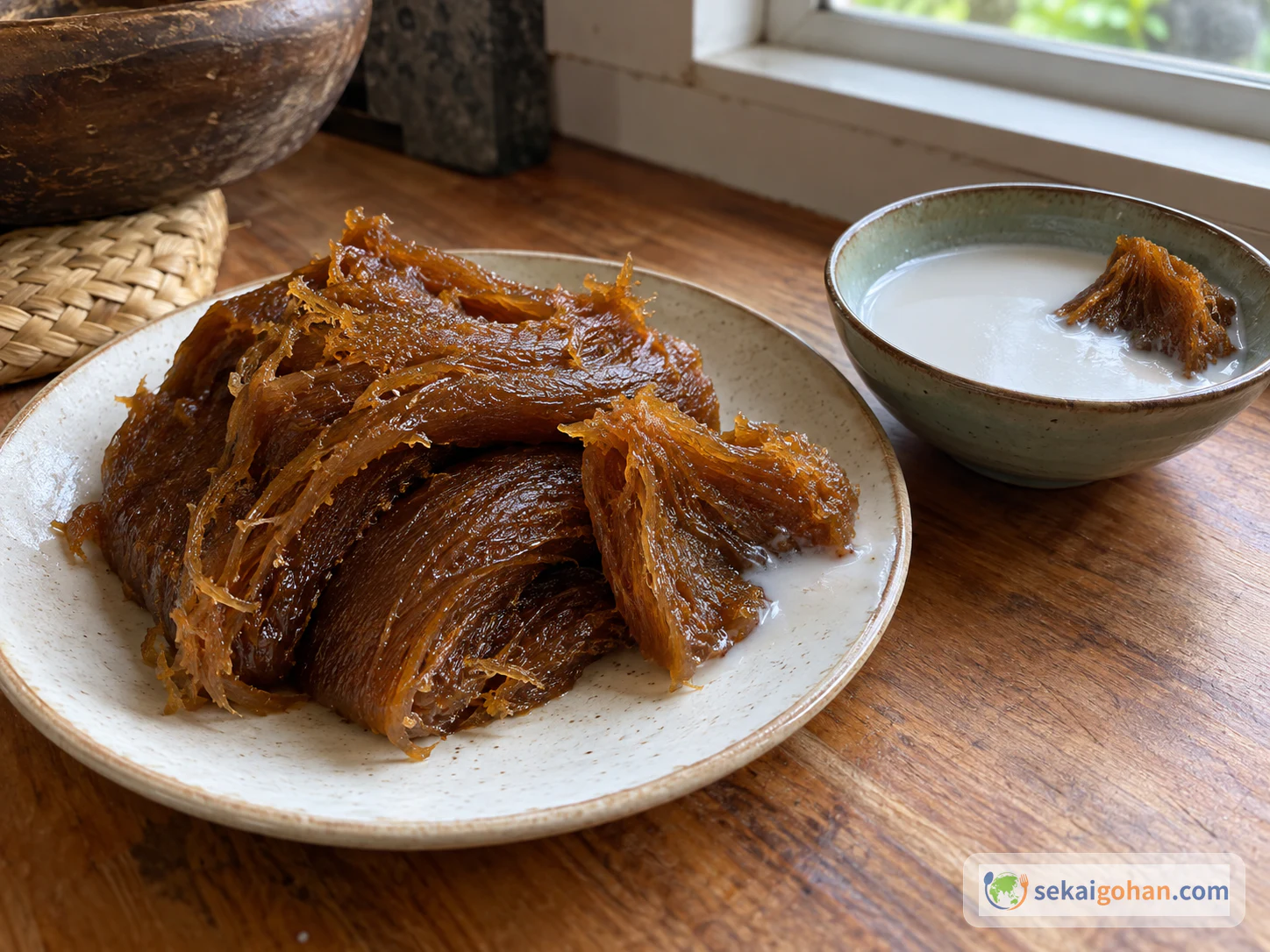
Preserved te tuae can be softened, or prepared with coconut milk or grated coconut. No ratio or soaking time is given, so add coconut to taste. The fresh version is simpler still: pandanus fruit and coconut cream mixed together and served, with each household deciding how much cream to use and how sweet to make it.
Pair the dried paste with coconut milk or grated coconut, and save coconut cream for the fresh-fruit version.
Although te tuae is made to keep, no safe home storage method, container or storage period is known. Don't store it at room temperature without a tested method.
If you're exploring Pacific Island foods, also try kokoda from Fiji, laplap from Vanuatu, which is wrapped in leaves and cooked, and banana poke, a fruit sweet from the Cook Islands.
Frequently Asked Questions
Are Te Tuae and Te Roro the same thing?
They are different. Te tuae is the preserved pandanus paste, and Te Roro is a separate pandanus-and-coconut preparation.
What does te tuae taste like?
It depends on the fruit. Pandanus cultivars differ and ripeness varies, so the taste is likely to vary from batch to batch.