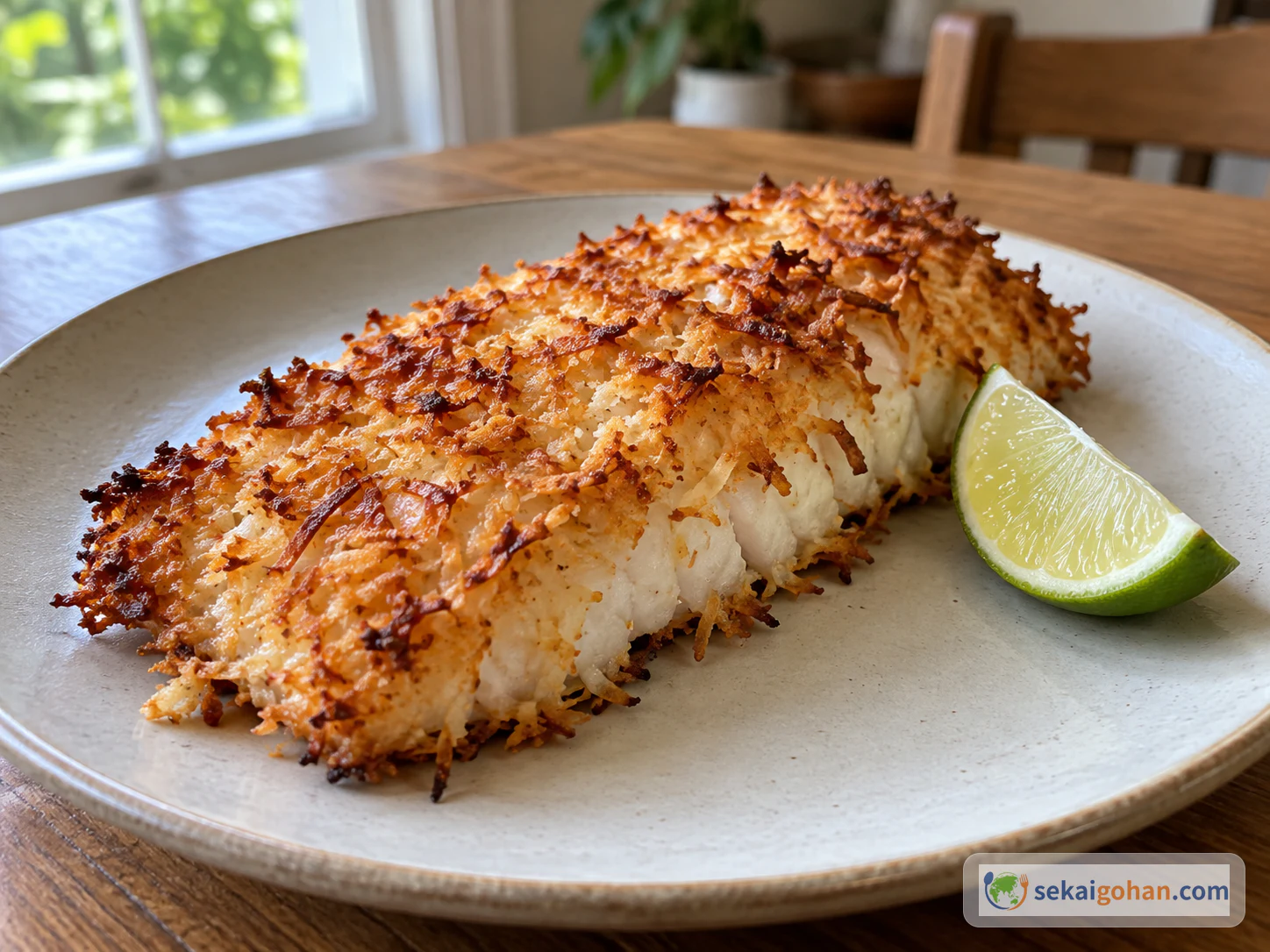
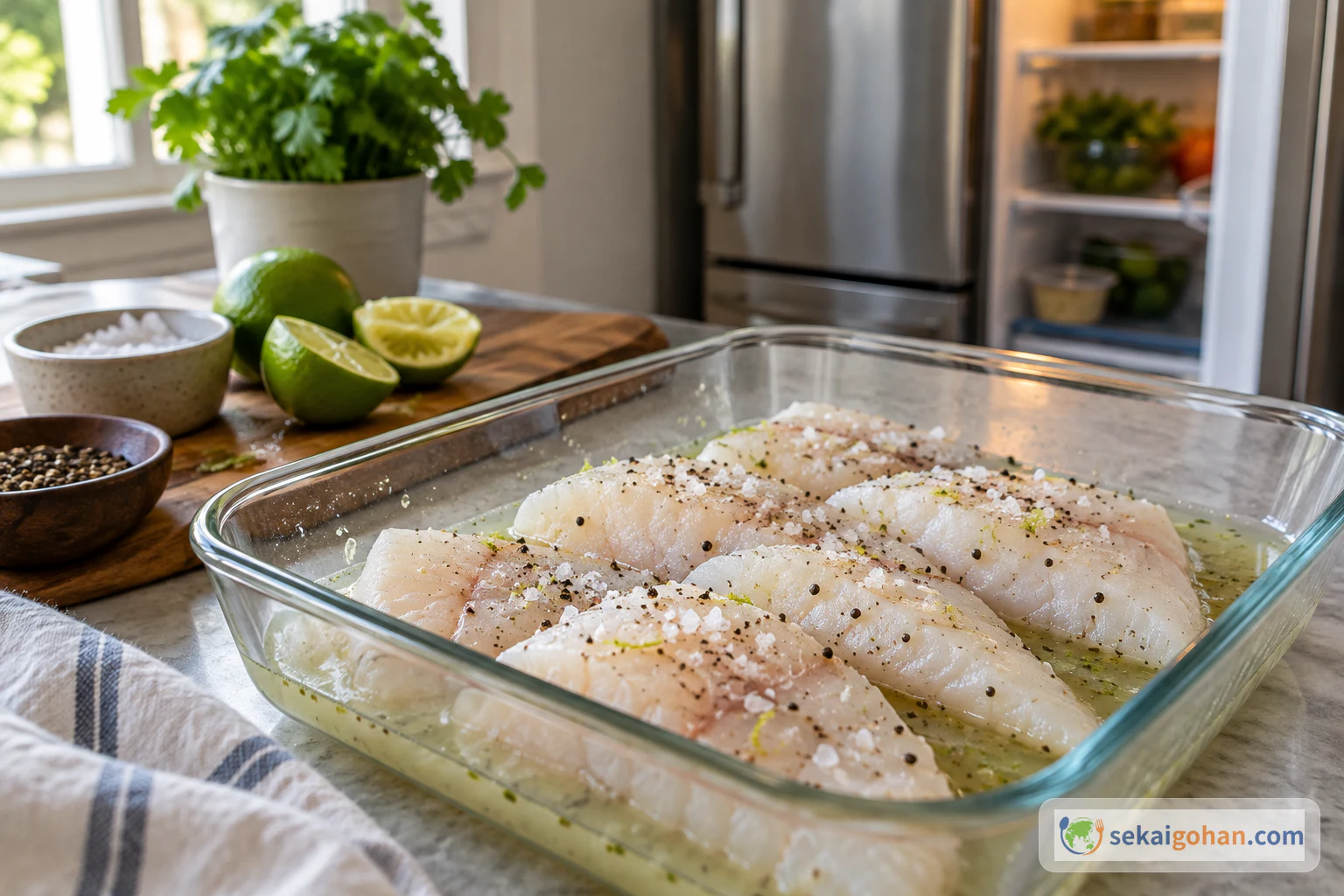
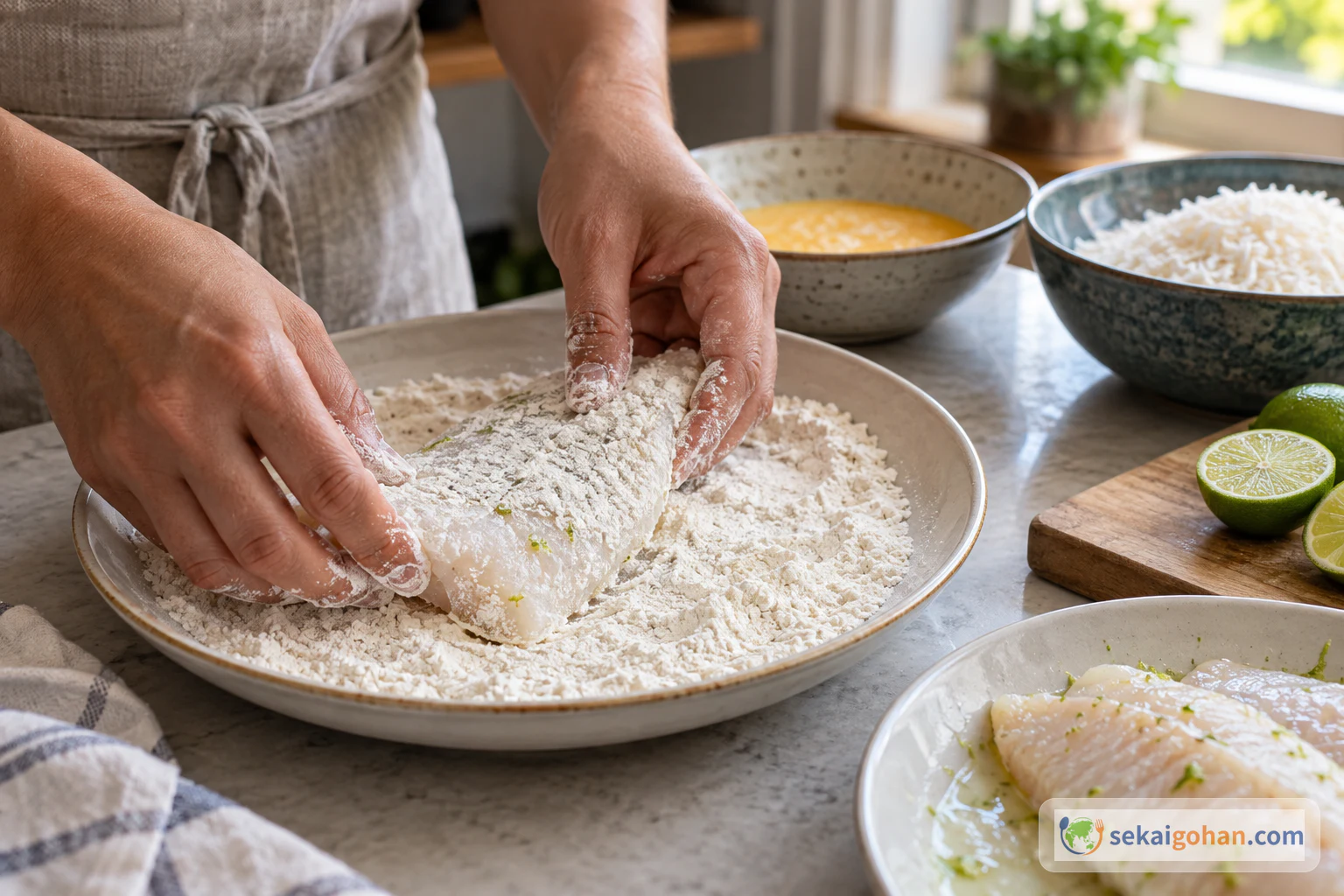
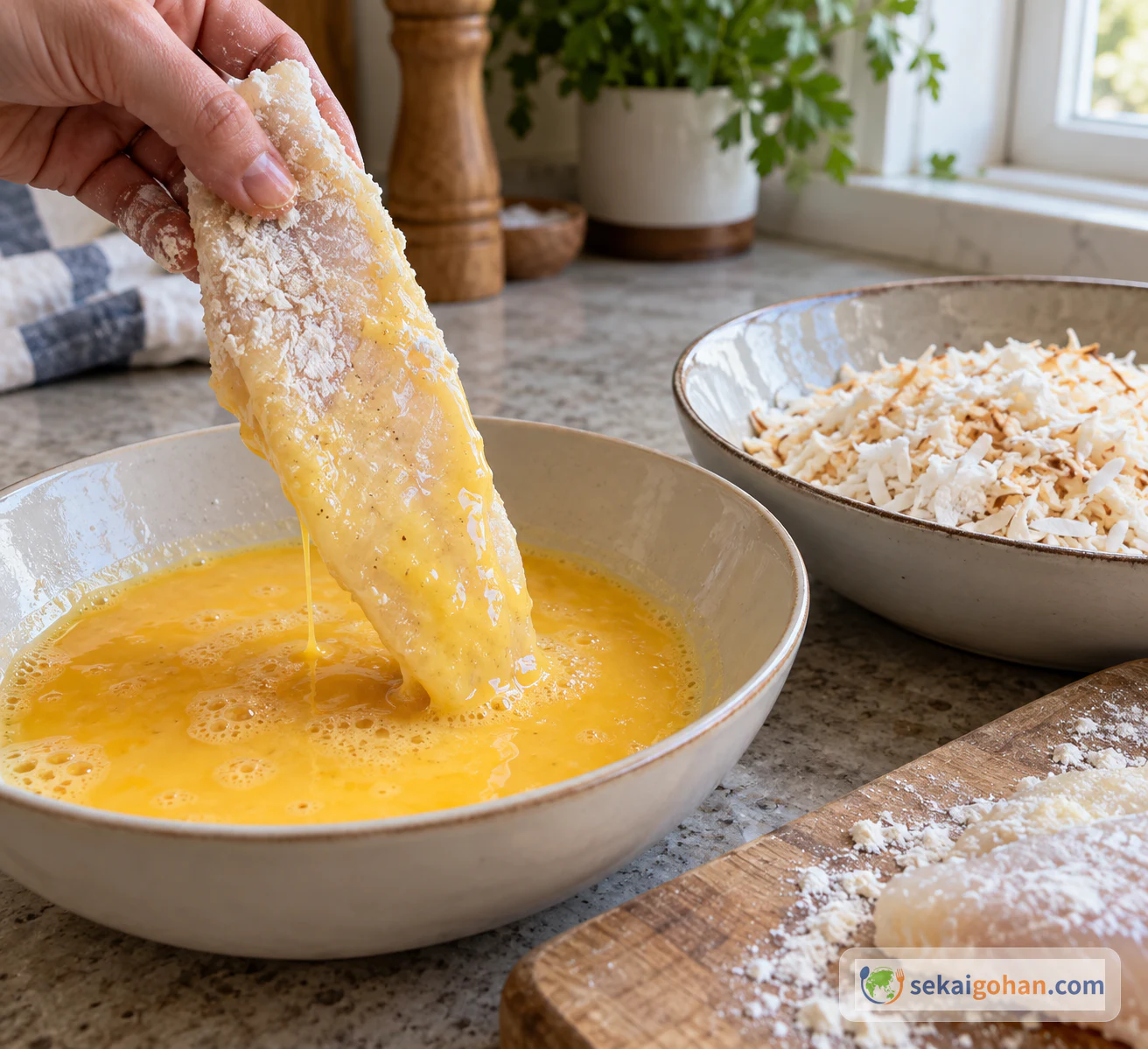
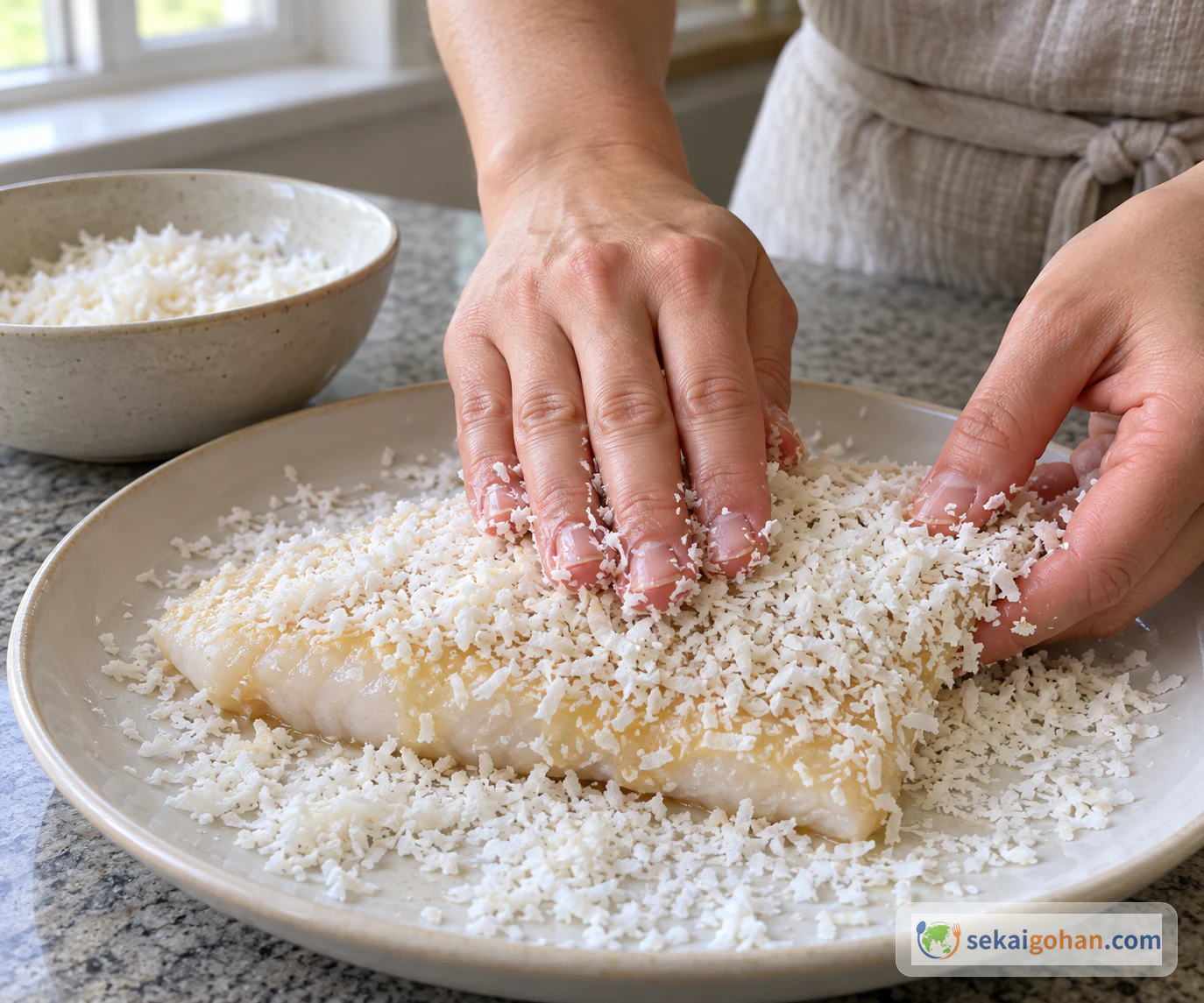
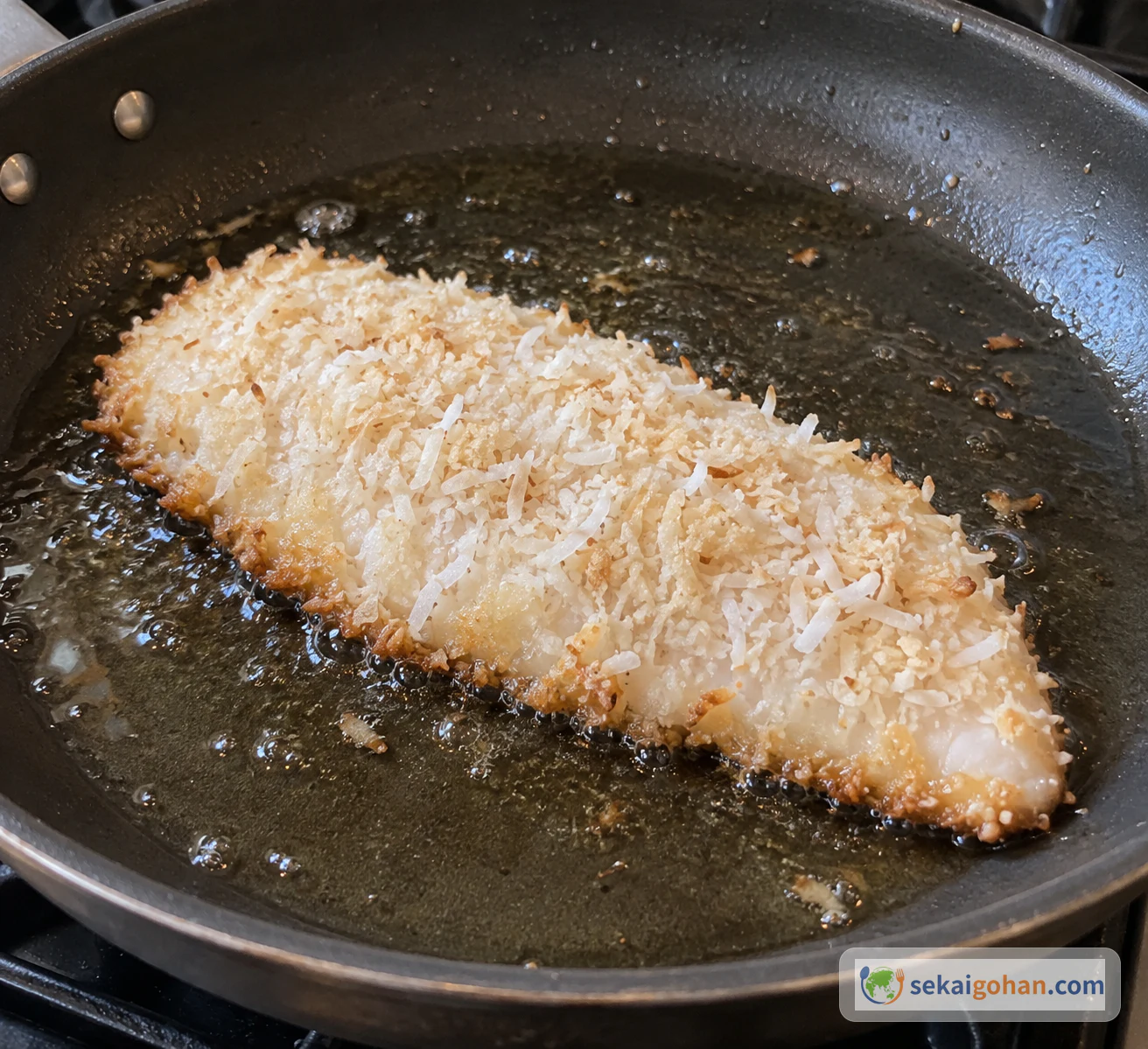
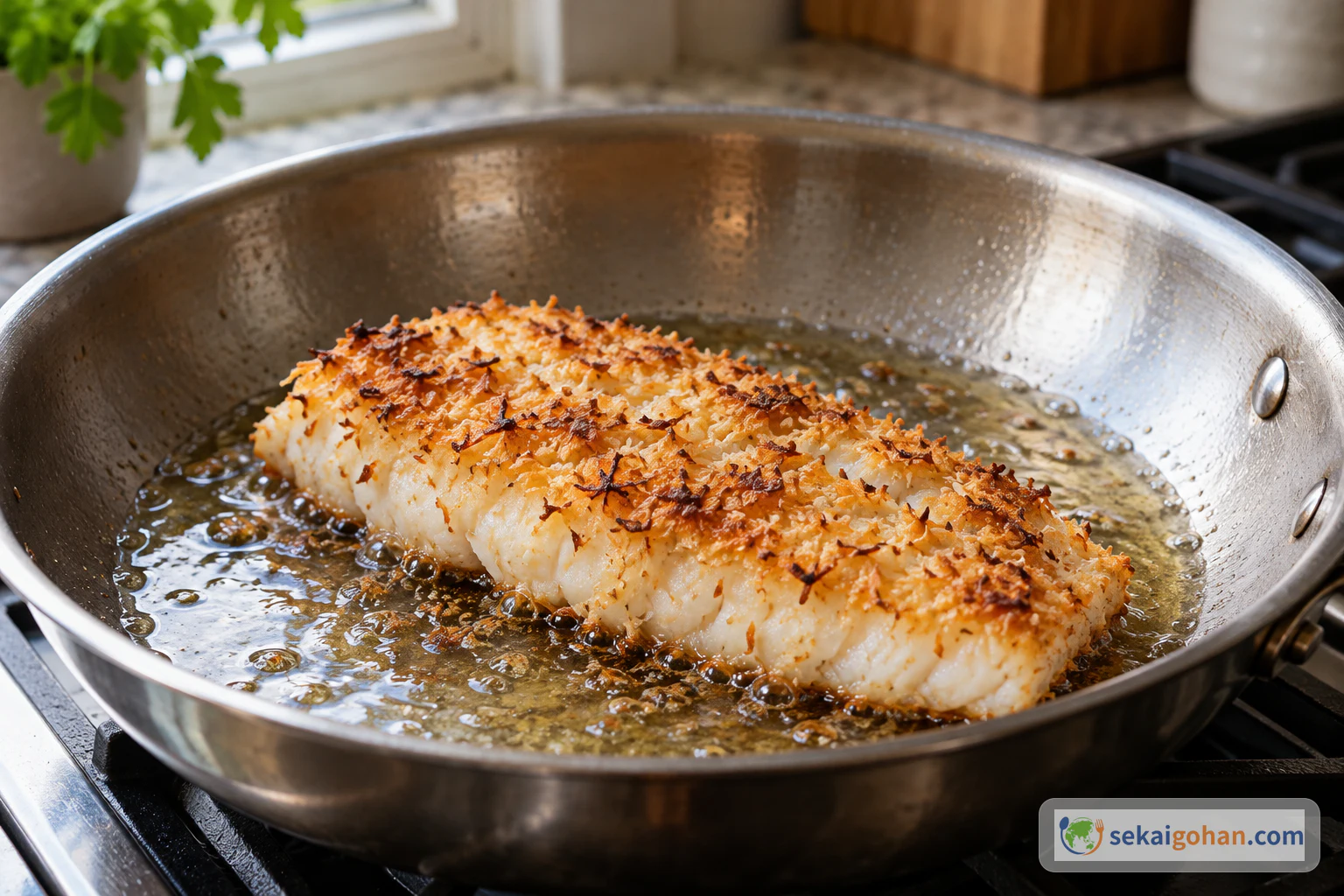
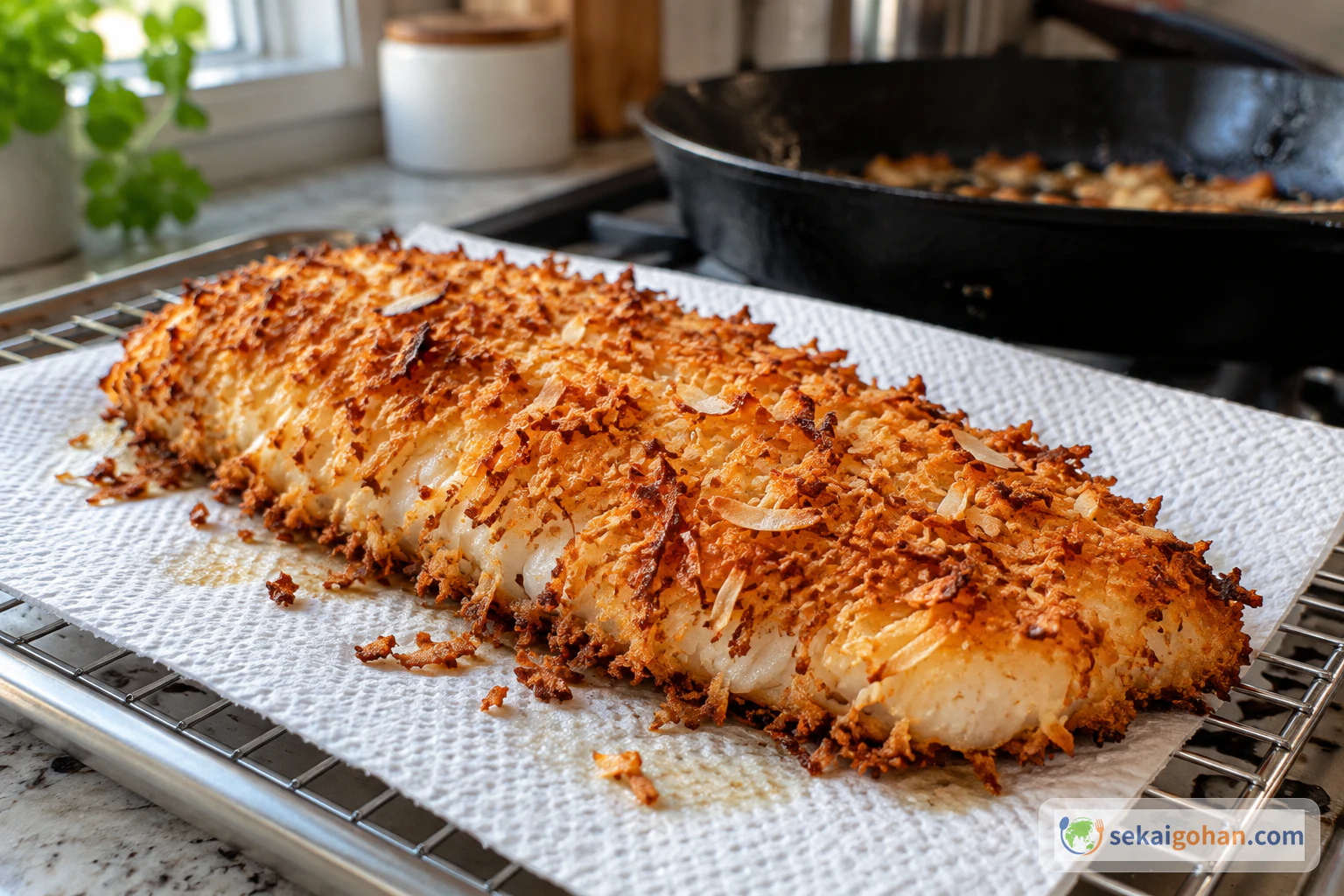
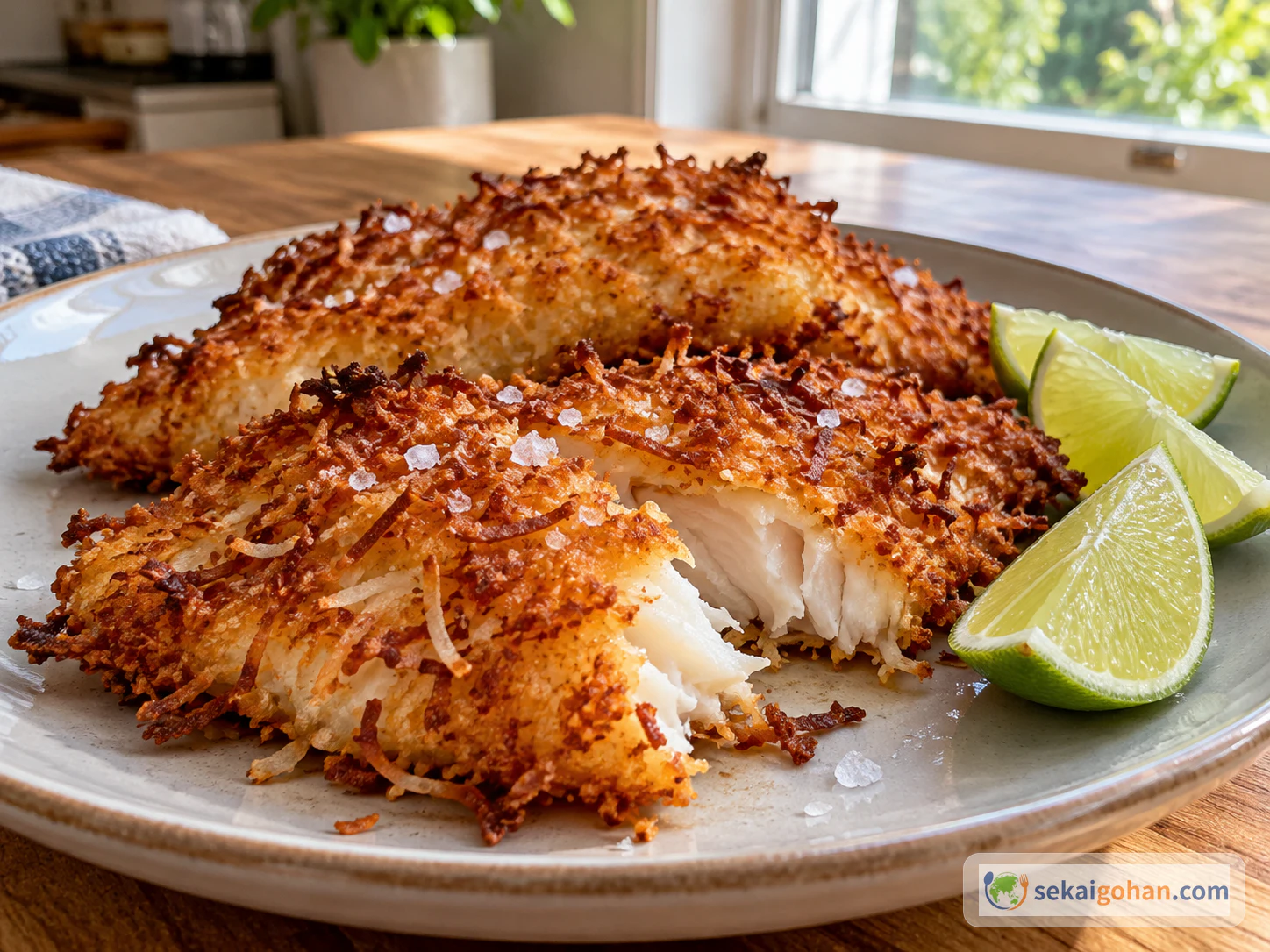
White fish fillets rest for a few minutes in lime juice with sea salt and black pepper. Then each piece goes through three shallow dishes in turn, flour, beaten egg and coconut, before it meets a skillet of oil over medium heat. When both sides are golden brown, the fish drains on paper towels and goes to the table with a scattering of flaky salt and wedges of lime. What you get is a Nauruan dish of mild white fish, sharp lime and the toasty crunch of fried coconut.
Coconut Fish on Nauru
Fish, coconut and lime are all part of everyday food on Nauru. Coconut is called Ini in Nauruan, and coconut cream goes into various dishes. Lime, called Derem, is used for drinks and for marinating raw fish.
Fish also comes from ponds. Nauruan communities collect milkfish fry and raise them in brackish and saltwater ponds. Changing ocean currents and weather are affecting this practice, and environmental and climate pressures are changing food security and access to local food.
Coconut fish is often presented as Nauru's national dish, though no official designation makes it so. The name also covers more than one preparation. A raw version is made with raw tuna, fresh coconut milk or coconut water, and lime. It is a different dish, with different ingredients and different food-safety rules. For a related raw-fish-and-coconut-milk preparation from elsewhere in the Pacific, see kokoda from Fiji. The recipe here is the cooked version, dredged in coconut and pan-fried.
Ingredients for the DBE Coconut Fish
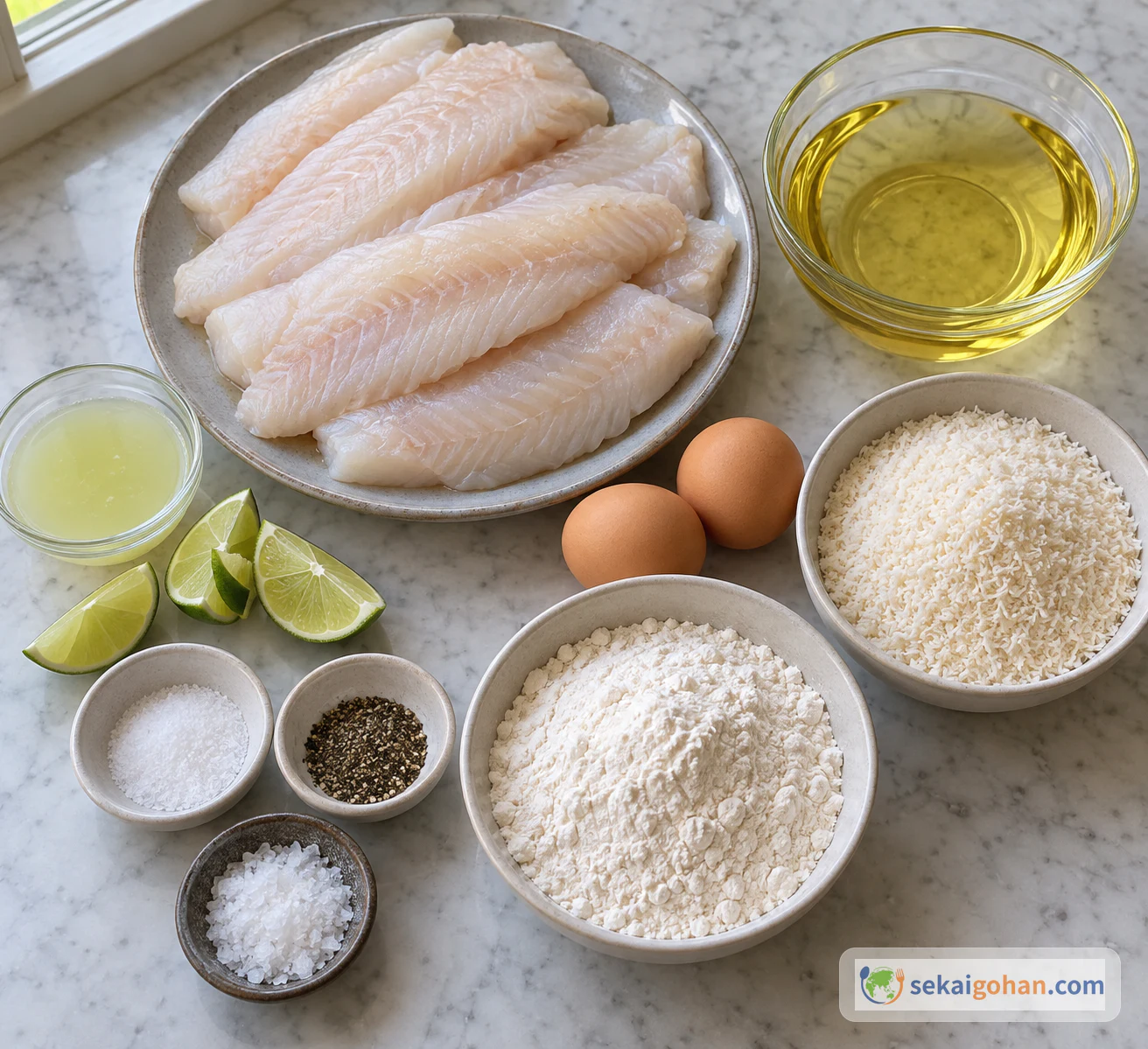
1 cup = 240 ml, 1 tsp = 5 ml.
For the coconut, use either one small grated coconut or 2 cups of fine, dried, unsweetened coconut flakes, not both.
This dish contains fish, egg and wheat. Coconut is labeled as an allergen differently in each country, so check your local labels and your own history. If you fry in oil or with utensils that have been used for other foods, consider cross-contact as well.
Equipment
- A shallow dish for the marinade
- Three shallow plates or bowls for flour, egg and coconut
- A skillet or frying pan
- A thin spatula for turning the fish
- Paper towels for draining
- A separate clean plate for the cooked fish
- An instant-read thermometer (optional, but useful for checking the center of the fish)
No special tools are needed. A thin fish spatula slides under the coated fillet with less risk of tearing the crust, but an ordinary metal spatula also works.
Choosing the Fish, Coconut, Flour and Lime
Fish. Use cod or tilapia. If you can't find either, a mild, boneless white fish fillet that isn't too thick will work, though the texture won't be quite the same. Remove the skin and bones before marinating, because they make the fish harder to coat and to eat.
Coconut. Freshly grated coconut is traditional, and store-bought flakes are the convenient option. The two differ in moisture and aroma, and dried flakes brown faster in the pan. Choose unsweetened flakes so the crust doesn't taste of sugar.
Flour. Stick with all-purpose flour. Cornstarch and potato starch behave differently between the fish and the egg. Cake or pastry flour has less gluten, so it changes how well the coating clings.
Lime and salt. Fresh limes give the brightest aroma. Bottled juice is a practical stand-in when fresh limes are hard to find, but it smells flatter and isn't traditional. Salt grains vary in size, so measure level teaspoons. When you adjust the seasoning, taste only fully cooked fish, never raw fish or marinade that has touched it.
Coconut Fish Troubleshooting
| Problem | Likely cause | What to do |
|---|---|---|
| The coating slides off | Too much marinade left on the fish, or a layer was skipped | Let the marinade drip off before the flour, and keep the order flour, egg, coconut |
| Coconut browns before the fish is cooked | Heat too high; dried flakes may color quickly | Lower the heat and check the center with a thermometer or fork |
| Crust is golden but the center looks translucent | Thick piece, or judged by color alone | Keep cooking until the center reaches 145°F (63°C) or is opaque and flakes with a fork |
| Patchy coconut | Flakes not pressed on | Press the coconut on gently after the egg so it sticks all over |
| Crust turns soft | Fish left sitting after frying | Drain briefly on paper towels and serve right away |
Serving, Storing and Varying Coconut Fish
Food safety and storage
- Keep it cold. Refrigerate fish promptly after buying and keep it in the refrigerator while it marinates.
- Lime is not heat. The short lime marinade seasons the fish. Only cooking makes it safe to eat.
- Separate raw from cooked. Use separate plates and utensils for raw fish and egg and for the fried fish, and wash your hands after handling raw fish.
- Throw out what's left from the prep. Discard leftover marinade and egg rather than using them on the cooked dish.
- Refrigerate leftovers quickly. Refrigerate seafood within two hours, or within one hour when it's above 90°F (32°C). The crust is best freshly fried and goes soft once stored, so serve it right away and refrigerate only what you won't eat.
Variations
- Fresh grated coconut instead of flakes. Use one small grated coconut in place of 2 cups of flakes. The coating will be moister and smell different, so keep an eye on how it colors.
- Thicker fillets. Thicker pieces of cod or tilapia take longer to cook through, so judge each one by its center rather than by the clock.
- Lime at the table. Squeeze the lime wedges on just before eating so the crust stays crisp, and let everyone add as much as they like.
Frequently Asked Questions
Does this coconut fish use coconut milk?
No. This recipe uses grated coconut or coconut flakes as a crust. The raw-fish preparation uses fresh coconut milk or coconut water with lime, and it is a different dish.
How do I know the fish is cooked through?
Cook it to an internal temperature of 145°F (63°C), or until the flesh is opaque and separates easily with a fork. The color of the crust alone won't tell you.