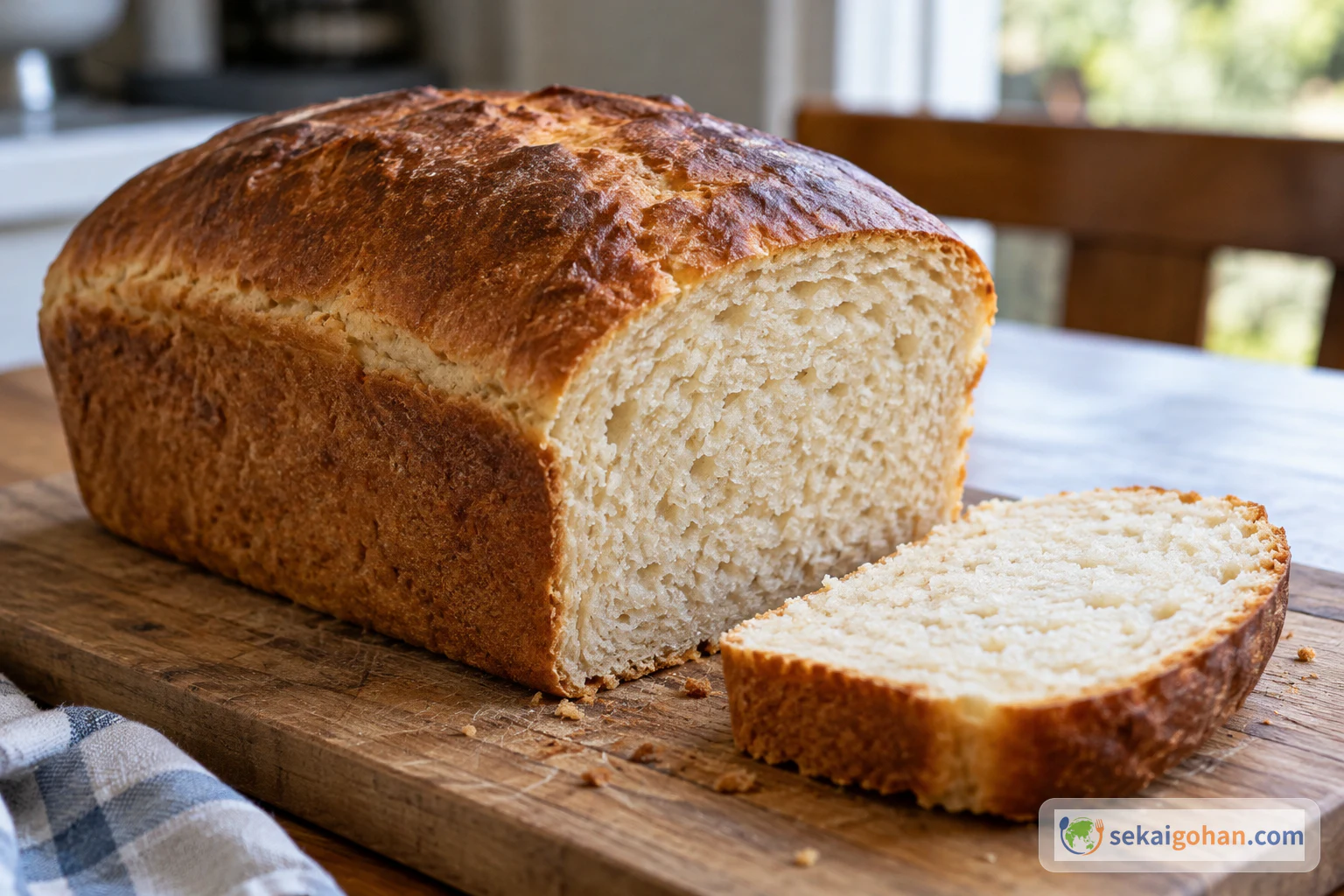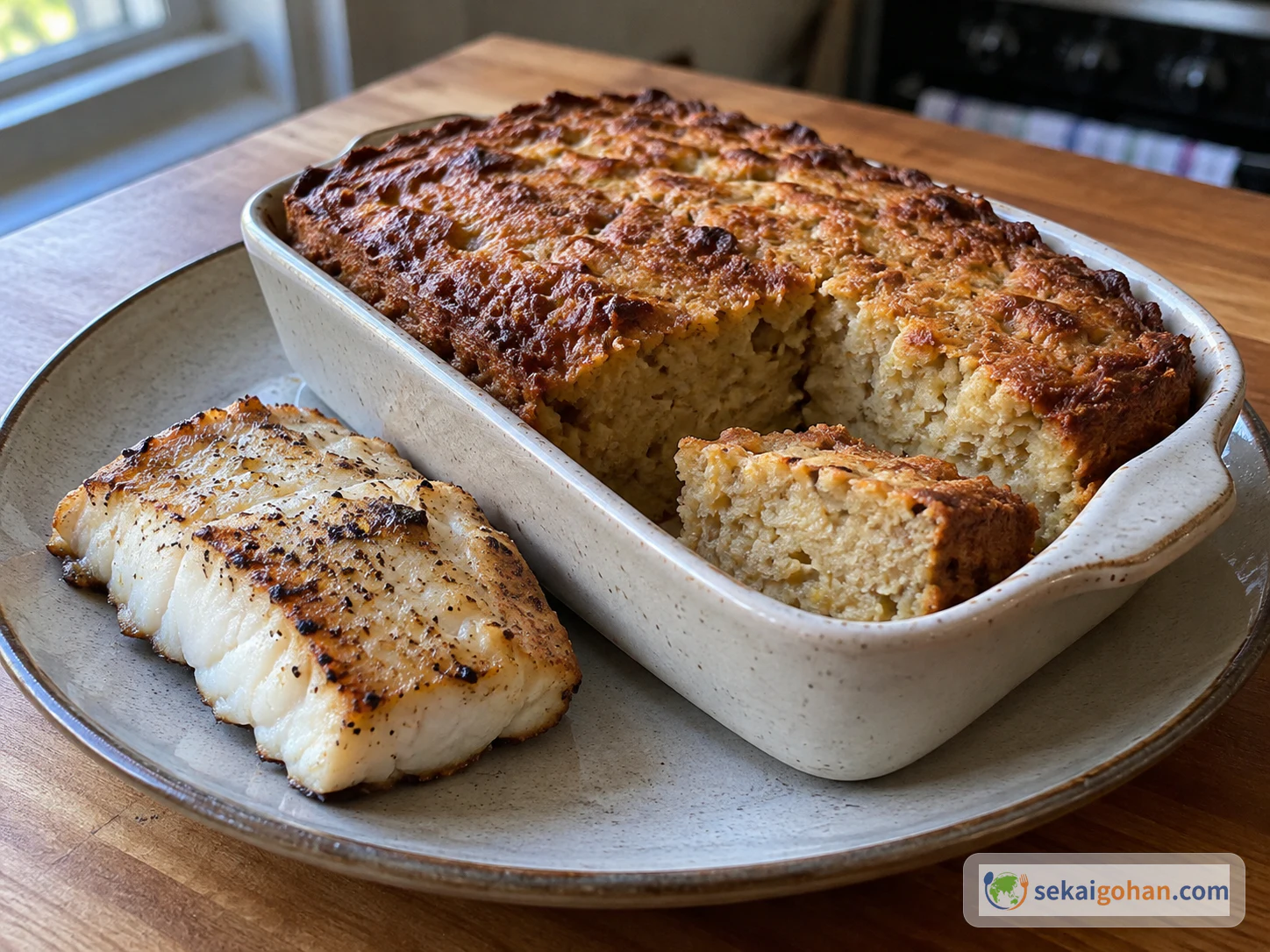
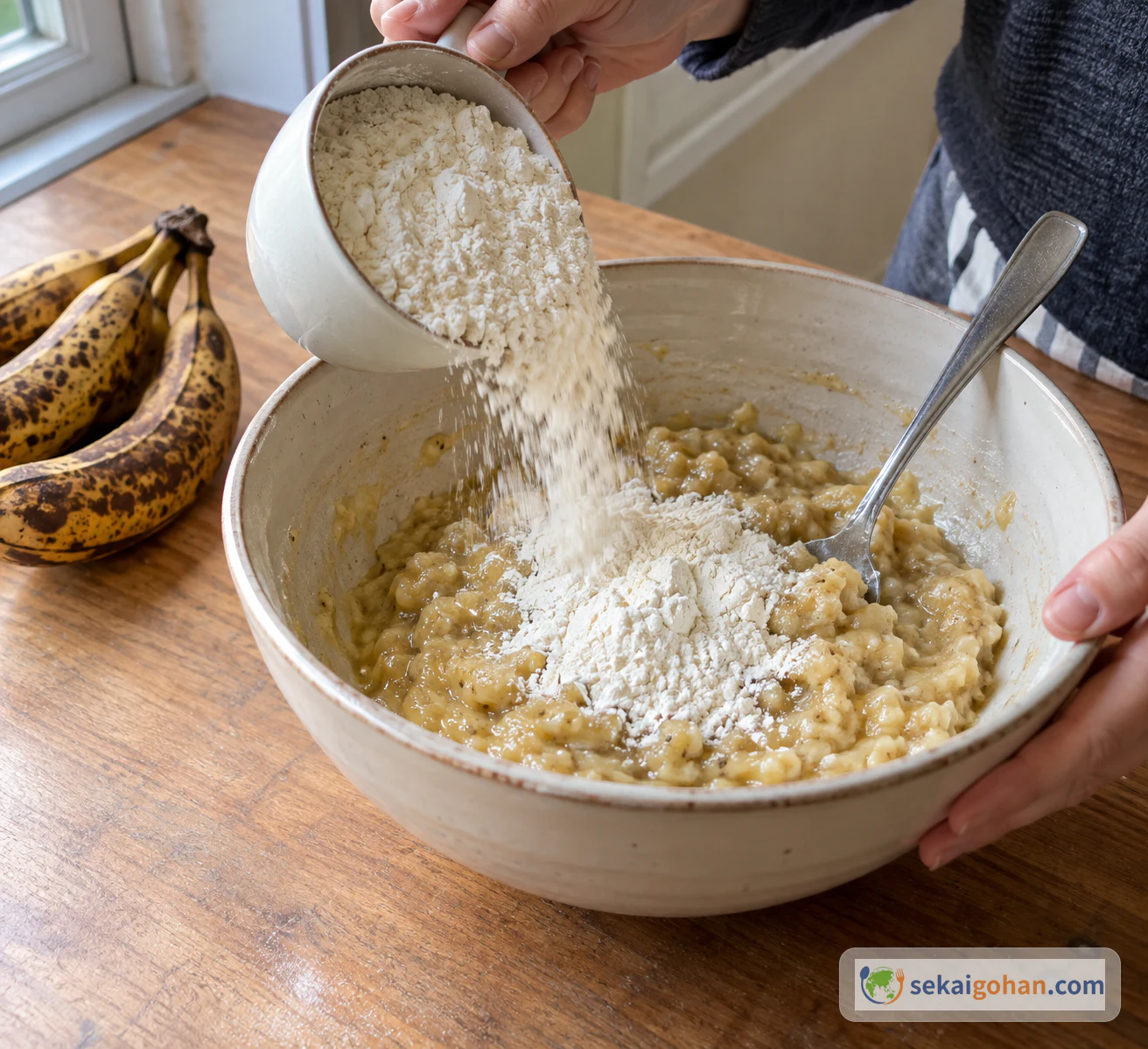
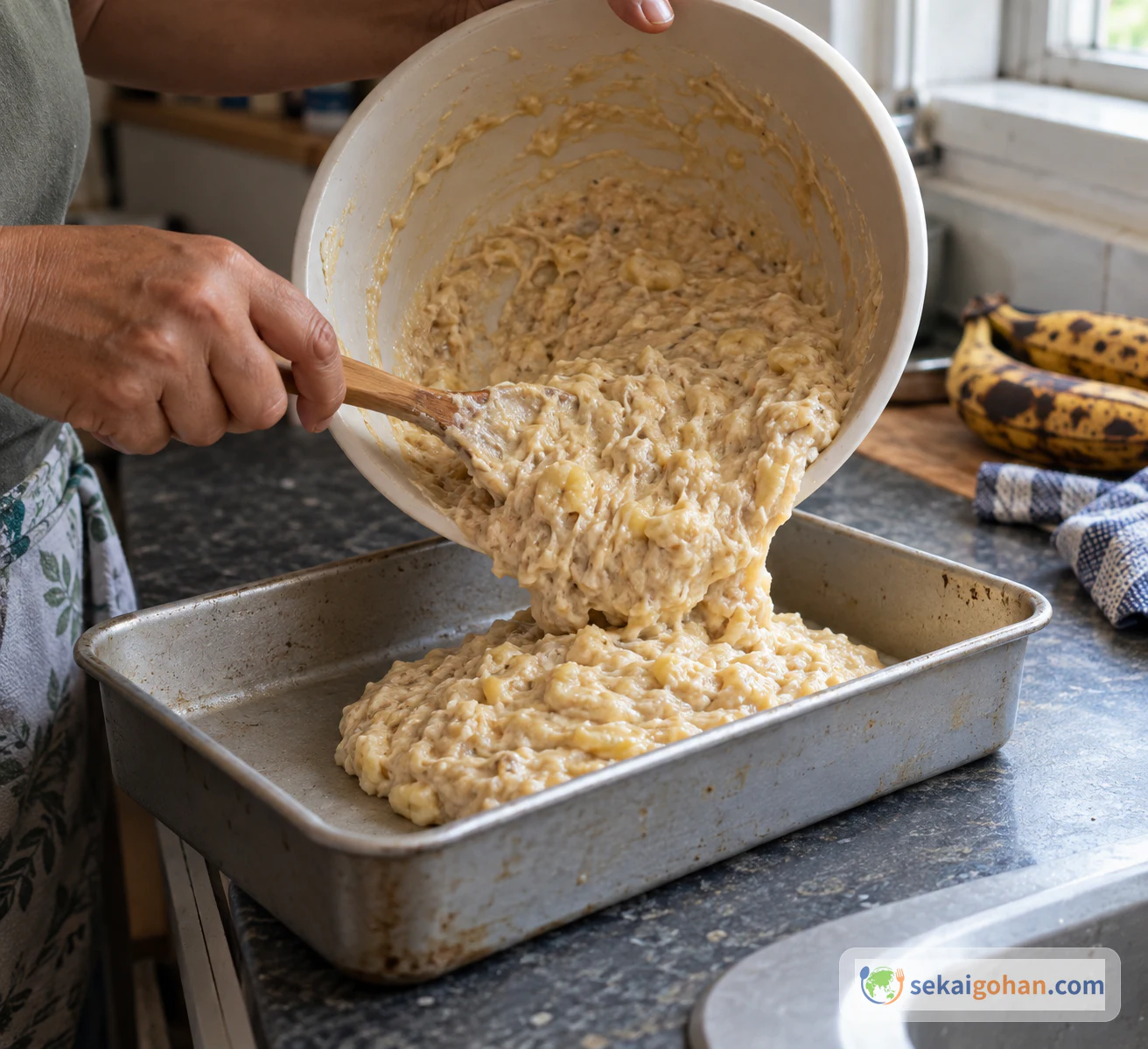
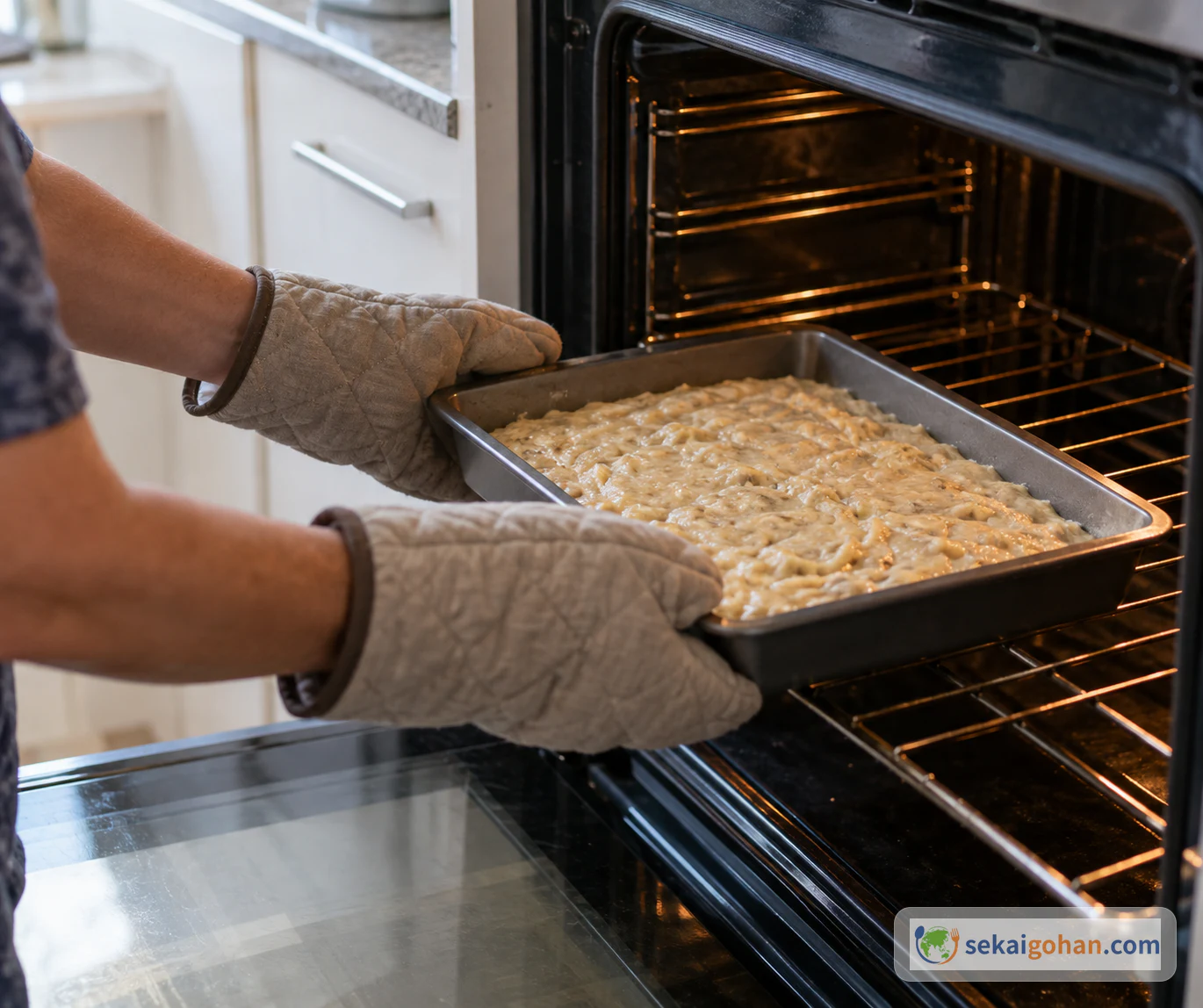
At the Island Fish Fry, a sunset gathering on the Norfolk Island coast, the tables fill with fried fish, salads, coconut bread and pilhi. Bananas and flour might make you expect a sweet cake. This pilhi is a savory banana slice instead. The very ripe banana version is called plun pilhi. It takes four ingredients and no added sugar, and islanders serve it as a vegetable with fish or meat.
Pilhi on Norfolk Island
Pilhi is a family of baked dishes common on Pitcairn and Norfolk Island, not one fixed recipe. Cooks make it from mashed or grated fruit and vegetables. Root vegetables are often the base, but banana or corn also appear, and some versions include coconut. On Norfolk, the best-known versions are made with banana, kumera (sweet potato) or pumpkin.
Pilhi has long belonged at community gatherings. The Bounty Picnic at Kingston is a communal lunch, and a 1946 picnic menu included pilhi, described there as a vegetable cake made with kumera, ripe banana or pumpkin.
Bananas have their own history on the island. Pitcairner settlers arrived in 1856, and banana growing and export followed, with a boom from the late 1920s into the early 1930s. Island kitchens used bananas at every stage of ripeness, sometimes as a vegetable. Plun pilhi uses the fruit when it is very overripe.
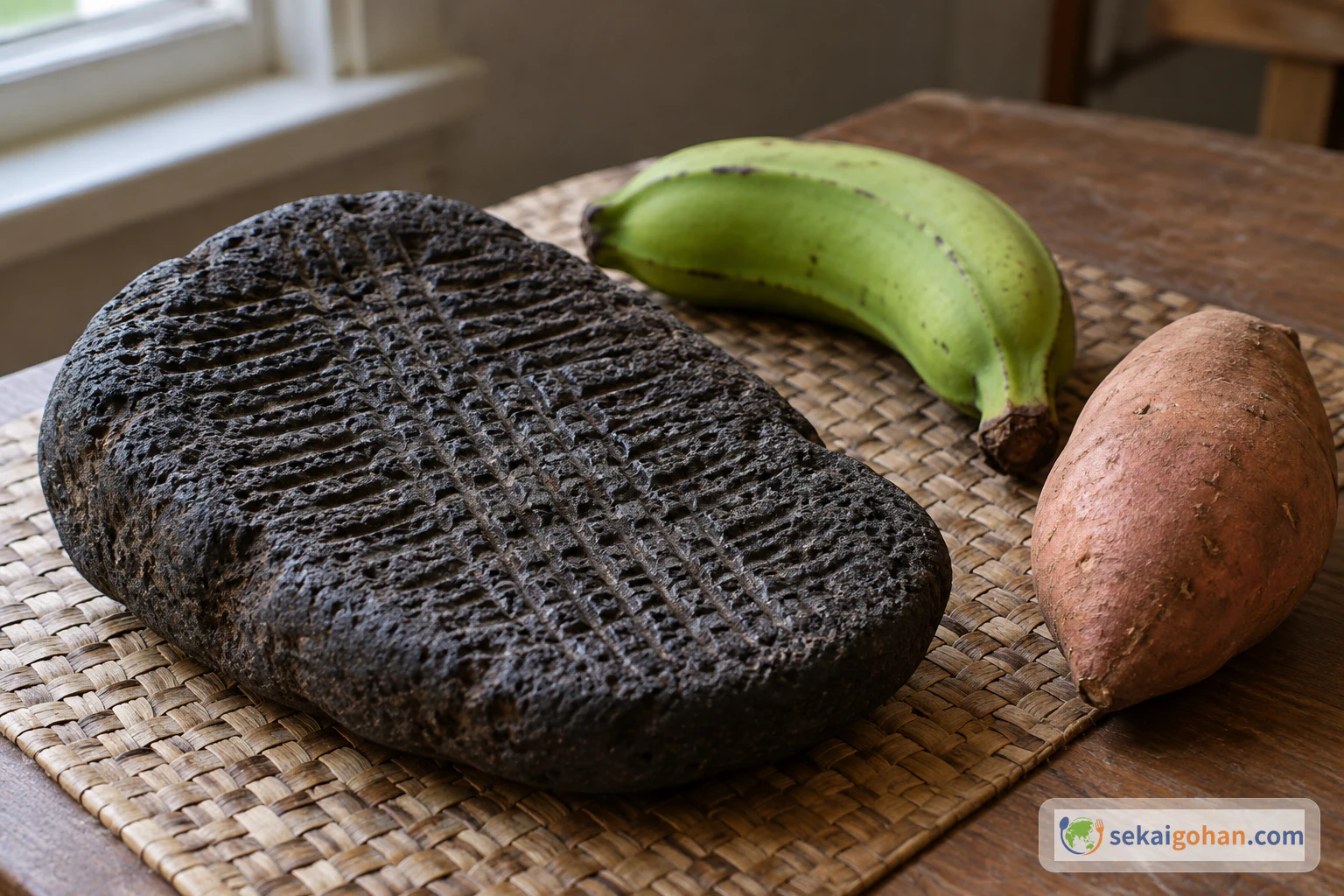
The yolor, a grater brought from Pitcairn in 1856, is part of the wider story of island cooking. Ripe bananas mash easily, so this version needs no grater. Island cooks worked with seasonal ingredients, limited supplies and substitutions, and families and the community shared their recipes.
Ingredients for Plun Pilhi
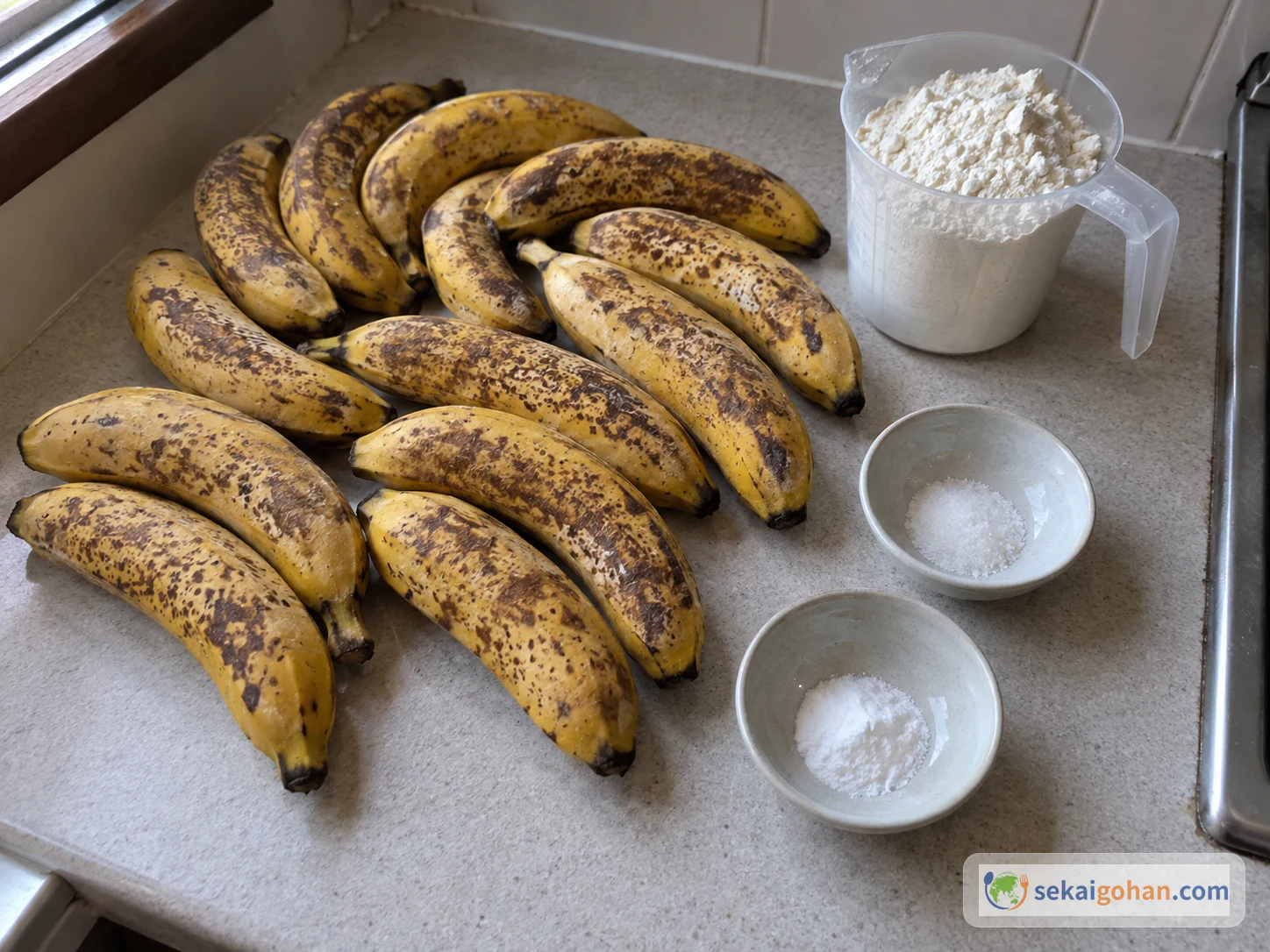
Equipment
- Mixing bowl
- Fork
- Spoon
- Measuring cup and measuring spoons
- Baking tray
- Oven
- Bamboo skewer
Choosing Bananas, Flour and Soda for Plun Pilhi
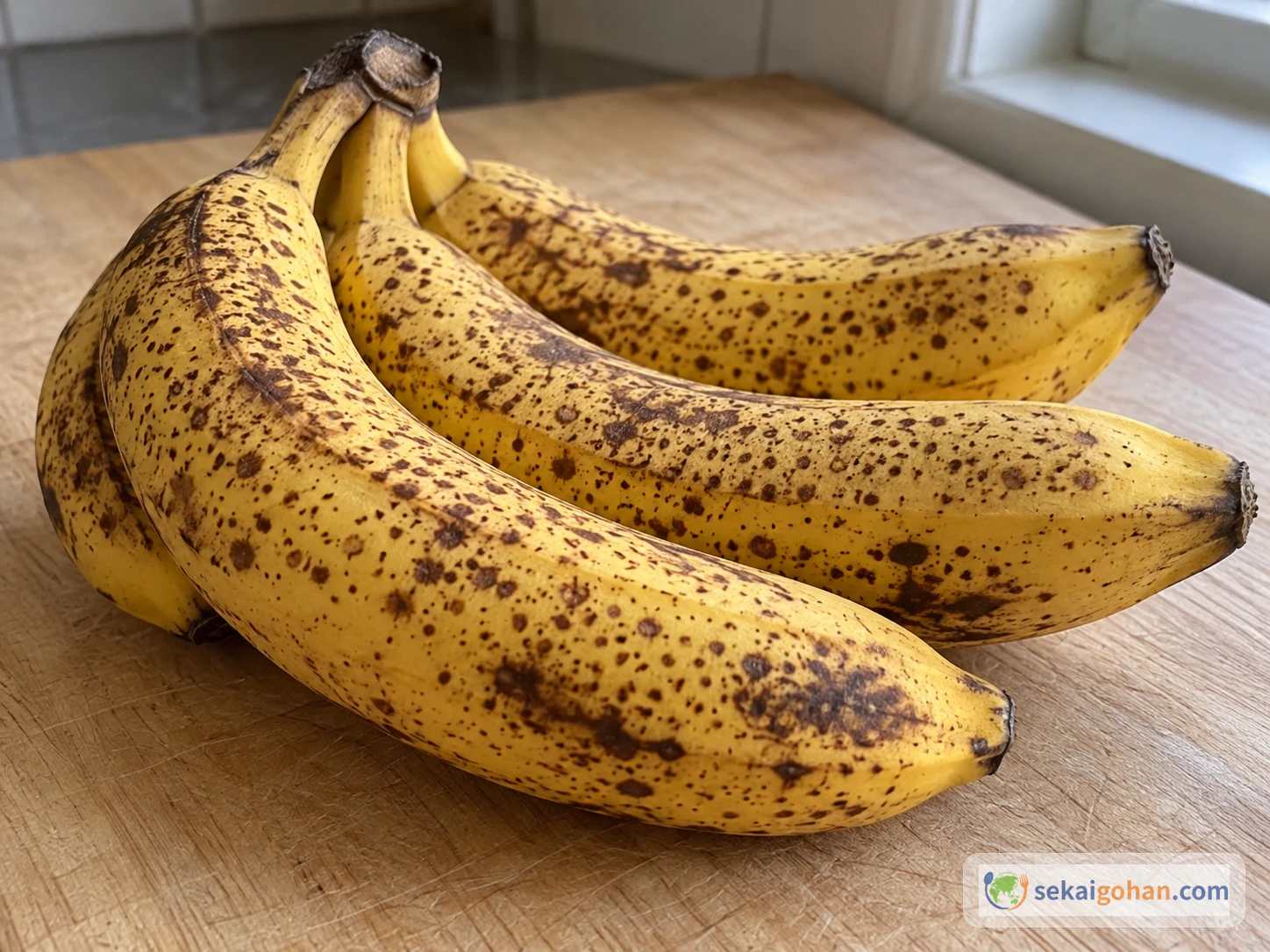
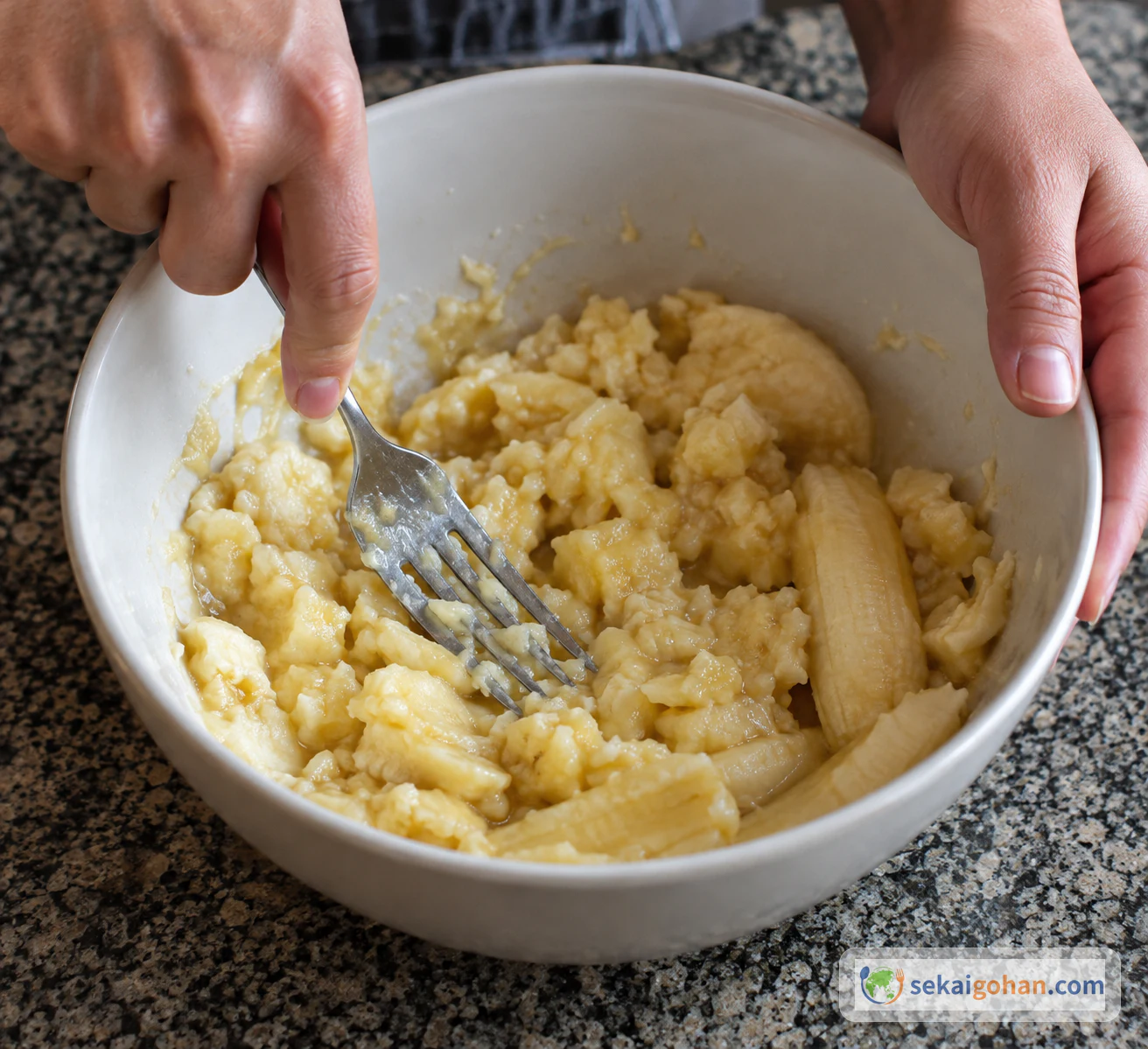
- Bananas: Look for skins with plenty of dark speckles and fruit that has gone soft. Green bananas belong in other dishes.
- Flour: Ordinary plain flour, as the recipe calls for.
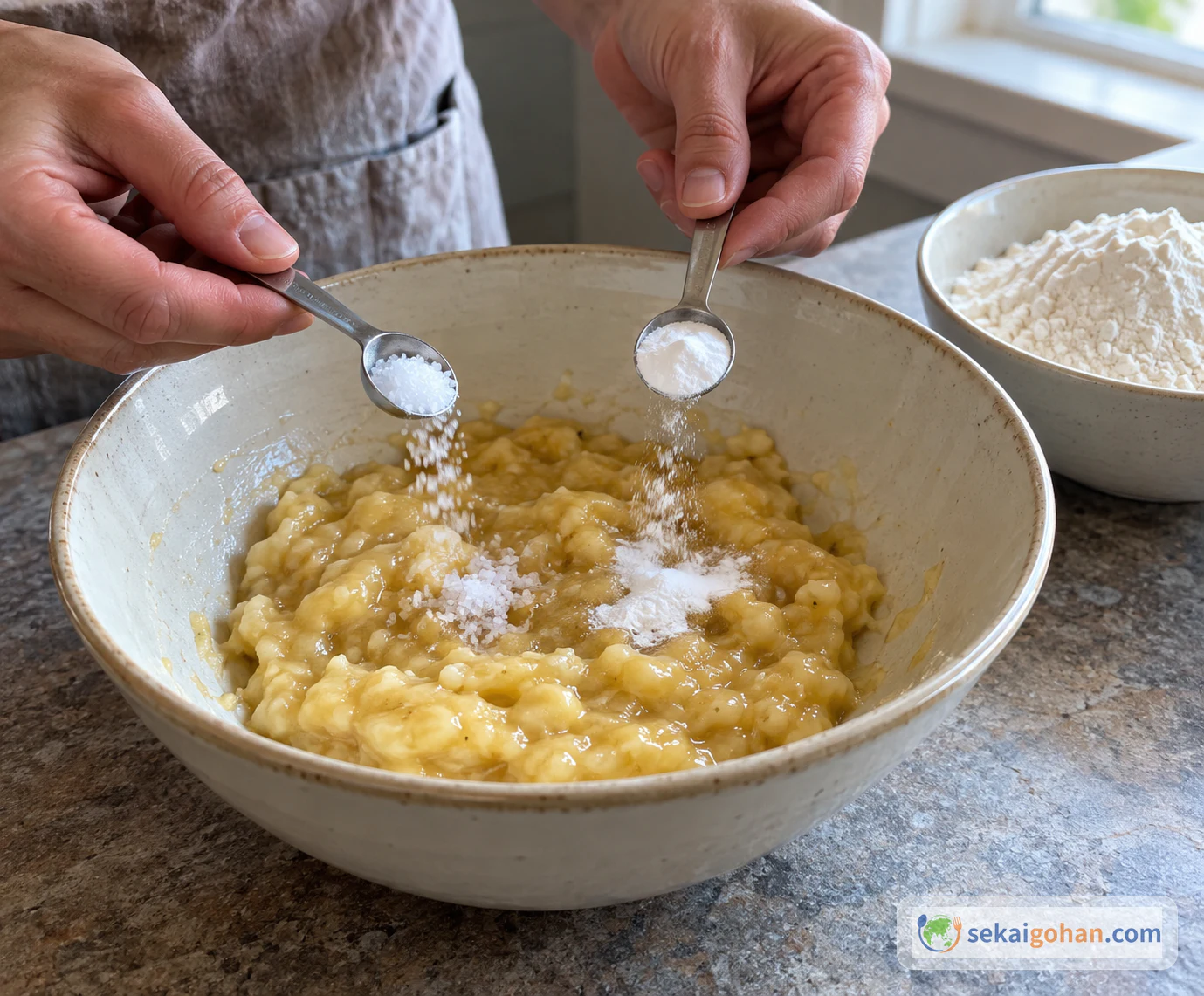
- Bicarbonate of soda: Also sold as baking soda. Choose a food-grade product, and don't use baking powder in its place.
- Additions: Stick to the four ingredients. Sugar, coconut, oil, kumera or pumpkin would make it a different recipe.
Plain flour contains wheat. Check the labels on the products you buy for other allergens and cross-contact.
Fixing Common Plun Pilhi Problems
| Situation | What to do |
|---|---|
| Batter clings to the skewer after about an hour | Bake a little longer and test again. |
| The pilhi sticks to the tray | Other pilhi methods use greased tins or banana leaves; treat those as separate methods. |
| Your bananas are still green | Wait for very ripe fruit. Green bananas go into other dishes, such as mudda (dumplings cooked in milk) and green banana fritters. |
| It seems plain for something made with bananas | Leave out the sugar. This version is meant for savory food, so taste it alongside the fish or meat. |
Serving and Varying Plun Pilhi
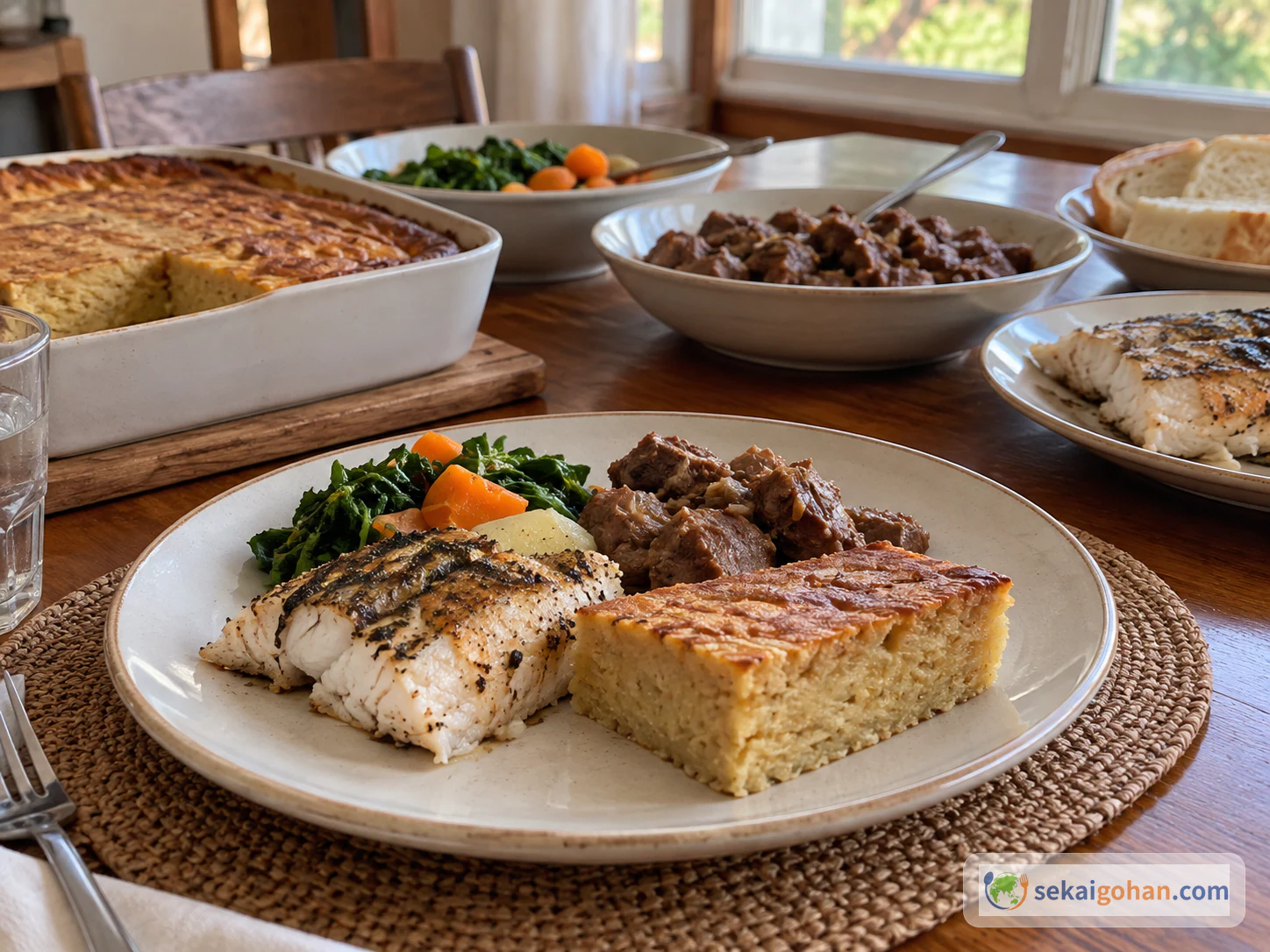
Cut the pilhi and set it on the plate beside fish or meat, as you would any vegetable. Expect some difference between batches, because bananas vary even within "very ripe." A different tray also changes how thick the pilhi bakes and how cleanly it releases.
Kumera and pumpkin pilhi are dishes in their own right, so they aren't simple swaps for the banana here. Make them from their own recipes rather than with these amounts. For more Pacific cooking, try banana poke from the Cook Islands, a sweet banana dish that shows how differently the same fruit can turn out. Panipopo from Samoa brings coconut and bread together.
Frequently Asked Questions
Is pilhi a sweet dessert?
Not this version. Very ripe bananas bring their own sweetness, but there's no added sugar. It's served with fish, meat or other savory dishes.
How much should 12 bananas weigh?
The recipe counts bananas instead of weighing them. Bananas vary in size, so go by ripeness: look for dark speckled skin and soft fruit.
What temperature is a moderate oven?
"Moderate oven" is a traditional term that generally means about 180–190°C (350–375°F). Cooks used it loosely before ovens had thermometers. Around 180°C is a sensible place to start.
Can I store or reheat it?
Treat it like any other cooked food and follow your local food-safety guidance for storing and reheating.