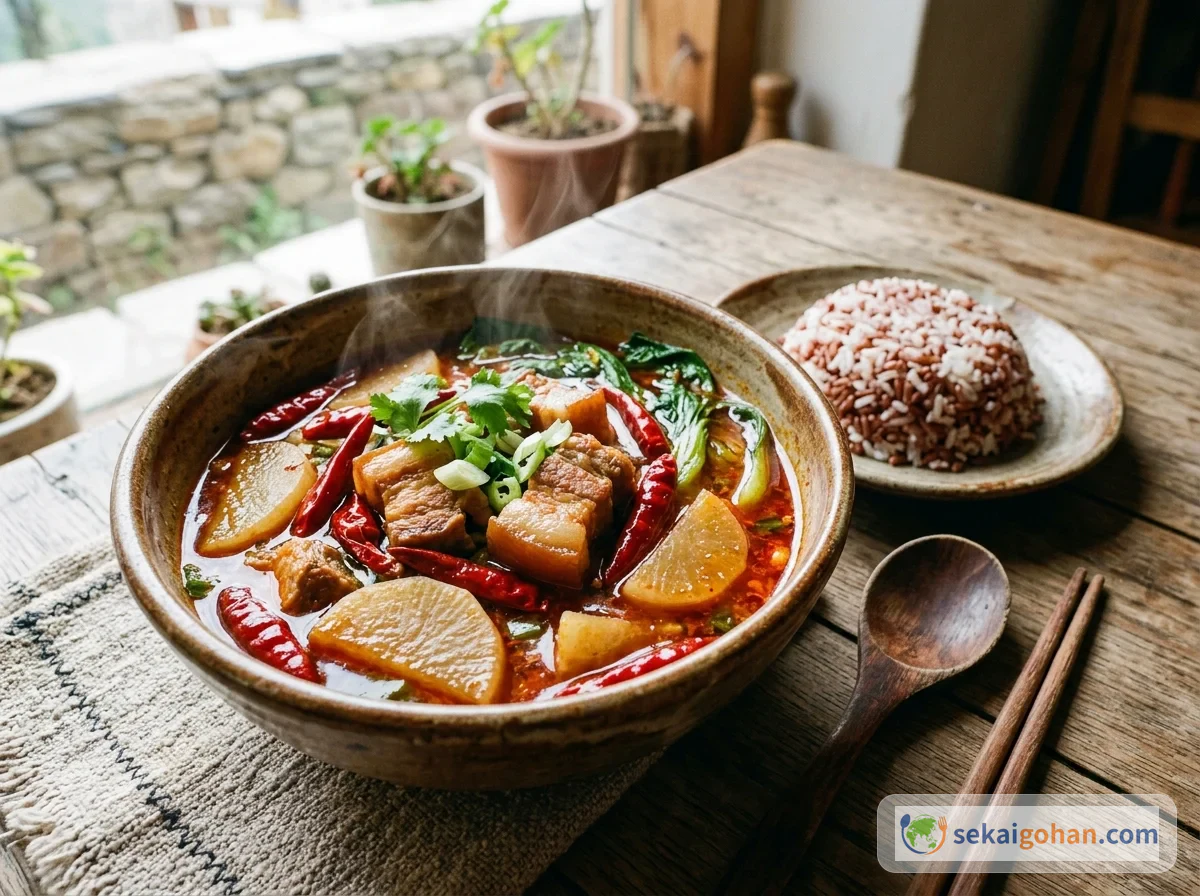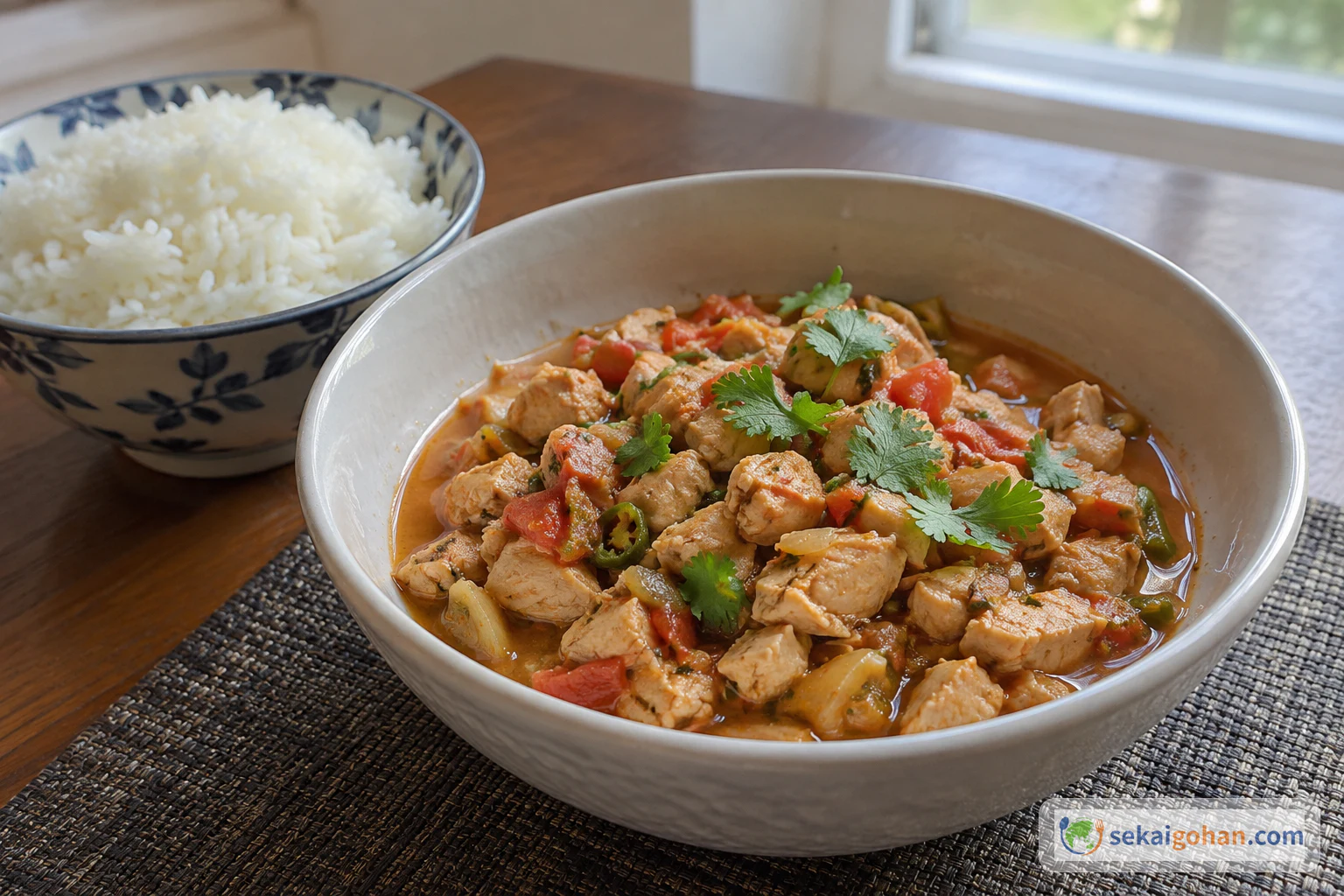
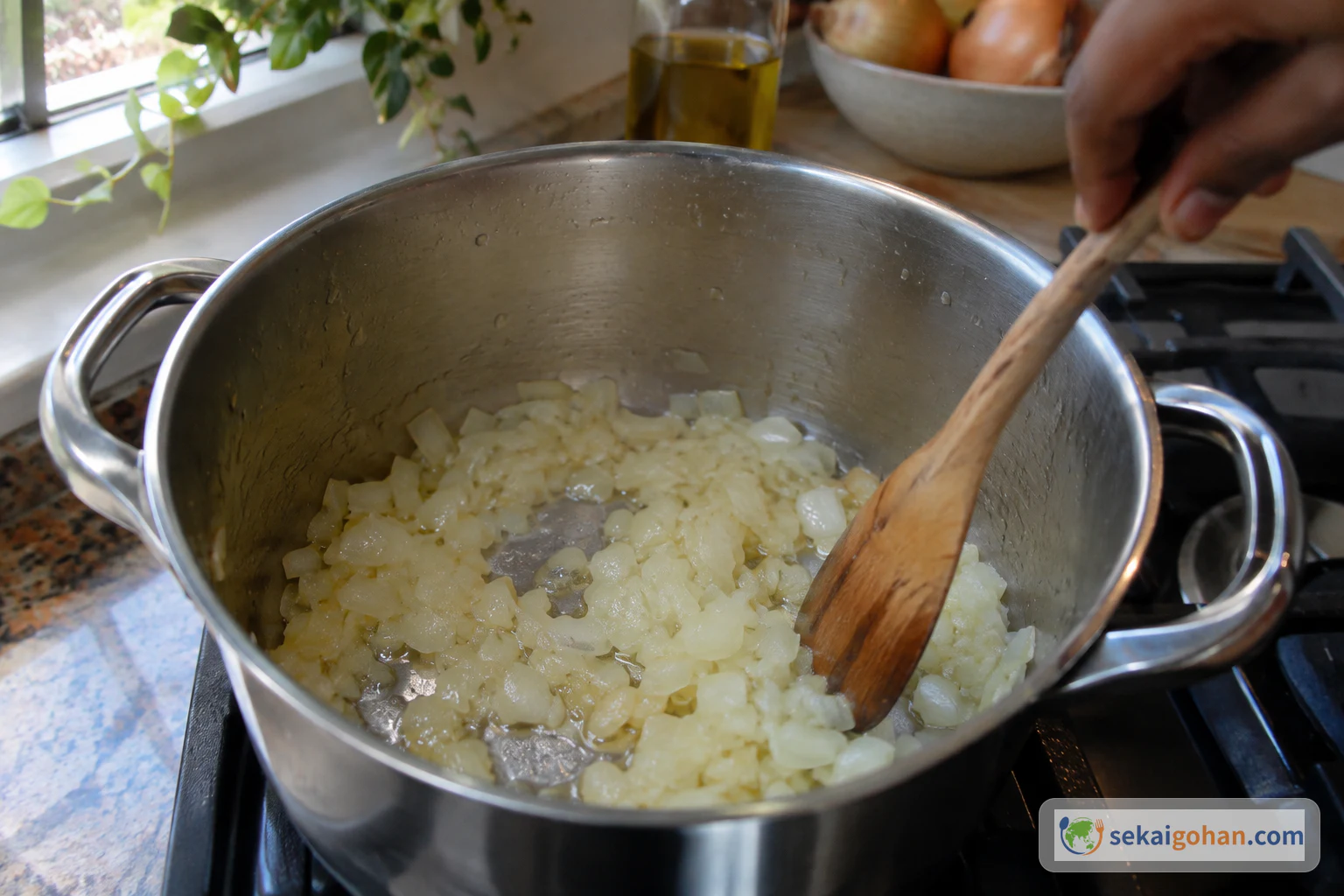
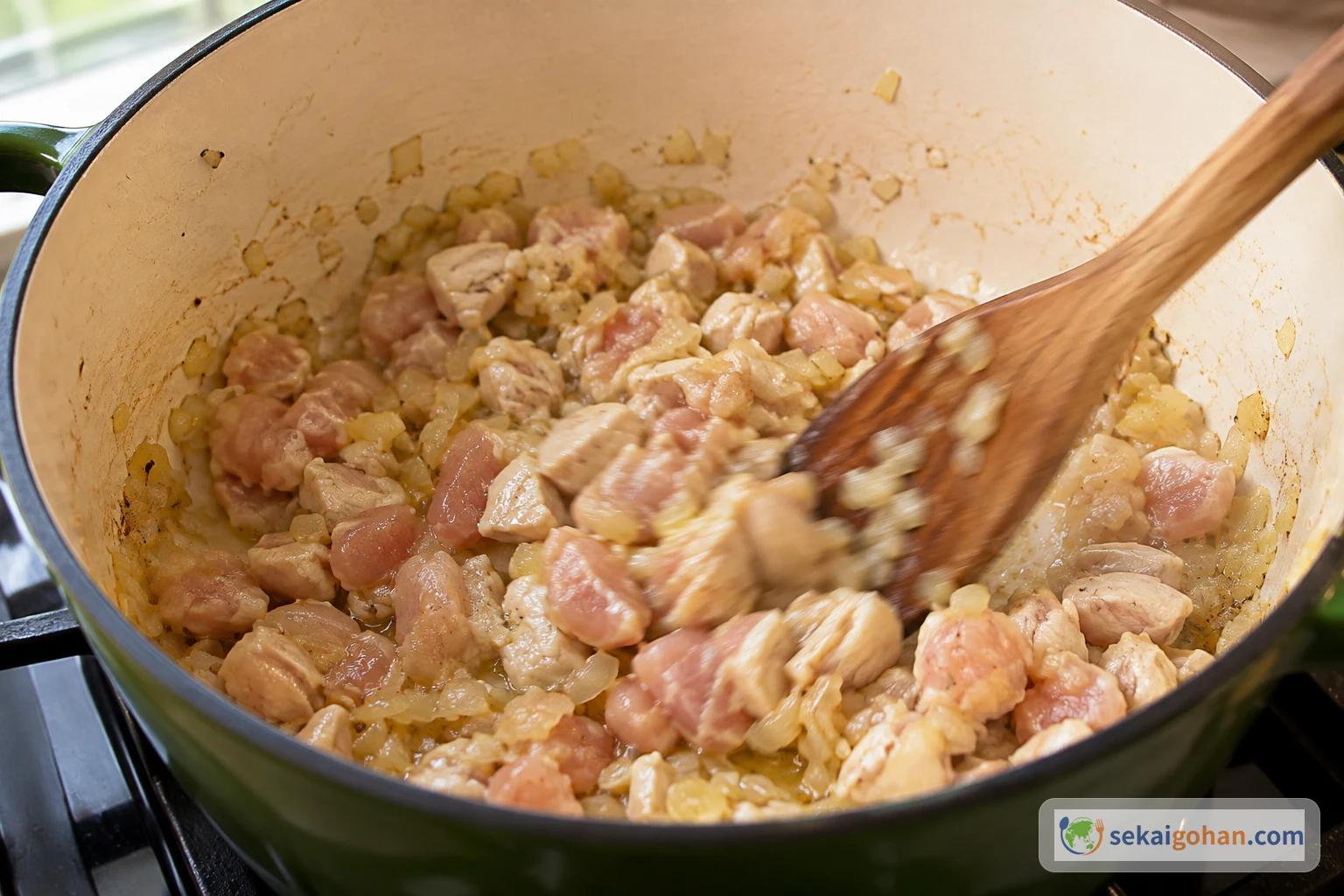
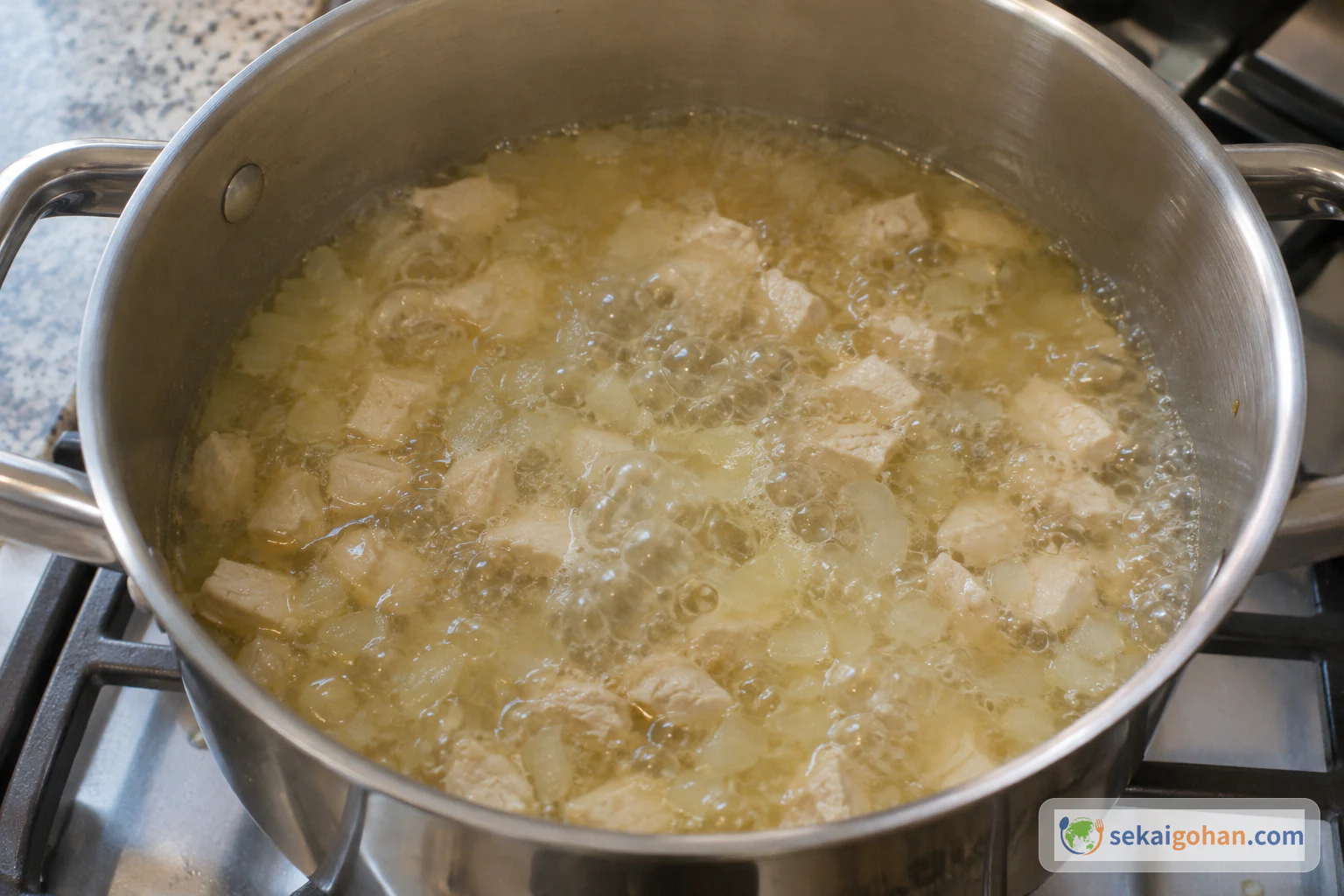
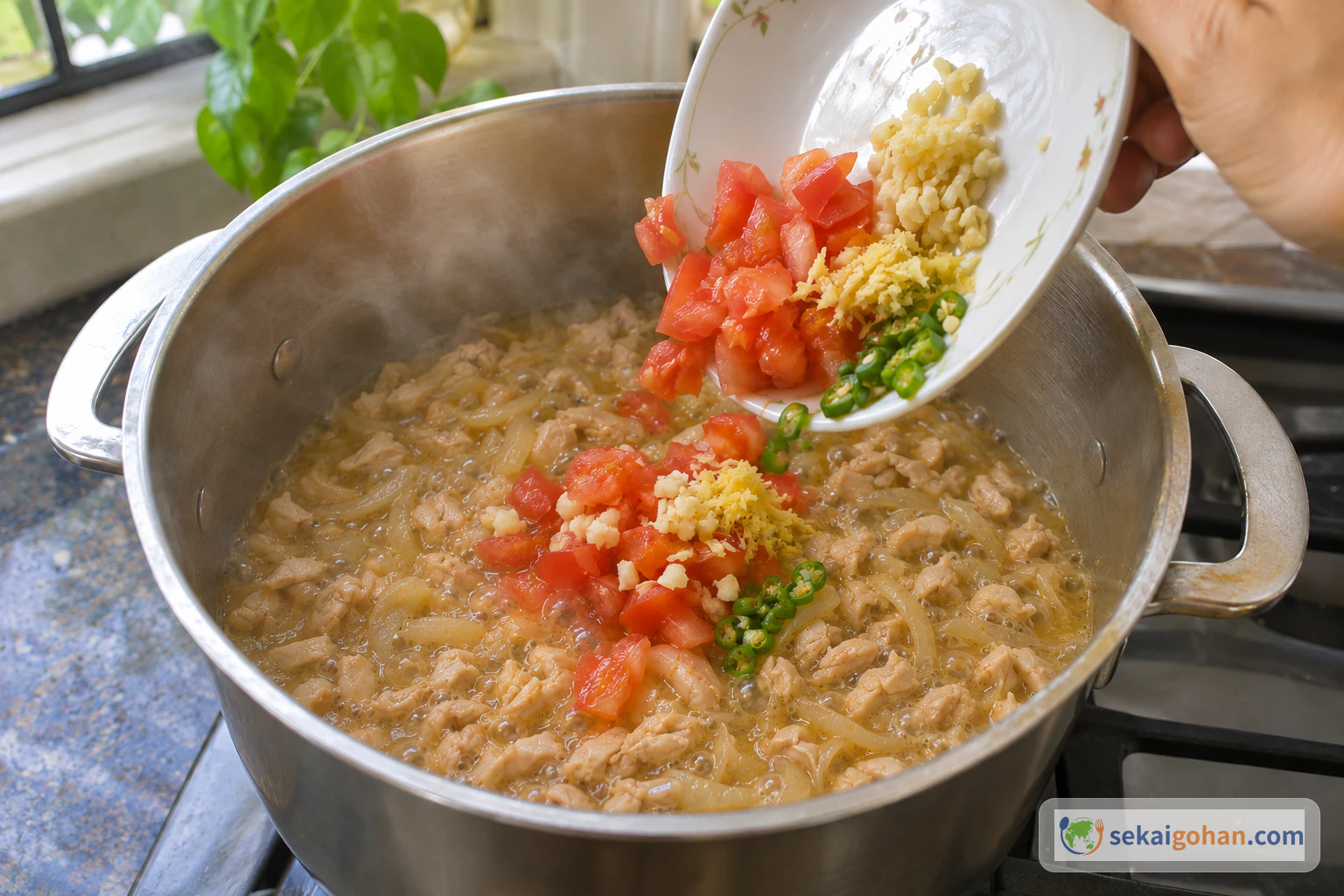
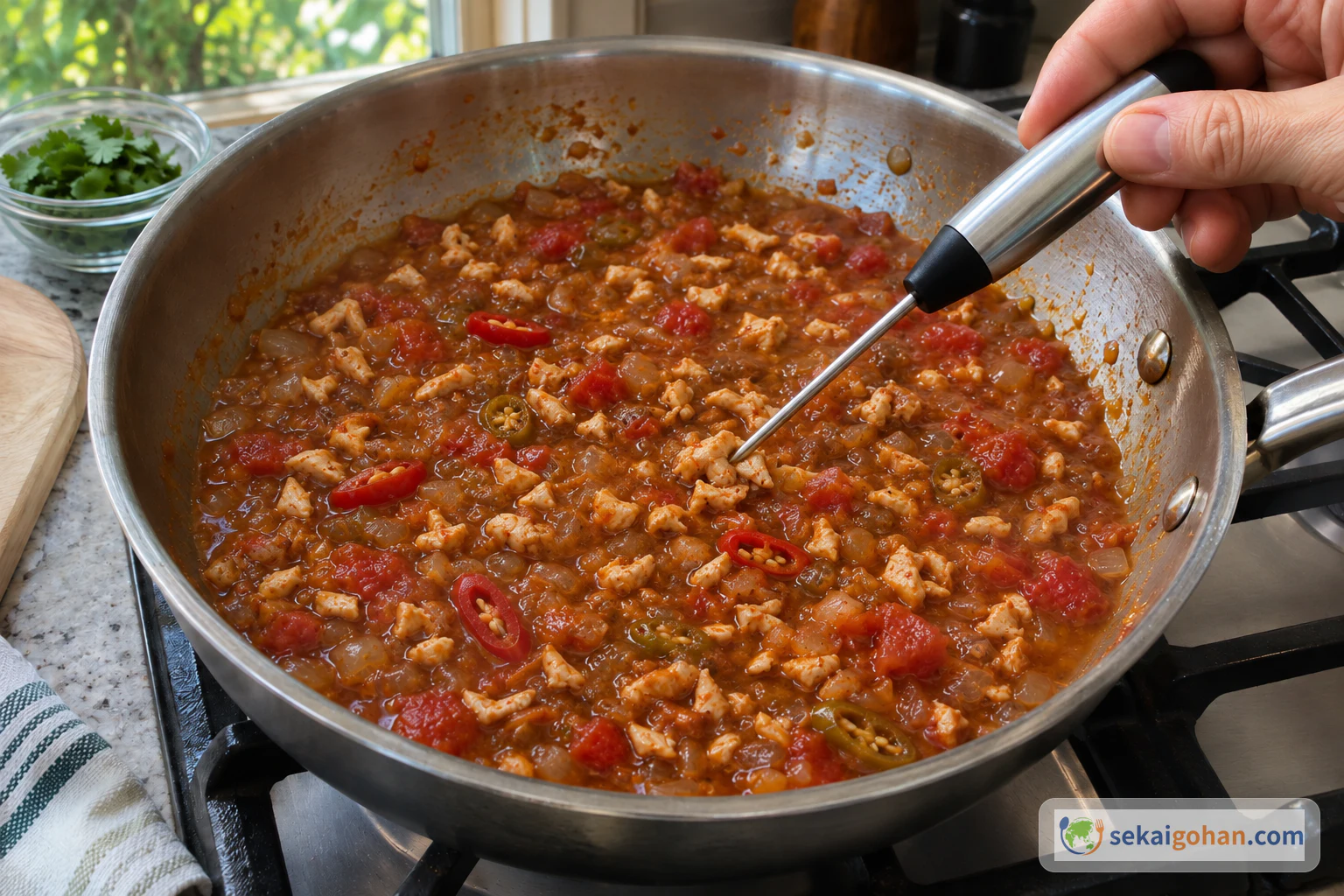
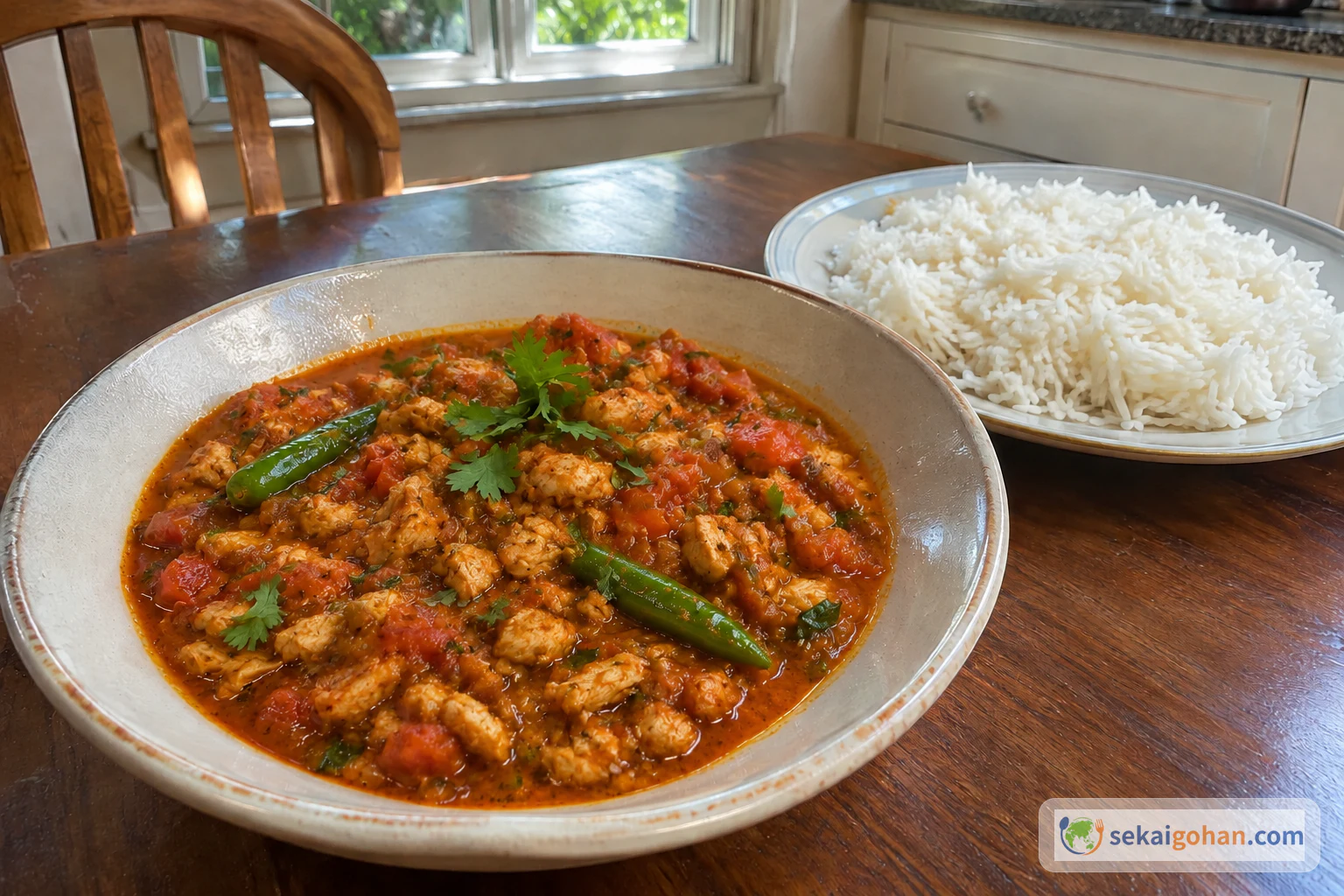
Chopped onion softens in oil until translucent, then the chicken goes in and fries for about 5 minutes. Stock follows, the pot comes to a boil, and in go garlic, ginger, tomatoes and a generous four tablespoons of chopped green chili. Everything cooks together until the chicken is tender and the liquid has cooked down into a moist, chili-bright stew. That's jasha maru, a chicken stew from Bhutan that's eaten with rice. You'll also see it spelled Jasha Maroo. For more dishes from the country, see Bhutan.
Jasha Maru and Similar Bhutanese Chicken Dishes
In Bhutan, jasha maru is one of the dishes that goes alongside rice, so rice is the natural thing to serve with it. Similar names don't always mean the same dish, though. Jasha Paa and another dish called Jasha Maroo are made quite differently:
| This recipe | Jasha Paa | Jasha Maroo | |
|---|---|---|---|
| Chicken | Boneless | Bone-in | Boneless, skinless thighs |
| Chilies | Green | Fresh green | Red |
| Liquid | Chicken stock | Water | Stock |
| Method | Soften onion, fry chicken, boil with stock, add aromatics and vegetables, then reduce | Simmer chicken, onion, garlic and salt in water, add tomato, then add chili until the water dries and the chili skin partly burns | Cook onion, garlic, ginger, chili and leek in oil, add chicken and tomato, then simmer covered in stock |
These differences don't line up with particular parts of Bhutan, so it's best to think of them as separate recipes. If you're exploring Bhutanese food further, ema datshi is a dish of chilies and cheese. Phaksha paa is made with pork, so don't mix it up with the chicken-based jasha paa.
Ingredients for This Jasha Maru
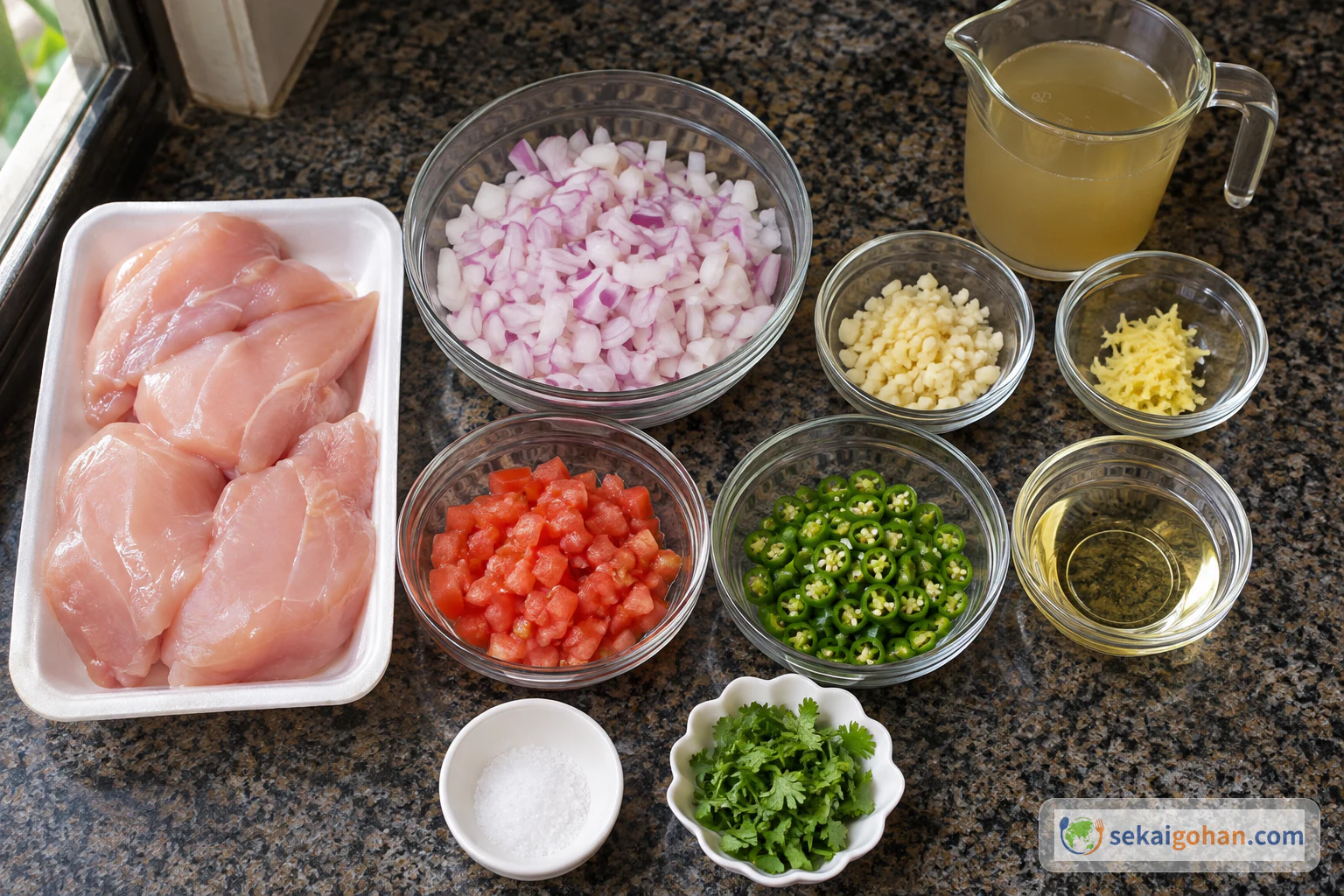
Chop all the chicken the same way. Don't mix in ground chicken or bone-in pieces.
Do not wash raw chicken. Keep it and the tools it touches away from foods that won't be cooked further. Wash your hands, cutting board and knife properly after handling it, before they touch vegetables or herbs. Wash the vegetables under running water before cutting them on clean tools. The cilantro goes on raw, so wash it well under running water before chopping.
Choosing Chicken, Chilies and Stock for Jasha Maru
Chicken, onion, tomatoes, garlic and ginger are everyday supermarket ingredients, so you won't need a specialty shop. A few choices do shape the final pot:
- Chicken: Use boneless chicken, finely chopped into small pieces.
- Green chilies: Heat varies a lot by variety, so four tablespoons can taste quite different from one kind to another. Measure them chopped, with a spoon.
- Chicken stock: Salt levels differ between products. Check how salty yours is before deciding how much salt to add.
- Cilantro: It's optional. Another herb will change the flavor rather than stand in for it exactly.
Equipment
- Cooking pot
- Separate cutting boards and knives, or a set washed between raw chicken and other foods
- Grater for the ginger
- Measuring spoons
- Cup measure for the stock
- Spoon or spatula for stirring
- Food thermometer
Method: One Pot, in Order
Each addition goes into the same pot. Apart from the chicken's frying time, the stages are judged by what you see in the pot and by the thermometer, not by the clock.
Jasha Maru Troubleshooting
The aim is chicken that's tender and fully cooked, in a stew that has reduced but is still moist. Color won't tell you when the chicken is done, so keep a food thermometer at hand.
| What you notice | What it means | What to do |
|---|---|---|
| The thermometer reads below 167°F (75°C) | The chicken hasn't finished cooking, whatever its color | Keep cooking, then check the thickest piece again; it needs 167°F (75°C) or above for at least 1 minute |
| The chicken isn't tender yet | There is no fixed simmering time to rely on | Keep cooking and test a piece again |
| There is still a lot of liquid | The stew hasn't reduced enough | Continue cooking until the liquid has reduced |
| The pot is getting dry | The stew is moving toward a dry fry | Watch closely as the liquid falls, and finish while it's still moist |
| It tastes too salty | The stock was already salty | Next time, check the stock first and add salt gradually |
| It's hotter than you wanted | Chili varieties differ in heat | Next time, use fewer chilies |
Serving and Varying Jasha Maru
Serve the stew with rice. Once you've made the base version, it's easy to adjust to your own taste:
- Less heat: Use fewer green chilies. How many fewer depends on the variety you have.
- More heat: Add extra chilies a little at a time, and wait to taste until the chicken is fully cooked.
- Salt: Set the final level by your stock, tasting at the end of step 5.
- No cilantro: Just leave it out; the method stays the same.
- Ground chicken: Treat this as a separate version rather than mixing it with chopped pieces, and still confirm the temperature with a thermometer.
Frequently Asked Questions
Is the chicken in jasha maru ground or chopped?
This version uses finely chopped boneless pieces. Ground chicken works as a variation, but cook it as its own version and check the temperature with a thermometer.
How hot is it?
It uses 4 tbsp chopped green chilies, and the heat depends on the variety. If you're cautious about heat, use fewer chilies.
Can I use bone-in chicken?
Bone-in chicken belongs to Jasha Paa, which has its own ingredients and method. Swapping bone-in pieces into this recipe won't give the same result or take the same time.
How do I know the chicken is cooked?
Check the thickest piece with a food thermometer: it should read 167°F (75°C) or above at the center for at least 1 minute. Neither the 5 minutes of frying nor the color of the meat tells you it's safe to eat.