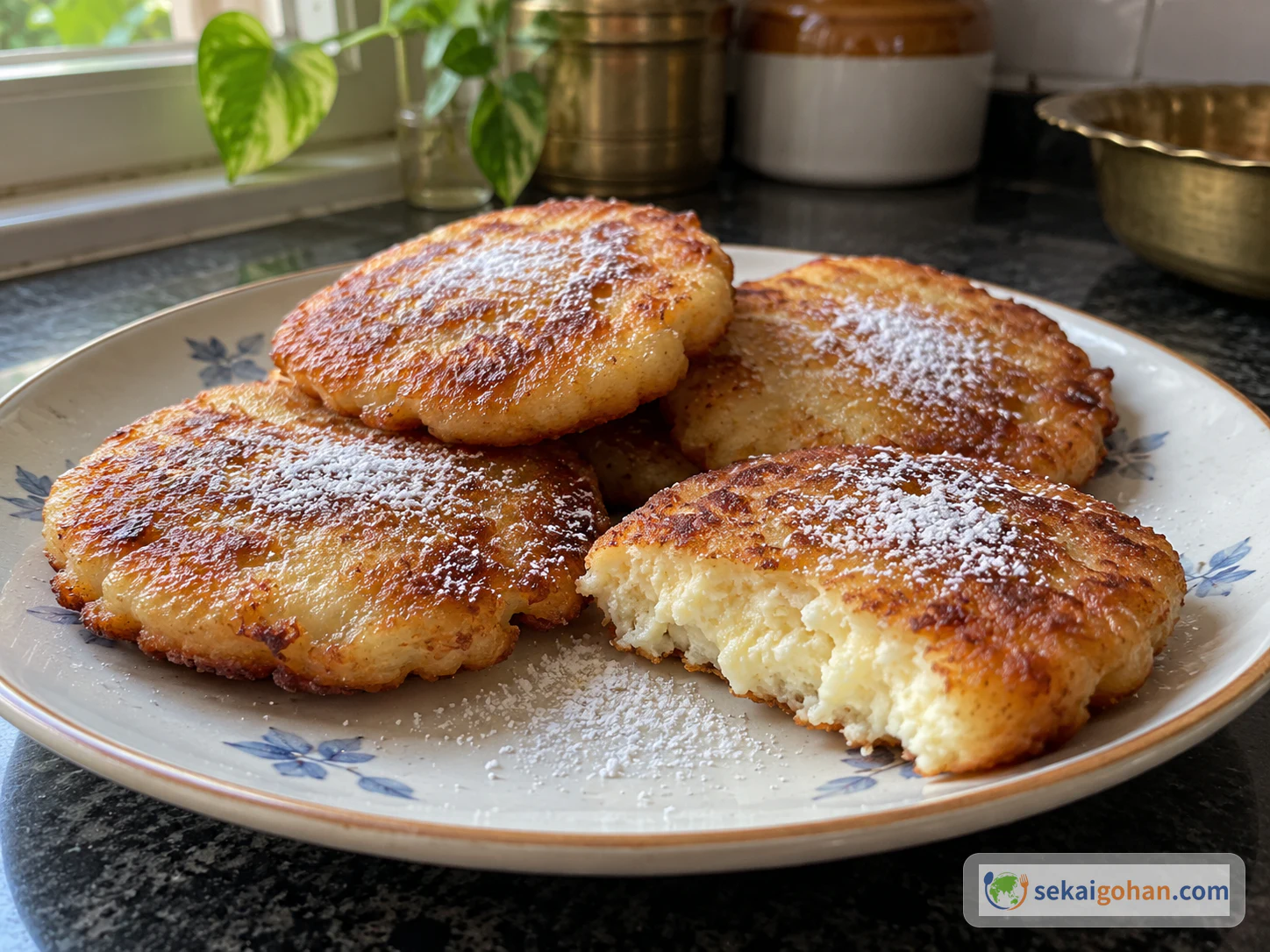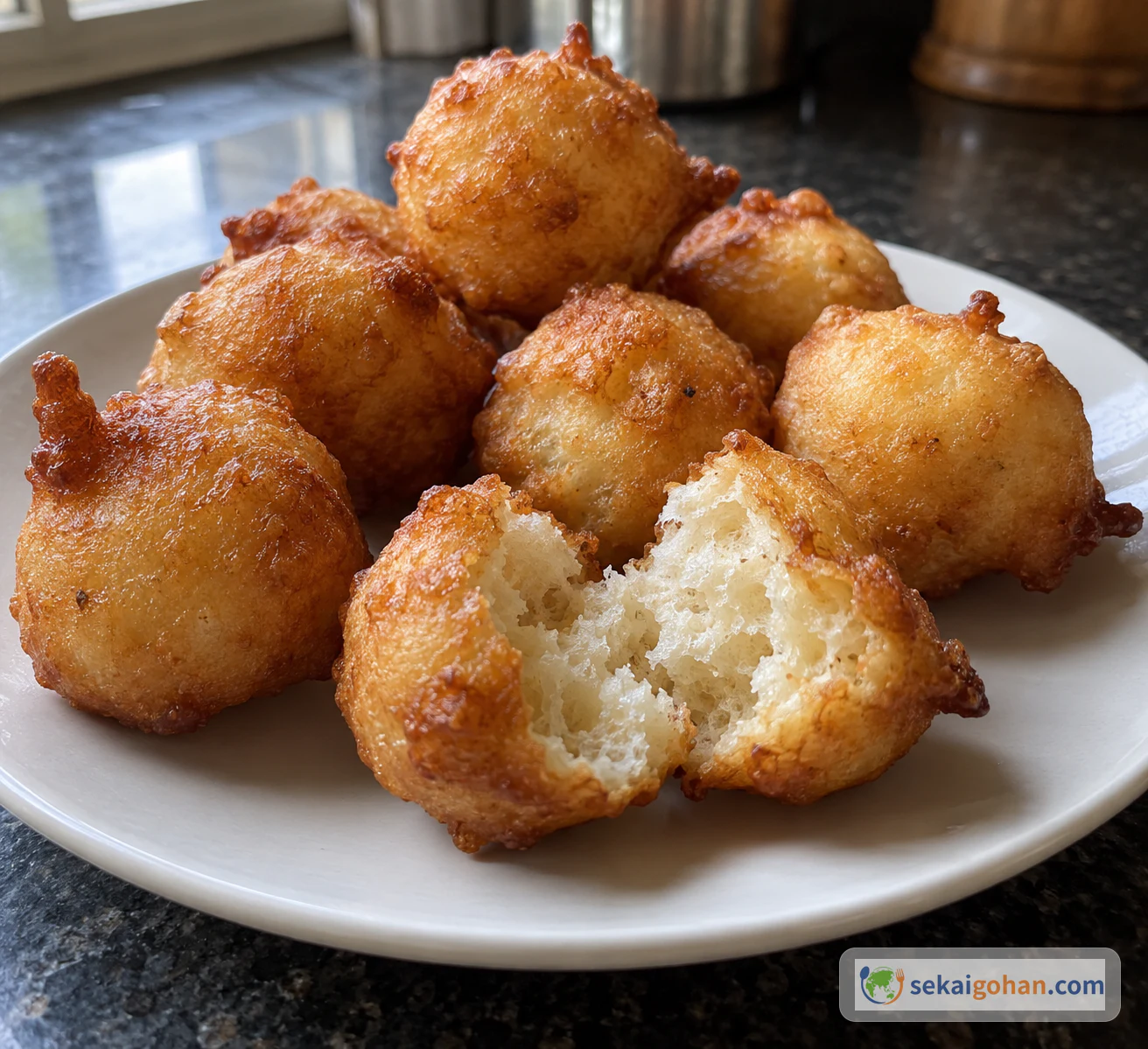
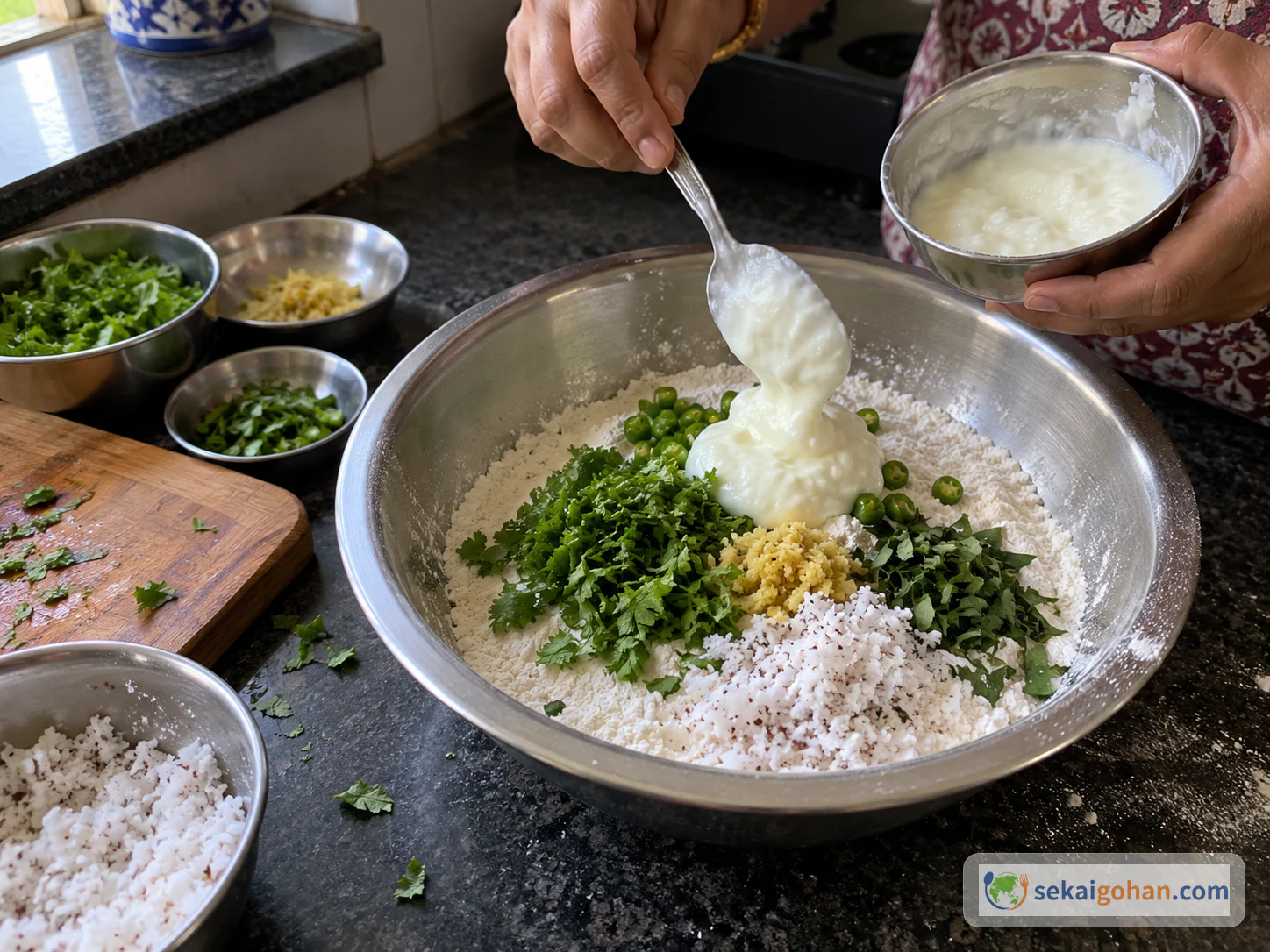
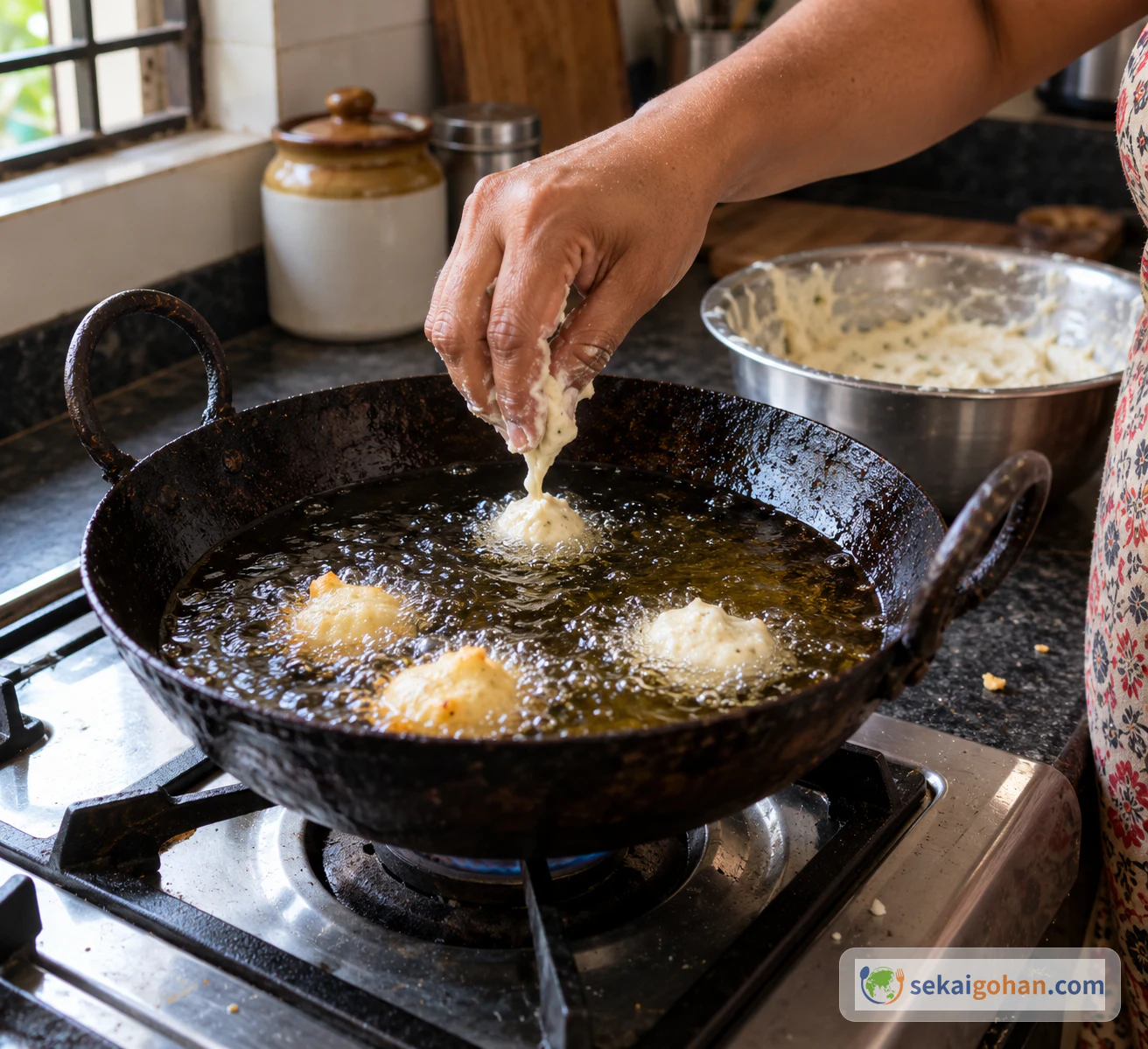
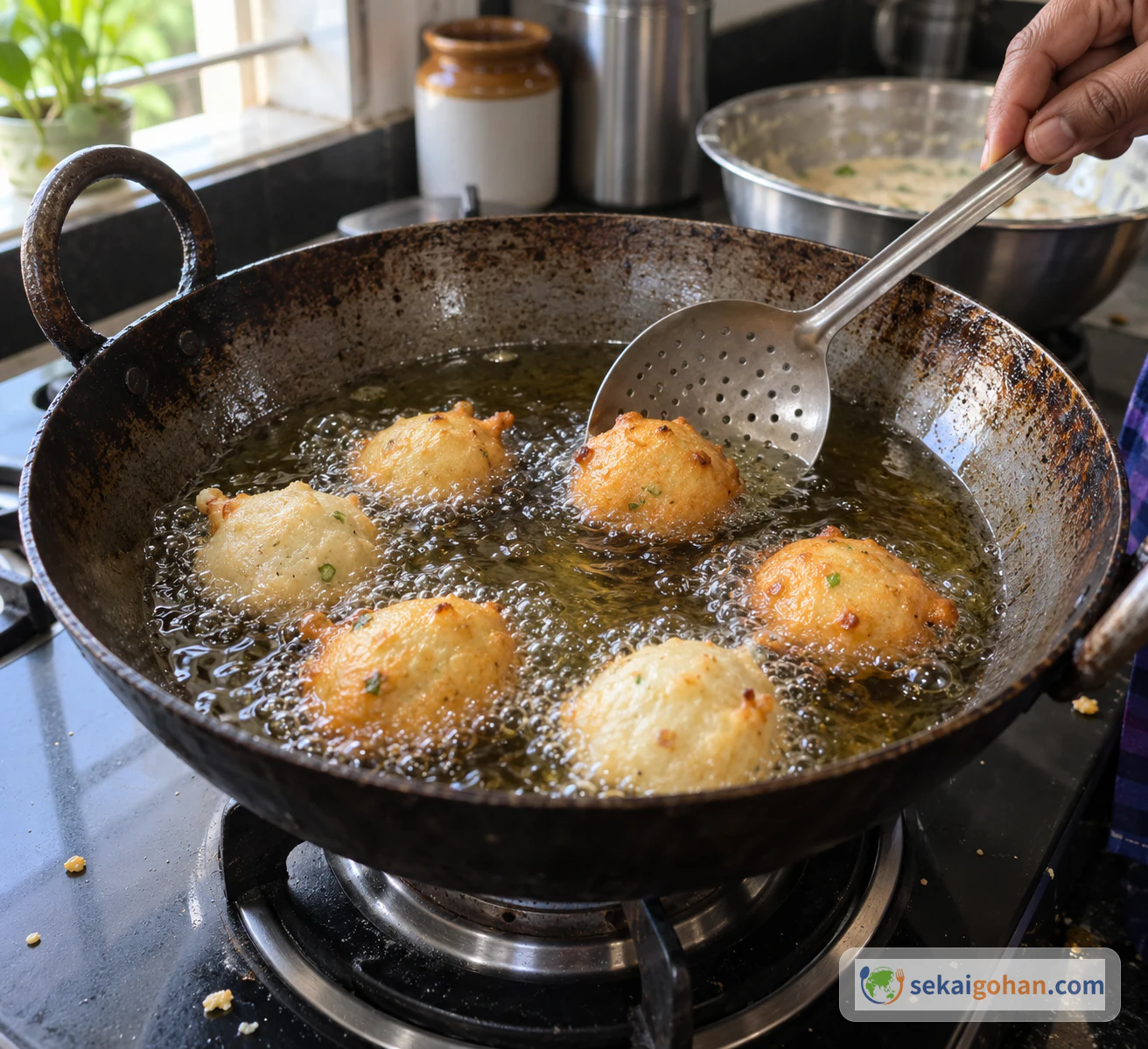
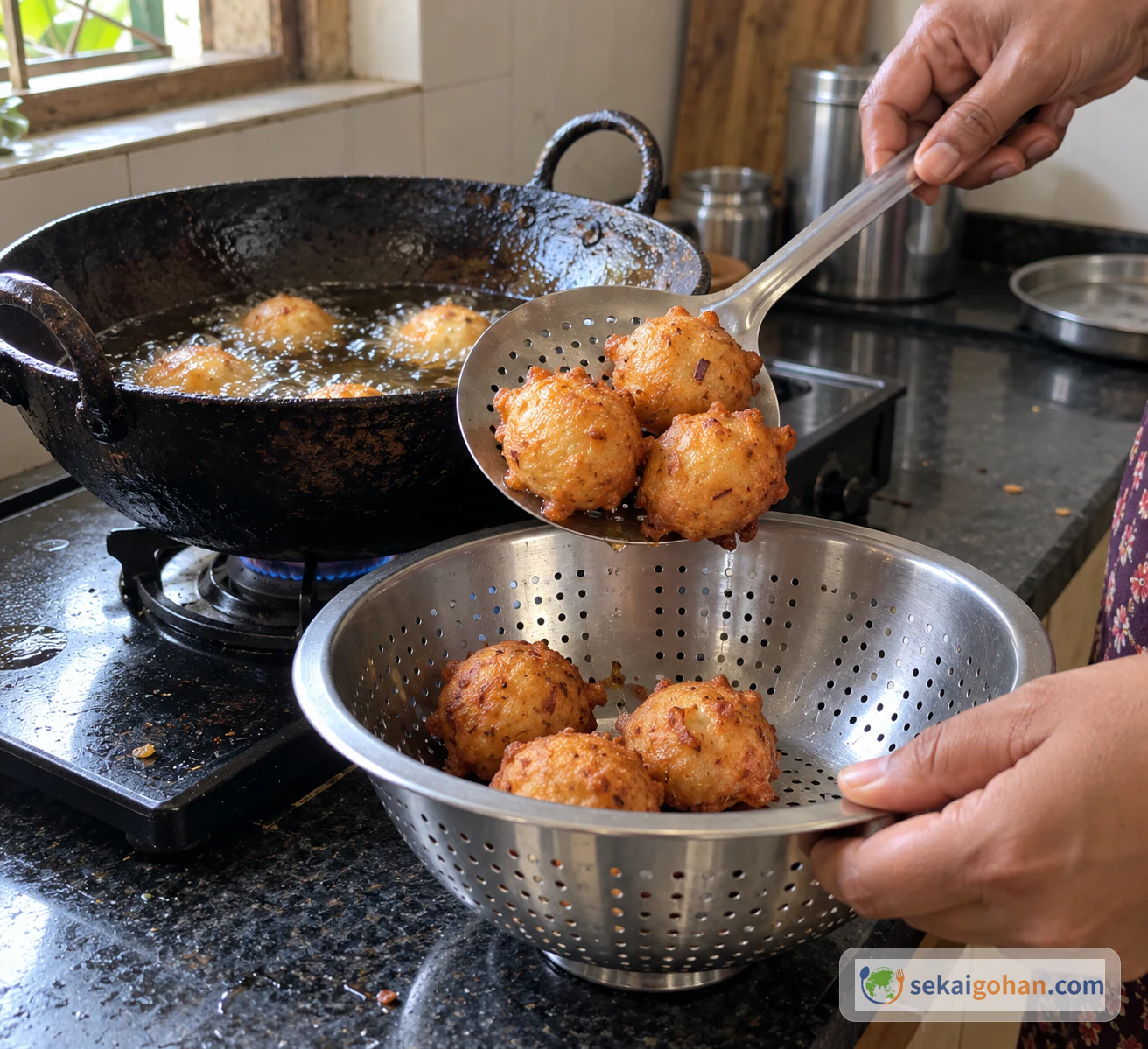
On the coast of Karnataka, evening snacks come out on small plates: four or five little golden fritters, still hot, with a cup of tea or coffee and coconut-coriander chutney on the side. That is Goli Baje. It is a simple batter of maida and curd (yogurt) studded with ginger, green chili, coriander leaves, curry leaves and fresh coconut, and it fries up crisp on the outside and soft and fluffy inside. It belongs to Mangalorean cuisine, and it's a favorite tea-time snack at tiffin centers all over Karnataka. For more dishes from the same country, see India.
About Goli Baje
Goli Baje has no filling. All the flavor is in the batter. Maida (Indian all-purpose flour) gives it body and the yogurt adds a gentle tang. The herbs and coconut bring fresh aroma and flecks of color to every bite. Eateries along the coast, including restaurants in Udupi, serve it in the afternoon or evening alongside a hot drink. It is believed to have originated in Mangaluru.
The snack goes by several names: Mangaluru Bonda, Mangalore Bajji, Mangalore Bonda and Goli Bajji, and the spellings vary. Mysore Bonda is a different snack. It's somewhat similar, but it's made differently. Part of the confusion comes from "bonda," which covers a whole range of fried snacks, stuffed and plain. Mysore Bonda also gets mixed up with urad-dal bonda.
Ingredients (2 servings)
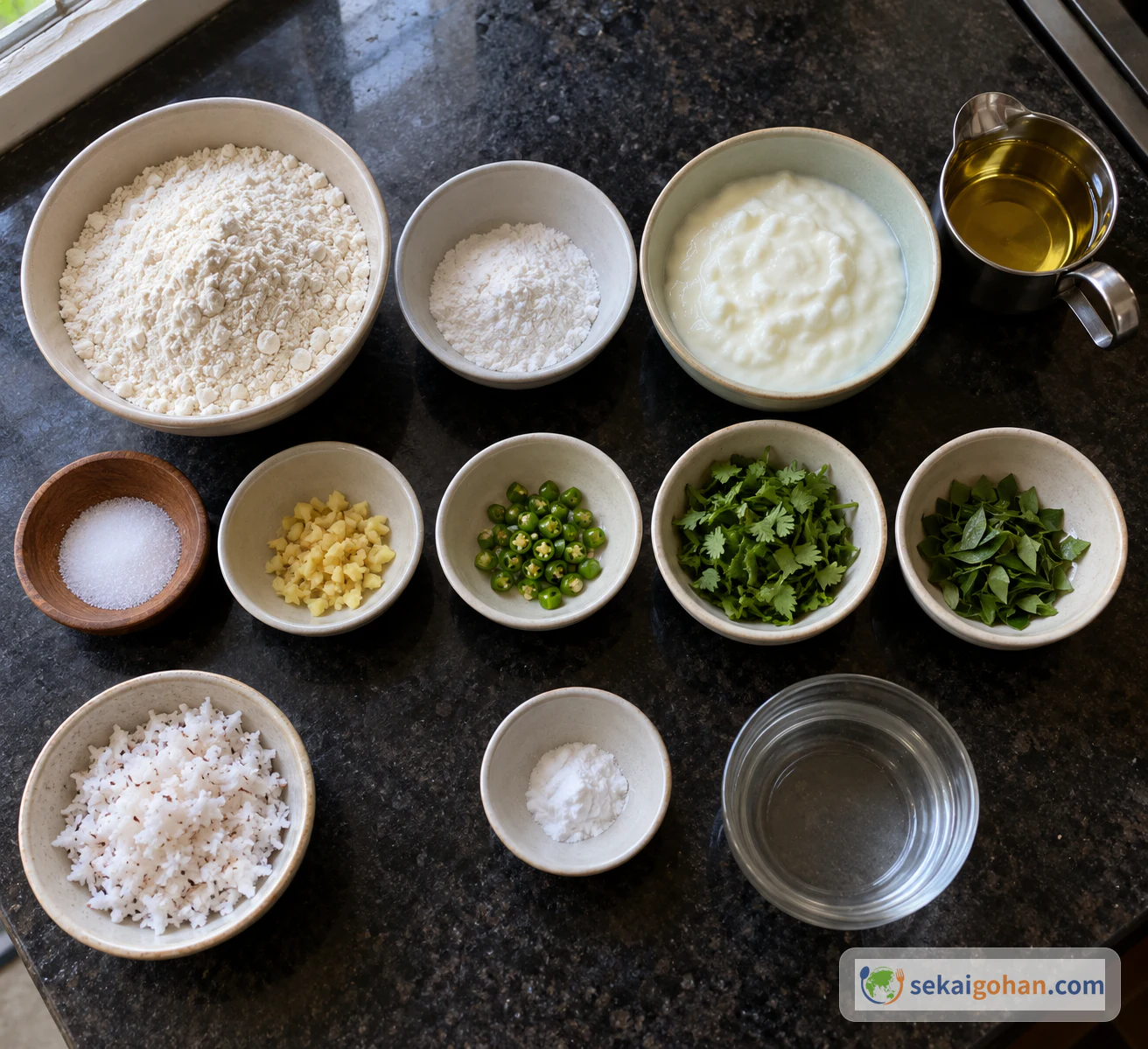
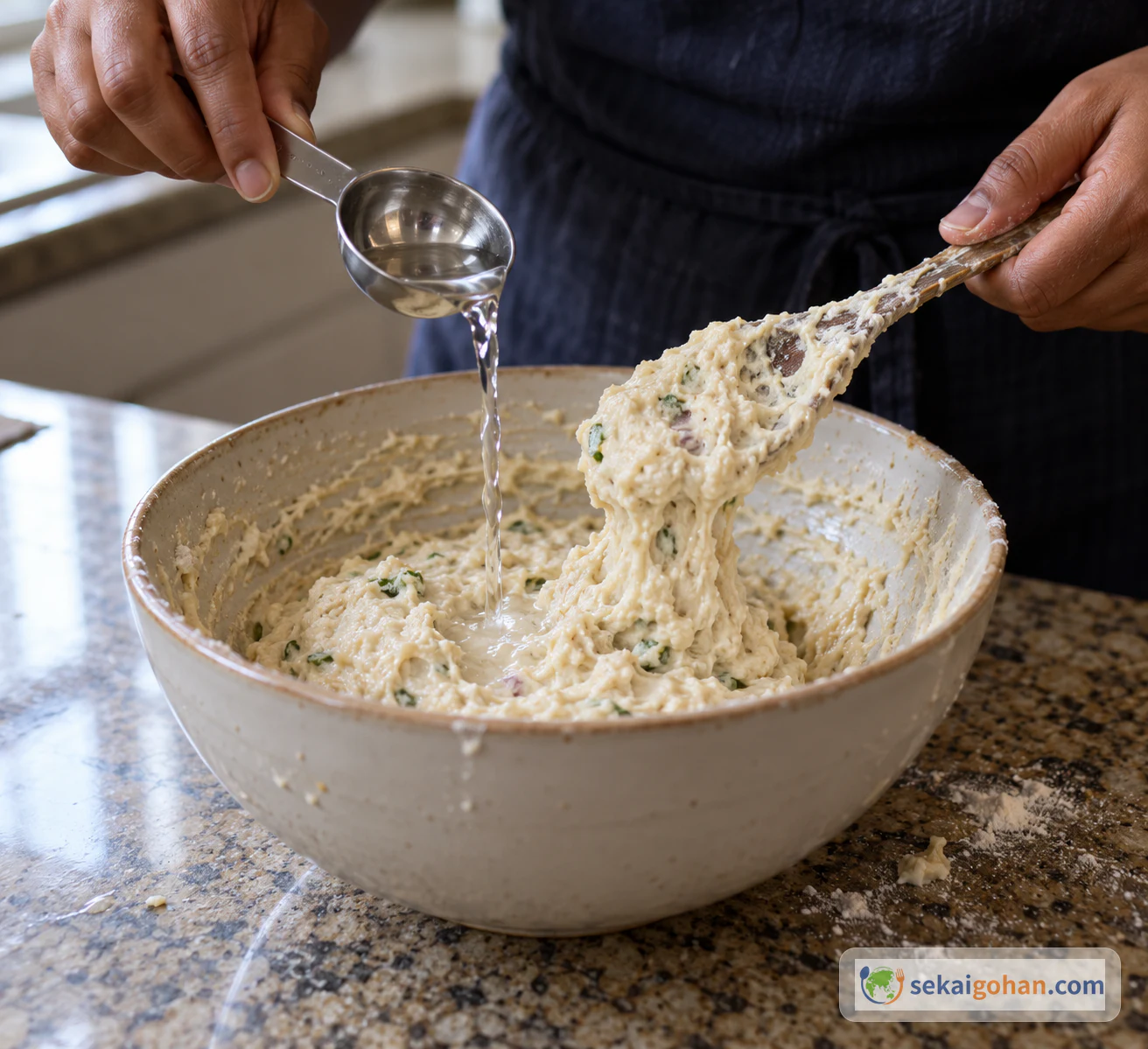
Add the water a little at a time. How much you need depends on how thick your yogurt is.
Maida is wheat flour and curd is a dairy product. Coconut is optional. Check the label of each product you buy for allergens and cross-contact.
Equipment
- Mixing bowl with a lid or cover
- Measuring cups and spoons
- Kadai or deep frying pan
- Slotted spoon
- Steel colander or cooling rack
Choosing Ingredients for Goli Baje
Flour. Look for "maida" or "all-purpose flour," usually sold at Indian grocers. Other flours, such as Japanese soft wheat flour, will give a different texture, so treat them as an experiment. Use real rice flour too. Cornstarch and potato starch behave differently.
Yogurt. Use plain, unsweetened yogurt. Slightly sour yogurt is best. Sweetened or flavored yogurt won't work here.
Green chilies. Size and heat vary a lot from one variety to the next. If you use a local green chili, stick to 1 to 2 and expect the heat to be a bit milder or stronger than intended. Mild peppers such as shishito will taste noticeably different.
Herbs. Use fresh coriander leaves, not dried coriander or ground coriander seed. Curry leaves have an aroma all their own that no other leaf can replace. If you can't find them, leave them out and accept that the fritters will smell different.
Coconut. Fresh grated coconut is optional. Leaving it out doesn't change the taste or texture much.
Baking soda. Use baking soda (bicarbonate of soda), not baking powder.
Method: Mix, Rest, Then Fry in Small Batches
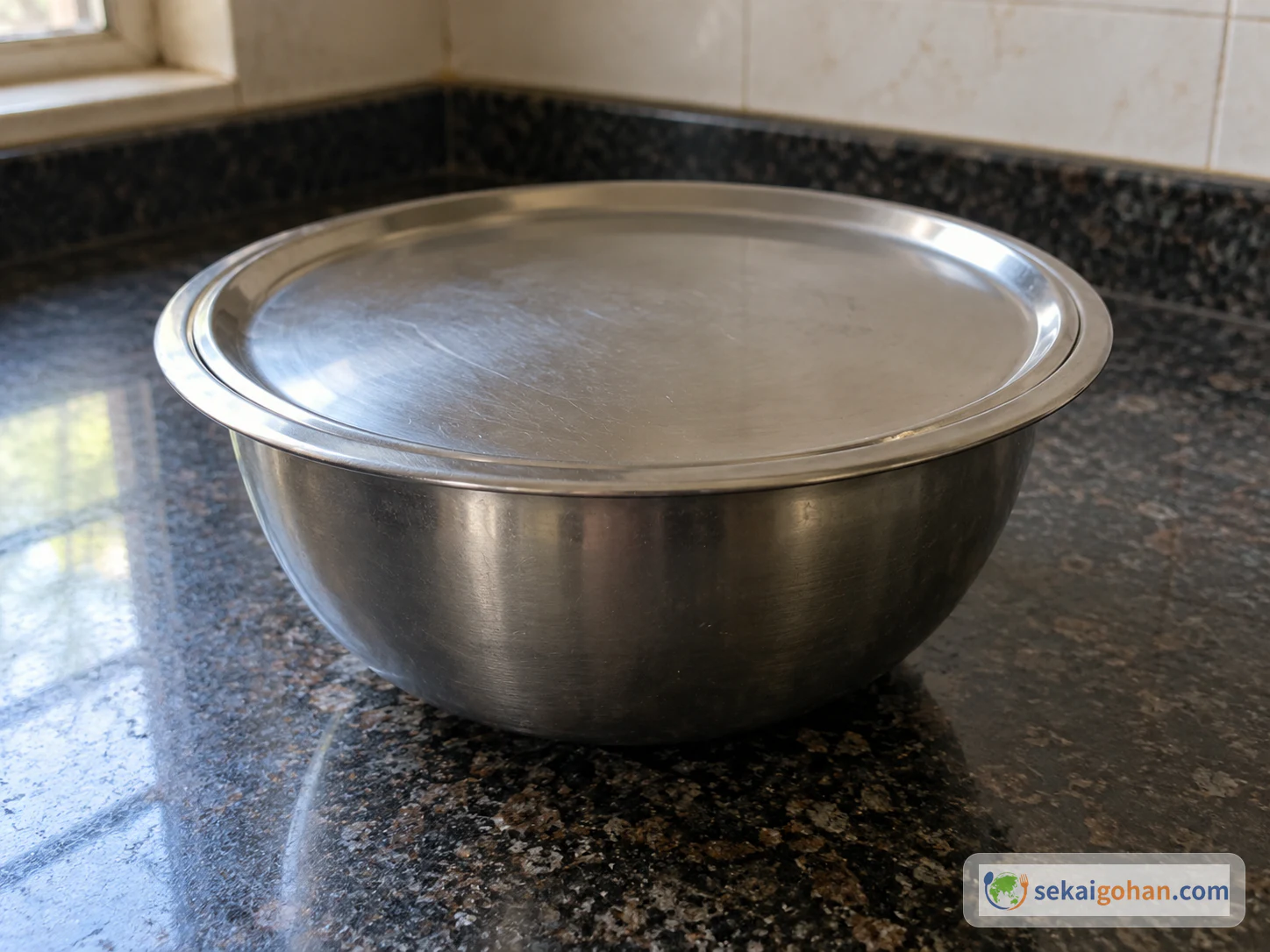
The batter needs a covered rest of at least 2 hours before frying, so mix it well ahead of when you want to eat. Judge the oil and the finished fritters by how they look and sound, not by the clock.
Troubleshooting Goli Baje
Make the batter thick enough to drop from a spoon without running, rest it under a cover, and beat it only briefly before frying. Each fritter should end up golden and crisp outside and soft inside.
| Problem | Likely cause | What to do |
|---|---|---|
| The batter runs off the spoon | Too much water | Add water a little at a time. If the rested batter is loose, sprinkle in a little maida and mix |
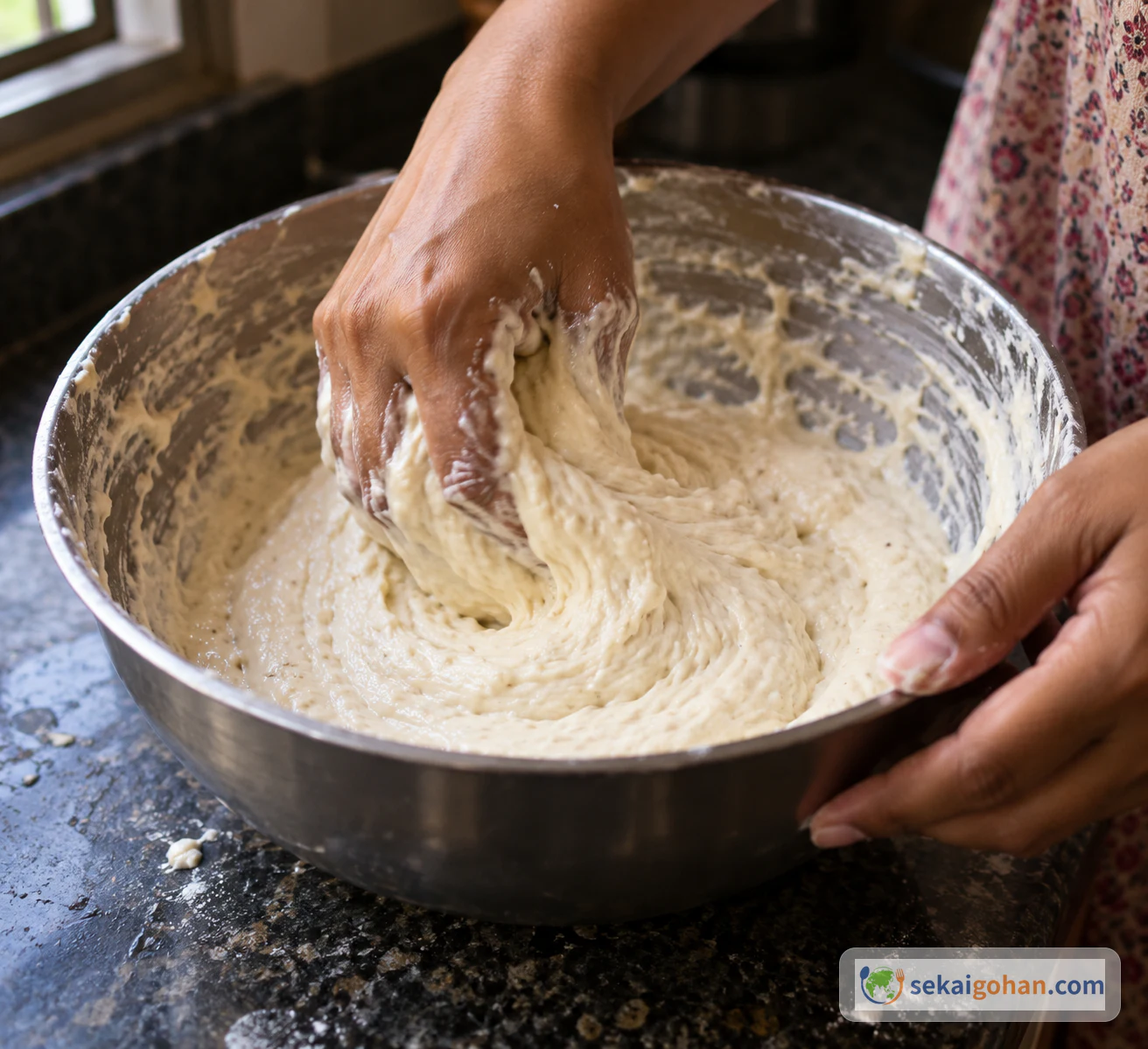
| The fritters soak up too much oil | The batter was beaten too long and became too airy | Beat by hand for only 30 seconds after resting |
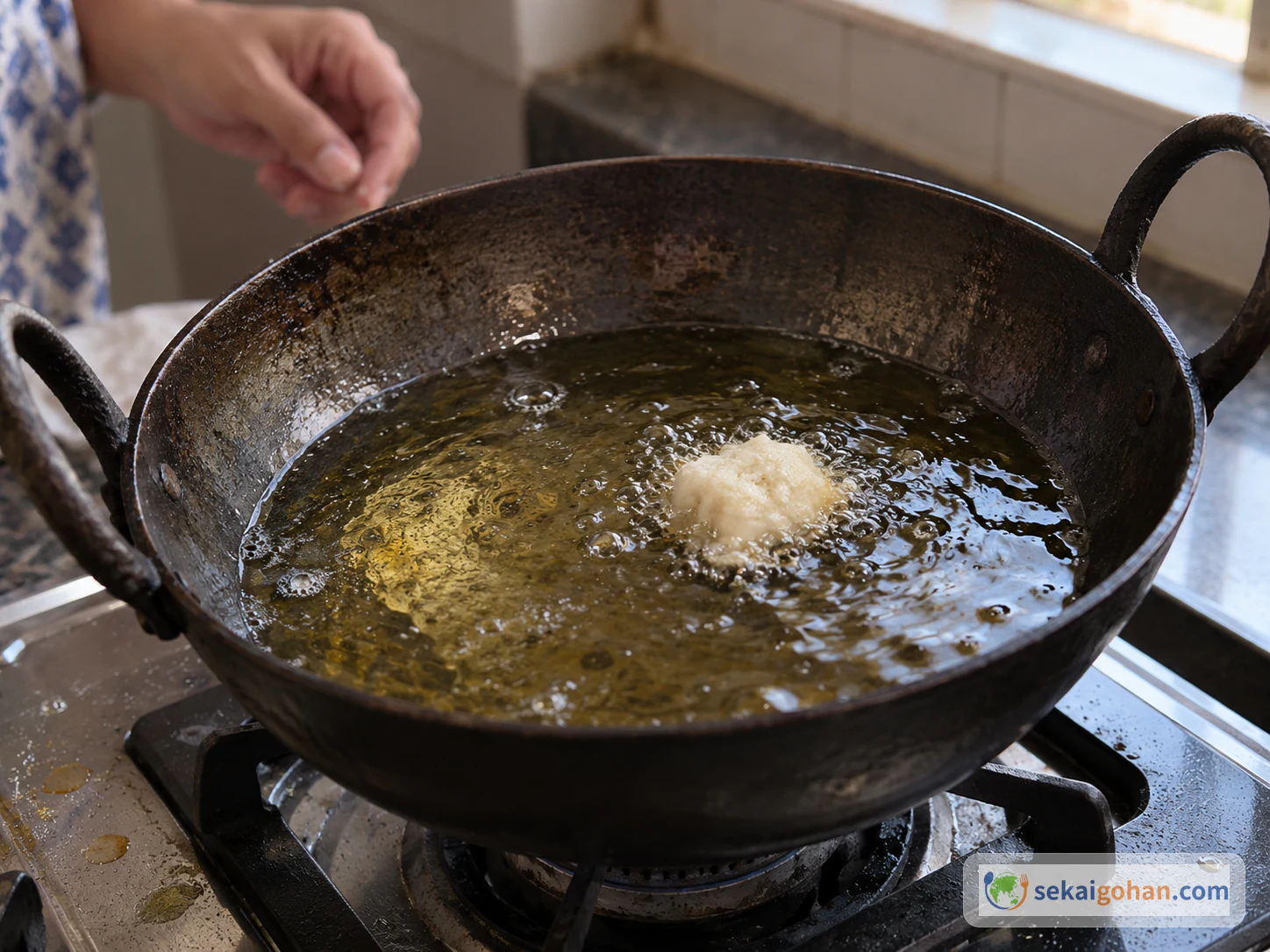
| The test piece browns before it rises | The oil is too hot | Lower the heat slightly and test again with a new small piece |
| The test piece does not sizzle or rise | The oil is not hot enough yet | Keep heating over medium and test again |
| The fritters are larger than expected | Portions were too big | Drop smaller portions; the batter puffs to two or three times its size |
| The fritters stick together or color unevenly | The pan was crowded, or they were moved too early | Fry in smaller batches and leave them untouched for the first 1 to 2 minutes |
| The fritters turned soft and chewy | They cooled before serving | Serve each batch hot |
Serving Goli Baje and Variations
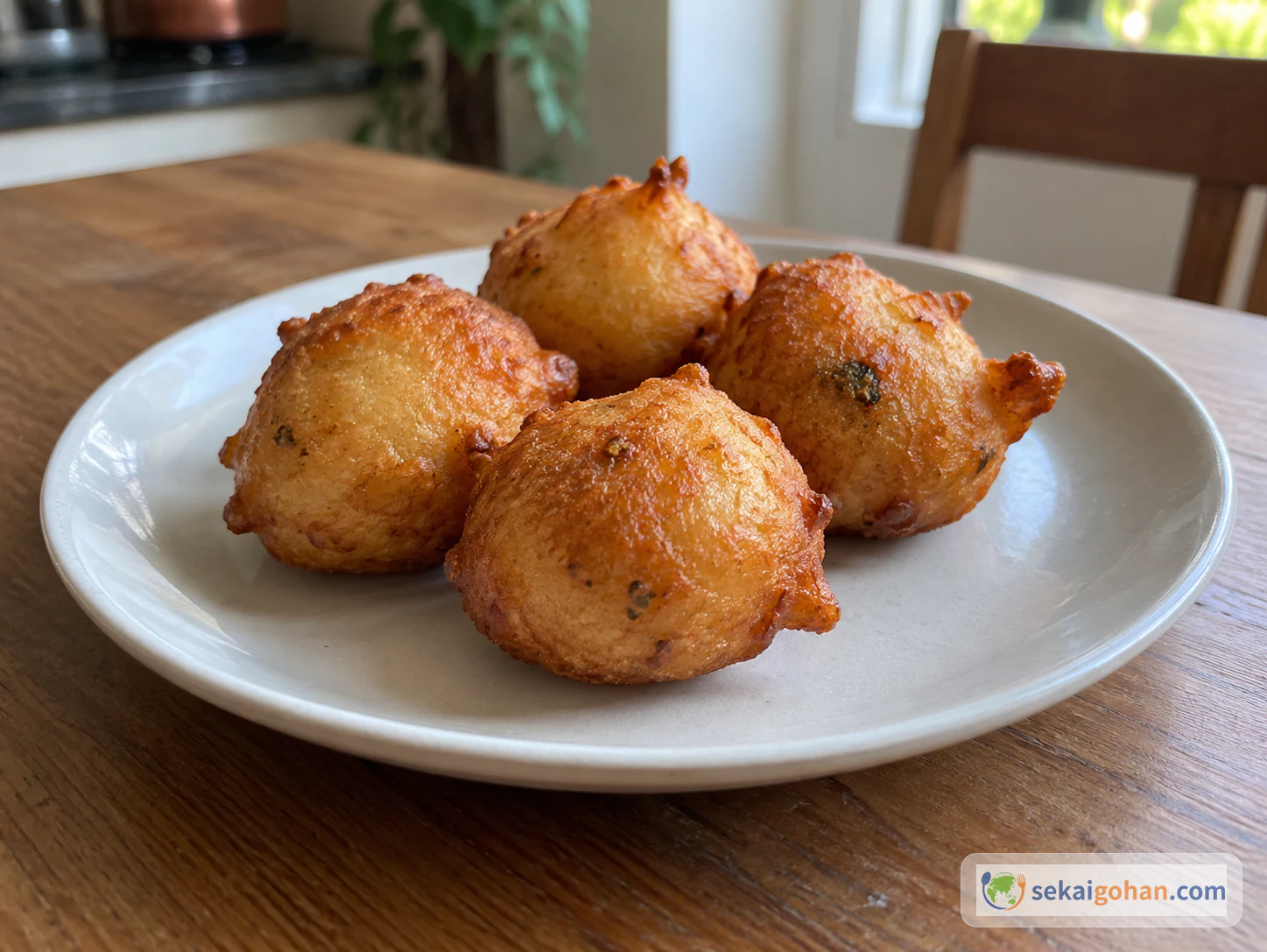
Goli Baje is at its best right out of the oil. As the fritters cool they turn soft and chewy, so fry them just before eating. Serve four or five small pieces per plate with tea or coffee. Add coconut chutney on the side if you have it; any coconut chutney you already make works, and the fritters are good on their own too. How many pieces you get depends on how small you drop each portion.
Cooks in the region make Goli Baje in other ways. One version uses buttermilk and a pinch of asafoetida and rests the batter for 3 hours. Another adds besan (gram flour) and a little sugar to the maida and curd and rests for 1 hour. A fermented version leaves out the baking soda and lets the batter ferment for 6 to 8 hours. Each one is a complete recipe in its own right. If you want to try one, follow it as written rather than swapping single ingredients or resting times into the soda version here.
Frequently Asked Questions
Is it the same as Mangalore Bajji or Mangaluru Bonda?
Yes. These are all names for the same snack. Mysore Bonda is the one that's different.
Can I shorten the resting time with sour yogurt?
With sour curd, you can rest the batter for as little as 30 minutes, and 1 hour is also an option. This recipe calls for at least 2 hours.
How hot should the oil be?
Heat the oil over medium heat and use the test in step 6: a small piece of batter should sizzle and rise to the surface before it browns.