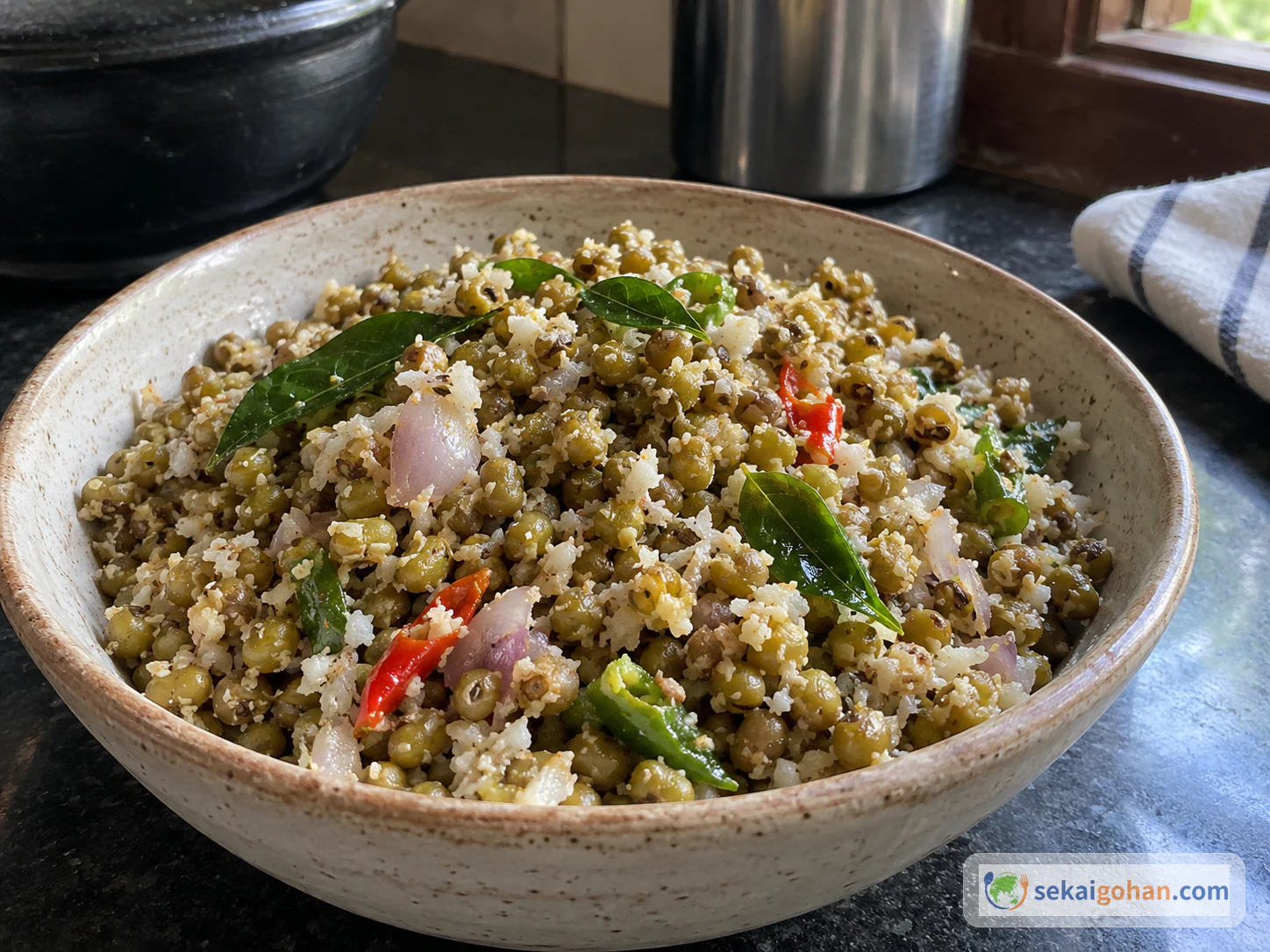
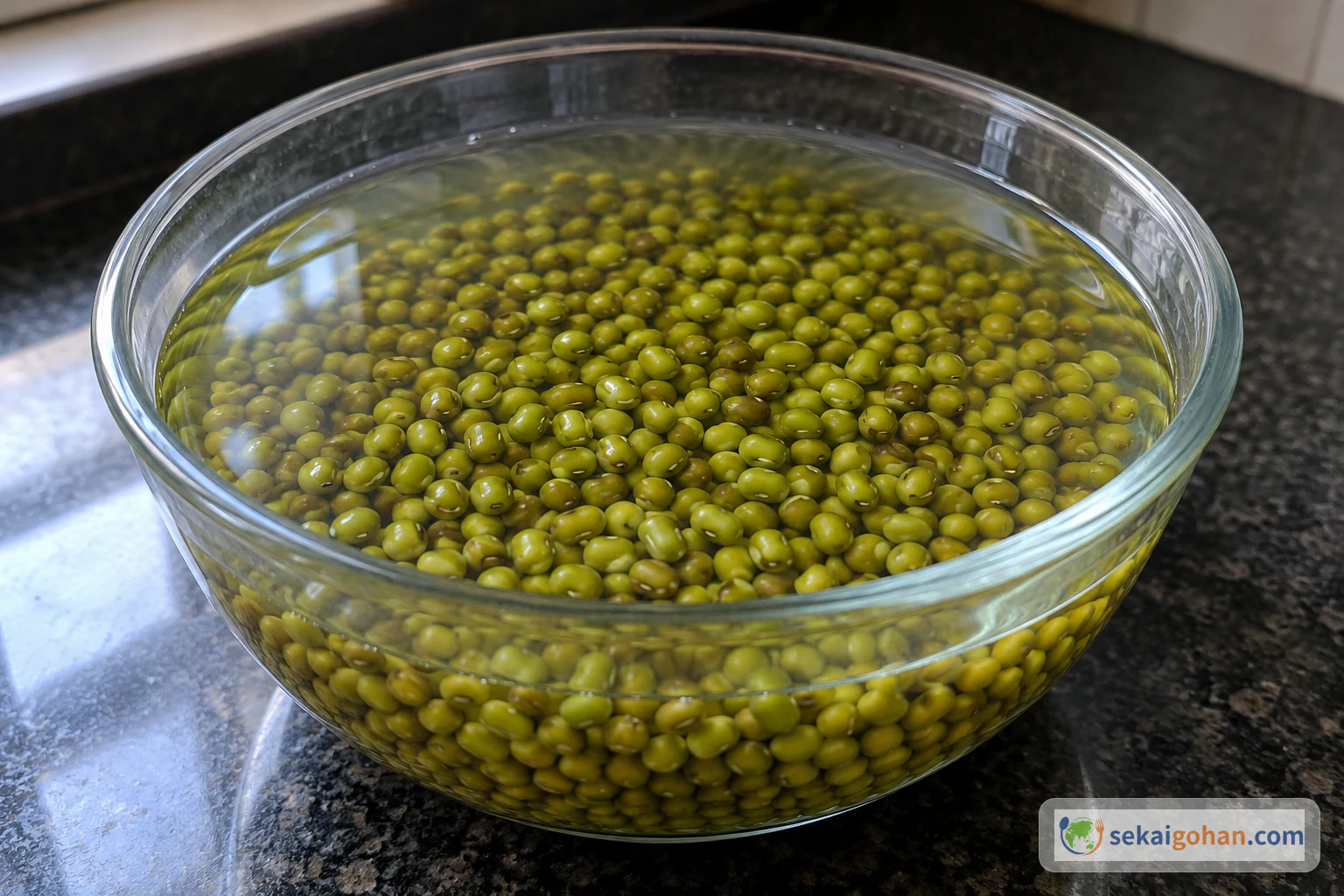
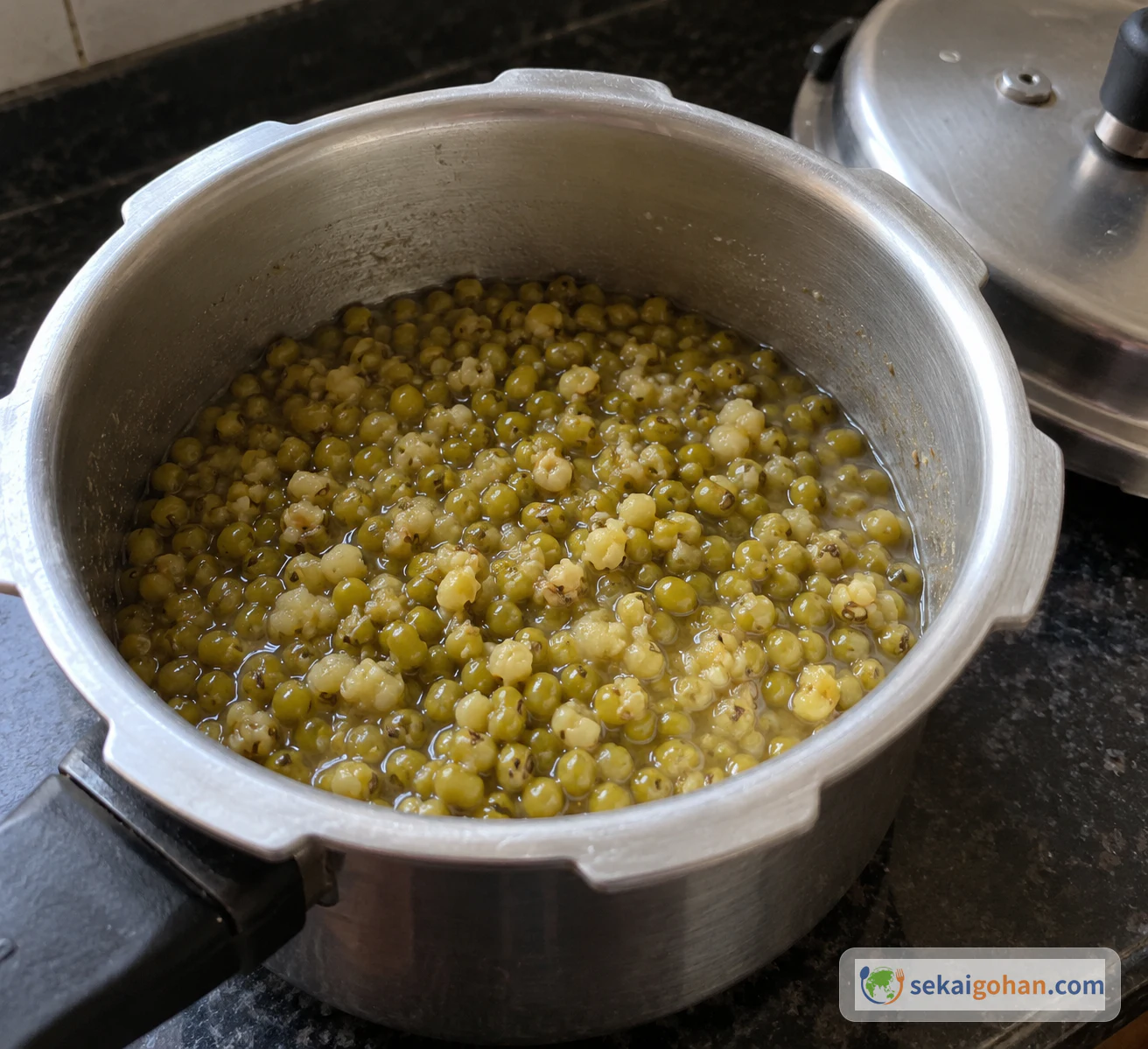
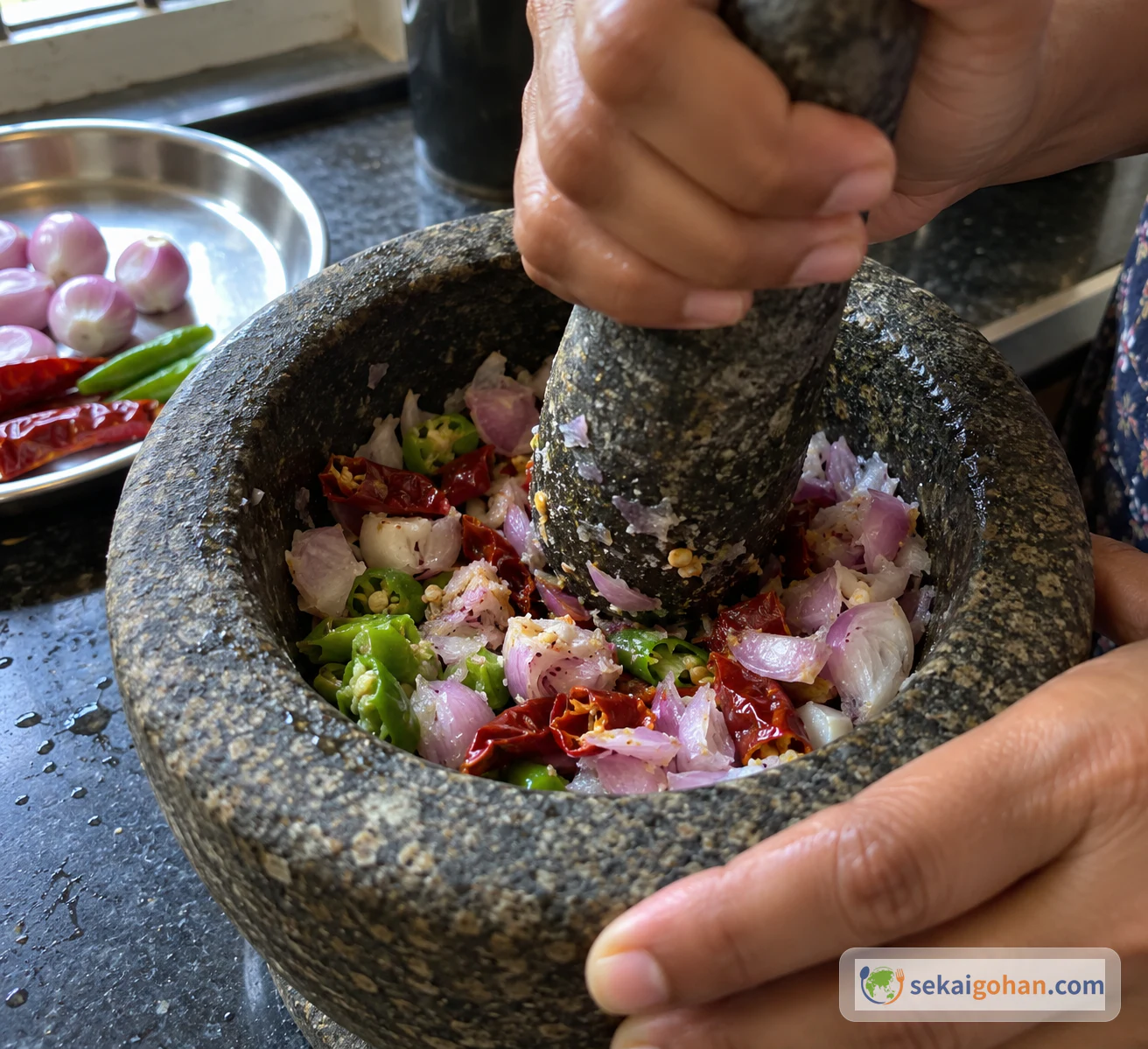
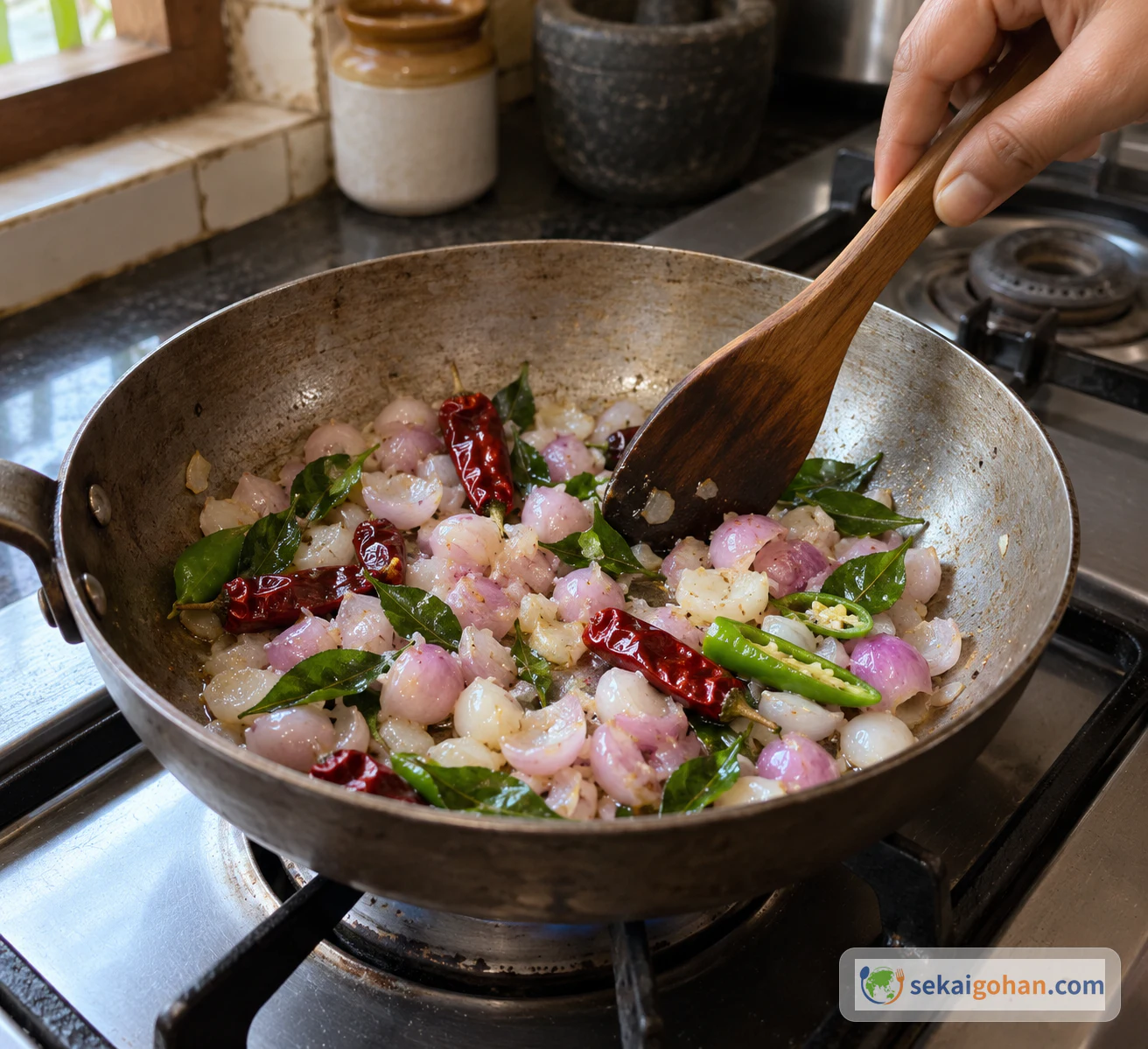
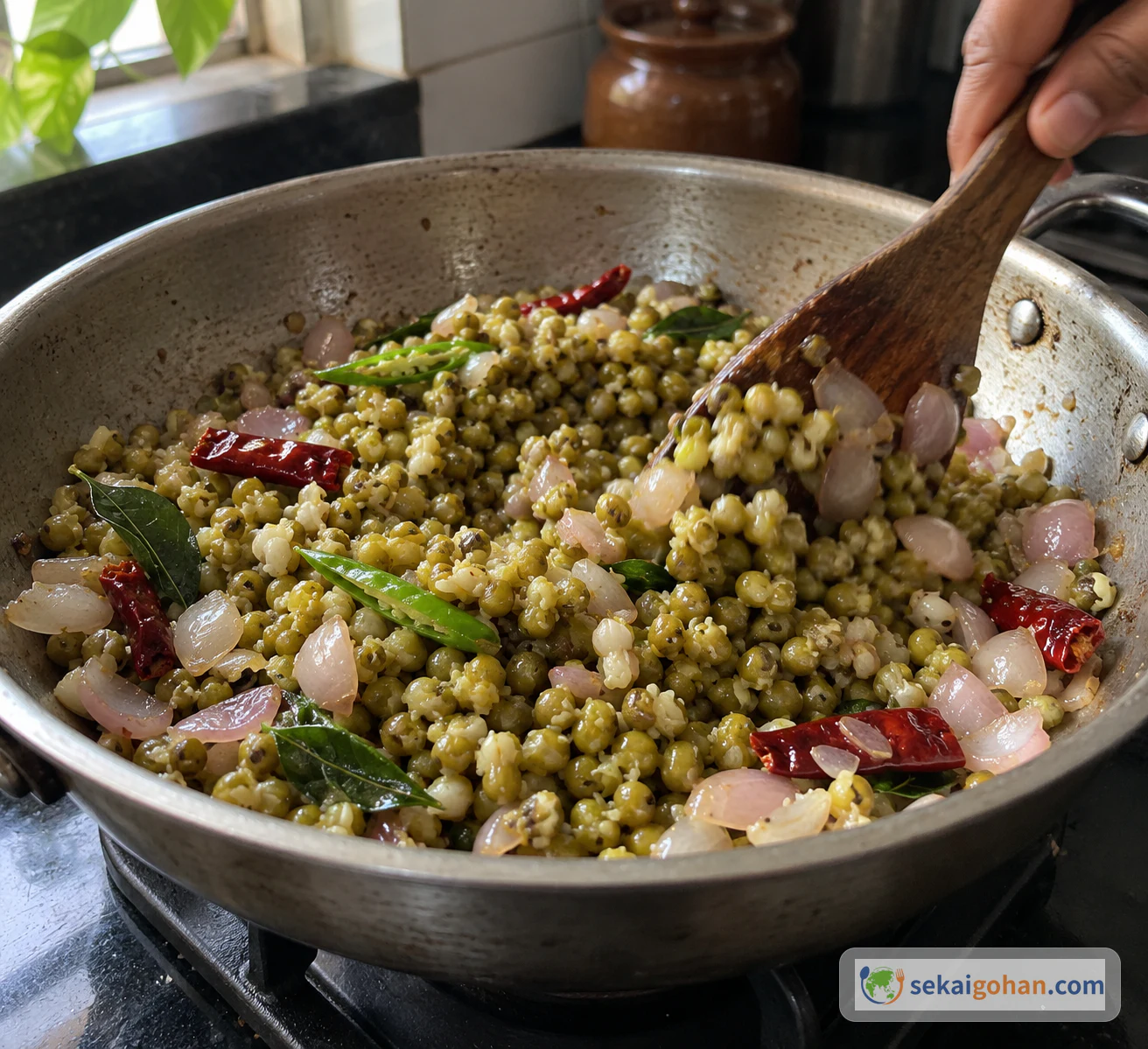
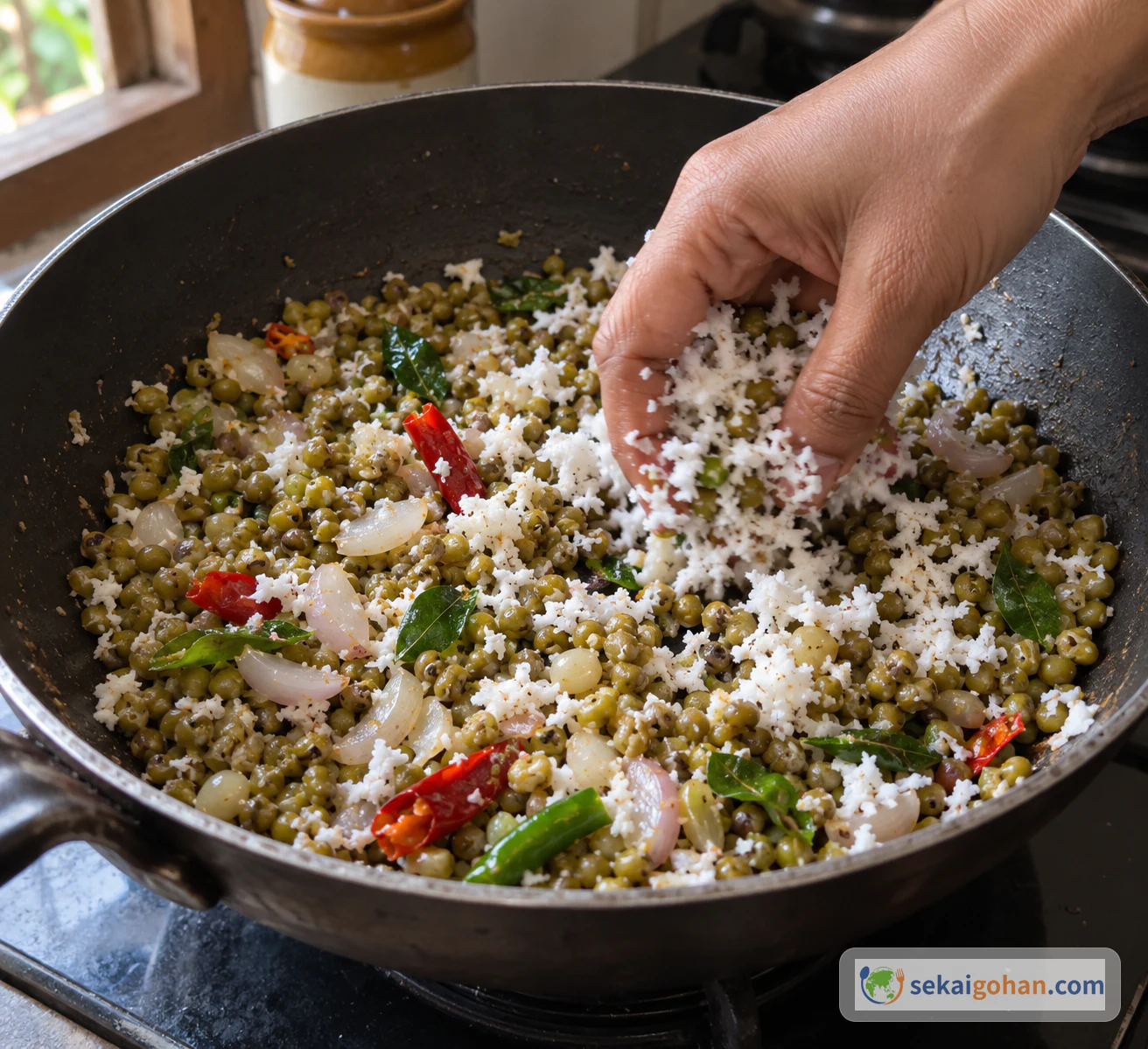
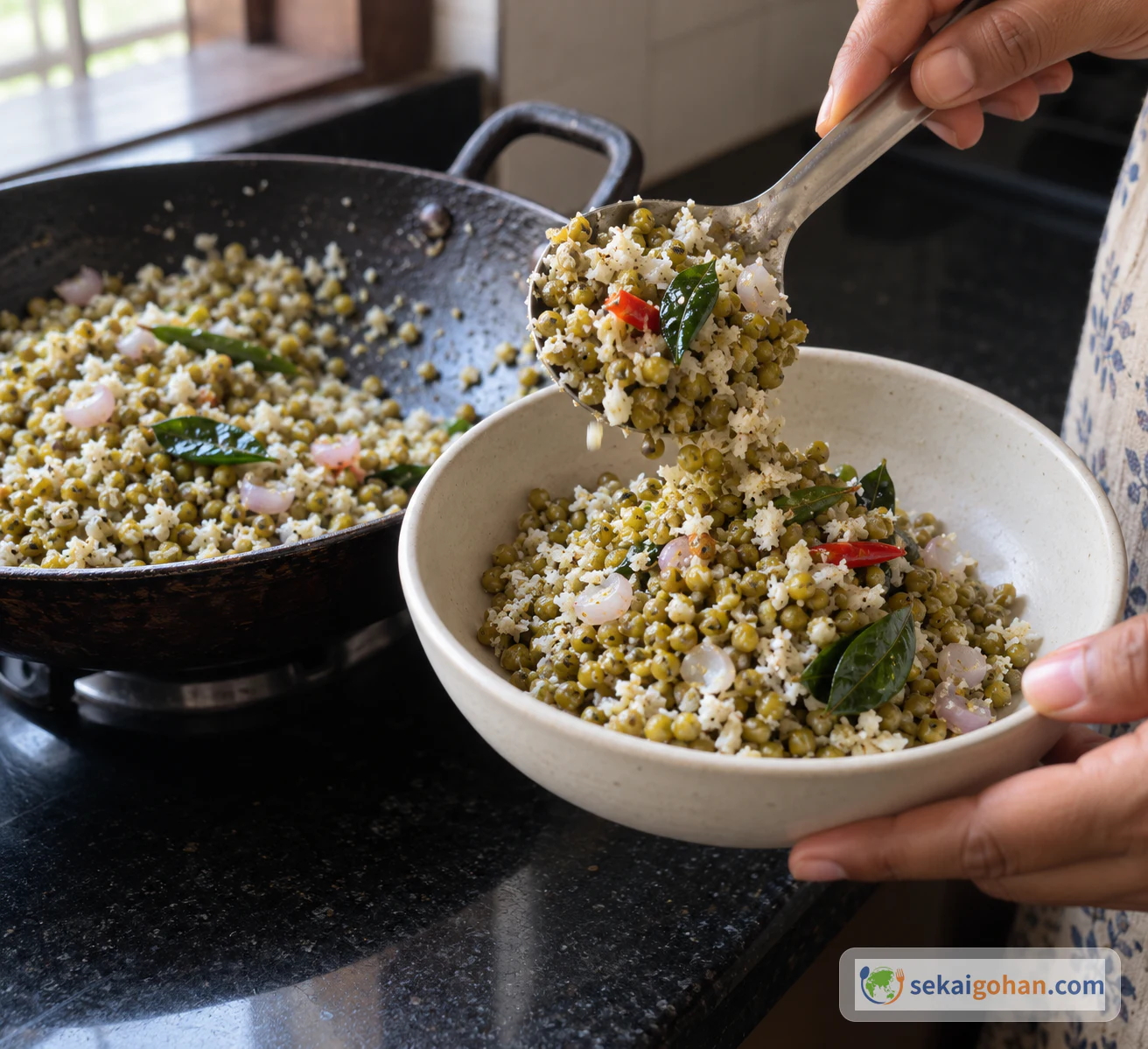
Whole green gram simmers under pressure until soft. In a separate pan, coarsely crushed small onions and chillies hit hot coconut oil with curry leaves and cook until their raw smell is gone. The beans go in, then a handful of grated coconut, and the pan stays on low heat until the last of the water has disappeared. What you end up with is cherupayar puzhukku, a Kerala dish of whole beans that is dry and spoonable, with no gravy at all.
Cherupayar Puzhukku in Kerala Cooking
Cherupayar (ചെറുപയർ) is the Malayalam name for green gram, Vigna radiata, which you may know as whole mung. In Malayalam, puzhunguka means boiling or parboiling, and in food, puzhukku refers to a dish of boiled fruits or vegetables. The name doesn't settle the texture, though. This dish finishes dry because of how it is cooked.
Green gram is easy to mix up with other pulses. Labels such as "green moong dal" or "green lentils" can make it sound like masoor dal, but this dish uses whole green gram, never red lentils. It also stands apart from other Indian dishes built on pulses, like dal tadka, a stew of split pulses finished with a hot tarka, or chana masala, a chickpea curry.
Keep the beans whole and soft, the chillies and small onions chunky rather than pasted, the coconut for last, and the finish dry.
Ingredients: Whole Green Gram, Chillies, Small Onions and Coconut
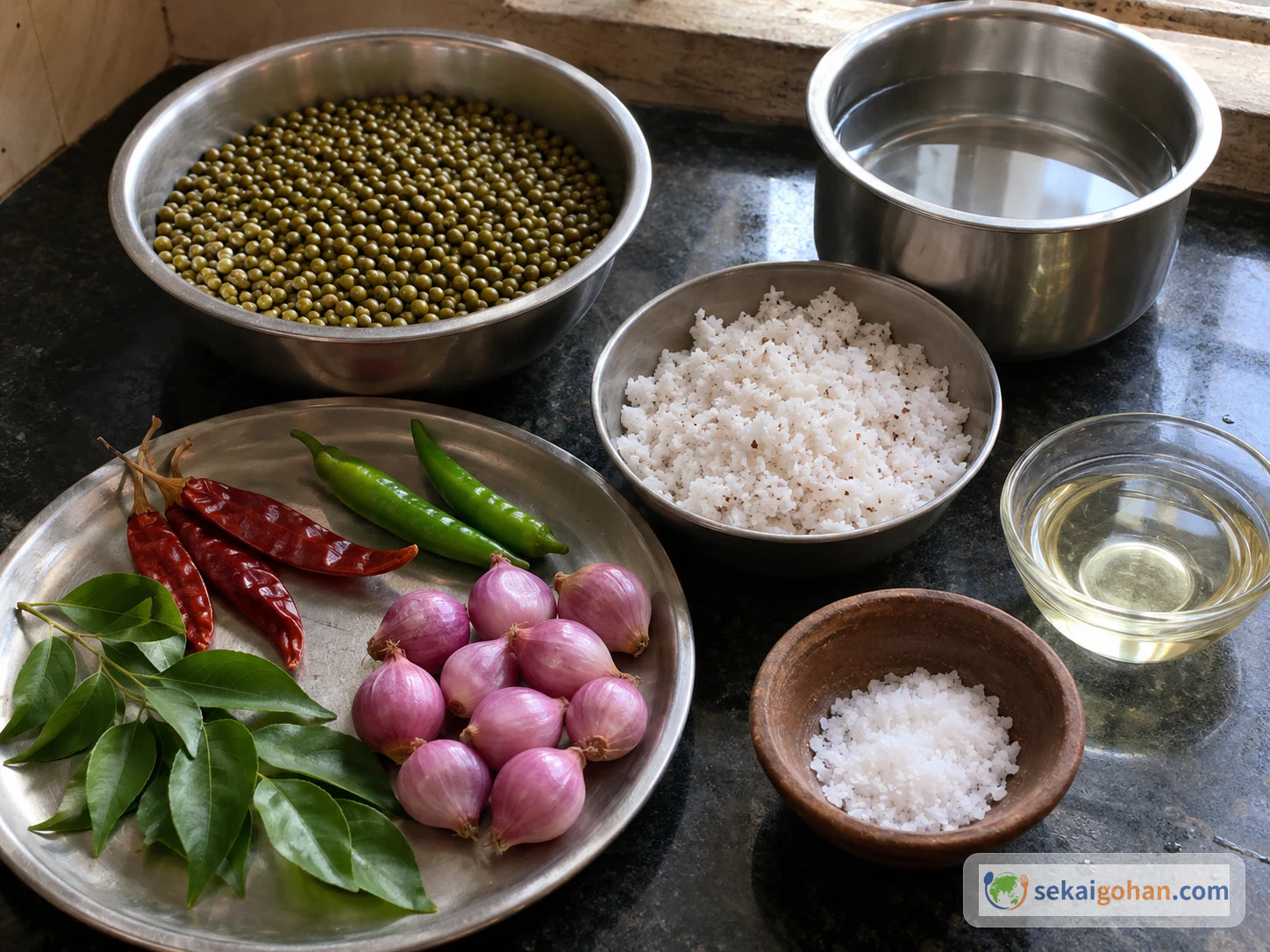
This dish contains green gram and coconut.
Equipment
- Bowl for soaking
- Pressure cooker, with its manual
- Measuring jug marked in ml
- Strainer or colander
- Mortar and pestle, or another tool that can crush coarsely
- Pan
- Serving plate
Choosing Green Gram, Coconut and Water
- Beans: Look for whole green gram, whole moong or cherupayar. Red masoor and split mung are different ingredients and won't give you the same dish.
- Coconut: Choose unsweetened grated coconut, not the sweetened kind used for confectionery.
- Curry leaves and coconut oil: Use both as listed. One string of curry leaves covers both the frying and the garnish.
- Chillies: Heat depends on the variety and size you buy.
- Garlic: Leave it out. "1 pod" is unclear, since it could mean a clove or a whole bulb.
The water is the one thing to handle carefully. The ingredient list says 1/4 cup and the method says 1/2 cup, but both fall below the minimum a pressure cooker needs. Don't add the two together either.
| Cooker size | Minimum water, first 10 minutes of pressure cooking |
|---|---|
| 1.5–3 L | 1 cup (240 ml) |
| 3.5–6 L | 1½ cups (360 ml) |
| 6.5–12 L | 2 cups (480 ml) |
Use at least 360 ml, or more if your cooker's manual asks for it, and measure in ml: 1.5 cups of a 200 ml cup gives only 300 ml. A 6.5–12 L cooker needs at least 480 ml. Because the dish still has to finish dry, drain off the excess water once the beans are soft.
Draining the water and returning hard beans to pressure with more water are changes from the standard method. Check them against your manual first. If the manual does not allow this method, do not cook the beans this way in that cooker.
Method: Soft Beans First, Then a Dry Finish
Never force the lid open, and do not open the cooker until the pressure has fully released. A set waiting time alone does not prove that it has. Do not lift the vent weight to release pressure.
Fixing Problems with Cherupayar Puzhukku
When it's right, you'll see soft whole beans, visible pieces of onion and chilli, flecks of coconut, and a dry pan.
| Problem | What to check | What to do |
|---|---|---|
| The beans are still hard | One whistle can be too little after a 30-minute soak | Do not drain them. Add your cooker's minimum amount of water, check the 1/3 limit, and return to pressure for a few more minutes |
| The lid will not open | Pressure is still inside | Wait and follow your manual. Do not force the lid or lift the vent weight |
| The aromatics turned to paste | They were crushed too long | Stop earlier next time, while the pieces are still chunky |
| The pan is wet | The beans were not drained enough, or the final cooking stopped too soon | Keep cooking on low until dry, and do not add water in the pan |
| The dish is too hot | Chilli varieties differ | Choose milder chillies or use fewer next time, knowing this changes the listed amounts |
Serving Cherupayar Puzhukku and Related Dishes
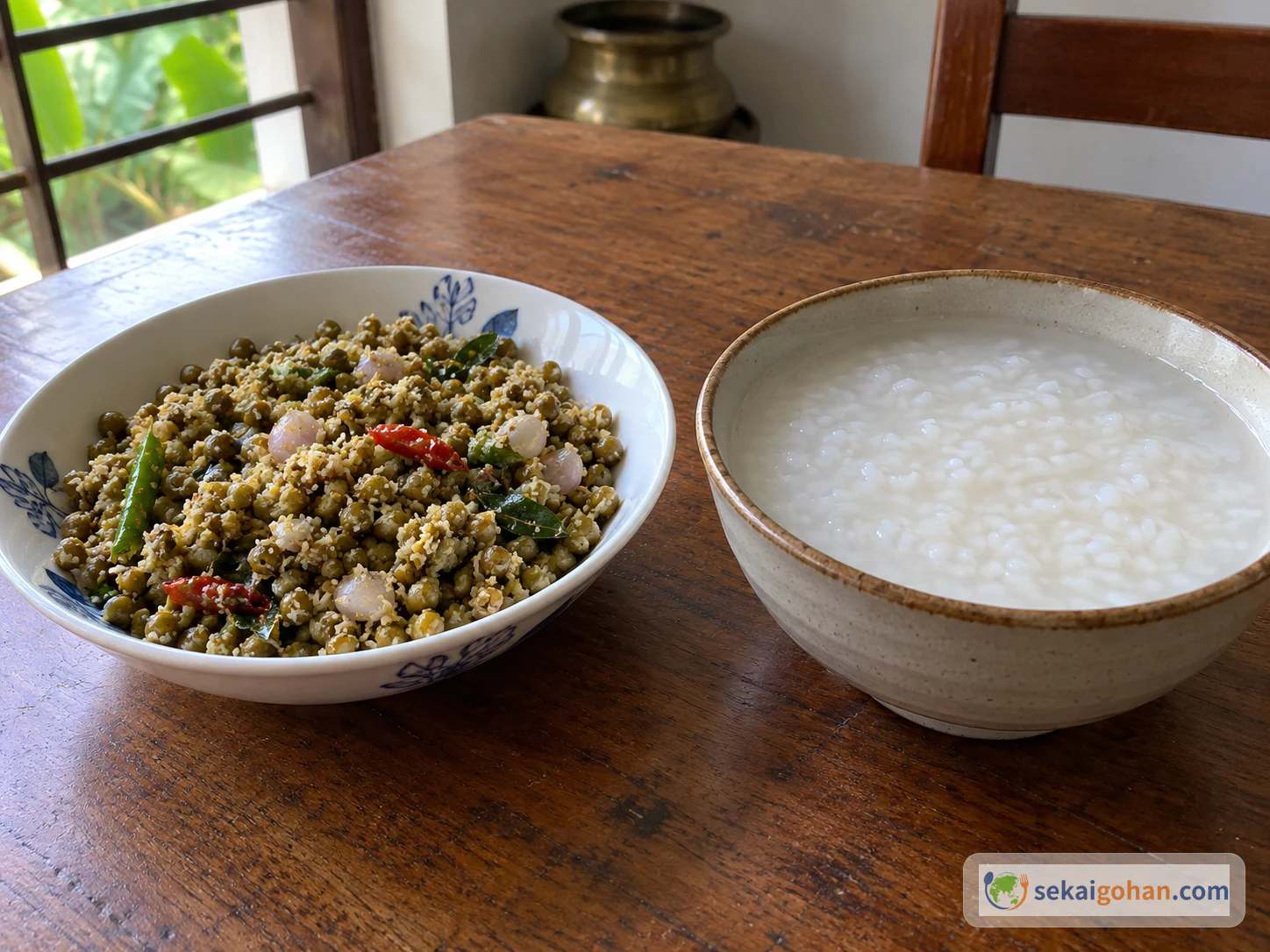
Serve the puzhukku with kanji, a rice porridge made and served on its own. The two go very well together. Chiratta puttu with cherupayar is another popular pairing in Kerala, and in Palakkad, one home serves cherupayar puzhukku with Vishu Kanji.
Other Kerala recipes use the same bean in different ways. Each one is a separate formula, so cook them on their own terms.
| Version | What differs |
|---|---|
| Cheru Payar | Soaks the beans for one hour, boils them with a little salt, tempers mustard, red chilli, curry leaves and small onion in coconut oil, then mixes in the beans and grated coconut. Served with chiratta puttu |
| Cherupayar curry | Adds a blended paste of coconut, cumin, green chilli and curry leaf to pressure-cooked beans, simmers them with water as needed, and finishes with a tempering. A curry with liquid rather than a dry dish |
| With garlic | Optional. If you add it, crush it with the aromatics in step 3 and choose the amount yourself |
Frequently Asked Questions
How many minutes does the pressure cooker need?
There's no fixed minute count, because one whistle doesn't equal a set time. Cook to one whistle, wait 10 minutes before opening, and cook a few minutes more if the beans aren't done. Go by how soft the beans are, and follow your manual.
Is 10 minutes enough before opening the cooker?
Not always. Pressure can take 10–15 minutes to drop, and that varies by cooker. Open it only after it has cooled and the pressure inside has come down, and never force it.
Do these rules apply to every cooker?
No. The minimum water amounts, the 1/3 fill limit for pulses and the opening rules above come from one cooker brand. If you have a different brand, its own manual comes first.
Should it have any sauce?
No. Once the coconut goes in, cook until the water left with the beans is gone. If you want a dish with liquid, try the cherupayar curry above.