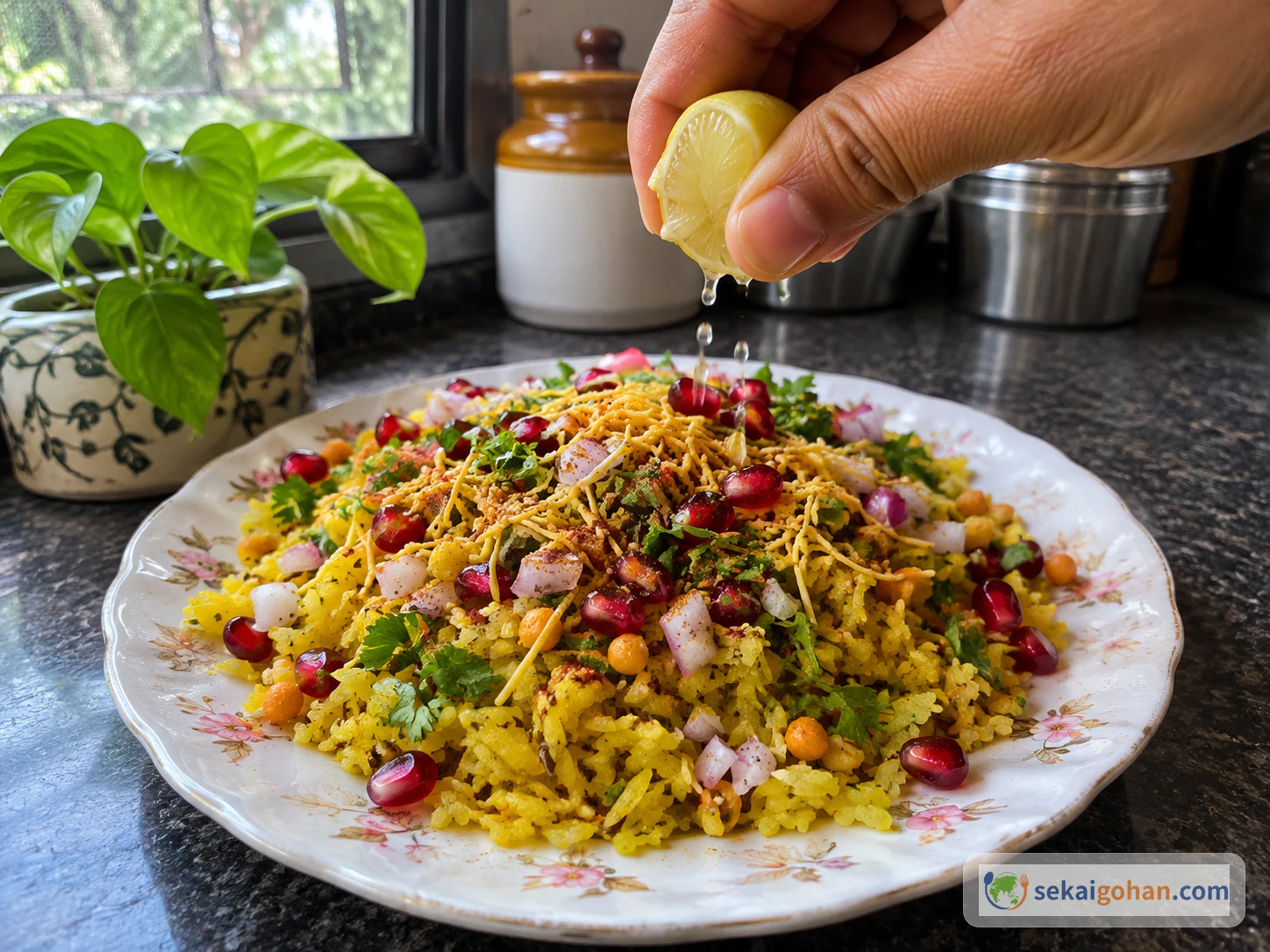
Indori Poha: Fennel-Scented Flattened Rice from Indore
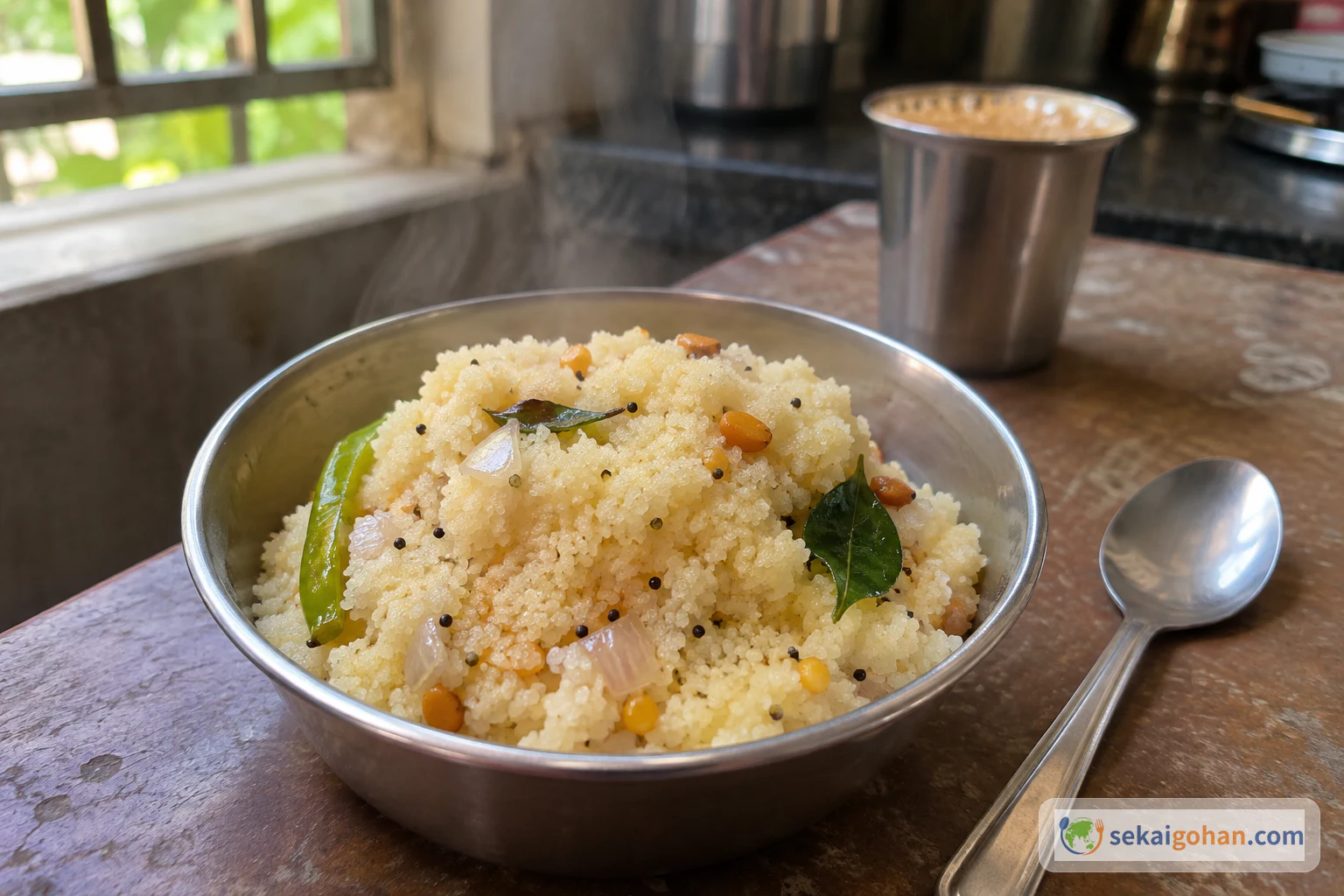
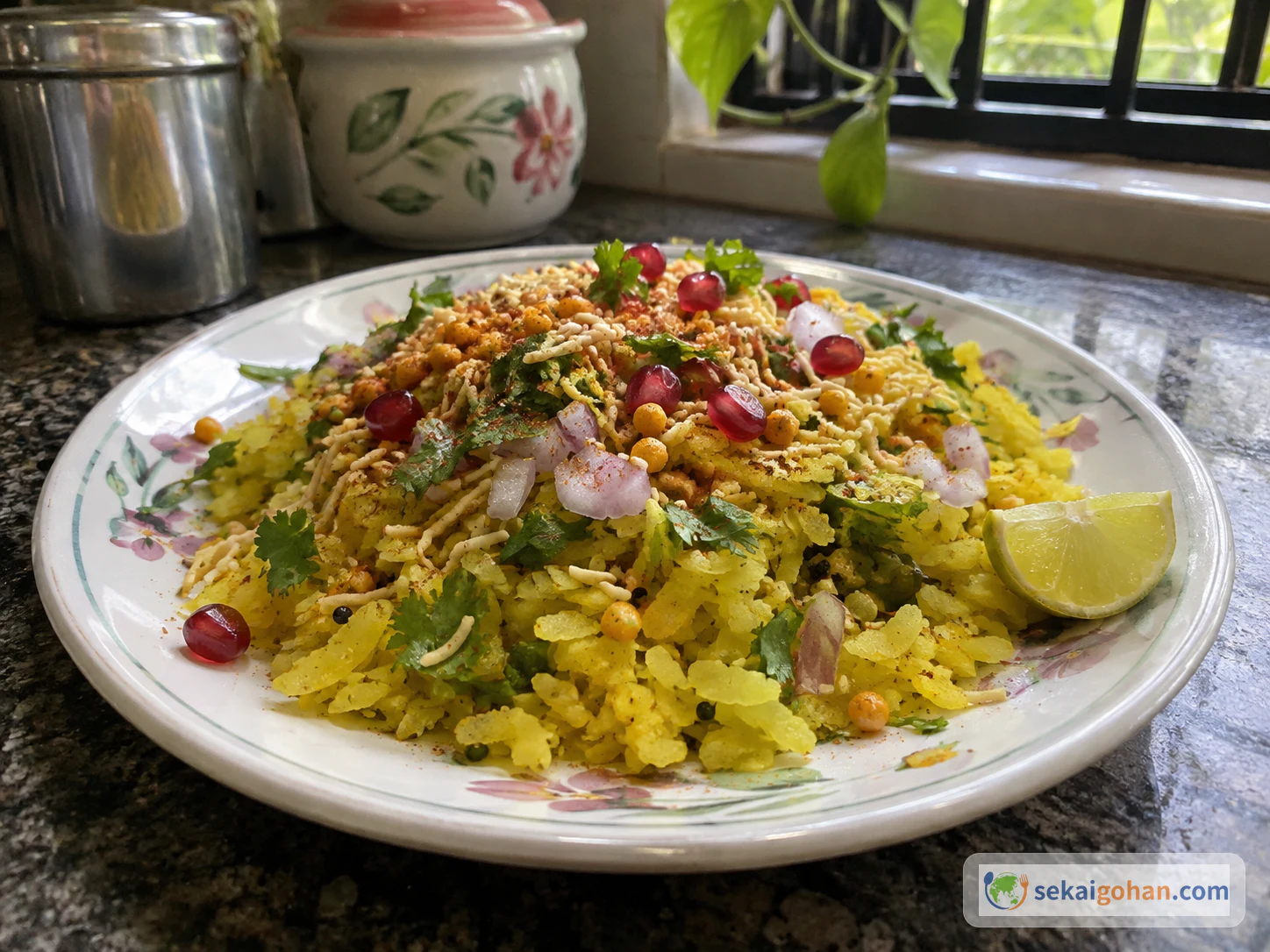
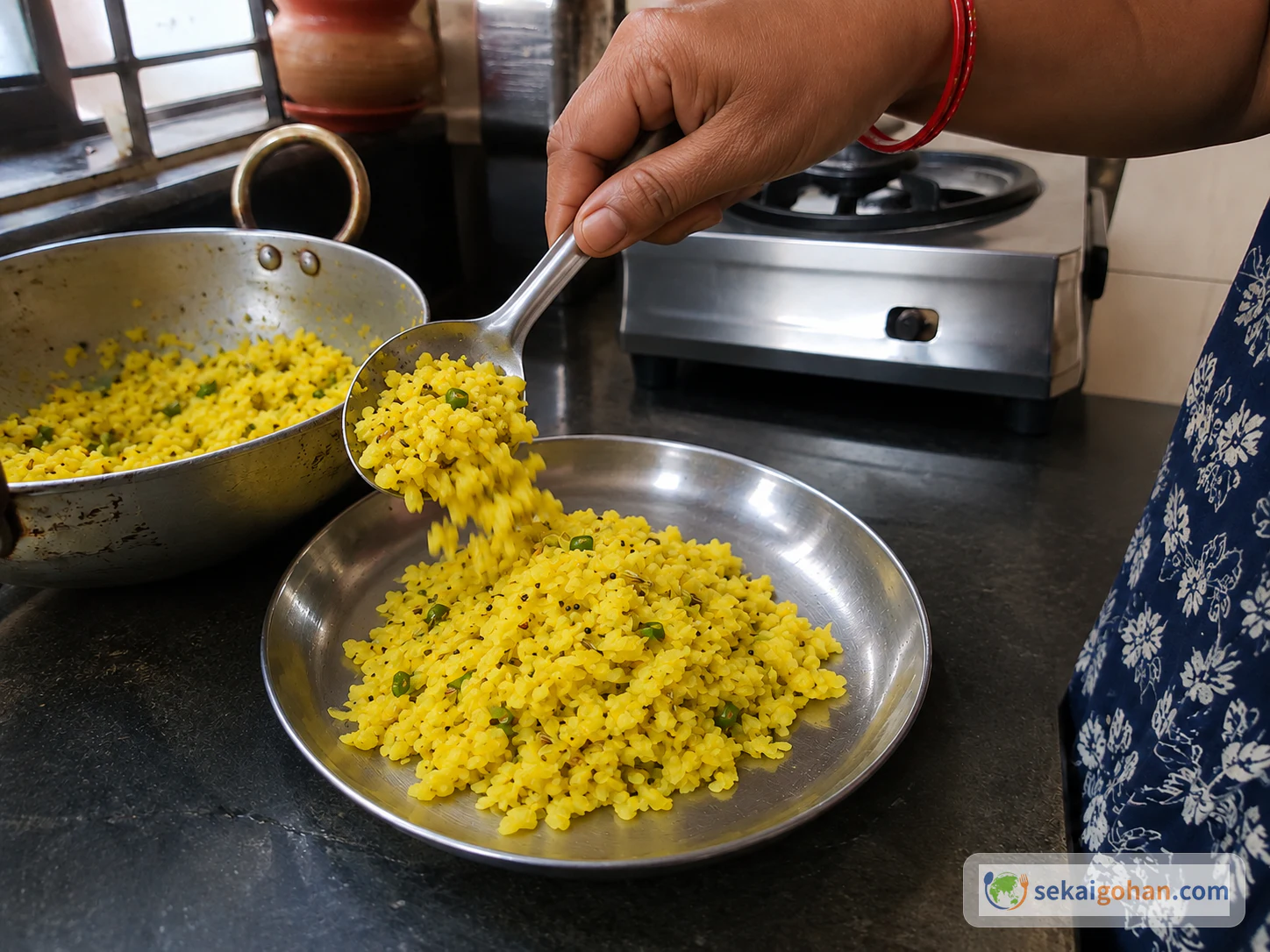
A mound of soft yellow rice flakes comes off the heat, and then the toppings go on: raw onion, coriander, jeeravan masala and salted sev. Fennel gives the warm flakes a sweet scent. The onion stays sharp, and the sev and boondi crunch as you eat. This is poha the way Indore makes it, the local breakfast of that city in the Indian state of Madhya Pradesh.
Indori Poha in Indore
In Indore, poha comes to the table with jalebi. Each is its own dish, served side by side. The sweet jalebi sits next to the salt and spice of the poha and never gets mixed into it. The poha itself is built on flattened rice, salted sev, jeeravan, fennel, curry leaves, onion and lemon juice.
It's all about contrast. Soft, fragrant flakes meet sharp onion and crisp sev, so most of the cooking comes down to keeping those layers separate until the plate is ready. For more dishes from the country, see the India page.
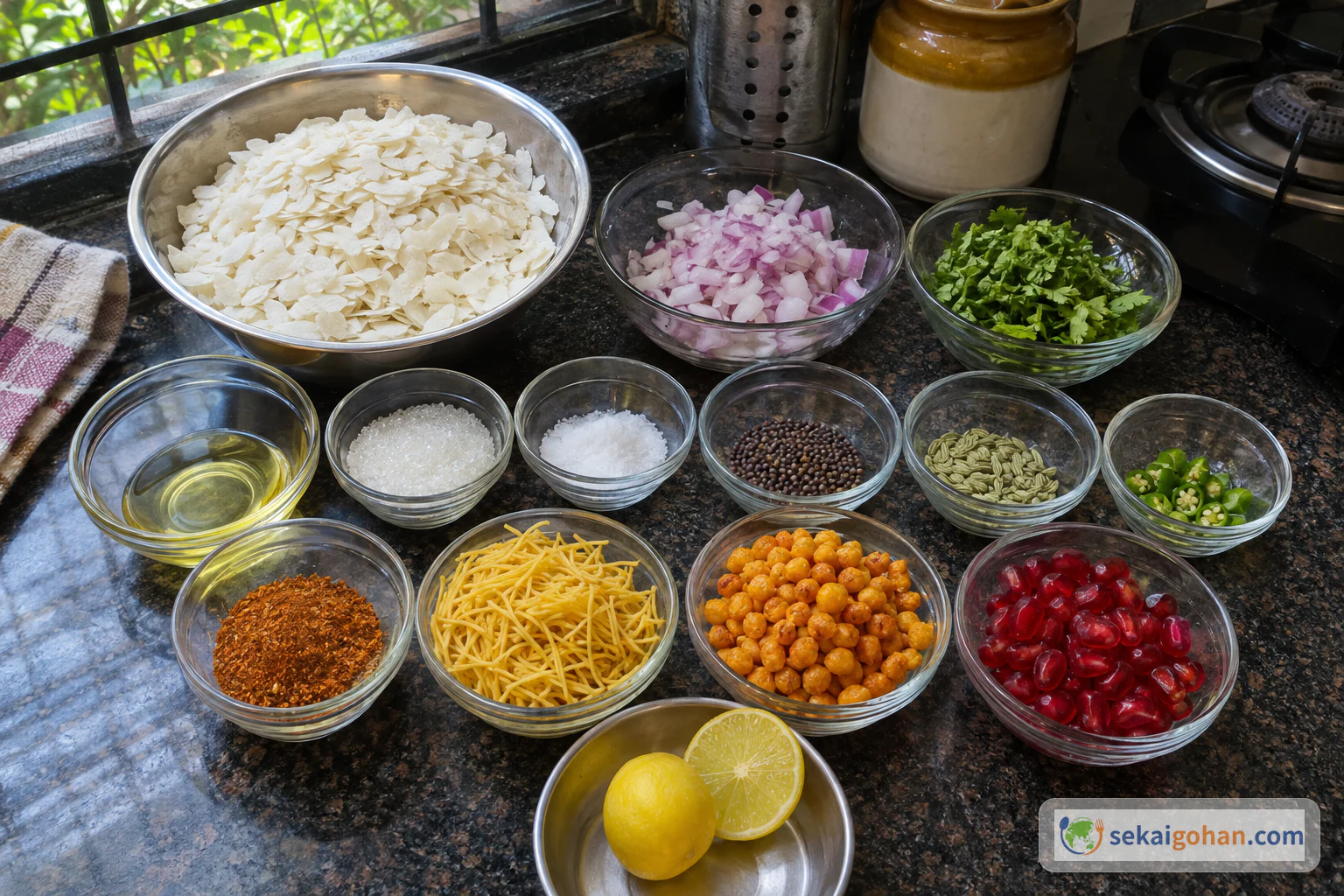
Ingredients: 3 Servings
Choosing the Flakes, Sev and Jeeravan
Poha: Buy thick or medium-thick flattened rice. Thin poha won't hold up.
Sev and boondi: Look for Indori or Ratlami sev and masala boondi. Any other sev will change how hot and salty the plate is, so adjust the salt to match. The pomegranate is optional.
Jeeravan masala: This is the hardest item on the list to find. If you can't get it, mix this blend to use in its place:
| Substitute blend | Amount |
|---|---|
| Coriander powder | 1/4 tsp |
| Cumin powder | 1/4 tsp |
| Garam masala | 1/4 tsp |
| Red chili powder | 1/4 tsp |
| Black salt | 1–2 pinches |
| Dry ginger powder | 1–2 pinches |
Read the ingredient and allergen labels on each pack you buy.
Equipment
- Fine-mesh strainer or colander
- Mixing bowl
- Heavy kadai or frying pan with a lid
- Flat spatula
Fixing Hard, Broken or Soggy Poha
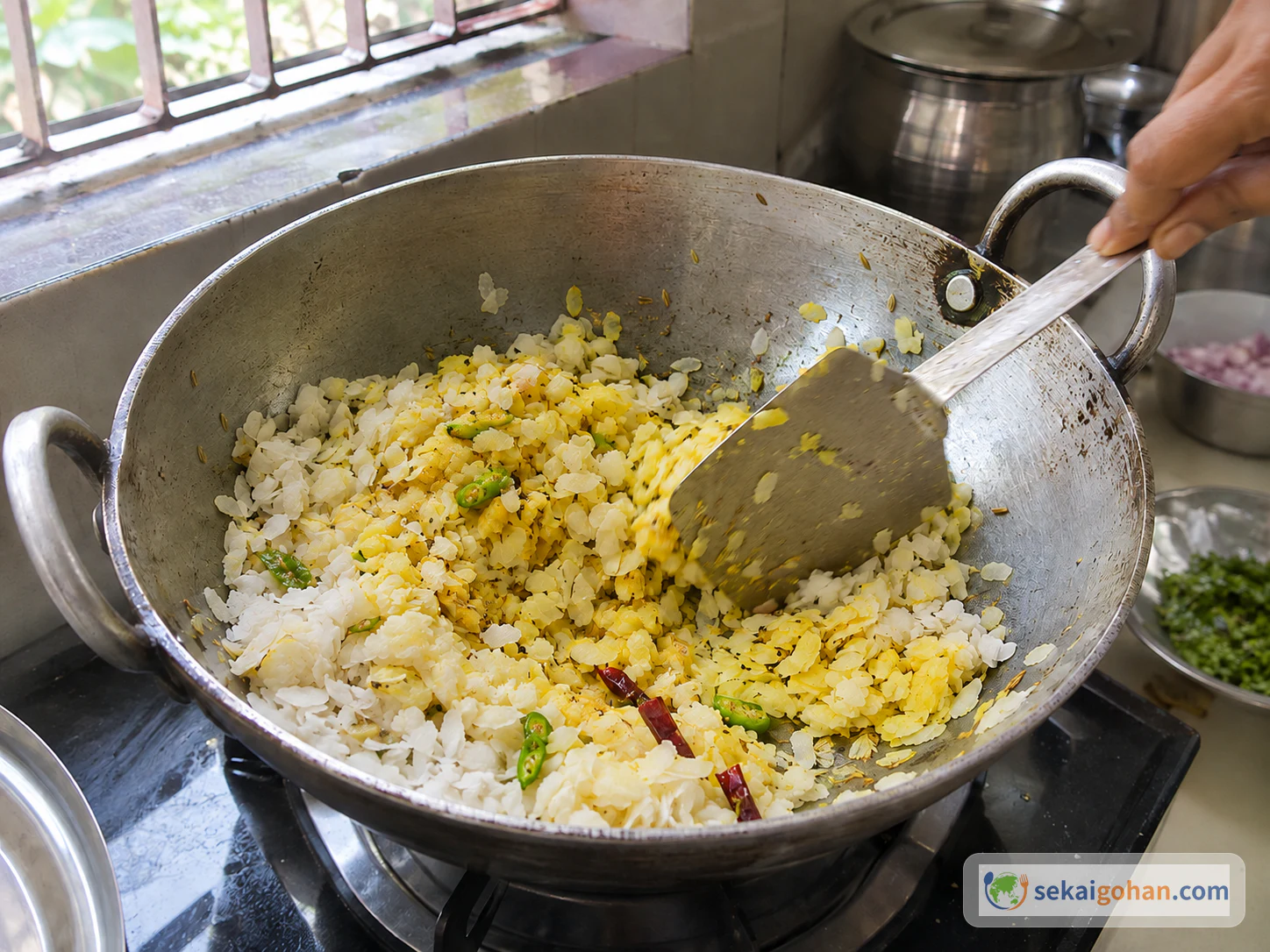
Keep the flakes soft but whole, warm them only briefly on low heat, and add the raw and crisp toppings at the very end.
Most problems come from too much water, too much heat or toppings that go on too early. Here's what to change:
| Problem | Likely cause | What to do |
|---|---|---|
| Flakes are still hard after rinsing | Not enough water reached them | Sprinkle over a few drops of water, rest for a few minutes in the strainer and check again |
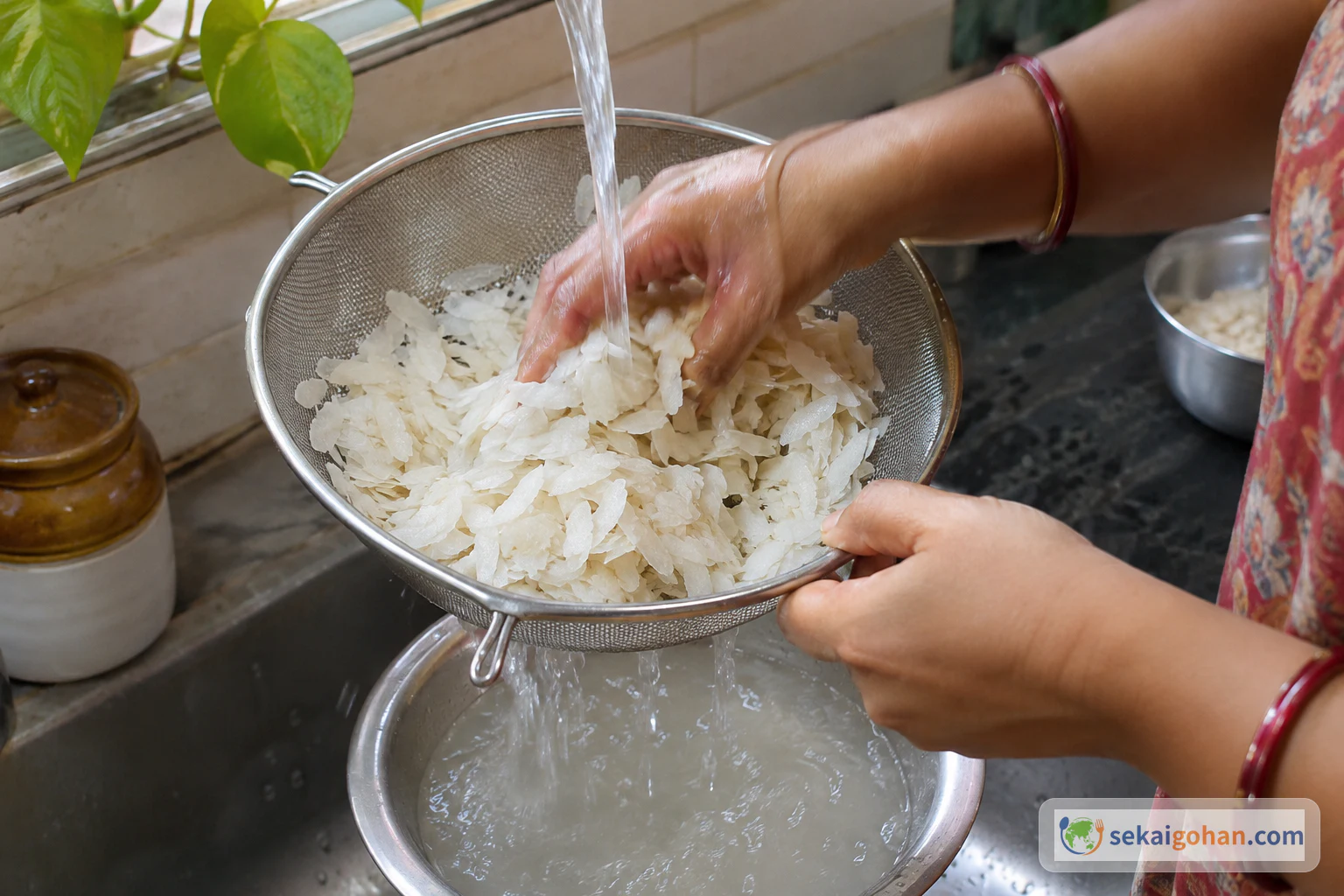
| Flakes are breaking down after rinsing | Too much water or handling | Next time use a light stream of water and check sooner, without rubbing |
| Flakes break in the pan | Heat too high or too much stirring | Stay on low heat and fold lightly |
| Sev or boondi has gone soft | Added too early or sitting in lemon juice | Add them just before serving and keep the lemon to a little juice |
| The plate tastes too salty | Salty toppings on top of the salted flakes | Salt the flakes lightly next time, allowing for the jeeravan and sev |
| The plate is too spicy | Too much jeeravan or chili | Start with a smaller amount of jeeravan, or omit the green chili next time |
Serving and Variations
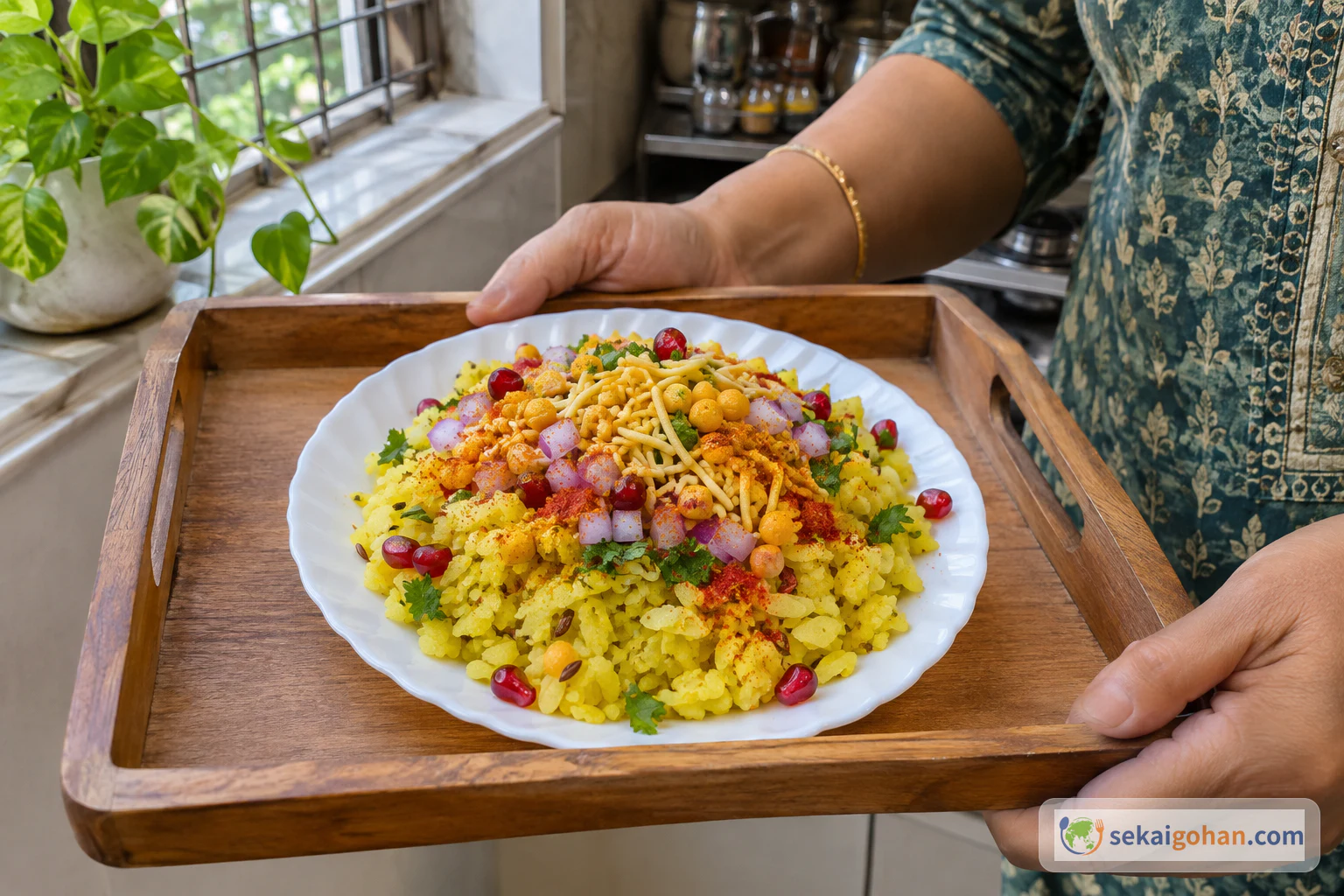
Eat Indori poha soon after the toppings go on, while the flakes are still warm and the sev and boondi are still crisp. For the Indore breakfast pairing, serve jalebi on its own plate next to it.
You can change the plate to suit your taste:
- Less heat: Leave out the green chili.
- Without pomegranate: Omit the arils.
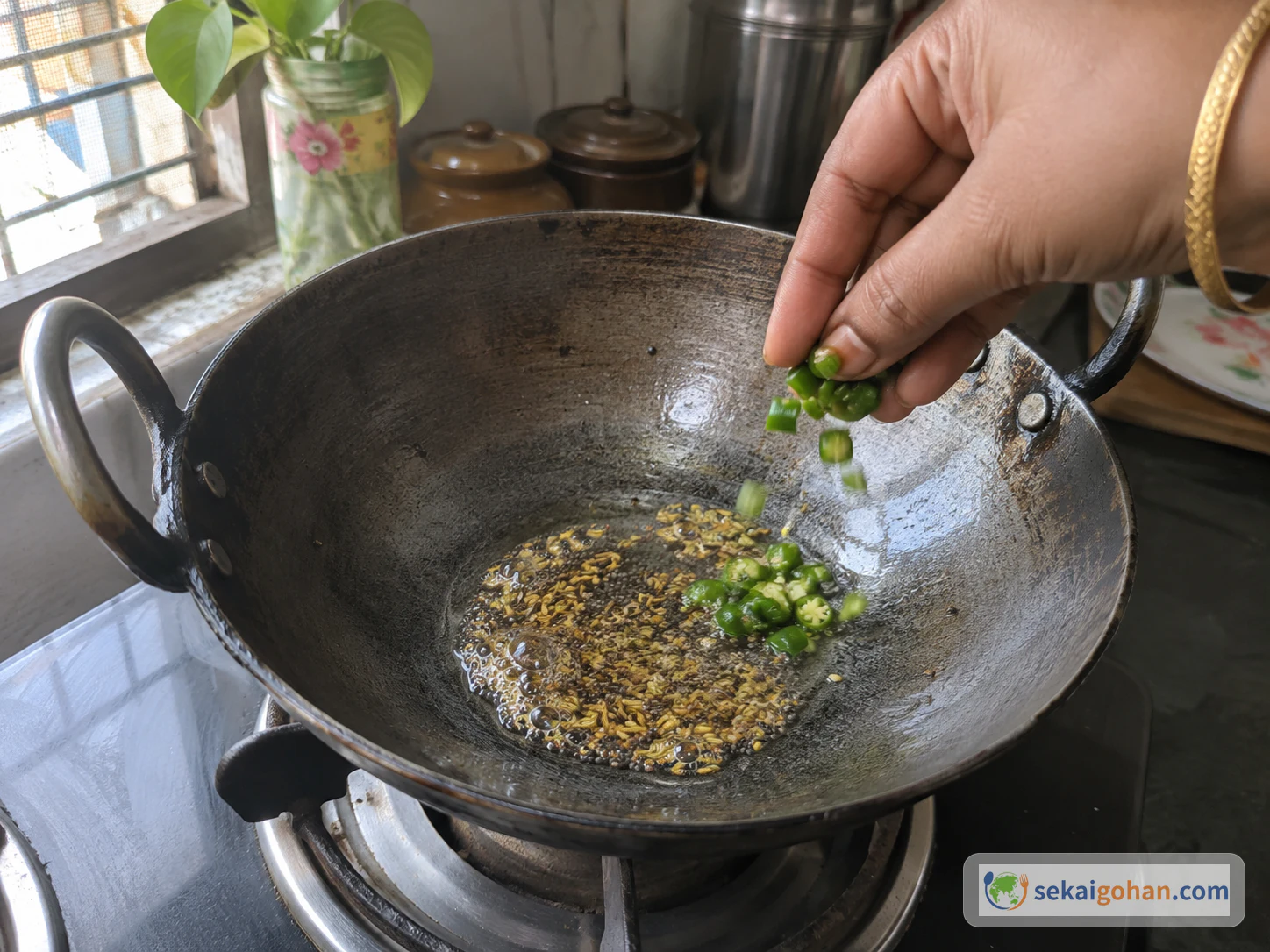
- With curry leaves: Add them to the tempering. There's no set amount.
- Different boondi: Leave out the masala boondi or use another kind. You'll lose or change one layer of crunch and spice.
Frequently Asked Questions
What if I rinse the poha too much?
Over-rinsed flakes lose their shape and break down in the pan. Next time, use a light stream of water and check them sooner. Flakes that are too hard are easier to fix: a few drops of water and a few minutes of rest will soften them.
How do I keep the sev crisp?
Add the sev just before serving, and scatter it on top rather than stirring it in. Lemon juice softens it, so squeeze over only a little and take the plate to the table right away.
How long does it take?
Plan on 15 minutes in total: 10 minutes of preparation and 5 minutes of cooking. If you rest the rinsed flakes, add that time, and go by their texture.
Can I make it ahead?
Poha is best served soon after cooking. It doesn't hold well for making ahead or reheating. If you have leftovers, cool them and refrigerate them promptly.