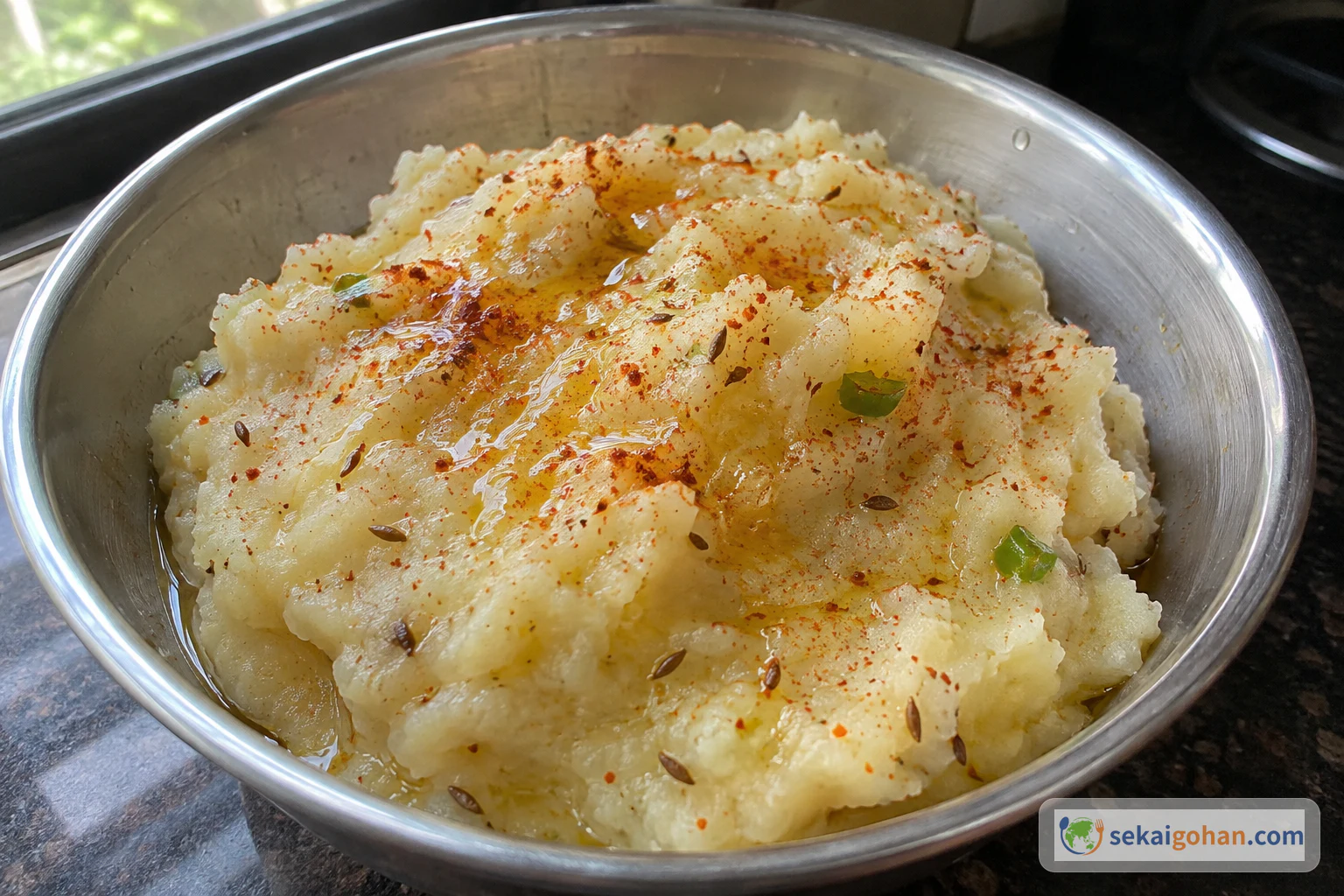
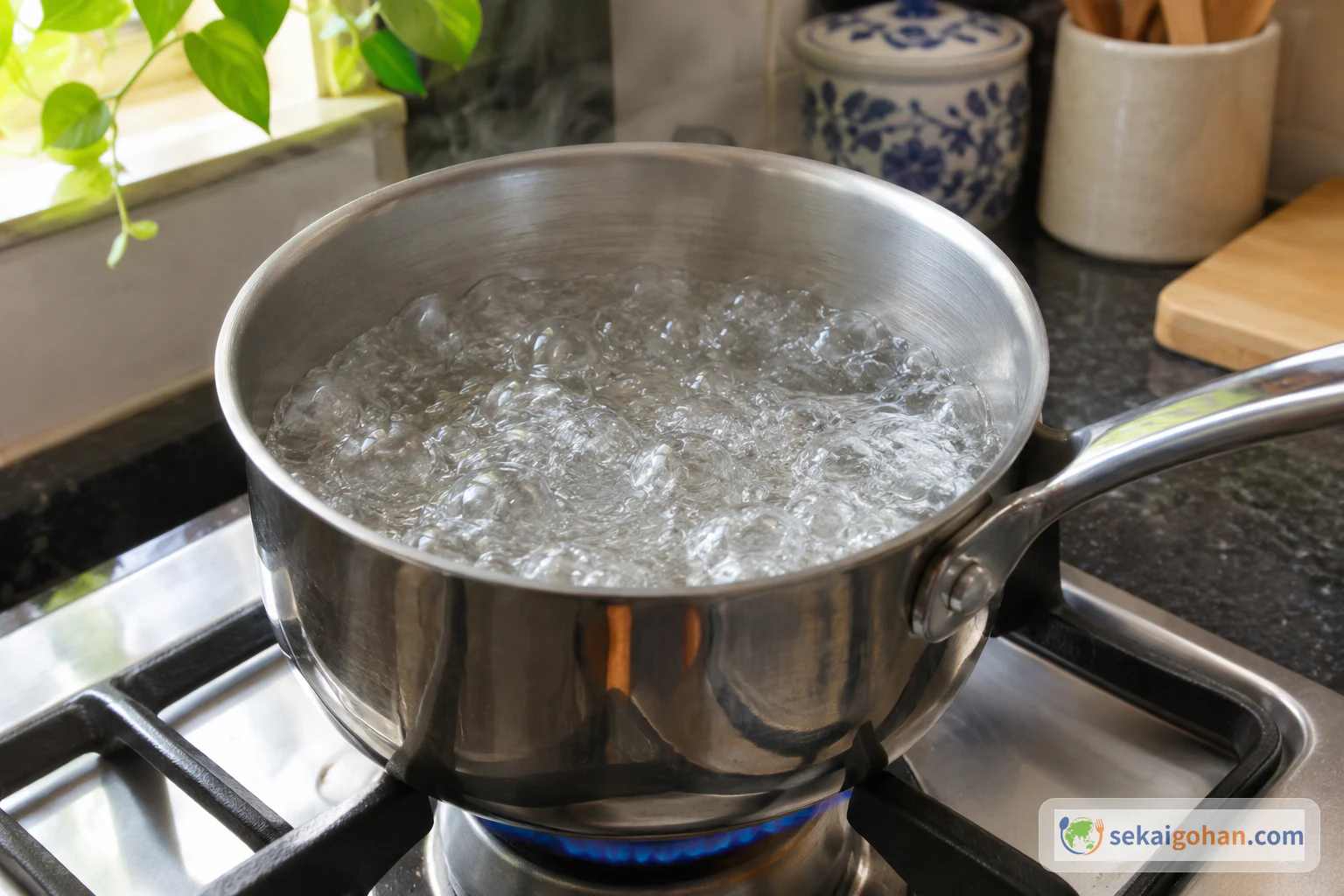
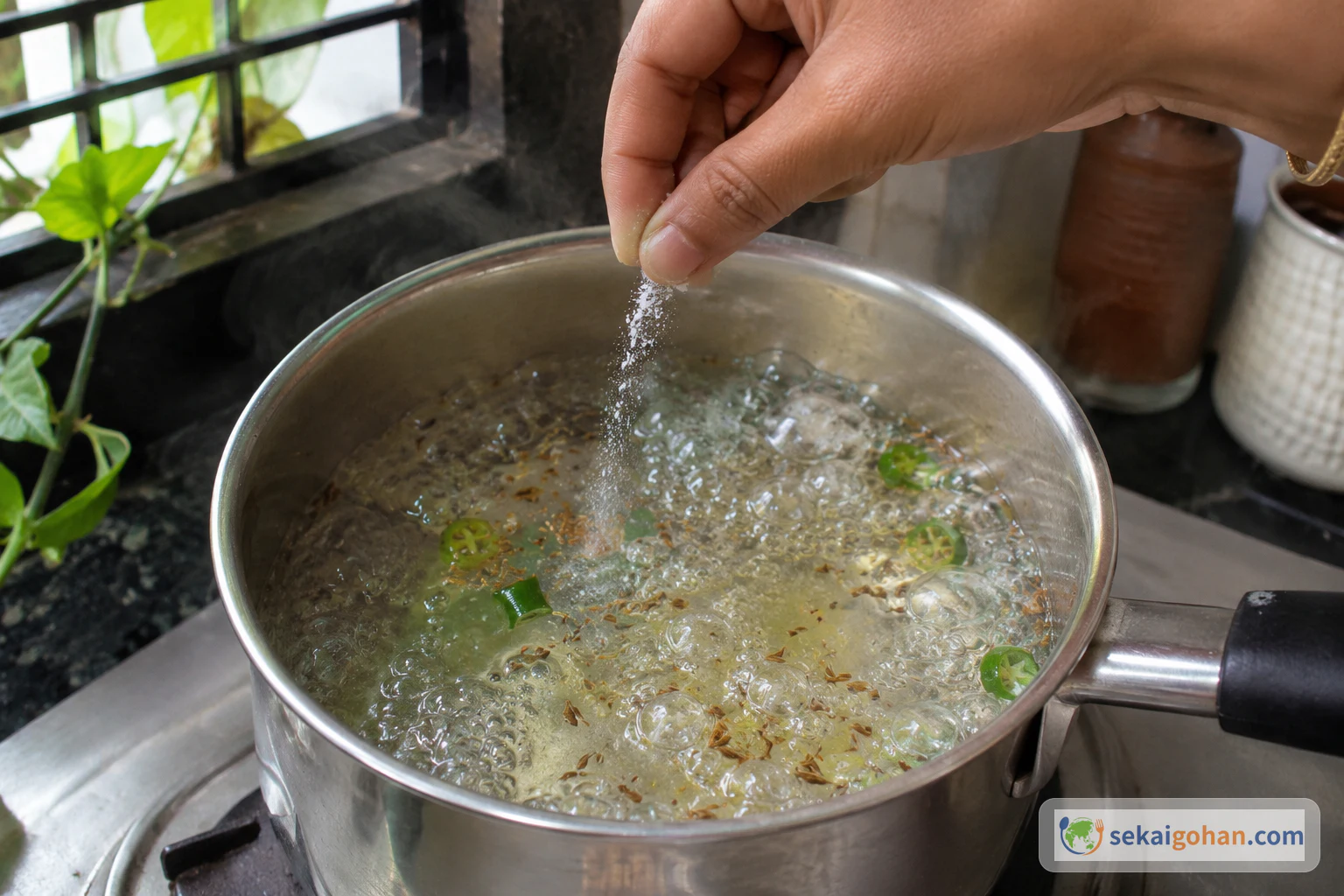
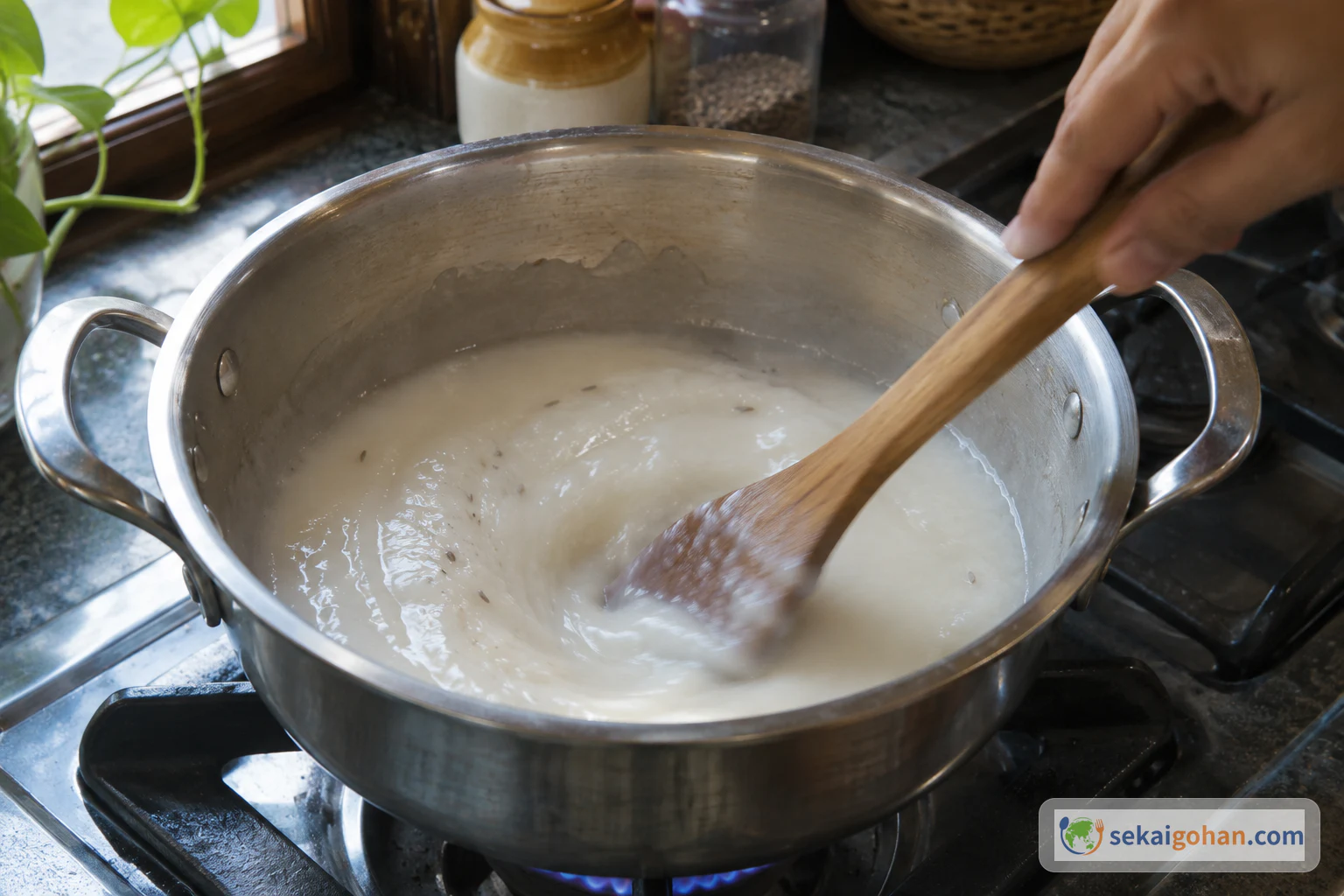
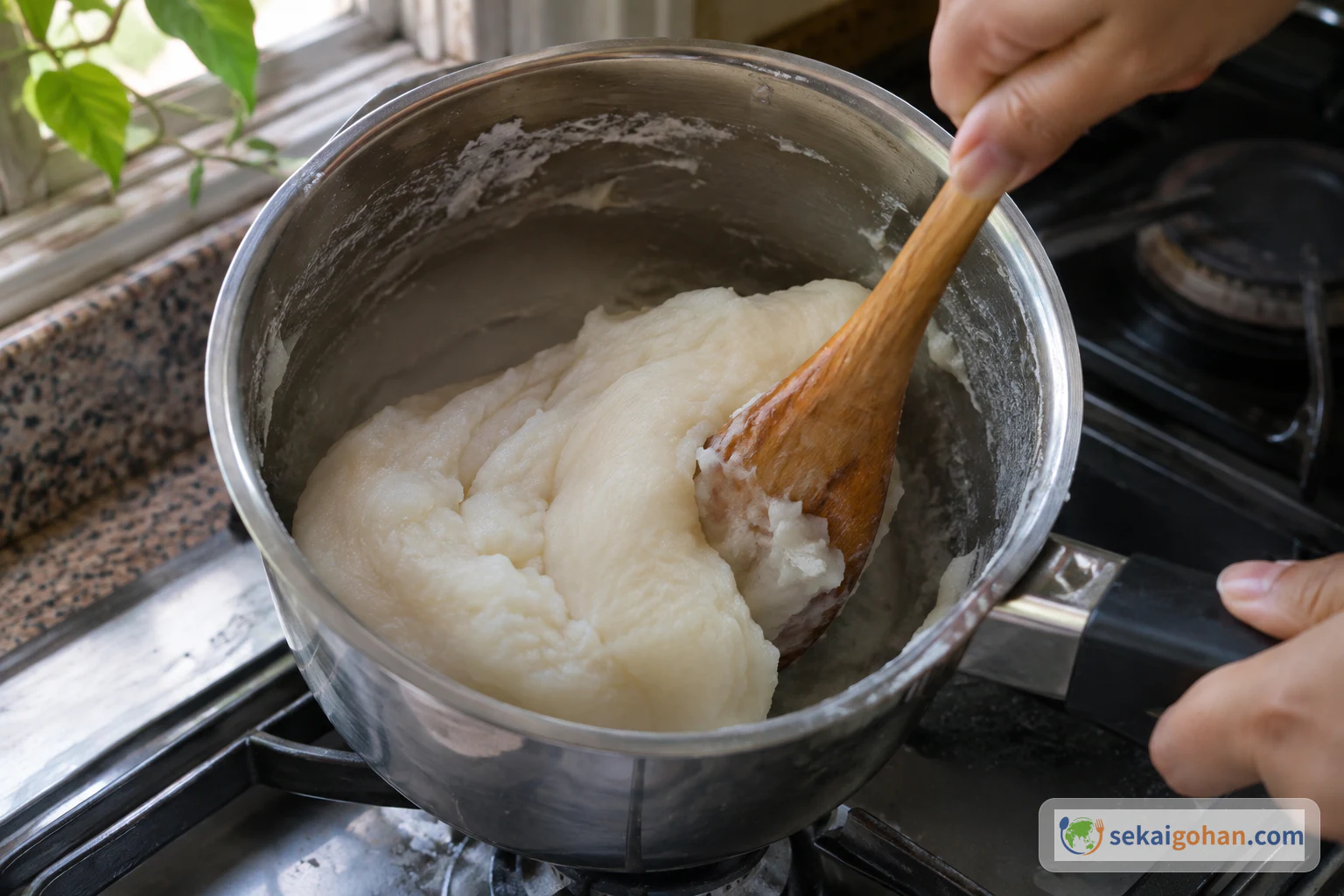
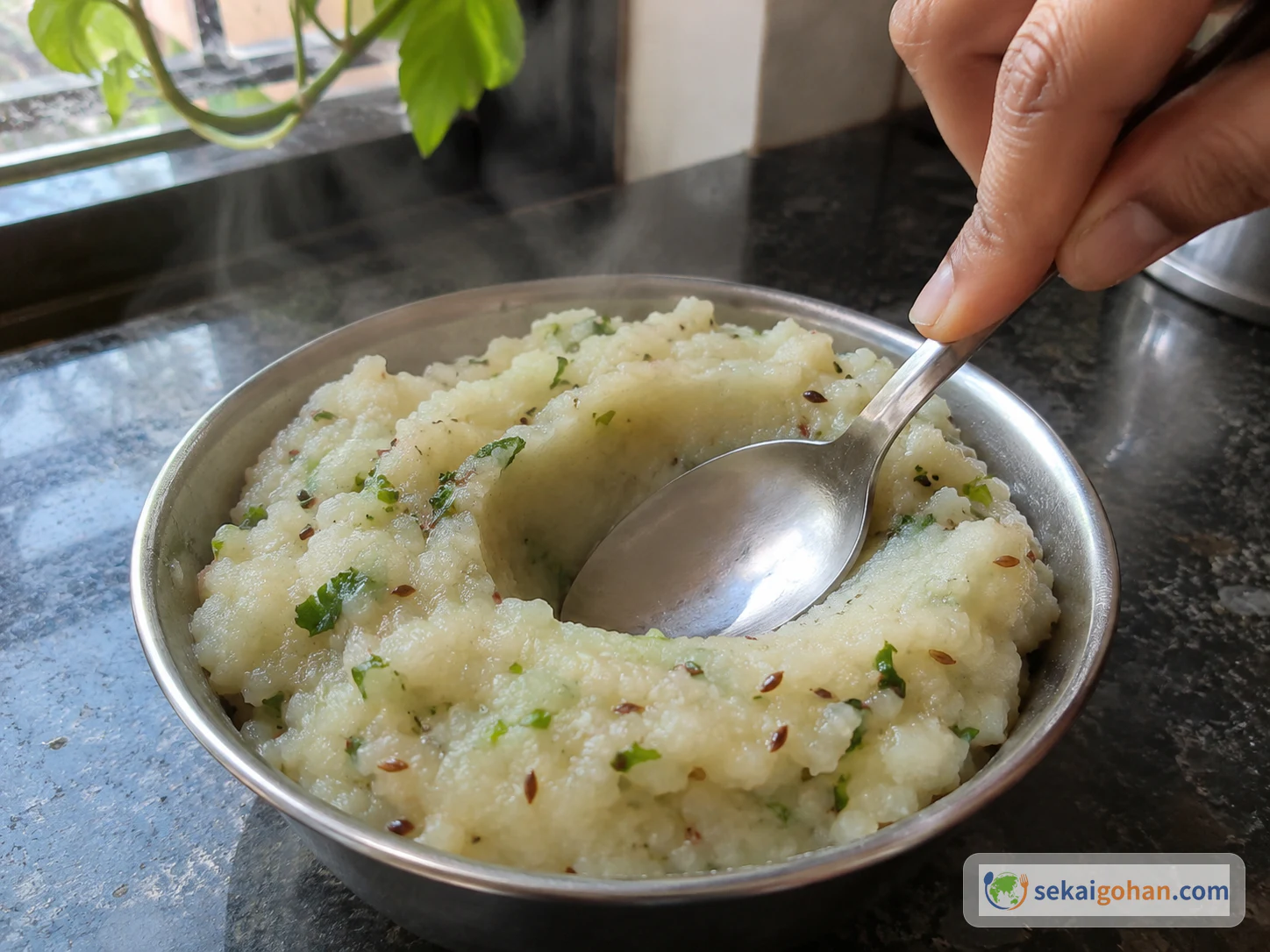
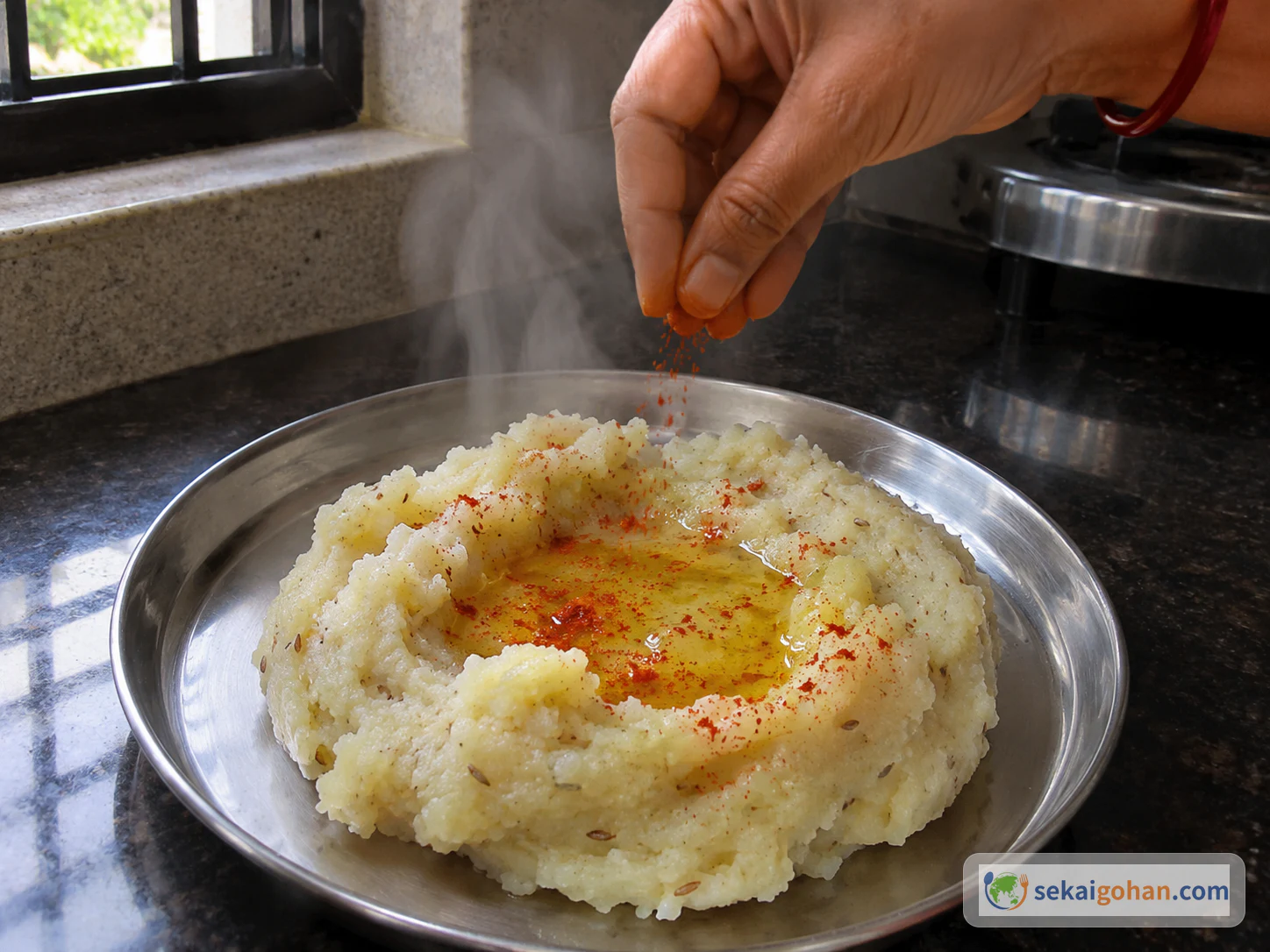
Water comes to a rolling boil, cumin seeds and chopped green chili go in, and then, with the heat turned down, rice flour is stirred in until the pot holds one thick, pale dough. After a short covered cook it's scooped into bowls, a well is pressed into the center, and groundnut oil and a dusting of red chili powder go on top. That's khichu (ખીચુ), also written Khichiyu: a warm Gujarati snack of rice flour, water, spices and salt, simple and comforting, with a little heat from the chili.
Khichu as Gujarati Farsan
Khichu is cooked dough, not cooked grain. It starts from rice flour, the same base used for papad dough, and is seasoned with cumin and other seasonings, then eaten warm. In Gujarat it belongs to farsan, the region's large family of savory snacks and sides. For more dishes from across the country, see India.
The name invites confusion with khichdi, but they're different dishes. Khichdi is rice and lentils (such as moong dal) cooked together until soft. Khichu is stirred in a pot until it becomes one thick, cohesive mass, so if you're expecting a rice-and-lentil porridge, it will look and eat quite differently.
Ingredients (4 servings)
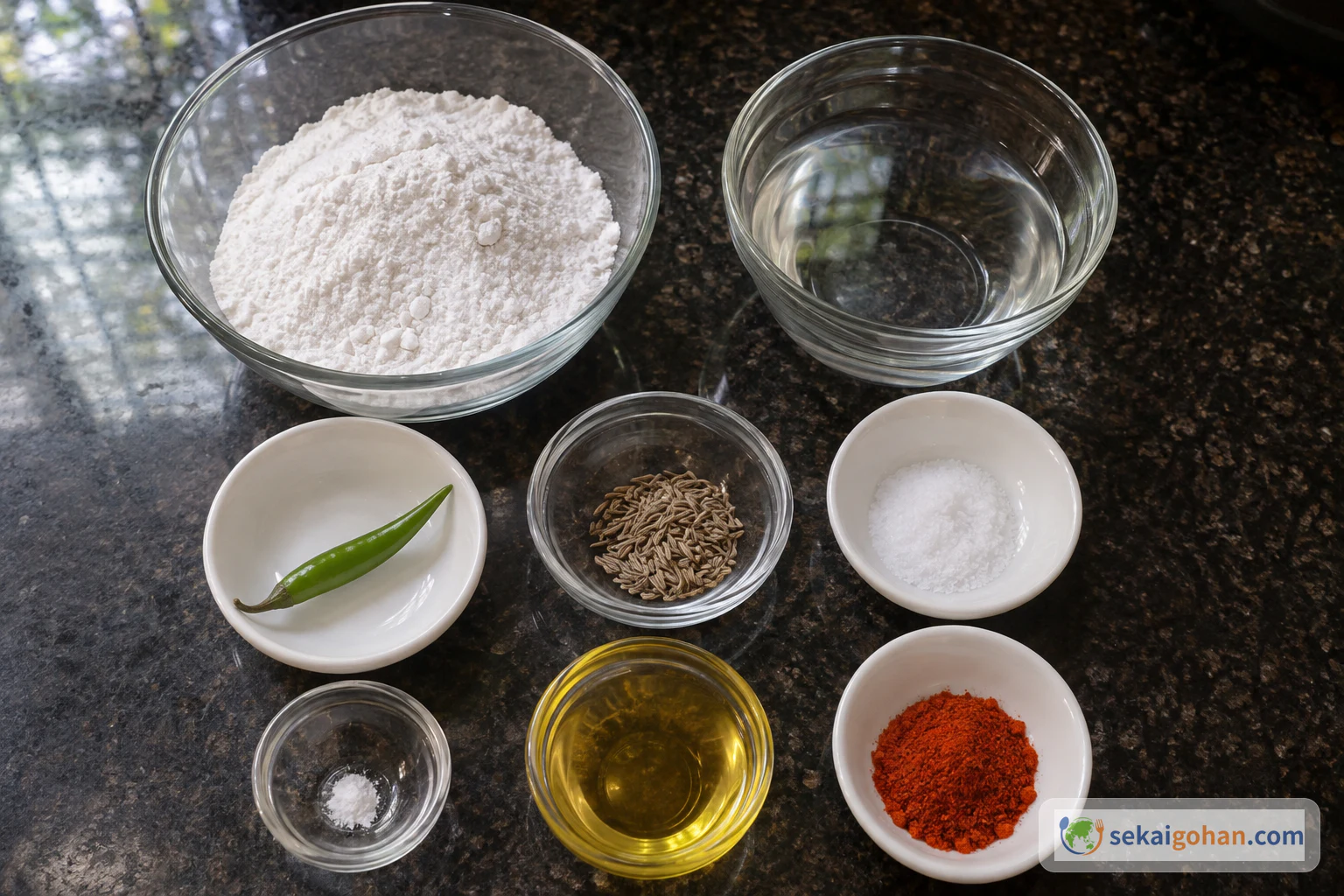
Groundnut oil comes from peanuts. If anyone at the table has a peanut allergy, check the label and the ingredients you use before cooking.
Equipment
- A saucepan with a fitted lid
- A long-handled wooden spoon or a whisk
- Serving bowls
- A spoon for shaping the well
Choosing Ingredients for Khichu
Papad khar is a type of baking soda, and here a pinch of cooking baking soda stands in for it. Use food-grade cooking baking soda only, never a household cleaning product. Ajwain is an optional extra, and this version leaves it out.
Method: Seven Steps in One Pot
Plain water boils first, the seasonings go in second, and the heat comes down before the flour. The doneness cue at the end is the look of the dough, soft and translucent, within the covered cooking time.
Keeping Khichu on Track
With so few ingredients, most of the work is in the order and the stirring. Check these as you go.
| Moment | What to check | What to do |
|---|---|---|
| Before seasoning | Is the water at a full rolling boil? | Wait for the boil before adding cumin, chili, salt and the pinch of baking soda |
| Before the flour | Has the heat been lowered? | Turn it down first, then start adding flour |
| Adding the flour | Is it going in all at once? | Add it a little at a time and keep stirring the whole time |
| After stirring | Is there still loose flour or a thin mixture? | Keep stirring until it is one thick, cohesive lump |
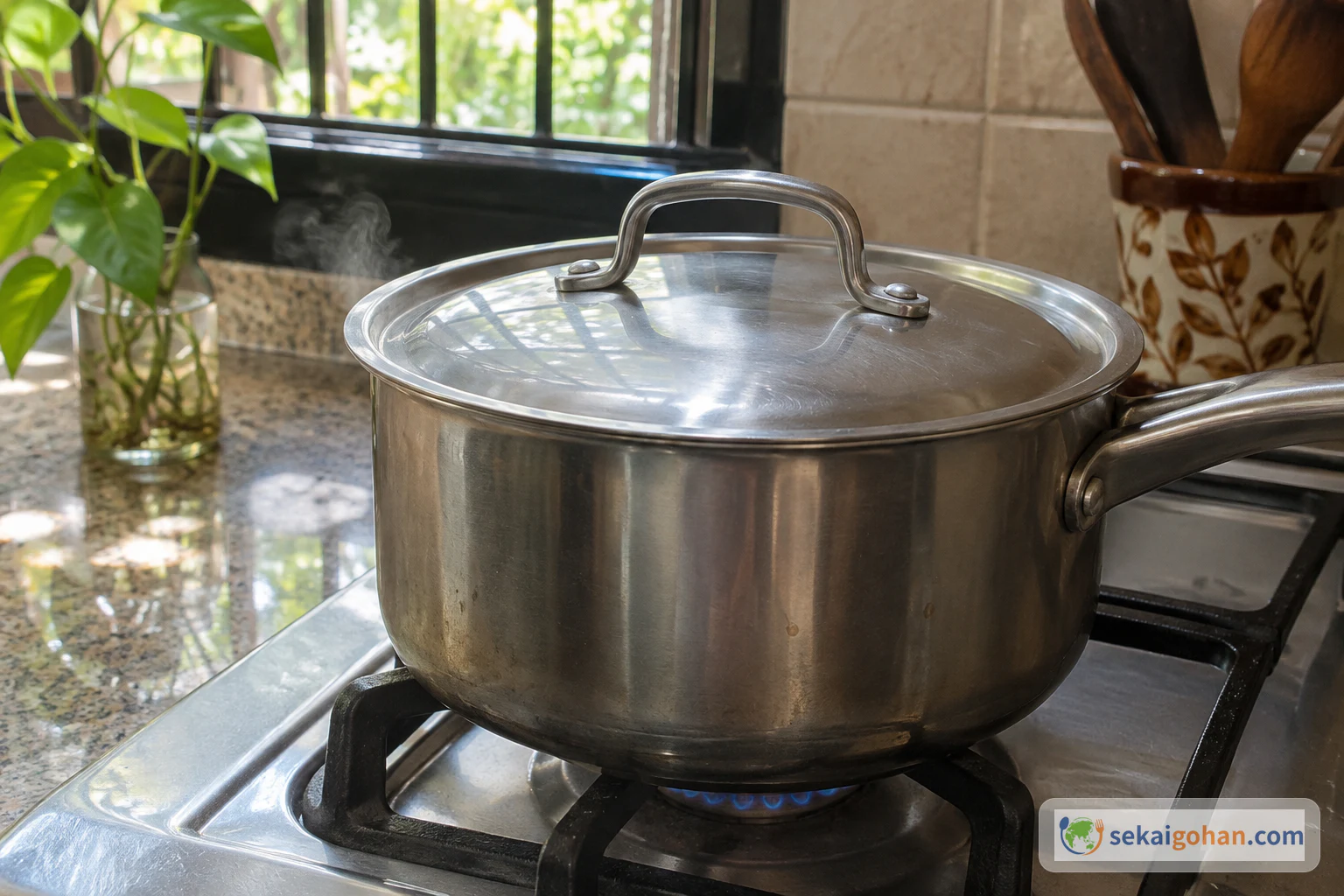
| Covered cooking | Is the dough soft and translucent? | Cook covered on very low heat for 7–10 minutes and turn off the heat once it looks soft and translucent |
| Serving | Has it cooled in the pot? | Scoop it while hot, add the oil and chili powder, and serve straight away |
Serving and Other Styles of Khichu
The dough itself contains no oil. The groundnut oil goes into the well at the table, along with the red chili powder. Khichu is meant to be eaten hot, so have the bowls ready and serve it the moment it comes off the heat.
There's no single fixed formula, and cooks make it in different ways. One style adds ginger and ajwain to the cumin, salt and green chili, then shapes the cooked dough into 12 indented balls and steams them for 5–7 minutes. Another puts cumin, ajwain, chili, salt, cooking soda and oil into the water before the rice flour is stirred in gradually. If you want to try one of these, follow that version as a whole rather than borrowing single elements into this pot.
Frequently Asked Questions
Are khichu and khichdi the same dish?
No. Khichdi is rice and lentils cooked together, while khichu is rice flour stirred into seasoned boiling water and cooked into a dough.
What is papad khar?
Papad khar is a type of baking soda, so this recipe uses a pinch of food-grade cooking baking soda in its place.