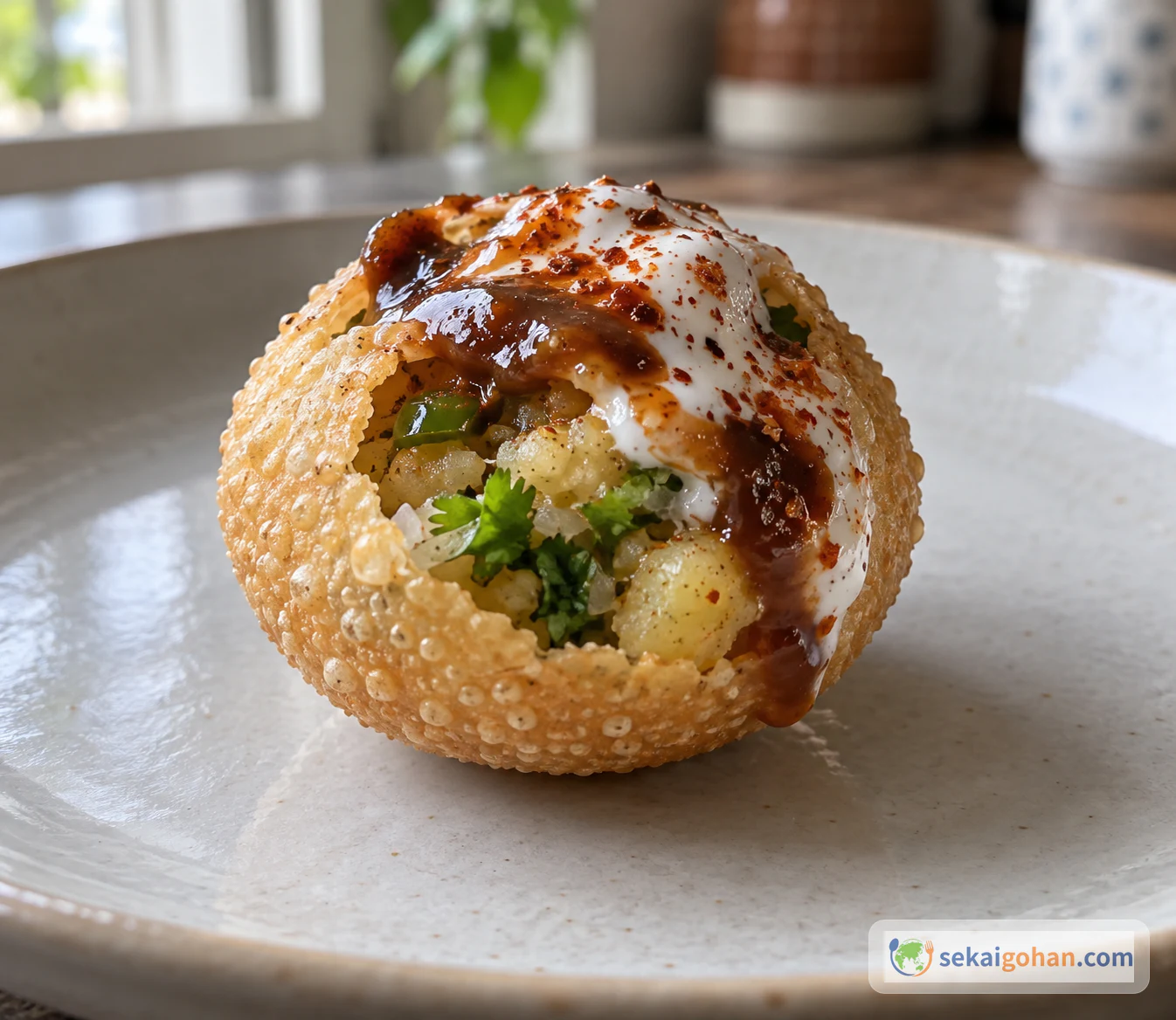
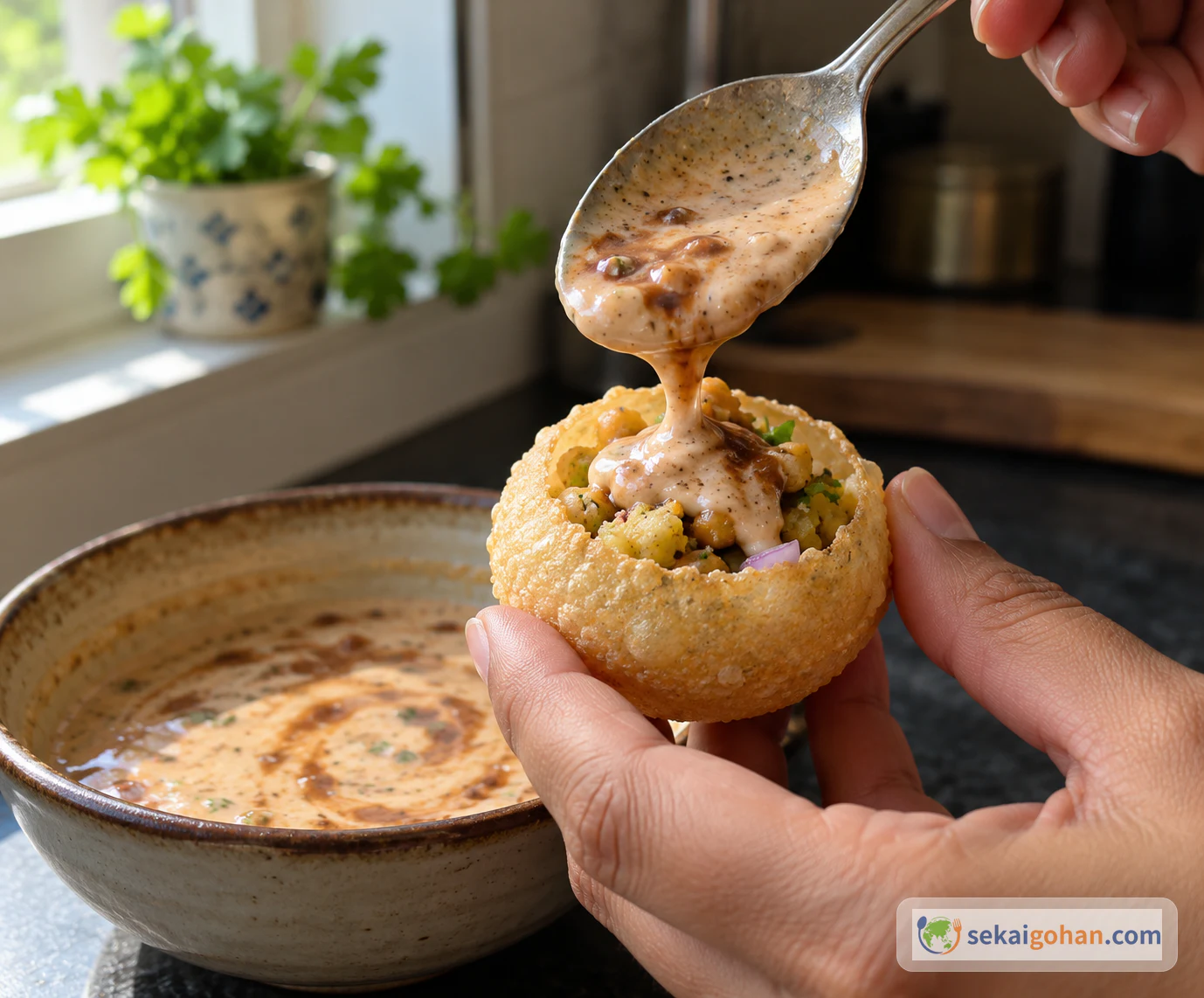
A golden shell, fried until it puffs into a hollow ball, gets a small hole opened in one side. A spoonful of potato filling goes in, and then doi chatni is spooned over the top, so crunch, soft potato and a tangy, sweet yogurt sauce all land in one bite. Doi (yogurt) fuchka is a Bangladeshi street snack, and in Dhaka it is one of the sauce choices at the fuchka carts. In this version, tamarind pulp, yogurt, sugar, black salt and roasted red chili flakes are stirred into a single sauce, so it is sour, sweet and gently hot at once.
Doi Fuchka at Dhaka's Street Carts
In Dhaka, fuchka carts stand in neighborhood lanes and in front of parks and lakes. Each vendor chooses which sauces to offer, and the range keeps shifting: in November 2023, carts were offering sour tamarind water, sweetened tamarind water, mint and yogurt. Doi fuchka was once a cafe special. It later turned up on street carts too, served with chilled yogurt and tamarind pulp.
Classic fuchka is a shell filled with potato and served with tamarind water. Doi fuchka brings in yogurt, and some versions put it into the filling. Here the yogurt goes into a mixed sauce that is spooned over shells already filled with potato. For more dishes and food culture from the same country, see Bangladesh.
How Doi Fuchka Differs from Dahi Puri
Several South Asian snacks share the hollow fried shell. Mumbai-style Dahi Puri is a chaat snack built from boiled potato, several chutneys, yogurt, sev and spice toppings such as chaat masala, and it is distinct from pani puri, even though both use the same puri shells. This Doi Fuchka is simpler. The filling is only potato, coriander leaves and green chilies, and there is one sauce, with tamarind and yogurt already combined. There's no mint water, sev, onion, chickpeas or peas. If you know Dahi Puri, think of it as a neighbor.
Ingredients for the Shells, Filling and Doi Chatni
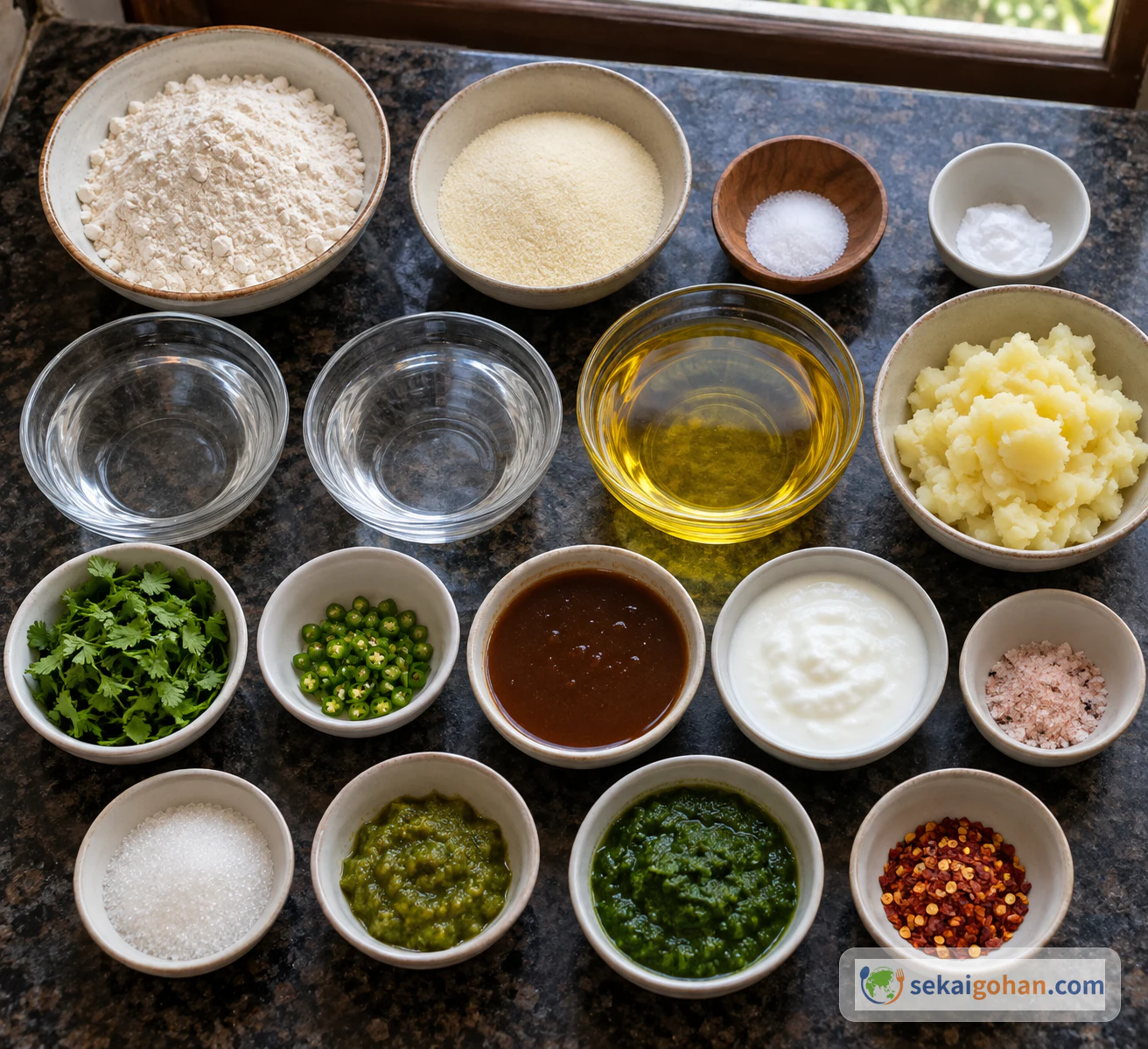
There are two separate measures of water: one for the dough and one for the sauce. Keep them apart so neither goes into the wrong bowl. The chopped coriander leaves go into the filling, and the coriander leaves paste goes into the sauce; they are two different ingredients.
The shells contain wheat (flour or atta, and semolina), and the doi chatni contains milk (yogurt). If you use ready-made pastes, tamarind pulp or other packaged products, check their labels for allergens as well.
Equipment
- Karahi, or a deep frying pan
- Mixing bowls
- Rolling pin
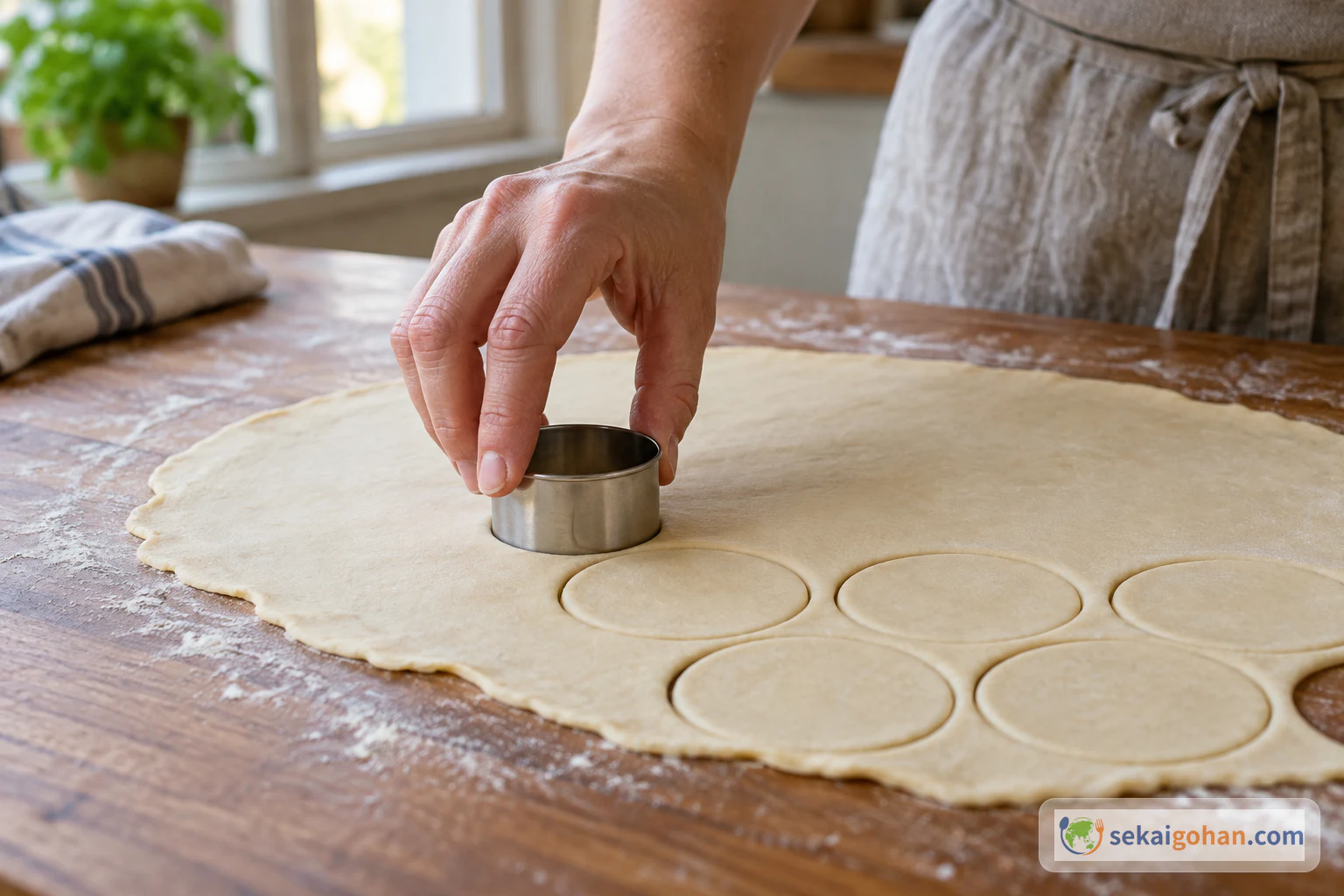
- Small round cutter, or any small round object
- Spoon, for pressing the puris in the oil and for the filling
- Clean cloth, plus a damp cloth for covering the cut puris
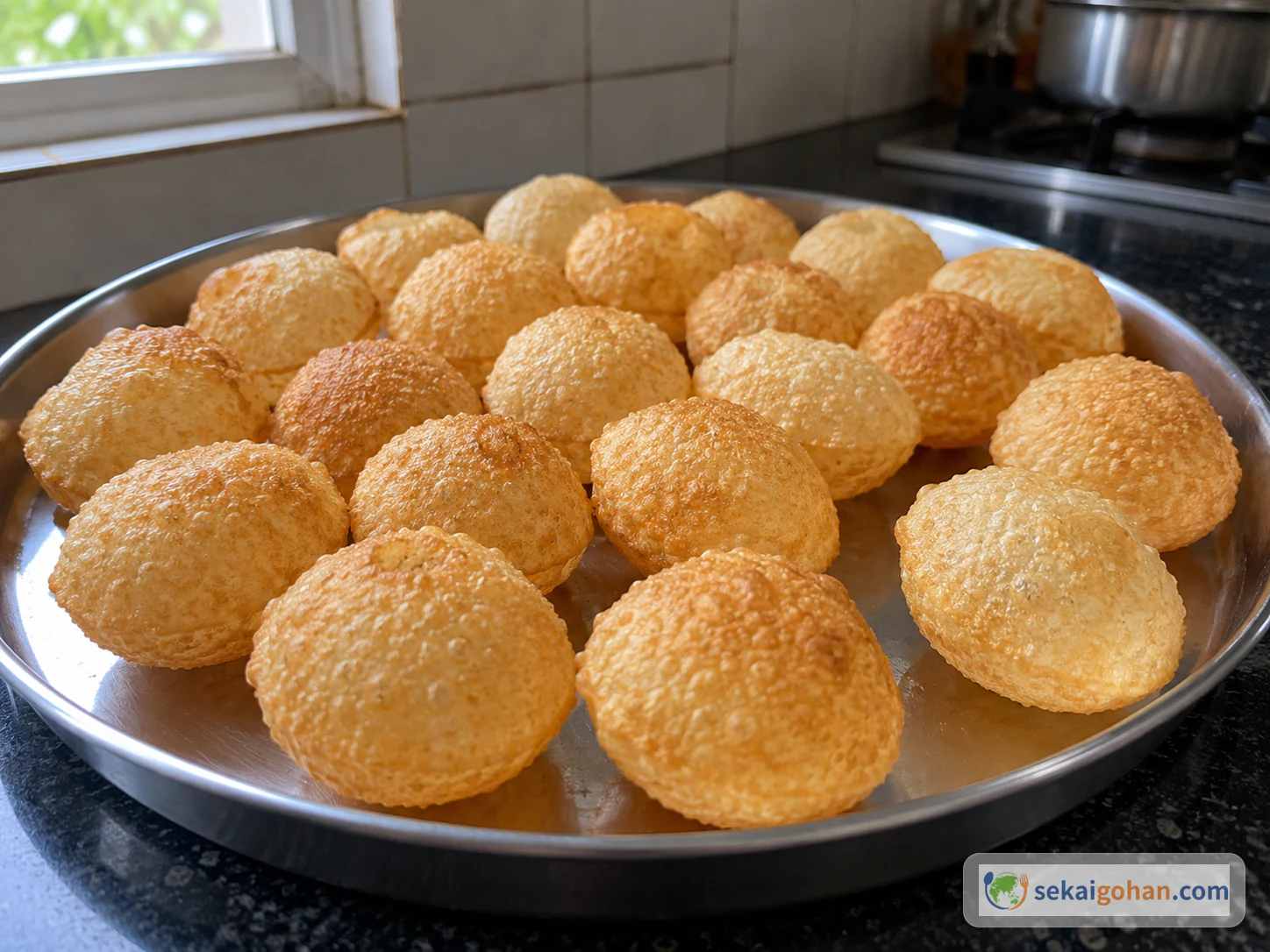
- Airtight container, for the cooled shells
Choosing Ingredients for Doi Fuchka
- Flour or atta. Either works. If atta is hard to find, any wheat flour will do.
- Semolina or fine suji. Either works.
- Tamarind pulp. Tamarind paste and concentrate are sold too, but products differ in strength, so don't swap them one-for-one for 1/4 cup of pulp.
- Black salt. Also sold as kala namak. Add it by taste.
- Doi (yogurt). Use plain yogurt. Fat content, sweetness and straining vary, so each brand will taste a little different.
- Green chili paste and coriander leaves paste. These go into the sauce and are measured separately from the chopped chilies and leaves in the filling, so keep them as pastes. Ready-made pastes vary, so check their ingredients and salt.
- Oil. Any frying oil works.
Method: Shells, Filling, Doi Chatni, Then Assembly
Steps 1–13 make and store the shells. Steps 14 and 15 make the filling and the doi chatni separately. Steps 16–19 open, fill, sauce and serve each fuchka.
Doi Fuchka Troubleshooting
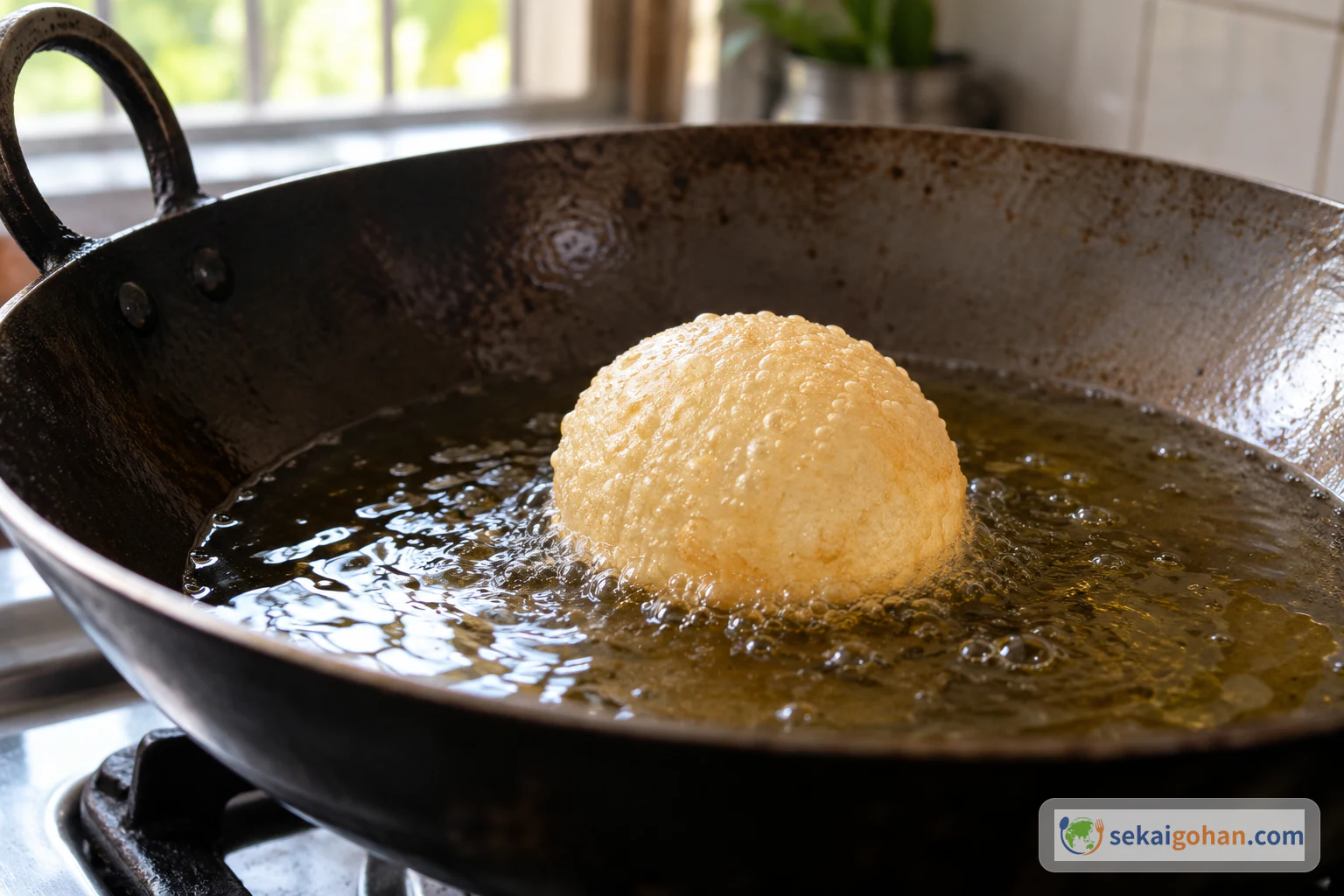
The method works by sight and touch rather than by clock or thermometer: a soft dough, oil heated well before the puris go in, a spoon pressing each one so it puffs, and frying until golden.
| What you notice | What to check | What to do |
|---|---|---|
| The dough feels stiff while kneading | How much of the dough water has gone in | Keep adding water a little at a time until the dough is soft |
| Cut puris are waiting while you roll and cut the rest | Whether they are covered | Keep them under a damp cloth until they go into the oil |
| A puri is not puffing in the oil | Whether the oil was hot before the puri went in, and whether it is being pressed | Let the oil heat fully, and press each puri with a spoon as it fries |
| The shells are still pale | Color | Keep frying until golden |
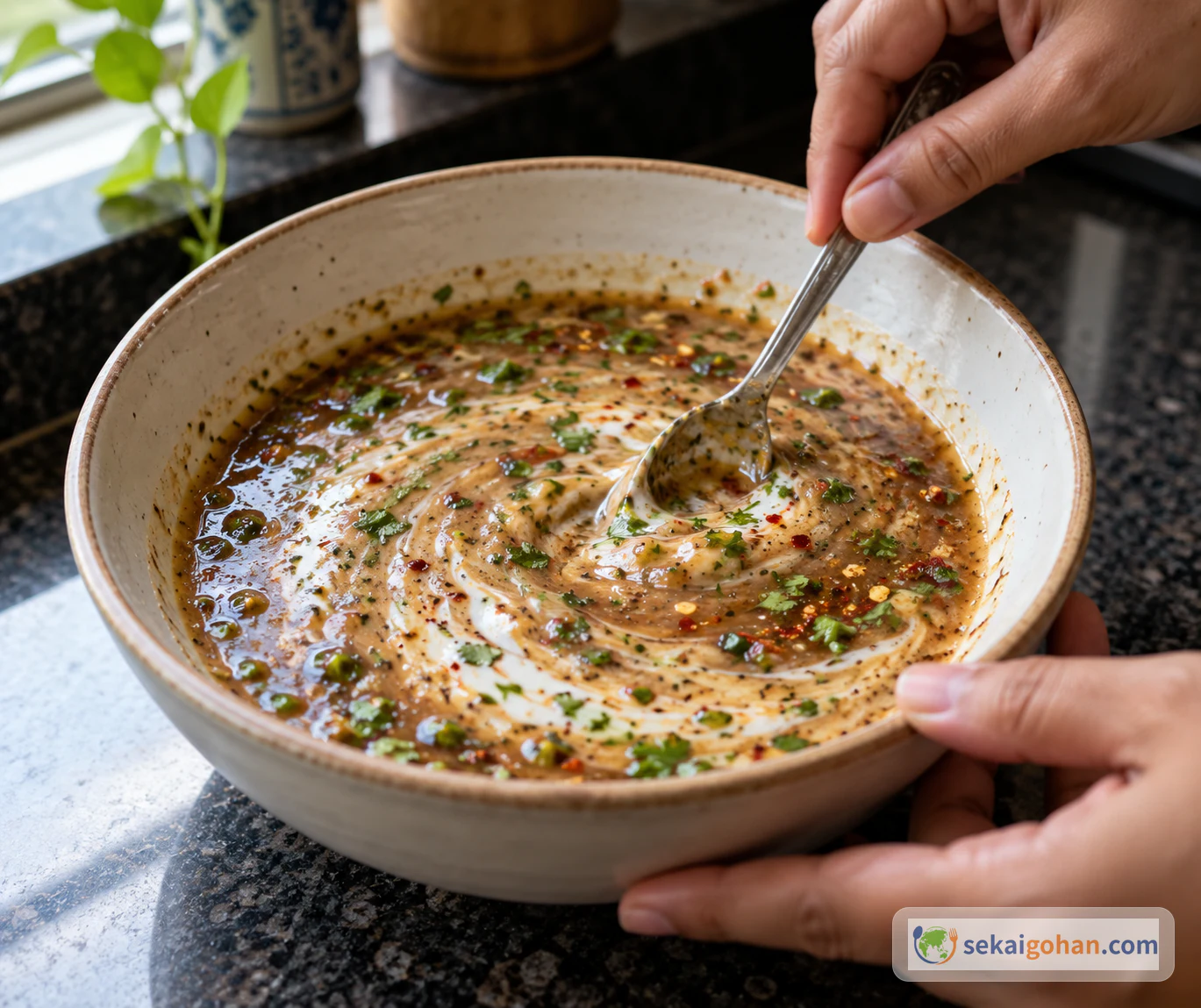
| The doi chatni looks streaky or uneven | Whether everything has been mixed | Stir all the sauce ingredients together well in the one bowl |
| You are unsure how much sauce to use per fuchka | — | Spoon it over to your liking; you don't have to use all of it |
Variations on Doi Fuchka
The roasted red chili flakes can be 1 tbsp or adjusted to taste; the green chili paste stays at 1 tsp either way. Ready-made fuchka or puri shells let you skip steps 1–13. Check the size and texture of the product you choose, then fill each shell with 1 tbsp of potato and add the doi chatni as usual.
There is also the "Special Doi Fuchka," which works quite differently: a suji-based shell, a filling of boiled yellow peas and potato with onion and green chili, and a tamarind sauce and a doi sauce made separately. Adding yellow peas or onion to this version won't turn it into that dish.
Frequently Asked Questions
Is the sauce a separate tamarind chutney plus yogurt?
Not here. The tamarind pulp is one ingredient of the doi chatni, mixed in the same bowl with the yogurt, water, sugar, black salt, both pastes and the chili flakes. Other versions, and some Dhaka carts, serve tamarind and yogurt sauces separately.
Can I make the shells ahead and store them?
Yes. Let the fried shells cool, then keep them in an airtight container.
Should the yogurt be chilled?
The recipe doesn't call for it, though chilled yogurt is how doi fuchka has been served at Dhaka carts.