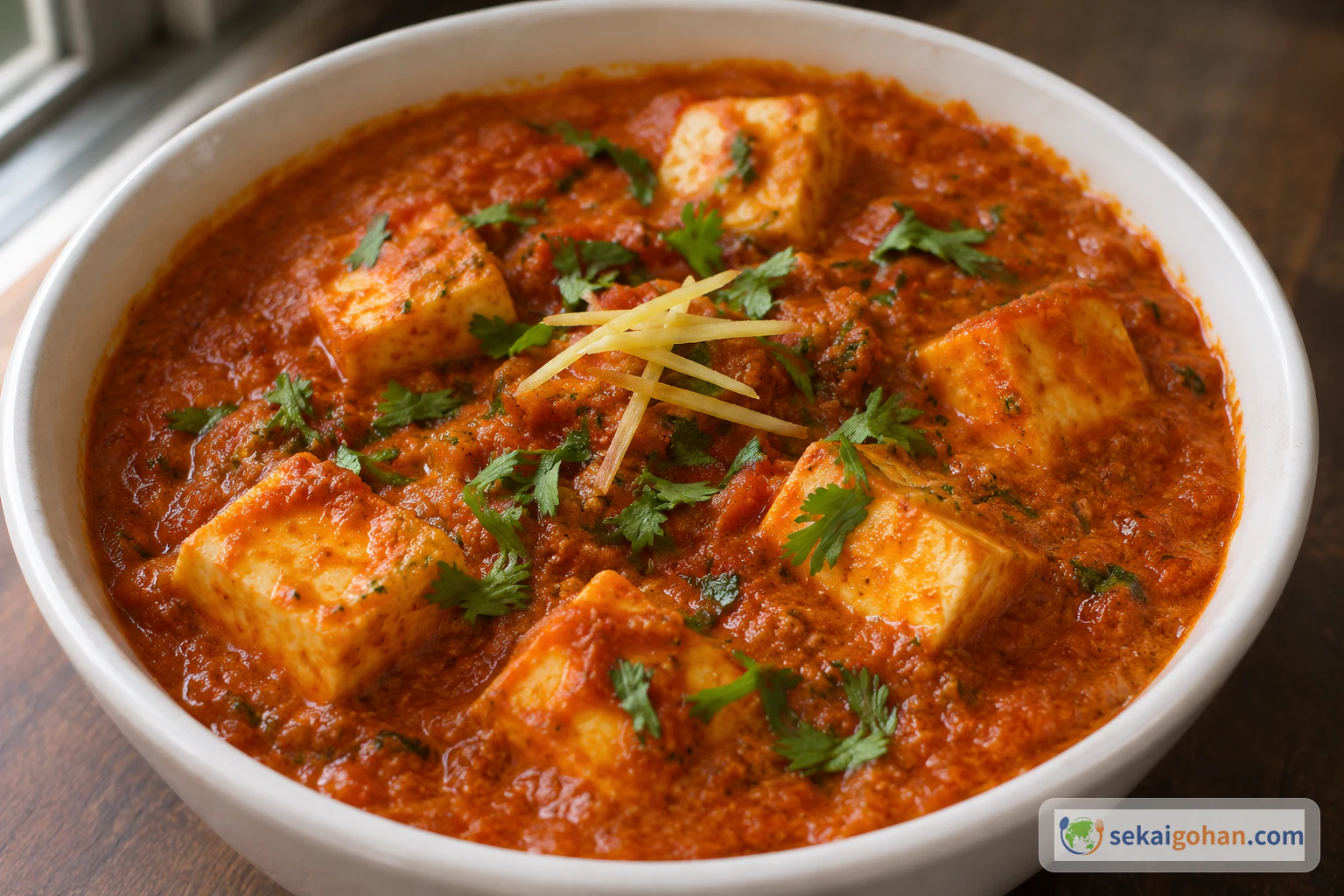
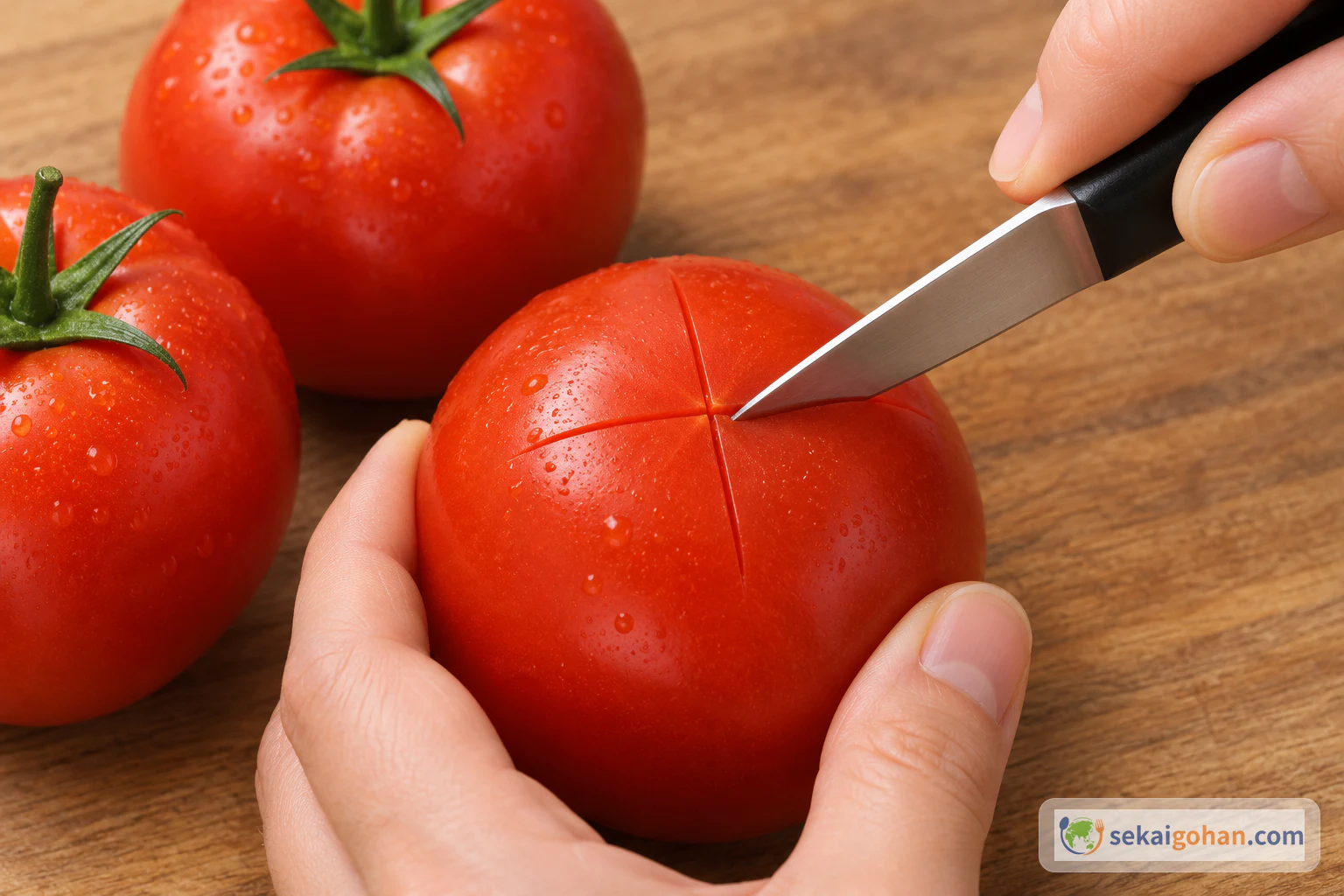
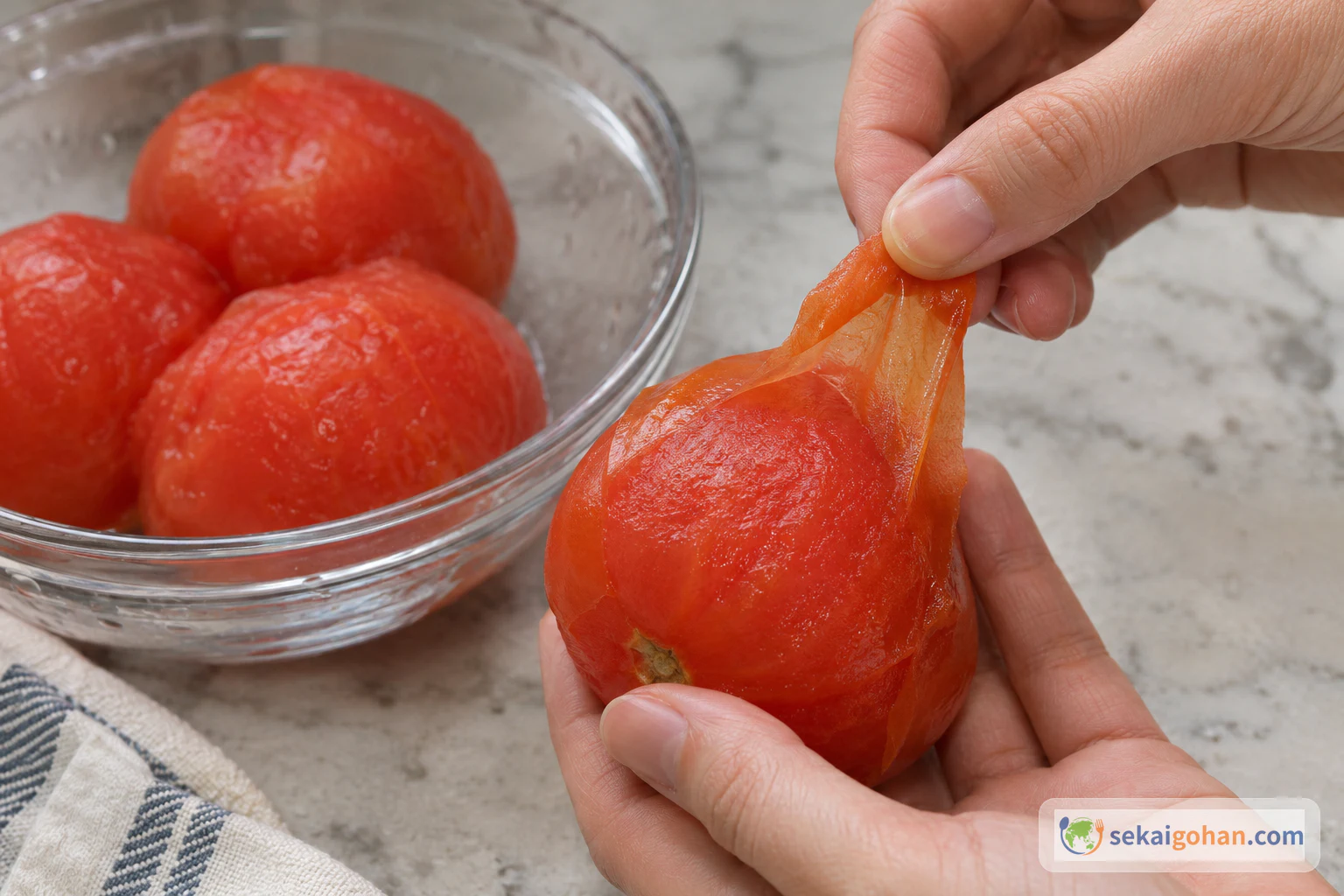
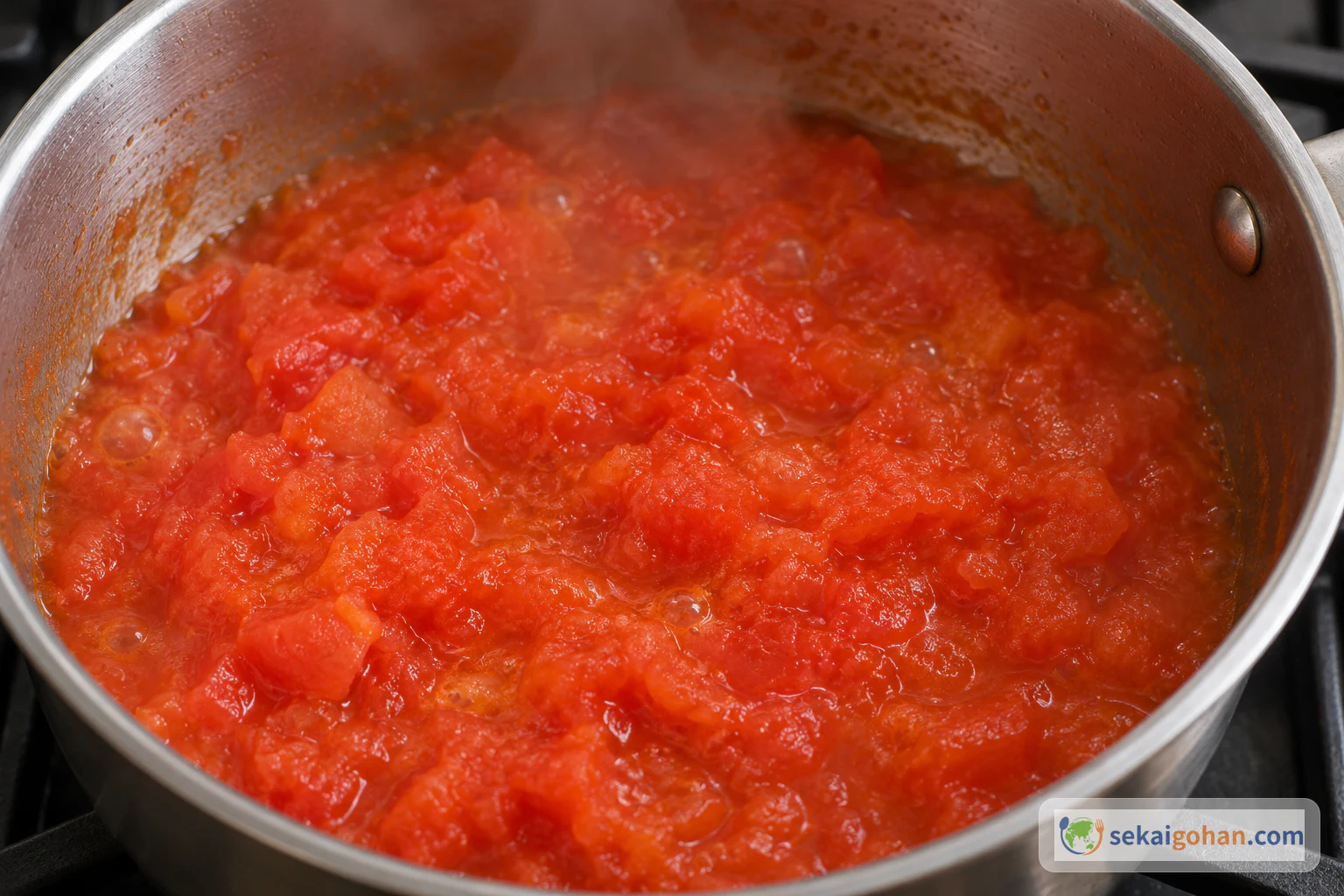
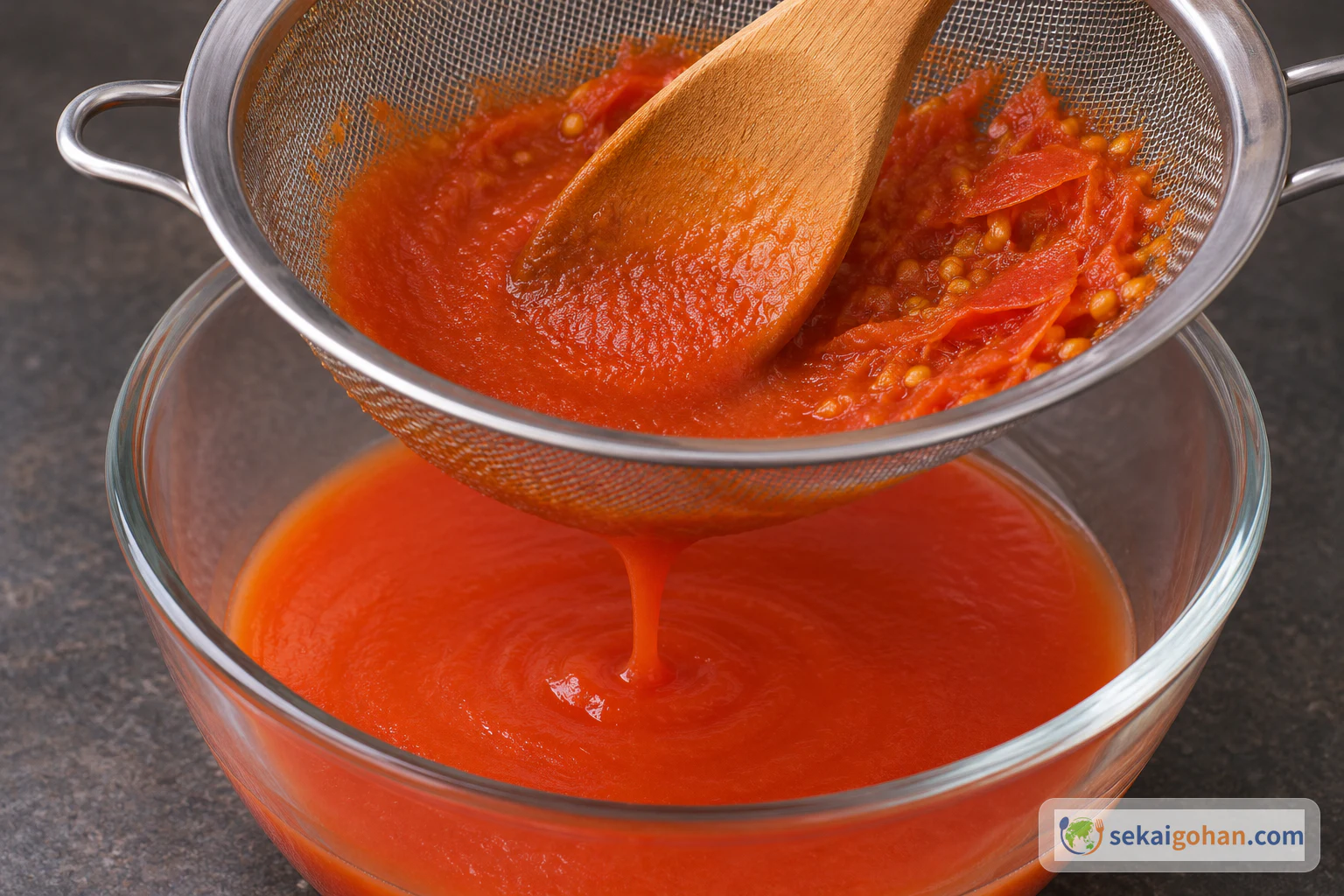
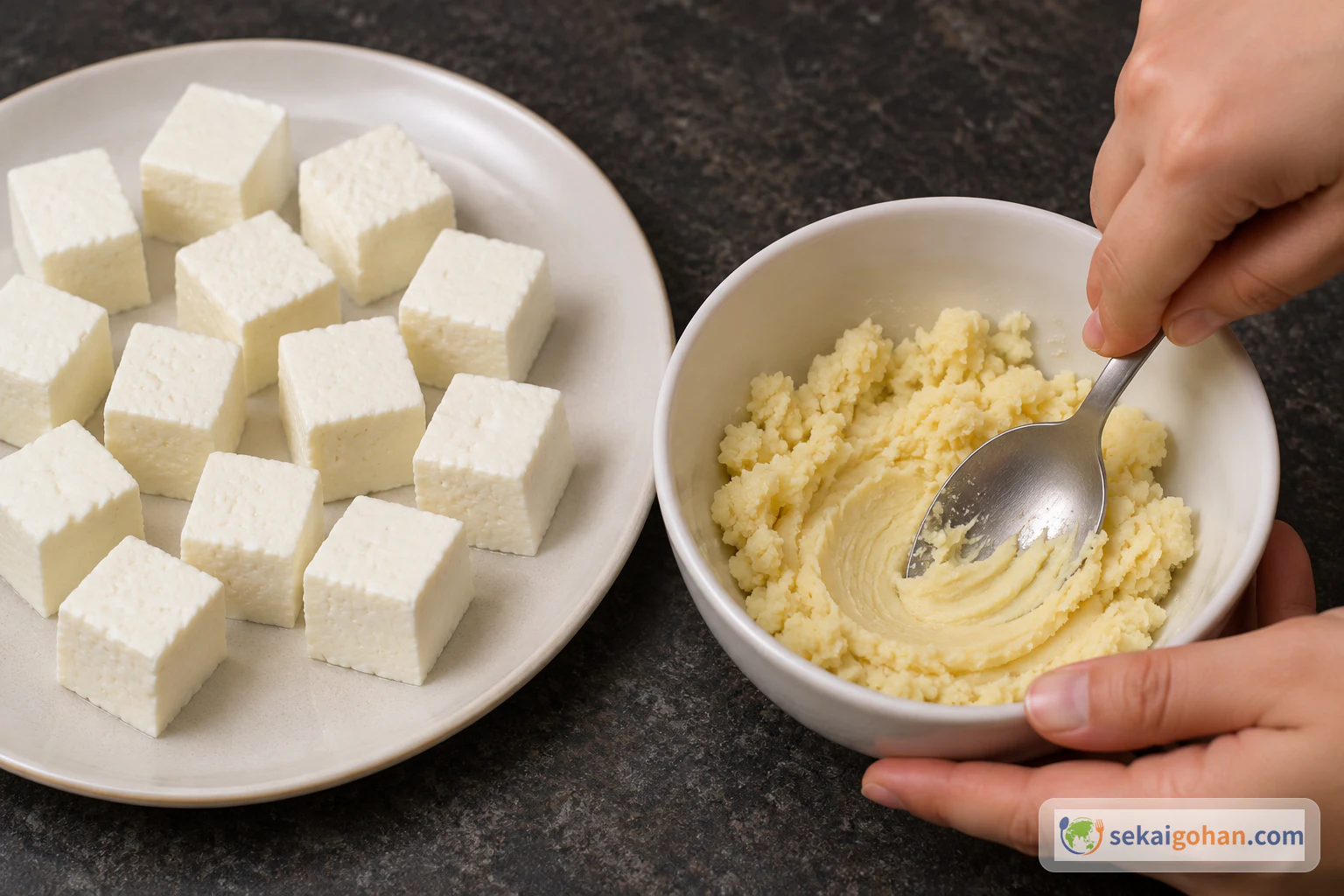
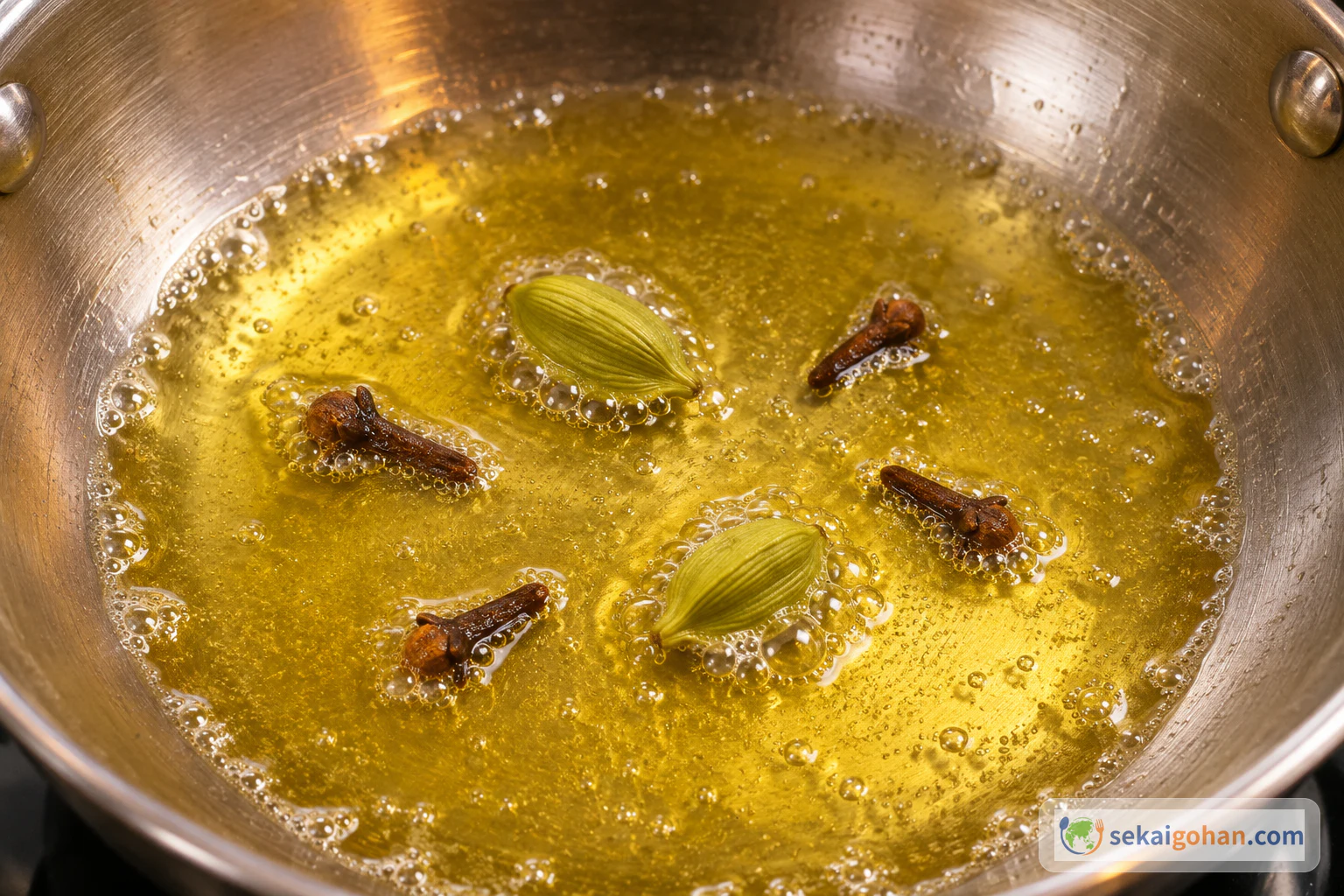
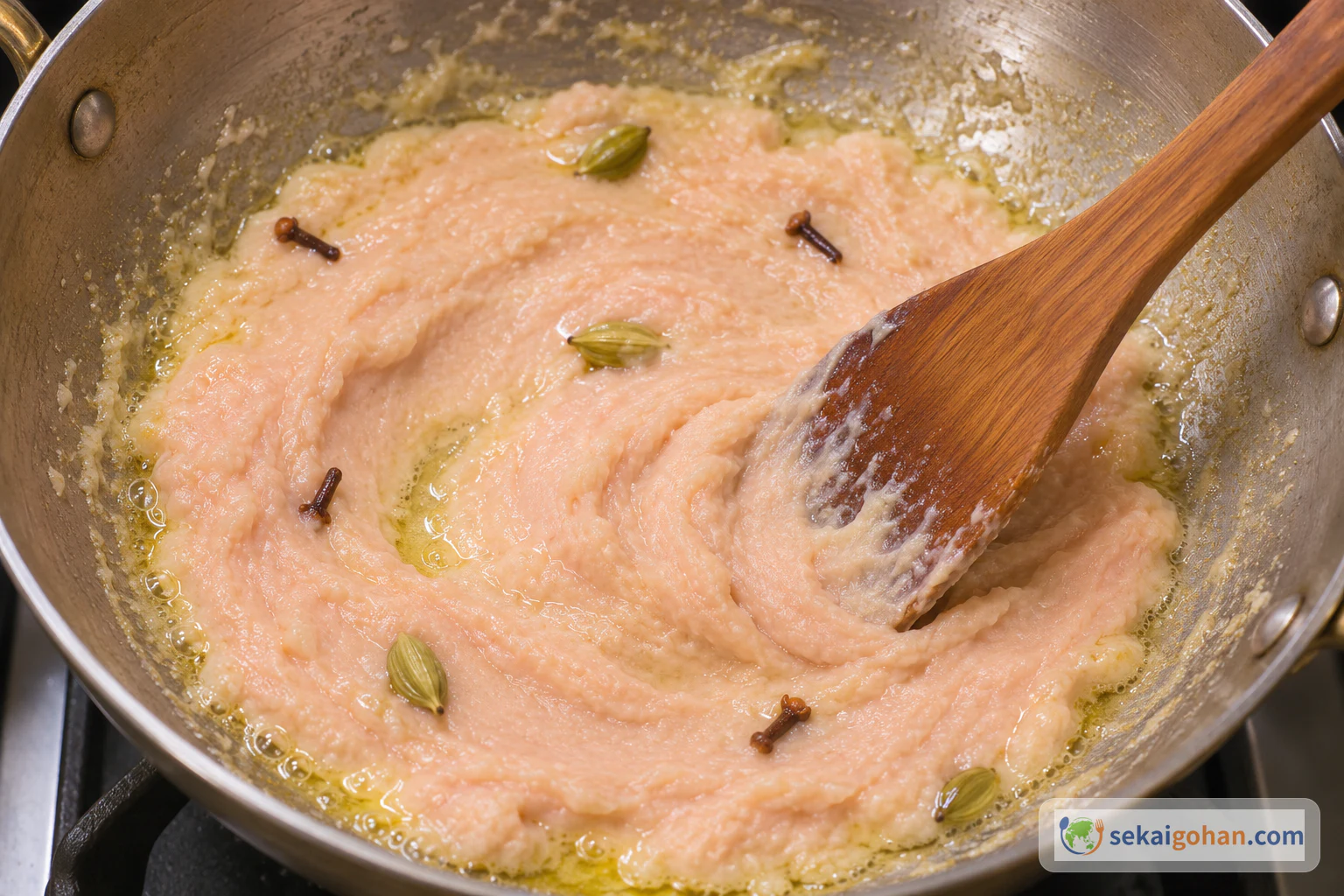
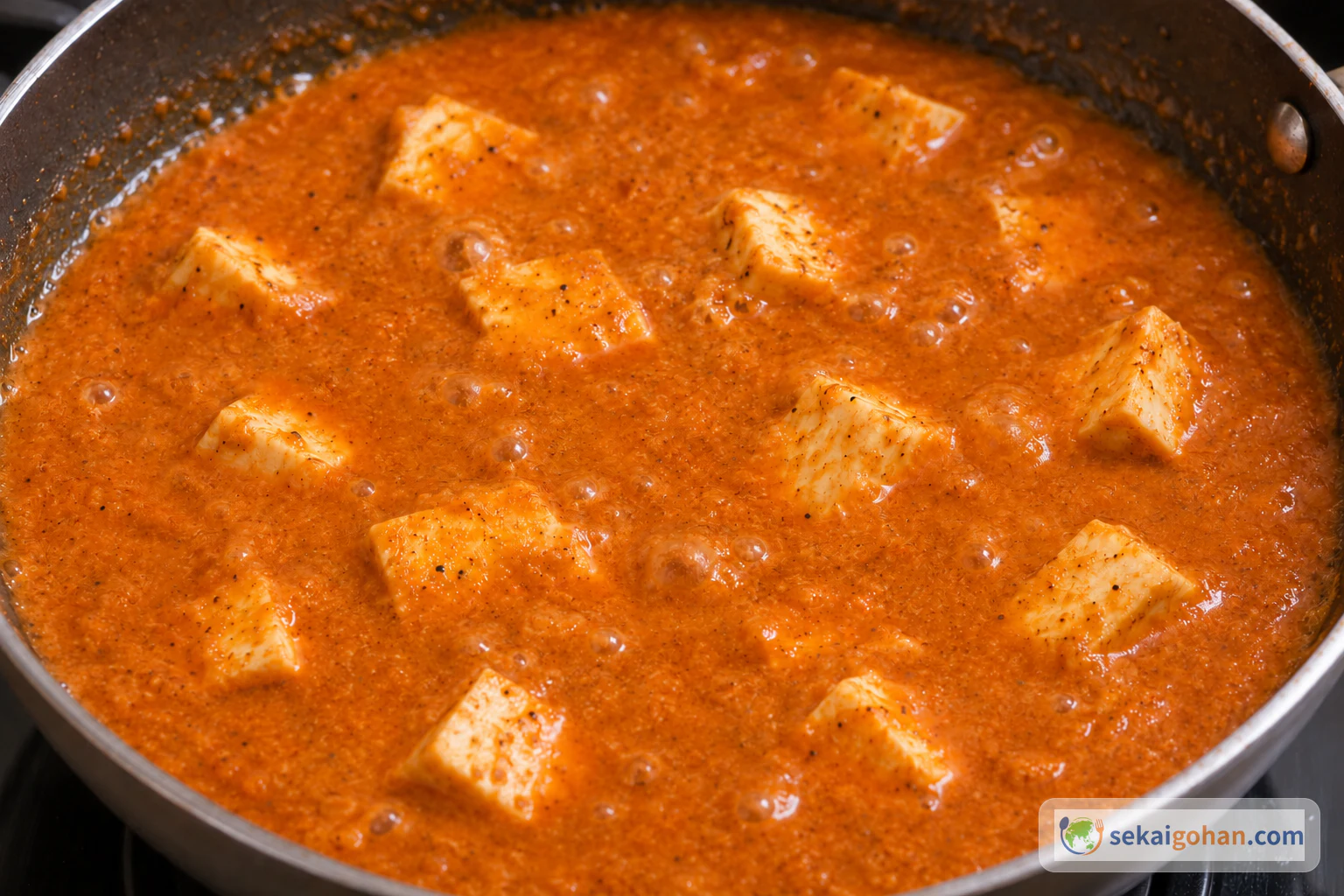
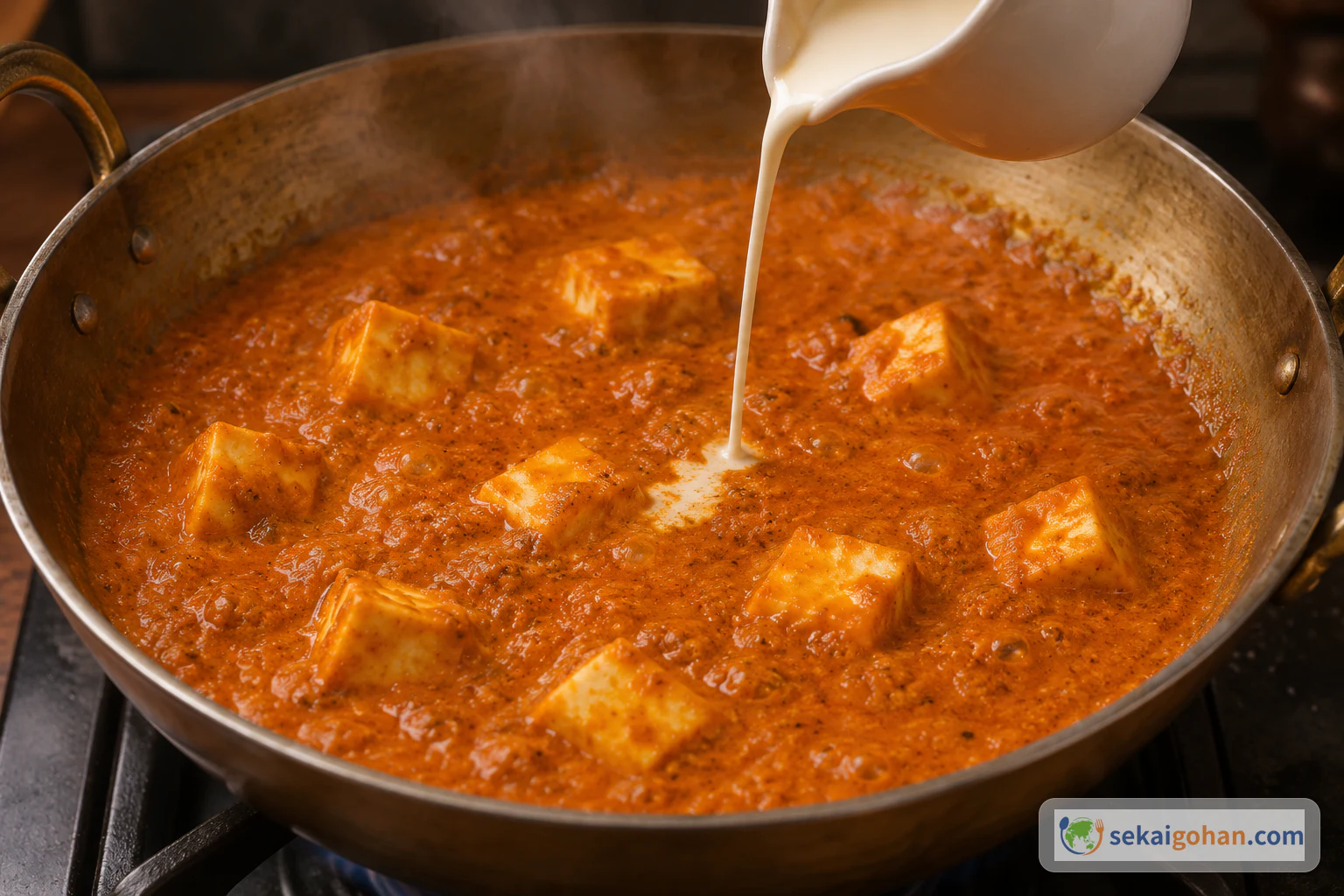
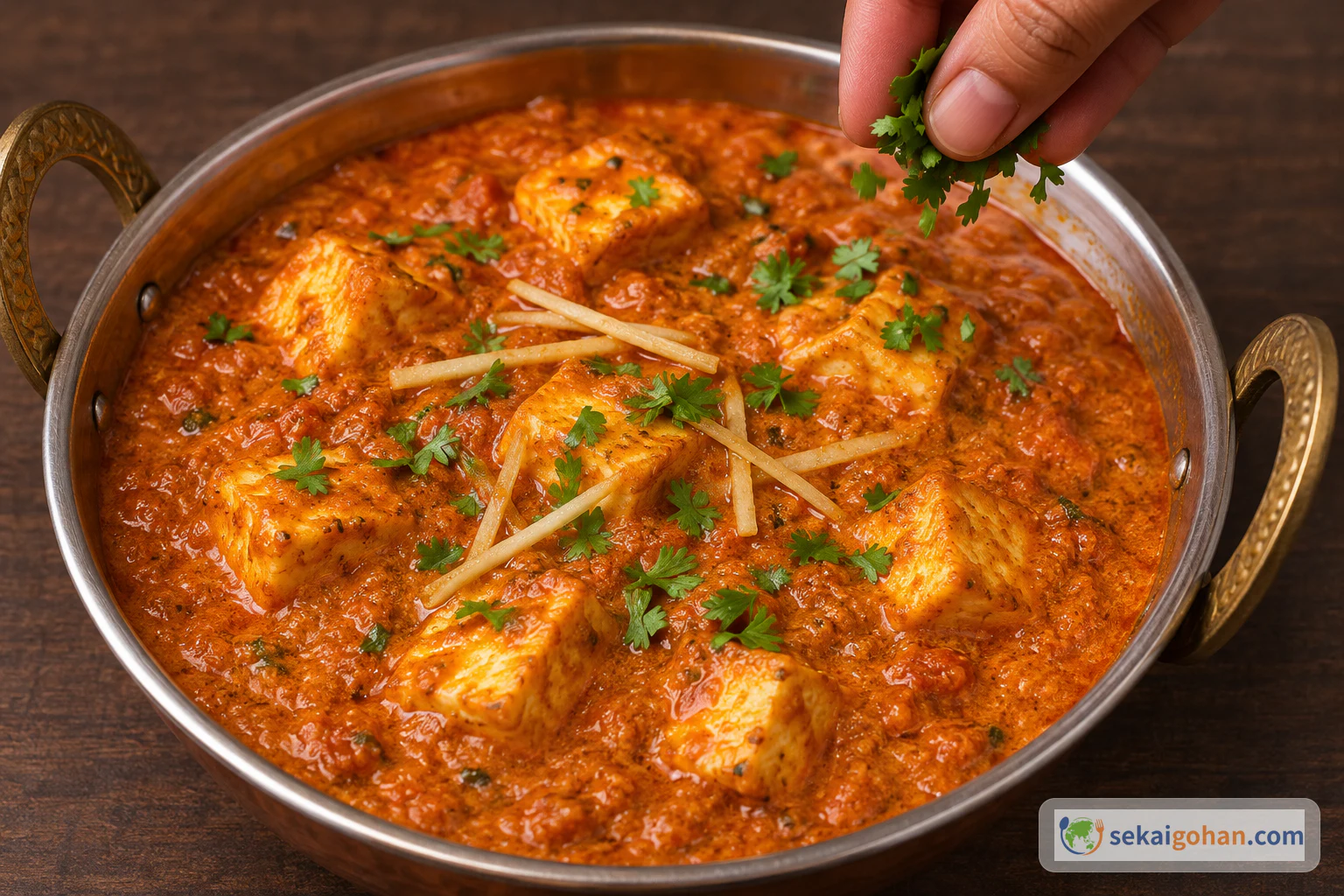
Six ripe red tomatoes, scored and slipped into boiling water for 30 seconds, come out with their skins ready to peel. They are cooked down until soft and pulpy, then pureed and pressed through a sieve. Meanwhile, whole green cardamom and cloves crackle in ghee, and smooth-mashed khoya goes into the pan until it takes on a faint pink color. Khoya paneer is a curry from India built on the two dairy products in its name. Here it is made with a fresh tomato base, cubes of paneer and a finish of cream and ground cardamom, and it serves 4.
About Khoya Paneer
Khoya and paneer are different dairy products, and this dish uses both. Khoya, also written khoa and also called mawa, is milk that has been partially dehydrated until only concentrated milk solids are left. Paneer is milk coagulated with heat and acid, then drained and pressed into a fresh cheese. In the curry the khoya melts into the sauce, while the paneer stays in cubes.
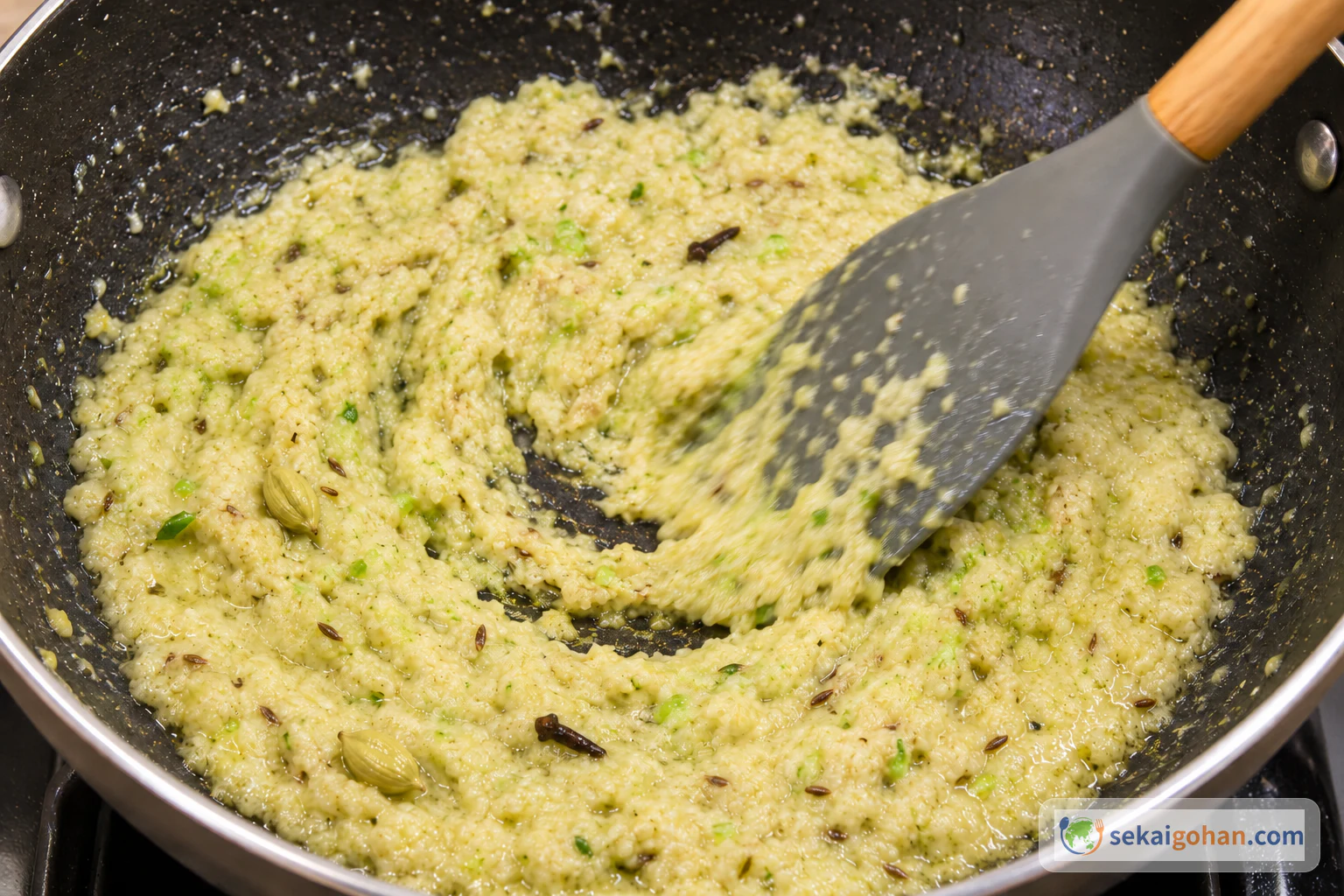
There is also a cashew-and-curd khoya paneer, which shares the name and some ingredients but is really a different dish. Boiled cashews are ground to a paste, green chillies and cardamom crackle in desi ghee, and the cashew paste, whisked curd and salt cook for 10 minutes. The khoya and paneer go in at the end. It uses 1 lb (500 g) paneer with ginger and coriander and serves 2. If that's the style you want, cook it as its own recipe. The tomato version below has no cashews or curd.
The tomato version takes 20 minutes to prepare and 15 minutes to cook. It is an intermediate recipe, mostly because the order in which things go into the pan matters.
Ingredients (Serves 4)
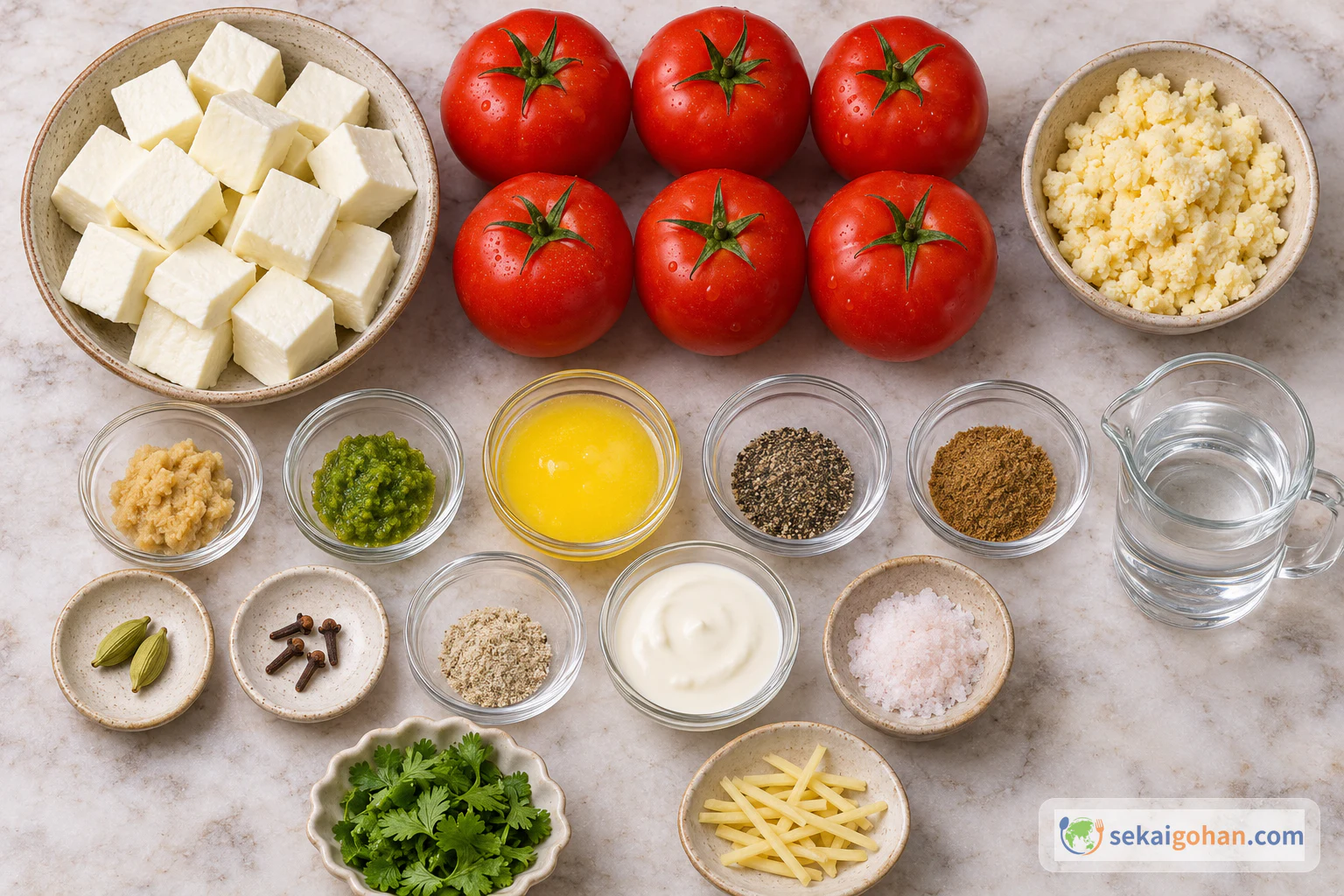
Keep the whole cardamom and the ground cardamom separate, and keep the ginger paste separate from the ginger cut for garnish. Each goes in at a different stage.
Equipment
- Paring knife and cutting board
- Pot of boiling water and a slotted spoon
- Saucepan for cooking the tomatoes
- Blender or other tool for pureeing
- Fine-mesh sieve and a bowl
- Small bowl and spoon for mashing the khoya
- Pan or kadai for the curry
- Spatula
Choosing Khoya, Paneer and Tomatoes
Khoya: Look for plain, unsweetened khoya at an Indian grocery, where it may also be labeled mawa or khoa. Condensed milk and cream cheese are different products and won't work in its place.
Paneer: Cut the 200 g of paneer into 1-inch cubes before you start the curry, so they are ready when it's time to add them.
Tomatoes: Use six large, ripe, red tomatoes. If you're short on time, 1/2 cup of ready tomato puree can stand in for them. Use one or the other, never both.
Salt: The recipe uses rock salt, sendha namak, added to taste along with the tomato puree.
This dish contains milk in three forms: paneer, khoya and cream. Keep paneer, khoya and cream refrigerated according to their package instructions until you use them. Take care with the pot of boiling water when blanching the tomatoes and with the hot ghee when the whole spices crackle.
Method: From Fresh Tomatoes to a Finished Curry
Steps 1–4 turn the tomatoes into a smooth puree. Step 5 gets the paneer and khoya ready. Steps 6–11 build the curry in one pan.
Common Problems with Khoya Paneer
Most slips in this recipe come down to timing, meaning what goes into the pan and when. Before you turn on the heat, line up the ingredients in the order of steps 6–10, with the whole cardamom pods and the ground cardamom in separate bowls.
| What happened | Likely cause | What to do |
|---|---|---|
| The puree has bits of skin or seeds | Not strained, or the sieve was too coarse | Press it through a fine-mesh sieve again before step 9 |
| The tomatoes are still in chunks | Not cooked long enough to turn pulpy | Keep cooking until soft and pulpy before pureeing |
| The khoya is darkening past pink | Cooked too long in the ghee | Add the pastes as soon as it turns slightly pink |
| The ground cardamom went in with the whole spices | The two cardamoms were mixed up | Whole pods go in at step 6 and the powder at step 10; keep them in separate bowls next time |
| Unsure about salt | No fixed amount | Add rock salt a little at a time in step 9 and taste |
| You added ready puree as well as fresh tomatoes | Two tomato options were combined | Use only one tomato base |
Storing Leftover Khoya Paneer
Don't leave the finished curry sitting out at room temperature. Using clean utensils, divide the leftovers into shallow containers so they cool quickly, then refrigerate them. Reheat the curry thoroughly before eating.
Frequently Asked Questions
What is the difference between khoya and paneer?
Khoya (also khoa or mawa) is milk that has been partially dehydrated. Paneer is milk coagulated with heat and acid, then drained and pressed. That's why the khoya melts into the sauce while the paneer holds its shape.
Why are there two kinds of cardamom?
They do two different jobs. The whole green cardamom pods crackle in the ghee at the start to flavor the fat, and the ground cardamom goes in with the cream at the end.
Is the 30 seconds in boiling water a food-safety step?
No. The quick blanch only loosens the tomato skins so they peel off easily. It has nothing to do with making the dish safe to eat.