Ambur Biryani: Tamil Nadu Mutton Biryani with Seeraga Samba Rice

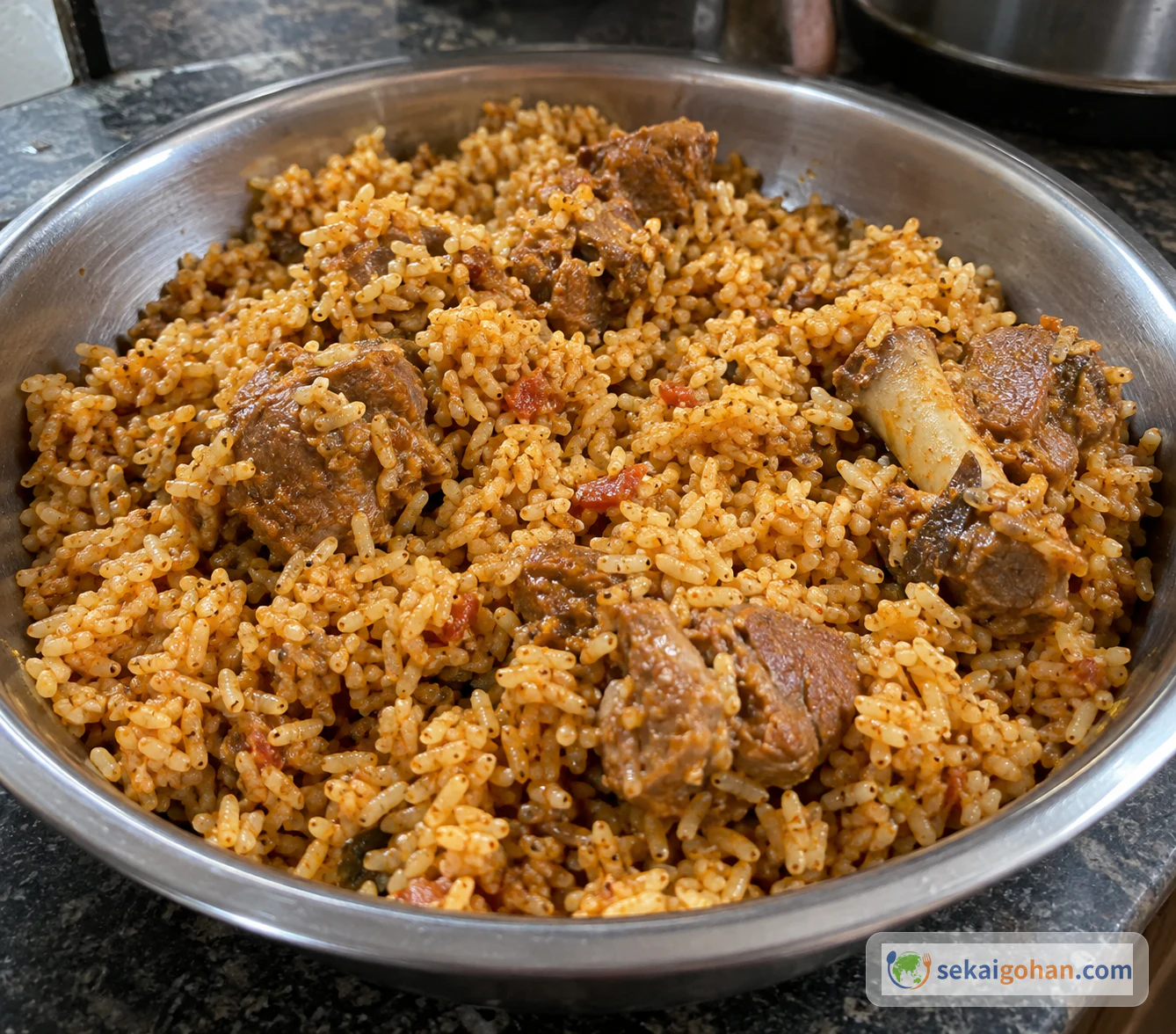
Ambur biryani: small seeraga samba rice grains mixed with bone-in mutton in a red chili masala
Serves
4–6 servings (as stated in the source recipe)
Level
Intermediate
Cuisine
Indian

How to make Ambur mutton biryani from northern Tamil Nadu: small-grain seeraga samba rice parboiled, then mixed into a pressure-cooked mutton masala built on fresh red chili paste and finished on dum. Covers ingredients and honest substitutions, pressure cooker safety, how it differs from layered biryanis, and the story of Ambur's shop-style biryani.

Cooking flow

Cooking steps

STEP11 / 7

Soak the rice, then parboil it in salted water

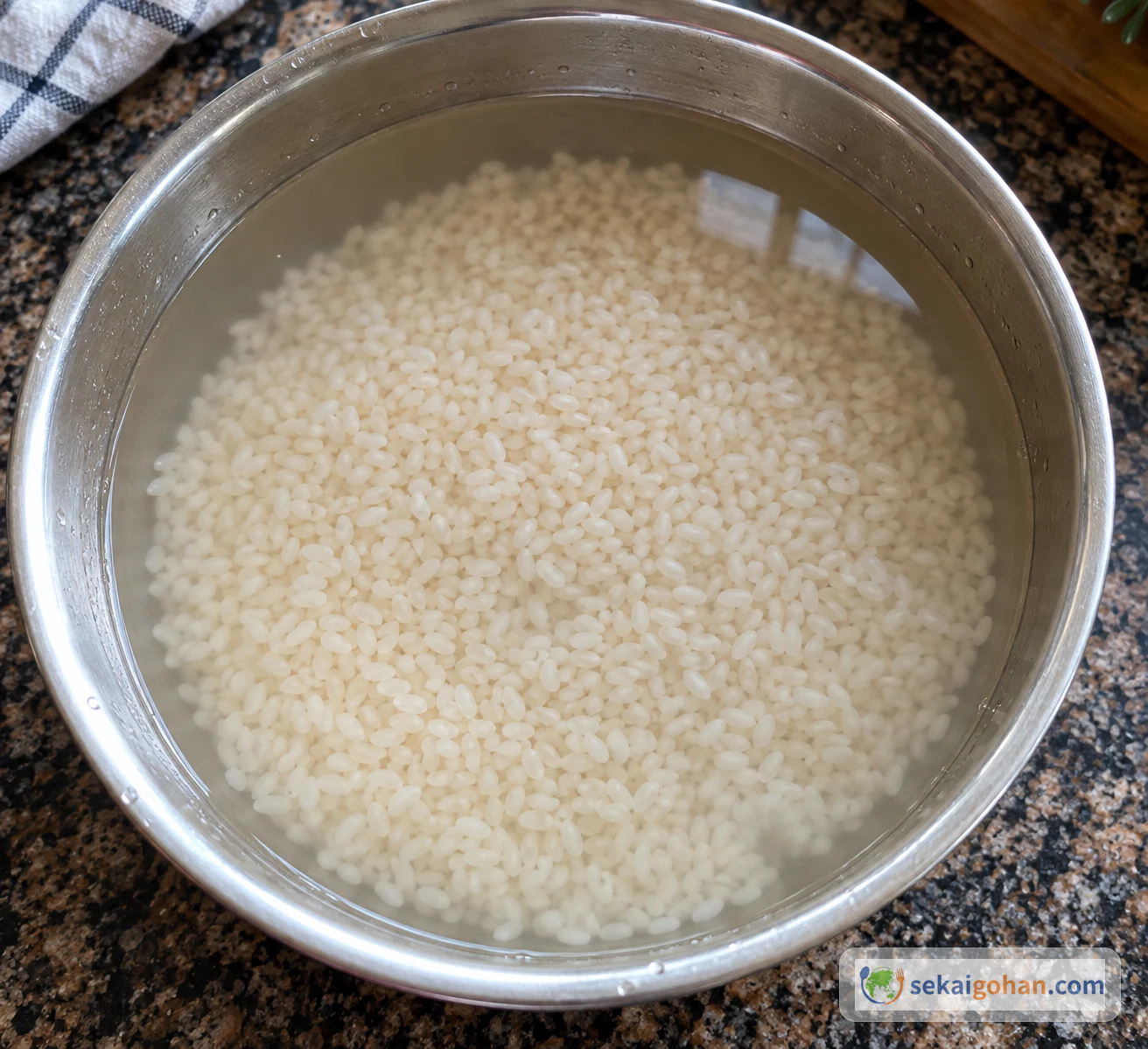
Seeraga samba rice soaking in water for 30 minutes
The small, short grains soak in a single bowl after washing

Wash the seeraga samba gently 2–3 times, cover it with water and leave it to soak for 30 minutes.

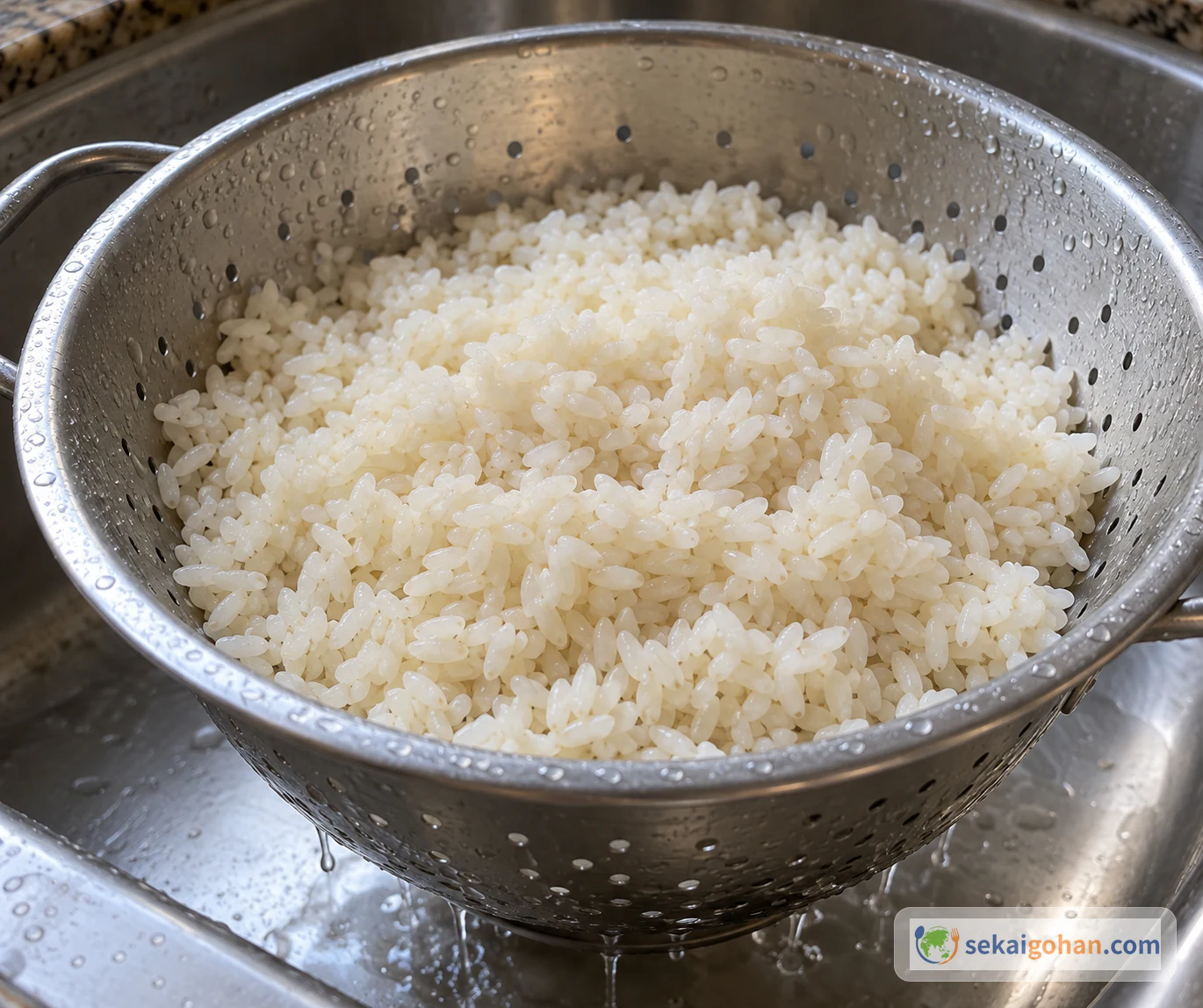
Bring 2 quarts (2L) water to a boil and dissolve 1 tbsp sea salt in it. Drain the soaked rice, add it to the boiling water and cook for 4–5 minutes, then tip it into a colander. The rice should not yet be fully cooked: it will keep cooking with the meat later, and rice that is already soft has no room left to take up the masala.

Seeraga samba rice briefly boiled in salted water and drained in a colander
Drain the rice while it is still partly cooked, not fluffy
STEP22 / 7

Bloom the whole spices and build the aromatic oil

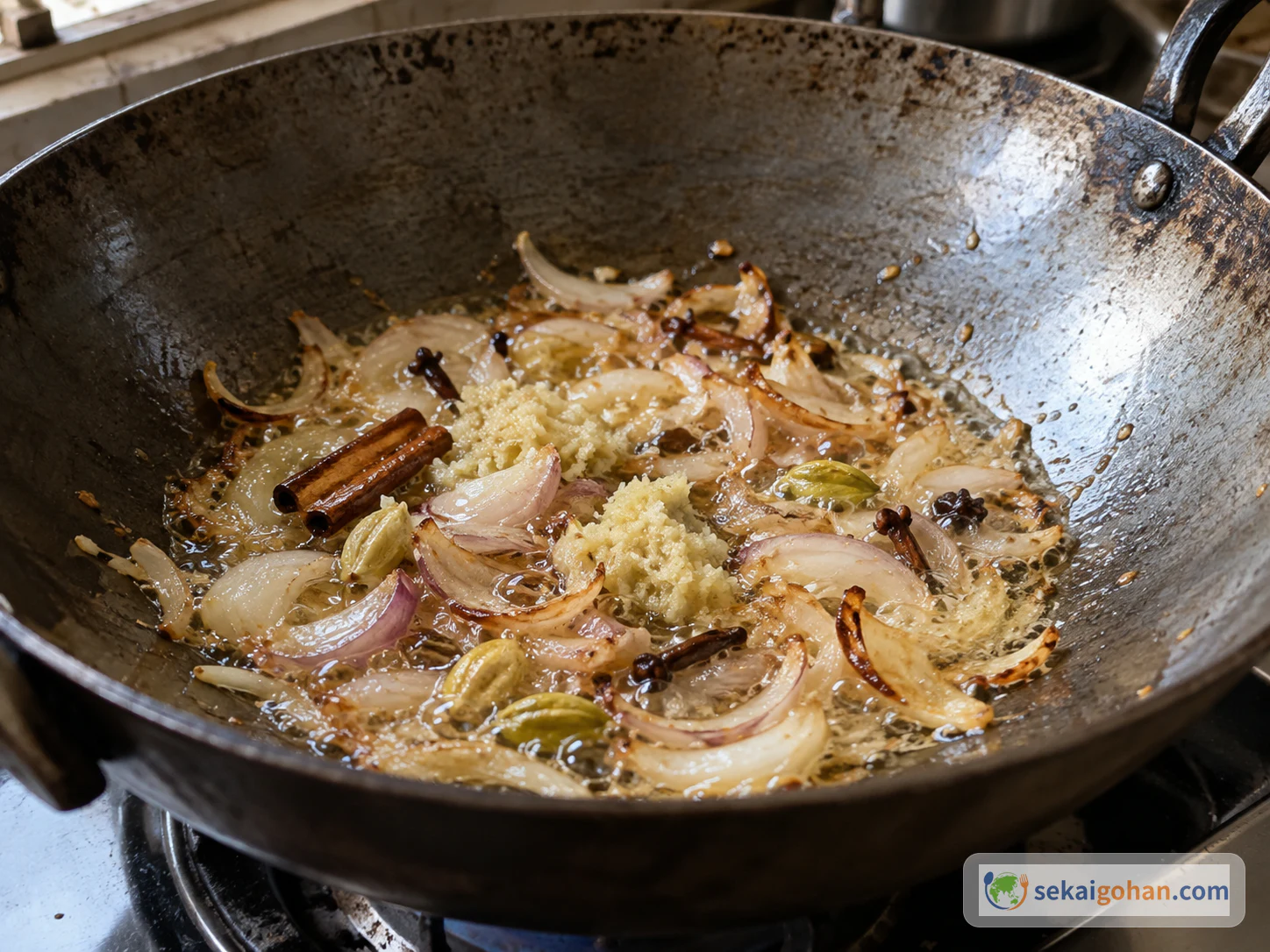
Cinnamon, cloves and cardamom heating in oil with a little onion, ginger and garlic
Whole spices bloom in the oil while the first bit of onion and the pastes begin to color

Heat ½ cup (100ml) oil in a heavy kadhai or deep pot. Add the cinnamon, cloves and cardamom. When the cardamom puffs up, add about ½ tbsp of the sliced onion and cook for 30 seconds. Lower the heat, add the garlic paste and cook for about 2 minutes, then add the ginger paste. Keep the heat gentle enough that the spices don't burn.

STEP33 / 7

Make the red chili and tomato masala

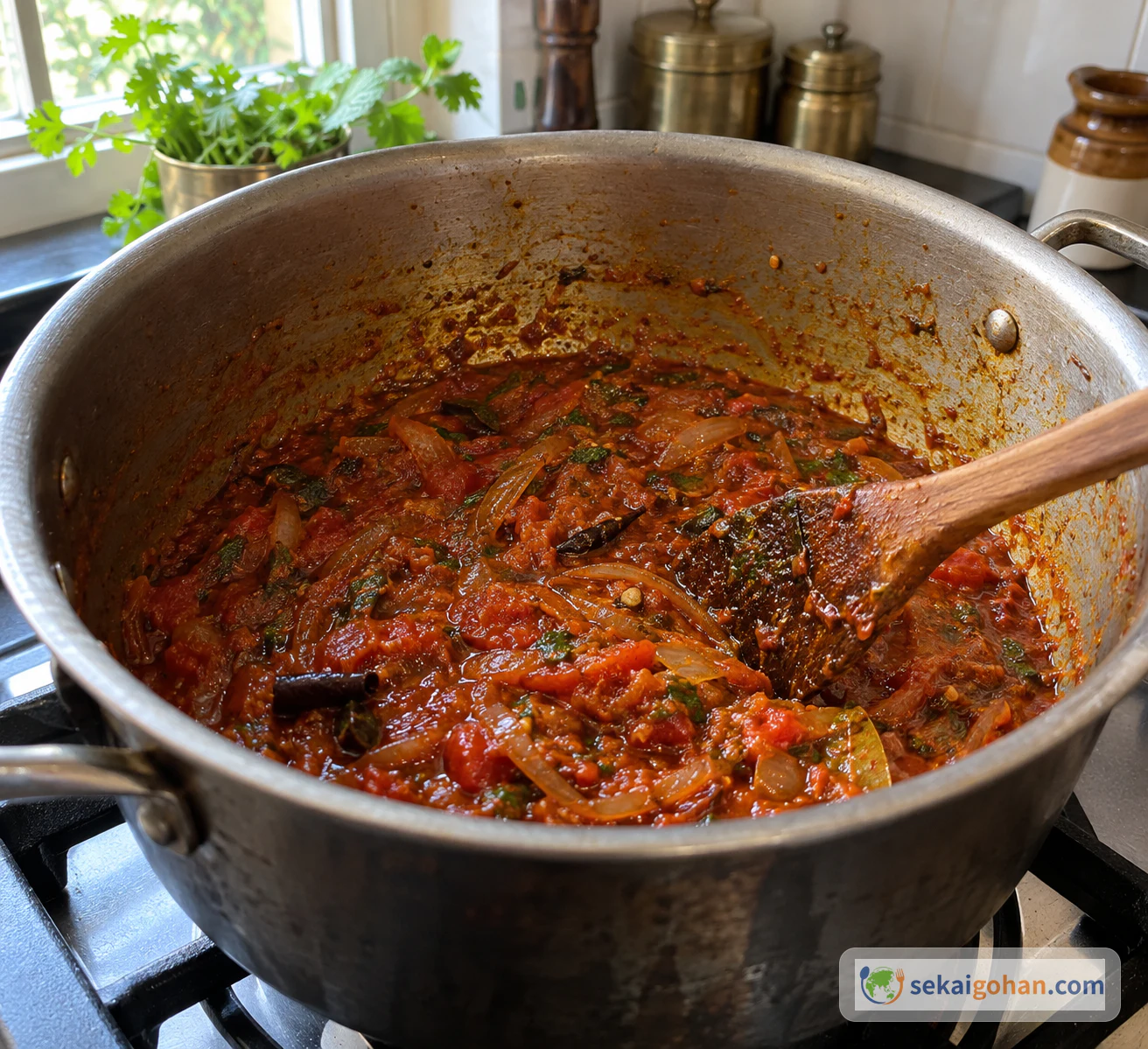
Fresh red chili paste, the remaining onion and tomato cooking into a red masala
The masala is ready for the meat when the oil starts to separate

Add ½ tbsp mint and ½ tbsp coriander leaves and cook until the garlic and ginger begin to turn golden. Add the red chili paste and cook for about 1 minute. Add the rest of the onion and cook for about 2 minutes, until translucent. Add the 5.5 oz (150g) tomato and cook for 6–7 minutes, until the oil separates from the masala. That separation is your signal to move on to the meat.

STEP44 / 7

Sear the mutton and add the yogurt

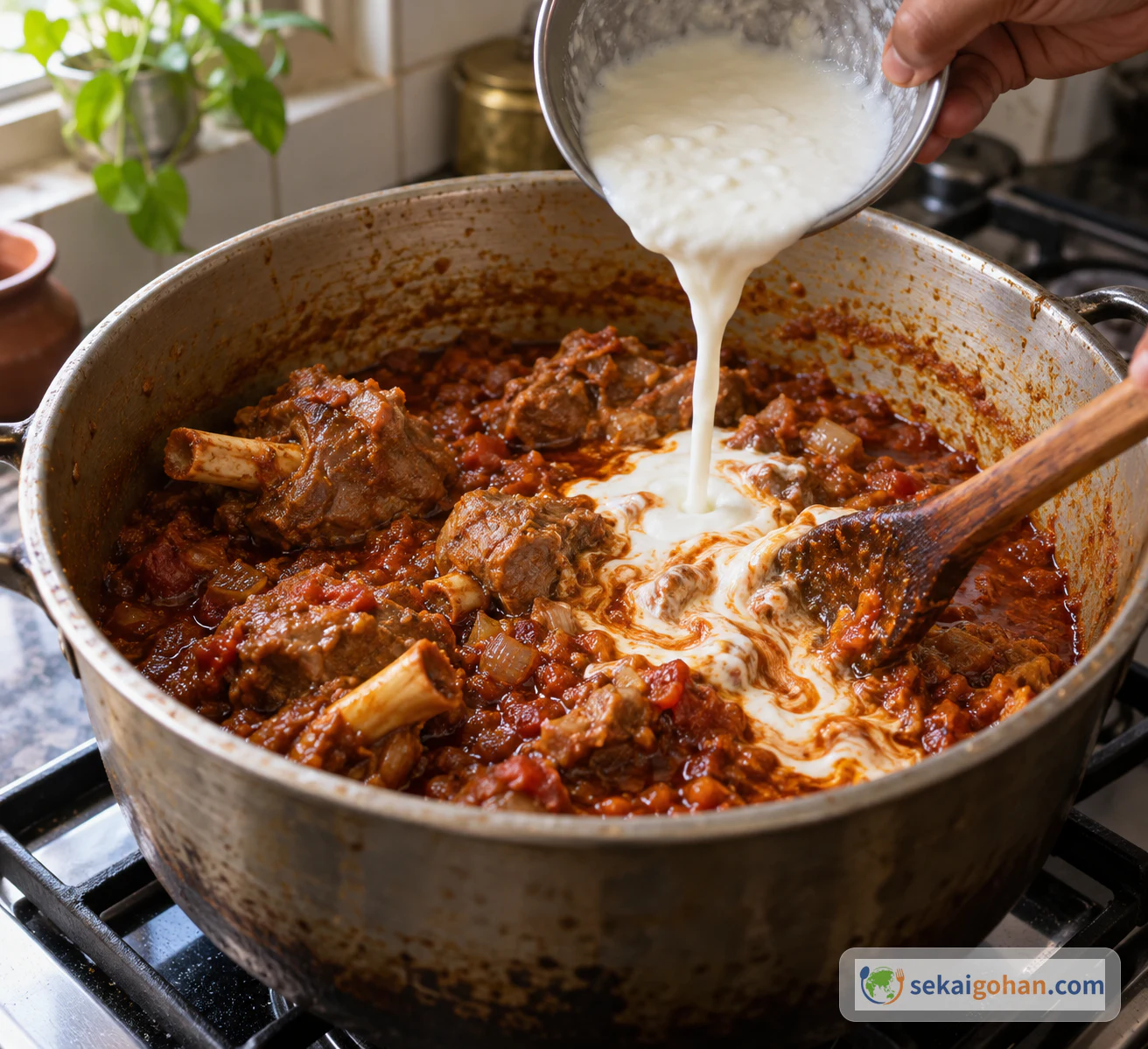
Yogurt being added to bone-in mutton in the red masala
Lower the heat before the yogurt goes in

Add the 12.5 oz (350g) mutton and 1½ tsp salt and cook over high heat for 6–7 minutes, stirring so nothing sticks and burns. Lower the heat, add the ¼ cup (60ml) yogurt, and stir while bringing it to a boil.

STEP55 / 7

Pressure-cook the mutton

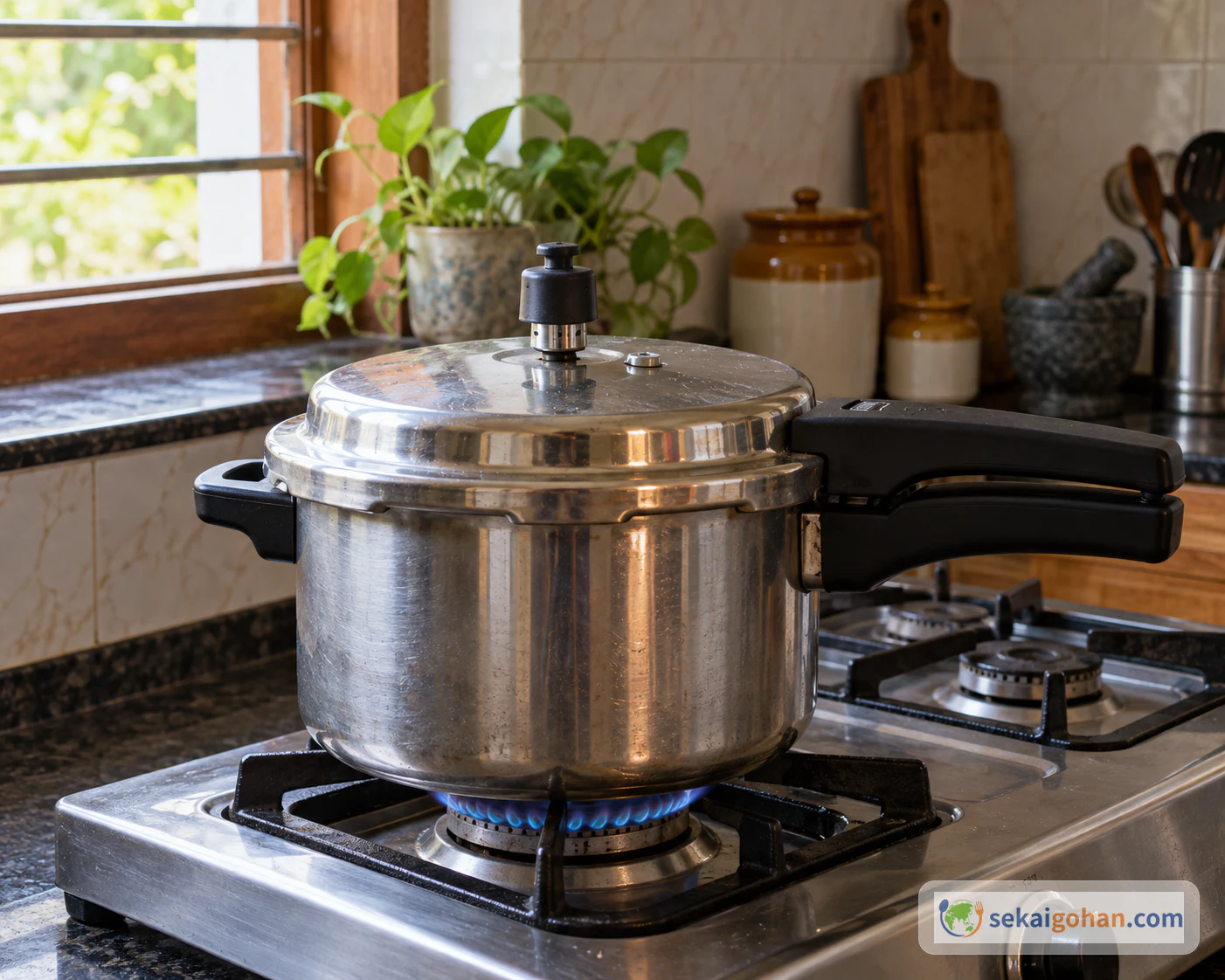
Mutton masala with hot water, lime and herbs cooking in a closed pressure cooker
Everything, including the last of the herbs and the lime juice, is already in the cooker

Add the 1 cup (240ml) hot water, 2 tsp lime juice and the remaining 1 tbsp each of mint and coriander, and scrape the bottom of the pot clean. Once it boils, transfer everything to the pressure cooker. Cook over high heat until the first whistle, then turn the heat to low and cook for about 20 minutes. Turn off the heat and open the cooker only after the pressure has dropped.

Pressure cooker safety

The "first whistle" is a cooker's sign that it has reached full pressure; not every cooker has a whistle. Before you start, check your manual for how it shows full pressure, its minimum liquid amount, its maximum fill level, and how and when it may be depressurized and opened. If your cooker isn't suited to this quantity, don't use it for this recipe as written. Don't make up a whistle count for a cooker without one, don't cut the water on your own, and never force the lid open while there is pressure inside.

Checking the meat

The 20 minutes under pressure and 15 minutes of dum are not a substitute for checking. Heat the food until the center reaches 167°F (75°C) for at least 1 minute. Measure in the center of a piece of meat, not touching the bone. Go by the state of the meat and your appliance's instructions.

STEP66 / 7

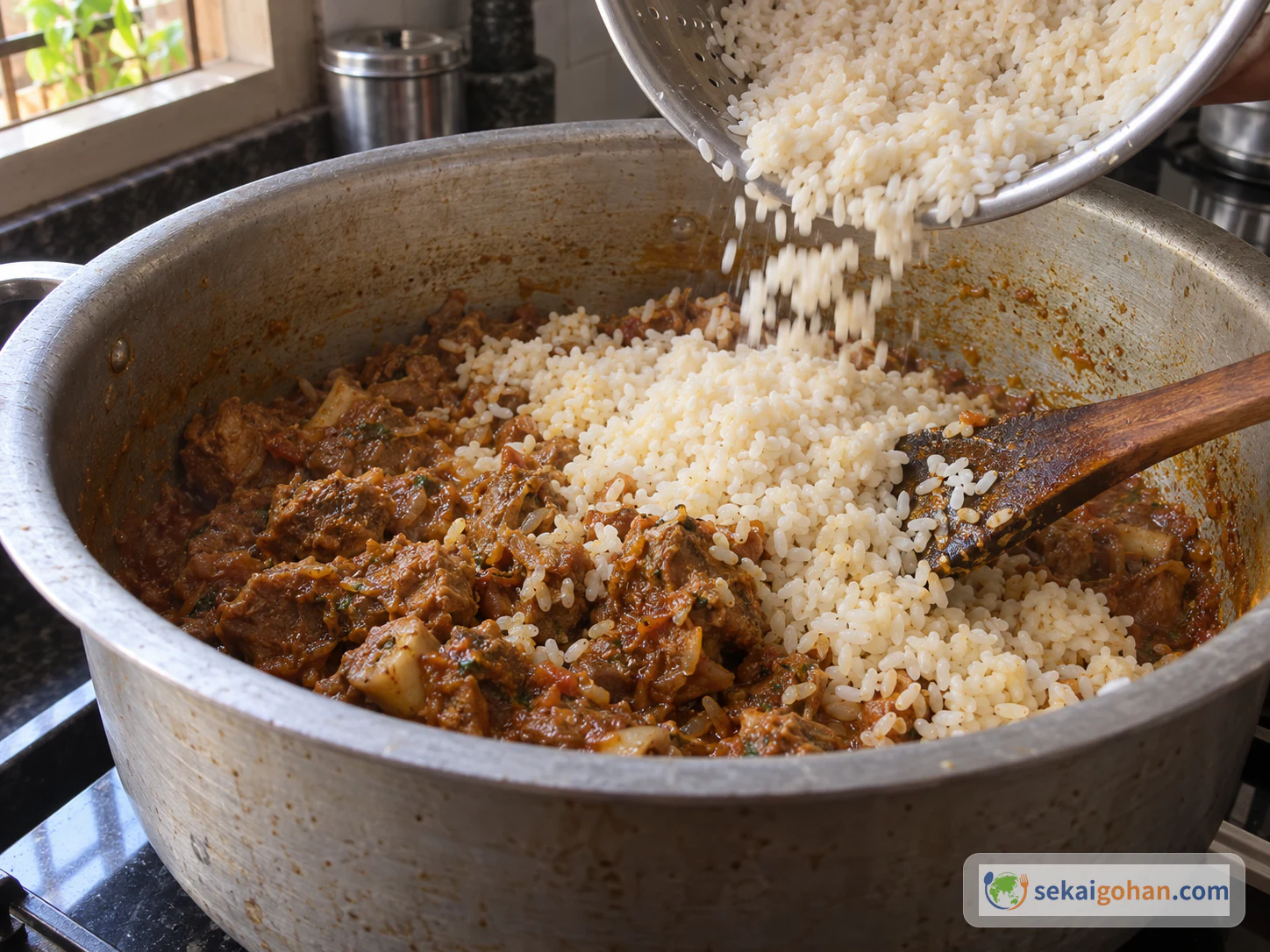
Add the parboiled rice to the meat and mix gently

Parboiled seeraga samba rice being added to the pressure-cooked mutton masala
The rice goes on top first, then gets folded through the masala

Return the meat to the kadhai or heavy pot and warm it. Spoon the parboiled rice over the meat, then mix carefully so the grains don't break but every part is combined with the meat and masala. This is a mixed biryani; don't build layers.

STEP77 / 7

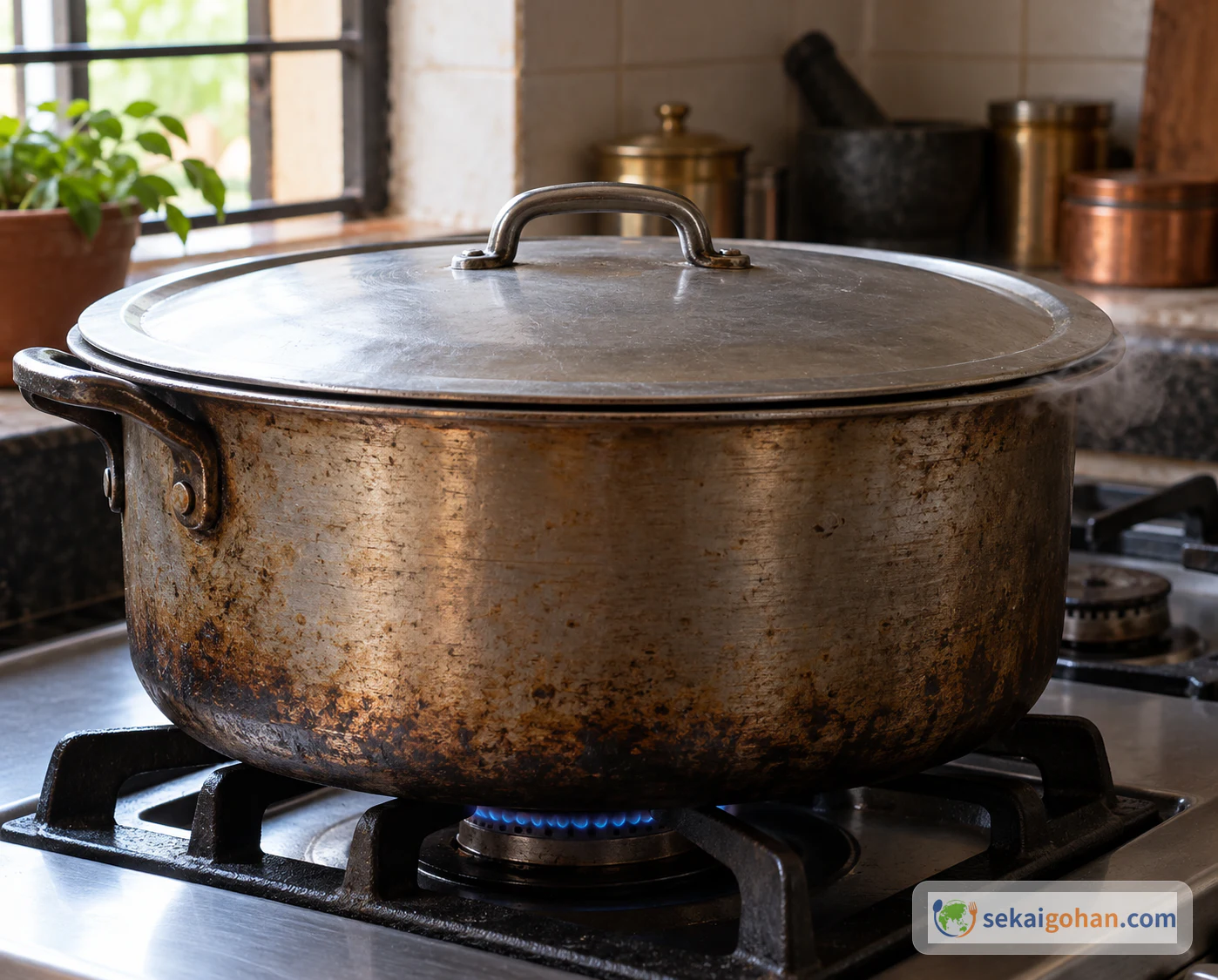
Seal the lid, finish on dum and serve

A covered pot of mutton and seeraga samba rice steaming over low heat
Keep the lid sealed and the flame low for the 15-minute dum

Cover the pot tightly and cook on low heat for 15 minutes. Then serve it hot, with no extra resting time after the heat is turned off.

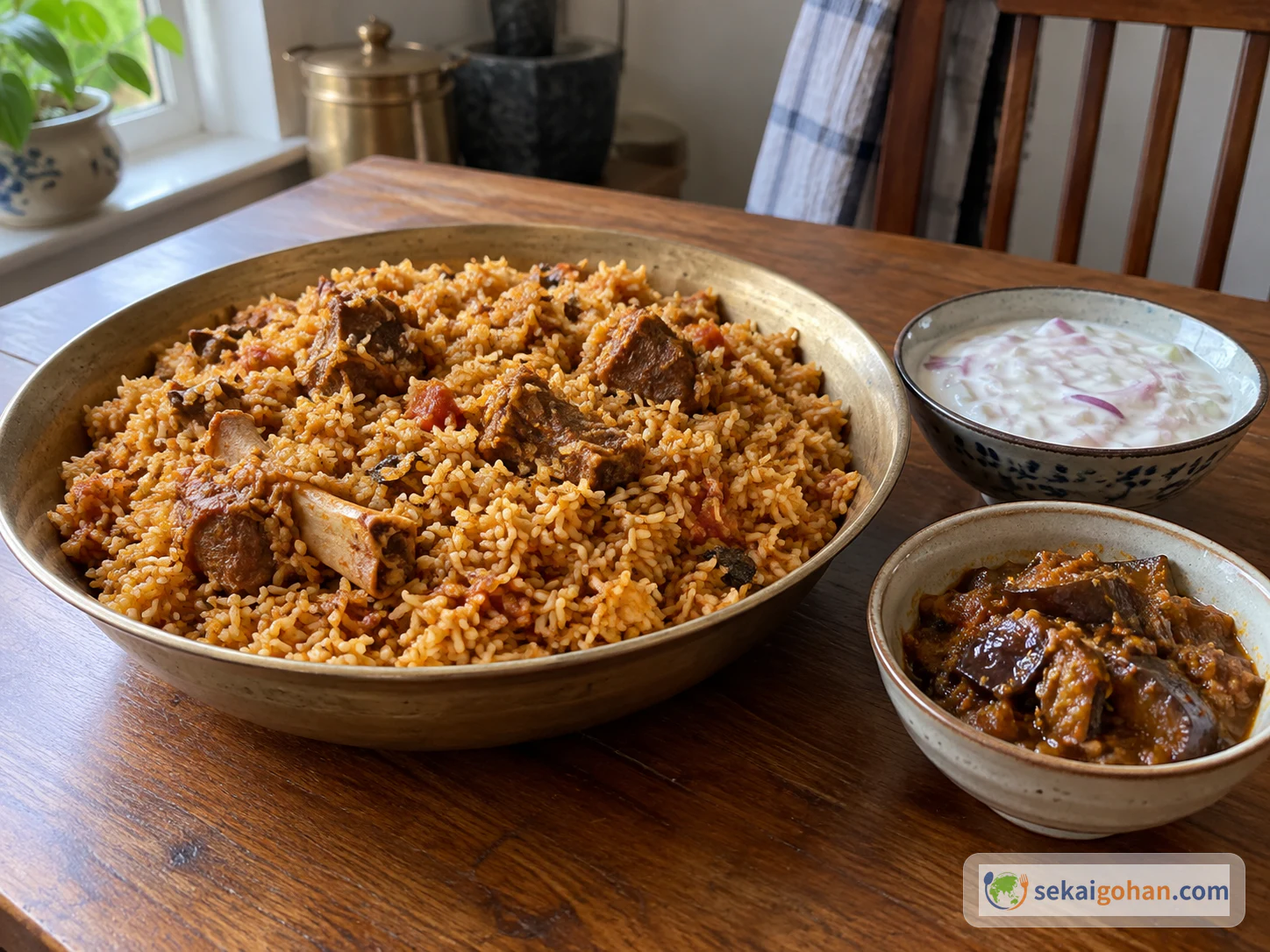
If you like, serve raita and a tangy eggplant pachadi in separate bowls on the side.

Ambur mutton biryani on the table with raita and an eggplant side dish in separate bowls
The sides are optional and stay in their own bowls
0 / 0
Ingredients

Ingredients

1 / 3

For the rice

Ingredient Amount Role
Seeraga samba rice (சீரக சம்பா) 12.5 oz (350g) The small-grain rice at the heart of the dish
Water for washing and soaking As needed Working water only; drained before parboiling
Water for parboiling 2 quarts (2L) Parboils the rice
Sea salt 1 tbsp Seasons the parboiling water; separate from the meat salt
2 / 3

For the mutton masala

Ingredient Amount Role
Oil 100ml Blooms the whole spices and cooks the masala
Cinnamon 3 pieces, 1 inch each Whole spice
Cloves 3 Whole spice
Green cardamom 3 pods Whole spice
Onion, sliced 150g (about 1½ onions) About ½ tbsp goes in first; the rest after the chili paste
Garlic paste 40g Cooked until it loses its raw edge
Ginger paste 40g Added after the garlic
Mint, chopped 1½ tbsp ½ tbsp early; the remaining 1 tbsp before pressure cooking
Coriander leaves, chopped 1½ tbsp ½ tbsp early; the remaining 1 tbsp before pressure cooking
Large fresh red chilies 6 Seeded and ground to about 3½ tbsp of paste; color and heat
Tomato, chopped 150g Cooked with the masala until the oil separates
Bone-in mutton, about 2-inch pieces 350g The meat; bone-in mature sheep meat is the cut used here
Salt 1½ tsp, or to taste Seasons the meat
Yogurt 60ml Added to the meat; contains milk
Hot water 240ml Becomes the pressure-cooking sauce
Lime juice 2 tsp Brightens the meat sauce
3 / 3

To serve alongside (optional)

Ingredient Amount Role
Raita, ready-made As needed A cooling side; not part of the main pot
Eggplant pachadi (kathirikai pachadi), ready-made As needed A tangy side; not part of the main pot
0 / 0

When the lid comes off a pot of Ambur biryani, you won't find bands of white and colored rice stacked over the meat. The short, small grains are mixed all the way through a red masala, with pieces of mutton tucked among them. This is the biryani of Ambur, a town in northern Tamil Nadu: mutton cooked first in a masala of fresh red chili, tomato, mint and coriander, then steamed together with fragrant seeraga samba rice. For more dishes from the same country, see our India page.

Ambur Biryani and Its Shop Tradition

The shops of Ambur

Ambur biryani is usually talked about as a shop dish rather than a household recipe. A tradition holds that descendants of cooks to the Arcot Nawab opened the Star Briyani Hotel in 1890, and local shops often spell it "briyani." In Ambur and the towns of the old North Arcot area, biryani has grown into a regional brand of its own.

In 2022, shop owners described how they serve the dish and the demand they see, especially the Sunday takeaway rush. Even so, there is no single fixed recipe shared by every shop and every home in the region. The shops cook in large pots of their own; a home pressure cooker is a practical way into the dish rather than a copy of the shop flavor.

The rice is the other pillar. Seeraga samba is a traditional Tamil Nadu variety with small, fine grains, also used for biryani on special occasions. Choosing this rice does more for the dish than adding extra spices.

How Ambur biryani differs from layered styles

In a Hyderabadi kachchi-style biryani, raw marinated meat and parboiled basmati are layered and cooked together on dum. Ambur works the other way around. The mutton is pressure-cooked first in its masala, and only then is parboiled seeraga samba gently mixed in and steamed under a sealed lid.

The spicing is spare, too. There is no powdered garam masala, just cinnamon, cloves and green cardamom, and the red comes from the chilies, not from food coloring or saffron.

Axis Ambur style (this recipe) Layered style (e.g. Hyderabadi kachchi chicken)
Rice Small-grain seeraga samba Long-grain basmati
Meat Mutton, pressure-cooked first in the masala Raw marinated meat cooked under the rice
Flavor base Fresh red chili paste, tomato, mint, coriander, three whole spices Set by each recipe
Assembly Parboiled rice mixed into the cooked meat, then dum Meat and rice layered, then dum

Ingredients (4–6 Servings)

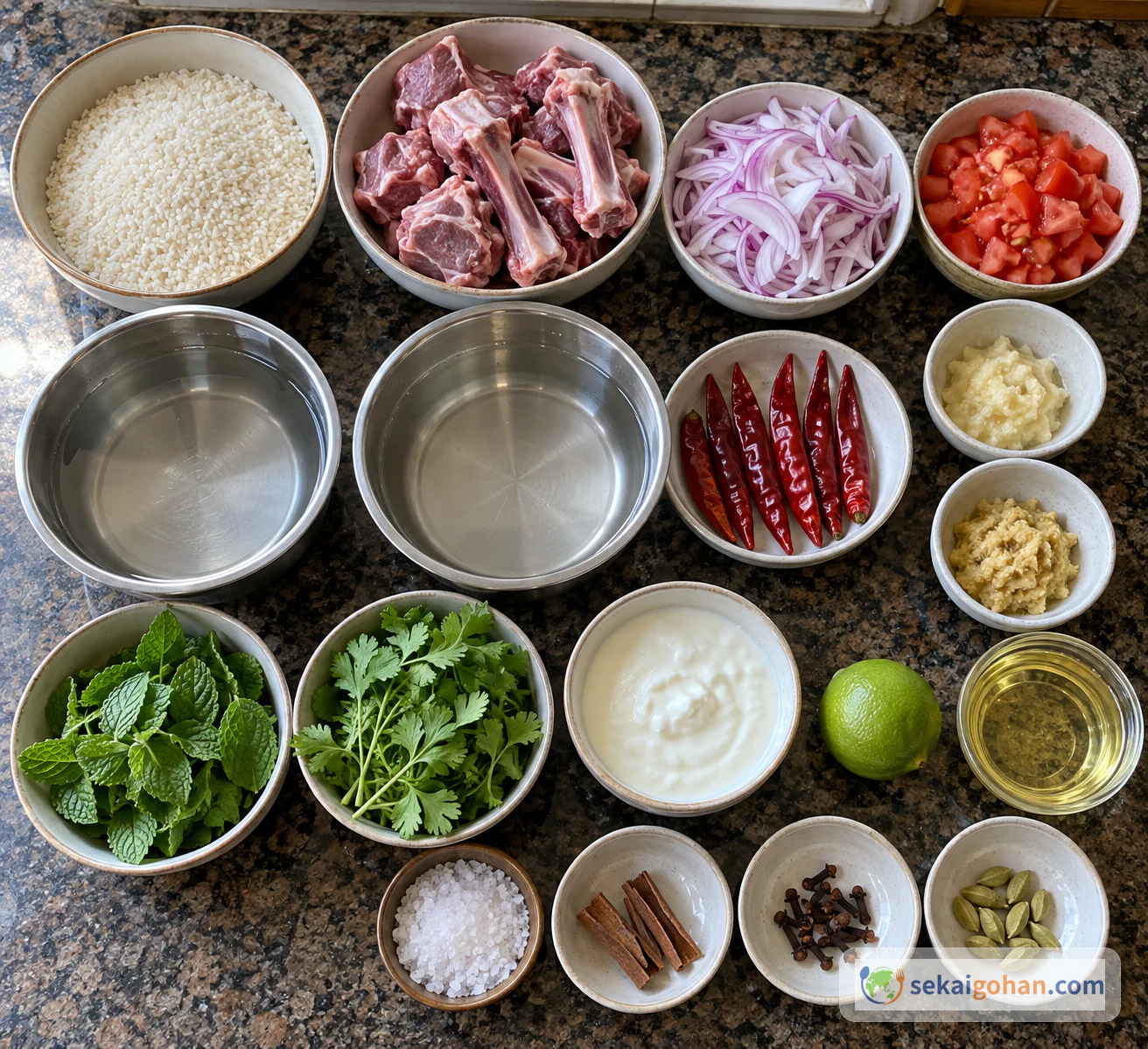
Seeraga samba rice, bone-in mutton, fresh red chilies, yogurt, herbs and whole spices laid out
Everything for the main pot, with separate water for the rice and for the meat

These amounts make 4–6 servings. Keep the two salts apart: one tablespoon goes into the rice water, which is drained away, and the meat gets its own salt. 1 tbsp (15ml) and 1 tsp (5ml).

Use bone-in mature sheep meat, cut into roughly 2-inch pieces.

This recipe contains no green chilies, ghee, powdered garam masala or saffron. Those are staples of other biryanis; adding them moves the pot away from the Ambur style.

Allergens and hygiene

Yogurt contains milk; check the labels of the yogurt and any ready-made pastes you buy. Keep knives, boards and hands that have touched raw mutton away from fresh herbs, raw vegetables and the finished dish.

Choosing Ingredients for Ambur Biryani

Rice. Look for it under the names seeraga samba, jeeraga samba or சீரக சம்பா at South Asian grocers or online. Basmati or ambemohar will work, but the grain, aroma and texture change, so call the result Ambur-style rather than Ambur biryani. Japanese-style short-grain rice behaves very differently and is no substitute.

Chilies. Use large fresh red chilies, seeded. Removing the seeds keeps them relatively mild, though heat still varies by variety; leave the seeds in and the pot gets much hotter.

Meat. Sheep, goat or lamb all work, but check doneness rather than trusting the same time, especially with lamb. If you can, ask your butcher for a bone-in cut that can be cut into pieces of about 2 inches.

Lime. Use lime; lemon has a different aroma.

Equipment

  • A heavy kadhai or deep, heavy pot for the masala and the dum
  • A pressure cooker whose manual allows this quantity of food and liquid
  • A large pot and a colander or sieve for parboiling the rice
  • A tight-fitting lid for the dum; a weight to hold the lid down helps
  • A food thermometer for checking the meat

Method: Parboil, Pressure-Cook, Mix, Steam

Order of work

The rice is soaked and parboiled first, then the masala and mutton are built in the kadhai, pressure-cooked, and finally combined with the rice for a short dum.

Common Problems with Ambur Biryani

Most of what can go wrong happens at a few clear moments. When you fold the rice into the meat, mix gently but thoroughly so every grain meets the masala without breaking.

Point What to watch Why it matters
Parboiling the rice Stop at 4–5 minutes, before it is fully cooked Rice cooked too far has no room left to finish with the meat
The masala Wait until the oil separates before adding the meat This is how you know the masala is ready
Before pressure cooking Scrape the bottom of the pot clean when you add the water Bits stuck to the bottom can burn under pressure
Opening the cooker Wait until the pressure has dropped Opening under pressure is dangerous
Heat level Chili heat varies by variety Seeding the chilies keeps the heat down
Meat doneness Check the center of the meat, not just the clock Cut, piece size and cooker all change the result
Tenderness depends on the cut

How tender the meat gets depends on the cut, the size of the pieces and your pressure cooker.

Serving and Storing Ambur Biryani

Raita and kathirikai pachadi, a tangy eggplant dish, are good companions, made separately and served in their own bowls on the side.

Rice and meat dishes need quick handling. Divide leftovers into clean, shallow containers in small portions, cool them quickly, and refrigerate promptly. When reheating, heat thoroughly until hot all the way through.

Frequently Asked Questions

What if I don't have a pressure cooker?

The timings here are written for a pressure cooker, and there is no tested alternative. A guessed stovetop time could leave the meat undercooked or tough.

Can I make it with chicken?

Chicken cooks under different conditions from mutton, so a chicken version needs its own amounts and timings rather than a straight swap.

Is Seeraga Samba Rice a registered GI?

As of 24 October 2026 (JST), application 617, "Seeraga Samba Rice," was listed as under examination, not a completed registration. Check the official record for an update.
Sources

  • Yummefy Recipes, "Ambur Biryani Recipe | Ambur Mutton Biryani | Ambur Star Briyani." The source recipe for all amounts and steps, the yield, the difference from Hyderabadi-style biryani, the mixed dum finish, the shop tradition as the site tells it, and the serving suggestions. An independent recipe site, not an official shop recipe. https://www.yummefy.com/m/ambur-mutton-star-biryani.html
  • DT Next, "Ambur biryani has become a brand of its own." A 2022 report on Ambur biryani as a regional brand and on the biryani culture of the surrounding area, including shop owners describing how they serve customers, demand and Sunday takeaway. It does not support the 1890 founding story or the shop lineage. https://www.dtnext.in/news/tamilnadu/ambur-biryani-has-become-a-brand-of-its-own
  • Tamil Nadu Agricultural University Agritech Portal, "Traditional Varieties grown in Tamil nadu: Seeraga Samba." That seeraga samba has small, fine grains and is also used for biryani on special occasions. https://agritech.tnau.ac.in/itk/itk_crop_seeraga_samba.html
  • Intellectual Property India, "Geographical Indications: Seeraga Samba Rice application details." Application 617, Seeraga Samba Rice, observed with the status Examination at the source check on 24 October 2026 (JST); this is not a claim about its current status. https://search.ipindia.gov.in/GIRPublicSearch/Application/Details/617
  • Ministry of Health, Labour and Welfare (Japan), "家庭での食中毒予防" (Preventing food poisoning at home). The general guide of heating food until the center reaches 75°C for at least 1 minute, and of dividing leftovers into clean, shallow containers, cooling them quickly and reheating thoroughly. https://www.mhlw.go.jp/stf/seisakunitsuite/bunya/kenkou_iryou/shokuhin/syokuchu/01_00008.html