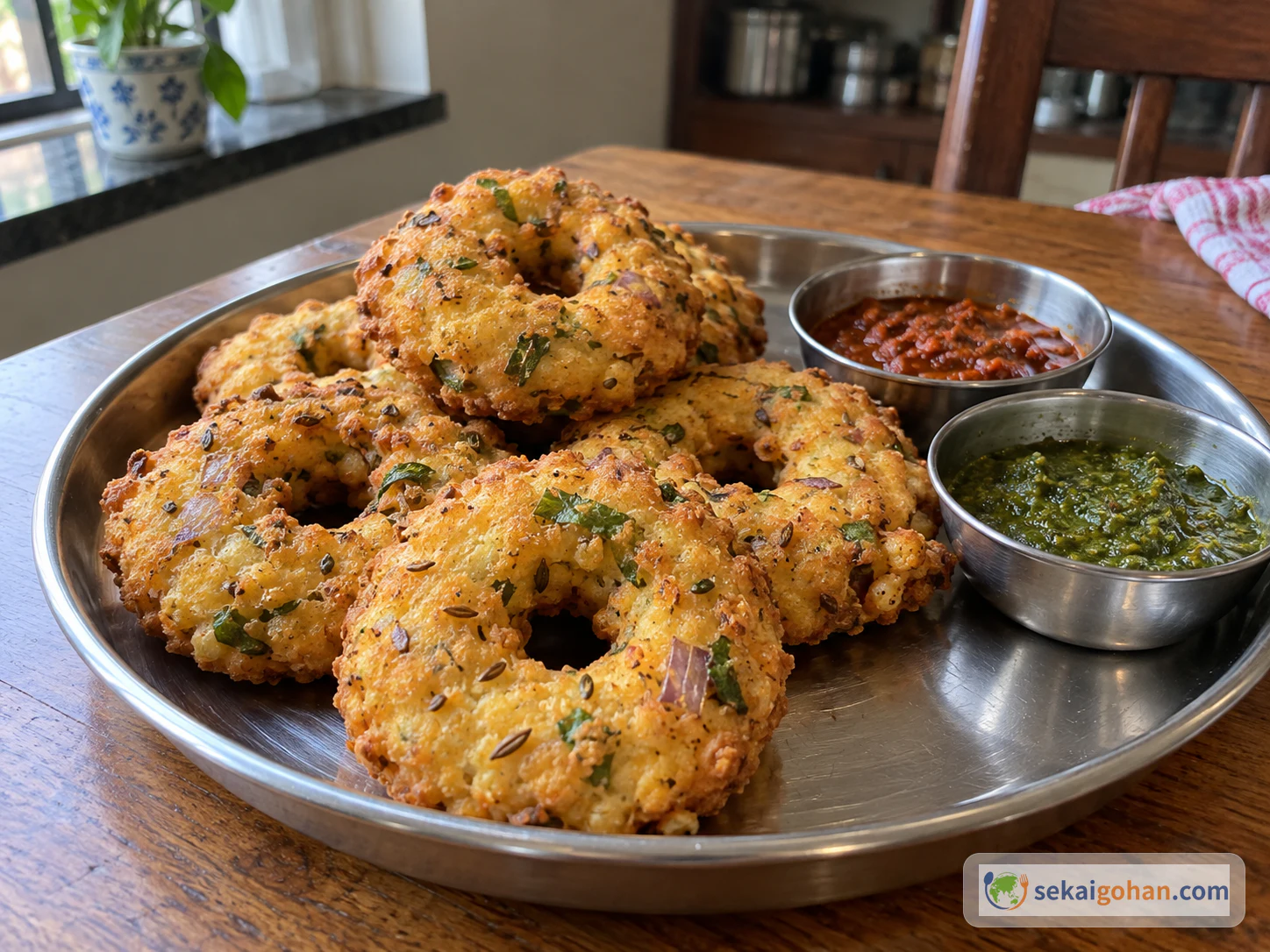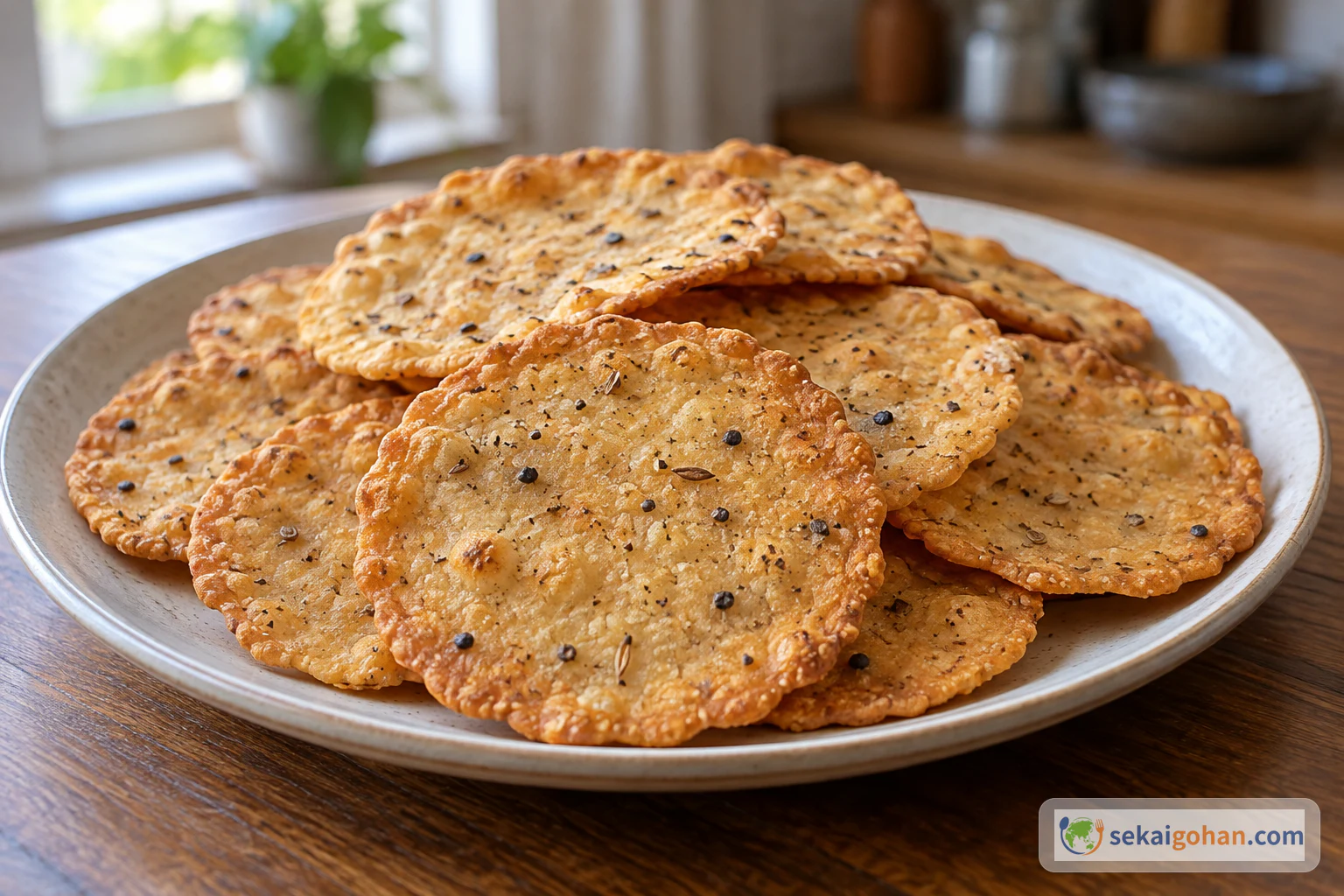
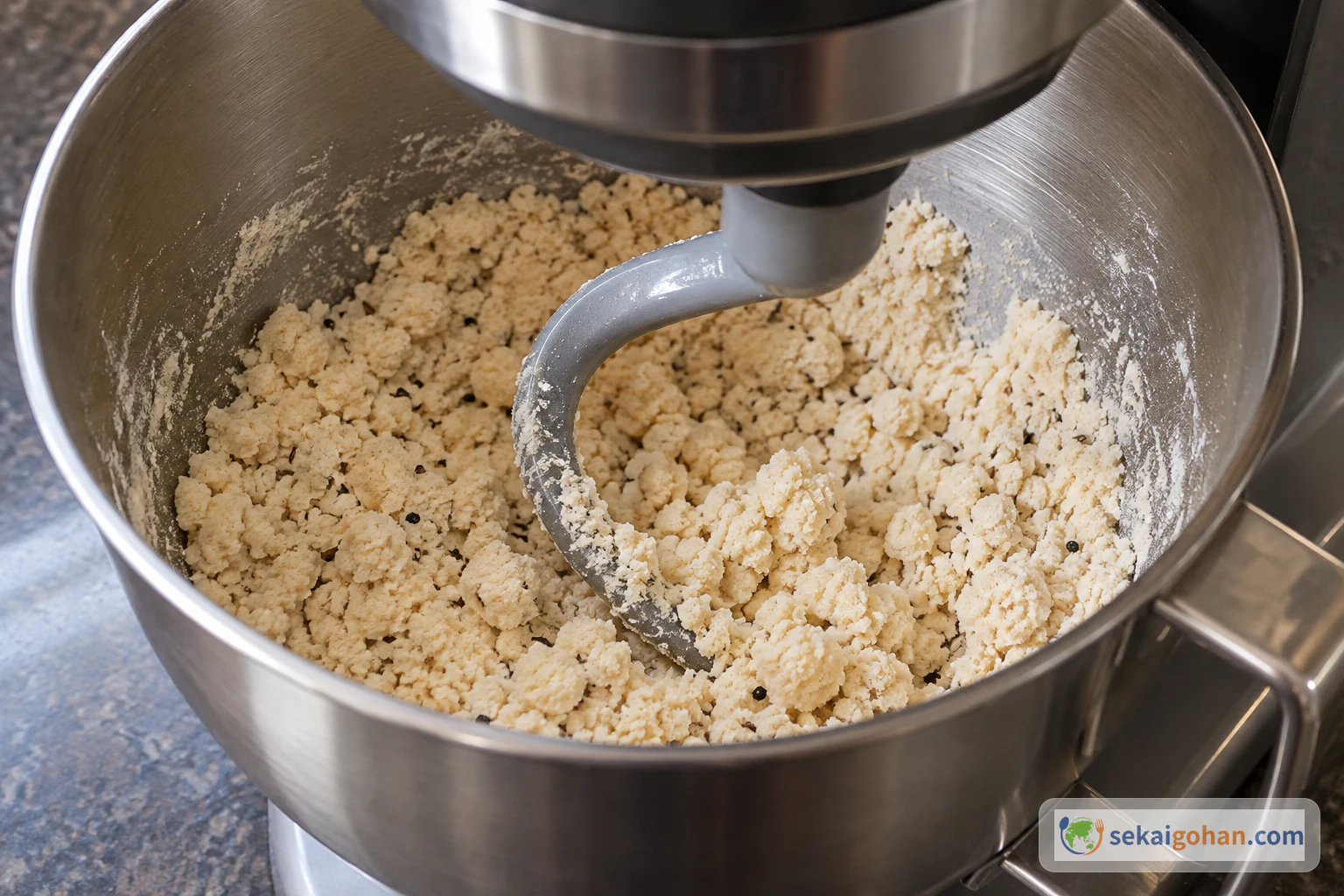
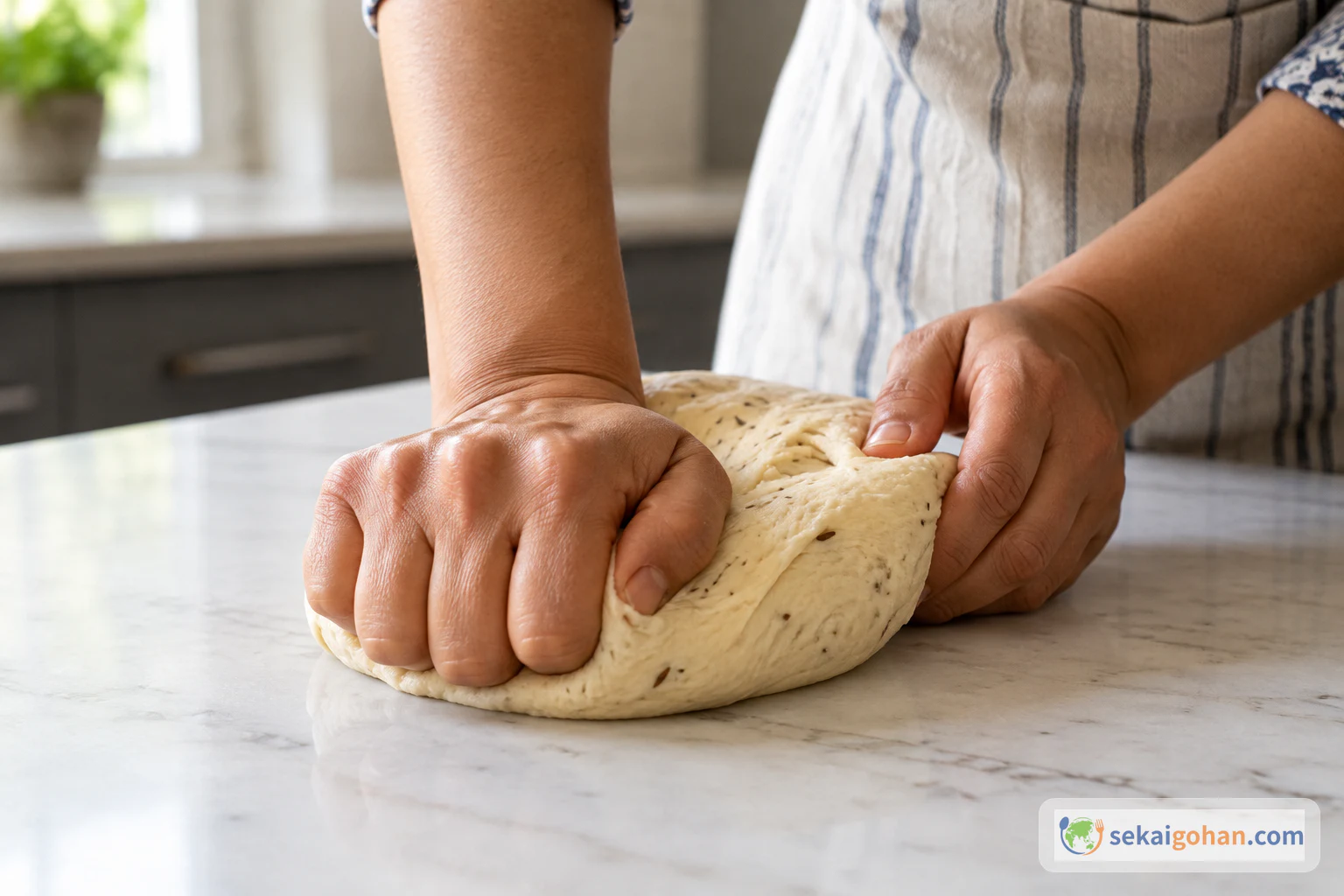
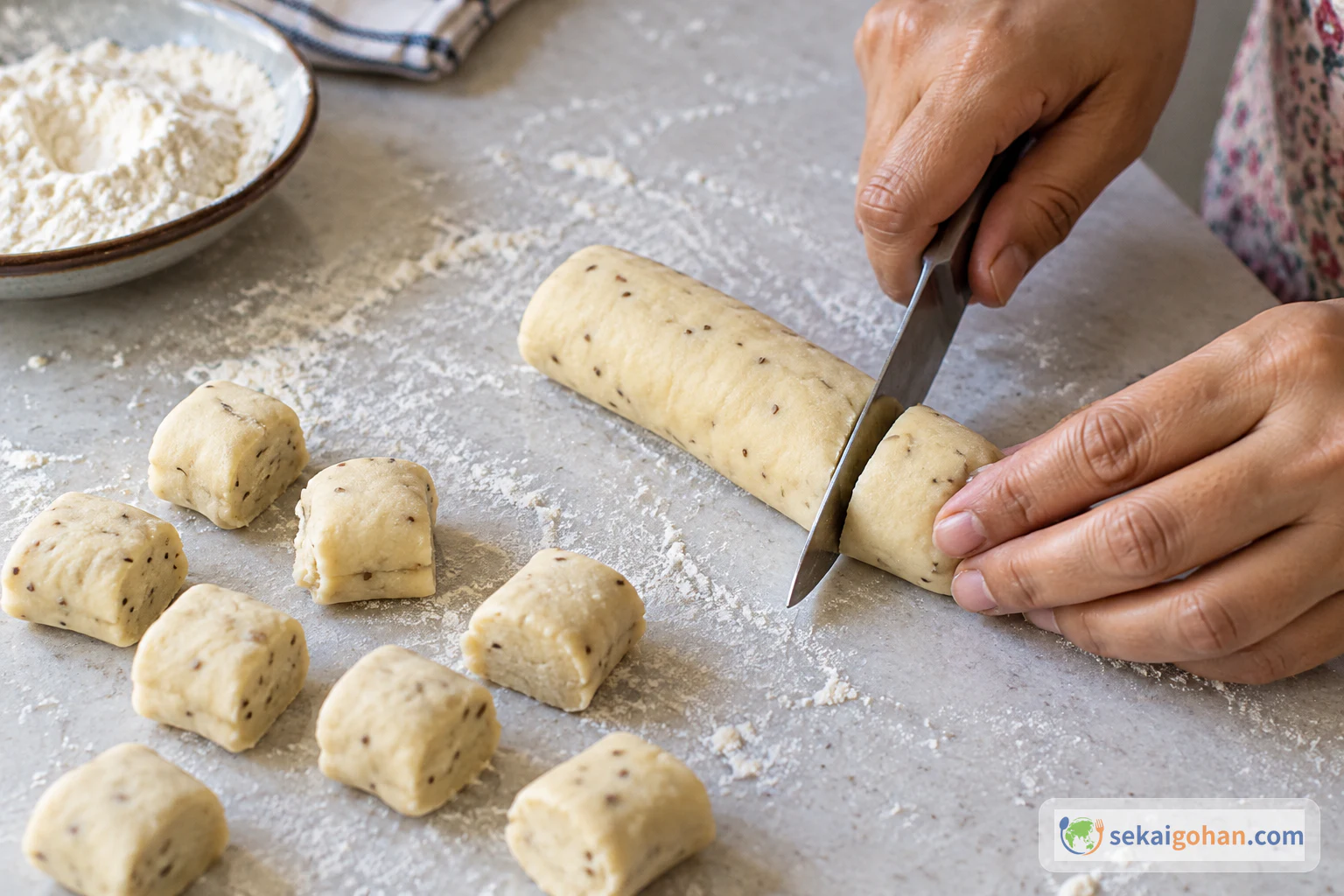
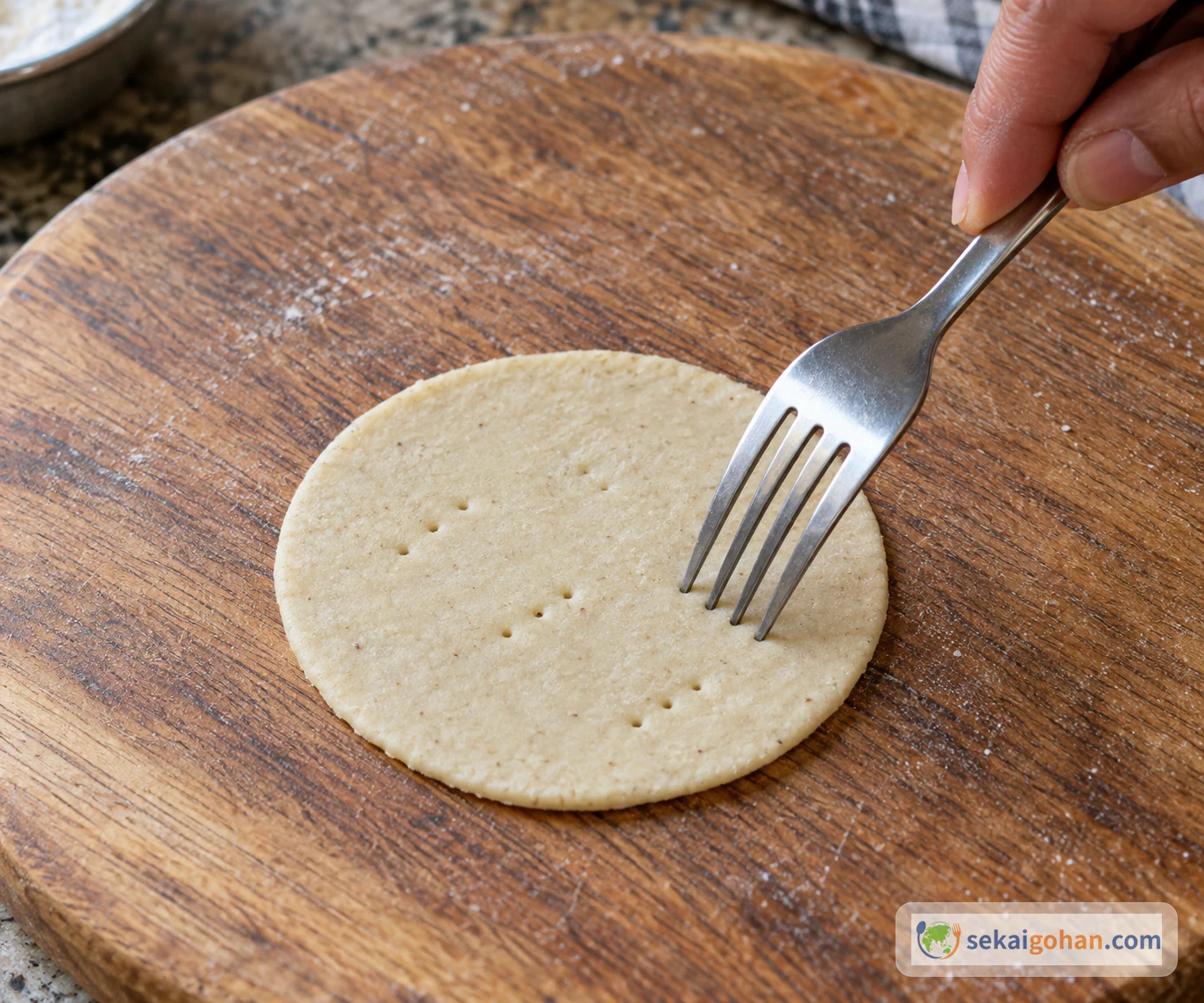
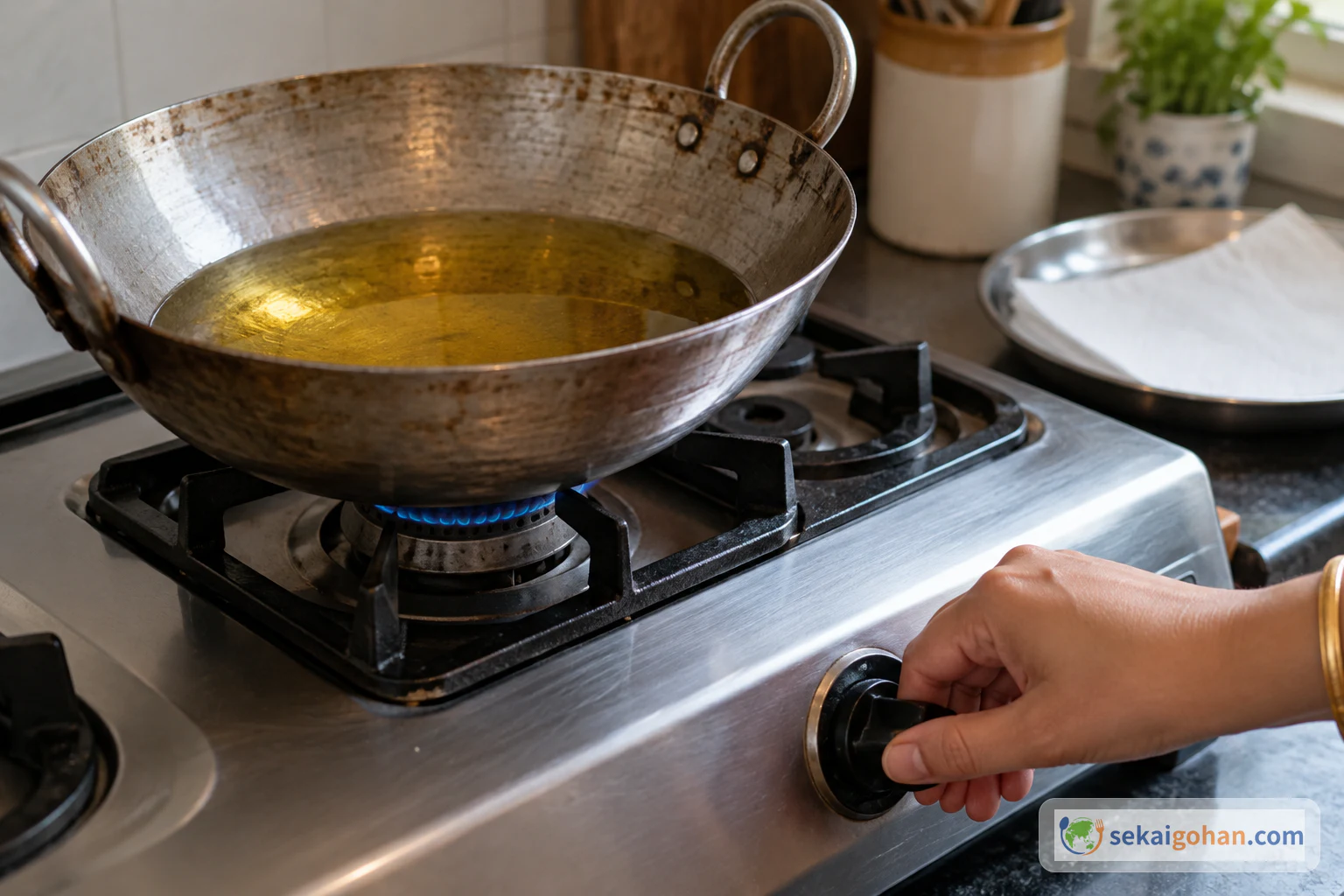
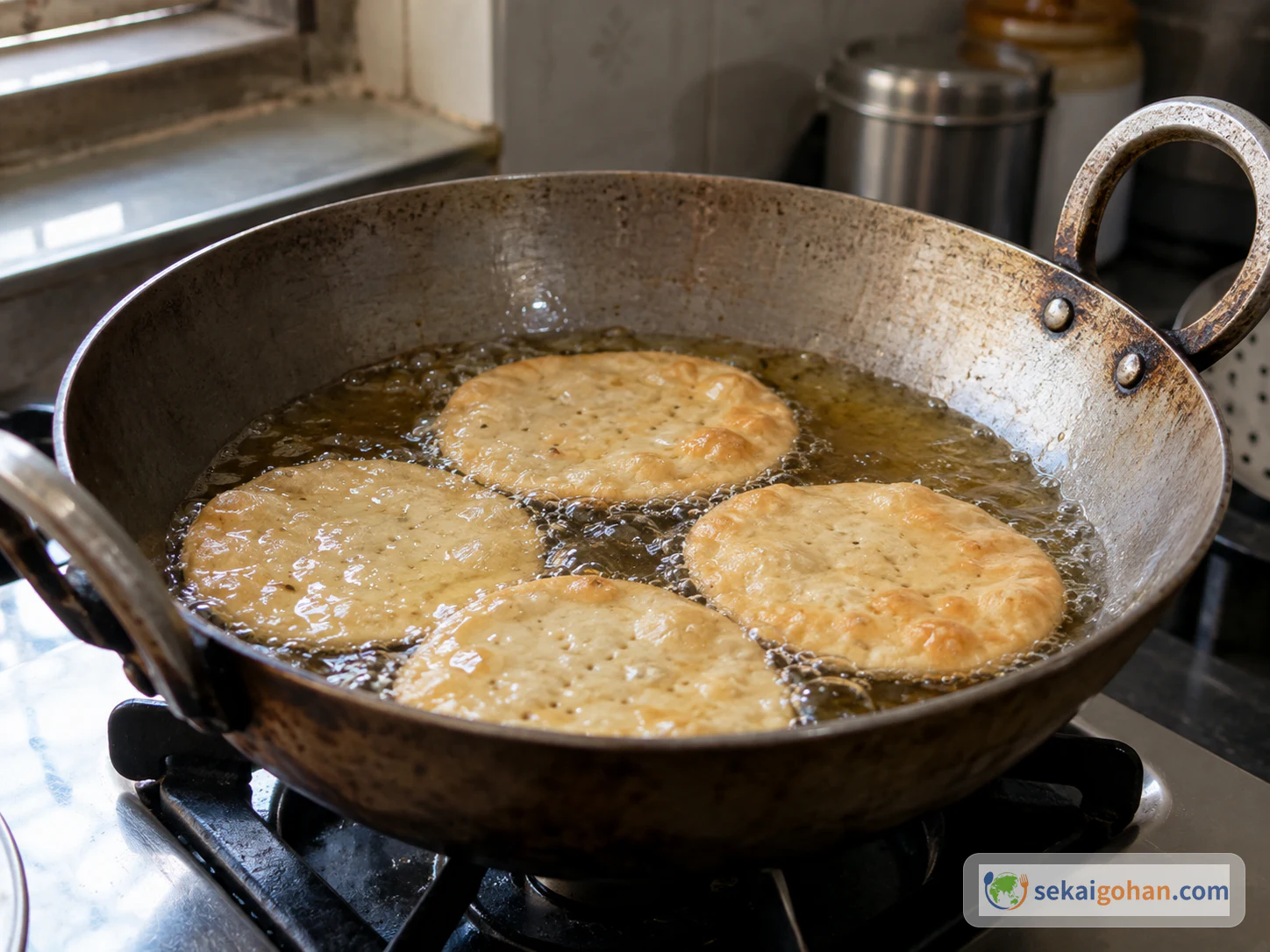
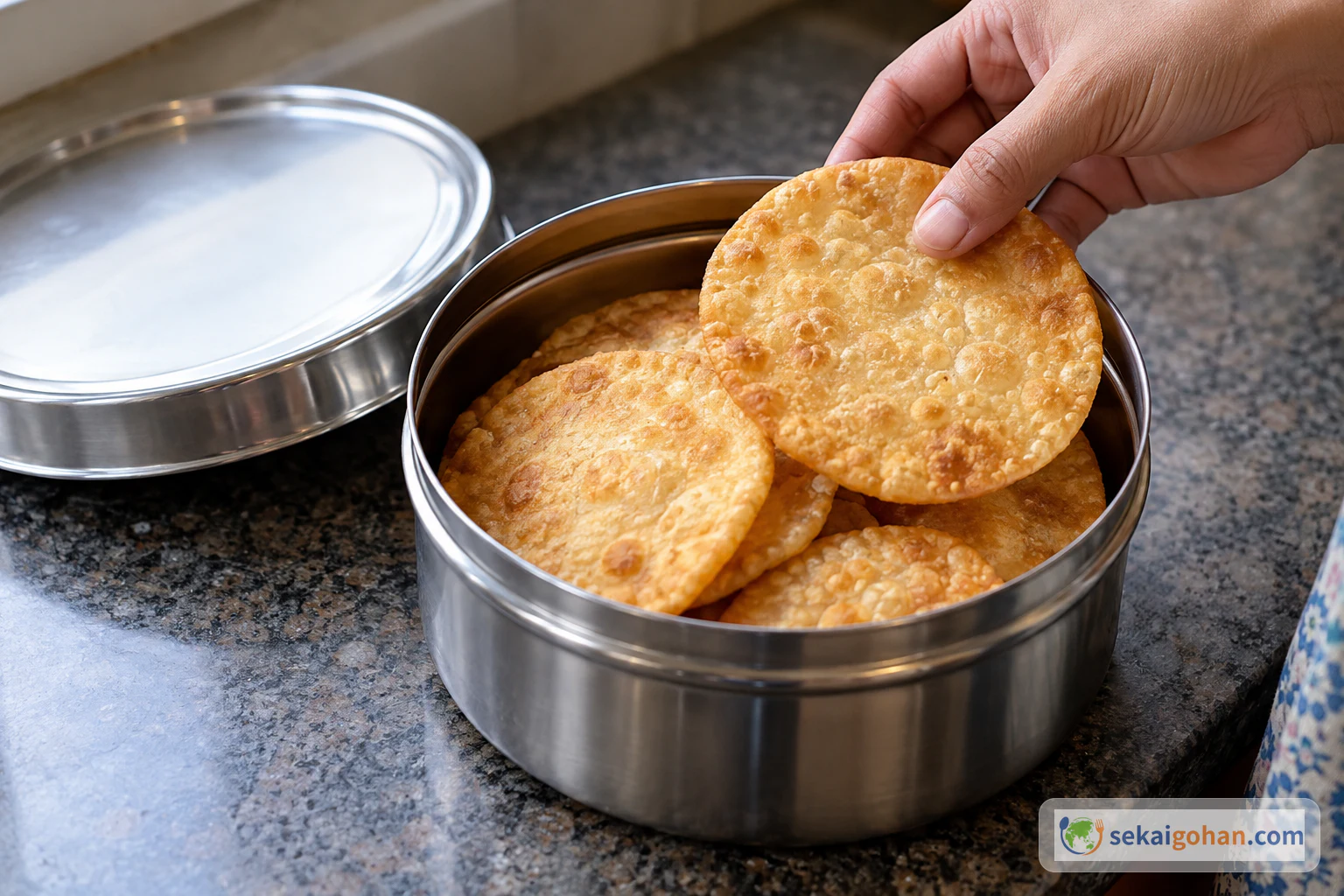
Flour rubbed with melted ghee turns to soft crumbs. Pinch a little between your fingers and it holds a crumbly shape instead of falling back into powder, and that rich, short crumb is where Farsi Puri begins. Later the dough is rolled into small rounds, pricked with a fork and fried slowly until golden, with flecks of cracked black pepper and whole cumin showing through the surface. These are dry, crisp snacks from Gujarat in western India, made with all-purpose flour (maida), semolina, ghee, whole cumin seeds, coarsely crushed black peppercorns, salt and water.
About Farsi Puri
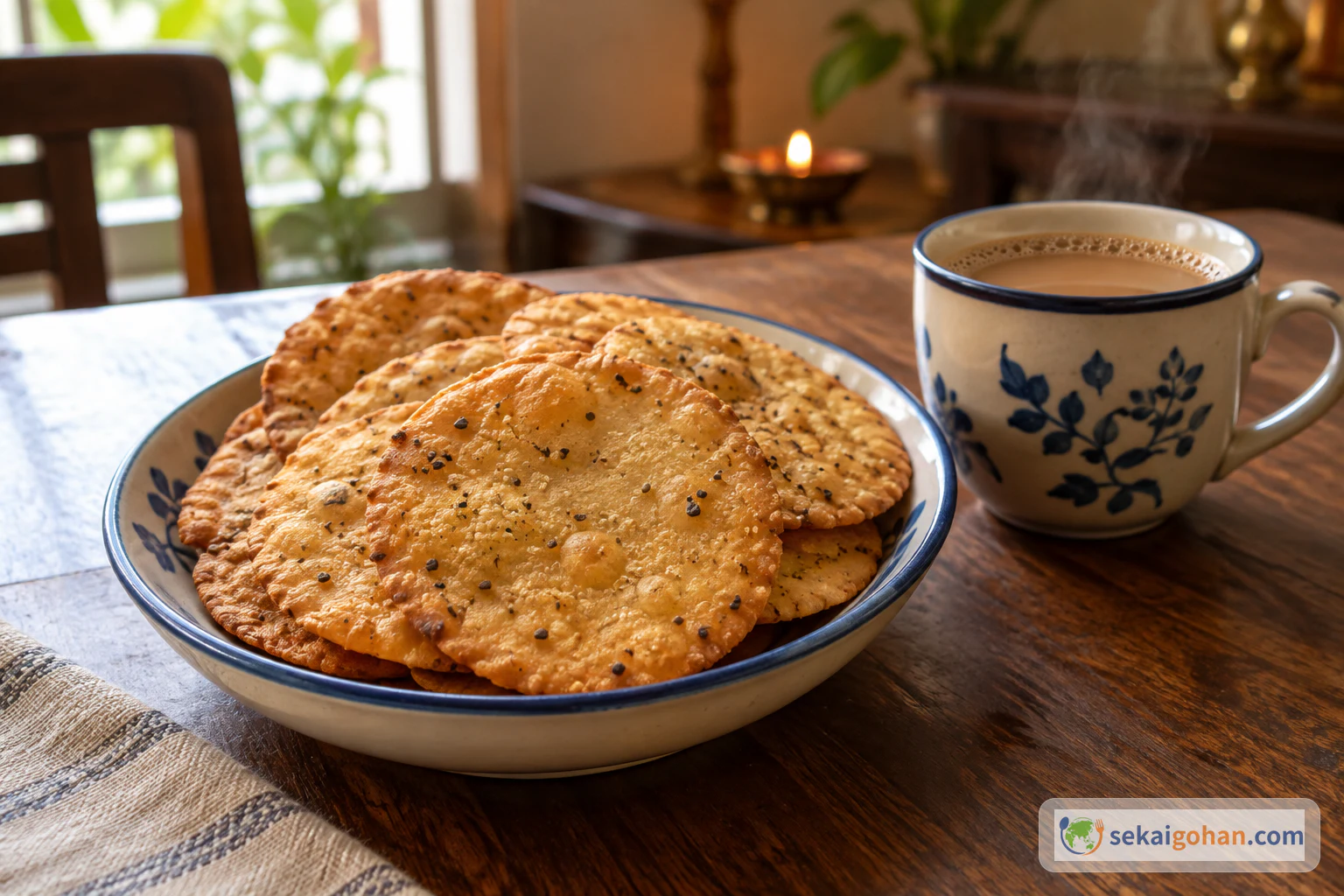
Farsi Puri is a snack you fry ahead and keep, not a bread for a meal. In Gujarat it goes with tea and with Diwali, when a tin of crisp homemade snacks sits ready for whoever drops by. In Gujarati, "Farsi" means flaky or crisp (khasta). For more dishes from the same country, see the India country page.
Small, flat, unfilled discs that stay crisp, with whole cumin seeds and coarse black pepper you can see and taste. Prick each disc before frying so it does not puff.
Farsi Puri and other puris
The word "puri" turns up in many dish names, but the shape, filling and cooking method can be completely different. Farsi Puri is pricked so it stays flat, which sets it apart from puffed puris and from the hollow shells used for panipuri.
| Dish | What it is | How it differs from Farsi Puri |
|---|---|---|
| Farsi Puri | A flat, unfilled Gujarati snack with cumin and black pepper, pricked and deep-fried until crisp | — |
| Dalpuri | An Indian puri stuffed with seasoned dal | Has a lentil filling |
| Panipuri | Hollow fried shells filled with potato or chickpeas and flavored pani, eaten at once | The shell is meant to puff and be hollow |
| Dholl Puri | A Mauritian thin flatbread with yellow split peas in the dough, cooked on a tawa and eaten as a wrap with curry | Cooked on a griddle, not deep-fried, and served as part of a meal |
Ingredients
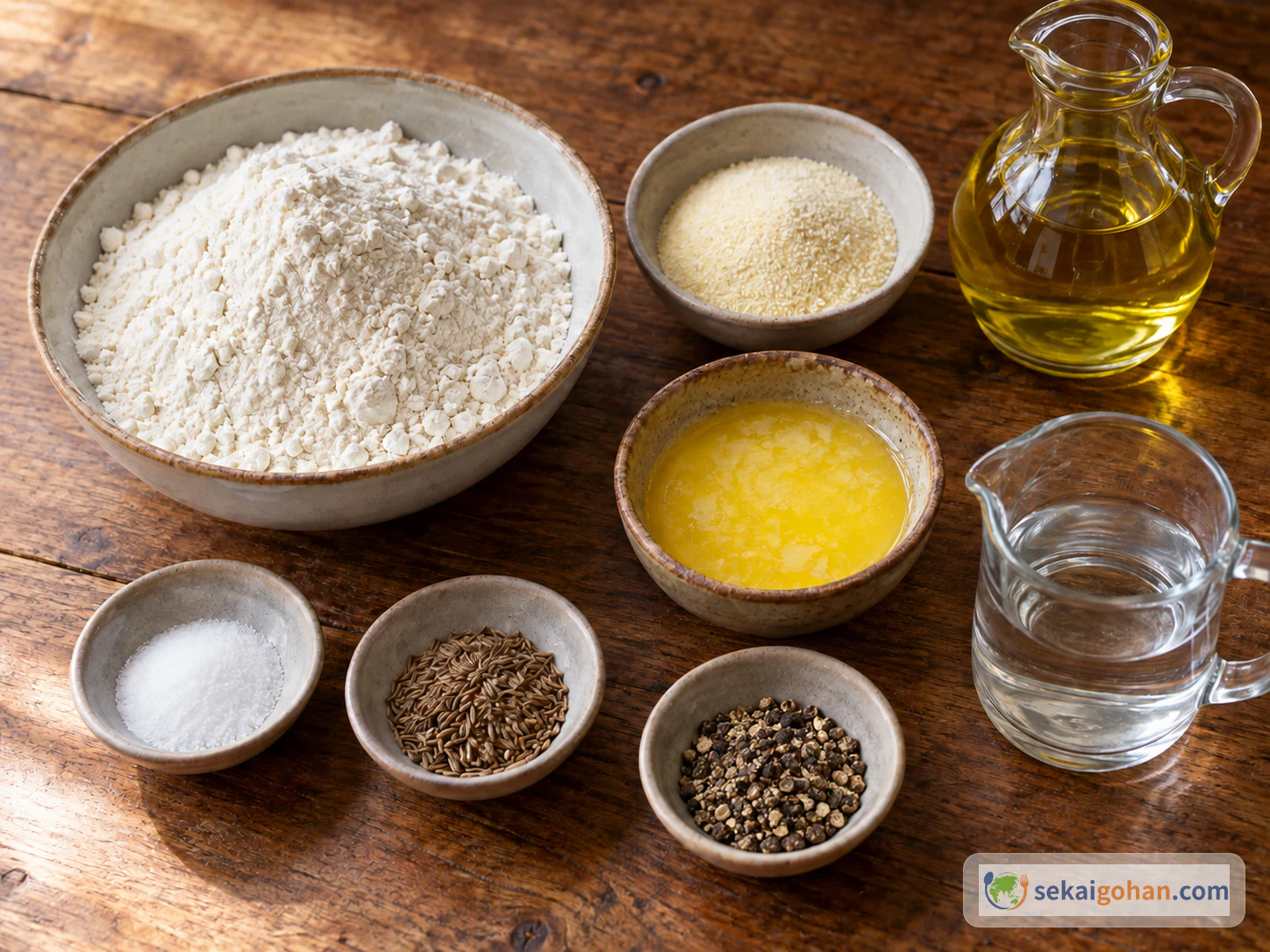
This recipe contains wheat (maida and semolina) and milk (ghee). Ghee is made from milk and is not dairy-free. If you are cooking for someone with a wheat or cow's-milk allergy, this recipe is not suitable as written.
Equipment
- Stand mixer with a dough hook, and its mixing bowl
- Spatula
- Something to crush peppercorns coarsely, such as a mortar and pestle
- Bowl or plate to cover the resting dough
- Rolling pin
- Fork
- Kadai or deep pot for frying
- Slotted spoon
- Plate for cooling
- Airtight container
Choosing Flour, Semolina, Ghee and Spices
Flour, semolina and ghee are measured by volume. A US cup holds 240 ml and a common Japanese cup holds 200 ml, so if your cup is a different size, go by the milliliter amounts.
Flour. Use maida (all-purpose flour), the refined white wheat flour sold in Indian shops. Whole-wheat atta works, but it gives a denser puri, so expect a different texture.
Semolina. Look for semolina, also sold as sooji or rava.
Ghee. Use ghee, melted or semi-melted, rather than oil. Ghee is a dairy product.
Cumin and pepper. Buy whole cumin seeds and whole black peppercorns. The cumin stays whole, while the pepper is crushed coarsely just before mixing; those visible pieces are a defining feature of this version.
Method: A Firm Dough, Small Pricked Discs, a Gentle Fry
Use a stand mixer with a dough hook. Judge the oil with a small test piece of dough and judge the puris by their color and crispness.
Stay at the stove the whole time you are deep-frying and turn off the heat if you have to step away. Never pour water on burning oil: it turns to steam instantly and throws hot oil outward.
Farsi Puri Troubleshooting
| What you see | What to check | What to do |
|---|---|---|
| The pinched mixture falls apart in step 1 | The ghee has not fully coated the flour | Work in a little more ghee, then pinch again |
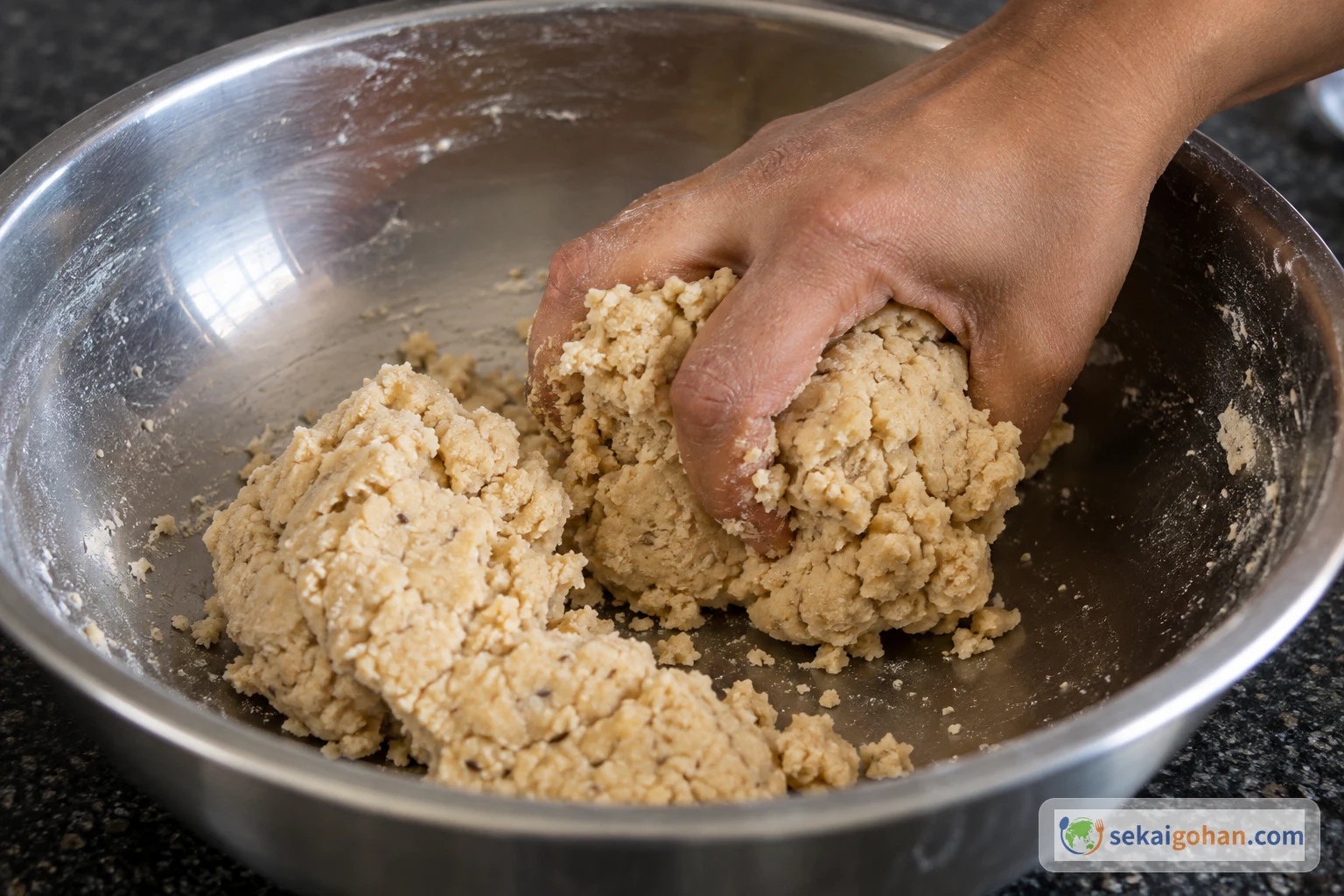
| The dough looks rough, not smooth | Nothing; this is expected | Move on. The dough only needs to hold together and be firmer than roti dough |
| A puri puffs up in the oil | Whether that disc was pricked | Prick each disc 4–5 times before frying |
| The test piece of dough rises immediately | The oil is too hot | Lower the heat and test again. It should sink briefly before rising |
| The kadai is crowded | Too many puris at once | Fry only a few at a time |
| The puris are denser than expected | Whether atta was used in place of maida | Use maida for the lighter result |
Farsi Puri Variations
Cooks across Gujarat make Farsi Puri in slightly different ways. Some leave out the semolina, some grind the spices fine, and some roll and layer the dough for extra flakiness.
| Point | This recipe | Other versions |
|---|---|---|
| Flour | Maida; atta gives a denser result | Plain flour |
| Semolina | Included | Included in some, left out in others |
| Spices | Coarsely crushed black pepper and whole cumin | Black pepper, cumin and ajwain ground to a powder; or roasted cumin powder with coarsely ground black pepper |
| Fat | Ghee mixed into the flour | Oil in a soft dough; or extra ghee spread between layers |
| Shaping | Small pieces rolled directly into 3-inch discs and pricked | A large disc rolled into a cylinder, cut, and the pieces rolled out again |
Frequently Asked Questions
Why prick the dough?
Pricking each disc 4–5 times keeps it from puffing in the oil, so it fries flat and crisp. Panipuri shells are the opposite: they are meant to puff up hollow.
How long do they keep?
Cool them completely, then store them in an airtight container. They keep for about 3–4 weeks.