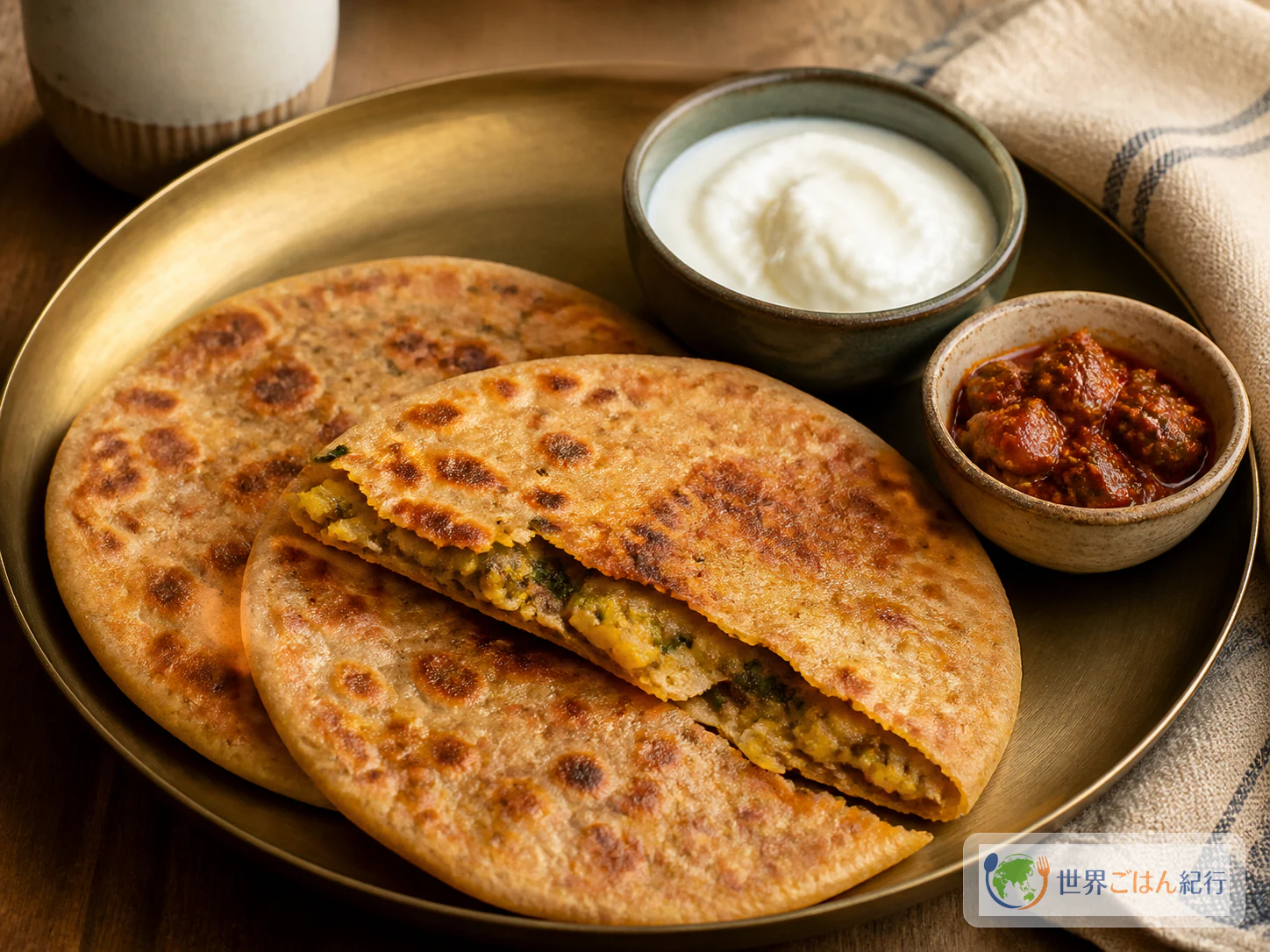
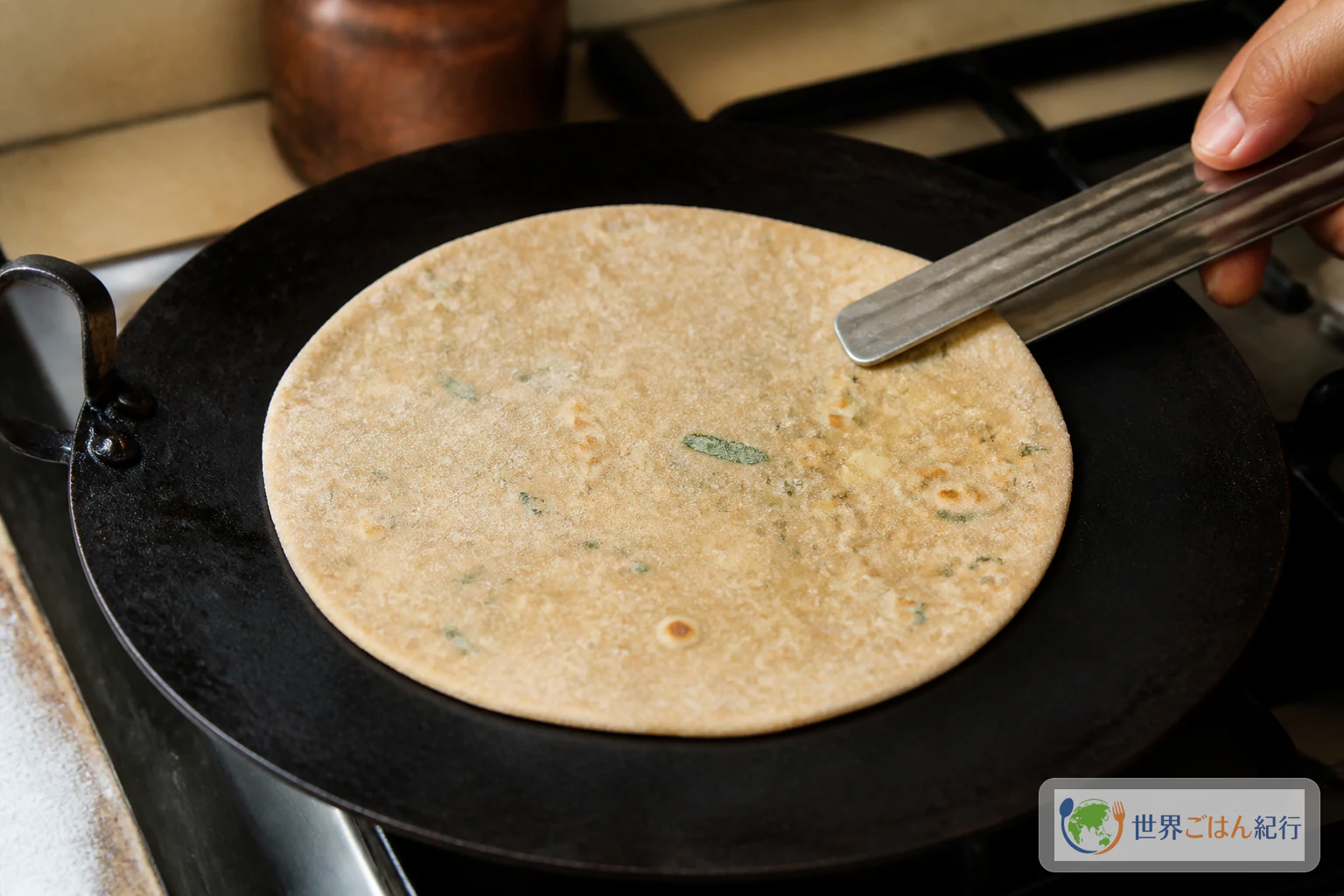
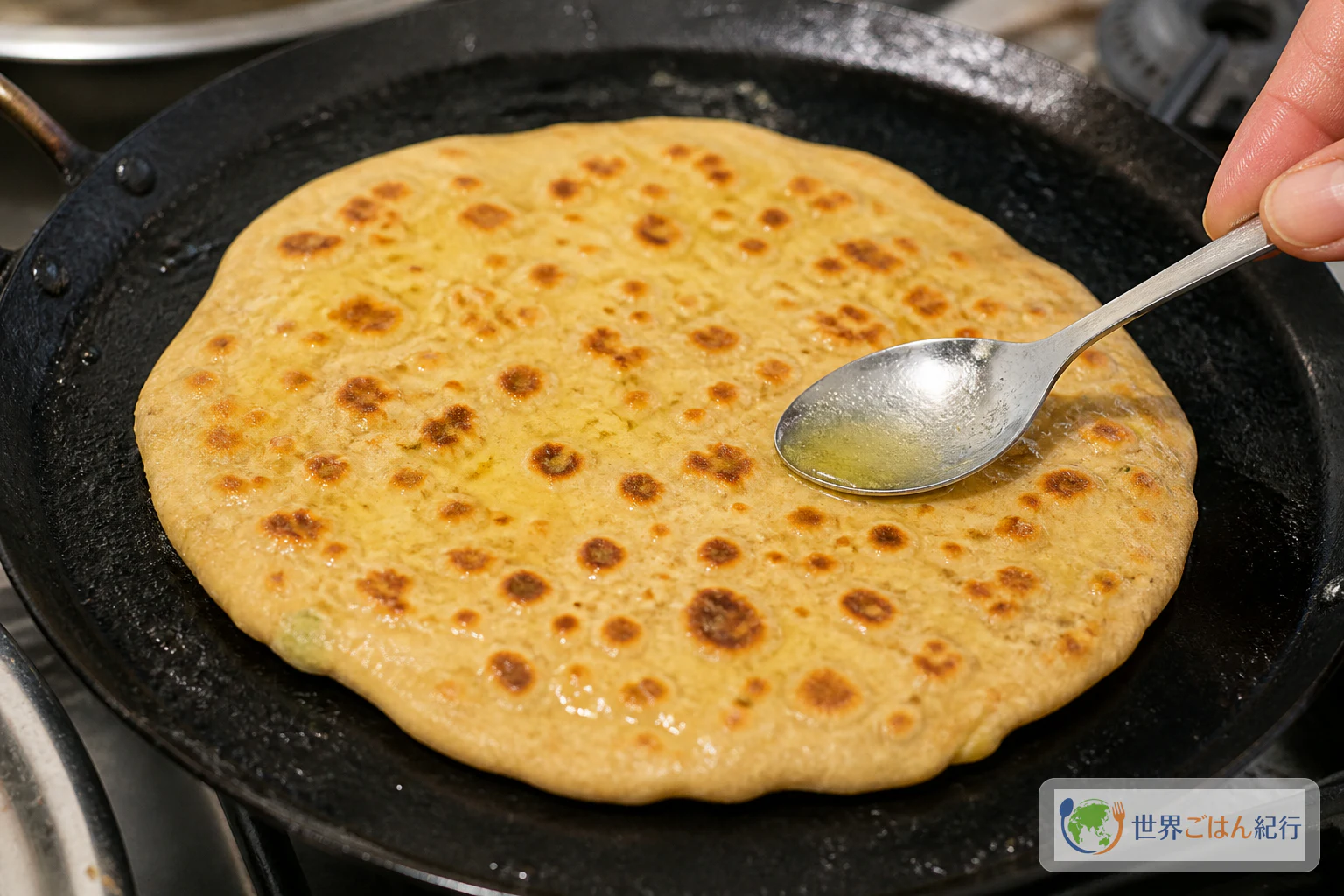
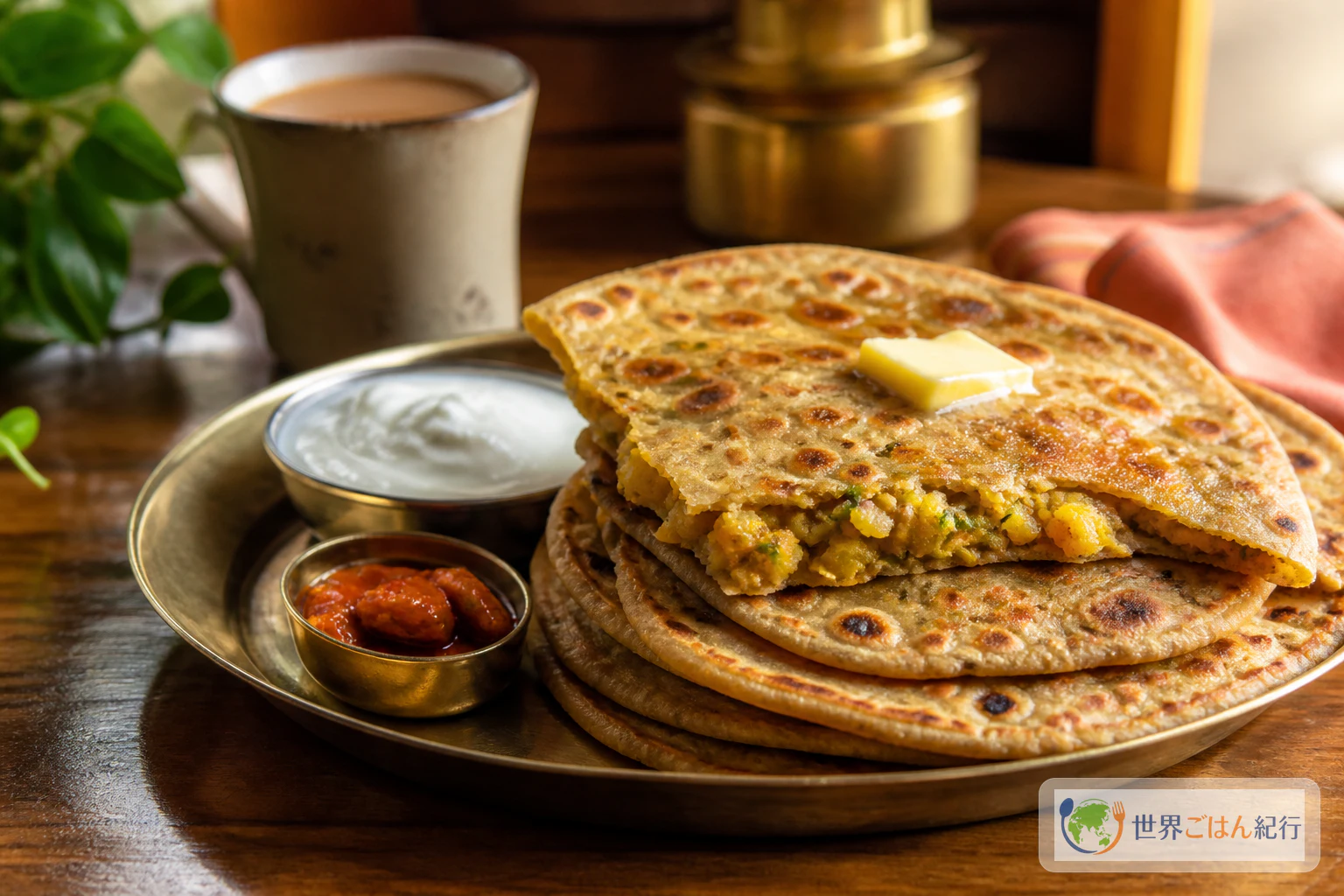
Lay the dough on a hot tawa and small bubbles rise on the surface, and with every flip more brown spots appear. Break one open and the filling, potato mixed with cumin and green chili, is thicker than the thin wheat dough around it. Aloo paratha (आलू पराठा) is spiced potato wrapped in wheat dough and cooked on a griddle or frying pan, a Punjabi breakfast served with butter, yogurt and pickle. Add the sourness of the yogurt and the saltiness of the pickle and you have a breakfast that carries you through to lunch, though it's good at any time of day.
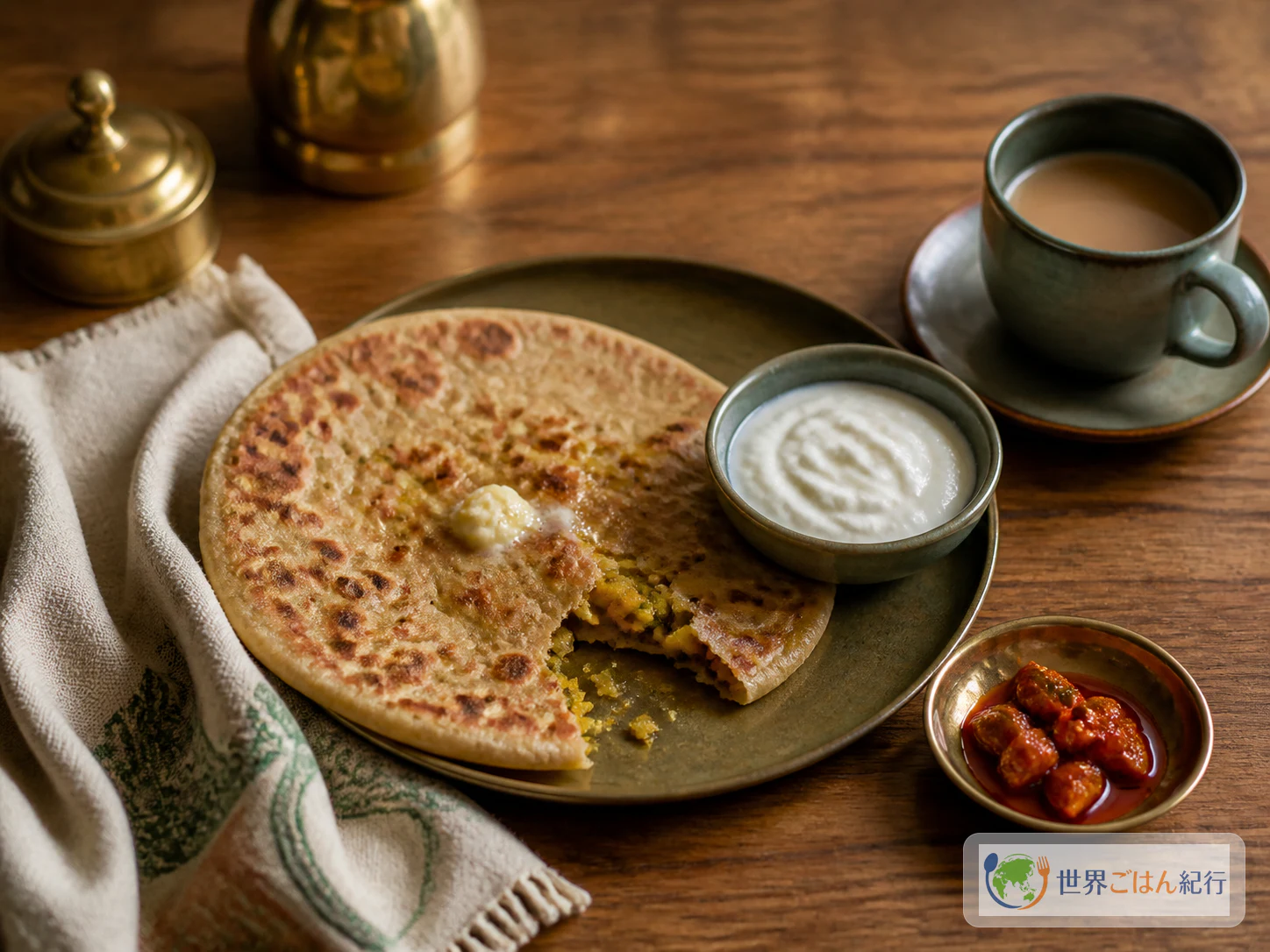
Aloo Paratha in Punjab and North India
Aloo means potato, and paratha refers to a layered bread cooked with fat.
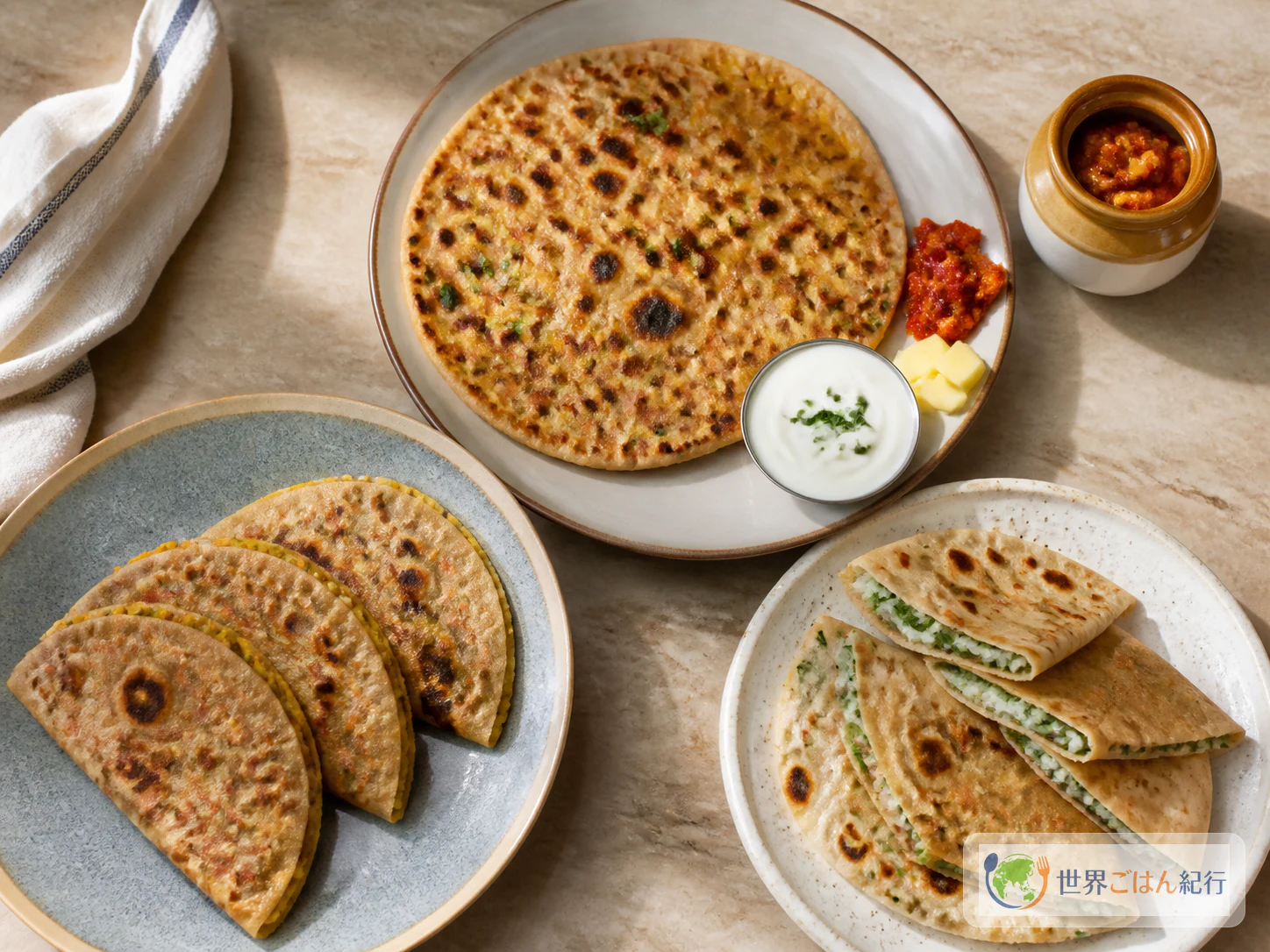
Aloo paratha is known as a Punjabi dish, but potato is only one of its fillings. The parathas that spread from northern Punjab across North India include versions stuffed with cauliflower, radish and fenugreek leaves. Potato is easy to mash and season, and it makes a uniform filling, so it's a good first stuffing to try at home.
At the local table, hot parathas come with yogurt, pickles and butter and are torn by hand. In North India the bread is eaten as part of the staple, torn to scoop up side dishes. Because a stuffed bread is complete in one piece, a little sourness and saltiness is enough to make a meal without a separate curry.
| Type | Dough and filling | Practical notes for cooking in Japan |
|---|---|---|
| Aloo paratha | Seasoned potato wrapped in whole-wheat dough | Cooling the potato before wrapping makes it less likely to tear |
| Gobi paratha | Finely chopped cauliflower filling | Releases moisture, so aloo is better for a first try |
| Mooli paratha | Shredded or grated daikon filling | Needs a step of salting and squeezing out the water |
| Methi paratha | Fenugreek leaves added to the dough or filling | Strongly aromatic, but fresh leaves are hard to find in Japan |
Some similarly named breads are quite different. South India's Kerala parotta uses refined flour and forms its layers by coiling the dough in ropes, while North Indian parathas use whole-wheat flour. Among other Indian flatbreads, some go with dry vegetable dishes like aloo gobi, and others, like thepla, work herbs into the dough. Aloo paratha keeps its filling sealed inside a single piece, so how you shape it directly affects the flavor.
Ingredients (serves 4, makes 8)
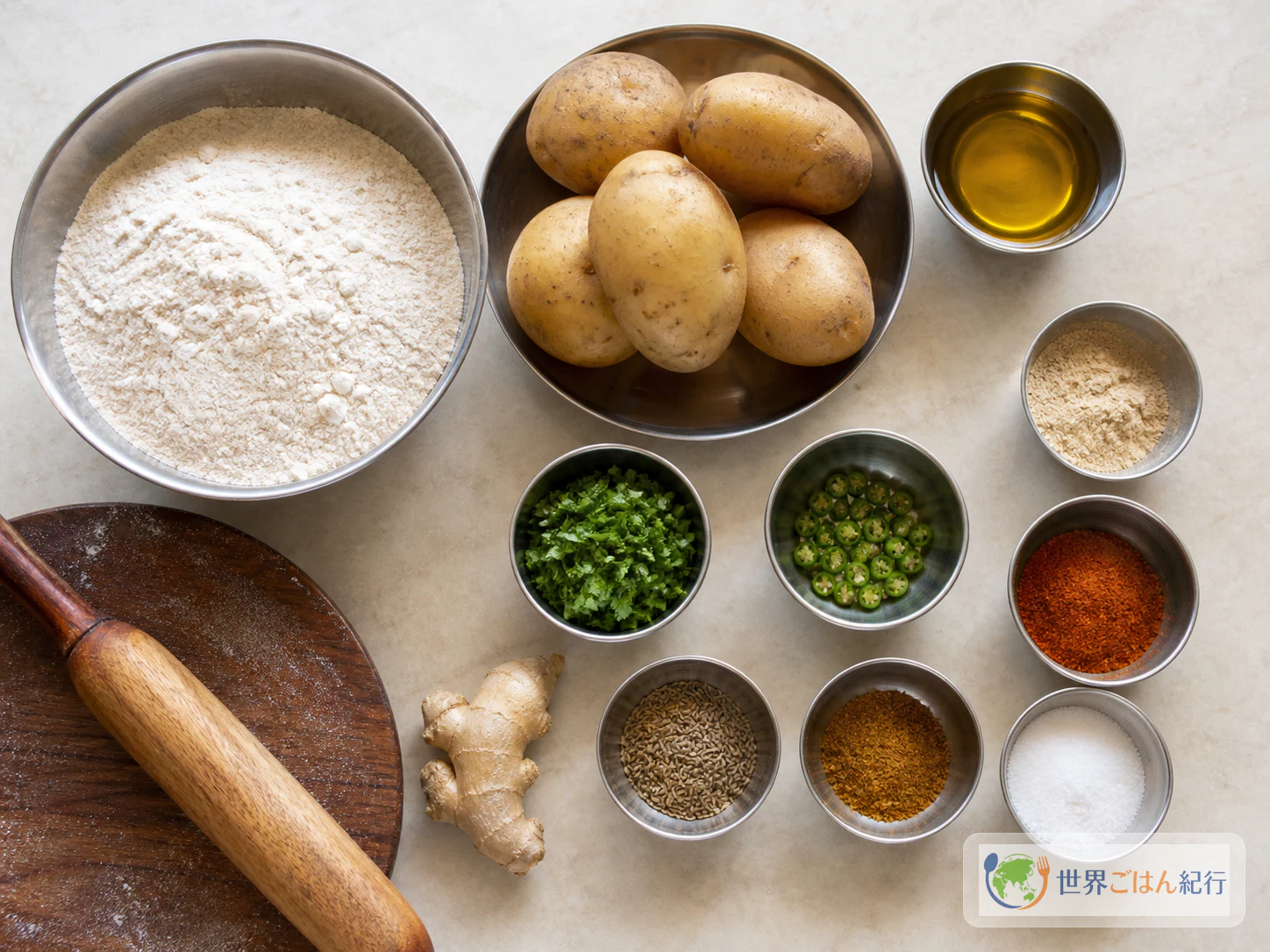
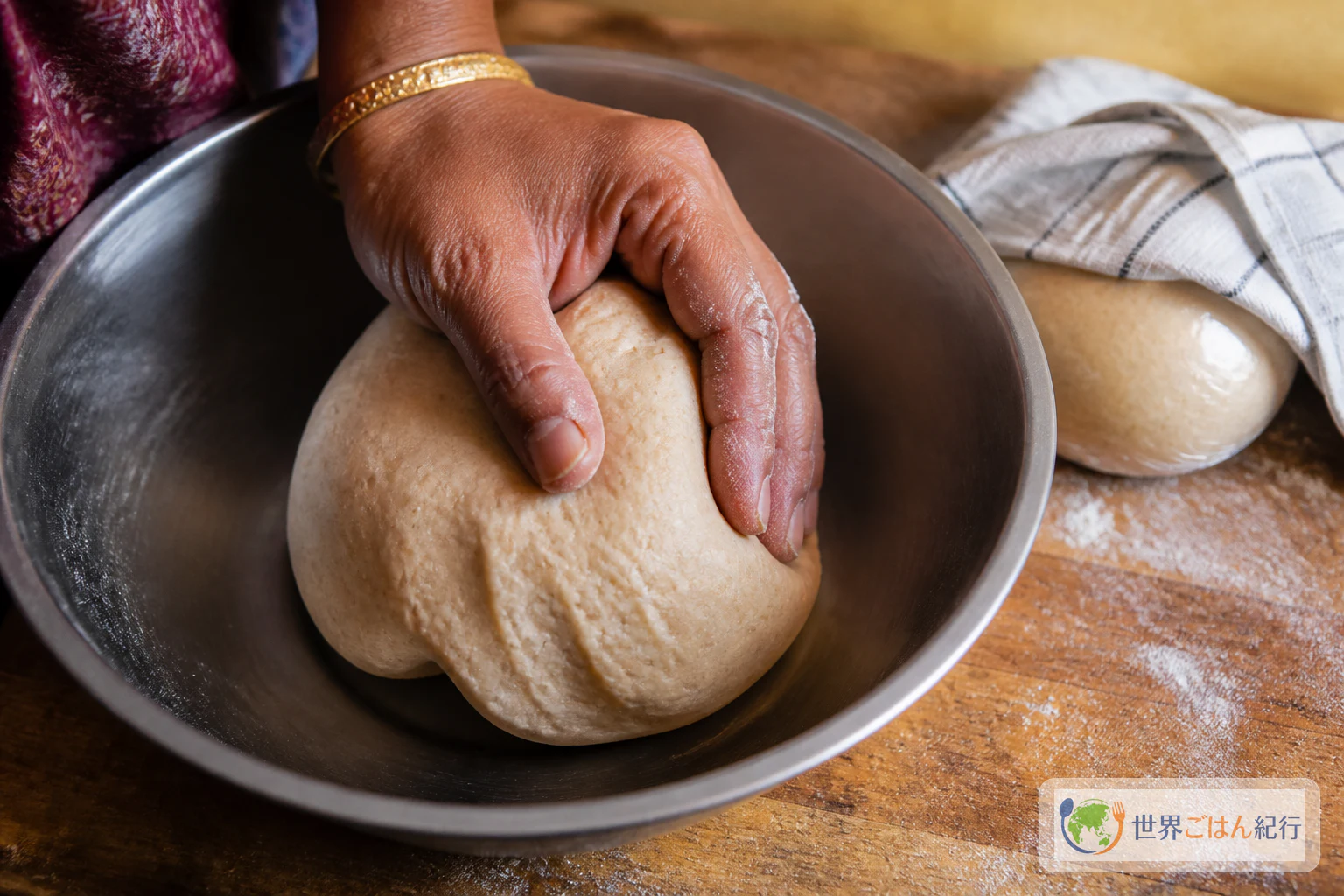
This makes 8 parathas. Two per person is the basic serving, and with yogurt, pickle and a salad it becomes a breakfast or light lunch. Don't knead the dough stiff from the start: begin with ¾ cup (190 ml) of water and add only up to 1.5 tbsp (10–20 ml) more depending on the state of the flour.
Atta is a flour that easily gives you the aroma of whole wheat and a dough that comes together well when it takes up water. If you're only making this once, the whole-wheat and cake flour substitute is enough. If you'll go on to roti and chapati, it is worth buying a bag labeled "whole-wheat flour," 2.25 lb (1 kg), from an Indian grocer. Check the weight and ingredients before choosing.
Amchur is dried mango powder, and it gives a dry sourness that can be added as a powder rather than the bright aroma of lemon. Because this dish needs to tighten flavor without making the filling watery, amchur keeps the filling easier to wrap than lemon juice. Make it with lemon the first time, and if you'll also use it in samosas or chana masala, consider whether you'd use up a larger bag.
Atta and cake flour contain wheat. Ghee and yogurt add dairy, so if you have an allergy, switch to rice bran oil and plant-based yogurt, and check the labels on the spices and any store-bought pickles.
Choosing Flour and a Tawa for Aloo Paratha
Flour
If you can't find atta, whole-wheat flour mixed with cake flour stands in well: 8.5 oz (240 g) whole-wheat flour with 2 oz (60 g) cake flour comes together more like atta. The blend absorbs water differently, so start with ¾ cup (190 ml) water and add 1 tsp (5 ml) at a time only if the flour looks dry. Cake flour alone will wrap the filling, but the whole-wheat aroma and chew are weaker.
A tawa, or a heavy pan
A tawa is a flat cooking surface with no rim, which makes it easy to lay the dough out evenly to the edge. It's worth buying a 0.125 inch (3 mm)-thick one if you make aloo paratha several times a month, also cook chapati and dosa, or don't own a heavy frying pan. If you already have a heavy pan and will make this once a year, try what you have first.
Method: cool the filling and roll the dough evenly
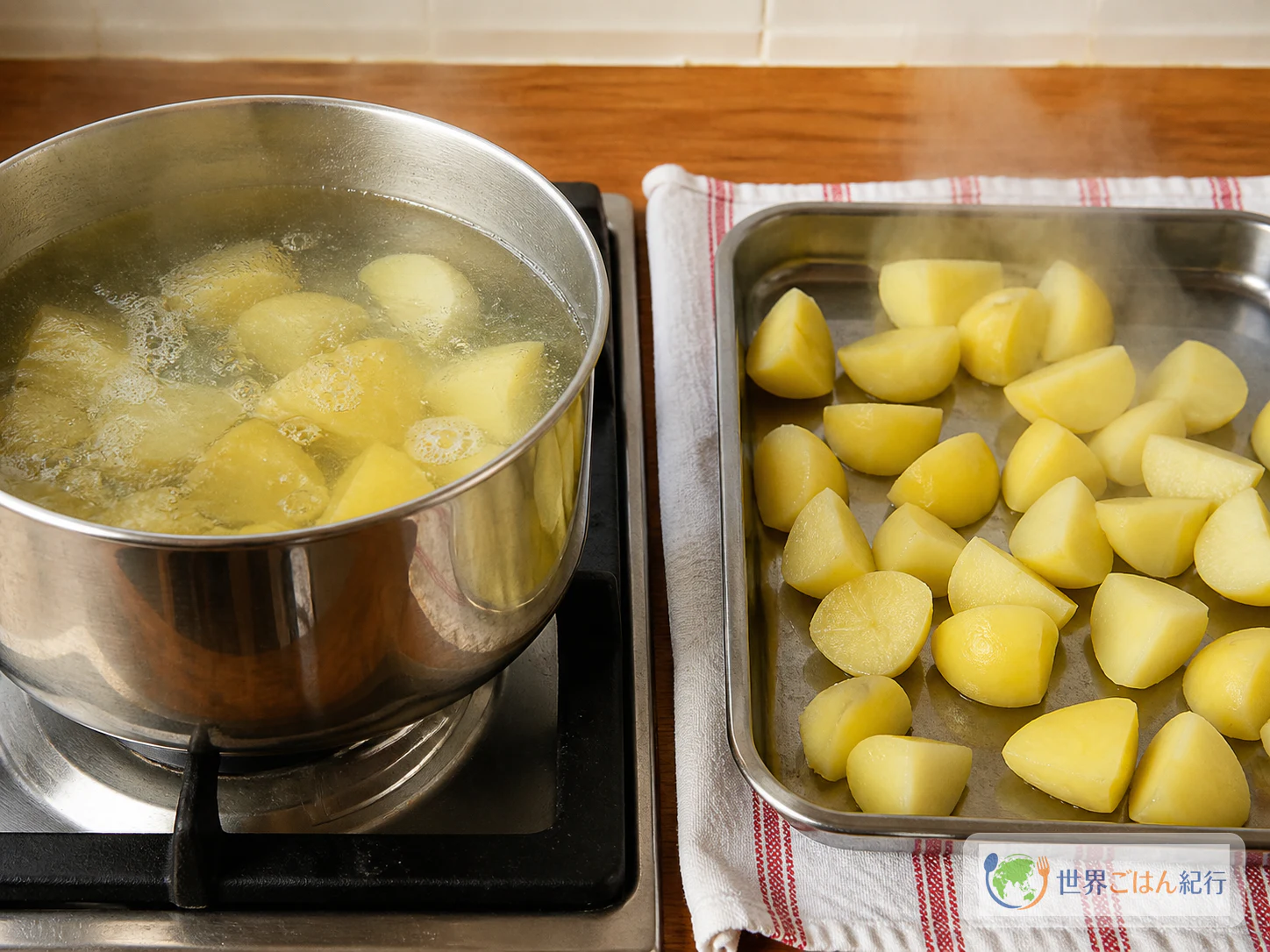
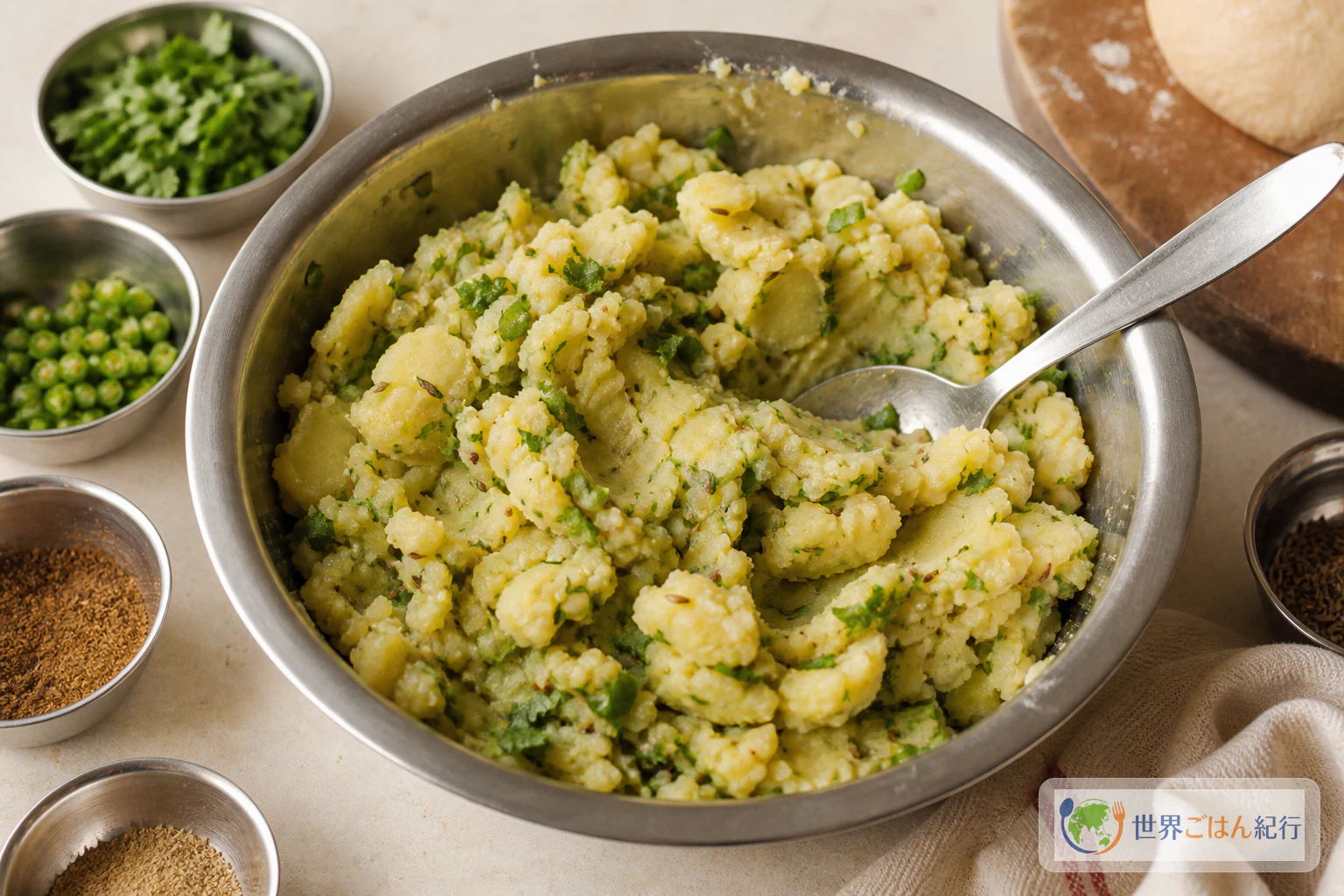
Make the potato filling first, separately from wrapping and cooking, so you can work calmly. If the filling is hot, the oil in the dough melts and the softened potato pushes out through the seam.
Potato filling and dough
Common Aloo Paratha Problems and Fixes
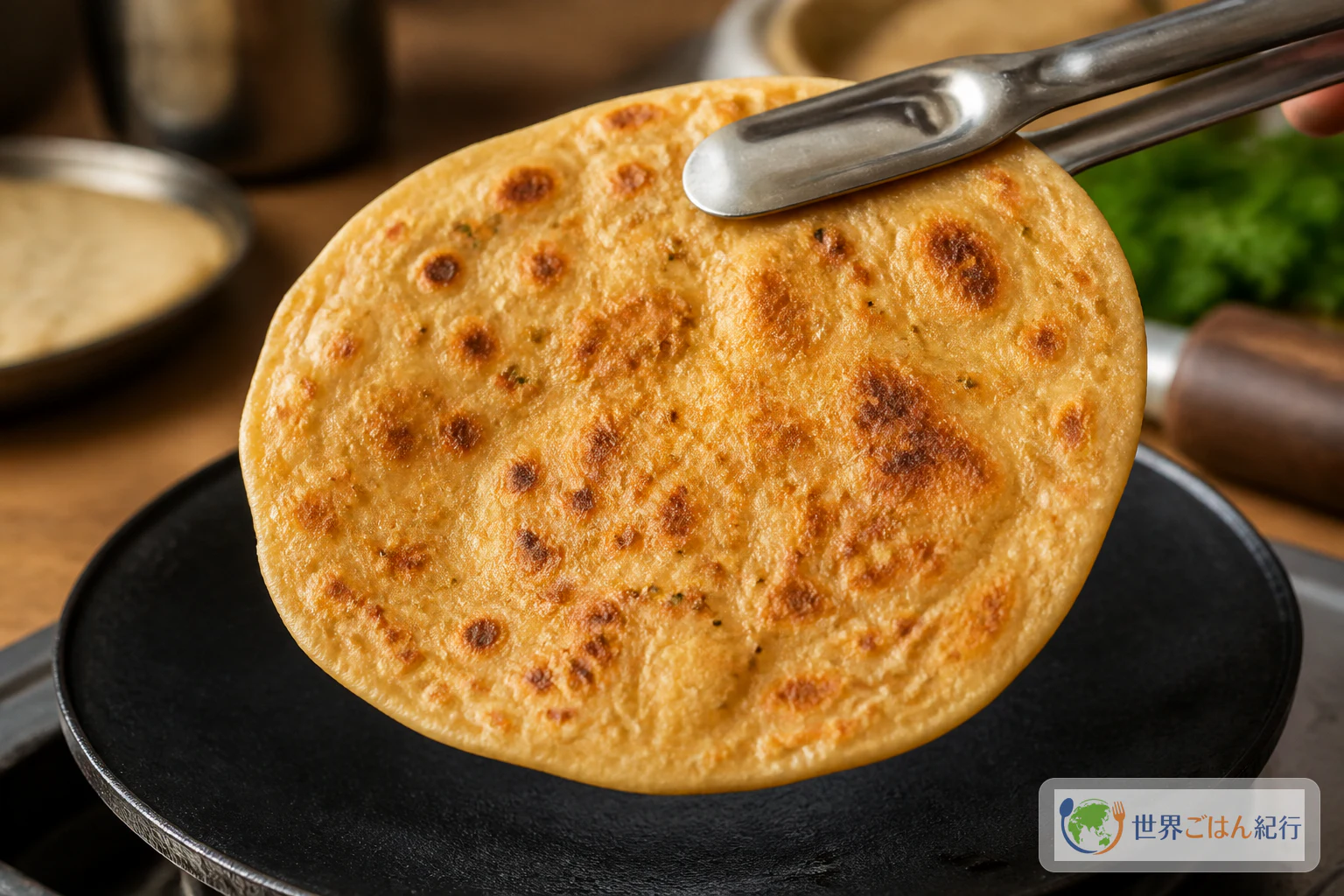
Most trouble comes from three places: dough tearing around the filling, moisture from the potato seeping into the dough, and a surface that browns while the center stays floury. More filling doesn't make a better paratha. Seal a cool, dry filling evenly in the center of the dough and keep the cooking surface at a steady temperature, and you get a toasty outside and a fluffy inside at the same time.
Season the filling hot, wrap it cool
Warm potato is easier to mash and takes in the spices well, but a hot filling loosens the oil-rich dough. Spread it out for about 15 minutes after boiling, until it no longer seeps water when squeezed, and you can wrap it without cutting back on filling.
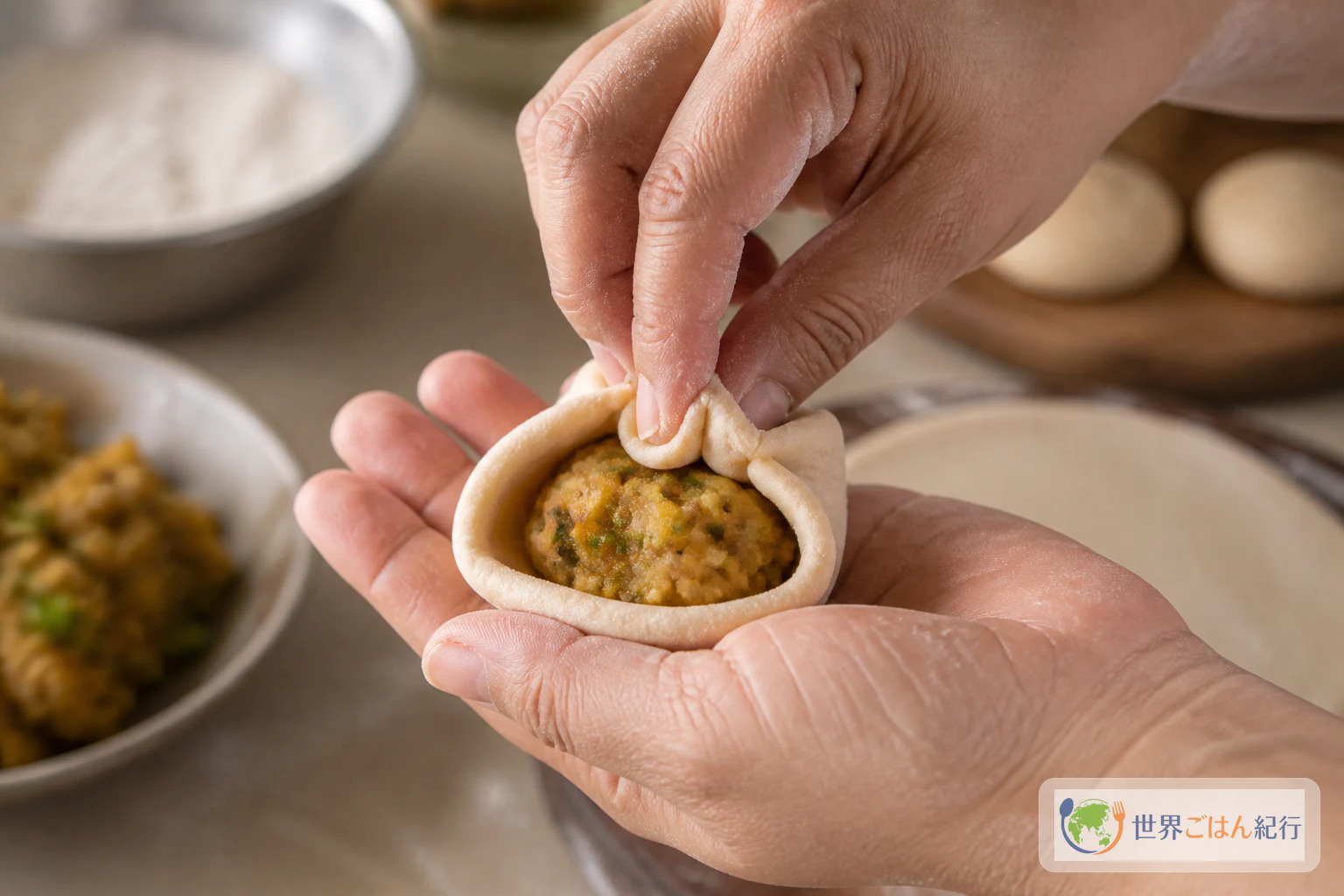
Keep the center thin
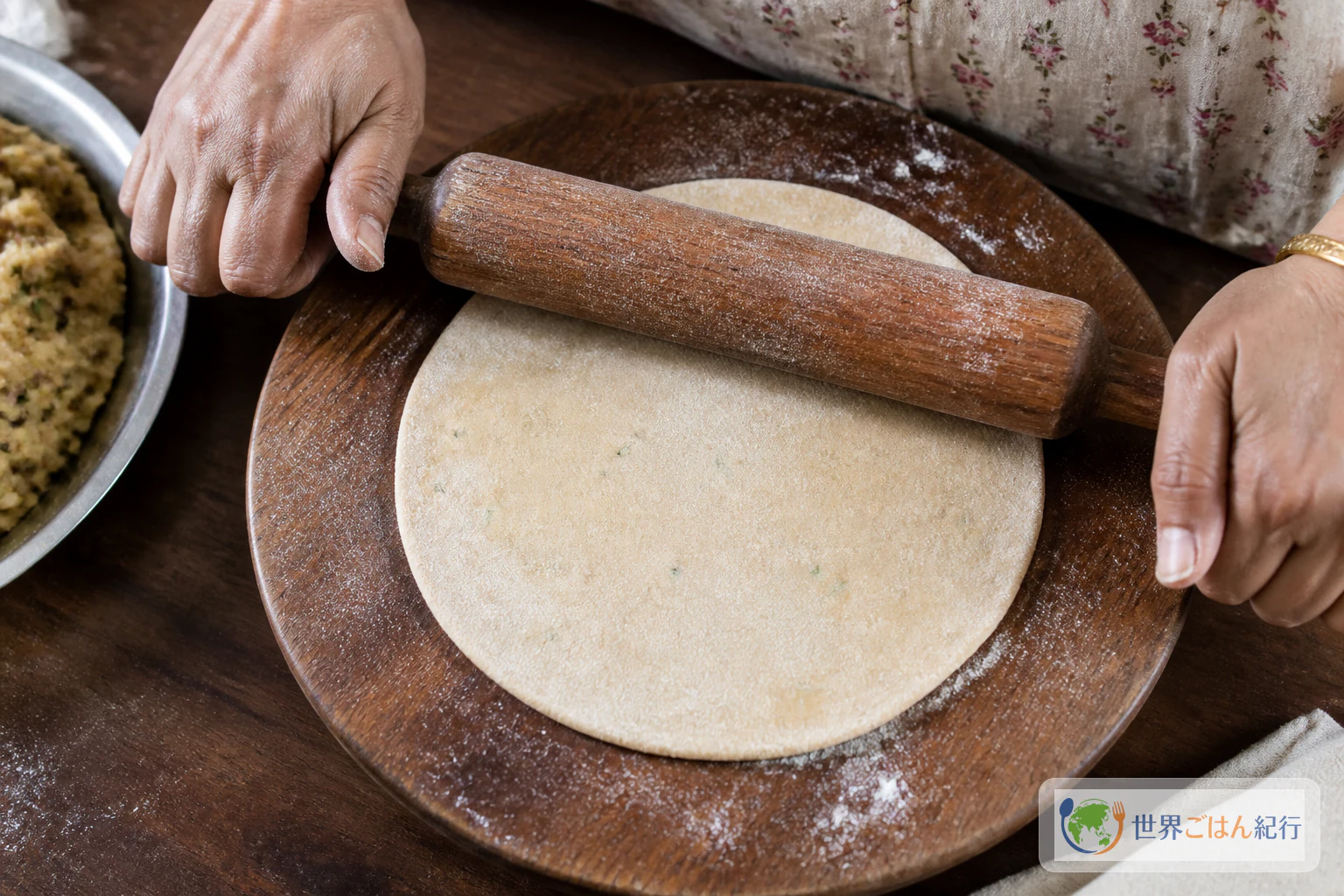
Keep the filling to 2–3 tablespoons, or about 2.75 oz (75 g) per paratha when dividing it across 8; any more and it gets hard to roll. Thin the edge of the dough and keep the filling low in the center, and it won't squeeze out to one side when the rolling pin passes over. To cook through to the center on a home stove while keeping the thickness of a Punjabi breakfast paratha, keep the diameter modest.
Judge the browning by eye
On a home stove, the tawa's temperature shifts with the dough's position and the fat, so a thermometer reading at one point won't tell you much. Use 1 minute 30 seconds per side as a baseline, then check in order: small bubbles on the surface, brown spots on the underside, and suppleness when you lift it.
For a small hole before cooking, sprinkle a little flour around it, pinch the dough shut with your fingers and rest it seam-side down for 5 minutes. With the filling exposed, the spices burn and turn bitter, so close the hole before it goes on the tawa.
If the surface browns first, lower the heat to medium-low and cook 30 seconds per side, pressing the edge lightly with a spatula. A longer stretch over low heat keeps the surface texture better than covering and steaming for 1 minute. If the dough was too thick, roll the next one no larger than 7 inches (18 cm) and keep it 2–3 mm thick.
Aloo Paratha Variations and Freezing
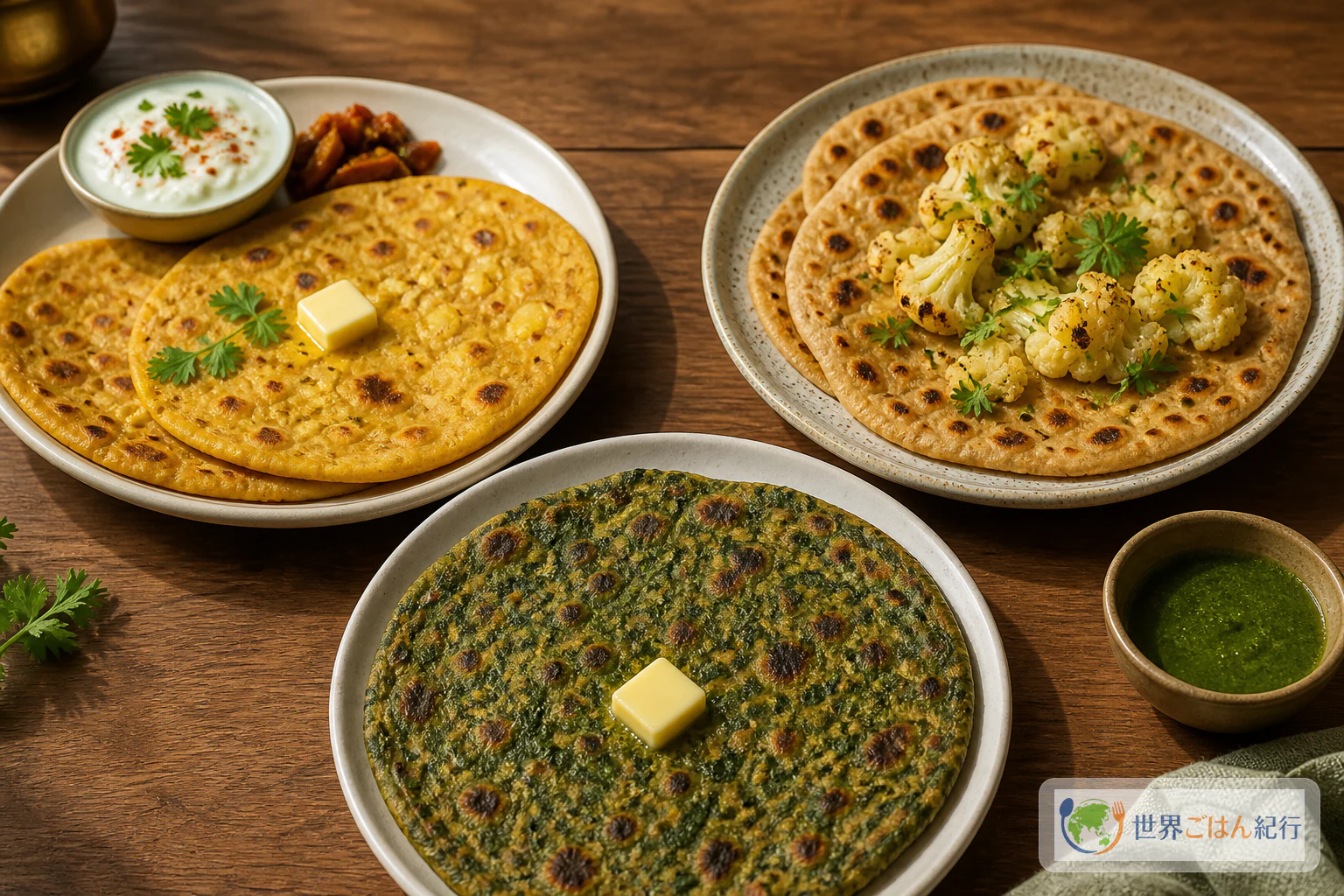
Make it milder
Leave out the green chili and the chili powder, but keep the cumin and ginger so the aroma stays. Yogurt on the side softens the heat without changing the salt in the filling, so if you cut back on salt, taste the filling right after mixing in the potato.
Swap the filling for cauliflower or leafy greens
For gobi paratha, finely chop 1 lb (500 g) cauliflower, sprinkle with 2 g salt, rest 10 minutes and squeeze out the water. For spinach, blanch 5.5 oz (150 g) for 30 seconds, cool in cold water, squeeze thoroughly and chop finely. Neither should match the 1.25 lb (600 g) of potato by weight; what matters is drying the filling until it holds its shape when squeezed.
Make it vegan
Cook with rice bran oil instead of ghee and serve unsweetened soy yogurt in place of regular yogurt; the atta, potatoes and spices stay the same. Store-bought pickles and spice mixes sometimes contain dairy, so check the labels.
Freeze and cook in the morning
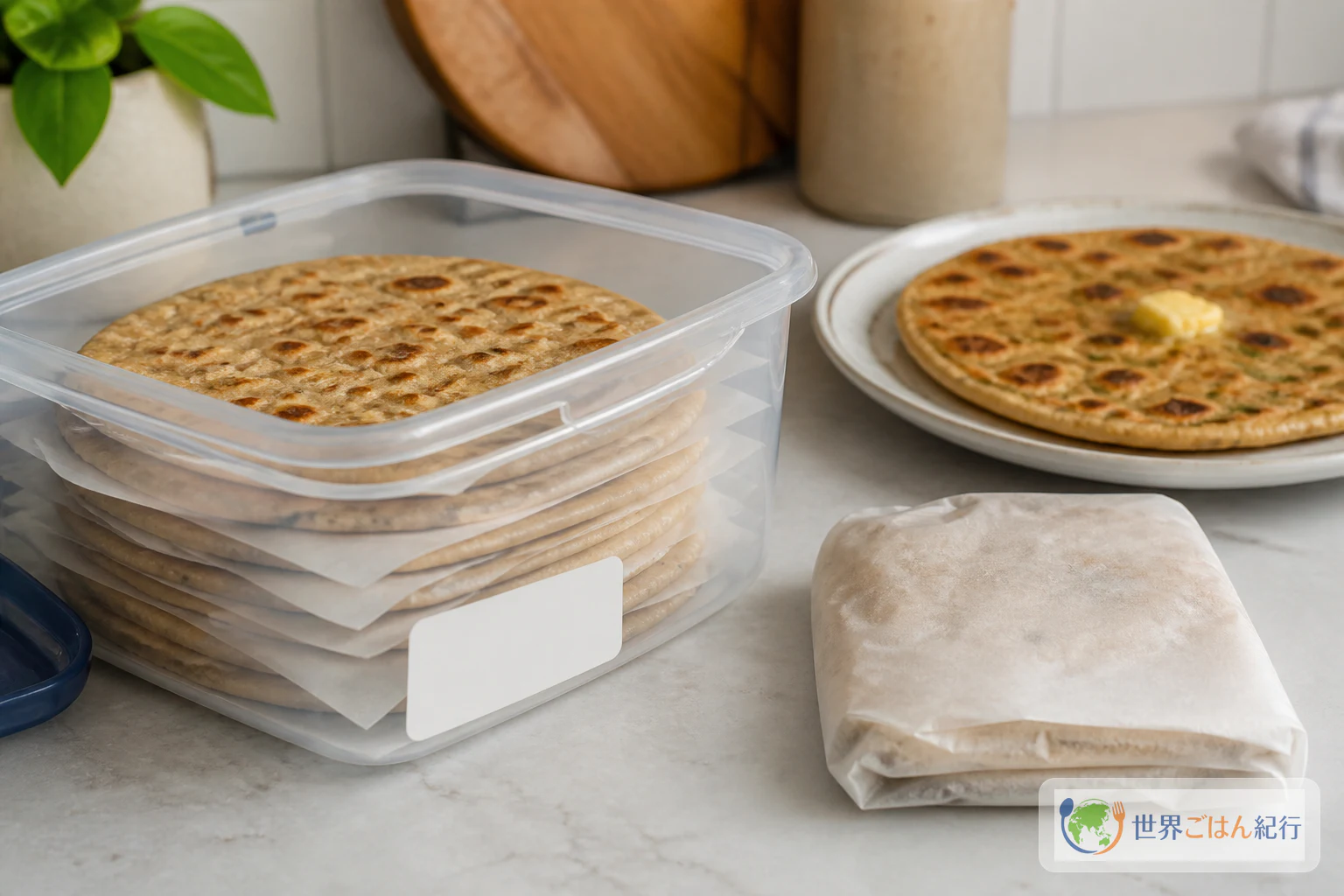
Let the cooked parathas cool completely, then freeze them with parchment between each one. Bagging them straight from the pan traps moisture that makes the surface crack. Cook from frozen over medium-low heat for 1 minute 30 seconds per side, adding 30 seconds at a time until the center is hot.
FAQ
Does the potato have to be completely cool?
No need to chill it in the refrigerator until firm; just warm to the touch is enough. If too much heat remains, the dough turns soft, and if the filling is too cold, it stiffens and gaps open at the seam.
What can I use if I don't have a tawa?
A flat-bottomed, thick frying pan works if it holds a 7–8 inch (18–20 cm) dough circle comfortably and you can turn the paratha around inside it. Thin pans lose heat quickly, so reheat yours for 30 seconds over medium heat after each paratha.
How long does it keep after cooking?
Cool completely, then seal: eat within 2 days refrigerated or about 2 weeks frozen. Reheat refrigerated ones over medium-low heat for 1 minute per side, and check that the center is hot. Keep yogurt and pickle in separate containers.
What can I use if I don't have amchur?
You can substitute 1 tsp (5 ml) lemon juice. It adds moisture, so mix it in after the potato has cooled, and if the filling gets soft, spread it on a flat plate for 5 minutes. The same goes for umeboshi vinegar: keeping the liquid down is what keeps the filling easy to wrap.