Knead the dough in the morning. Mix chopped methi into the flour, bring it together with yogurt and oil, and roll it thin with a rolling pin. It won't puff up like bread. On the skillet, small bubbles rise as one side dries, brown spots dot the surface, and then the green smell of the leaves comes up with the cumin.
That's thepla (થેપલા), the flatbread Gujarat loves, from western India. The best-known version is methi thepla, made with methi, or fenugreek leaves. It looks a lot like roti or chapati. But the yogurt, oil, and spices in the dough keep it from hardening once it cools, so it's a natural for lunchboxes and travel food.
Thepla at the Gujarati Table

Flavor and How It's Eaten
Gujarati cooking is rich in vegetarian dishes built from lentils, grains, dairy, and vegetables. Aromas of turmeric, cumin, coriander, chili, and mustard seed run through them, along with sweetness, sourness, and heat. Thepla shows all of that. The yogurt in the dough brings sourness, amchur adds a dry sourness, and green chili and chili powder add a little heat. So even a thin flatbread tastes like much more than baked flour.
People eat thepla at any time of day: morning, noon, or night, with tea, pickle, or raita. It's made from wheat flour, besan, fenugreek leaves, spices, and white sesame. Common partners are dahi, chundo (a sweet mango pickle), and red garlic chutney.
Made for Travel
Thepla is meant to be eaten later as well as fresh. At the Gujarati table it sits alongside rotli, bhakri, and puri, and it works as an everyday staple and as a light meal. Together with snacks like khakhra and dhebra, it gets packed for journeys, pilgrimages, and holidays. That explains the oil and yogurt in the dough, the thin rolling, and the cloth wrapping. A good thepla still smells wonderful fresh, and it doesn't crack after it cools.
The cloth has a job, too. It holds in enough steam to keep the bread moist without sealing it airtight, which would make it sticky. It's a small trick for travel food.
One Bread, Many Households
Thepla is best understood as one of the flatbreads of Gujarati home cooking rather than the invention of any one place or person. Households differ more than cities do: in the amount of leaves, how the oil is brushed on, and which pickle comes alongside. Some families load up on methi. Others add bottle gourd or radish. What makes it thepla is that it's cooked thin, full of aroma, and easy to eat cold. The type of leaf can change.
How to make it: roll thin, cook briefly
There are 6 steps. The ingredients are in the next section. Most stiffness comes from too little water, rolling too thick, or overcooking. Don't press the dough too hard, and keep the cooking time short.
A lot of oil makes it crisp, but it loses the soft texture typical of thepla. Use a total of a little under 1 tsp per piece. If oil pools in the skillet, wipe it lightly with a paper towel before cooking the next one.
Ingredients (makes 8): consider flour, leaves, and sourness separately

This makes 8 thepla, 16–18 cm across. It serves 2–3 as a staple, or 4 as a light meal or side. If you eat them all fresh, you can make 6 larger ones. For storage and lunchboxes, the smaller 8 are easier to handle.
This uses wheat, dairy, and sesame. If avoiding dairy, the yogurt can be replaced with 2.5 oz (70 g) of unsweetened soy yogurt, though the sourness and softness of the dough change a little. If avoiding sesame, leave out the white sesame and increase the cumin to 4 g.
A mix for days without fresh methi
| What you want to replace | A landing point | Amount |
|---|---|---|
| 2.75 oz (80 g) of fresh methi | Finely chopped spinach with the water squeezed out | 2 oz (60 g) |
| The aroma of methi | Dried kasuri methi, rubbed between your fingers | 3 g |
| Atta | 6.5 oz (180 g) whole wheat flour plus 2 oz (60 g) all-purpose flour | 8.5 oz (240 g) total |
| Sourness | Make it up with lemon instead of amchur | 1 tsp (5 ml) after cooking |
Made with spinach alone, you get the green color but not the aroma of methi. Mixing in a little dried kasuri methi brings back the green bitterness and sweet aftertaste. But dried leaves turn medicinal if overdone, so start with 3 g the first time.
Choosing Ingredients for Thepla

Sourness and aroma make the biggest difference in thepla, more than the flour or the yogurt. Wheat flour, yogurt, and oil are at every grocery store. The ingredients worth buying are the ones you'll keep reaching for if you cook more Indian food.
Methi and Its Substitutes
Methi is the leaf of fenugreek. Fenugreek seed goes into curry powder, but the leaf has a greener, slightly bitter aroma. Fresh methi is closest to the original, but on many days the import store won't have it. Spinach and similar leafy greens give you the moisture and color. A little dried kasuri methi brings back the green bitterness and sweet aftertaste. Use some dried leaf along with the fresh greens and you'll get close to the methi version.
Flour, Yogurt, and Oil
Indian atta is the ideal flour. Regular whole wheat flour mixed with all-purpose flour also gets you close to a thin, supple thepla. The yogurt in the dough is there for softness as well as flavor. Kneaded with water alone, the bread is light while fresh but cracks once it's cold. With yogurt and oil it stays a little moister, and you can wrap it in cloth and reheat it the next morning.
Amchur and Cumin
Amchur is powdered dried mango. Lemon juice gives sourness too, but amchur adds it without adding moisture to the dough. It also goes into chana masala and pani puri, so it earns its place on the shelf. Whole cumin seeds, rather than ground, release their aroma when you bite into the bread. They also show up in dal tadka and aloo gobi, which makes them a good first whole spice.
Rolling Pin
The thinner and more evenly you roll, the faster thepla cooks and the more supple it stays. A wine bottle works in a pinch. Oily dough sticks to the counter more than you'd expect, though, so a light wooden rolling pin keeps the work steadier.
Substitution Table
As long as you keep the aroma of the leaf, the thin rolling, and enough moisture that it doesn't crack cold, you'll get thepla and not just a vegetable flatbread.
| Point of doubt | Closer to the local | A landing point elsewhere | Effect on taste |
|---|---|---|---|
| Leaves | Fresh methi | Spinach plus 3 g kasuri methi | The color comes. The bitter aroma is made up with dried leaf |
| Flour | Atta | Whole wheat flour plus all-purpose flour | All-purpose flour makes rolling easier and resists cracking when cold |
| Sourness | Amchur | A little lemon juice after cooking | Sourness inside the dough weakens, but the heaviness lessens |
| Fat | Oil in the dough and in cooking | Keep the dough oil and thin the cooking oil | The dough oil supports keeping quality and softness |
| Tools | Tawa, chakla, belan | Heavy skillet, wooden rolling pin | Keeping the preheat and thinness, home tools are enough |
| How to eat | Dahi, chundo, red garlic chutney, chai | Raita, sweet-sour pickle, a garlicky side, bean curry | Adding sourness, dairy, and a bit of sweet heat keeps it from tiring |
Why Thepla Turns Stiff, and How to Fix It

Thepla rarely burns. When it fails, it goes stiff: it looks done, then cracks as it cools. The cause is almost always the water, the thickness, or the cooking time. Rolled thick, it's heavy inside and floury when cold. Too much water makes the dough easy to roll but easy to tear, and then it needs longer on the heat and turns stiff. Aim for a dough that's soft but still lifts cleanly off the counter.
| Failure | Likely cause | How to fix |
|---|---|---|
| Cracks when cold | Too little water, too much flour added | Next time add 5–10 ml more water and reduce the dusting flour |
| Floury inside | Too thick, or heat too strong so only the surface cooked | Roll to 16–18 cm and dry-roast briefly over medium heat |
| Leaf bitterness is strong | Too much methi or kasuri methi | Start at 2.75 oz (80 g) of fresh methi and 3 g of dried leaf |
| Oily | Too much cooking oil | Don't let oil pool in the skillet; spread thinly with the back of a spoon |
| Weak aroma | Cumin only as powder, no sourness | Use a little cumin seed and amchur |
Overcooked thepla is easier to eat cut into thin strips and served beside yogurt. If it has hardened by the next day, wrap it in a paper towel wrung out with water and microwave at 600 W for 20–30 seconds. Then wrap it in a dry cloth and some of the suppleness comes back.
Serving, Storing, and Variations
Serving Thepla
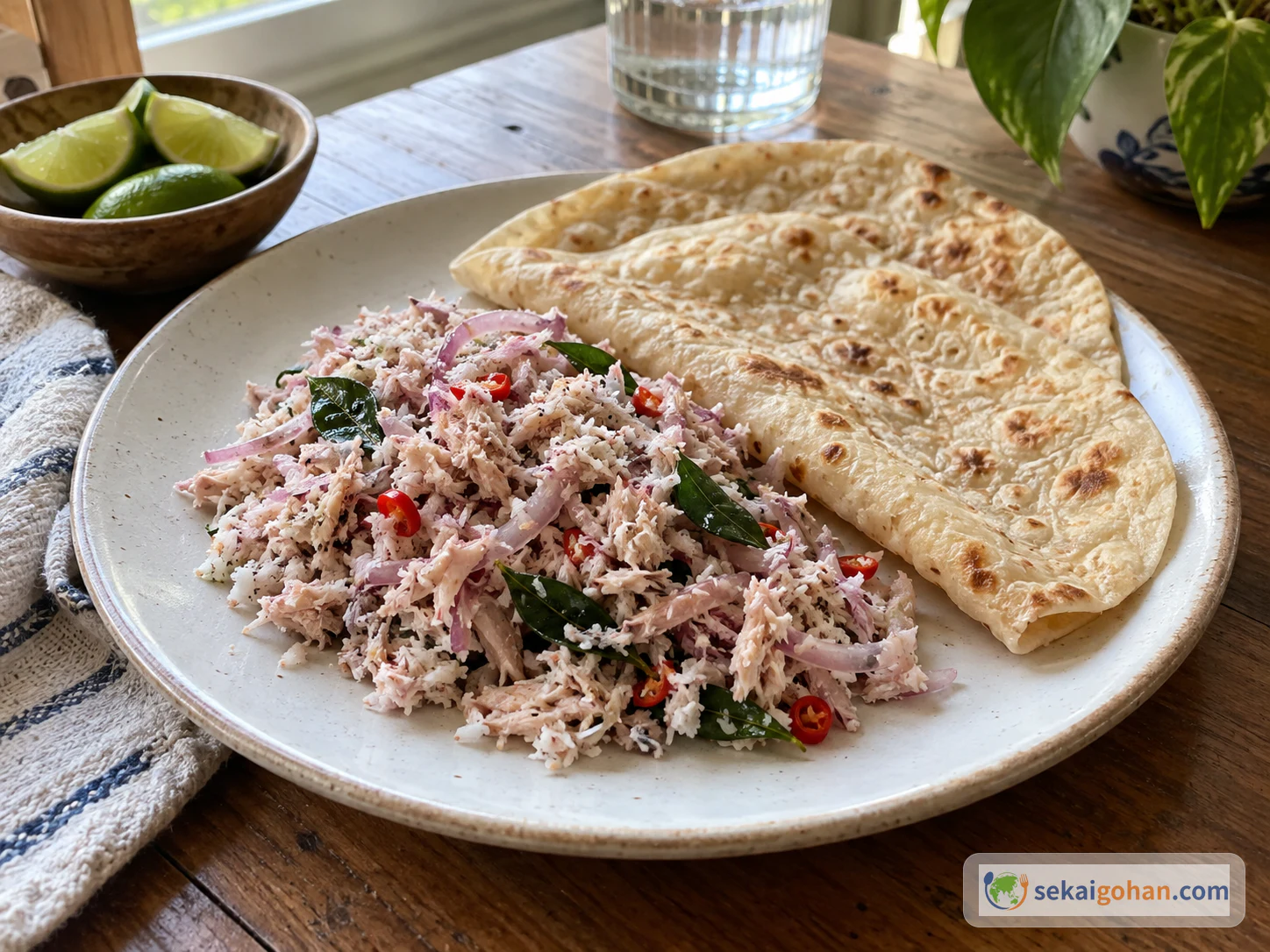
Fresh off the skillet, thepla smells wonderful on its own. For a more local meal, add yogurt or raita, achar, and chai. The salty spiced pickle, the sour yogurt, and the faint bitterness of methi turn a thin flatbread into a full plate. If you can't make chundo, the sweet mango pickle, mix 1.5 oz (40 g) of chopped sweet-sour pickled radish with 1/2 tsp of lemon juice, a pinch of sugar, and a few chili flakes. It fills the same sweet-sour role.
For dinner, 2 pieces beside dal tadka or khichdi make a good staple. The oil and yogurt make thepla more filling than chapati, even though it looks light. For stronger spice, pair it with chana masala. It also makes a light flatbread next to fried food like samosa and tandoori chicken side dishes.
Storage and Reheating
Once the thepla has cooled, stack the pieces one at a time, slightly offset, and wrap them in cloth or paper towels. They keep half a day at room temperature and 2 days in the refrigerator. To freeze, sandwich each piece in plastic wrap and put them in a freezer bag for up to 2 weeks. Reheat in a skillet over low heat for 20–30 seconds per side, or in the microwave at 600 W for 20–30 seconds. Keep it brief, because overheating dries it out.
If you're making thepla ahead for a lunchbox or a trip, brown it a little lighter. It'll color up when you reheat it in the skillet. Deeply browned thepla dries out when reheated the next day. When you pack it, wrap the thepla in paper or cloth and put yogurt or raita in separate containers. If you seal it airtight while it's still warm, it'll smell stuffy instead of fragrant.
Variations
Swapping the vegetable is common in Gujarat too, with versions made from doodhi (bottle gourd) or radish. For radish, grate it, sprinkle it with a little salt, and squeeze out the water. Unsqueezed radish loosens the dough, so also reduce the water by about 1.5 tbsp (20 ml). It won't taste like the leafy methi version, but you still cook it thin and it keeps just as well.
If you leave out the green chili, keep the 0.5 g of chili powder so the aroma doesn't go flat. To take out the heat completely for children, increase the ginger to 10 g and the cumin to 4 g. That keeps it fragrant without the heat.
Nutrition Guide
These figures are per piece for a batch divided into 8, including the yogurt, the oil in the dough, and the cooking oil. Changing the flour or the amount of cooking oil changes the numbers.
| Item | Per piece |
|---|---|
| Energy | about 154 kcal |
| Protein | about 4.6 g |
| Fat | about 5.4 g |
| Carbohydrates | about 23.0 g |
| Fiber | about 3.2 g |
| Salt equivalent | about 0.7 g |
FAQ
Q. What is the difference between thepla and chapati?
Chapati is an everyday flatbread made mainly from flour, water, and salt. Thepla has methi, yogurt, oil, and spices in the dough, so it smells stronger and is easy to eat cold. It can be the staple at a meal or a light meal packed for travel or a lunchbox.
Q. I can't get fresh methi. Can I make it with spinach alone?
You can, but spinach alone won't give you much of the methi aroma. Add 3 g of dried kasuri methi to 2 oz (60 g) of spinach to make up both the amount of leaves and the aroma. Other leafy greens such as chard also work. They're watery, so squeeze them well after chopping.
Q. Can I make it without amchur?
Yes. Leave the lemon juice out of the dough. After cooking, drizzle on 1 tsp (5 ml), a little at a time, to lighten the heaviness.
Q. The dough is sticky and I can't roll it.
That usually happens when all the water goes in at once. Add whole wheat flour 1 tsp at a time, let the dough rest 5 minutes, then roll. Resting lets the flour absorb the moisture and makes the dough easier to handle. Fixing it with dusting flour alone dries the surface and makes the cooked bread stiff.
Q. What skillet should I use?
Use a cast-iron or other heavy skillet. A thin nonstick skillet works too, but if the heat gets too high, only the surface burns. Preheat over medium heat, lower it to medium-low partway through cooking, and skip the pool of oil. Thepla isn't shallow-fried.