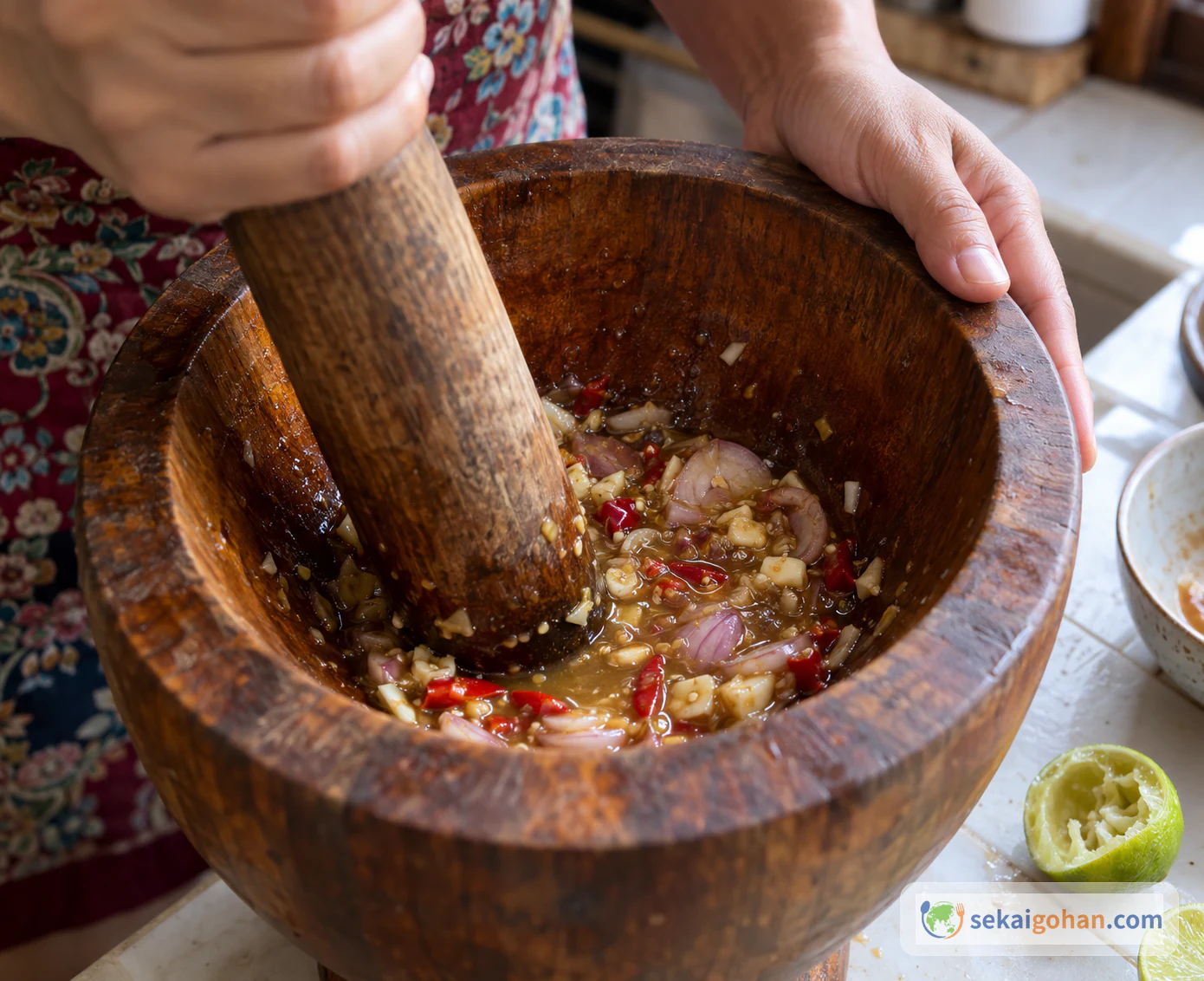
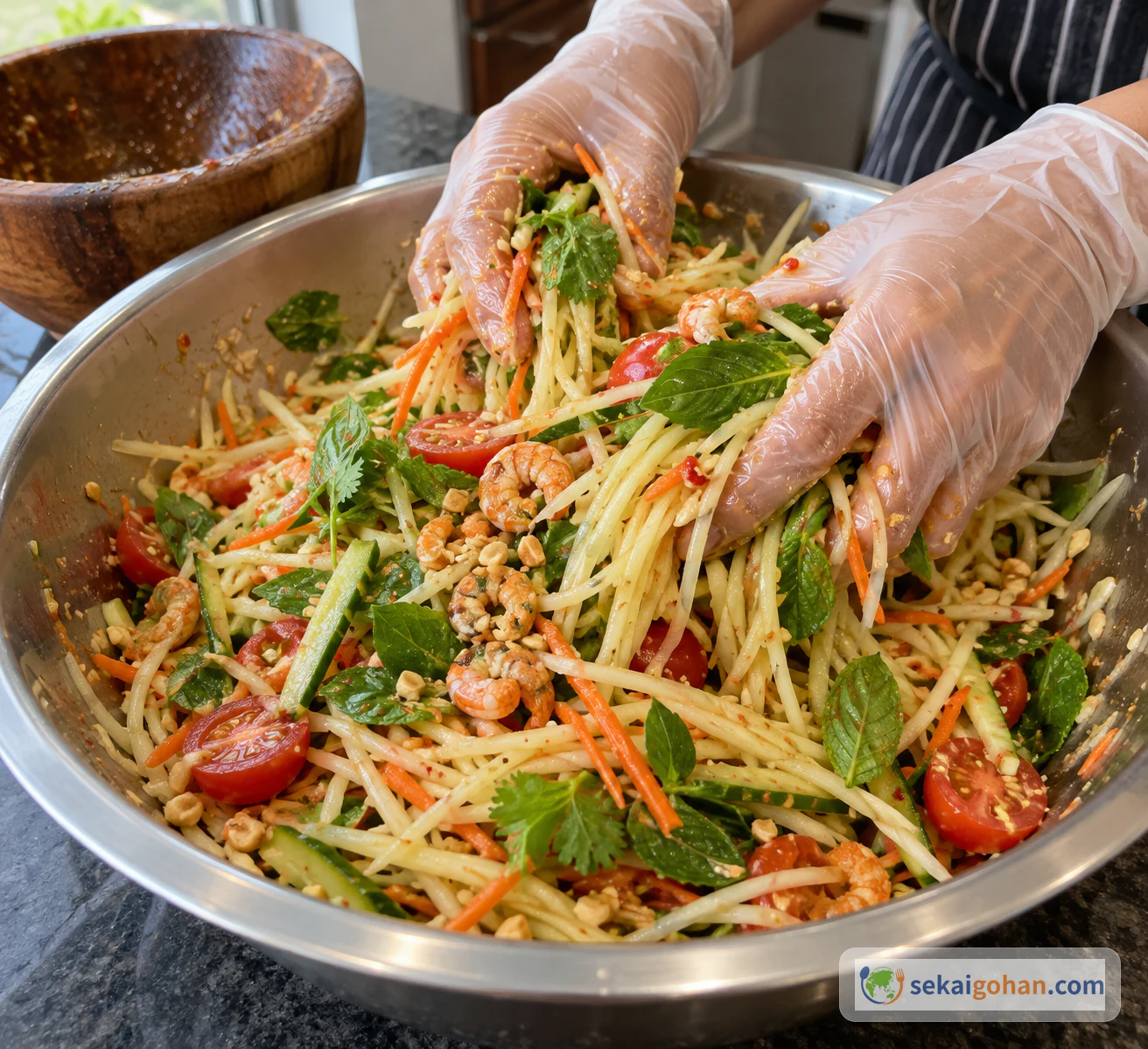
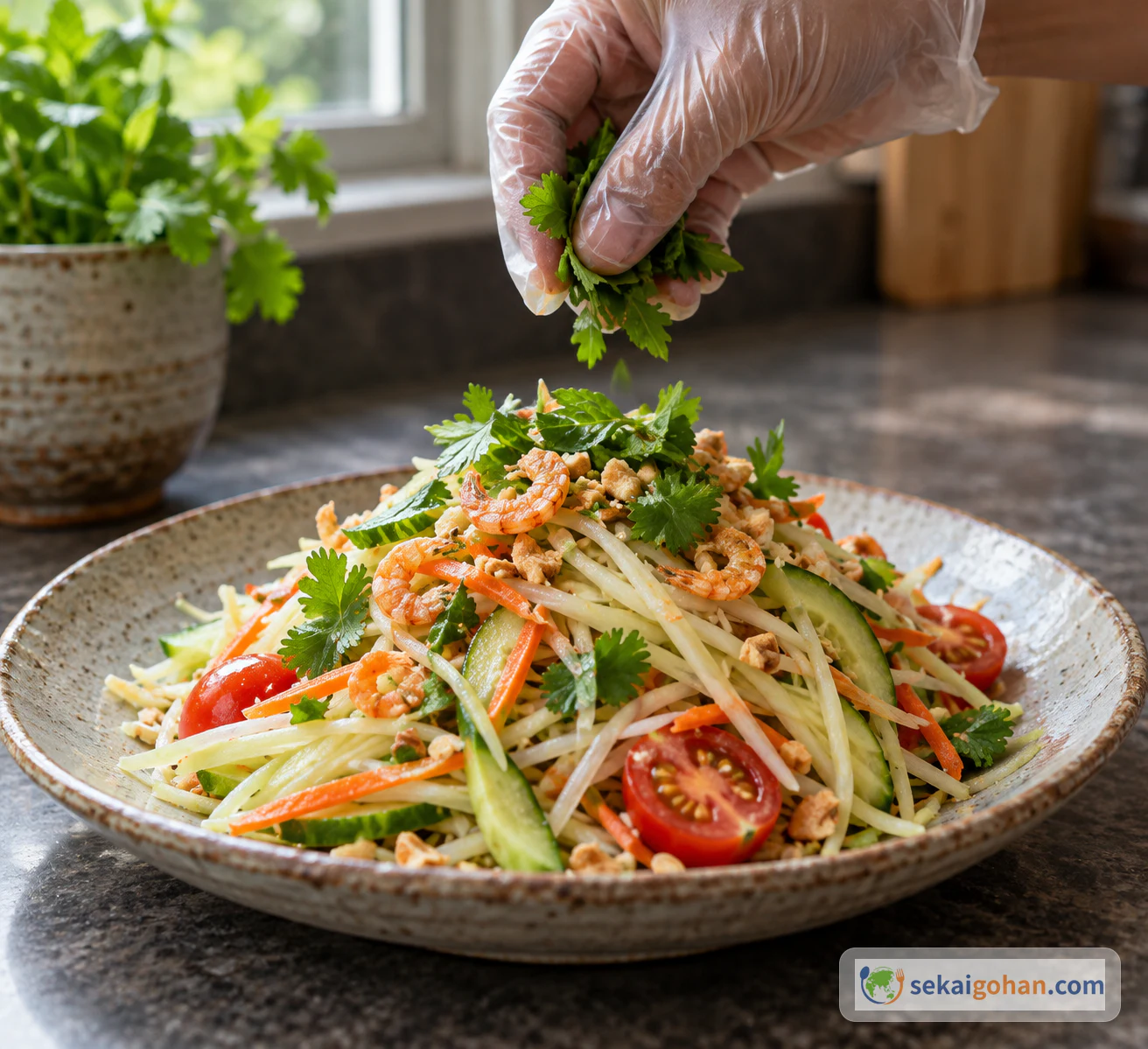
At a Cambodian market stall, bok l'hong is made to order. A wooden pestle thuds into the mortar as garlic, chilli and shallot are crushed into fish sauce, palm sugar and lime. Before any of that happens, the customer says how they want it: how many chillies, how sour, how sweet, how much fermented funk. This green papaya salad is an afternoon snack, adjusted to each order and eaten the moment it's tossed. You can't bring the stall home, but you can cook the same way: make the dressing first, taste it until it's where you like it, and dress the vegetables just before eating.
About Bok L'hong
A Pounded Green Papaya Salad
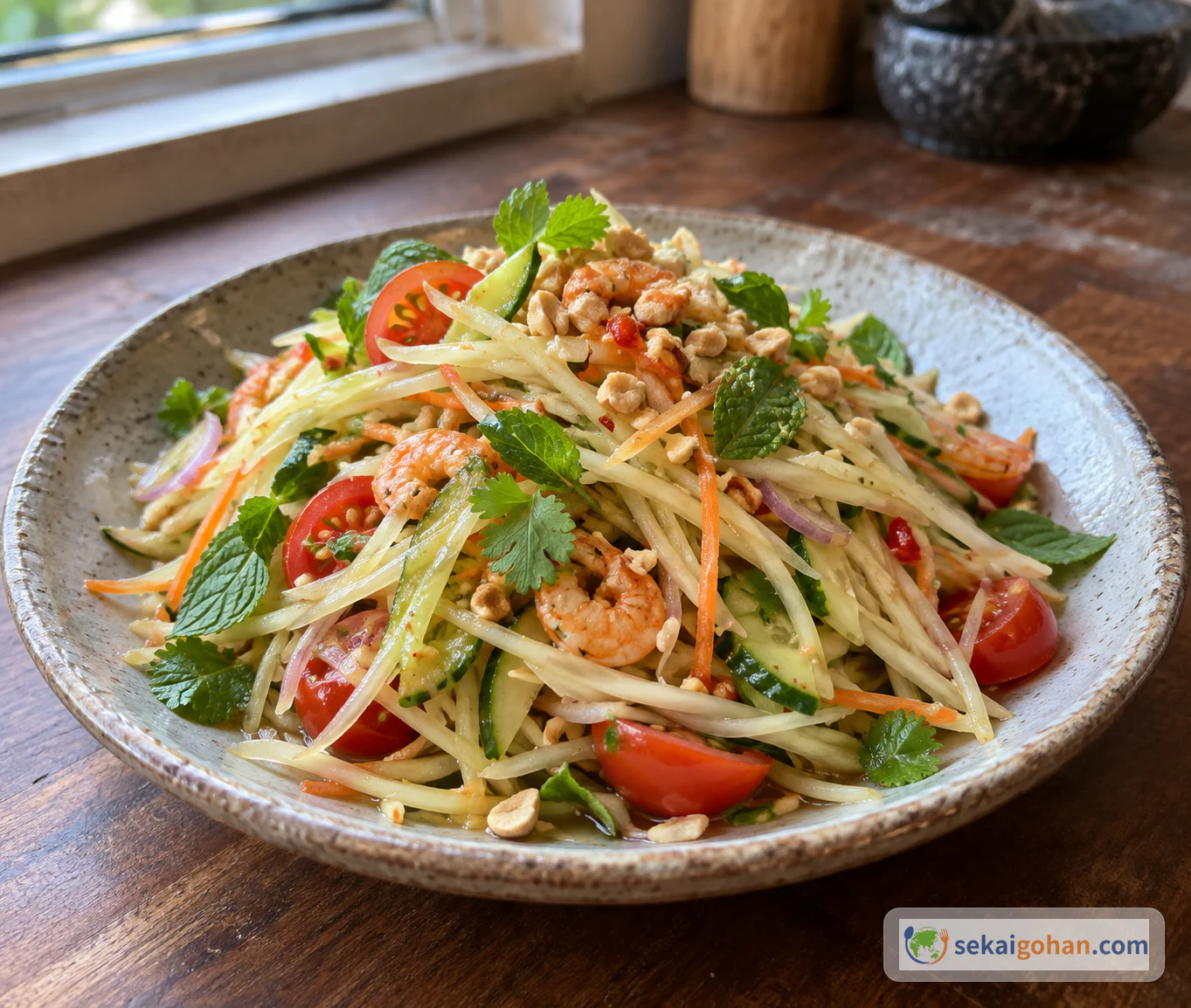
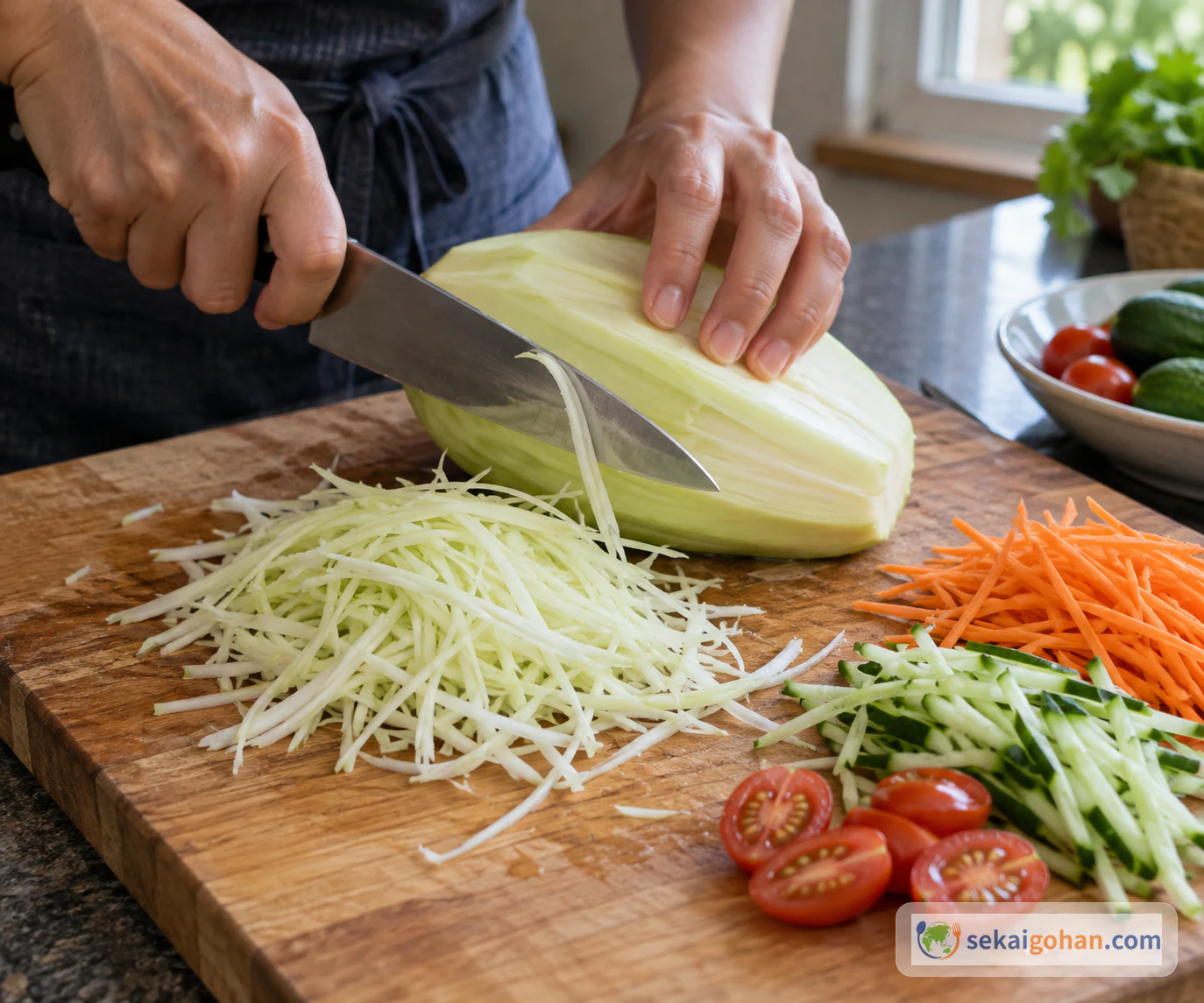
The dish is also called bok lahong or nhoam lahong. Bok means pounding, or partly pounding, in a mortar. The base is firm, pale, unripe green papaya cut into long strands.
The rest of the flavor comes from the dressing. Fish sauce brings salt and savoriness, lime juice brings sourness, palm sugar brings sweetness, and bird's eye chilli brings heat. A spoonful of shrimp paste, if you use it, adds fermented depth. Basil, mint and coriander, dried shrimp and crushed peanuts finish the plate.
How It's Eaten in Cambodia
People buy bok l'hong at markets and street stalls in the afternoon and order it hotter, sourer, sweeter or funkier to suit themselves. Cambodian markets also have stalls where you can try food from different parts of the country. For more of the country's food, see our Cambodia page.
Versions with Prahok and Crab
Versions differ mainly in heat, in their fermented seasonings, and in how hard the ingredients are pounded. Some include prahok (salted fermented fish), shrimp paste, salted crab, pork skin and seafood. One Khmer-language family recipe, written បុកល្ហុង, uses salted crab, long beans, dried shrimp, fish sauce and basil, pounding the seasonings first and then lightly pounding the vegetables. Another adds prahok and salted baby crab.
Prahok is a salted, fermented fish product used across many Khmer dishes. It depends on the seasonal freshwater fish of the Mekong–Tonle Sap system and on the tradition of preserving that catch. The recipe in this article contains no prahok and no crab. Its only fermented ingredient is the optional shrimp paste. None of these versions is the single "authentic" one, and this recipe is just one of them.
Bok L'hong and Som Tam
Thailand's som tam belongs to the same broad family of green papaya salads, but it's a different dish. Here only the dressing is pounded in the mortar. The vegetables are then tossed lightly in a bowl instead of beaten, so they keep their crunch.
Ingredients: Shared by Four, Prepared Just Before Eating
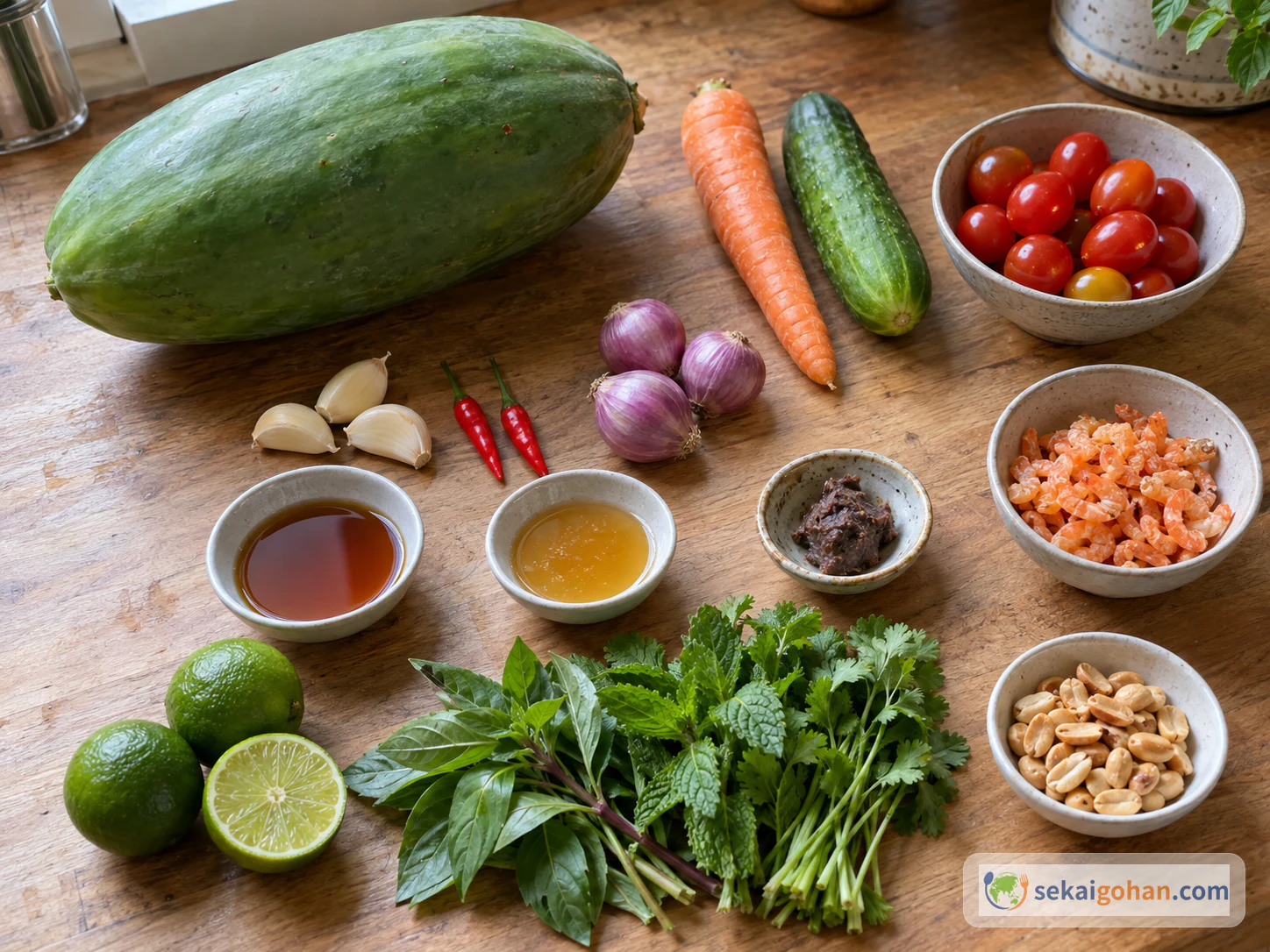
These amounts are meant to be shared by four.
Dried shrimp and shrimp paste contain crustaceans, fish sauce contains fish, and the salad contains peanuts. Check the labels of processed products as well. This is a raw vegetable salad. Wash the vegetables and herbs well, use clean boards, knives and bowls, and eat it as soon as it is dressed.
Equipment
- A large wooden mortar and pestle, for coarsely pounding the dressing
- A cutting board and knife, or a grater or julienne tool
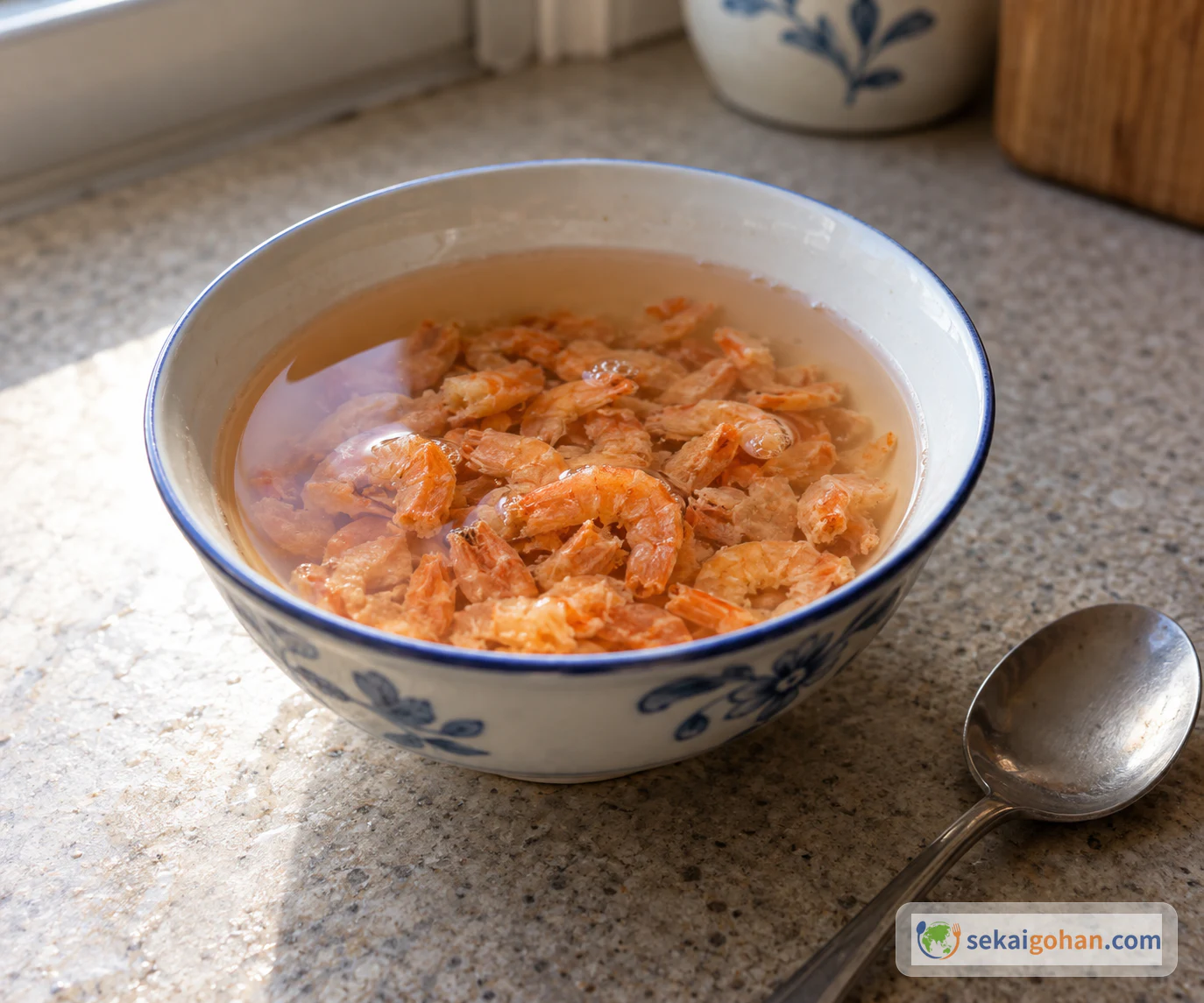
- A small bowl for soaking the dried shrimp
- A large mixing bowl for tossing
- Food-safe gloves
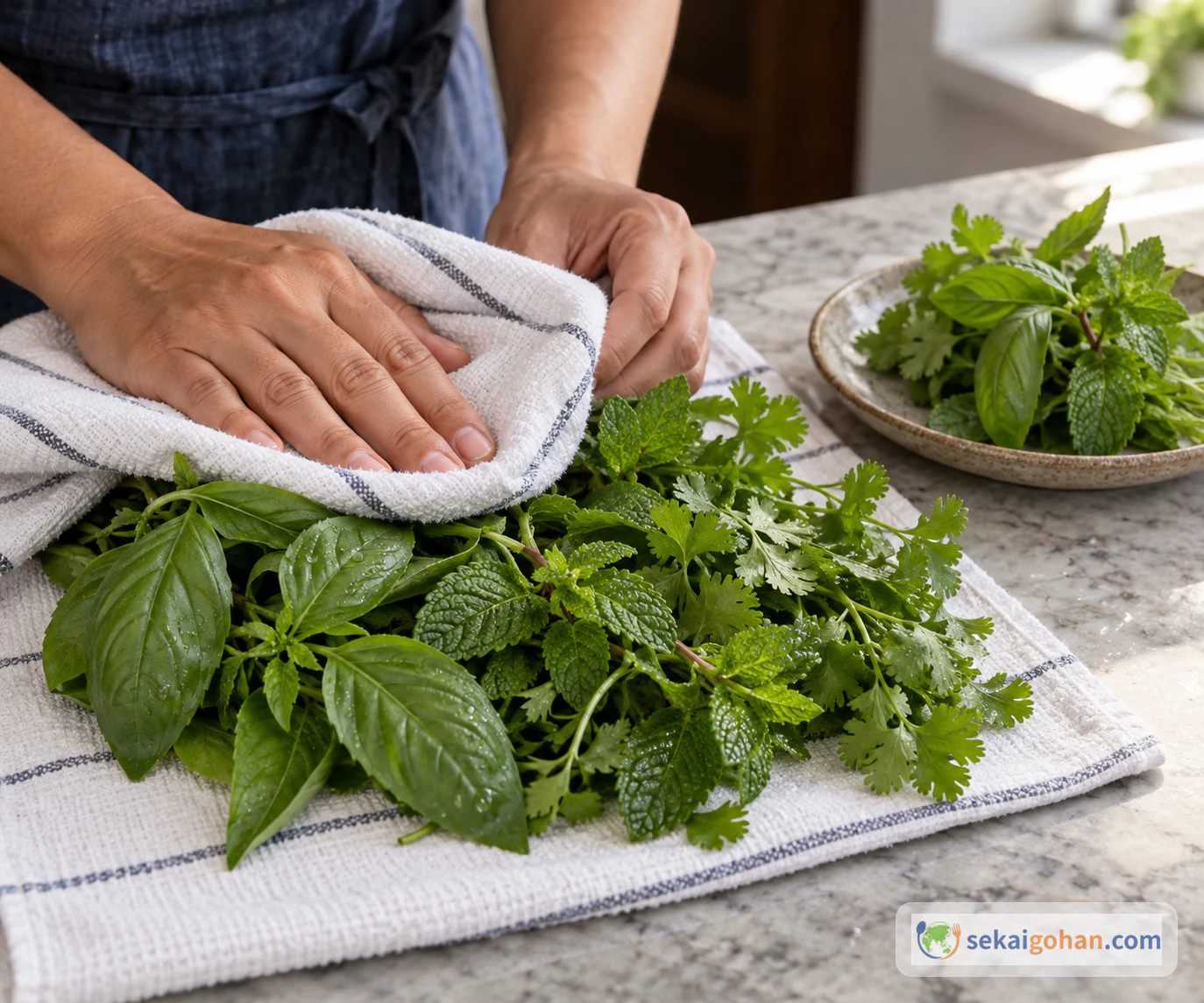
- A clean kitchen towel for drying the herbs
- A serving plate
Choosing Ingredients for Bok L'hong
Green papaya: Choose a firm, unripe papaya with pale flesh inside. A ripe papaya with orange flesh is soft and sweet and makes a different, wetter salad. Look for green papaya at Asian grocery stores or online.
Palm sugar: If you can only find solid palm sugar, dissolve it in just enough hot water to loosen it, and go by how the dressing tastes.
Shrimp paste: This is optional. Without it, fish sauce leads the flavor. Prahok isn't a stand-in, since that fermented fish paste belongs to other versions of the dish.
Lime: Lemon will make the dressing sour if you can't get limes, but it smells different.
Mortar: A large wooden mortar works best, because the dressing only needs to be bruised and combined, not ground smooth. A small mortar, or a bowl and a wooden spoon, will do for the dressing on its own, though it mixes less evenly.
Method: Pound the Dressing, Then Toss the Vegetables Lightly
The recipe takes about 30 minutes and uses no heat. Only the dressing goes into the mortar. The papaya and vegetables are tossed by hand in a bowl, not pounded.
Getting the Flavor and Crunch Right
Pound only the dressing. Toss the papaya and vegetables gently so each strand stays crisp. Taste, then serve right away.
| Problem | Likely cause | What to do |
|---|---|---|
| The salad is watery | Papaya too ripe, liquid from the cut vegetables, or all the dressing added at once | Use firm, unripe papaya. Add half the dressing, taste, then add the rest as needed |
| The strands are limp | Squeezed or pounded with the vegetables | Pound only the dressing, and toss the vegetables lightly with your hands |
| Too salty or too sour | The dressing's balance doesn't suit you | Taste the dressing before tossing and adjust it in small amounts |
| Too hot | Two chillies is too much for you | Next time, start with less chilli or remove the seeds |
| The fermented flavor is too strong | Shrimp paste | Leave it out; it is optional |
Start with the recipe's proportions and change them only after tasting. That's the home version of ordering at the stall.
Serving and Variations
Serve bok l'hong as soon as it's tossed, while the strands are still crisp. For a milder salad, start with half the chillies and add more after tasting. For the herbs, you can lean on basil and use less mint and coriander, but always include the basil.
Frequently Asked Questions
What if I can't find green papaya?
Daikon cut into strands can stand in. Its aroma, moisture and crunch are different, though, so think of the result as a related salad, not the same dish. Ripe papaya doesn't work as a substitute.
How long does it keep?
It doesn't keep well. Dress the salad just before eating and eat it right away.