Bakpia Pathok: Yogyakarta's Layered Pastry with Sweet Mung Bean Filling

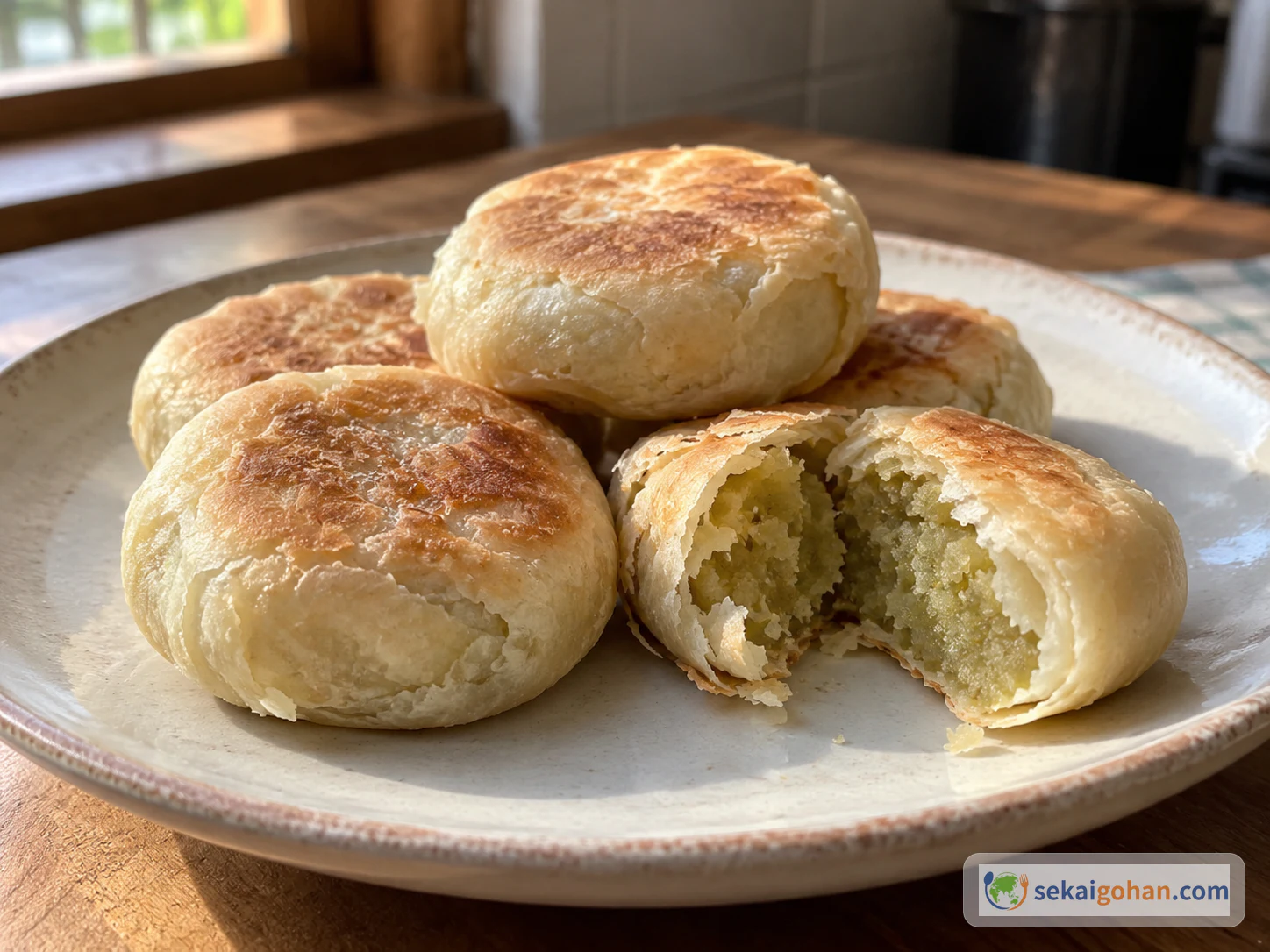
A plate of bakpia pathok, with green mung bean filling visible where one pastry is broken open
Cuisine
Indonesian

How to make bakpia pathok, the Yogyakarta pastry with a layered wheat shell and a sweet filling of mung beans, coconut milk and palm sugar. Covers the two doughs, the oil soak, shaping, judging color in the oven, ingredient substitutions, common problems and the story behind Pathuk's numbered shops.

Cooking flow

Cooking steps

STEP11 / 8

Soak and steam the mung beans

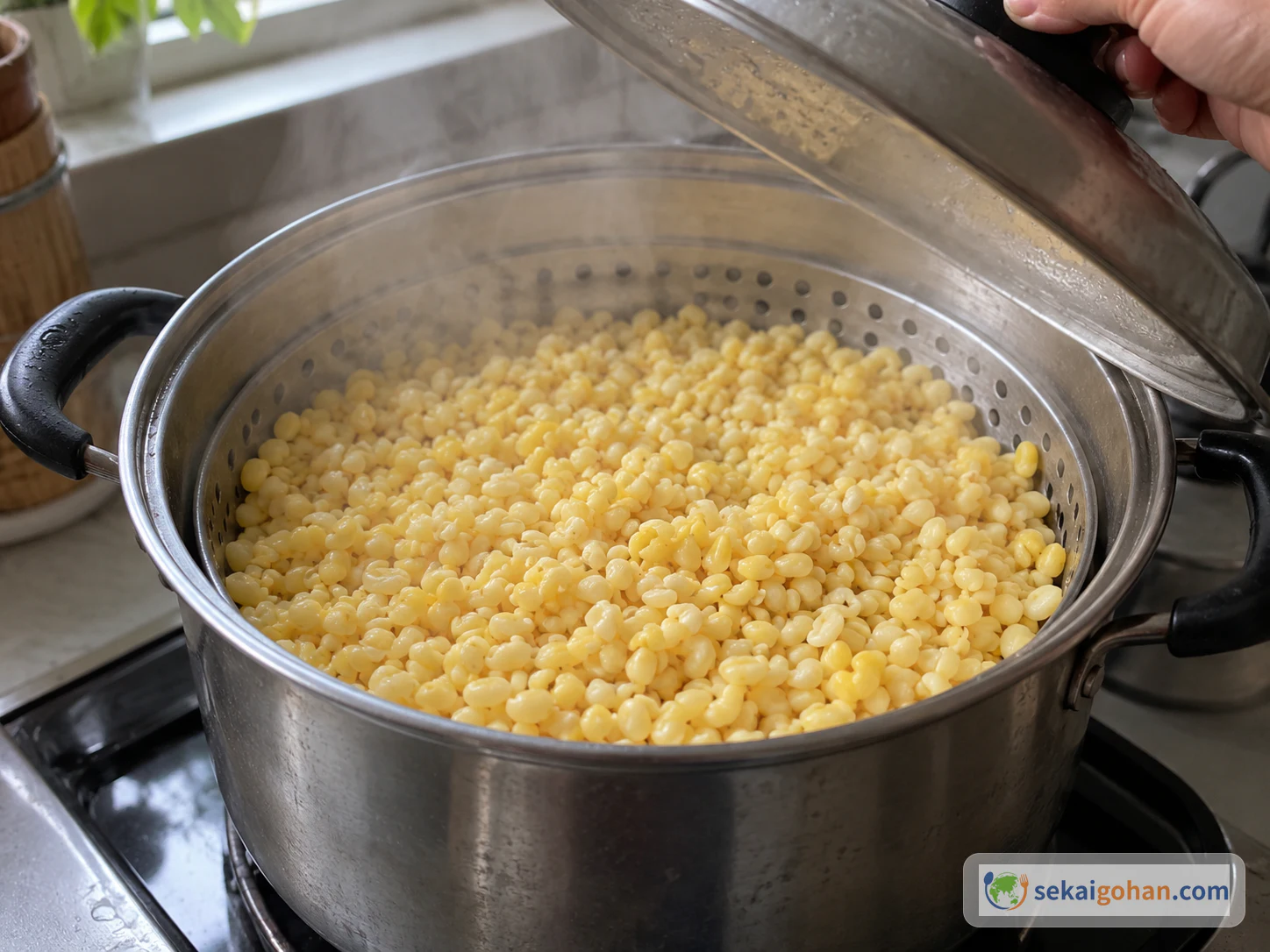
Soaked peeled mung beans being steamed until soft in a steamer
Steam the soaked beans until swollen and soft

Soak the 3.5 oz (100 g) peeled mung beans in water overnight, then drain. Steam for 20–30 minutes, until the beans have swollen and one crushes easily between your fingers.

STEP22 / 8

Cook the filling

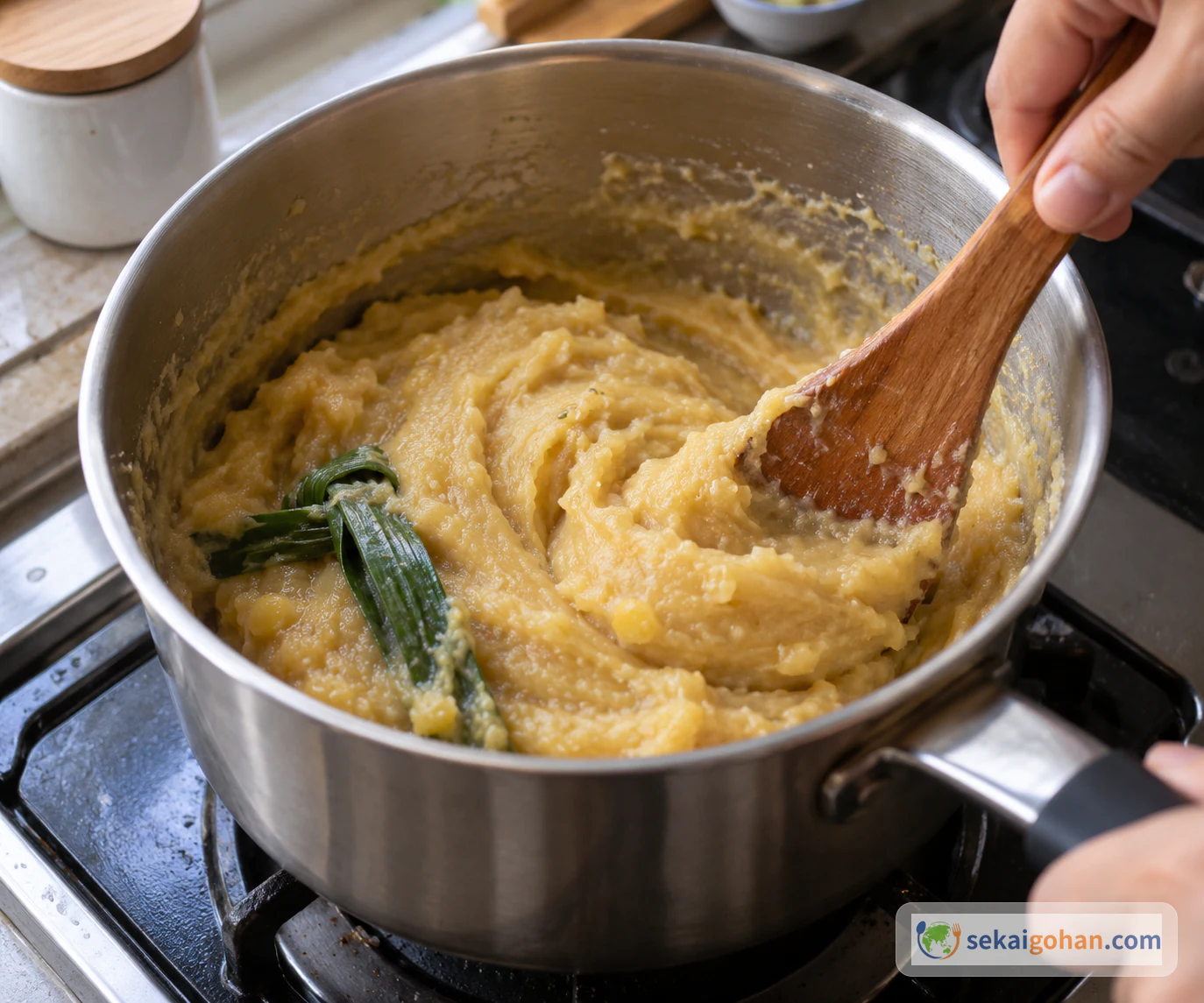
Mung bean filling with coconut milk and sugar being worked in a saucepan
Keep stirring until the filling is thick and holds together

Put the steamed beans in a saucepan with the 25 g granulated sugar, 1.75 oz (50 g) palm sugar, 1/8 sdt salt, ½ cup (150 ml) coconut milk and the pandan leaf. Cook, stirring and working the mixture evenly, until it is thick, cohesive and smooth. Add the 1 sdm oil just before turning off the heat.

STEP33 / 8

Cool and shape the filling

STEP 3

Let the filling cool, then roll it into small balls.

STEP44 / 8

Make the main dough

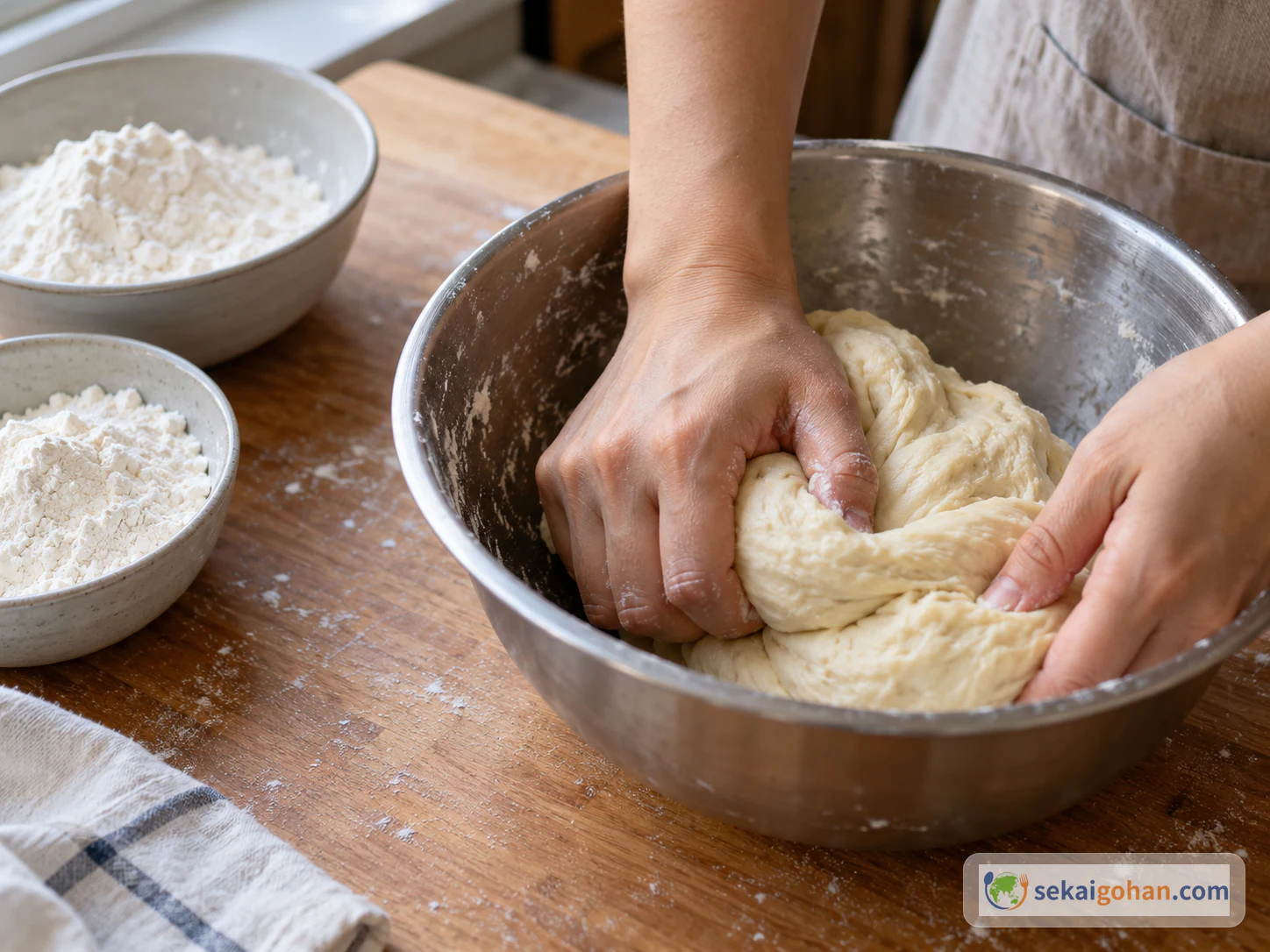
Main dough being brought together after adding sugar water and oil
Add the sugar water gradually, then knead in the 50 ml of oil

Warm the ½ cup (100 ml) water without letting it boil, and dissolve the 2 sdm sugar in it. In a separate bowl, combine the 4.5 oz (125 g) low-protein flour, 2.25 oz (65 g) high-protein flour and 1/2 sdm salt. Add the sugar water little by little, kneading as you go. Add 3.5 tbsp (50 ml) of the vegetable oil and knead until smooth.

STEP55 / 8

Make the layer paste

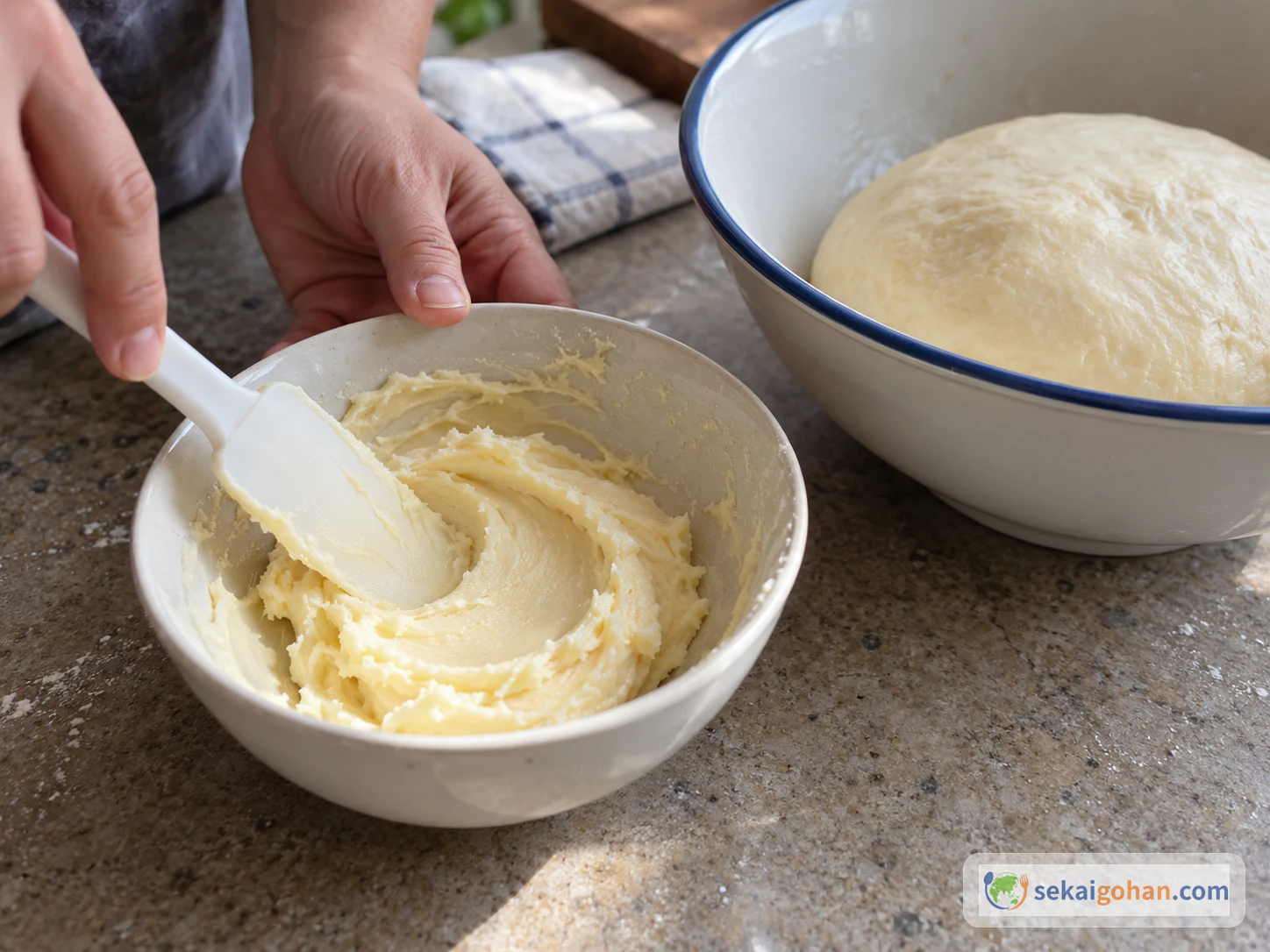
Flour and fats being mixed into layer paste in a small bowl, with the main dough nearby
The layer paste is mixed separately from the main dough

In a separate bowl, mix the 2.25 oz (65 g) low-protein flour, 1.5 tbsp (25 ml) vegetable oil and 1/2 sdm margarine until combined. Keep it apart from the main dough.

STEP66 / 8

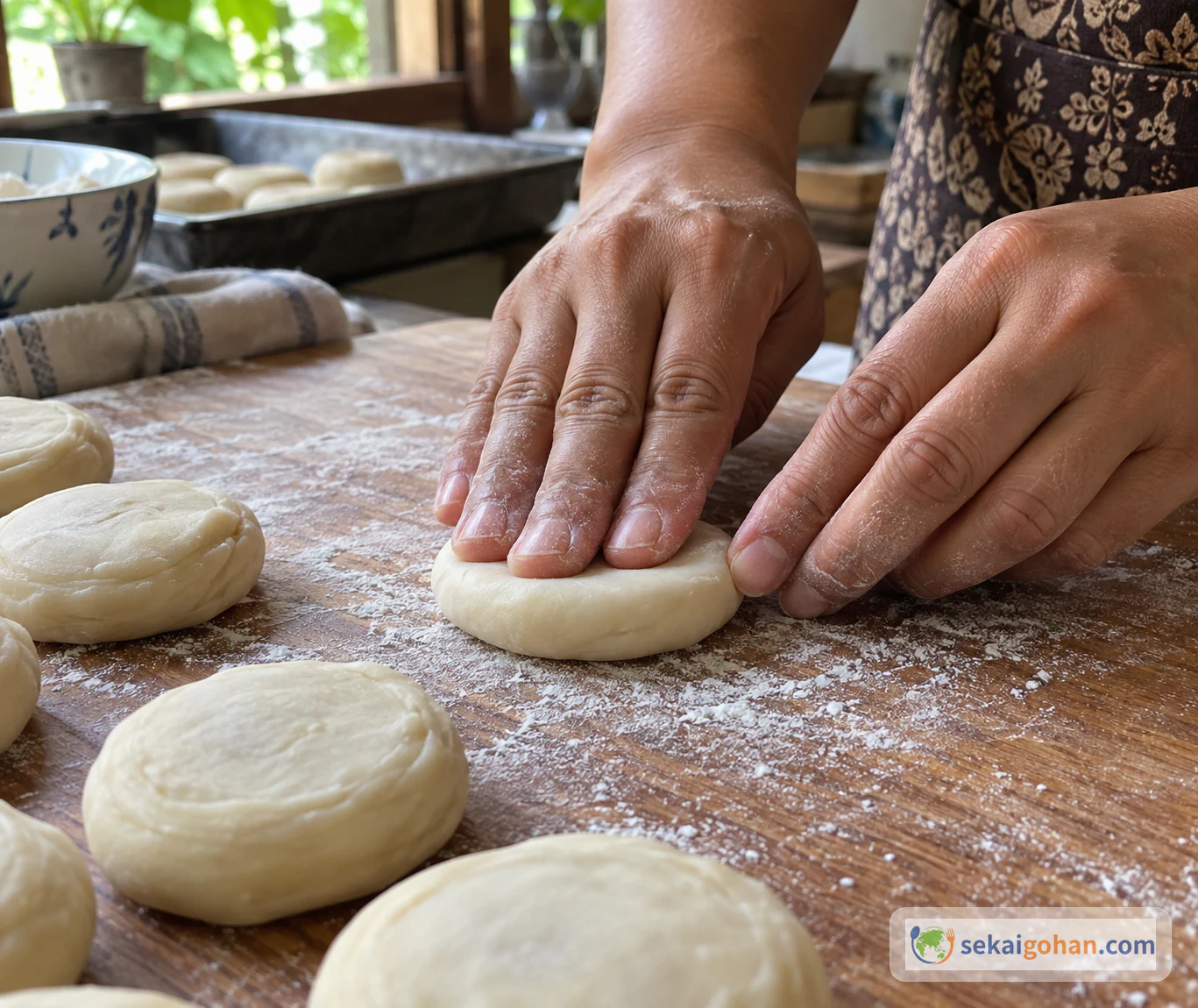
Layer, seal and soak

Main dough spread with layer paste, folded and soaked in oil
Spread the paste thinly, fold and seal, then soak in oil

Divide the main dough into portions of about 10 g each. Spread the layer paste thinly over the surface of each portion, then fold it closed and seal. Soak the portions in the remaining ½ cup (150 ml) vegetable oil for about 15 minutes.

STEP77 / 8

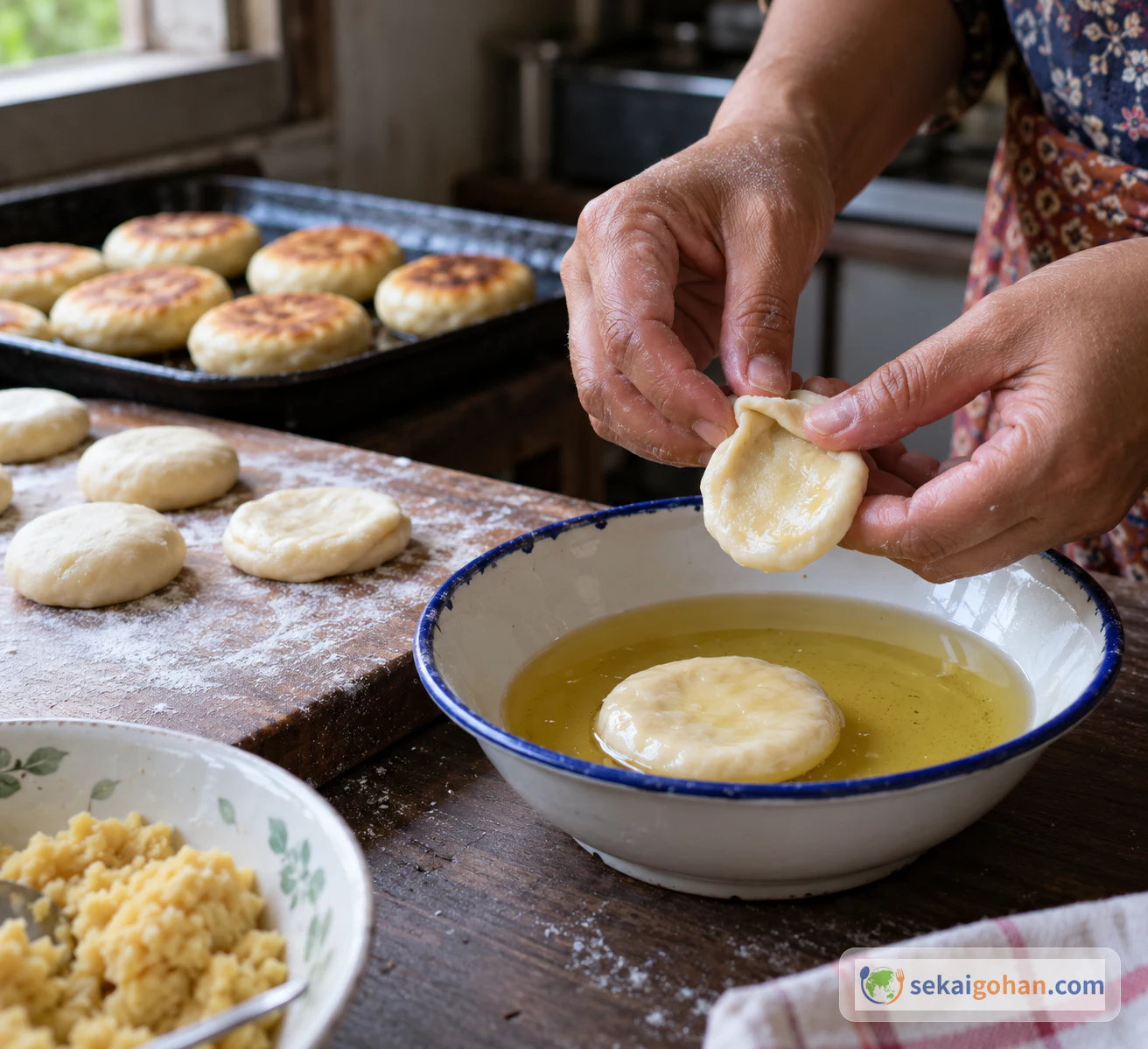
Fill and shape

Mung bean filling enclosed in dough and shaped into a flat round
Enclose the filling, seal, and press into a flat round

Lift each portion from the oil and flatten it thinly. Wrap it around a ball of cooled filling, seal it into a round, and press gently into a flat disk.

STEP88 / 8

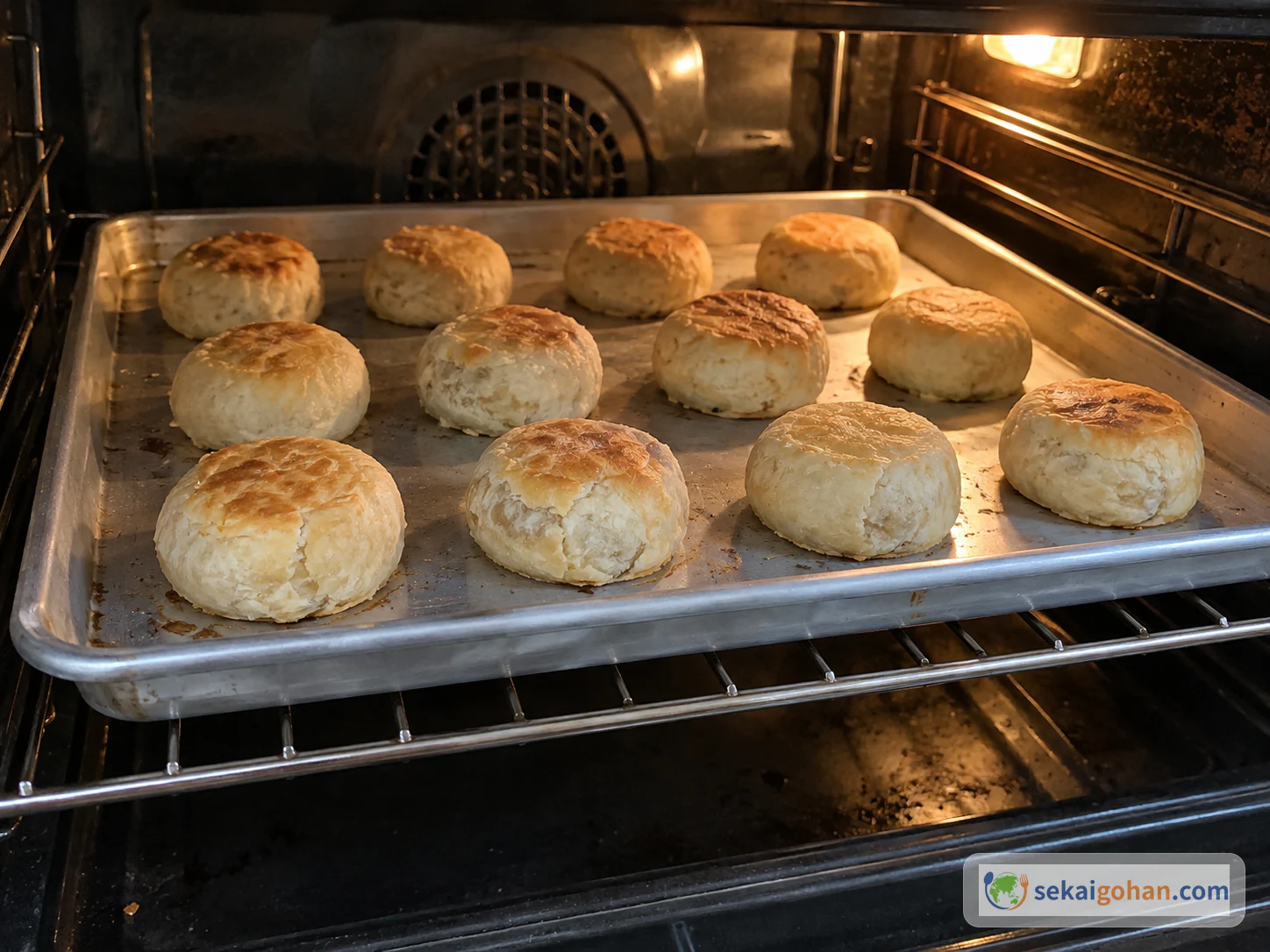
Bake

Bakpia pathok taking on color in the oven
Watch the color on both sides and turn the pastries if needed

Arrange the pastries on a tray, spaced apart, and bake at 400°F (200°C) for about 15–20 minutes. Turn them if needed so the tops and bottoms color evenly. Ovens differ, so go by the color as well as the clock. If they are still pale, keep baking a little at a time, watching closely.

0 / 0
Ingredients

Ingredients

1 / 1

Ingredients

Ingredient Amount Role
Peeled mung beans (kacang hijau kupas) 3.5 oz (100 g) Filling: the body of the paste
Coconut milk (santan) ½ cup (150 ml) Filling: cooks down with the beans
Salt 1/8 sdt Filling: seasoning
Pandan leaf (daun pandan) 1 leaf Filling: aroma
Granulated sugar (gula pasir) 25 g Filling: sweetness
Palm sugar (gula merah / gula jawa) 1.75 oz (50 g) Filling: richness and color
Oil 1 sdm Filling: added just before the heat goes off
Low-protein wheat flour (tepung terigu rendah protein) 4.5 oz (125 g) Main dough: flour
High-protein wheat flour (tepung terigu tinggi protein) 2.25 oz (65 g) Main dough: flour
Water ½ cup (100 ml) Main dough: warmed to dissolve the sugar
Sugar 2 sdm Main dough: sweetness
Salt 1/2 sdm Main dough: seasoning
Vegetable oil ¾ cup (200 ml) Main dough: 50 ml for kneading in, 150 ml for soaking
Low-protein wheat flour 2.25 oz (65 g) Layer paste: flour
Vegetable oil 1.5 tbsp (25 ml) Layer paste: separate from the 200 ml above
Margarine 1/2 sdm Layer paste: fat
0 / 0

Break a baked bakpia in two and the browned outside gives way to thin layers of wheat pastry, wrapped around a dense, sweet center of mung beans. These small, flattened rounds come from Yogyakarta, where the sweet filling is enclosed in a wheat shell and baked. The shell is layered with oil and margarine and stays thin, while the filling is smooth and sweet, and that contrast is what you're baking for.

Bakpia Pathok and Its Roots in Yogyakarta

Bakpia comes from both Chinese and Javanese food culture. Its name traces back to the Hokkien Tou Luk Pia, and early versions used meat and pork fat. In Yogyakarta those were adapted, and mung bean filling took their place.

The name "Pathok" points to Pathuk, an area of Yogyakarta known for household producers and shops identified by their numbers. Demand there rises during the holidays. Yogyakarta bakpia now comes in several filling and crust styles. Black bean, chocolate, cheese and fruit fillings are all common, and some modern versions with chocolate filling are finished in a pan. For more from the same country, see our guide to Indonesia.

Ingredients: Filling, Main Dough and Layer Paste
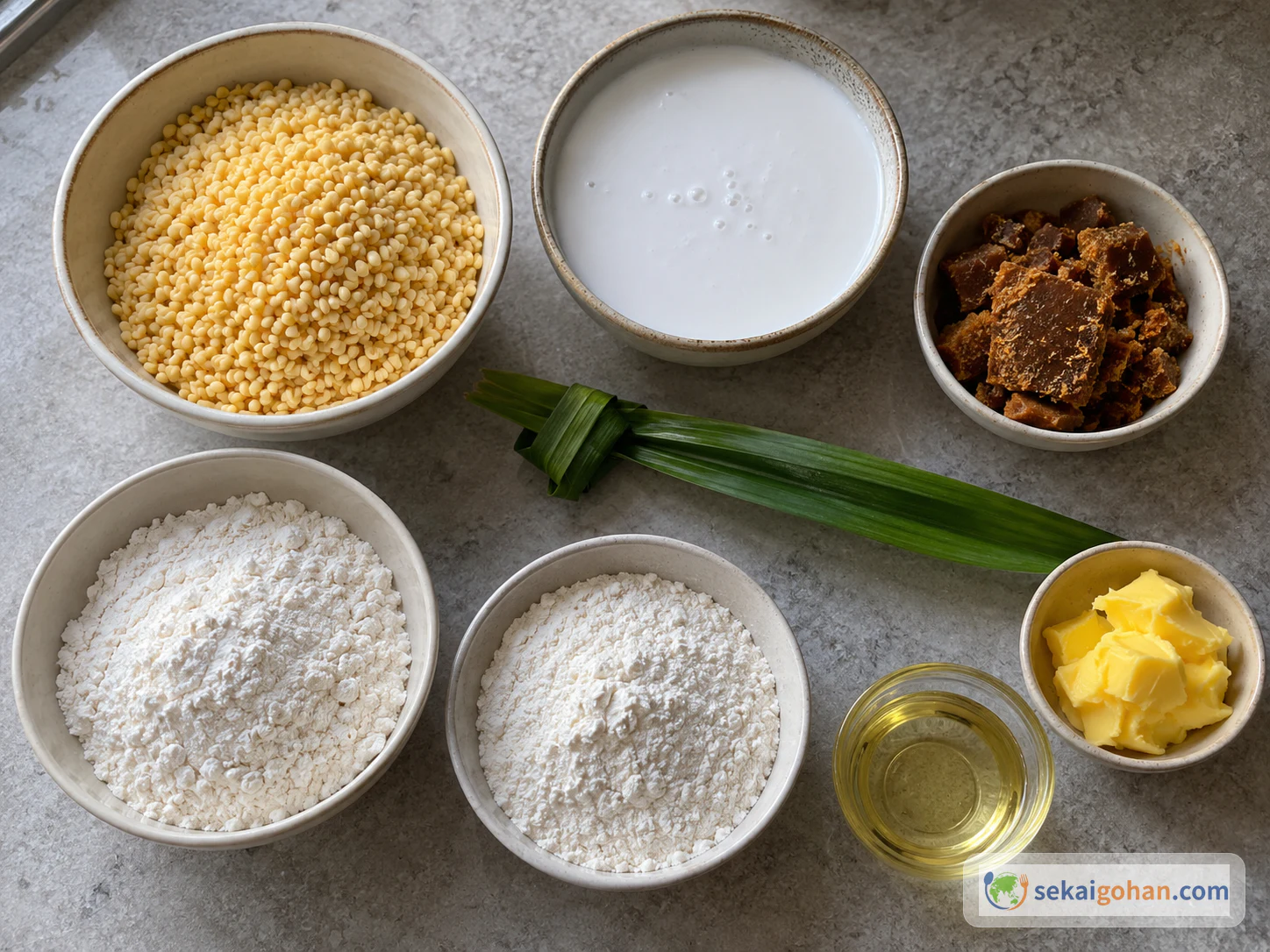
Peeled mung beans, coconut milk, palm sugar, a pandan leaf, wheat flours, vegetable oil and margarine
Bakpia pathok has three parts: the filling, the main dough and the layer paste

Sdm is sendok makan, the Indonesian tablespoon. Sdt is sendok teh, the Indonesian teaspoon.

Choosing Ingredients and Substitutes for Bakpia

The filling is made from peeled mung beans, coconut milk, pandan and two sugars. Some of these swap more easily than others.

Ingredient Closest option What changes
Peeled mung beans No direct substitute Skin-on mung beans change the color and texture
Coconut milk Unsweetened canned or carton coconut milk Thickness varies by brand, so watch how the filling cooks down
Palm sugar Kokuto (Japanese dark brown sugar) The flavor differs from gula merah
Pandan leaf Leave it out The filling loses that aroma
Low-protein flour Cake flour Close, but protein levels differ between products
High-protein flour Bread flour Close, but protein levels differ between products

If you use a dairy product in place of the coconut milk, you lose the coconut flavor. Plain white sugar instead of palm sugar gives a filling without palm sugar's depth and color, so either swap gives you a noticeably different bakpia.

Allergens

Wheat is the main allergen to watch for here. Check the labels on margarine and coconut products for milk, soy and other allergens, since these vary by product. Watch for cross-contact too.

Equipment

  • Steamer
  • Saucepan
  • Wooden spatula
  • Mixing bowls
  • Small separate bowl for the layer paste
  • Shallow bowl for the oil soak
  • Kitchen scale
  • Oven and a plain metal baking tray

Judging Doneness and Fixing Common Bakpia Problems
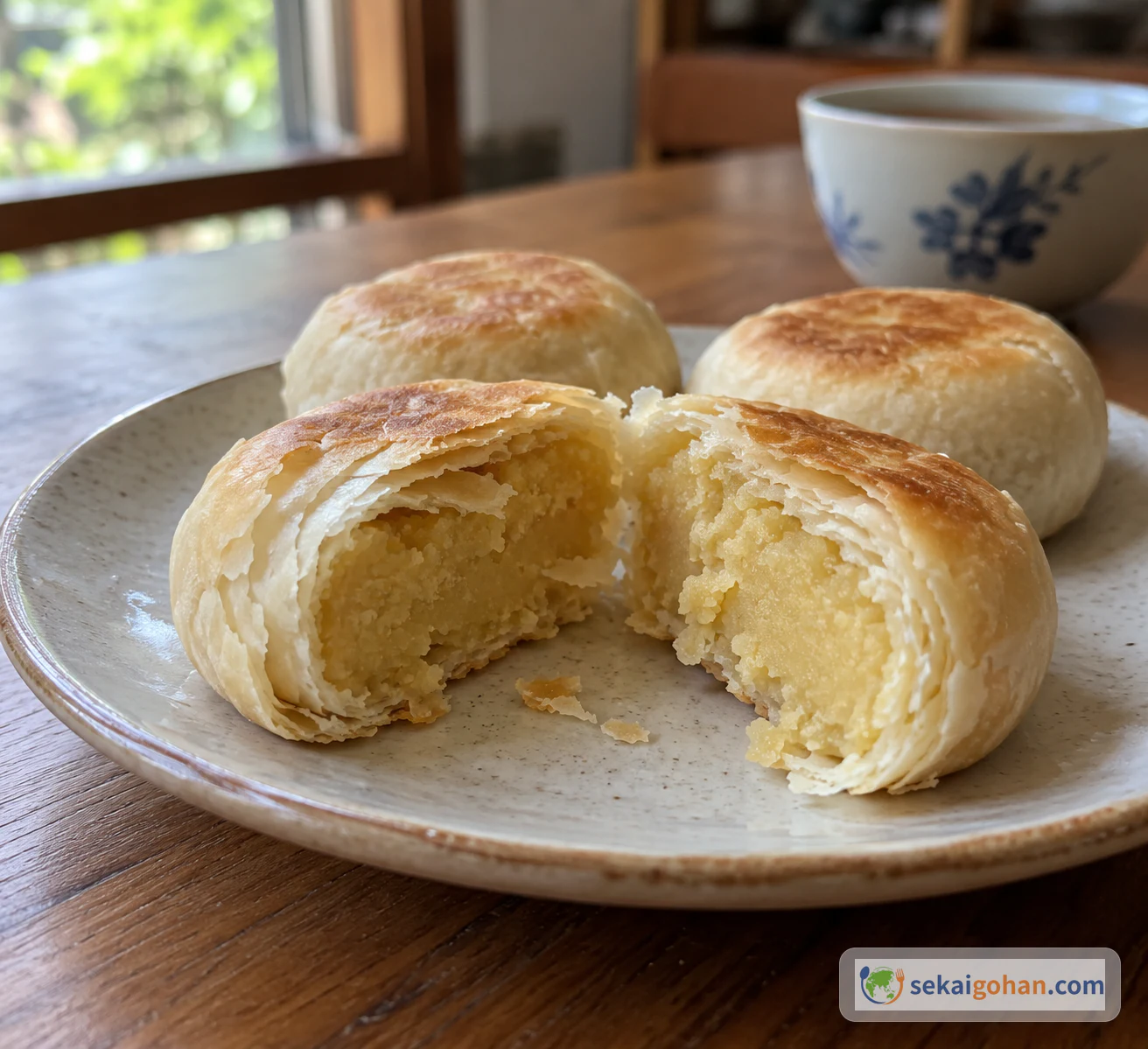
A baked bakpia broken in half, showing the layered shell and mung bean filling
Look for browned color outside, closed seams and a filling that holds together

A finished bakpia is browned on the outside, with closed seams and a filling that holds its shape when you break one open. If yours don't look like that, the table below covers the usual causes.

Problem Likely cause What to do
The filling runs or won't hold a ball It still has too much moisture Cook it down further until thick and cohesive. Don't add flour
The layers don't show The layer paste went on unevenly or too thickly Spread the paste thin and even on the next batch
The dough tears It was stretched too quickly Flatten and wrap more gently, without pulling hard
The color is uneven Your oven heats unevenly Turn the pastries so both sides color, and extend the time little by little if needed
Baking in a home oven

The 400°F (200°C) and 15–20 minutes are set for a bakpia oven. In a home oven, start with these times and go by the color.

The main dough calls for 1/2 sdm salt. That is a lot, so measure it carefully.

Bakpia Variations

A home oven will color the pastries differently from a dedicated bakpia oven, and the timing will differ too. You can also change the filling's texture: leave some of the bean grains whole and you get a more rustic bite than a smooth paste gives.

Frequently Asked Questions

Are bakpia Pathok and bakpia Pathuk different pastries?

No, they're the same pastry. The two names are just spelling variants.

How many pastries does this make?

Each dough portion is about 10 g, so count the portions as you shape them.
Sources