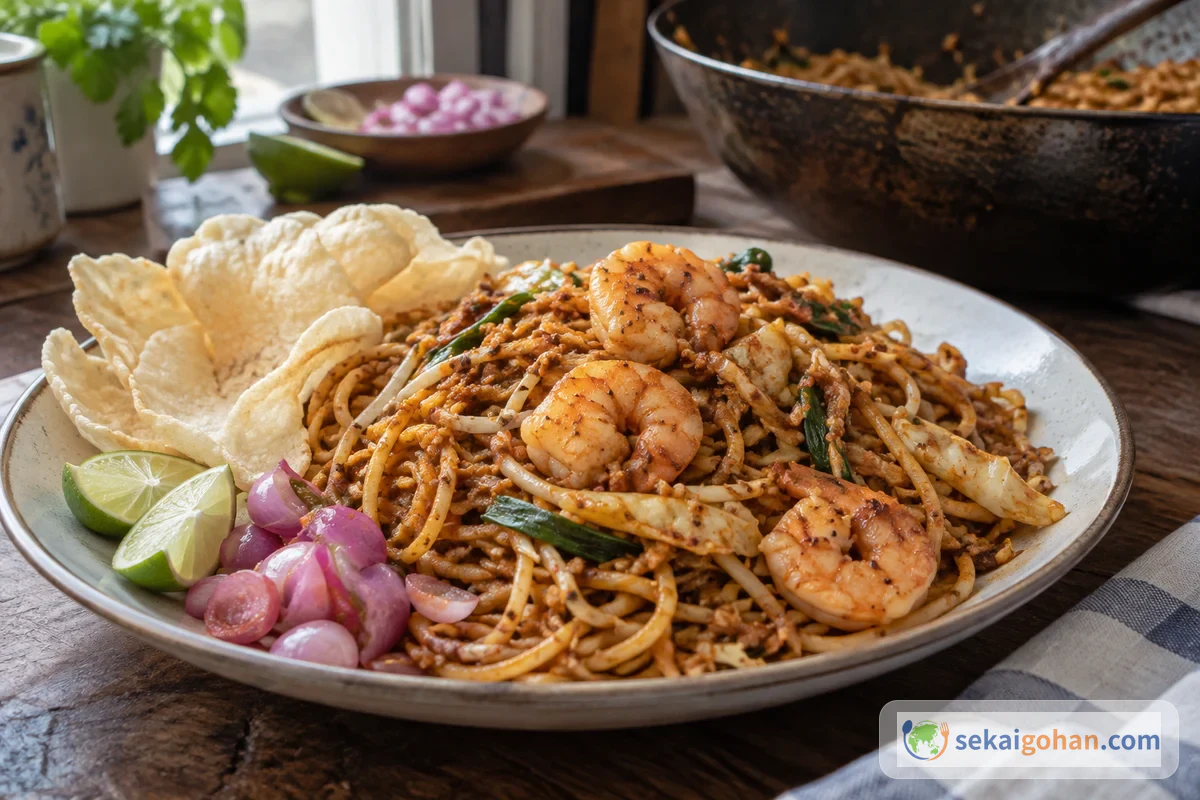
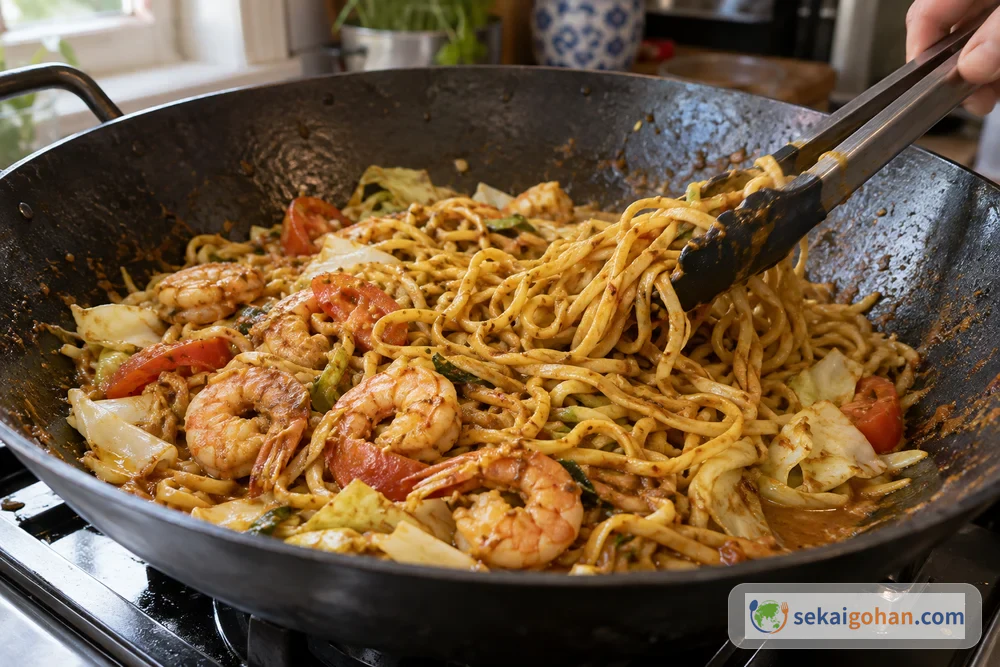
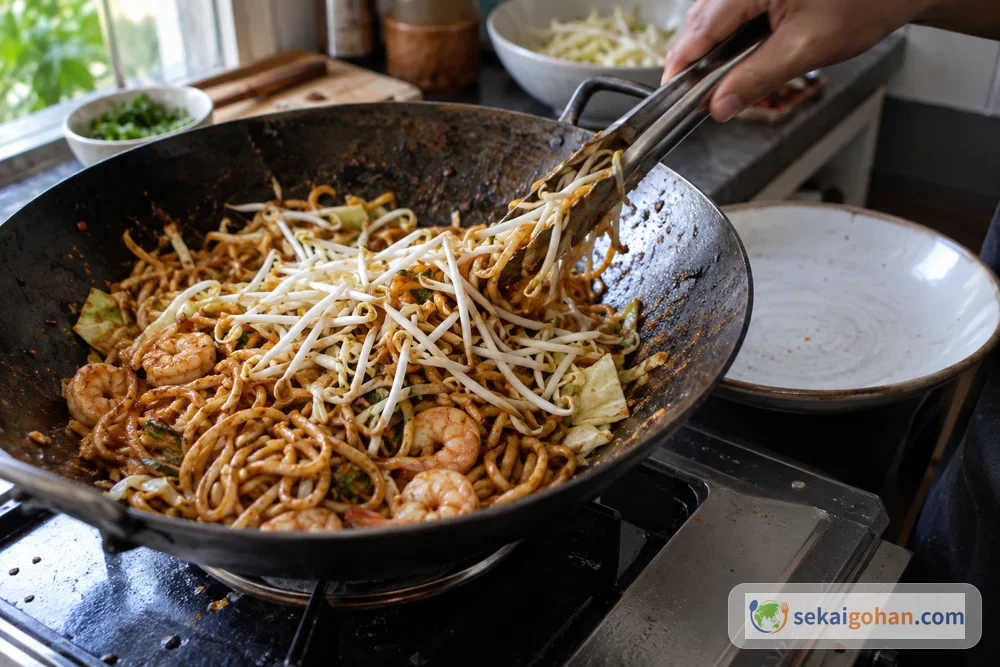
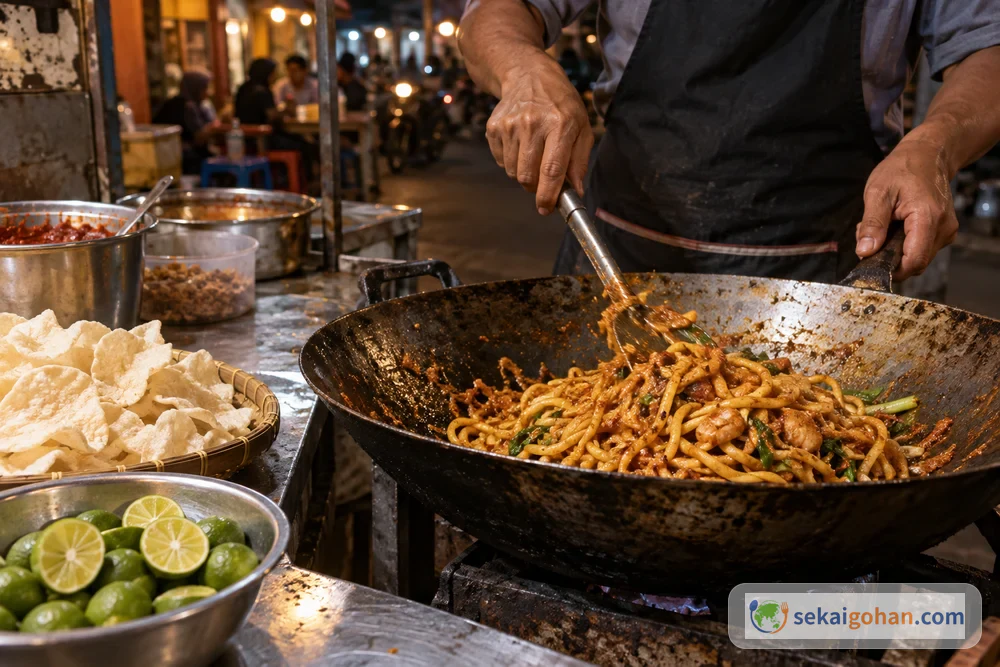
Night in Banda Aceh. At a stall on the main road, a big wok throws up flames as the cook tosses thick yellow noodles with an iron ladle, and the sweet smell of cardamom and star anise drifts down the street. The noodles come to the plate coated in a red-brown sauce, with thin nut crackers called emping, purple pickled shallots and a wedge of lime on the side. This is Mie Aceh, the signature noodle dish of Aceh, at the northern tip of Sumatra on the western edge of Indonesia. It's dense and heavily spiced, with an aroma close to curry, and the heat of the chilies comes in after the first bite.
Mie Aceh and Where It Comes From
Aceh sits on the northern tip of Sumatra, where the island juts into the Indian Ocean. For centuries ships passing through the Strait of Malacca stopped there, and Arab and Indian merchants made it a busy port. Mie Aceh came out of that mix of Arab, Indian and Chinese food cultures and local Acehnese cooking: the noodles came from China, and the spices that season them came from India and the Middle East.
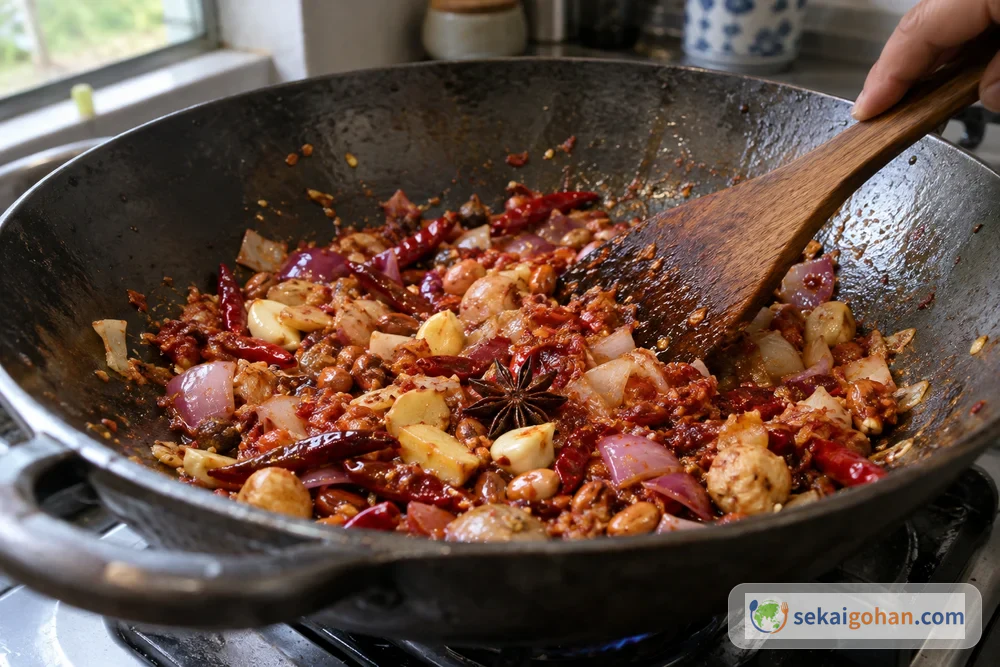
The noodles are yellow egg noodles, about as thick as udon or spaghetti. Most of the flavor comes from a spice blend called bumbu: black pepper, red chilies, shallots, garlic, cardamom, caraway, cumin and star anise. For the filling you can choose beef, goat, or seafood such as shrimp and squid.
Mie Aceh comes in two forms: fried with the liquid cooked off, and with plenty of broth. Banda Aceh has several famous mie Aceh shops, including "Mie Razali" on Jalan Panglima Polem and "Mie Aceh Simpang Lima" near the Baiturrahman Grand Mosque.
The usual side is emping, a faintly bitter cracker made by crushing, drying and frying melinjo nuts, along with pickled shallots and lime. The noodles are rich and full of spice, so the lime's acidity and the crispness of the pickles keep you from tiring of them before the plate is empty.
Ingredients (serves 4)
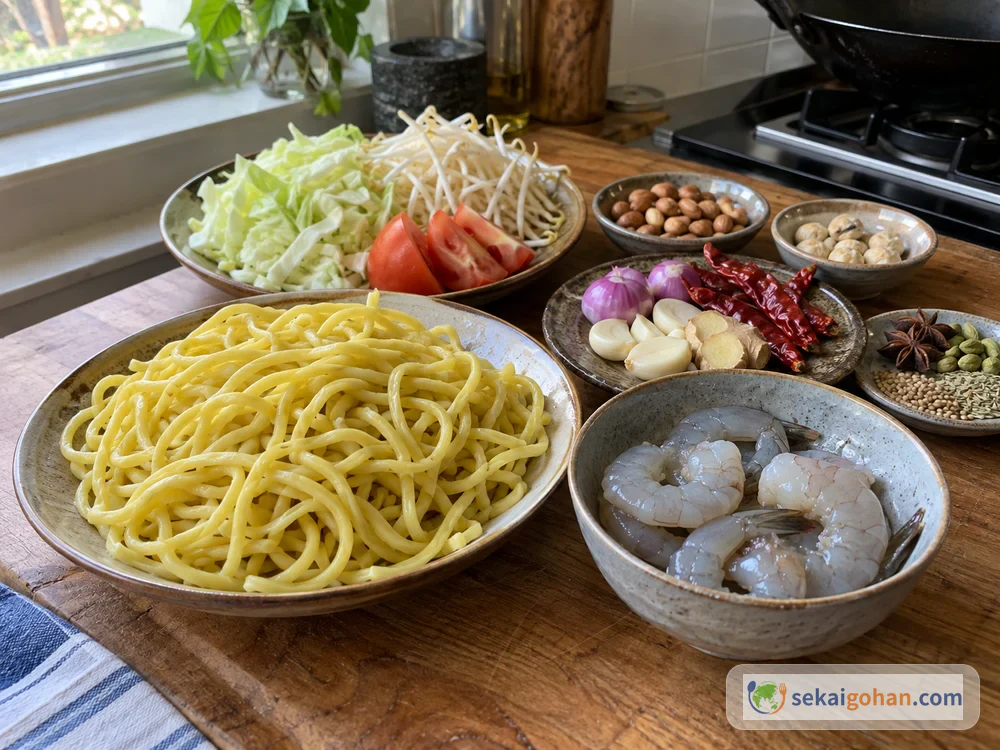
The sauce uses peanuts and candlenuts, and the stir-fry uses shrimp. People with peanut or shellfish allergies cannot eat it. Candlenuts cannot be eaten raw, but the long cooking in the sauce makes them fine. Stir-frying dried chilies gives off an irritating smoke, so run the exhaust fan.
Choosing Ingredients for Mie Aceh
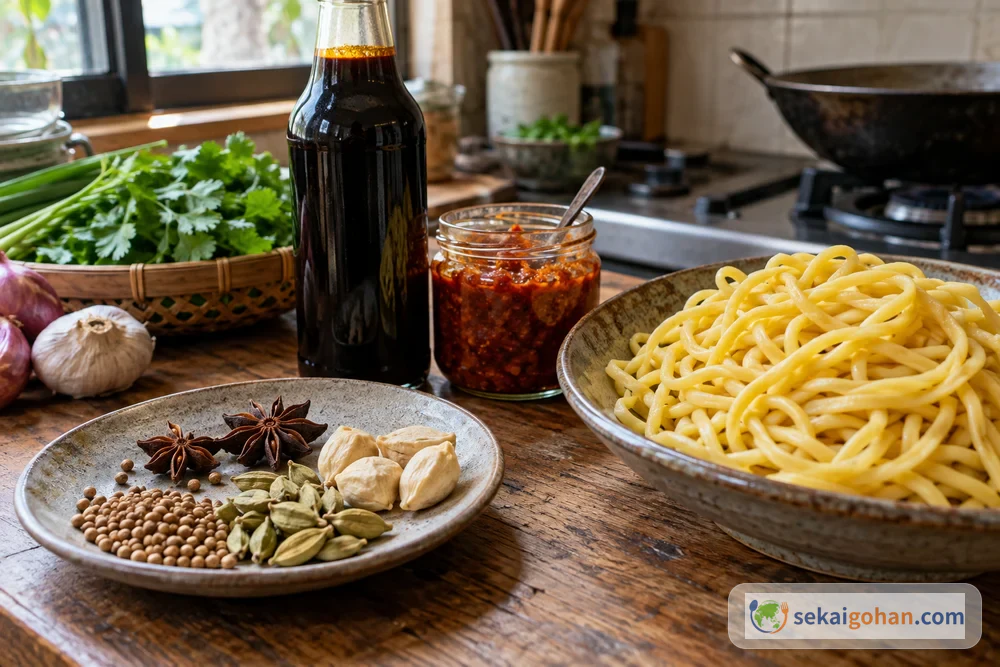
Thick Chinese noodles come closest to the right texture. If you can't get them, spaghetti works. You'll find kecap manis (Indonesian sweet soy sauce), sambal oelek (chili paste) and candlenuts at Indonesian grocery stores or online.
Indonesian grocers also sell emping, either dried and ready to fry or already fried. If you can't find it, shrimp crackers are a good stand-in.
How to Make Mie Aceh
The spice sauce takes about 30 minutes and frying the noodles about 15. If you make the sauce the day before, the finished dish takes 15 minutes on the day.
To make a soup version, increase the chicken stock to 2½ cups (600 ml) in step 4, simmer about 1 minute uncovered in step 5, and serve in a deep bowl. The noodles absorb the broth, so eat right away.
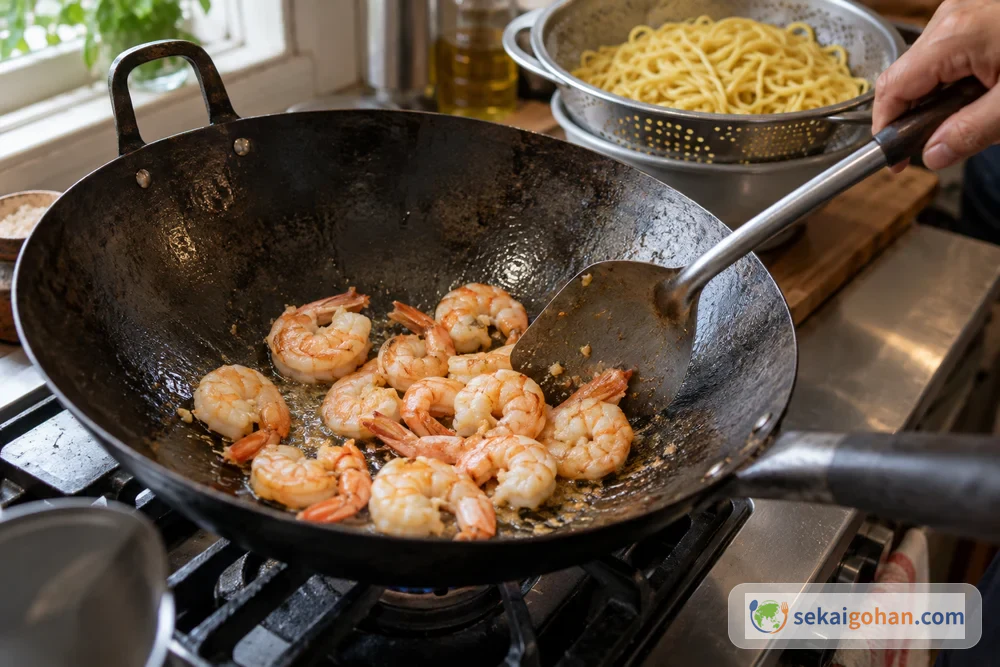
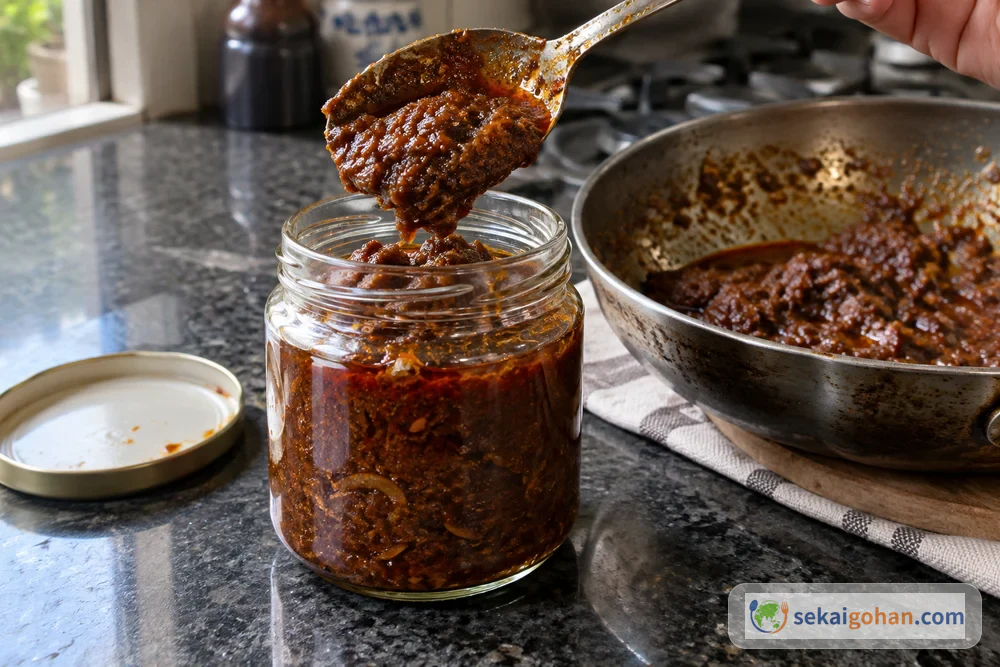
Cook the shrimp through. Check that they have turned red and the flesh is white and opaque. Keep leftover spice sauce in a clean jar and use it within about 1 week in the refrigerator or 1 month in the freezer.
Getting the Spice Sauce Right
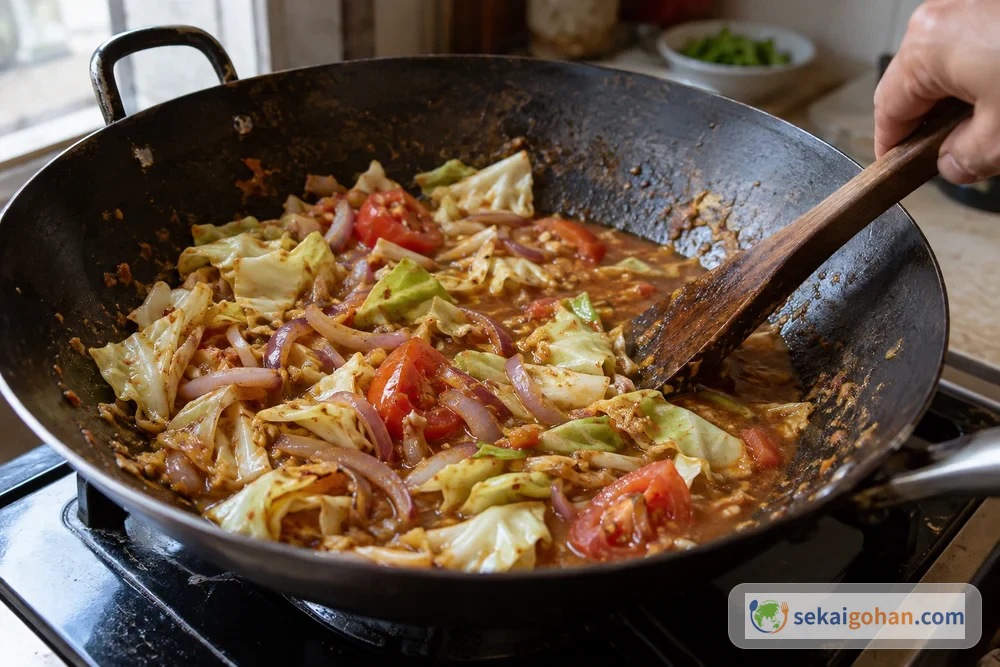
You cook this in two stages. First you make a batch of spice sauce, then you use it to fry the noodles. Because the sauce keeps, make it once and enjoy it several times.
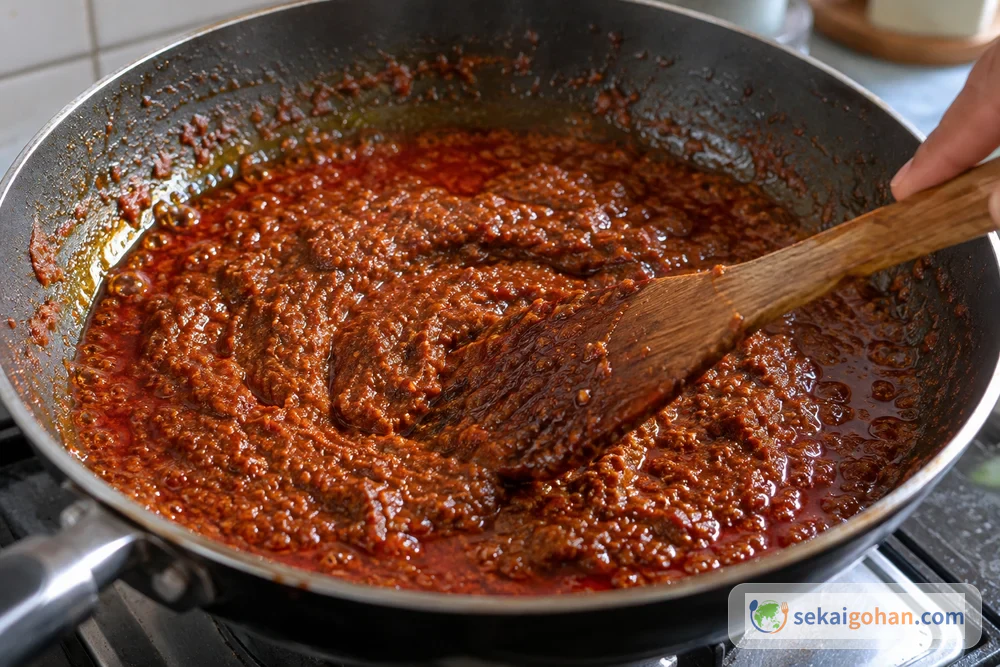
The important step is to simmer the sauce in a pan for another 15–20 minutes after blending. Keep reducing until the water cooks off and red oil seeps from the edge of the sauce. The raw edge of the spices disappears and you get a sauce that clings well to the noodles.
Serving and Varying Mie Aceh
Lime and Emping at the Table
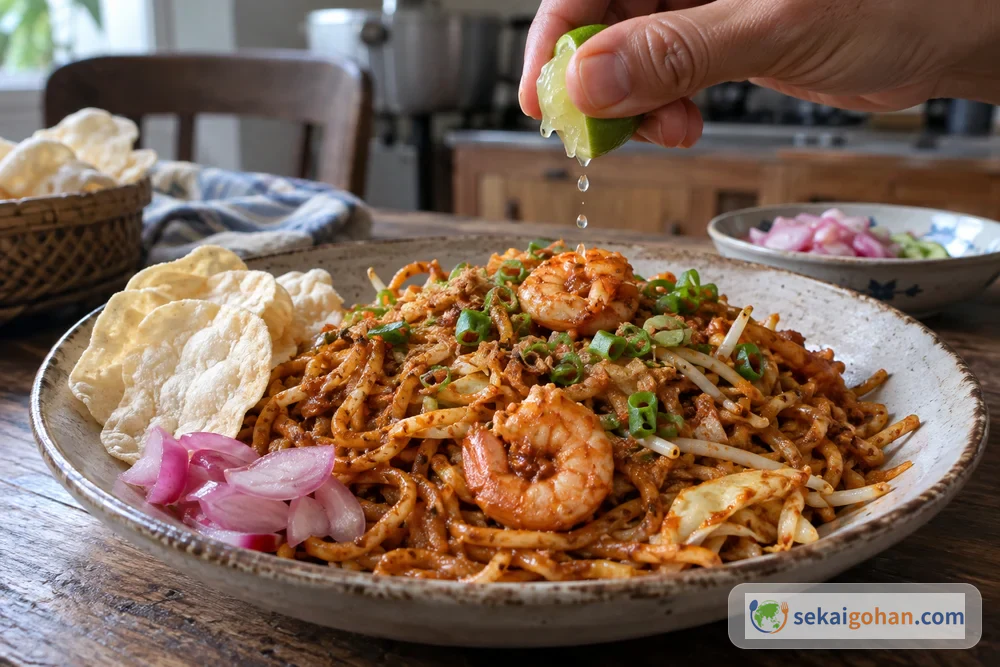
Take the first bite plain so you can taste the spices. The sweet scent of cardamom and star anise comes first, and the chili heat builds slowly behind it. About halfway through, squeeze the lime and pile pickled shallots on the noodles, and the flavor gets brighter and sharper. The bitter crunch of emping is a good contrast, too.
Java's sweet soy-flavored mie goreng is worth trying alongside this one, because it shows how much stronger Aceh's spicing is than other Indonesian fried noodles. If you're cooking your way through Sumatra, West Sumatra's rendang is another one to try.
In Banda Aceh, plain mie Aceh sells for about 15,000–20,000 rupiah a plate, and the version topped with seafood for about 20,000–30,000 rupiah. Mie Aceh works as both an everyday meal and a treat.
Beef, Squid and Other Variations
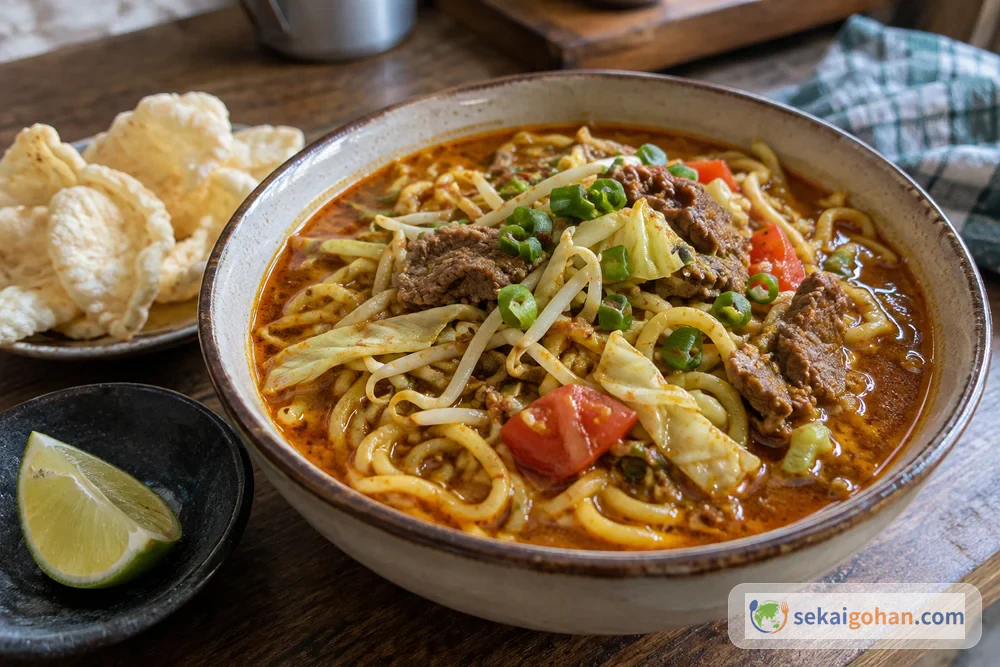
Swap the shrimp for thin-sliced beef and you have the beef mie Aceh that every Acehnese eatery serves. Stir-fry the beef over high heat for 1–2 minutes in step 3, the same way you would the shrimp, take it out when the color changes, and return it with the noodles in step 5. If you're using squid, cut it into rings and take it out after about 30 seconds so it isn't overcooked. That way it stays tender.
The spice sauce is good in other dishes, too. Stir-fry chicken or vegetables and toss in 1–2 tbsp for an Acehnese-style dish, or add it to fried rice for a spiced nasi goreng.
FAQ
How spicy is it?
The usual blend is quite hot, so this version uses fewer dried chilies and leaves out the fresh bird's-eye chilies. The result is pleasantly hot. If you like more heat, add more spice sauce or put sambal on the table.
What should I watch for when using spaghetti?
Boil the spaghetti as directed and save a little of the cooking water. If step 5 needs more liquid, add 2–3 tbsp of the cooking water to help the sauce cling to the noodles.
I have a lot of leftover spice sauce. What do I do?
The sauce makes about 8 portions. After using one portion (6–7 tbsp), put the rest in a clean jar and refrigerate for 1 week, or freeze in small portions for about 1 month.
How do you eat emping?
Alternate bites of emping with the noodles, or crush it and scatter it over them. If you bought it dried, fry it briefly in oil at up to 350°F (160–170°C) and it puffs up with a crisp texture.