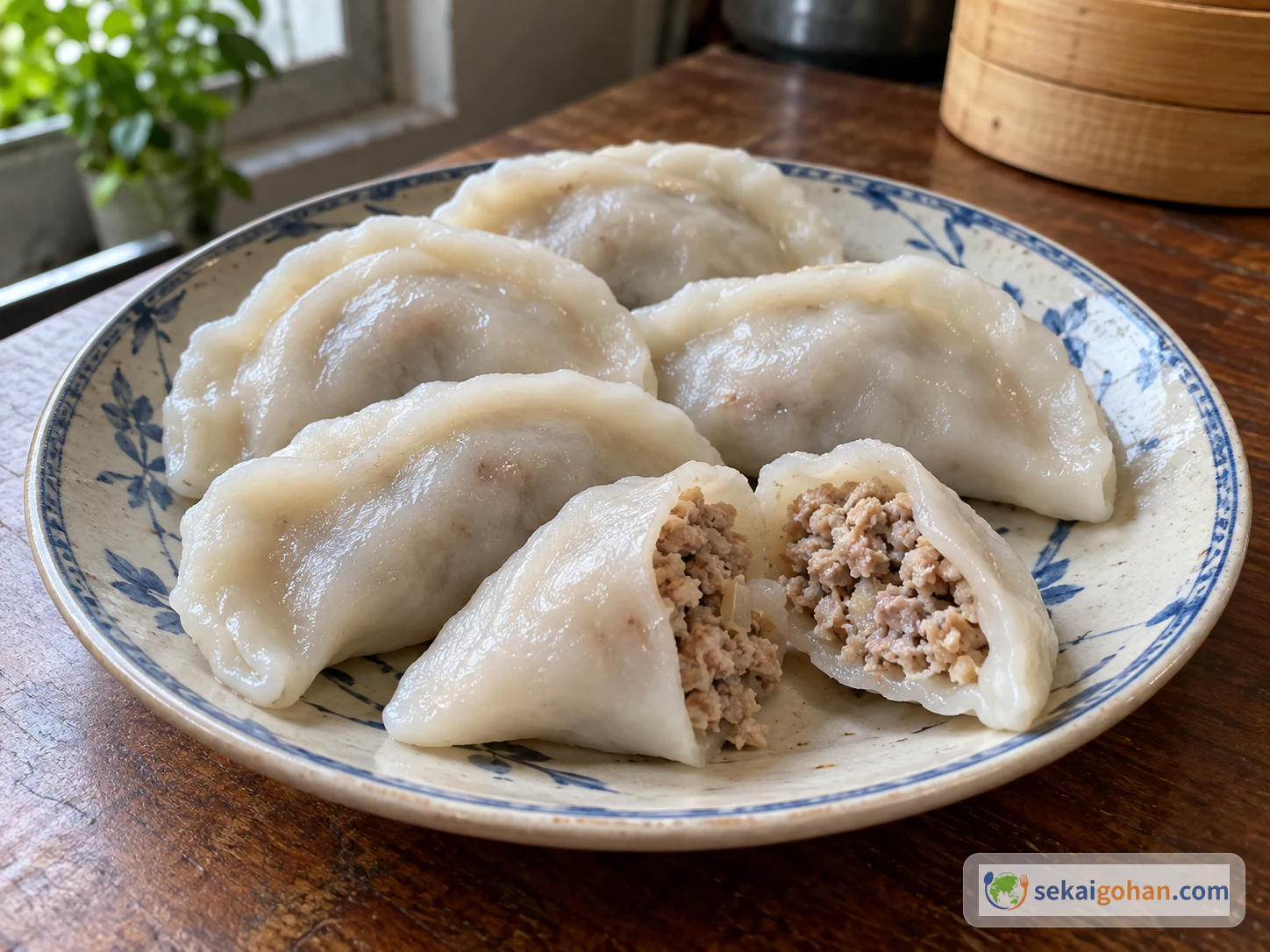
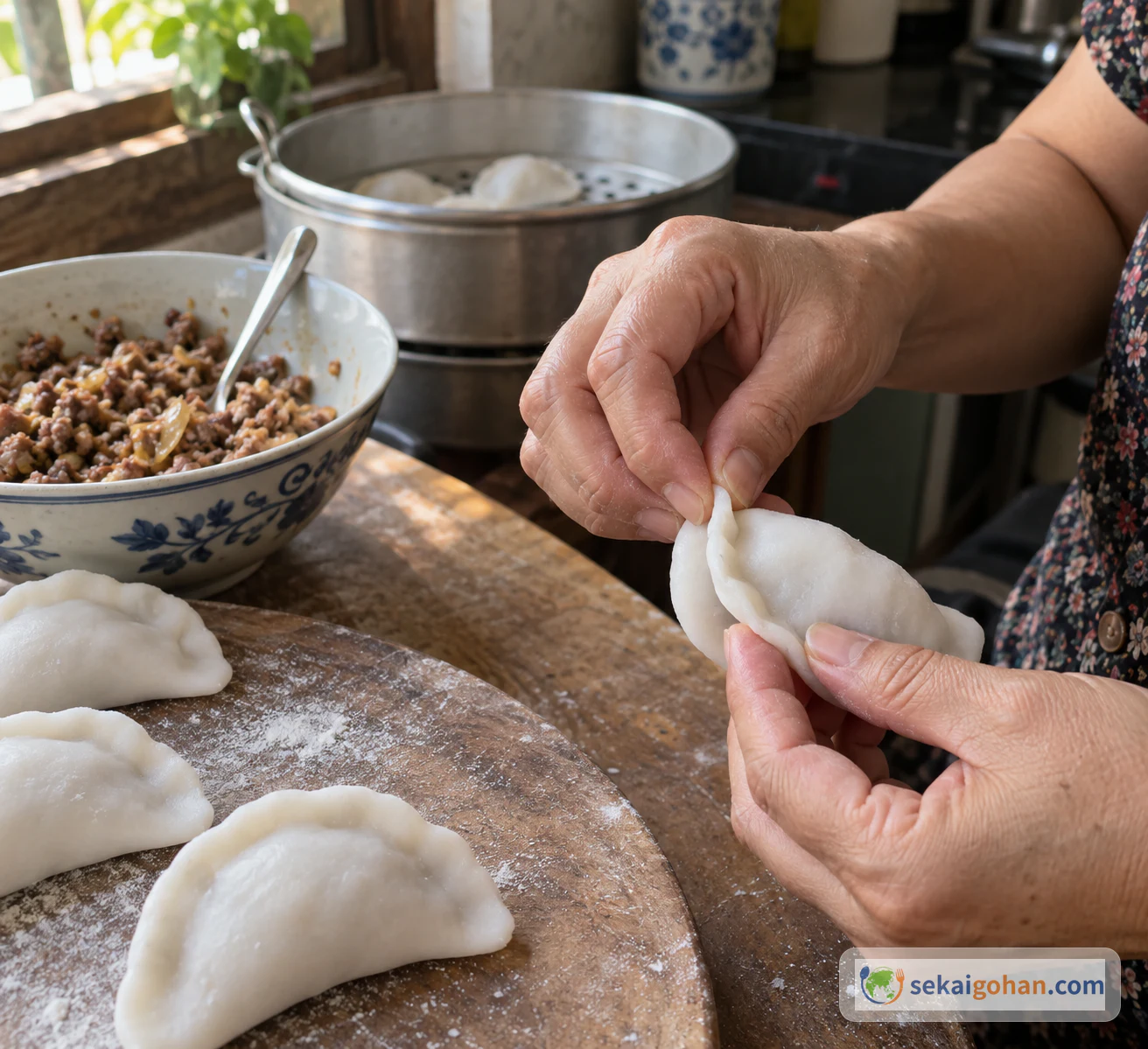
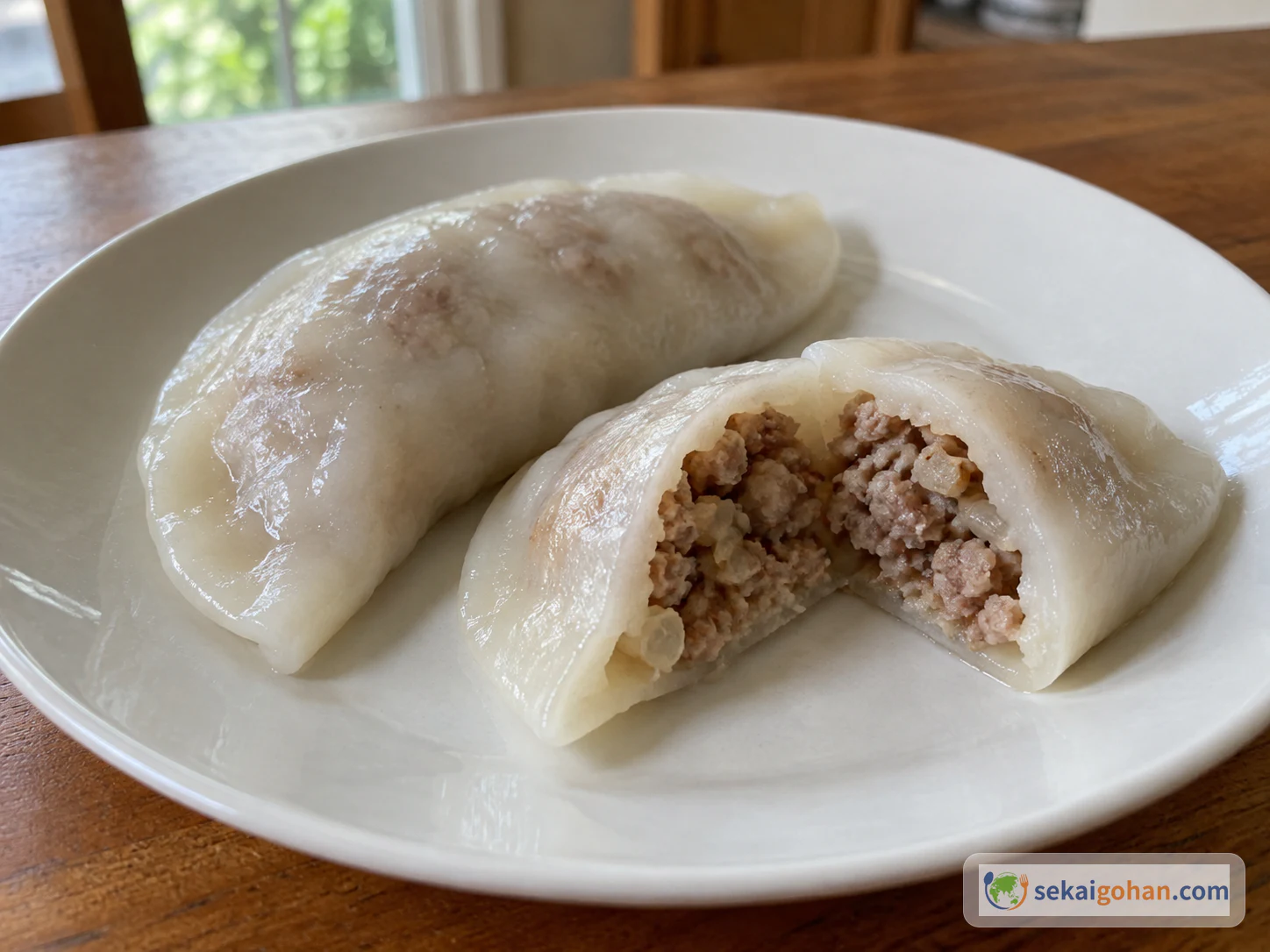
Early in the morning in Phú Thọ, a province in northern Vietnam, freshly steamed bánh tai are carried to the market and kept warm in baskets. People buy them for breakfast and eat them hot. Each one is a small half-moon of soft, white rice-flour dough folded around minced pork and curved slightly, like an ear. That curve gives the cake its name: bánh is a cake or dumpling, and tai means ear.
About Bánh Tai
Every bánh tai has the same four things: a dough of plain rice, a pork filling, the ear shape, and steaming. Beyond that, the dough and filling vary from maker to maker. Bánh tai is remembered as a breakfast sold around Phú Thọ town. Today it's also a travel snack and turns up at weddings and meetings, and families value it at everyday meals, at breakfast and as a gift.
How Makers Differ
| Version | Dough | Filling | Notes |
|---|---|---|---|
| Traditional craft workshop | Rice soaked from 2 hours to half a day and ground. The flour is shaped into balls, boiled for 20–25 minutes, then pounded into dough | Pork only, 2 parts lean to 1 part fat. About 14 oz to 1 lb (400–450g) of filling per 2.25 lb (1kg) of rice | Eaten the same day. Steam one layer for 30 minutes, or two layers for 60 minutes. Traditionally, no dipping sauce is needed |
| Town breakfast | Rice soaked 2–3 hours in summer and 4–5 hours in winter | Pork shoulder, shallots, pepper and fish sauce, wrapped into a half-moon | Sold around Phú Thọ town. Now also a travel snack and served at weddings and meetings |
| One maker's routine | Rice soaked 10–12 hours. Dough and filling prepared from early morning | Pork shoulder or belly, avoiding meat that is too fatty or too lean | Steamed for about 20 minutes |
The Home Method
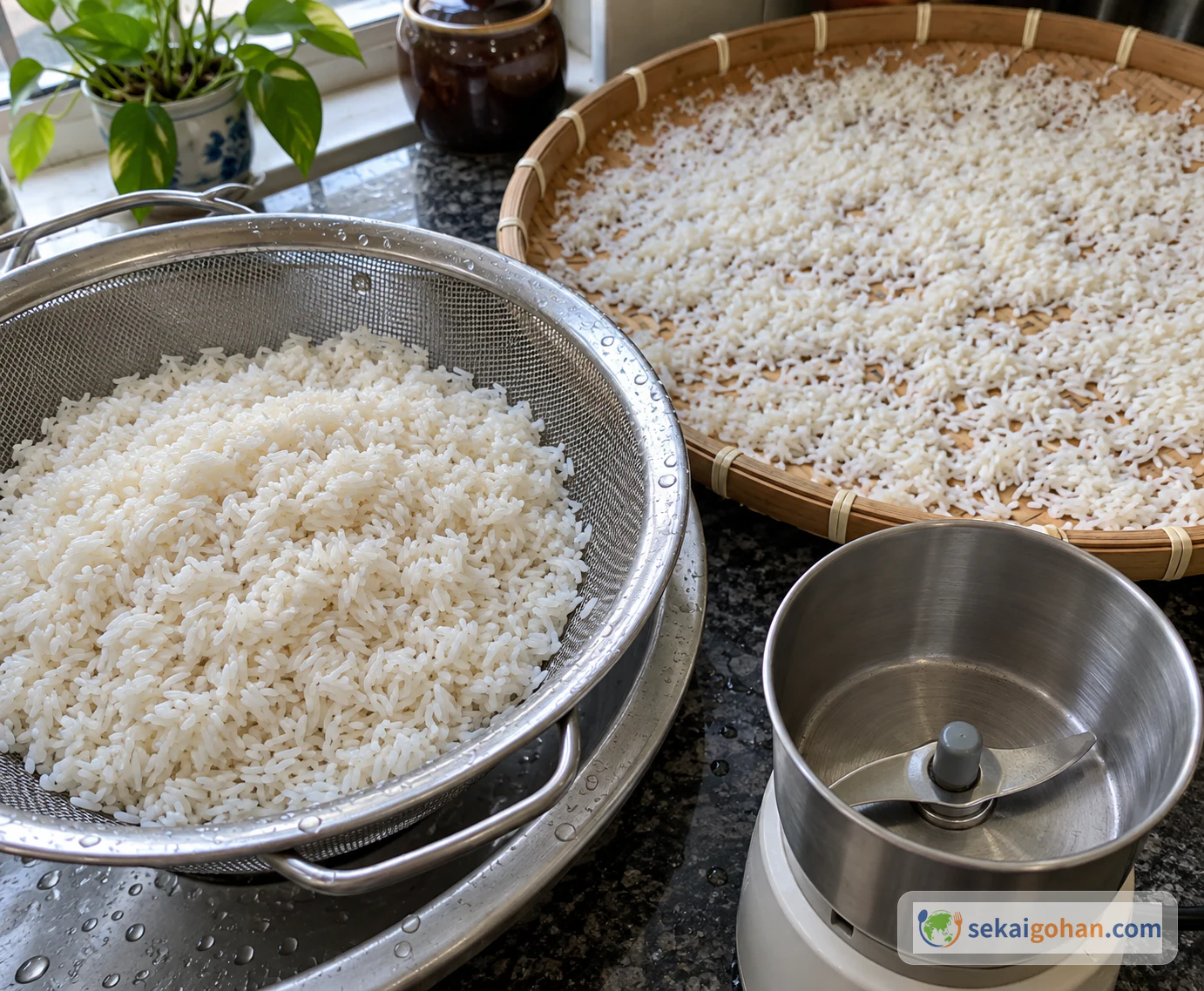
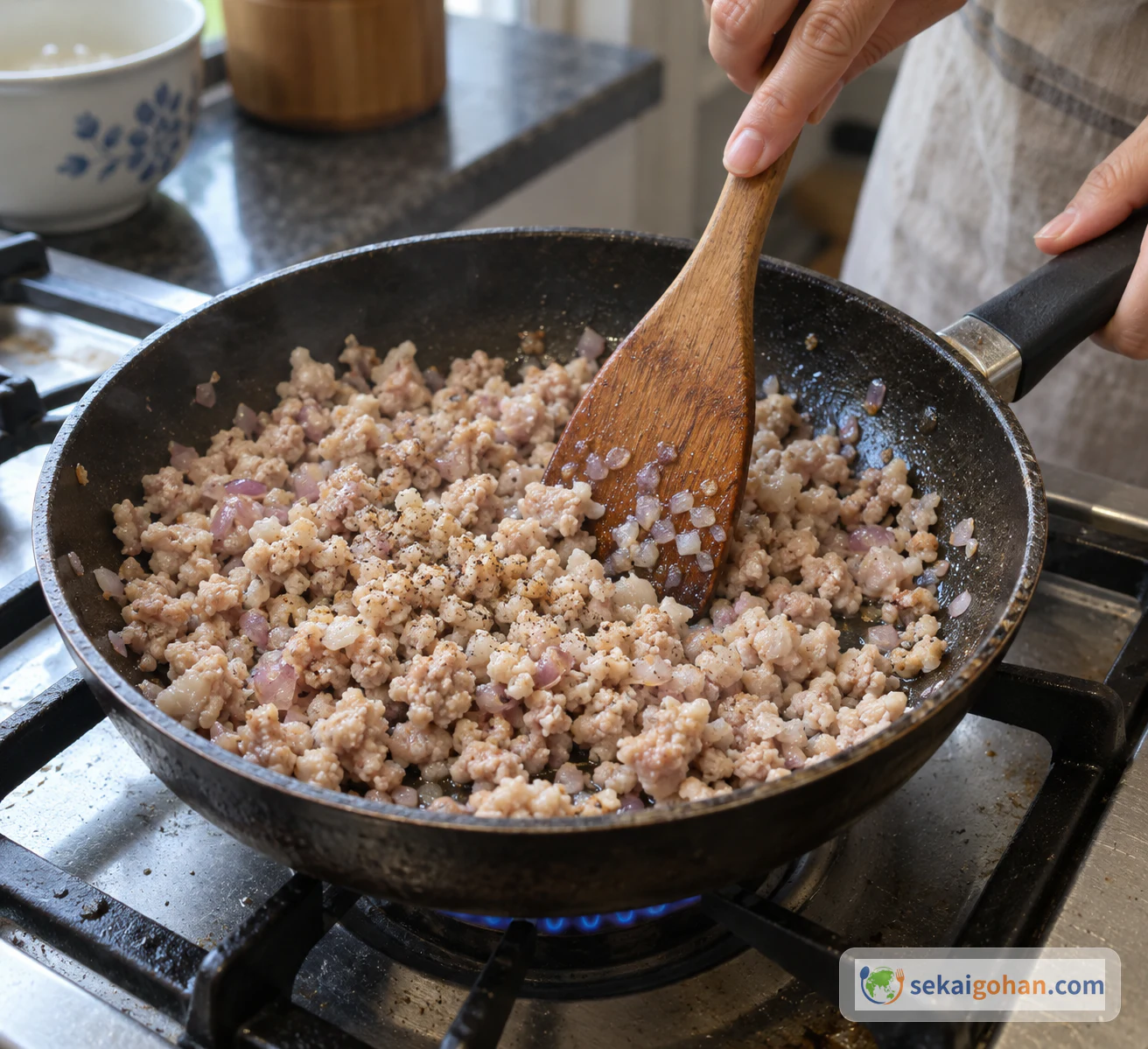
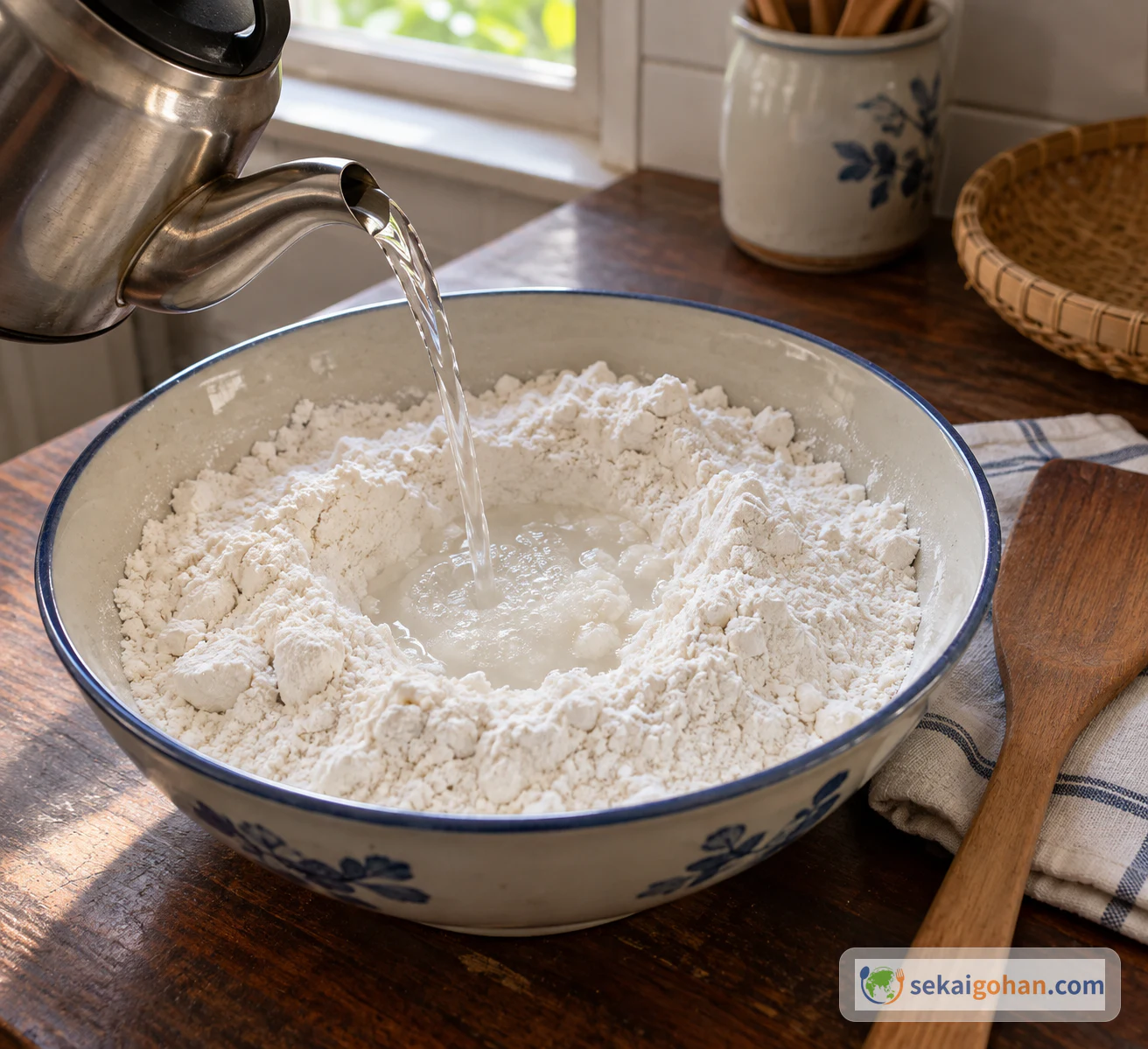
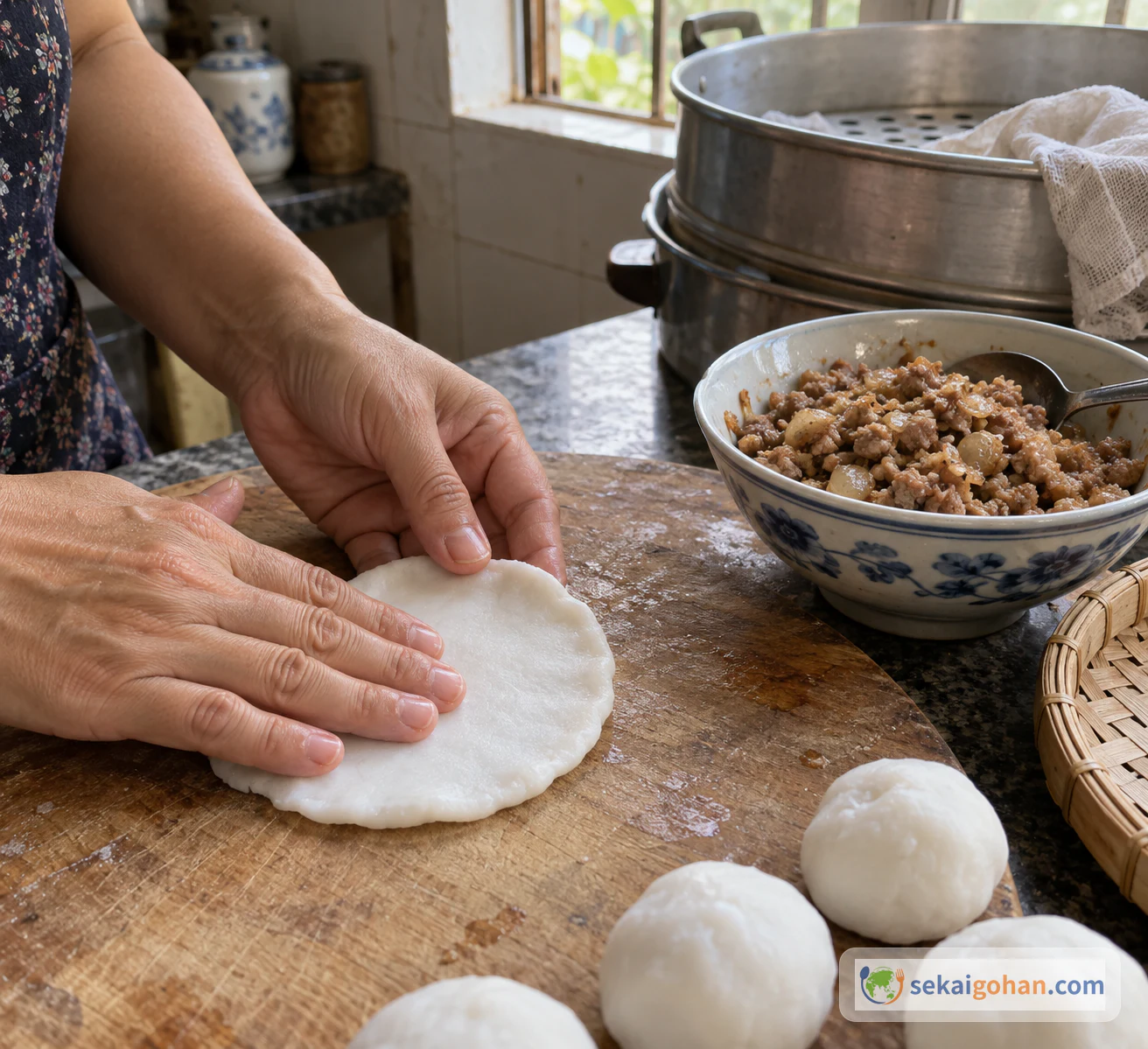
Traditional makers soak the rice, cook the dough and pound it. The method here is built for a home kitchen instead: rinsed rice is dried and dry-ground, the flour is brought together with boiling water and oil, and the dough is wrapped around a pork-and-shallot filling that's stir-fried first. Expect to judge the dough by feel. You can find more dishes from the same country on the Vietnam page.
Ingredients (Serves 4)
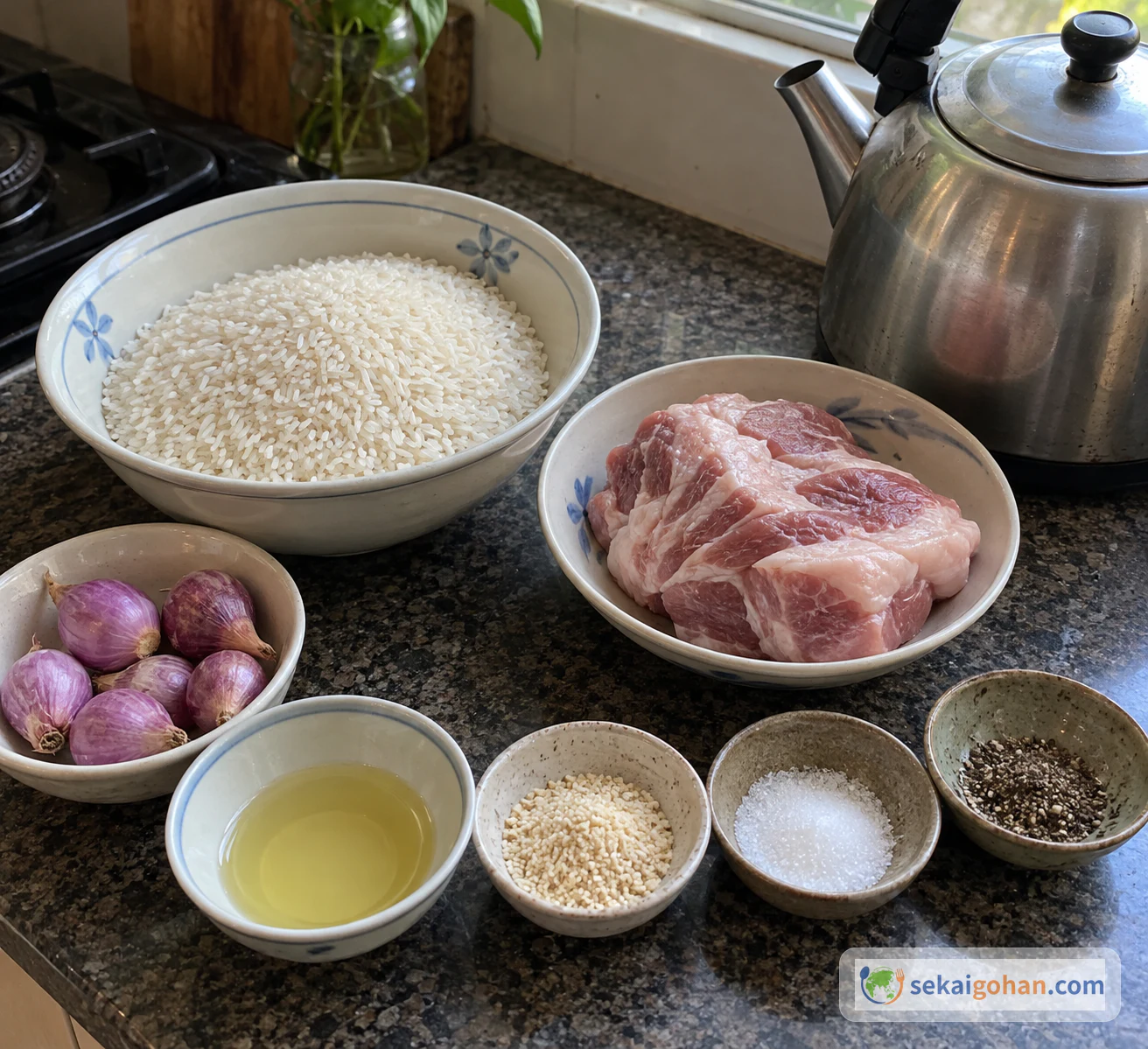
These amounts make 4 servings. The number of cakes depends on how large you shape them.
Equipment
- Fine sieve and a tray or wide plate for drying the rice
- Grinder or mill that can grind dry rice (check the product's instructions for grains and run time)
- Knife and cutting board
- Skillet and spatula
- Kettle for boiling water
- Large bowl or clean work surface for the dough
- Steamer with a lid
Choosing Ingredients for Bánh Tai
Rice. Use plain rice (gạo tẻ). Glutinous rice, or wheat dumpling wrappers, would change both the texture and the character of the dish.
Store-bought rice flour. If you can't grind rice at home, ready-made rice flour will work, but it absorbs water differently from freshly ground rice, so ½ cup (100ml) of boiling water may not give the same dough. Add the water a little at a time.
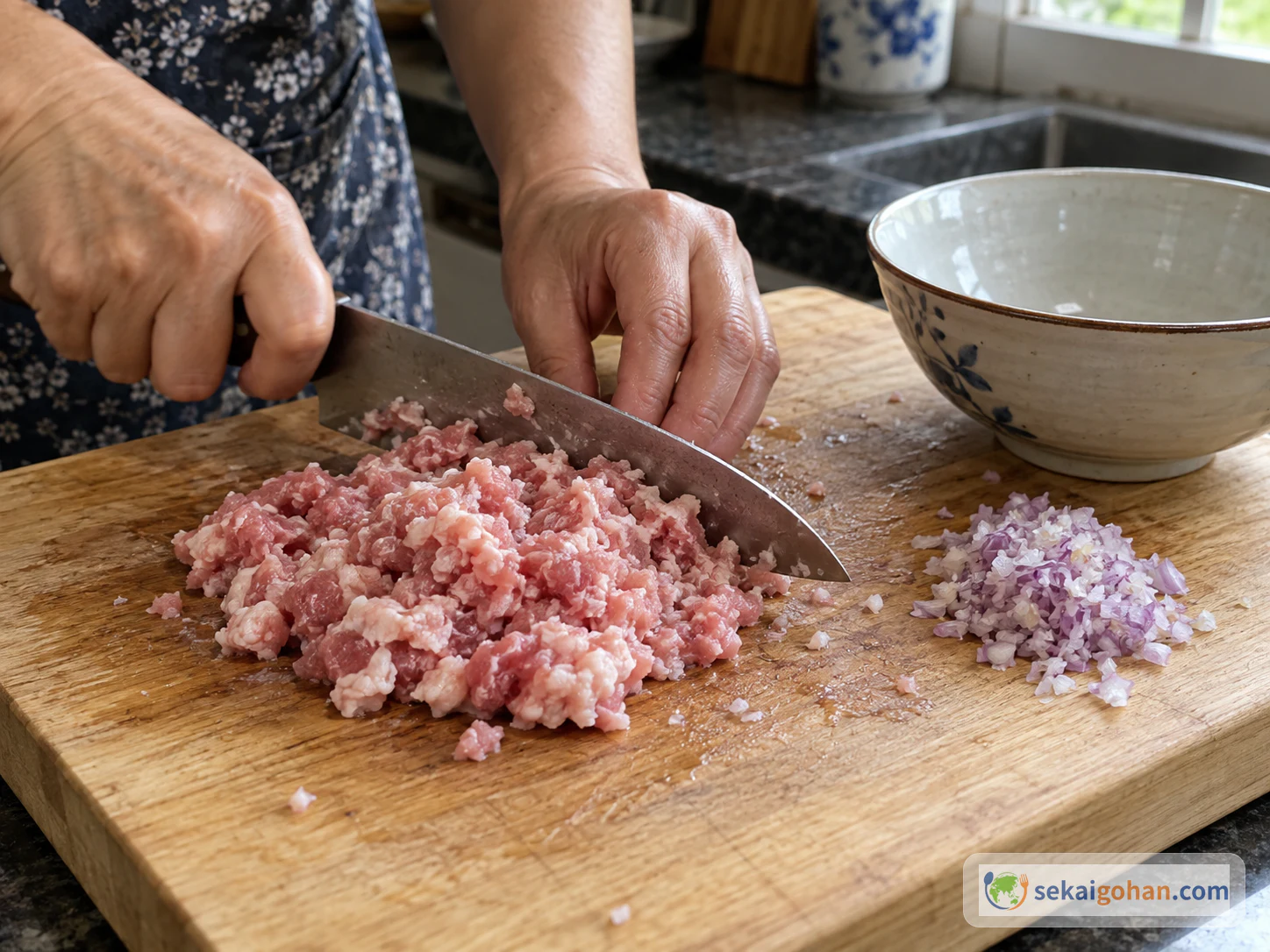
Pork. A cut with some fat keeps the filling from turning dry. Shoulder or belly suit it best; skip meat that is very fatty or very lean. The 1 tbsp of salt is only for washing the pork, and it gets rinsed away, so it doesn't count toward seasoning the filling.
Seasoning powder. Hạt nêm is a granulated seasoning sold in Vietnamese and Asian groceries. Brands differ in saltiness and in what they contain, so check the label for salt and for allergens such as pork or soy. The ingredient list just says "a little seasoning," but the method spells it out: 1½ tbsp seasoning powder, ½ tsp sugar and ½ tsp pepper.
How to Make Bánh Tai
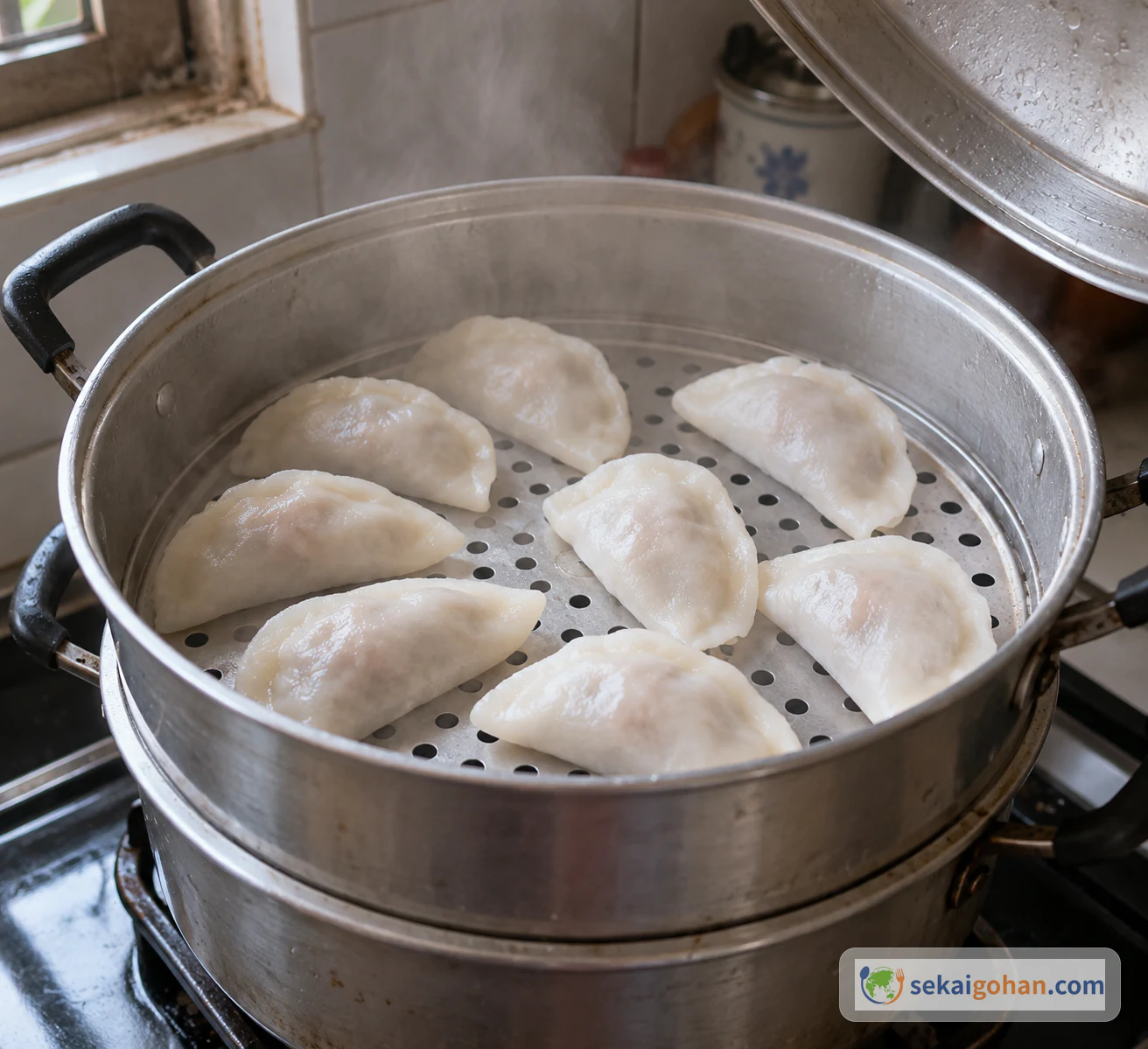
Cook the filling all the way through before you wrap it. Let the boiling water soak into the flour before you knead. Seal the edges firmly before steaming.
Fixing Common Bánh Tai Problems
| Problem | Likely cause | What to do |
|---|---|---|
| Dough is crumbly and won't come together | The boiling water didn't reach all the flour | Keep drawing the flour over the water until it is absorbed before kneading. If it is still dry, add a little more boiling water |
| Dough is sticky | Too much water for this flour | Knead first and see how it feels. If it stays sticky, work in a little more rice flour |
| Cakes open during steaming | Filling on the edges, or a weak seal | Keep the filling in the center and pinch the edges firmly together |
| Skin still looks opaque and white | Not steamed long enough, or the cakes are thick | Steam a little longer, until the skin turns slightly translucent. Go by the skin, not just the clock |
| Filling tastes too salty | Seasoning powders vary in saltiness | Next time, check your brand's label |
Serving, Storing and Variations
Bánh tai is eaten hot, often for breakfast, and traditionally on the day it's steamed. Plan to steam yours the day you want to eat them.
Cook the pork filling through before wrapping it. Wash hands and tools that touched raw pork before they go back to the dough or the finished cakes. Using rice instead of wheat doesn't make the dish free of allergens. Seasoning powder can contain pork, soy and other ingredients. Check the labels of what you use for allergens, including shared-facility warnings.
Traditionally, bánh tai needs no dipping sauce, though fried shallots and a sweet-and-sour fish sauce make a nice optional extra. For a different filling, try pork shoulder, shallots, pepper and fish sauce, the way the town breakfast version is made; there are no set amounts, so season to taste. And if you're curious about the workshop method, with its boiled and pounded dough and pork-only filling, treat it as a separate project with its own timings.
Related Vietnamese rice and filled dishes on this site include bánh bột lọc, a different kind of rice-flour cake; bánh cuốn, thin steamed rice sheets; and bánh bao, another wrapped and filled dish.
Frequently Asked Questions
Is bánh tai the same as bánh tai heo?
No. Bánh tai from Phú Thọ is a steamed rice-flour cake with a pork filling. Bánh tai heo ("pig's ear cake") is a fried, spiral-patterned snack. Bánh tai vạc is also a separate dish.
How many cakes does this make?
The recipe serves 4 but doesn't give a number of cakes. The count depends on how large you make each one.
Can I make them ahead?
Bánh tai is traditionally eaten on the day it is made, so steam them on the day you plan to eat them.