Nasi Gandul: Rice with Beef in Coconut-Spice Gravy from Pati

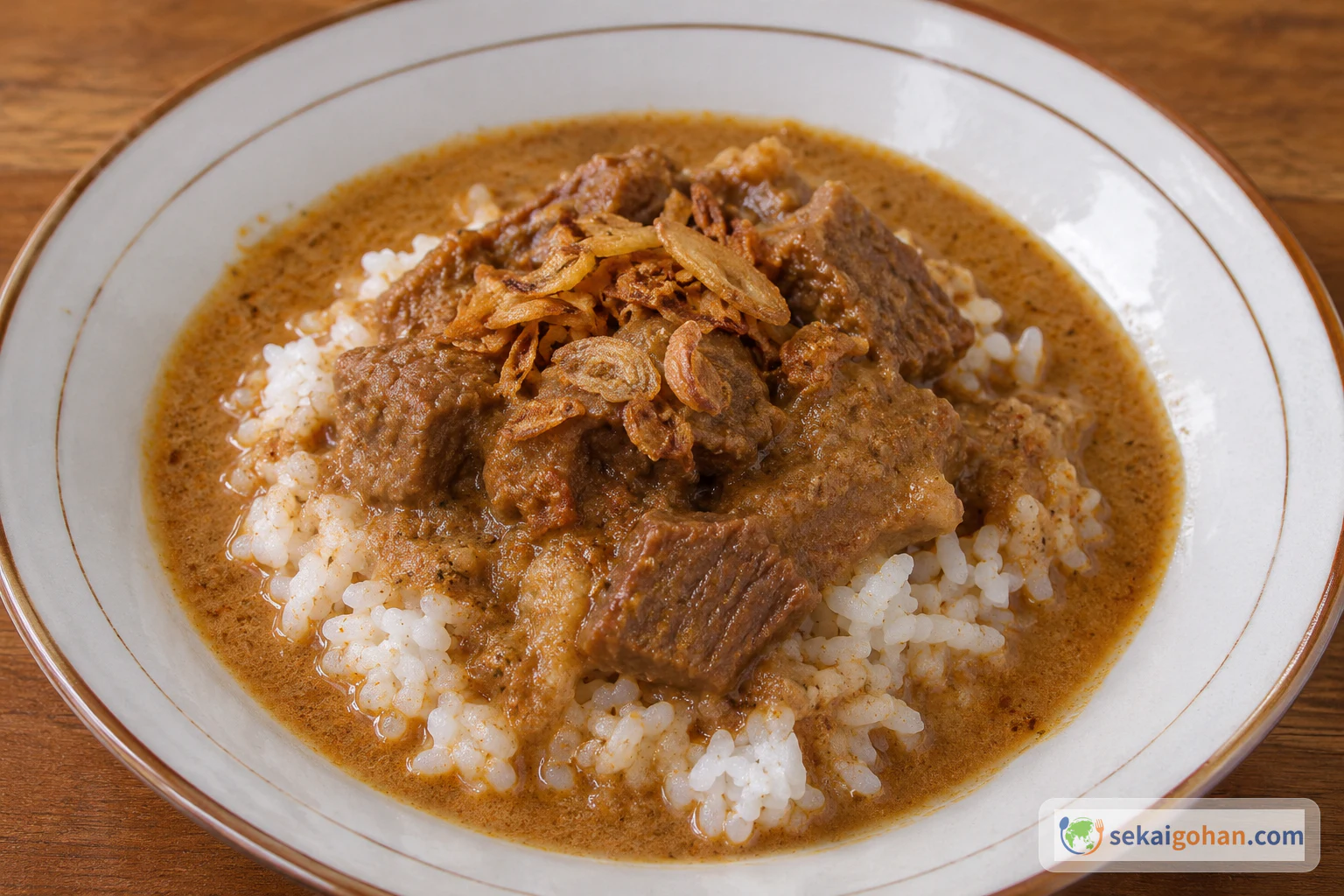
Nasi gandul: white rice topped with beef in a coconut-spice gravy, finished with fried shallots
Serves
4 servings
Cuisine
Indonesian

How to make nasi gandul, the rice dish associated with Pati in Central Java: beef cooked until tender, a ground spice paste fried with five whole aromatics, and a gravy of the reserved beef broth, coconut milk and kecap manis, spooned over white rice. Covers the ingredients, substitutions, beef safety, troubleshooting and the story behind the name.

Cooking flow

Cooking steps

STEP11 / 9

Boil the beef in salted water

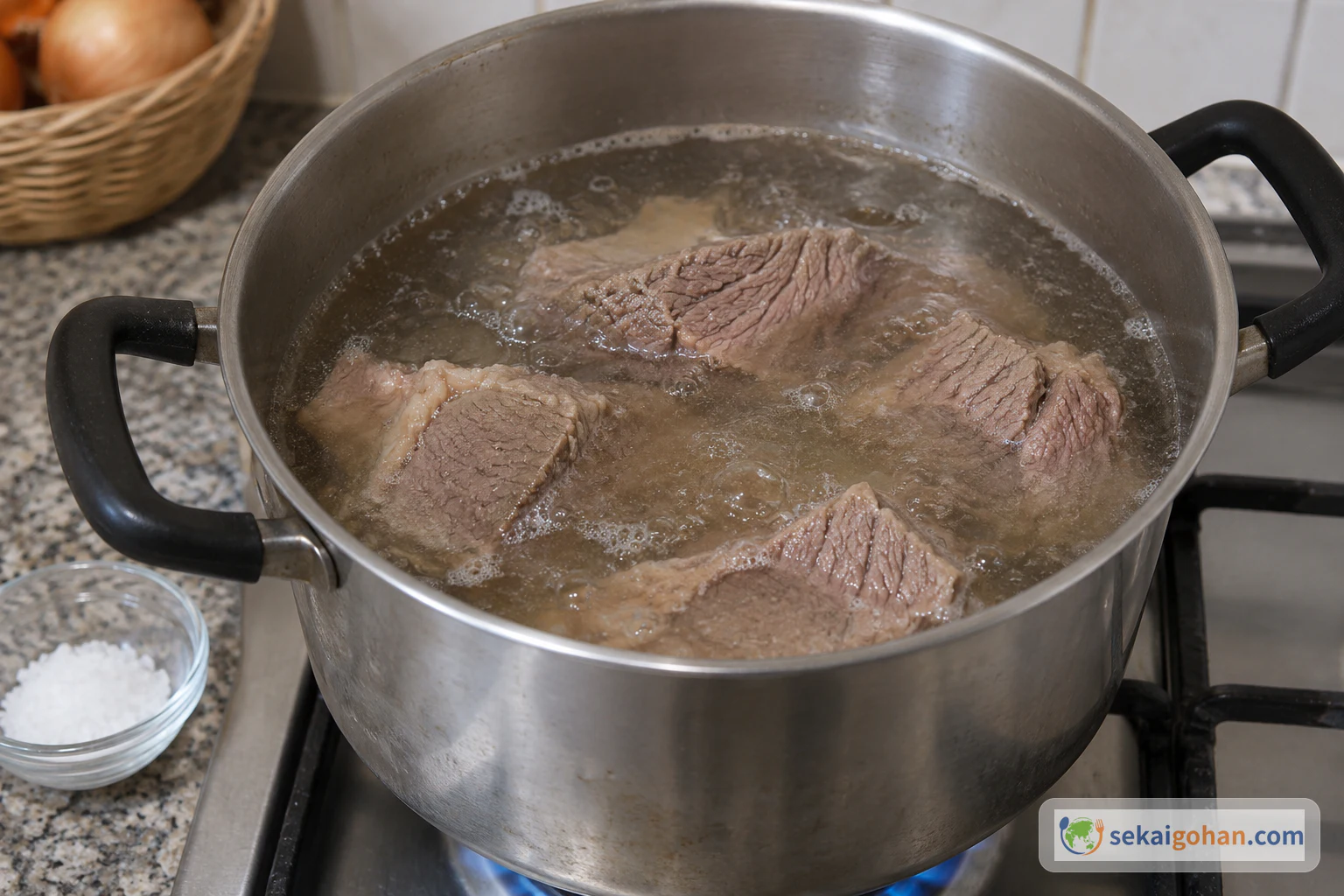
Beef simmering in salted water in an uncovered pot
Judge by tenderness, not by the clock

Pour enough water into an ordinary pot to cook the beef in, then add the 1 lb (500 g) beef and 1 tsp salt. Keep the second teaspoon of salt aside for the spice paste. Bring the pot to a boil, then cook the beef until it is tender and cooked through.

STEP22 / 9

Lift out the beef and cut it

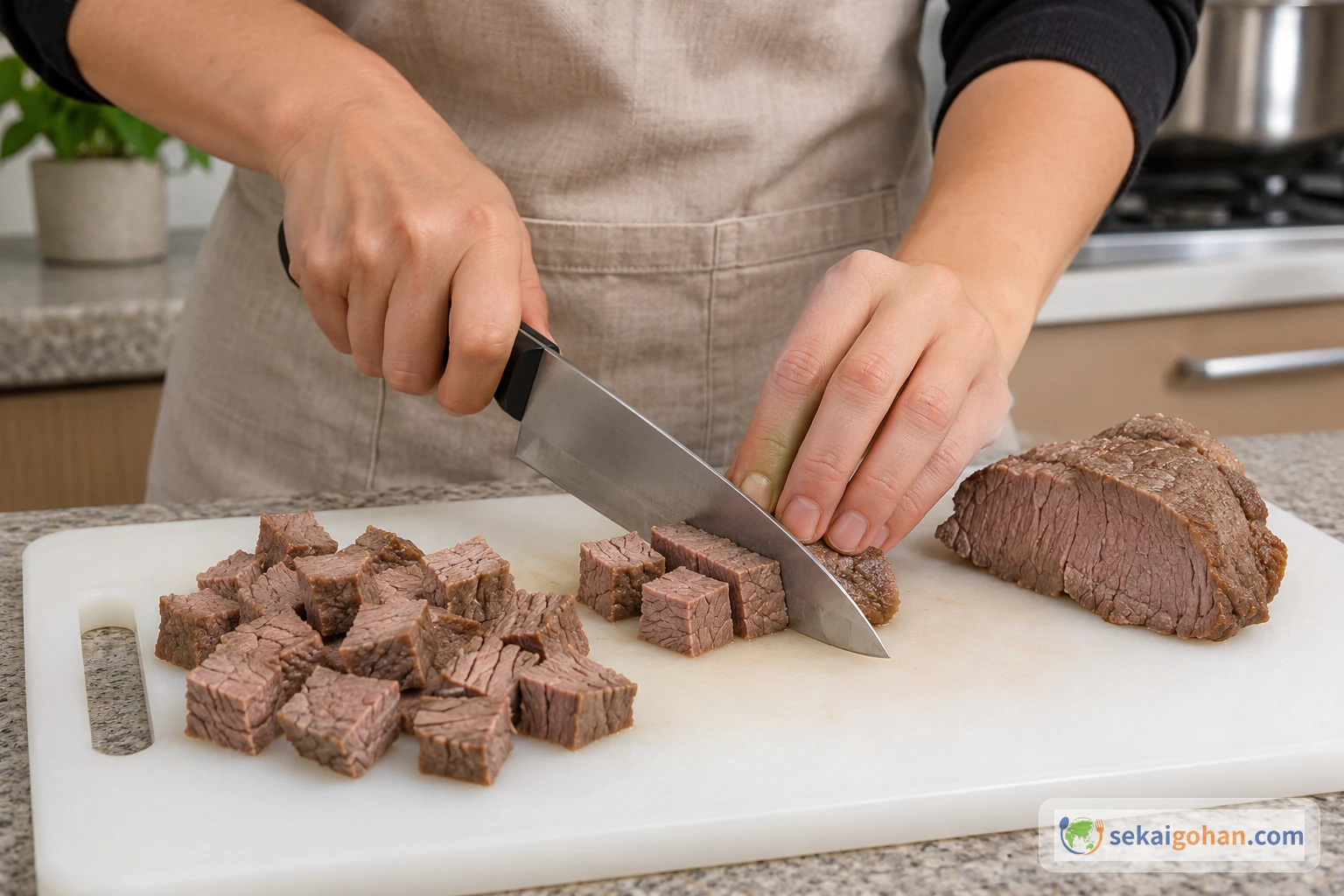
Cooked beef being cut into small cubes on a clean board
Use a board that has not touched raw meat

Lift the beef out of the pot with tongs, leaving all the broth in the pot, because it is the base of the gravy. Cut the cooked beef into bite-size pieces on a clean board. The pieces should be small cubes, ready to go back into the broth later.

STEP33 / 9

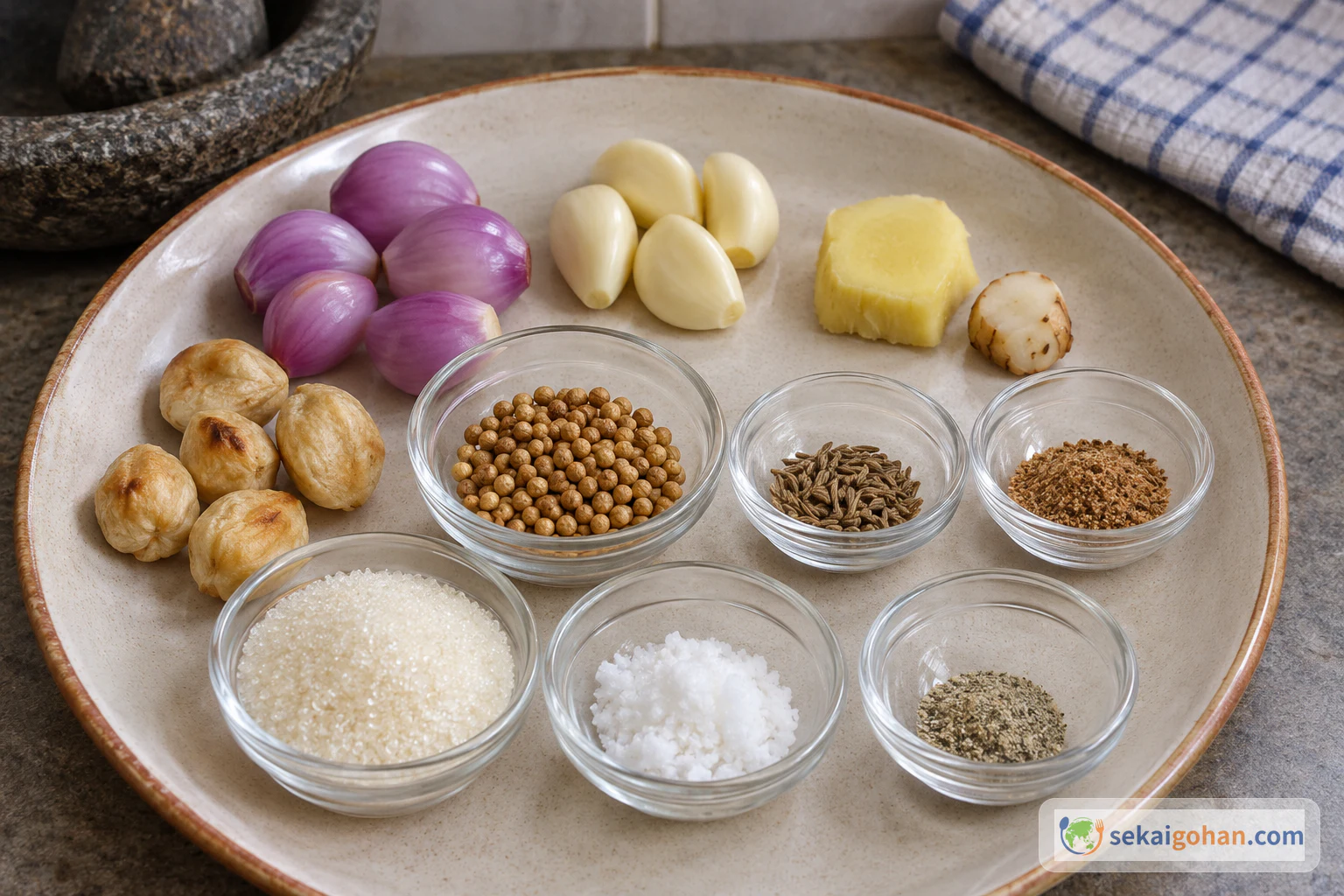
Prepare the paste ingredients

The spice paste ingredients gathered together with the paste salt
Everything for the paste in one place, including its own salt

Peel the 5 shallots and the 4 garlic cloves. Prepare 1 inch (2 cm) ginger and 0.5 inches (1 cm) kencur, keeping them as two separate roots. Measure out the 5 toasted candlenuts and 1 tbsp toasted coriander. Gather everything together with 1/2 tsp cumin, 1/2 tsp ground nutmeg, 1 tbsp sugar, 1 tsp salt (the paste salt, since the beef-pot salt is already in the pot) and 1/4 tsp pepper.

STEP44 / 9

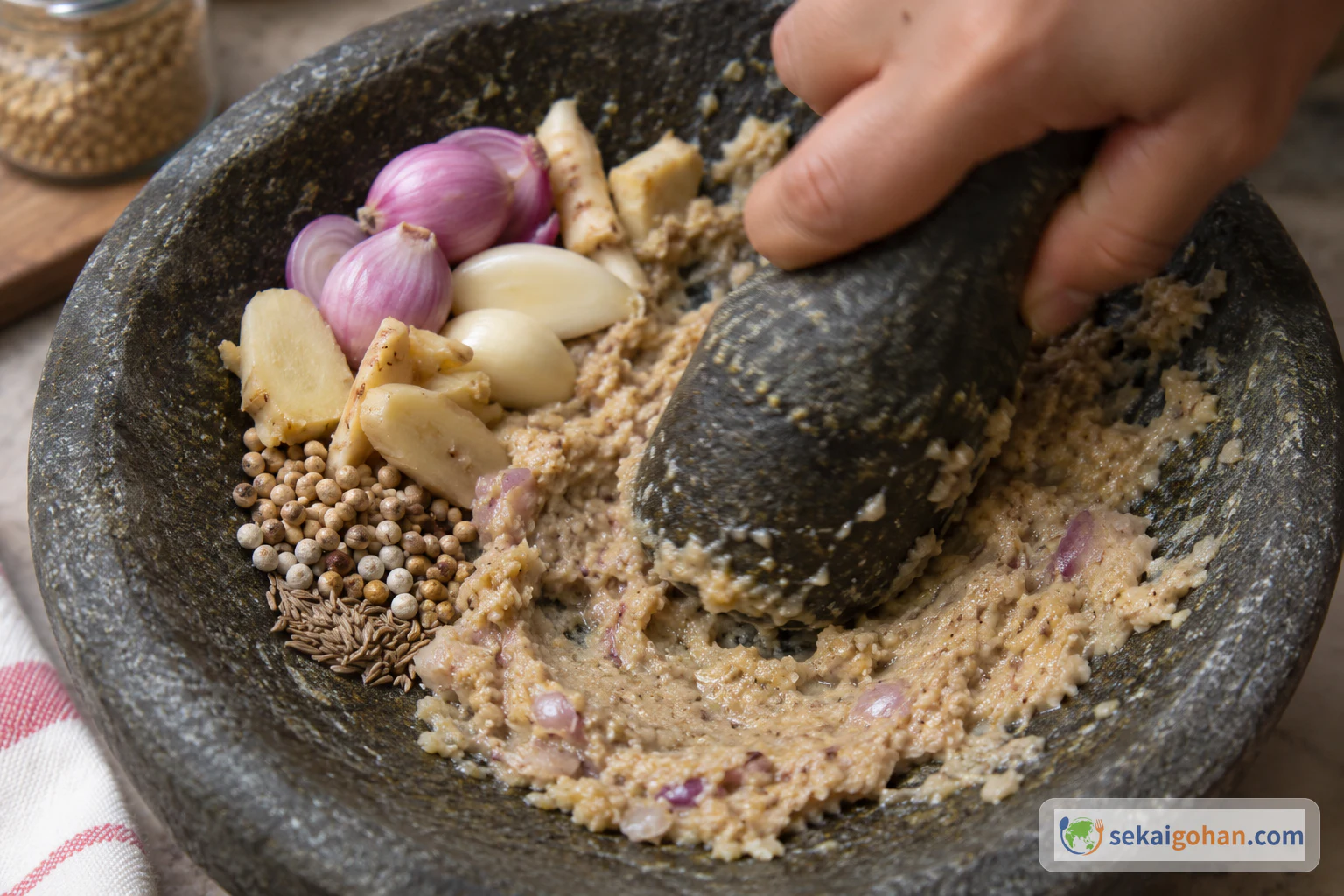
Grind the paste

Shallots, garlic, roots and spices being ground together in a stone mortar
Grind until the ingredients come together as one paste

Grind all the paste ingredients together in a mortar or food processor. Keep grinding until they come together as one fine paste.

STEP55 / 9

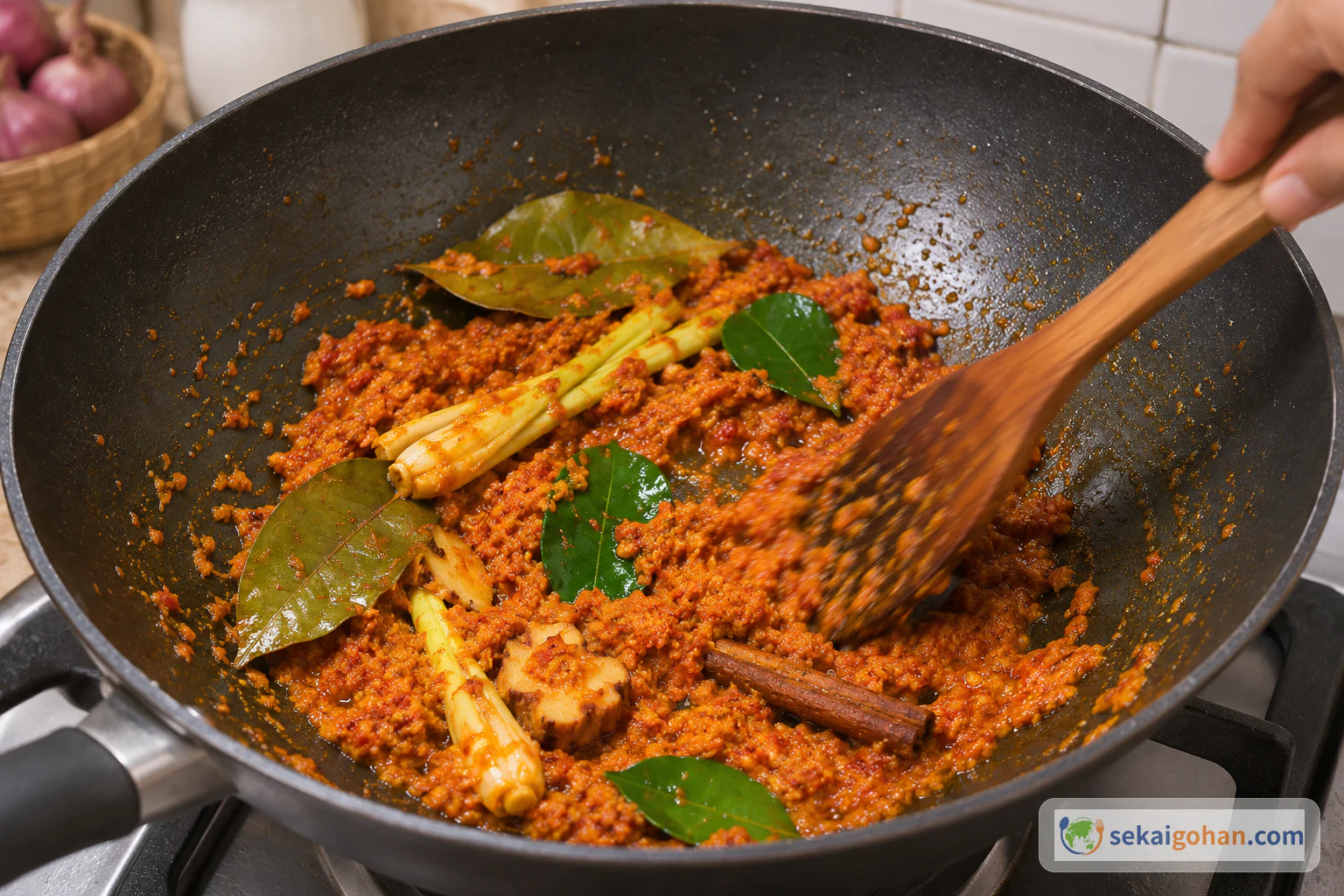
Fry the paste with the aromatics

Paste and whole aromatics being stirred together in the pan
No beef or liquid in the pan yet

Heat a little cooking oil in a frying pan or wok. Add the paste to the hot oil and stir-fry it until fragrant and cooked, without letting it scorch. Add the 2 salam leaves, the bruised lemongrass stalk, the 5 kaffir lime leaves, the bruised 1 inch (3 cm) galangal and the 2 inches (5 cm) cinnamon, then stir-fry everything together until fragrant.

STEP66 / 9

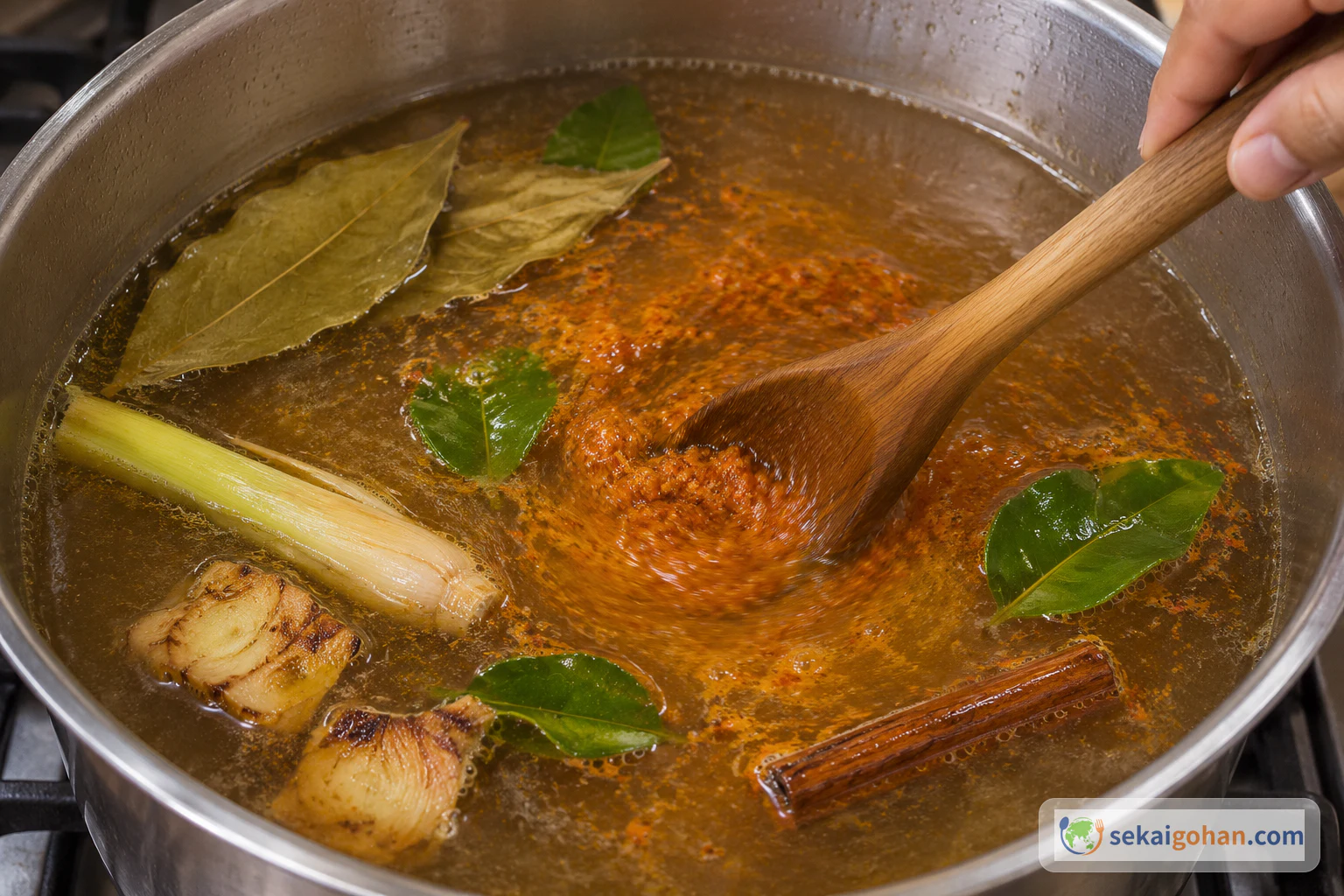
Stir the paste into the broth

Spice paste and whole aromatics being stirred into the brown beef broth
The broth turns into a seasoned base

Transfer the fried paste and all the aromatics into the pot of beef broth, keeping the cut beef aside for now. Stir the paste and aromatics through the broth so the paste disperses. The broth should turn into a seasoned base.

STEP77 / 9

Add the beef, coconut milk and kecap manis

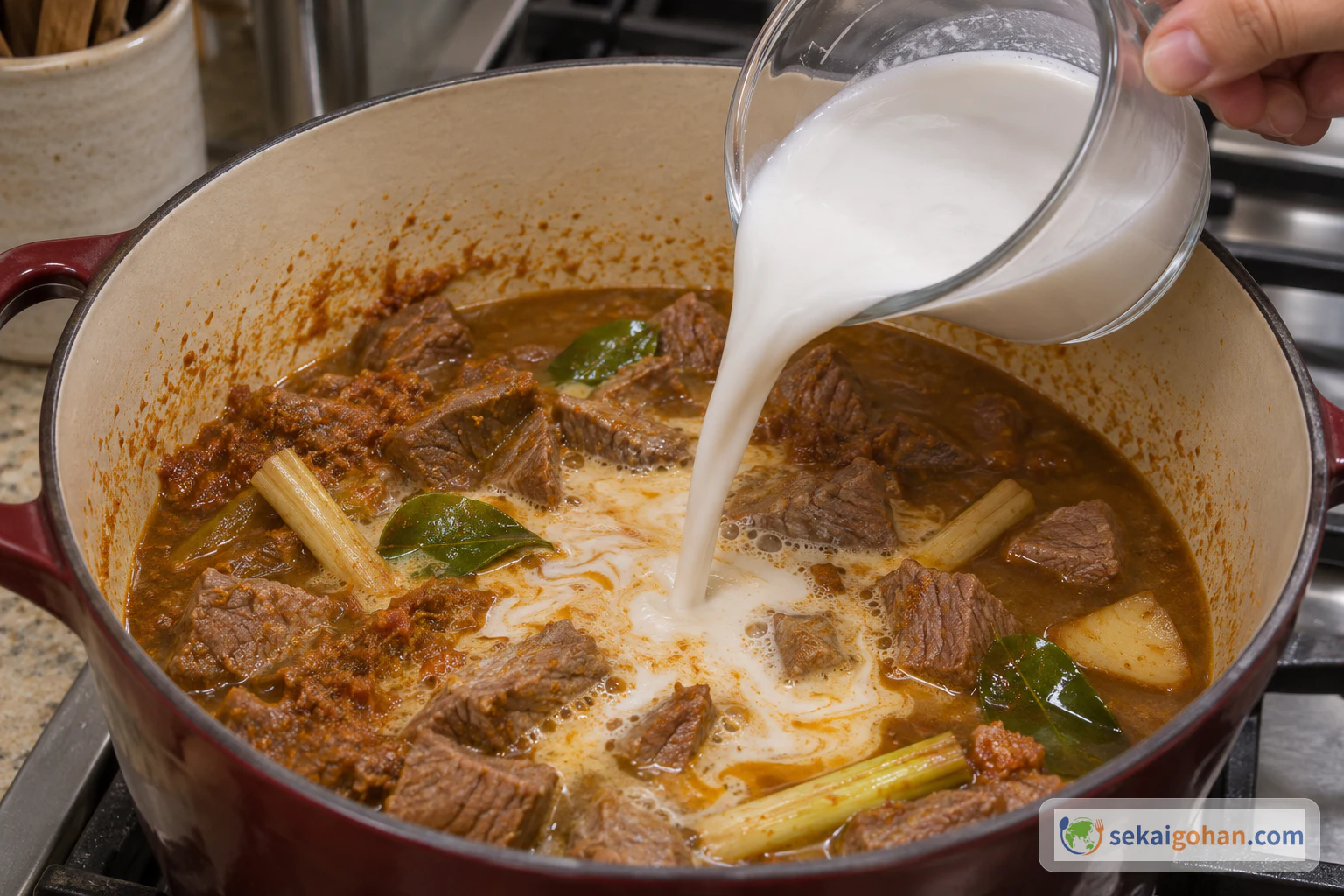
Coconut milk being poured into the beef and spiced broth
All the coconut milk goes in at once

Return the cut beef to the seasoned broth. Do not add any fresh water. Pour in the 1 cup (250 ml) coconut milk, then add the 3 tbsp kecap manis and stir until it is blended into the broth.

STEP88 / 9

Simmer until the gravy thickens

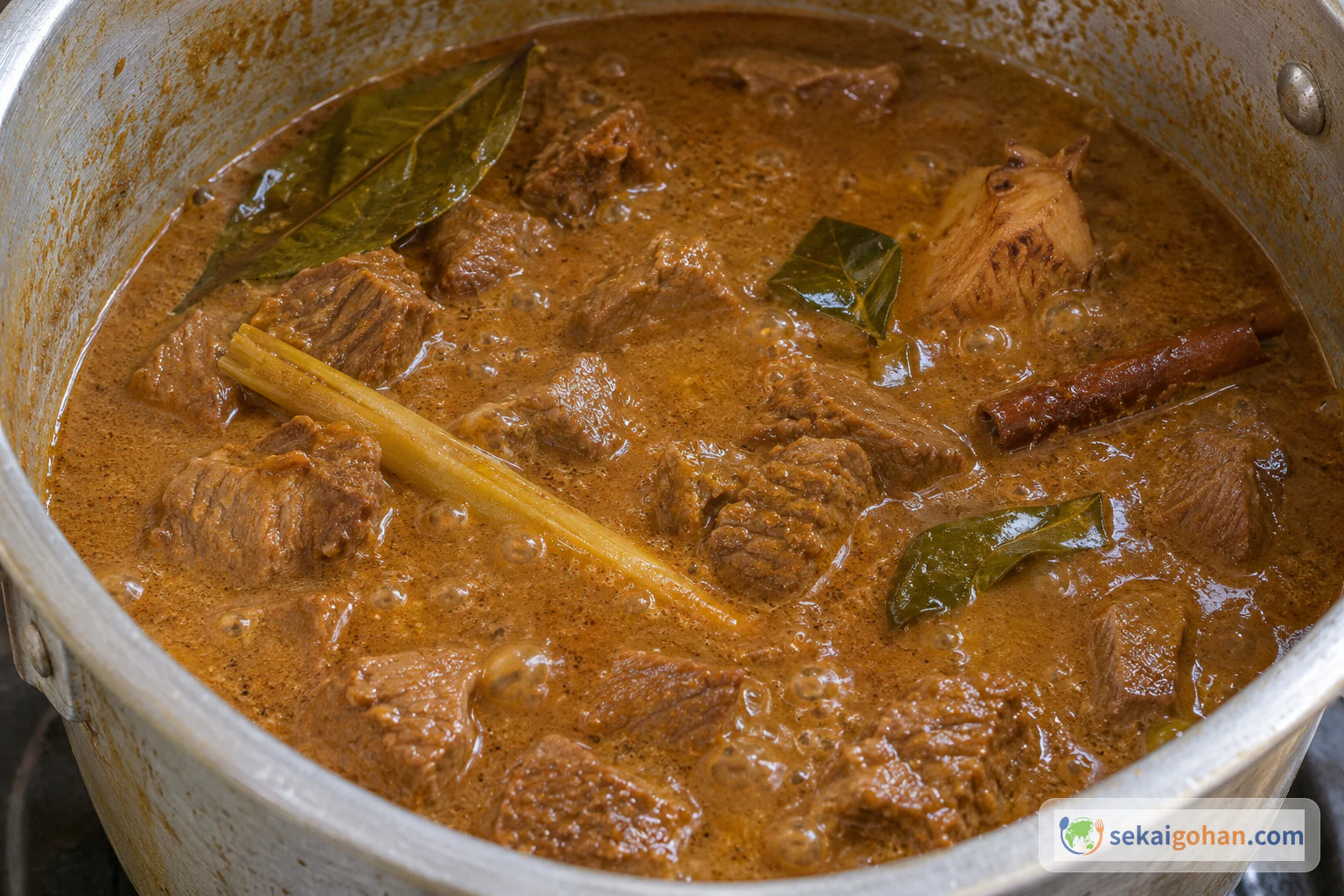
Beef cubes gently bubbling in a thickening brown gravy with whole aromatics
Watch how far the gravy reduces rather than counting minutes

Simmer the pot gently, stirring now and then. Keep going until the gravy thickens and the whole dish is hot throughout.

STEP99 / 9

Assemble and serve

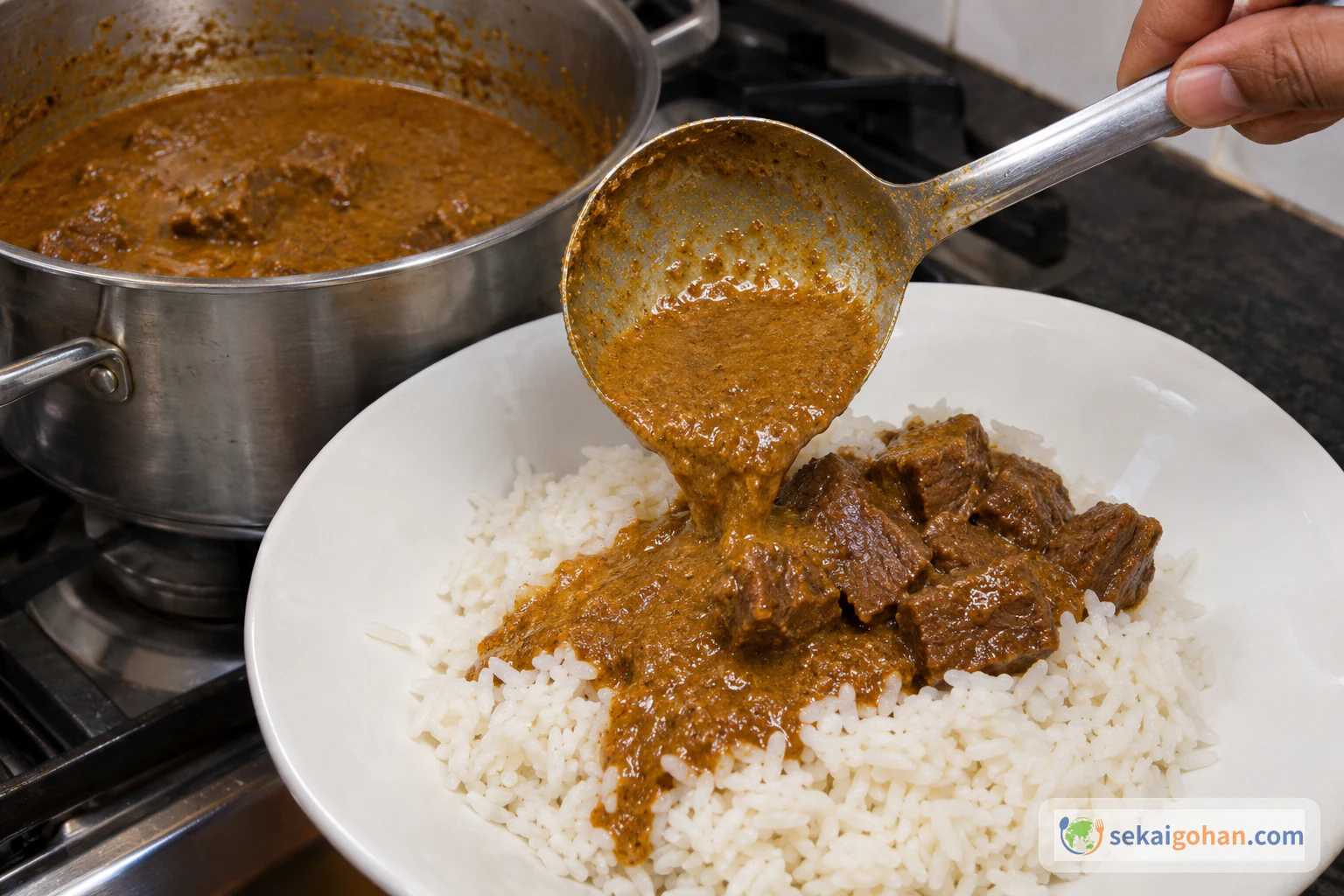
Brown coconut-spice gravy being ladled over rice and beef
The gravy soaks into the rice

Put cooked white rice into serving bowls. Spoon pieces of beef from the pot onto the rice, then ladle the gravy from the same pot over the rice and beef. If you like, sprinkle store-bought fried shallots over the top and serve. The gravy should soak into the rice.

0 / 0
Ingredients

Ingredients

1 / 1

Ingredients

Ingredient Amount Role
Beef (for stewing) 1 lb (500 g) The main ingredient, cooked until tender, then cut
Water as needed For cooking the beef; becomes the broth for the gravy
Salt (garam), for the beef pot 1 tsp Seasons the beef as it cooks
Shallots (bawang merah) 5 Spice paste
Garlic (bawang putih) 4 cloves Spice paste
Toasted candlenuts (kemiri), ready to use 5 Spice paste; body and richness
Toasted coriander (ketumbar) 1 tbsp Spice paste
Ginger (jahe) 1 inch (2 cm) Spice paste
Cumin (jinten) 1/2 tsp Spice paste
Kencur 0.5 inches (1 cm) Spice paste; a separate root from ginger
Ground nutmeg (pala) 1/2 tsp Spice paste
Sugar 1 tbsp Spice paste
Salt (garam), for the paste 1 tsp Seasons the spice paste
Pepper (merica) 1/4 tsp Spice paste
Salam leaves (daun salam) 2 Whole aromatic
Lemongrass (serai), bruised 1 stalk Whole aromatic
Kaffir lime leaves (daun jeruk) 5 Whole aromatic
Galangal (lengkuas), bruised 1 inch (3 cm) Whole aromatic
Cinnamon (kayu manis) 2 inches (5 cm) Whole aromatic
Cooking oil as needed For frying the paste and aromatics
Coconut milk (santan) 1 cup (250 ml) Body of the gravy, added once
Kecap manis 3 tbsp Sweet, thick Indonesian soy sauce for the gravy
Cooked white rice as needed To serve
Fried shallots (bawang goreng), store-bought to taste Optional topping
0 / 0

A bowl of plain white rice, tender pieces of beef laid on top, and a brown gravy of beef broth, coconut milk and spices spooned over everything, finished with a few crisp fried shallots. That's nasi gandul, a rice dish closely tied to Pati in Central Java. The gravy is rich and gently sweet from kecap manis, and it smells of shallots, garlic and fresh roots fried with whole aromatics. It all starts with the broth the beef was cooked in.

Nasi Gandul in Pati

Nasi gandul is a specialty of Pati: rice served with beef in a rich gravy. It is linked with Pati in general and with Gajahmati in particular. One story says sellers once carried the food on a pikulan, a carrying pole, with the load hanging from it, and gandul is linked to hanging.

Recipes vary a lot. Some use tetelan (beef trimmings), two kinds of coconut milk and terasi, while others add stock and kluwek. Each version has its own seasoning, so follow one as written rather than mixing it into the recipe below. For more dishes from the same country, see the Indonesia country page.

Ingredients: Serves 4, Two Separate Salts
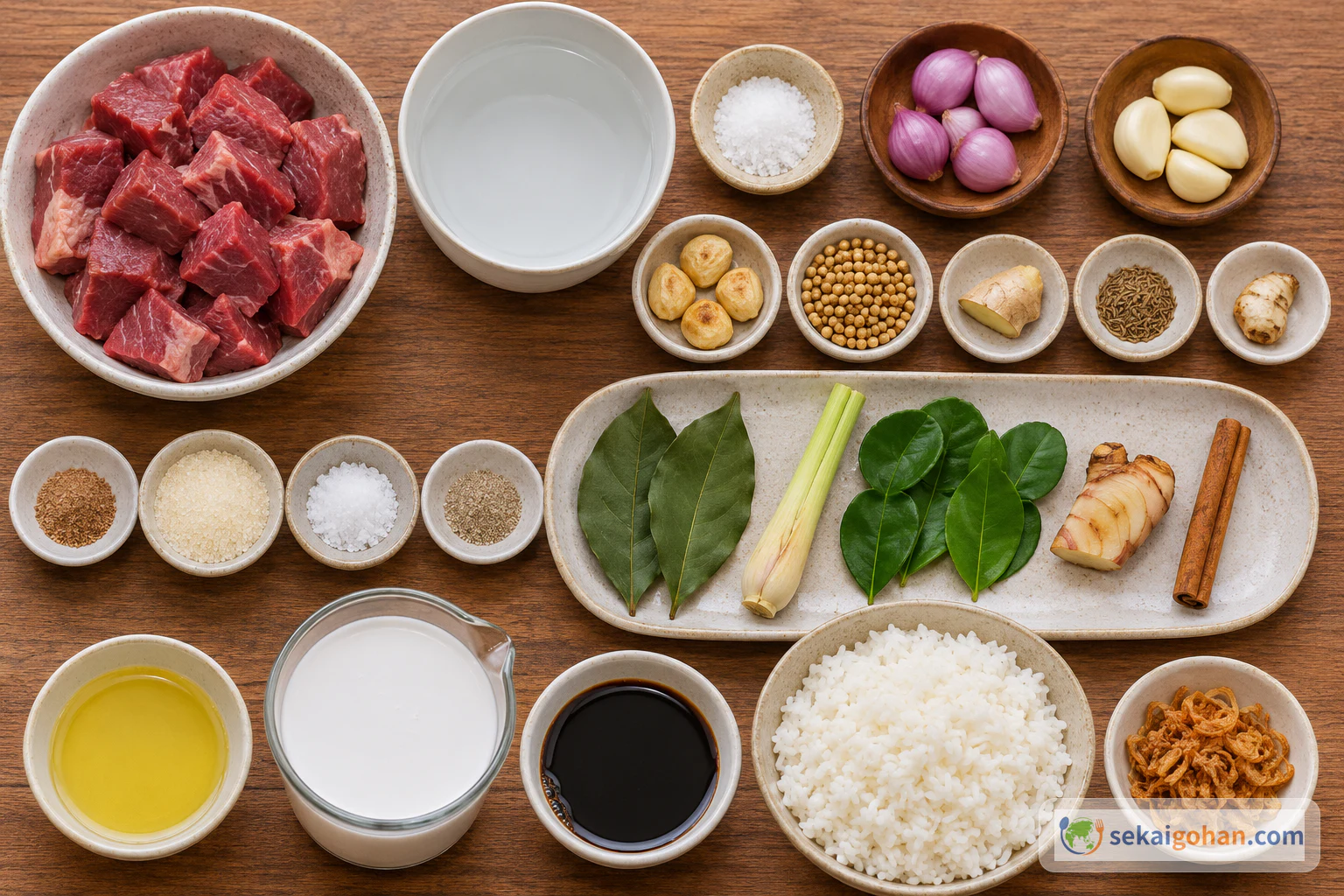
All the nasi gandul ingredients laid out separately, with water and frying oil set apart in unmarked dishes
Keep the two salts apart: one goes into the beef pot, the other into the spice paste

Choosing Ingredients for Nasi Gandul

Beef. Choose beef sold for stewing. It's easy to find.

Kecap manis is not ordinary soy sauce. It is sweet and thick, and plain soy sauce (Japanese dark soy sauce included) pulls the flavor away from this dish. Look for kecap manis by name at Indonesian or other Asian grocers.

Kencur and galangal are not ginger. The paste uses ginger and kencur as two separate roots, and galangal goes in whole as an aromatic. If you use more ginger in their place, the aroma changes, so it's worth tracking down kencur and galangal by name.

Candlenuts. Buy candlenuts that are already toasted and ready to use, not raw ones.

Coriander, salam leaves and kaffir lime leaves. Look for toasted coriander, salam leaves and kaffir lime leaves at Indonesian or Asian grocers.

Fried shallots. A ready-made, store-bought pack works fine, so there's no frying to do at home.

Equipment

  • An ordinary cooking pot, for boiling the beef and finishing the gravy
  • A frying pan or wok, for frying the spice paste
  • A mortar and pestle or a food processor
  • Tongs or a slotted spoon
  • A knife and a clean cutting board for the cooked beef, kept separate from anything that touched raw meat
  • A ladle and serving bowls

Method: From Beef Broth to Coconut Gravy

Beef safety

Heat the center of the beef to 167°F (75°C) for at least 1 minute. Keep raw beef refrigerated until you cook it. Keep boards, knives and hands that have touched raw meat away from cooked food. Cook the beef until it is tender and cooked through, then bring the whole dish back to a simmer at the end.

Use an ordinary cooking pot. The beef broth is the heart of the gravy, so do not throw it away or replace it with fresh water.

Nasi Gandul Troubleshooting

Most fixes come down to watching the pot. Go by how tender the beef is and how thick the gravy looks, not by heat settings, minutes or water amounts.

Keep the broth

Keep the broth the beef was cooked in, because it becomes the base of the gravy. Fry the spice paste until it smells fragrant without letting it scorch, then add the coconut milk and kecap manis and let the gravy thicken.

Problem Likely cause What to do
The beef is still tough Not cooked long enough yet Keep cooking in the broth until tender before lifting it out. Judge by texture, not time
The paste smells burnt Heat too high, or not stirred enough Stir constantly and lower the heat. Fry until fragrant without letting the paste scorch
The gravy is thin Not reduced enough Keep simmering gently and stirring until it thickens
Not enough broth for the gravy The broth was discarded or replaced Next time, keep all of the beef broth in the pot in step 2. Don't top up with fresh water
The gravy tastes like plain soy-sauce stew Regular soy sauce used in place of kecap manis Use kecap manis; its sweetness and thickness are part of the dish
The aroma is different Ginger used in place of kencur or galangal Use kencur and galangal; ginger gives a different aroma

Frequently Asked Questions

Is the origin of the name "gandul" settled?

No. The story of food carried hanging from a pikulan, a carrying pole, is a tradition, not a proven origin.

Is the coconut milk added in two stages?

No. Add it all at once, after the beef goes back into its broth. Recipes that use two kinds of coconut milk are different dishes.

Are the fried shallots essential?

They finish the dish, but you can leave them out. If you use them, a ready-made pack is all you need.

Why are there two separate teaspoons of salt?

The ingredient list has salt twice, 1 teaspoon each. One goes into the beef-boiling water and the other into the spice paste, so keep them separate rather than adding them together.

Sources