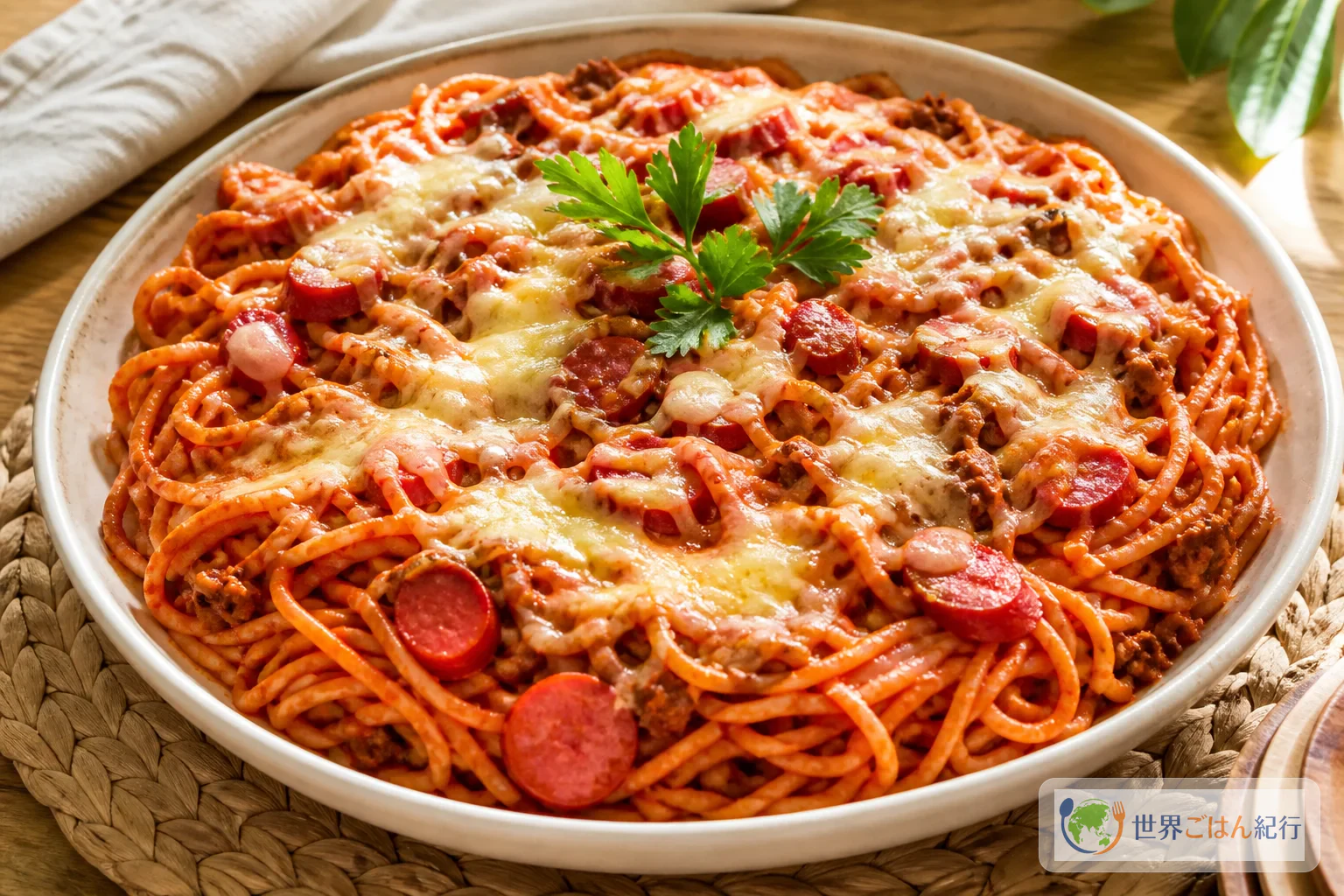
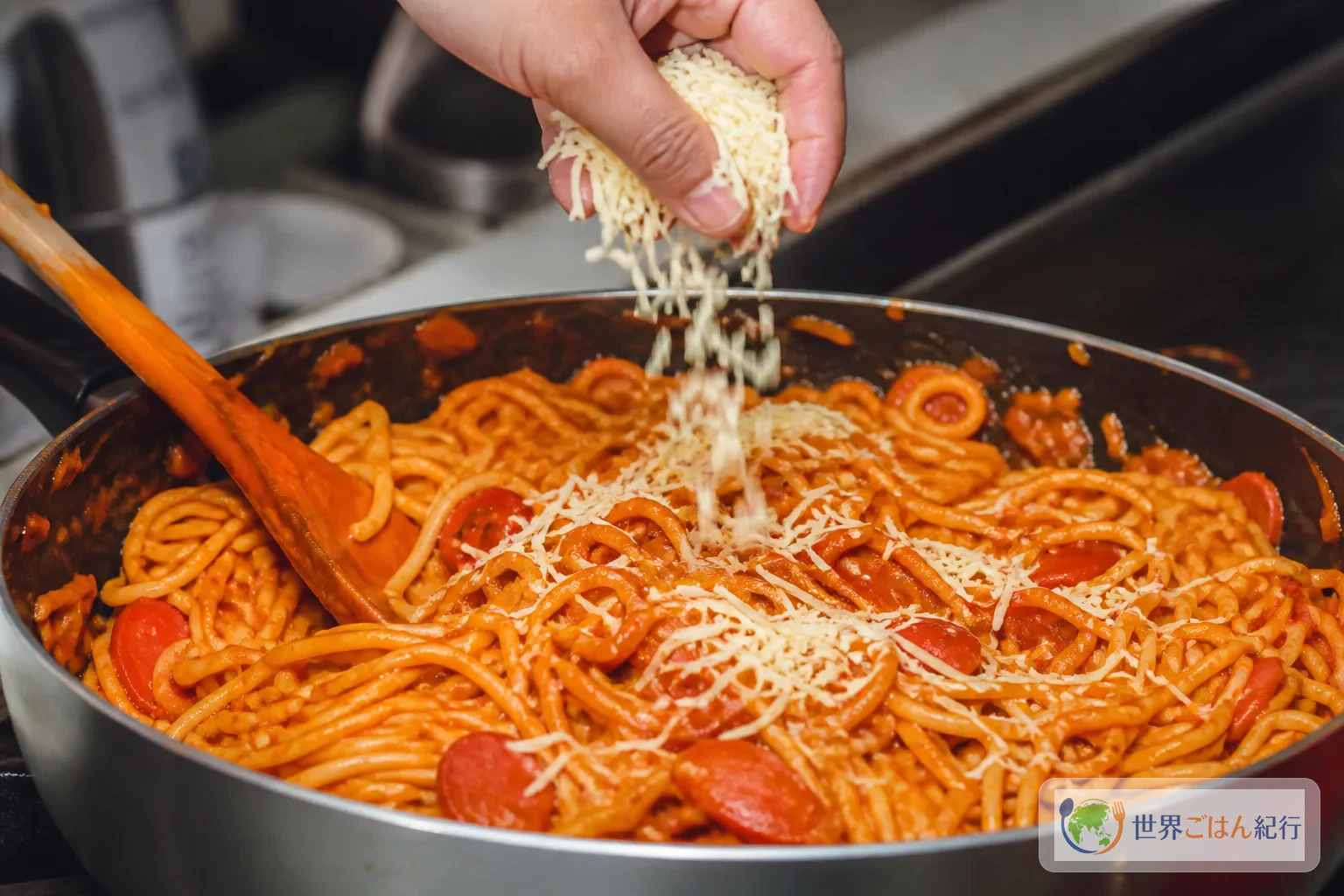
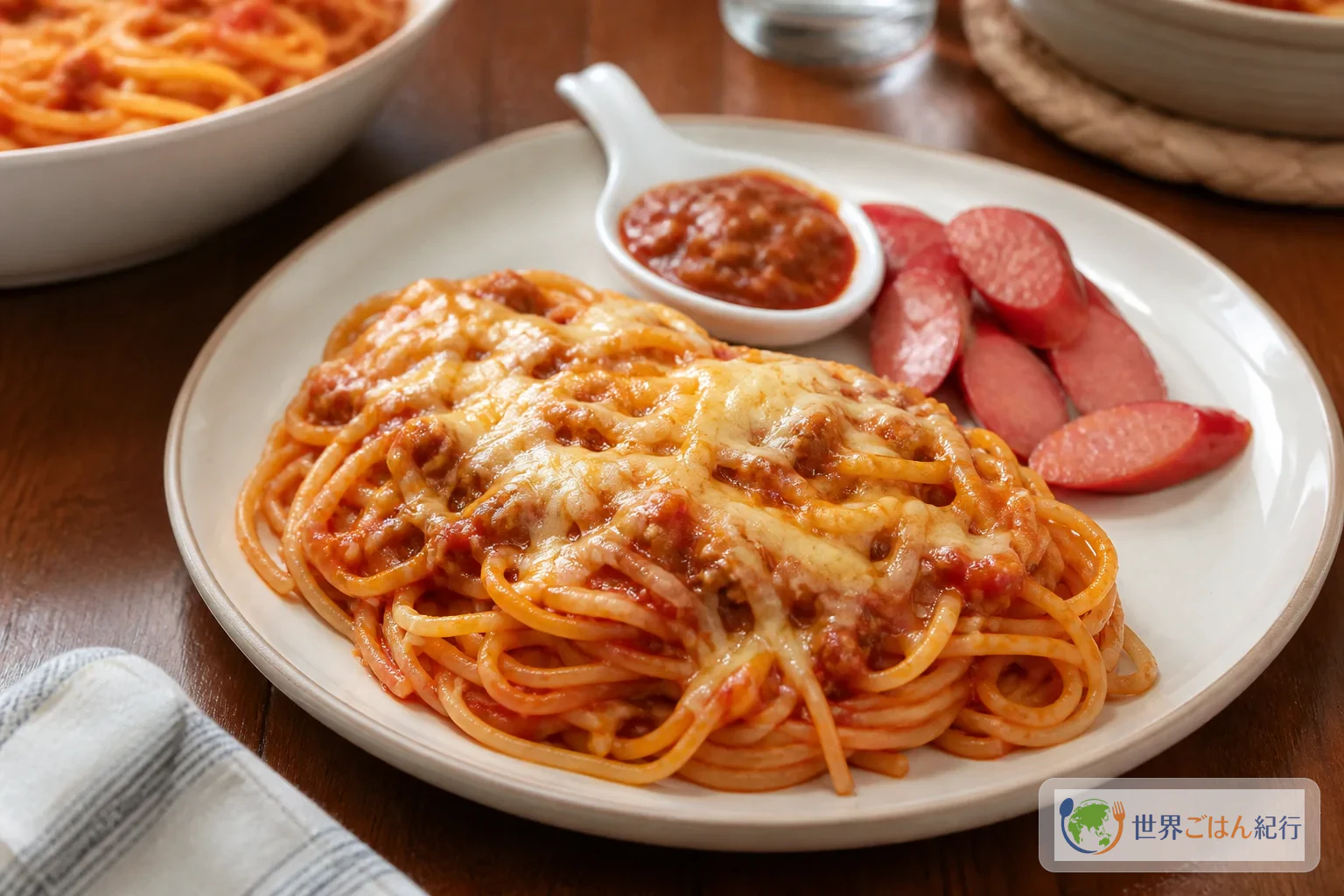
Spaghetti in red sauce is piled high on a big platter, then scattered with rounds of red hot dog and shredded cheese. The first bite is softly sweet rather than tart. Then you get the toasty notes of browned meat, the snap of the hot dog and the saltiness of melted cheese. Filipino spaghetti puts the sweetness of banana ketchup on top of the acidity of tomato and adds savory ground meat and salty hot dogs. That flavor is loved in Filipino homes and restaurants alike.
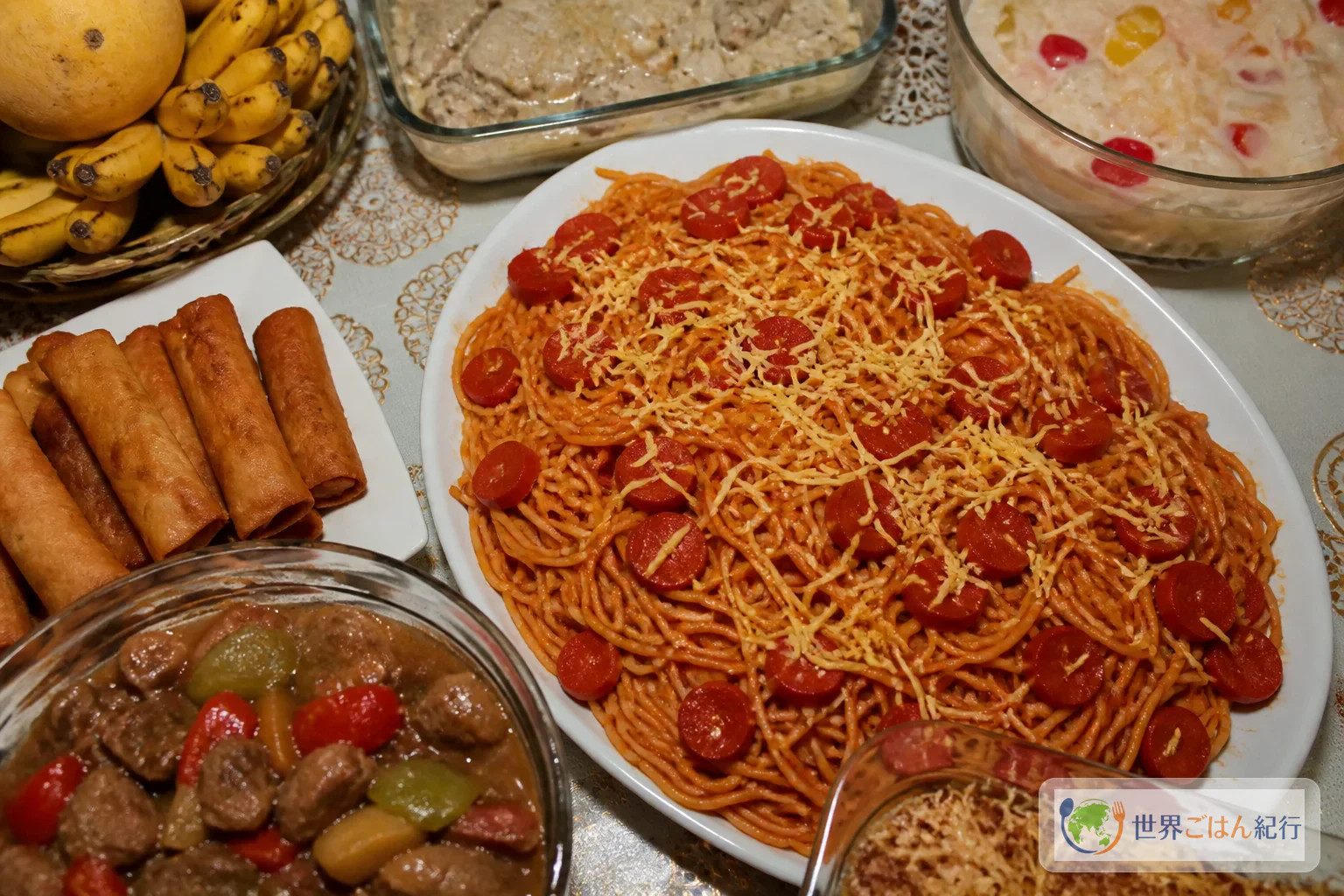
Filipino spaghetti at the celebration table
Filipino spaghetti is made with tomato sauce, banana ketchup, ground meat, hot dogs and cheese, and it's a dish for celebration days. It's one of the dishes of Noche Buena on Christmas Eve, the meal that brings family and friends around the table. It also shows up at birthdays and family gatherings as a big shared platter, separate from the steamed rice. The red color is seen as good luck, and the long noodles stand for long life.
It belongs with other Filipino favorites like lechon, crisp roast pork served with a sweet sauce, and adobo, braised in vinegar and soy sauce. Spaghetti and rice dishes are different things. Still, they come from the same habit: when the family gathers, crowd-pleasing food goes out on big platters.
In English it's also called Filipino-style spaghetti or Pinoy spaghetti. The "red hot dogs" are the sweetish hot dogs commonly used in the Philippines.
Where banana ketchup came from
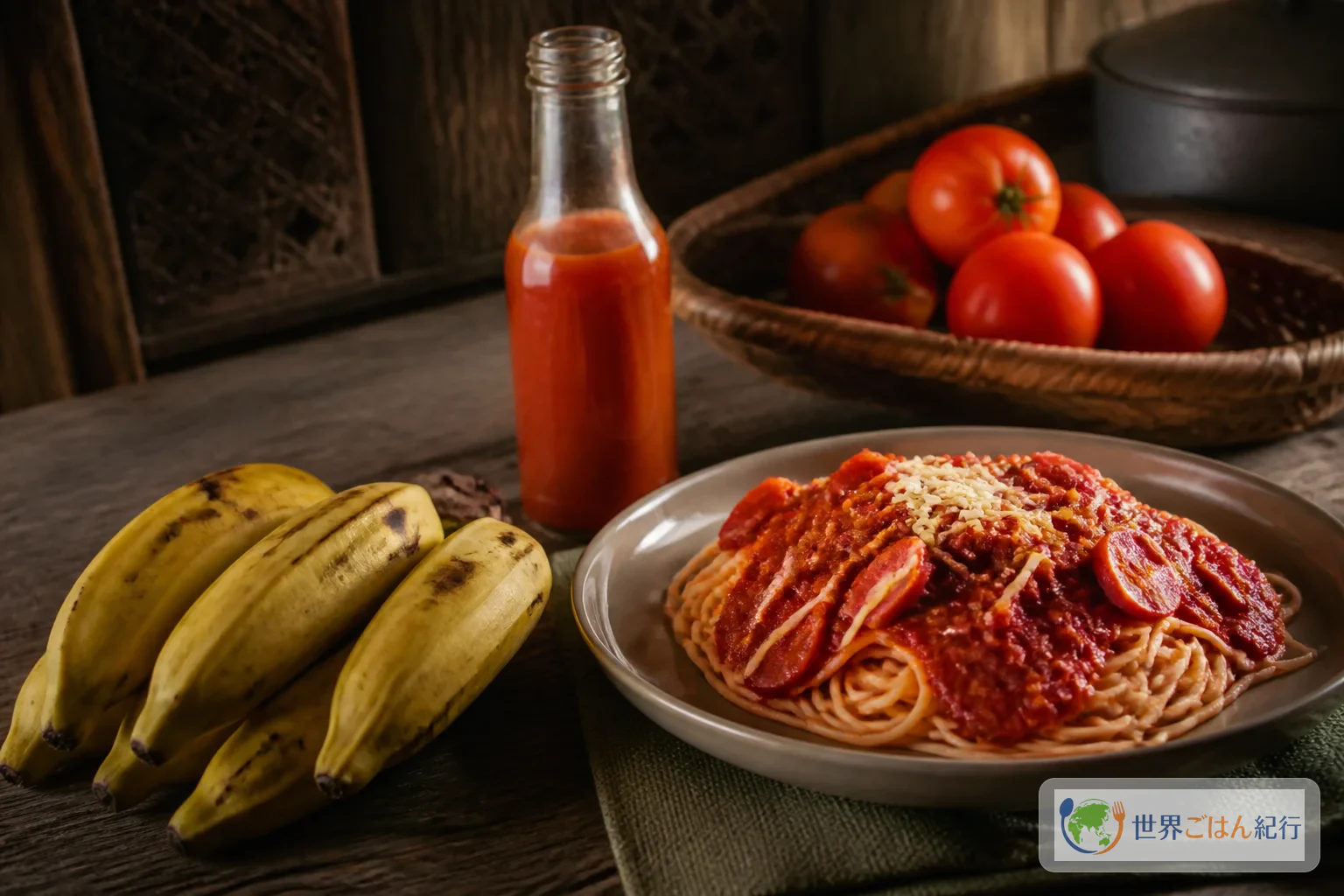
Banana ketchup began as a way to replace imports with Philippine ingredients. In the 1930s, tomato ketchup was an expensive import and tomatoes were hard to grow reliably in the Philippine climate. That's when food technologist Maria Ylagan Orosa created a ketchup made from bananas. Today it's a staple condiment in Filipino homes in its own right.
That sweet condiment met a pasta dish shaped by American influence. Filipino spaghetti doesn't try to copy Italian cooking. It takes condiments that are easy to find, plus processed meat, ground meat and cheese, and turns them into a sweet sauce the whole family enjoys. If you judge it by Italian-style acidity or al dente pasta, you miss what makes it interesting.
Homes and restaurants
There's no single nationwide recipe with standard quantities. The sweetness and the amount of toppings change with the household budget, the meat used, the children's tastes and each restaurant's prep. What stays constant is the structure: a tomato base layered with sweetness, meat, hot dogs and cheese.
Don't look for fixed toppings in each region. The real differences are between homes and restaurants, and between celebrations and everyday meals. Restaurants make the sweetness, the red hot dogs and the cheese obvious at a glance. At home, people adjust the pork or beef, the vegetables and the softness of the pasta to their liking. More than the region, who gathers and what platter it's served on is what shapes the flavor.
Ingredients (serves 6): prepare the sweetness, the salt and the browned meat separately
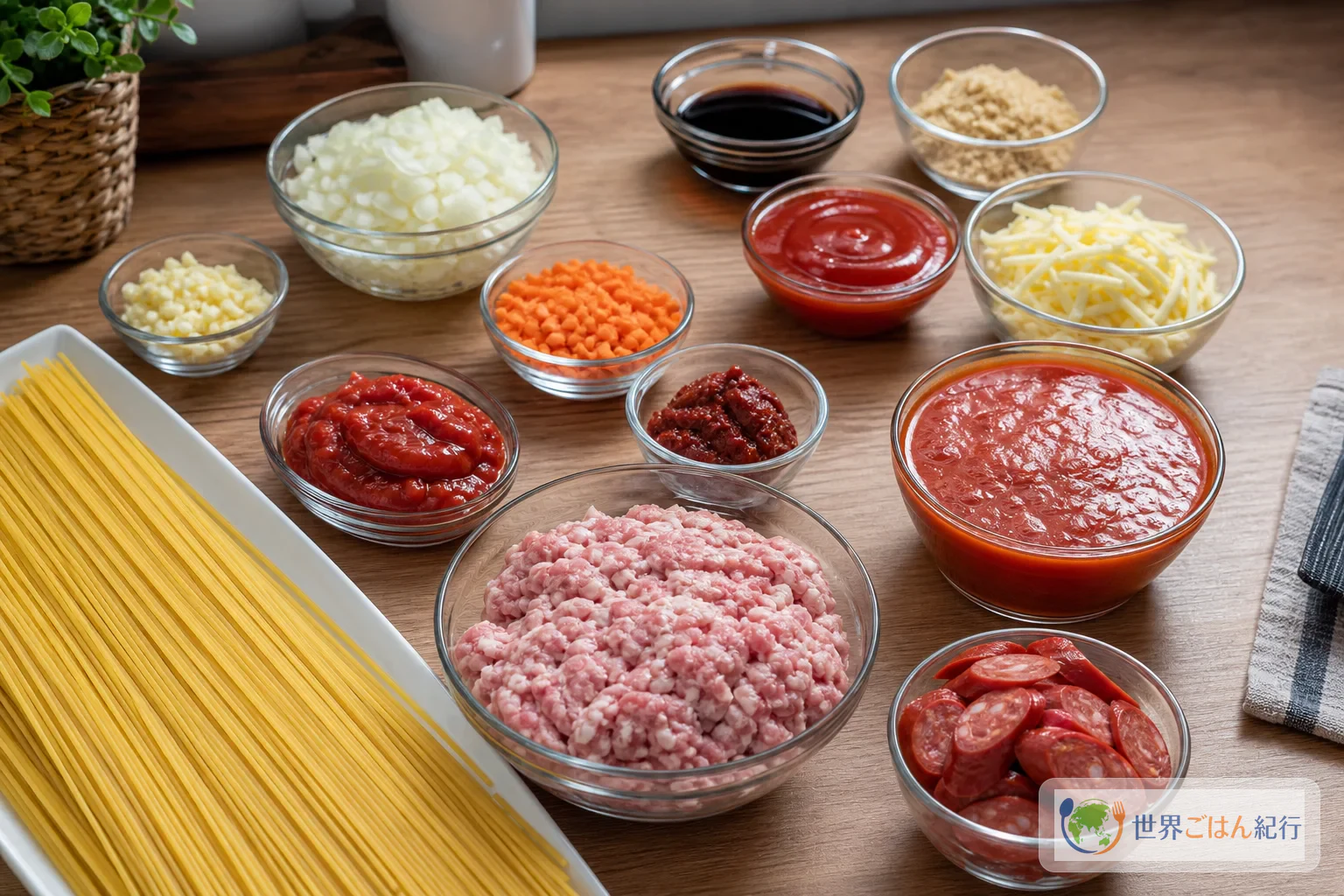
This is a platter for 6. Make a little extra sauce so you can replace what the pasta soaks up while you're serving. Don't reach for more sugar first to make it sweeter; set the outline of the flavor with the amount of banana ketchup, and adjust the sugar at the end.
Some Filipino households use ground pork, others ground beef or a mix. Pork connects naturally with the flavor of the red hot dogs, while beef pushes the meatiness forward. For your first try, pork gives a mellow sauce that holds up to the sweetness of banana ketchup.
The red hot dogs aren't just there for looks. Their browned fat and the sweet saltiness when you bite in soften the acidity of the tomato sauce. Ordinary wieners still make the dish work, but a strongly smoked sausage pulls it away from Filipino spaghetti and toward Japanese Napolitan, a ketchup-based spaghetti.
Should you buy banana ketchup?
Banana ketchup is a sweet-and-tangy condiment made from a base such as banana puree. Beyond standing in for tomato ketchup, it adds fruity sweetness and a slightly distinctive aroma to the tomato sauce. For this recipe, choose a banana ketchup whose size and ingredients are clearly listed on the label, and start with just ¾ cup (180 ml).
If you can't find it nearby, mix ¾ cup (180 ml) tomato ketchup with 15 g brown sugar instead. That reproduces the sweetness, though not the banana aroma. If you plan to cook Filipino food more than once, it's worth buying a bottle from the start. If you're making this just once, or you're not a fan of sweet sauces, you can try it with tomato ketchup first and decide later.
Even when the product is called "banana ketchup" or "banana sauce," there are spicy versions, less-sweet versions and different sizes. Check that the ingredient list includes banana, and check the size.
Allergies and substitutes
This dish involves wheat, pork, beef, milk, soy and banana. Hot dogs and cheese can contain milk or soy depending on the product, so check labels on any substitutes too. It isn't a peanut dish, but if your kitchen shares cookware or storage containers, check the cooking environment as well as the ingredient labels.
To skip pork, switch to 9 oz (250 g) plant-based ground "meat" and 8.5 oz (240 g) plant-based sausages. With less fat from the meat, reduce the water returned to the sauce to ½ cup (150 ml), and add 1 tsp (5 ml) more oil for browning the plant-based ground "meat." The flavor won't be identical, but you'll keep the sweet tang of banana ketchup and the color of the tomato.
Choosing ingredients for Filipino spaghetti
Ground pork or ground beef
Ground pork's fat melts into the sauce and gives a gentle sweetness. Ground beef brings the meaty aroma and browning forward and pushes the sweetness slightly into the background. If you use a pork-beef mix, keep in mind that the hot dogs release fat too, so you can cut the initial oil to 1.5 tbsp (20 ml).
Tomato ketchup instead of banana ketchup
Without banana ketchup, use ¾ cup (180 ml) tomato ketchup, 15 g brown sugar and 1 tbsp (15 ml) soy sauce. You lose the banana aroma and that round, sweet-tangy quality, but the sauce still heads in the same sweet direction. If your tomato ketchup is already sweet, leave out the sugar at first, taste after simmering and add it 5 g at a time. Tomato ketchup is fine the first time. If you keep making the dish, it's worth tracking down banana ketchup.
Red hot dogs and substitutes
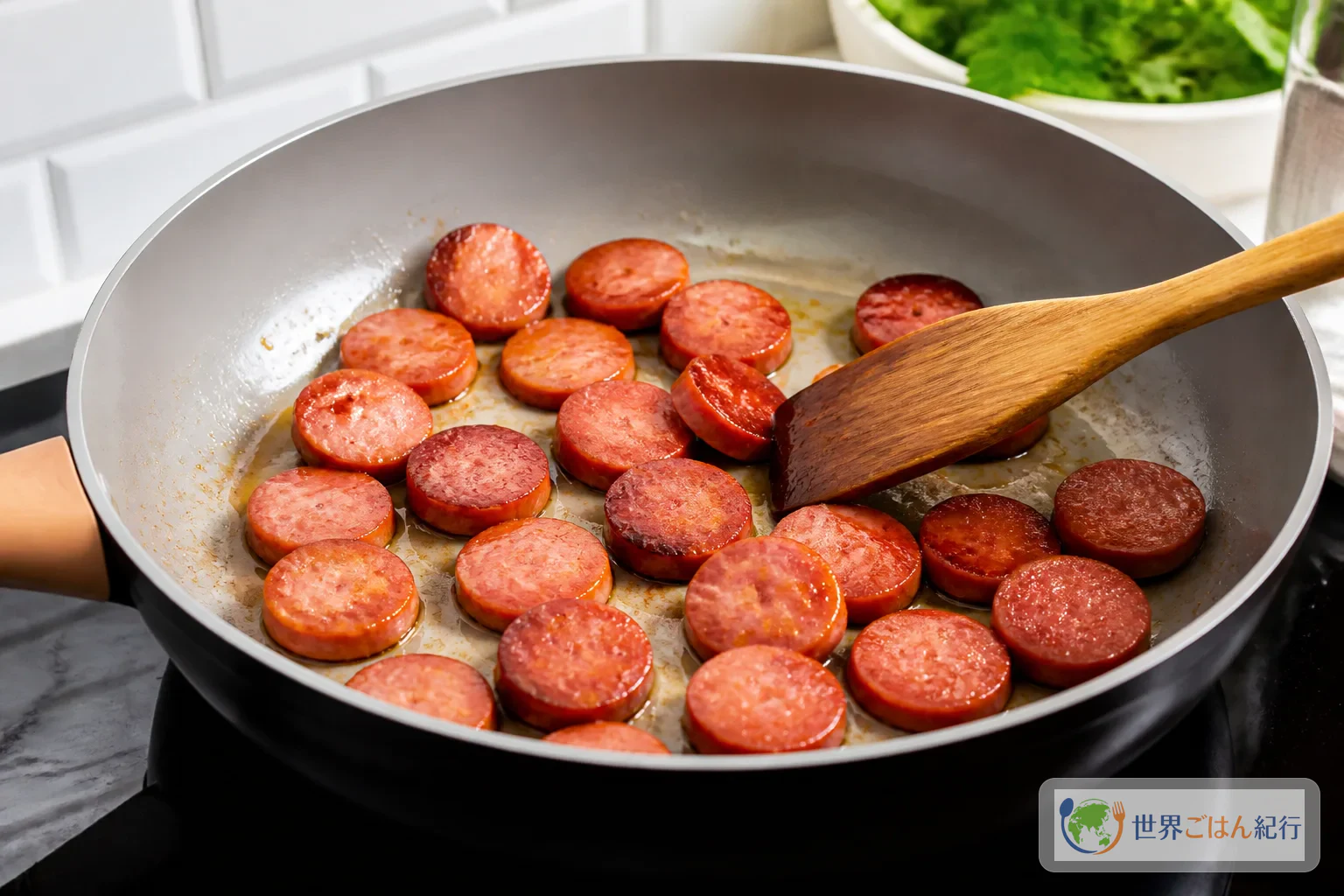
If you can't find red hot dogs, use regular wieners, bologna-style sausage or thick frankfurters. Cut them on the diagonal into 0.5 inches (1 cm) pieces and brown the surface to keep the round shape and toasty flavor. Strongly smoked products mask the sweetness of the tomato sauce, so plain wieners are the easiest choice the first time.
A meatless version
Switch to 9 oz (250 g) plant-based ground "meat" and 8.5 oz (240 g) plant-based sausages, and use plant-based shredded cheese as well. Plant-based products vary in salt and moisture, so start with 2 tsp (10 ml) soy sauce. If you add 3.5 oz (100 g) mushrooms, chop them into 0.25 inch (5 mm) pieces, sauté them with the meat and cook off their moisture thoroughly.
A pan big enough for the platter
To toss 1 lb (500 g) pasta all at once, a deep skillet about 10–11 inches (26–28 cm) across is easiest to handle. With a shallow skillet, work in two batches, half the pasta and half the sauce each time. That's plenty if you rarely cook for more than 4. If you do buy a pan, check that it's 11 inches (28 cm) across and works with your stovetop. A deep pan with a narrow base still makes 1 lb (500 g) pasta hard to turn, so look at the width of the base as well as the depth.
Method: brown the hot dogs, reduce the sauce, add the pasta last
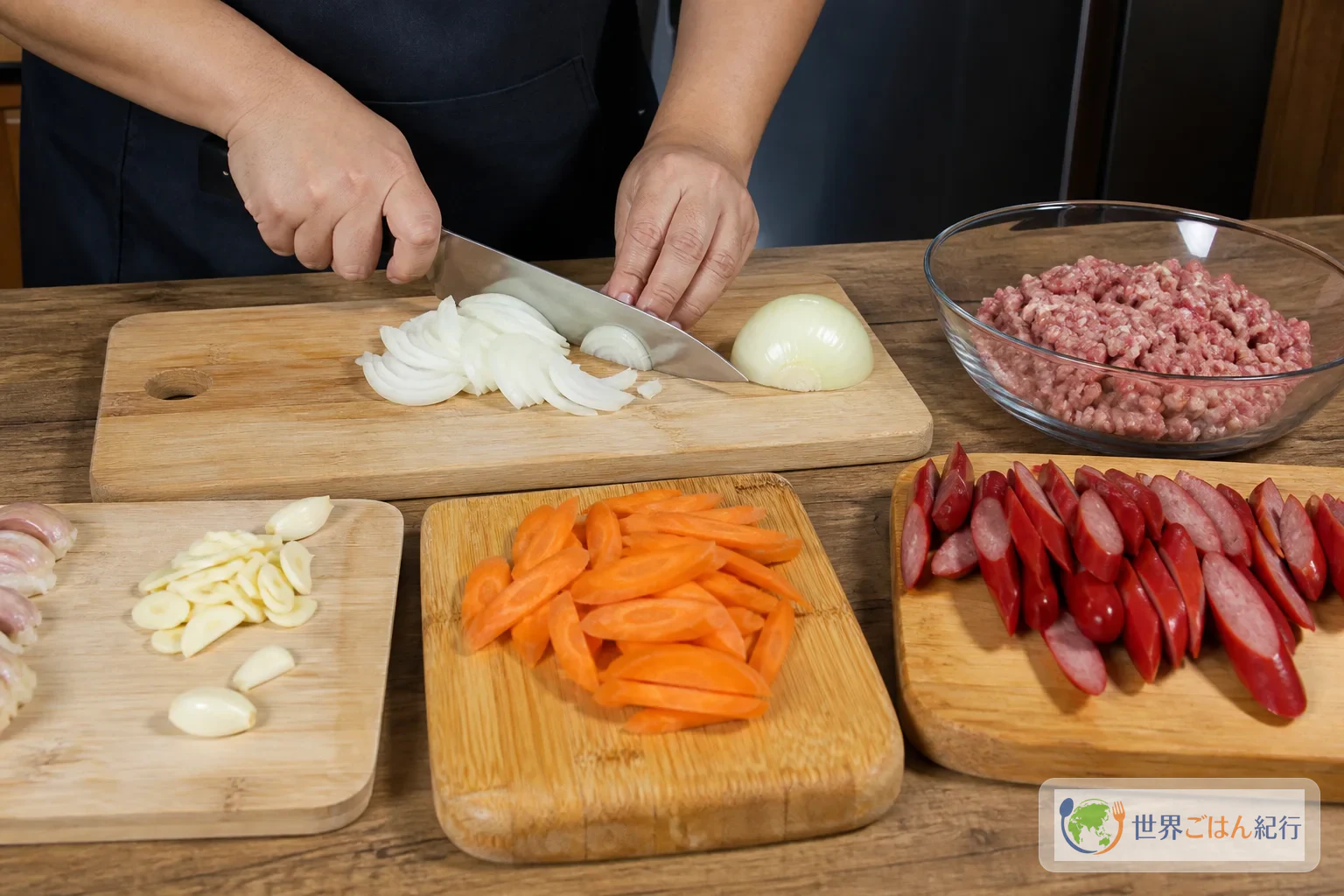
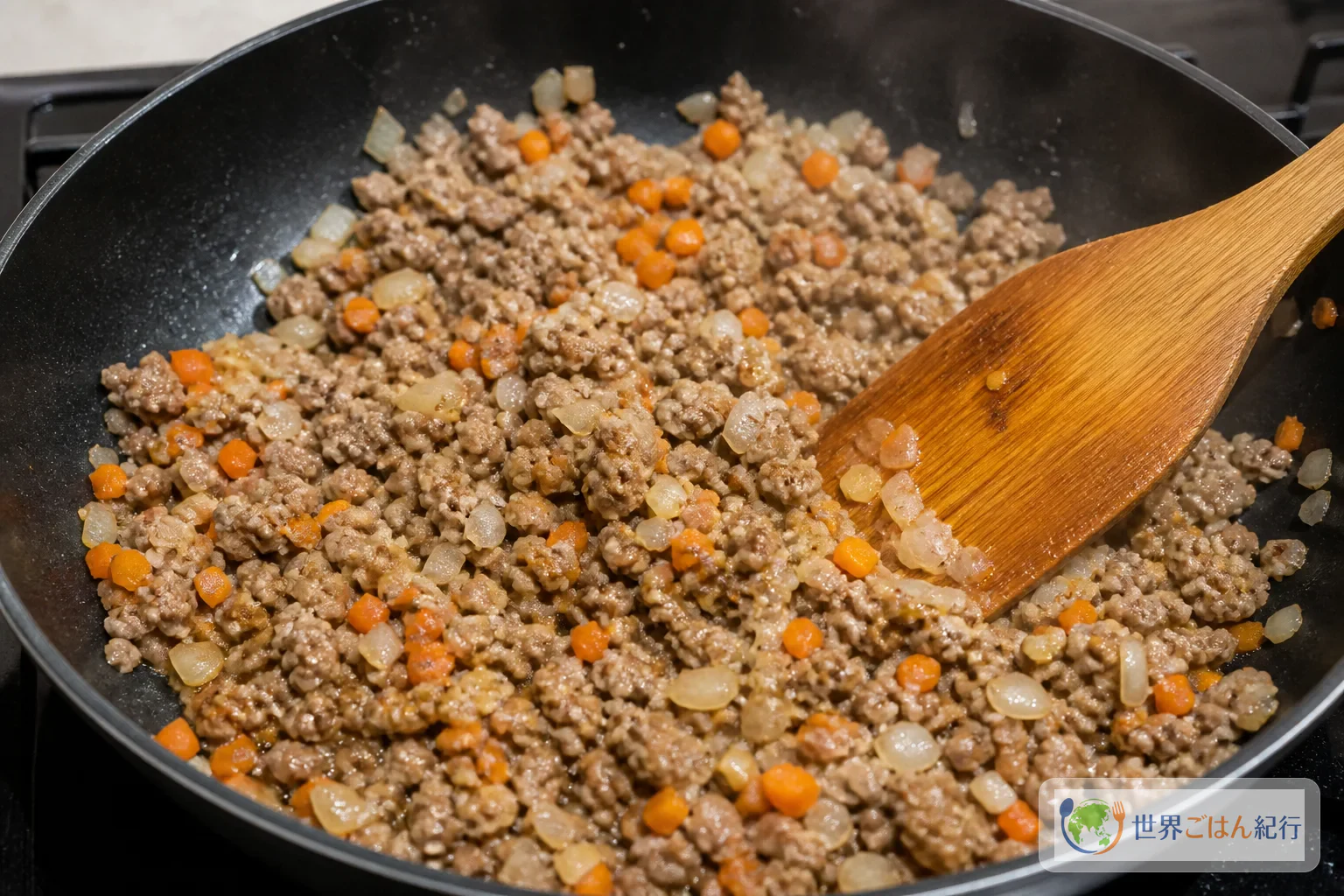
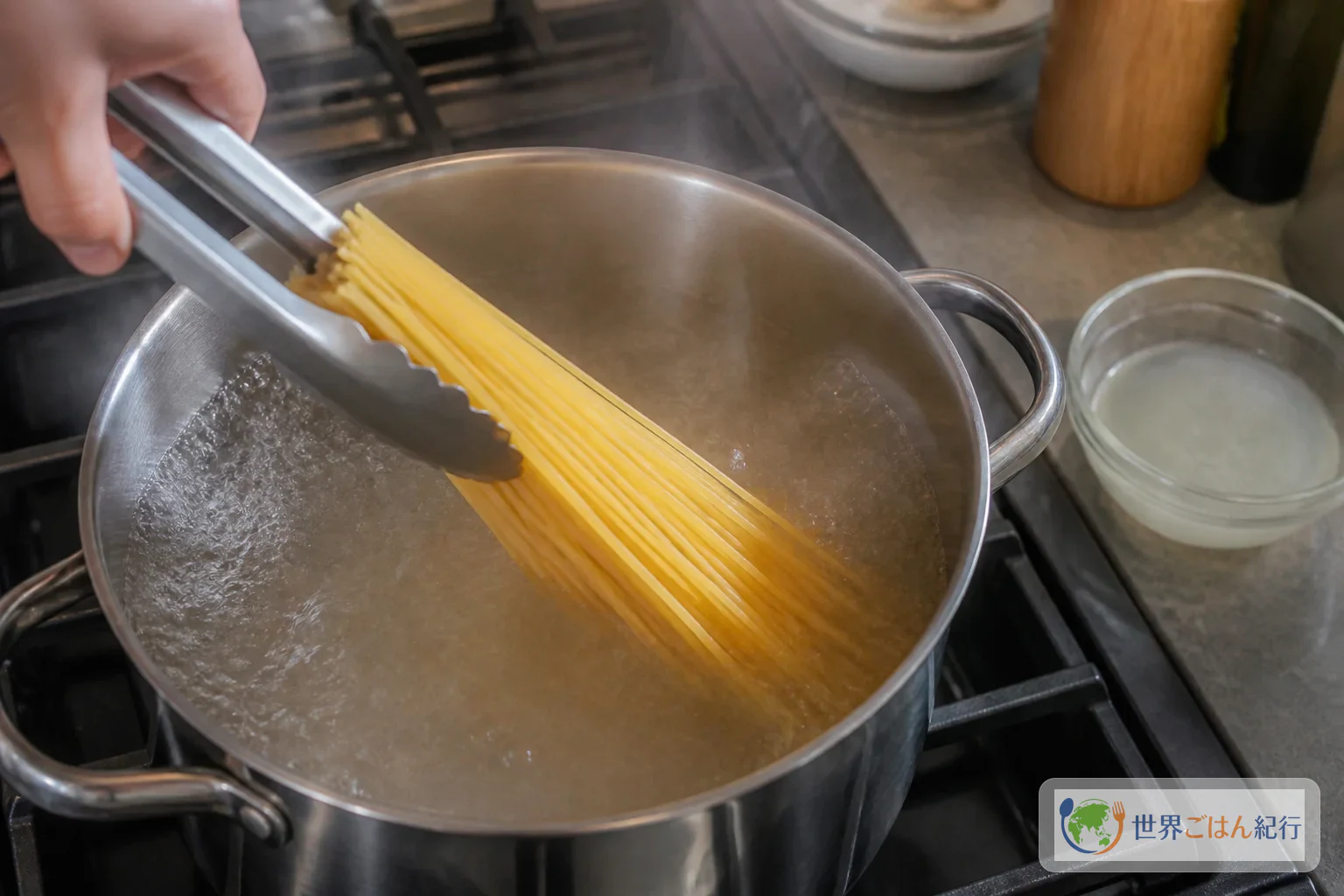
If you put everything in the pot from the start, the surface of the hot dogs turns soggy and the moisture from the meat thins out the sauce. Brown the hot dogs first and set them aside, then build the aromatics and tomato paste in the pan used for the ground meat. Cook the pasta only once the sauce has reached the right thickness.
Getting the sauce and pasta right
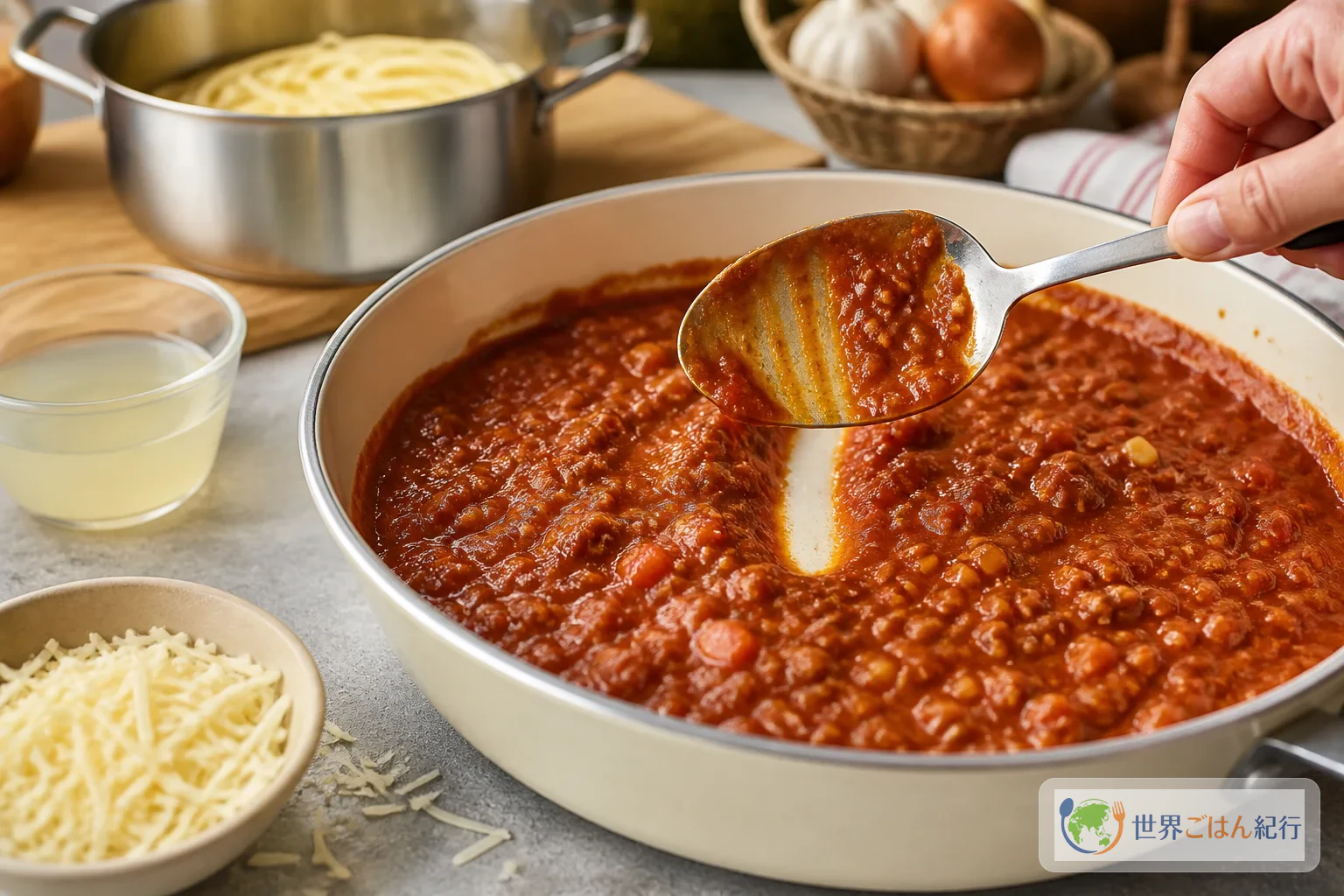
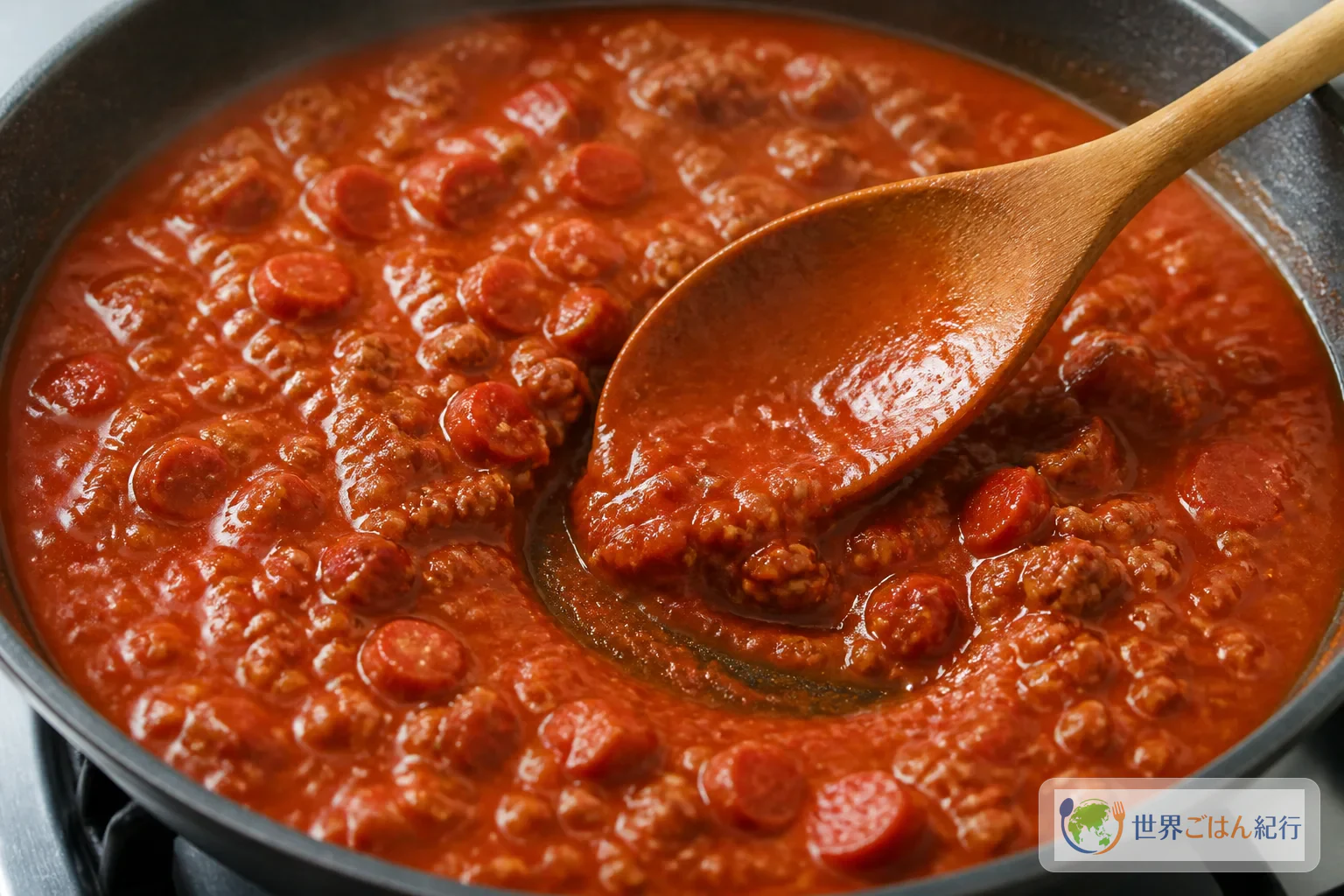
Getting the thickness right matters more than piling on sweet ingredients. At the right thickness, you can taste the browned meat, the tomato's acidity, the banana ketchup's sweetness and the cheese's saltiness, and they all come together in the pasta. The same goes if you're trying to match a chain restaurant. Their version is an easy-to-read mix of sweet sauce, ground meat, hot dogs and cheese. At home, adjusting the thickness of the sauce works better than adding more sugar or processed meat.
Start with ¾ cup (180 ml) banana ketchup and taste after 15 minutes of simmering. Only if it isn't sweet enough, add sugar 5 g at a time. Putting in 1 oz (30 g) sugar from the start makes it hard to pull back once the sauce has reduced.
Thinning with water dulls the sweetness and saltiness along with it. Reduce over low heat in 5-minute rounds, checking whether a line traced across the bottom of the pan with the spatula stays for 2 seconds. If it looks like it might scorch, turn off the heat and transfer it to another pot before adjusting.
Tossing cooked pasta with oil keeps the sauce from clinging. Add 1 tbsp pasta water and, lifting with tongs, return it to the hot sauce right away.
Some restaurants and families cook the pasta soft so it soaks up plenty of sauce. If it's going to sit on a platter for a while, cook it 1 minute short so it doesn't go limp at the table.
Serving, spicy versions and storage
Making it spicy
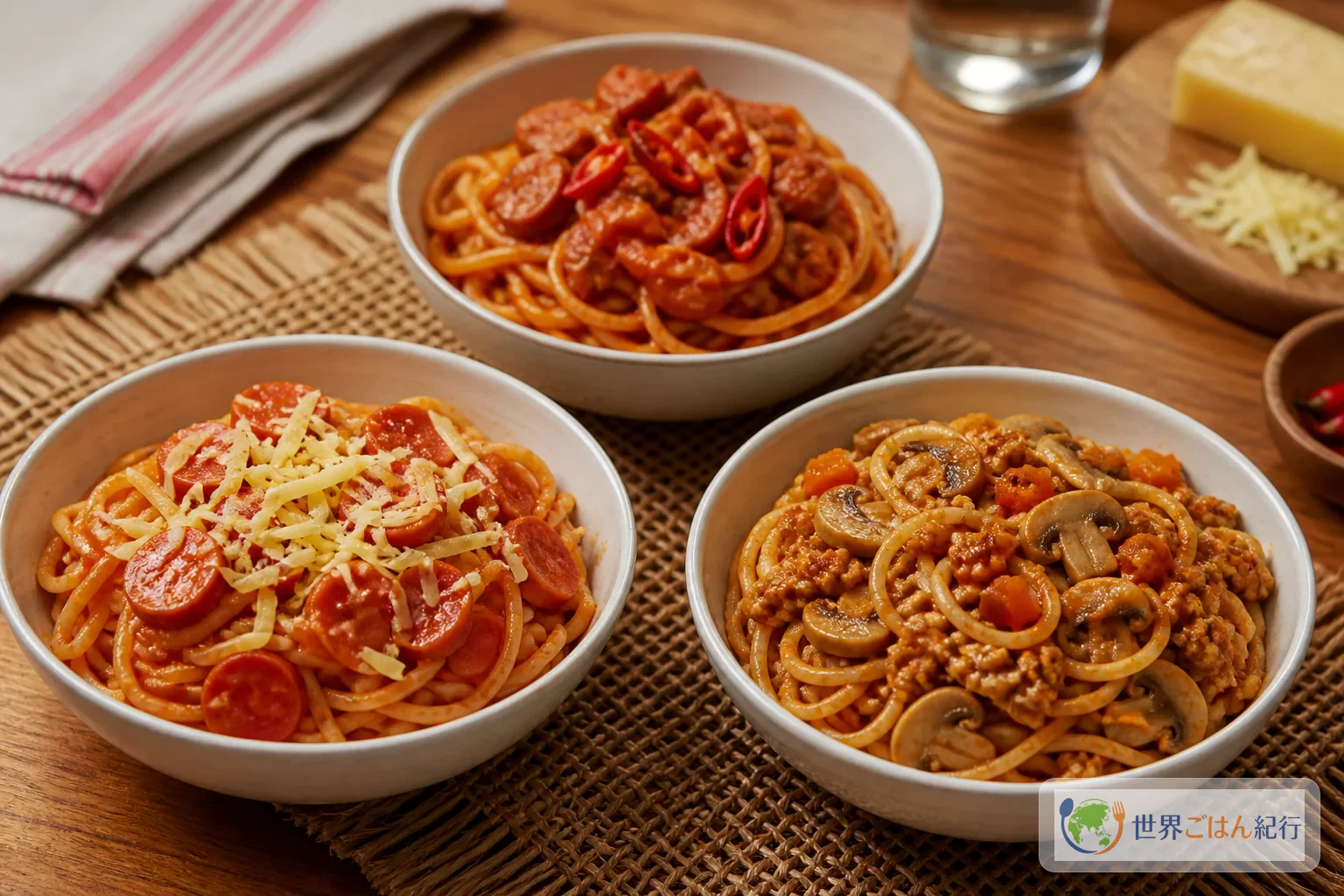
Filipino spaghetti is sweet at heart, but you can add heat by sautéing 1 sliced red chile or 1 g chili flakes with the meat. A spicy platter leaves out the kids and anyone who doesn't like heat. It's easier to set out hot sauce and let people add it after they've served themselves. For adults, add more black pepper.
Storage and reheating
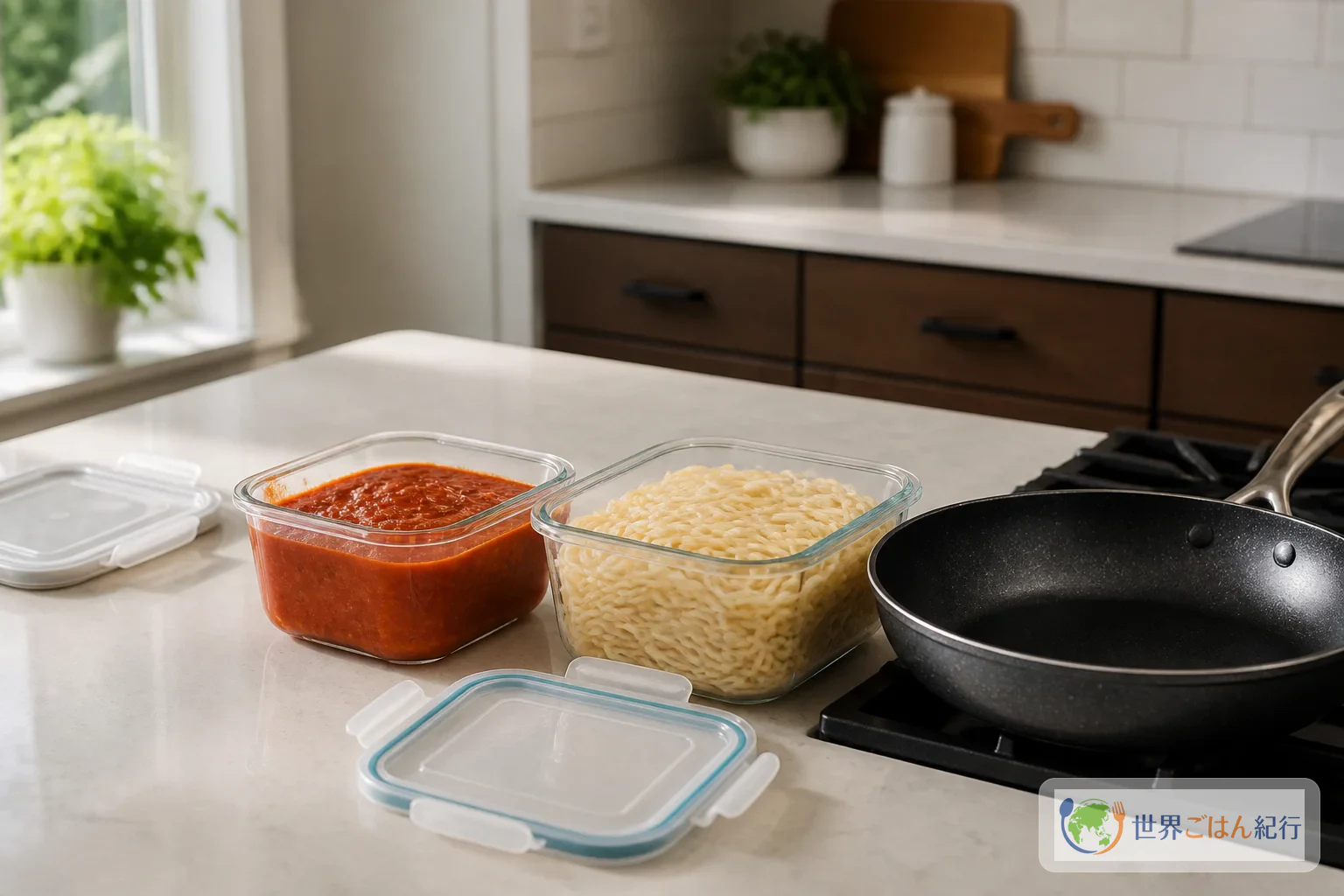
If people will be eating at different times, keep the sauce and pasta separate, because the pasta absorbs sauce and swells. Transfer the sauce to shallow containers, and once the steam dies down, cover and refrigerate. Drain the pasta and divide it into small portions so it doesn't set into large clumps. Refrigerate it once it has cooled slightly rather than leaving it out for long.
Finish refrigerated sauce and pasta within 2 days. The sauce can be frozen, but the fat and liquid separate as it thaws. Return it to a pot, stir over low heat and bring back the thickness with 1.75 oz (50 g) tomato sauce or 1 tbsp water. Cheese changes texture in the freezer, so freeze the sauce without it and top only what you'll eat.
To reheat, put the sauce in a skillet over low heat and add 1 tbsp water. When it's bubbling gently and heated all the way through, add the pasta and toss for 2–3 minutes. If the pasta breaks easily, lift it with tongs rather than pressing it with a wooden spatula. If you notice an off smell, a bulging container or a slimy surface, throw it out.
FAQ
Why is Filipino spaghetti sweet?
The sauce gets its sweetness from banana ketchup or other sweet tomato-style condiments, and the saltiness of the hot dogs, ground meat and cheese sits on top of it. To tone it down, start with the ketchup rather than the sugar. Cut the banana ketchup to ½ cup (150 ml) and add 1 oz (30 g) more tomato sauce, and the core of the flavor stays intact.
What if the sauce is too sweet or too thick?
If it's too sweet, add 1.75 oz (50 g) tomato sauce and a little black pepper and simmer over low heat for 5 minutes. If it's too thick, add water or the reserved pasta water 1 tbsp at a time. Adding salt or vinegar all at once makes the saltiness of the hot dogs and cheese heavier too, so correct it a little at a time.