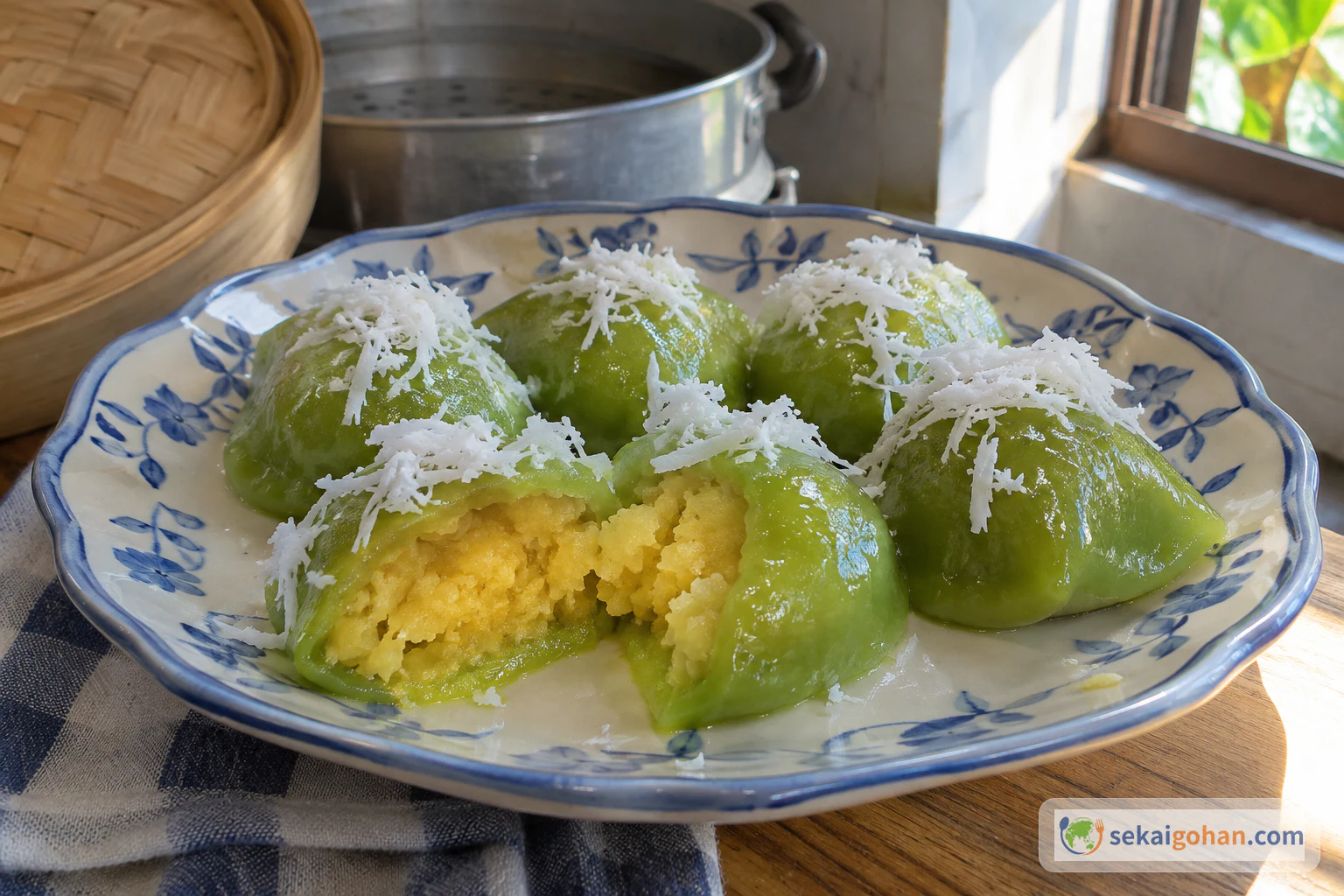
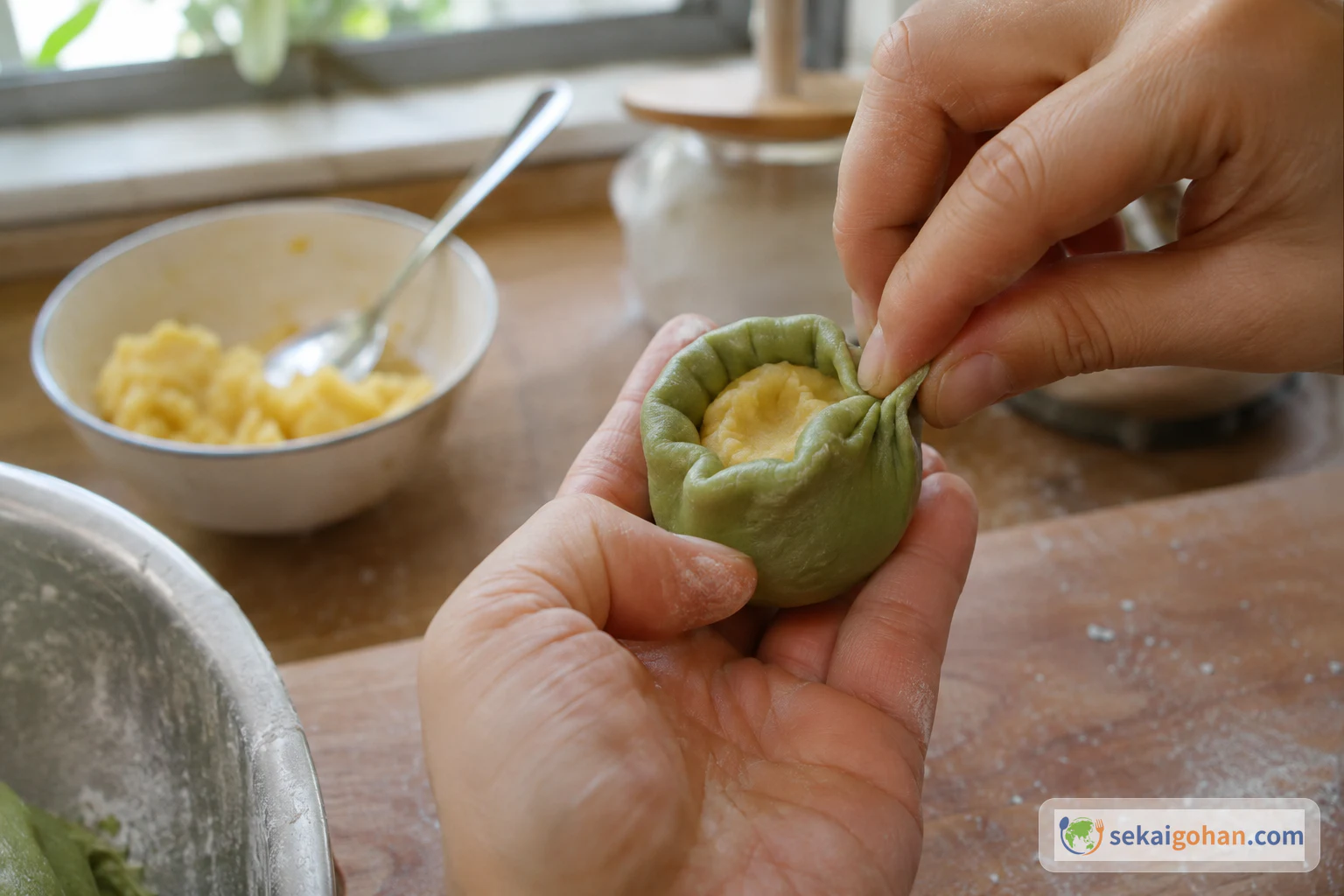
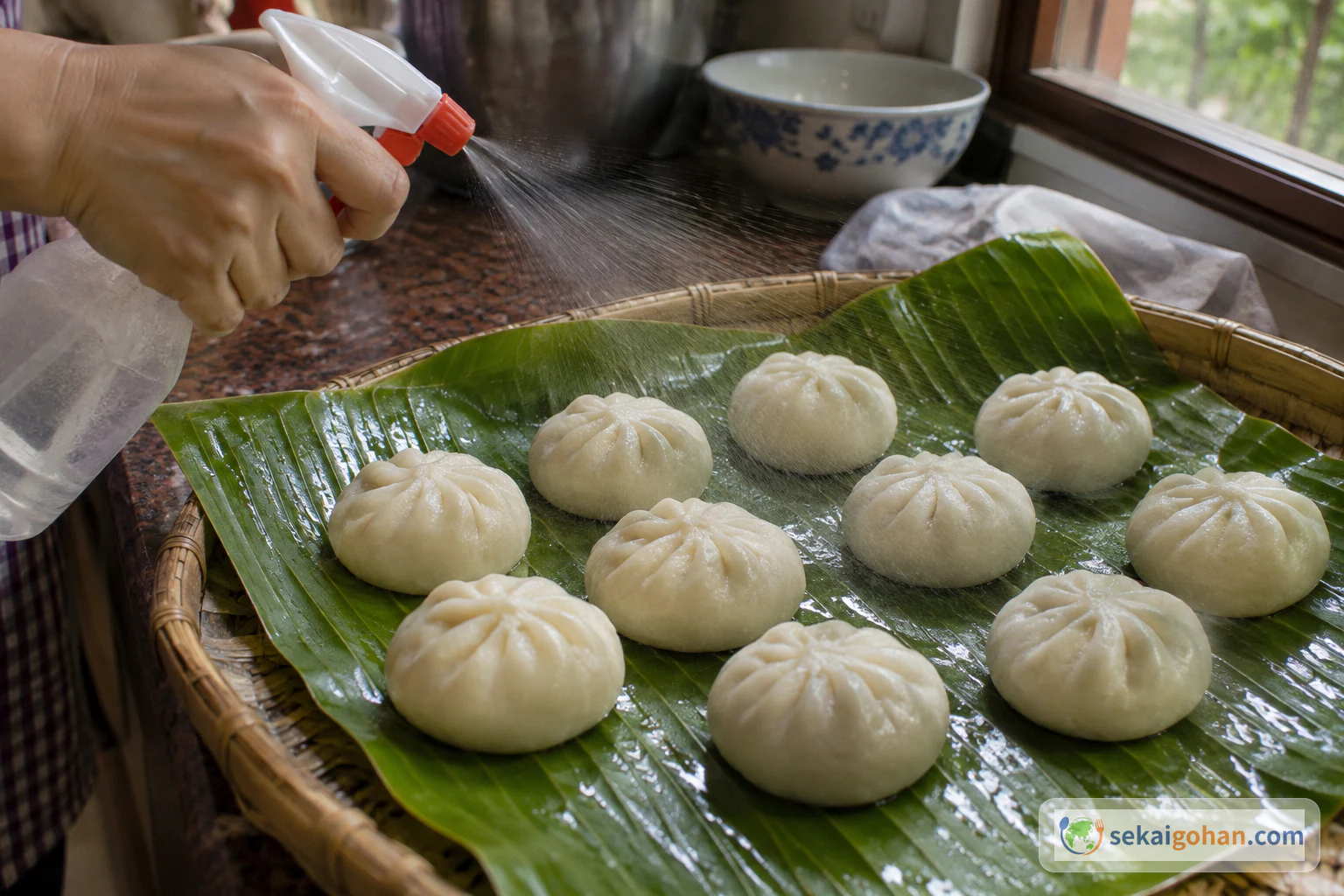
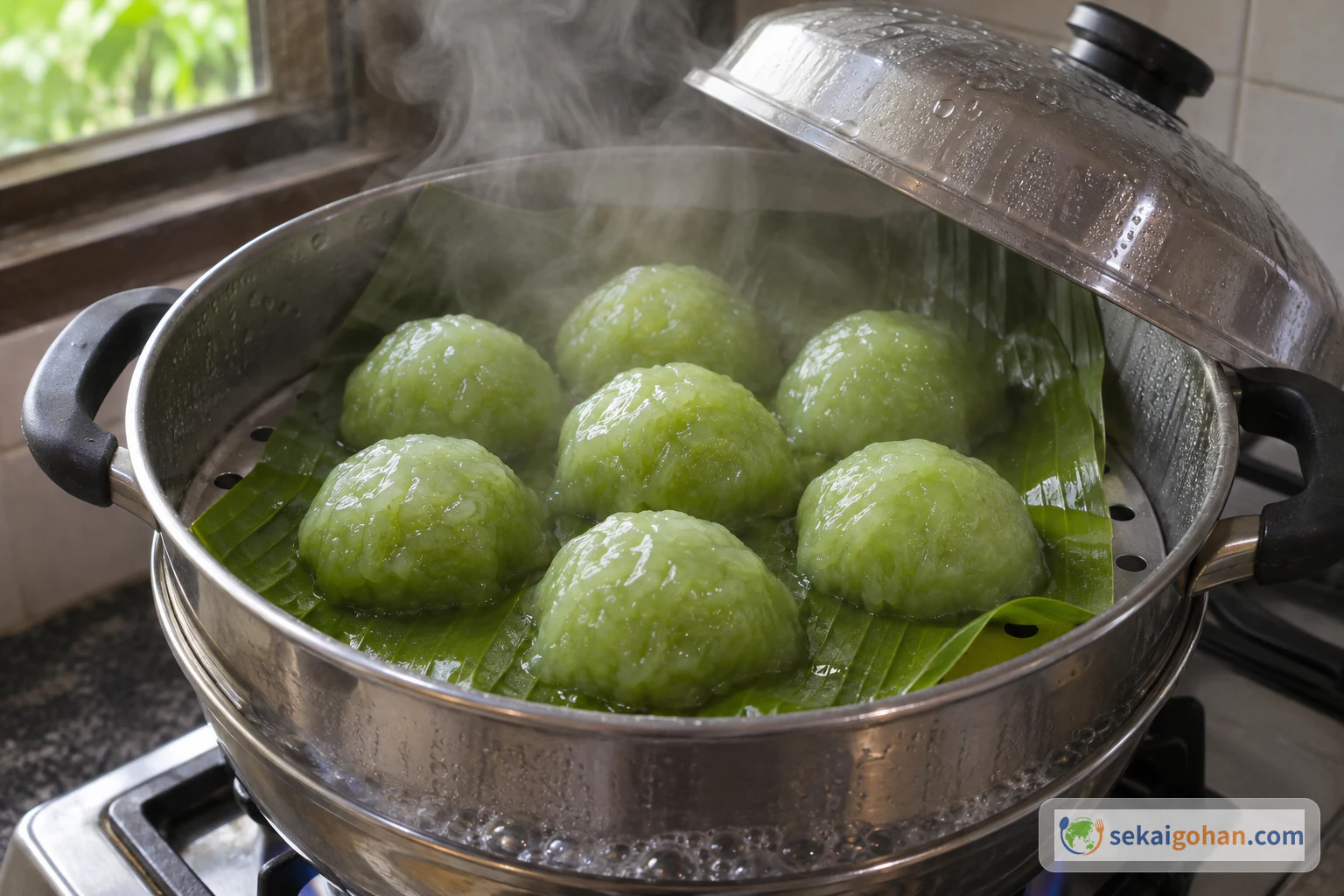
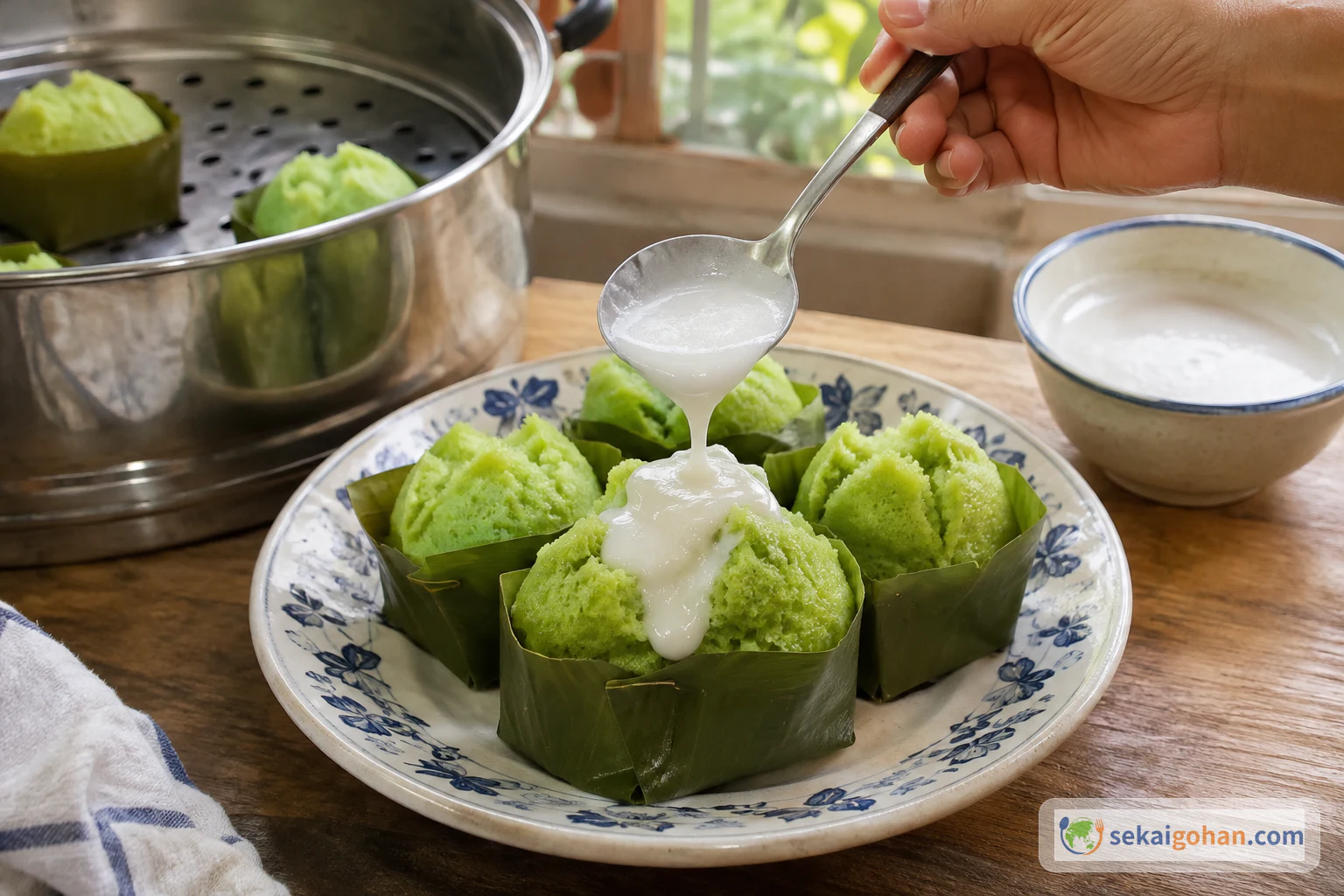
Small balls of sweet mung-bean paste are wrapped in pandan-green glutinous-rice dough, set on oiled banana leaf and steamed briefly. Each one gets a spoonful of thickened, lightly salted coconut on top at the end. This is khanom phra phai (ขนมพระพาย), a Thai steamed sweet. The wrapper is soft and chewy, the filling is sweet coconut and bean, and the pinch of salt in the topping makes the sweetness stand out.
Khanom Phra Phai in Central Thailand
The name is also spelled ขนมพะพาย, and ขนมพระพาย is another name for it. Broadly, it's a bean filling wrapped in a dough of rice flour and glutinous rice flour and then steamed. In central Thailand it's a wedding sweet: the sticky glutinous-rice dough stands for a strong bond, and the sweet filling stands for sweet affection. To see where it fits among other Thai dishes, start from Thai food on Sekai Gohan.
Each cake has three parts. Each one is made separately and judged by how it looks and feels.
| Part | What it's made of | Its job in the cake |
|---|---|---|
| Wrapper | Glutinous rice flour, pandan juice, water | A soft, elastic outer layer that holds the filling and carries the green color and pandan aroma |
| Filling | Peeled split mung beans, coconut milk, sugar | The sweet center, cooked until dry enough to roll into balls |
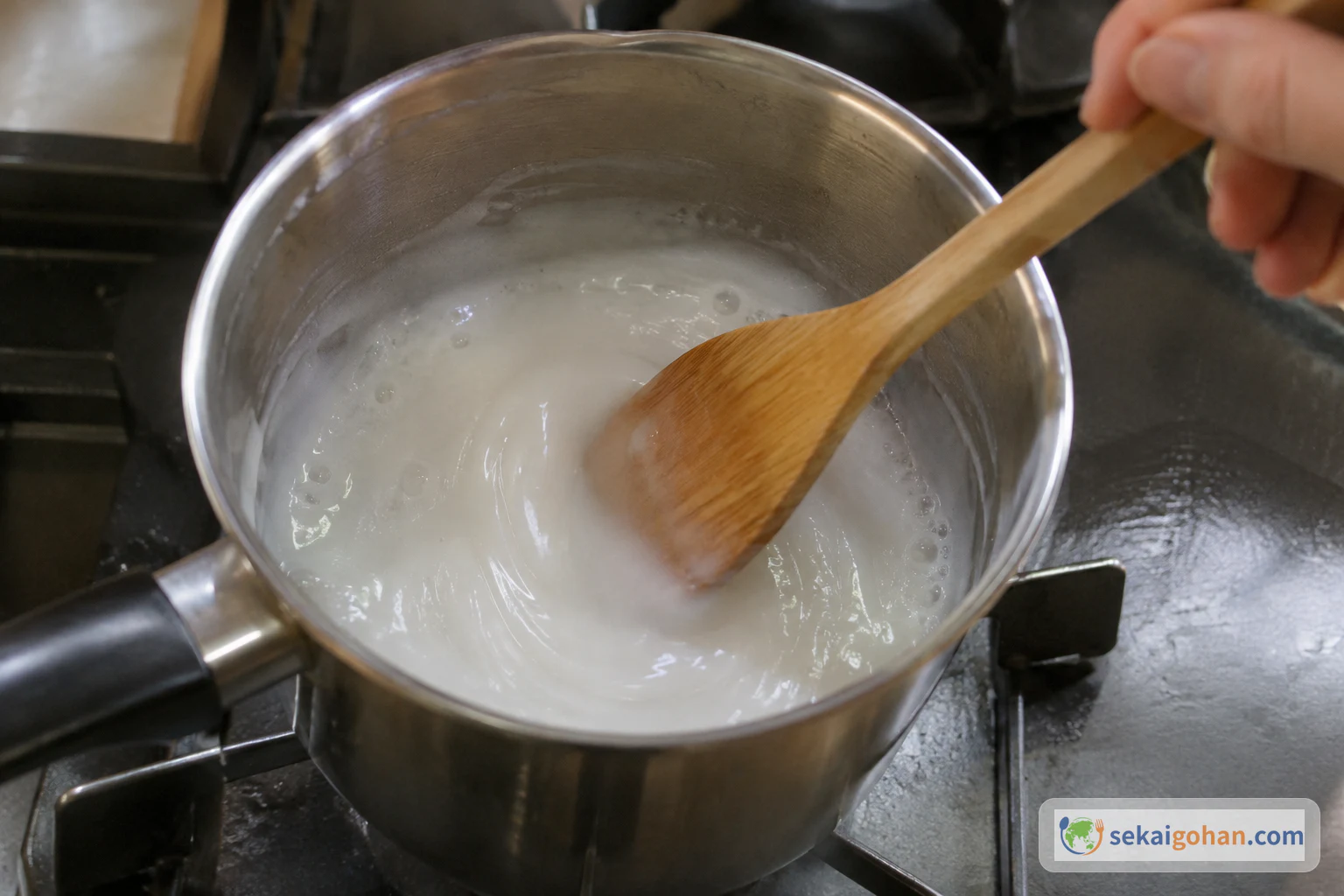
| Topping | Coconut milk, rice flour, salt | A lightly thickened, slightly salty coconut layer that sets off the sweetness |
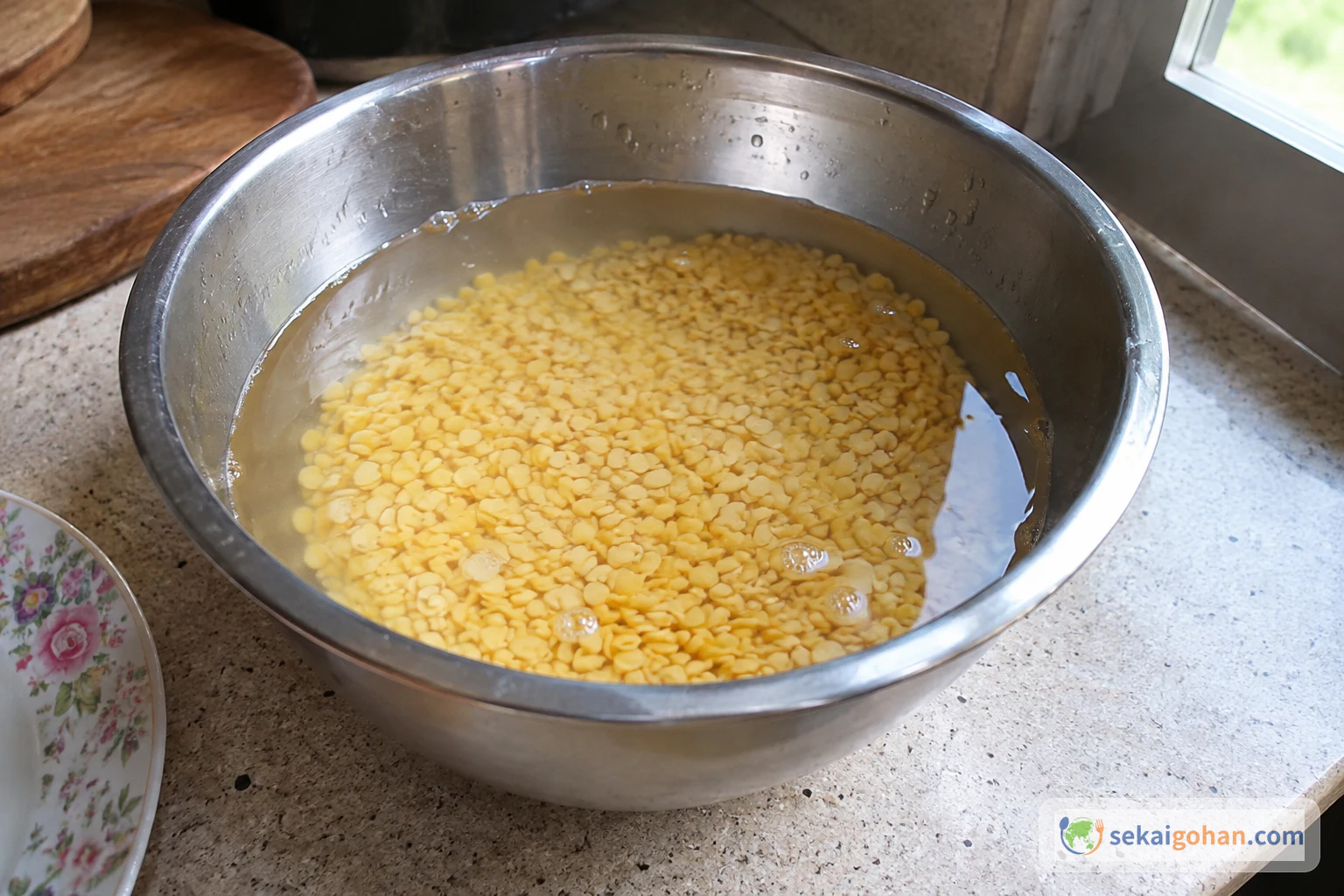
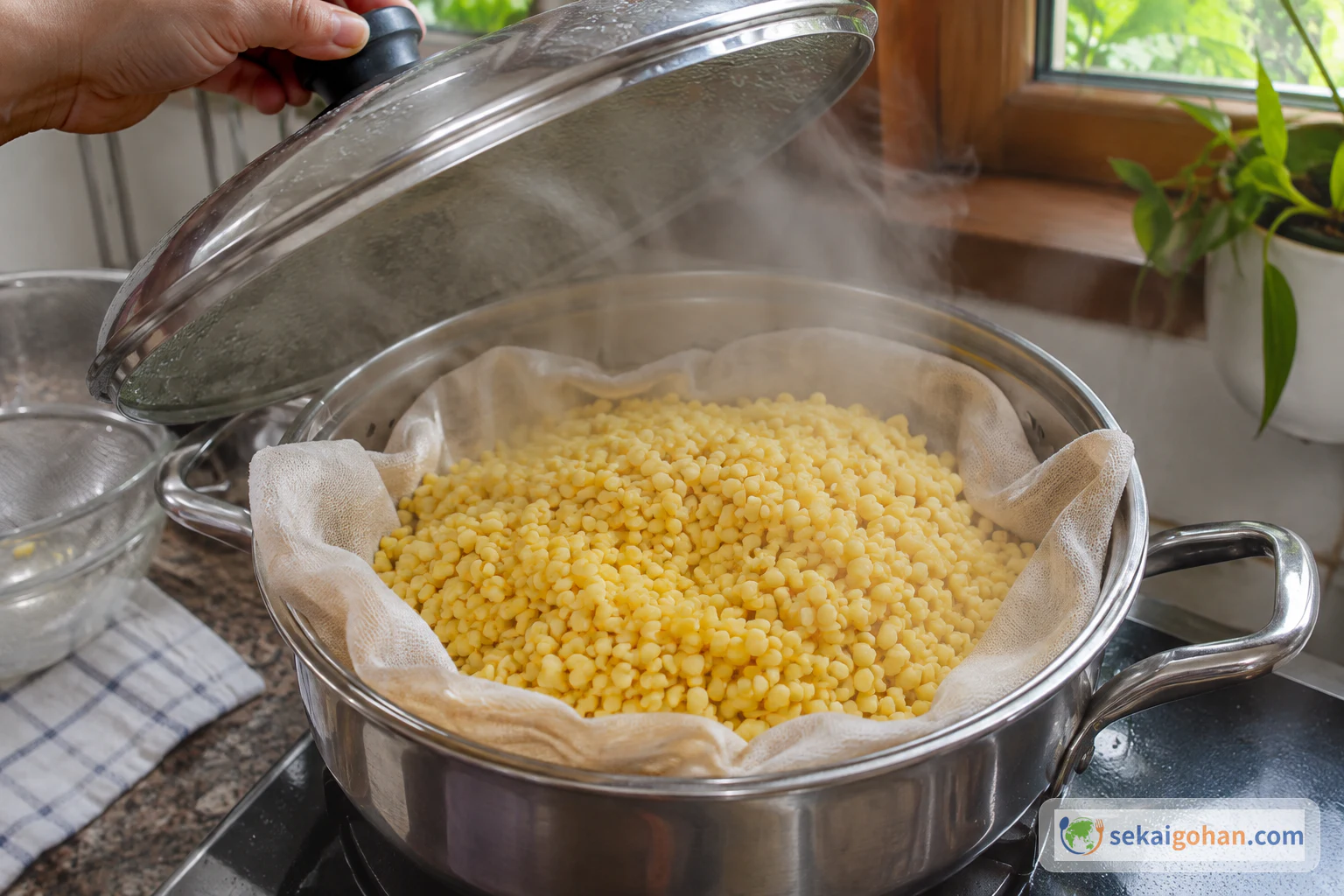
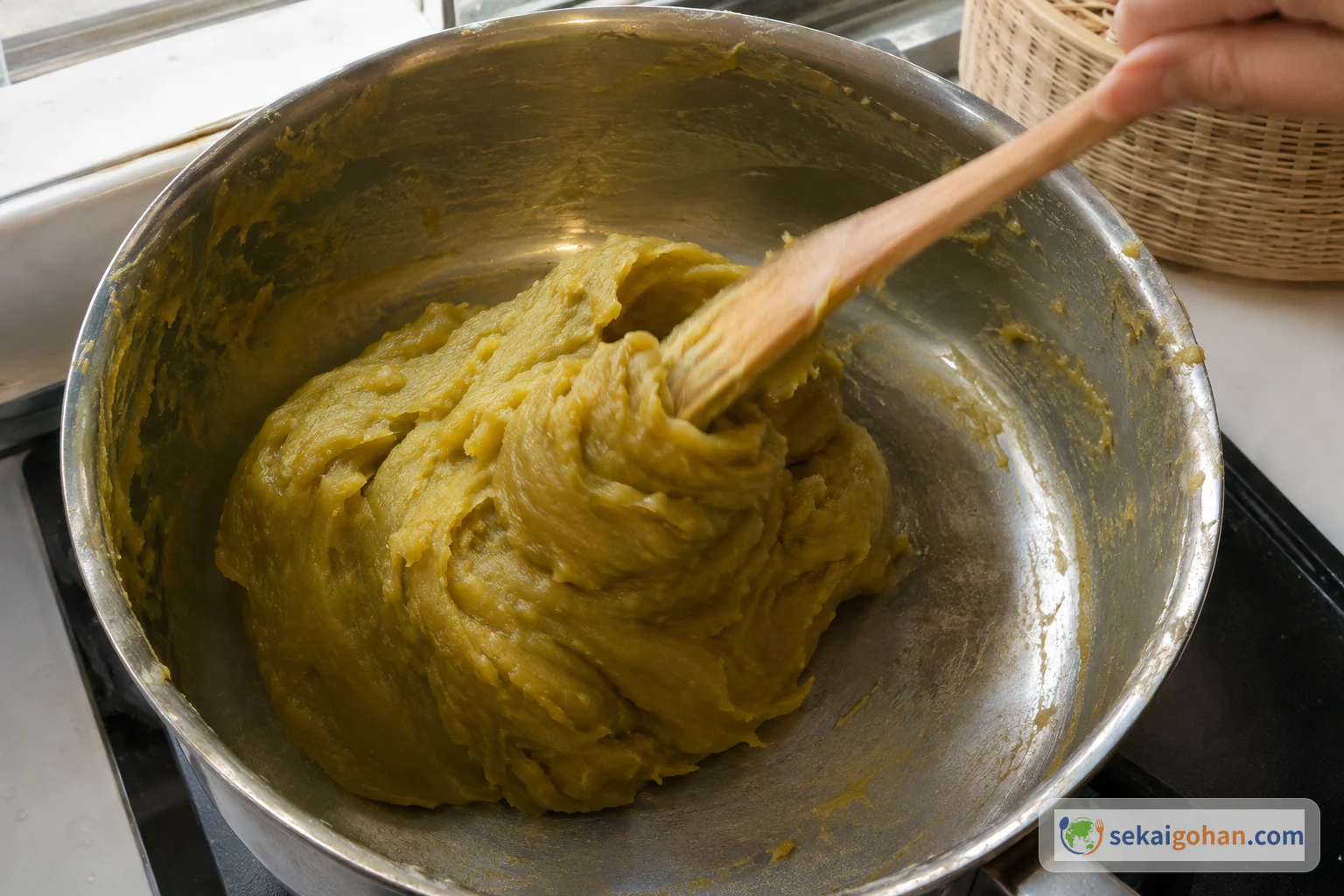
To make the filling, rinse the yellow split mung beans until the water runs clear, soak them and steam them until soft. Then blend them with coconut milk and sugar and stir the mixture in a pan until the paste dries and pulls away from the sides. The topping goes on only after the cakes are steamed.
Steaming times depend on your steamer, so check the cakes as they steam rather than relying on the clock alone.
Ingredients: Dough, Filling and Topping
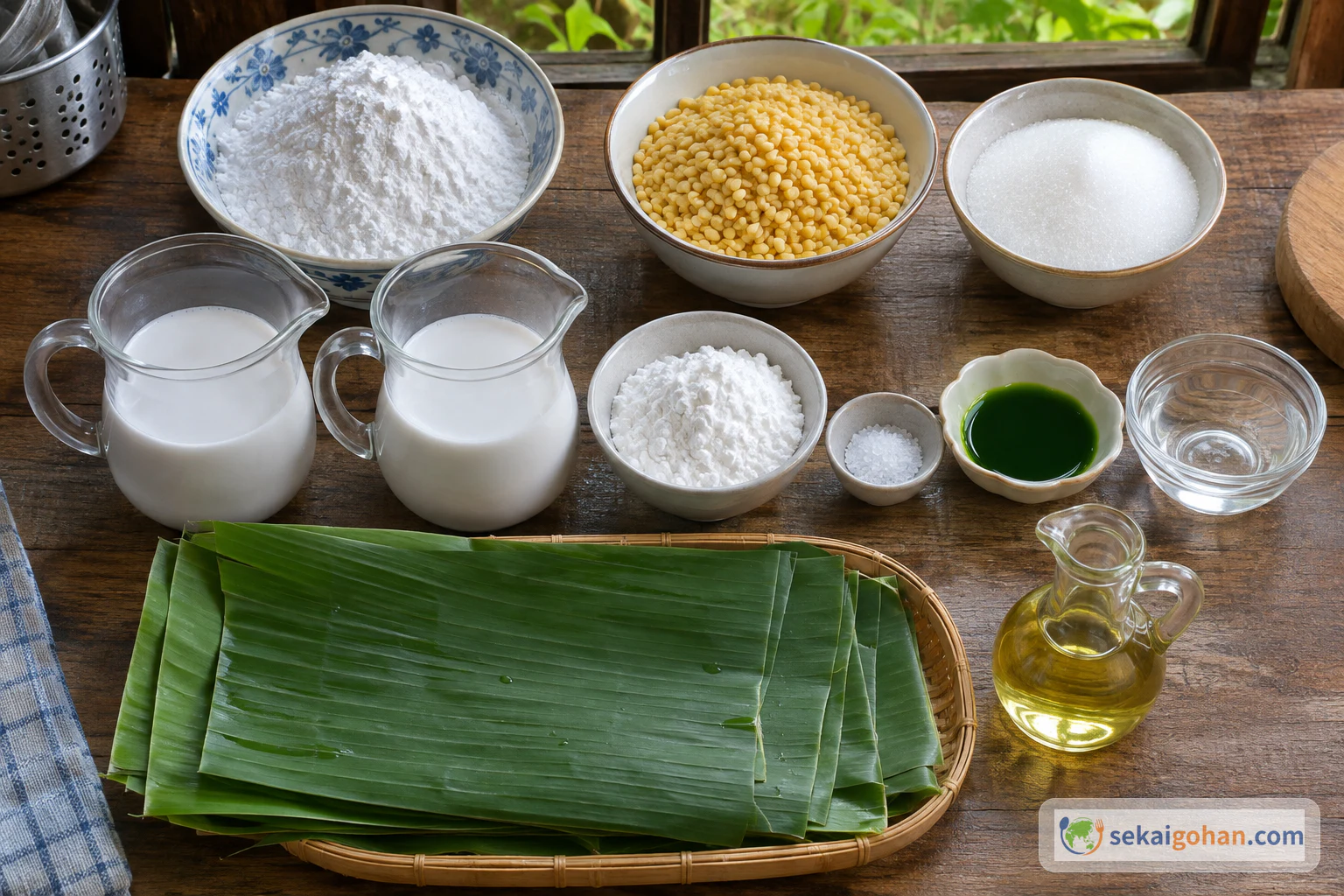
This sweet contains legumes (mung beans) and coconut. Check the labels on flours, coconut milk and other packaged products for allergen and shared-facility information.
Equipment
- Steamer (or a steaming rack in a lidded pot)
- Bowl for soaking the beans, and a strainer
- Blender or food processor
- Pan for cooking the filling, and a wooden spatula
- Small saucepan for the topping
- Fine strainer or cloth, if you're making pandan juice from fresh leaves
- Banana leaf, for setting the cakes on in the steamer
- Spray bottle
Choosing Ingredients for Khanom Phra Phai
- Mung beans: choose peeled, split, yellow mung beans. Whole green mung beans and mung bean flour won't work in this formula.
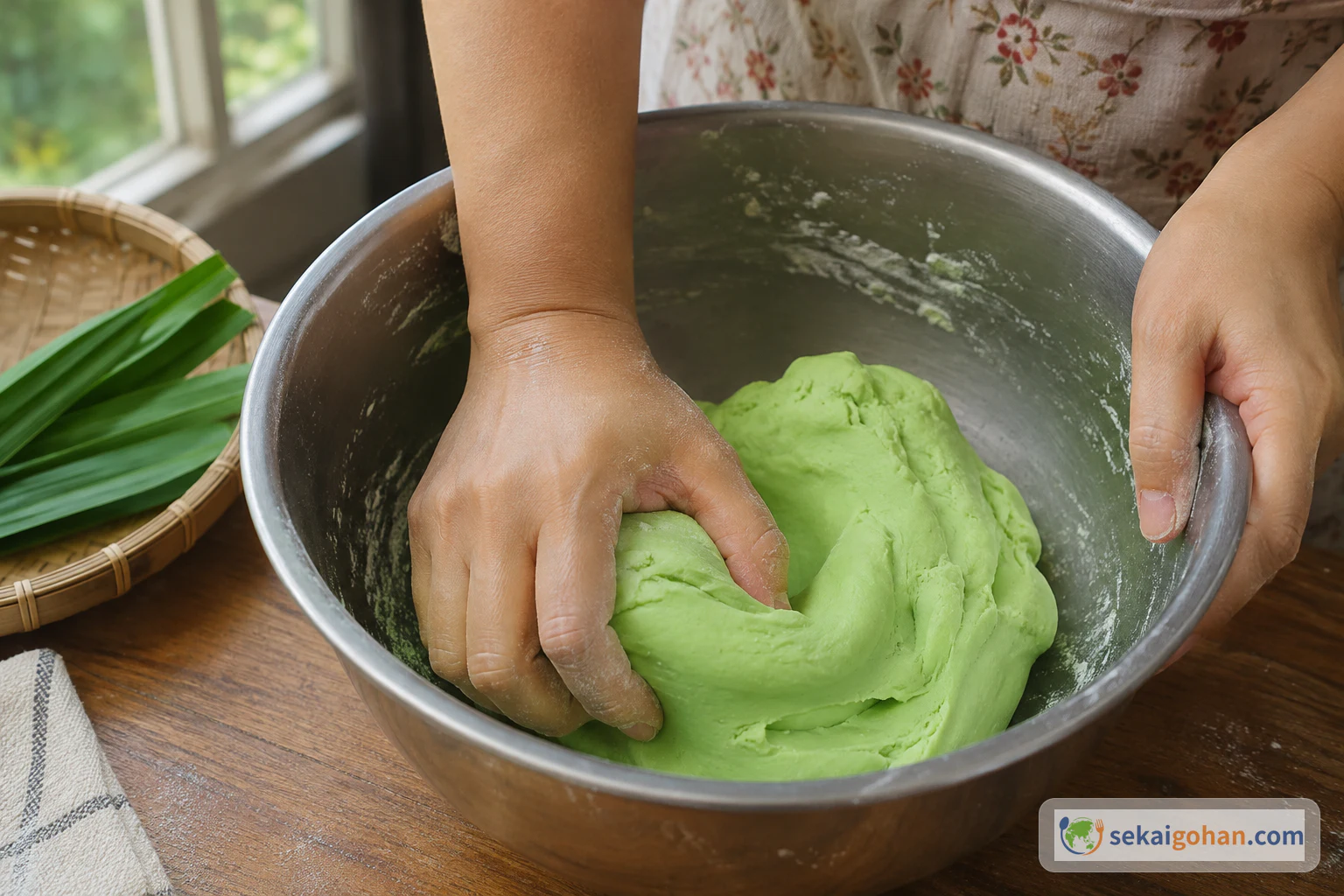
- Color liquid: concentrated pandan juice is usually made by blending chopped fresh pandan leaves with water and straining the result. You can use the same 3 tbsp of butterfly-pea water instead, which gives a blue dough and a different aroma. Pick one; don't combine them.
- Coconut milk: use plain coconut milk; sweetened or salted coconut products behave differently. The topping uses its own coconut milk, separate from the coconut milk in the filling, so measure the two portions separately and keep them apart.
- Flour: the dough is glutinous rice flour only. Rice flour goes into the topping. A dough of rice flour and glutinous rice flour belongs to a different version (see below).
Method: Filling, Dough, Steaming, Then Topping
Make the filling first so it can cool slightly before shaping. Make the dough next, then wrap and steam. Make the topping separately and pour it over the cakes only after they are steamed.
Khanom Phra Phai Troubleshooting
| Problem | Likely cause | What to do |
|---|---|---|
| The filling is too soft to roll | It hasn't cooked down enough | Return it to the pan and keep stirring until it dries and pulls away from the sides |
| The filling is too hot to handle | It went straight from pan to shaping | Let it cool slightly before rolling. Don't shape hot filling with bare hands |
| The dough cracks when you wrap it | Too little water | Work in more of the 5–6 tbsp water a little at a time until the dough is soft and clay-like. Don't add other flours |
| Filling shows through the wrapper | The seam wasn't fully closed | Pinch the seam firmly and roll the ball again before steaming |
| The beans still feel hard | Not steamed long enough | Keep steaming until soft all the way through before blending |
| The cakes don't look cooked after 5 minutes | Steamer differences | Judge by how the cakes look at 5 minutes. If they aren't done, keep steaming and check again |
| The topping looks split or scorched | Boiled too hard or heated without stirring | Heat gently and stir the whole time. Stop once it thickens slightly |
Other Versions of Khanom Phra Phai
Thai cooks make khanom phra phai in several forms, each with its own proportions. If you want more than one color, follow one of these versions from start to finish rather than adding colors to the formula above.
| Version | What's different | How it compares with this recipe |
|---|---|---|
| Three-color dough | 400g glutinous rice flour plus 90g rice flour, with 250ml coconut milk divided among three colored juices. The dough is kneaded for 10–15 minutes, 300g peeled mung beans are soaked and steamed, the filling is stir-cooked, and the cakes are steamed over boiling water for 5–10 minutes | Different dough ratio, rice flour in the dough, different quantities and colors |
| Pumpkin and other colored doughs | Pumpkin for a yellow dough, anthocyanin water for purple and pandan for green, with tapioca flour. The filling uses peeled mung beans, coconut cream and sugar, and the filled cakes are steamed for about 5 minutes | Measured mostly in cups; pumpkin and tapioca flour make it a different method |
Frequently Asked Questions
How many cakes does this make?
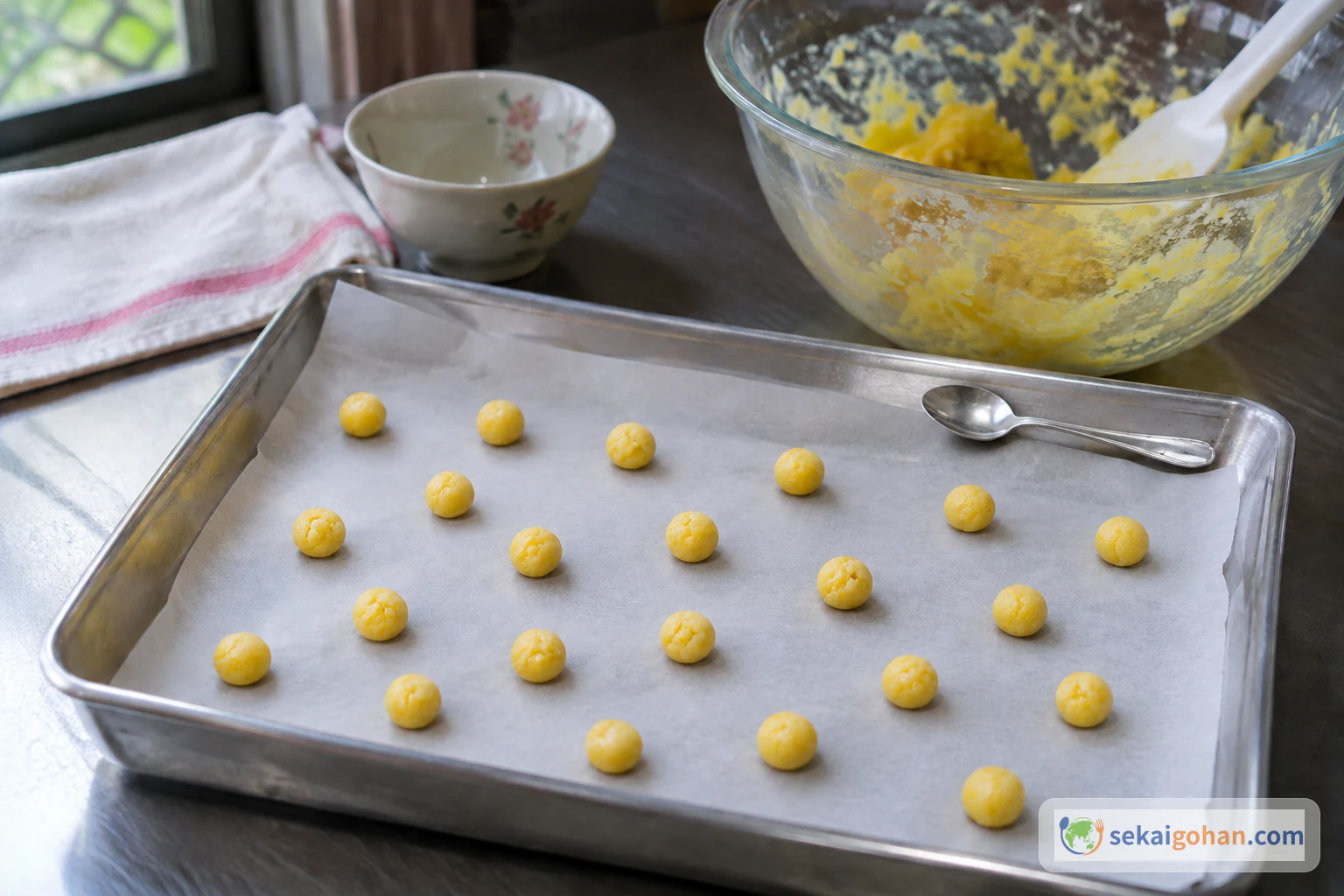
That depends on how evenly you divide the dough and how thickly you wrap. The filling balls are about 0.5 inches (1.5 cm) across and the dough balls about 1 inch (2 cm) across.
How long does it keep?
Once you've opened the coconut products, store them as the label says.