
Mì Quảng: Central Vietnamese Rice Noodles with Pork, Shrimp and a Little Rich Broth

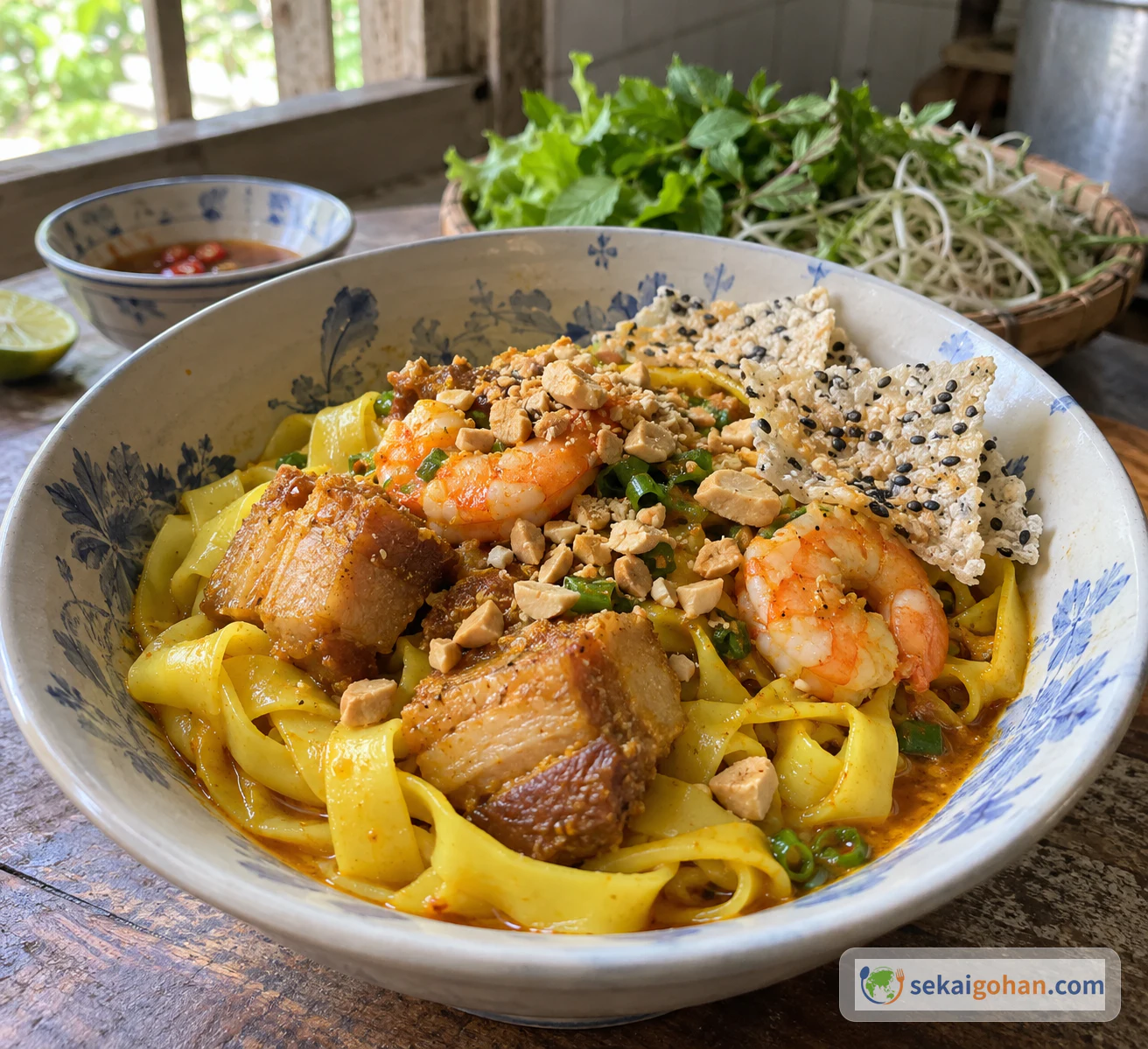
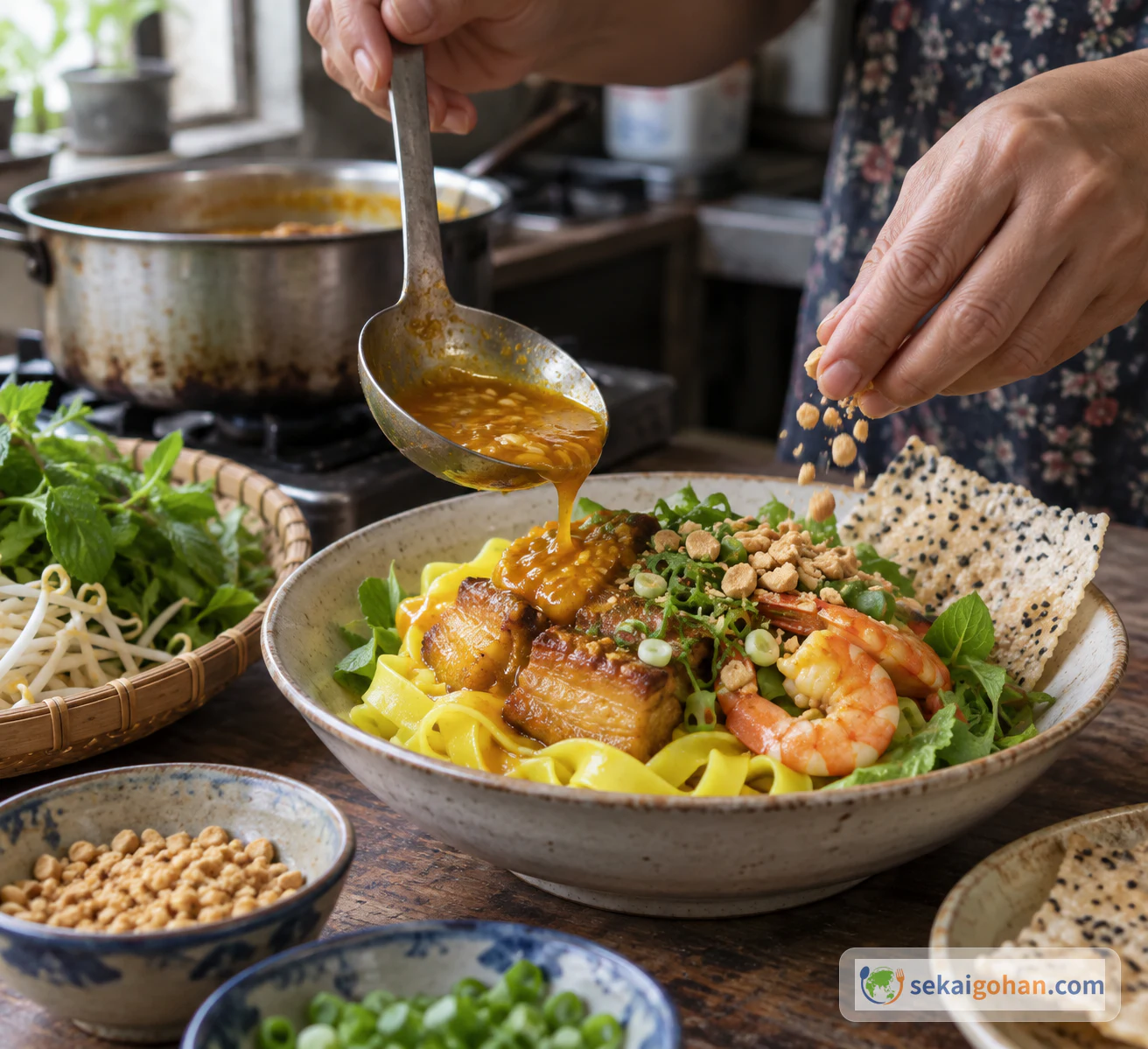
Mì Quảng: wide golden rice noodles topped with pork belly, peeled shrimp, crushed roasted peanuts and a toasted sesame rice cracker, with a small pool of deep orange broth at the bottom of the bowl
Serves
6 servings
Cuisine
Vietnamese

How to make Mì Quảng, the noodle dish of Quảng Nam and Đà Nẵng in central Vietnam, with a pork-bone and shrimp-head broth, pork belly, shrimp and flat yellow rice noodles. Covers why the bowl is not filled with broth, how to find the noodles and sesame rice crackers, honest substitutions for herbs and banana blossom, safe handling of raw pork and shrimp, and how to judge each step.

Cooking flow

Cooking steps

STEP11 / 9

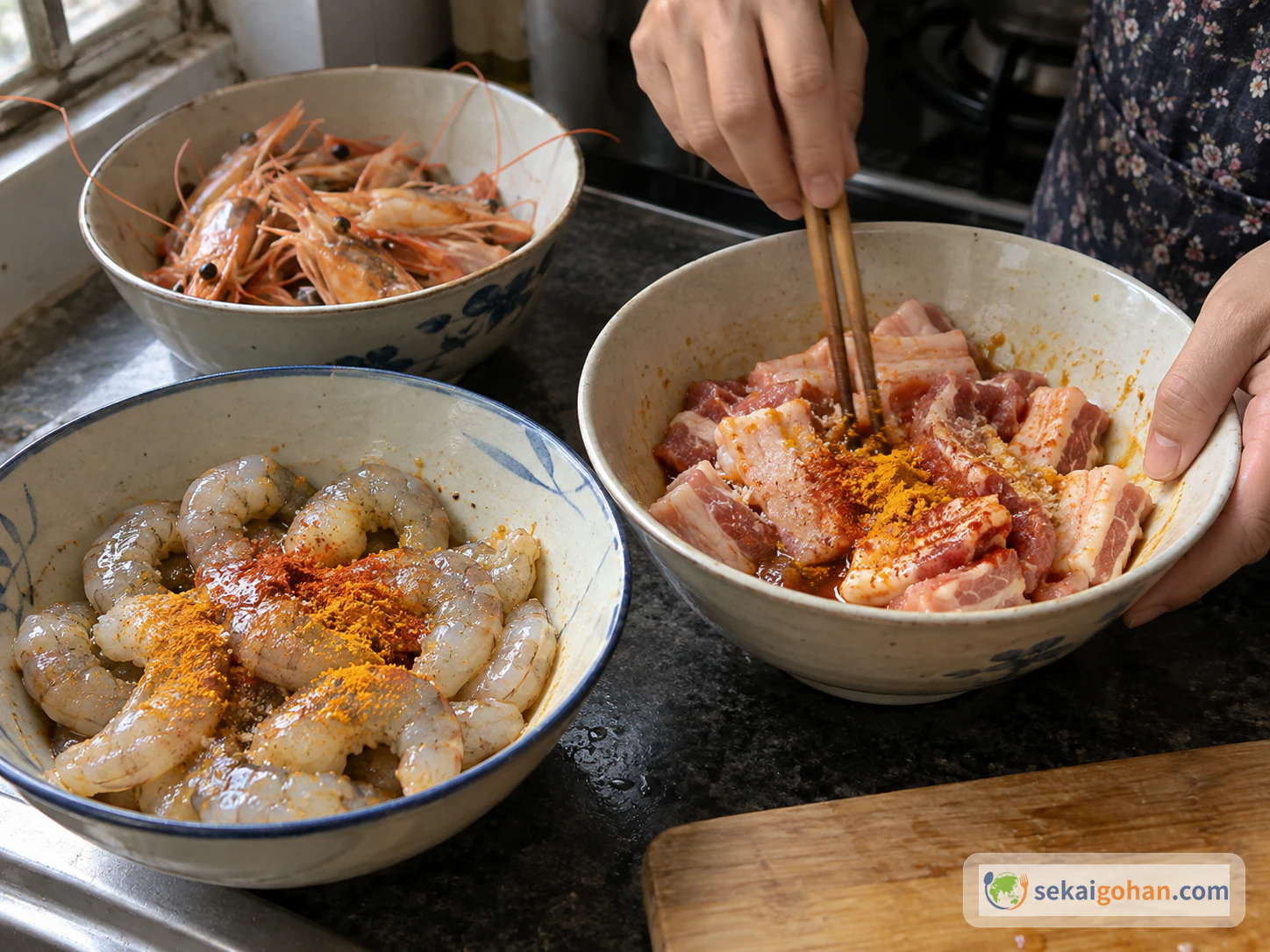
Prepare and season the pork and shrimp separately

Raw shrimp with heads removed and saved for broth, peeled and deveined, and thinly sliced pork belly, each tossed in separate bowls with salt, sugar, fish sauce, paprika and turmeric
Season the pork and shrimp in separate bowls, and set the shrimp heads aside for the broth

Keep raw pork and raw shrimp in their own bowls, and keep their juices away from the greens, herbs and noodles. Skip the coarse-salt scrub; this recipe does not use it. Do not rinse the pork under running water; instead, pat off excess moisture with clean paper towels.

Cut the pork belly into long strips, then slice it thinly. Separate the shrimp heads from the bodies and save the heads for the broth. Peel and devein the shrimp if you like, or leave the shells on. Toss the pork with a little of each seasoning (salt, sugar, fish sauce, paprika and turmeric), and in a separate bowl, toss the shrimp with a little of each as well. Coat them while you start the broth. Keep the rest of the seasonings for step 6.

When you finish, wash the cutting board, knife and work surface used for raw meat and shrimp, and use clean, separate utensils later for serving.

STEP22 / 9

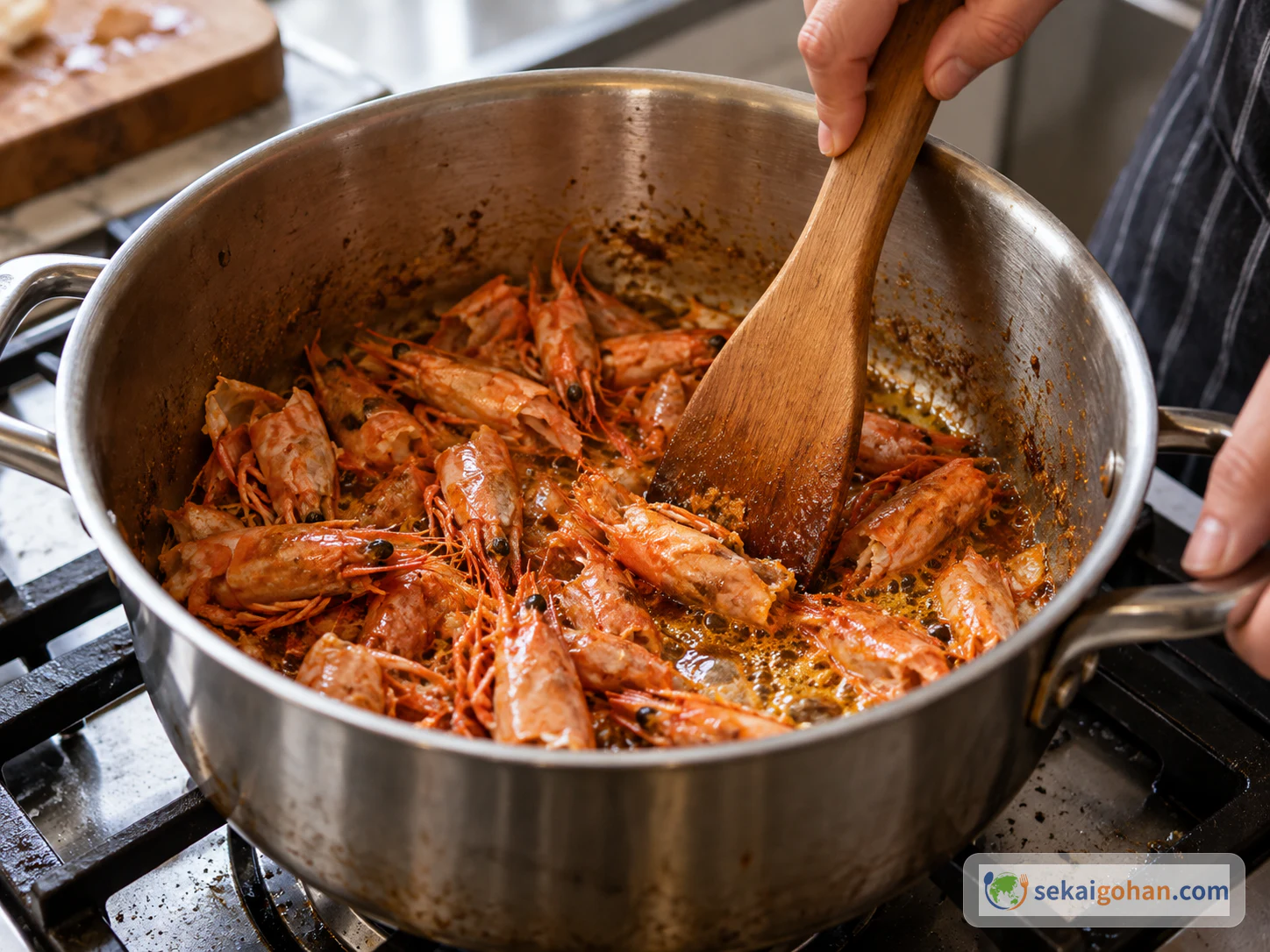
Fry the shrimp heads to release a red-orange oil

Shrimp heads frying in oil in a pot, pressed with the back of a wooden spatula to draw out red-orange oil
Press the heads as they fry until the oil turns red-orange

Heat 1 tbsp oil in the stockpot over medium-high heat. Add the shrimp heads and fry for about 5 minutes, pressing them with the back of a ladle. They are ready when they smell fragrant and the oil has turned red-orange. This oil is where the broth's color and much of its shrimp flavor come from.

STEP33 / 9

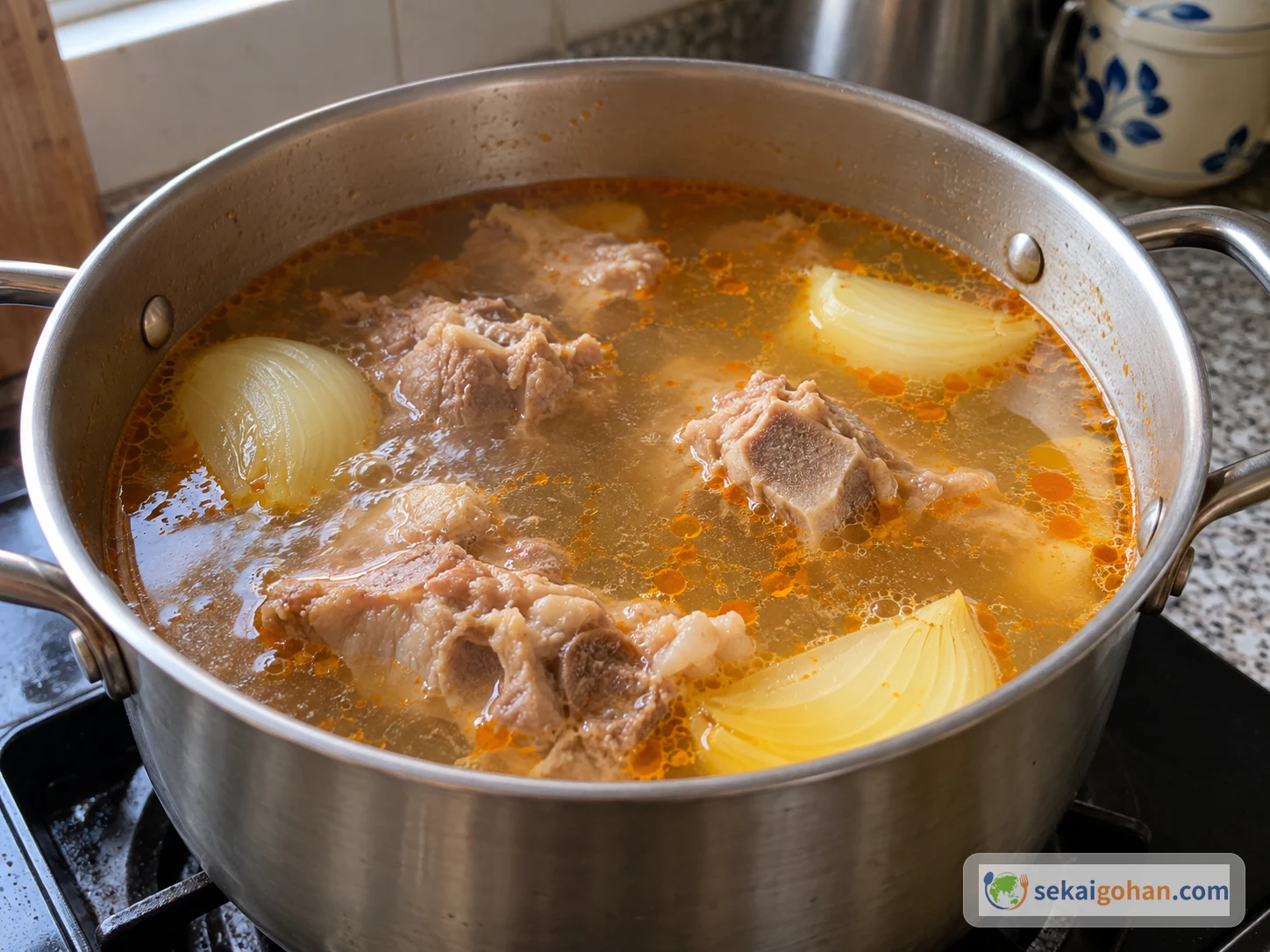
Simmer the bone broth

A light orange broth gently simmering with pork bones and quartered onion in the pot where the shrimp heads were fried
Keep the broth at a quiet simmer so it doesn't reduce too quickly

Add the pork bones, the quartered onion and the 2 US quarts (about 1.89 L) of water to the pot. Bring to a boil, then turn the heat to low and simmer uncovered for 45 minutes. Keep it at a gentle simmer: a hard, rolling boil reduces the liquid faster. Afterward, remove the bones and other solids.

STEP44 / 9

Brown the pork belly and return it to the broth

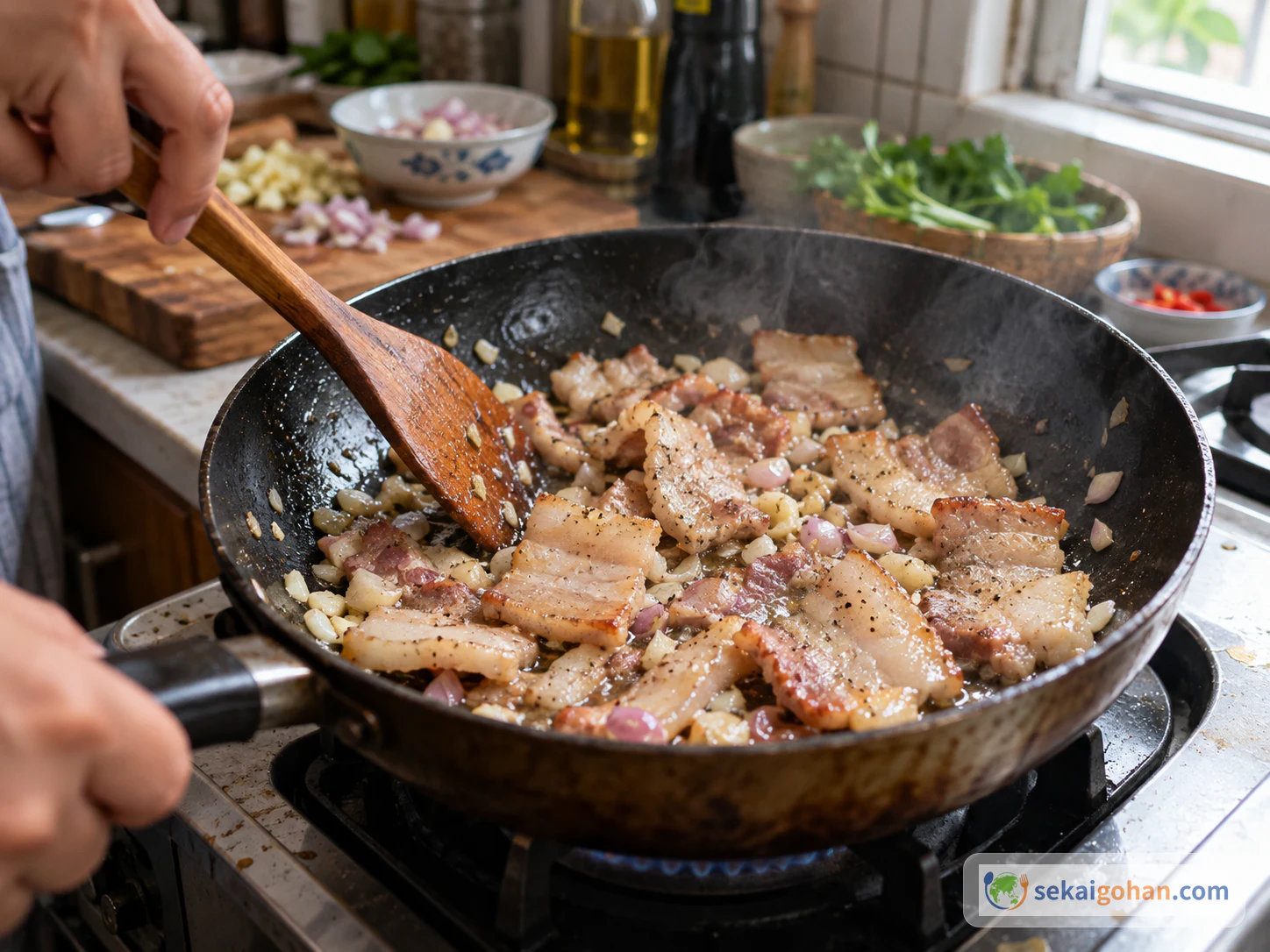
Minced shallots and garlic sizzling in a skillet with seasoned slices of pork belly browning on the surface
Brown the pork belly with the aromatics before it goes into the broth

In a skillet, heat 1 tbsp oil with half of the minced shallots and garlic. After about 20 seconds, when they smell fragrant, add the seasoned pork belly. Cook for about 5 minutes, until the surface is browned. Transfer the pork to the broth pot and simmer for another 15 minutes.

Heat the pork until the center reaches 167°F (75°C) for at least 1 minute. Color and time alone do not show that it is safe, so use a food thermometer, especially on a thicker piece.

STEP55 / 9

Cook the shrimp separately

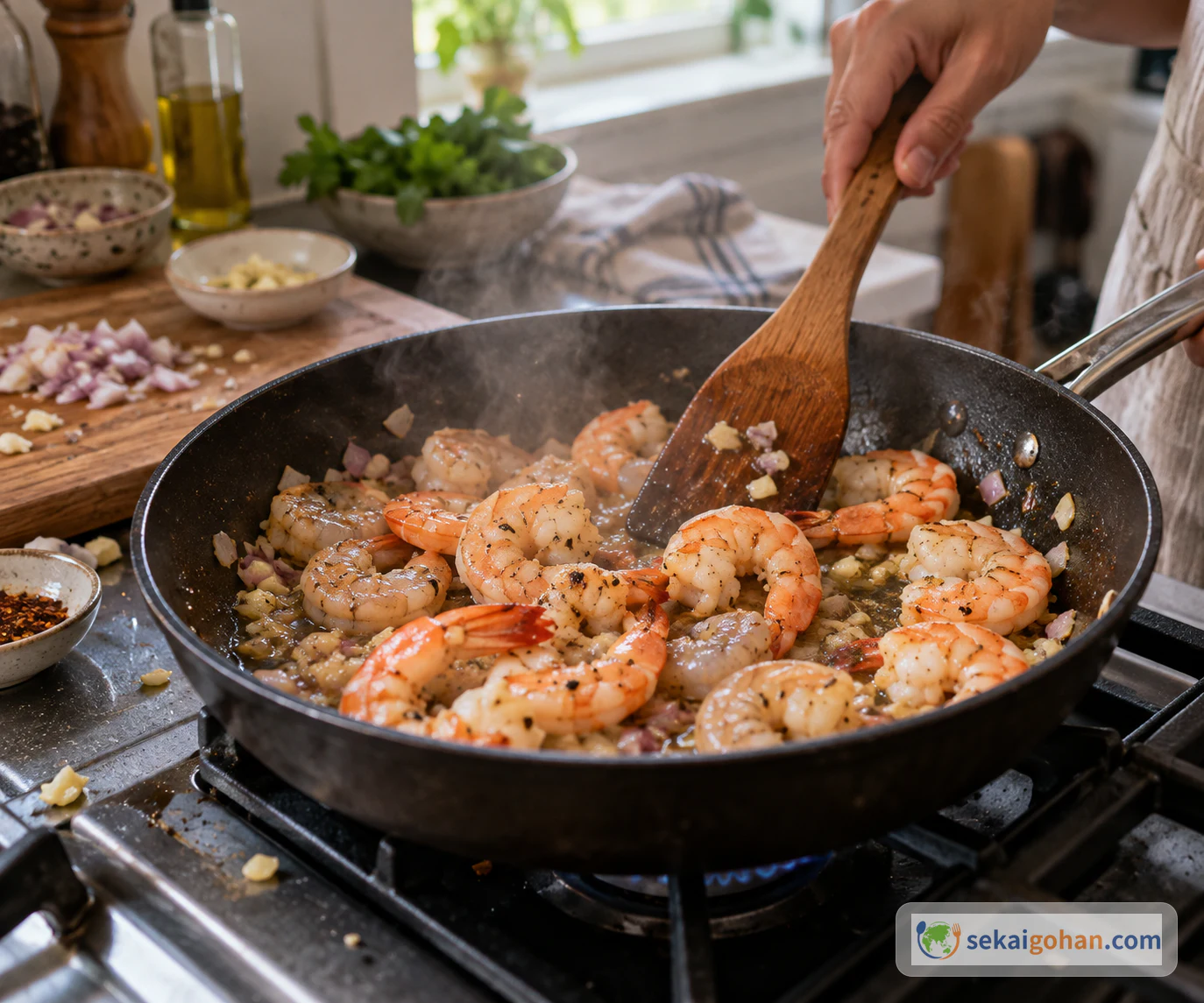
Seasoned shrimp cooked with shallots and garlic in a separate skillet, turning from translucent to opaque pink
Cook the shrimp on their own, separate from the pork, until opaque

In a clean skillet, heat the remaining 1 tbsp oil with the rest of the shallots and garlic until fragrant. Add the seasoned shrimp and cook for about 3 minutes, until they are no longer translucent. Remove them and set aside; they go on top of the bowls at the end.

Cooking time changes with the size of the shrimp. They are done when they turn opaque, but also confirm that the center reaches 167°F (75°C) for at least 1 minute. Once they reach that point, stop cooking them, or they will toughen.

STEP66 / 9

Season the broth

STEP 6

Use the remaining salt, sugar, fish sauce, paprika and turmeric to season the broth to taste. Fish sauce and salt vary in strength between products, so add a little at a time and taste after each addition. The noodles, pork, shrimp and garnishes will all join the broth in the bowl, so it does not need to taste finished on its own.

STEP77 / 9

Cook the noodles and prepare the greens

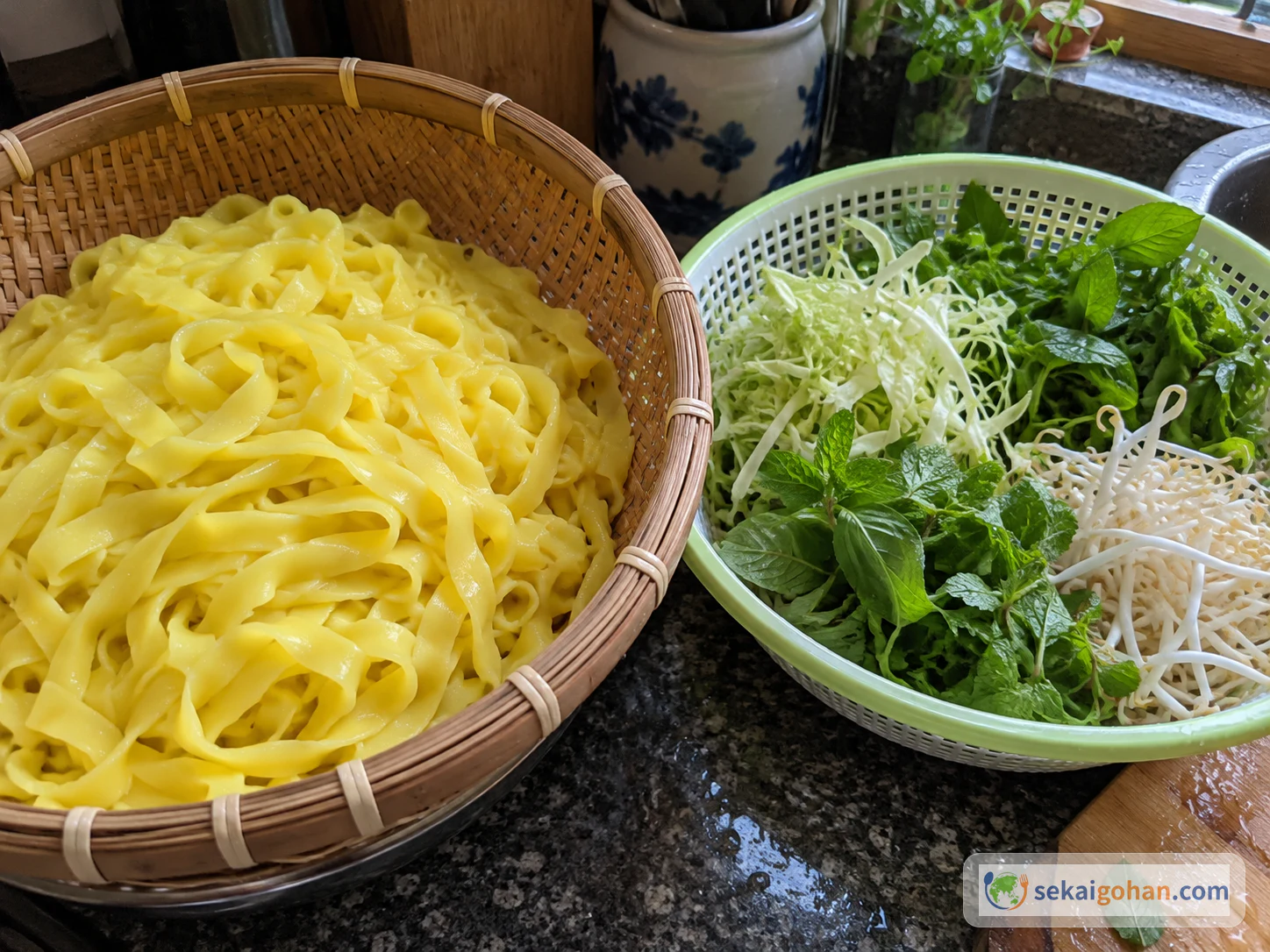
Flat yellow rice noodles boiled according to the package and drained, set beside washed, shredded leafy greens and herbs
Keep the drained noodles and the washed greens separate until assembly

Cook the rice noodles according to the package directions, then drain. Don't leave them sitting in the colander for a long time, or they will clump. Wash the lettuce, cabbage, herbs and other greens, and slice them as needed. Prepare them on a clean board, away from anything that touched raw pork or shrimp.

STEP88 / 9

Puff the sesame rice crackers

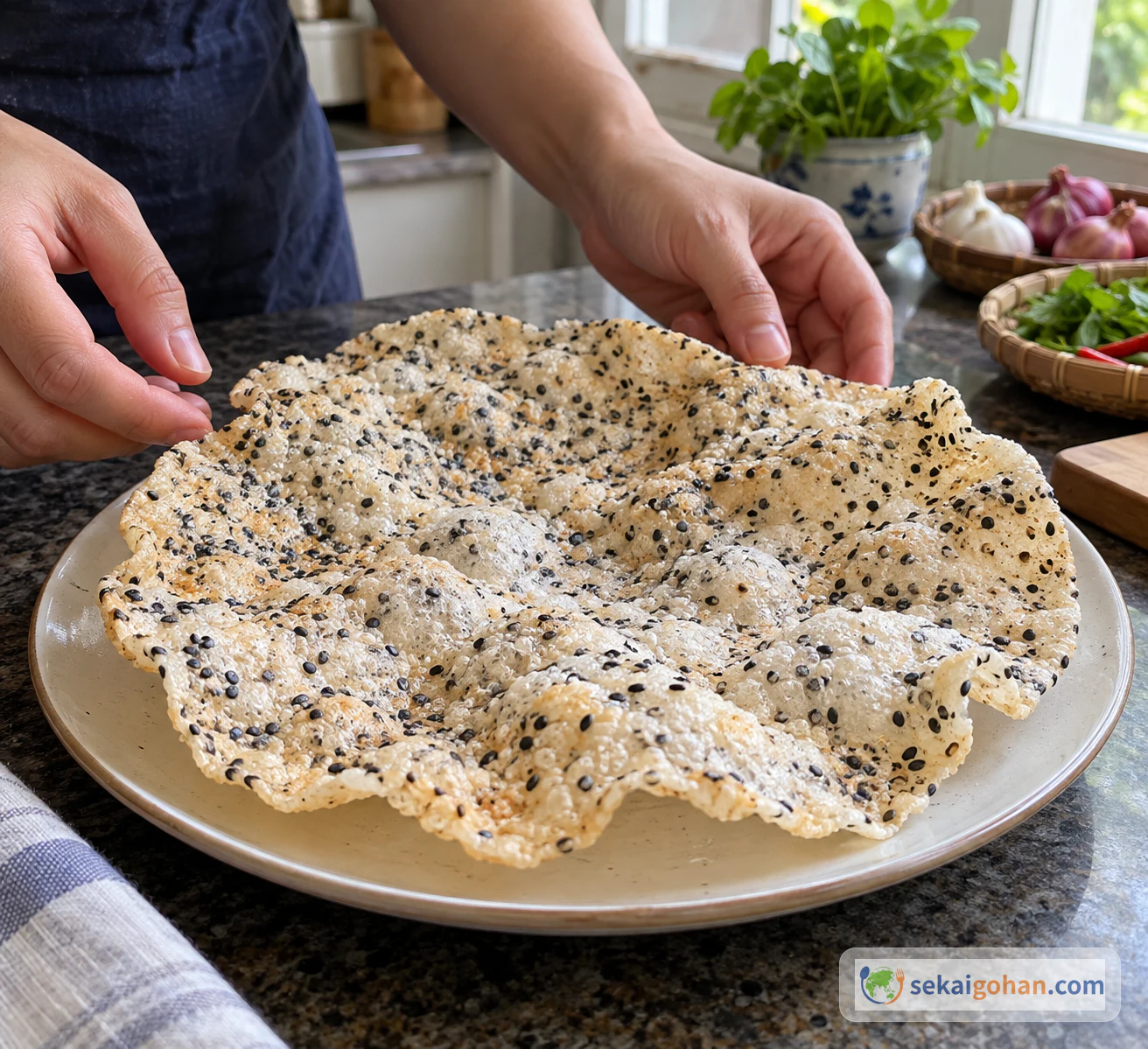
Sesame rice crackers lightly moistened, puffed in the microwave and cooling, just before being broken
Treat 30 seconds per side as a starting point and watch for scorching

Moisten each cracker lightly. As a starting point, microwave for 30 seconds on one side, flip, and microwave for another 30 seconds, watching how much it puffs. Microwaves differ, so adjust the time to your machine and stop before the cracker scorches or overheats. Let them cool on a plate.

STEP99 / 9

Assemble with only a little broth

A bowl layered with plenty of leafy greens at the bottom, rice noodles, pork belly and a small amount of rich broth, finished with shrimp, peanuts, green onions and herbs
Pour in a small amount of broth and stop once it coats the noodles

Place greens in the bottom of each bowl, then noodles, then pork belly, and spoon over a small amount of broth. Top with shrimp, peanuts, cracker pieces and the herbs and other garnishes.

The serving example uses about 1 cup of broth per bowl, but in central Vietnam the bowl gets only a small ladle. Start with less than you think, and stop when the noodles and toppings are coated. The bowl should not look like a soup.

0 / 0
Ingredients

Ingredients

1 / 4

Broth and toppings

Ingredient Amount Role and notes
Pork bones (neck bones, or leg/marrow bones) 3 lb (about 1.36 kg) The base of the bone broth
Pork belly 1 lb (about 454 g) Cut into strips, then sliced thin; a topping that also adds savoriness to the broth
Large head-on shrimp 1 lb (about 454 g) Heads are fried for the broth's color and shrimp flavor; bodies are a topping
Water 2 US quarts (about 1.89 L) Evaporation changes the final strength, so judge the broth as it simmers
Yellow onion 1, peeled and quartered Simmered with the bones
Large shallots 2, minced Aromatics for cooking the pork and shrimp
Garlic 6 cloves, minced Aromatics for cooking the pork and shrimp
Vegetable oil 3 tbsp, divided 1 tbsp each for the shrimp heads, the pork belly and the shrimp
2 / 4

Seasonings (each divided between the toppings and the broth)

Ingredient Amount Role and notes
Sea salt 1 tbsp, divided Add to the broth a little at a time
Granulated sugar 1 tbsp, divided Rounds out the broth
Fish sauce (nước mắm) 1 tbsp, divided Saltiness varies by brand; add gradually
Paprika 1 tbsp, divided Mainly for color, with only slight heat
Ground turmeric 1 tbsp, divided Color and aroma
3 / 4

Noodles

Ingredient Amount Role and notes
Yellow Quảng Nam rice noodles 2 bags (10.5 oz each) Cook according to the package
4 / 4

Accompaniments (amounts not specified; use what you like)

Ingredient Amount Role and notes
Lettuce As you like The bed of greens at the bottom of the bowl
Green or red cabbage As you like Thinly sliced, for crunch
Bean sprouts As you like Freshness and crunch
Cilantro As you like Herb aroma
Green onions As you like Sliced, to finish
Yellow onion As you like Thinly sliced, to finish
Fried shallots As you like Savory crunch
Roasted peanuts As you like Crushed, scattered on top
Lemon or lime As you like Squeezed at the table
Sesame rice crackers As you like Puffed, then broken into the bowl or eaten alongside
0 / 0

The ladle hovers over the bowl. The broth is ready, the noodles are drained, and the greens are piled high, and now comes the one decision that defines the dish: how much broth to pour. With Mì Quảng (also written Mỳ Quảng, and sometimes called Quang noodles in English), the answer is a small ladle and no more. This noodle dish from central Vietnam puts wide, flat rice noodles over a generous bed of garden greens, with banana blossom, herbs, and just enough rich, concentrated broth to coat everything. Stop pouring before the bowl turns into soup.

About Mì Quảng

The name ties the dish to Quảng Nam, the province in central Vietnam, and you'll find it all over Đà Nẵng and Hội An. People eat it at home, at family occasions and at eateries. It can be a light meal or stand in for a full one.

Mì Quảng is a dish where the noodles, not the broth, sit at the center. In a phở the noodles swim in a full bowl of soup. Mì Quảng is built in layers: greens at the bottom, a heap of flat noodles, meat and seafood, then a little broth that runs down through everything. You toss the noodles with the broth and greens instead of drinking a bowl of soup.

The textures matter as much as the flavor. Peanuts and a toasted rice cracker are characteristic parts of the bowl, and you can crumble the cracker into the noodles or eat it alongside for crunch. Fresh greens and herbs bring a crisp bite against the soft noodles, which makes summer, when garden herbs are plentiful, a good time to make it.

Variations seen in central Vietnam

Every region and household has its own bowl. The noodles can be white or yellow, the broth can draw on shrimp, fish, chicken or pork, and the toppings range from pork and chicken to shrimp, fish or egg. Banana blossom and a range of garden greens often appear in central Vietnam. For other Vietnamese noodle dishes, compare cao lầu, bún bò Huế and chicken phở.

Element Common range In this recipe
Noodles Wide flat rice noodles, white or yellow Yellow Quảng Nam rice noodles
Broth base Shrimp, fish, chicken or pork Pork bones and fried shrimp heads
Toppings Pork, chicken, shrimp, fish, egg Pork belly and shrimp
Greens and garnishes Garden greens, banana blossom, herbs, peanuts, rice cracker Lettuce, cabbage, bean sprouts, herbs, peanuts, sesame rice crackers

Ingredients: Serves 6, Pork-and-Shrimp Mì Quảng
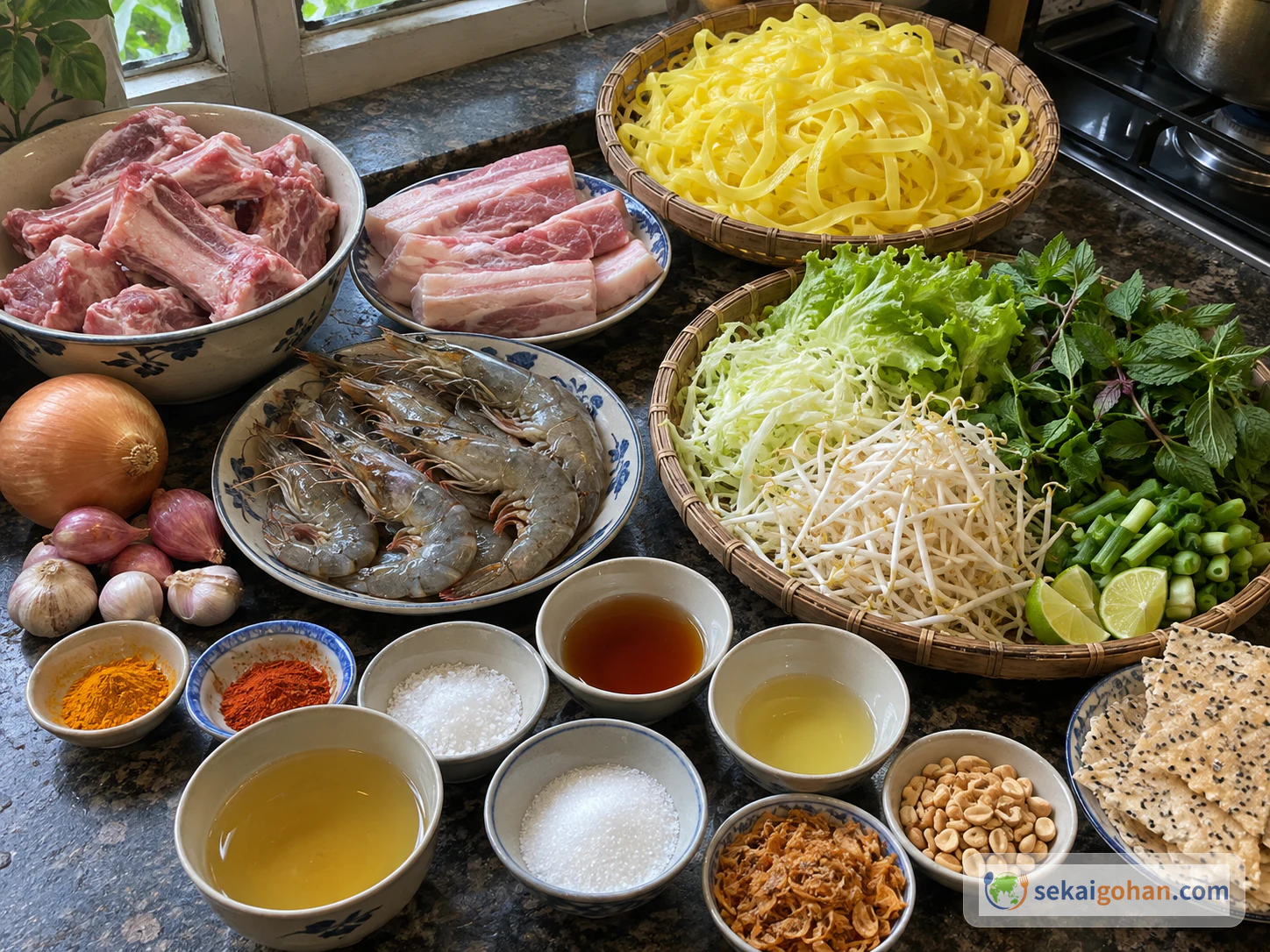
Pork bones, pork belly, raw head-on shrimp, flat yellow rice noodles, onion, shallots, garlic, turmeric, paprika, fish sauce, salt, sugar, lettuce, herbs, peanuts and sesame rice crackers arranged by type on a kitchen counter
Get the broth ingredients, the toppings and the garnishes ready as separate groups

The amounts are written in US units and serve 6. The metric figures in parentheses are rounded. Plan for about 1 hour 10 minutes in total, and check your noodle package for its own cooking time.

Each seasoning is divided: part goes on the pork and shrimp, and the rest seasons the broth. Measure each seasoning into a small dish, use a little on the pork and a little on the shrimp, and keep the remainder to season the broth to taste.

Coarse salt for scrubbing the pork and shrimp (2 tbsp) is a separate step from the 1 tbsp of sea salt above, so do not add it to that. This recipe leaves the scrub out (see step 1).

Equipment

  • A large stockpot for the shrimp heads and the bone broth
  • A skillet for the pork belly, and a second skillet (or the same one, washed) for the shrimp
  • A ladle
  • Separate bowls or containers for the raw pork and the raw shrimp
  • Clean, separate cutting boards and utensils for raw meat and seafood versus vegetables, herbs and cooked noodles
  • Paper towels
  • A colander for draining the noodles
  • A microwave for puffing the sesame rice crackers
  • A food thermometer for checking the center temperature of the pork and shrimp
  • A fine-mesh skimmer, if you have one (helpful but not essential)

Choosing Ingredients for Mì Quảng

Noodles. Look first for noodles sold as Mì Quảng or Quảng Nam yellow rice noodles. Dried flat phở noodles work if you can't find them, though the color, width and springy bite will differ. Fresh chow fun–style rice noodles are delicate and break apart easily, so they make a poor stand-in. Whatever you buy, follow the package for soaking and boiling. And if the noodles look paler than you expected, enjoy them as they are rather than adding extra turmeric.

Shrimp. Large head-on shrimp are the first choice, because the heads give the broth its red-orange color and shrimp depth. Peeled, headless shrimp cook fine as a topping, but you'll miss that color and flavor. Store-bought crab-and-shrimp paste, about 5 oz, is an alternative. Salt levels vary between products, so treat it as a different bowl rather than a one-for-one swap.

Pork bones. Neck bones or leg/marrow bones make the broth. Pork spare ribs give you more edible meat and change the strength of the broth. For a shortcut, store-bought chicken stock with water makes a quicker, simpler bowl, with a flavor that moves away from simmered bones and shrimp heads.

Seasonings. Fish sauce (nước mắm), ground turmeric and paprika are the core. Soy sauce tastes different, so it can't replace fish sauce in the same amount. MSG and chicken bouillon are optional extras.

Crackers and greens. For crunch, look for sesame rice crackers sold as bánh tráng mè or bánh đa; another rice cracker will do, with a different taste. Banana blossom, garden greens and herbs such as rau răm (Vietnamese coriander) are typical in central Vietnam. If they're hard to find, build the greens around lettuce, cabbage and bean sprouts. The aroma will differ from a bowl in Quảng Nam, but you keep the fresh, crunchy layer under the noodles.

Allergies

This dish contains shrimp (crustaceans), fish sauce (fish) and peanuts. Sesame rice crackers may contain sesame, wheat or other ingredients, so read the label. Check the labels of the noodles and any processed products as well, including statements about shared facilities.

Method: Building the Broth and Toppings in Parallel

How the cooking fits together

While the bone broth simmers, cook the pork belly and shrimp separately and prepare the noodles, greens and crackers. The toppings and broth come together only in the bowl.

The shrimp heads and bones go into one pot for the broth. The pork belly is browned and then finished in that broth, while the shrimp are cooked on their own and kept aside. Judge each step by the color, aroma and texture described below, and for the pork and shrimp, check the center temperature as well.

Mì Quảng Troubleshooting

Problem Likely cause What to do
Too much broth in the bowl The bowl was filled like a soup Pour less from the start. Keep leftover broth in a separate container and add it while eating
Bland flavor Seasoning added cautiously, or the broth was tasted alone Add fish sauce or salt in small amounts and taste each time, remembering the toppings and garnishes add flavor too
Noodles break or clump Cooked differently from the package, or left too long after draining Follow the package directions for your noodles and assemble soon after draining
Tough shrimp Kept cooking after they were done Once the center temperature is confirmed, take them off the heat. Don't rely on time alone for safety
Soggy crackers Broken over the bowl too early Break them just before eating, or serve them on the side
Broth reduced too much Boiled hard instead of simmered Keep a gentle simmer; judge the amount as it cooks

Serving, Storing and Varying Mì Quảng

At the table
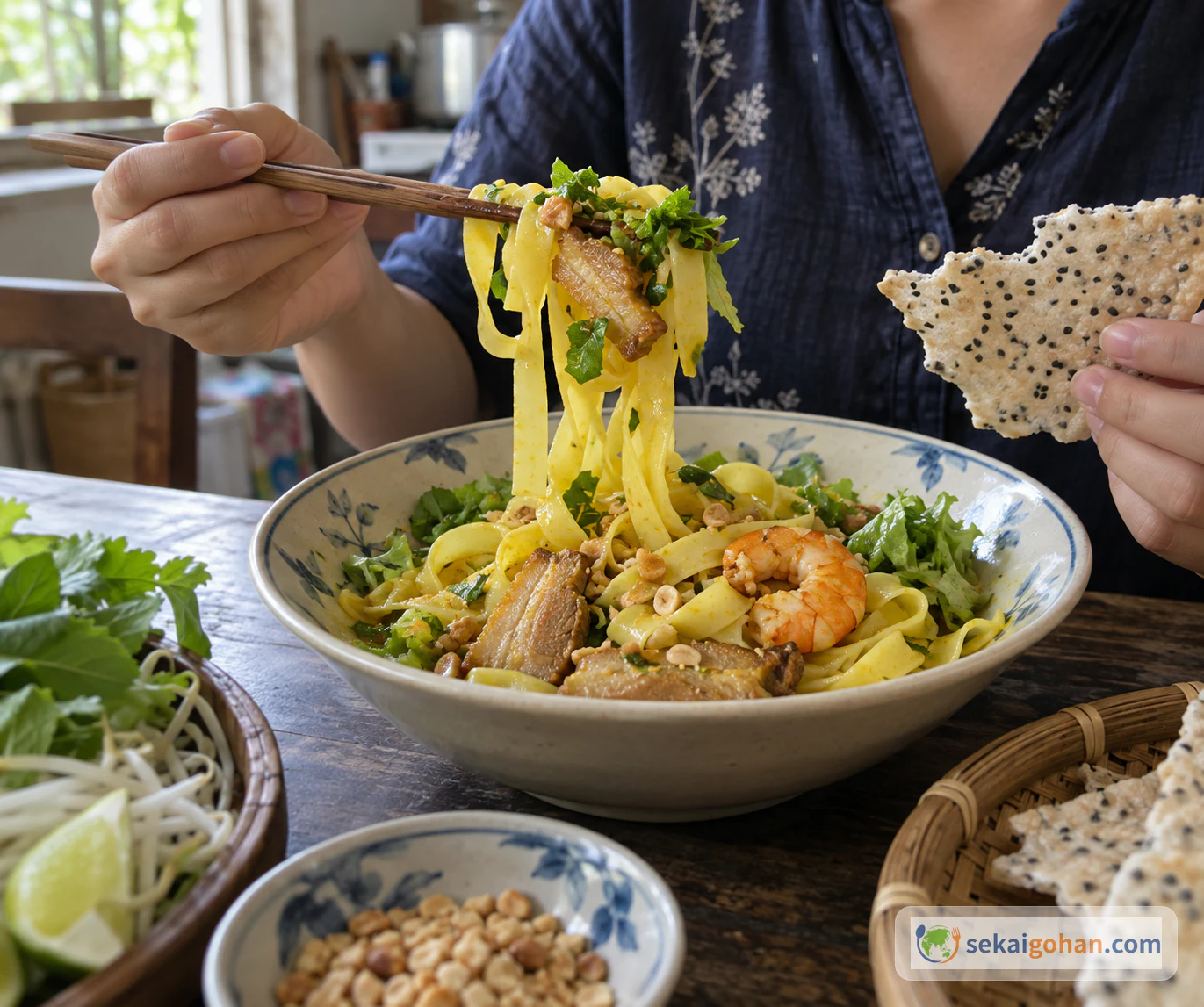
Eating finished Mì Quảng at the table, lifting noodles and herbs with chopsticks while holding a sesame rice cracker in the other hand; the bowl holds only a little broth clinging to the noodles
Toss the noodles through the broth and greens, and break in the cracker as you go

Toss the noodles before your first bite so the small amount of broth reaches the greens at the bottom. Then break the cracker straight into the bowl, or keep it beside you and bite from it between mouthfuls. Everyone adds lemon or lime, extra herbs and peanuts to taste. If someone wants more broth, keep it warm in a separate pot and add it at the table.

Storage and reheating

Store the toppings and broth, the noodles, the raw greens and the crackers separately so each keeps its texture. Cool leftovers promptly in shallow containers and refrigerate them. When reheating, heat the broth, pork and shrimp thoroughly so the center reaches 167°F (75°C), then assemble with fresh greens and newly puffed crackers.

Variations

White rice noodles are also used; the color and aroma change, but the structure of noodles, a little broth and plenty of greens stays the same. Chicken and fish turn up too, and fish works as both a broth base and a topping. A chicken bowl needs its own approach, though, since simply swapping chicken into this pork-bone broth isn't enough.

Frequently Asked Questions

How much broth goes in each bowl?

Start with a small amount and stop when the noodles and toppings are coated. About 1 cup per bowl is a reasonable upper guide, but a small ladle is typical, so begin with less and add more if needed.

Can I leave out the peanuts or crackers?

Yes, though you'll lose the roasted flavor and crunch they bring. If anyone eating has a peanut, sesame or wheat allergy, leave them out, and check the labels of the crackers and other processed products.
Sources

  • Vicky Pham, "Central Vietnam Must-Eat Noodle Dish: Mi Quang." A home cook's recipe, not an official regional standard. Source for the association with Quảng Nam and central Vietnam; the ingredients and amounts in US units; the yield of 6; the shrimp-head frying, pork-bone broth, seasoned pork belly and shrimp, noodles and assembly; the time estimate; the noodle substitutes; and the method for puffing sesame rice crackers. https://vickypham.com/blog/central-vietnams-must-eat-noodle-dish-mi-quang/
  • Da Nang Tourism Promotion Center, Da Nang Department of Culture, Sports and Tourism, "Mì Quảng." Source for Mì Quảng as a traditional food of Quảng Nam–Đà Nẵng eaten at home, on occasions and at eateries; white or yellow noodles; broth bases of shrimp, fish, chicken or pork; shallow broth over garden greens; and peanuts and toasted rice crackers, crumbled in or eaten alongside. https://danangfantasticity.com/en/tinh-hoa-am-thuc-da-nang/mi-quang
  • Viet Nam National Authority of Tourism, "Must-try noodles in Vietnam." Source for Mì Quảng as a Quảng Nam noodle dish of central Vietnam found in Đà Nẵng and Hội An, with wide flat rice noodles, a small ladle of broth, greens, banana blossom, herbs and varying toppings. https://vietnam.travel/things-to-do/must-try-noodles-vietnam
  • CDC, "Preventing Food Poisoning." Source for separating raw meat and seafood from raw produce and cooked foods, and for cooking food properly and chilling it promptly. https://www.cdc.gov/food-safety/prevention/index.html
  • Ministry of Health, Labour and Welfare (Japan), "Six Points for Preventing Food Poisoning at Home" (家庭でできる食中毒予防の6つのポイント). General home guidance for heating food to 75°C at the center for at least 1 minute, using separate utensils, cooling in shallow containers and reheating. https://www.mhlw.go.jp/stf/seisakunitsuite/bunya/kenkou_iryou/shokuhin/syokuchu/01_00006.html