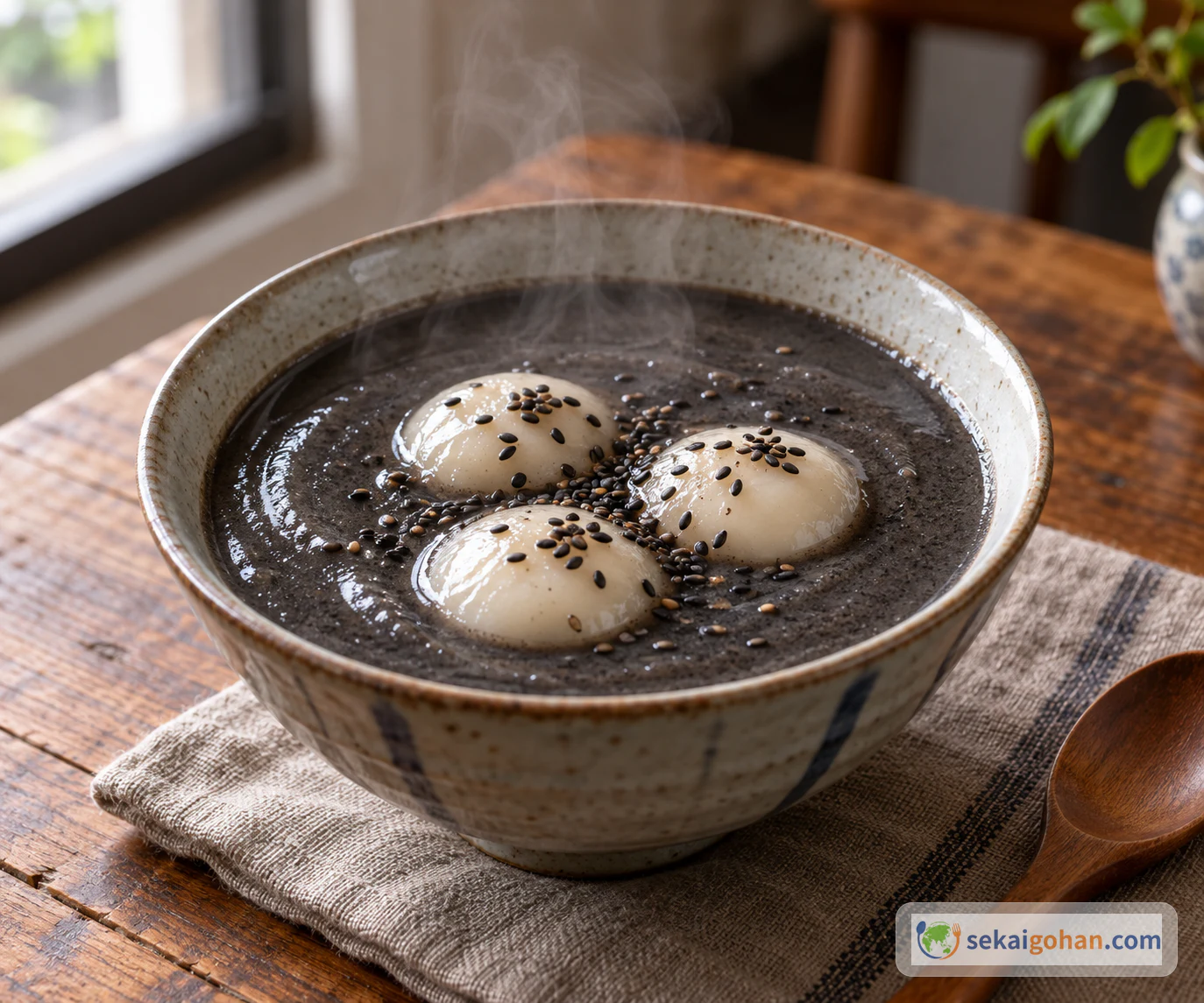
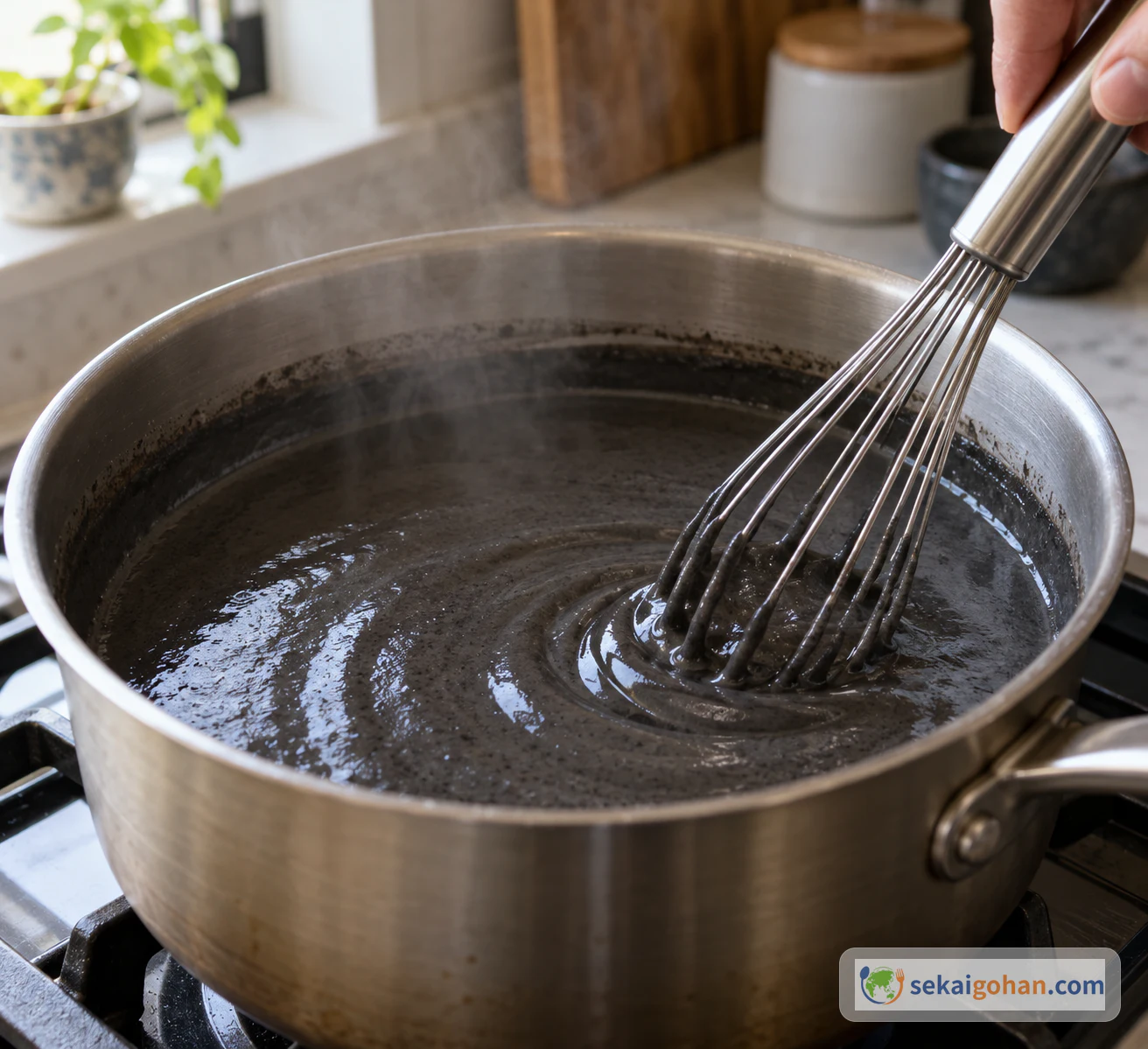
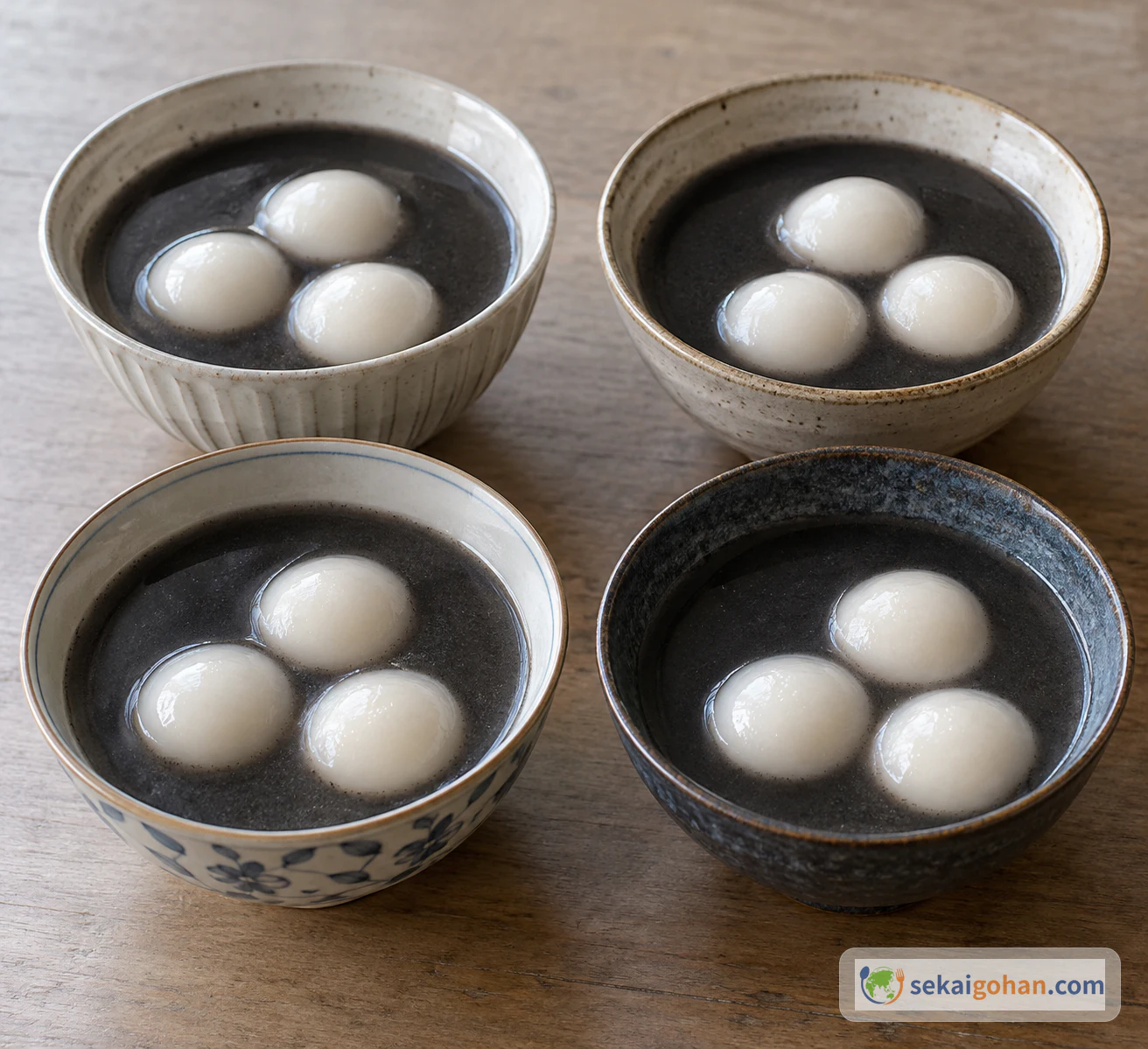
Picture a bowl at a Hong Kong dessert shop: a deep charcoal-gray soup, glossy and steaming, with a few white rice balls resting on top. This is zhima hu (芝麻糊), black sesame soup, one of the staples of the city's tong sui (糖水, "sugar water") shops. Despite the name, it's dessert, not dinner: a sweet soup built on ground black sesame and thickened with rice, toasty and rich, with a texture that clings to the spoon. Some shops float tangyuan, small glutinous rice balls, in each bowl.
Zhima Hu in Hong Kong's Tong Sui Shops
In Hong Kong, tong sui are the sweet soups and desserts people eat as a treat or after a meal, served both hot and cold. Zhima hu is one of the warm, rich ones, suited to autumn and winter. Almost every tong sui shop serves it, and each makes its own version. Some add tangyuan, so every spoonful of smooth sesame comes with a chewy bite.
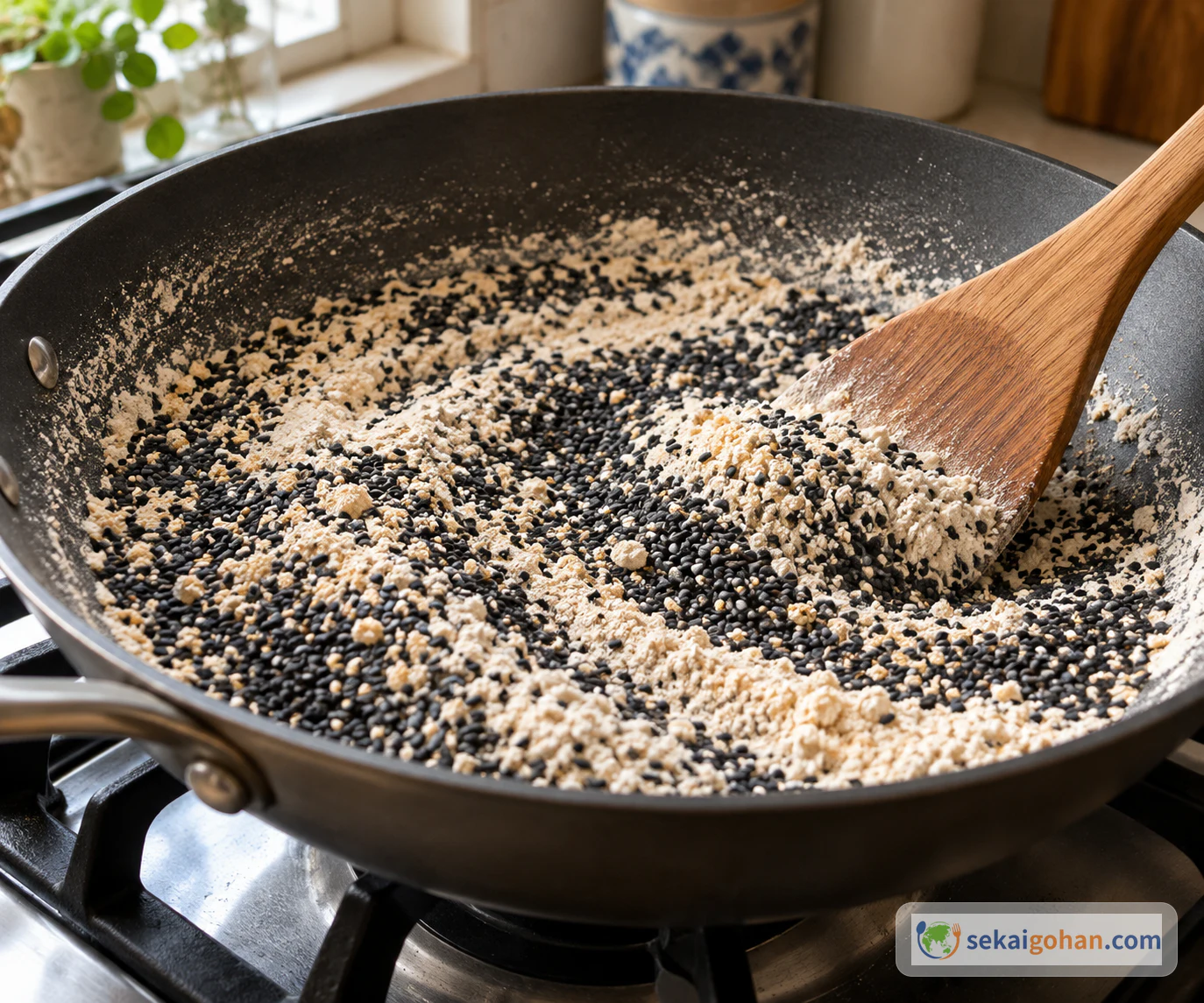
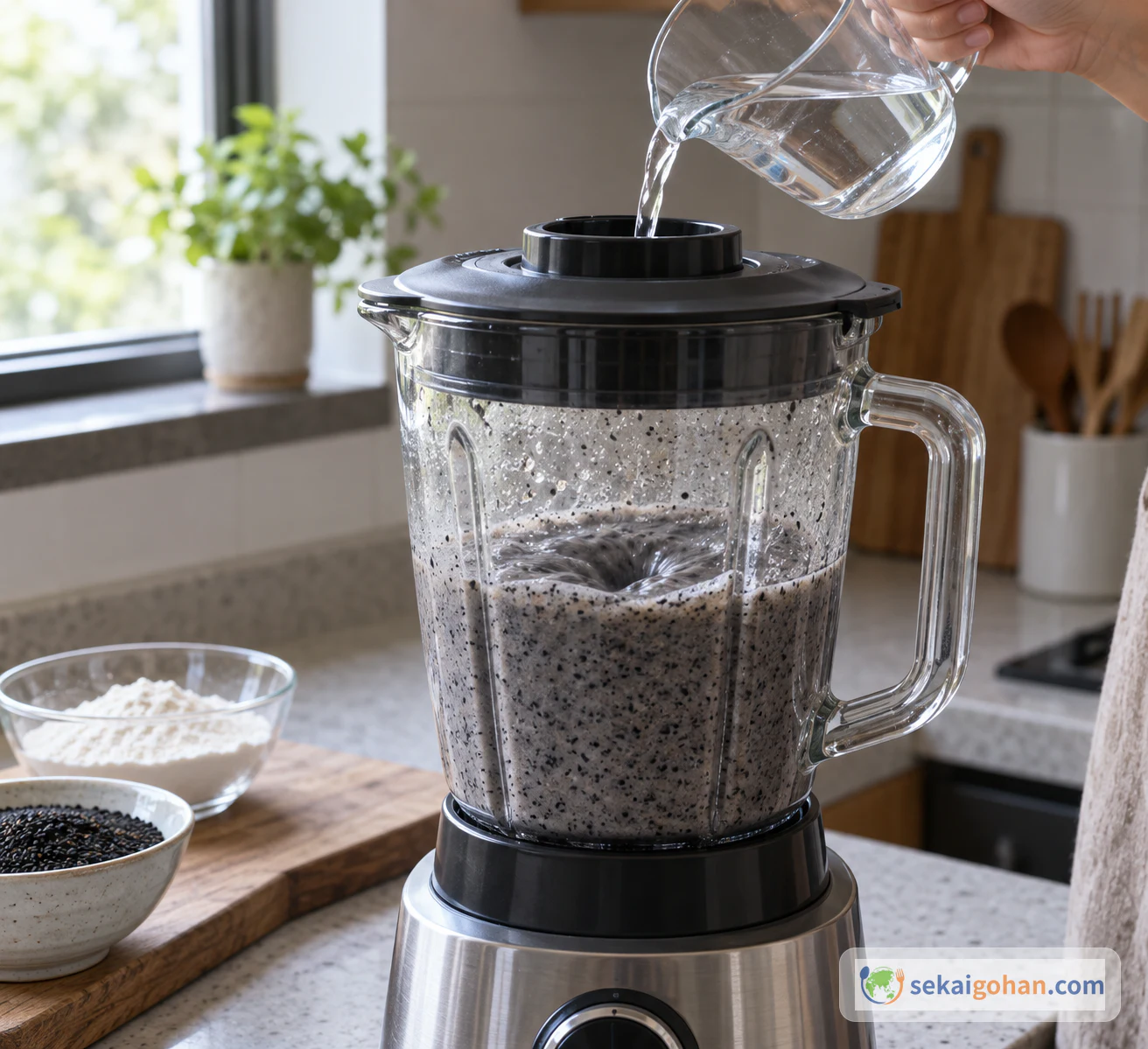
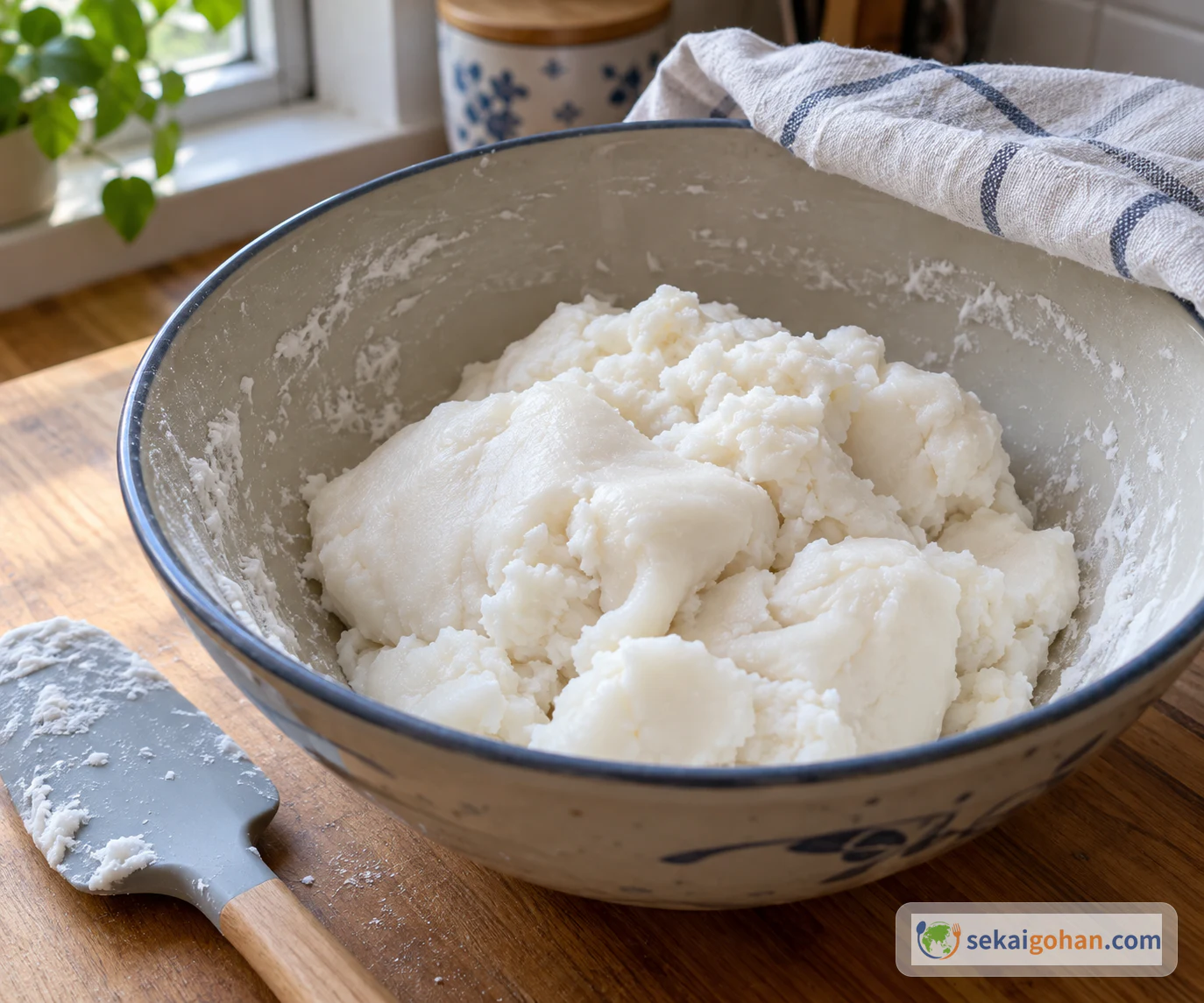
The traditional method grinds black sesame and cooks it with a rice slurry (米漿) and sugar. Other recipes thicken with cooked rice or black rice, and some add walnuts. This home-kitchen version takes a simpler route: raw black sesame and glutinous rice flour are toasted together, blended with cold water, and whisked thick in a pot. The optional tangyuan cook separately. For more dishes from the same country, see our dishes from China.
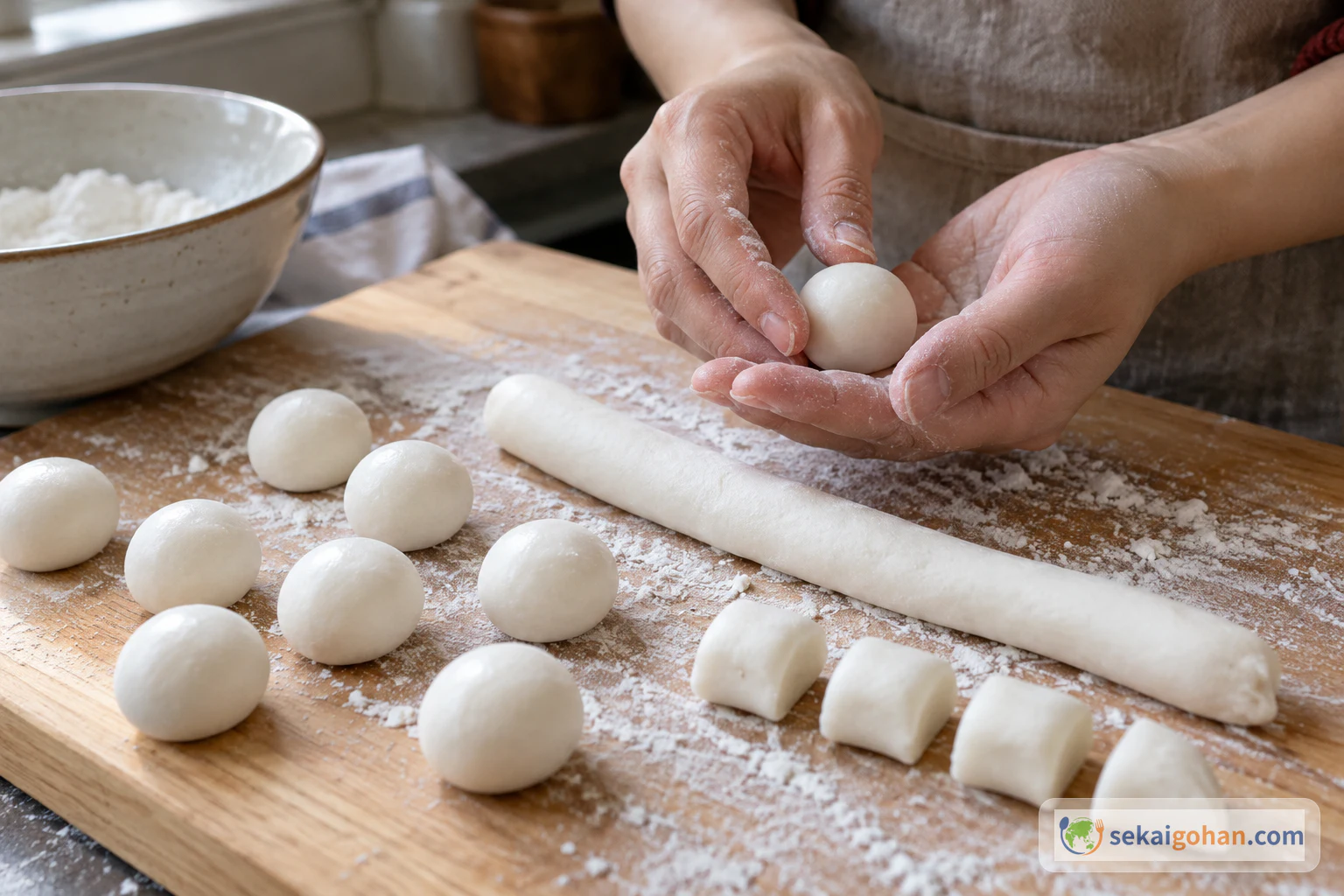
The recipe makes four servings, with about 12 tangyuan, three per bowl. Amounts are in US cups and tablespoons. Total time is 45 minutes, 40 of them active, if you work on the soup and the tangyuan at the same time.
Ingredients: Soup and Tangyuan, Kept Separate
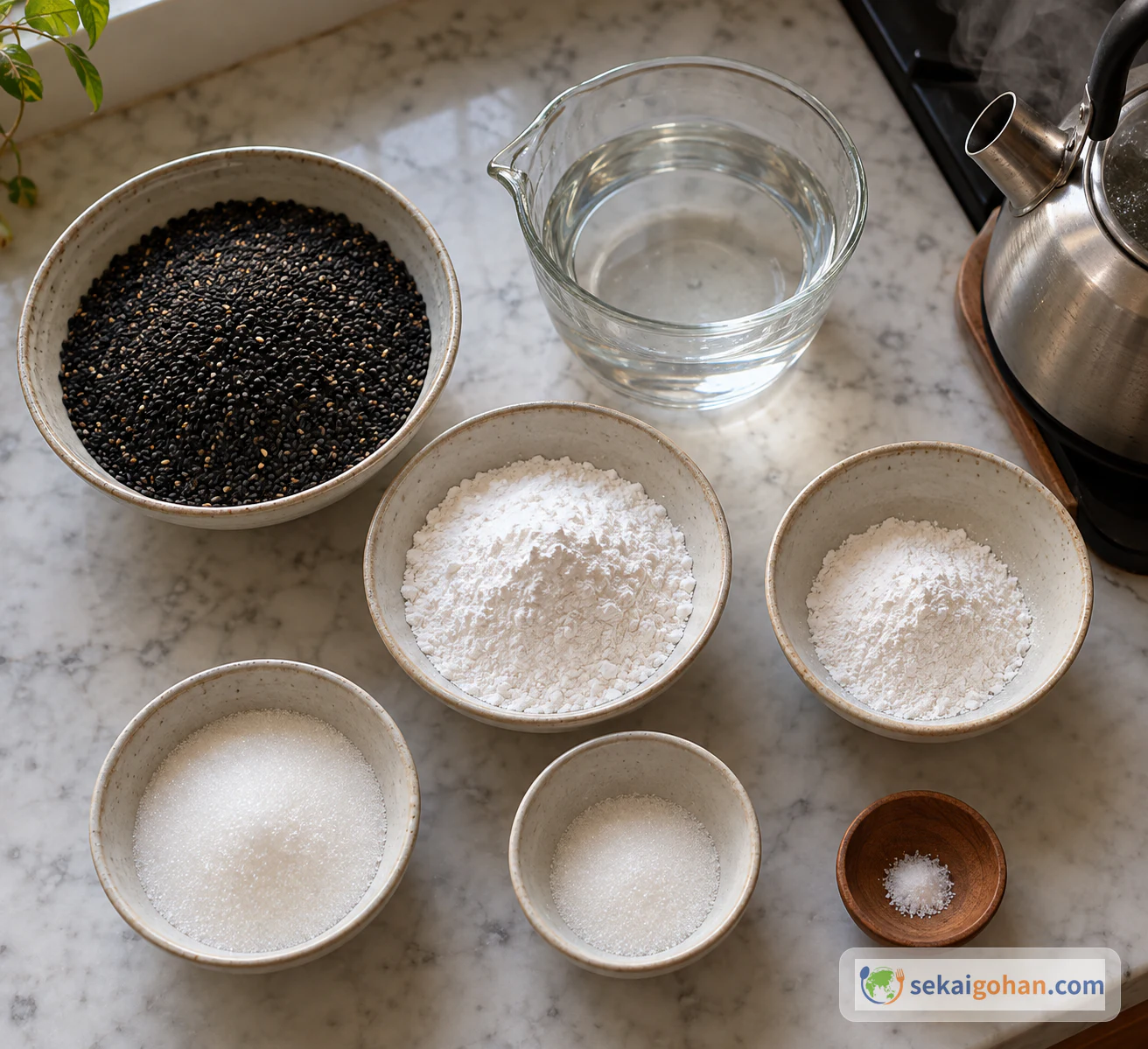
The glutinous rice flour and sugar each appear twice, once for the soup and once for the tangyuan. Measure them into separate bowls so the portions don't get mixed.
Choosing Glutinous Rice Flour and Black Sesame
Look for fine glutinous rice flour. It's sometimes sold as sweet rice flour, and you'll find it at Chinese or Asian grocers or online under its generic name. Japanese shiratamako is also made from glutinous rice, but it's a different product and not a direct swap.
Use raw black sesame seeds. The seeds toast in the pan with the flour, and that step builds the flavor, so start with untoasted seeds.
Sugar and salt. Ordinary granulated sugar works, and the salt is just a pinch of kosher salt to round out the sweetness.
This dish contains sesame. Check the labels on your sesame seeds and glutinous rice flour for allergen and shared-facility statements.
Equipment
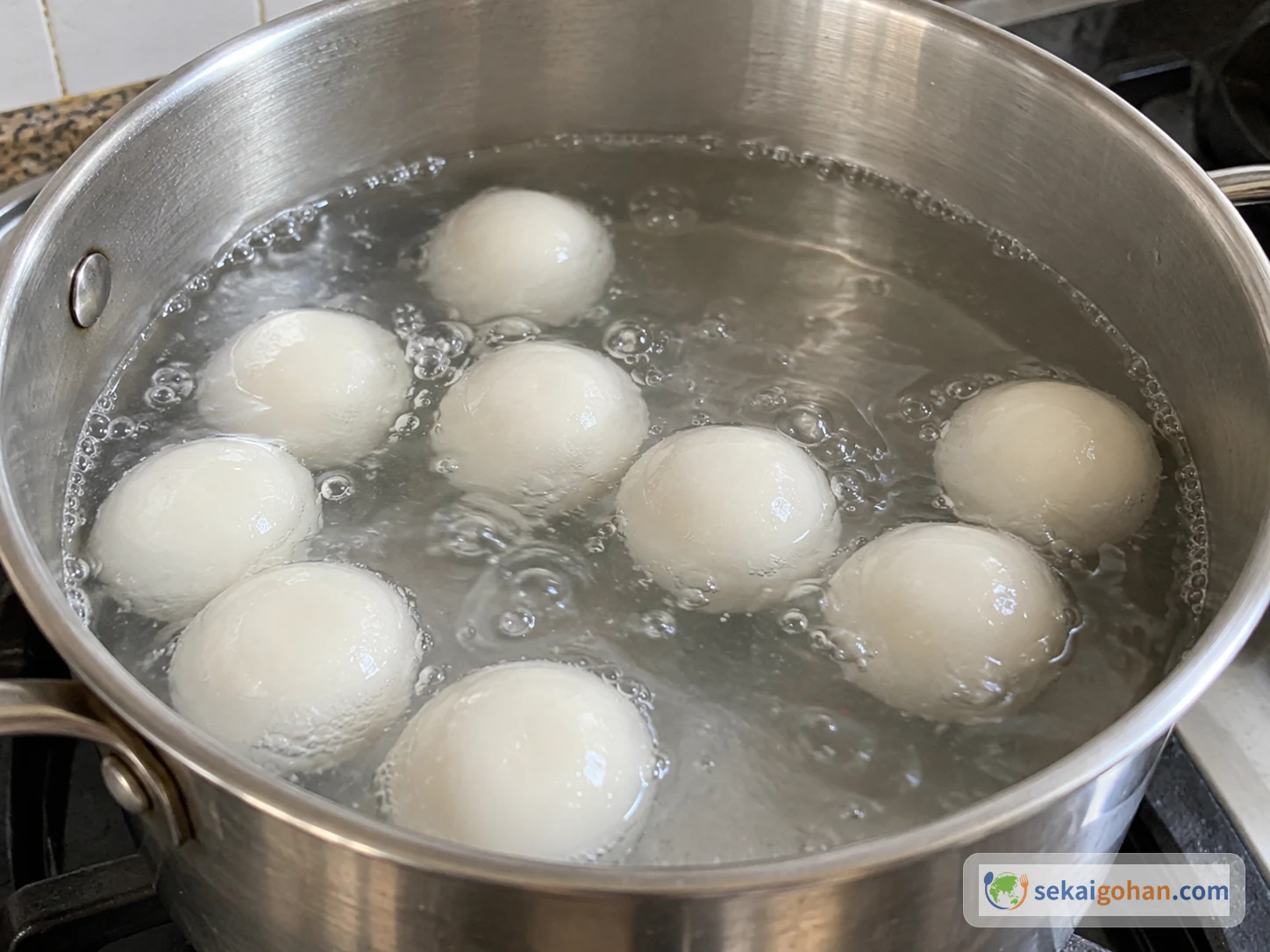
- A large pot for boiling the tangyuan
- A large, wide pan or skillet for dry-toasting the sesame and flour
- A blender
- A fine-mesh strainer (optional, for an extra-smooth soup)
- A saucepan for simmering the soup
- A whisk
- A mixing bowl and a rubber spatula for the tangyuan dough
- A clean work surface for shaping the tangyuan
You'll have a pot of boiling water going while you blend. The sesame mixture goes into the blender with cold water. Make sure the lid is secure every time, and don't rely on holding it down to make hot blending safe. Blend hot mixtures only if your blender allows it, following its temperature, fill-level and venting instructions. If the blender's instructions call for cooling first, let the mixture cool.
Method: Toast, Blend, Whisk, and Cook the Tangyuan Separately
The soup is complete on its own. If you're not making tangyuan, skip steps 1 and 5–7 and serve the soup straight after step 4.
Black Sesame Soup Troubleshooting
Two habits decide how this soup turns out: toast for aroma, not for color, and keep whisking once the base goes into the pot. Most problems come back to one of them.
| Problem | Likely cause | What to do |
|---|---|---|
| The soup tastes bitter | The sesame was toasted too far | Bitterness from over-toasting can't be sweetened away. Next time, stop when the sesame smells fragrant and the flour is pale gold |
| The soup tastes floury or raw | The flour wasn't toasted enough | Toast the full 4–5 minutes, until the flour turns pale gold |
| The blender stalls | Too little water for the ground sesame | With the blender running, add the extra 1 cup of cold water slowly, then stop and scrape down the sides |
| Lumps or a scorched bottom | The flour settled while the pot heated | Whisk constantly in step 4, scraping the bottom and corners. For extra smoothness, strain before heating |
| The soup is too thick | Normal variation in heat and pan | Stir in hot water 1/2 cup at a time until it reaches the thickness you want |
| Not sweet enough | Only the first 6 tbsp went in | Add the remaining sugar 1 tbsp at a time, tasting as you go |
The same lessons hold for the traditional rice-slurry version: sesame roasted too far turns bitter, and a slurry left unstirred while it heats goes lumpy. As for thickness, judge it by eye and by spoon rather than by a fixed amount of water.
Serving, Storing, and Variations
The soup is at its best freshly made. For leftovers, divide the soup into shallow containers and refrigerate within 2 hours of cooking; cooked food shouldn't sit at room temperature longer than that. Eat refrigerated leftovers within 3–4 days, loosening the soup with a little hot water as you reheat. Store leftover tangyuan separately so they don't soak in the soup.
A few easy ways to make the bowl your own:
- Lighter sweetness: Stop at 6 tbsp of sugar, or add the rest a spoonful at a time until it tastes right to you.
- More sesame on top: Scatter a few raw black sesame seeds over each bowl for aroma and contrast.
- Soup only: Skip the tangyuan and enjoy the soup's smoothness on its own.
- Extra smooth: Strain the blended base through a fine-mesh strainer before it goes into the pot.
Frequently Asked Questions
Is black sesame soup a savory soup for a meal?
No. Despite the English name, it's a sweet dessert soup from the tong sui family, eaten as a treat or after a meal.
Can I use shiratamako instead of glutinous rice flour?
Stick with fine glutinous rice flour. Japanese shiratamako is a different product, so it won't behave the same way here.
Do I have to add the tangyuan?
No, the soup is complete on its own. Add them if you want the bowl some Hong Kong shops serve.