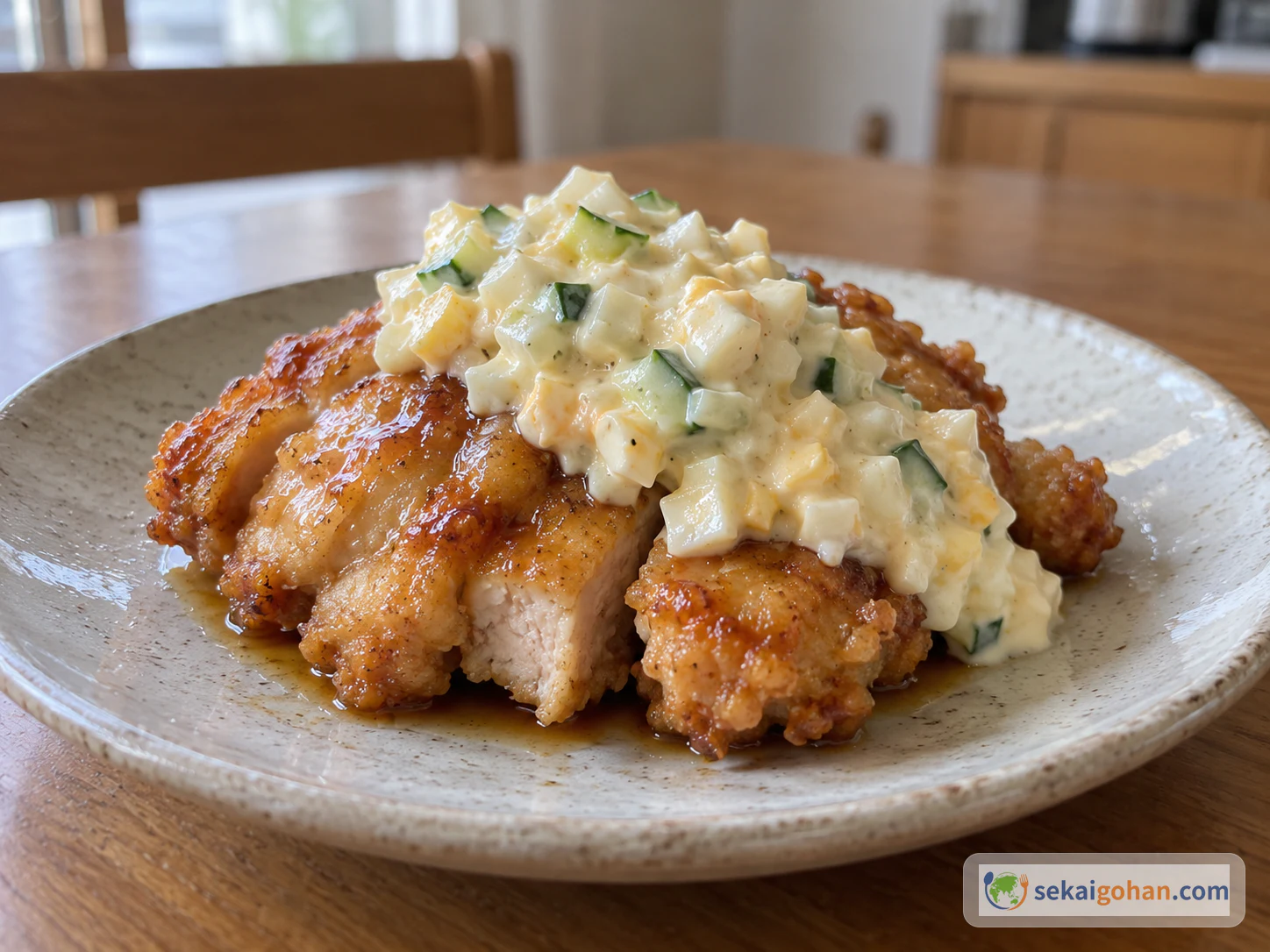
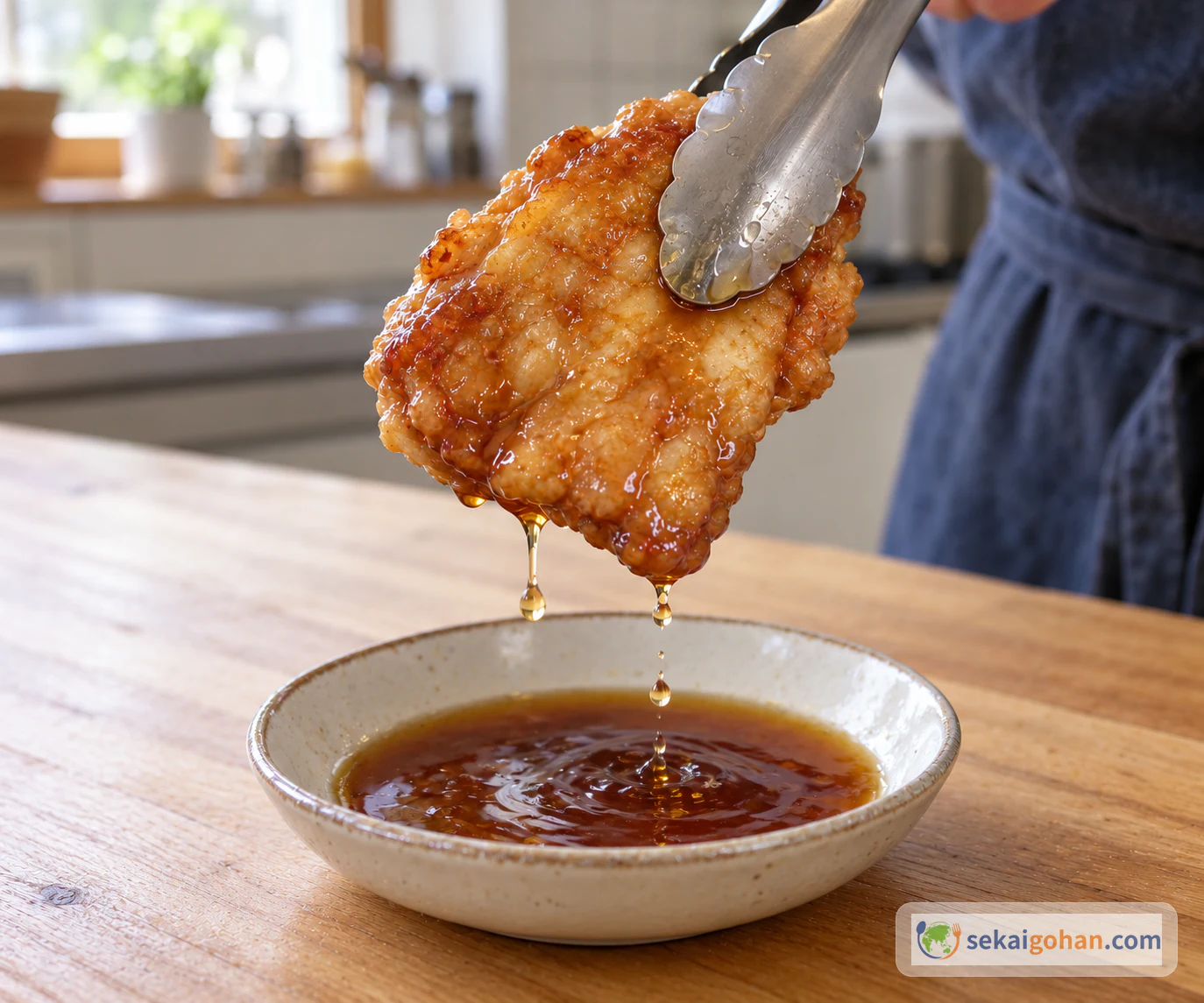
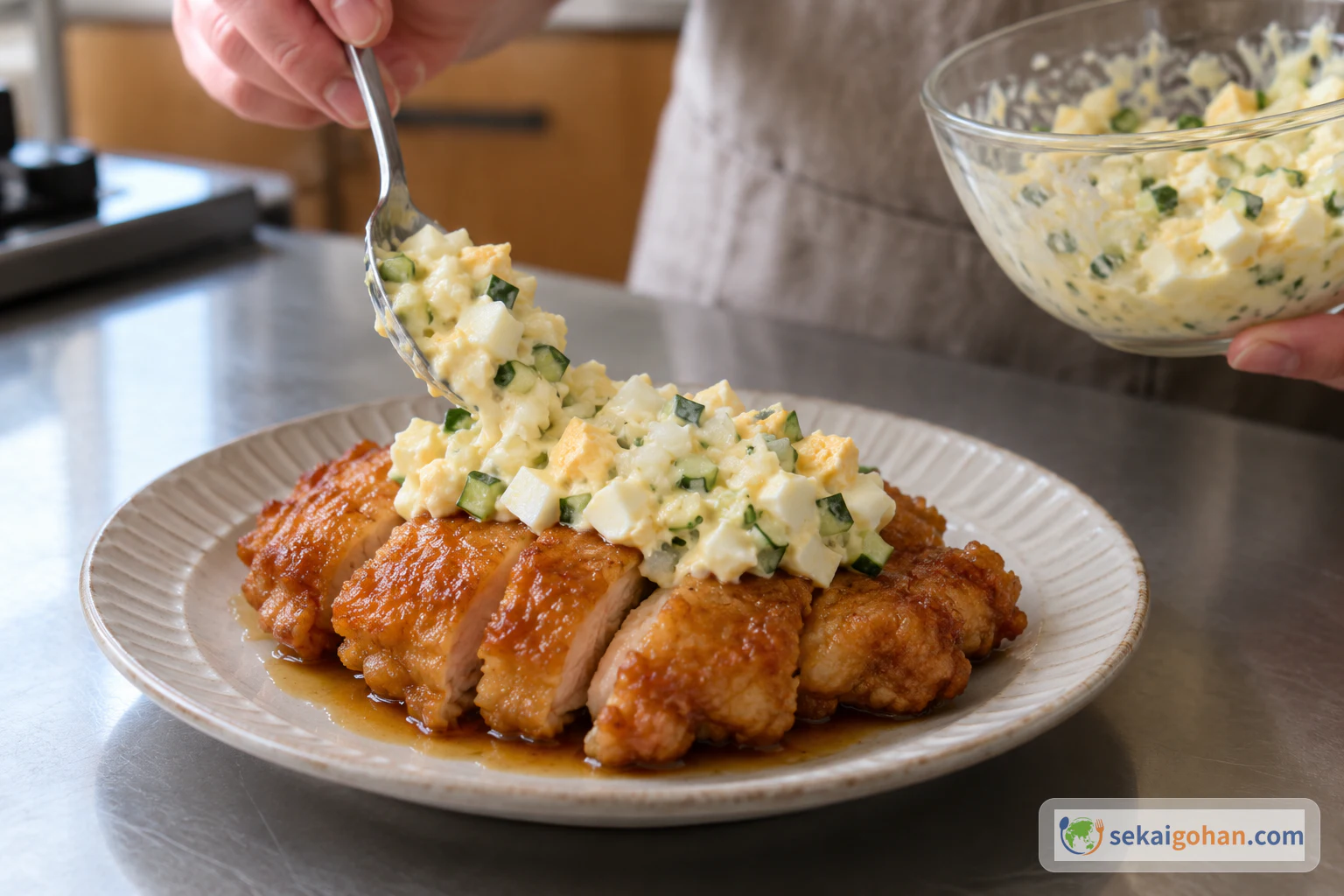
Hot from the oil, the chicken goes straight into a bath of sweet-sour soy and vinegar, then comes out glossy and dripping. Once it's drained and on the plate, a chunky tartar goes over the top, flecked with bits of cucumber, onion and boiled egg you can still pick out. Each bite comes in layers: fried chicken first, then the sweet vinegar, then the creamy tartar. This is chicken nanban (チキン南蛮, chikin nanban), from Miyazaki Prefecture in southern Kyushu.
Chicken Nanban in Miyazaki
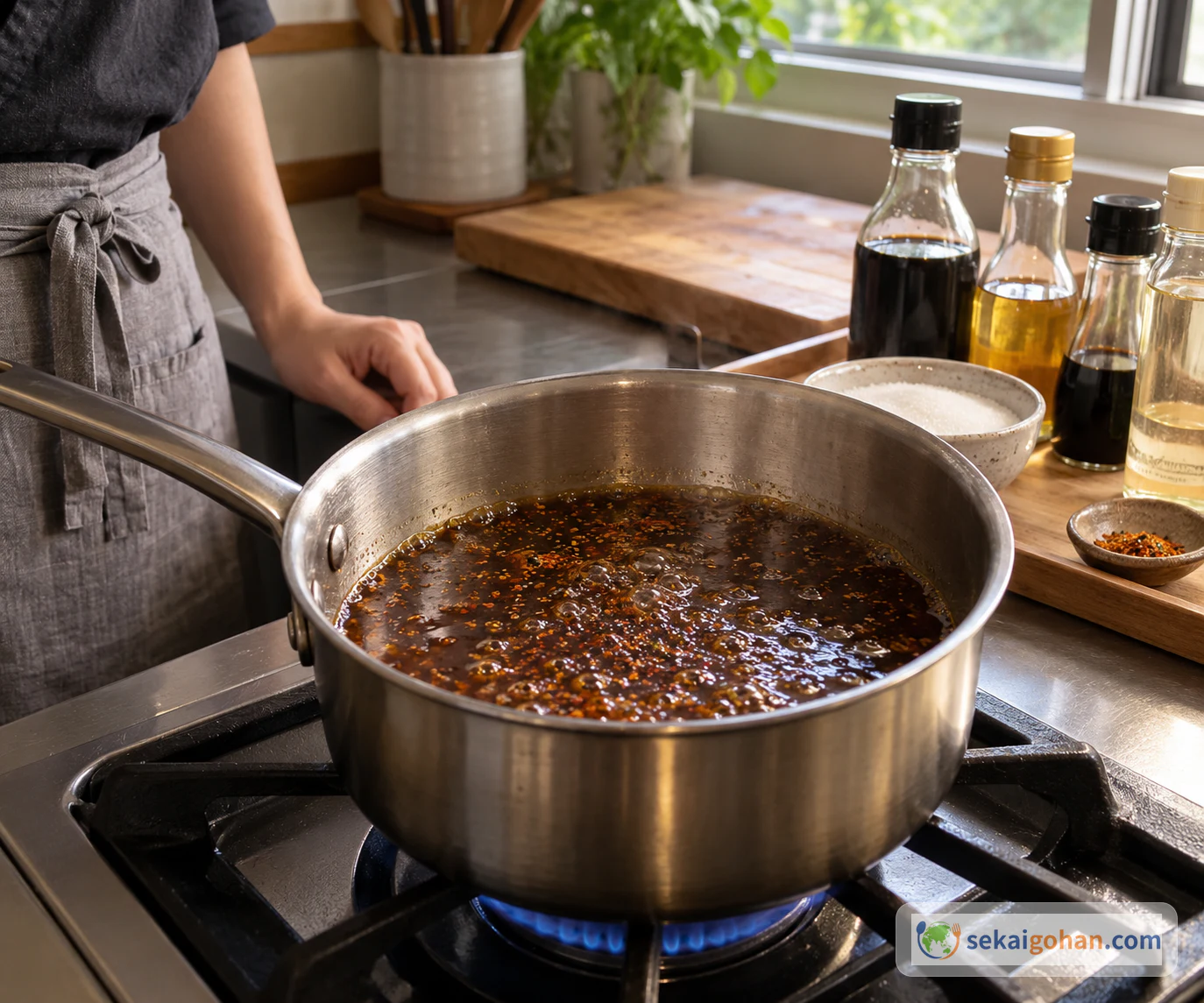
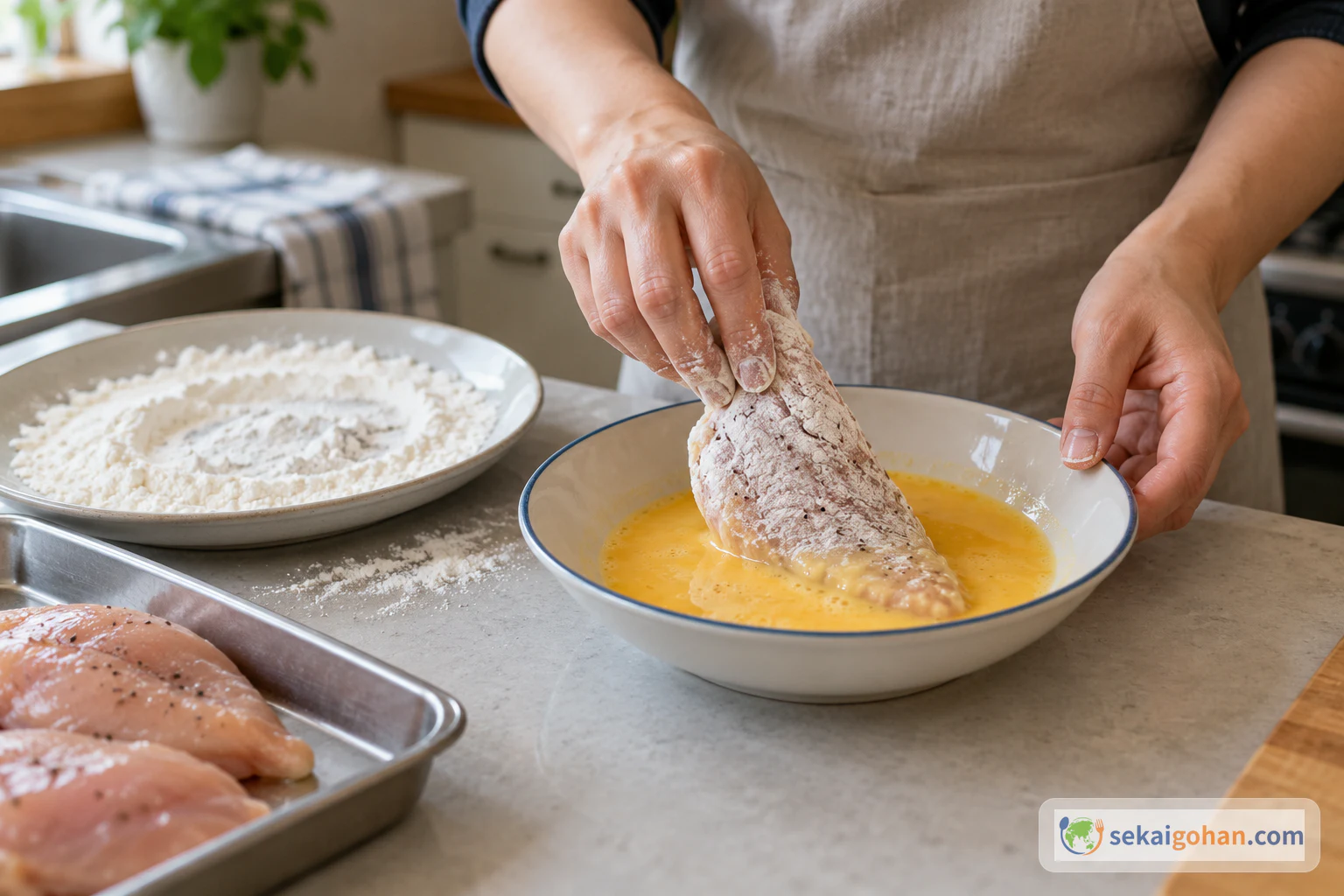
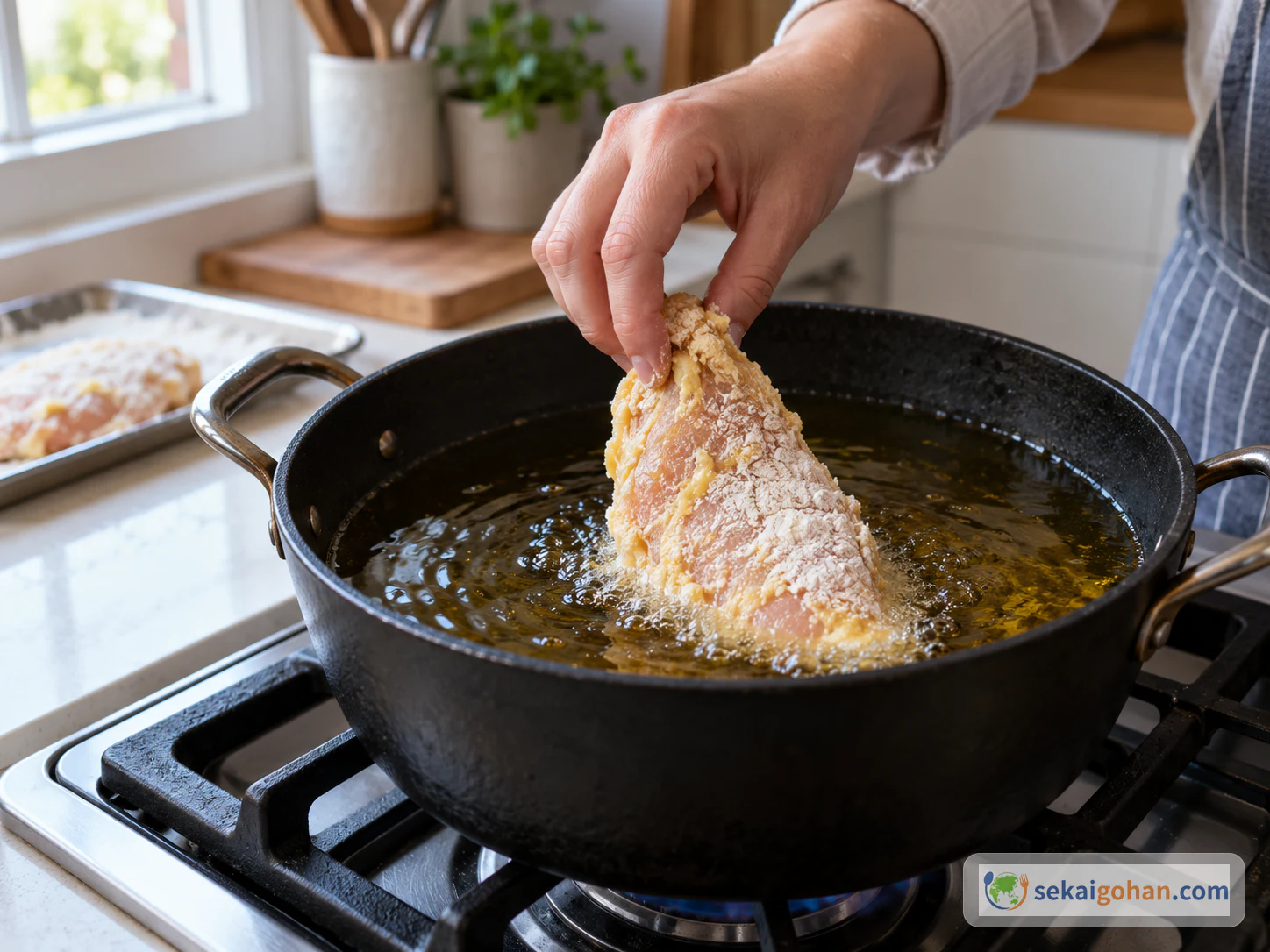
The chicken is breast meat, seasoned with salt and pepper, dusted with flour, coated in beaten egg and fried. While it's still hot, it is dipped in nanban vinegar, a sweet-sour mix of soy sauce, vinegar, sugar and mirin with a little shichimi togarashi, then served with vegetables and a fresh tartar sauce.
From Nobeoka Staff Meal to Prefecture Favorite
Chicken nanban began in Nobeoka, a city in northern Miyazaki. It started as a makanai (staff meal) at a Nobeoka Western-style restaurant called London (ロンドン) in the Showa 30s (roughly 1955 to 1964). Back then it was something like fried chicken soaked in sweet vinegar, with no formal name and no tartar sauce.
Around Showa 39 (1964), Mr. Goto (後藤直) put the dish on the menu at his restaurant Naochan (直ちゃん). At about the same time, Kai Teruyuki (甲斐照幸) of Ogura's Ōse branch (おぐら大瀬店) developed the now-mainstream style served with tartar sauce and salad. In the Showa 40s (roughly 1965 to 1974) it became a treat for families eating out, and from there it found its way into school lunches, home kitchens and everyday restaurant menus across the prefecture.
Today chicken nanban is a Miyazaki staple that's popular nationwide. In 2009 the city of Nobeoka declared itself the "birthplace of chicken nanban." Restaurants make their own house tartar sauces, and there are spin-offs such as chicken nanban curry. For more dishes from across the country, see our Japan page.
Where the Name Comes From
The word nanban is tied to the Portuguese, who arrived in Japan during the Sengoku (Warring States) period, and to nanban-zuke, dishes marinated in sweet vinegar with chili. The chicken dish takes its name from that link with nanban-zuke.
With Tartar or Without
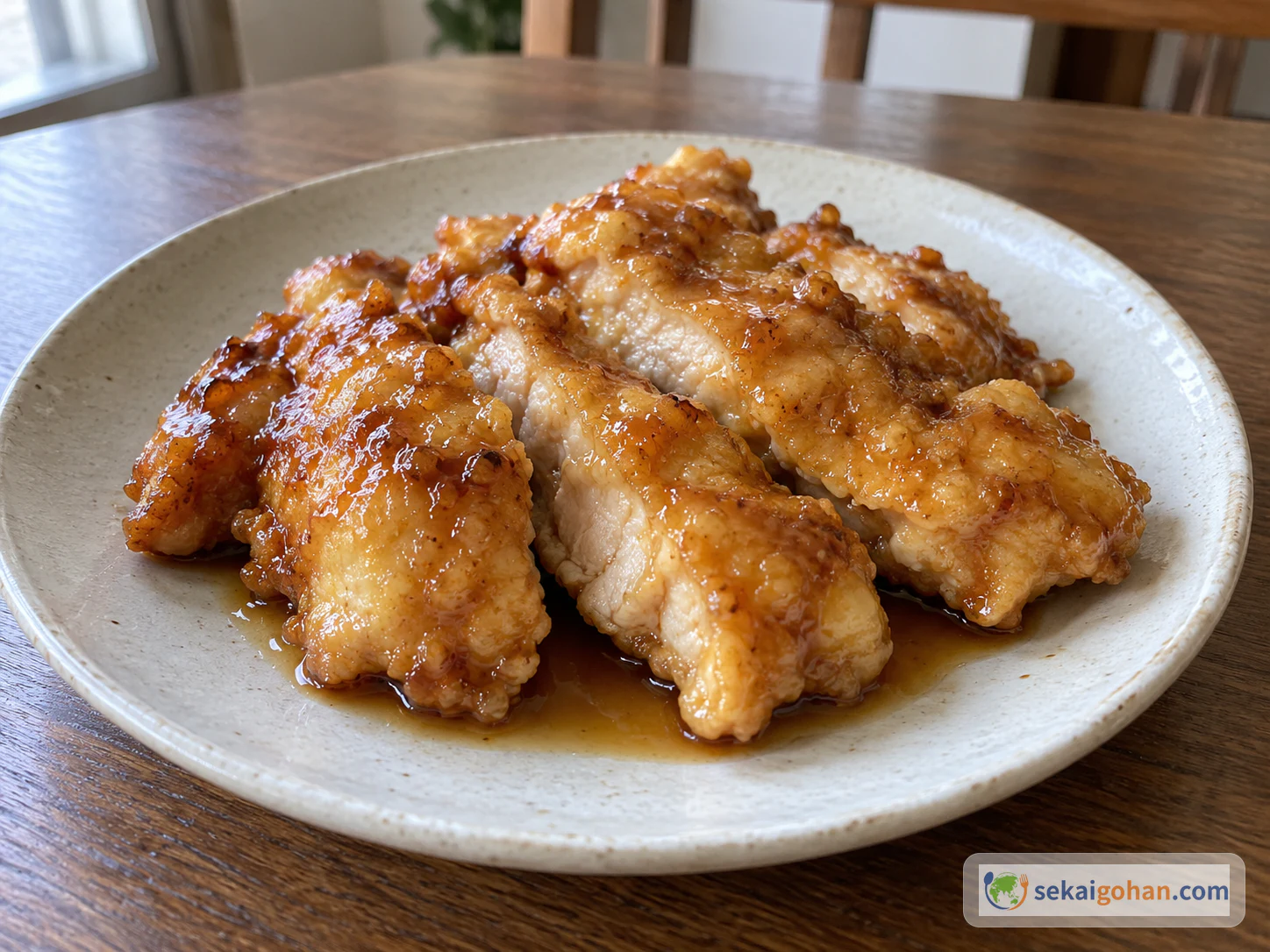
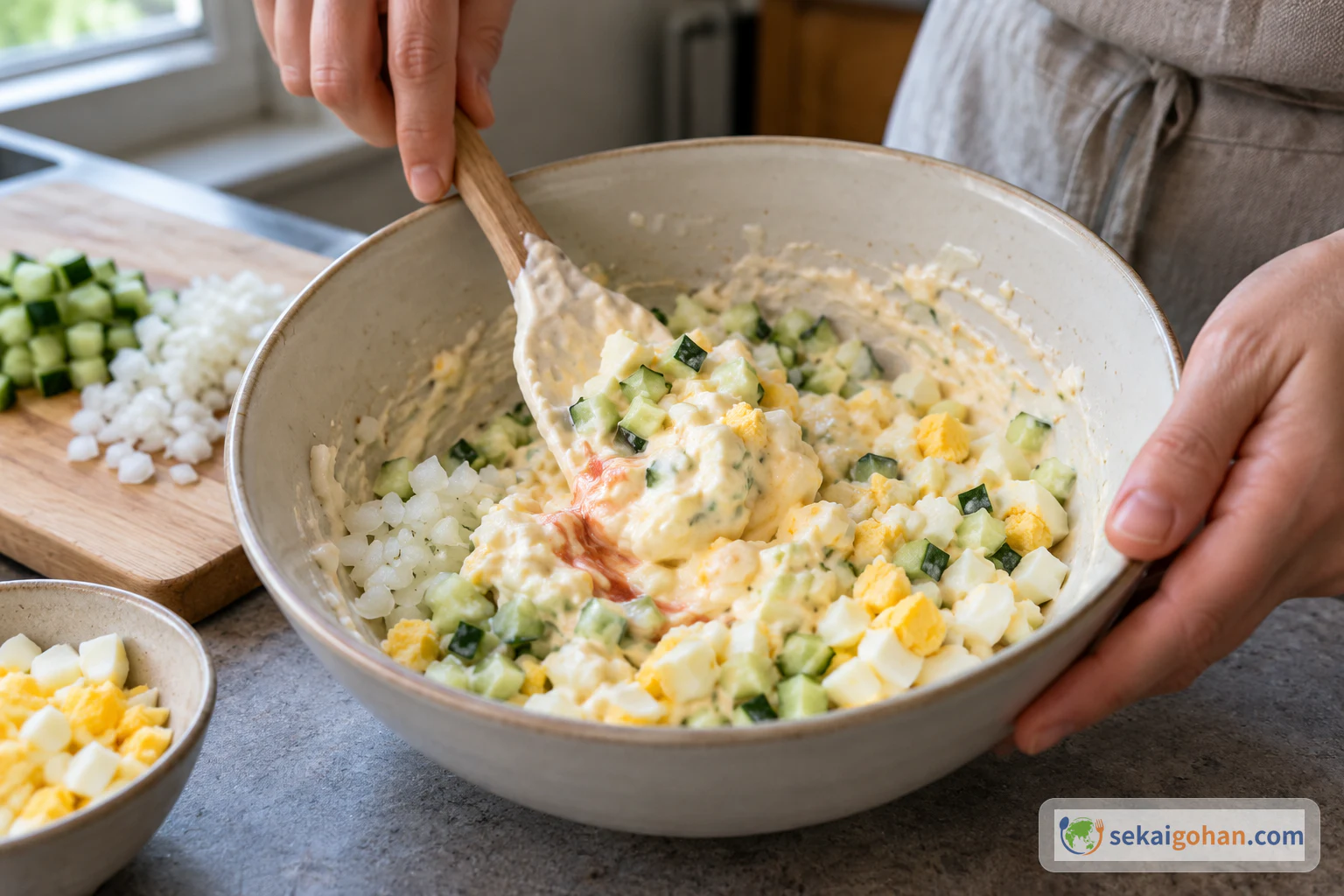
Chicken nanban comes in two styles. The more common one has tartar sauce poured over: mayonnaise with ketchup, mixed with chopped boiled egg, fresh cucumber and raw onion. The other is simpler, with the chicken eaten with the sweet vinegar sauce alone. It's a style in its own right, with the same chicken, coating and nanban vinegar, just without the tartar. The recipe here is the tartar style.
Ingredients: 2 Servings in Three Groups
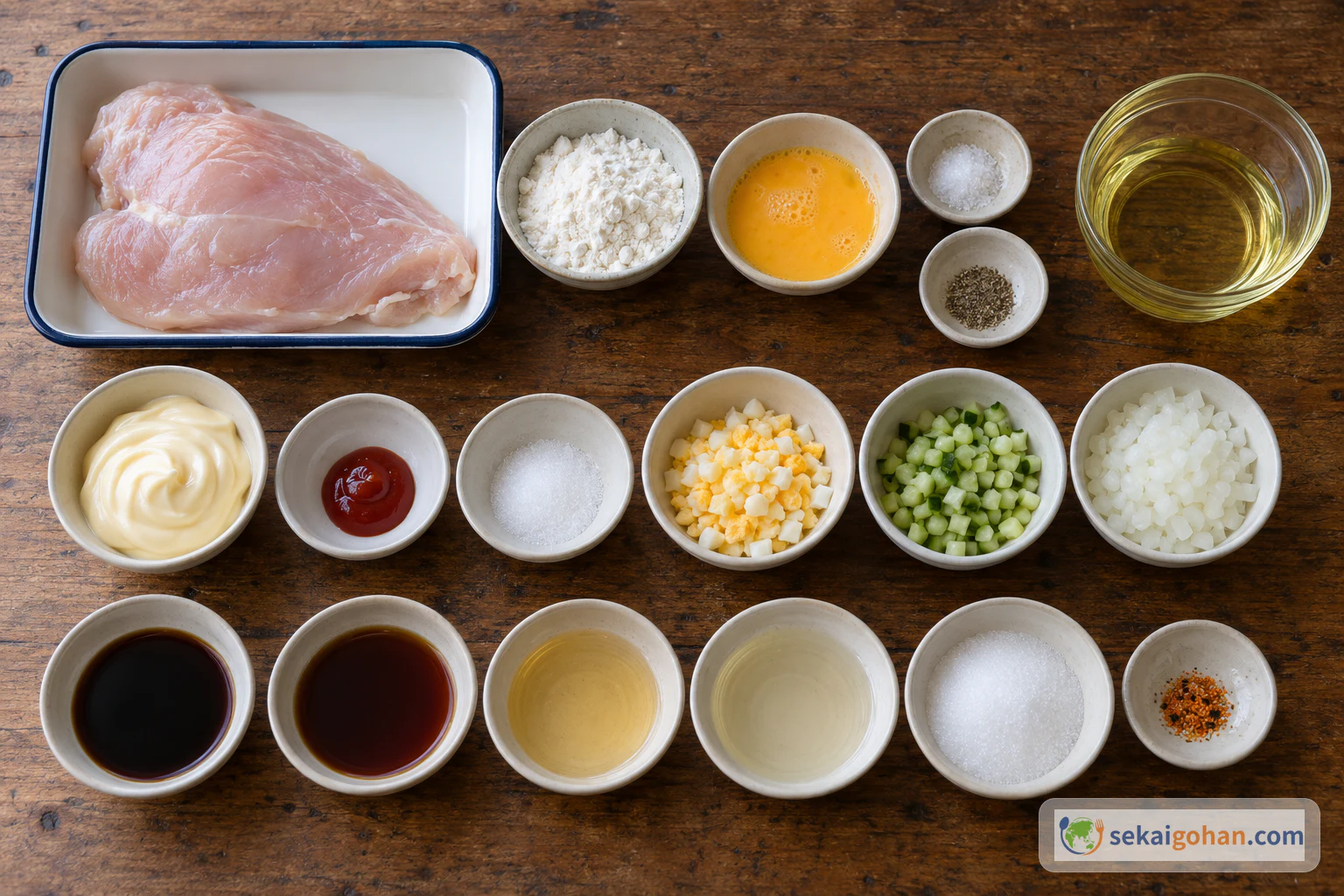
Everything is listed by weight, so a kitchen scale makes this easier. The table runs in three groups: chicken and coating, tartar sauce, and nanban vinegar. Two items appear twice with different amounts, so measure them separately: sugar (a small amount for the tartar, a larger amount for the vinegar) and egg (raw beaten egg for the coating, chopped boiled egg for the tartar).
Vegetables for the plate: as needed, any kind you like.
Equipment
- Deep pan or pot for frying
- Thermometer for the frying oil
- Clean instant-read food thermometer for the chicken (keep it separate from the oil thermometer)
- Wire rack or clean rack for the fried chicken
- Small saucepan for the nanban vinegar
- Mixing bowl for the tartar
- Shallow dishes for the flour and beaten egg
- Separate cutting board, plates and tongs or chopsticks for raw chicken, and clean ones for cooked chicken
Choosing Ingredients for Chicken Nanban
Everything on the list is an ordinary Japanese pantry or supermarket item: chicken breast, cake flour, eggs, regular and light soy sauce, mirin, vinegar, sugar, shichimi togarashi, mayonnaise, ketchup, cucumber and onion. Light soy sauce (usukuchi) and regular soy sauce each have their own amount, so keep both on hand and measure them separately.
Chicken breast has traditionally been the usual cut, and thigh, which is fattier and more filling, is also used today. The amounts here are for 8.5 oz (240g) of breast. Use whichever vinegar and frying oil you normally cook with, and any vegetables you like for the plate.
This dish contains wheat (cake flour, and many soy sauces), egg (the coating, the boiled egg and the mayonnaise) and soy (soy sauces). Shichimi togarashi and other blended products can contain further ingredients depending on the brand. Check the labels of every product you use.
Method: Tartar, Then Nanban Vinegar, Then the Fried Chicken
Make both sauces before the chicken goes into the oil, so the fried chicken can go straight into the vinegar and then onto the plate.
Chicken Nanban Tips and Fixes
Keep the coating order. Dusting with flour before the egg helps the coating soak up the sweet vinegar and gives it a pleasant texture in the mouth. Flour and egg are the whole coating, with no breadcrumbs.
Keep the sauces in their places. The vinegar goes onto the chicken after frying, the excess drains away, and the tartar goes on at the very end. Dip, lift and drain rather than leaving the chicken to sit.
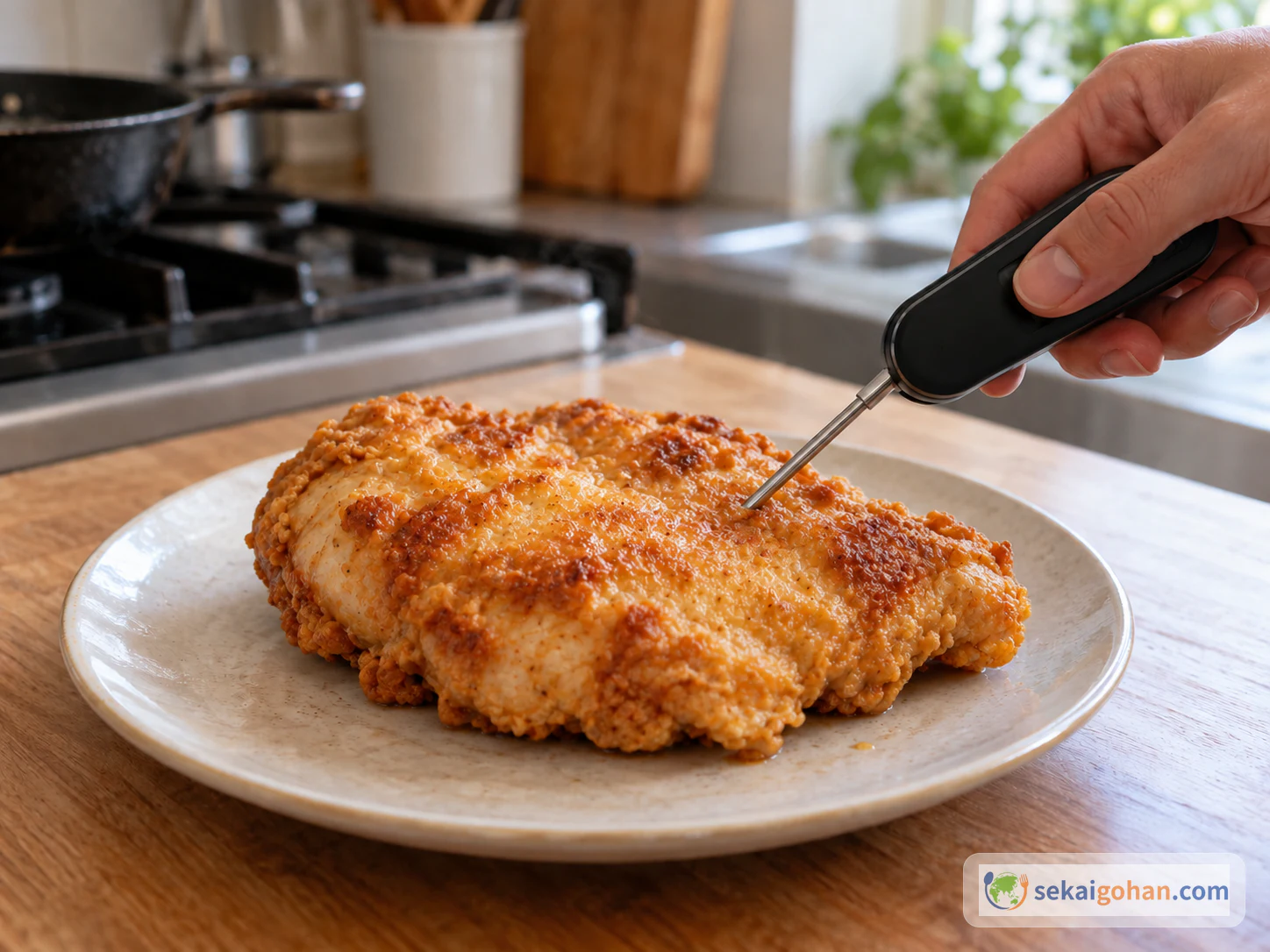
Measure doneness, not color. The 350°F (170°C) figure is for the oil only. Push the thermometer probe into the thickest part and confirm 167°F (75°C) held for at least 1 minute.
| Problem | Likely reason | What to do |
|---|---|---|
| The center hasn't reached 167°F (75°C) | The chicken is thick or the oil temperature dropped | Keep cooking and check the thickest part again; the color of the coating won't tell you |
| The coating looks like a breaded cutlet | Breadcrumbs were used | Next time, use only flour and then beaten egg |
| The tartar tastes like pickle relish | Pickles were used instead of fresh cucumber | Use fresh cucumber and raw onion, finely chopped |
| The plate is flooded with sauce | The chicken wasn't drained after dipping | Lift it out of the vinegar and let the excess drip off before plating |
| The tartar is too sweet or the vinegar too mild | The two sugar amounts were swapped | Sugar for the tartar is 3g; sugar for the nanban vinegar is 1 oz (30g) |
| The vinegar tastes off-balance | Only one kind of soy sauce was used | Measure 18g regular and 18g light soy sauce separately |
Handling Chicken Safely
Campylobacter is frequently found in retail chicken, and food poisoning from undercooked chicken dishes is common. Because pathogens can get inside the meat, the center has to be cooked through, which is why the thermometer check above matters more than any frying time.
Keep raw chicken refrigerated, and keep it and its juices away from other foods, including cooked dishes and vegetables eaten raw. In practice, that means separate boards, plates and tongs for raw chicken, with the vegetables for the plate kept well clear.
Frequently Asked Questions
Is it still chicken nanban without tartar sauce?
Yes. The style eaten with sweet vinegar sauce alone is its own line of the dish, alongside the tartar style.
How many minutes should I fry the chicken?
It depends on the thickness of the chicken. Fry in 350°F (170°C) oil and use a food thermometer to confirm the thickest part reaches 167°F (75°C) at the center for at least 1 minute.
Do I need cabbage on the side?
Any vegetables you like will do, in any amount.