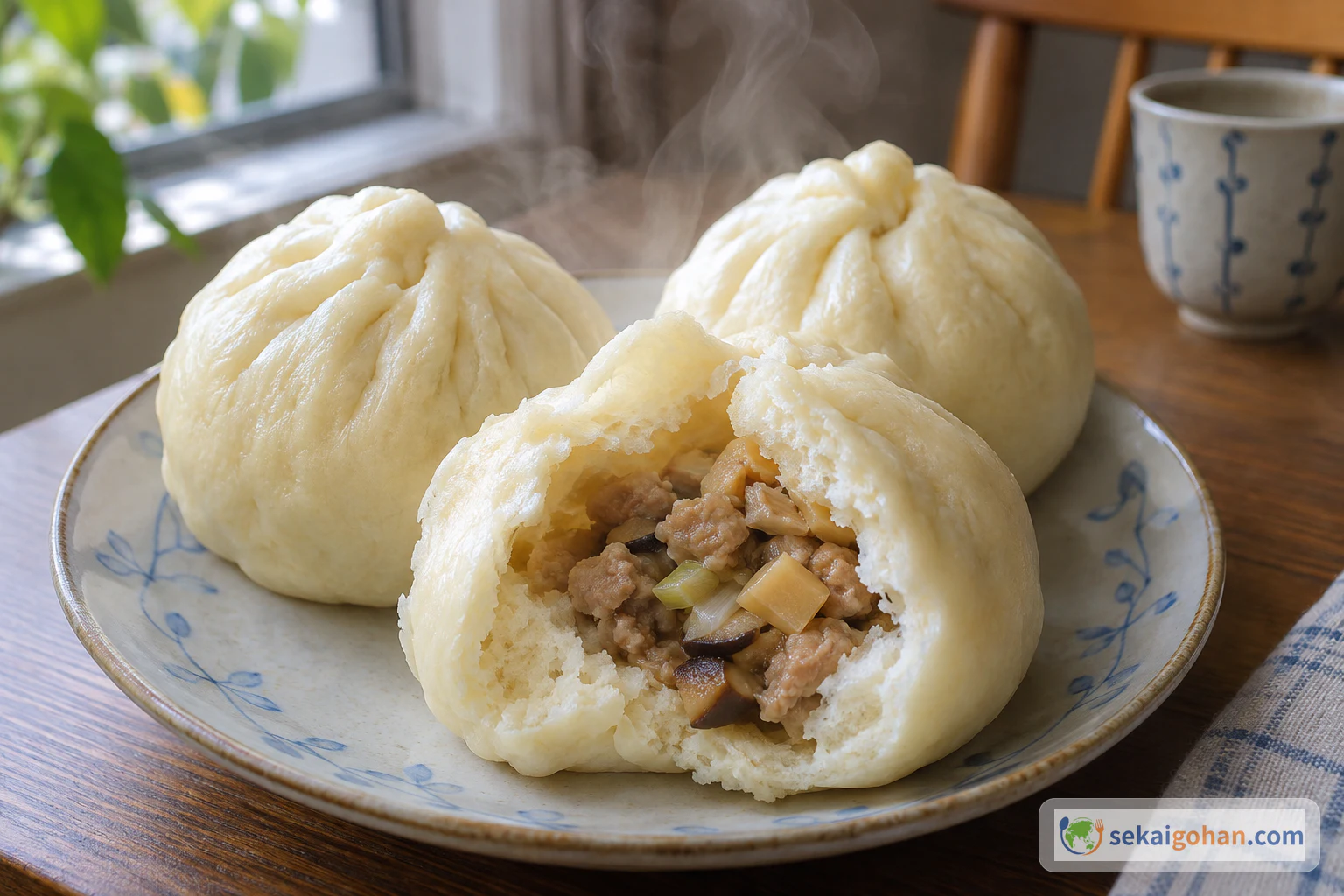
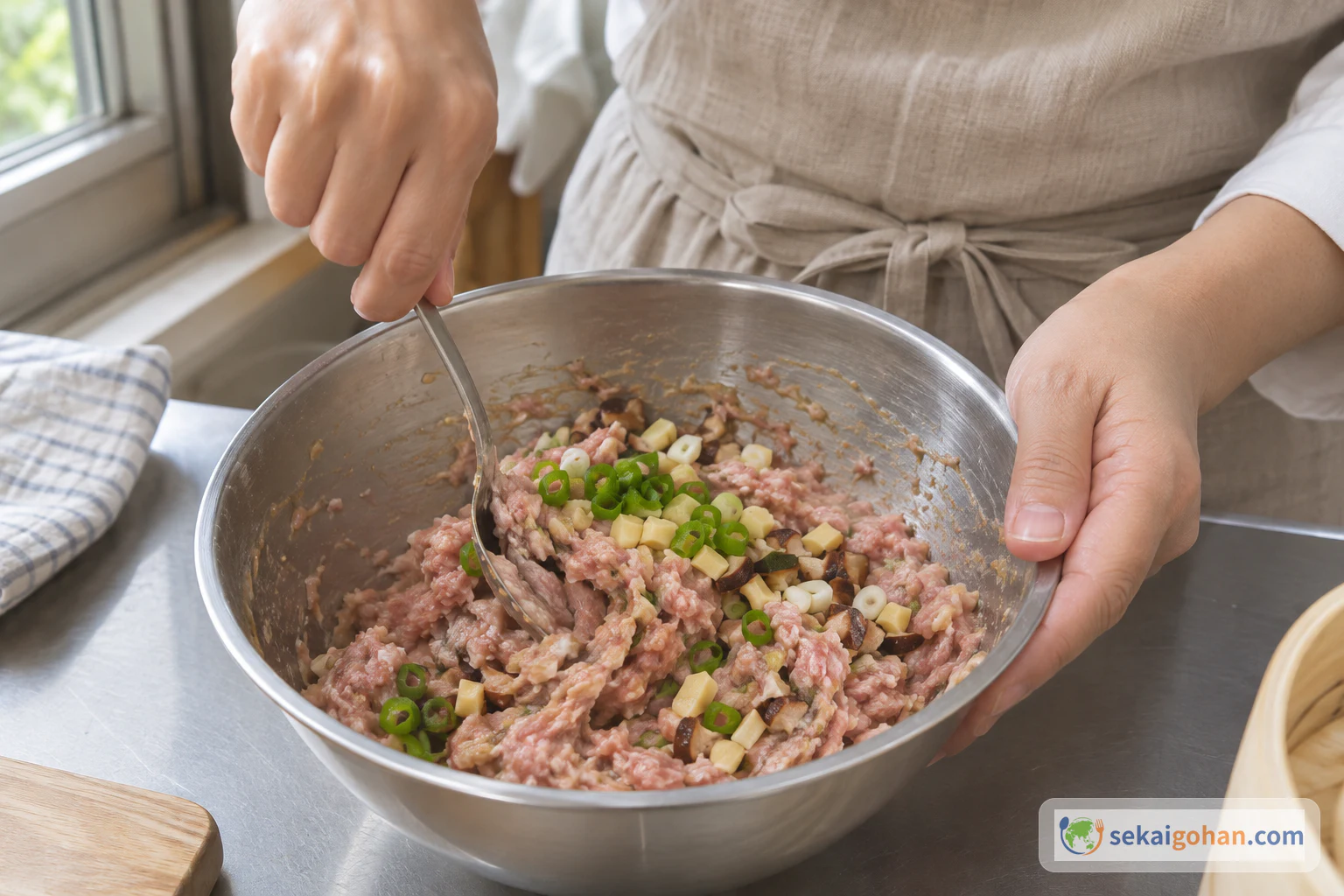
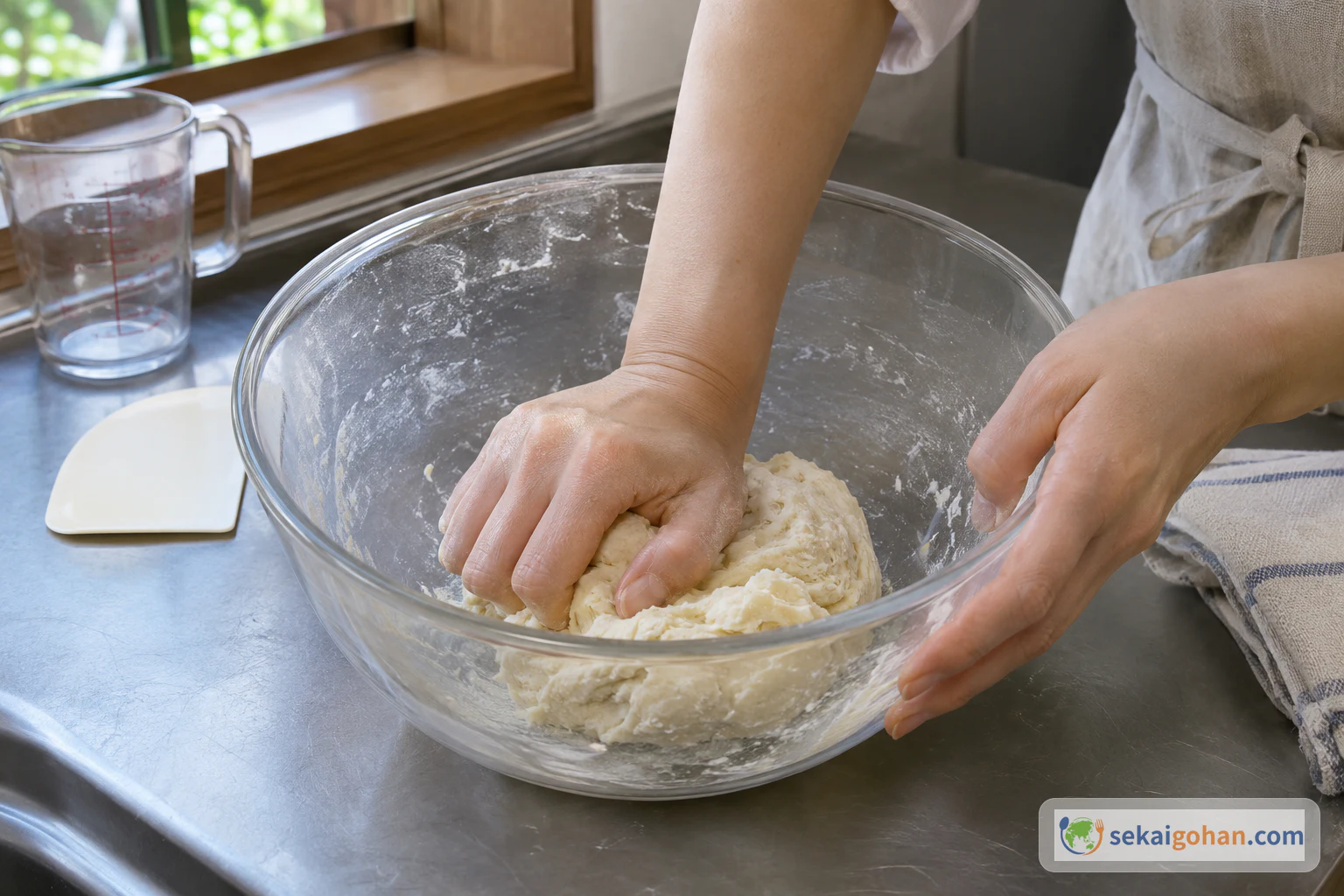
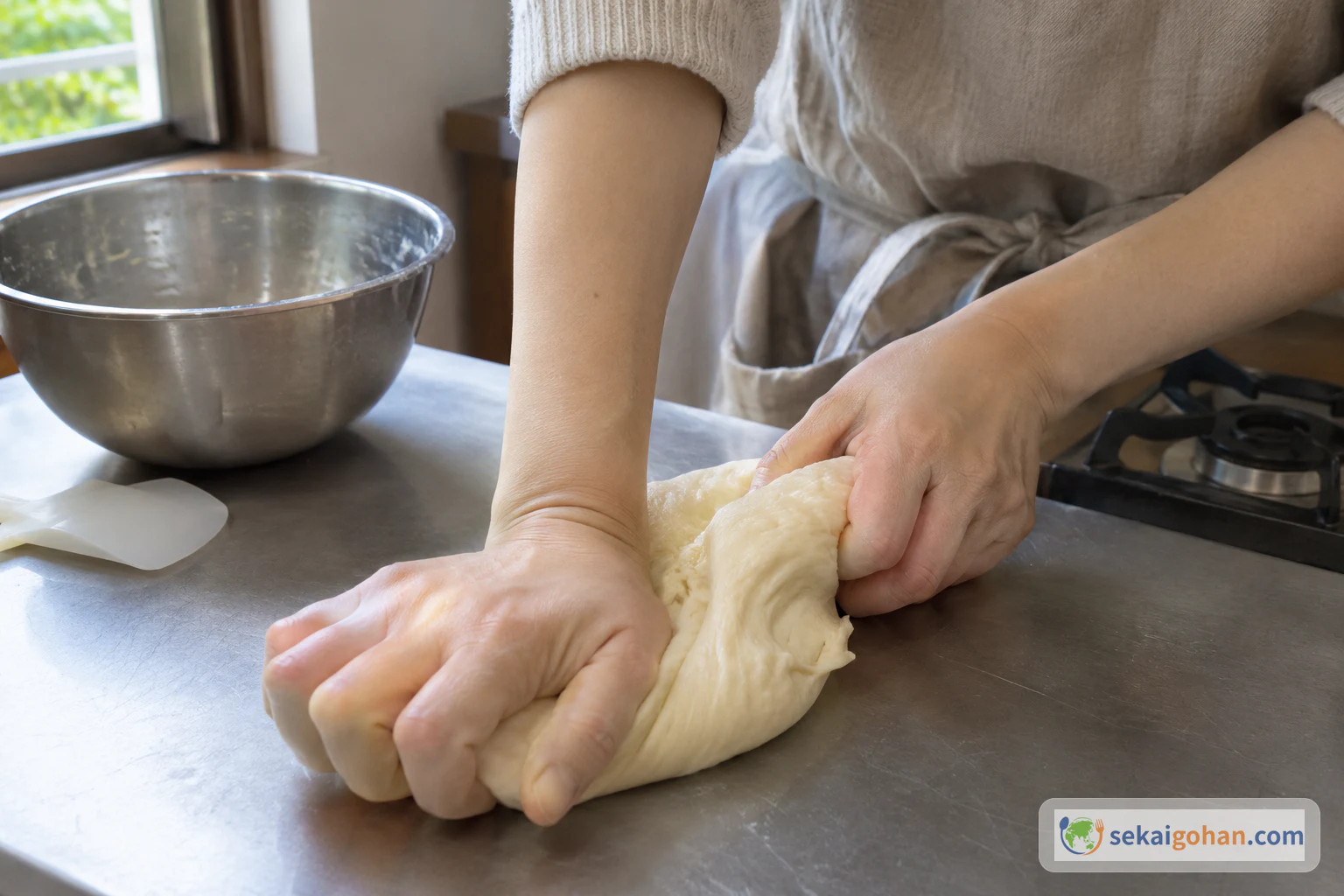
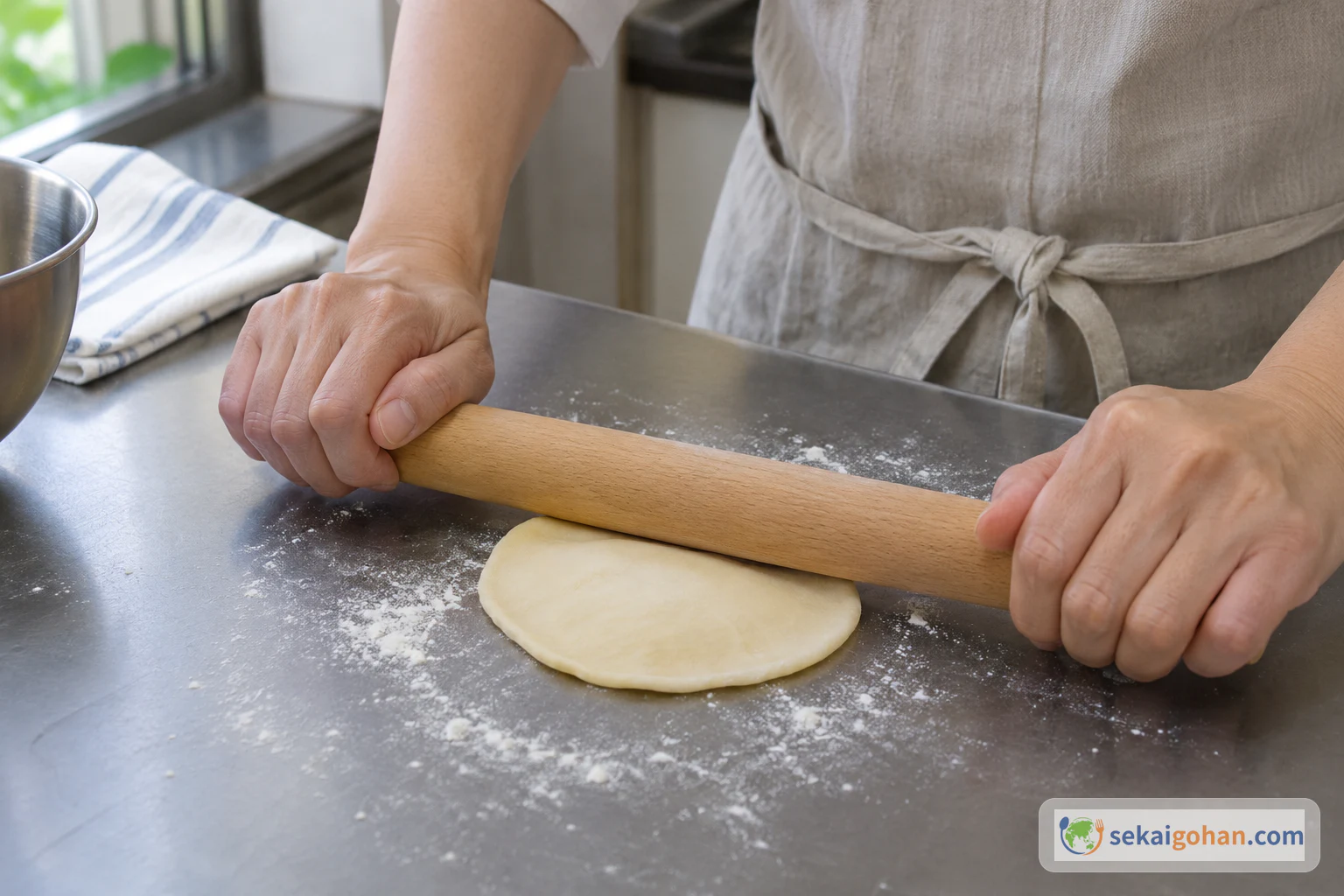
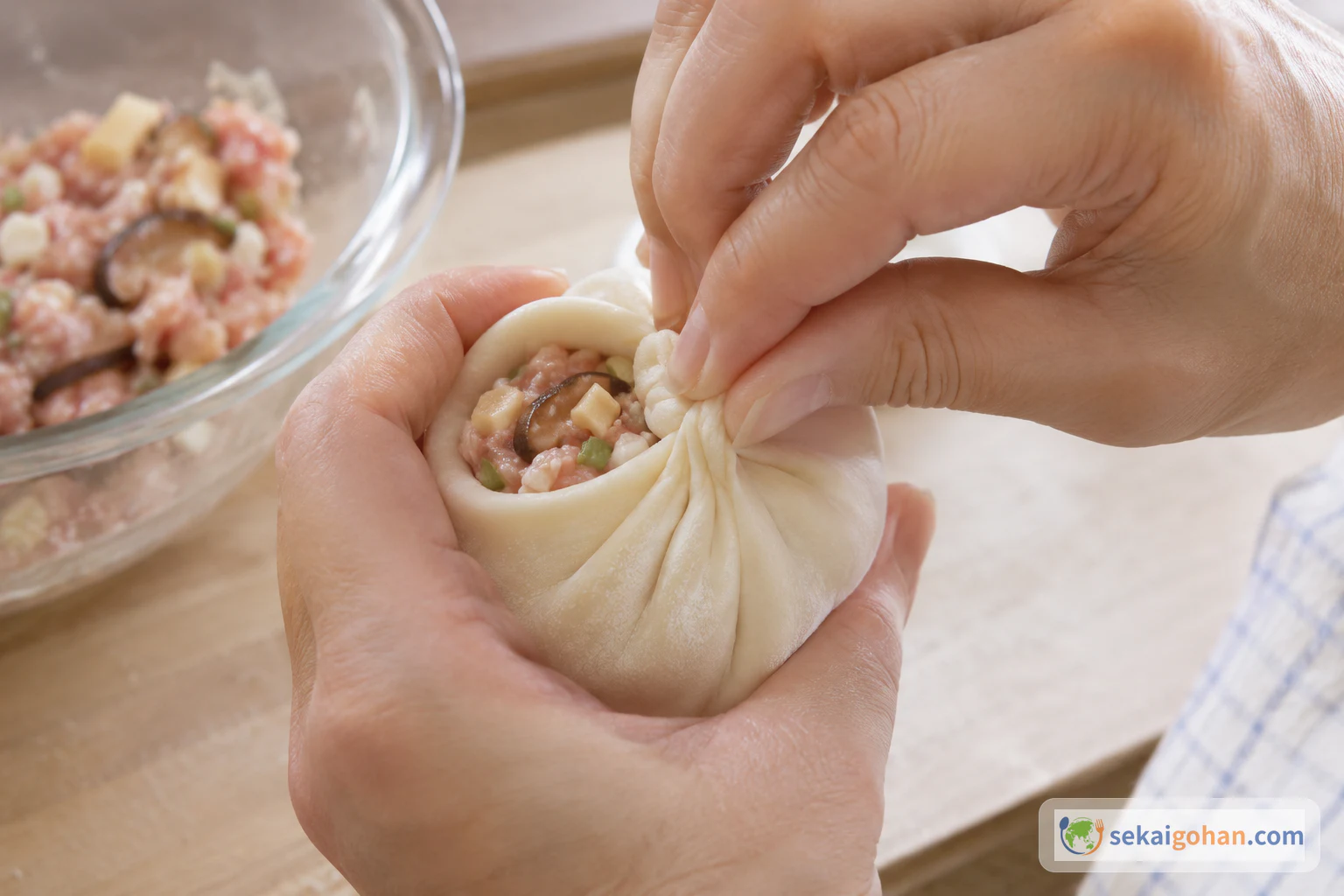
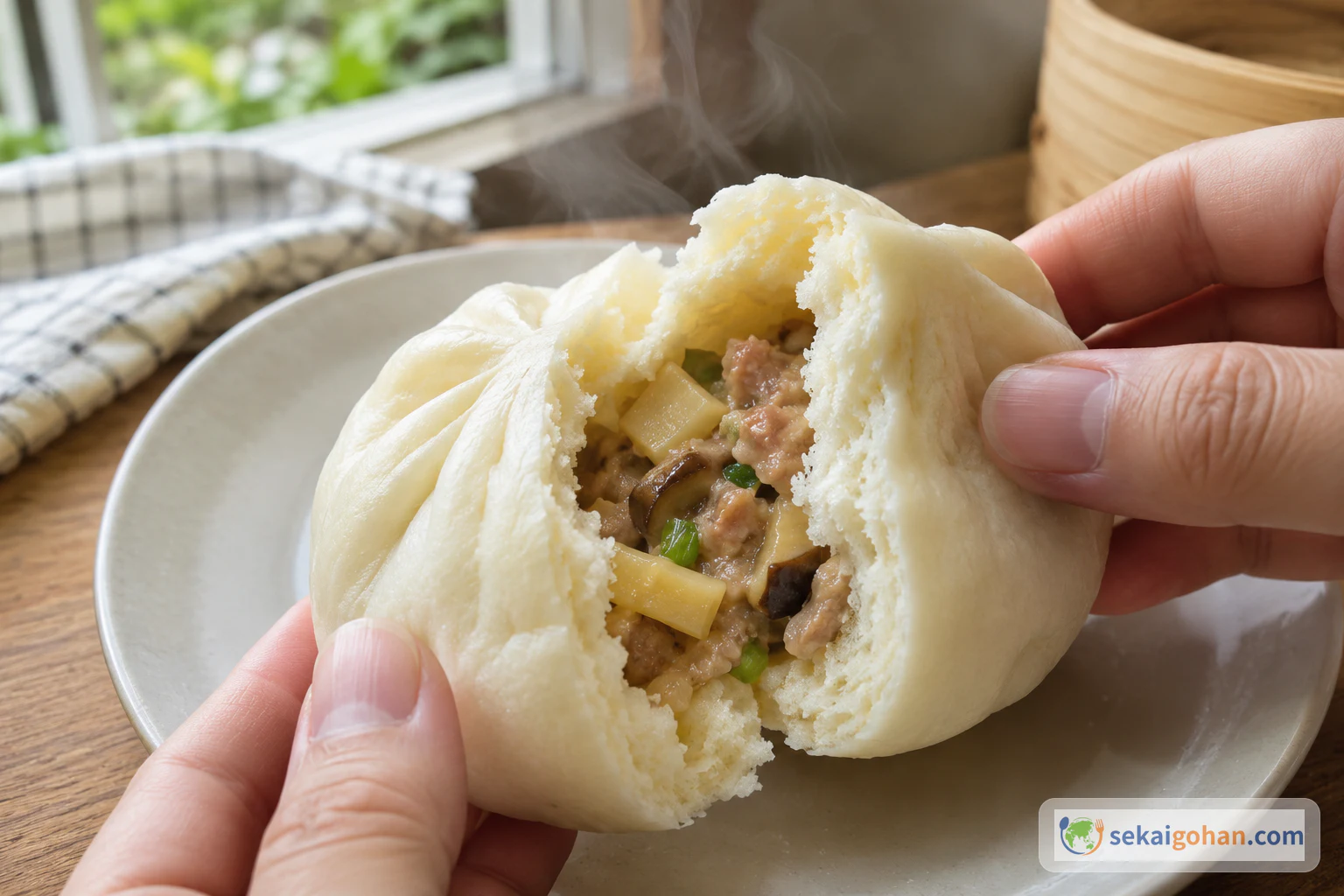
Steam rises when the steamer opens, and the pale wrappers underneath have turned soft and pillowy. Tear one open and the filling appears: pork seasoned with soy sauce and tenmenjan, flecked with long green onion, bamboo shoot and shiitake. Nikuman is Japan's take on the Chinese steamed bun, a closed round of yeast-raised wheat dough wrapped around a savory filling and steamed. At home, the hard parts are closing the pleats and knowing when the pork is done. The steaming time gets you started; the thermometer tells you when the filling is ready.
Nikuman in Japan
In Japan, Chinese-style steamed buns are a filling wrapped in yeast-raised wheat dough and steamed. In the Kansai region, the meat-and-vegetable type is called buta-man. You'll find more dishes from the same country among our Japanese recipes.
Two commercial histories often come up. Roshoki in Kobe's Nankinmachi opened in 1915, and its pork buns are still wrapped by hand, with a koji-fermented wrapper around soy-seasoned mixed ground meat and green onion. In 1927, Shinjuku Nakamuraya launched its "Tenka Ippin Shina Manju", adjusting the baozi people had eaten in China to Japanese tastes, and the buns became familiar to the general public. The home version here is simpler: ground pork and tenmenjan, without Roshoki's koji wrapper or mixed meat.
Nikuman and other wrapped dishes
Similar-looking dishes from elsewhere are built quite differently. Xiaolongbao, from China, is a dim sum dumpling that holds meat juices inside, using jellied stock. Bánh bao, from Vietnam, is a steamed bun whose filling combines ingredients such as egg, mushroom and fish sauce. Khinkali, from Georgia, is boiled rather than steamed, and Hujiao bing, from Taiwan, is a meat-filled, bun-like dish that is baked. Taiwan's gua bao differs again: it's an open bun with the filling tucked inside, not a sealed one.
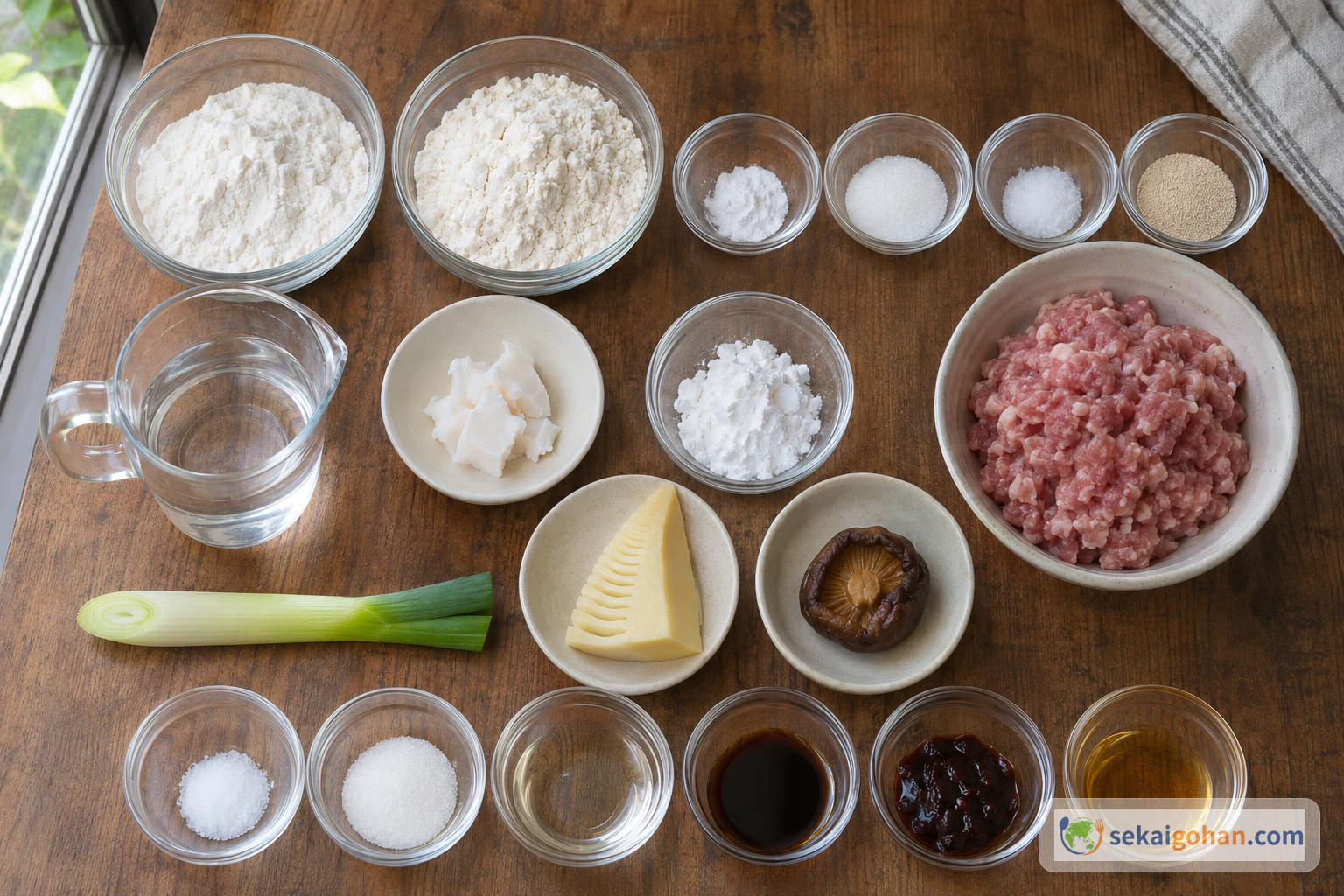
Ingredients for 4 Buns
Equipment
- Steamer
- Oven paper, to line the steamer
- Clean food thermometer
- Kitchen scale and measuring spoons
- Knife and cutting board
- Mixing bowls and a small cup
- Rolling pin
- Bench scraper
Choosing Ingredients for Nikuman
Each ingredient here does a specific job, so swaps change the bun.
- Yeast: use commercial instant dry yeast along with the baking powder. Homemade yeast or old dough won't follow the proofing times here.
- Tenmenjan: red miso or doubanjiang aren't stand-ins. Leaving it out changes the flavor.
- Lard: stick with lard; a neutral oil makes a different dough.
This recipe contains wheat, soy from the soy sauce and tenmenjan, and sesame oil. Check the labels of the products you use, including the lard, soy sauce and tenmenjan, and take care to avoid cross-contact. If you change an ingredient, recheck the allergens too.
Method: Filling First, Then Wrapper, Then Steam
Keep the pork refrigerated until you use it. Never taste the raw filling. Wash your hands and any tools after they touch raw meat, and keep them away from other foods and from the finished buns. Take care around steam and hot equipment.
Proofing, Doneness and Common Problems
Proofing and timing
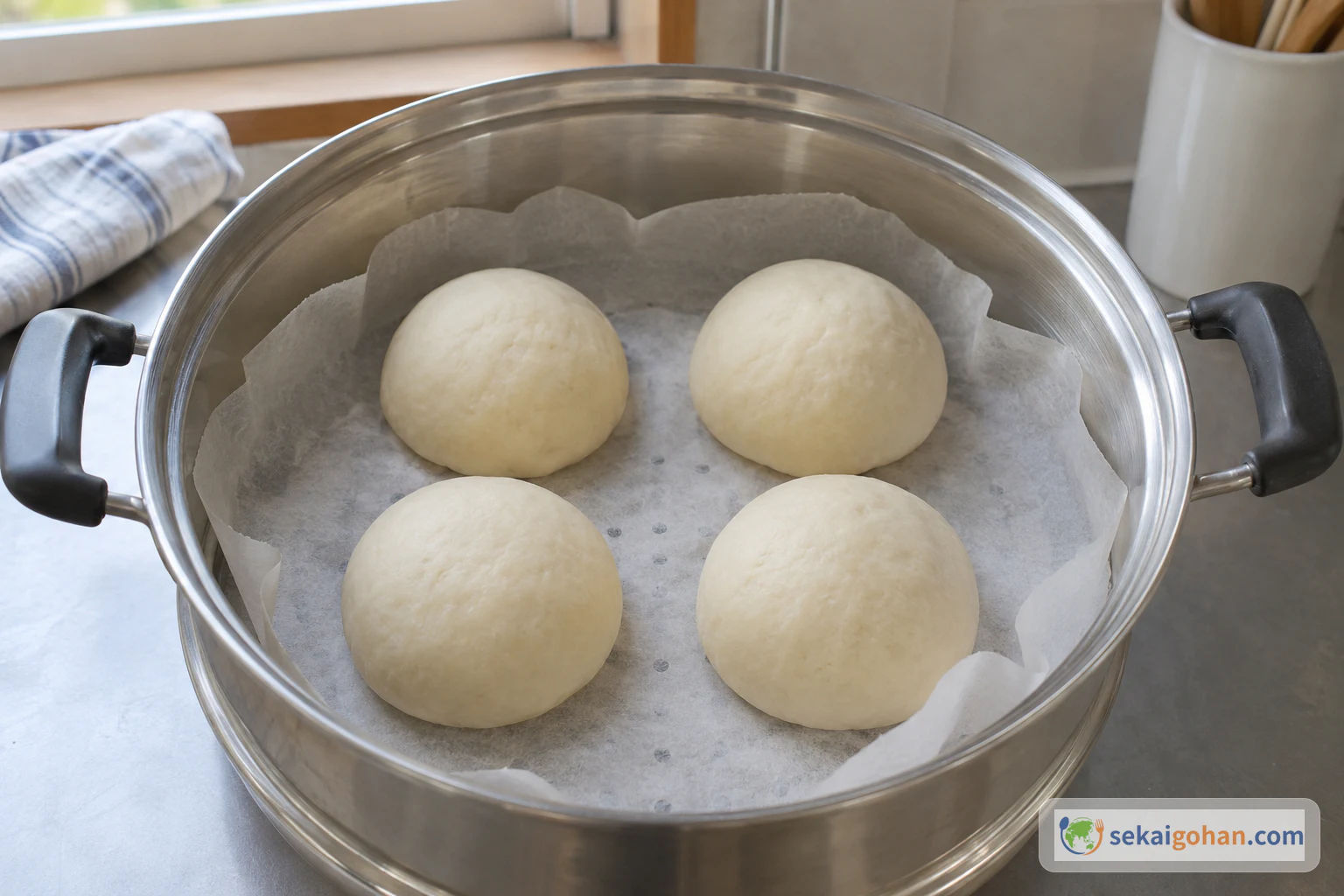
Proof the buns at room temperature, off the heat: no steam and no warm oven, because they hold raw pork. To check the proof, press with a washed finger and compare with how the dough felt before. Cap the proof at 60 minutes; if the dough hasn't reached that softer, puffier feel by then, steam it anyway.
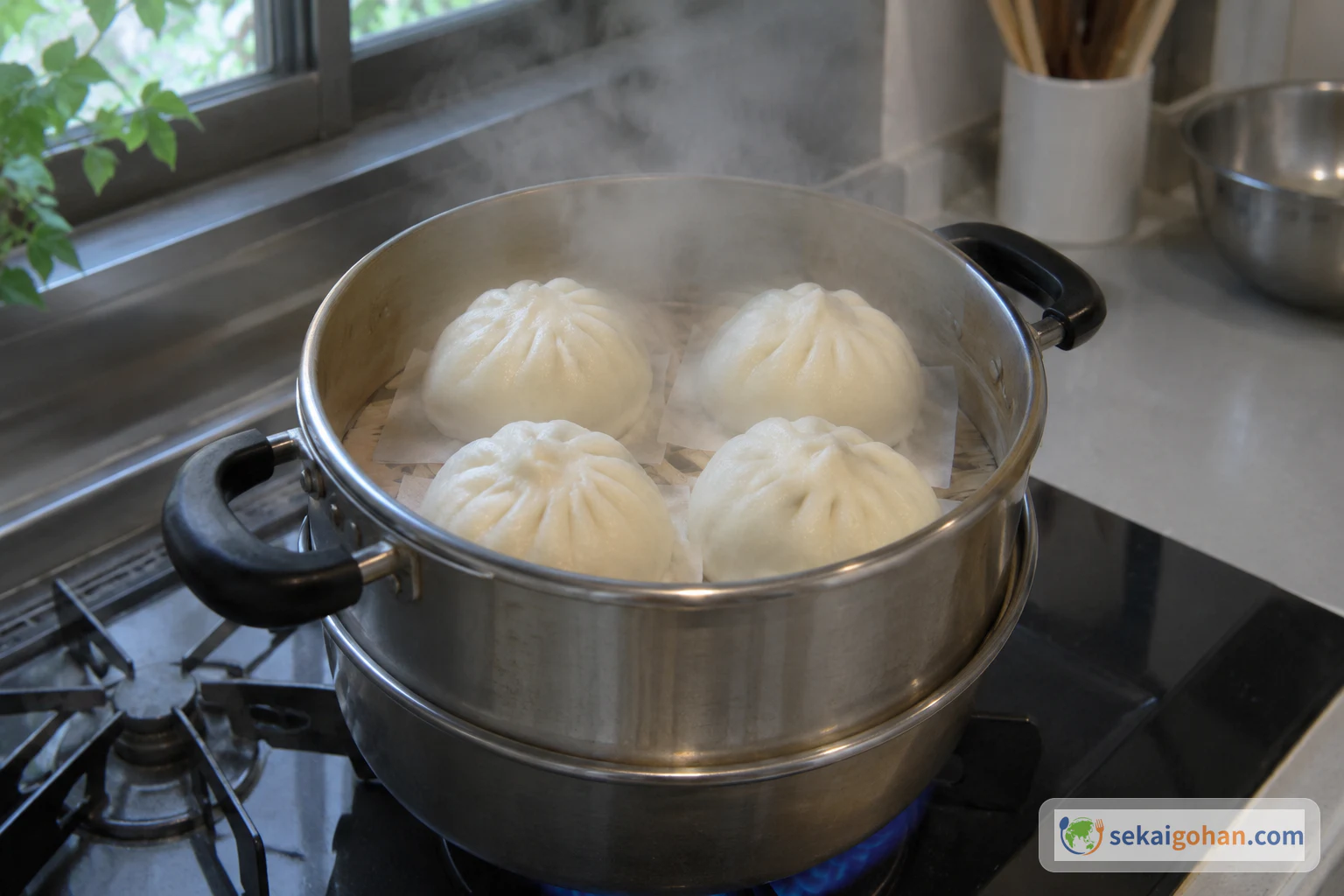
The filling has its own clock. If more than 2 hours pass between taking it out of the refrigerator and starting to steam, or 1 hour if the room is above 90°F (32°C), discard it uncooked. When the buns come out, the center of the filling should hold 75°C for 1 minute or more; the 15 minutes of steaming doesn't replace that check.
Color, puffiness and the look of the juices do not stand in for a temperature check, and neither do 15 minutes on the clock. The filling is done once its center has held 167°F (75°C) or higher for at least 1 minute. Filling shape, the number of buns and how your steamer runs can all change how long that takes.
Troubleshooting
| Problem | What to look at | What to do |
|---|---|---|
| The wrapper is hard to handle | The thickness of the center and the edge | Keep the center thicker and the edge thinner, and have the filling portions ready before you start wrapping |
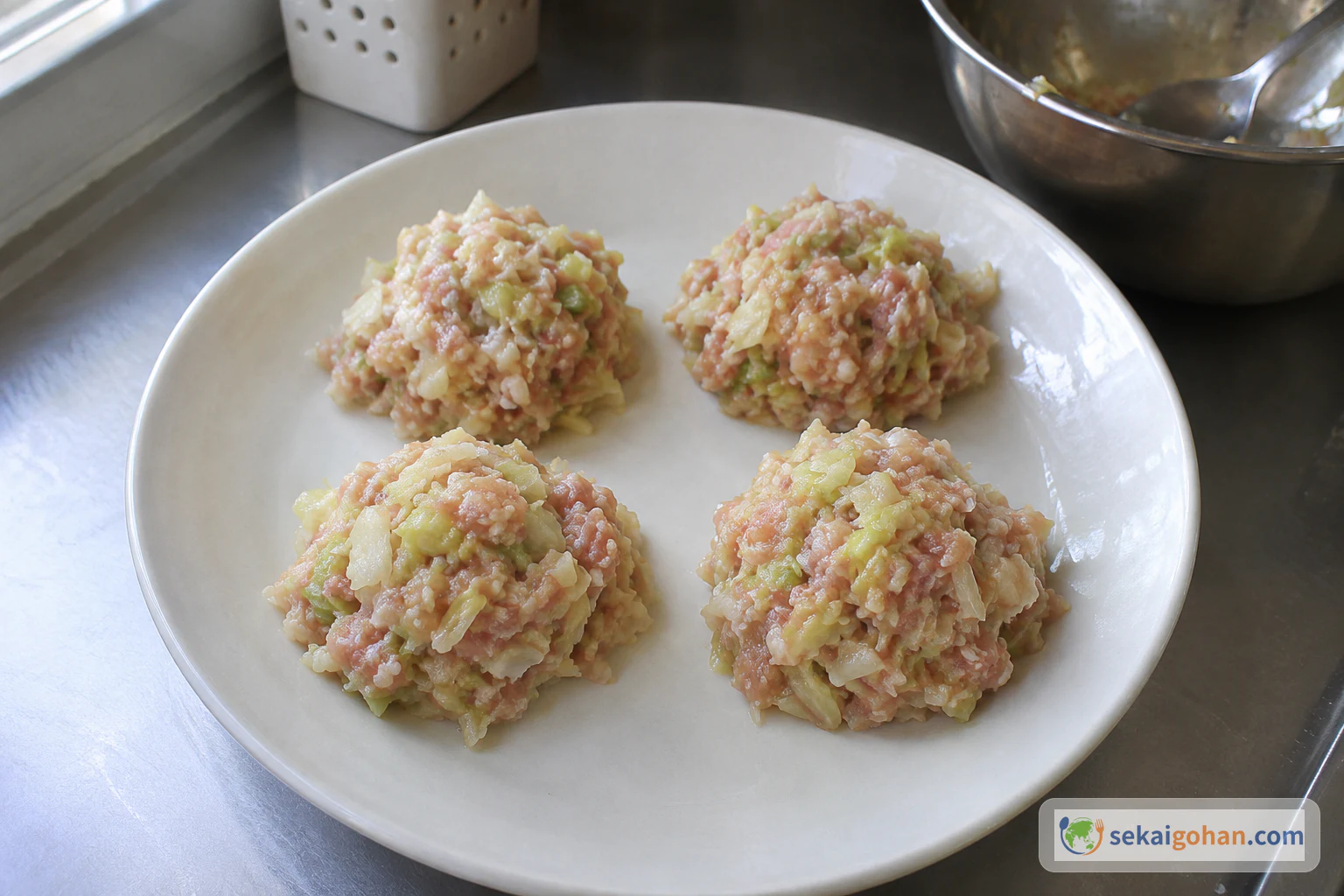
| The pleats won't close | The filling portion and the starch | Use just one portion of filling, with the starch around the edge and the center clear |
| You can't tell if the proof is done | The feel of the dough | Press with a washed finger and compare with how it felt before proofing. Don't go past 60 minutes |
| The dough hasn't changed by 60 minutes | The clock | Steam it anyway rather than extending the proof |
| The filling has been out too long | The time since it left the refrigerator | Past 2 hours, or 1 hour in a room above 90°F (32°C), discard the buns without cooking them |
| The center hasn't reached temperature | The thermometer reading | Keep steaming past 15 minutes, then check again |
If the dough misbehaves, resist rescuing it with extra water or flour; the fixes above work better.
Serving, Storing and Small Changes
Nikuman are best eaten freshly steamed, while the wrappers are still soft. Don't leave leftovers out at room temperature for long: keep them in the refrigerator at 50°F (10°C) or below, reheat them thoroughly, and throw them away if too much time has passed or anything seems at all doubtful.
Basic kitchen hygiene matters with a raw pork filling. Pork and ground meat should never be eaten raw or undercooked. Keep raw meat refrigerated, and watch for cross-contamination through hands and utensils. If you pause partway through, refrigerate the food rather than leaving it out, before or after cooking.
A few adjustments fit within the recipe. If your steamer can't hold all four buns, steam them in batches; the wait counts toward the filling's time limit, and each batch still needs its own thermometer check. Chop the green onion to an even size so no bite is all onion. And you can cut the 1.75 oz (50g) of bamboo shoot a little finer or coarser to change the crunch.
Frequently Asked Questions
How many people does this feed?
This recipe makes 4 buns. How many people that feeds depends on the rest of the meal.
Is 15 minutes of steaming enough?
Fifteen minutes over high heat is the starting time. Check the center with a thermometer: it should reach 167°F (75°C) for at least 1 minute. If it falls short, keep steaming.
Can I make these ahead or freeze them?
Plan to eat them freshly steamed. Reheat any leftovers thoroughly.