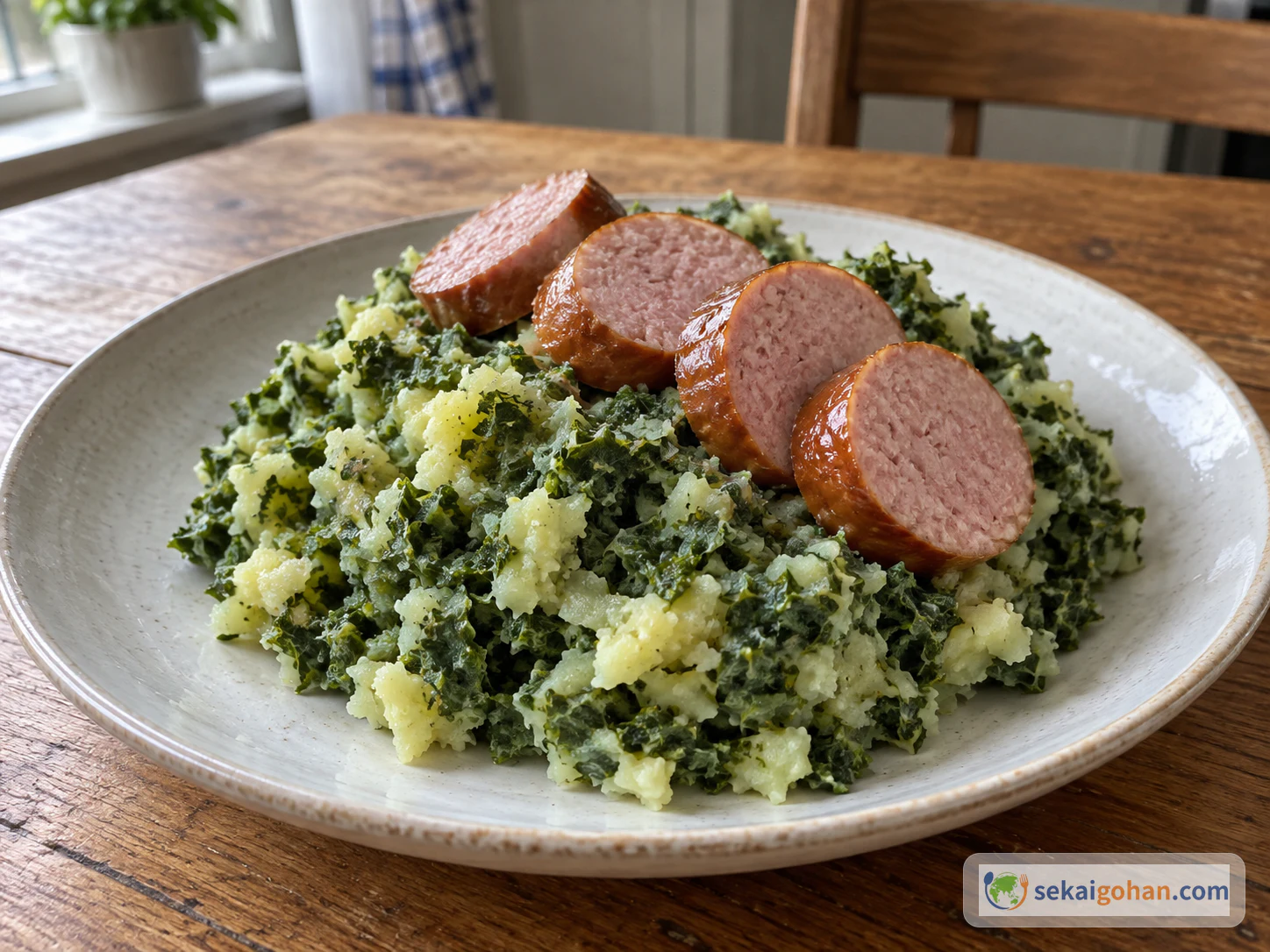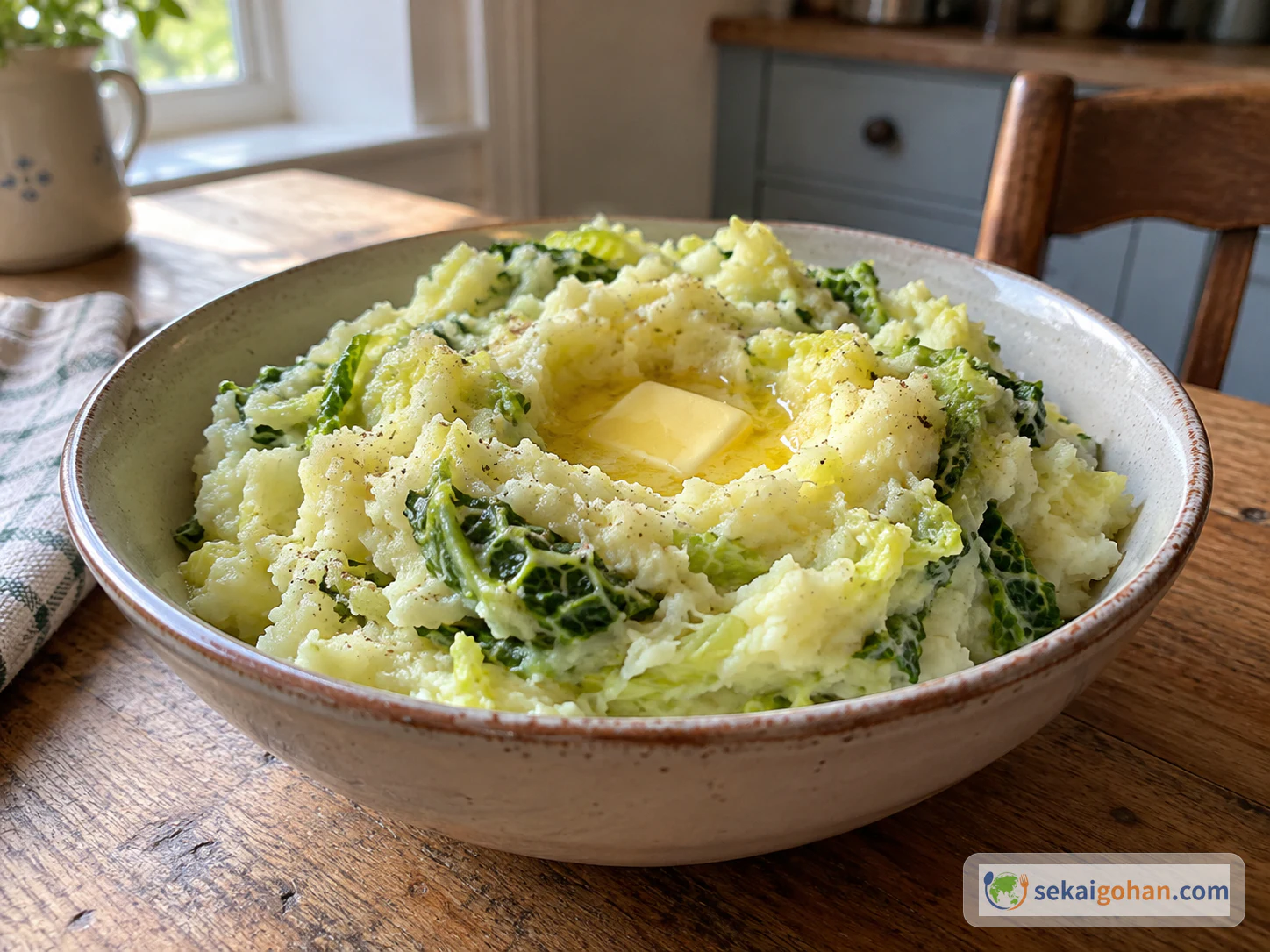
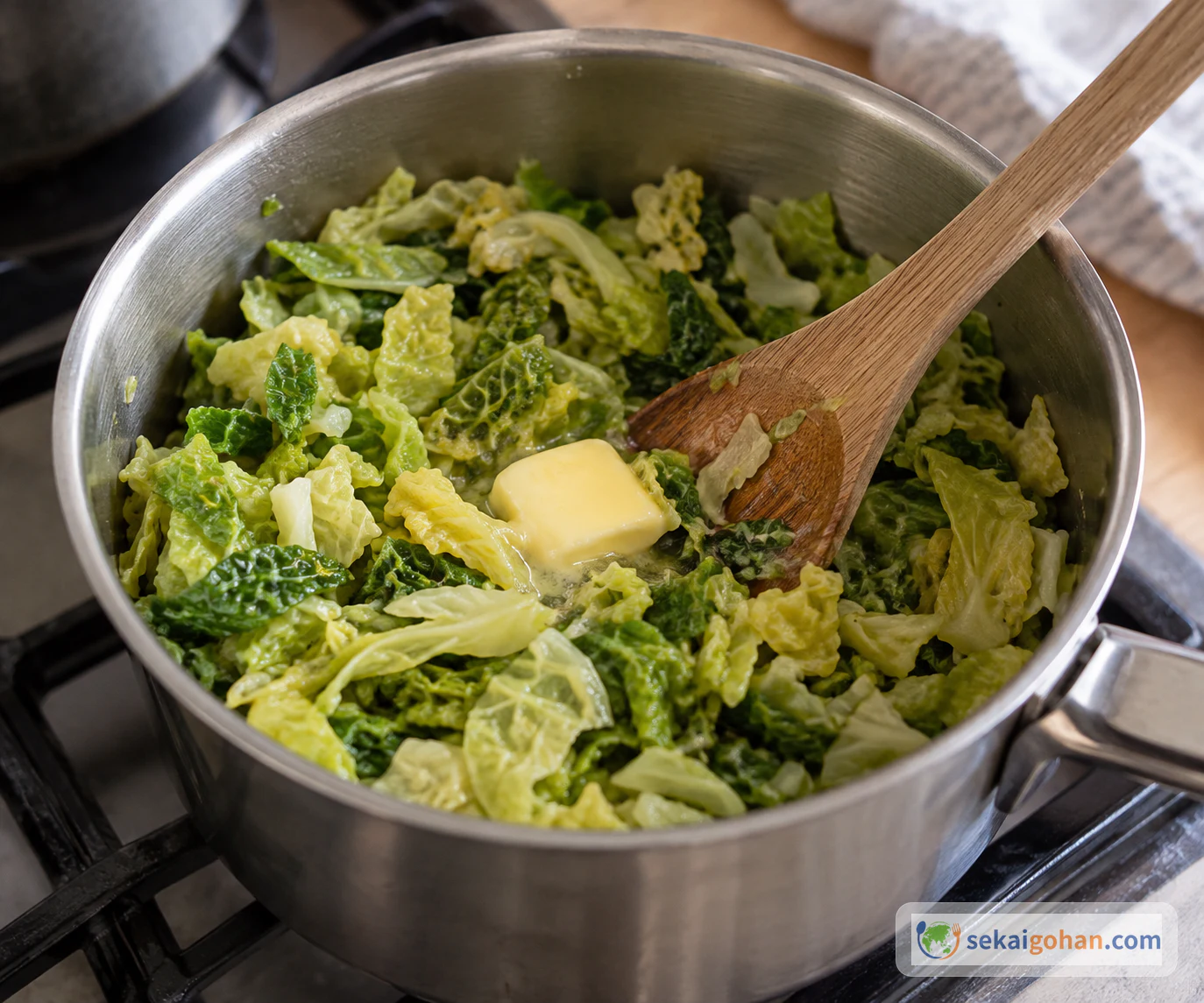
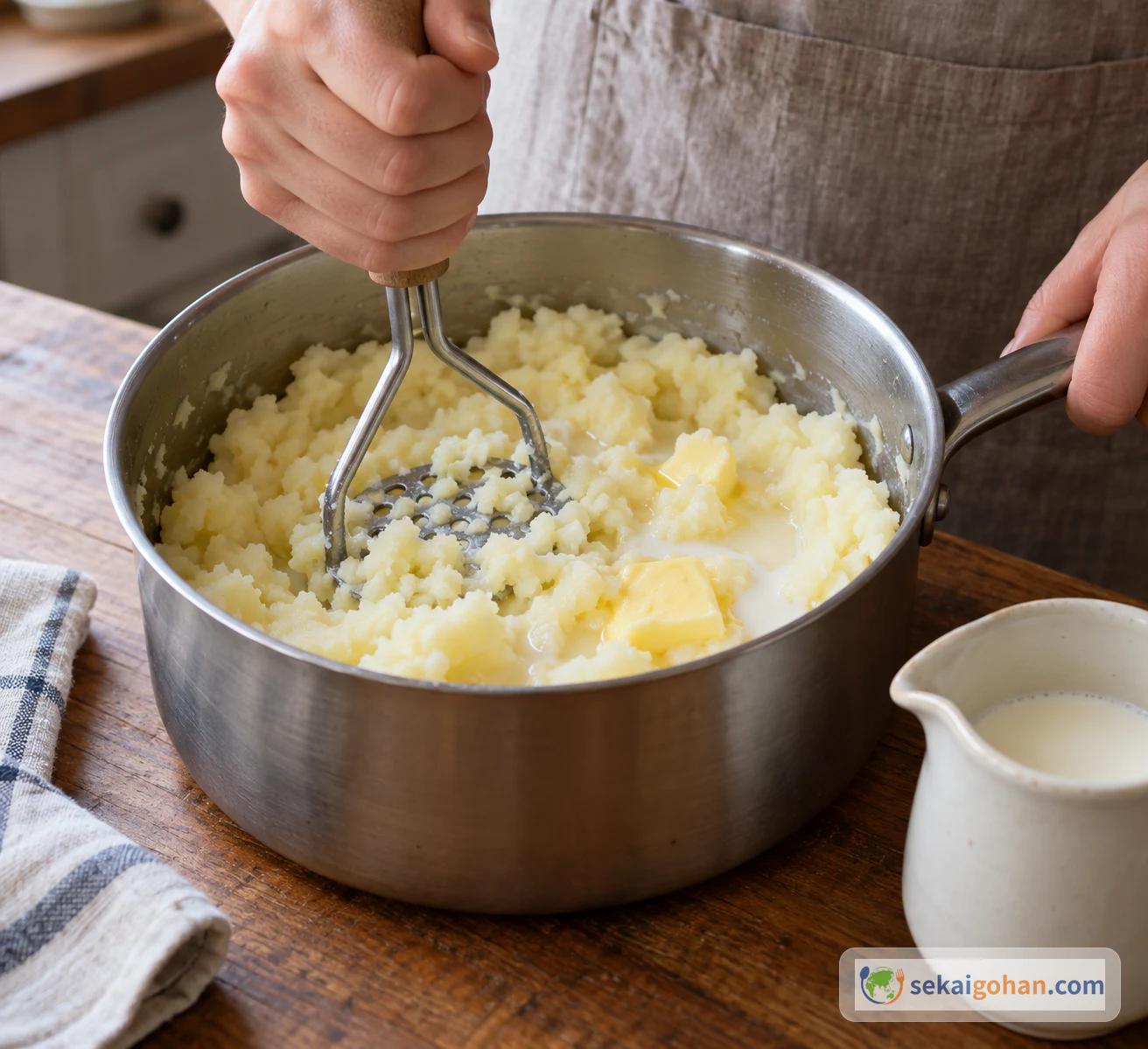
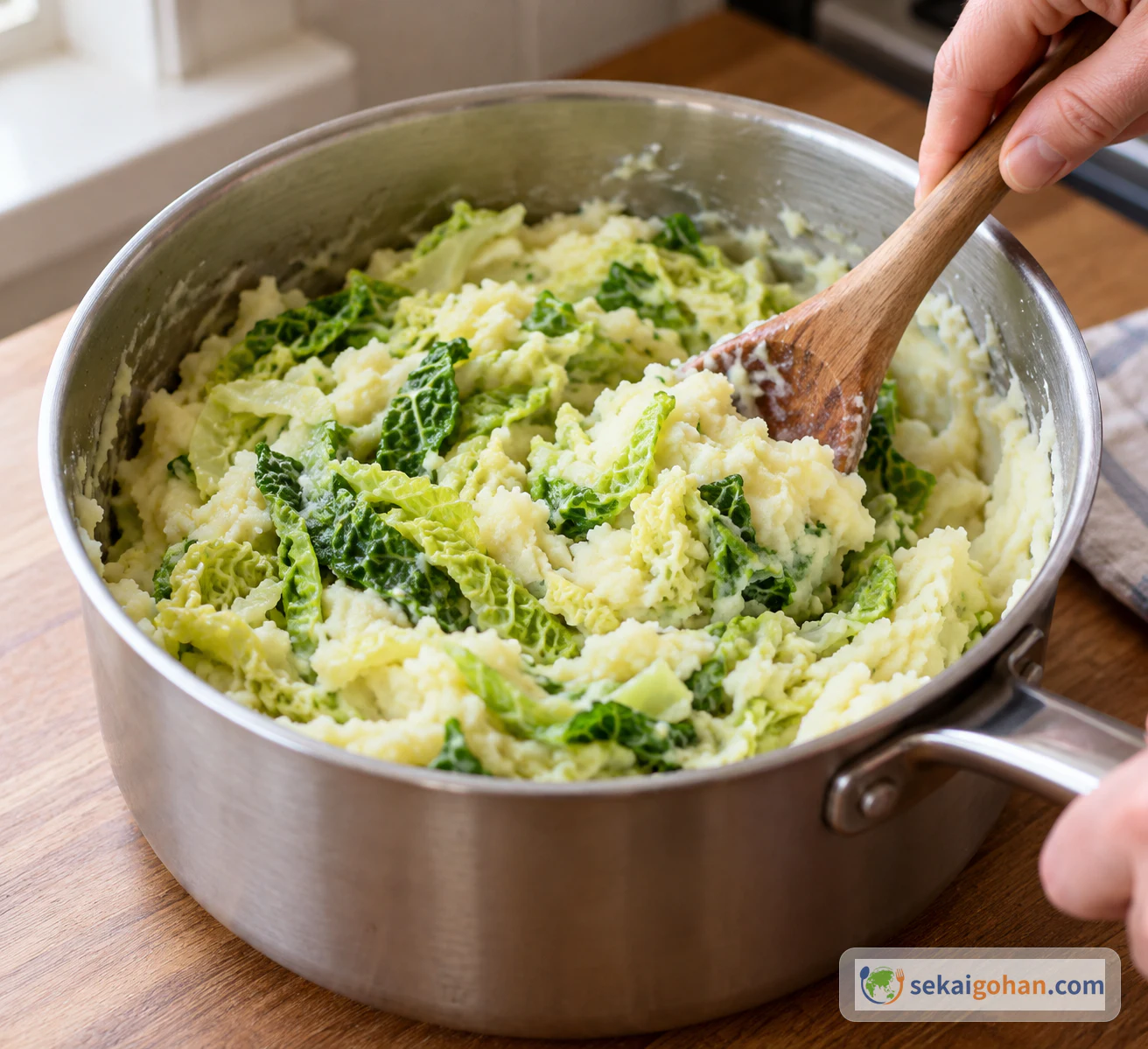
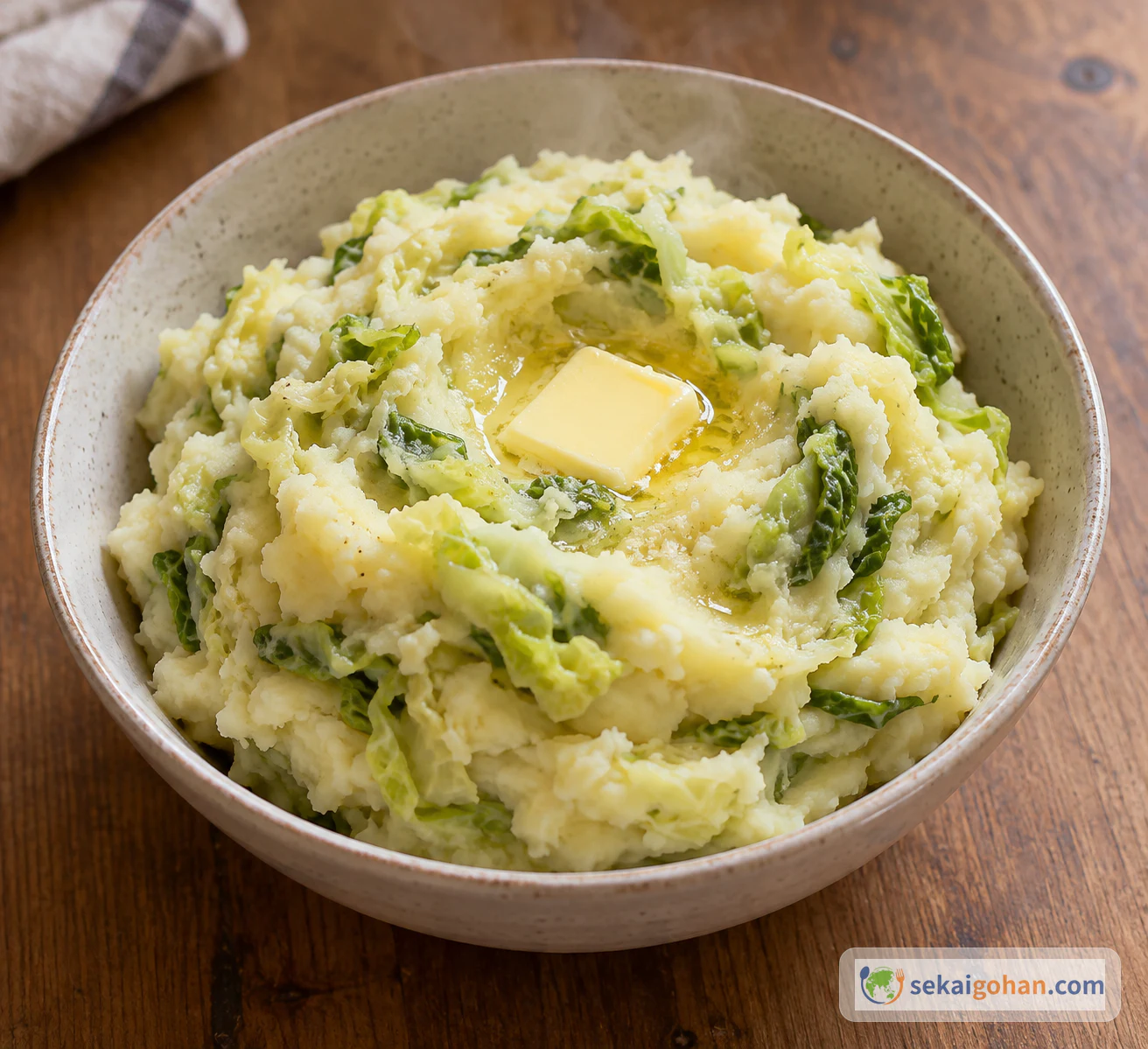
A hot bowl of soft mashed potato, cabbage running all through it, and a pool of butter melting in a well at the center. Colcannon is Irish comfort food at its simplest: potatoes mashed with milk and butter, with cooked cabbage folded in. This traditional version keeps to just a few ingredients (potatoes, savoy cabbage, whole milk and salted butter) seasoned with salt and white pepper. The mash should be soft without running, and the cabbage gives every spoonful some texture.
Colcannon in Ireland
Colcannon is Ireland's traditional Halloween dish, though what goes into it changes from place to place. Curly kale, spring onions and leeks all turn up in different local versions. You can read more about the country's food on the Ireland page.
Halloween and local records
Folklore records from the 1930s give a closer look at particular places. One from Faythe, County Wexford, calls 31 October "Cabbage Stump night" or "Colcannon day," and describes cabbage leaves used as a cover to hold in the steam, with money put into the meal. Another, from Liatra, County Galway, describes colcannon made at Halloween to mark the end of potato digging, with the first plate set aside for the fairies without salt.
Each of these customs belongs to its own community. Together they show how closely colcannon was tied to Halloween in those places, rather than one custom shared across all of Ireland.
Coins, rings or thimbles were hidden in the dish. Do not recreate this by putting coins or other objects into food. They can be swallowed or cause choking.
The Mayo version
In County Mayo, colcannon is mashed potato with kale or cabbage, milk or cream, and butter, and its Irish name is "Càl ceannann." The Mayo recipe is its own dish: 1 lb (500g) Roosters potatoes, 9 oz (250g) curly kale or savoy cabbage, 1 onion, ½ cup (100ml) cream and 2 oz (60g) butter. The vegetables are boiled separately for 15–20 minutes, then combined with browned onion. It's a good illustration of how much the dish varies, so follow its amounts and steps on their own rather than mixing them into the recipe here.
Ingredients: Four Servings of the Basic Cabbage Version
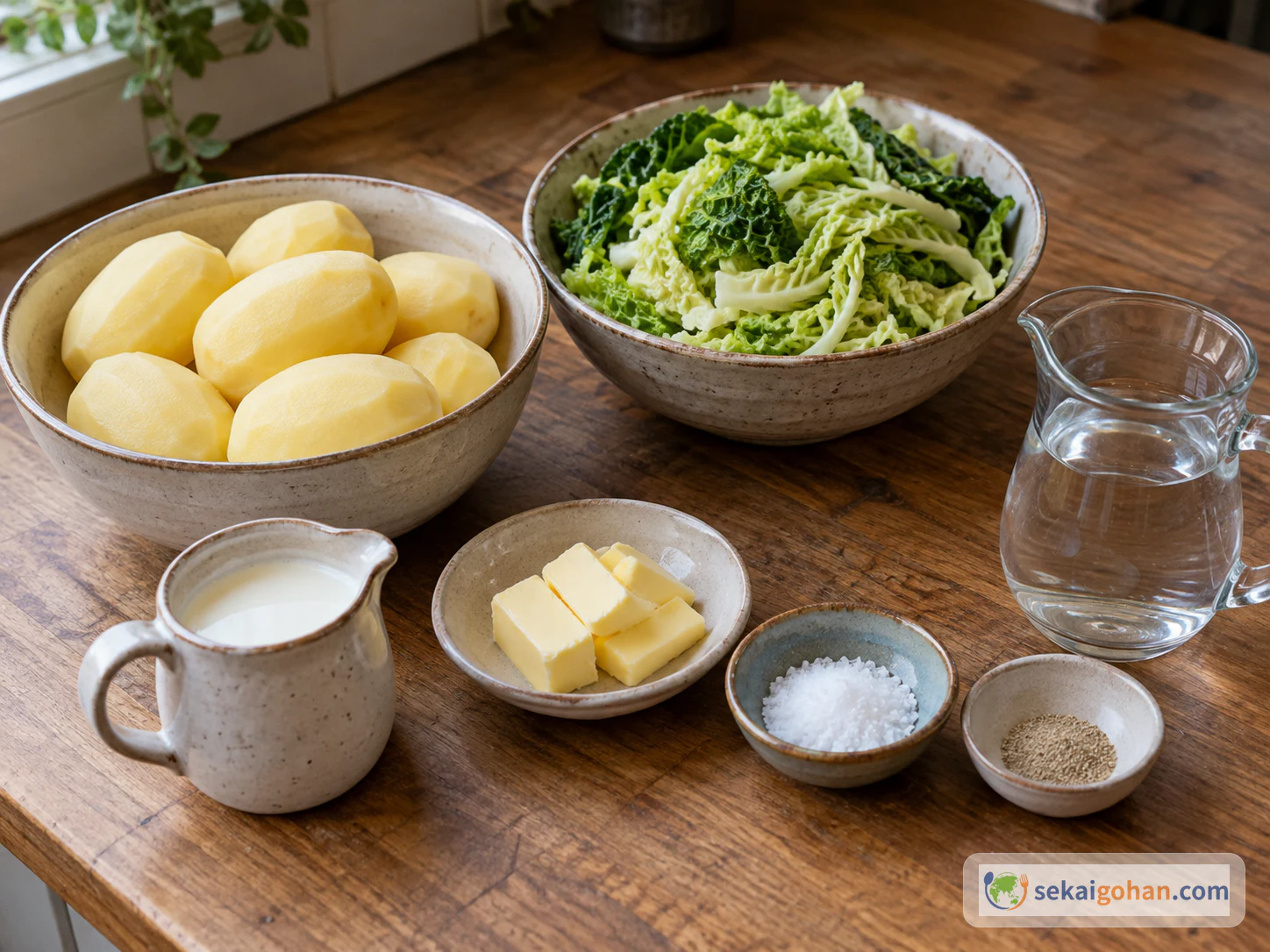
These amounts make four servings. A tablespoon here means 1 tbsp (15 mL).
This dish contains milk and butter. It is not suitable for anyone with a milk or dairy allergy.
Equipment
- Peeler and knife
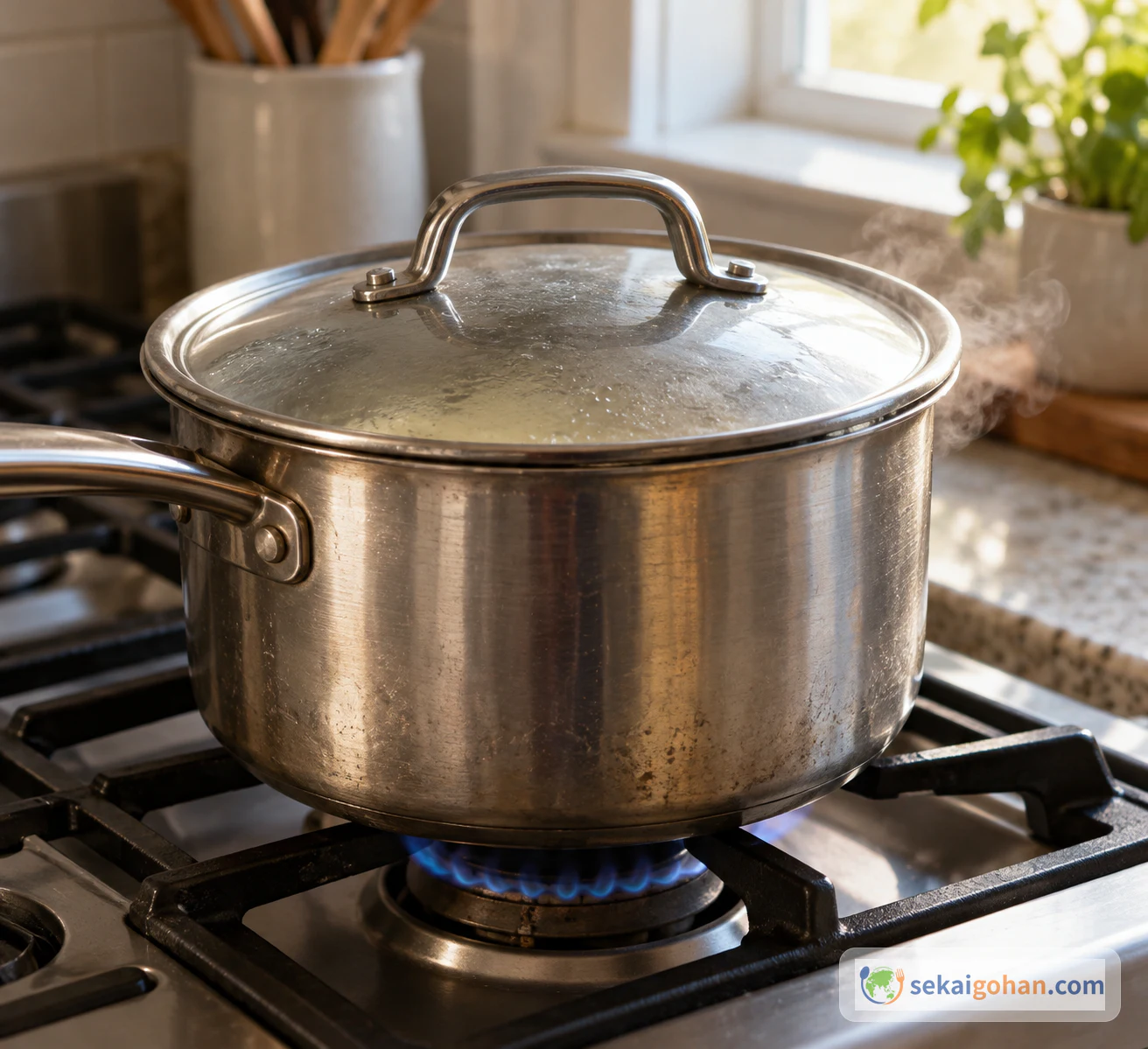
- Saucepan with a lid, for the potatoes
- A separate pot, for the cabbage
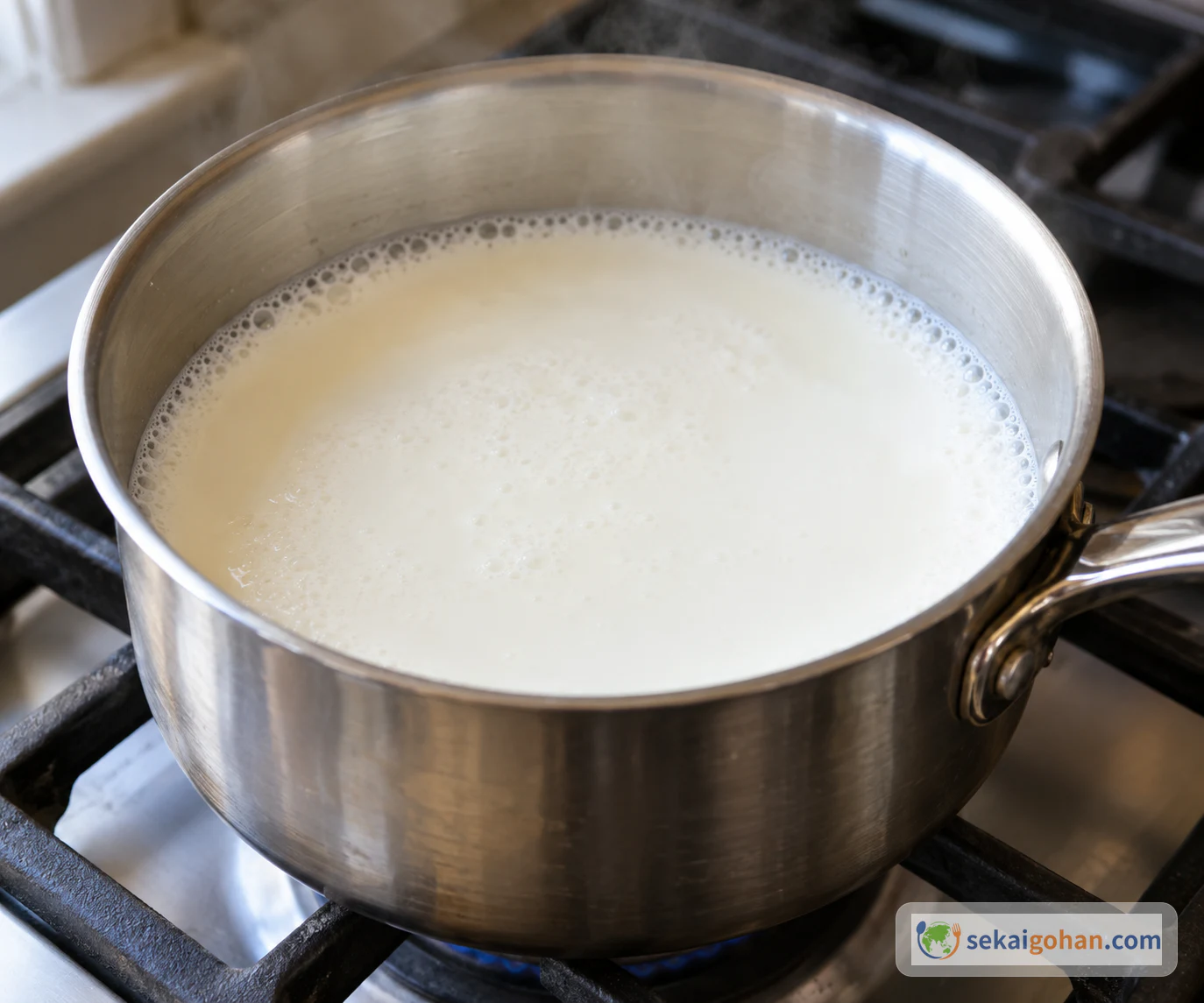
- A small saucepan, for the milk
- Potato masher
- Skewer, to test the potatoes
- Colander or sieve
Choosing Potatoes, Cabbage and Butter for Colcannon
Potatoes. Golden Wonders or Kerr's Pinks are the traditional choice. Outside Ireland they're harder to find, so reach for a floury potato instead. Waxier potatoes give off a different amount of water and won't mash as smoothly.
Cabbage. If you can't find savoy cabbage, ordinary cabbage is a practical stand-in. Its leaves differ in thickness, sweetness and water, so cook it until it looks soft and drain it carefully.
Milk and butter. Stick with whole milk and salted butter; cream or unsalted butter makes a different dish. If the mash needs loosening, add more milk, but keep the butter to the amount listed.
Method: Steam the Potatoes, Then Bring Everything Together While Warm
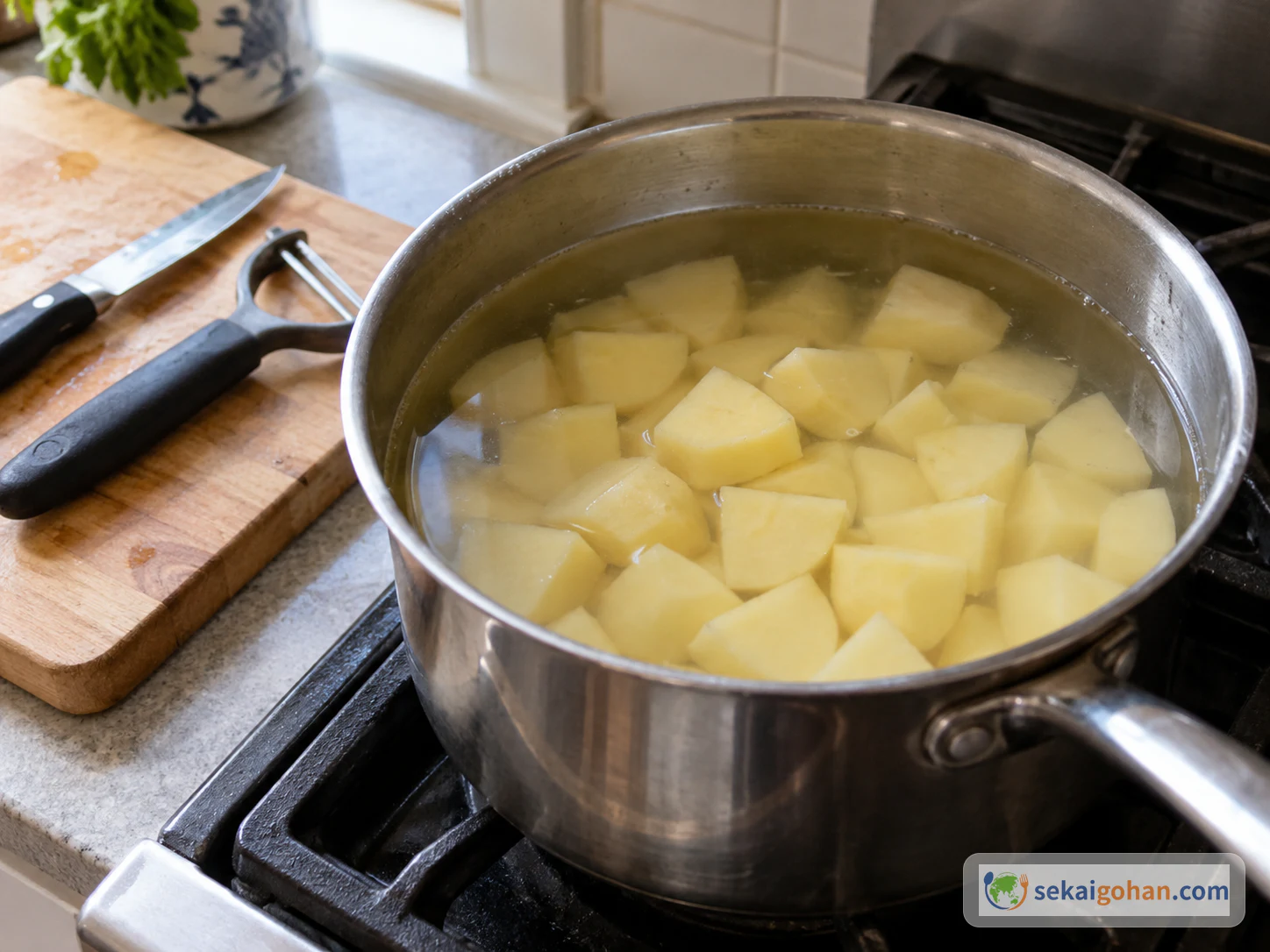
Pour off part of the potato water after about 10 minutes. Warm the mash over low heat for 1–2 minutes at the end, if needed. Neither is a total cooking time, so judge each step by how the food looks and feels.
Fixing Watery, Gluey or Wet Colcannon
Most problems come down to too much water or too much mashing. Mash while the potatoes are warm, add the hot milk gradually, and make sure the cabbage is well drained.
| Problem | Likely cause | What to do |
|---|---|---|
| The potatoes are watery | Too much water left after steaming, or milk added all at once | Let the steaming drive off the remaining water, drain what is left, and add the milk in small amounts |
| The mash turns gluey | Worked too long | Mash while warm, and once the cabbage goes in, stop as soon as the mixture is even |
| The cabbage makes it wet | Cabbage not drained well | Drain the cabbage thoroughly before folding it in, especially ordinary cabbage |
| The mash has cooled | Steps took longer than expected | Warm over low heat for 1–2 minutes if needed |
| Too salty | Salted butter plus salt in each step | Taste before the final seasoning and adjust salt and white pepper last |
Serving Colcannon and Regional Variations
Colcannon is eaten on its own as a main course or, more recently, alongside bacon; in Mayo it comes with ham or Irish bacon at Halloween. Serve it in a hot bowl with butter melting in the center.
Once you know the basic cabbage version, the regional additions are easy to explore. Each is its own local take, so try them one at a time rather than piling them all into one bowl.
- Curly kale. The Limerick tradition, and a regional version distinct from the cabbage recipe.
- Spring onions or leeks. Regional and household differences, mixed in either raw or cooked first. Both add sweetness and aroma.
- Chives or parsley. Also found as regional additions.
- Parsnip or carrot. Linked to traditions such as those of Wexford and Carlow. They bring sweetness and color.
Frequently Asked Questions
Can I make it with kale?
Yes. Curly kale is the Limerick tradition, and the Mayo recipe uses kale or savoy cabbage. The amounts in this recipe are written for cabbage, so for kale, follow the Mayo recipe and its own amounts.
Is colcannon only a Halloween dish?
It's closely linked with Halloween, and folklore records from Wexford and Galway describe Halloween customs around it. Those customs belong to specific places and times, though, and colcannon is also eaten as a main dish on its own or as a side for bacon.
Can I make it ahead or keep leftovers?
Divide leftovers into clean, shallow containers so they cool quickly, and reheat them thoroughly, using 167°F (75°C) or above as a guide.