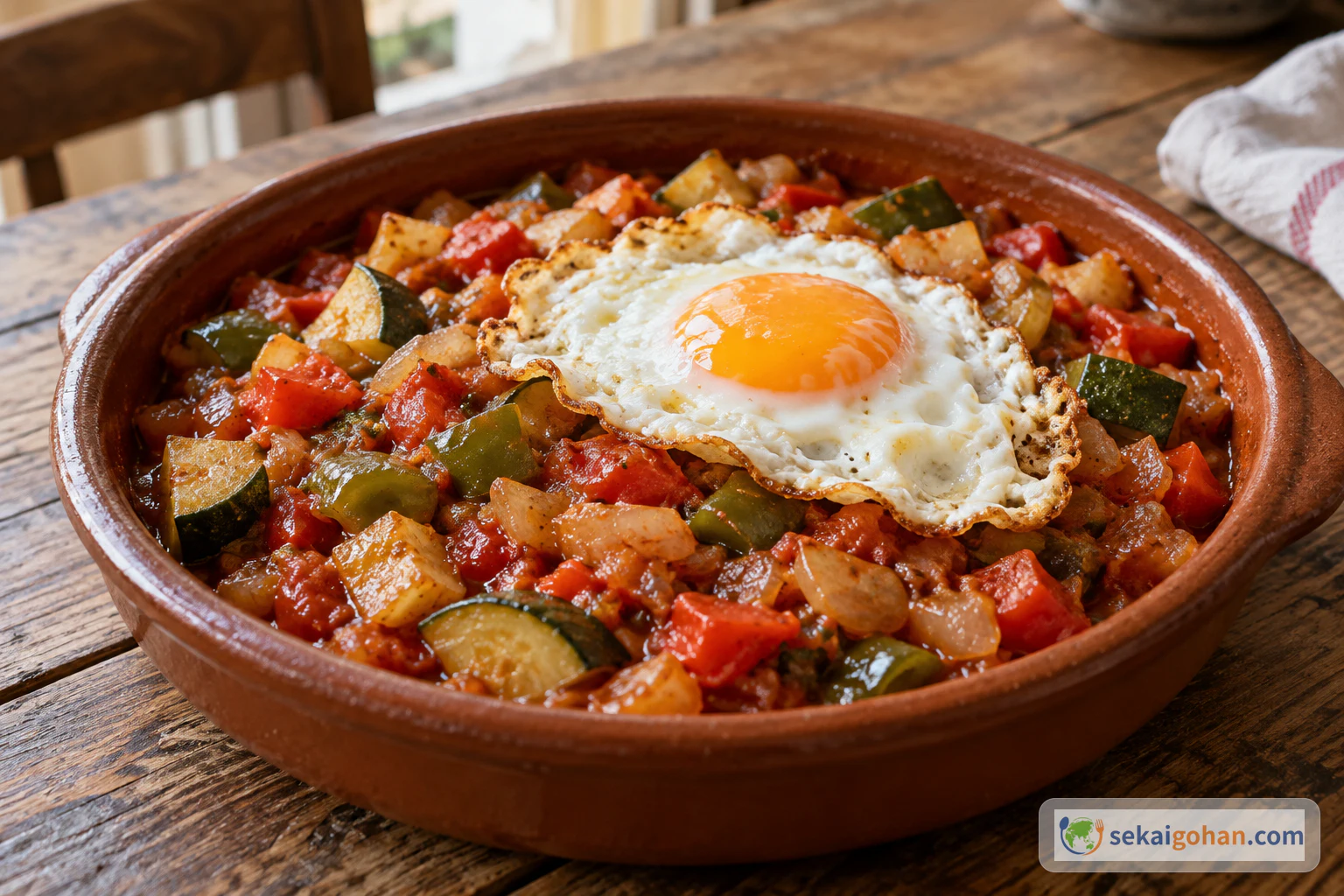
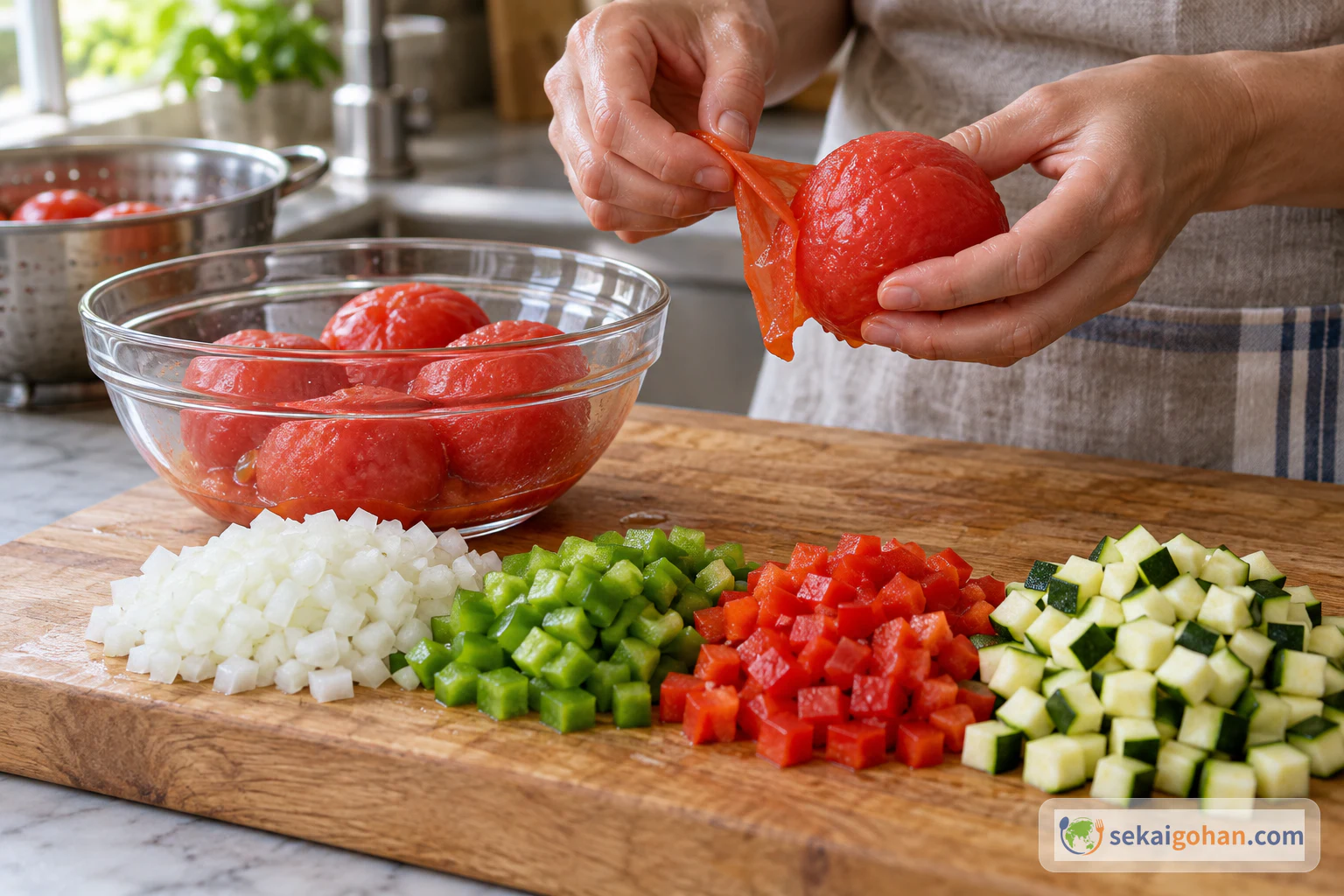
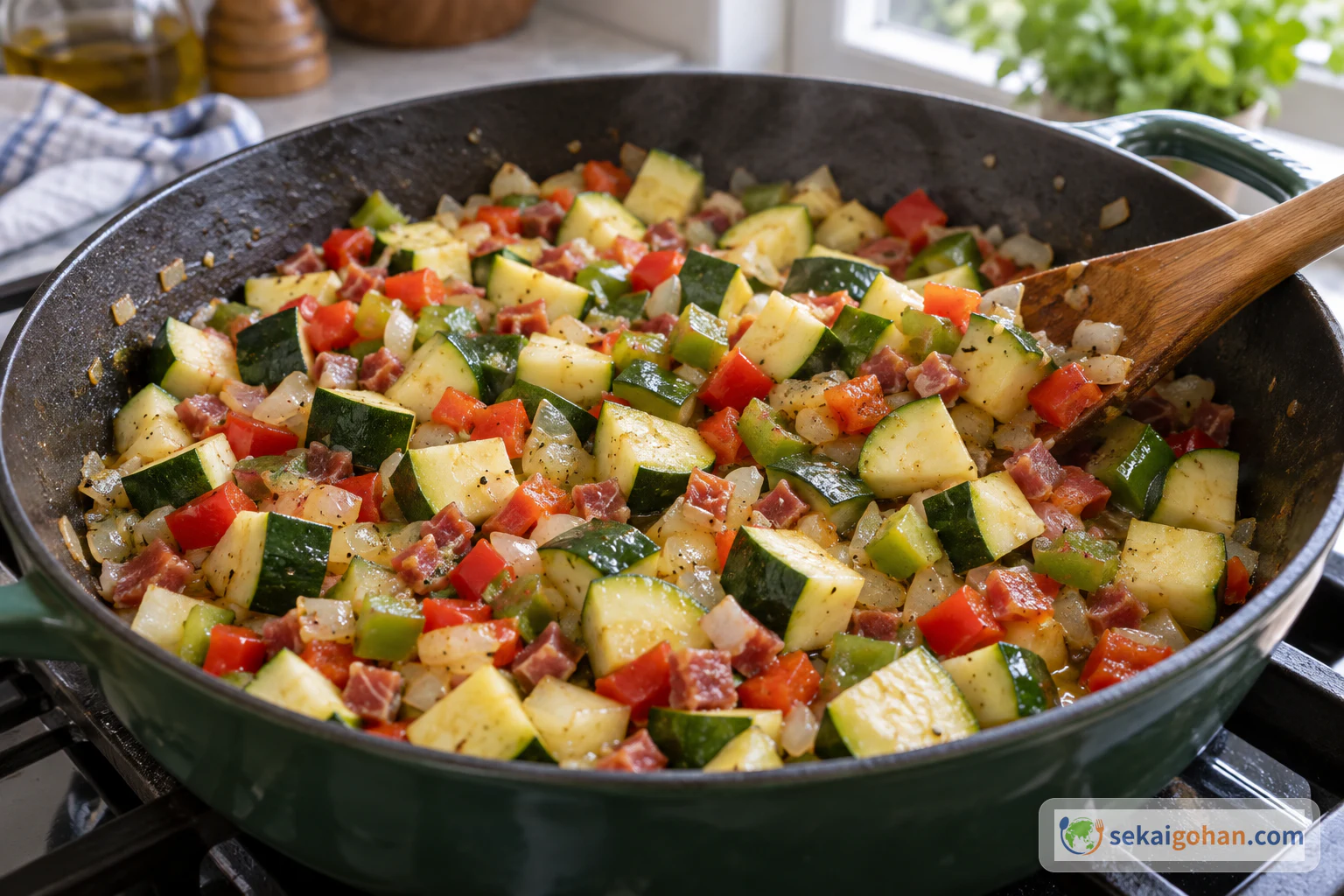
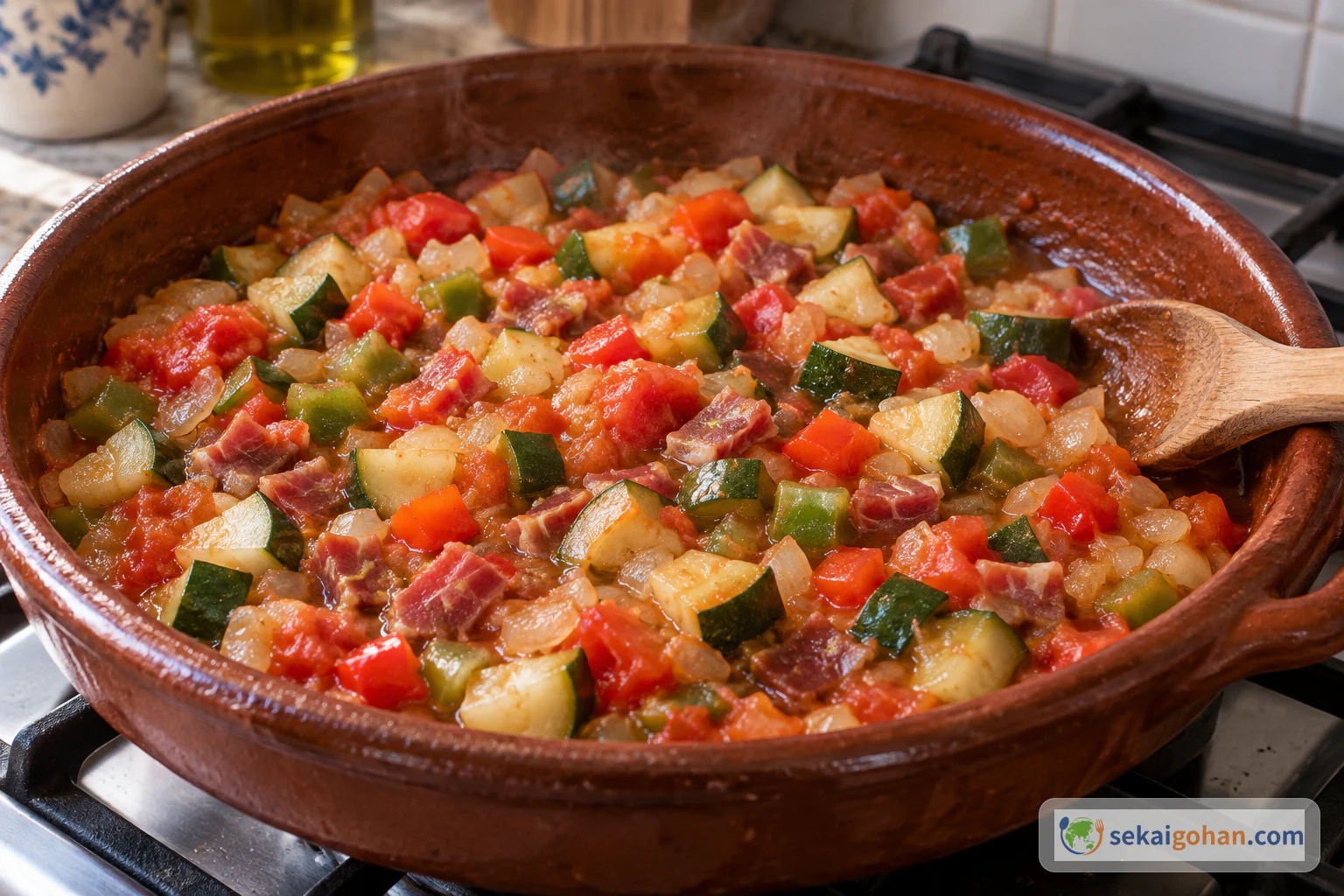
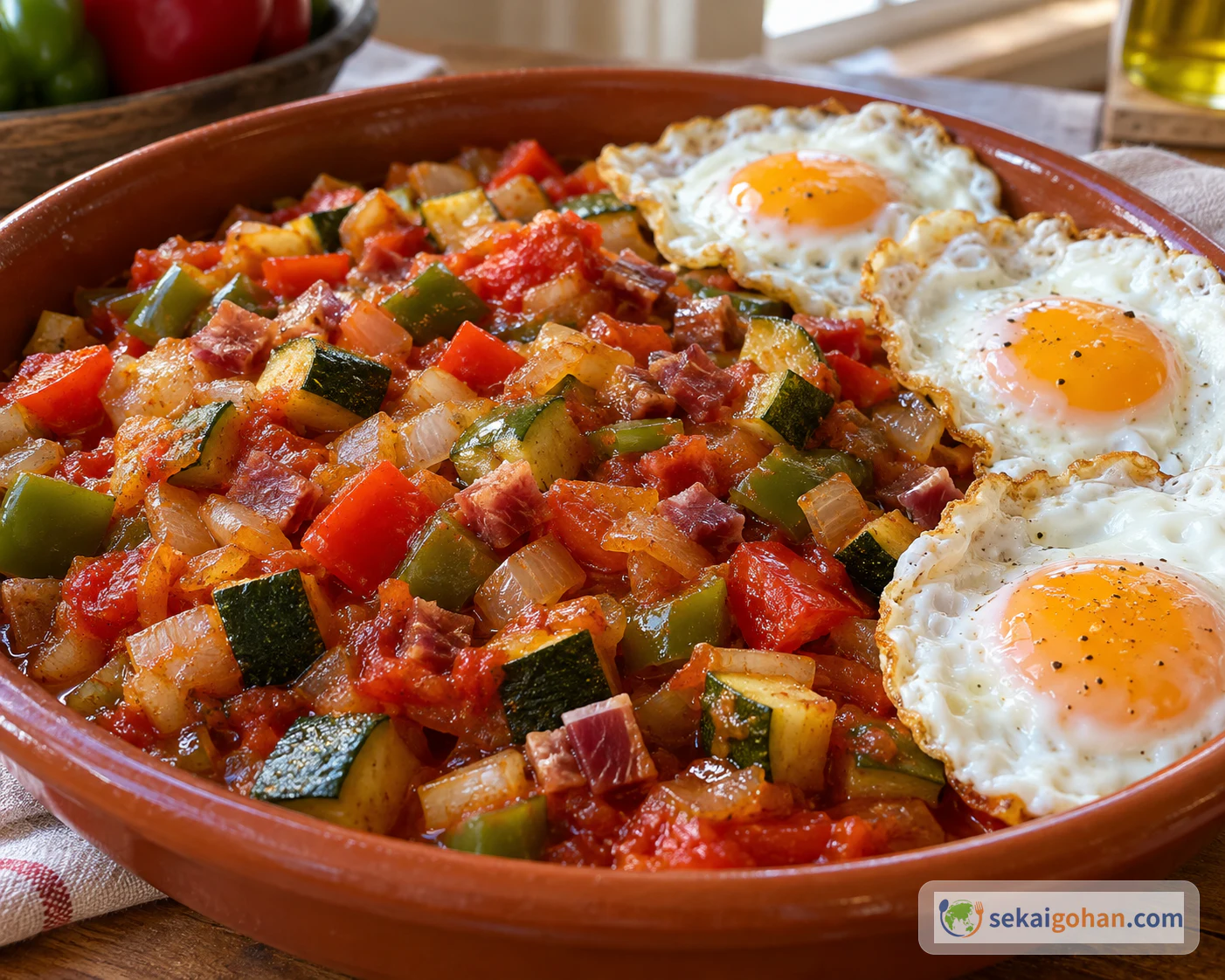
Ripe tomatoes give up their juice into the pan and wrap diced onion, green and red pepper and zucchini in red. Once everything is soft, fried eggs go around the pot, alongside the stew rather than into it. This is pisto manchego, a dish from Castilla-La Mancha in central Spain. The vegetables are cut small and even, added in order, and cooked gently in oil until they are tender and coated in their own tomato juices. For more dishes from the same country, see the Spain page.
Pisto Manchego in La Mancha
In Spanish the name is pisto manchego: pisto from La Mancha. With eggs, as here, it becomes Pisto manchego con huevos, pisto with eggs. It began as a simple dish La Mancha farmers made from the produce of their fields. A legend holds that it descends from alboronía, another vegetable dish, but that is a story rather than established history.
There is no single "authentic" recipe. Every cook makes pisto a little differently: some add garlic, some add eggplant, and the order of the vegetables changes from kitchen to kitchen. Pisto and ratatouille are both vegetable dishes cooked in oil with tomato, but pisto manchego has its own name, region, ingredients and cooking order.
Peppers sit at the center of the dish, and in some places they carry real local pride. In Villanueva de los Infantes, in Castilla-La Mancha, seasonally grown peppers are tied to the town's sense of itself. A pepper event has been held there on the first weekend of September since 2003, and in 2016 the town cooked a giant pisto built mainly on peppers.
Ingredients (Serves 4)
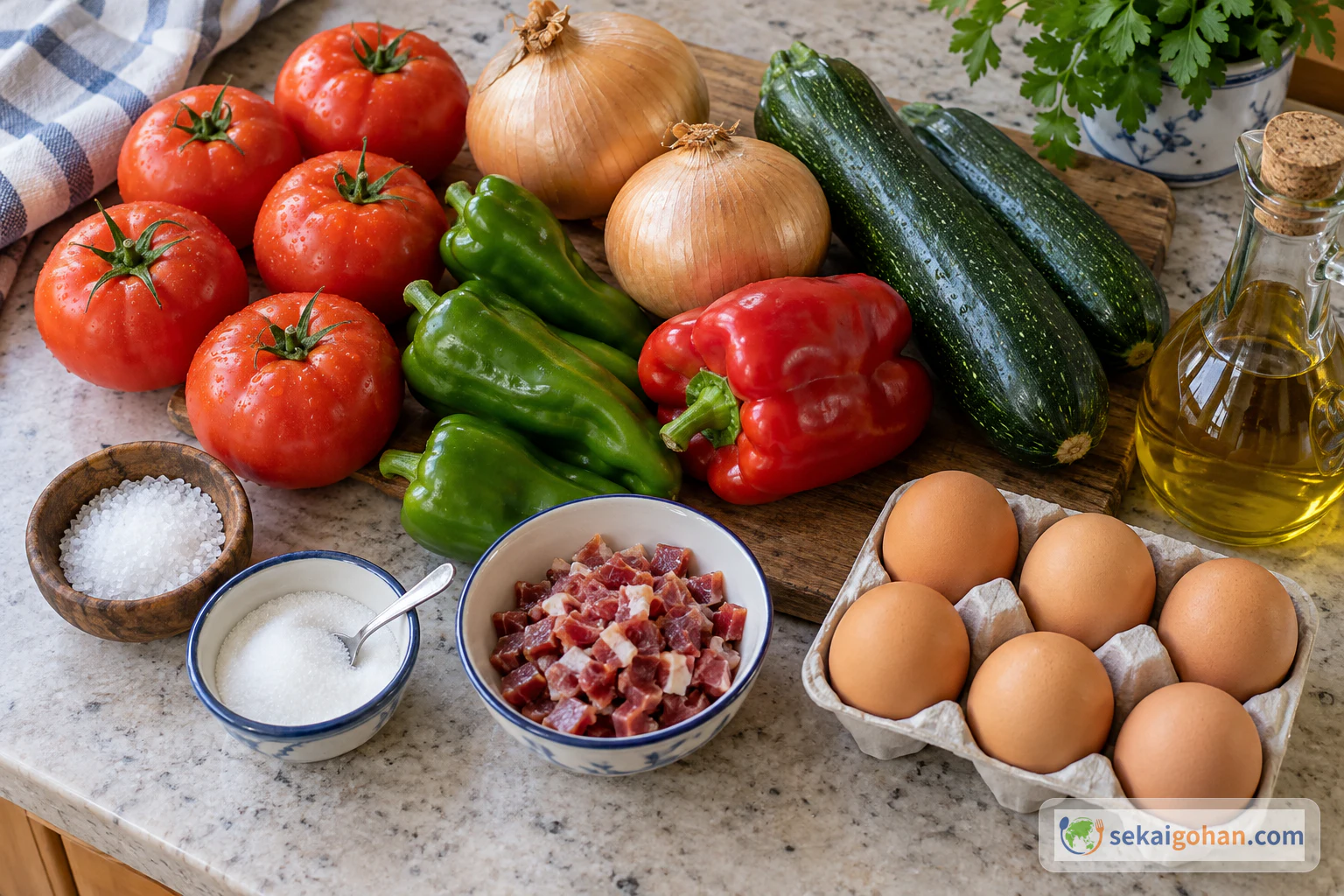
Vegetables are given by count and size; oil and salt are used as needed. The serrano ham is optional; the steps below use it, and you can simply skip it.
Equipment
- A deep frying pan or a shallow earthenware pot (cazuela)
- A wooden spatula or spoon
- A saucepan of boiling water and a bowl of cold water, for peeling the tomatoes
- A cutting board and knife
- A separate frying pan for the eggs
- A shallow serving dish or platter
Choosing Ingredients for Pisto Manchego
Peppers. Use thick-fleshed green peppers. Ordinary supermarket green peppers work, though their size and flesh thickness will differ from those grown in La Mancha. For the red pepper, a red bell pepper is fine and brings a little more sweetness and flesh.
Tomatoes. Choose large, fully ripe tomatoes. Their juice is what the vegetables simmer in, so pale or watery tomatoes give a flatter result.
Oil. Virgin olive oil is enough; extra virgin is optional. It is the base fat of the dish, so pick one whose taste you like.
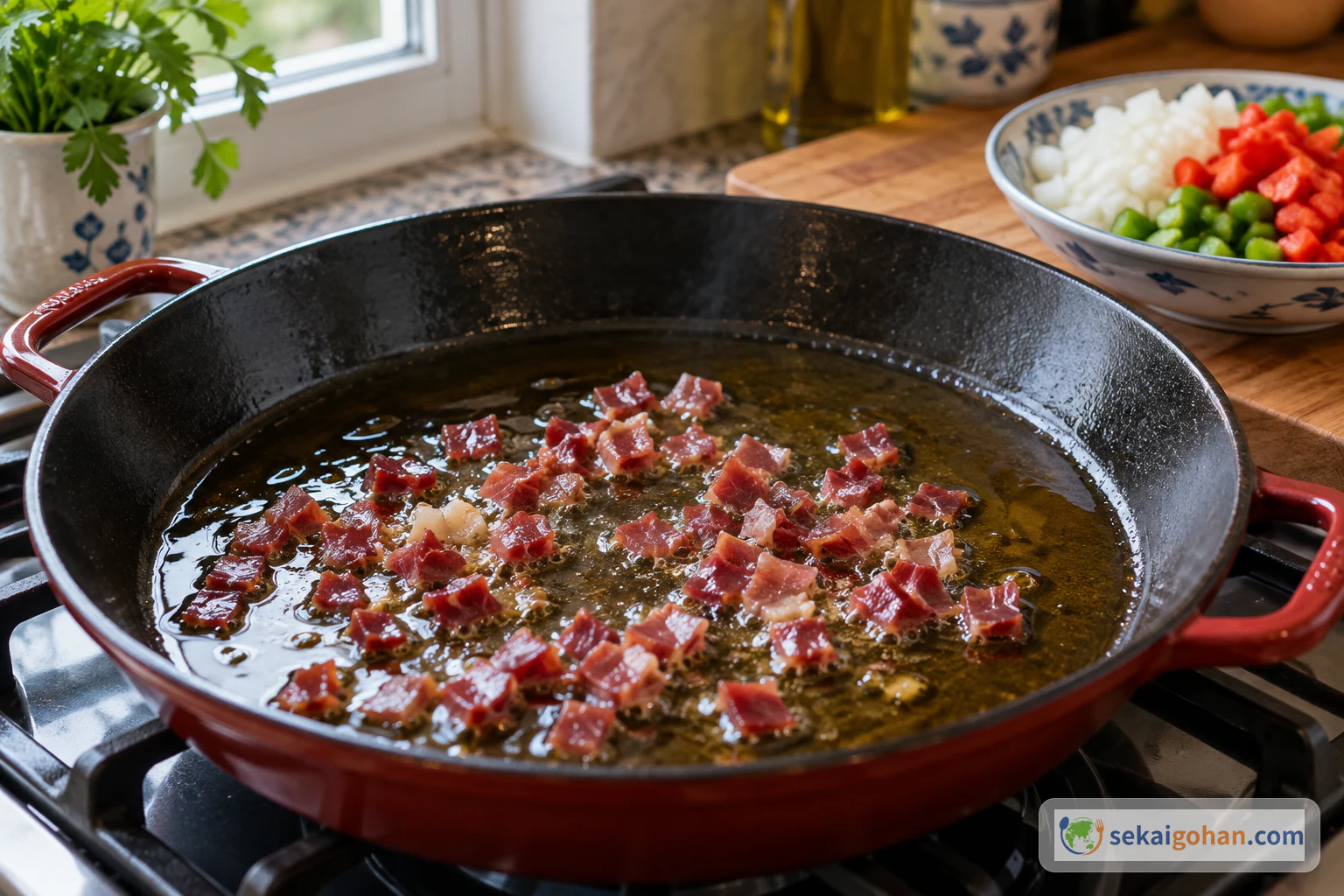
Ham. The ham is optional. Without it, the pot is lighter in salt and savoriness and the vegetables come forward. If you use it, taste before salting.
This recipe contains egg; omit the eggs if you need to avoid them. Check the labels of the serrano ham and any other processed products for allergens and shared-facility statements.
Method: Onion and Peppers, Then Zucchini, Then Tomato
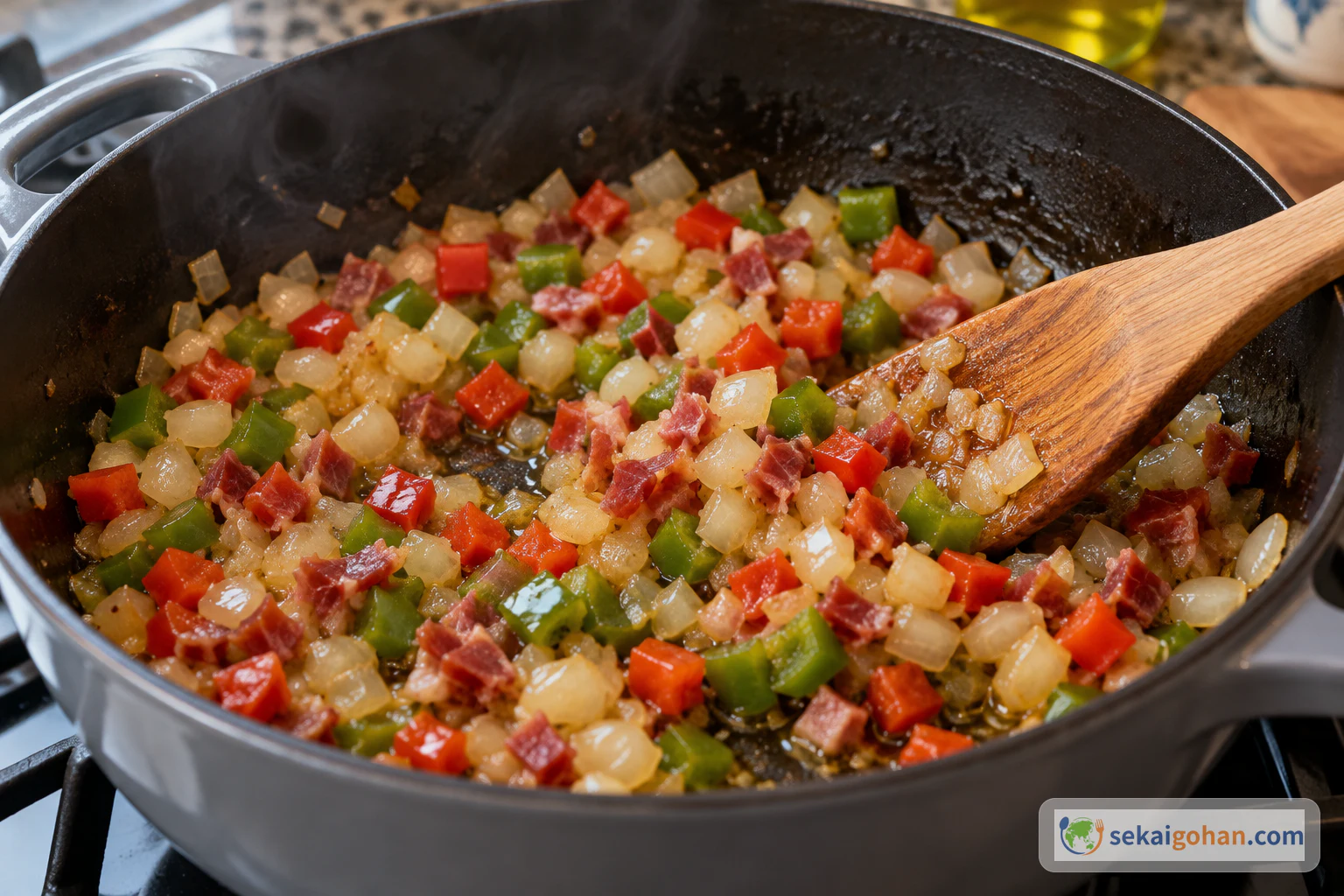
Allow about 8 minutes for the onion and peppers and about 20 minutes on low heat once the tomato is in. Judge the zucchini stage by eye.
Fixing Texture and Flavor
| Condition | Likely cause | What to do |
|---|---|---|
| The bottom is drying or catching | Heat too high after the tomato went in | Lower the heat first; add a little oil only if needed |
| Some pieces are mushy, others still firm | Pieces cut to very different sizes | Keep simmering gently until the firm pieces soften. Next time cut smaller and more evenly |
| The vegetables browned instead of softening | Pan too hot in step 3 | Turn the heat down and keep turning. The aim is translucent onion, not color |
| Too salty | Ham plus salt added early | Hold back on salt until the last 10 minutes, and taste first when using ham |
| Sharp, sour tomato flavor | Under-ripe tomatoes | The 1 tsp sugar is there to balance acidity. Riper tomatoes help most next time |
Serving, Storage and Variations
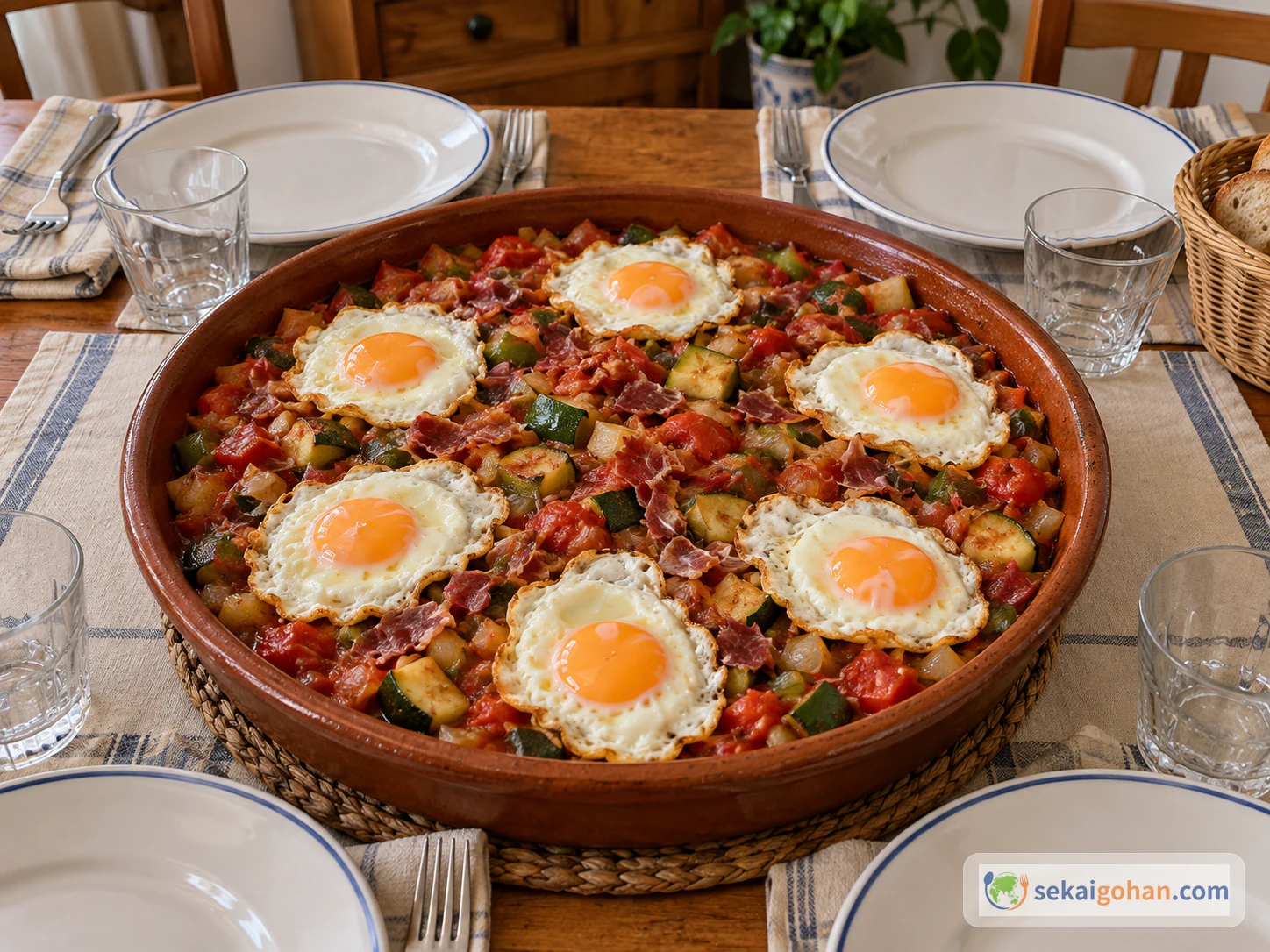
Here six eggs are shared among four people from a common platter, everyone reaching in for vegetables and egg. Fried eggs are the typical partner, but pisto also sits happily alongside meat or pasta.
For leftovers, divide the pisto into shallow containers, cool it quickly and refrigerate. Store it on its own rather than with the eggs on top, reheat to 167°F (75°C) or above, and fry fresh eggs when you serve it again.
Each of these makes a different pot rather than a small tweak:
- Without eggs. The vegetables are the body of the dish, so the meal simply becomes lighter and less filling.
- With garlic. Cook the onion, peppers and garlic first, simmer the tomato, and add the zucchini after it.
- With eggplant. Start with garlic and onion, add peppers and tomato, then eggplant, and put the zucchini in last. Eggplant changes the liquid and texture of the pot.
- Eggs finished in the pot. Move the pisto into an ovenproof earthenware dish, set the eggs on top and cook them at the end.
Frequently Asked Questions
Is pisto the same as ratatouille?
No. Both are vegetable dishes cooked in oil with tomato, but pisto manchego has its own name, its own region, and its own set of ingredients and cooking order.
Should I add water if the pan looks dry?
This recipe adds no water. Lower the heat first, and if needed add a little oil. The tomato provides the liquid the vegetables simmer in.