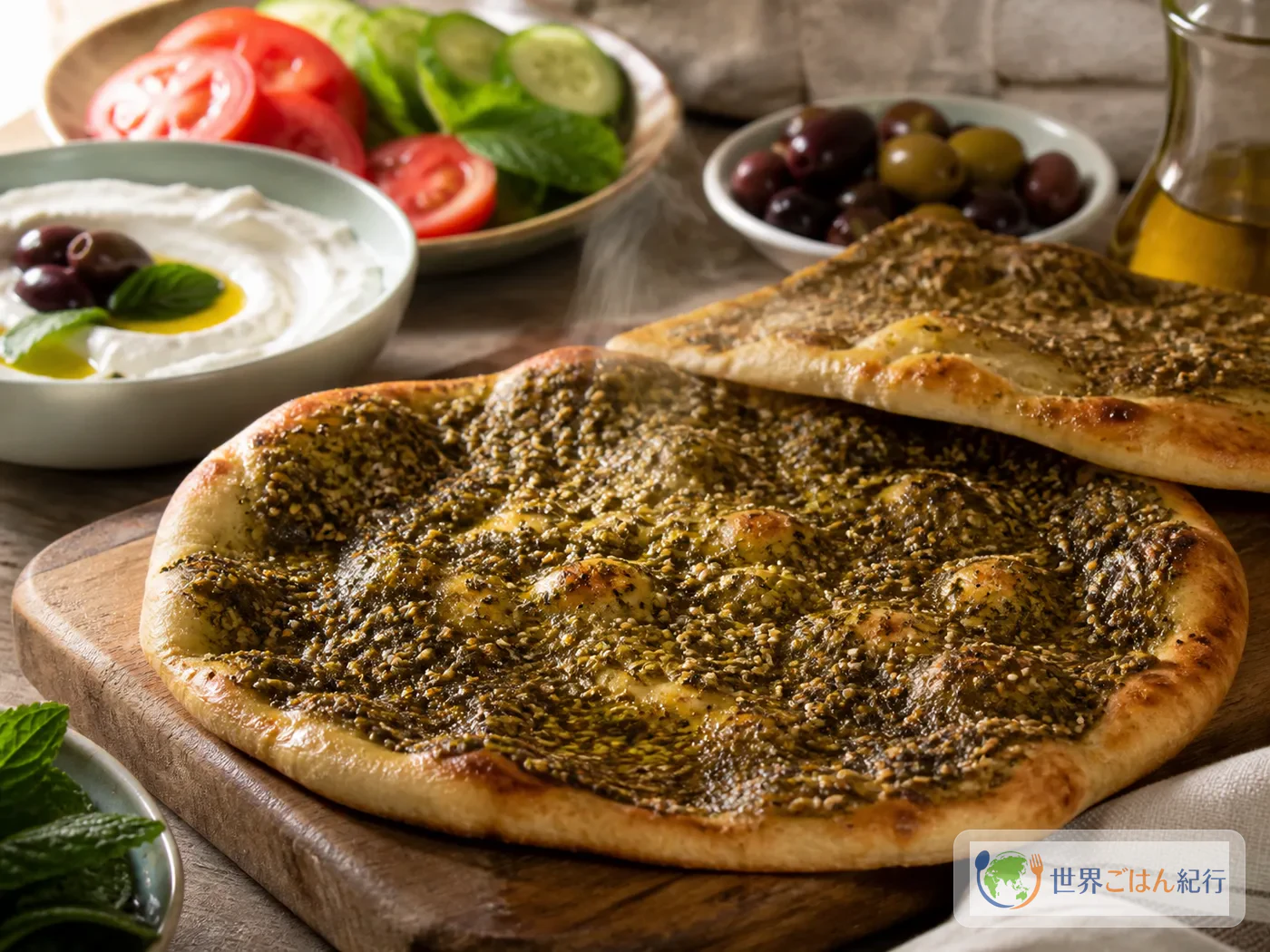
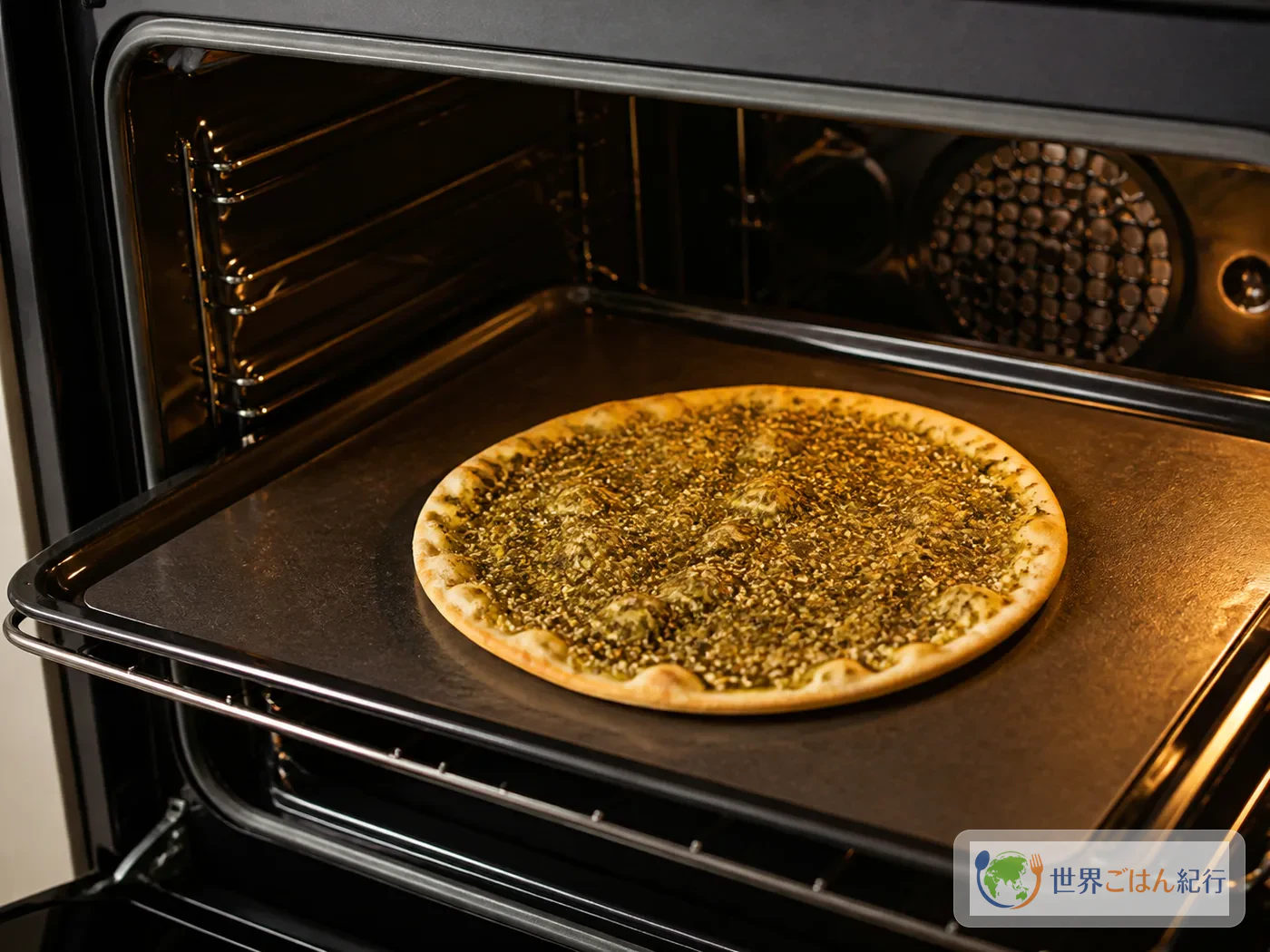
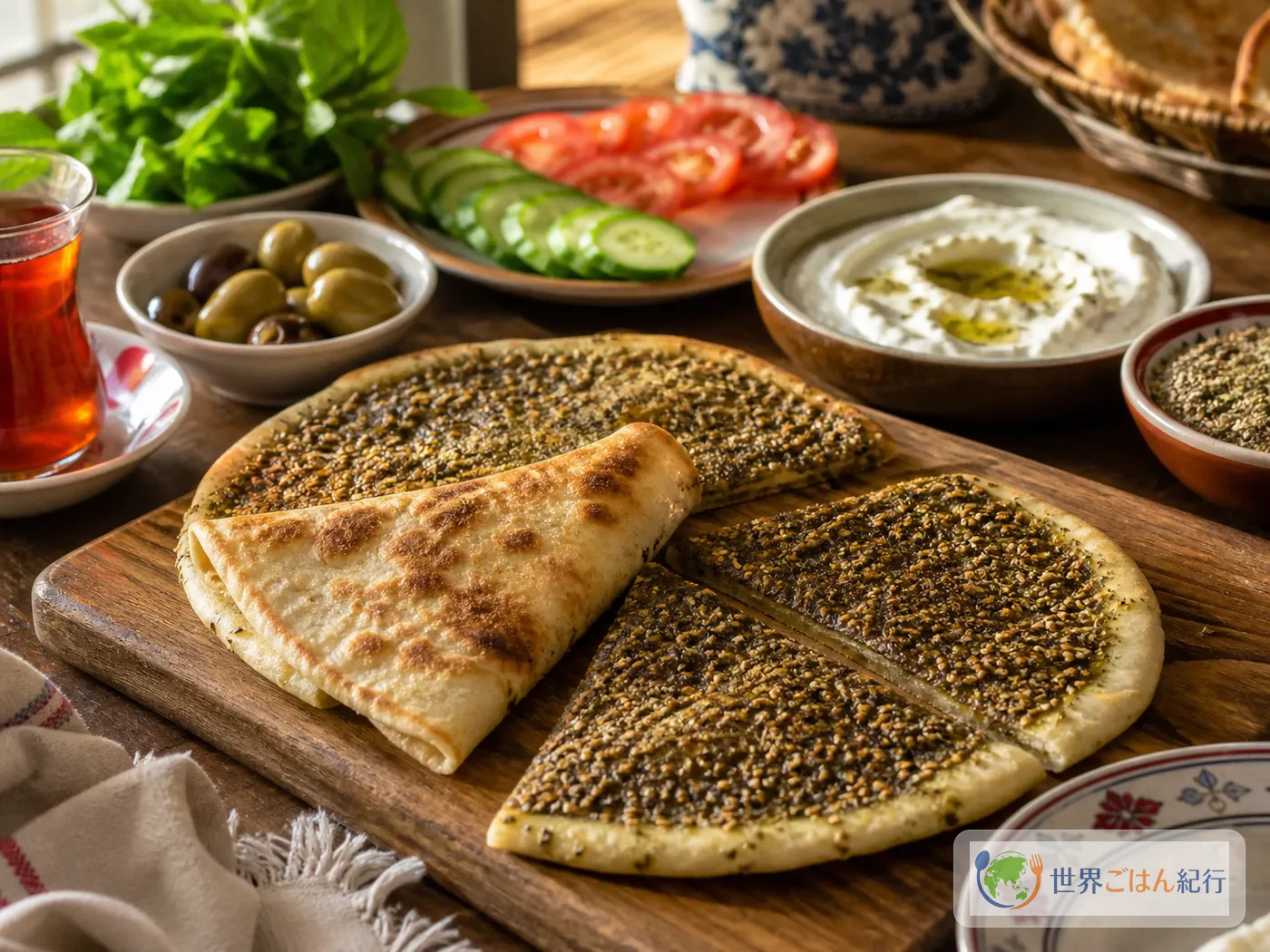
Open the oven door on a bare breakfast table and the smell of dried thyme and toasted sesame rises off the dough before anything else. The surface shines with olive oil, and only the edges have taken on color. You can cut manakish like pizza, but in Lebanon it's better folded and eaten hot, so the aroma reaches you first and the dry sourness of sumac catches up a moment later. This thin flatbread is a breakfast and snack staple, most classically spread with za'atar and olive oil, sometimes topped with cheese or meat. At home the topping is rarely the hard part. Thickness and heat are: roll the dough as thick as pizza, set it on a cold baking sheet, and the top dries out while the middle turns heavy and bready.
Manakish at the Lebanese breakfast table
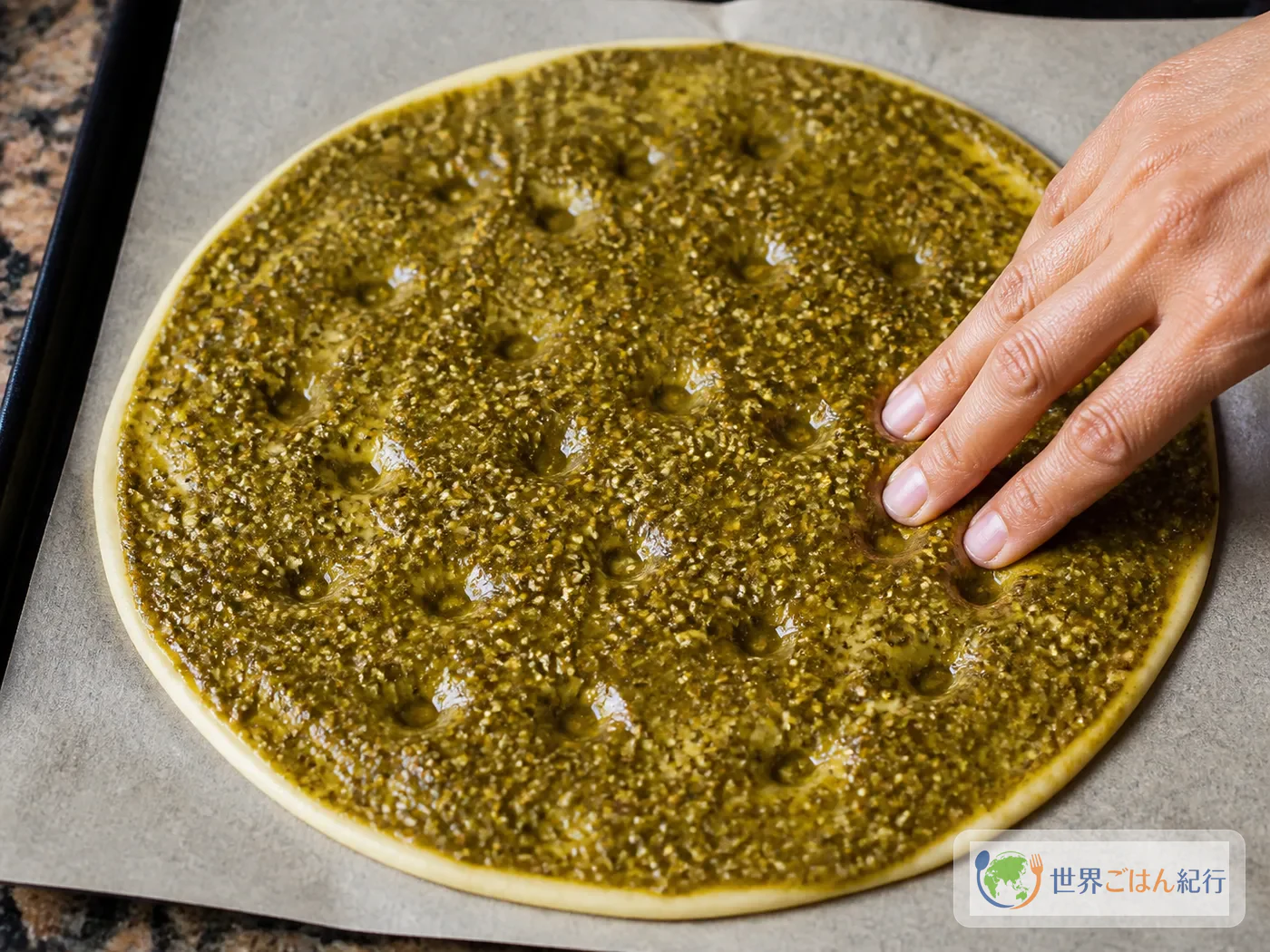
In Lebanon, manakish, also called al-man'ouché, is everyday bread, not something saved for special days. It's made at home and in professional bakeries alike. The dough is dimpled with the fingers and spread with a mixture of thyme, sumac, toasted sesame, salt and olive oil, then eaten with labneh, tomatoes, cucumbers, olives and mint on the side.
Its history lives less in old dates than in skills handed down at home. Toppings vary by region, and thickness and quantity shift with whatever cheese and herbs a household or shop has on hand, and with the size of the oven.
Local recipes often mention the "furn," a neighborhood bread oven or small bakery. People prepare dough at home and carry it to the hot oven. When the morning orders pile up, dough on wooden boards goes in one piece after another, and the baked bread goes home with vegetables and labneh. In a home kitchen, a thoroughly heated baking sheet and dough kept thin right up until baking do the furn's job.
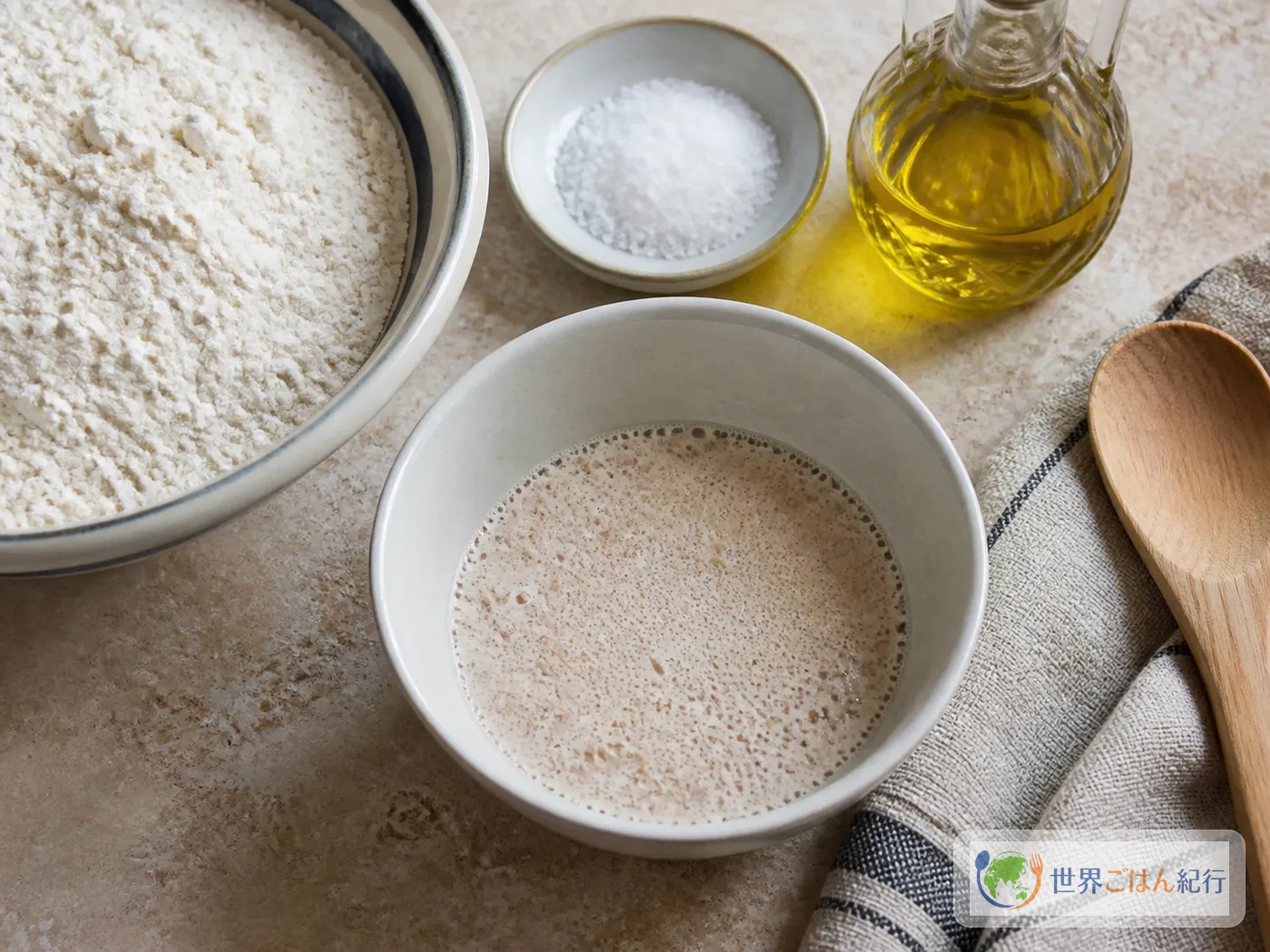
Ingredients (6 pieces, serves 4)
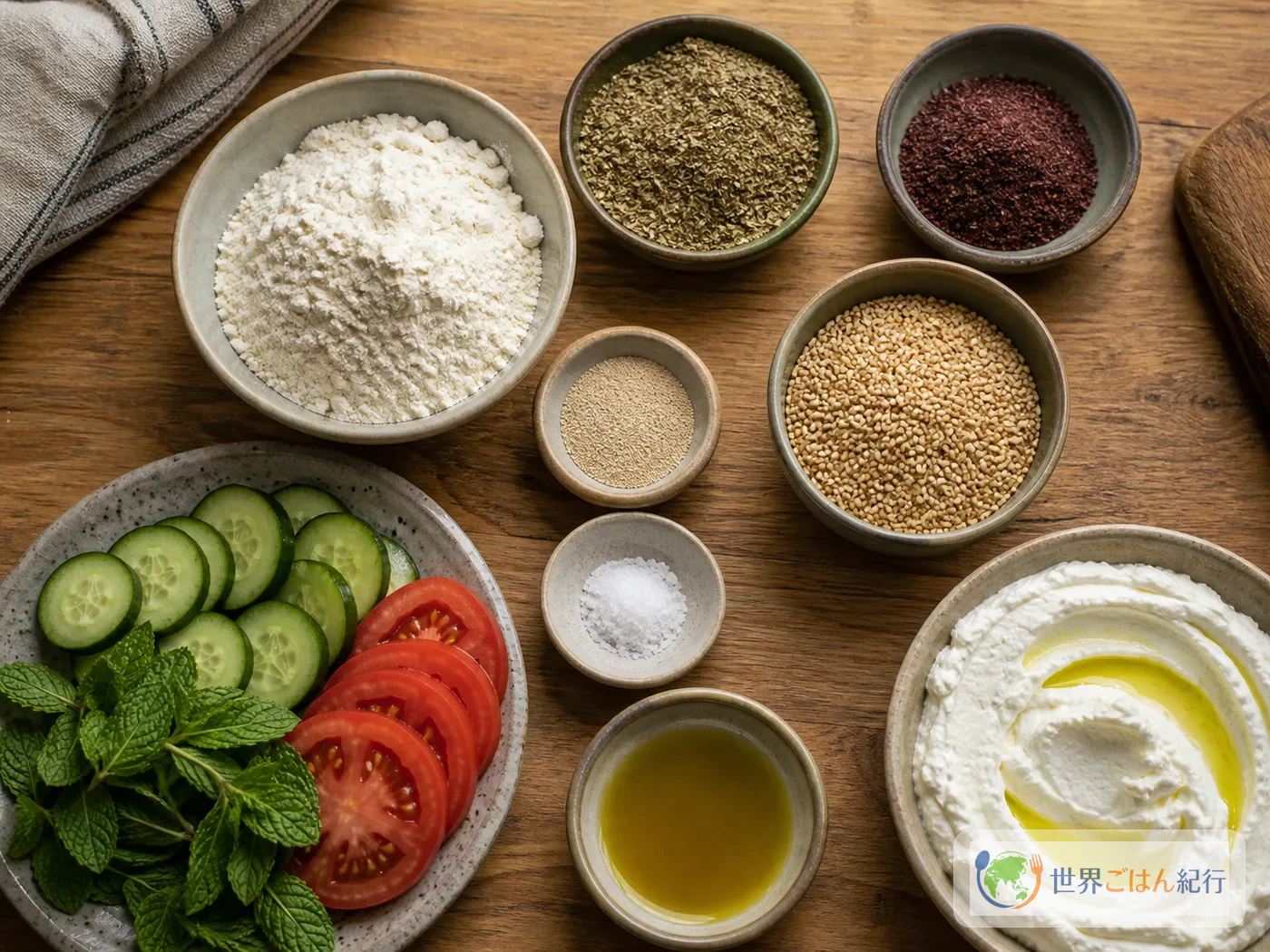
If you mix your own za'atar, combine 20 g dried thyme, 15 g sumac, 15 g toasted sesame seeds, 7 g dried oregano and 3 g salt to make about 2 oz (60 g). If your sumac is very sour, start with about 12 g and taste.
To serve alongside
Prepare 7 oz (200 g) labneh or unsweetened Greek yogurt, 2 tomatoes, 1 cucumber, and radishes, black olives and mint as you like. Don't put these on the dough. Tuck them in as you fold the baked manakish and bring it to your mouth. This uses wheat, white sesame and dairy, so check the ingredient labels and shared equipment if anyone has allergies.
Choosing za'atar, sumac and tools for manakish
Za'atar
The name za'atar covers two things: a herb close to wild thyme, and the whole seasoning blended with sumac, sesame and salt. That means aroma and saltiness differ from one bag to the next. Taste it before baking the first piece. If the sourness is weak, add a little sumac, and if it's too salty, add more olive oil. Treat each bag of za'atar as its own seasoning, and taste before you bake.
If your supermarket doesn't carry it, thyme alone is tempting. The herb's green fragrance comes close, but you lose the sourness of sumac and the roundness of sesame that define manakish. Look for ready-made za'atar first. Failing that, build a home blend around sumac: dried thyme, toasted sesame and sumac.
Sumac
Sumac is a powder made from a dried red-purple fruit, with a dry sourness quite different from lemon. It also works on salads, hummus, and grilled meat or fish, so if you can think of two or more uses, a 3.5 oz (100 g) bag won't go to waste. Check the net weight (3.5 oz (100 g) is typical) and the ingredient list when you shop.
If you only want to try manakish once, a little lemon zest can stand in, though its aroma changes in the oven and won't taste quite the same. If the only use for sumac is one dish, it is less wasteful to try first with a small packet of za'atar or the dried herbs you already have.
A mortar for home-blended za'atar
Store-bought za'atar goes straight onto the dough. If you mix your own, lightly crushing the sesame in a granite mortar helps the herb and the sourness blend. A small mortar or food processor you already own will do the job. A new one is worth buying if you plan to make spice salts, herb blends or nut pastes too; look for granite and a set with both mortar and pestle. For a one-time blend, a spoon and a bowl are enough.
Method: decide the thinness and the heat first
Before baking, set the oven to 475°F (250°C), or to the highest temperature of your home oven. Leave the baking sheet or a pizza stone on a lower rack and preheat for at least 30 minutes. The key is not to take the sheet out and then put the dough on it, but to heat the sheet itself inside the oven.
Fixing common manakish problems
A heavy center
If the center is white, doesn't spring back when pressed and bites like a dumpling, the dough was too thick or the sheet wasn't hot enough. Roll the remaining dough thinner before baking the next piece. If that doesn't help, return the baking sheet to the lower rack and preheat another 20 minutes. Thin dough loses moisture fast, so eat it soon after it comes out.
A dry surface and bitter herbs
Either the za'atar paste went on too thick, or the oven's top heat is too strong. On the next piece, spread slightly less and keep the 0.25 inch (5 mm) margin at the edge. Oil added after baking won't undo the bitterness, so adjust your spreading as soon as you smell scorching.
Dough that shrinks back
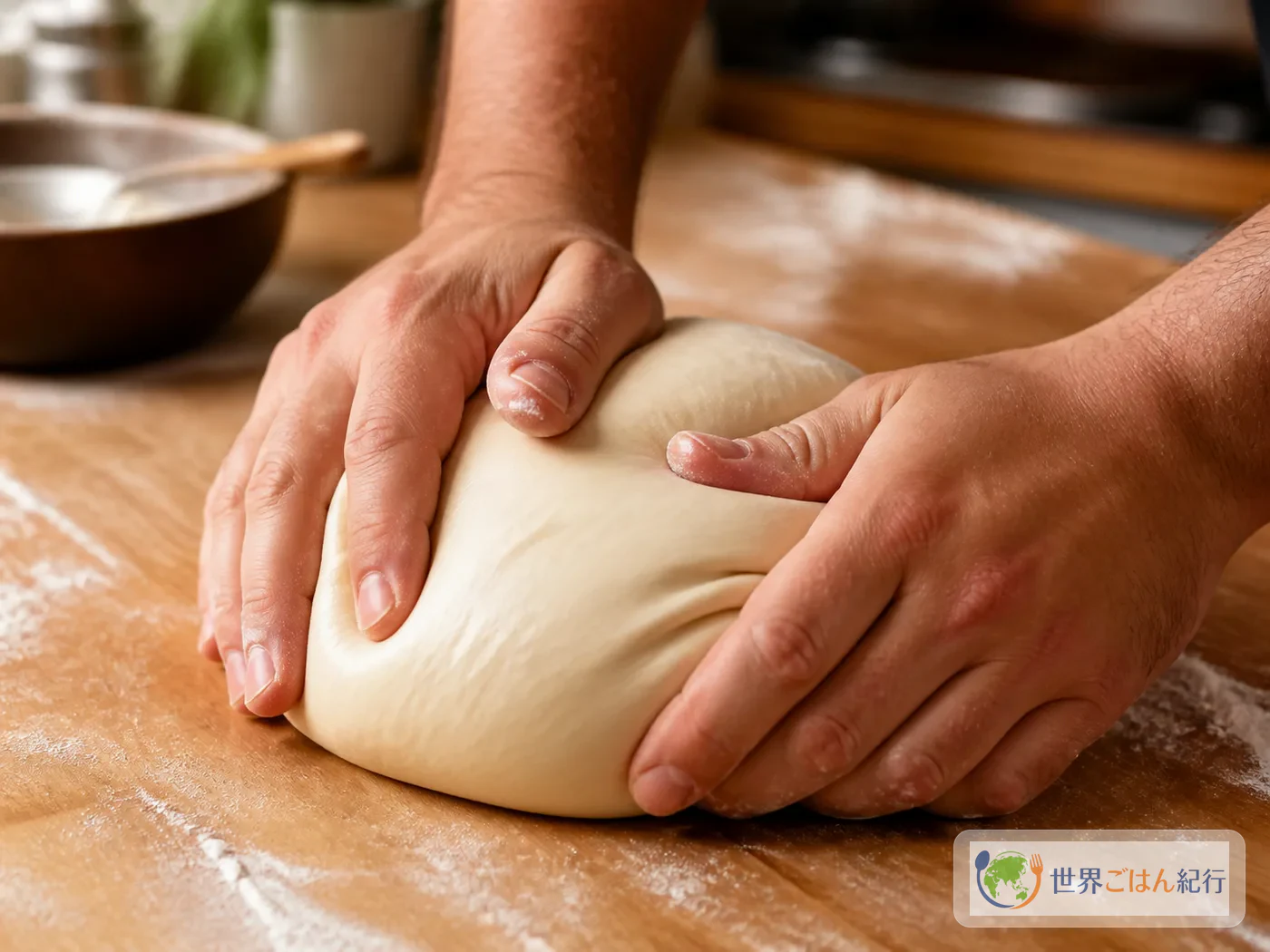
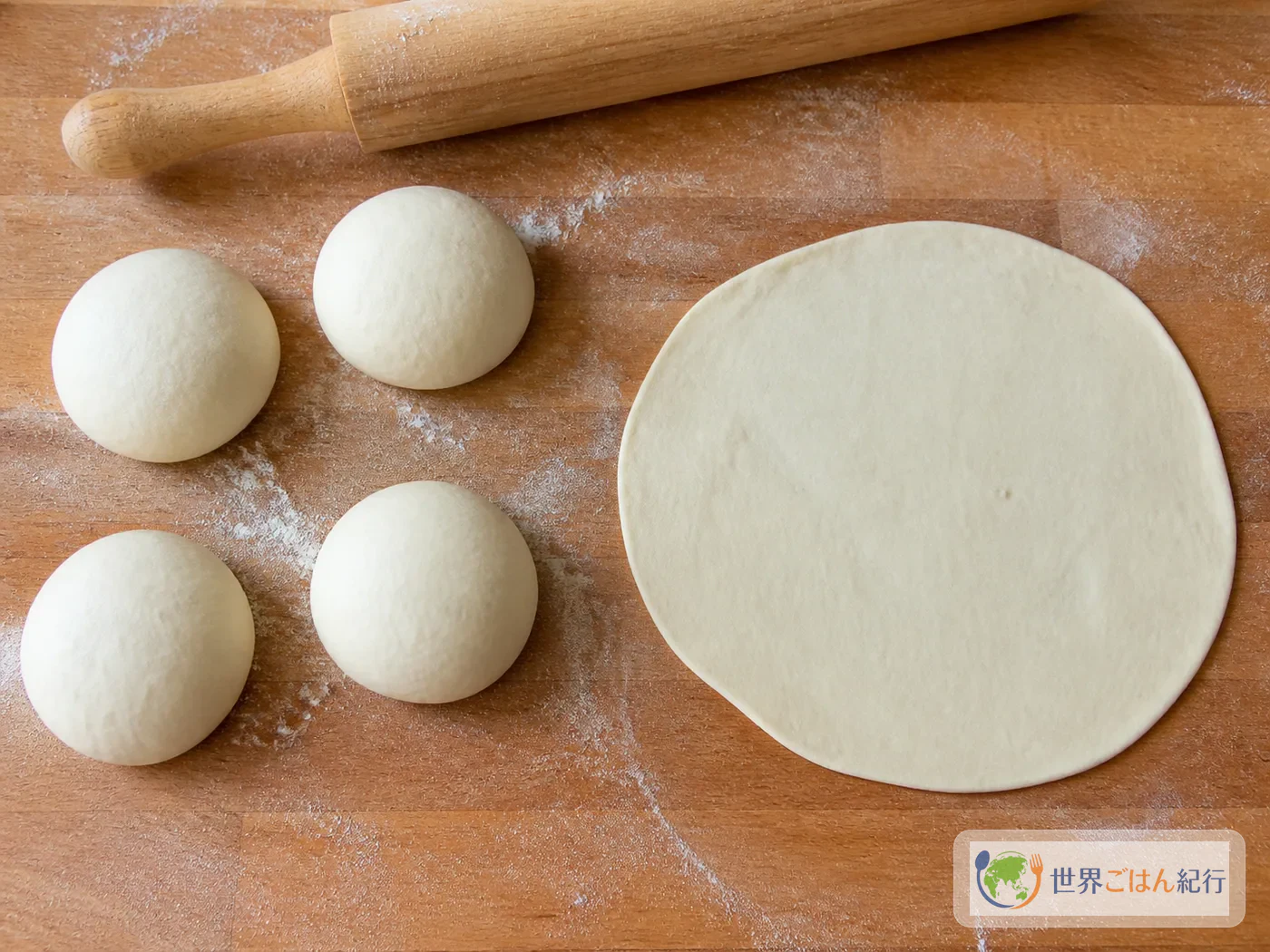
Rolling right after dividing, or gluten tightened by kneading, makes the dough spring back when you let go. Extend the rest after rounding from 10 to 15 minutes, and press out little by little from the center. Even thickness matters more for texture than a perfect circle.
Even in a model with a 450°F (230°C) maximum, preheating the baking sheet on a lower rack for 30 minutes or more and moving the dough onto it one piece at a time improves the rise of the base. Packing in many pieces at once drops the oven temperature, so start with up to two. If the color is lacking, you can move it to an upper rack for the last minute, but keep watching the surface of the za'atar.
Serving, toppings and storage
Toppings seen in Lebanon
Za'atar is only the entry point. Lebanon also has manakish with cheese, kishk, tomato and onion, and minced meat, and each topping changes the moisture, the baking time, even the time of day it's eaten. Learn thinness on your first six za'atar pieces, then move on to one of these, and the differences in the dough will be easier to see.
| Type | Topping | At home |
|---|---|---|
| Cheese manakish | Salty cheeses such as akkawi | With mozzarella, blot the moisture and go easy on the salt |
| Kishk | Fermented yogurt and a bulgur-derived powder | Hard to substitute; try a little when you find it |
| Tomato and onion | Finely chopped tomato, onion, herbs | Drain lightly and spread thinly; keep the amount modest |
| Lahm bi ajeen | Seasoned minced meat and aromatics | Closer to a different dish. Bake until the meat is cooked through, not by the za'atar timing |
| Vegetables and labneh | Served alongside the baked bread | Keeps the dough crisp and matches the local breakfast table |
| Chile and herbs | Aleppo pepper, mint, parsley and the like | Use enough to add fragrance without hiding the sumac |
The easiest place to start is adding labneh and vegetables after baking the za'atar version, since only the toppings' moisture changes, not the dough. If you want to try cheese, make half of one piece cheese and half za'atar so you can compare in a single bake. For a fuller Lebanese table, serve the bread with Lebanese Tabbouleh, Baba Ghanoush and Hummus.
Storing and reheating manakish
Let baked manakish cool slightly, then wrap each piece. Refrigerated, it keeps 2 days; reheat in a 400°F (200°C) oven for 5–7 minutes. To freeze, cool completely before stacking and use within about 1 month. Reheating from frozen at 400°F (200°C) for 10–12 minutes brings back the crispness of the base. The microwave alone leaves the dough steamy and soft, so finish in a toaster or oven to dry the surface.
You can refrigerate the dough before fermenting, but you'll have to keep an eye on the yeast and the space in the container. If you're new to this, bake first and store the finished bread. For breakfast, bake the day before, cool and wrap, then reheat in the morning. Keep labneh and chopped vegetables in separate containers and add them just before eating.
Frequently asked questions
Can I use all-purpose flour instead of bread flour?
Yes. Dough made with all-purpose flour alone tears more easily, so reduce the initial water to 160 ml–¾ cup (170 ml) and rest it longer before rolling. The baked bread tends to be crisper than with bread flour. If you have medium-strength flour, using half and half with bread flour makes the dough easier to handle.
The dough isn't rising.
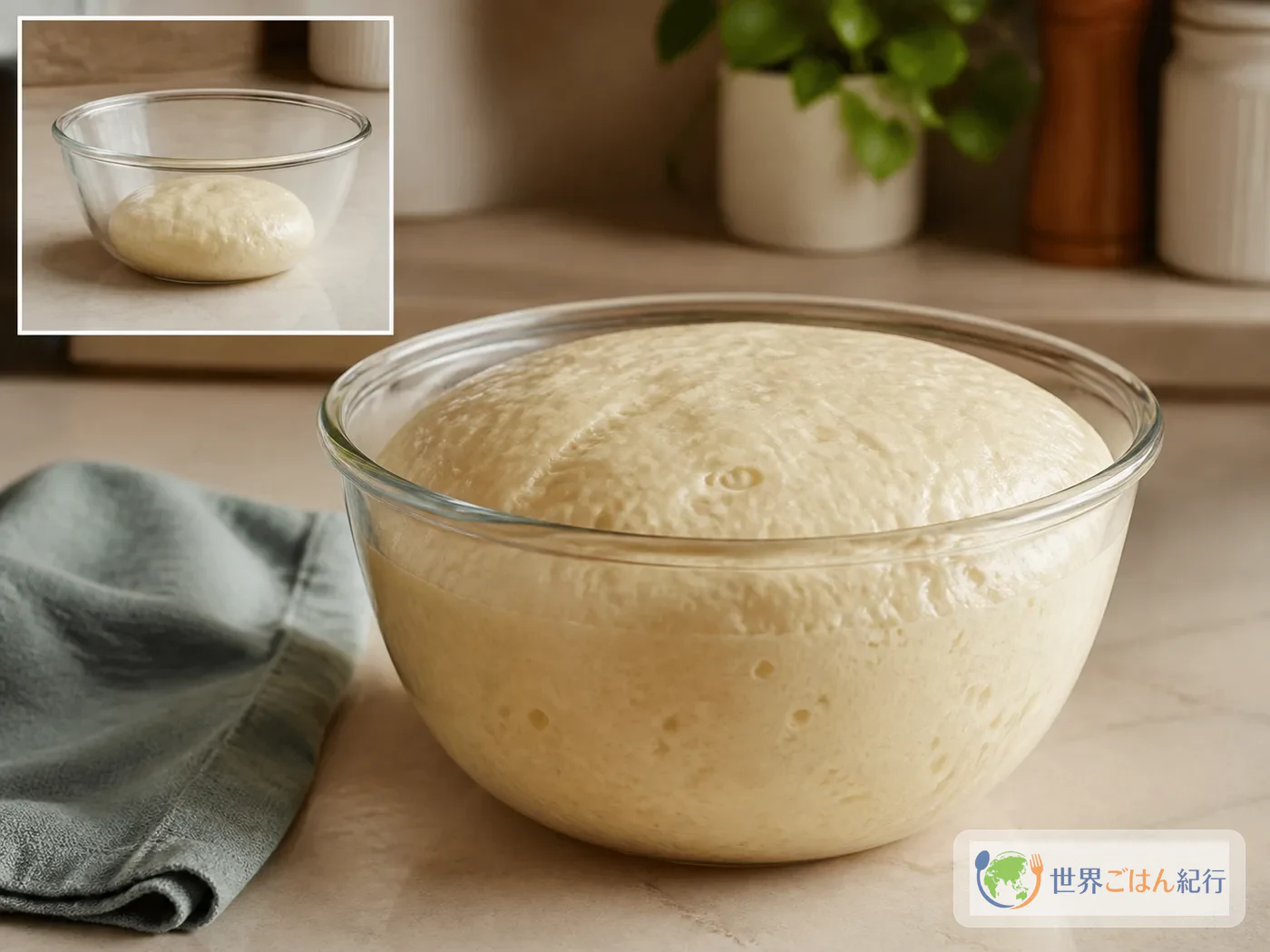
Check whether the water was too cold, the yeast is old, or the spot is cold. If nothing has changed at 60 minutes, you can wait another 30 in a cool room. If after 90 minutes the volume has barely changed and there are no bubbles on the surface, start over from the yeast liquid rather than baking it anyway.
The dough tore after I put the topping on.
The dough may have been rolled too thin, or the paste gathered in the center. Rather than pinching the torn spot closed, overlap a little extra dough and re-spread the topping thinly. Next time keep the diameter to 18 cm–8 inches (20 cm) and leave a margin at the edge.
Can I bake it at the same temperature with cheese?
Yes, the basic temperature works, but the cheese's moisture and salt change the result. Blot a moist cheese and scatter it thinly. If the cheese looks likely to scorch before the edge colors, keep the sheet on the lower rack and extend the baking time slightly instead of moving it up.