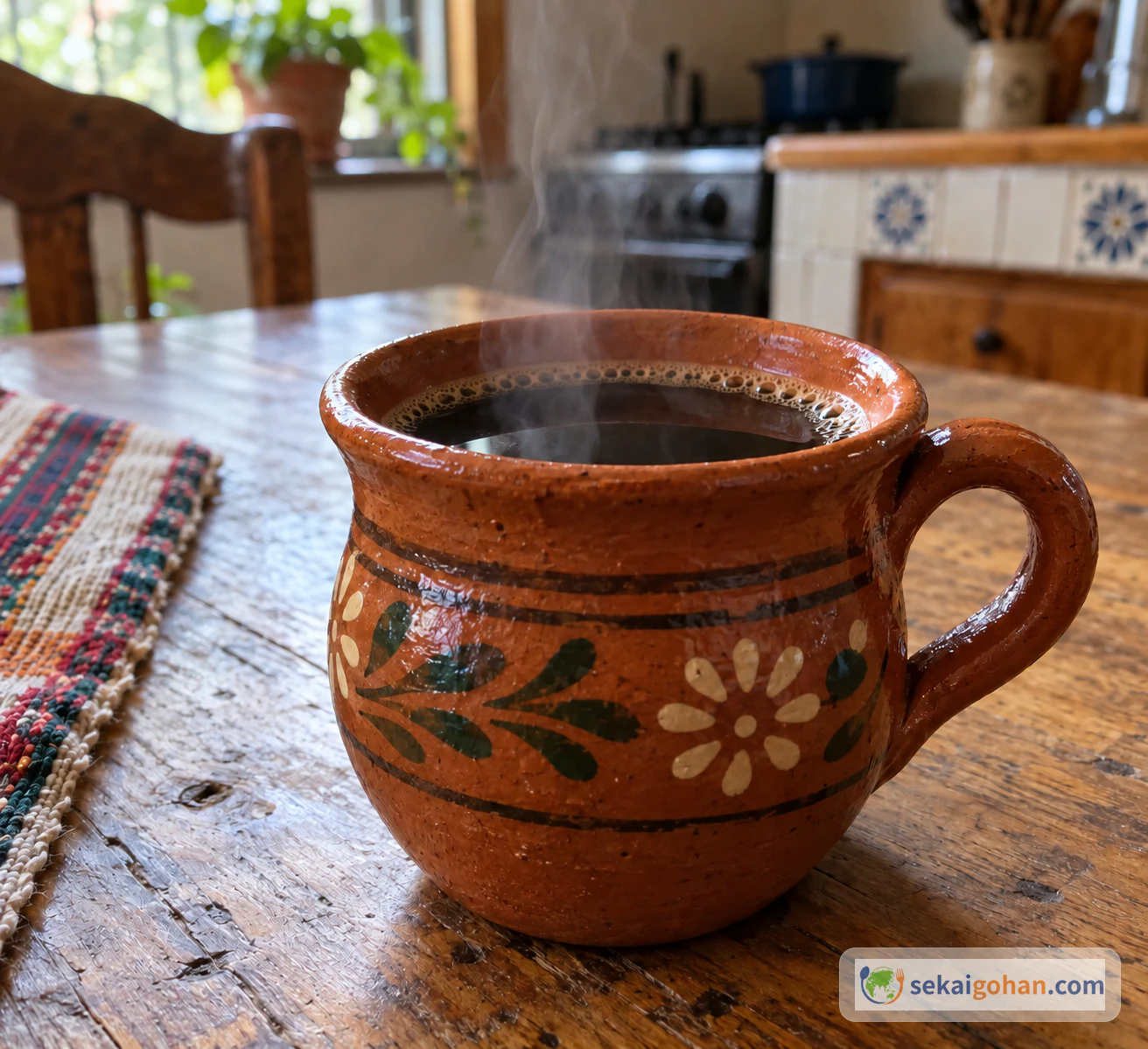
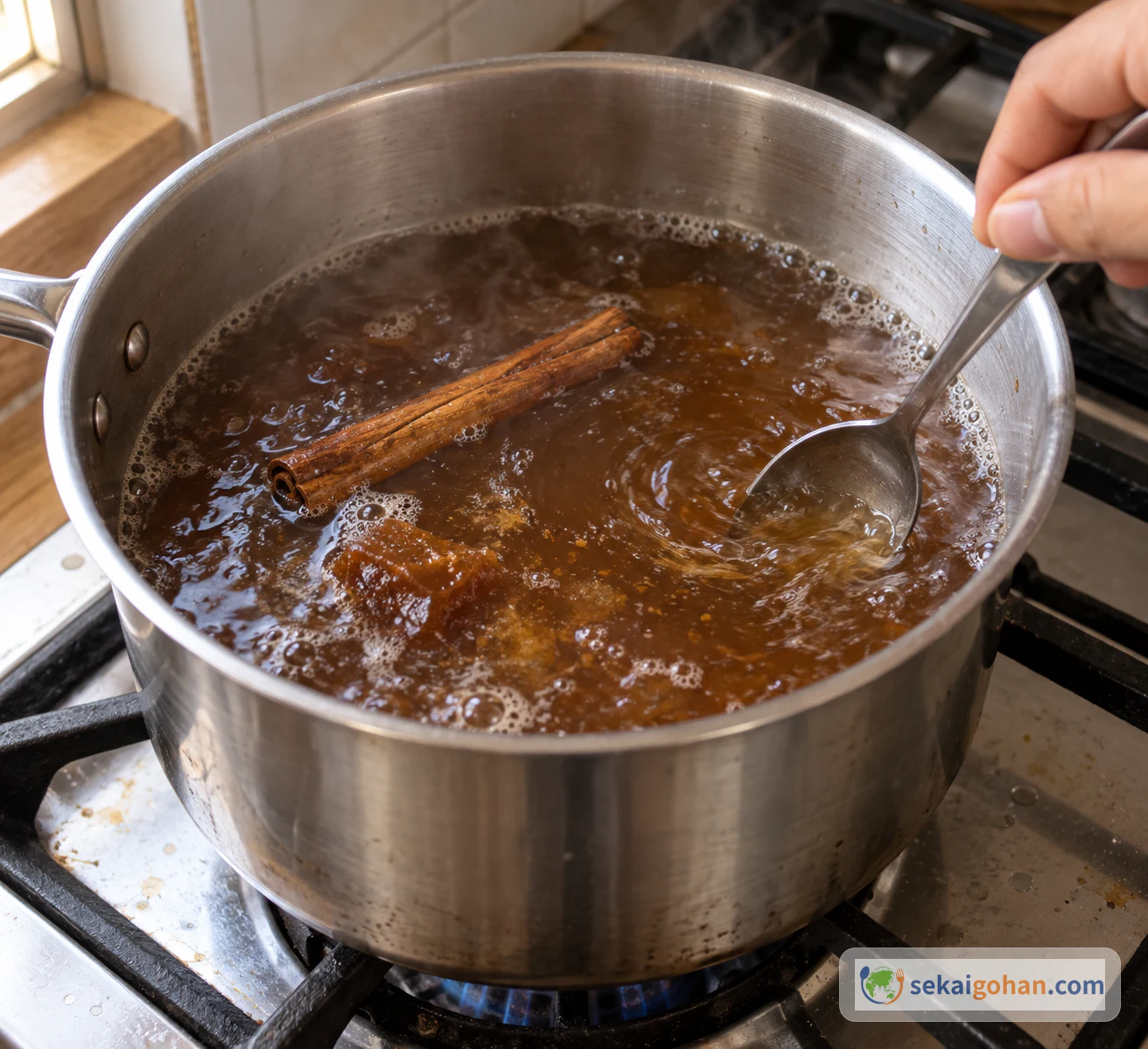
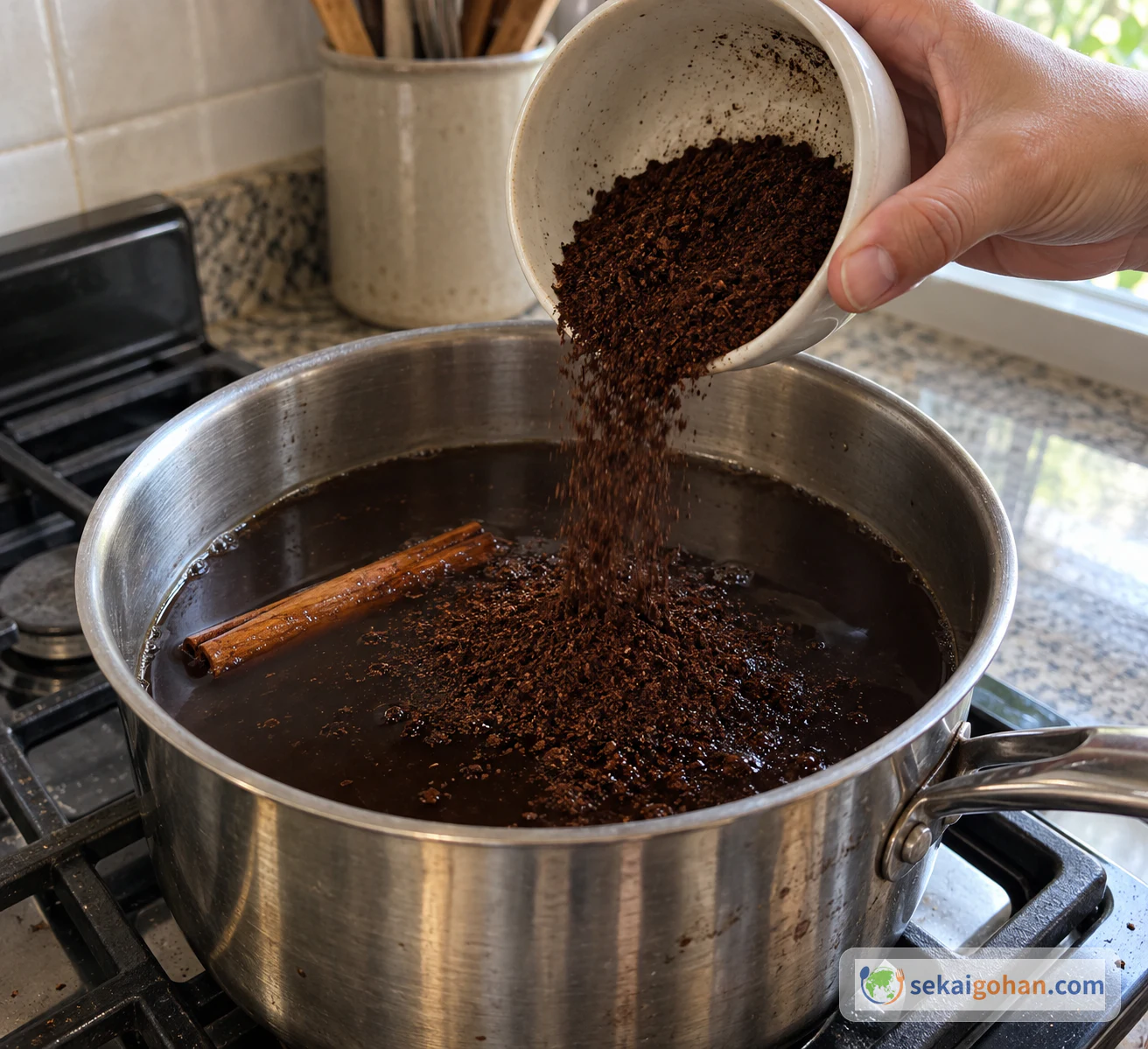
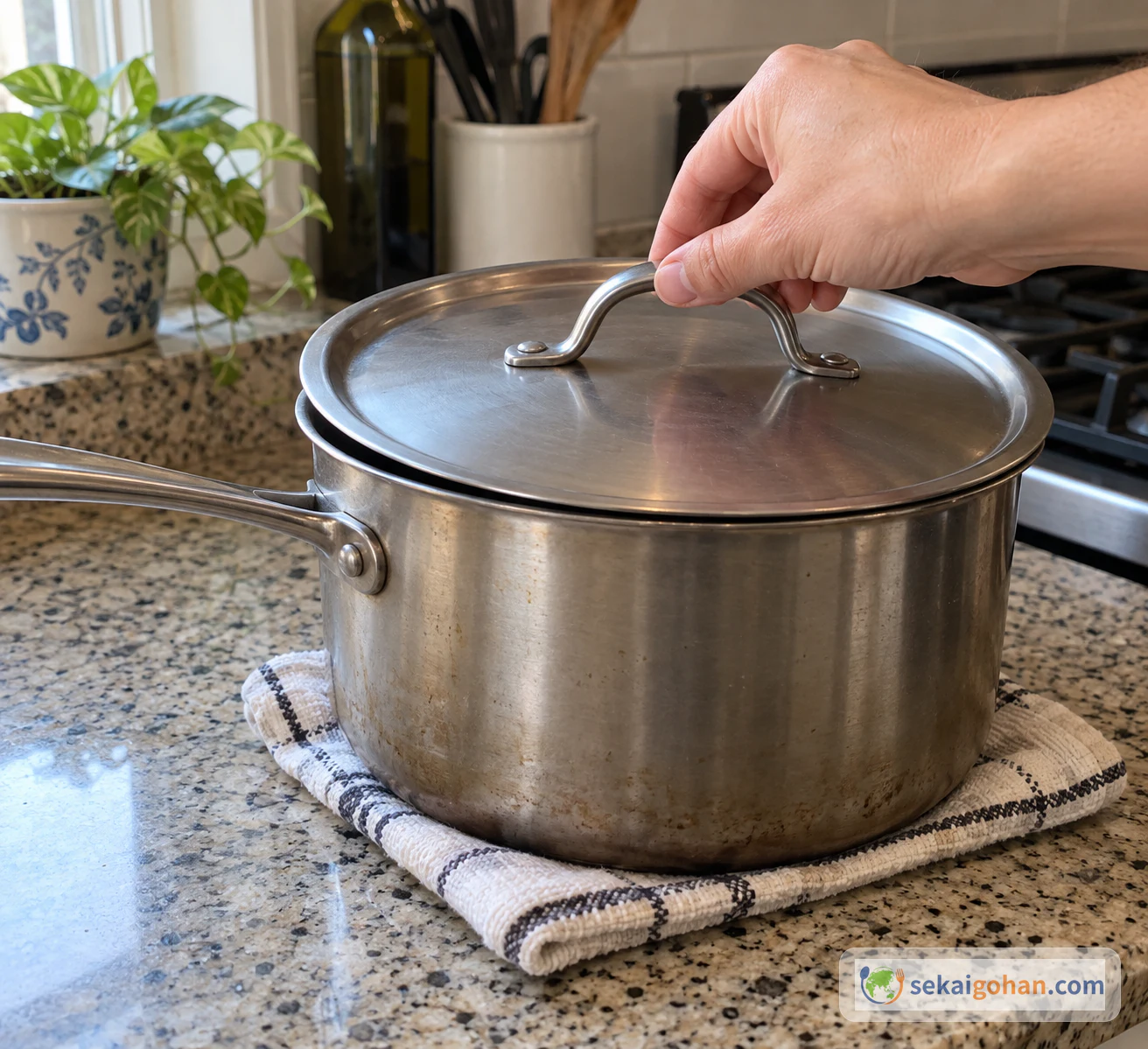
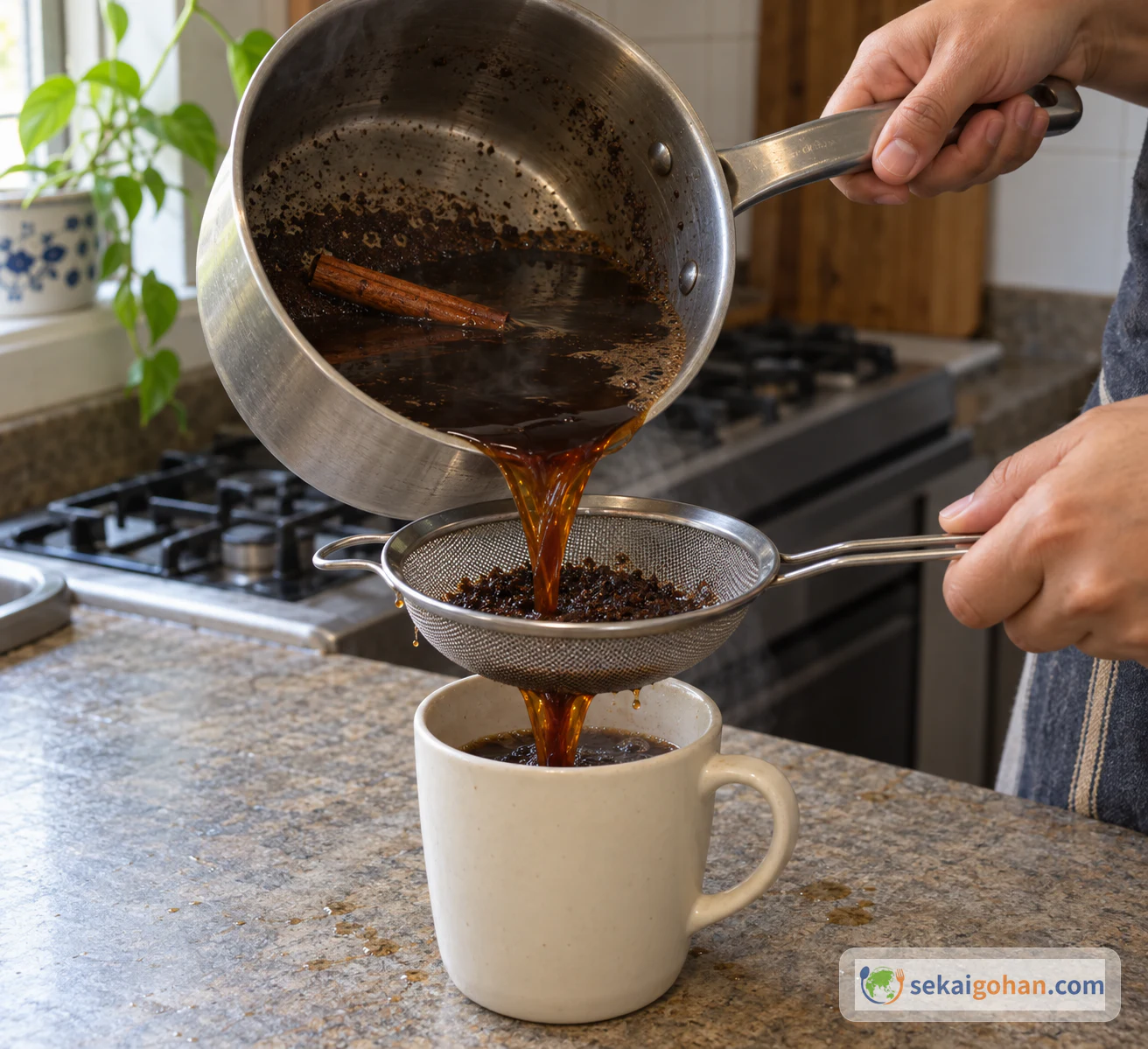
A cone of piloncillo slowly softens and disappears into water in a saucepan, while a single cinnamon stick turns the liquid fragrant. Once the heat is off, ground coffee goes in, the lid goes on, and for eight minutes the aromas come together inside the pot. What you pour out is Mexican pot coffee: the bitterness of coffee, the warmth of cinnamon and the molasses-like depth of piloncillo, all in one cup.
What Café de Olla Is
Café de olla is coffee sweetened with piloncillo and scented with cinnamon. In Spanish, olla means pot, so the name simply describes coffee made in a pot. It takes just four ingredients: water, piloncillo, a cinnamon stick and roasted ground coffee. The method is short, and the order is what matters most.
Dissolve the piloncillo completely with the cinnamon, turn off the heat before the coffee goes in, and let it steep under a lid.
Café de Olla in Mexico
In Mexico, café de olla is a drink for cold mornings and for wakes. Women once sold it outdoors from clay pots.
Coffee itself arrived in Mexico at the end of the 18th century. It spread through the 19th century, though chocolate remained the main drink, and by the early 20th century coffee was widely established in homes. That timeline belongs to coffee in general, though, and says nothing about when café de olla first appeared.
A widely told story credits the Adelitas, women of the Mexican Revolution, with starting the drink. It is only one account, and who actually created café de olla is hard to pin down, so the revolutionary origin is best enjoyed as a story rather than settled history.
Mexico has other warm drinks with their own character. Champurrado, for example, is made with cacao and corn masa. For more of the country's dishes, see Mexico.
Ingredients (6 servings)
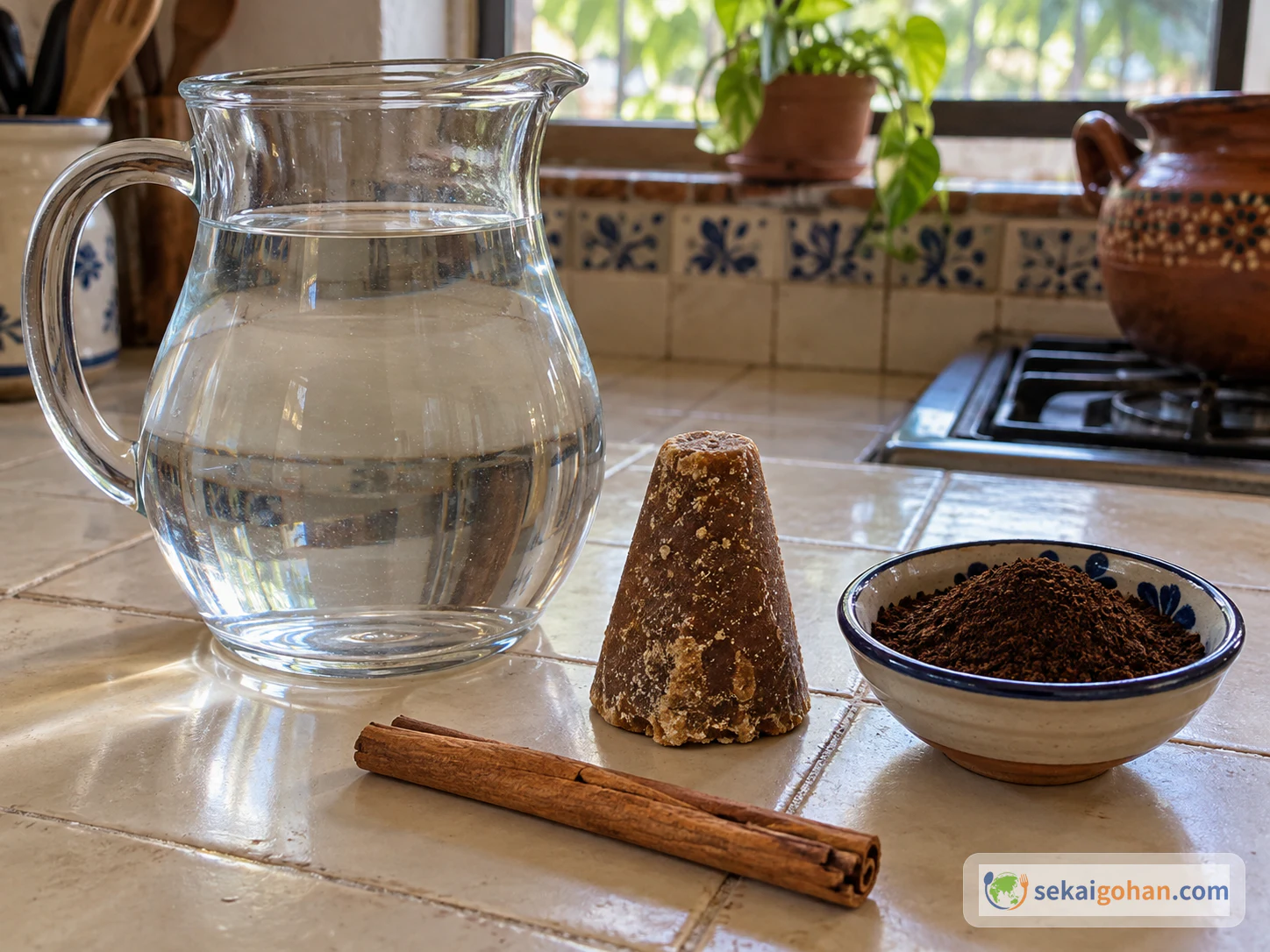
These amounts make six servings. The 1.5 quarts (1.5 L) is the water that goes into the pot, not the finished volume of coffee.
Use roasted ground coffee, not instant. Choose a ground coffee you like to drink, since grind, roast and origin are up to you. One cinnamon stick is all this recipe needs, so there is no need to add a stick to each cup when serving.
Add nothing else: no extra sugar, milk, cream, alcohol, cloves, cardamom or citrus. Variations with other spices or citrus peel are covered below.
Check the labels of the coffee and sweetener you buy for allergen information and any shared-facility statements.
Choosing Piloncillo and Its Substitutes
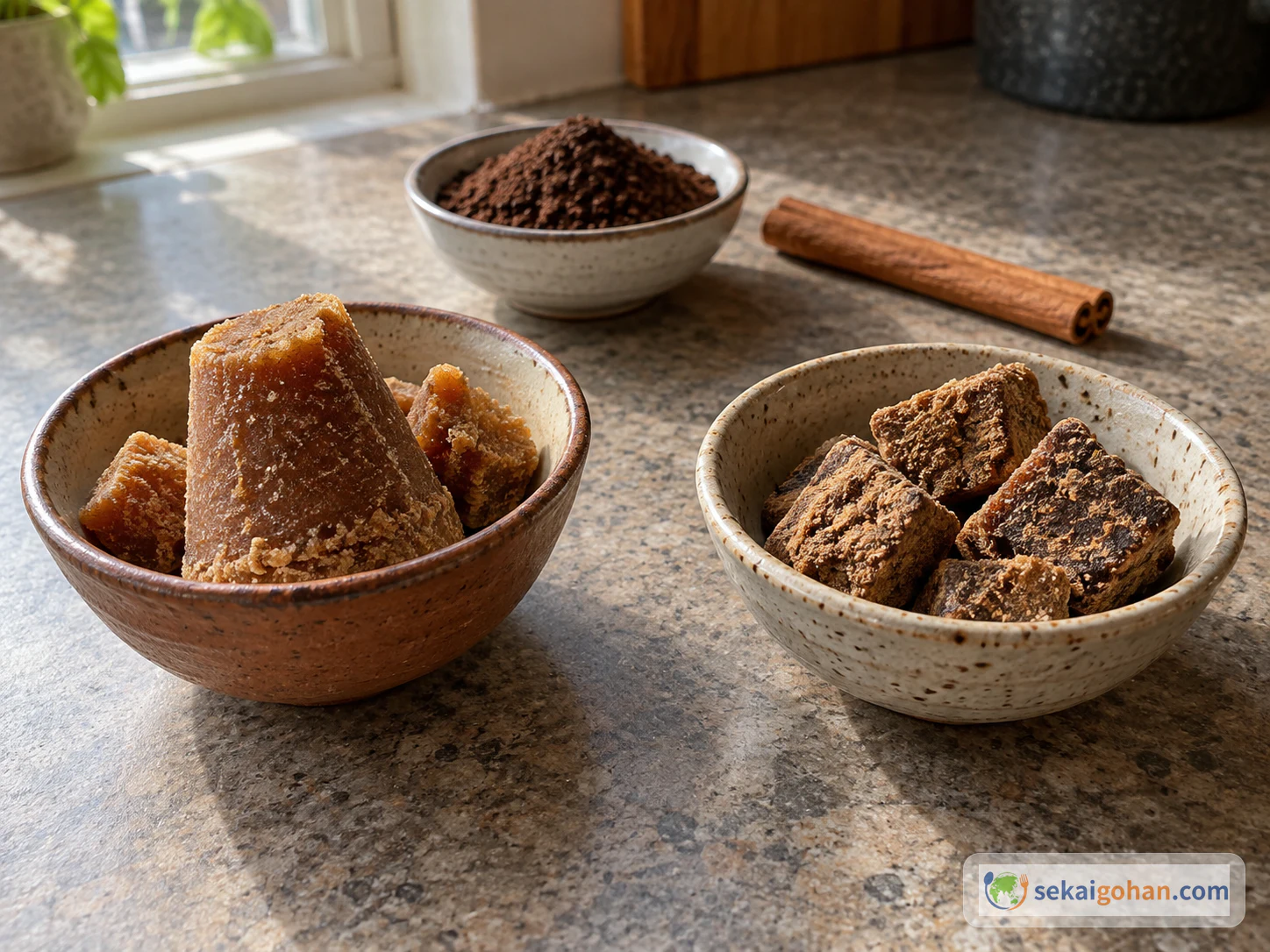
Piloncillo is unrefined cane sugar from Mexico, and here it is a main ingredient, not a garnish. If you can find it at an import grocer or online, use it, and dissolve it in the water from the very beginning.
Without piloncillo, you can use Japanese kokutō (dark unrefined cane sugar) or kibi sugar (a light-brown cane sugar), but expect a different drink. Kokutō has its own molasses aroma and dissolves differently from a cone of piloncillo, while kibi sugar gives a milder color and less depth. Pick one of them to replace the piloncillo rather than mixing the two.
Equipment
- A saucepan with a lid, large enough to hold all the ingredients with room to spare when the liquid boils (a metal saucepan is fine; a clay pot is not required)
- A spoon for stirring
- A fine-mesh strainer for removing the coffee grounds
Method: Dissolve the Sweetness, Then Steep the Coffee Off the Heat
Water, piloncillo and cinnamon go in together at the start. The coffee goes in only after the heat is off, and then the pot is covered for 8 minutes. There is no need to bring it back to a boil before pouring.
Allow 5 minutes of preparation, 5 minutes of cooking and 8 minutes of steeping. Rather than relying on the clock for the first stage, go by what you see in the pot: a boil, and piloncillo that has fully dissolved.
Café de Olla Troubleshooting
| Problem | What to check | What to do |
|---|---|---|
| Sweetener left undissolved at the bottom | Whether the piloncillo had fully dissolved before the heat went off | Next time, confirm the piloncillo has dissolved in step 1 before adding the coffee |
| Grounds in the cup | Whether the strainer was fine enough | Strain through a fine-mesh strainer before serving |
| Worried about bitterness or strength | Whether the coffee was boiled or steeped longer than the recipe | Add the coffee off the heat and keep to the 8-minute steep |
| Not sweet enough or too sweet | Which sweetener you used | Piloncillo and its substitutes differ in flavor; no extra sugar is added |
Serving Café de Olla and Variations
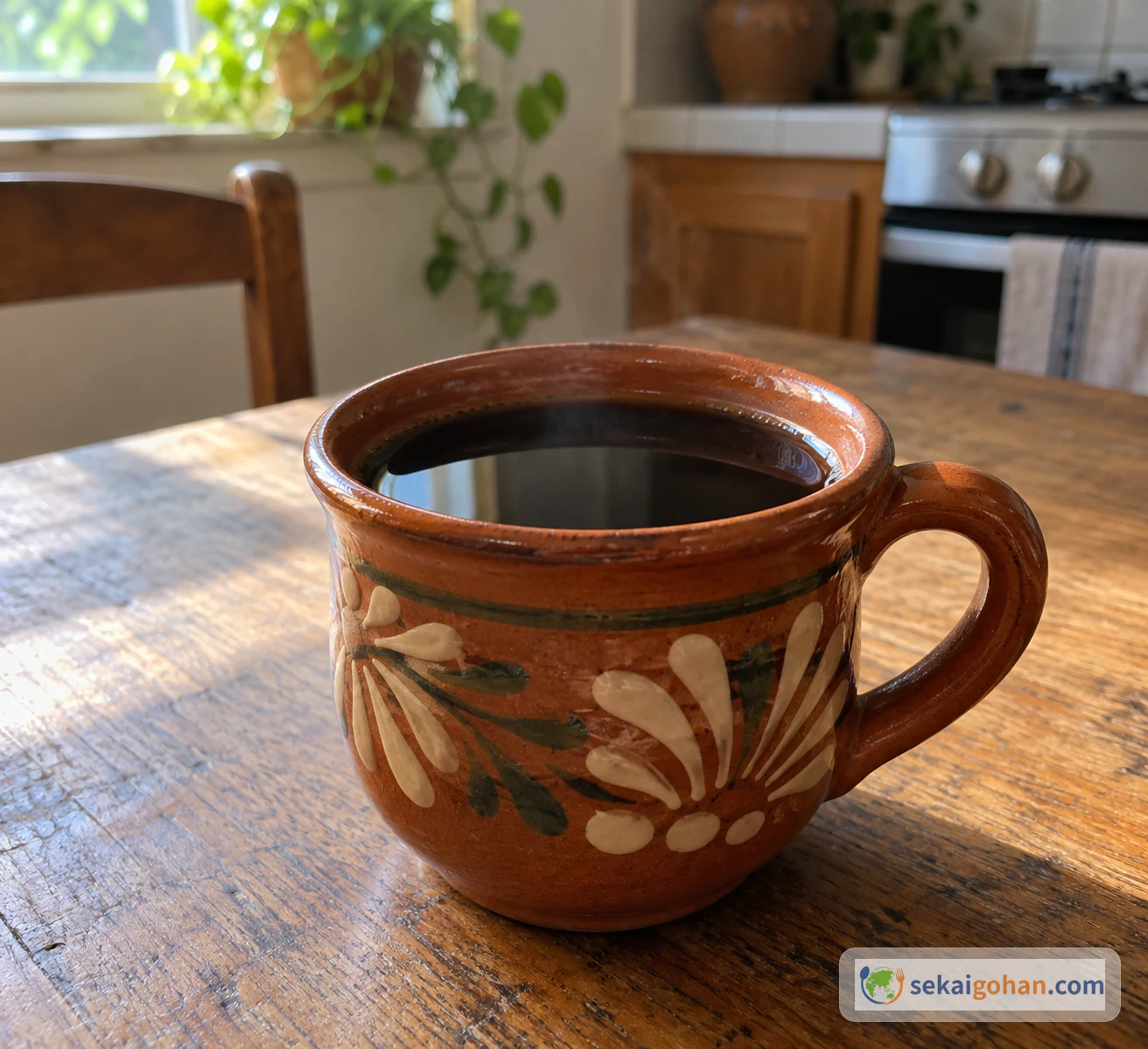
Café de olla is at its best freshly made, poured hot from the strainer, so brew it when you're ready to drink it.
Some households add other spices, such as cloves, cardamom or a bit of citrus peel. If you want to try them, make the basic version first so you know what you're starting from.
Frequently Asked Questions
Do I need a clay pot?
No. A metal saucepan with a lid works well, as long as it has room for all the ingredients and the boil.
Can I use instant coffee?
Use roasted ground coffee instead. Grind, roast and bean origin are up to you, so choose a coffee you enjoy.