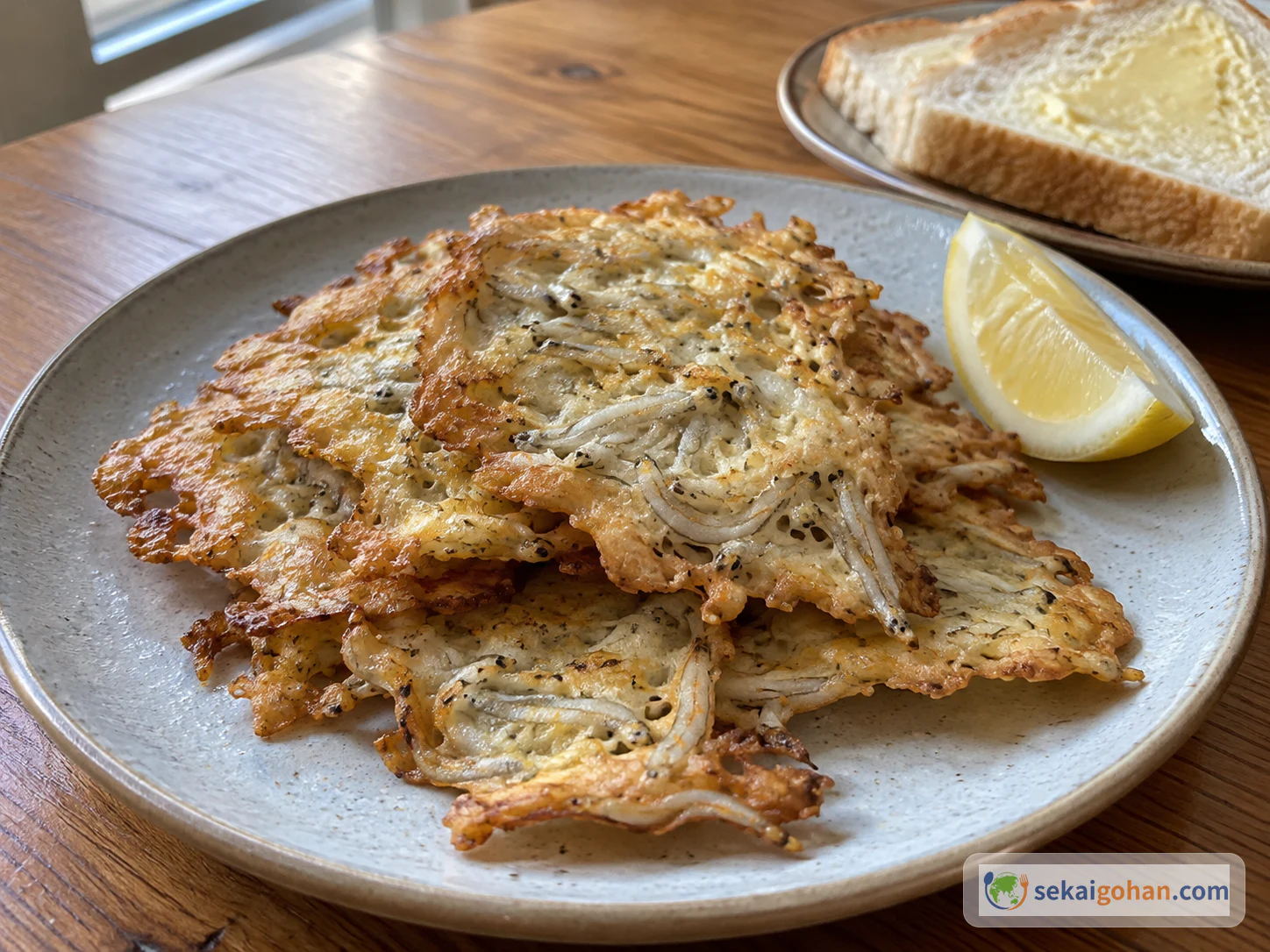
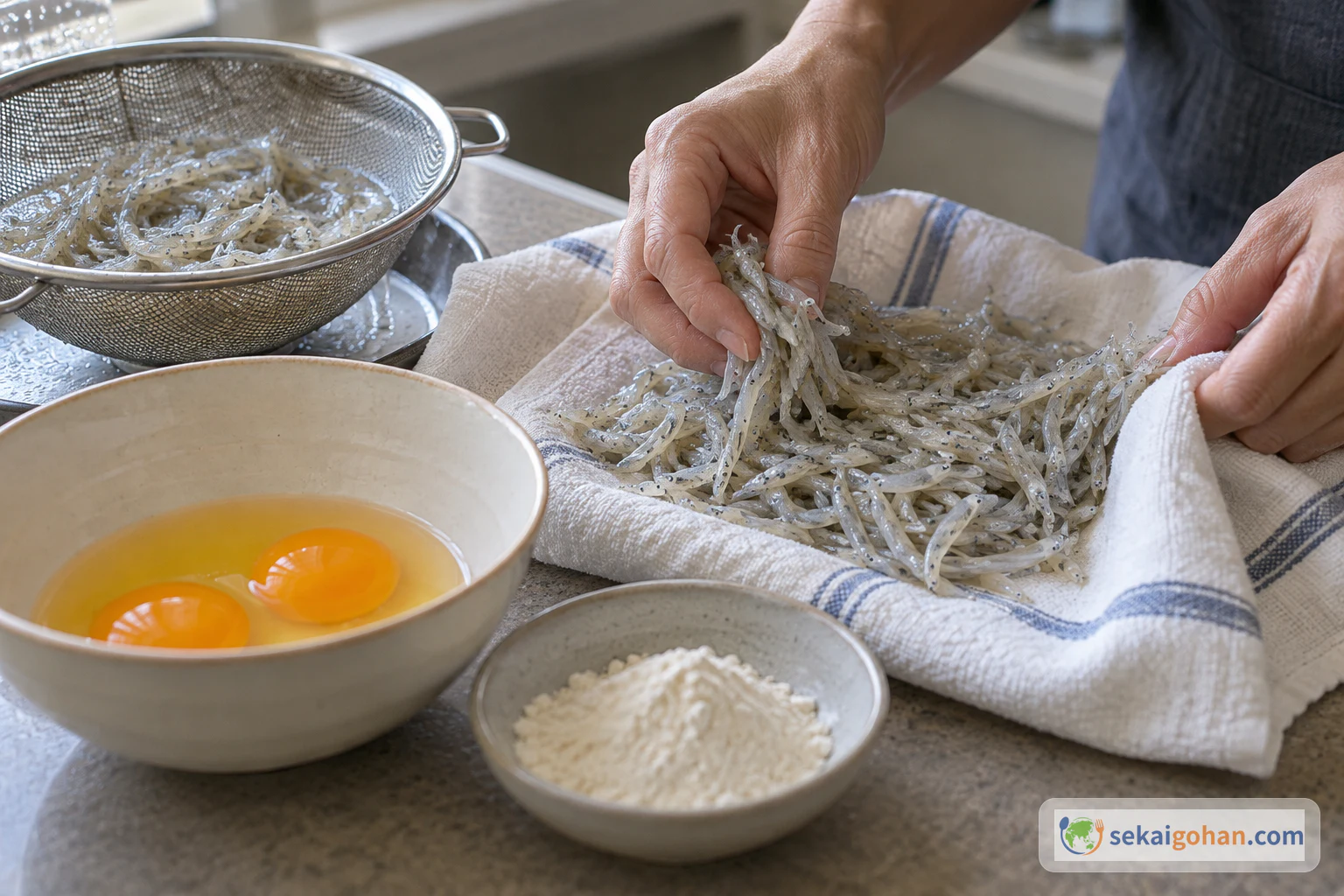
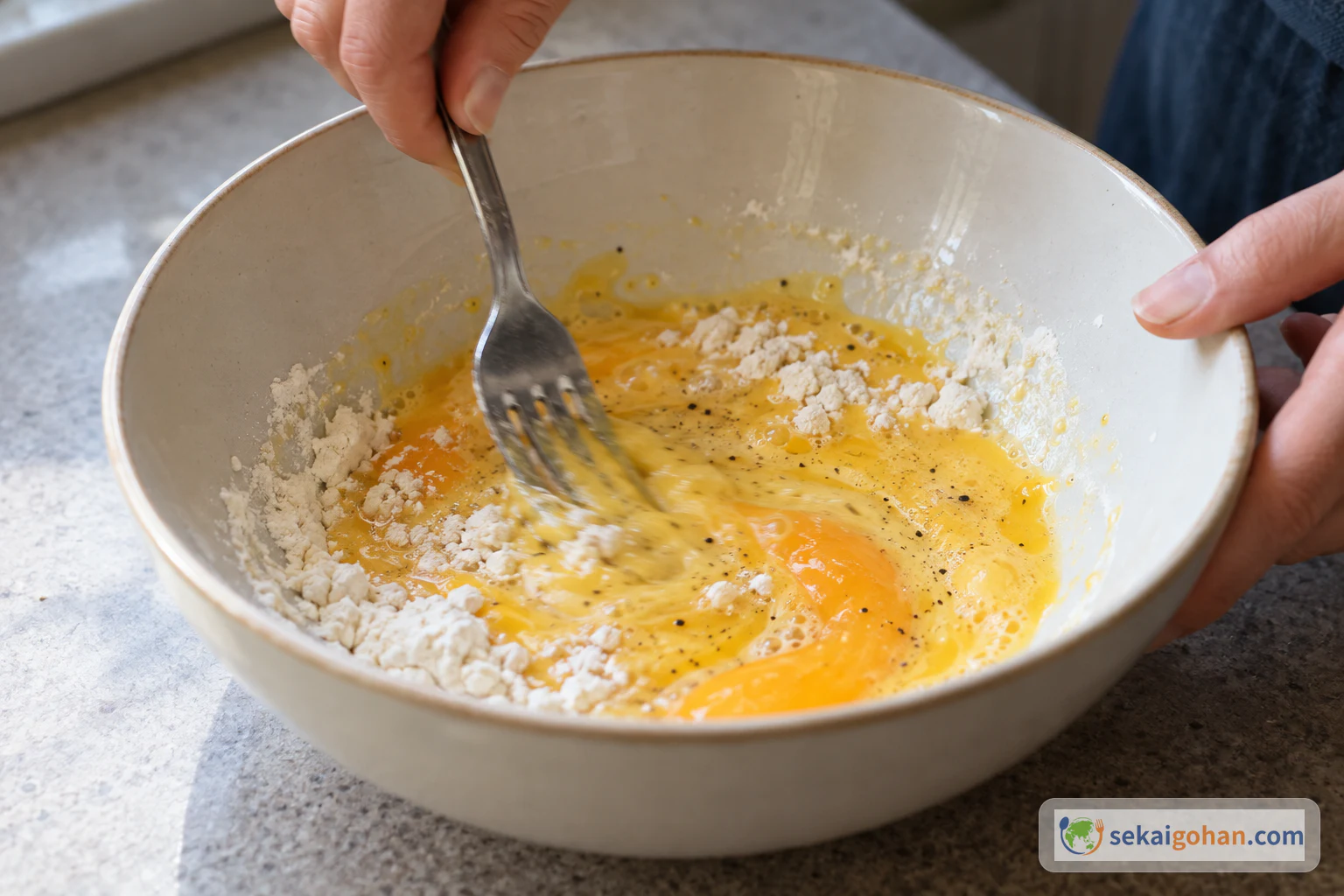
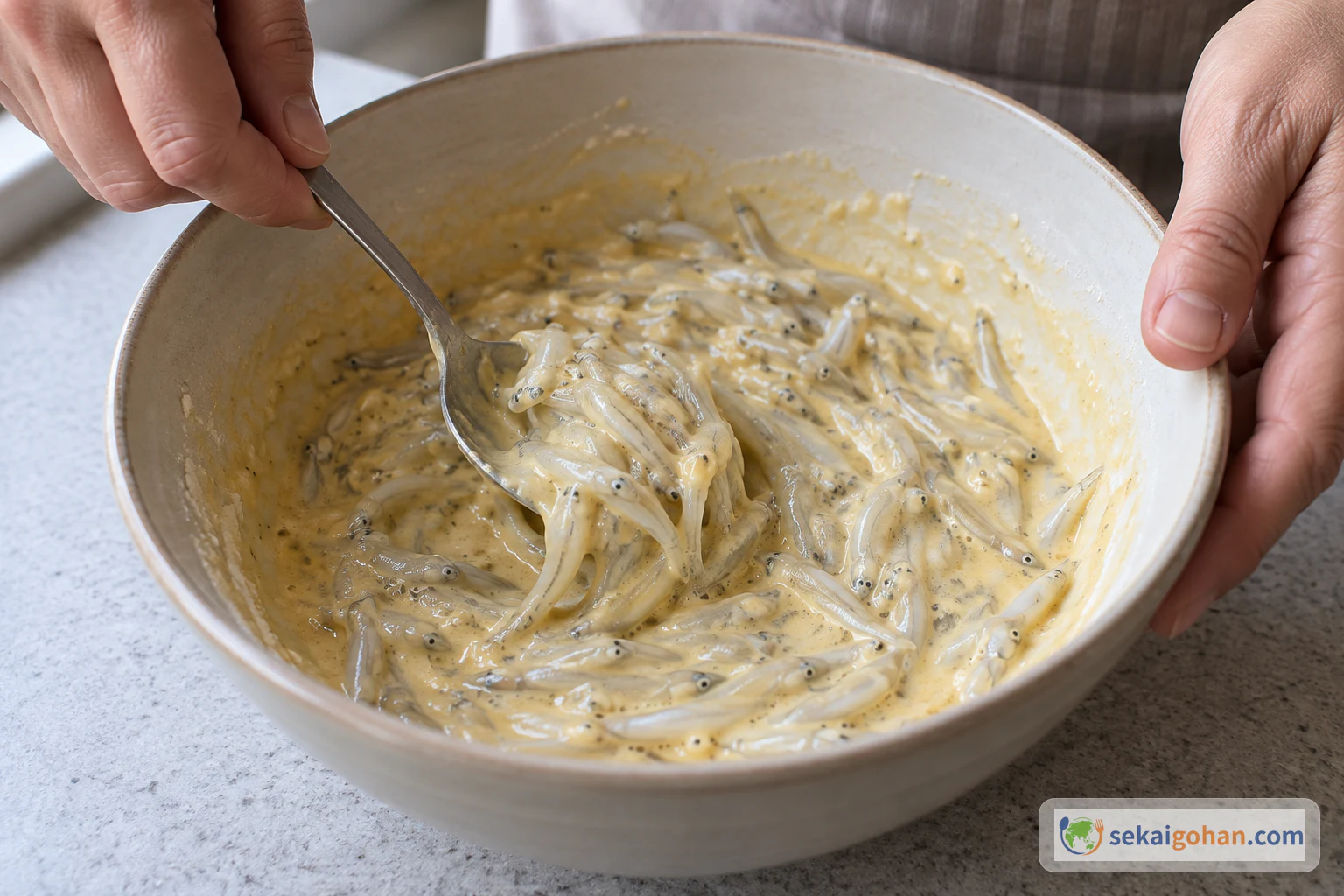
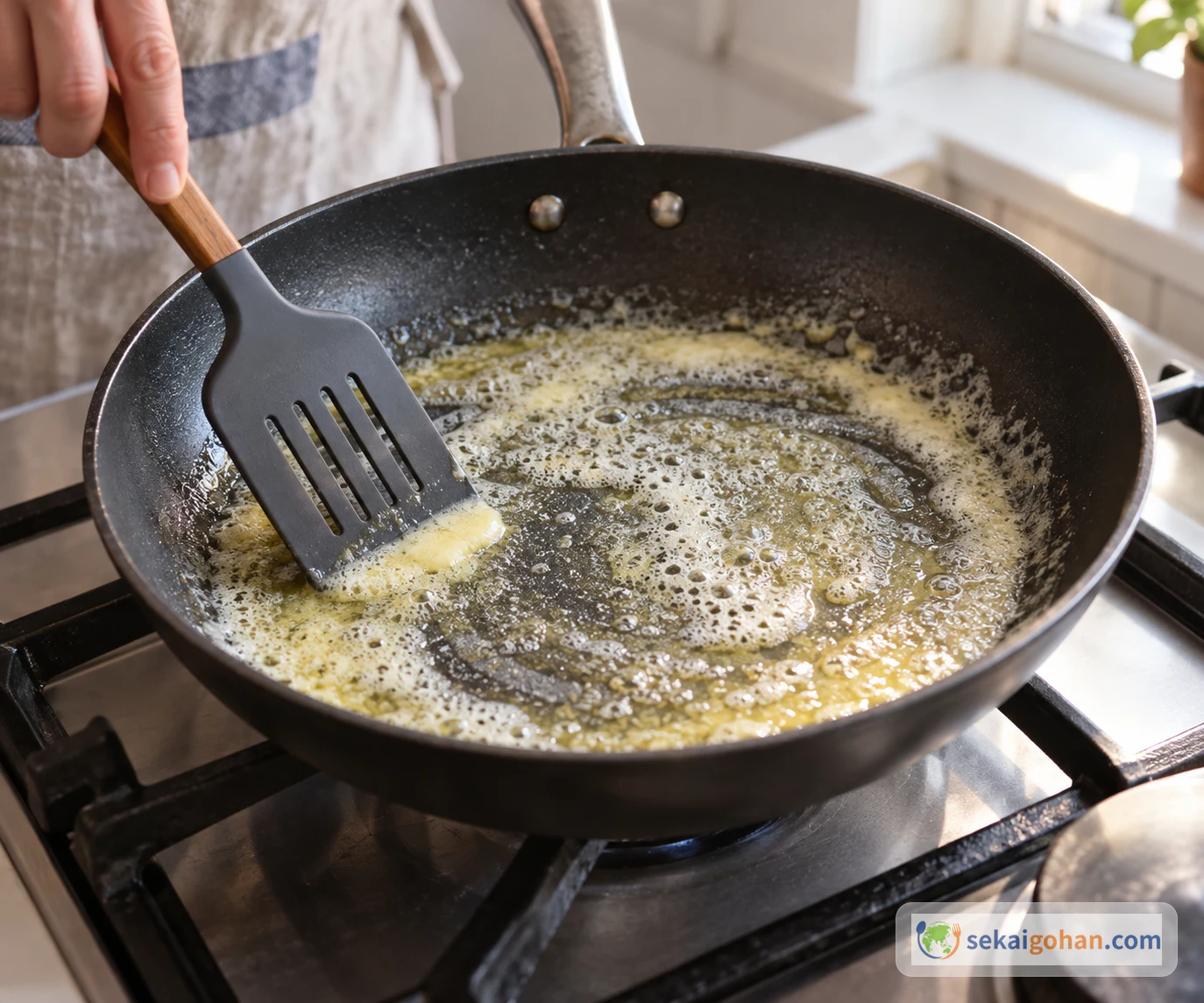
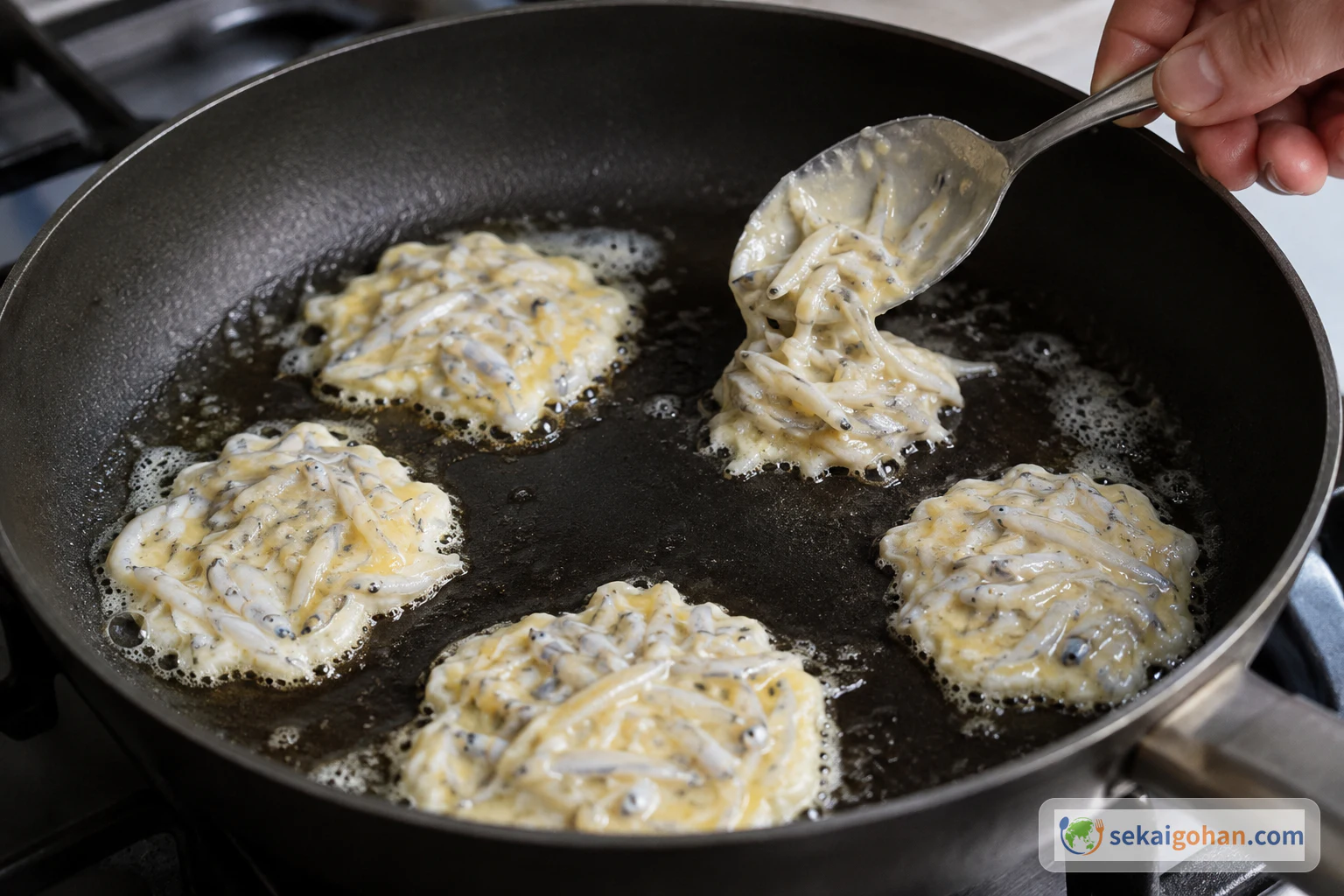
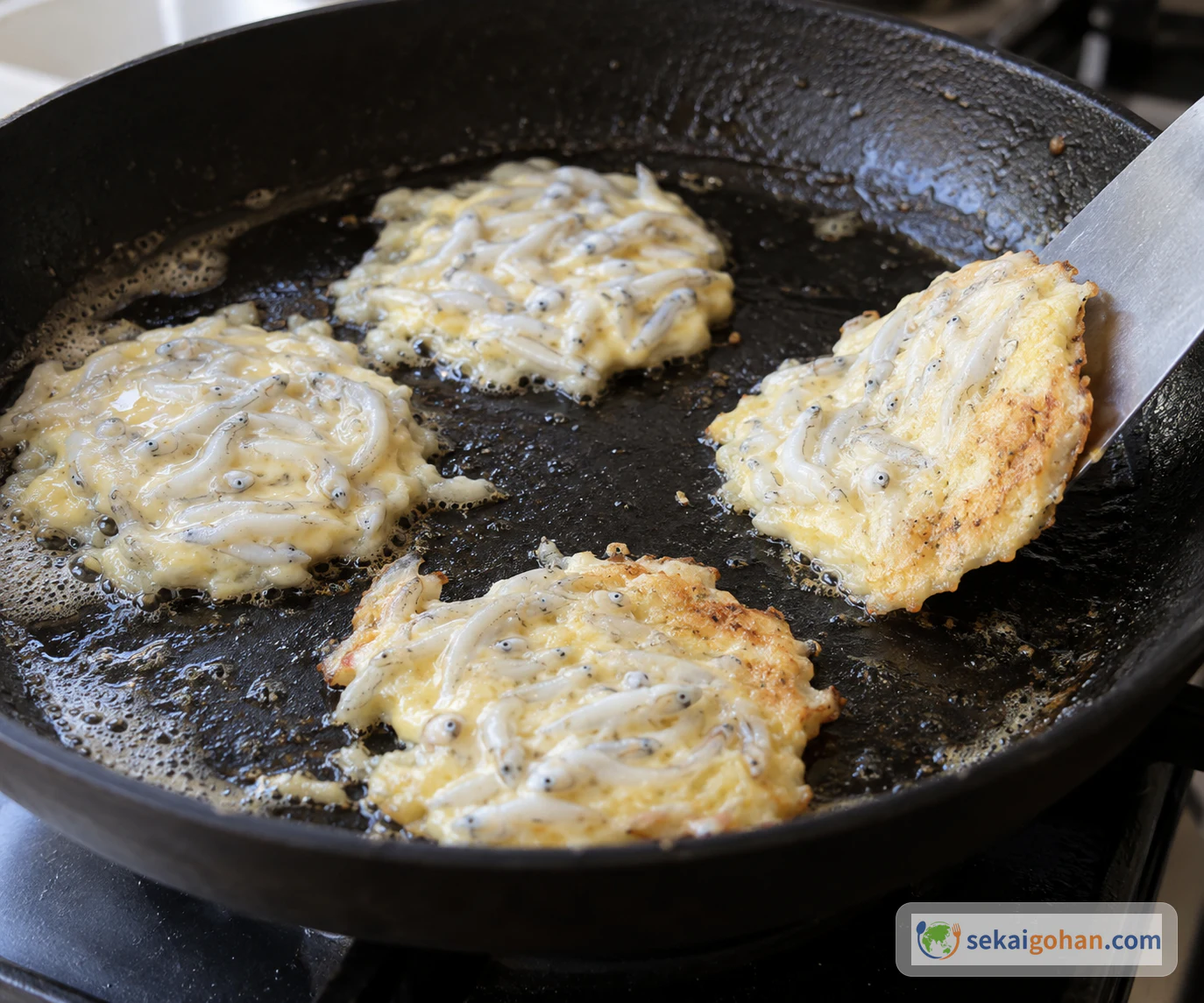
Spoon the mixture into hot butter and watch the fish. Inside the setting egg they start to turn milky white, and that's your signal to turn them. Whitebait fritters are a New Zealand spring dish: small fish eaten whole, held together with egg and a little flour. With so few ingredients and so little time in the pan, the fish matter more than any technique.
Whitebait in New Zealand
In spring, whitebait run upstream through the rivers of Aotearoa New Zealand. "Whitebait" isn't one species. It covers several small freshwater fish, such as īnanga, kōaro and kōkopu, and the names vary by region and growth stage. Īnanga run upstream in spring, and the young fish are caught during the run and eaten as fritters.
The fish carry cultural weight, too. Māori customary fishing rights and tikanga differ by area, iwi, hapū and whānau, and they exist alongside the general regulations. Whitebait is served to whānau and manuhiri as part of cultural heritage, though the fritter itself is not a specifically Māori cooking method.
Recipes differ from kitchen to kitchen. This one uses 2 eggs and 1 tablespoon of flour to 8 oz (225 g) of whitebait, while another uses 3 eggs and 7 oz (200 g) of whitebait with oil and butter. Whatever the proportions, the fish are the main event: keep them whole and cook the egg through to the center. For more of the country's food, see our New Zealand page.
Ingredients: Makes 9–10 Fritters
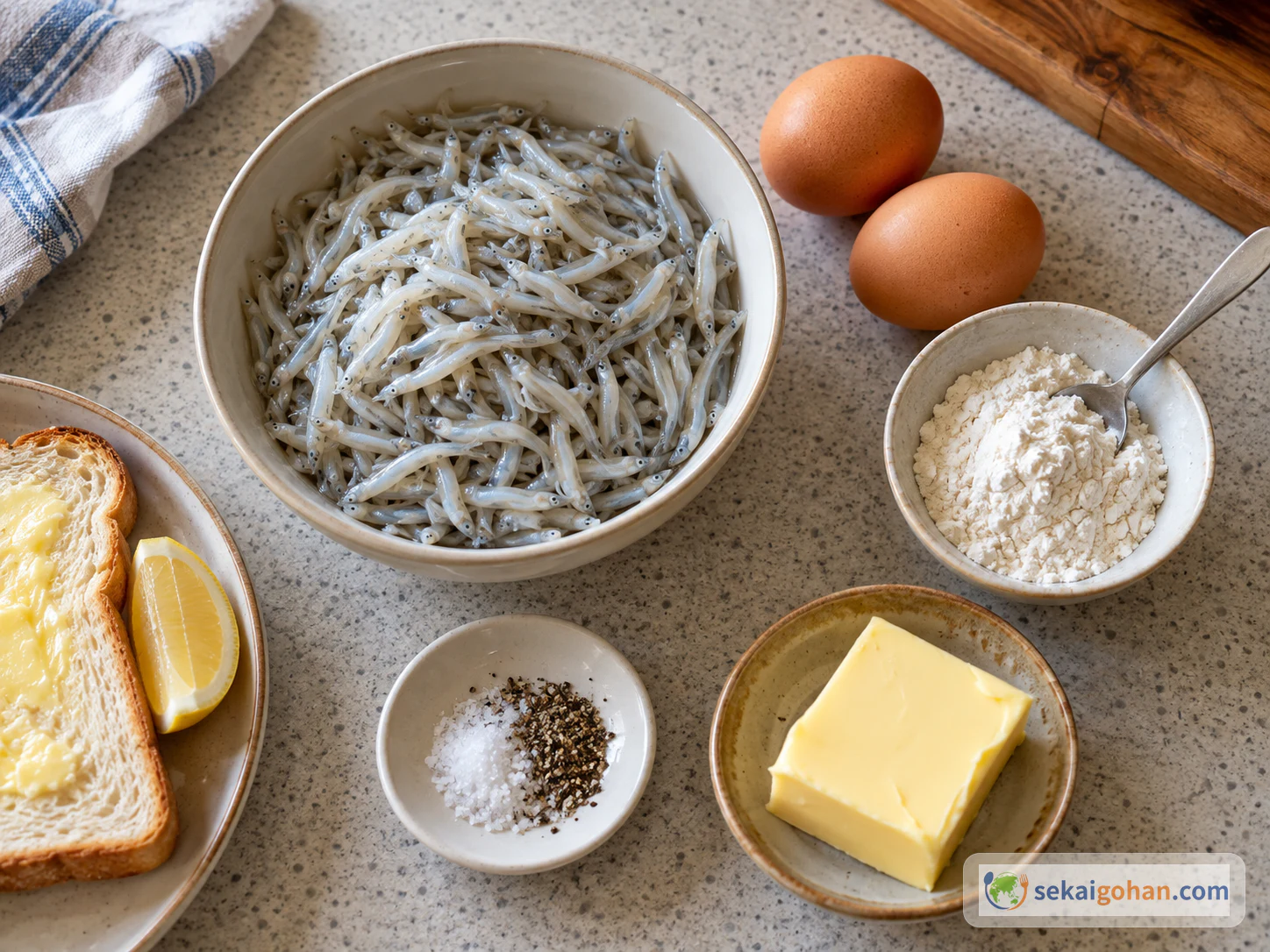
Equipment
- Mixing bowl
- Fork
- Spoon
- Clean towel, for draining the fish
- Small frying pan
- Thin spatula
- Paper-lined plate
Choosing Whitebait
Start by finding out whether you can get whitebait at all, frozen included. Check the label for the species, ingredients and thawing directions, and compare what sellers show about origin and legality. If it's frozen, pat it dry after thawing.
Small fish sold under other names are a different thing. Japan's shirasu, for example, can differ from whitebait in species, size and processing. Another fish would make a pleasant small-fish fritter, but a different dish, so there's no substitute here. If you can't find whitebait, save this one for another time.
Whitebait Fritter Troubleshooting
About 1 minute per side is a starting point, not a rule. Thick fritters need longer, and when the clock and the fritter disagree, go by the fritter.
| What happens | Likely cause | What to do |
|---|---|---|
| The mixture is thin and spreads | Too much water on the fish | Next time, gently remove more water before mixing |
| The fish are broken up | Mixed too hard | Fold with a spoon only until the fish are spread through |
| The outside colors before the inside sets | The heat is too strong | Lower the heat and keep cooking until the center is done |
| The center is still wet or translucent | The fritter is thick, or needs more time | Keep cooking and check again; spoon smaller fritters next time |
| The fritters turn tough | Overcooked | Serve as soon as the center is set |
Serving, Variations and Food Safety
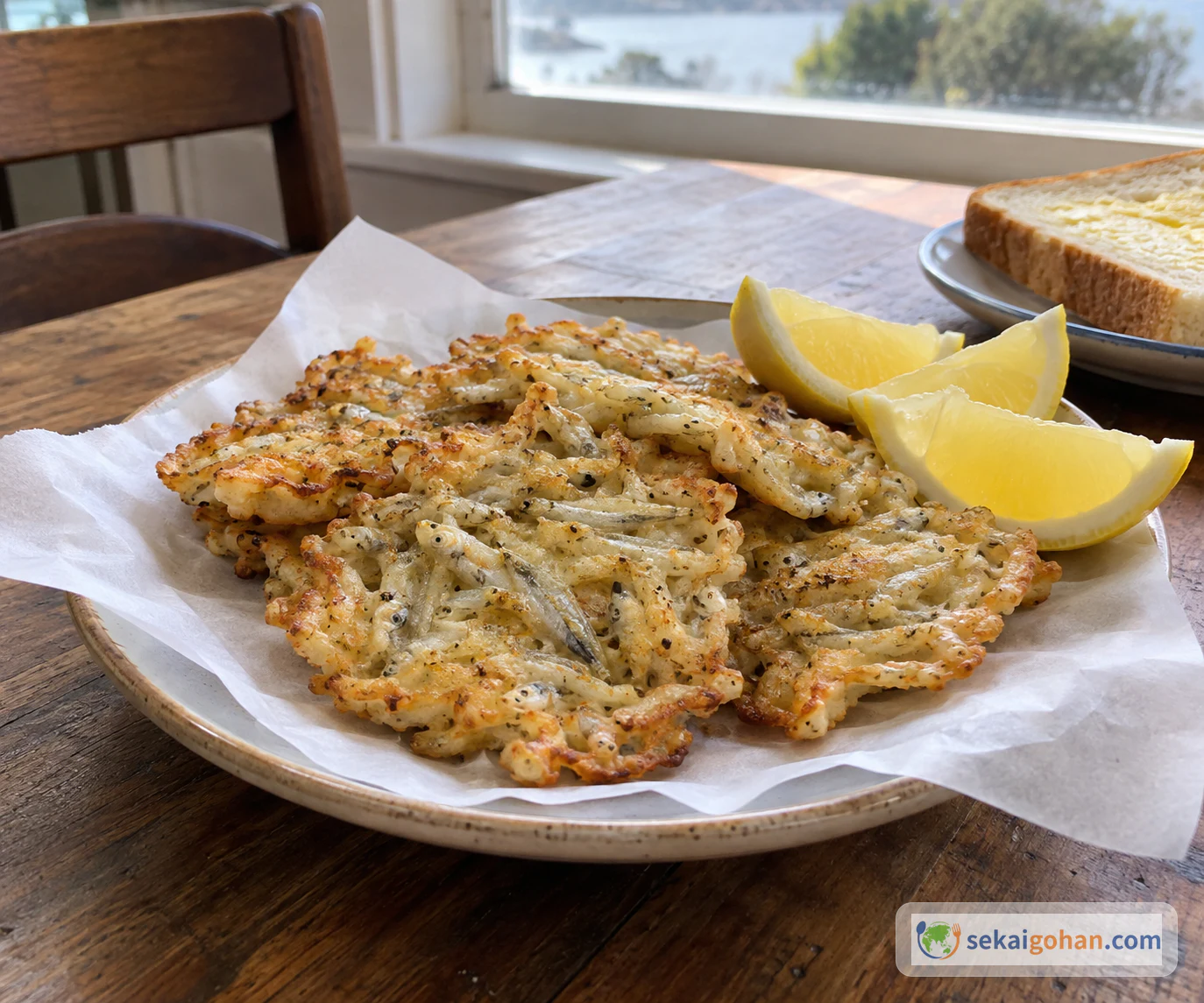
Serve the fritters as soon as the centers are set. Lemon is good squeezed over at the table (wash the peel under running water first), but keep it out of the mixture. Buttered white bread on the side is optional.
A smaller spoon makes fritters that are easier to turn. The amounts stay the same, but you'll get more than 9–10.
These fritters contain fish (whitebait), egg, wheat and milk (butter). Check the labels on what you buy for ingredients and possible cross-contact.
The following comes from general home guidance by Japan's Ministry of Health, Labour and Welfare, not from advice specific to whitebait.
- Cooking: heat the food to 167°F (75°C) at the center for at least 1 minute.
- Thawing: thaw frozen food in the refrigerator or microwave, and don't leave it out at room temperature.
- Handling: keep raw fish from touching other foods, and wash cutting boards, knives, tools and hands well.
- Leftovers: divide them into shallow containers, cool them quickly, and refrigerate at 50°F (10°C) or below. Reheat thoroughly to 167°F (75°C) or above before eating, and throw them out if too much time has passed.
Frequently Asked Questions
Is whitebait the same as Japanese shirasu?
They can differ in species, size and processing, so check the label instead of treating them as interchangeable.
Do I need the flour?
This recipe uses 1 tablespoon. Some recipes rely on egg alone, but they're separate recipes with their own proportions, so follow one of those rather than adjusting this one.
If the fish have turned white, are the fritters done?
Not on that sign alone. The white tells you when to turn them. Before serving, check that the egg has set to the center and lost its translucency, and cook longer if it hasn't.