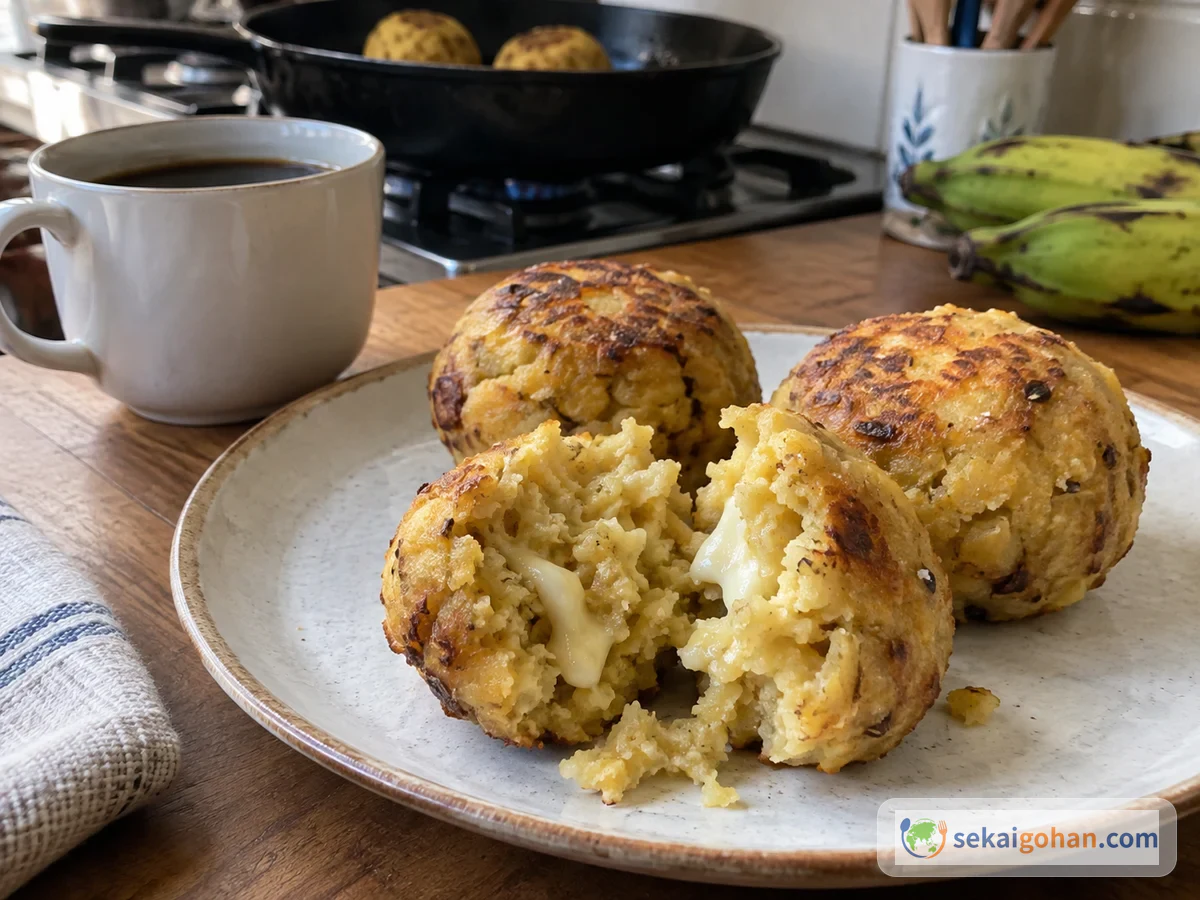
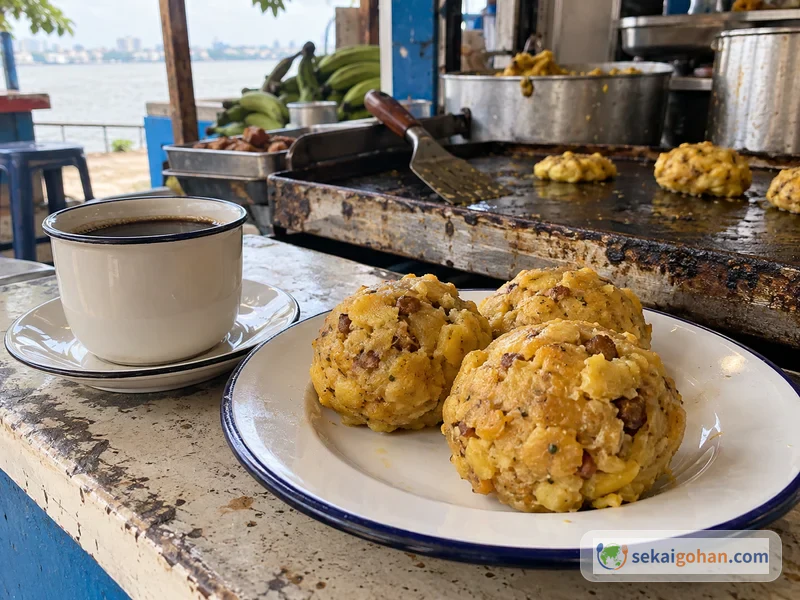
Morning in Guayaquil, and on a street stall's griddle, balls the size of tennis balls are sizzling to a deep golden brown. Break one open and steam rises, with melted cheese showing inside; take a bite with a cup of hot coffee in your other hand, and it's crisp outside, soft and chewy within. This is bolón de verde, the green plantain dumpling that Ecuador's coast eats for breakfast. "Verde" means green, because it's made with plantains picked before they ripen.
Bolón de verde, a coastal breakfast
Origins on Ecuador's Pacific coast
No one has recorded exactly where bolón de verde began, but historians agree it is a traditional dish of the Montubio people, who have long lived in the rural areas of Ecuador's Pacific coast. From Manabí province it spread to northern Guayas province and then to Guayaquil.
It was a working breakfast. Wealthy households drank their coffee with bread and cheese, while ordinary people started the day with plantains. Before wheat arrived in Ecuador in 1852, coastal people drank their coffee with patacones, yuca bread, and bolón.
The plantain is not native to South America. Fray Tomás de Berlanga brought it there in 1516, and bolón likely came centuries later. Bolón has African ancestry, like Cuba's fufú de plátano, which mashes boiled plantain with fried pork skin.
Cheese, pork cracklings, or both
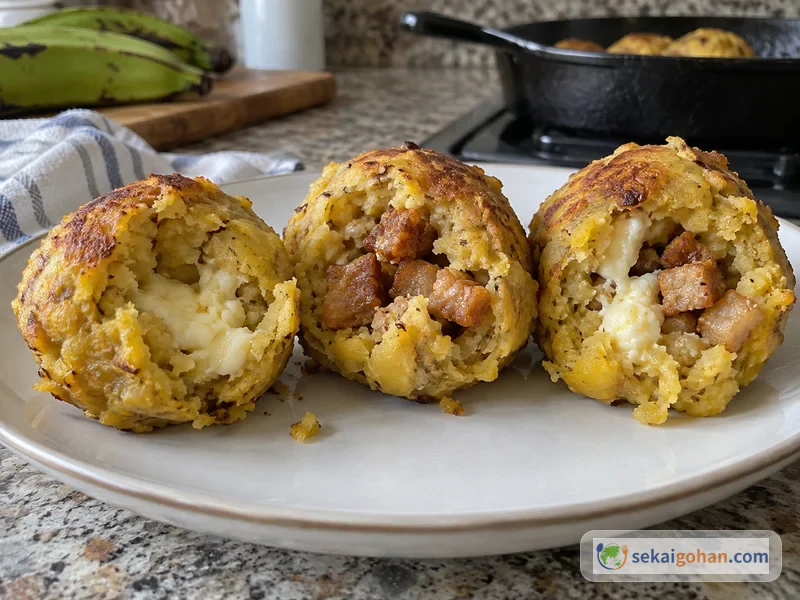
There are three main versions. Bolón de queso has cheese worked into the dough, bolón de chicharrón has fried pork skin, and the mixto contains both.
Bolón in Guayaquil today
You'll find bolón all over Guayaquil, at street stalls, kiosks, and diners. In 2025 it was chosen to represent Ecuador in the "Breakfast World Cup," a popular-vote tournament of breakfasts hosted by the Spanish streamer Ibai Llanos, and the country rallied for votes on social media.
For this vote, Ecuador introduced a character called "Don Bolón" as the country's food ambassador. Bolón advanced as a pair with encebollado, the fish soup from the same coast.
Ingredients (makes 5)
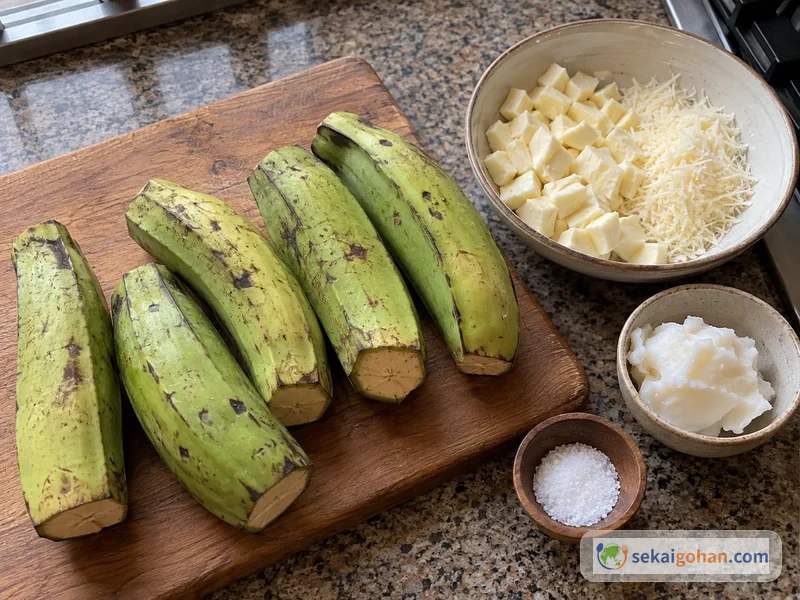
This recipe uses ingredients that are easy to get. One plantain makes about one bolón, roughly the size of a tennis ball.
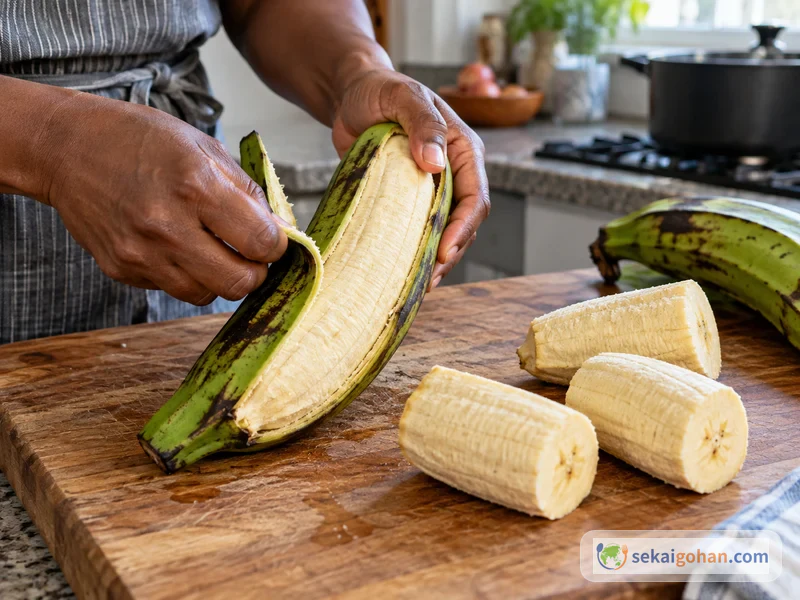
Choose plantains whose skin is deep green and firm when pressed with a finger. Those with a slightly yellowish tint are usable, but ones ripe enough to show black spots are sweet and soft, and the balls lose their shape easily.
The skin of a green plantain is hard, and a knife slips easily when peeling. Steady it on the cutting board before making the cuts. The sap from the skin can leave dark stains on hands and cutting boards, so wear rubber gloves if that bothers you.
Choosing plantains and cheese for bolón
Green plantain is the biggest hurdle in a home kitchen. Ordinary supermarkets rarely carry it, but specialty grocers and online shops do. Ecuador's queso criollo, a salty white fresh cheese, is the traditional choice; in its place, combine a stretchy melting mozzarella with a salty, savory grated cheese, both easy to buy.
How to make bolón de verde
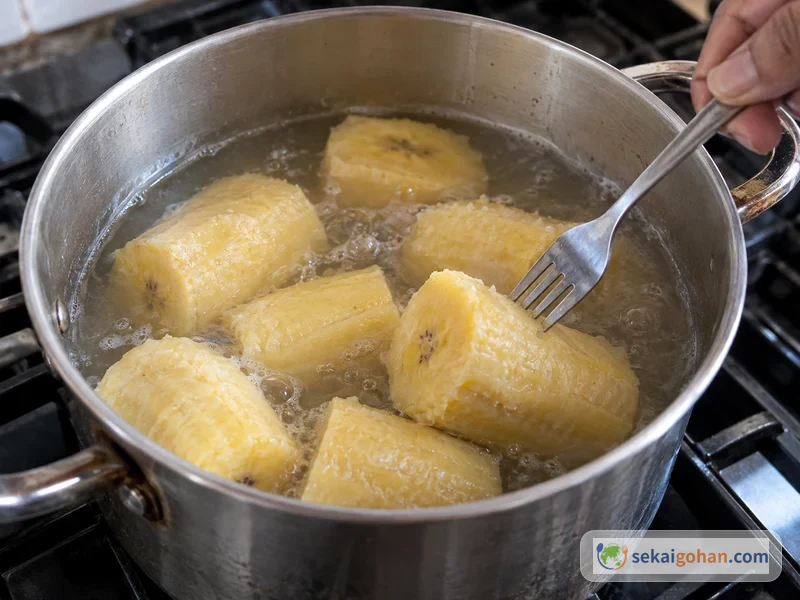
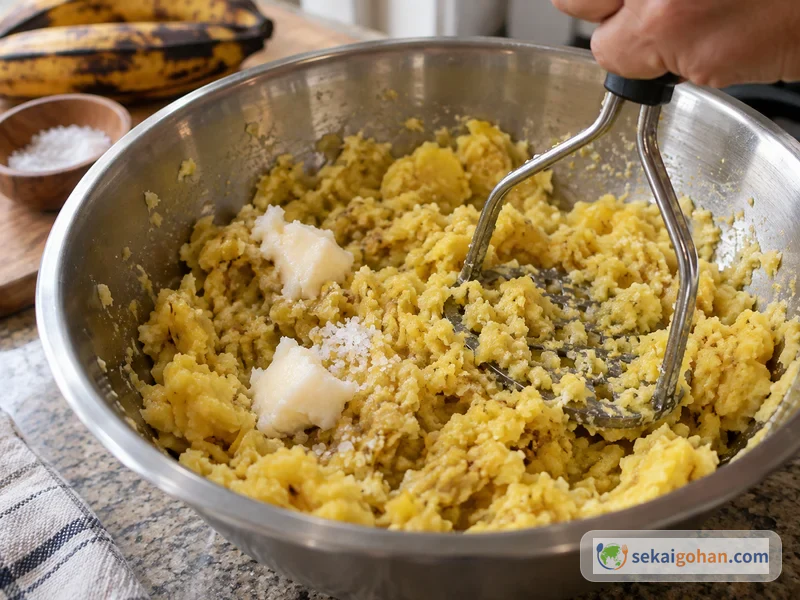
Allow about 15 minutes for prep and about 45 minutes to boil, shape, and fry. Plantains are easiest to mash while hot, so move on to the next step as soon as they are boiled.
The cheese inside a freshly cooked bolón is very hot. Let it cool a little before breaking it open or serving it to children.
Why bolón cracks, and how to keep it crisp
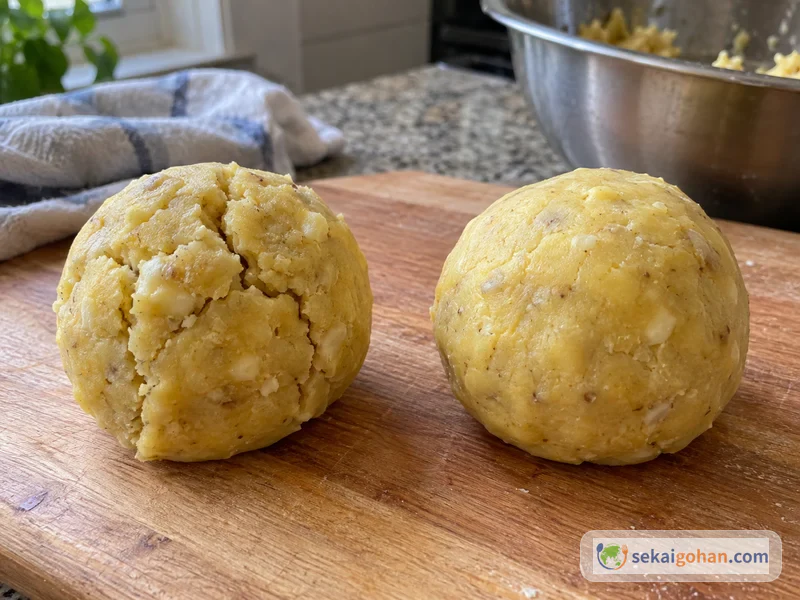
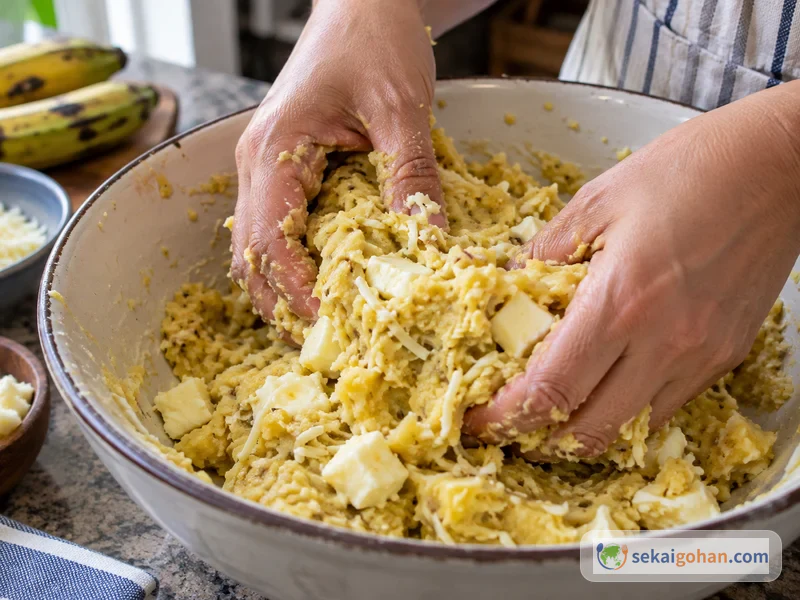
Cracking during cooking is the most common failure, and it usually comes from mashing the plantains after they've cooled. Once the plantain cools, its starch sets and the dough loses its stickiness. Mashing and kneading while hot is what gives you a dough that holds together.
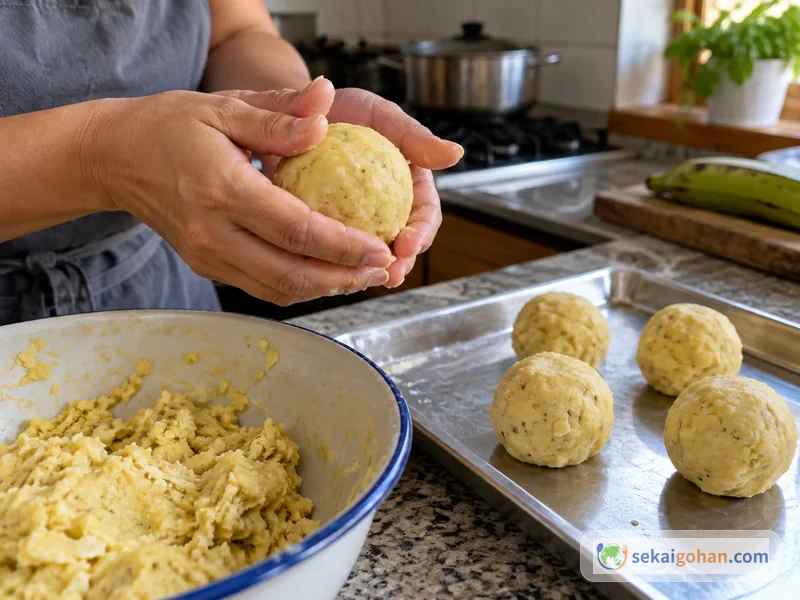
When shaping, do not just roll the dough; press it firmly with both hands to push out the air inside. If air remains, it expands during cooking and cracks the ball.
Serving, variations, and storage
How to eat bolón
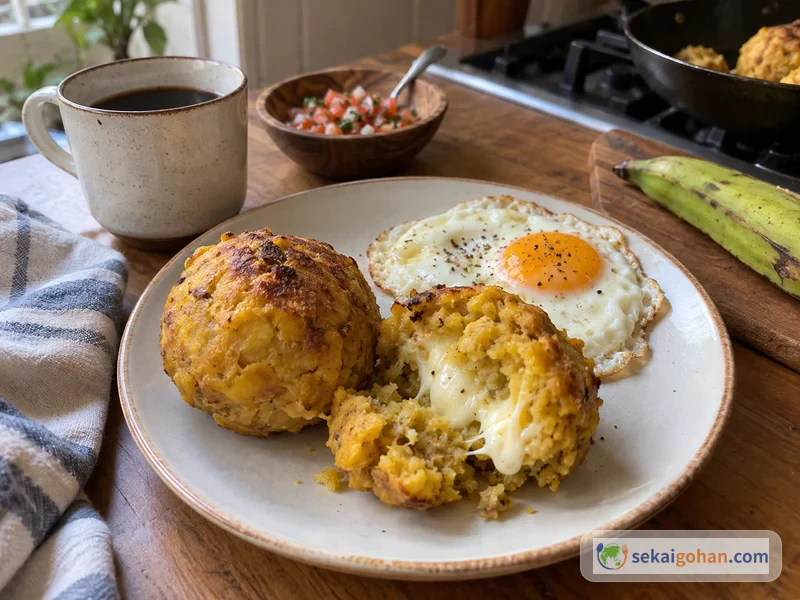
Bolón is best freshly cooked, held in the hand and bitten into, with hot coffee alongside. That's the Ecuadorian coastal breakfast in a single picture. It's also good split in half and topped with butter, or with hot sauce.
For a heartier plate, top a freshly cooked bolón with a fried egg and serve a thin beef steak on the side. In Cuenca, the customer favorite is a mixto plate with a fried egg and meat.
For another coastal morning staple, pair it with the fish and cassava soup encebollado. And if you're curious what else green plantain can become, compare it with Puerto Rico's mofongo, another dish built on mashed plantain.
Pork belly and mixto variations
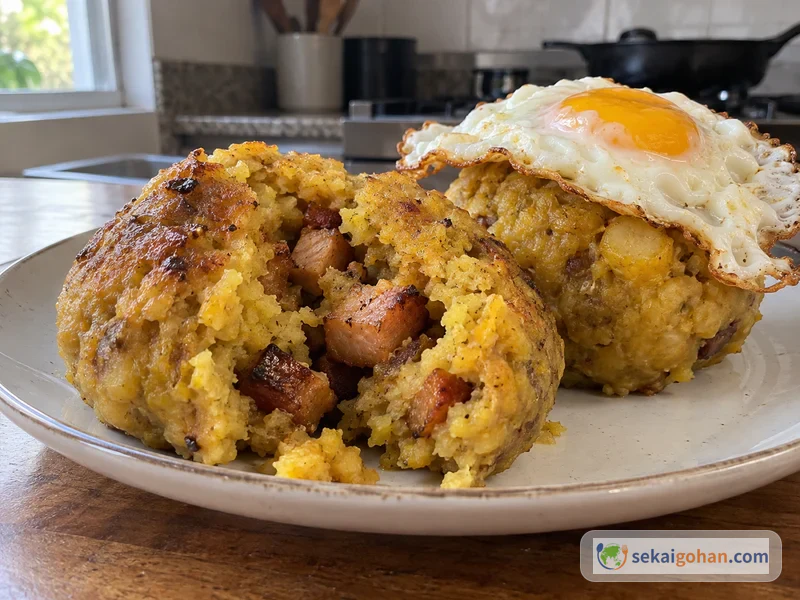
For a chicharrón bolón, pork belly stands in nicely. Cut 8 oz (225 g) pork belly into 0.5 inch (1 cm) cubes and cook in a skillet until the fat renders and the pieces are crisp, then work them into the dough in place of the cheese. Use half cheese and half pork belly for a mixto. Swapping the rendered pork fat for the lard in the dough gives an even more savory aroma.
Making bolón ahead
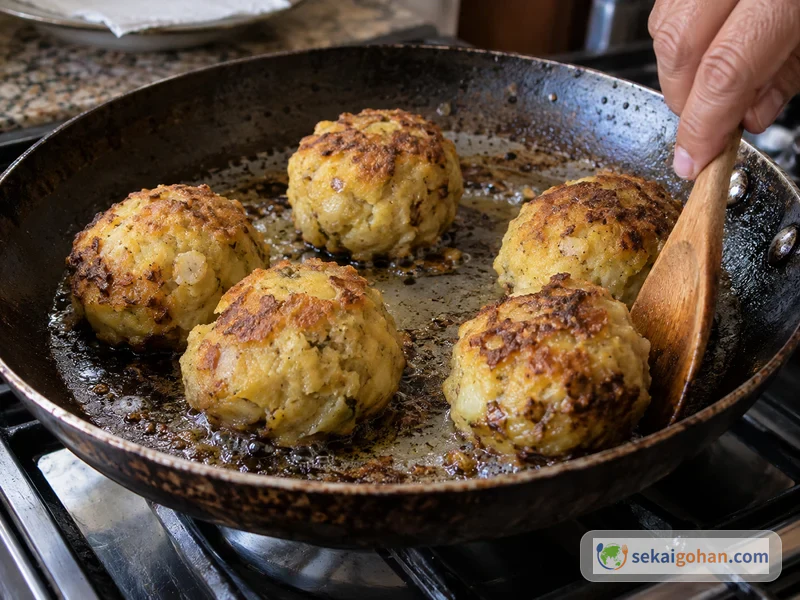
If you make extra, you can wrap the shaped balls in plastic wrap before cooking and keep them in the refrigerator. When cooking, let them come back slightly toward room temperature, then cook the same way over medium heat while rolling.
Frequently asked questions
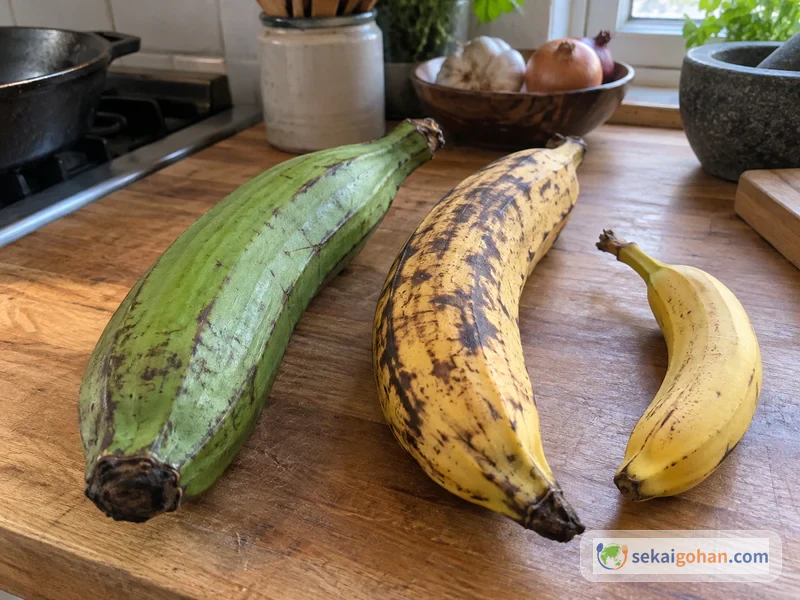
Can I make it with ordinary bananas?
No. Dessert bananas are soft and sweet, so they turn to paste when mashed and can't hold their shape when rolled. Bolón needs green plantains, which have plenty of starch and little sweetness.
Can I deep-fry them?
Yes. Frying is the usual method in Guayaquil, though in the highland city of Cuenca some shops skip it for health-conscious customers, and at home, pan-frying in a little lard while rolling is simpler. To deep-fry, cook in 350°F (170 °C) oil for 4–5 minutes until golden. Smooth out any cracks in the surface carefully first, or the balls tend to split in the oil.
Can I make them ahead?
Cooked bolón hardens as it cools, so cook it just before eating. If refrigerated, reheat thoroughly in a toaster oven or skillet until warm through, and finish leftovers soon.