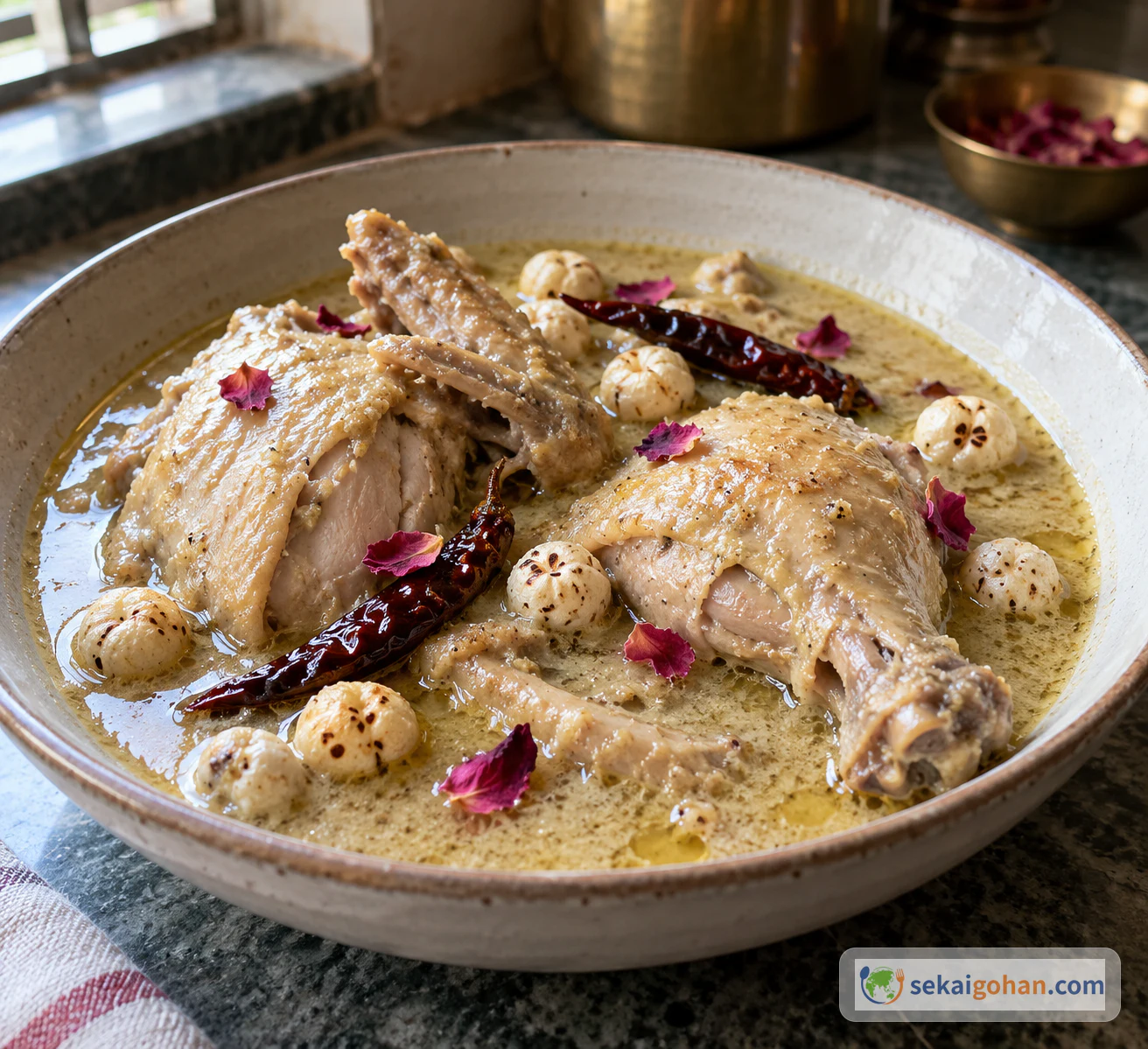
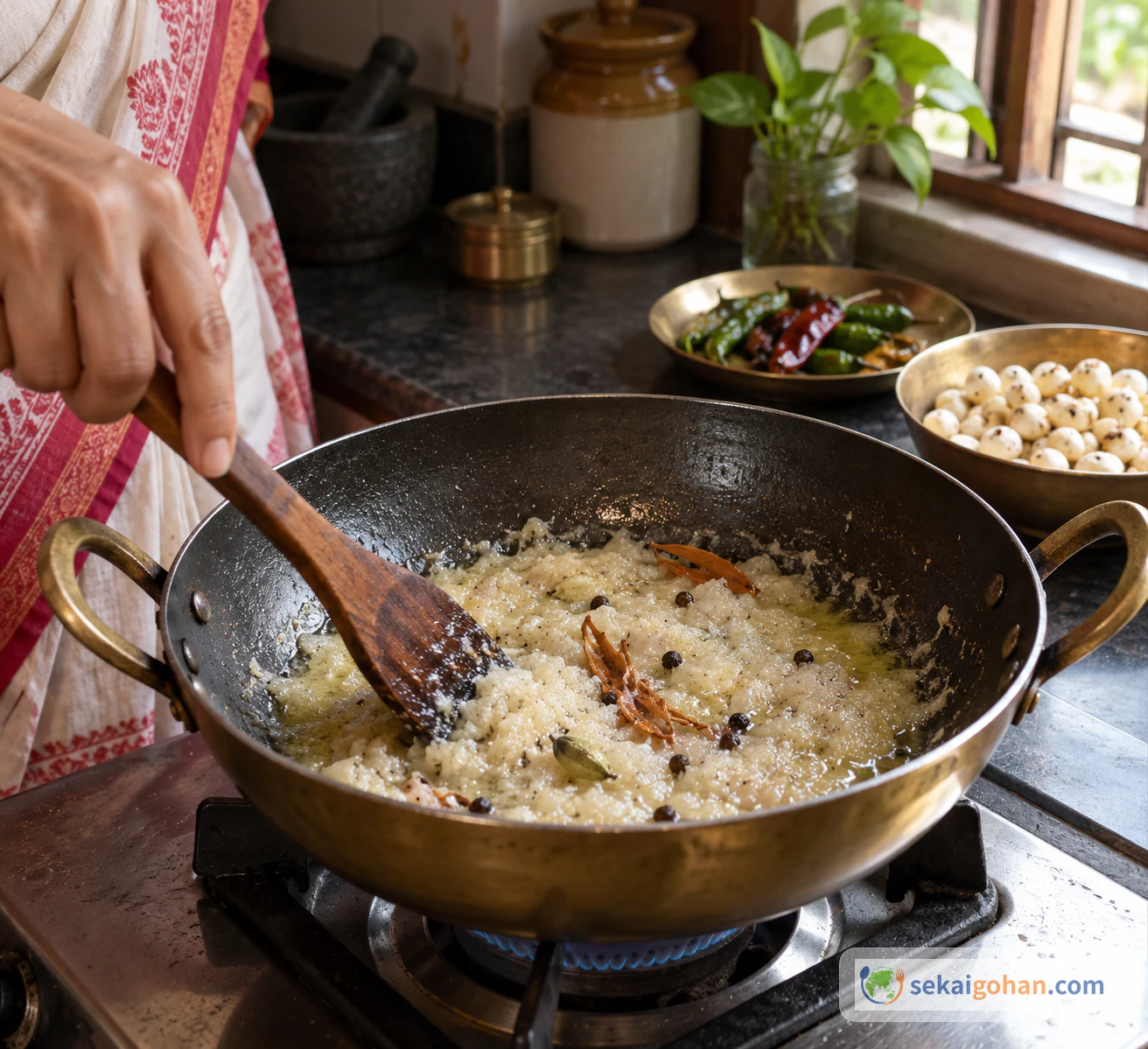
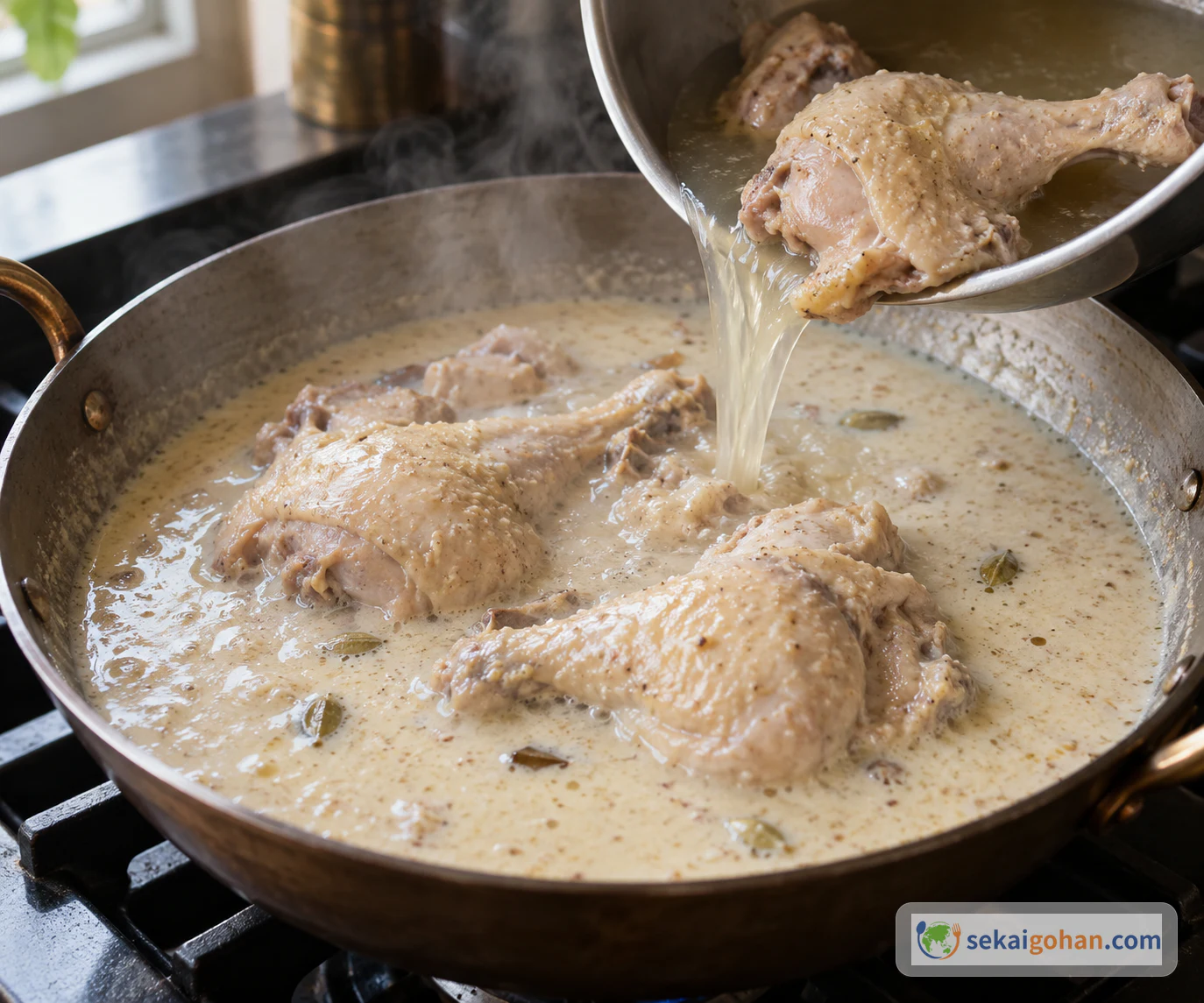
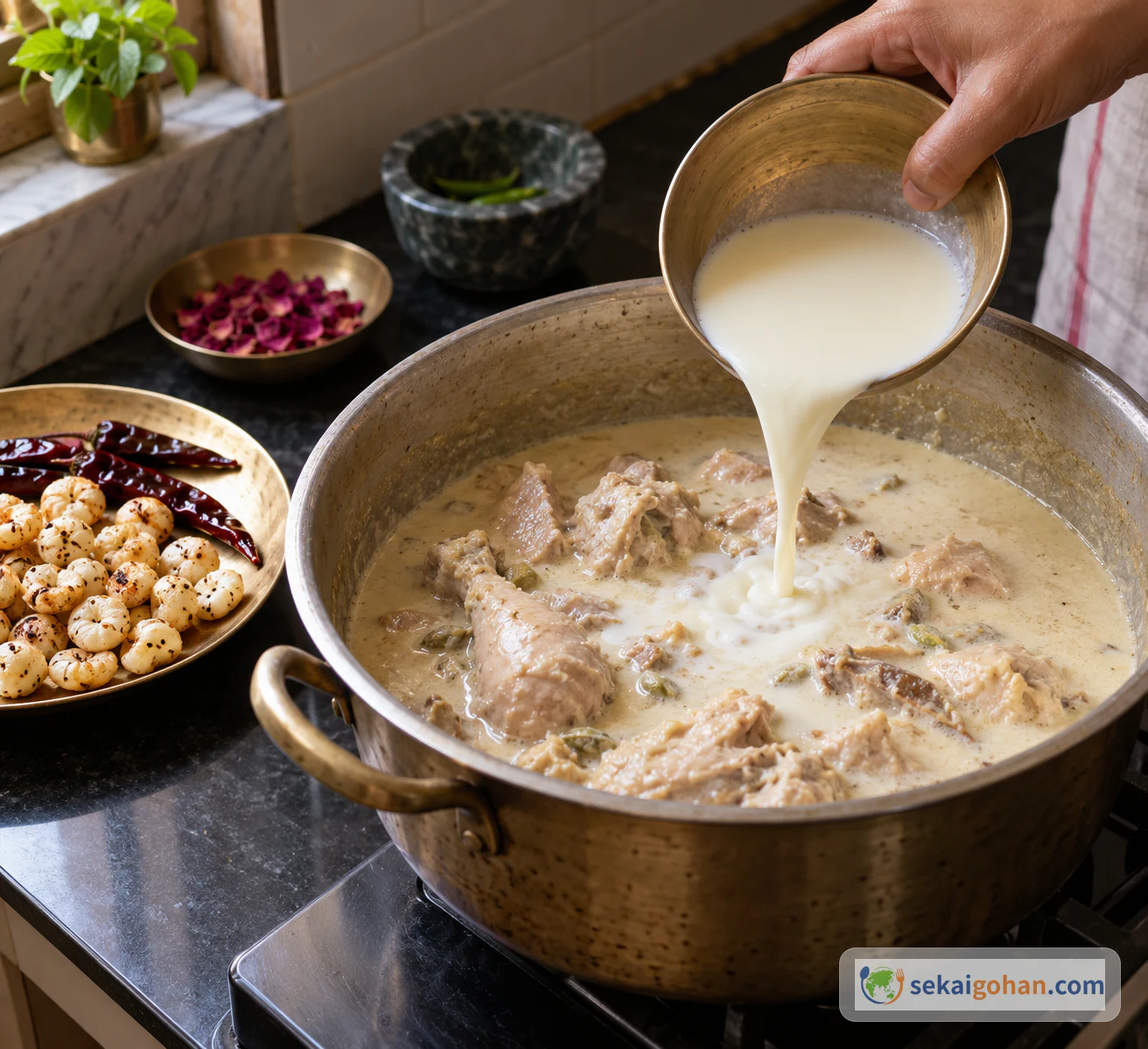
In the Mughlai restaurants of Calcutta (Kolkata), chicken rezala comes to the table as a thin, pearly-white gravy with fat floating across its surface. Fried whole red chillies, crisp makhana (fox nuts) and a scatter of rose petals finish the bowl, and the pale color holds from the first stage of cooking to the last. This is a restaurant-style rezala for home cooks, built in layers rather than thrown into one pot. It serves 6 and takes about 90 minutes. For more dishes from the country, see Indian recipes and food culture.
What Makes Chicken Rezala
The goal is a thin gravy that stays pale and pearly, with a layer of fat at the surface. It should never turn thick and creamy. You get there in stages: poach the chicken first, then cook the onion, juices, powders and yogurt one at a time, and add the fragrant milk only after the heat is off.
Rezala vs. korma
A pale color, yogurt and perfume don't make a dish rezala on their own, and they don't draw a clear line between rezala and qorma or other white curries. This recipe is closer to a white kaliya than a korma. Its structure is what sets it apart:
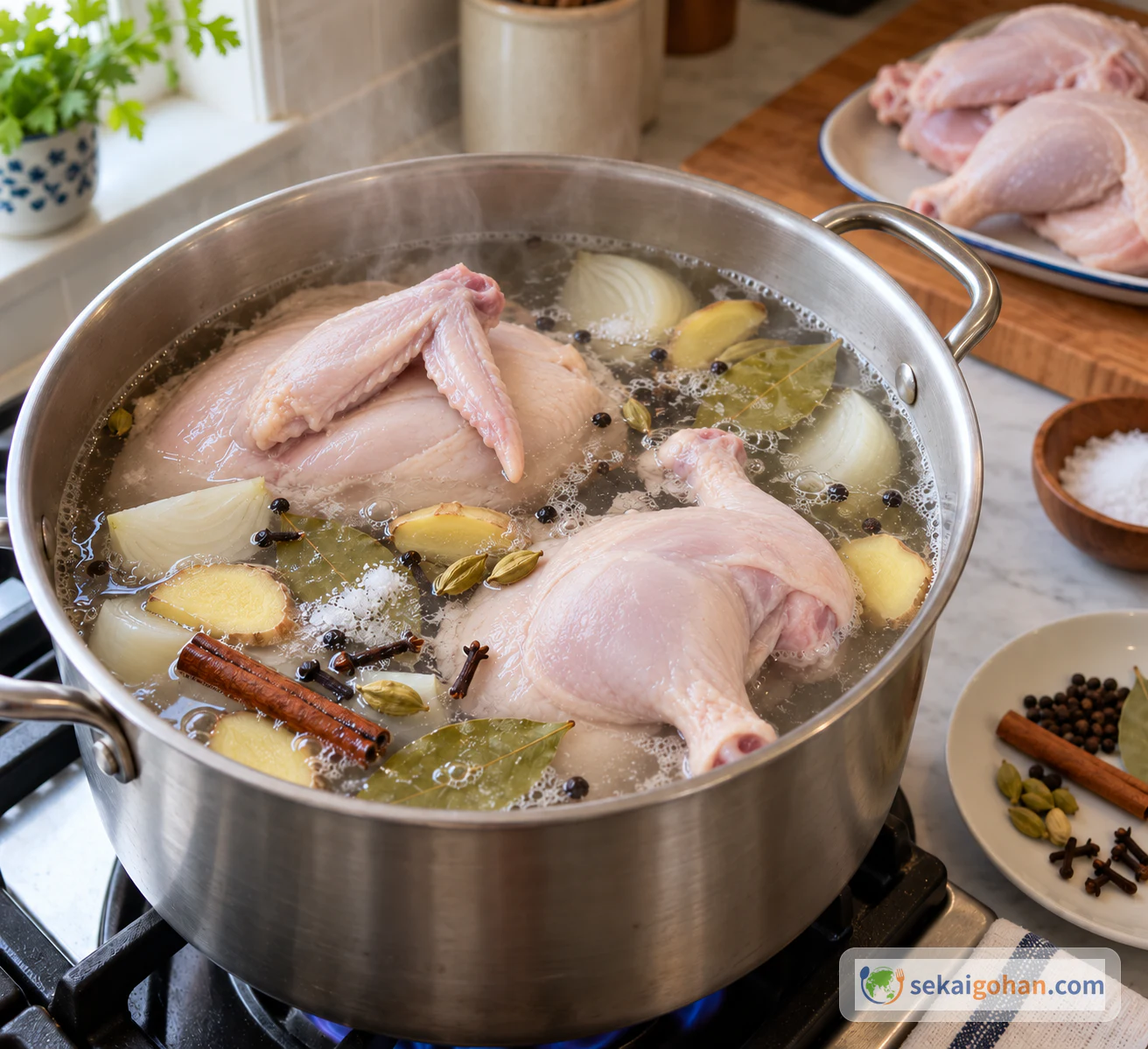
- chicken poached in aromatic water, with the stock strained and kept
- white onion paste and strained ginger-garlic juice, not paste
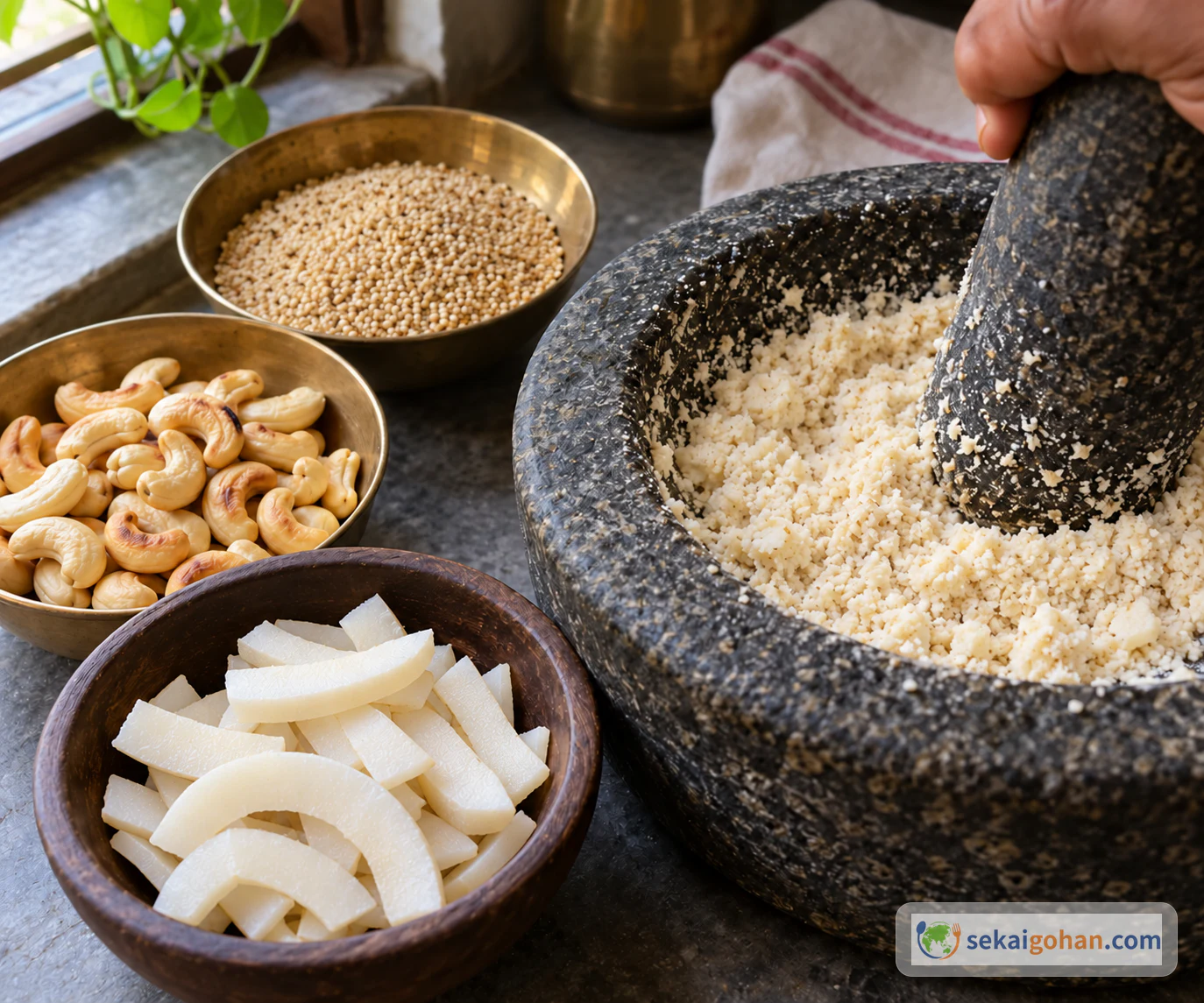
- a powder of white poppy seeds, cashews and khopra (peeled dried coconut)
- yogurt bound with a little cornflour
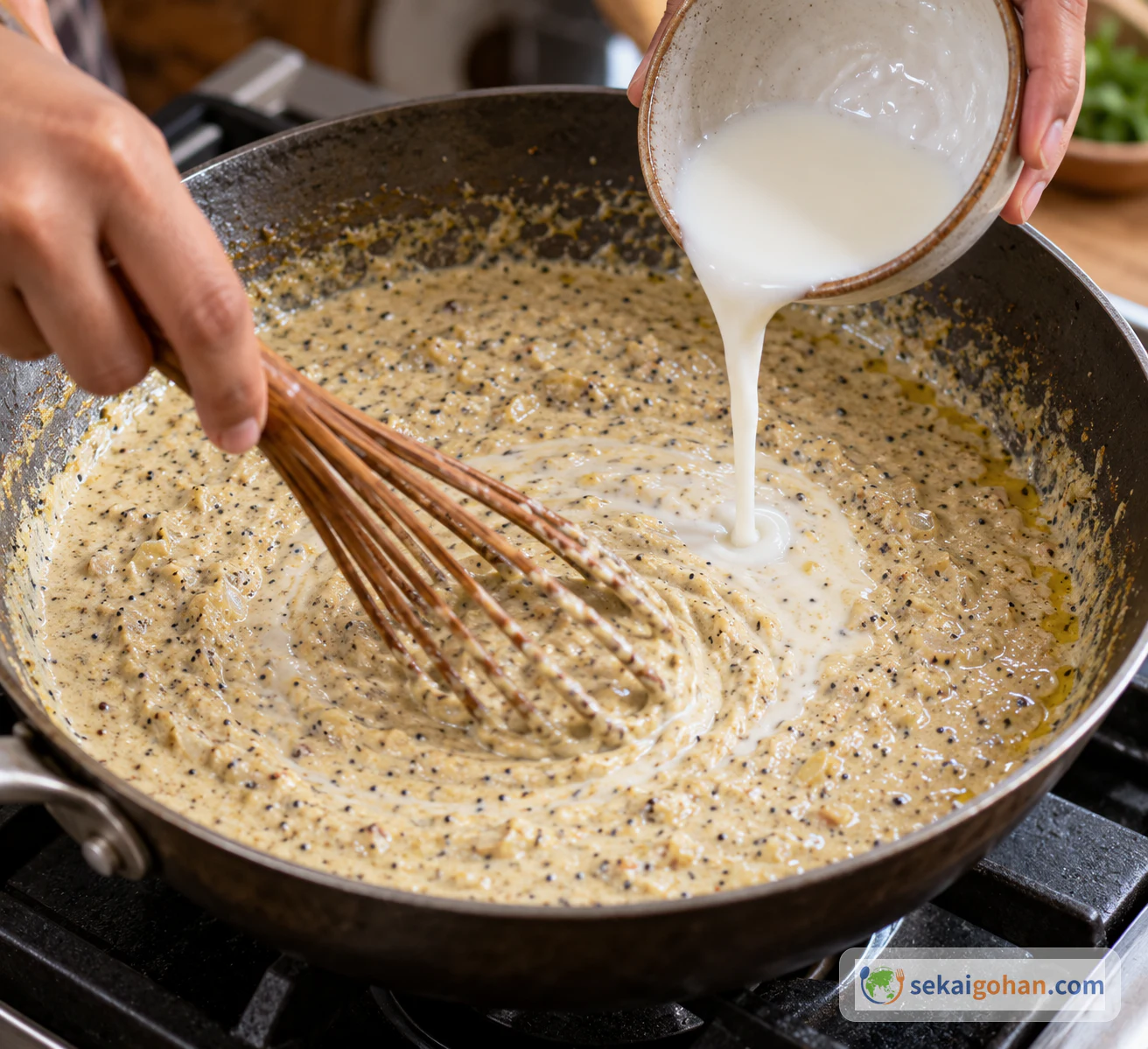
- warm milk with green chilli, kewra water and a tiny amount of meetha attar, added after the heat is off
Regional versions of rezala
Rezala is a name shared by recipes that differ a great deal. The ingredients and their order change from cook to cook and from region to region.
- Another Kolkata-style version. This one serves 3–4 and uses 1.75 lb (800 g) of chicken. It is built on a mixed toasted spice-and-nut paste, coconut milk, blended green chilli and rosewater, with no yogurt or cornflour.
- A family-style recipe. It adds onion paste, yogurt and poppy seeds in a different order.
- Bengal, Bangladesh and Bhopal. Bengali, Bangladeshi and Bhopali rezalas differ from one another. A coriander-heavy Bhopali version is distinct from the white Kolkata style.
- A restaurant's mutton rezala. Sabir's, a Kolkata restaurant, made its mutton rezala with dahi (yogurt), ghee, poppy seeds, saffron and mace, cooked over a charcoal fire.
Where rezala comes from
No single origin is settled. Competing stories about the dish and its name link rezala to the Mughal court, Dhaka and Awadh (including Wajid Ali Shah). One 2001 family account says Sabir Ali came from Lucknow to Kolkata and opened Sabir's in 1948. Where rezala was first made, and how this chicken version descends from it, remains unknown.
Ingredients (6 servings)
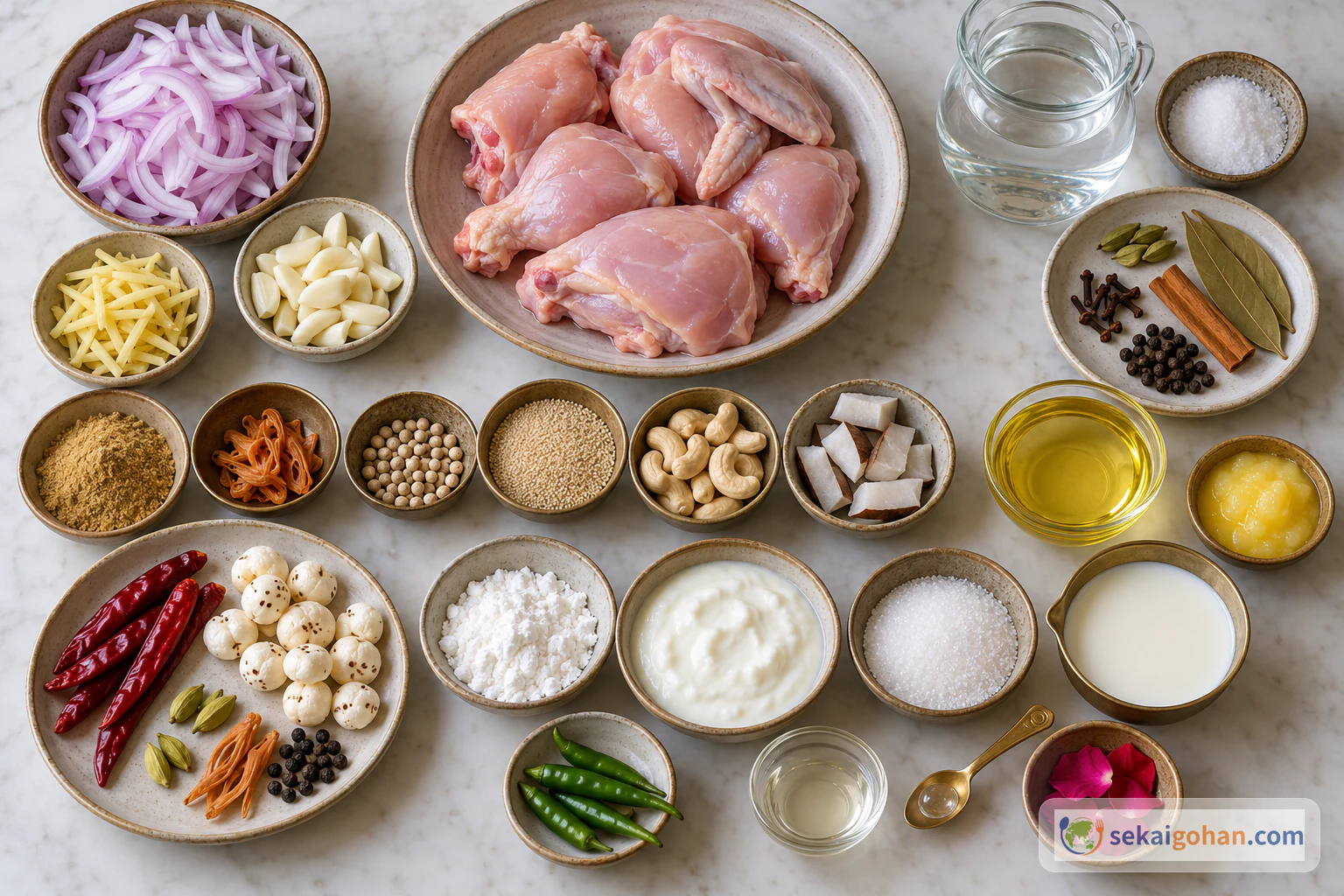
Each row starts with the stage where the ingredient is used.
Do not wash the raw chicken. Keep separate knives, boards and containers for raw meat. Wash your hands after handling it, and wash and sanitize any tools it touched. For meetha attar, use only a product clearly labeled for food use. Never use a perfume or cosmetic attar. If you cannot find a food-grade one, leave it out, and expect the aroma to change.
Equipment
- A pot for poaching the chicken
- A fine strainer (a tea strainer works) for the ginger-garlic juice, the stock and the green-chilli milk
- A spice grinder or stone mortar and pestle for the toasted spices, seeds, nuts and khopra
- A blender for the white onion paste and the green chillies
- A wide pan for frying and simmering
- A whisk for the yogurt
- A food thermometer
- Separate boards, knives and containers for raw chicken
Choosing the Chicken and Specialty Items
Chicken. The 2.25 lb (1 kg) is the total for the whole recipe. If you cut the birds yourself, choose small ones: under 1.75 lb (800 g) whole, or under 1.25 lb (600 g) dressed, per bird, so several small birds make up the total. Cut each into quarters, two breast pieces with the wing attached and two leg pieces with the thigh, and remove the skin. Stick with bone-in pieces rather than boneless cubes.
Khopra. This is dried coconut. Use pieces with the brown outer peel removed so the powder and the gravy stay pale. Coconut milk belongs to a different rezala and has no place here.
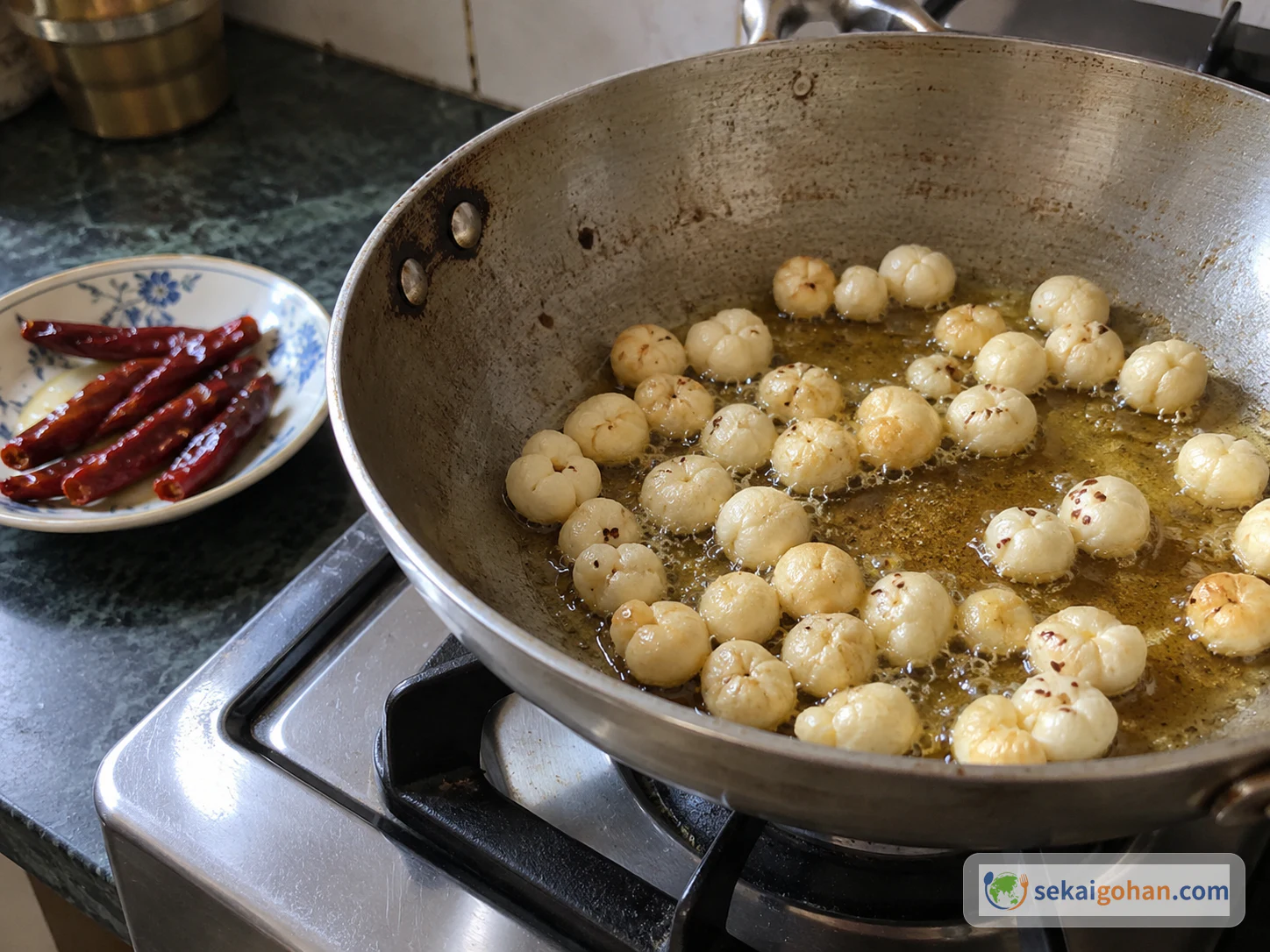
Makhana. Also sold as fox nuts or water-lily seeds, they're fried until crisp and go on top at the end.
Meetha attar and kewra water. Meetha attar is an essence used in the Mughlai cooking of Bengal, and only half a drop goes in. Buy it only if the label confirms it is a food product; never use a perfume or cosmetic attar. Without it the aroma will be different, but leaving it out is the right call if you can't find a food-grade one. Keep both kewra water and meetha attar as they are, since rosewater belongs to another rezala recipe.
Ghee. A white buffalo-milk ghee is the kind this recipe has in mind.
Method: Poach, Layer, Then Perfume Off the Heat
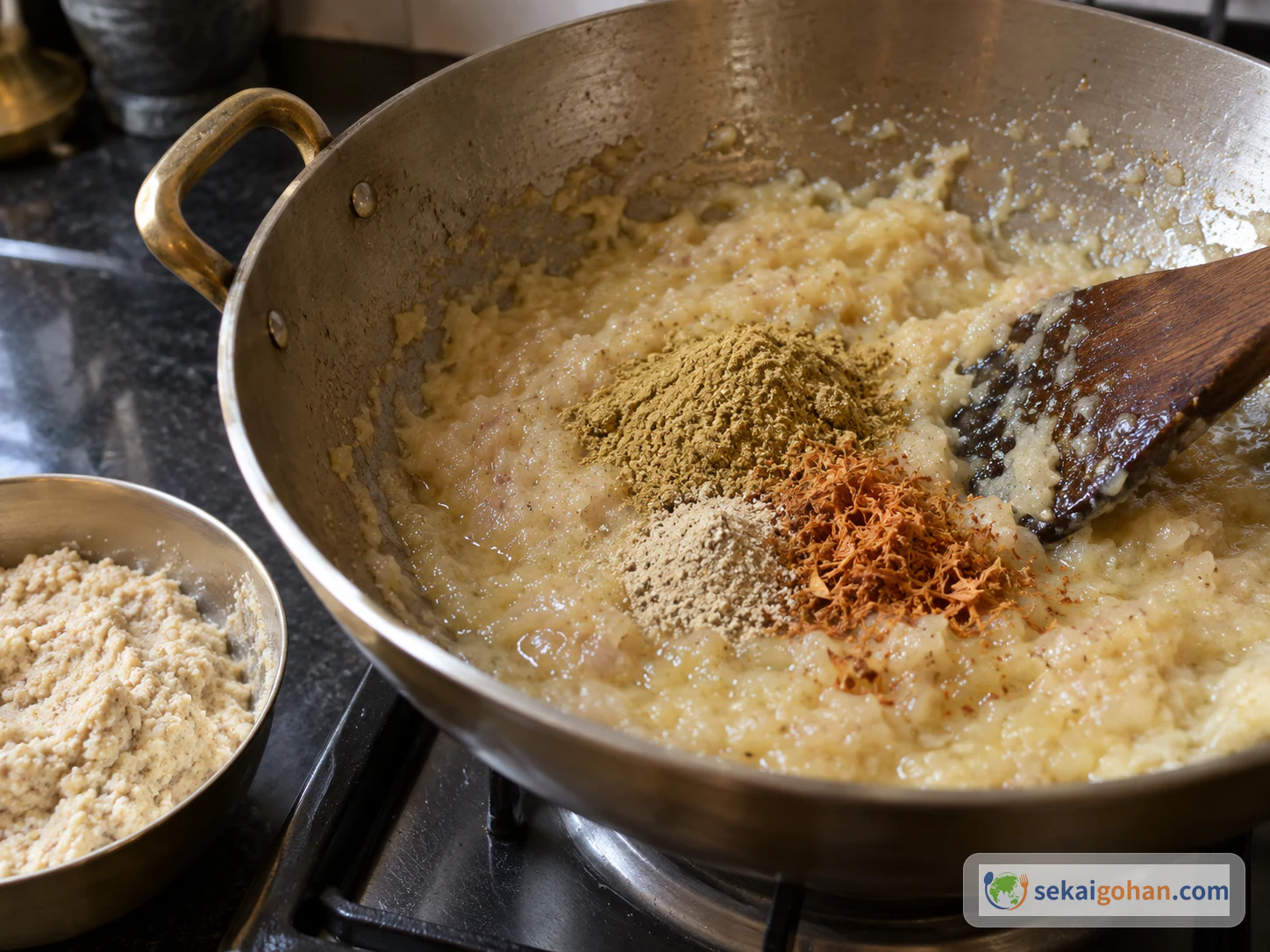
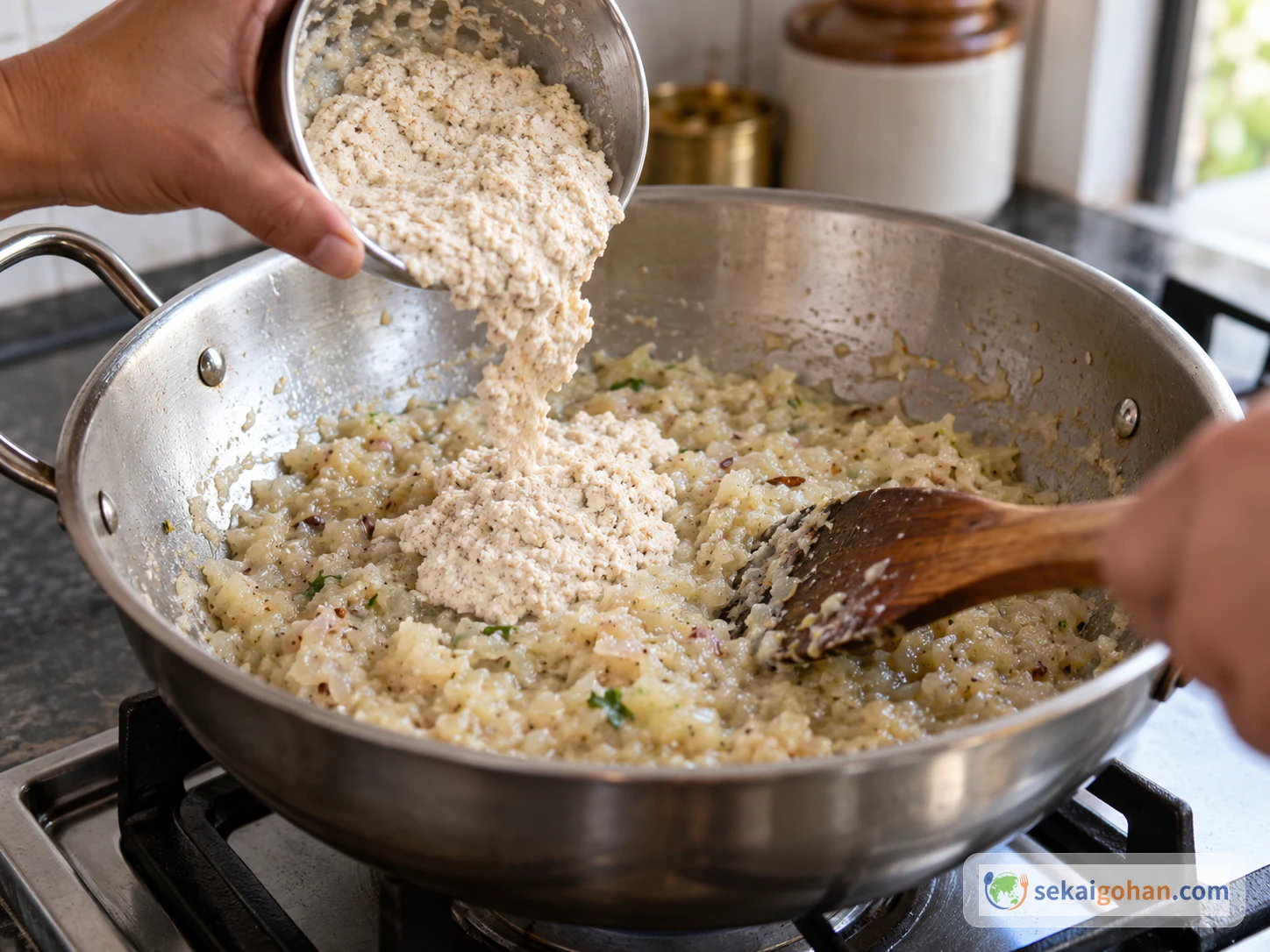
Each stage goes into the pot separately: poach the chicken, prepare the powders and juices, fry the toppings, cook the onion, then the ginger-garlic juice, the dry spices, the nut powder and the yogurt, then the chicken and stock. The milk and aromatics go in after the heat is off, and the toppings go on after that.
Chicken Rezala Troubleshooting
Most problems with rezala show up as color or texture, and nearly all of them trace back to heat or to one ingredient swapped for another.
| Condition | Likely cause | What to do |
|---|---|---|
| The yogurt splits | Added without cornflour, or not stirred | Whisk the cornflour slurry into the yogurt until smooth before it goes in, and stir constantly once it is in the pan |
| The base turns brown | Onion cooked over high heat, or spices and nuts toasted dark | Cook the onion paste over low heat, and toast the spices, seeds and nuts only lightly |
| The gravy looks speckled or brown | Khopra peel left on, or ginger-garlic fibers in the pot | Use peeled khopra, and strain the ginger-garlic juice through a fine strainer |
| The gravy is thick, like a korma | Paste added instead of juice, or other liquids or creams added | Use the strained juice and the reserved stock, and add no coconut milk or cream |
| The chicken has not reached 167°F (75°C) after 30 minutes | Large pieces, or lower heat than expected | Keep cooking until the center of the thickest piece reaches 167°F (75°C) and holds for at least 1 minute, then move on to the finish |
| No food-grade meetha attar | Not available locally | Leave it out rather than using a perfume. The aroma will be different |
The stage times are a guide. Check the center of the thickest piece to confirm the chicken is safely cooked.
Serving Chicken Rezala
Serve the rezala in shallow bowls so the thin, pale gravy and the floating fat stay in view, with the red chillies, makhana and rose petals on top. Phirni makes a fitting accompaniment.
Frequently Asked Questions
Can I skip the poaching?
Poaching is part of this recipe's staged method. There are two shortcut methods with their own steps: one adds raw chicken directly to a prepared base, and the other combines everything and cooks it over low heat. Each is its own recipe, so don't mix their steps with this one.
Should I wash the chicken?
No. Washing poultry splashes harmful germs around the kitchen. Cook the chicken until the center reaches 167°F (75°C) for at least 1 minute, keep raw-meat tools separate, wash your hands, and wash and sanitize anything that touched raw meat.
Can I use boneless chicken?
Use skinless bone-in quarter pieces. The stage times here are set for them, not for boneless pieces.