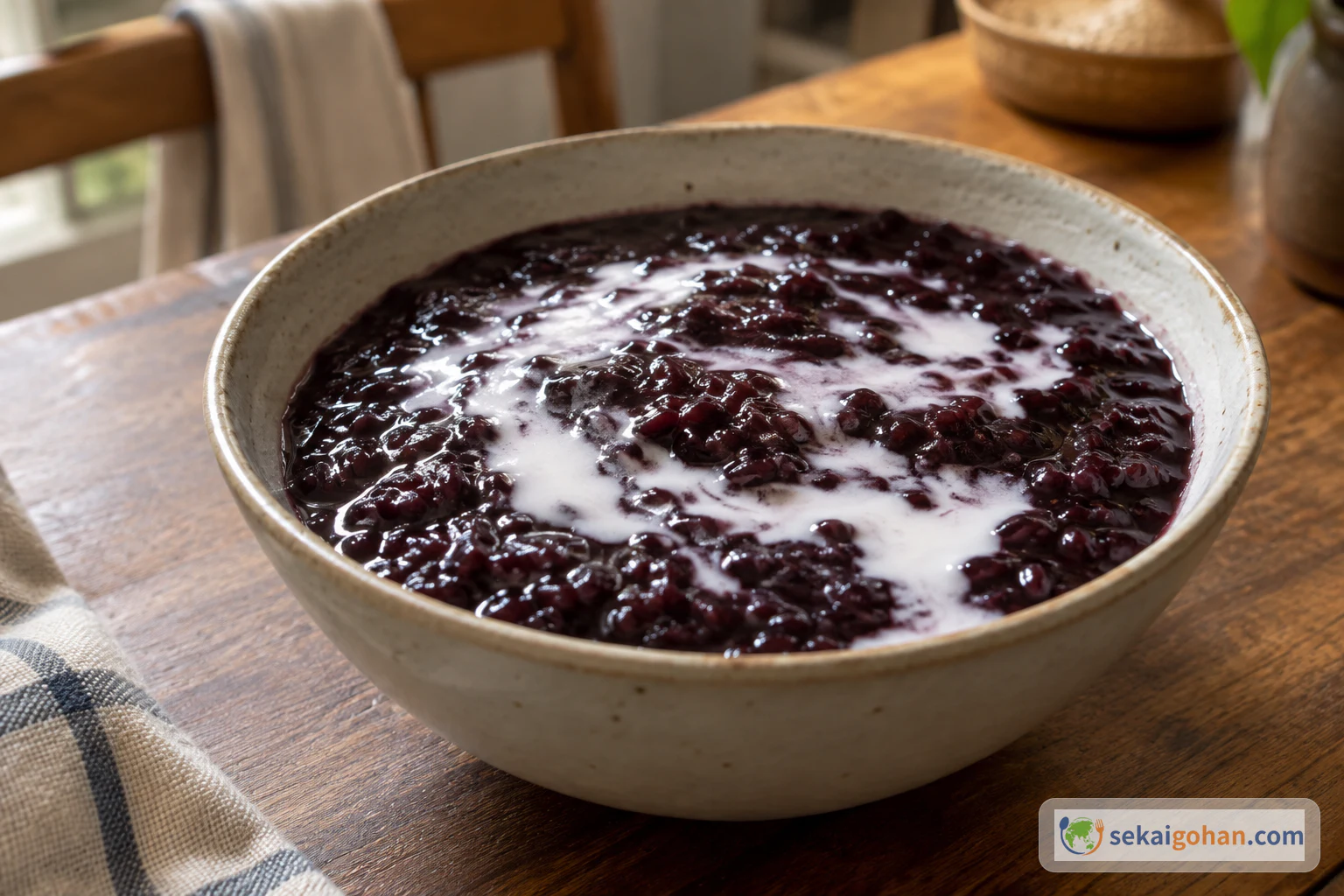
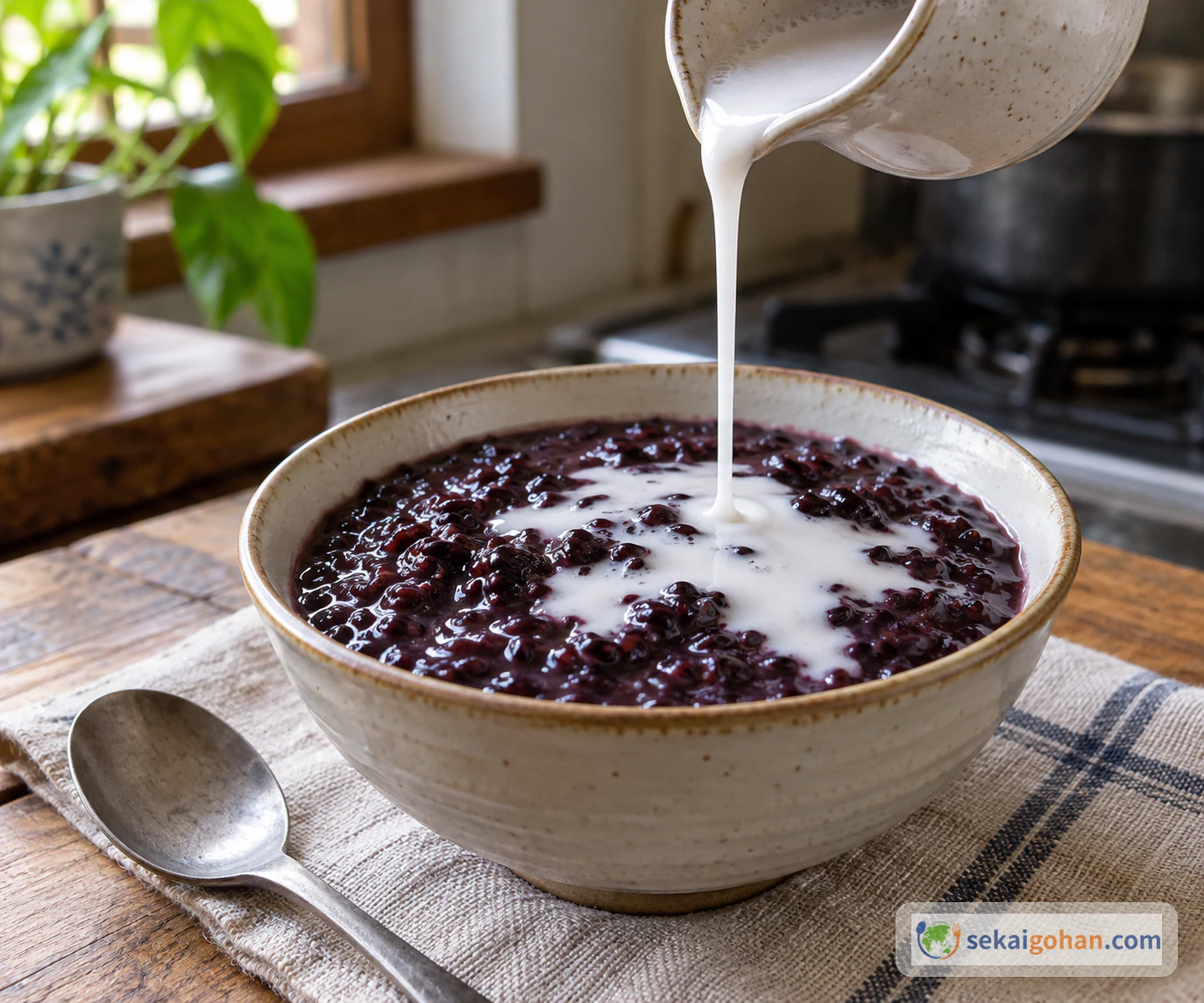
A spoonful of bubur ketan hitam is deep purple-black and thick, the grains so soft they're almost falling apart but still just visible. A thin line of white coconut cream sits on top, and in the mouthful the gently sweet rice meets the creamy coconut. This black glutinous rice porridge is a homely Indonesian dessert or snack. Making it well at home comes down to two things: using glutinous black rice, not ordinary black rice, and giving it a long, gentle simmer. For more of the country's cooking, see our Indonesian dishes.
Cook black glutinous rice slowly until the grains are soft enough to crush and the porridge is thick. Keep the sweetness gentle and the pinch of salt in place, and let a little coconut cream added at the table supply the richness.
Bubur Ketan Hitam Across Indonesia and Beyond
The name describes the dish directly: bubur means porridge, and ketan hitam means black glutinous rice. The grains look black when dry but cook to a deep purple-black. Ketan hitam is part of the food culture of Java, Bali, Sumatra and beyond, and the porridge goes by different names across the region. In parts of Sumatra the rice is called pulut hitam, and in Bali the porridge is known as bubur injun.
In Singapore and Malaysia the dish is also called pulut hitam, and it turns up on Malay and Peranakan tables at home and in eateries. Recipes vary too. One Indonesian version soaks 9 oz (250g) ketan hitam overnight, cooks the rice in 1 quarts (1L) of its soaking water with salt and pandan until soft, adds 7 oz (200g) gula Jawa near the end, and pours over coconut milk warmed separately in another pan.
Ingredients: Serves 4
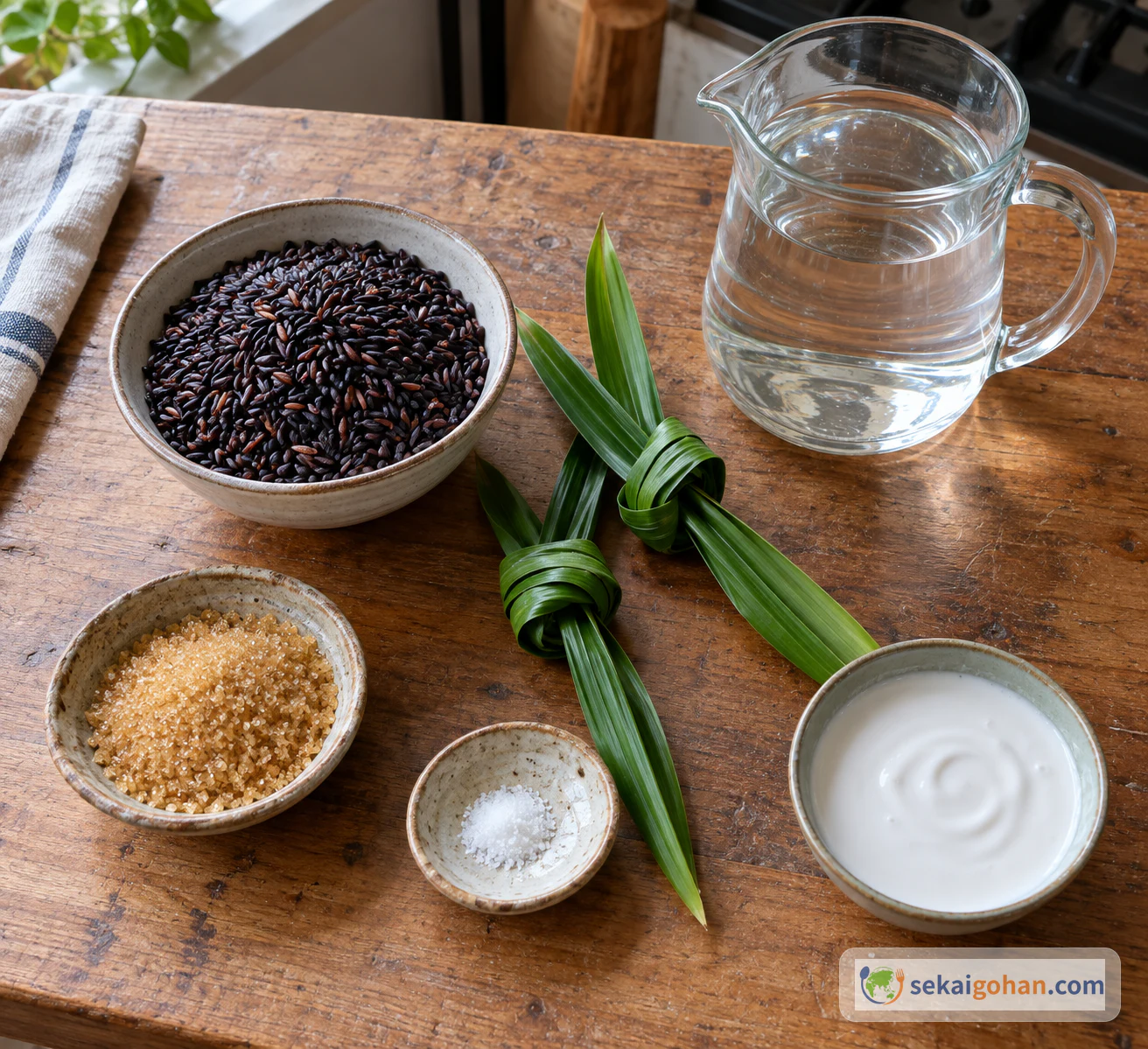
Equipment
- A large, heavy pot with plenty of room for the rice and 2 litres of water
- A bowl for soaking and rinsing the rice
- A wooden spoon for stirring the bottom of the pot
- A spoon for checking the texture
- Serving bowls
Choosing the Rice, Pandan, Sugar and Coconut
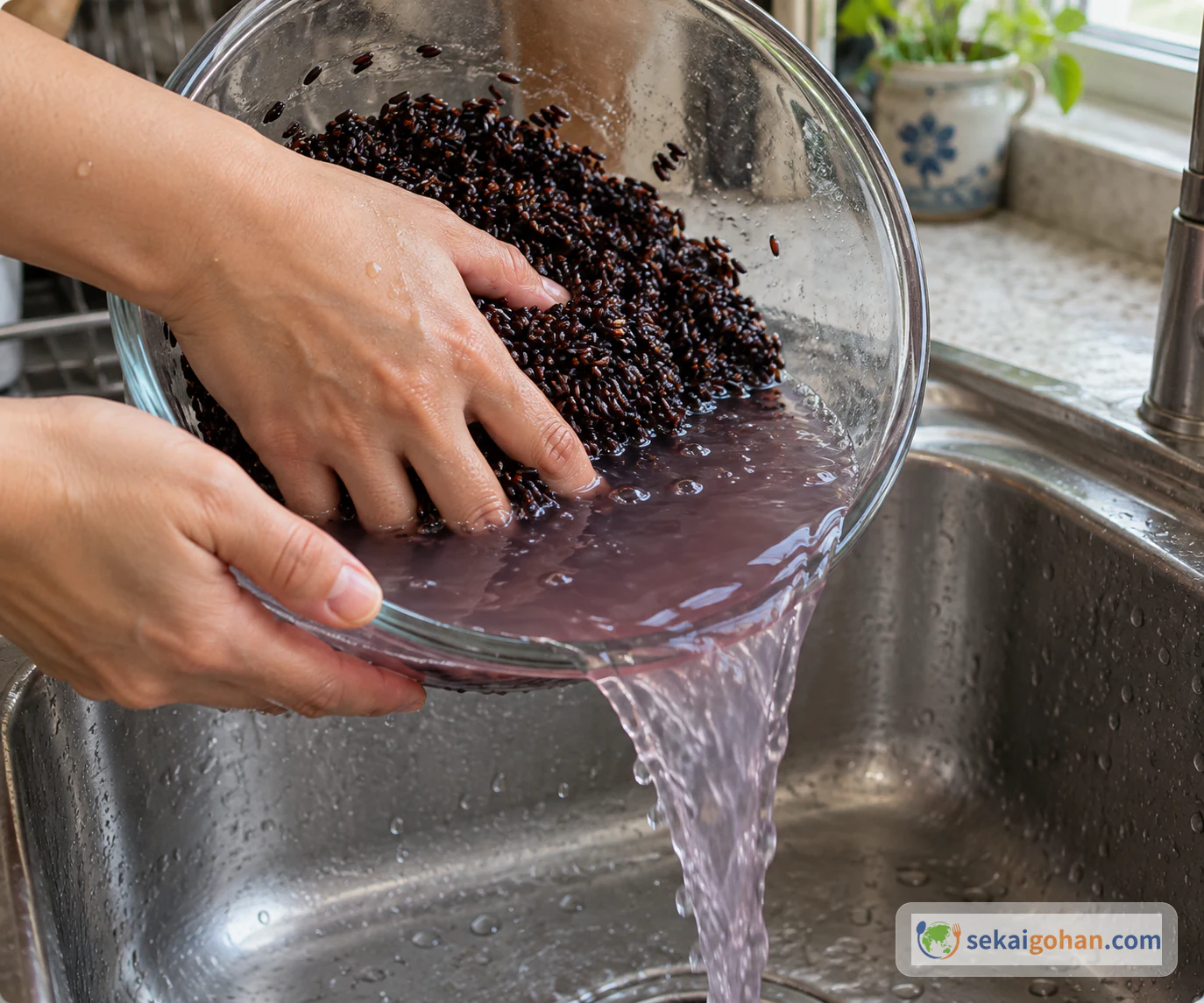
The rice must be glutinous. Look for packs labeled "black glutinous rice", "ketan hitam" or "pulut hitam" at Asian grocers or online, and read the label rather than going by color. Ordinary black rice cooks with a different stickiness and breaks down differently, so it gives a different porridge. Weigh the rice while it's dry, since soaked grains look like quite a different amount.
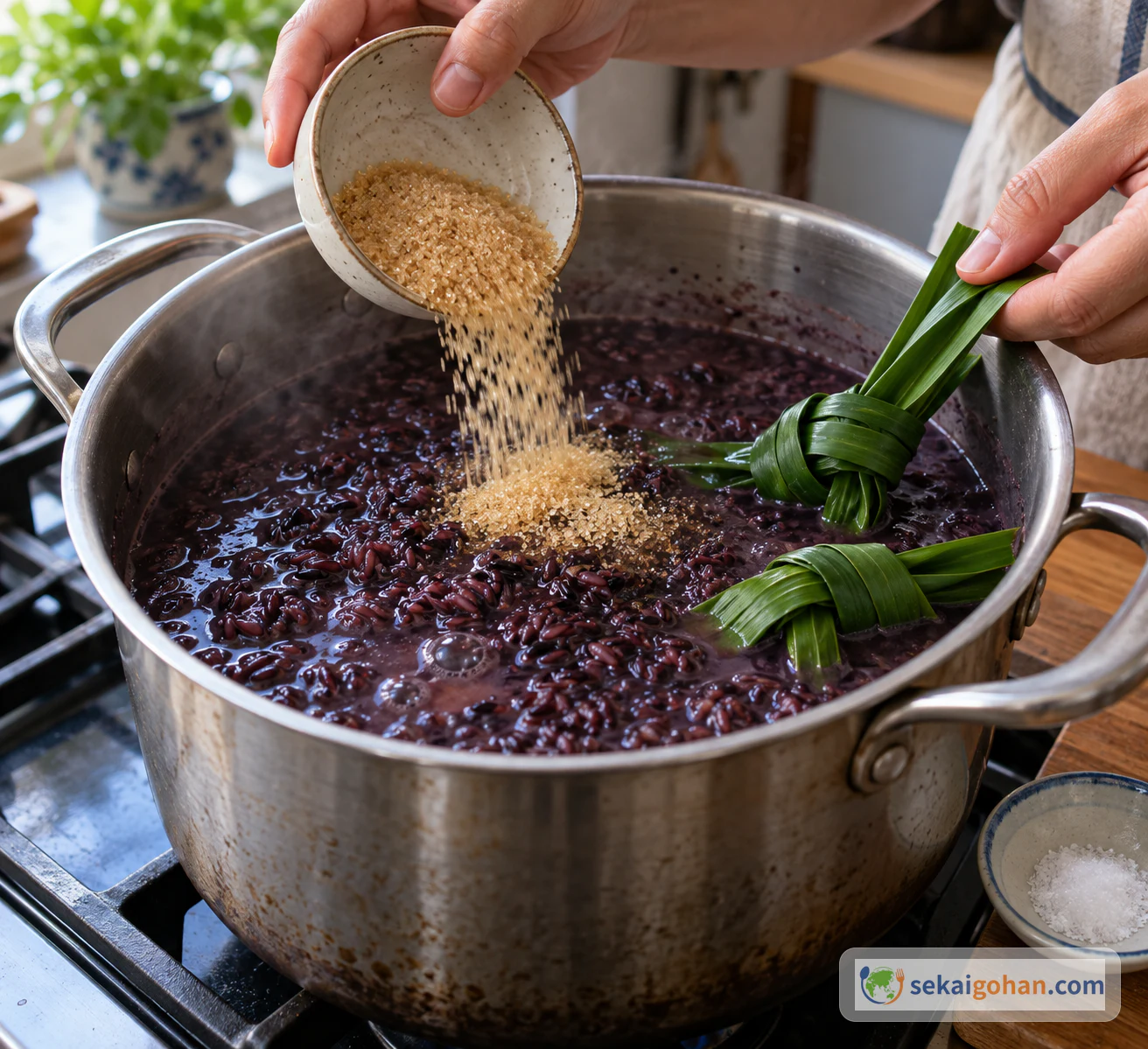
Pandan is often sold frozen at Asian grocers, and it brings the aroma closest to the dish. If you can't find it, leave it out. The porridge will miss that grassy, sweet scent, and flavorings like vanilla won't replace it.
Raw sugar is the sweetener here, and another light unrefined cane sugar is a close substitute. Palm sugar (such as Javanese gula Jawa) or dark unrefined cane sugar gives a stronger, deeper flavor. That makes a good porridge too, just a different one from the recipe as written.
Coconut cream should be unsweetened. Thick cream gives plenty of richness in a small amount. Without it, spoon off the thick layer from the top of a can of coconut milk; coconut milk on its own gives a lighter finish.
Method: A Long, Gentle Simmer Until the Grains Give Way
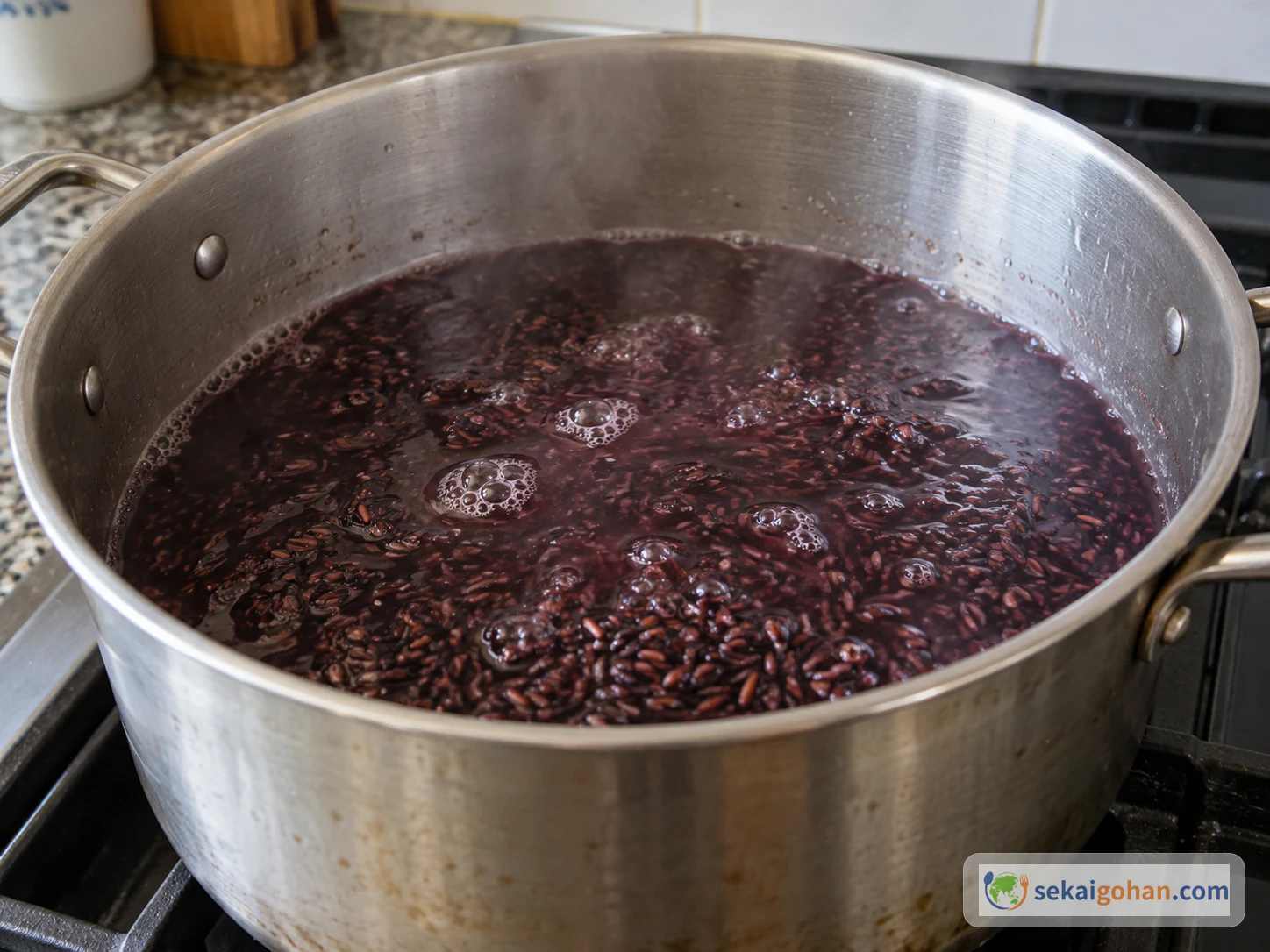
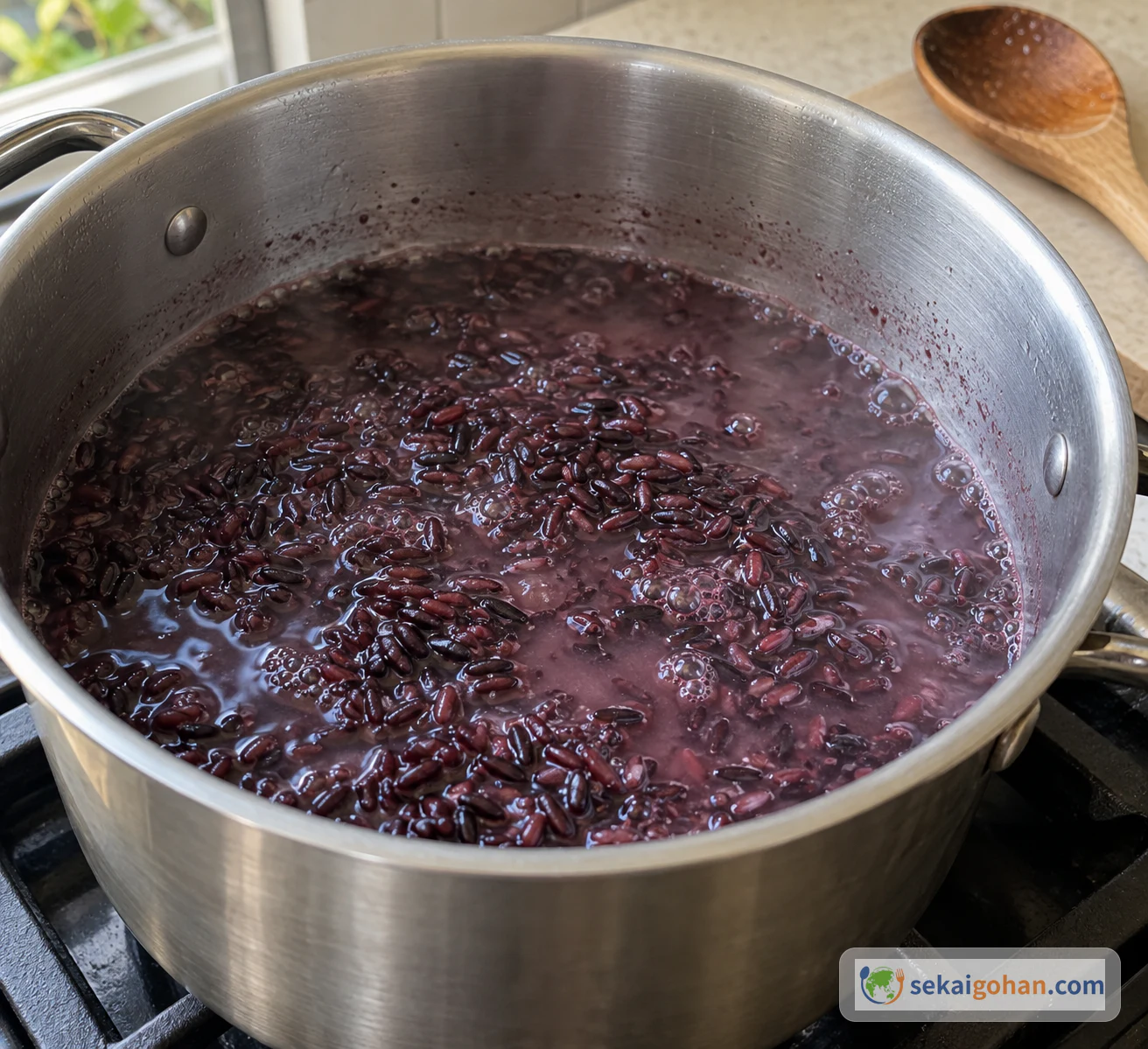
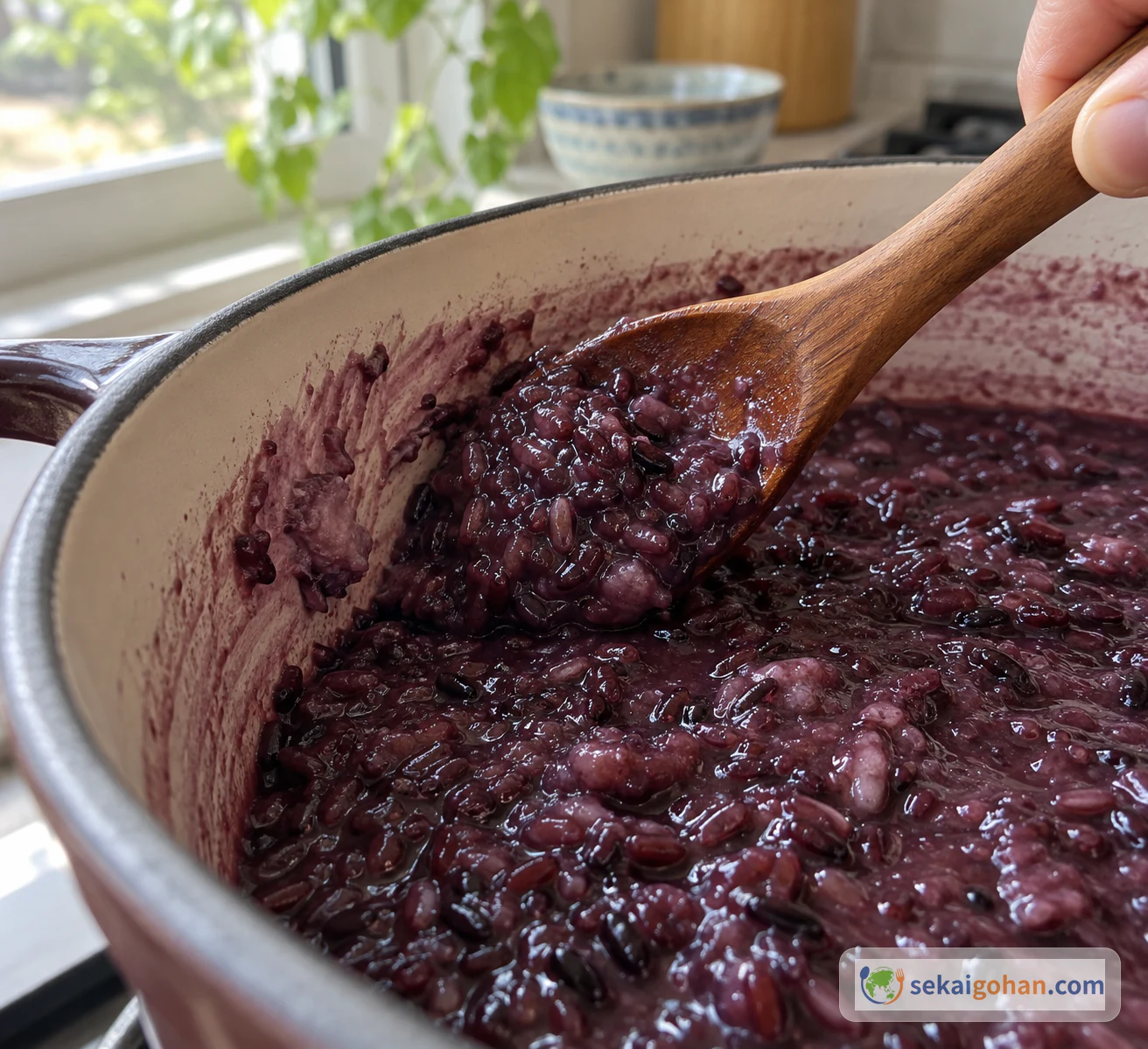
The rice cooks in water alone for about 1 hour, then with sugar, salt and pandan for about 1 hour more. Stir the bottom of the pot now and then, especially near the end as the porridge thickens.
Fixing Bubur Ketan Hitam in the Pot
| Problem | Likely cause | What to do |
|---|---|---|
| The centers of the grains are still hard | Short soak, or not cooked long enough | Keep simmering gently and check again with the back of a spoon. Judge by texture, not the clock |
| It catches on the bottom | Heat too high as the porridge thickens | Lower the heat and scrape the bottom of the pot now and then, more often near the end |
| It is watery | Not cooked down enough yet | Keep simmering until it has weight on the spoon. No starch or flour is needed |
| It is too sweet for you | Personal taste | Use the 3 tbsp as written and taste before serving. Next time, hold back a little and let each person add sugar at the table |
Rice and stoves vary, so only time softens hard grains. Adding the sugar earlier won't help.
Serving Bubur Ketan Hitam
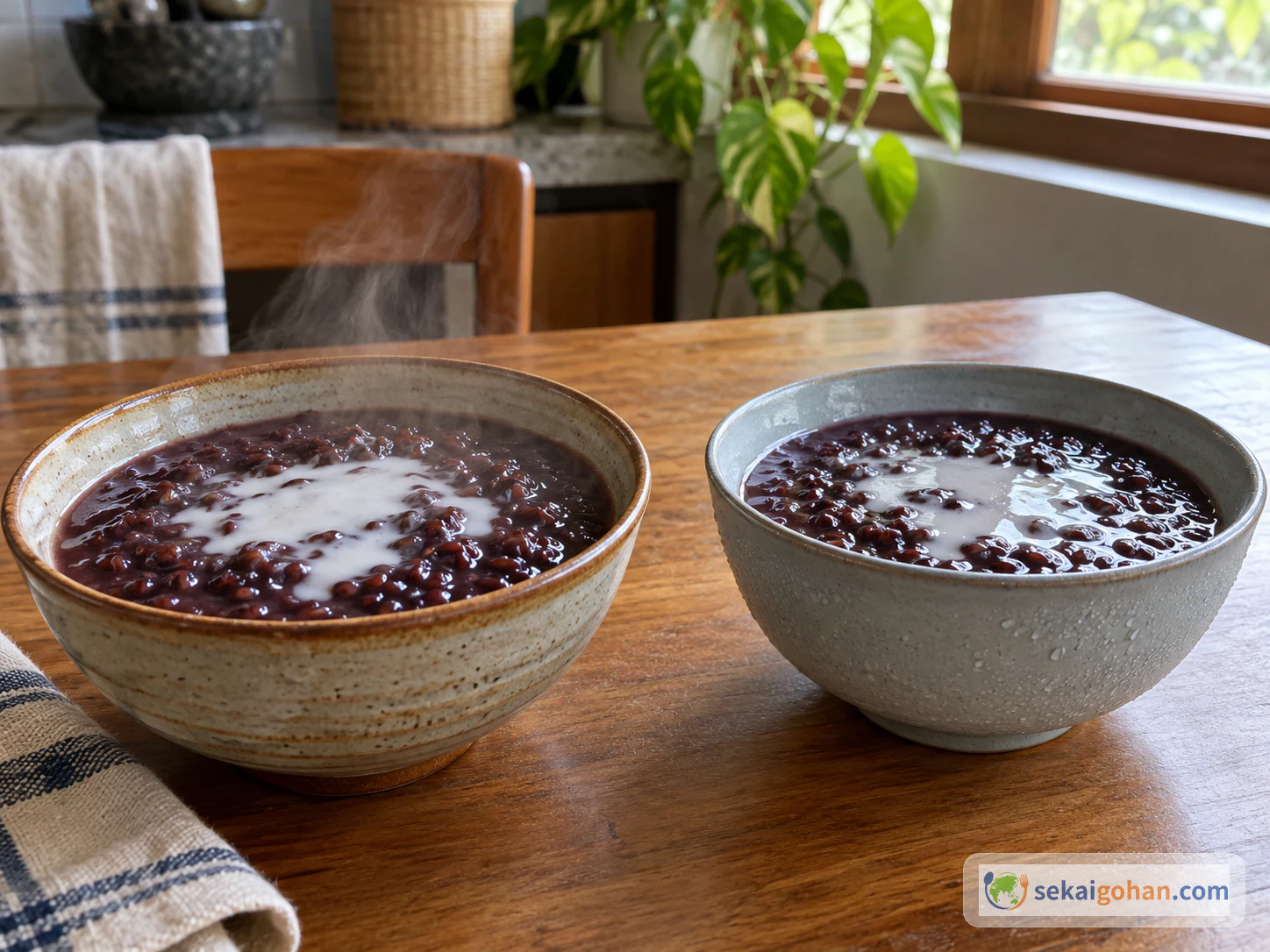
The coconut cream isn't cooked. Each bowl gets a little drizzled over the top, so the white stays bright against the dark porridge and everyone takes as much richness as they like. Pulut hitam is eaten both warm and chilled, so serve it whichever way suits the day.
A few ways to vary the bowl:
- Keep the cream separate. Serve the porridge plain and pass the coconut cream so everyone adds it just before eating.
- Go lighter on sugar. Use a little less and put extra sugar on the table for those who want it.
- Use palm sugar or dark unrefined sugar. This changes the flavor, so think of it as a variation rather than the same recipe.
Frequently Asked Questions
Do I have to soak the rice?
Soak it for at least 3 hours, ideally overnight.
When does the sugar go in?
In this recipe, add it after the rice has simmered in water for about 1 hour, together with the salt and pandan. Some recipes add the sugar near the end of cooking instead.
Are pulut hitam and bubur injun different dishes?
They are names used in different places for black glutinous rice porridge: pulut hitam in parts of Sumatra and in Singapore and Malaysia, and bubur injun in Bali.