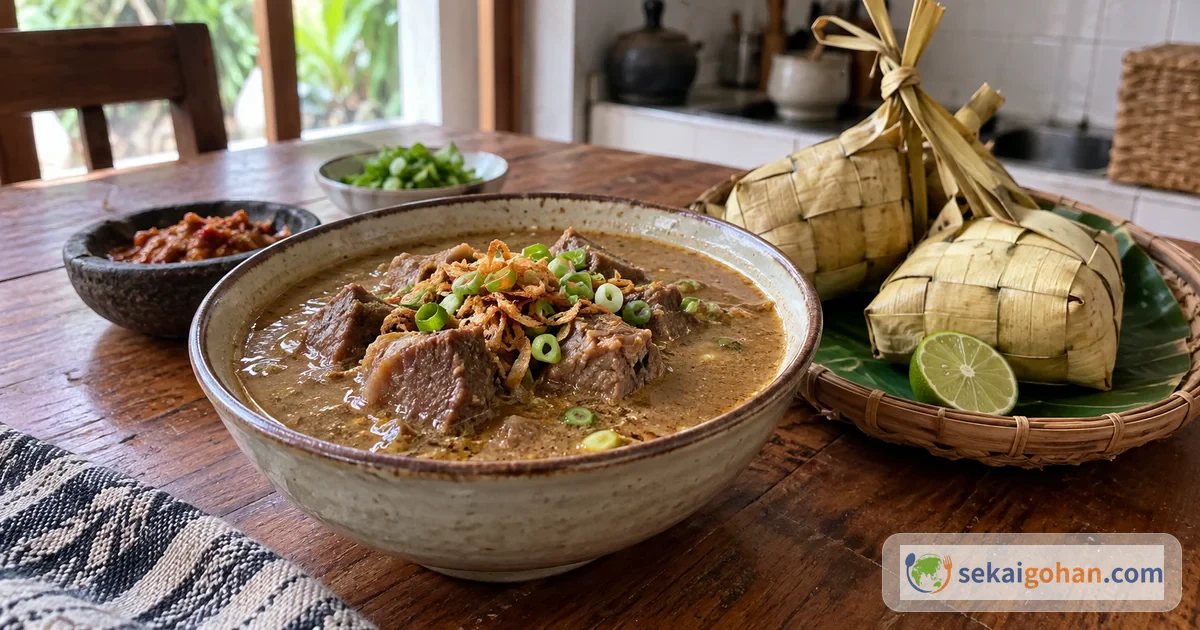
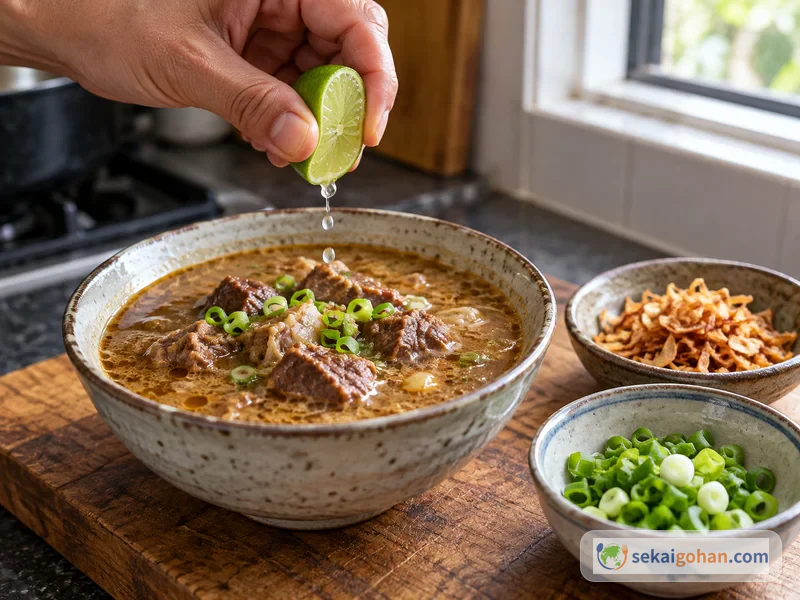
Morning in Makassar starts with a steaming pot. At a food stall, the cook ladles beef and offal into small bowls and pours dark brown soup over them. Diners tear ketupat, dip it in the soup, squeeze in some lime, and work through a thoroughly spiced bowl this early in the day. This is Coto Makassar, the beef soup of the port city at the southern gateway of Sulawesi island in Indonesia. It's rich, earthy, and deeply aromatic, the kind of breakfast that keeps you going all morning.
Coto Makassar's history and how it's eaten
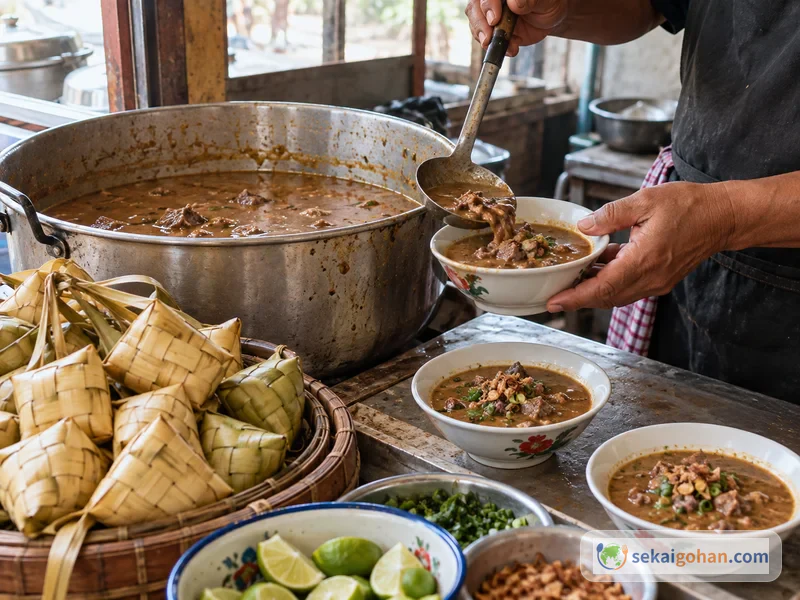
Coto Makassar dates back to the Gowa kingdom, which flourished in South Sulawesi in the 16th century. It began as food for palace servants and soldiers: beef stewed together with offal such as intestines, liver, lungs, heart, tripe, and brain. Other beef soups are made all over Indonesia, but this one stands apart because its broth is thickened with peanut paste.
In the Gowa era, Makassar was a trading city where many people and goods passed through, and you can taste that in the bowl. The spices recall Indian curries, and the peanuts came from overseas. The beef is halal, in keeping with Islamic teaching, and taucho, the fermented soybean paste served alongside, reflects the food culture of the city's Chinese communities.
Coto Makassar is one of the soups called "soto" found across Indonesia. Today it is a staple breakfast of Makassar and is also served at weddings and religious celebrations.
Makassar also has its own way of eating it. Instead of plain rice, the soup usually comes with ketupat or with burasa, which is rice cooked in coconut milk and wrapped in banana leaf. Lime and a sweet-and-hot taucho sambal go on the table too, so everyone can adjust the taste while they eat.
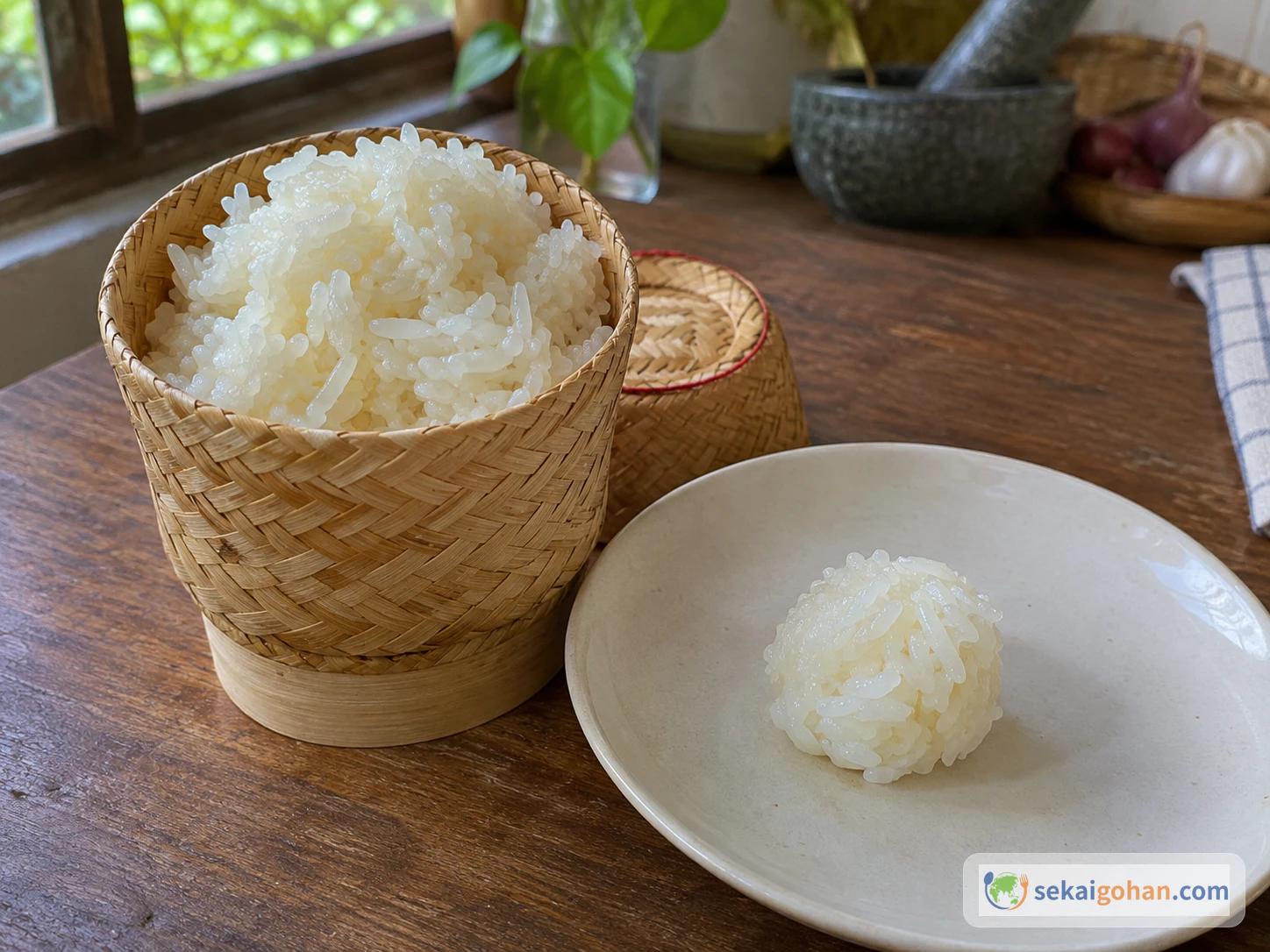
Ketupat is a block of rice packed into a diamond-shaped bag woven from young palm leaves and boiled for a long time. In Indonesia it is also known as a food for celebrations at the end of the fasting month. Small balls of cooked rice mixed with glutinous rice also go well dipped in the soup.
Ingredients (serves 4)
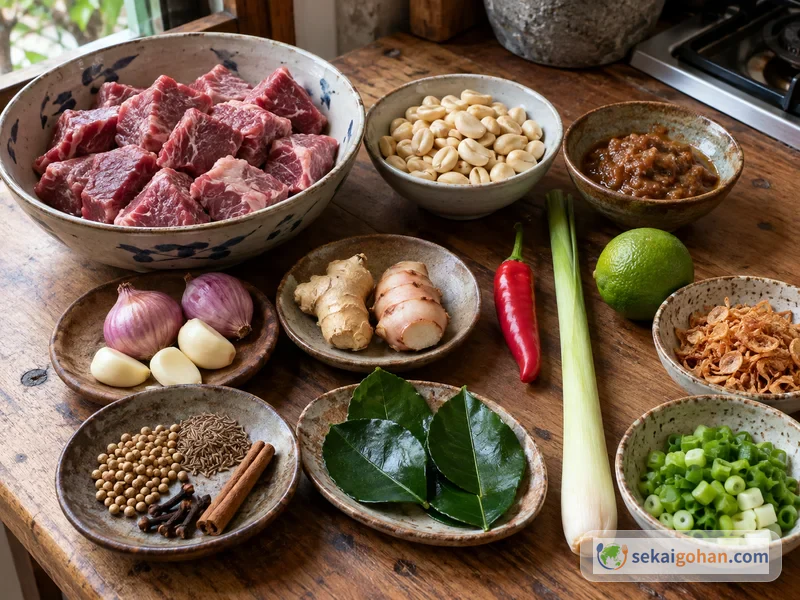
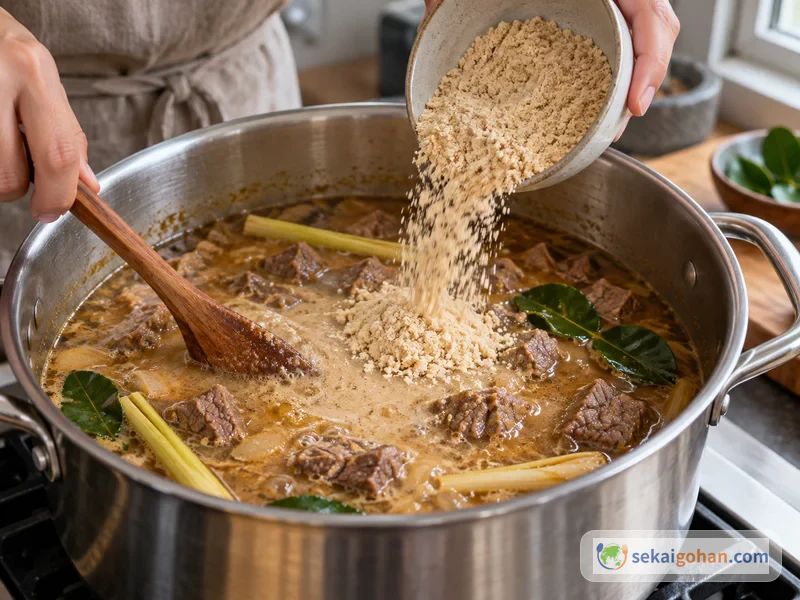
The soup uses peanuts and soy (taucho, miso). Peanuts can cause severe allergic reactions, so always check with everyone who will eat it. The peanut powder sinks to the bottom and scorches easily, so after adding it, stir from the bottom of the pot every so often.
Choosing ingredients for Coto Makassar
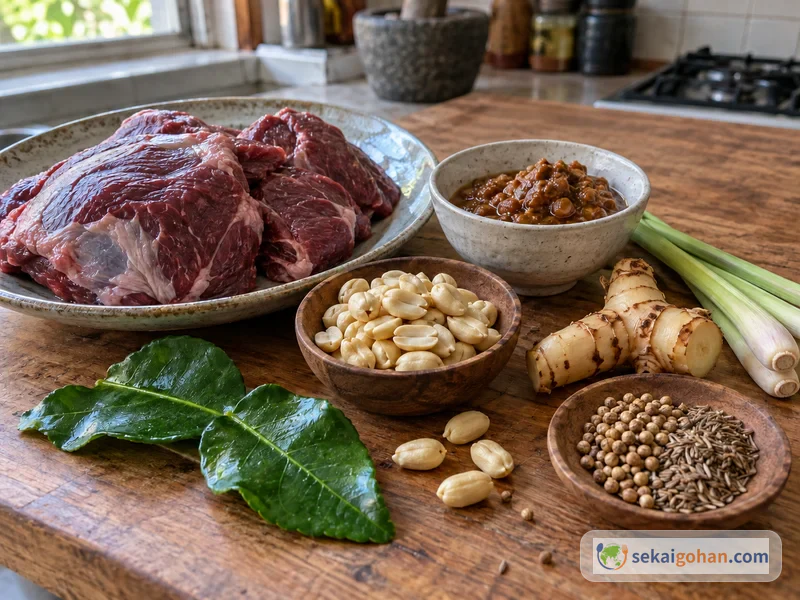
This home version skips the offal and uses beef cheeks, which fall apart in the mouth after a long simmer. If you can't find beef cheeks, beef shank works too.
Try to get taucho if you can. Asian grocery stores and online shops carry it, and its gentle saltiness suits a peanut soup well. If you can't find it, a blended miso is perfectly good.
Use raw, skinless peanuts and grind them to a fine powder in a food processor or spice grinder. Roasted peanuts make the flavor too toasty, and salted ones make the soup too salty, so avoid them.
Galangal, lemongrass, and kaffir lime leaves are sold frozen or dried for Thai cooking at Asian grocery stores. Dried kaffir lime leaves have a weaker aroma than fresh ones, so use twice as many.
How to make Coto Makassar
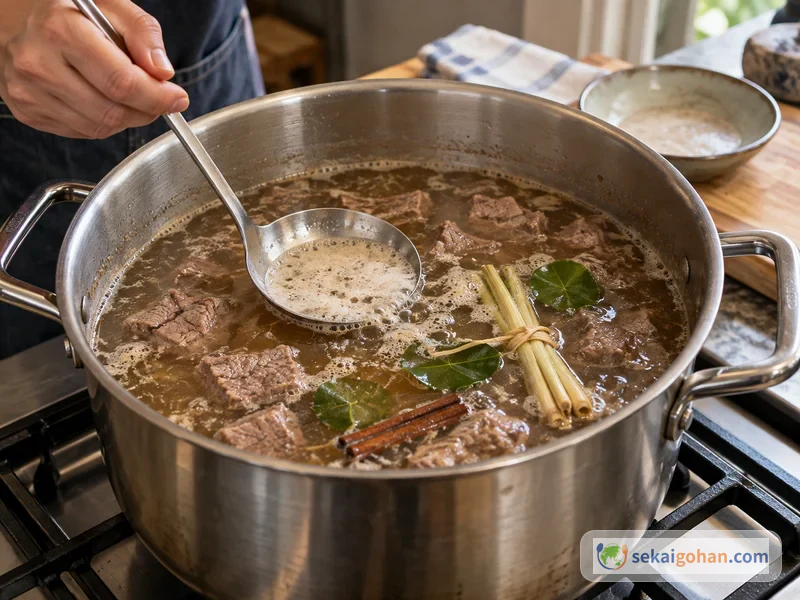
The simmer takes 2 hours, but you are working with your hands for only the first 20 minutes or so. The hour while the beef softens is plenty of time to prepare the peanuts.
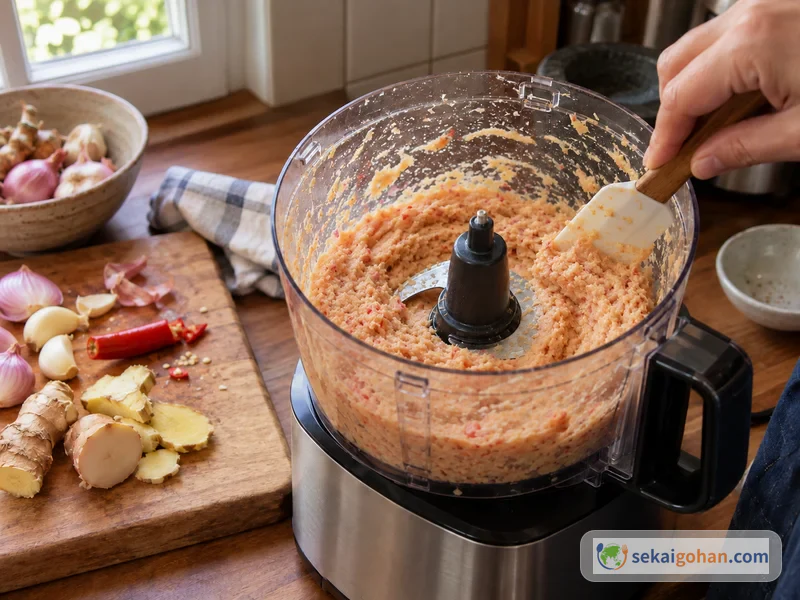
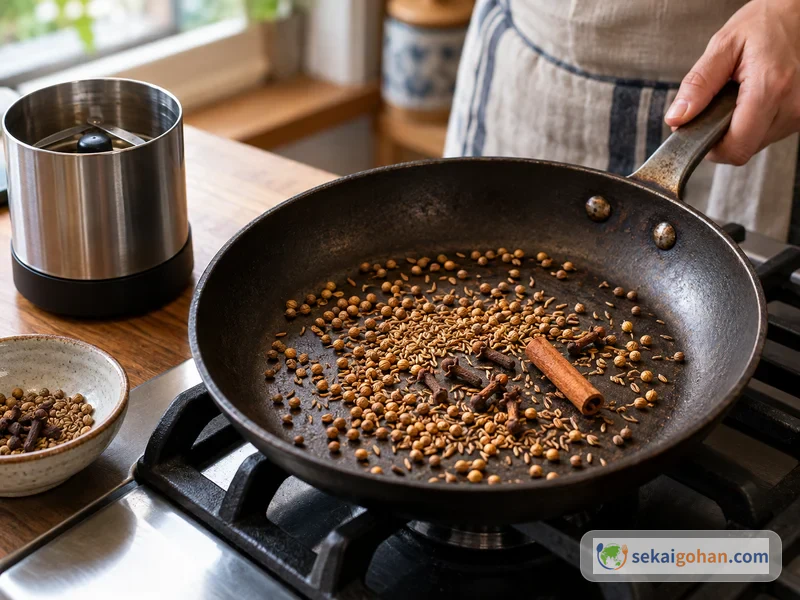
Grinding the spices after dry-toasting makes the aroma far stronger. Scorching them brings out bitterness, so as soon as the coriander seeds turn golden and start to crackle and pop slightly, take the pan off the heat.
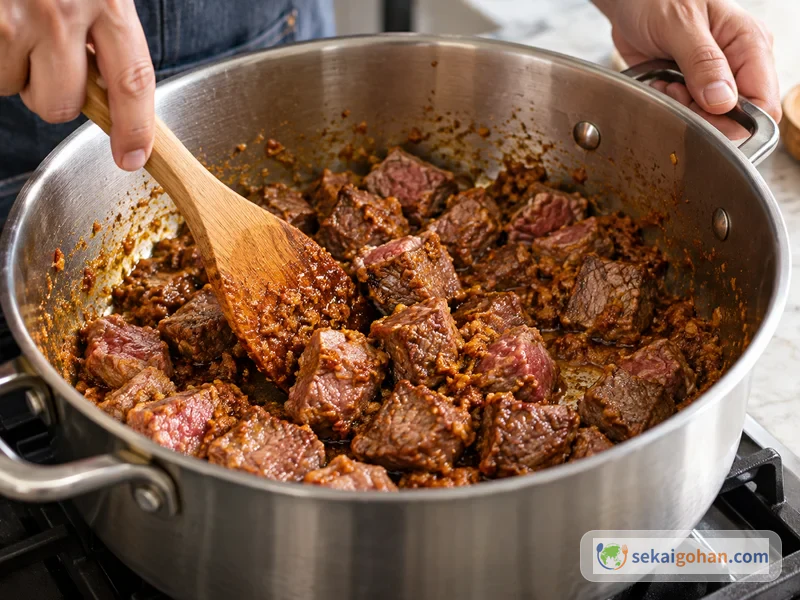
Cook the beef all the way through. Two hours of simmering is normally enough, but if you add offal, always parboil raw offal first and cook it thoroughly in the soup as well.
Serving and varying Coto Makassar
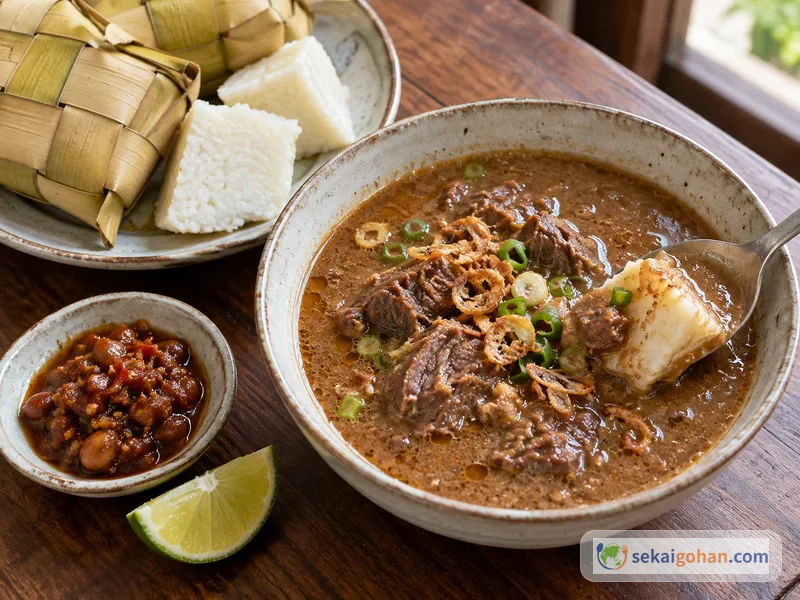
In Makassar, Coto Makassar comes in a small bowl. The soup is rich, so rather than drinking a big portion in one go, dip ketupat or rice into it bit by bit. Squeeze in the lime about halfway through: a squeeze of lime tightens the flavor considerably. If you want more heat, put sambal on the side.
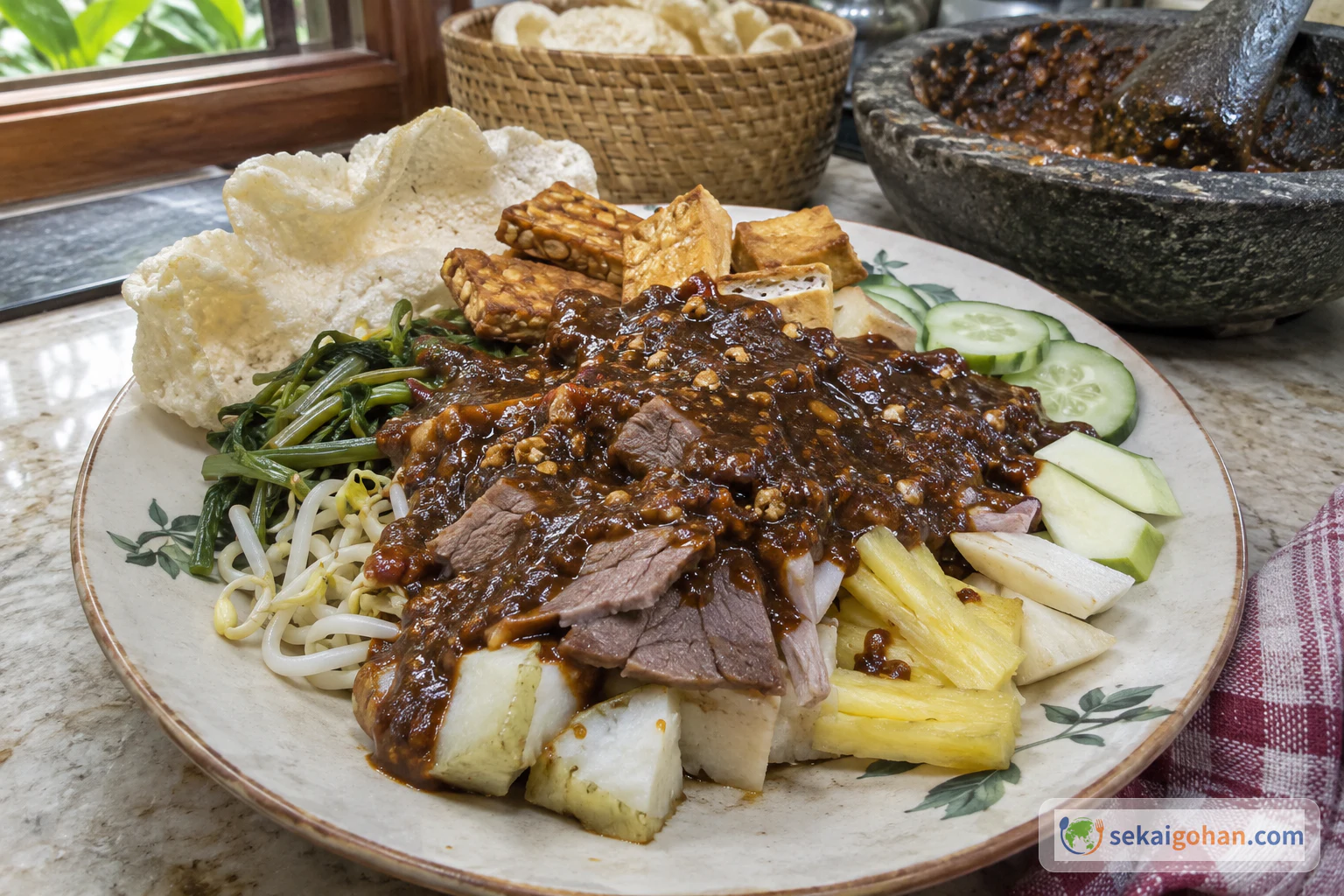
It's worth comparing this soup with its relatives. Jakarta's soto Betawi is finished white with milk or coconut milk, and East Java's rawon turns jet black from keluak nuts. Even among beef soups, the color changes this much from island to island, which is part of what makes Indonesian cooking fun.
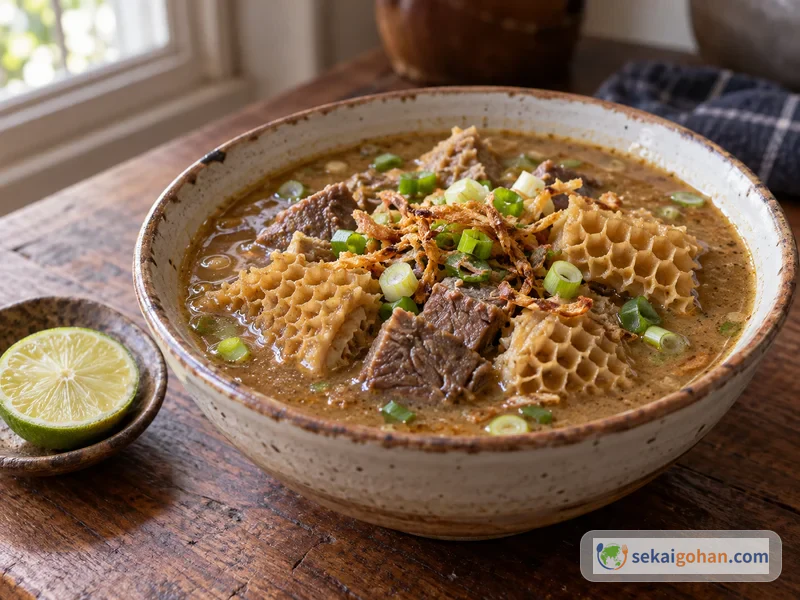
To include offal the way a Makassar stall does, swap about one third of the beef cheeks for parboiled honeycomb tripe, omasum, or beef heart. Add the offal with the beef in step 3 and simmer it for the same time. Cuts with different textures bring variety to a single bowl and bring it closer to what you'd get at the stall.
Beef tendon also works in place of the cheeks. Parboil it once to remove the scum, then simmer about 30 minutes longer. The longer it cooks, the more gelatin dissolves into the soup and the thicker it gets.
Frequently asked questions
Which is better, taucho or miso?
Taucho is closer to the taste of Makassar. The beans stay whole, and the saltiness has a touch of sweetness. Miso has no whole beans and a stronger richness, but either makes a good soup.
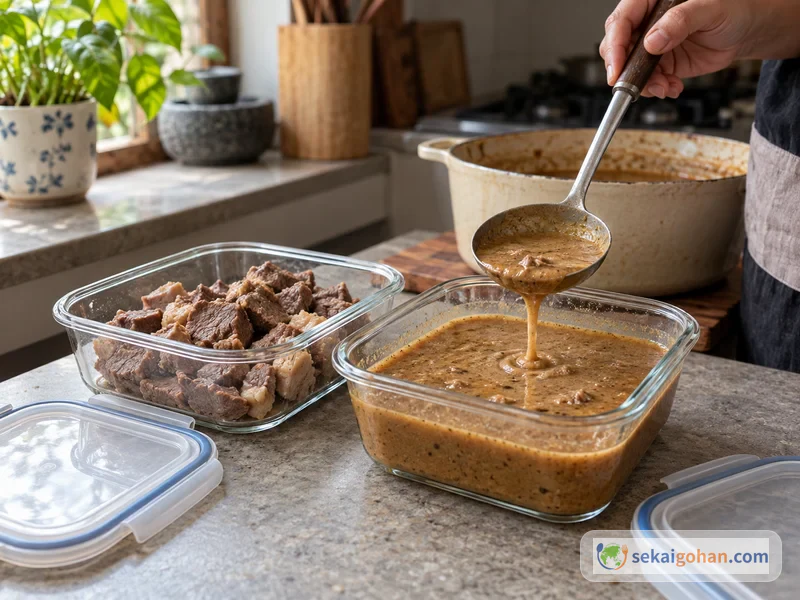
Can I make it ahead?
Once it has cooled down, put it in a storage container, refrigerate it, and finish it within 2 days. The peanut thickening makes it set when cold, so add a little water and reheat it over low heat.
Can I make it in a pressure cooker?
Yes. After adding the water in step 4, cover and cook under pressure for 15–20 minutes, then let the pressure release naturally. Open the lid, add the peanut powder, and simmer about 15 minutes to thicken.
Is it spicy?
With just one red chili it is only mildly peppery. The spice aroma is strong, but the heat stays mild. If you like it hot, add sambal at the table.