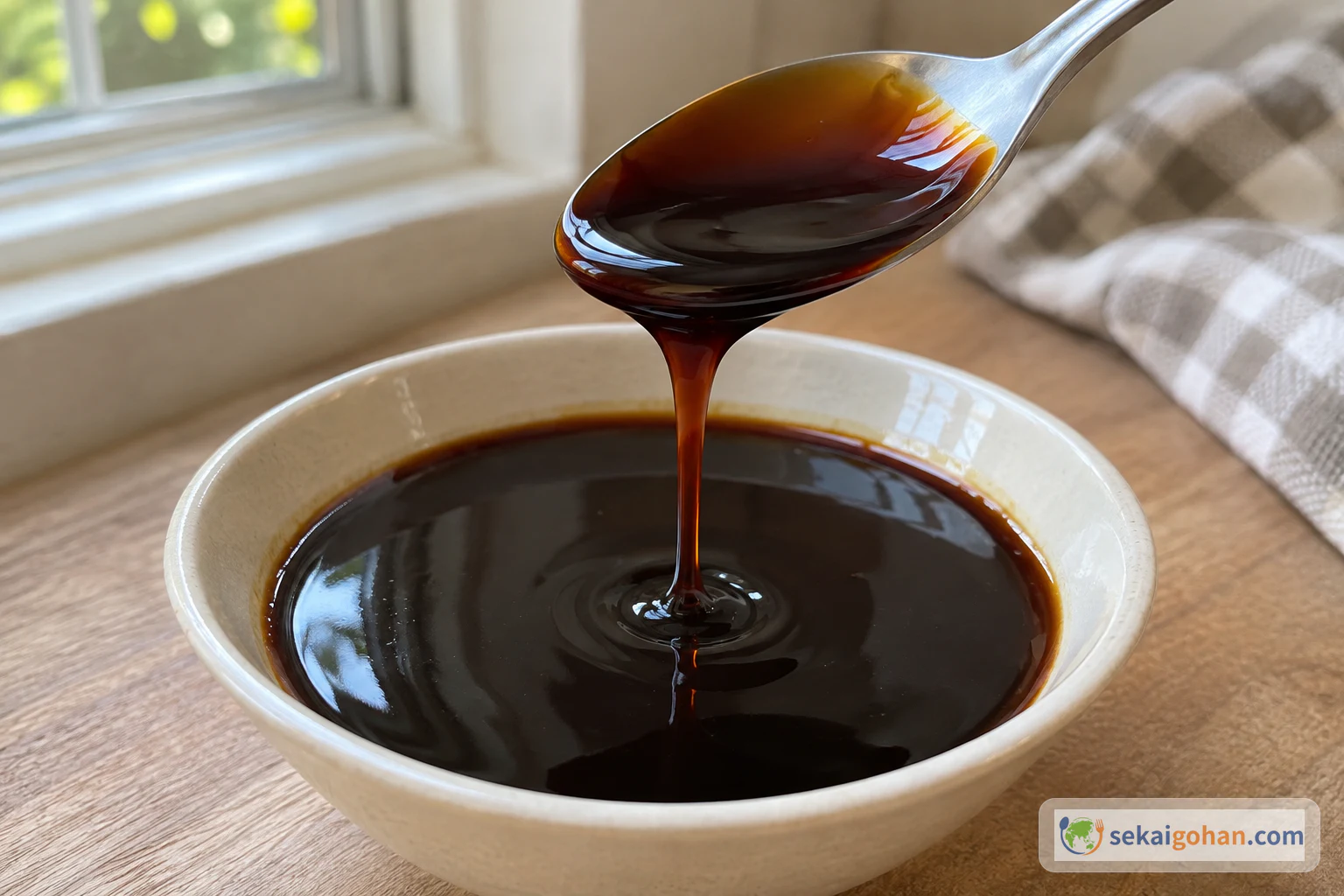
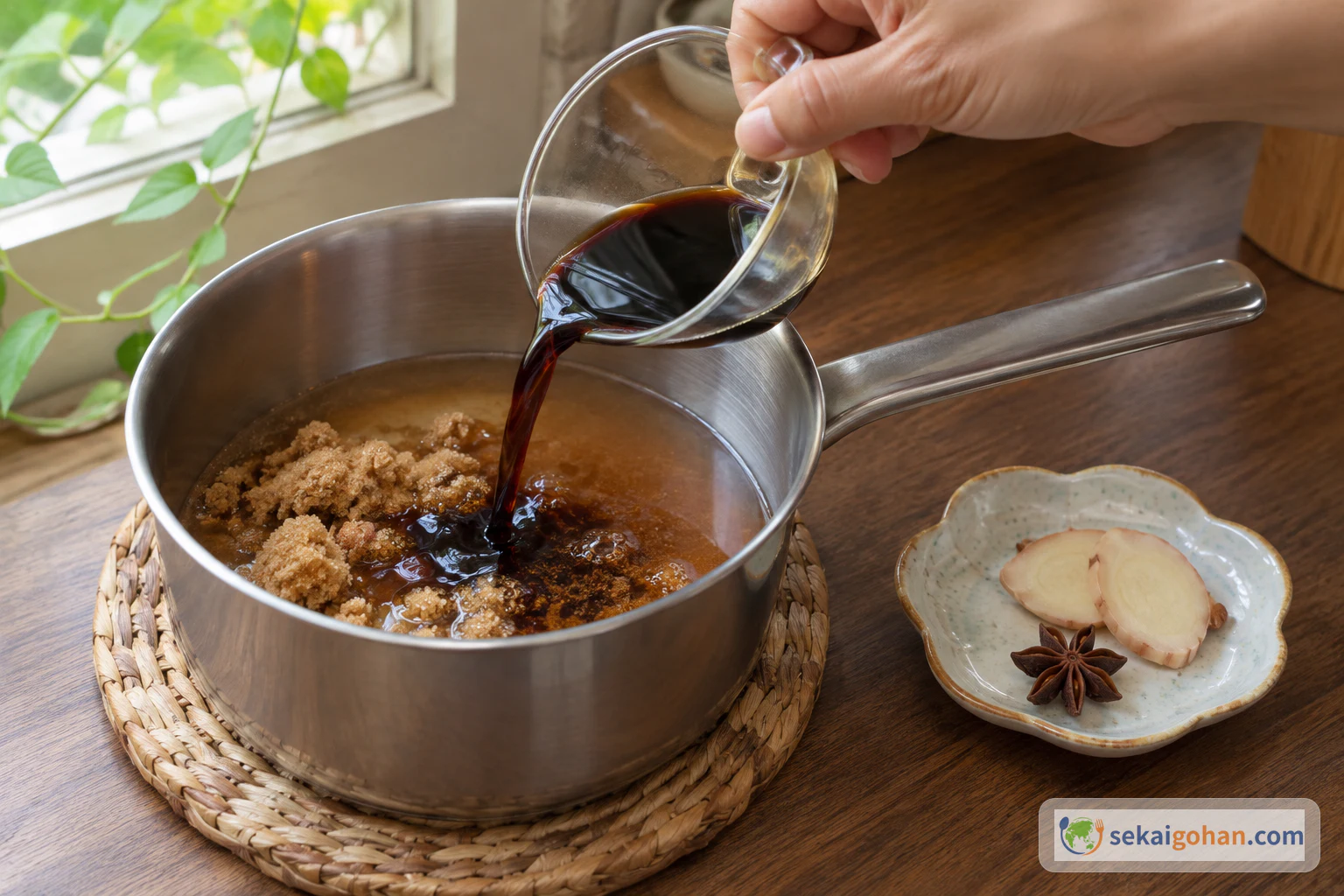
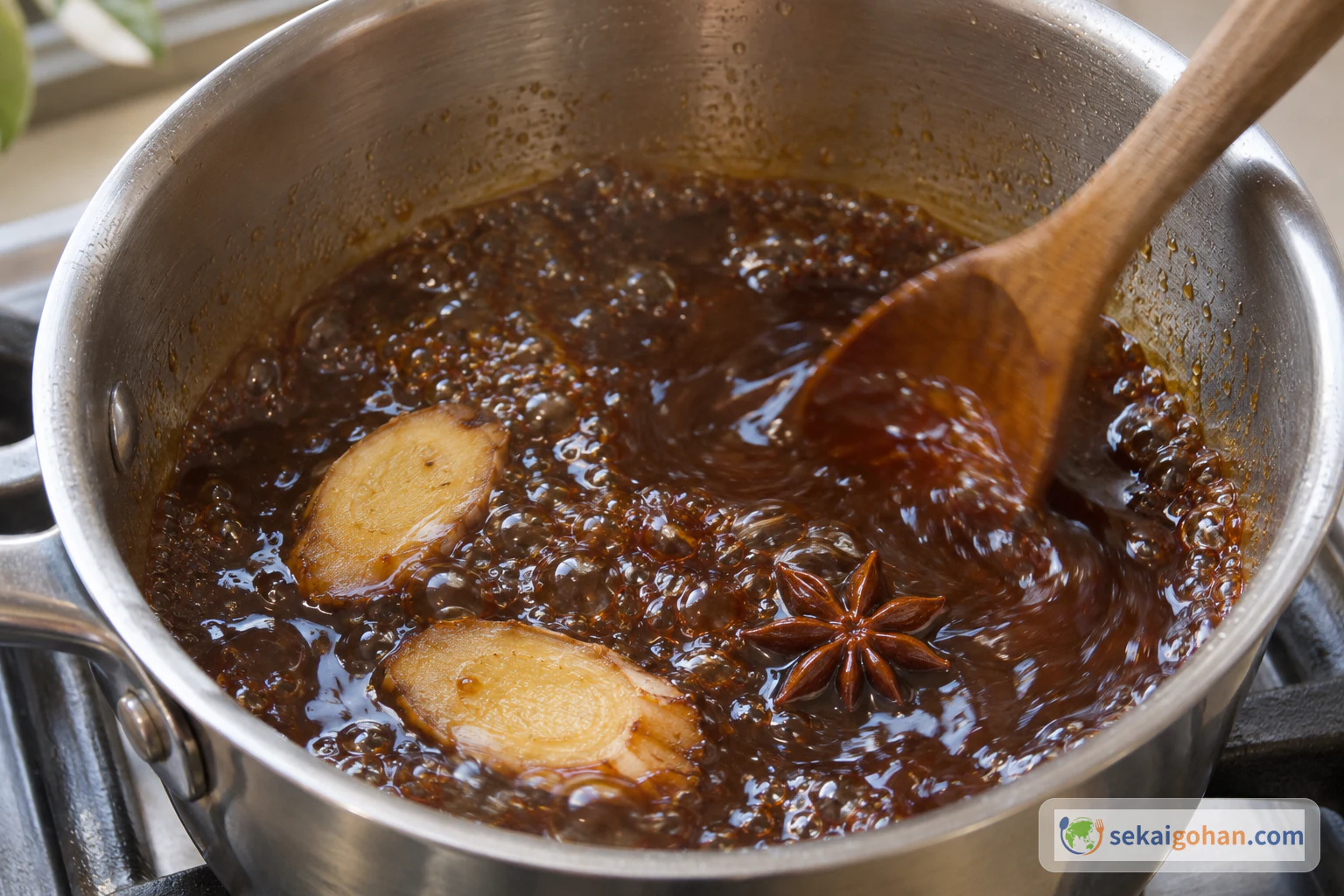
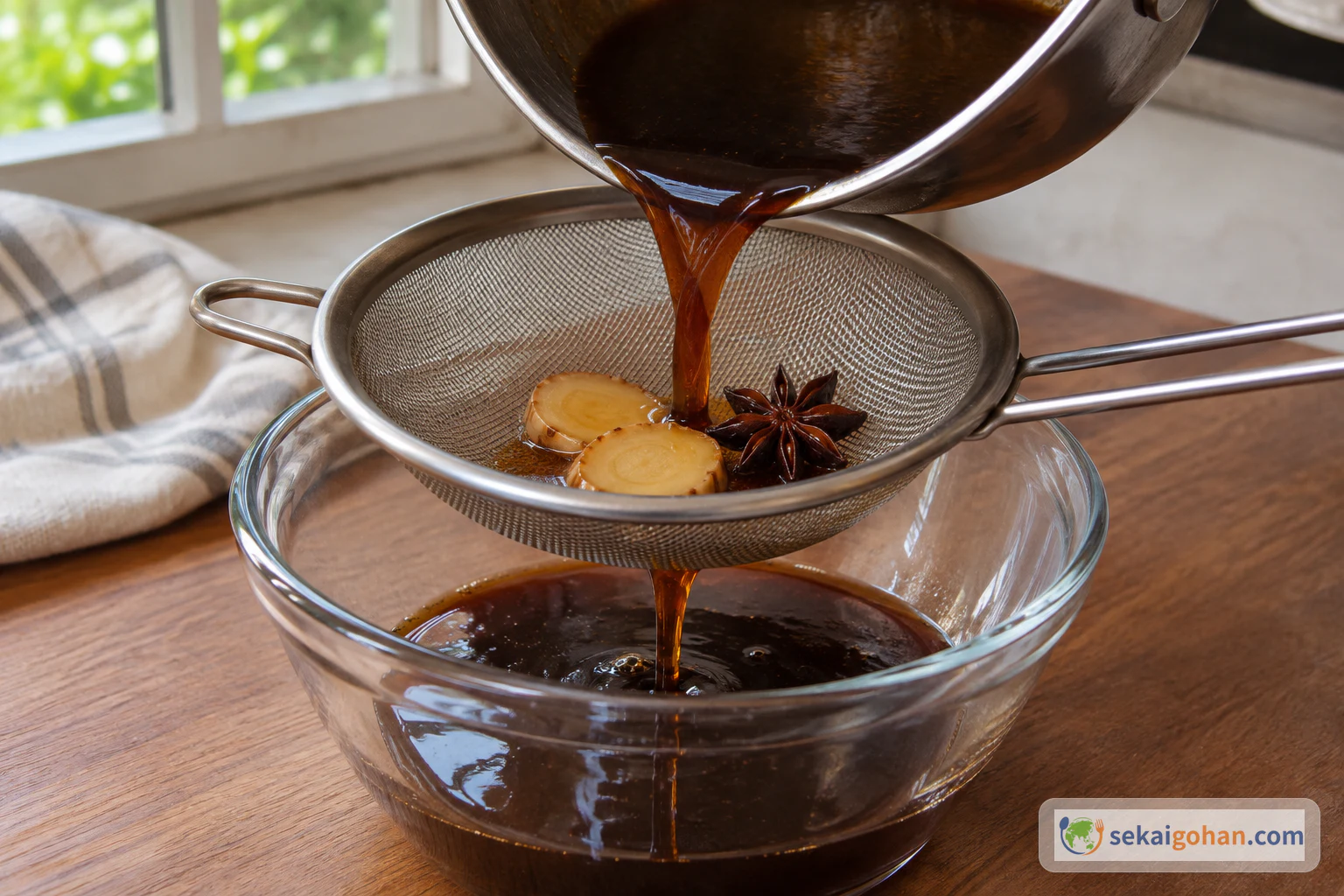
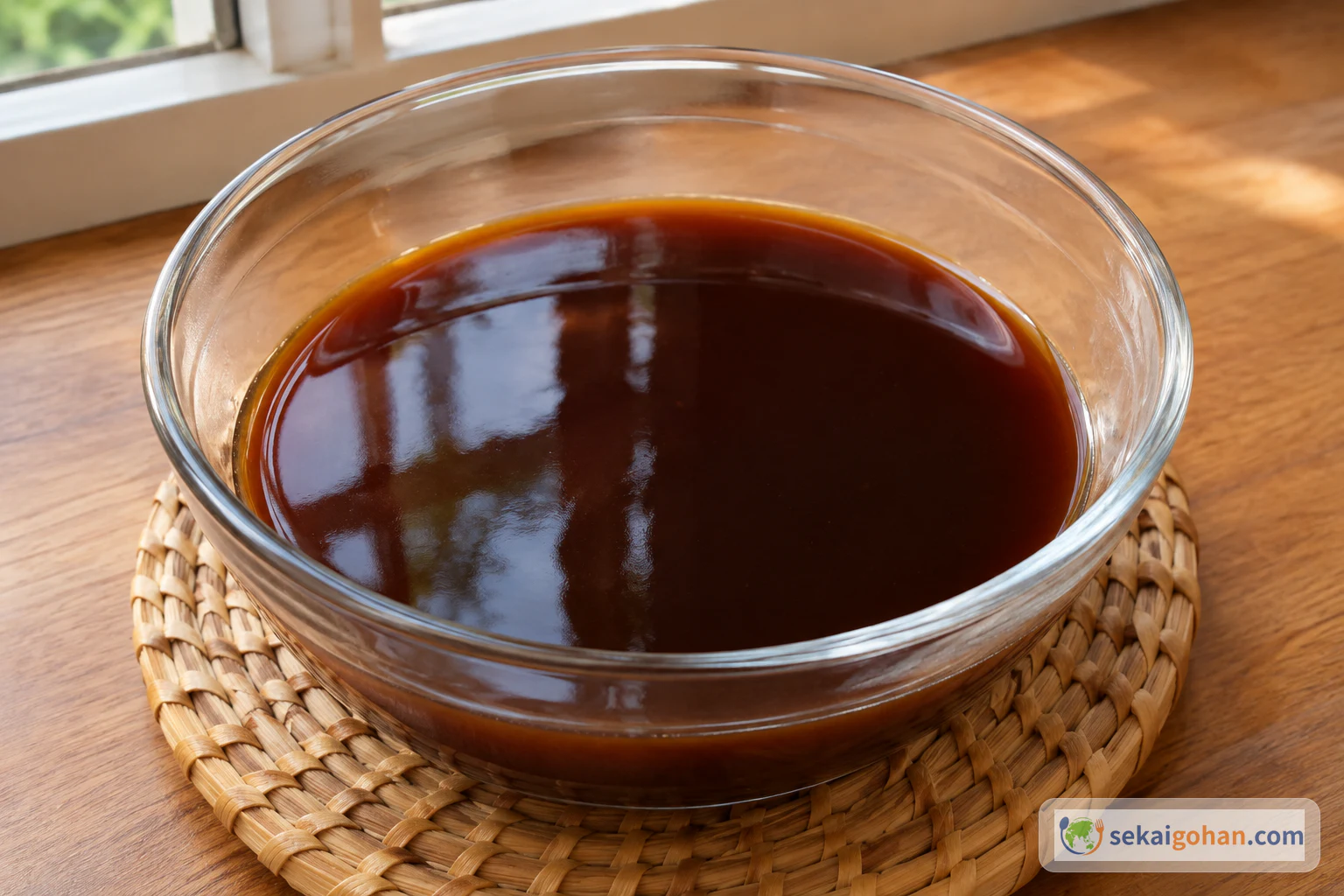
Good kecap manis pours slowly, coating the back of a spoon in a dark, glossy ribbon. Indonesia's sweet soy sauce gets its sweetness and syrupy body from sugar or palm sugar cooked down with water. This home version needs only five ingredients: brown sugar, ordinary commercial soy sauce, water, fresh galangal root and one star anise. It makes about 2 cups, enough to keep a jar in the refrigerator for satay night and fried rice alike.
Kecap Manis in Indonesian Cooking
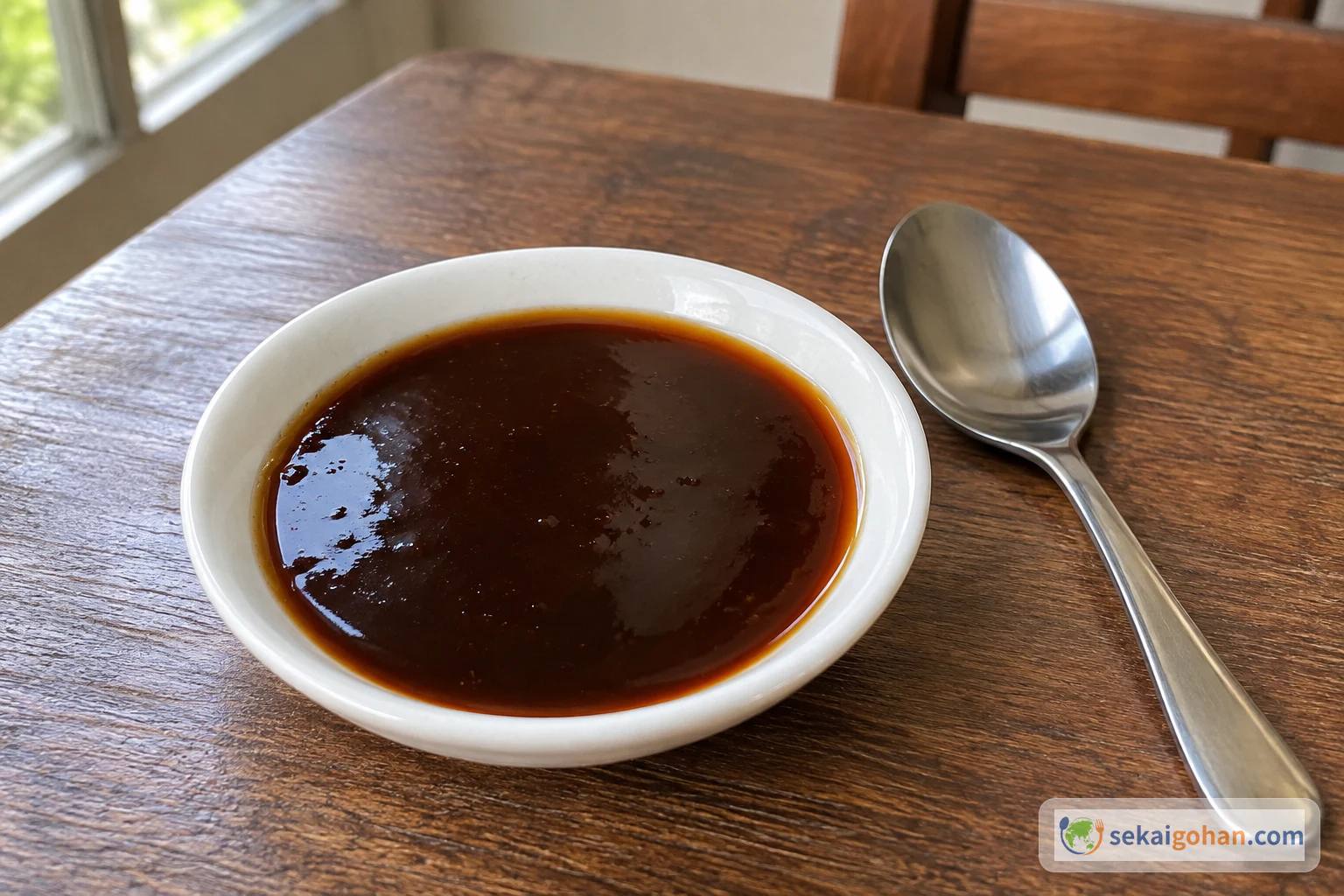
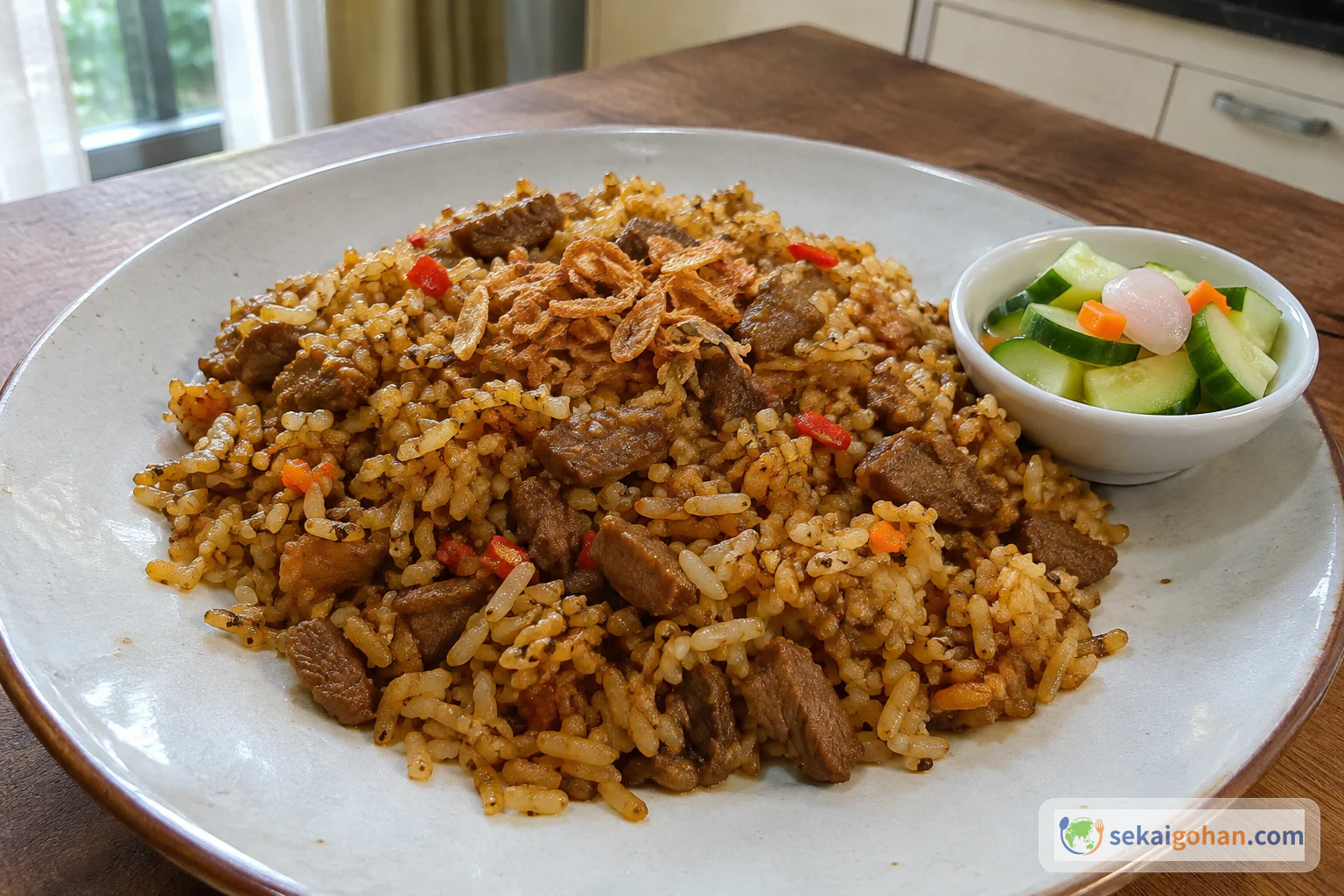
In Indonesia, kecap manis is an everyday condiment that sits on the table for satay, fried rice, noodles, meatballs and siomay. The spices vary from maker to maker, so no single spice profile defines every bottle. For more on where it fits among the country's other dishes and ingredients, start from the Indonesia country page.
Its origins are uncertain. One account links it to the Chinese community of Tangerang, but that isn't settled history. What's clear is that the sauce is Indonesian, with acknowledged Chinese influence.
Traditionally, kecap manis is a fermented product. Black soybeans are made into koji with Aspergillus sojae, brined as moromi and filtered. The result is finished with coconut sugar or gula merah (palm sugar) and spices such as a fennel and Chinese star anise extract, then filtered again and bottled.
This recipe skips all of that by starting from commercial soy sauce. Think of it as a close approximation of the real thing.
Ingredients: Five Items, in Cups
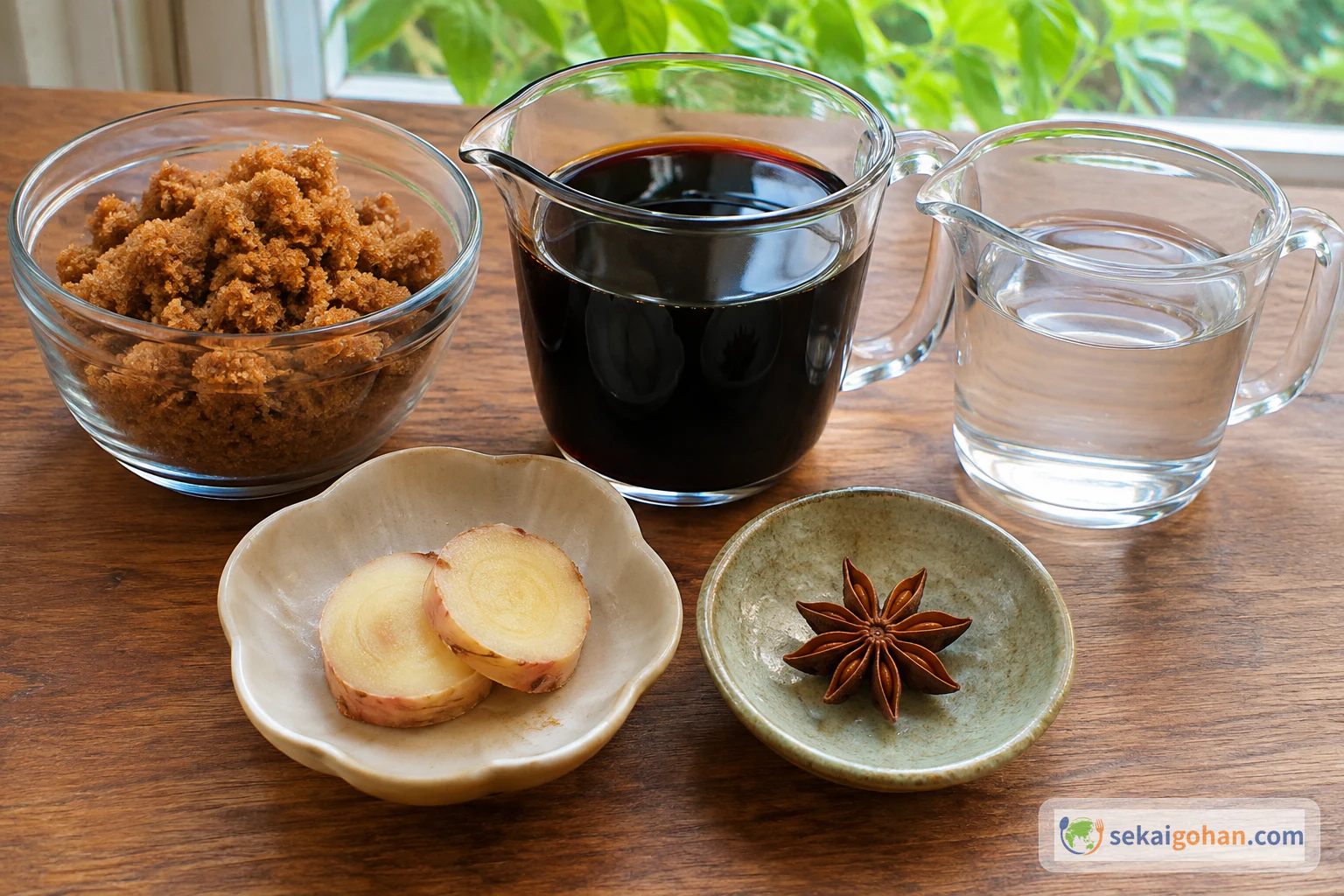
Measure everything before you start. Once the sugar has melted, the next steps follow quickly.
Soy sauce commonly contains soy and may contain wheat. Check the label of the product you use. Use food-grade galangal and star anise sold for cooking, and commercial soy sauce; this recipe does not involve foraging or fermenting soybeans at home.
Equipment
- Measuring cup
- Small heavy-bottomed saucepan
- Spoon for stirring
- Heatproof trivet
- Fine strainer
- Heatproof bowl
- Clean container for the refrigerator
Choosing Ingredients for Kecap Manis
Brown sugar. Stick with brown sugar. Palm sugar and other unrefined sugars don't swap in one-for-one in this formula.
Fresh galangal, not ground. Slice fresh galangal root into discs. This version uses 2 slices, but 1 also works if you want a lighter touch. Ground galangal has no conversion here, so buy the fresh root.
Star anise. One whole piece, used as is.
Soy sauce. Ordinary commercial soy sauce is the base. Salt level and allergens vary by product, so read the label.
Method: Melt, Cool Slightly, Add Liquids, Boil to a Syrup
Adding liquid to hot melted sugar makes it spatter. Take the pan off the heat and let it cool slightly first, pour slowly, and keep your hands and face back from the pan.
Kecap Manis Troubleshooting
Go by what you see in the pan rather than by a clock or a thermometer. Most problems are easy to fix if you catch them early.
| What you see | What to do |
|---|---|
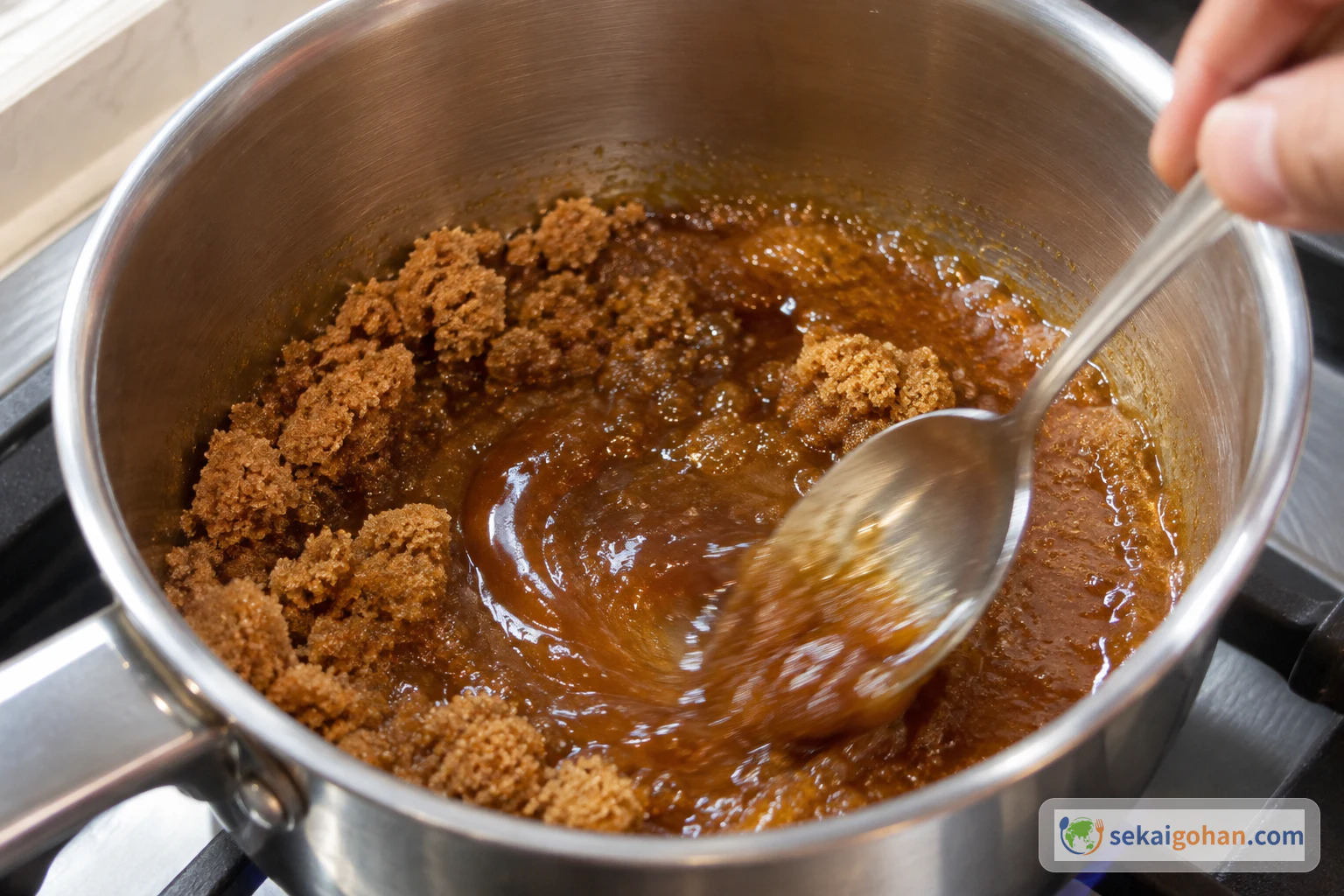
| The sugar clumps before it melts | Keep stirring over the heat until it has melted completely. Clumping along the way is normal |
| The sugar is darkening fast or smells scorched | Watch it closely and keep stirring, and take it off the heat as soon as it is fully melted |
| Liquid spatters when added | Take the pan off the heat and let it cool slightly, then pour slowly and stand back |
| Hard lumps of sugar after adding the liquids | Return the pan to medium heat, bring to a boil and stir until the sugar dissolves again |
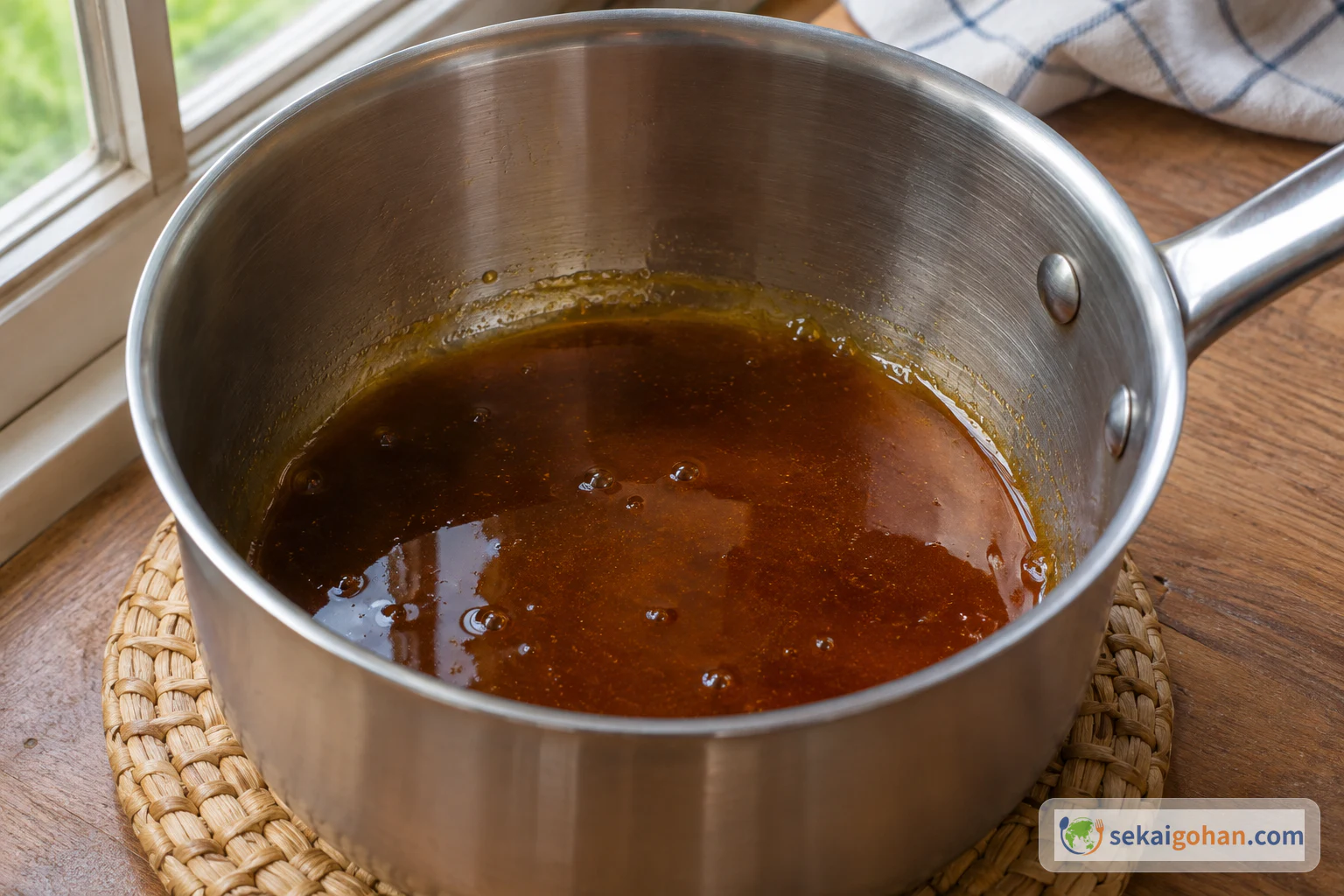
| The sauce is still thin | Keep boiling and stirring until it becomes syrupy |
| Bits of spice in the finished sauce | Strain again through a fine strainer |
Serving and Storing Kecap Manis
When you cook with your kecap manis, follow the amount given in that dish's own recipe. Some versions of the sauce itself use palm sugar and molasses, but this one keeps to the five ingredients above.
Let the strained sauce cool, then store it in a clean container in the refrigerator. Keep it out of room temperature, and don't bottle or can it.
Frequently Asked Questions
Is this the same as store-bought Indonesian kecap manis?
No. Indonesian kecap manis is traditionally made by fermenting soybeans and finishing them with sugar and spices. This version starts from commercial soy sauce, so it's a household approximation rather than a substitute for traditional or commercial products.
Can I use palm sugar or another dark sugar?
Palm sugar is used in Indonesian production and in some variations, but it doesn't swap in for brown sugar in this recipe. Use brown sugar.