Htamanè: Myanmar's Festival Sticky Rice with Peanuts, Sesame and Coconut (ထမနဲ)

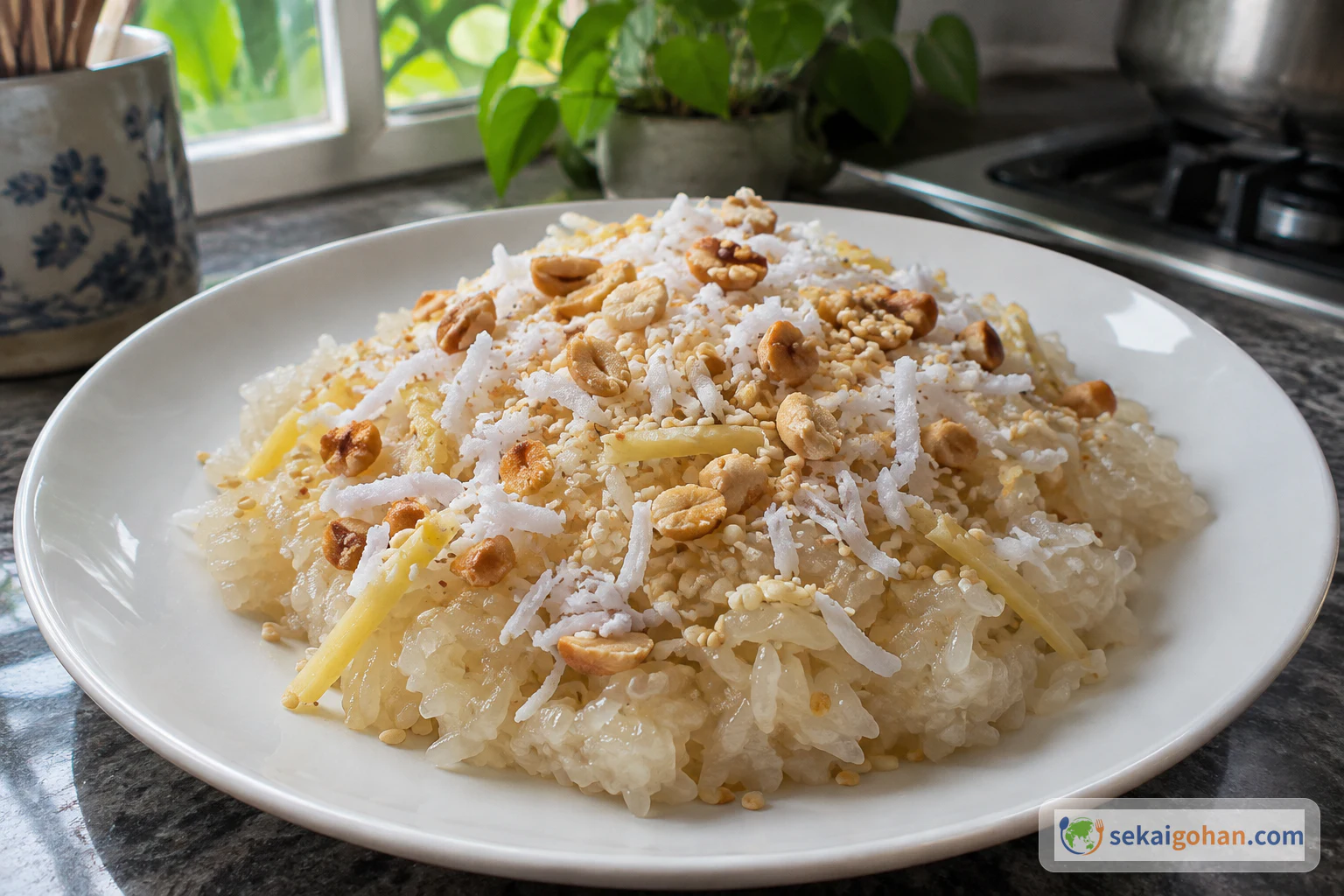
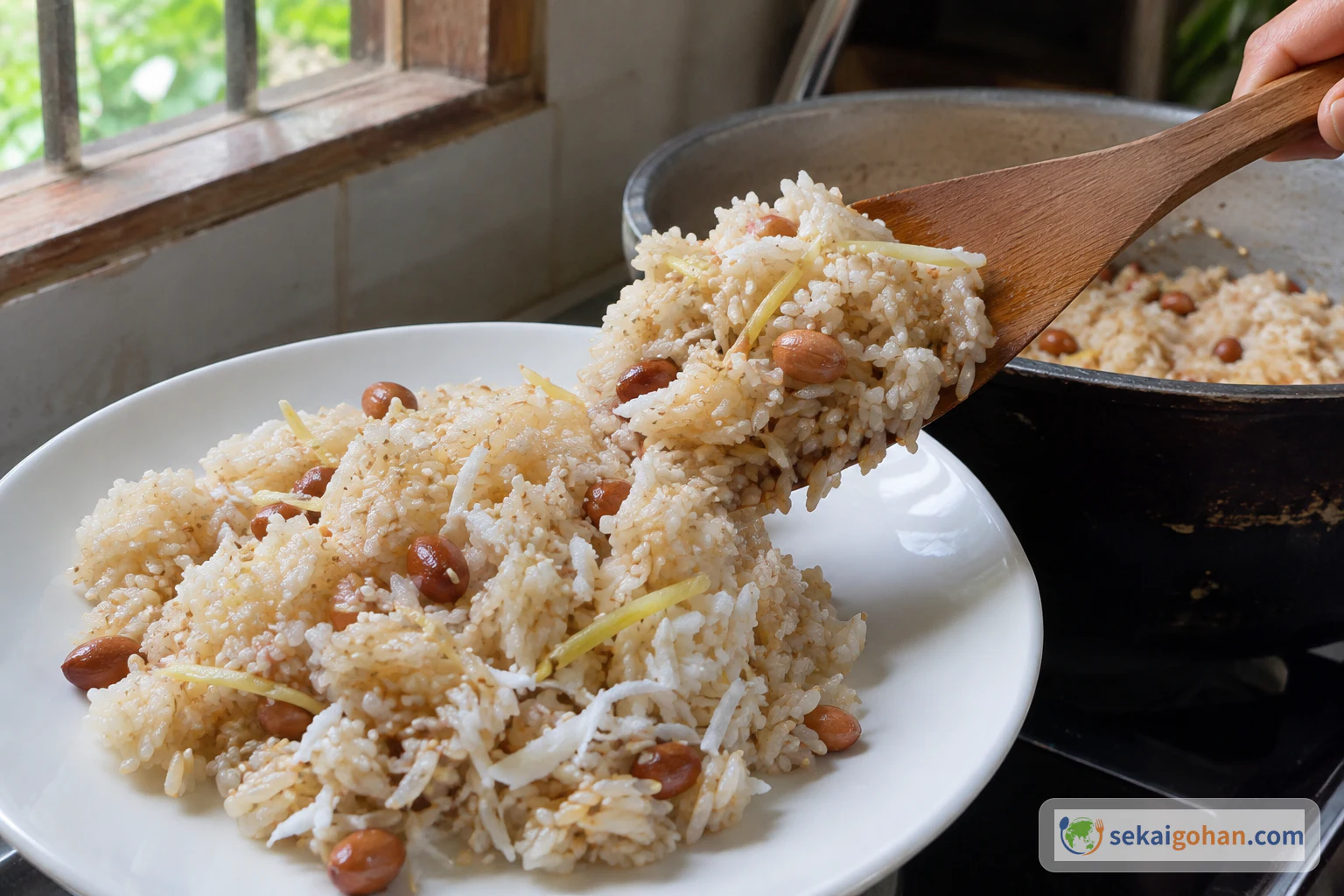
A plain plate of Htamanè: glossy sticky rice with thin ginger strips, chopped roasted peanuts, sesame and shredded fresh coconut
Cuisine
Myanmar

How to make Htamanè (Htamane, ထမနဲ), sticky rice cooked with oil and ginger, then kneaded with roasted peanuts, sesame and fresh coconut. Includes one cookbook version with its original amounts, ingredient choices, and the Tabodwe full-moon festival behind the dish.

Cooking flow

Cooking steps

STEP11 / 6

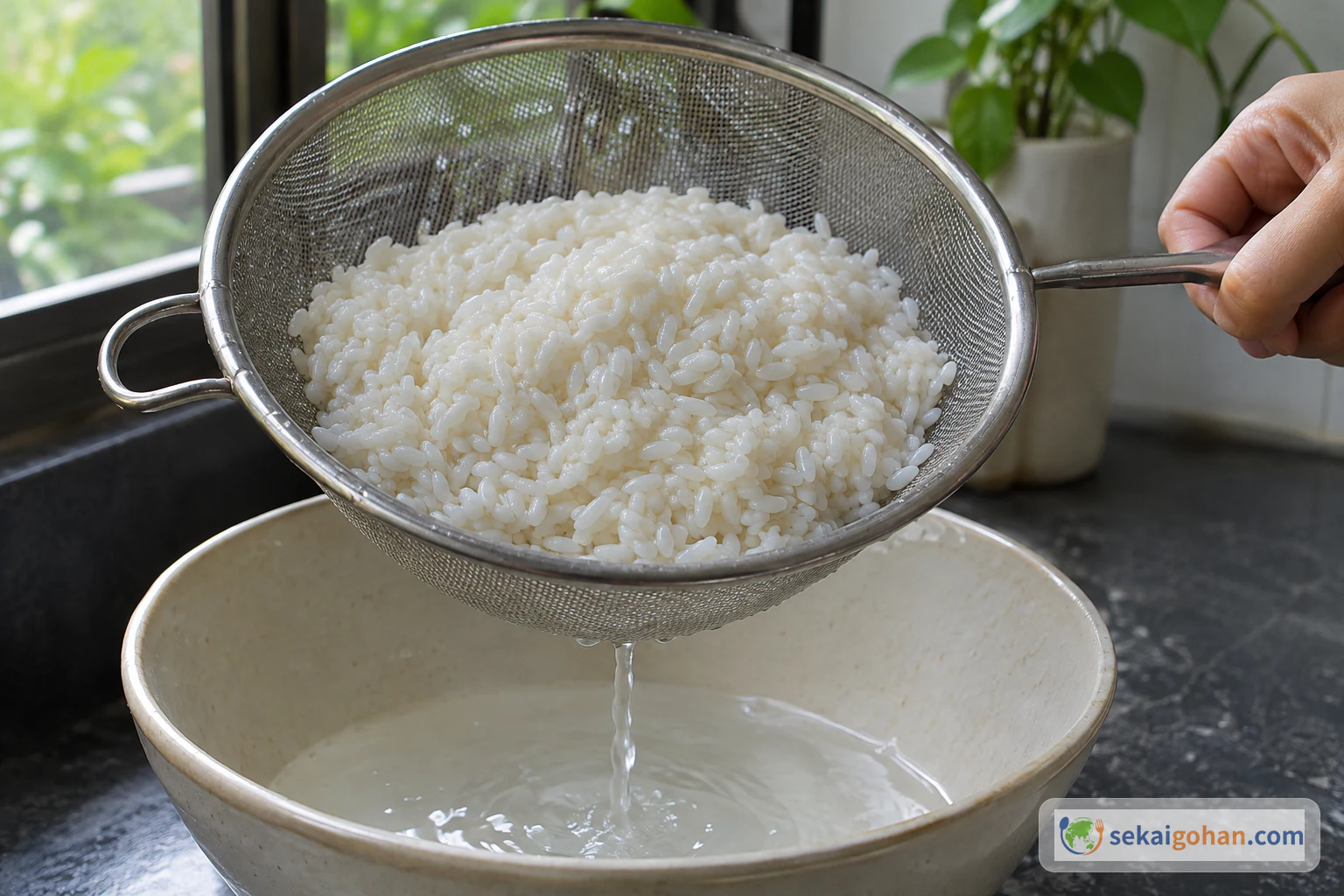
Soak and drain the rice

Soaked glutinous rice draining through a fine sieve into a bowl
The rice is still uncooked at this stage

Put 1.5 lb (675 g) glutinous rice in a food-safe bowl and cover it with water. Keep the bowl in the refrigerator overnight rather than at room temperature. Tip the soaked rice into a fine sieve set over a bowl and let the water run off. The rice is still uncooked at this stage.

STEP22 / 6

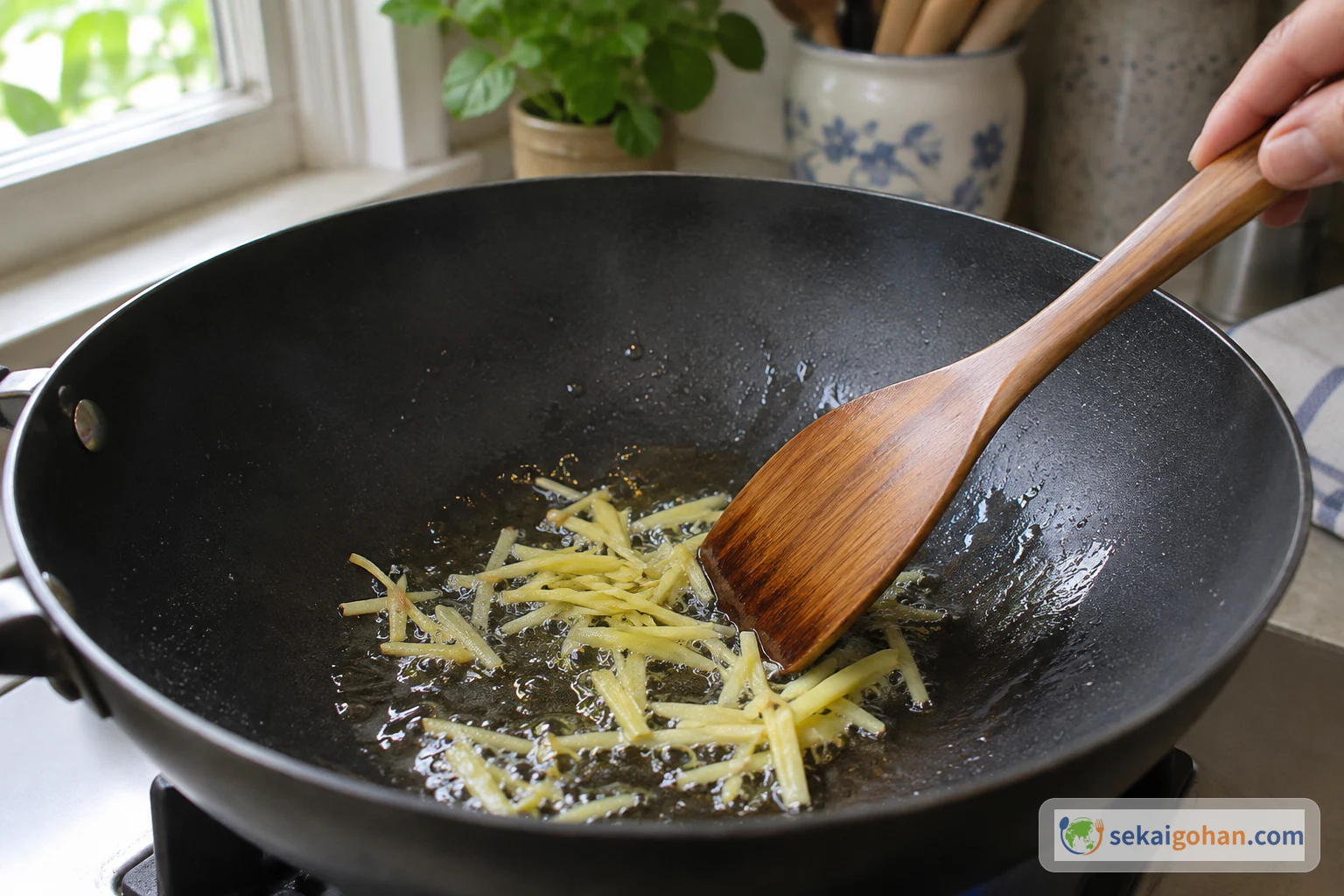
Fry the ginger in the oil

A wooden spatula stirring thin ginger strips in hot oil
Thin, long strips of ginger in the hot oil

Pour ½ cup (125 ml) peanut oil into a wide, heavy pot and heat it over medium-high heat. Add the ginger strips and stir with a wooden spatula for 30 seconds. The thin, long strips should be sitting in the hot oil.

STEP33 / 6

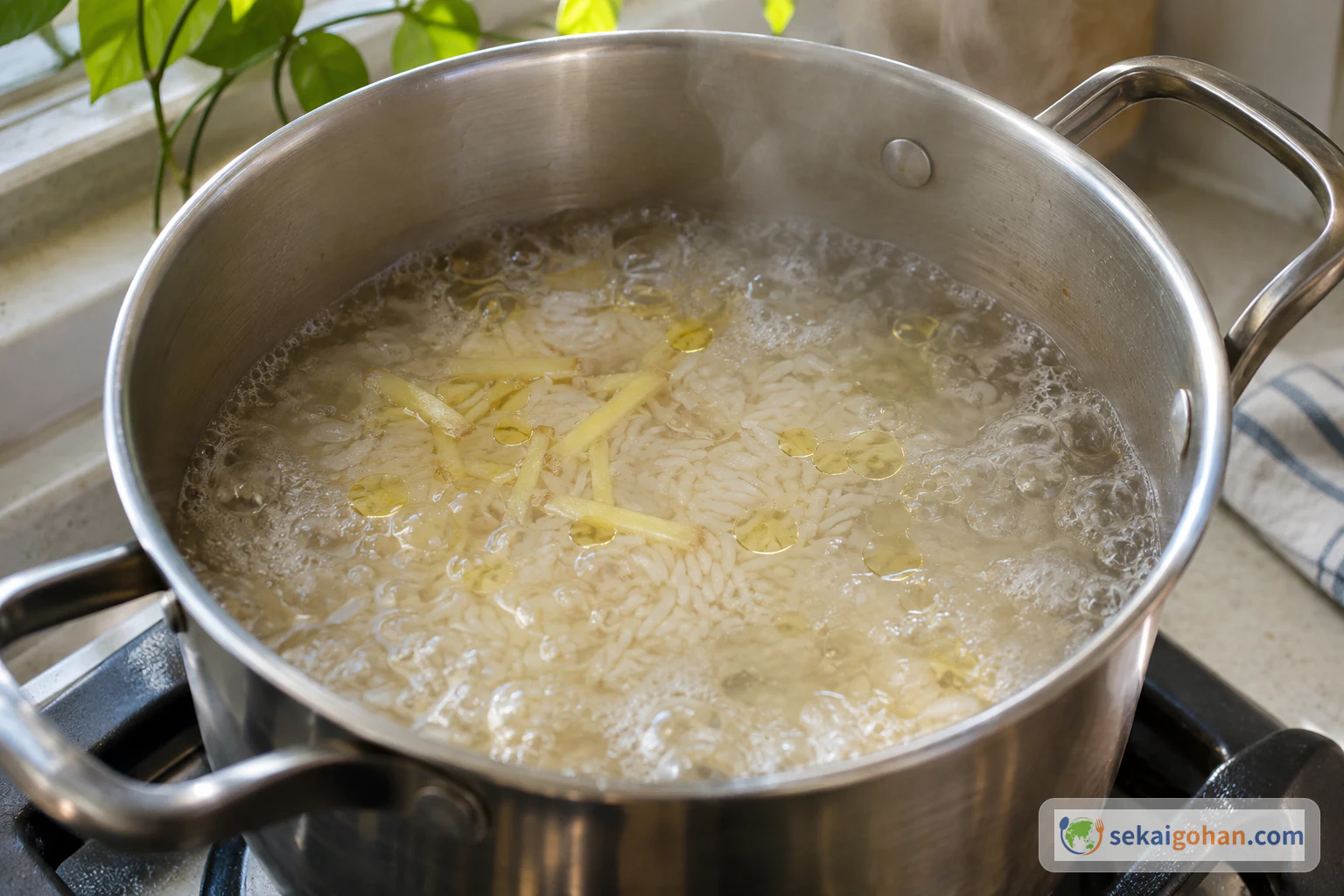
Add the rice, water and salt, and bring to a boil

An uncovered pot of rice, water, ginger and oil at a boil
Bring everything to a full boil before lowering the heat

Carefully tip the drained rice into the hot oil and ginger. Don't fry the rice for any length of time. Go straight on to the water. Pour in 1¼ cups (310 ml) water and add 2 teaspoons salt. Leave the pot uncovered and bring it to a full boil before lowering the heat.

STEP44 / 6

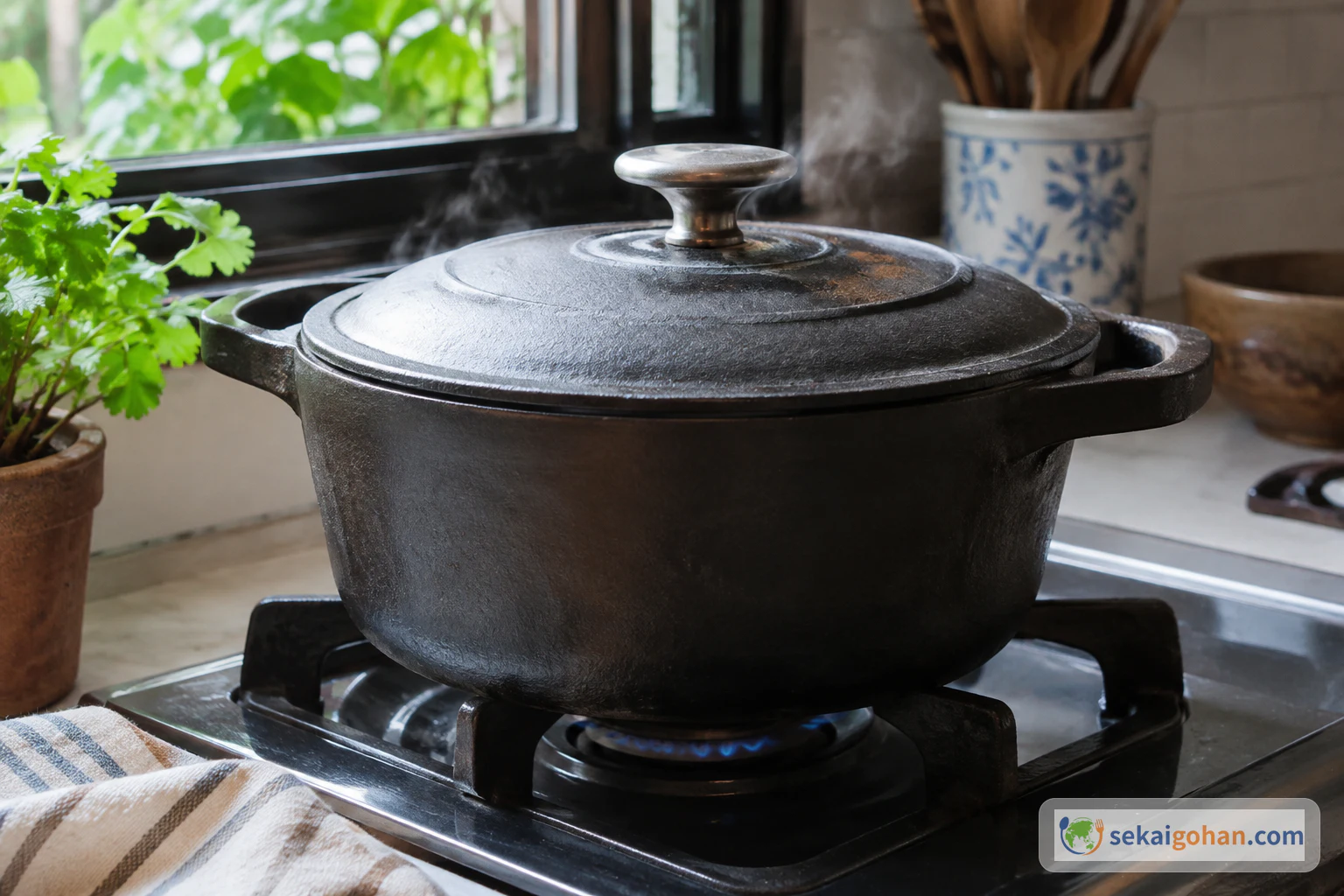
Cover and simmer for 20 minutes

A covered heavy pot over a low flame with a little steam near the lid
Keep the heat low

Lower the heat, put the lid on the pot and simmer the rice over low heat for 20 minutes. During that time, lift the lid from time to time and stir the rice and ginger with the spatula. Replace the lid after each stir. Keep the heat low throughout.

STEP55 / 6

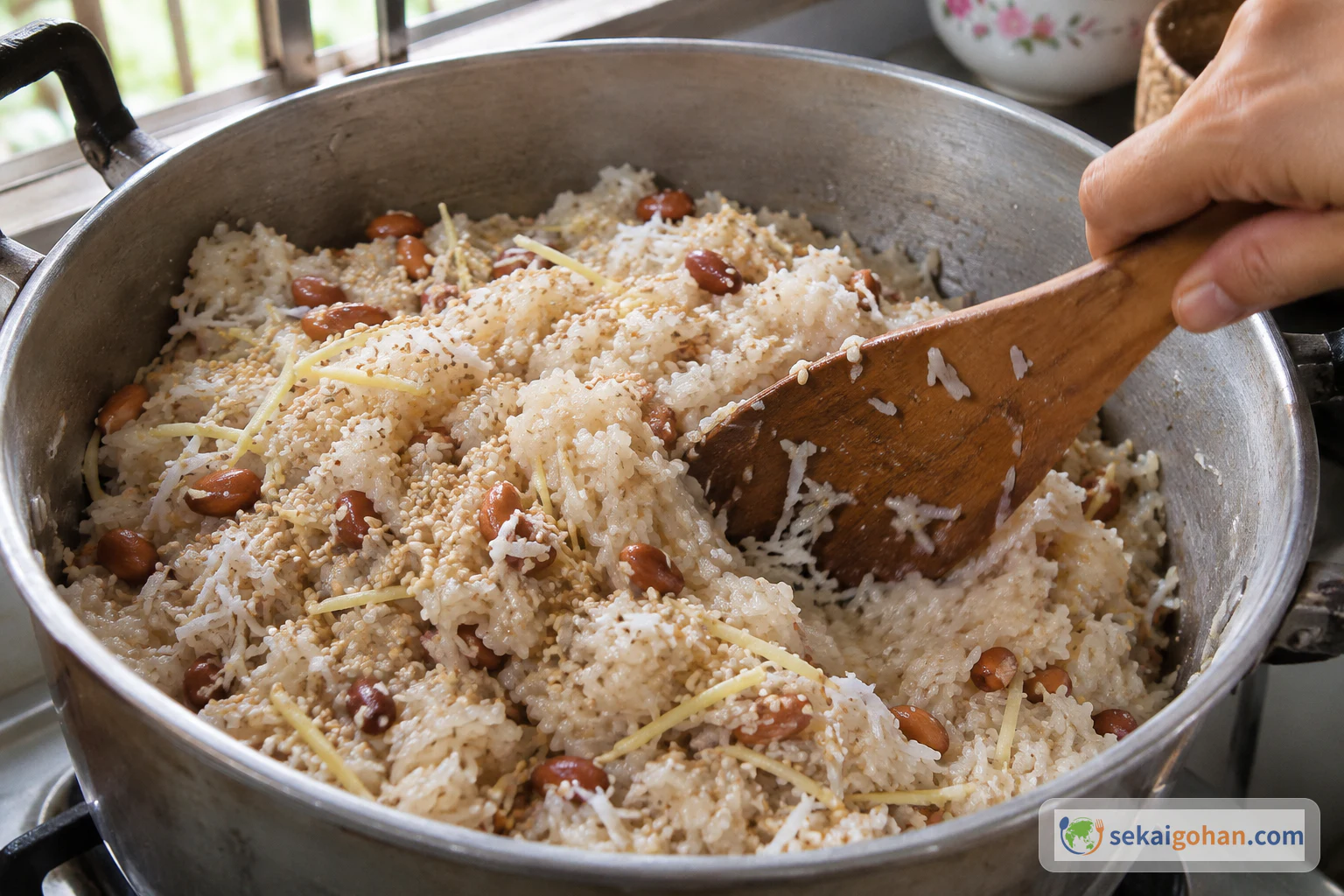
Add the peanuts, sesame and coconut, and knead

A wooden spatula pressing and folding sticky rice with peanuts, sesame and coconut in an uncovered pot
Press and fold the rice with the spatula

Add 3.5 oz (100 g) chopped roasted peanuts, 2.75 oz (75 g) sesame seeds and 1.75 oz (50 g) shredded fresh coconut to the rice. With the lid off, cook over low heat for 10 minutes, stirring and kneading the rice with a wooden spatula. Press and fold the mass to soften the grains and keep the rice from sticking to the pan. This is tough work, so keep a firm grip on the spatula and keep it moving.

STEP66 / 6

Drain the oil and plate the rice

A wooden spatula transferring finished sticky rice from the pot onto a plain plate
The finished rice moves to a plain plate

Carefully tilt the pot, hold back the rice with the spatula, and let the oil run into a separate heatproof vessel. The oil is hot, so keep your hands clear. Don't squeeze or filter the rice. Use the spatula to move the rice from the pot to a plate. No garnish is needed.

0 / 0
Ingredients

Ingredients

1 / 1

Ingredients

Ingredient Amount Role
Uncooked glutinous rice 675 g (3 cups) The body of the dish
Water, for soaking as needed Keeps the rice submerged overnight
Peanut oil 125 ml Cooks the ginger and stays in the pot until the final draining
Fresh ginger, julienned into very thin strips 5 cm (2 inches) Aromatic base
Water, for cooking 310 ml (1 1/4 cups) Simmers the rice
Salt 2 teaspoons Seasoning
Roasted peanuts, coarsely chopped 100 g Added for the kneading stage
Sesame seeds 75 g Added for the kneading stage
Shredded fresh coconut 50 g Added for the kneading stage
0 / 0

On the full moon day of Tabodwe, people across Myanmar gather to cook glutinous rice together. The food is offered at dawn and then shared with everyone who came, and there are competitions too. The dish at the center of all this is Htamanè, also spelled Htamane and written ထမနဲ in Burmese: sticky rice simmered with oil and ginger, then kneaded with roasted peanuts, sesame seeds and fresh coconut until it turns into one rich, filling mass.

Htamanè and the Tabodwe Festival

The Htamane festival falls on the full moon of Tabodwe, in February, and Htamanè is tied to the harvest season of January and February. It is shared among neighbors and offered to monasteries. Cooking it is a group effort for a reason: the kneading is very tough work.

The method is simple to describe. Oil and ginger go into the pot first, followed by soaked rice, water and salt. Once the rice has simmered, you add the peanuts, sesame and coconut, then keep stirring and kneading the mixture with a wooden spatula over low heat. That long kneading gives the dish its character, and your arm will feel it. More dishes from the country are on the Myanmar page.

Ingredients
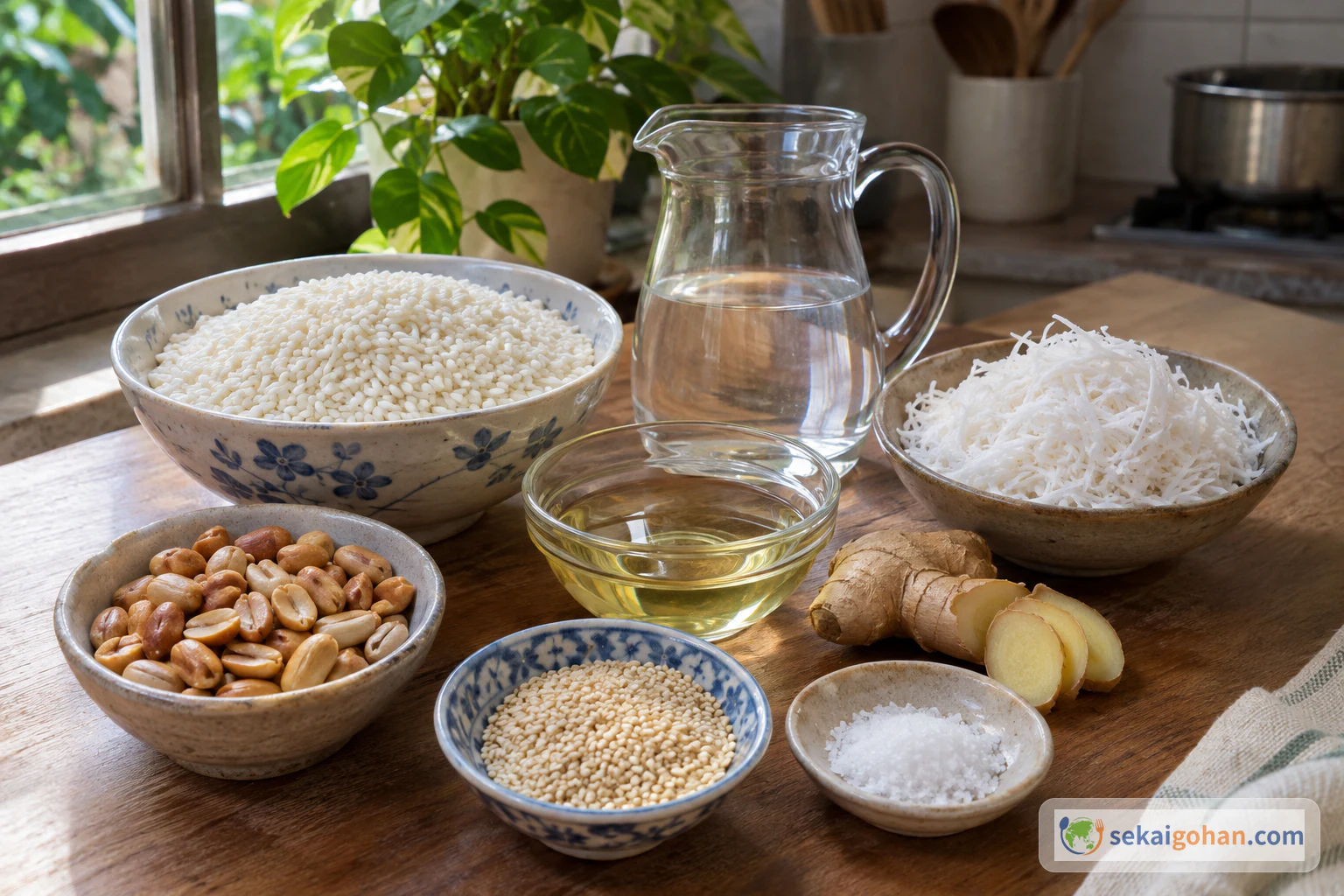
Separate bowls of uncooked glutinous rice, oil, peanuts, sesame, salt and shredded coconut, with ginger and a pitcher of water
Everything for the pot, set out separately before cooking
Allergies and cross-contact

This dish contains peanuts, peanut oil, sesame and coconut. If you are cooking for someone with a food allergy, check each product's label and take care with shared pots, spatulas and boards.

Equipment

  • Food-safe bowl for soaking
  • Fine sieve and a bowl to drain into
  • Wide, heavy pot with a lid
  • Wooden spatula
  • Separate heatproof vessel for the drained oil
  • Plain plate

Choosing Ingredients for Htamanè

  • Rice: Choose rice sold as glutinous rice. Japanese glutinous rice (mochigome) also works well.
  • Oil: Peanut oil is the base here. If you don't have it, use a neutral vegetable oil.
  • Peanuts: Unsalted roasted peanuts are a close match. Chop them coarsely; uneven pieces are fine.
  • Sesame: White or black sesame seeds both work, and they go in without a separate toasting step.
  • Coconut: If fresh coconut is hard to find, use frozen fresh coconut. Skip desiccated coconut, because its moisture and texture are different.

Method: From Soaked Grains to a Kneaded Mass

How to read the photos and times

The photos show each action. Follow the times and heat settings in the steps, and don't judge doneness by appearance alone.

Troubleshooting Htamanè

What you notice What to check What to do
Rice is catching on the bottom of the pan Heat level and how often the spatula is moving Keep the heat low and keep stirring and kneading
Grains still seem firm during kneading Whether you are pressing the rice or only turning it Press and fold the mass against the pot
There is visible oil in the pot at the end This is expected; the oil stays in the pot until the final step Tilt the pot and drain what runs off, without squeezing the rice
Your arm tires before the kneading is done The kneading is demanding by nature If someone else is in the kitchen, take turns

Serving and Variations

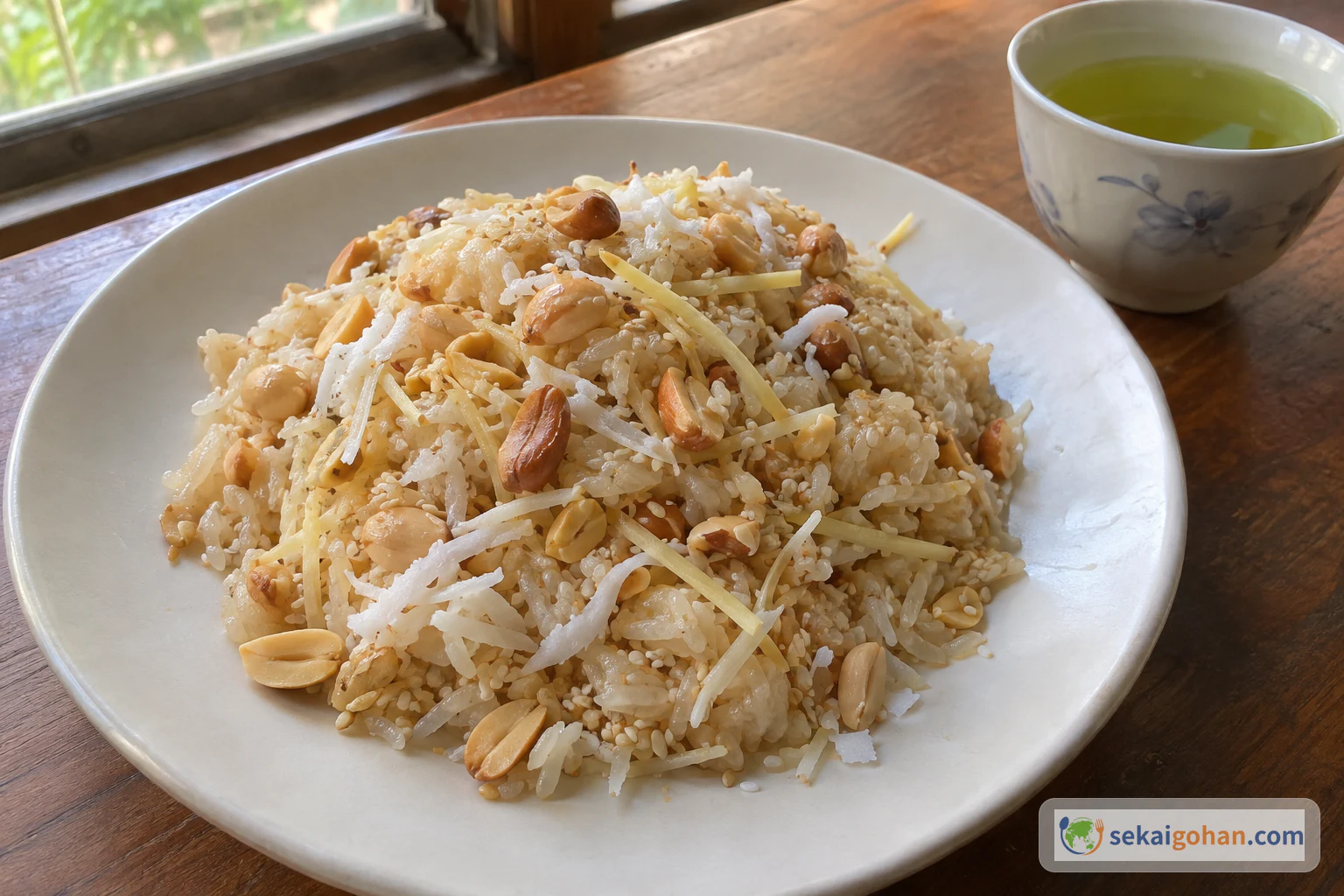
A plain plate of finished Htamanè beside a separate cup of green tea
Green tea is an optional accompaniment

Serve Htamanè on a plain plate, with a cup of green tea alongside if you like. The rice needs no garnish.

Kitchens make it in different ways. One home method fries garlic with the ginger, simmers the rice and water covered for 20–25 minutes, and kneads with two spatulas for 15–20 minutes. Its garlic and timings differ from the method above, so treat it as a separate approach rather than mixing the two.

Frequently Asked Questions

Is Htamanè sweet?

It is often described as "sweet and filling," yet the ingredient list contains no sugar. The richness comes from the peanuts, sesame, coconut and oil.

Can I measure with cups instead?

Use the grams and milliliters. Cup measures are given only for the rice and water.

Is this the same as hsi htamin?

No. Hsi htamin is also made with glutinous rice, but it is a different dish cooked with onion and turmeric. Htamanè is defined by its peanuts, sesame, coconut and kneading.
Sources