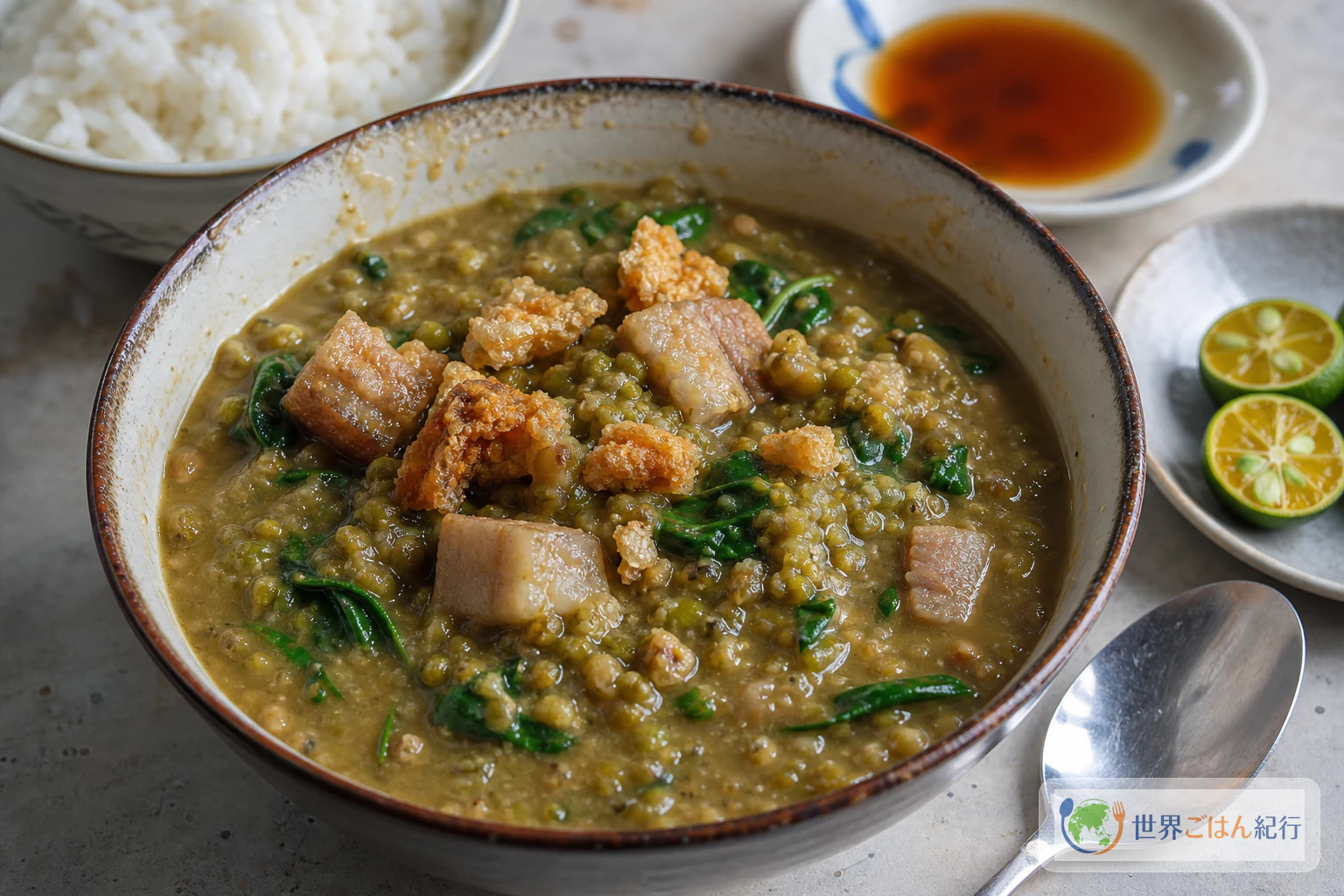
Monggo in English is mung beans. Monggo (also spelled munggo or mongo) also names the Filipino dish made from them: a mung bean soup, also called ginisang munggo ("sautéed mung beans"), where the beans are simmered soft and combined with sautéed garlic, onion and tomato, usually with pork or seafood and greens. It tastes mildly sweet and earthy from the beans, with a salty edge from fish sauce, and it is eaten over rice.
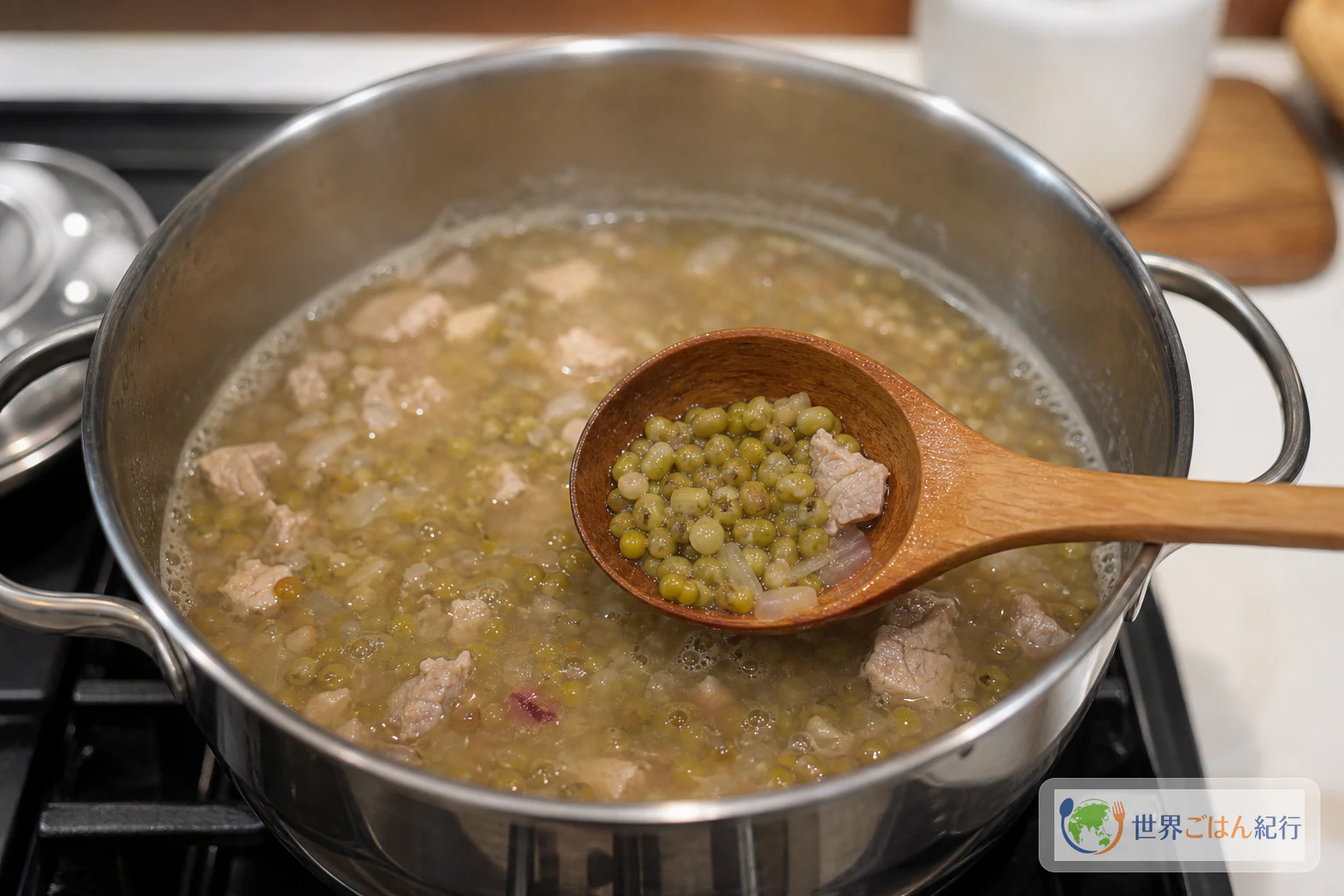
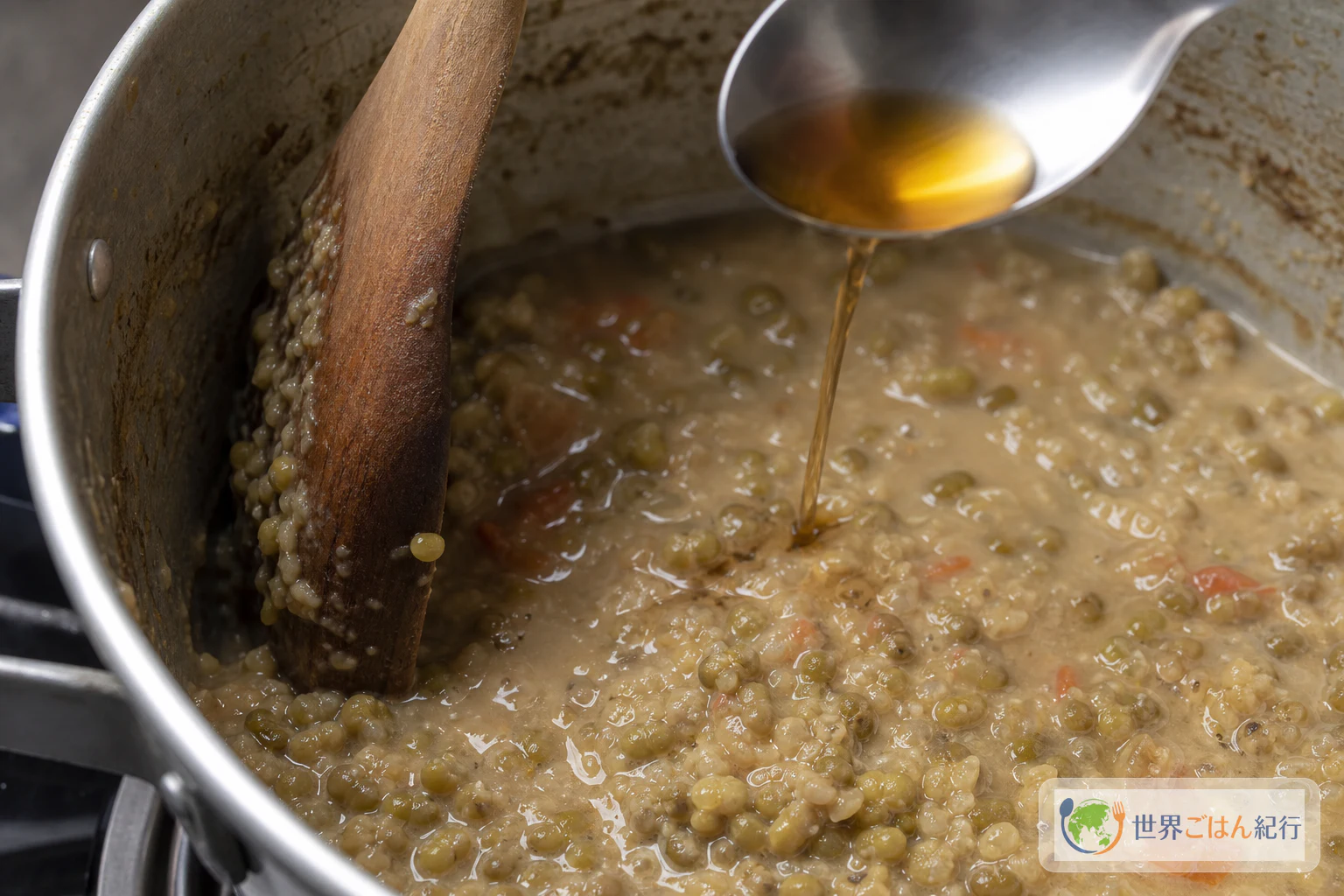
In the pot, the skins of the mung beans begin to split, and when you press them with a wooden spoon they crumble softly. A teaspoon of patis goes in, and beneath the sweet smell of garlic and tomato the salty note of fish sauce rises cleanly. Monggo (also spelled munggo) is a Filipino home dish of mung beans simmered soft and brought together with sautéed garlic, onion and tomato. It's a quietly powerful bean soup for evenings when rice is scooped onto plates and the family gathers at the table. The beans give it sweetness and body, and the fish sauce gives it salt.
What does monggo mean in English?
Monggo is the Filipino word for mung beans, and the same word is used for the dish. Munggo is a common alternate spelling, and ginisang munggo means "sautéed mung beans," the name for the soup version. So "monggo in English" can mean either the beans (mung beans) or the dish (Filipino mung bean soup or stew). The recipe below makes the dish.
Monggo at the Filipino table
Many people know mung beans mainly as the raw material for glass noodles and bean sprouts, but in the Philippines the beans themselves are cooked and eaten. Monggo is also called ginisang munggo, mung bean soup or mung bean stew. The basic method is to simmer the beans until soft, then combine them with garlic, onion, tomato and meat or seafood sautéed separately. Pork monggo with chicharon and malunggay shows the style well.
The phrase "Friday monggo" you sometimes hear in the Philippines comes from the dish's long link to Fridays, when Catholic religious custom calls for going without meat, and to Lent. In Manila and elsewhere, eateries and cafeterias serving monggo on Fridays are a familiar sight. At home, though, it has no single form. Some families make it rich with pork belly or chicharon; others use tinapa (smoked fish), dried shrimp, fresh shrimp or chili leaves, or build it around fish and vegetables. A good first version is a little pork belly and greens, then move toward fish or meatless versions next time.
On a Filipino table, monggo offers a different way in from sinigang, which wakes up the appetite with sourness, bulalo, built on beef-bone broth, or adobo, which drives you to eat more rice with its soy sauce and vinegar. Monggo is more everyday. Keep a bag of dried beans in the pantry and it will carry you through rainy days and evenings when the fridge is nearly empty.
Every version shares one step: sautéed aromatics and fish sauce give the soup its shape. What matters is separating the step that softens the beans from the step that sautés the aromatics. Cook the beans plainly in water until soft, and only then add tomato and fish sauce. That way both the sweetness of the beans and the Filipino-style saltiness come through.
In the Philippines you'll see monggo, munggo and mongo. The dish is also often written ginisang munggo, which translates literally as "sautéed mung beans."
Ingredients (serves 4)
This serves 4, sized as a main dish to go with rice. You'll use 8 oz (220 g) of dried mung beans, and they swell considerably as they cook. The first time, don't scale up too much; it's easier to stop at an amount that leaves a little for the next day.
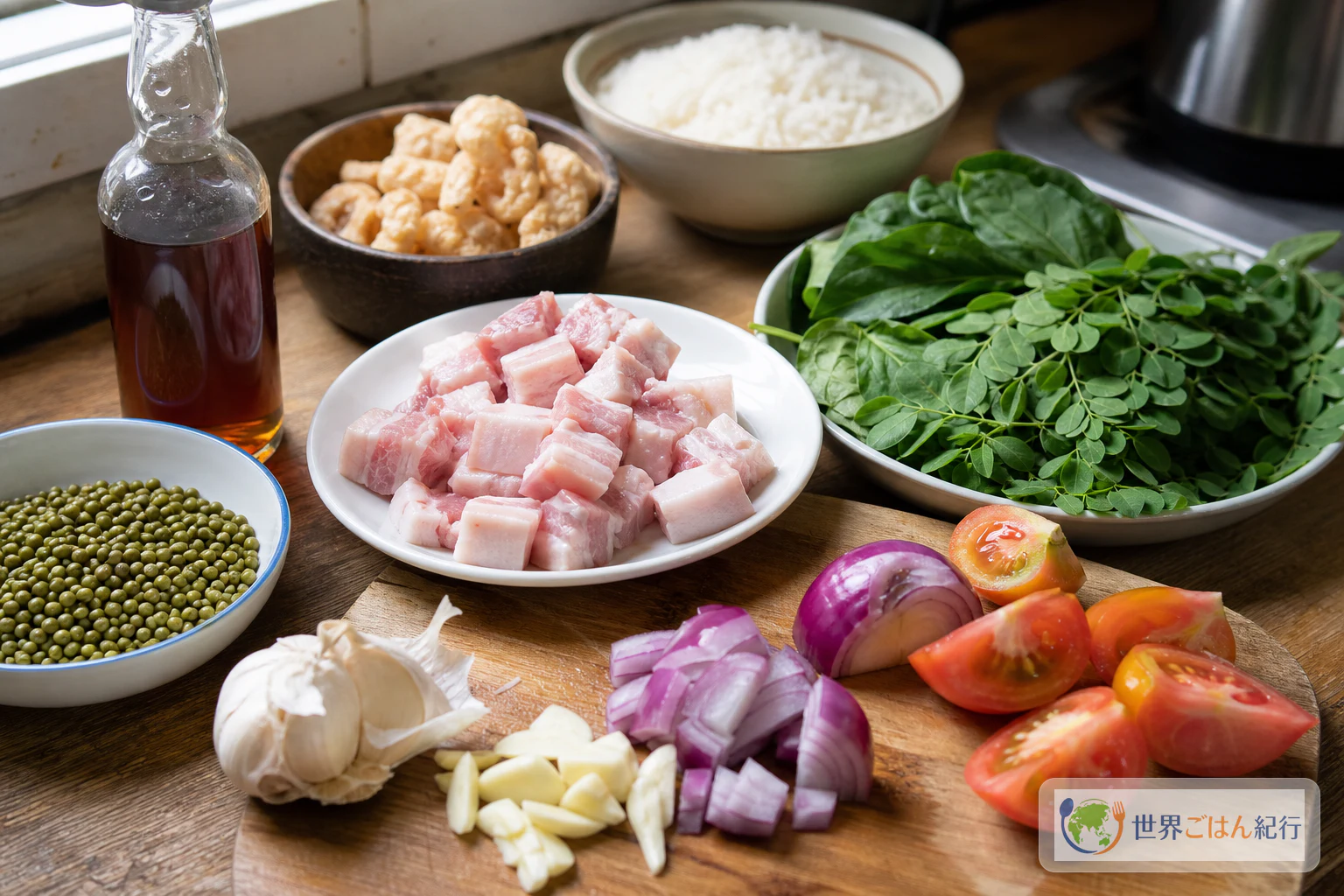
This dish uses pork and fish sauce. For a seafood allergy, leave out the patis and Thai fish sauce and supply the saltiness with 1/2 tsp salt and 2 tsp light soy sauce. Without them the flavor is less Filipino, but it still works as a bean soup. Cook the pork thoroughly to the center, and don't reuse the cutting board or chopsticks that touched raw meat for serving.
Choosing ingredients for monggo
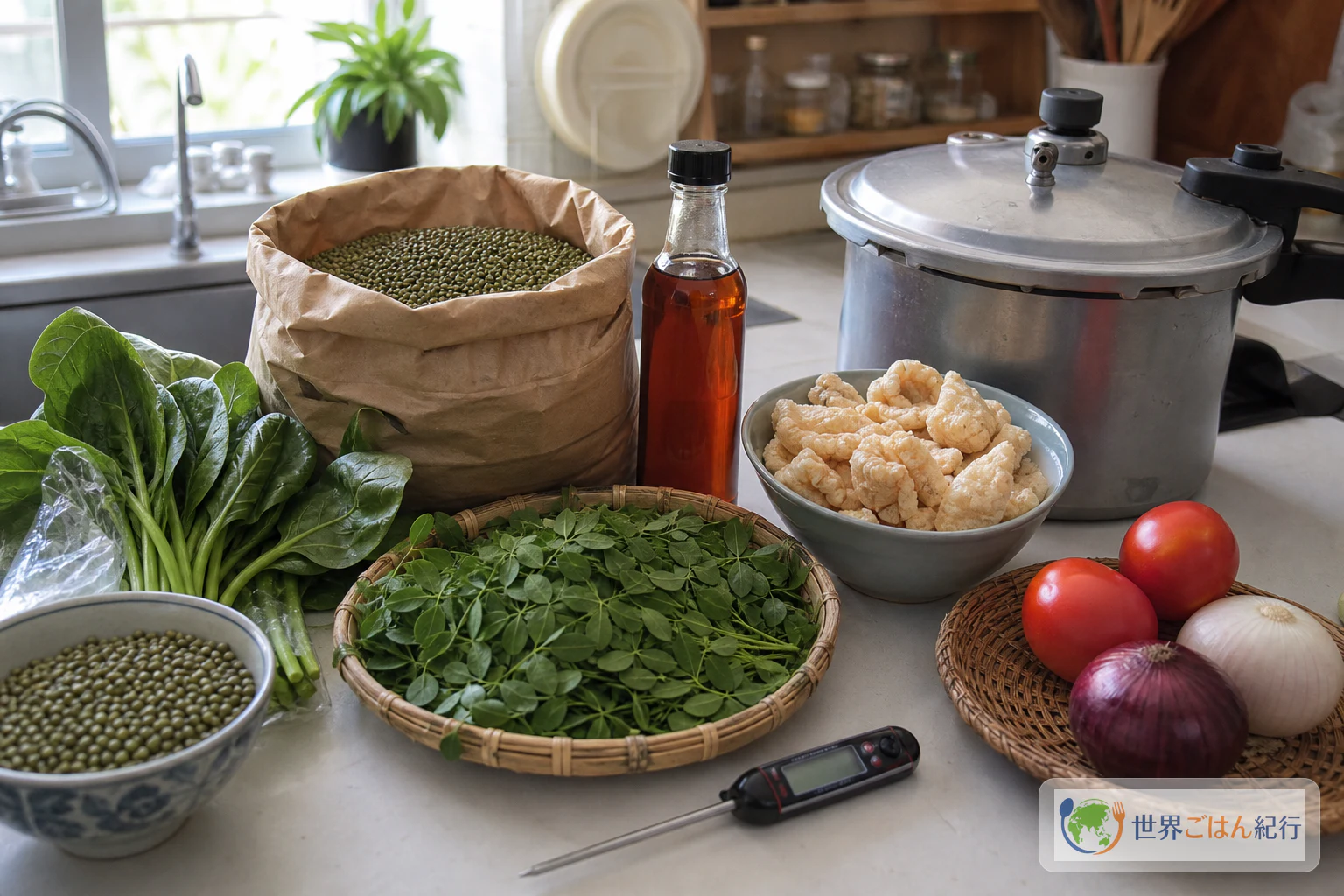
Outside the Philippines, the tricky part is the greens and the saltiness more than the beans themselves. Monggo has few ingredients, so every substitution shows in the flavor. Decide what to keep and where to compromise, and aim for a monggo in which the sweetness of the beans comes first.
Mung beans
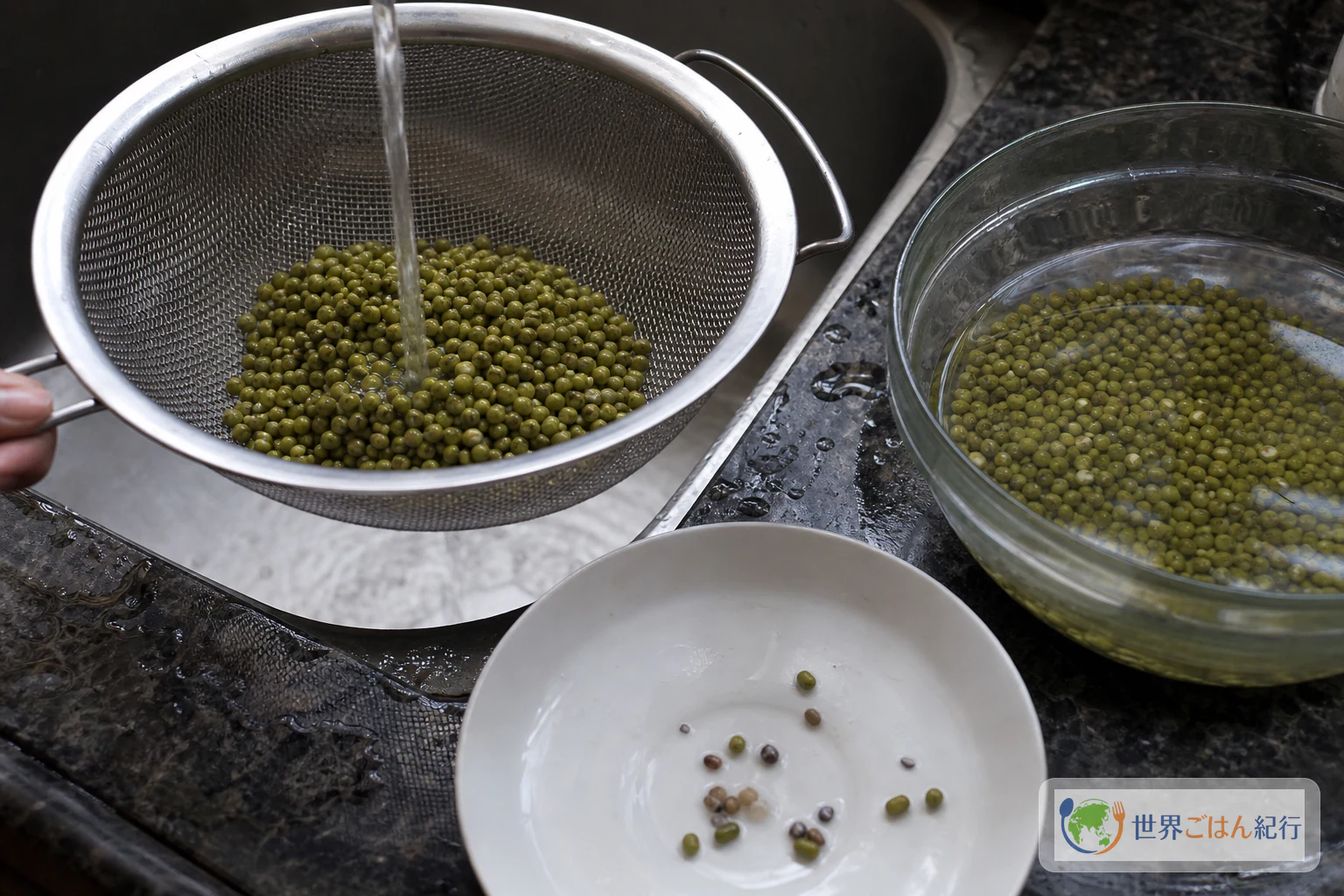
Dried mung beans are sold at Asian grocers, natural food stores and supermarkets with a large selection of beans. Differences between brands are small, so look locally for beans of even size; as they break down, they're what thickens the soup. If the bottom of the bag has a lot of powder and many broken beans, the soup turns cloudy quickly. Rinsing removes most of it, but for your first time, a small bag is the safer start.
Patis
The item worth seeking out online is patis, Filipino fish sauce. It adds a lingering note that salt alone can't give, and in a dish this plain its quality and amount change the character a lot.
Don't add a lot of fish sauce at the start. Put just 1 tbsp in the pot and let everyone add more at the table; that's the way to avoid mistakes.
If you can't find patis, Thai fish sauce (nam pla) works. It's a little less Filipino in character, but compared with salt and soy sauce alone, it keeps a fish-sauce depth between the beans and the pork. If you already have a bottle, try it before buying patis.
Greens, chicharon and equipment
Malunggay (moringa leaves) cuts the heaviness of the beans with its green aroma, but most supermarkets don't carry it. Komatsuna (mustard spinach) on its own tastes too grassy, and spinach on its own falls apart easily, so combine a little moringa leaf with spinach and komatsuna. Mung beans cook without soaking, but if you'll make monggo often, a pressure cooker makes it easier to fit into weeknight dinners.
| Point to decide | Using the original | Substituting | Notes when substituting |
|---|---|---|---|
| Malunggay | Light green aroma; doesn't sink into the beans | Combine 4 oz (120 g) spinach and 3.5 oz (100 g) komatsuna | With spinach alone, don't blanch it first; add it briefly at the end |
| Chicharon | Gives the toasty, salty note of pork skin | Crisp bacon; tempura crumbs won't work | Keep bacon to about 1 oz (30 g) or its smokiness takes over; tempura crumbs and snack chips bring a frying-oil aroma |
| Pork | Even a little adds broth and fat | Shrimp, dried shrimp, smoked fish | Seafood toughens if overcooked, so add it in the latter half |
| Patis | The lingering note of Filipino fish sauce | Thai fish sauce, light soy sauce | Soy sauce alone tastes flat. Cut back on salt and adjust |
| Bean consistency | Both thickness and whole beans remain | Add water for a soupier result | Adding only water after over-mashing makes it bland |
Method
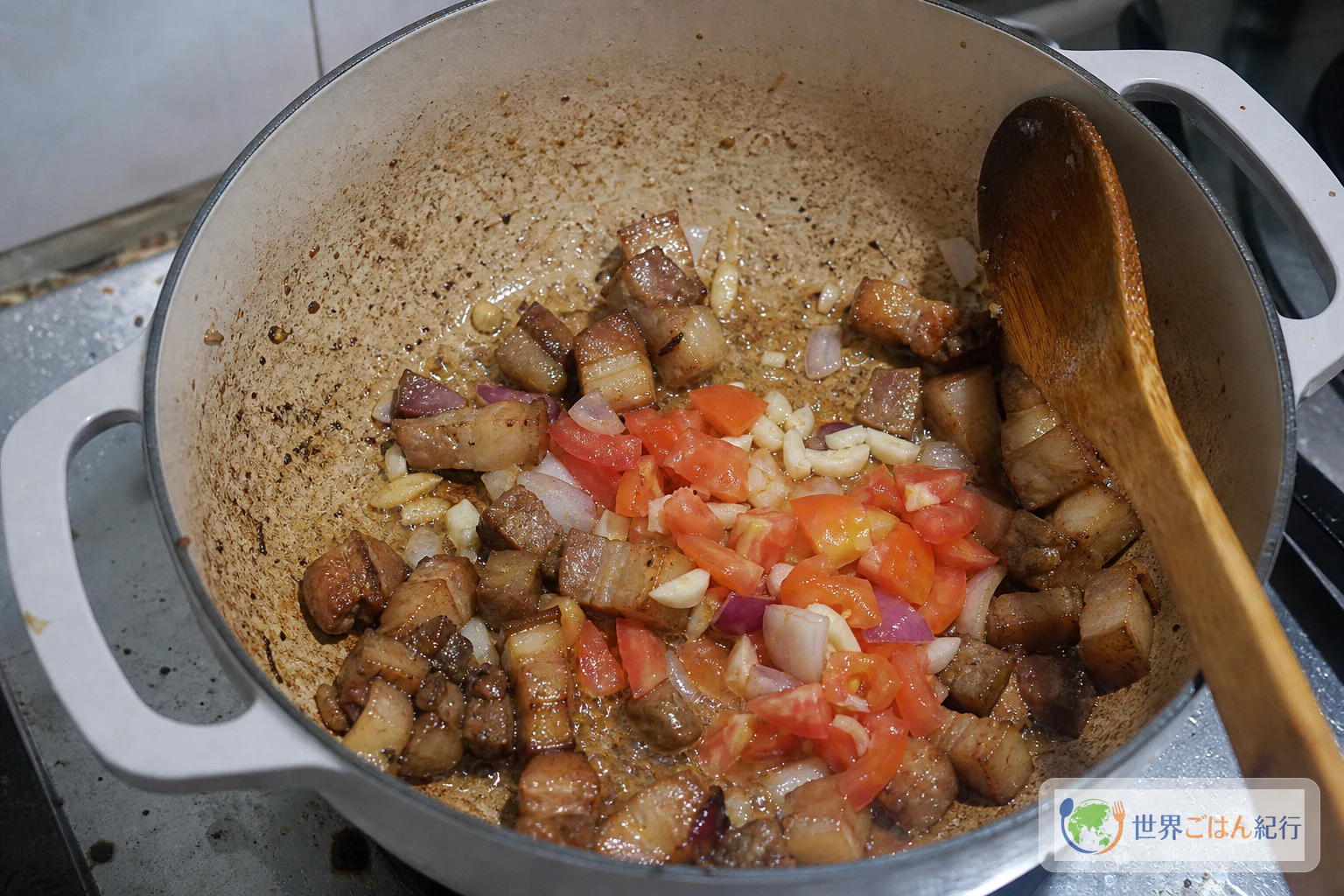
Monggo looks like a quick dish, but if you put everything in the pot at once, the beans stay hard while the tomato falls apart and the saltiness of the fish sauce takes over. Rinse the beans; sauté the pork and aromatics; simmer the beans; season and mash them a little; finish briefly with the greens. Follow this order and you won't get lost in the kitchen.
Common problems with monggo
Mung beans vary a lot from bag to bag in how they cook, so expect to adjust as you go.
The beans are hard
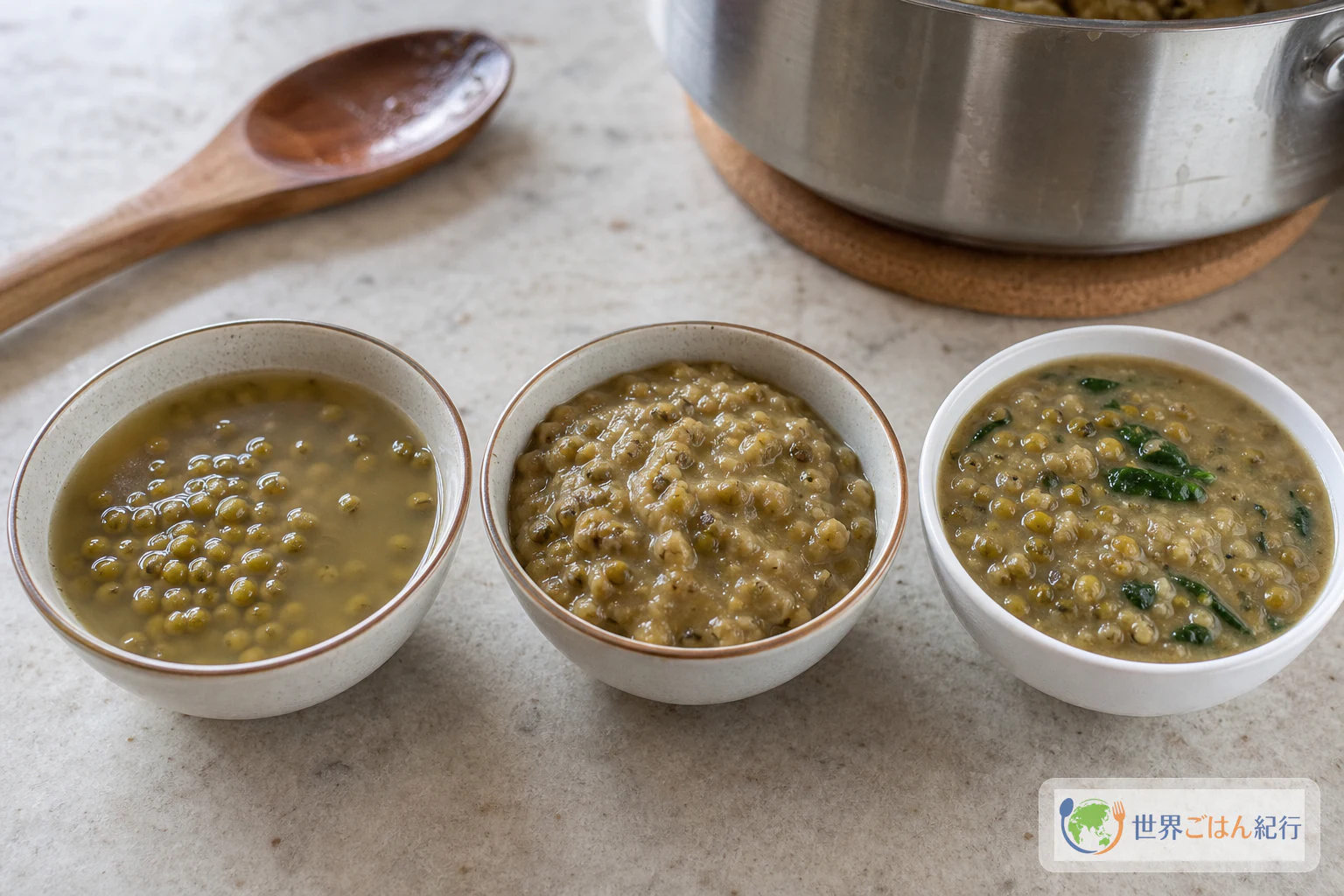
Either the simmering time was too short or the beans are old; old beans can stay firm even after 30 minutes. Don't cover it up with more fish sauce; add ½ cup (100 ml) water and simmer on low for another 10 minutes. If you make it salty early, the firmness of the beans becomes even more noticeable. When a bean breaks into a powdery mash between your fingers, it's almost there; a hard, translucent center means it needs more time.
It's watery
You've hardly mashed any beans. Simmer for 5 minutes over medium-low while pressing beans against the side of the pot with a wooden spoon. Cooking off the liquid risks scorching the bottom, so mashing for body is the more reliable fix.
The fish sauce smells too strong
Either you added too much, or it boiled hard over high heat after the fish sauce went in. If it's already strong, add ½ cup (100 ml) water, serve it with rice, and squeeze in a little calamansi or sudachi to make it easier to eat. Next time, put no more than 1 tbsp in the pot and add the rest at the table.
The greens have turned dark
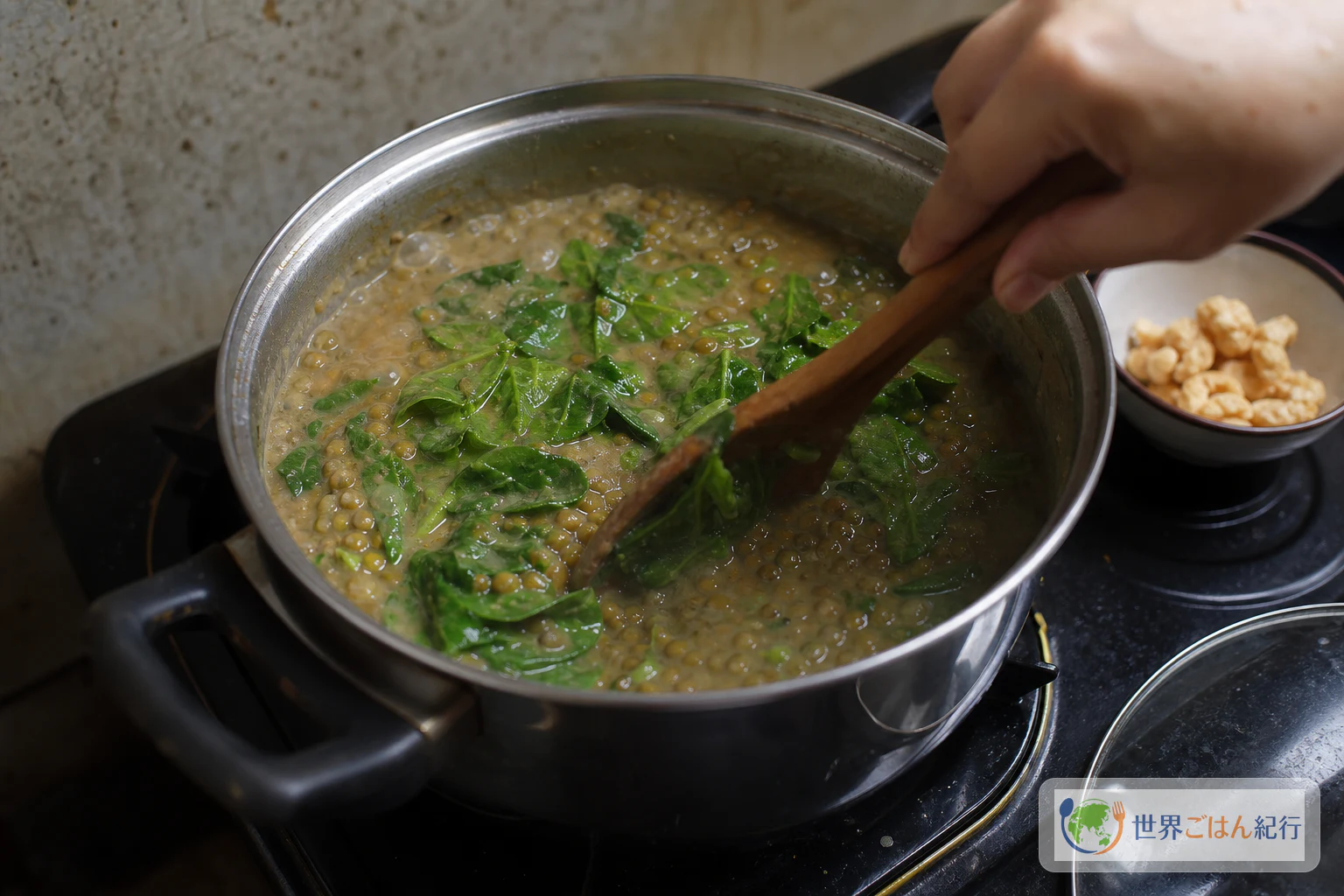
The greens cooked too long. Think of monggo as a dish where you sink the greens in at the end, and you'll make fewer mistakes. Turn off the heat once spinach or komatsuna leaves have wilted and deepened in color.
Serving and storing monggo
Serving and pairing
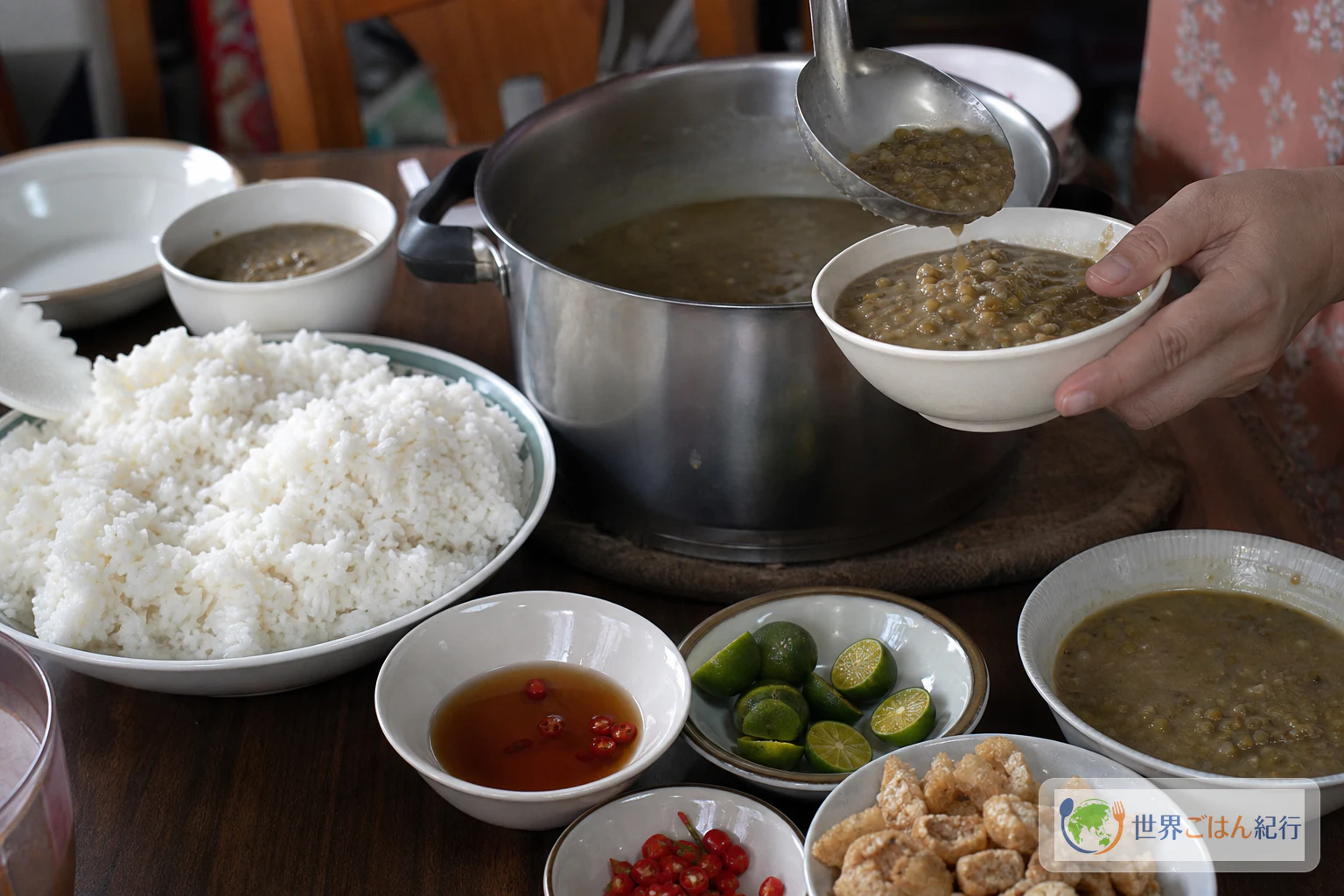
Monggo is closer to a dish for rice than to a soup, though it changes character depending on whether you pour it over rice or set it alongside in a bowl. Cook the rice slightly firm and let it soak up the broth at the table. The natural Filipino way is to lay out white rice, fish sauce, something sour and chiles, and let everyone adjust on their own plate. Leave the final seasoning to the table rather than perfecting it in the pot.
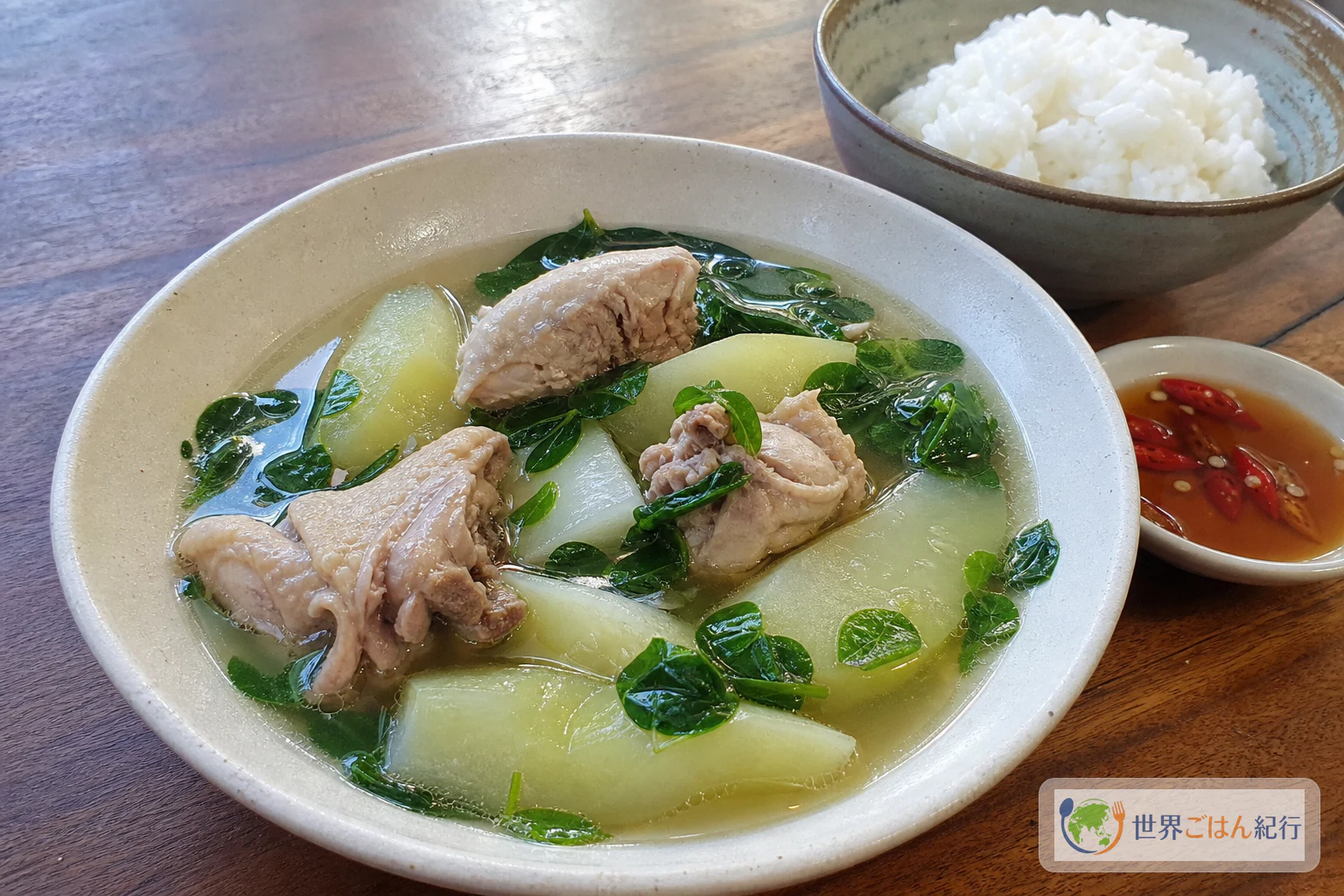
With pork monggo, a light main dish is plenty. A little adobo, defined by vinegar and soy sauce, keeps the rice going. On days you want vegetable sourness, a simple salad of tomato, cucumber and onion keeps things from getting heavy better than another soup like sinigang. For a festive spread, small portions of sweet-savory embutido or peanut-rich kare-kare strike a good balance. And on days when you want a clear, gingery chicken soup instead of thick beans, tinola, with green papaya and malunggay, is a good match.
| Occasion | Serve with | Why |
|---|---|---|
| Rainy-day dinner | White rice, patis, sudachi | The sweetness of the beans and the salt of the fish sauce are satisfying on their own |
| Meatless days | Dried shrimp, greens, tomato salad | Even without pork, seafood savoriness and sourness keep it from tasting thin |
| Next to a big shared spread | Adobo, pancit, light pickles | The gentleness of the beans sits well between sweet-savory dishes |
| The next morning | Thin with water, reheat, and pour over rice | Loosening the thickened beans makes it easy to eat, like rice porridge |
Storage and make-ahead
Monggo keeps about 2 days in the refrigerator. Let it cool, then transfer it to a storage container without the chicharon. By the next day the beans absorb liquid and become quite thick, so add ½ cup (100 ml) to ½ cup (150 ml) of water or light chicken stock and bring it back slowly over low heat. To reheat in a microwave, put it in a deep bowl with the plastic wrap slightly open, heat for 2 minutes at 600 W, stir, and continue 1 minute at a time, checking as you go.
You can freeze it, but the greens lose their texture. For a cleaner result, portion out only the bean soup before the greens go in, and finish with fresh greens after thawing. Always serve chicharon separately. Stored mixed in, it loses its crunch and leaves only saltiness behind.
Frequently asked questions
What is monggo in English?
Monggo is mung beans. The same word names the Filipino dish ginisang munggo, a mung bean soup or stew simmered with garlic, onion, tomato and usually pork and greens.
Is monggo the same as munggo?
Yes. Monggo, munggo and mongo are different spellings of the same word, and ginisang munggo is the dish name most often used for the sautéed mung bean soup.
What does monggo taste like?
The beans give it a mild sweetness and soft body, and sautéed garlic, onion and tomato add depth. Fish sauce brings the saltiness, and chicharon adds crunch if you serve it on top.
Do mung beans need to soak overnight?
No. Rinsing them and letting them sit for about 10 minutes is enough. Old or large beans cook more slowly, so extend the simmering by 10 minutes for those. Soaking overnight makes them break down quickly and turn pasty.
Can I make it without meat?
Yes. Soak 10 g dried shrimp in ½ cup (100 ml) lukewarm water and add it with its soaking liquid in step 3 so the flavor doesn't turn thin. To avoid seafood completely, add 1 more clove of garlic and finish with an extra 1 tsp oil. If you also leave out the patis, though, it becomes closer to a vegetable bean soup than a Filipino-style dish.
I don't have malunggay. Is spinach alone okay?
Spinach alone works. Chop it roughly and add it unblanched at the end; mixing in komatsuna helps keep the leaves from sinking too much. Avoid shungiku (chrysanthemum greens) the first time, since its strong aroma easily masks the sweetness of the beans.
Can I make the whole thing in a pressure cooker?
Use it only to soften the beans. Cook the mung beans and water at high pressure for 6 minutes, let the pressure release naturally for 10 minutes, then move to a regular pot and combine with the separately sautéed pork and aromatics. This makes it easier to control the color of the greens and the thickness of the beans. Pressure-cooking after the greens and fish sauce go in muddies the aroma and dulls the leaves.
Don't rush the beans, and add the fish sauce at the table
Monggo is a modest dish made from dried mung beans, garlic, onion, tomato and a little pork. But three things take it from a plain bean soup to Filipino home cooking: soften the beans without rushing, don't put too much fish sauce in the pot, and add the greens briefly at the end.
You don't need perfect patis, greens and chicharon from the start. What to protect is the body of the beans, a saltiness that suits rice, and room for everyone to adjust at the table. To explore Filipino cooking further, try the vegetable stew pinakbet, the chicken soup tinola, or move on to bulalo, which uses fish sauce the same way, or to sinigang for more sourness, and the ingredients in your kitchen will start to connect.