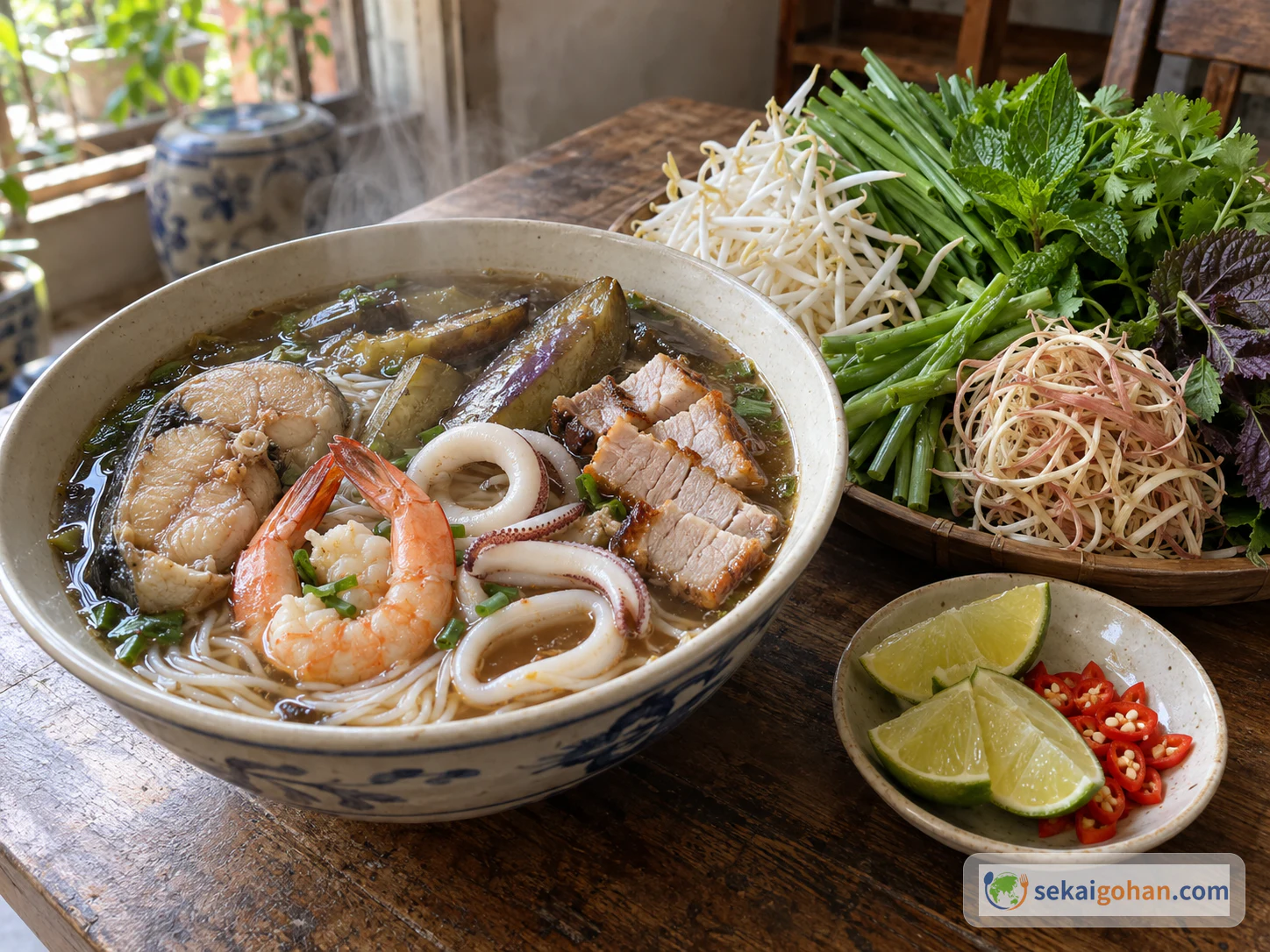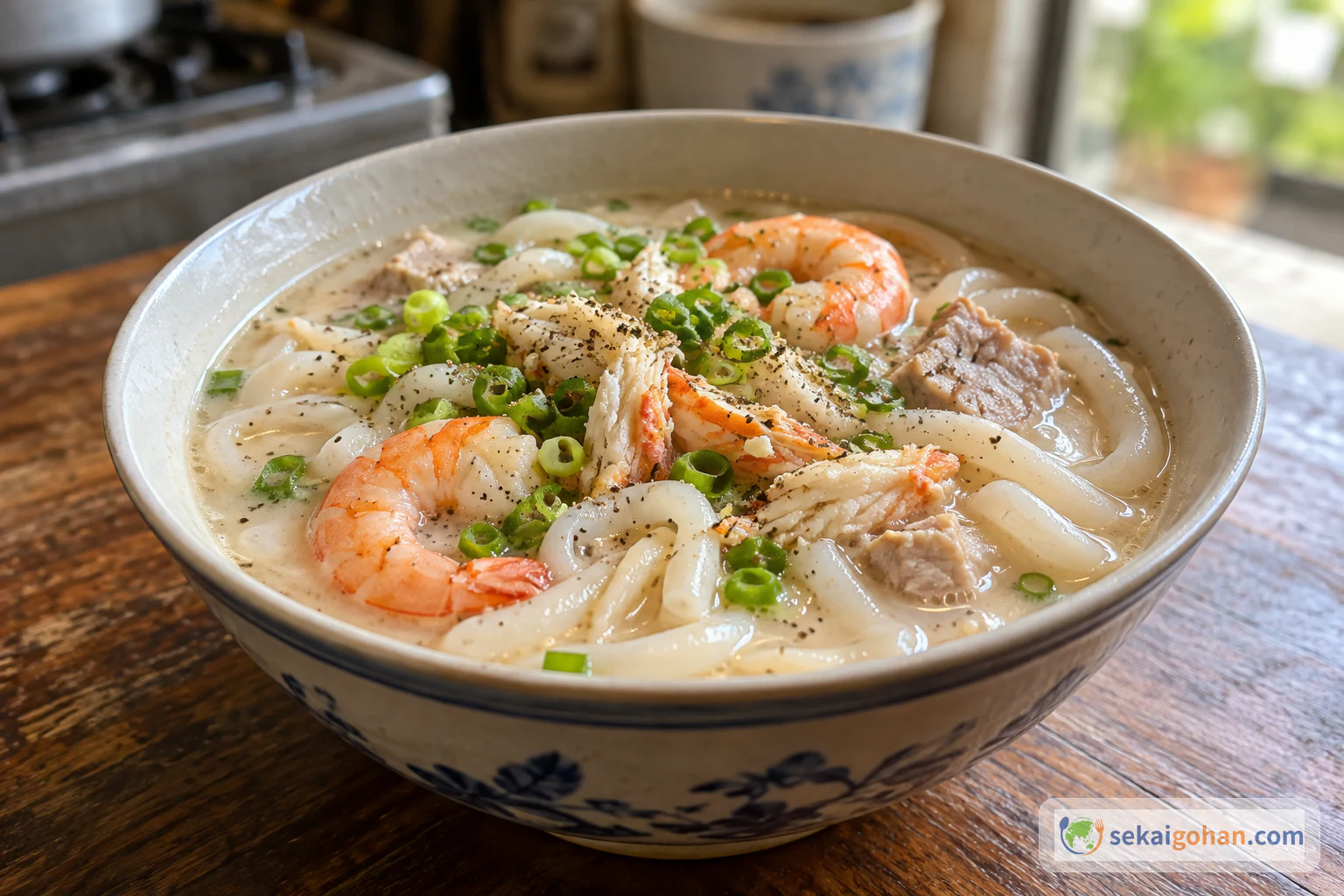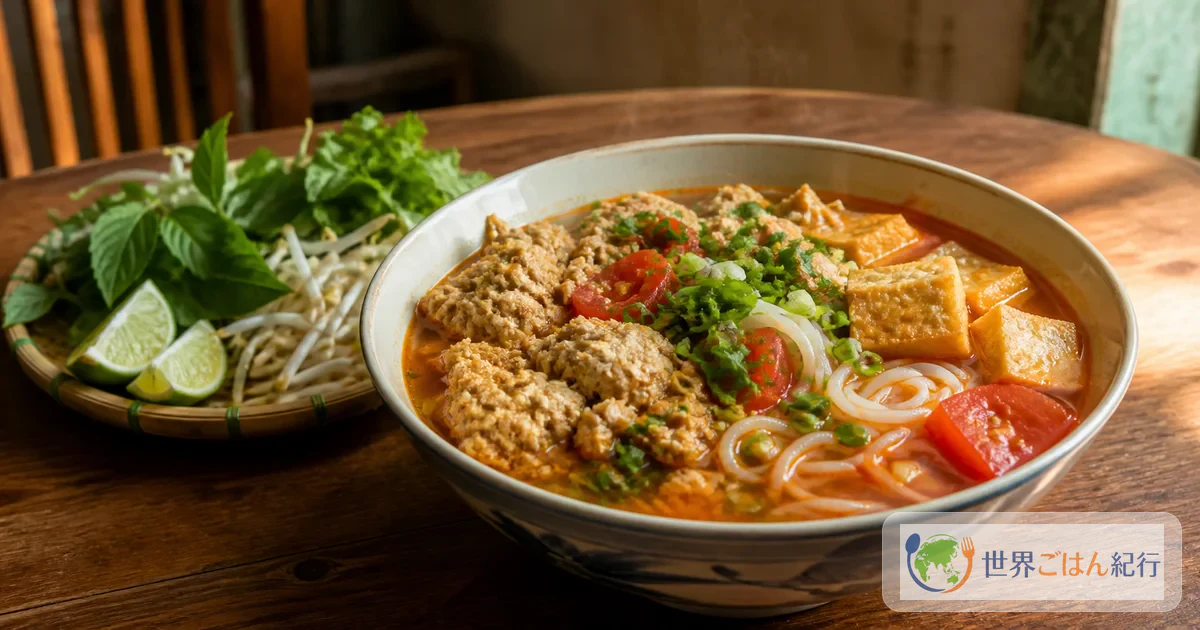
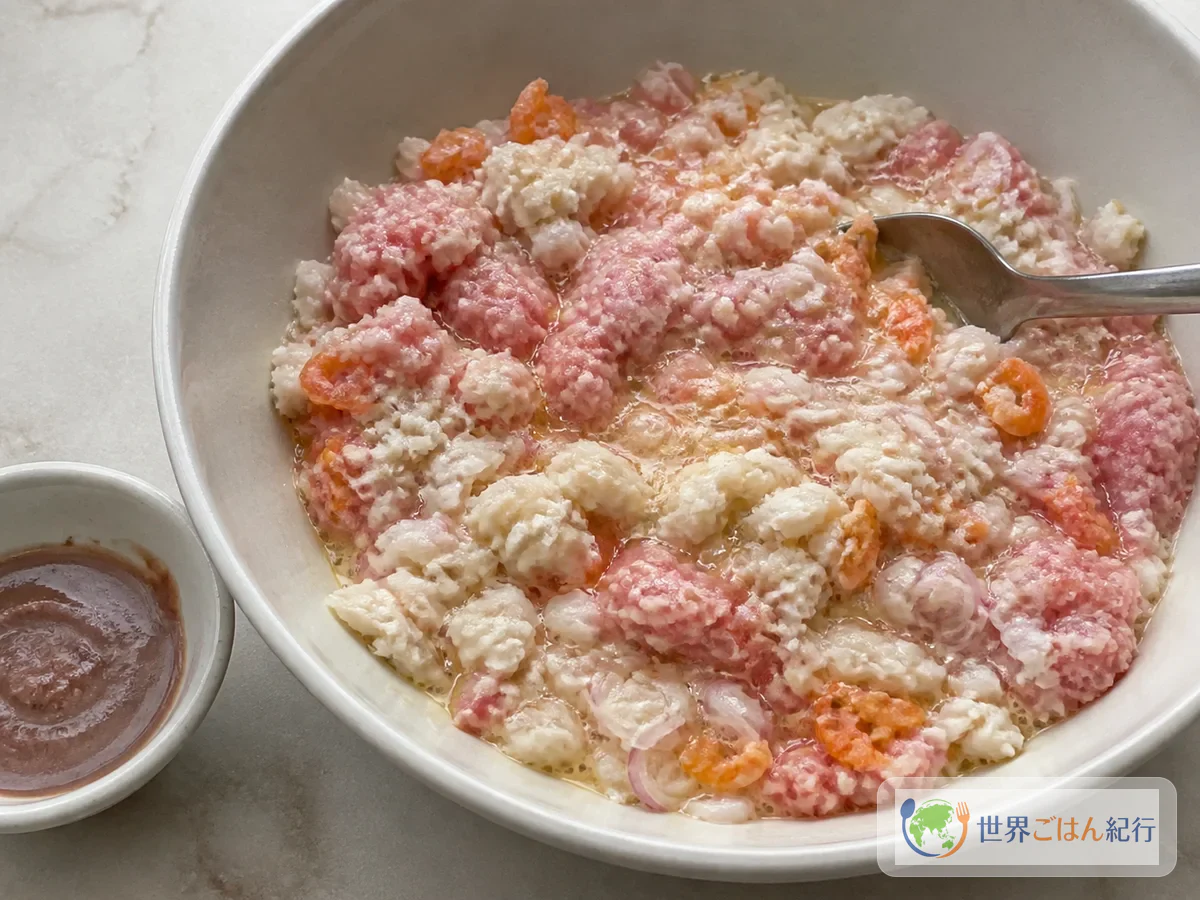
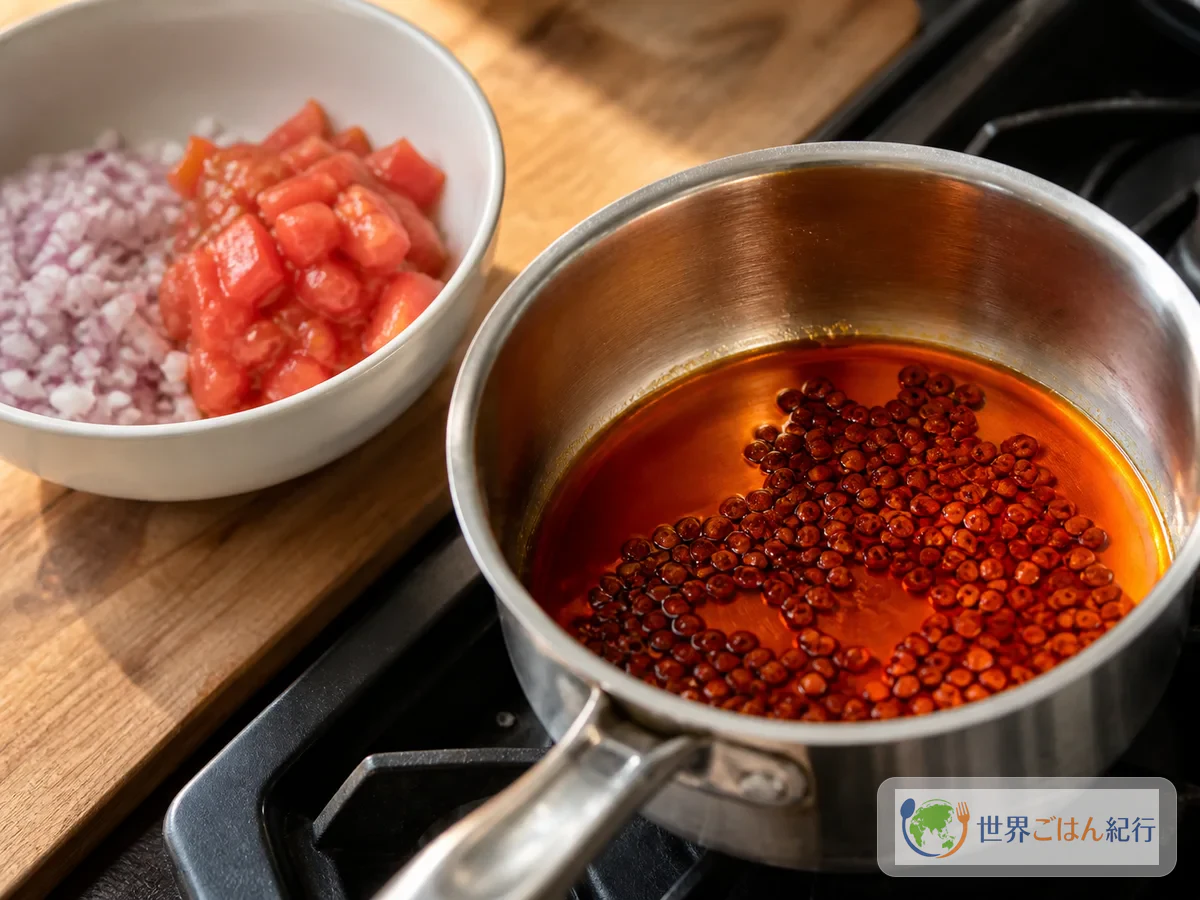
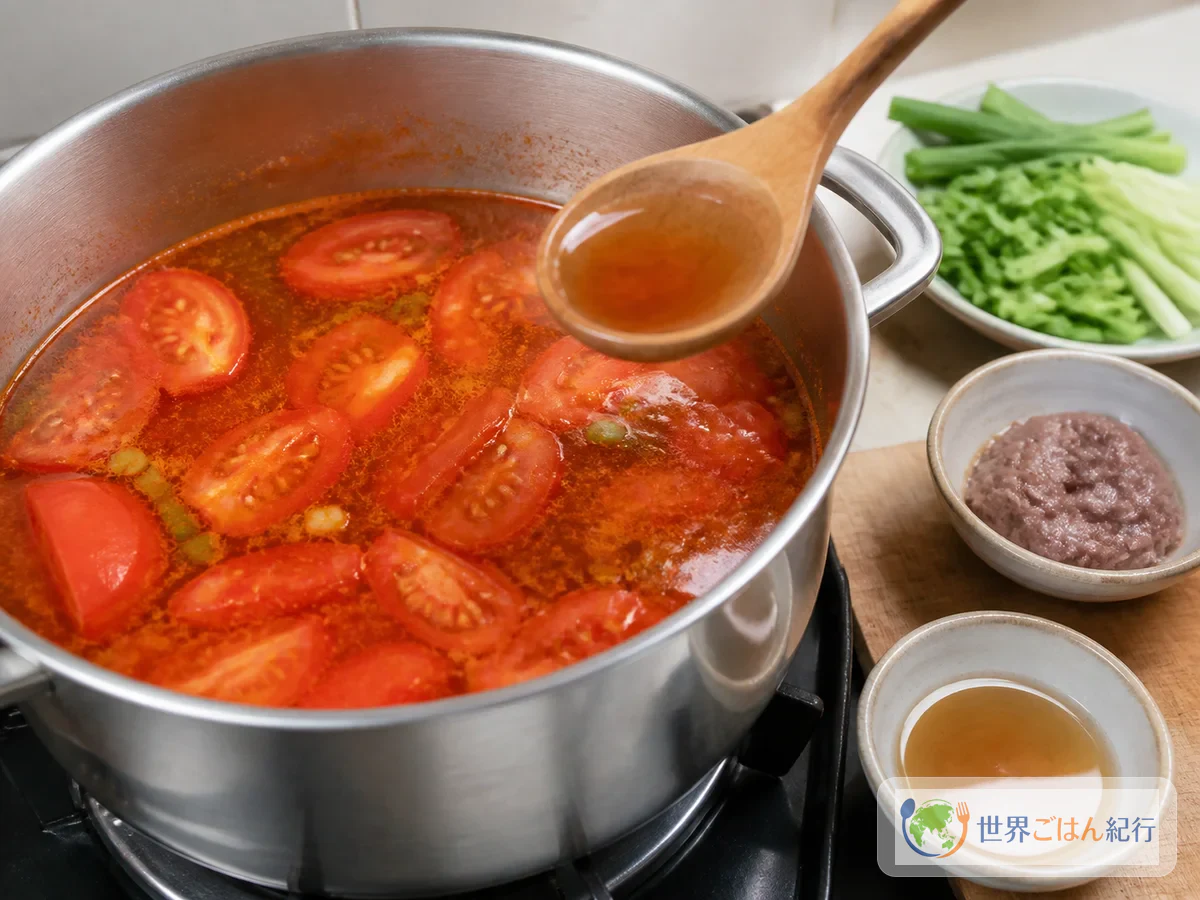
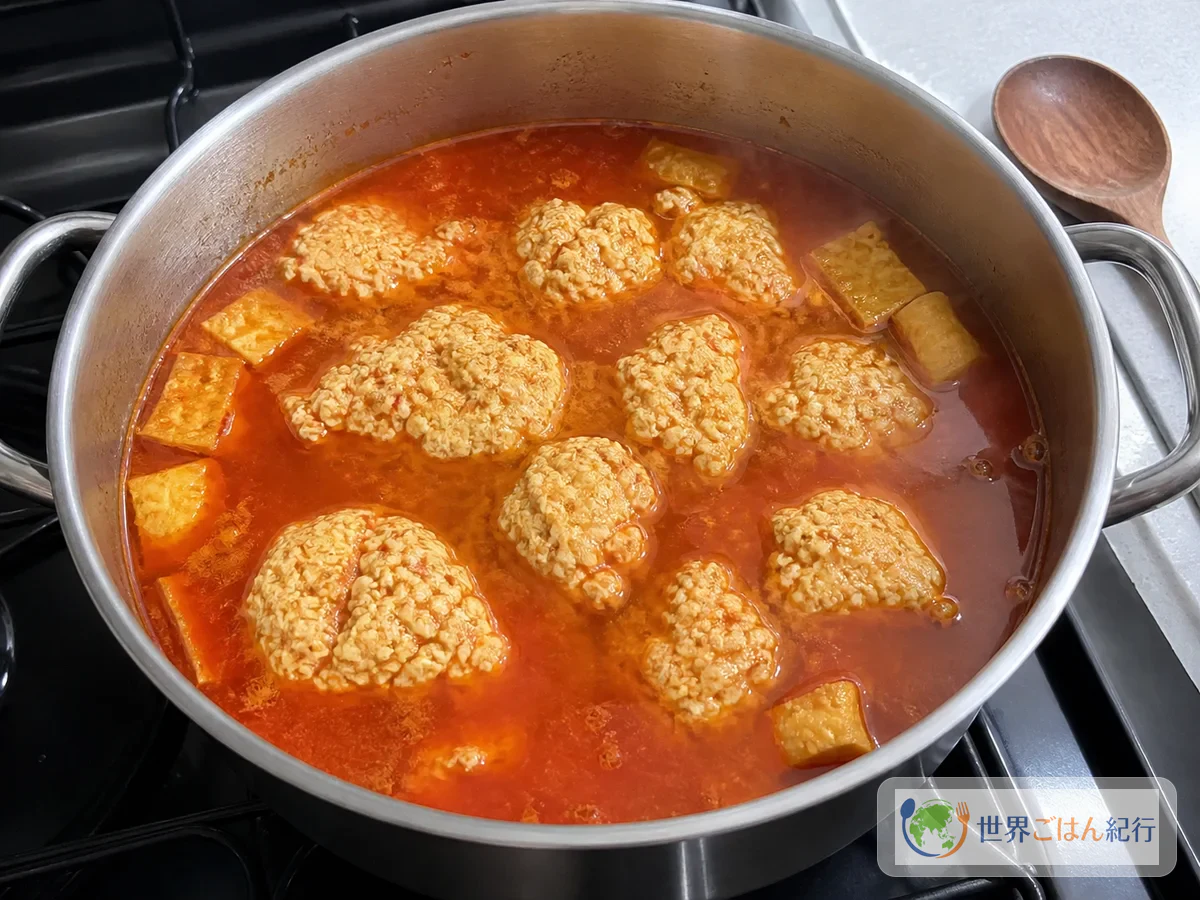
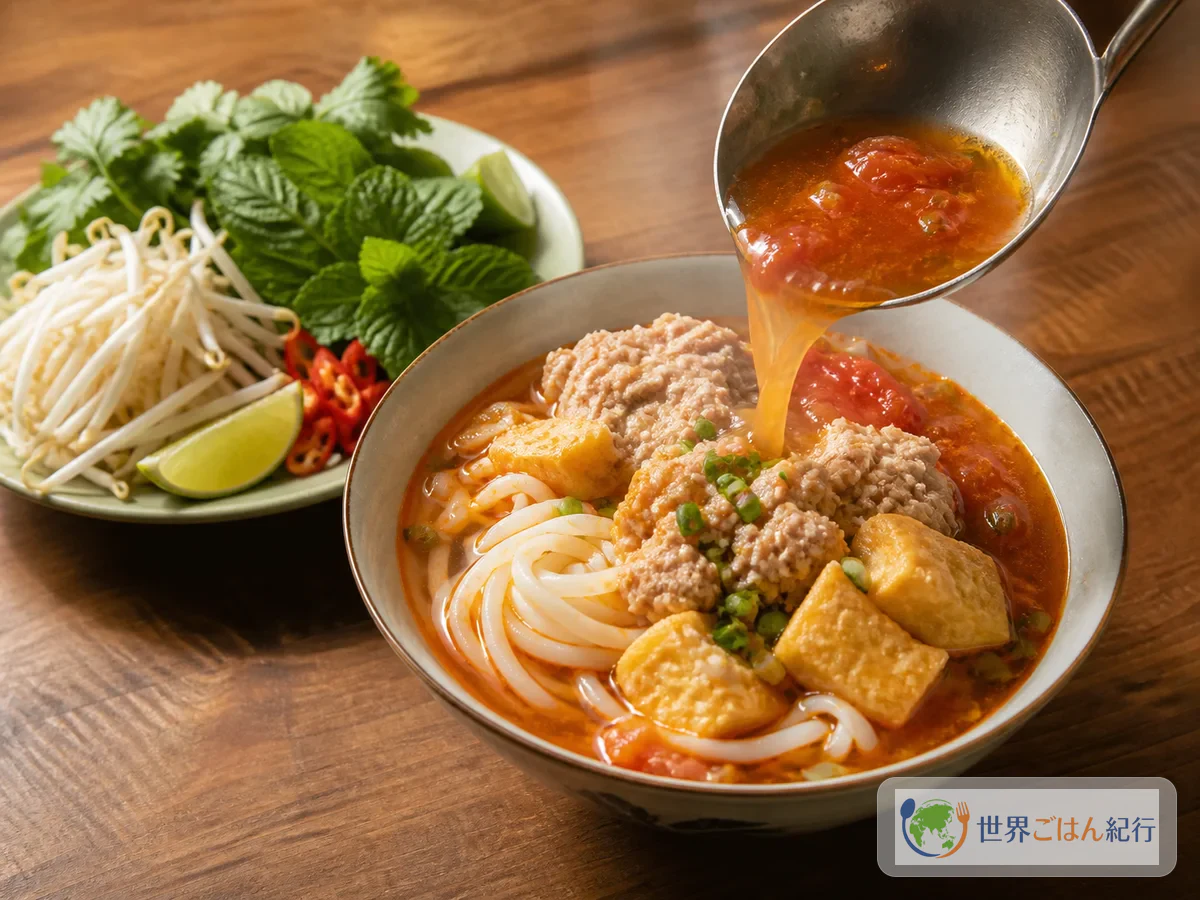
When you fry tomatoes in oil, a sweet-tart aroma rises from the bottom of the pot. Spoon in a mixture of crab and egg, and the pale mounds slowly set and drift like clouds in the red broth. That is bún riêu cua: rice noodles, fried tofu and herbs in a tangy crab and tomato soup that clings to every strand. The broth is sour from tomato and vinegar, sweet from crab, and gets a salty depth from fermented shrimp paste. It is meant to be finished at the table, one bowl at a time.
About bún riêu cua
The name and the crab broth
In Vietnamese, bún means rice noodles and cua means crab. Riêu is a culinary word for seafood or meat mixtures that set and float in the pot. Put together, the dish combines crab, tomato, rice noodles and tofu.
Vietnamese Bún riêu cua is pronounced roughly "boon ree-ew koo-ah."
Many Vietnamese rice noodle dishes gather a region's produce and ways of eating into one bowl, and bún riêu is one of them. In the north, freshwater crabs from rice paddies and canals are pounded in a stone mortar, shells and all. They are dissolved in water and strained, and the liquid is heated slowly while stirred in circles. Once the crab rises, the heat is lowered so it sets into soft, fluffy curds instead of boiling hard. Turning the shells and crab juices into broth, rather than just chopping the meat, reflects a habit of using every part of an ingredient.
Northern, southern and coastal styles
A Hanoi-style bowl keeps a clear broth centered on crab, which is skimmed off as it gathers. Its sourness comes from a fermented rice vinegar close to rice vinegar, and it is served with scallions, herbs and raw greens such as lettuce. Mắm tôm (fermented shrimp paste) goes in little by little at the table rather than being stirred in strongly from the start.
In the south, the broth becomes sweeter and richer, and red annatto oil adds color. In Ho Chi Minh City some shops make a thick riêu from crab, ground pork and egg. They pile the bowl with fried tofu, braised pork, congealed pork blood, Vietnamese ham (rolled pork sausage) and paddy snails. Water spinach, banana blossom, bean sprouts and herbs come on one big platter, and each diner adds them to their own bowl.
In coastal Vũng Tàu, bún riêu tôm is made with sea shrimp instead of freshwater paddy crab. Tomatoes, tofu, shrimp paste cakes, squid and pork are layered in a shrimp broth. It is a dish of its own, built from what a seaside town has on hand.
What makes this dish interesting is that it's finished not in the pot but in the bowl. The clear northern broth gets a little herb and sourness, the red southern one gets plenty of bean sprouts and banana blossom, and the coastal shrimp version gets seafood toppings. These differences follow regional cooking in general: the north keeps food simple and focused on ingredients, the center uses bold spices, and the south adds sweetness. Each version puts local seafood, fermented seasonings and greens onto the same rice noodles.
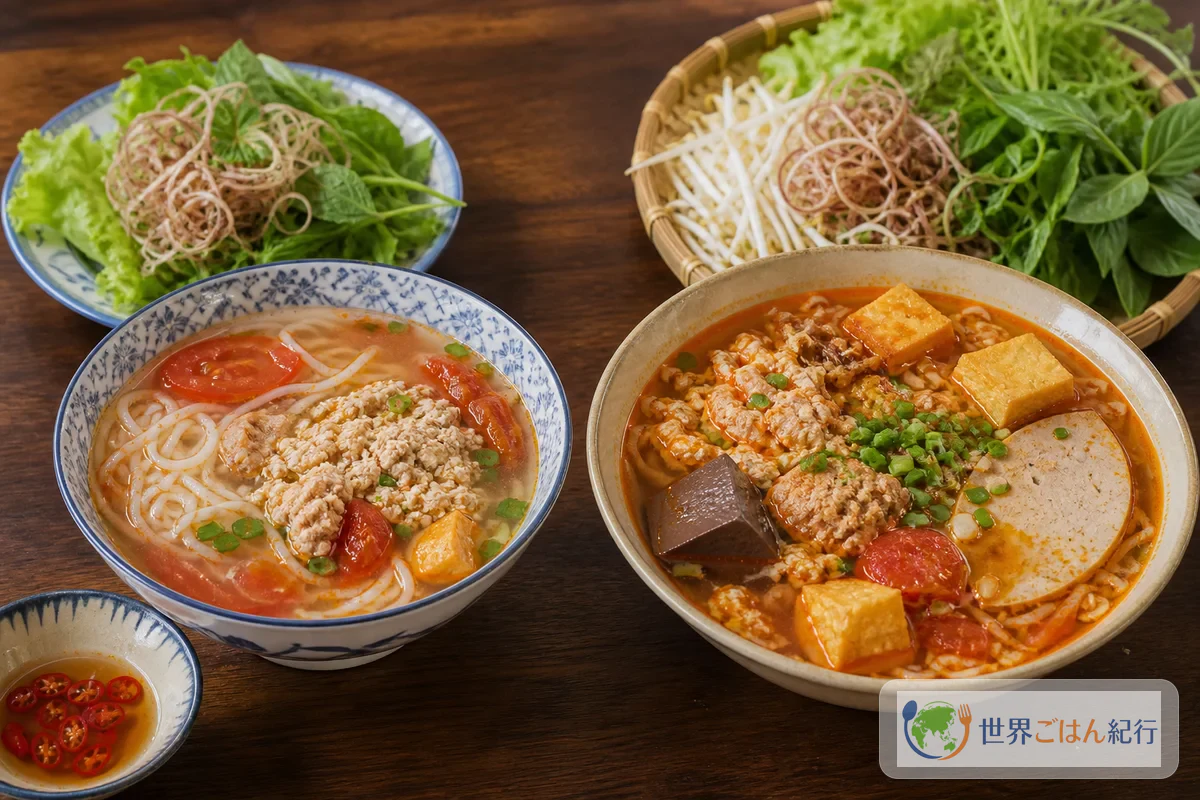
Making bún riêu at home
The hard part at home isn't making the soup red. The hard parts are pounding and straining paddy crabs one by one, handling the aroma of mắm tôm, and setting the riêu without letting the broth boil. If you can't get fresh paddy crabs, canned crab and ground pork still give the riêu its soft texture. You lose the aroma of strained shells, but the core of the dish survives: crab, pork and egg set into soft curds, tomato and vinegar sourness, rice noodles, fried tofu and herbs.
This recipe starts from Hanoi-style crab flavor and borrows a little of the south's red color and fried tofu. Mắm tôm goes into the pot 1 tsp at first, and the rest goes to the table. That way each person can adjust heat and herbs in their own bowl, and the whole family eats from one pot. As with the northern method, the riêu keeps its texture best when you leave the pot alone and wait.
Ingredients (serves 4): for setting the crab riêu and for the red broth
The Vietnamese method uses fresh paddy crabs; the easier canned-crab version is below. The amounts are based on canned crab, and the paddy-crab branch is explained at the end. Choose canned crab that includes crab tomalley and crab juice, not just meat, so the riêu doesn't taste thin.
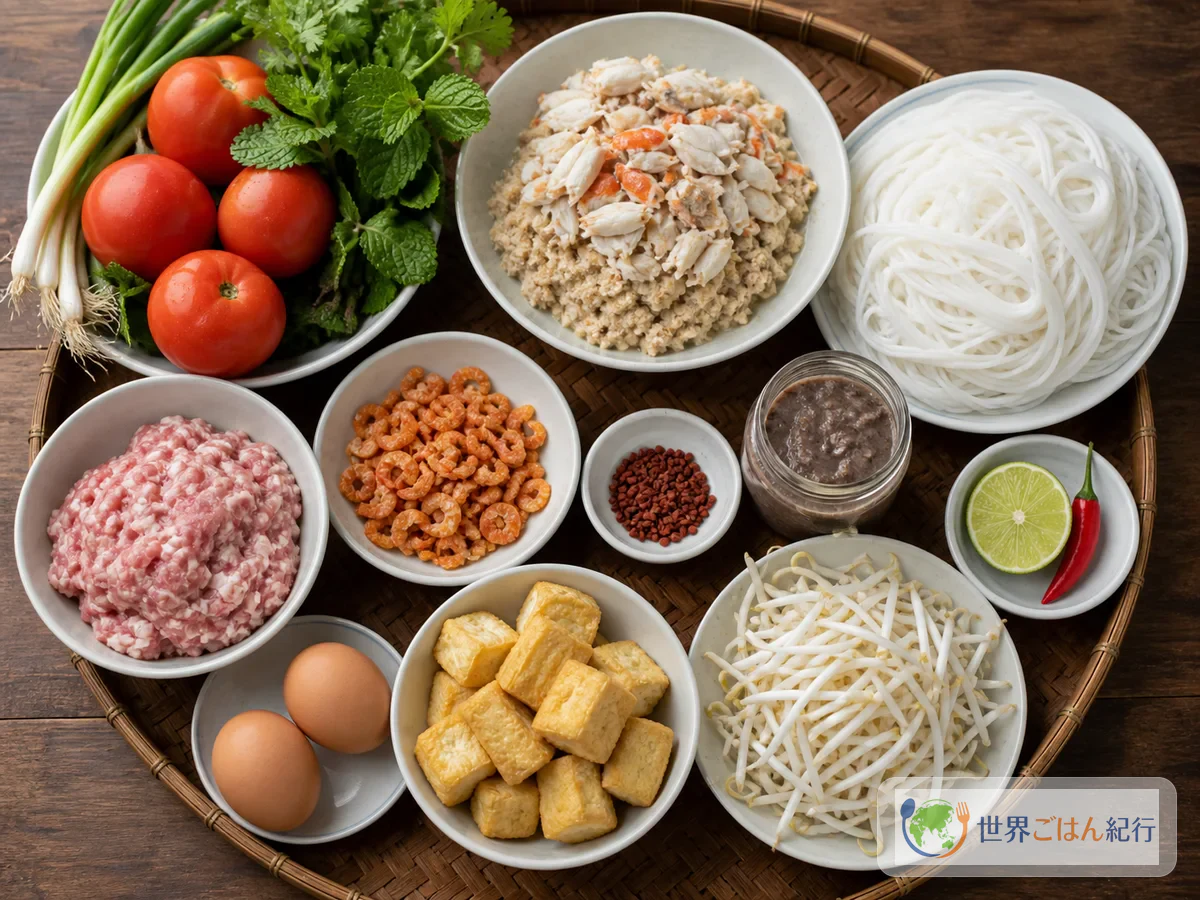
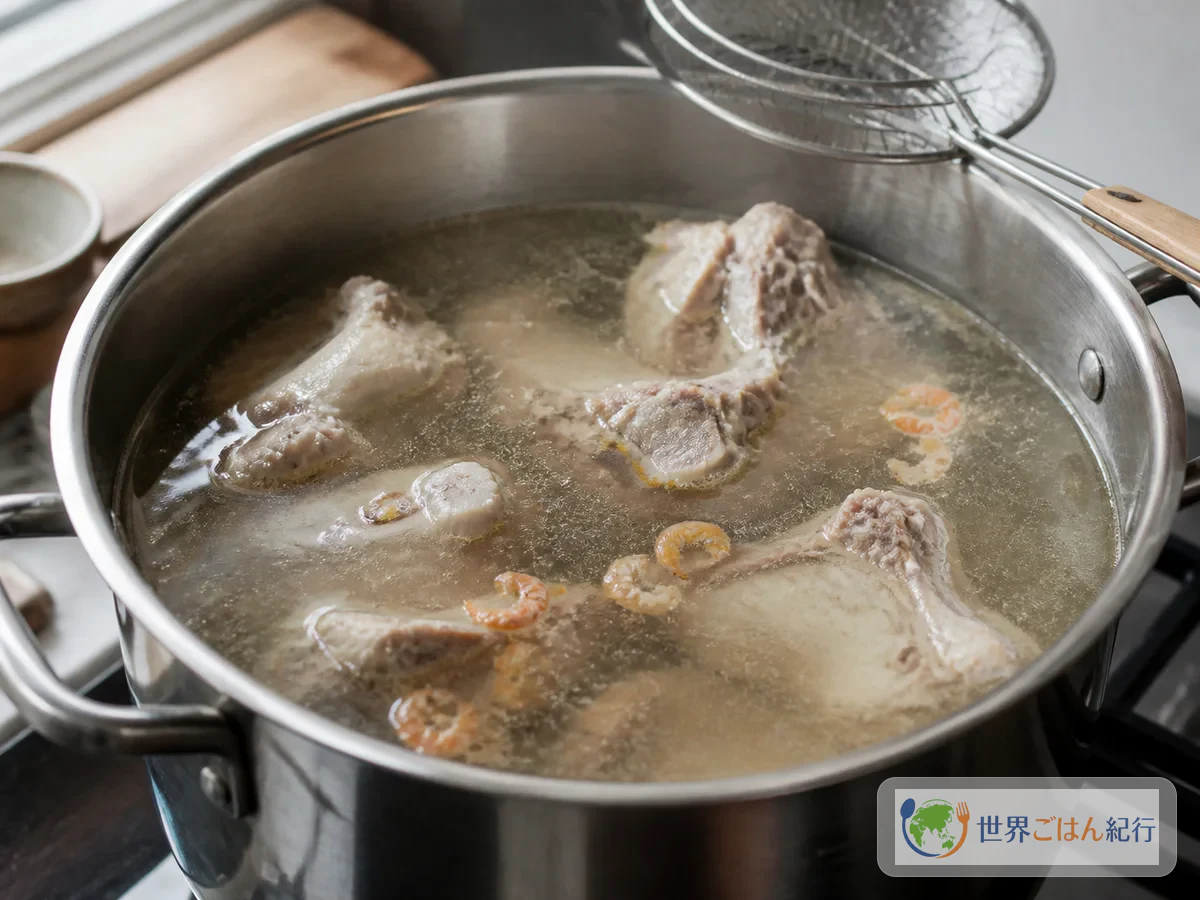
Even a small amount of dried shrimp adds a dry, briny savoriness to the base of the broth. The rehydrated shrimp go into the riêu and the soaking liquid into the broth, so you keep more layers of aroma than you would by dissolving shrimp powder.
Mắm tôm is a different seasoning from liquid fish sauce. Its fermented-shrimp aroma and saltiness are strong, so start with 1 tsp in the crab mixture and 1/2 tsp in the broth. If you can't find it, mix 1 tsp fish sauce with 1/2 tsp white miso and add a little more dried shrimp. It gets close, but it lacks mắm tôm's distinctive fermented aroma. If anyone has a shrimp allergy, leave out the mắm tôm and dried shrimp, check the ingredients of the fish sauce, and switch to kombu stock and salt.
Choosing ingredients and substitutes for bún riêu
You can make bún riêu without importing every ingredient. Four things matter most: the crab riêu, the tomato sourness, the rice noodles and the salty depth of fermented seafood. Herbs are easy to swap. Mắm tôm is easier to get used to if you try a small amount first.
| Used in Vietnam | Home-kitchen choice | What changes |
|---|---|---|
| Paddy crab (cua đồng) | Canned crab + ground pork + egg | Shell aroma and broth clarity fade; the riêu's texture remains |
| Fresh bún | Thick dried rice noodles | Soaking/cooking time and springiness change. Follow the package |
| Mắm tôm | 1 tsp mắm tôm, or fish sauce + white miso + dried shrimp | The fermented-shrimp aroma is lighter |
| Giấm bỗng | Rice vinegar + tomato | Similar sourness, without the fermented-rice aroma |
| Annatto oil | Annatto seeds infused in oil | Paprika gives the color, but not the aroma |
| Vietnamese herbs | Shiso, mint, mitsuba, cilantro | Freshness and intensity of aroma change |
| Banana blossom, water spinach | Cabbage, bean sprouts, shredded shiso | Makes up for the crisp texture |
Mắm tôm is worth buying if you'll use fermented shrimp seasoning in other dishes and can keep it in the refrigerator with its smell contained. If you're making bún riêu just once, there's no harm in trying the fish sauce and dried shrimp substitute first. For annatto, choose whole seeds: they color the oil and then come out, so no powder ends up in the soup. Some packages are large, which suits cooks who will reuse them for red oils and stews. If you only want the red color, paprika works and saves buying a specialty item.
Check the noodle thickness before you buy. If thin rice vermicelli is all you can find, cook it a little firm and let it soak up broth in the bowl, which makes it less likely to break.
Method: float the riêu without boiling
Bún riêu is easier to handle if you separate the time for simmering the broth from the time for setting the riêu. Stirring the pot after adding the riêu breaks the mounds into small bits. Keep the heat at a level where the surface just trembles, all the way to the end.
Once the riêu (crab mixture) is in, don't let the broth boil hard; keep the surface just trembling. Stirring right after adding it breaks it apart, so leave it alone until it floats and sets. That's the key to a clean result.
Bún riêu cooking problems and fixes
Whether the riêu floats depends more on the moisture of the mixture and how you handle the pot than on the type of crab. Lower the heat and wait after dropping it in, and you'll get mounds you can scoop with a spoon.
When the riêu won't set
If the mixture spreads out watery, there's too much crab juice or the broth has cooled too much. Leave the loose bits where they are instead of chasing them with a ladle. Raise the heat to medium-low to bring the surface back to about 80°C (176°F), cover and wait 3 minutes. If it's still loose, add 5 g dried shrimp and 1/2 egg to the remaining mixture and drop small amounts in another spot. The bits that broke up earlier stay in the pot and flavor the broth.
Leave the pot alone
Stirring right after adding the riêu scatters the crab and pork before the egg sets. The only time to move anything is when you push the fried tofu down after the riêu has floated. When you ladle, slide the ladle under the floating mounds instead of scooping up from the bottom.
Add sourness last
Tomatoes, rice vinegar and lime are all sour, but each one does a different job. Tomatoes form the base of the broth, rice vinegar sets the sourness of the whole pot, and lime adds aroma at the table. Too much vinegar early on hides the crab's sweetness. Start with 1 tbsp rice vinegar, and a few drops of lime in the bowl.
When the mắm tôm is too strong
If you've added too much mắm tôm, add ½ cup (150 ml) boiling water, crush in 1/2 tomato and simmer 5 minutes. Bring back the lost saltiness with small amounts of salt rather than fish sauce. Too much sugar to cover the smell tips the broth toward a sweet southern style, so keep added sugar to 1 tsp.
Using fresh paddy crabs
Use only fresh paddy crabs sold for eating, never crabs you caught yourself or freshwater crabs of unknown origin. Freshwater crabs spoil quickly, so keep them cold and cook them as soon as you can. Scrub the shells, remove the top shells and separate the meat and tomalley. Pound the meat and shells in a mortar with 5 g coarse salt, add 2 cups (500 ml) water little by little and strain. Add the strained liquid to the stock and warm it over low heat. The crab protein gathers and the riêu floats up.
A heavy mortar is worth owning only if you'll make this version more than a few times a year; it handles small batches of shell more easily than a blender. When you choose one, look at the depth of the bowl, the length of the pestle and how easy it is to clean.
Bún riêu variations
Hanoi-leaning crab flavor
Reduce the red oil to 1 tbsp and put 1/2 tsp mắm tôm in the pot, with the rest at the table. Cut the fried tofu to 5.5 oz (150 g). Serve shredded lettuce, cilantro and plenty of shiso in place of Vietnamese herbs so the crab and sourness come forward. Use 1 tsp sugar and add rice vinegar 1 tsp at a time so the broth doesn't get too sweet.
Southern, fully loaded
Use the full 3 tbsp red oil. Add 2.75 oz (80 g) sliced Vietnamese ham and 5.5 oz (150 g) boiled pork shoulder to 10.5 oz (300 g) fried tofu. You can sometimes find congealed pork blood; use it only if the label confirms it's hygienic, and cook it thoroughly. Pile bean sprouts, cabbage and herbs on a big platter so diners add them a little at a time. That keeps the broth from turning muddy, even with all the toppings.
Bún riêu ốc with snails
Drain 5.5 oz (150 g) cooked (canned or boiled) snails well and add them to the broth at the end. Snails turn tough if overcooked, so warming them for 3 minutes when you add the fried tofu is enough. Allergies to crab, shrimp and shellfish can overlap, so check labels, and think about cooking the snails in a separate pot.
Vũng Tàu shrimp version
This version follows the coastal bún riêu tôm. Use 9 oz (250 g) peeled shrimp and 7 oz (200 g) shrimp shells instead of canned crab. Simmer the shells in 2.5 quarts (2.4 L) water for 20 minutes and strain. Finely chop half the shrimp and mix it with the ground pork, egg and dried shrimp to make small riêu. Cook the rest of the shrimp at the end.
Meatless tomato and tofu
Leave out the pork bones, ground pork, crab, mắm tôm and dried shrimp. Make a stock with 10 g kombu and 20 g dried shiitake instead. Crumble 10.5 oz (300 g) firm tofu and float it like riêu; if you add egg, the dish is no longer vegetarian. It won't taste like bún riêu cua, but it keeps the tomato sourness, red oil, rice noodles and herbs.
Related Vietnamese dishes
If you like adjusting herbs and sourness at the table, try the spicy lemongrass and fermented shrimp broth of bún bò Huế, or the clear southern pork broth and rice noodles of hủ tiếu. Bánh cuốn, steamed rice-flour sheets wrapped around a filling, and bánh xèo, served with a big plate of herbs, are also finished by each diner at the table.
Storing and reheating bún riêu
Store the stock, riêu, noodles and herbs separately. Put only as many noodles in the bowl as you'll eat, because noodles left in the pot soak up broth, swell and break by the next day. Move the cooled stock and riêu into clean, shallow containers and use them within 2 days, refrigerated. Use cooked noodles the same day. Wash the herbs and bean sprouts, pat them dry and refrigerate them in separate containers.
To reheat, heat the stock and toppings in a pot until hot all the way through, then turn the heat down so it doesn't keep boiling. If the riêu breaks up, that's fine: the crab flavor has gone into the broth. Avoid cooling a reheated pot again; take out only what you'll eat. The dish contains crab, shrimp, pork and egg, so throw out anything that smells off, feels slimy or may not have been stored properly. Don't judge it by tasting. If you use fresh paddy crabs, follow the seller's cooking instructions and cook them through to the center.
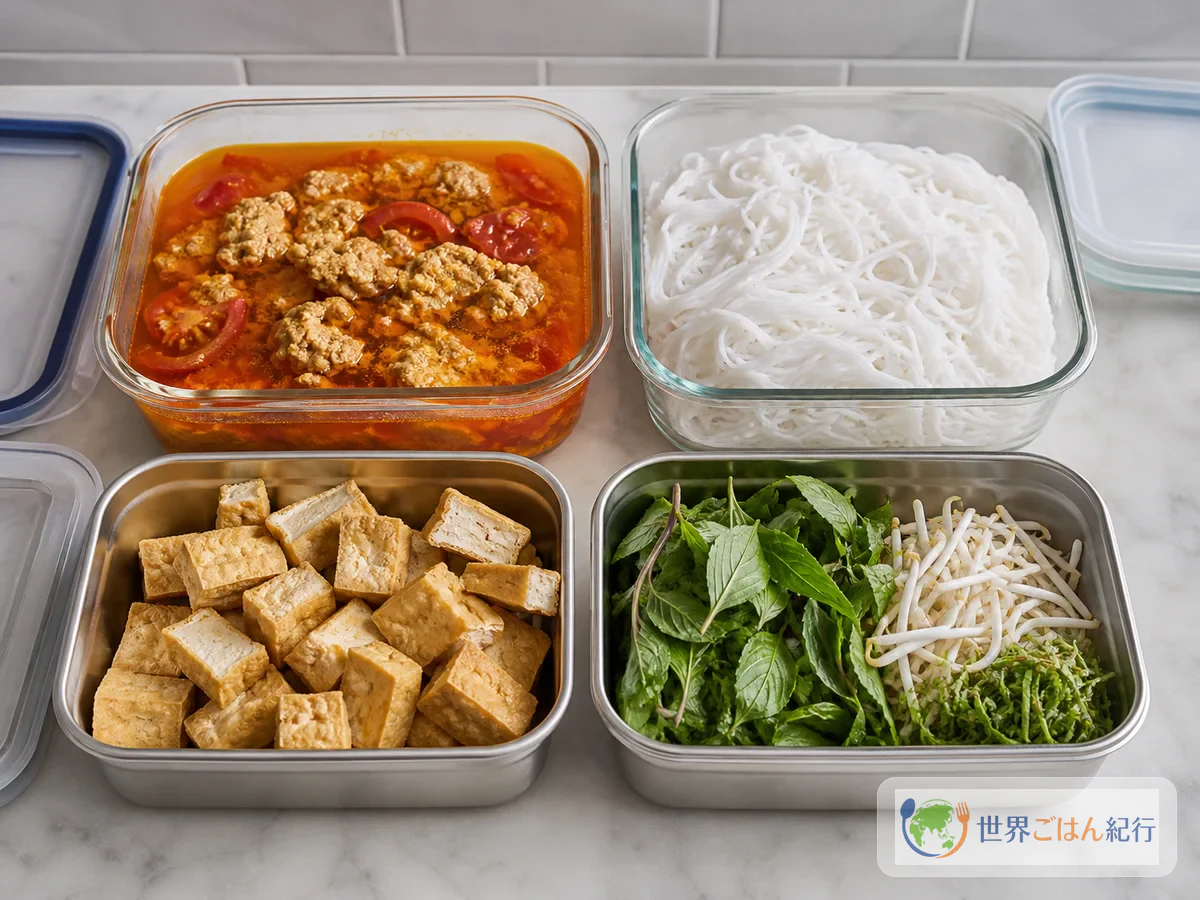
This dish contains crab, shrimp and mắm tôm (fermented shrimp). Anyone with a shellfish allergy should not eat it. The riêu contains ground pork and egg, so cook until set through to the center before serving.
FAQ
Q1. I can't buy fresh paddy crabs. Can I make it with canned crab only?
Yes. Make the riêu with 9 oz (250 g) canned crab, 9 oz (250 g) ground pork and 2 eggs, and use the crab juice in the mixture too. If the can contains only crab meat, use 15 g dried shrimp to make the broth more savory.
Q2. I don't like the smell of mắm tôm. Can I leave it out?
Yes. Start with the substitute: 1 tsp fish sauce, 1/2 tsp white miso and an extra 5 g dried shrimp. Leaving out mắm tôm completely changes the fermented-shrimp aroma and the saltiness. You can also serve it in a small dish at the table so only those who want it add it. If anyone has a shrimp allergy, leave out kapi (shrimp paste) and dried shrimp as well.
Q3. My riêu broke into small pieces. Can I fix it?
Don't throw out the small bits; eat them as part of the crab broth. The usual causes are a hard boil, a watery mixture, or stirring right after adding it. Cool the remaining mixture, mix in 5 g dried shrimp, lower the heat and drop it in 1 tbsp at a time in another spot, without stirring. If there's no mixture left, serve it as "bún riêu with crumbled crab."
Q4. Which rice noodles should I choose?
Fresh bún is ideal, but thick dried rice noodles are the practical choice. Round rice noodles about 2–3 mm thick hold up well in a broth with lots of toppings. For thin rice vermicelli, cook it 1 minute less than the package says, rinse it under running water and dip it in boiling water for 10 seconds. Cook noodles in their own pot, because cooking them in the soup clouds the broth with starch and makes them break.
Q5. What if the tomatoes make it too sour?
Add boiling water ½ cup (100 ml) at a time, along with 1/2 tsp sugar and a pinch of salt each time. Raising only the sugar to cover the sourness turns it into a sweet soup, sweeter even than the southern style. Dilute until the crab and dried shrimp aromas come back, then adjust the salt with fish sauce at the end. Keep lime out of the pot and let each person add it to their own bowl.
Q6. Can I freeze leftover riêu and broth?
Yes. Once cooled, the stock and riêu can be frozen in single portions. The texture breaks down a little more easily, so use within 2 weeks and heat through to the center after thawing. Prepare the rice noodles, bean sprouts, herbs and fried tofu fresh on the day you eat. Don't refreeze, and use thawed portions the same day.