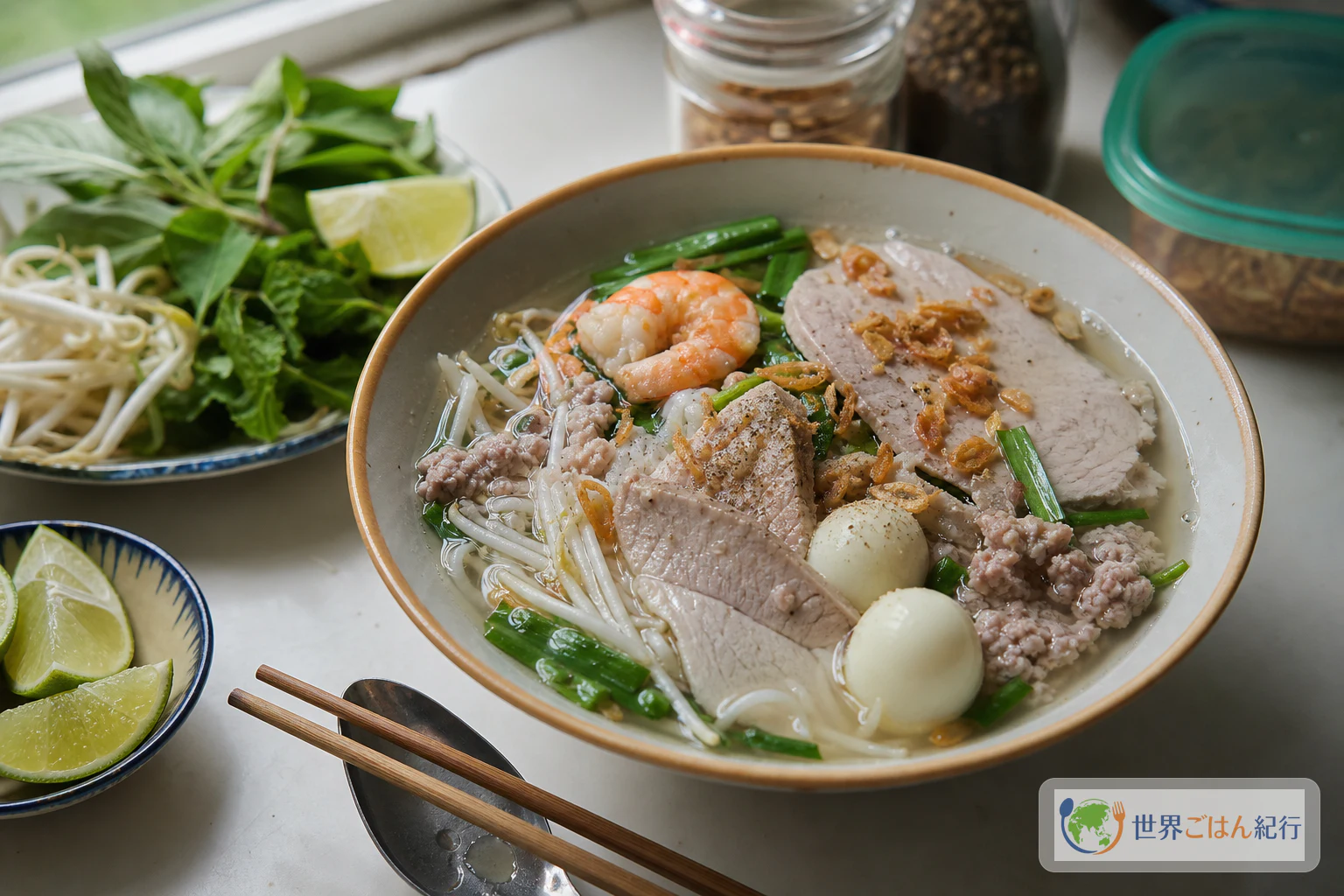
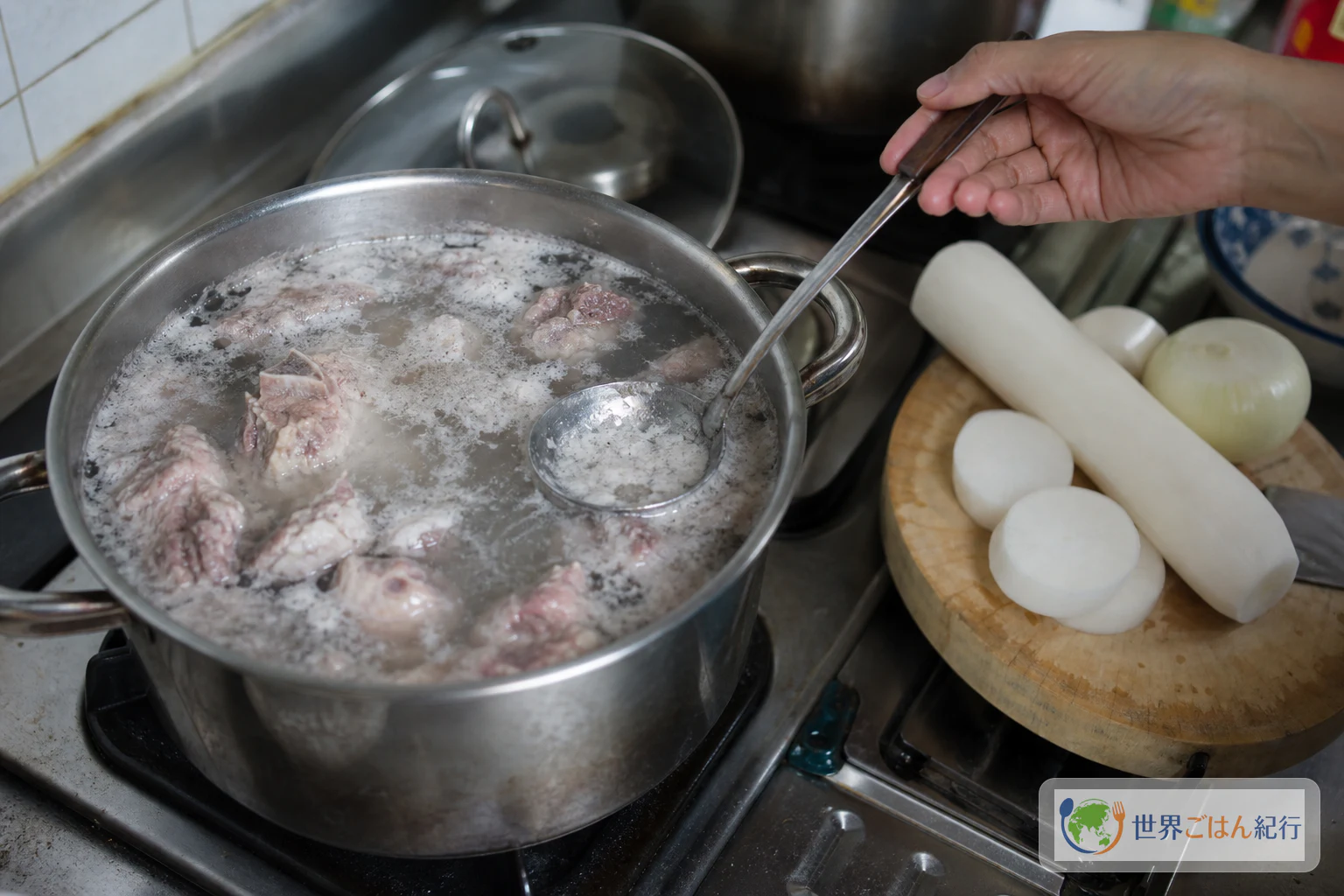
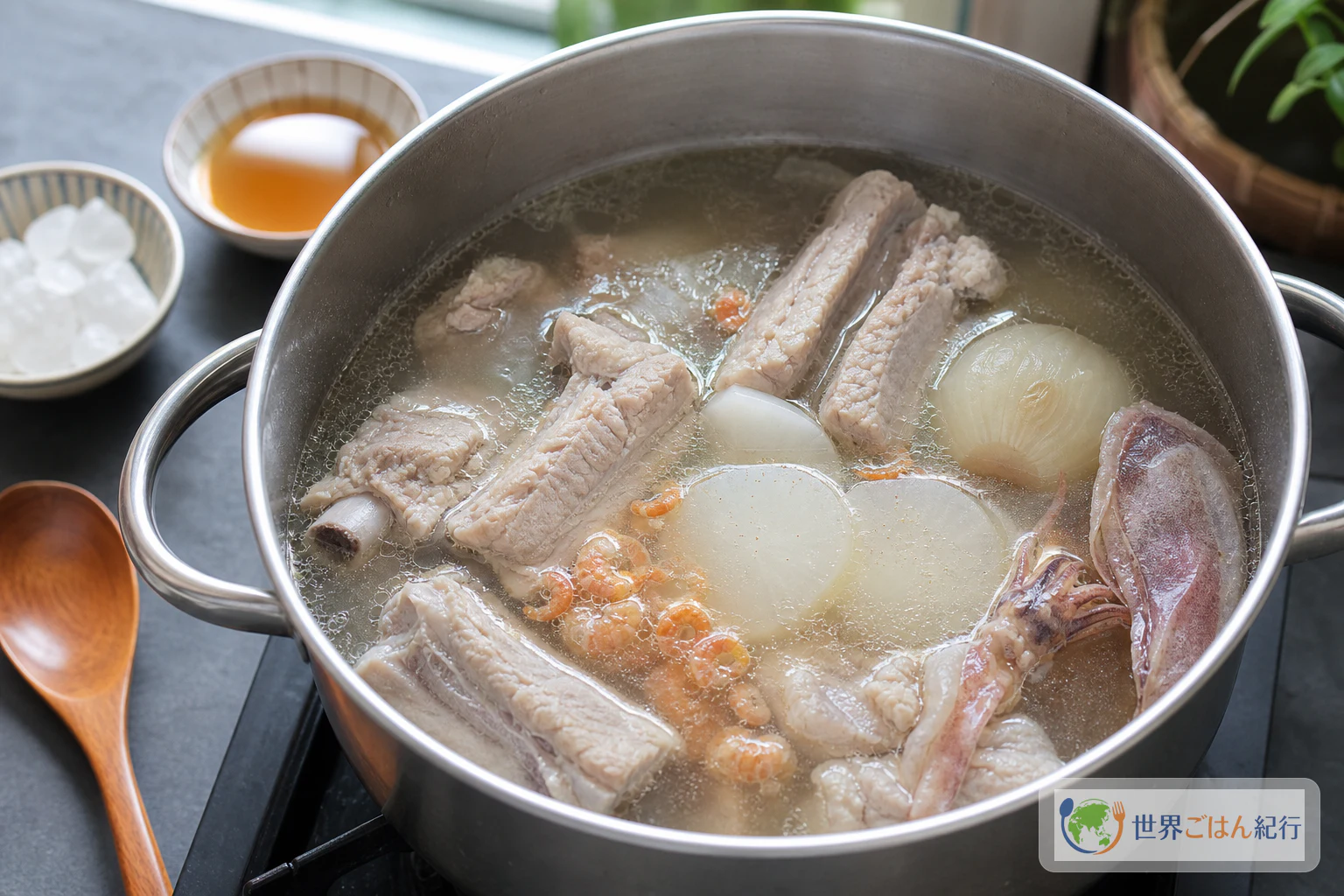
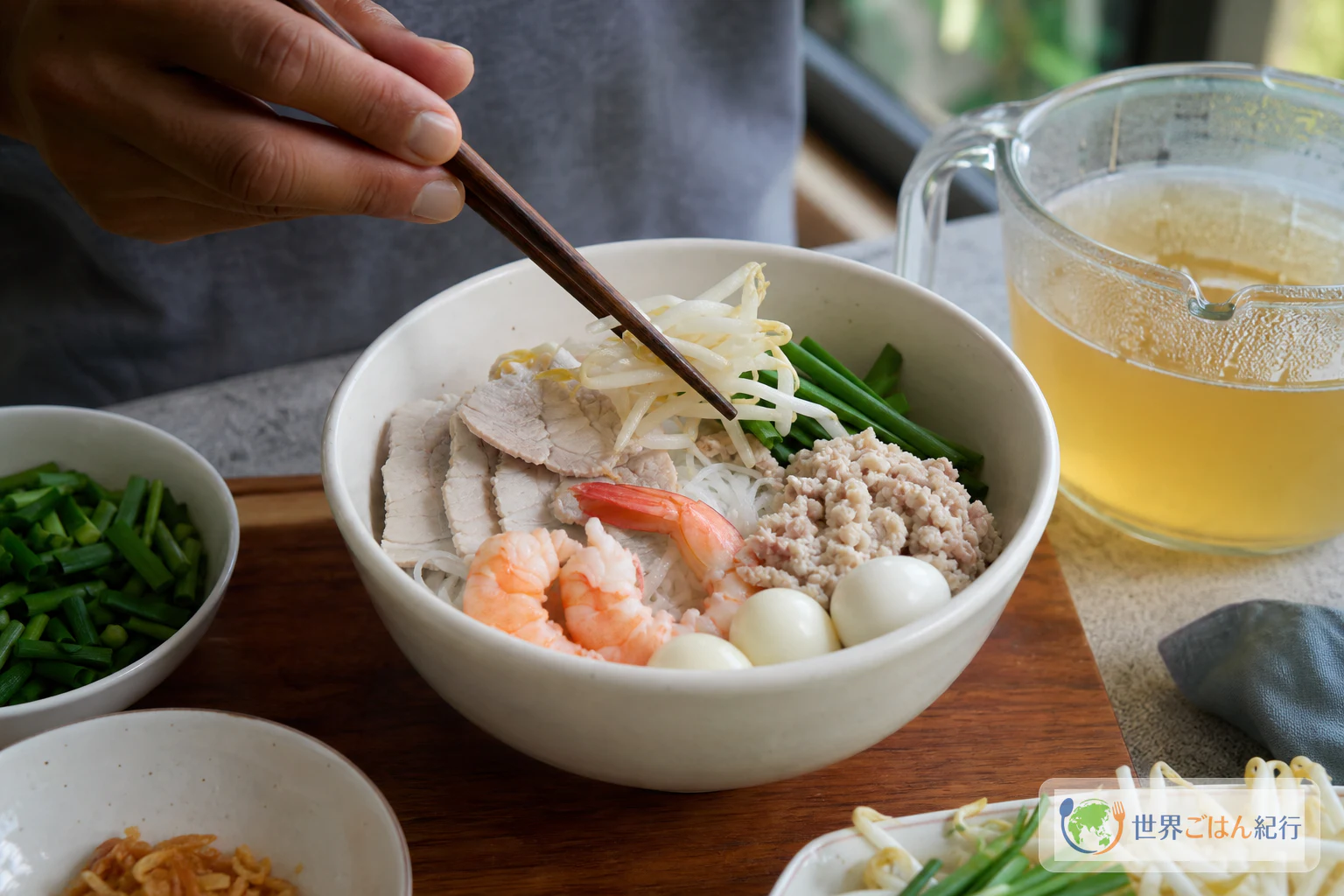
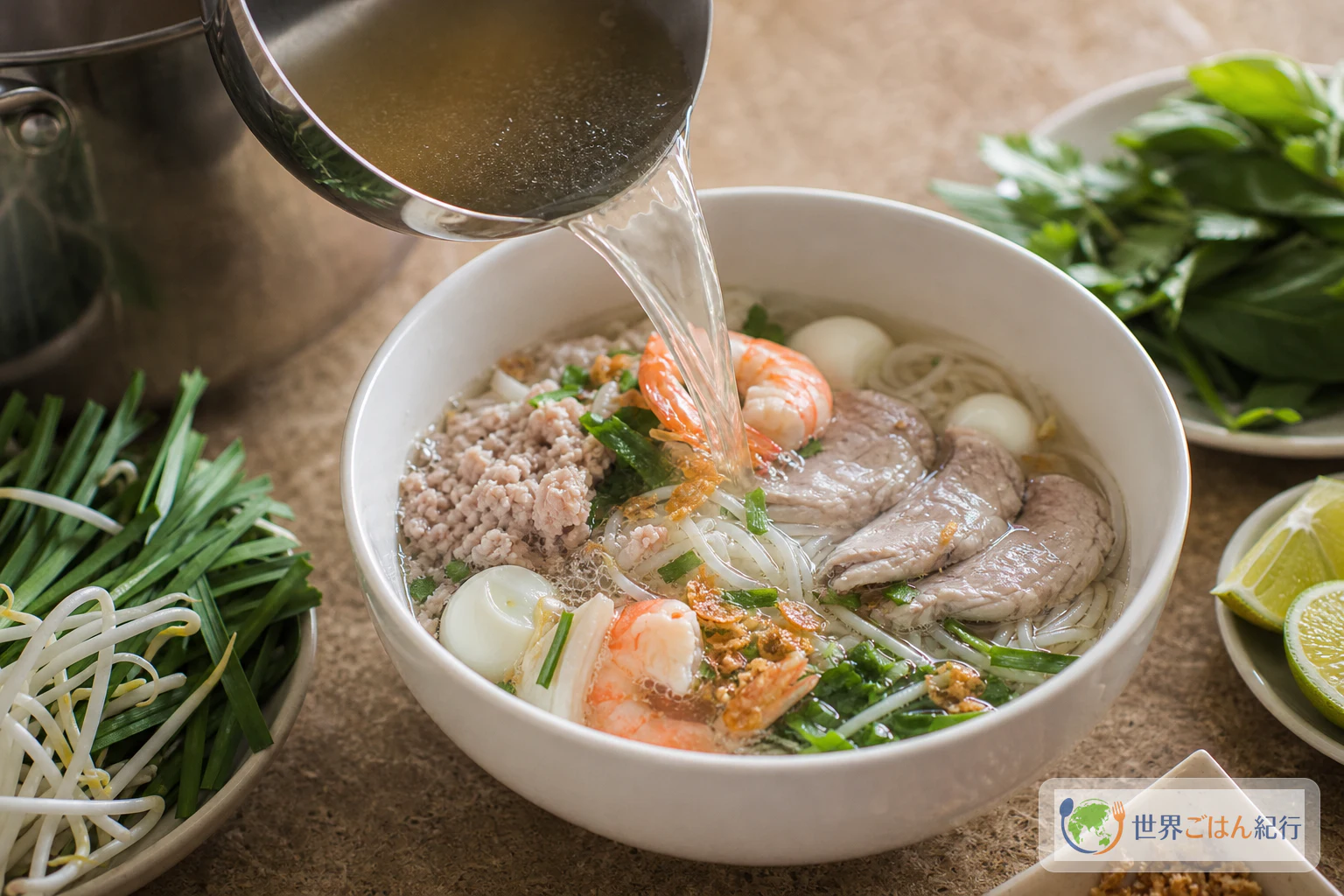
In the morning kitchen, the pork bones get blanched once and drained, the pot gets scrubbed, and everything goes back on the heat with onion, daikon, dried shrimp and toasted dried squid. What rises from the pot isn't the heavy aroma of ramen but something slightly sweet and clear. Hủ tiếu (also spelled hủ tíu) is that broth, clear without being thin, poured over briefly cooked rice noodles and topped with pork, shrimp, quail eggs and herbs. It's eaten all over southern Vietnam. It steams, yet you feel light after eating.
Hủ tiếu, southern Vietnam's noodle soup
Phở is far better known abroad, so the two get lumped together as "Vietnamese noodle soup," but they eat very differently. Phở builds its aroma from beef bones or chicken, charred aromatics and spices. If phở gà is a clean bowl of chicken and aromatics, hủ tiếu builds on pork bones with the savoriness of dried seafood, a roundness of sugar, and toppings such as shrimp and offal. The sweetness is typical of the south.
Southern eateries serve it from early morning because it is filling without being heavy. The pork bones are never pushed as far as the emulsified richness of Japanese tonkotsu ramen. The bone flavor stays underneath, dried shrimp, squid, daikon and onion widen it with sweetness, and fish sauce and herbs lift it at the end. Hủ tiếu won't wow you with the first sip. The clear broth and noodles go down easily, and then the aromas of dried shrimp, pork fat, fried garlic and herbs build up as you eat.
Hủ tiếu Nam Vang
The most famous version is hủ tiếu Nam Vang. Nam Vang is the Vietnamese name for Phnom Penh, but today's hủ tiếu Nam Vang isn't a simple copy of a Cambodian dish. It grew up in Vietnamese cities. Phnom Penh-style noodles, the rice noodle culture of the Chinese community, and southern eating habits that spread from the Mekong Delta to Saigon all went into it.
Shops pile it high with pork liver, heart, fish balls, fried garlic, chrysanthemum greens or Chinese celery. That full, lively bowl is what hủ tiếu is known for.
Ingredients (serves 4)
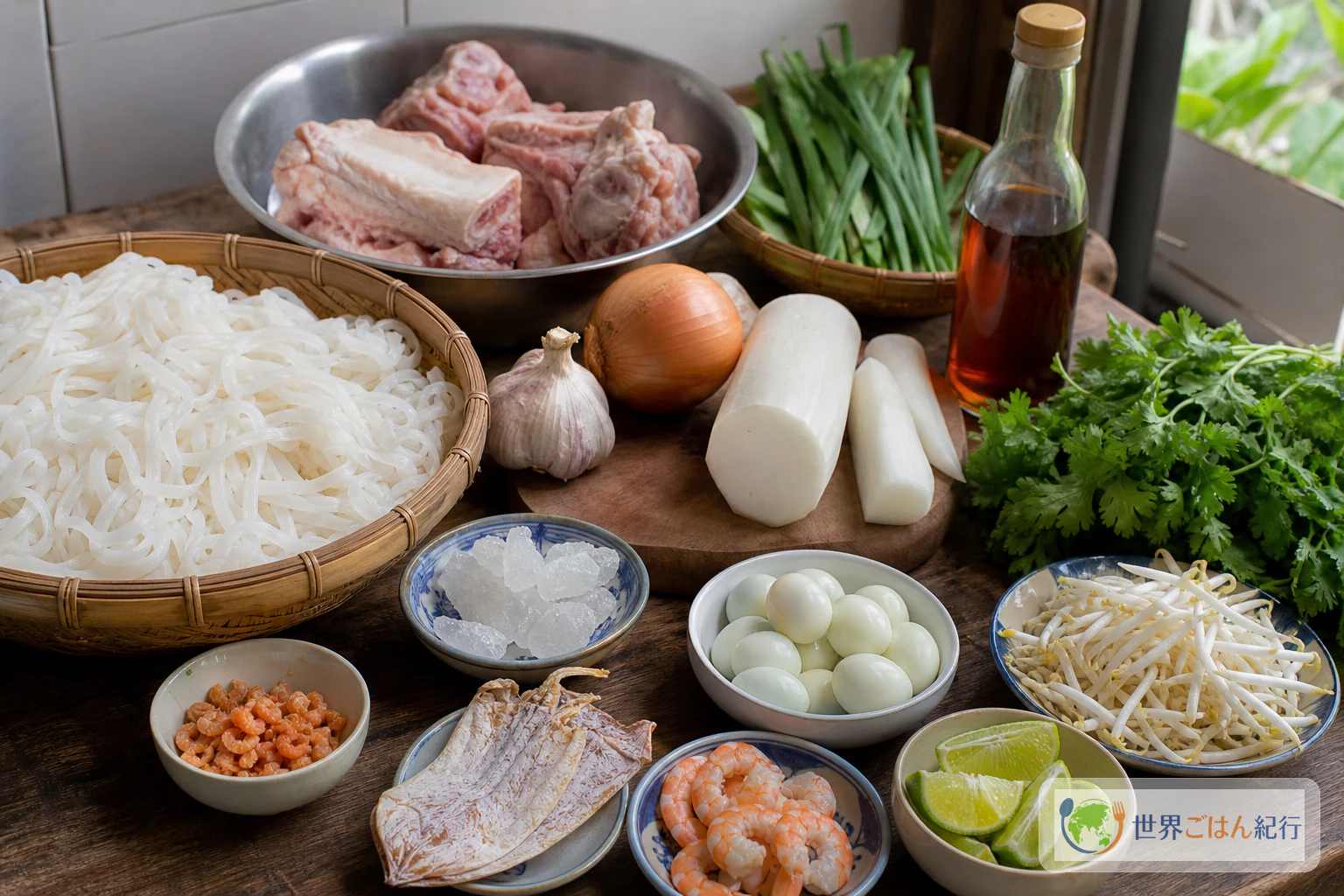
Hủ tiếu is easier to recreate by getting the core of the broth, the noodles and the herbs right than by buying premium everything. On days without pork bones, spareribs will do. Without dried squid, use more dried shrimp and add a modest splash of fish sauce. On the other hand, leave out the rice noodles and fish sauce, and no matter how many toppings you pile on, you end up closer to some other pork noodle soup.
Ingredients worth hunting for
When shopping for hủ tiếu, the things worth looking for first are rice noodles, fish sauce and dried seafood. Pork, shrimp and bean sprouts are easy to find at an ordinary supermarket. Rather than tracking down frozen pork bones online, spareribs from the butcher are fine for a first attempt. Swap the rice noodles and fish sauce for whatever thin wheat noodles and soy sauce are in the pantry, though, and even with a great broth you drift away from hủ tiếu.
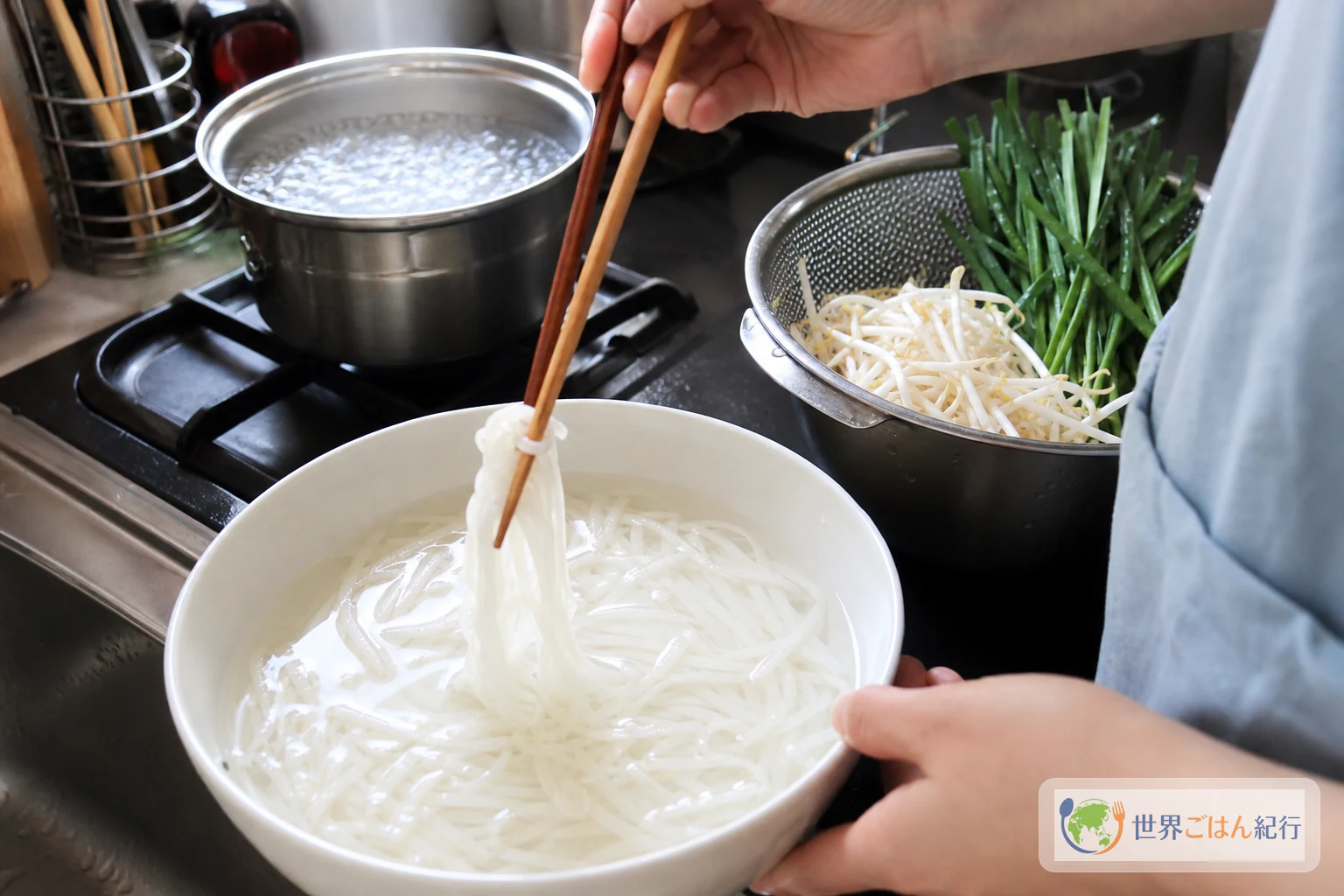
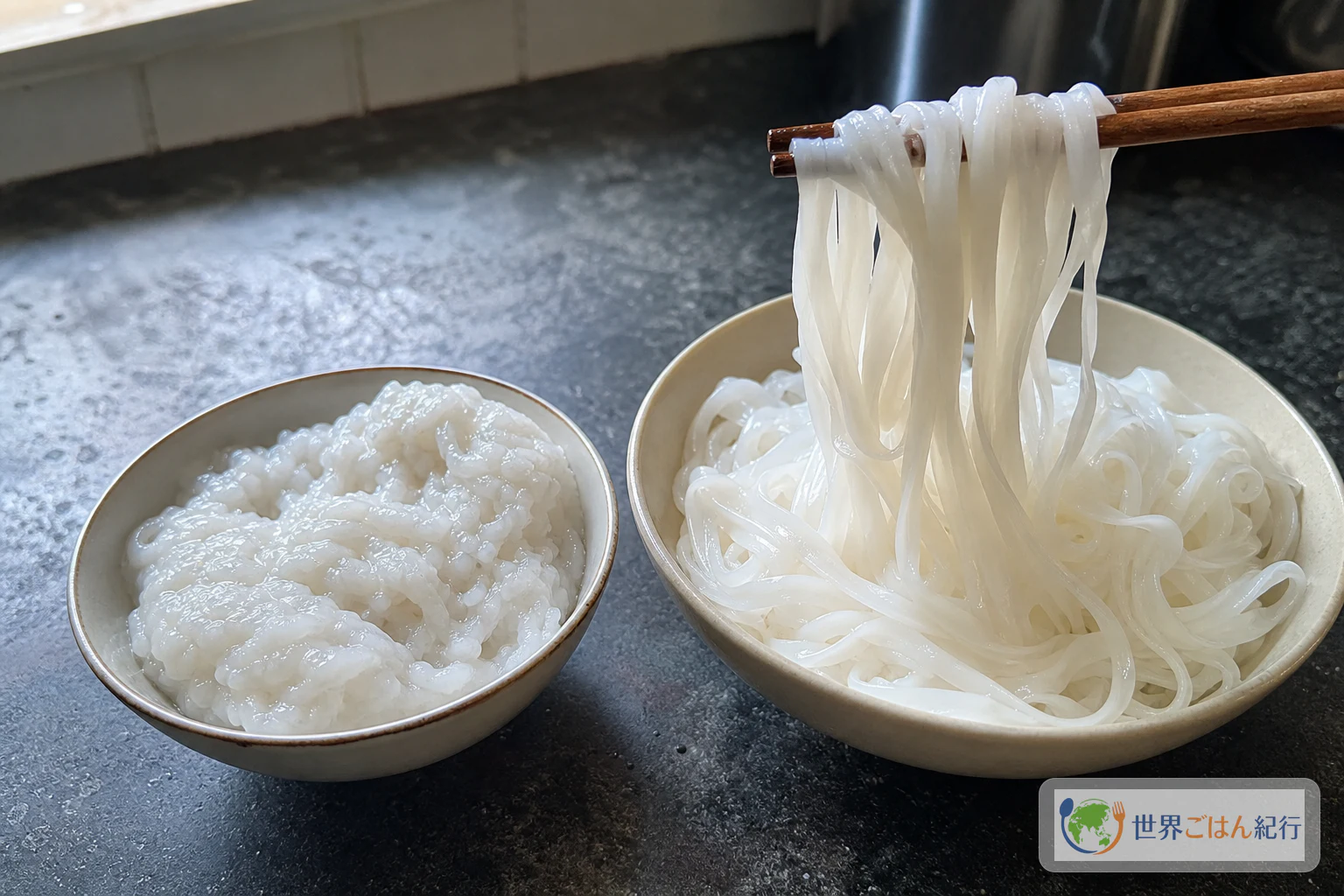
Rice noodles change the character of the bowl depending on their width. Flat dried phở noodles are fine the first time, but they break easily in the bowl if overcooked, so keep the soaking time short. If you can find thin hủ tiếu noodles, the result will have a crisper bite.
Fish sauce adds a seafood depth that salt alone can't give. Since you want to keep the broth clear, it works best added at the end and warmed only briefly.
Dried shrimp give plenty of aroma even in small amounts. On days you can't find dried squid, a little more dried shrimp makes up for the sweet, savory depth typical of southern noodles that pork bones alone can't provide. They're sold in the dried-goods aisle or at Asian grocery stores, and a small bag is plenty to start.
Star anise isn't the star, but a single piece builds a sweet aromatic bridge between the pork bones and the dried seafood. You can leave it out if you don't have any, but if you want a little of that southern Vietnamese noodle finish, using just a small amount is the easiest approach.
Choosing ingredients and substitutes for hủ tiếu
At home, first decide what you must not substitute. That matters more than gathering every ingredient. Rice noodles and fish sauce are the pillars that keep this from turning into a different dish. Celery leaves or mitsuba can stand in for Chinese celery and add a green note to the aroma. Treat the herbs as an optional garnish and leave them out, though, and the clear broth somehow feels like something is missing.
Don't rely on sugar alone for sweetness. Southern food does have a sweet side, but adding more sugar flattens the broth. Build the sweetness from daikon, onion, dried shrimp and the squid's soaking liquid, and use sugar only to round off the edges. That way the flavor stays sharp when you squeeze in lime, and you'll still want to drink the broth after the noodles are gone.
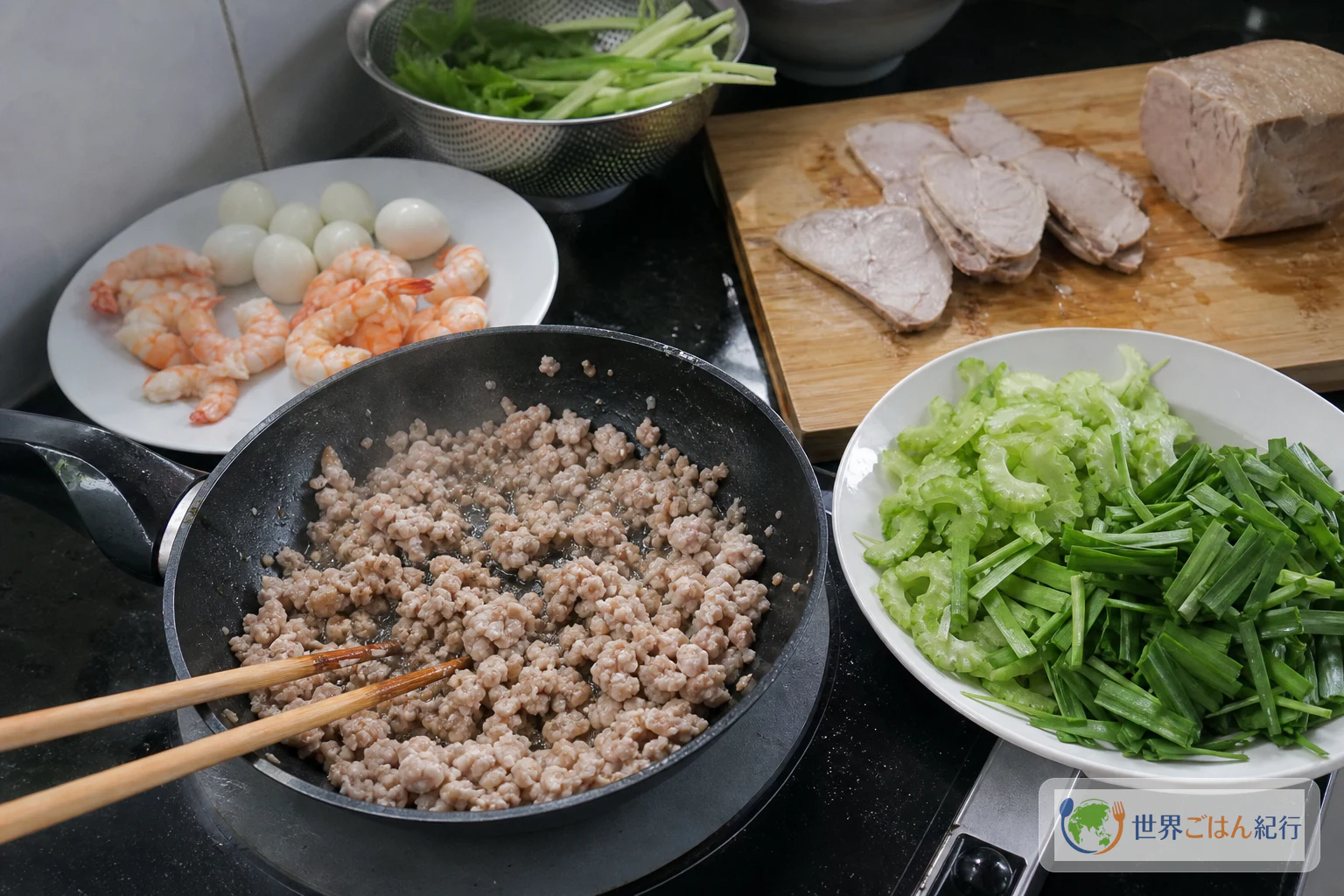
For toppings, ground pork, sliced pork, shrimp and quail eggs are an easy combination at home. Offal is optional. Pork crumbles, shrimp and herbs alone still give you a lively bowl.
Method: keep the broth clear, cook the noodles briefly
Hủ tiếu isn't something you finish in a hurry over a rolling boil. Blanching drives out the cloudiness from the bones, the main simmer gently draws out flavor over low heat, and the noodles and toppings come together only just before eating. Thinking of the broth and the assembly as separate jobs makes the timing easy to plan at home.
If the main simmer bubbles hard, fat and tiny bits of meat get churned in along with the savoriness of the bones, and the broth turns cloudy and white. Keep the heat low enough that the surface only trembles now and then, and skim off any scum as it rises. Add the fish sauce just before you turn off the heat.
Common problems with hủ tiếu
The broth turned cloudy and white
The cause is not blanching enough, or letting the main simmer boil hard. Next time, blanch the bones for 5 minutes and wash the pot, then keep the main simmer over low heat with only small bubbles rising. Stirring scatters bone fragments and fat, so leave the pot alone apart from skimming.
The noodles break and feel heavy
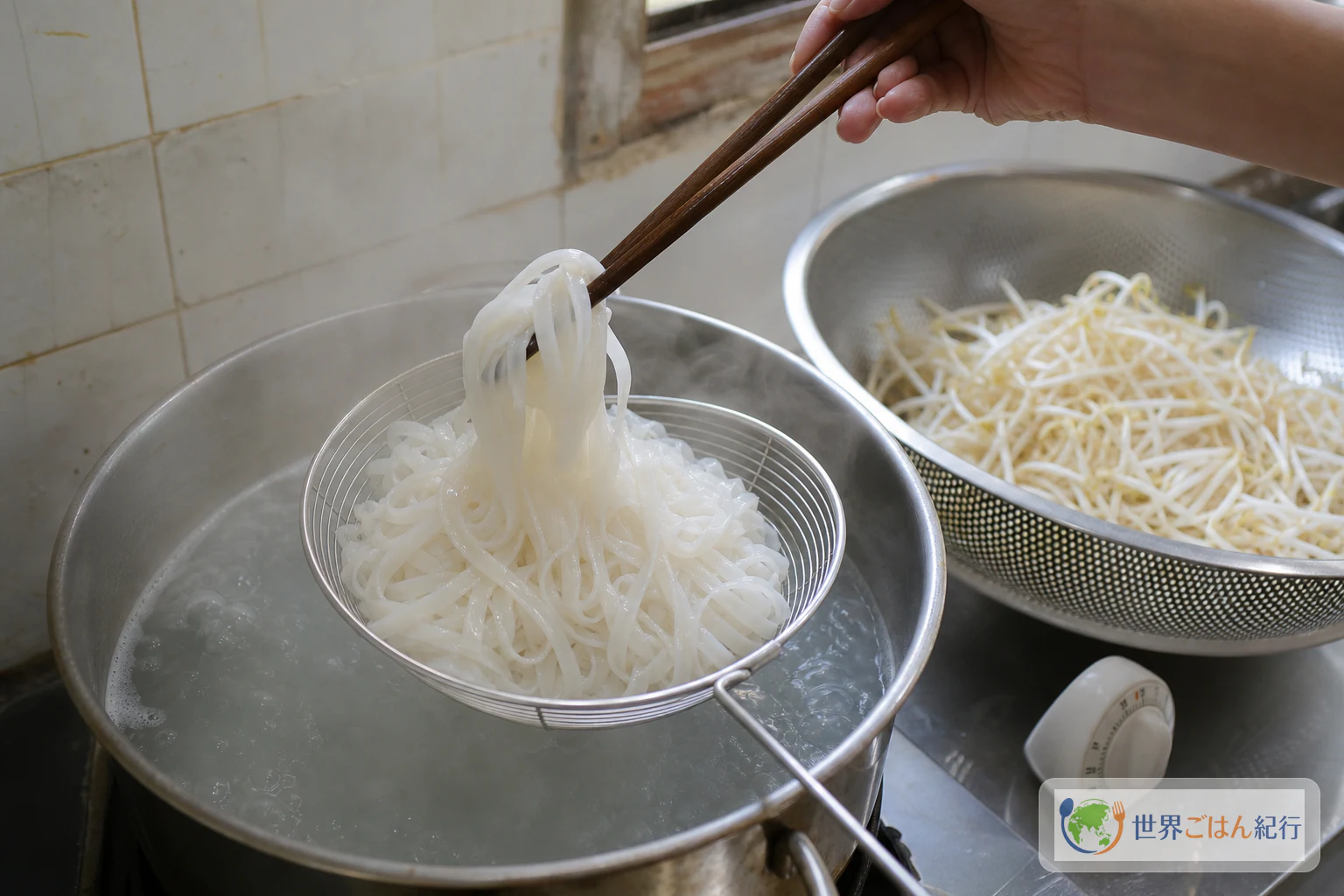
The dried noodles were soaked or boiled too long. Rice noodles finish in the bowl under the hot broth, not in the pot. Soak them until they "bend without snapping but still have a core," and boil for 45–60 seconds. Drain leftover noodles in a colander instead of leaving them sitting in water.
The fish sauce smell is too strong
Fish sauce added early and boiled turns too pungent. Season the main simmer with only salt and sugar, and add fish sauce at the end, warming it briefly at around 90°C (194°F). If the smell is already strong, add 100 ml boiling water, some daikon cooking liquid and 1/2 tsp sugar to round off the edges, and squeeze in the lime just before eating.
The toppings are tough
Sliced pork and shrimp get tough if simmered long in the main pot. Cook the toppings briefly in a small pan, then let the hot broth rewarm them in the bowl. Stop when the pork has turned white and the shrimp are curled and no longer translucent in the center. The ground pork cooks through as crumbles, so check that no pink remains.
Serving, storing and variations
Finishing hủ tiếu at the table
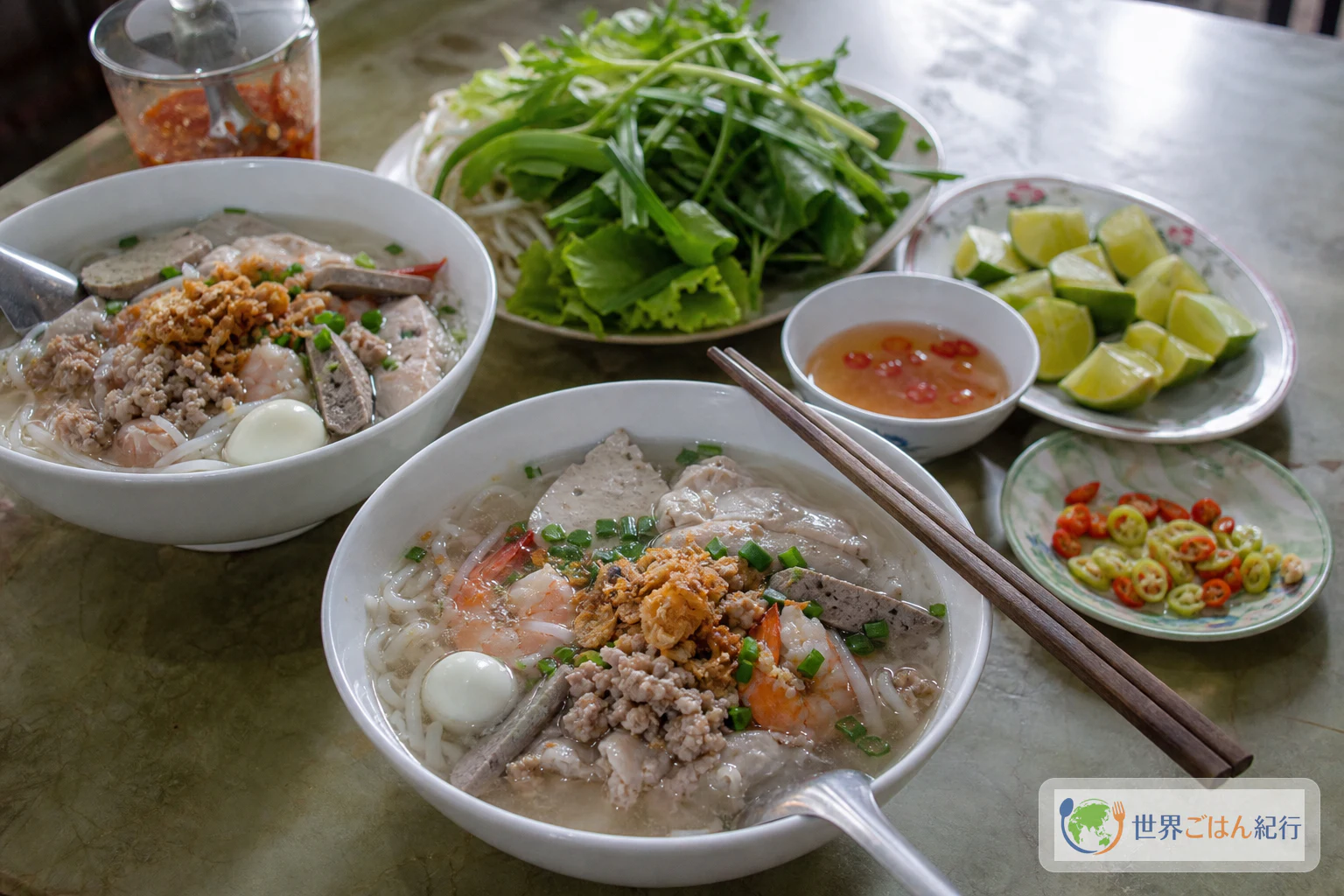
To eat it the southern way, put bean sprouts, lime, chiles and herbs on side plates and adjust the bowl little by little. If you simmer everything together in the pot, the herbs darken, the sprouts go limp, and only the fish sauce aroma lingers. It's tempting to serve it fully loaded, but with hủ tiếu, the person eating decides the final shape.
Hủ tiếu is a full meal in one bowl, but a little acidity and something fried on the table make it more satisfying. Add a few chả giò, or make a small bánh xèo to share the herbs if you want more vegetables.
To compare Vietnamese noodle soups, set northern-leaning phở gà, central bún bò Huế and southern hủ tiếu side by side. You get the clarity of chicken, the punch of fermented shrimp paste and lemongrass, and the sweet depth of pork bones and dried seafood. All three use rice noodles, yet each region's flavor is very different.
Hủ tiếu khô, the dry style
Locally there is also a dry style called hủ tiếu khô, with the broth served on the side. For an easy home version, toss the boiled rice noodles with 1 tsp fish sauce, 1/2 tsp sugar, 1 tsp rice vinegar, 2 tsp fried garlic and 2 tbsp broth. Add the toppings and herbs, and serve the hot broth in a small bowl alongside.
Over-soaked noodles show right away in the dry style, so stop them a little firm. In fact, you can let the noodles decide. On days they turn out soft, serve them in soup. On days they come out a little firm, go dry.
Storing and reheating hủ tiếu
Don't store hủ tiếu as a finished bowl. The noodles soak up the broth, the herbs wilt, and the shrimp and pork get tough. Keep the broth, toppings, noodles and herbs separate.
Cool the broth and keep it refrigerated for up to 2 days or frozen for up to 2 weeks. If you like, lift off about half the fat that solidifies on top to make it lighter. To reheat, warm it over medium-low heat for 8–10 minutes until it reaches 90°C (194°F) or above, and turn the heat down once it boils.
Keep the pork and shrimp in separate containers in the refrigerator and finish them by the next day. Reheat them in a small pan of broth over low heat for 1–2 minutes, or microwave for about 40 seconds at 600 W. Don't overheat them, since shrimp toughen easily.
Rice noodles are best the same day. If you must keep some, drain them, toss with a little rice bran oil and refrigerate until the next day. Pour boiling water over them for 10 seconds to loosen, then transfer them straight to the bowl. Wrap herbs in a damp paper towel. Leftovers are easy to use up in bún chả or bún thịt nướng.
FAQ
Can I use phở noodles if I don't have hủ tiếu noodles?
Yes. Choose dried phở noodles 3–5 mm wide, soak them in lukewarm water, then boil briefly. Wider noodles absorb more broth and get heavier, so boil for less time than the package says. Thin rice vermicelli also works, though its lighter texture drifts a little from hủ tiếu's characteristic bite.
Can I make it without pork bones?
You can use 1 lb (500 g) pork spareribs and 4 chicken wings instead. It lacks the clear savoriness of pork bones alone but is easier to handle at home. Chicken alone moves the bowl toward phở gà. Sliced pork, dried shrimp and fish sauce pull it back toward hủ tiếu.
Is dried squid essential?
No, but a small amount adds a sweet dried-seafood aroma to the broth. Without it, add 5 g more dried shrimp and go easy on the star anise. Kombu gives a strong Japanese dashi impression, so if you use it, limit it to a 2 inches (5 cm) square soaked for just 10 minutes and then removed.
What should I add to make it spicy?
Add heat at the table rather than simmering chiles in the broth. Put sliced red chiles, chili oil and pickled chiles on side plates and let everyone adjust their own bowl. Making it spicy from the start hides the sweetness of the pork bones and dried seafood.
How far can I get ahead if making it in advance?
If working a day ahead, go only as far as making the broth. Make the broth from the bones and dried seafood and refrigerate it. On the day, reheat the broth, cook the toppings briefly, boil the rice noodles and assemble. Toppings and noodles made ahead lose their texture.