Marak: A Middle Eastern–Style Spiced Goat Soup from an Indonesian Kitchen (Maraq Kambing)

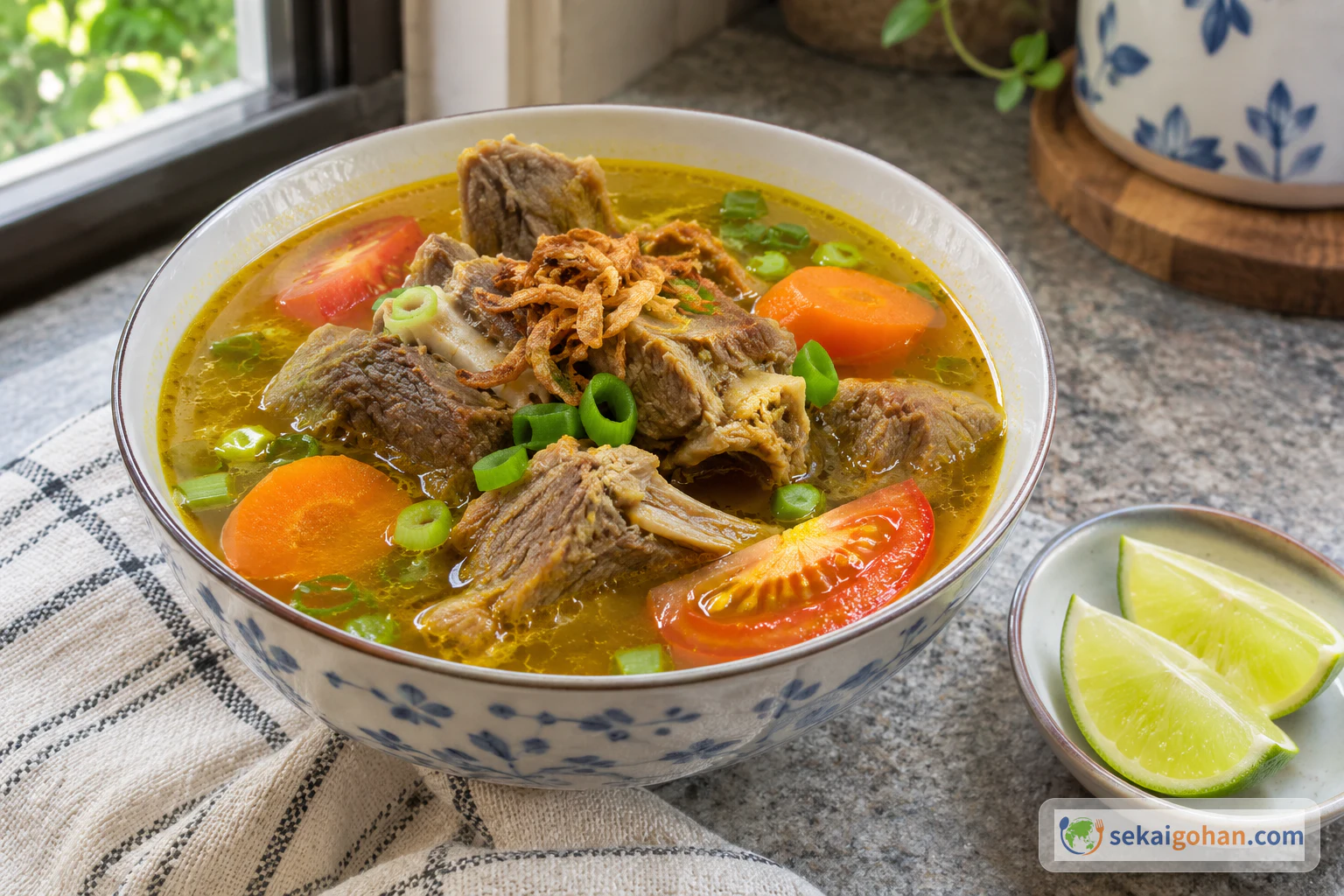
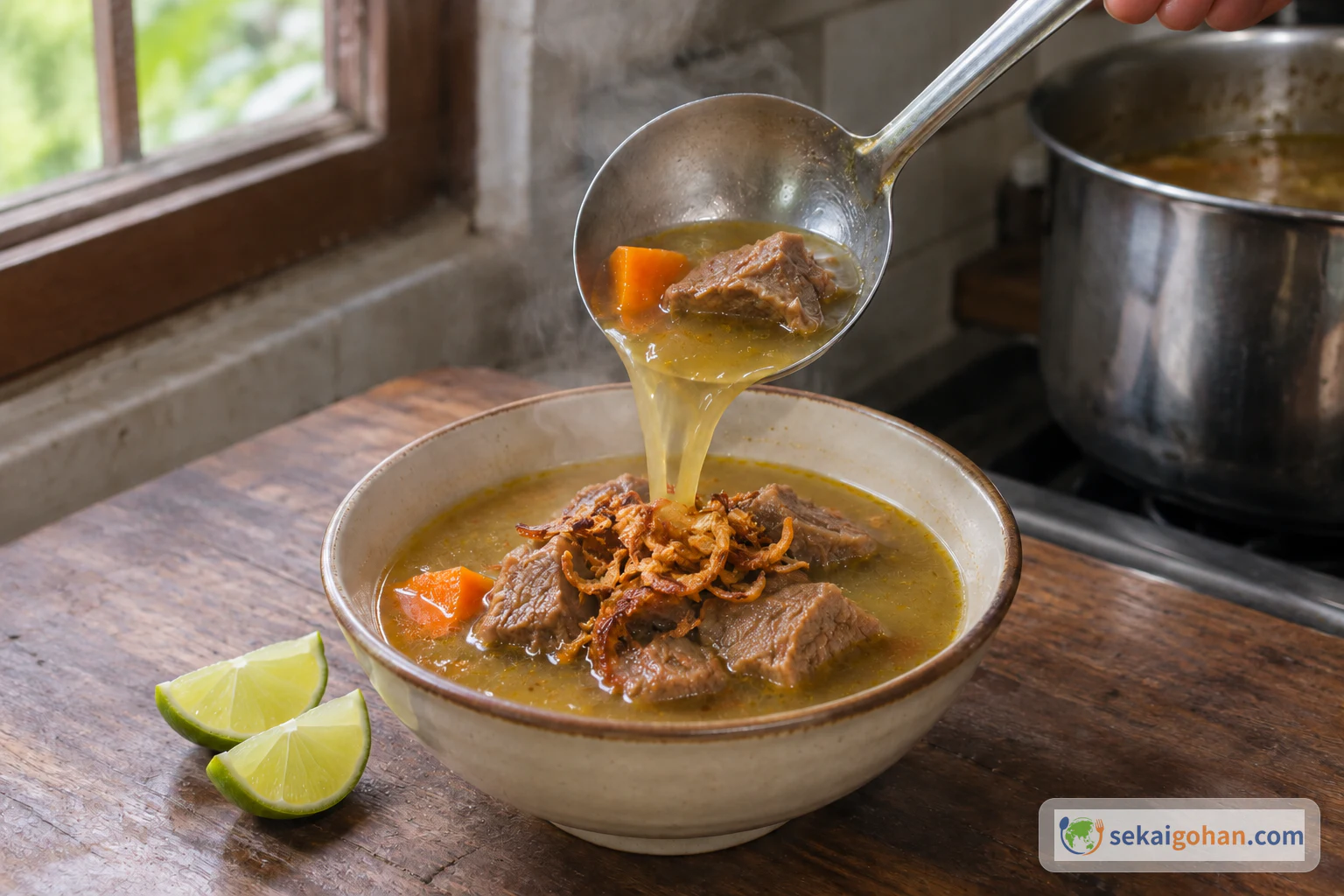
Marak as made in this version: a bowl of goat meat and vegetable soup with fried onion on top and cut lime beside it
Serves
6 portions
Cuisine
Indonesian

How to make marak (Maraq Kambing), a Middle Eastern–style goat soup published by an Indonesian food outlet: onion and a garlic, ginger and galangal paste, ground and whole spices, goat simmered in water until tender, then carrots, tomatoes and spring onion, finished with fried onion and lime. Covers judging tenderness by the meat itself rather than the clock, choosing galangal and cardamom, and where this version sits in Arab-Betawi food culture.

Cooking flow

Cooking steps

STEP11 / 10

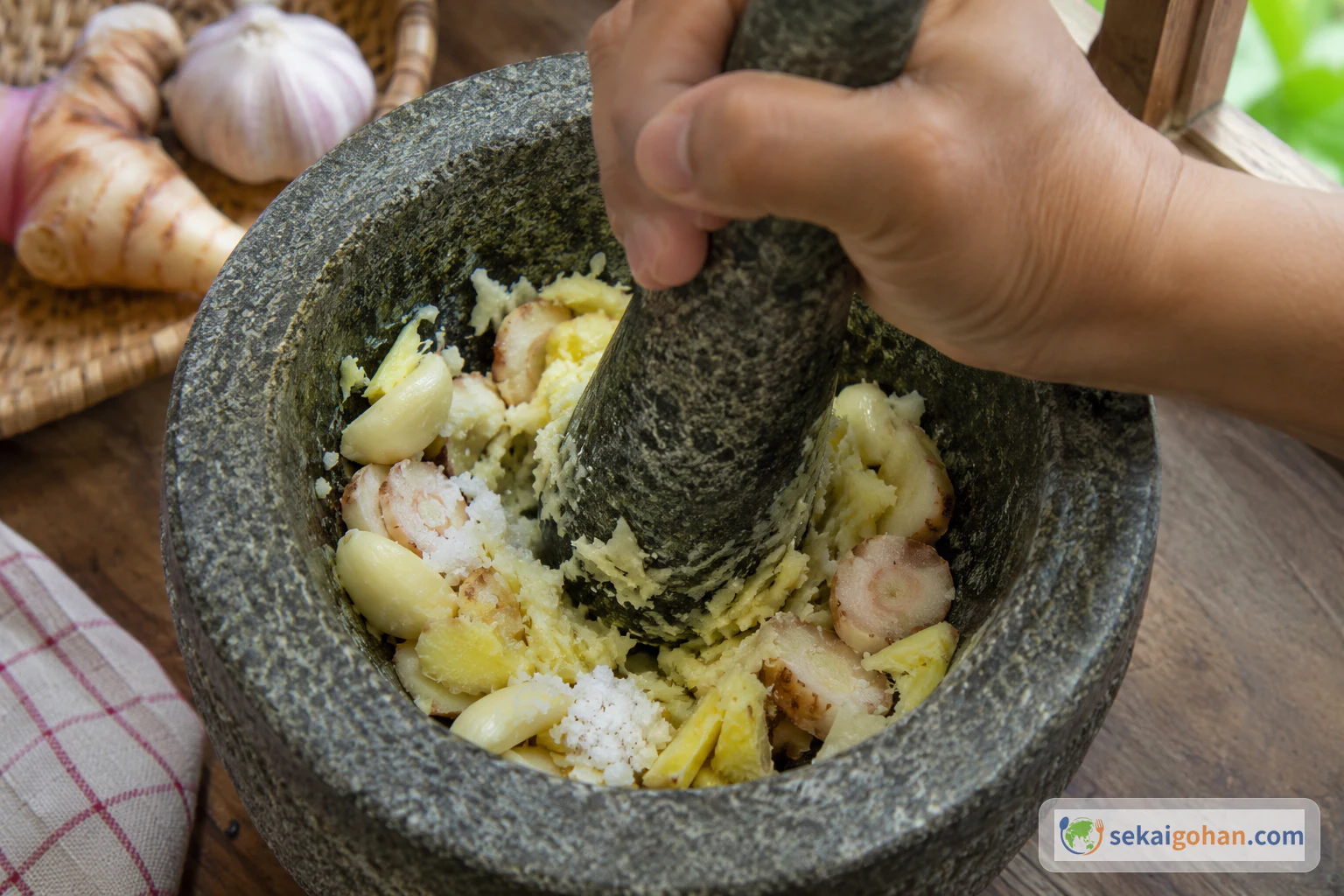
Grind the paste

One pestle grinding garlic, ginger, galangal and coarse salt together in a stone mortar
Garlic, ginger, galangal and salt ground together; this paste holds all the salt

Put the garlic, ginger, galangal and salt in a mortar and pound them together with the pestle into a paste.

STEP22 / 10

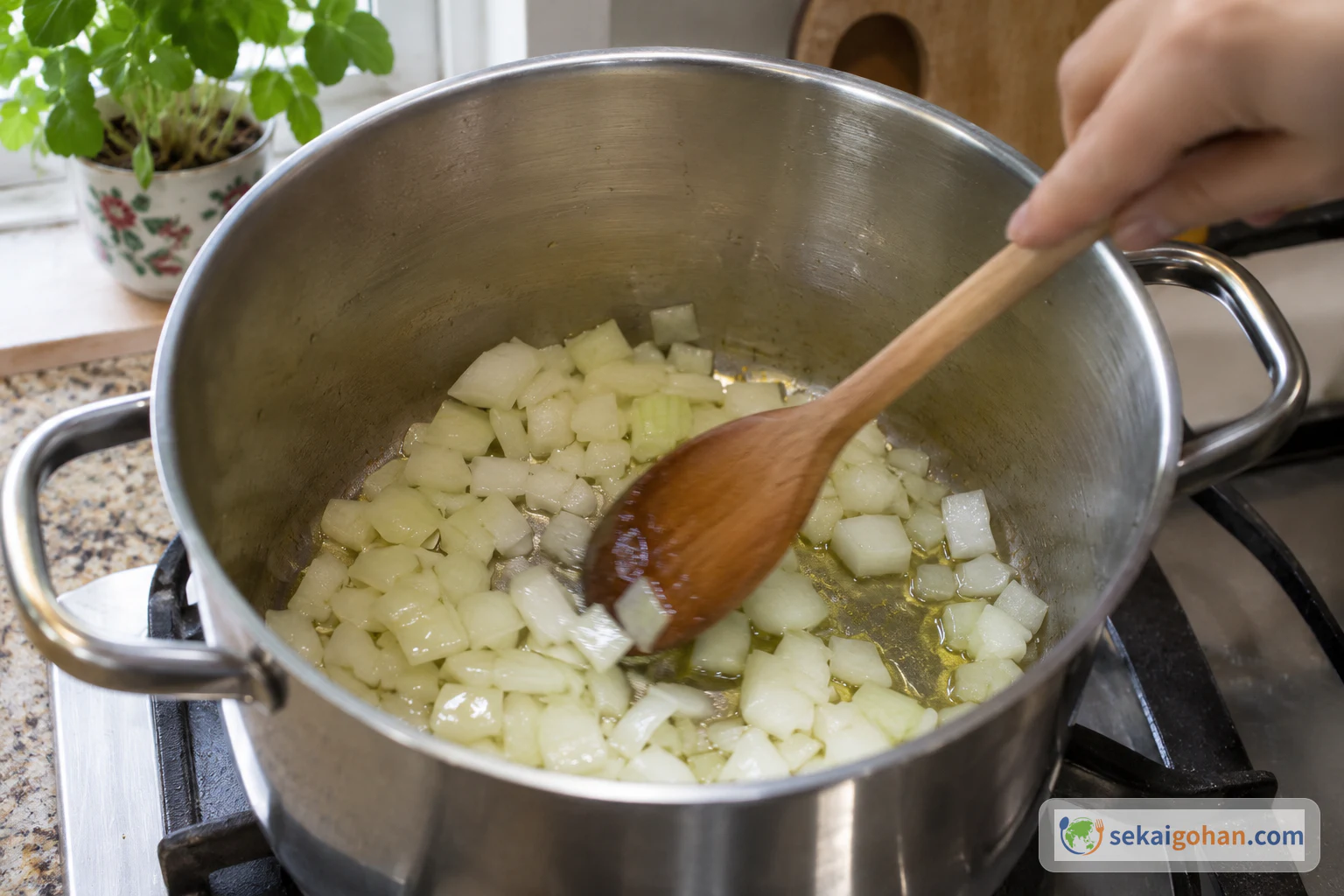
Sauté the onion

A wooden spoon stirring chopped onion in oil in a soup pot
Only onion and oil in the pot at this stage

Heat the oil in the soup pot and cook the chopped onion, stirring, until it smells fragrant.

STEP33 / 10

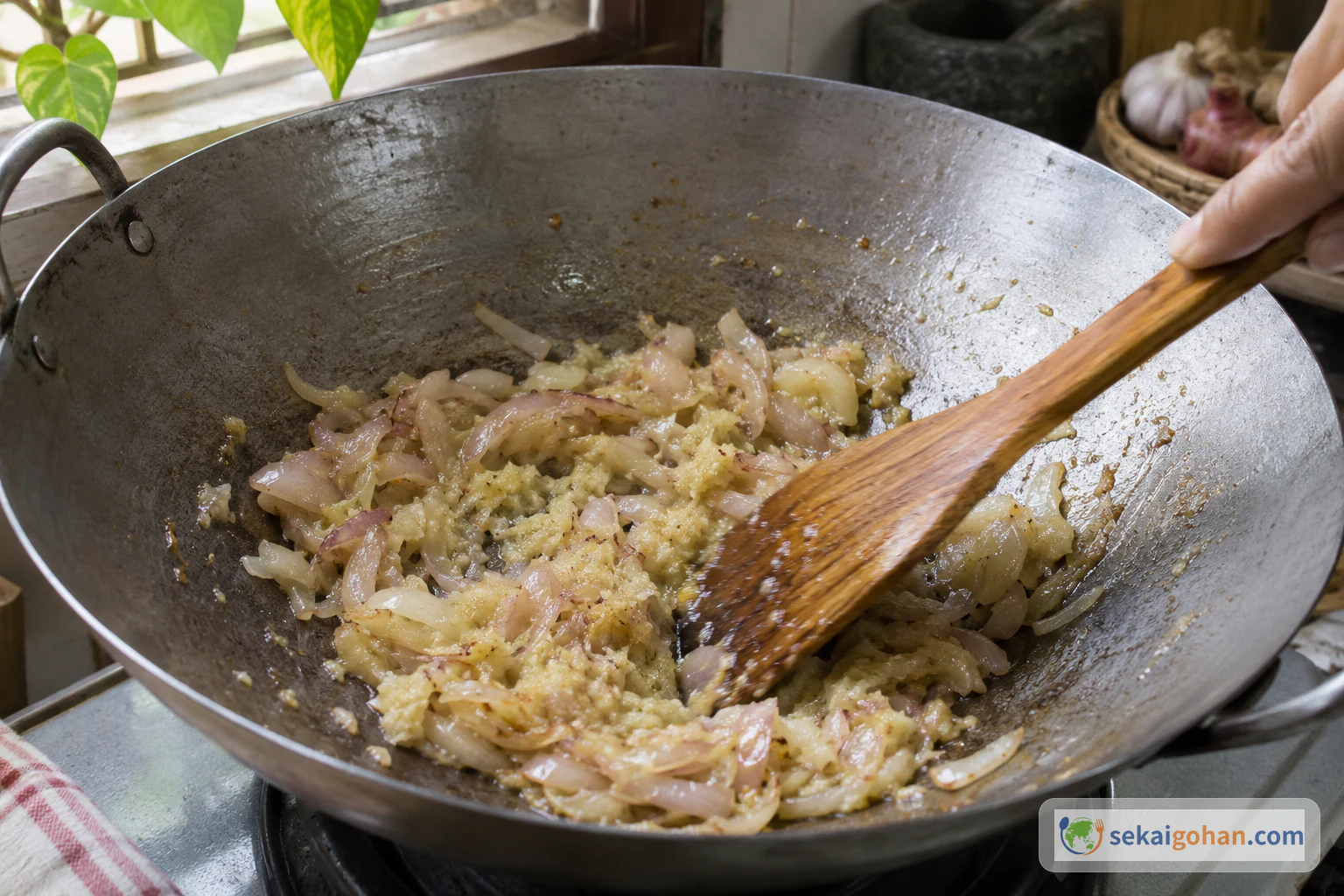
Cook the paste

The pale garlic, ginger and galangal paste stirred into the cooked onion
Stir until the paste is spread through the onion and cooked

Add the ground paste and stir it evenly through the onion until it is cooked.

STEP44 / 10

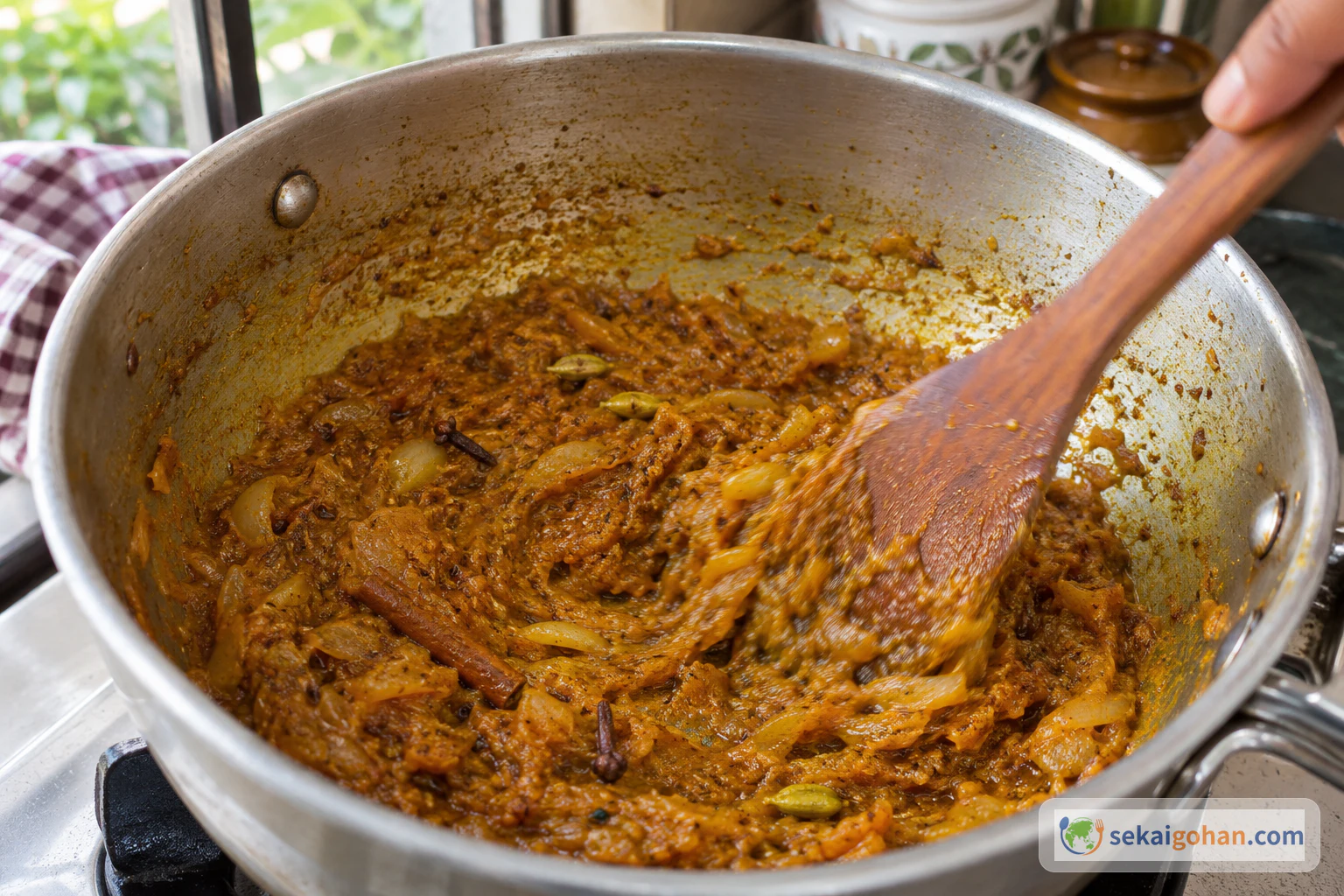
Add the ground and whole spices

Ground spices, cardamom pods, cloves and cinnamon stirred into the onion and paste
Ground and whole spices go in together, before any meat

Add the turmeric, coriander, cumin and pepper together with the cardamom, cloves and cinnamon. Stir until fragrant.

STEP55 / 10

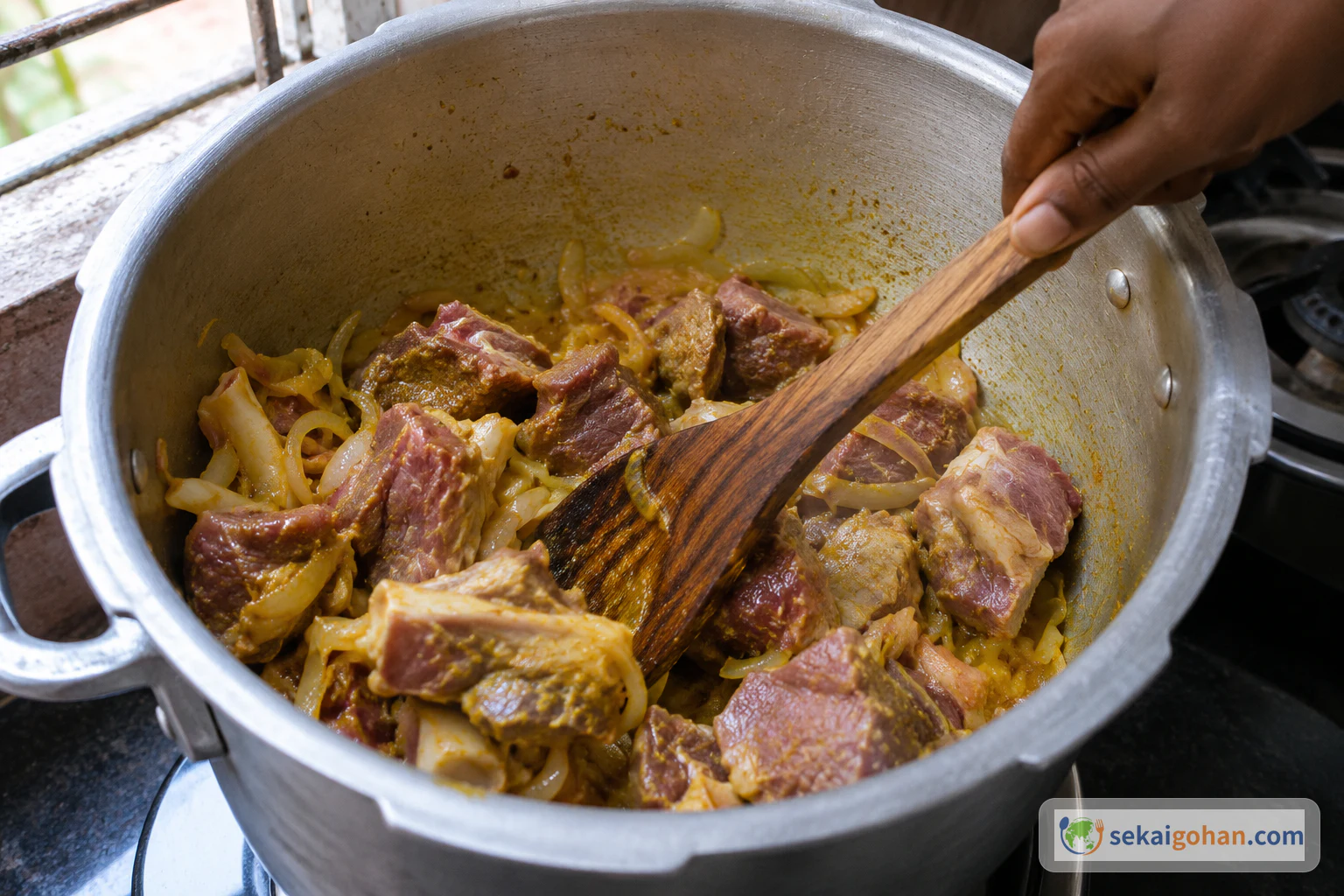
Sauté the goat

Cut goat meat being turned in the onion and spice mixture before any water is added
Coat the goat in the spices until its surface changes color

Add the cut goat and turn it through the spice mixture until the surface firms and changes color. The color change only means it is time for the water; the meat is not cooked yet.

STEP66 / 10

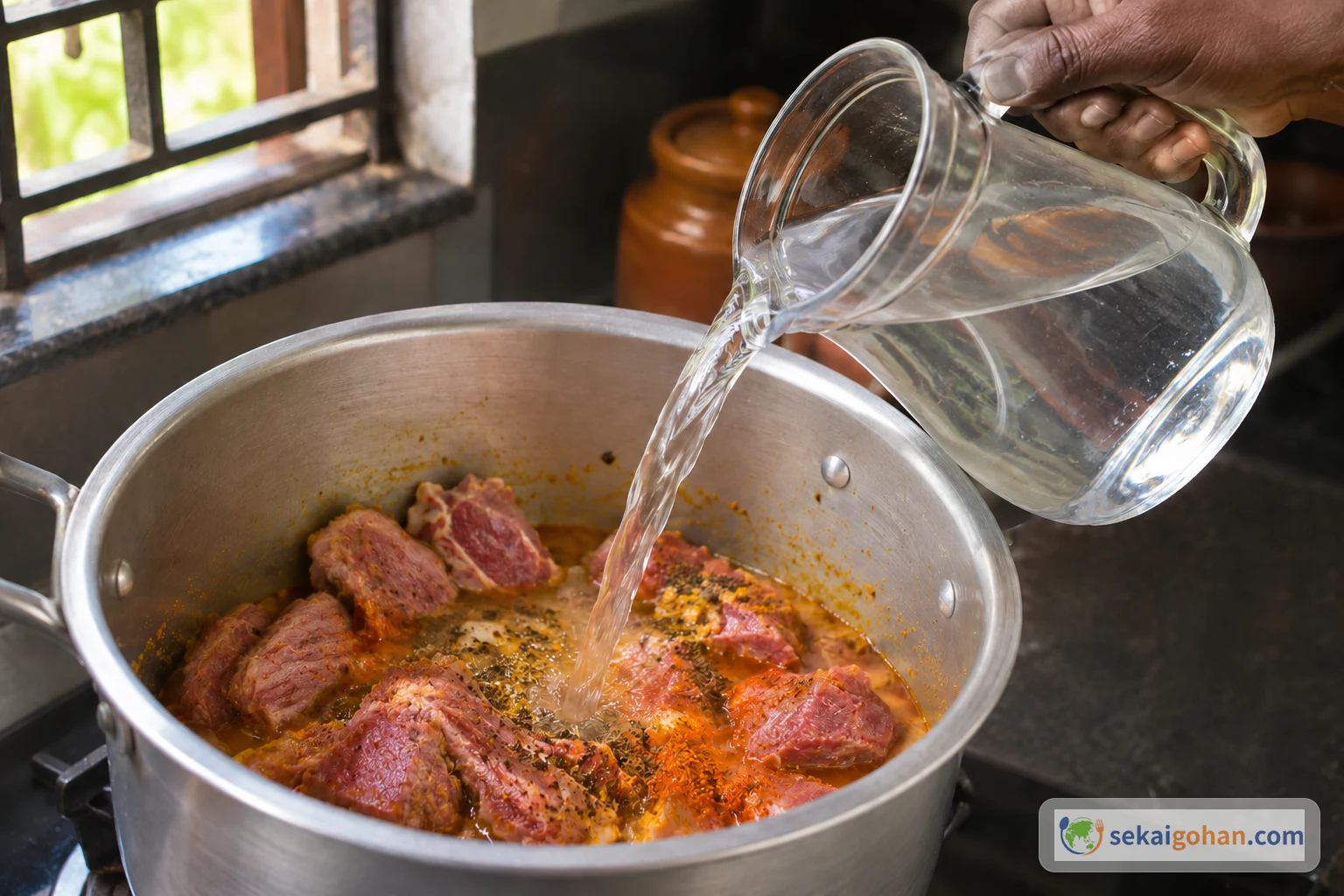
Pour in the water

A jug pouring water into the pot of goat and spices
Plain water becomes the broth

Pour in 1.5 quarts (1.5 L) of plain water.

STEP77 / 10

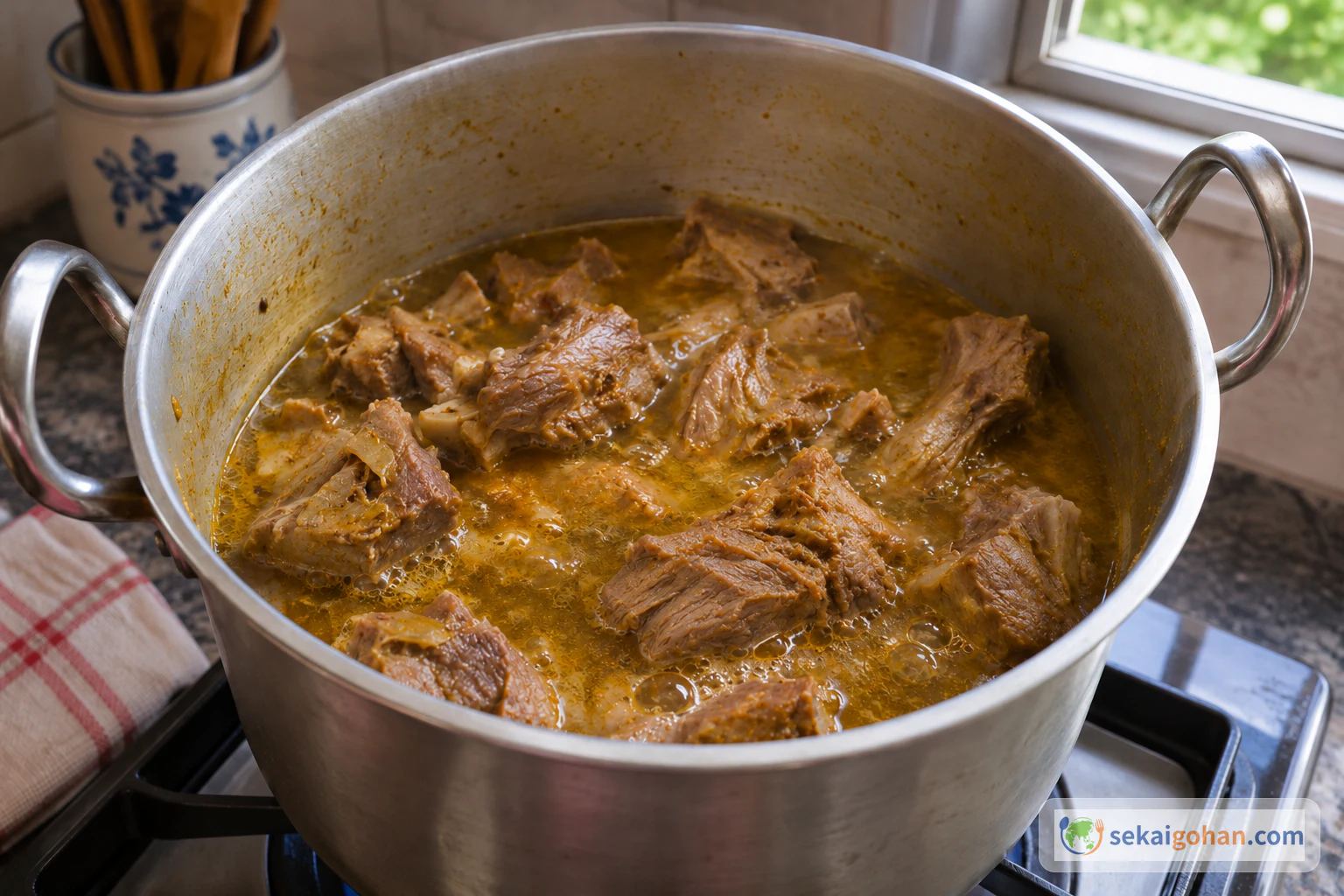
Simmer until the meat is tender

Goat meat simmering gently over low heat in the spiced broth
Keep the heat low and judge by how tender the meat is, not by the clock

Simmer over low heat until the goat is tender and the flavors have come together. Judge by the meat itself: take out a piece and check that it is as tender as you want before moving on.

STEP88 / 10

Add the vegetables

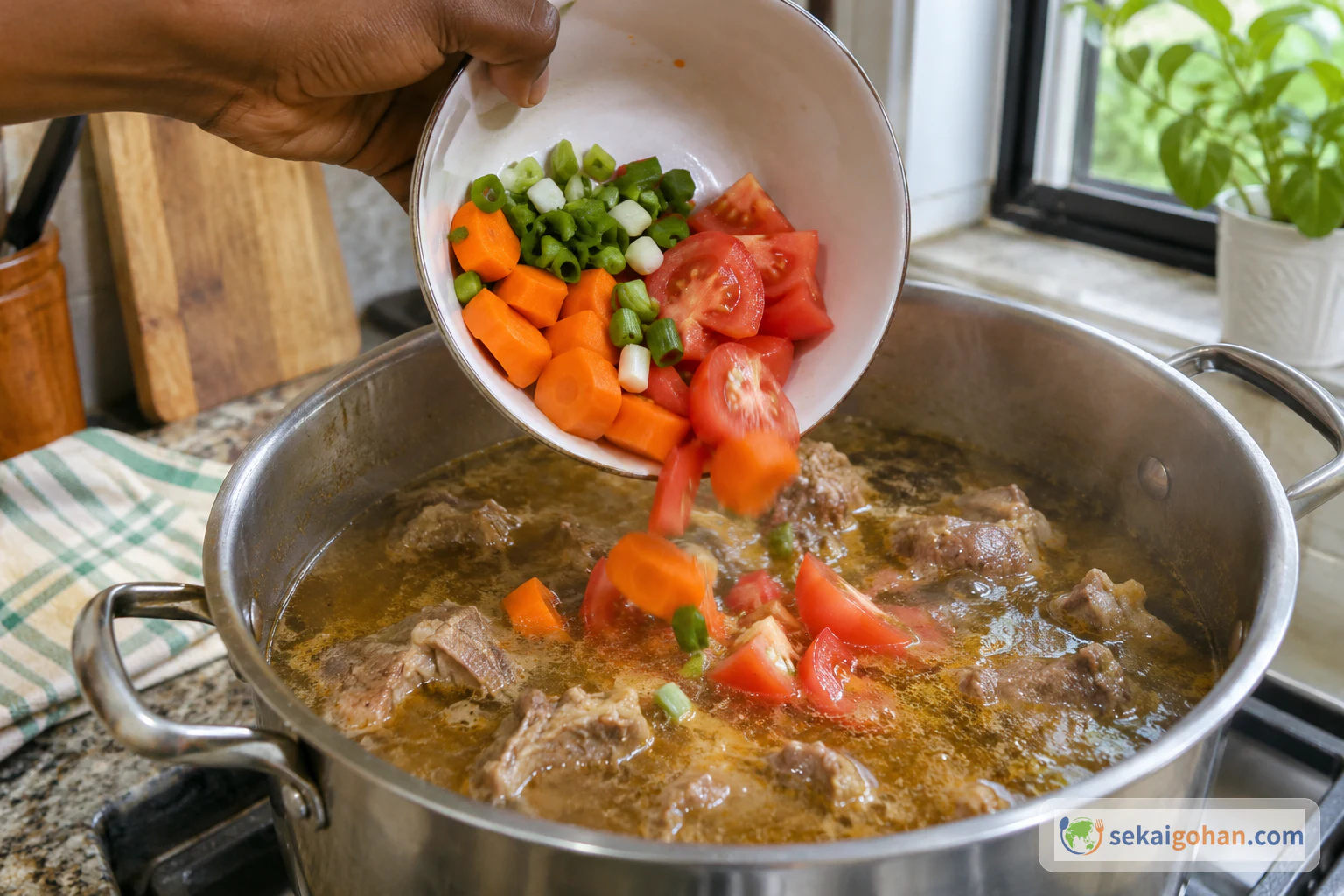
A bowl tipping carrots, tomatoes and spring onion into the tender goat broth
The vegetables go in only after the goat is tender

Once the meat is tender, add the coarsely cut carrots, tomatoes and spring onion.

STEP99 / 10

Cook the vegetables through

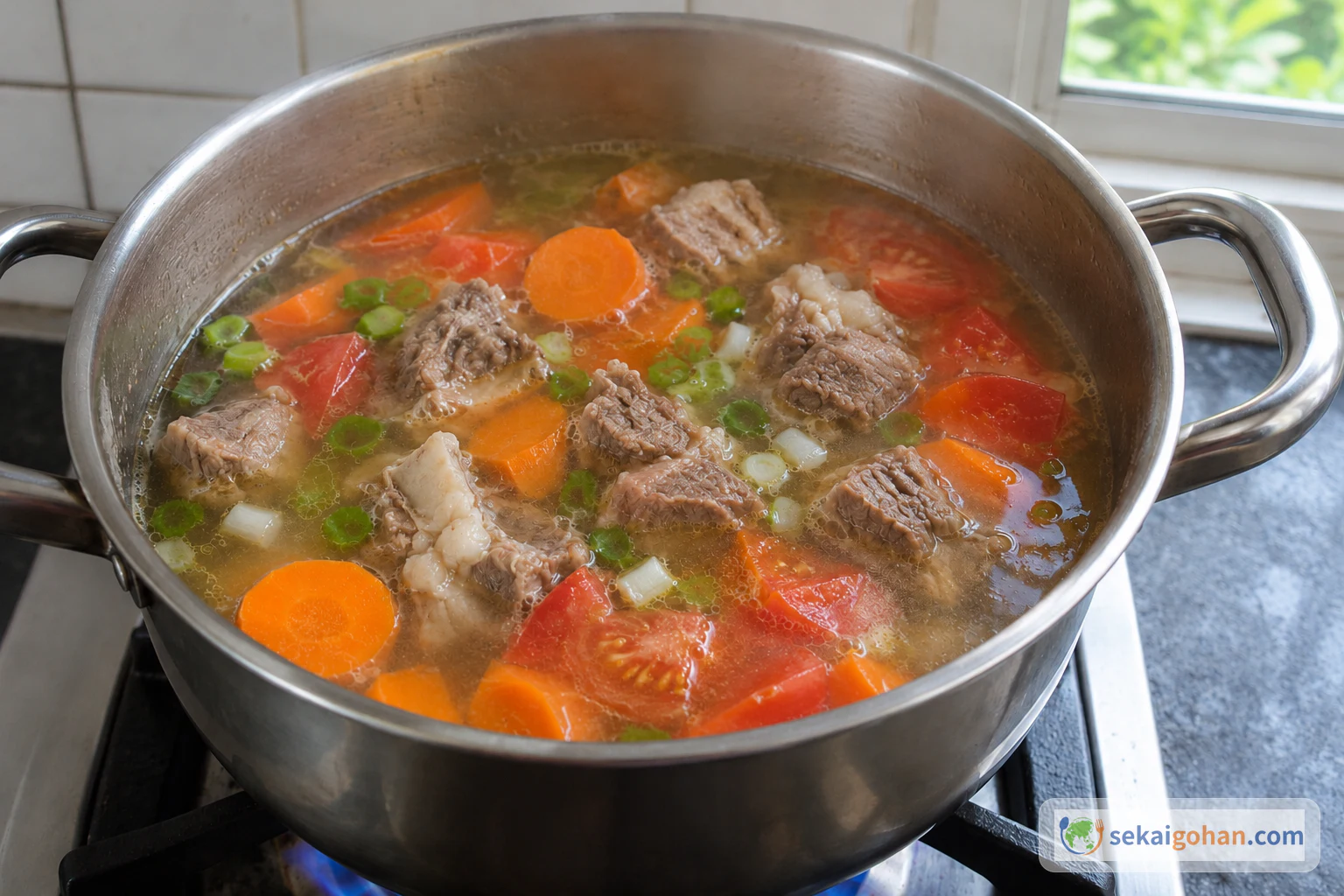
The soup heating gently with goat, carrots, tomatoes and spring onion
Heat gently until the carrots are cooked through

Keep the soup at a gentle heat until the vegetables are cooked through and as soft as you like.

STEP1010 / 10

Serve hot with fried onion and lime

A ladle pouring hot goat and vegetable soup into a bowl with fried onion already on top and lime wedges beside it
Fried onion on top and lime on the side

Ladle the hot soup into bowls, top with the fried onion and serve the cut lime alongside so each person can squeeze it in.

0 / 0
Ingredients

Ingredients

1 / 1

Ingredients

Ingredient Amount Role
Vegetable oil (minyak sayur) 2 sdm For sautéing
Onion (bawang bombay), coarsely chopped 1.75 oz (50 g) Sautéed first, as the base
Goat meat (daging kambing), cut into pieces 1 lb (500 g) Sautéed raw with the spices, then simmered until tender
Cinnamon (kayumanis) 1 inches (3 cm) Whole spice
Cloves (cengkih) 4 Whole spice
Cardamom (kapulaga) 5 Whole spice
Water 1.5 quarts (1.5 L) The simmering liquid
Garlic 3 cloves Ground into the paste
Ginger 0.5 inches (1 cm) Ground into the paste
Galangal (lengkuas) 0.5 inches (1 cm) Ground into the paste; a separate root from ginger
Salt 2 sdt Ground into the paste; this is all the salt in the recipe
Ground turmeric 1 sdt Ground spice
Ground coriander 1 sdt Ground spice
Ground cumin 1/2 sdt Ground spice
Ground pepper (merica bubuk) 1 sdt Ground spice; black or white
Carrots, coarsely cut 2 Added after the meat is tender
Tomatoes, coarsely cut 2 Added after the meat is tender; fresh tomatoes, not paste
Spring onion (daun bawang), coarsely cut 1 Added after the meat is tender
Fried onion (bawang goreng), ready-made 2 sdm Scattered over each bowl
Lime (jeruk nipis), cut 1 Served on the side

The 2 sdt of salt goes into the paste only; do not add another 2 sdt to the pot.

0 / 0

Each bowl of marak goes to the table with a scatter of fried onion and a wedge of lime. Underneath is a clear broth, fragrant with cumin, coriander, cardamom, cloves and cinnamon, and goat that has simmered low and slow until it is tender. It is a Middle Eastern–style goat soup from Indonesian kitchens. You make it in an ordinary soup pot, and the order of additions does most of the work.

Marak in Betawi Cooking

In Jakarta, the cooking of the Betawi people shows Arab influences, and marak is one of their goat dishes. It sits alongside soup made with goat's trotters and nasi kebuli. Within Indonesian cooking, clear goat and beef soups are a familiar family. Soto betawi and sate kambing are other dishes from the Betawi area and the goat repertoire, but they are cooked in quite different ways. For more dishes from the country, see Indonesia.

The method is simple. Chopped onion is sautéed in vegetable oil. Then come a paste of garlic, ginger, galangal and salt, the ground spices, and the whole cardamom, cloves and cinnamon. The goat is stirred through the fragrant mixture until its surface changes color. Water goes in, and the pot settles into a gentle simmer. Carrots, tomatoes and spring onion are added only once the meat is tender.

Other marak recipes look quite different. Marak Lahma parboils the meat, cooks potatoes, carrots and celery, adds tomato paste, and finishes with lemon and optional pineapple. Another cooks 7 oz (200 g) of meat for two with granulated stock and a packaged seasoning. Some versions add potatoes, celery or pineapple, or rely on a packaged seasoning. Those are different soups from this one.

Ingredients: One Paste, Two Sets of Spices, and Vegetables Saved for the End
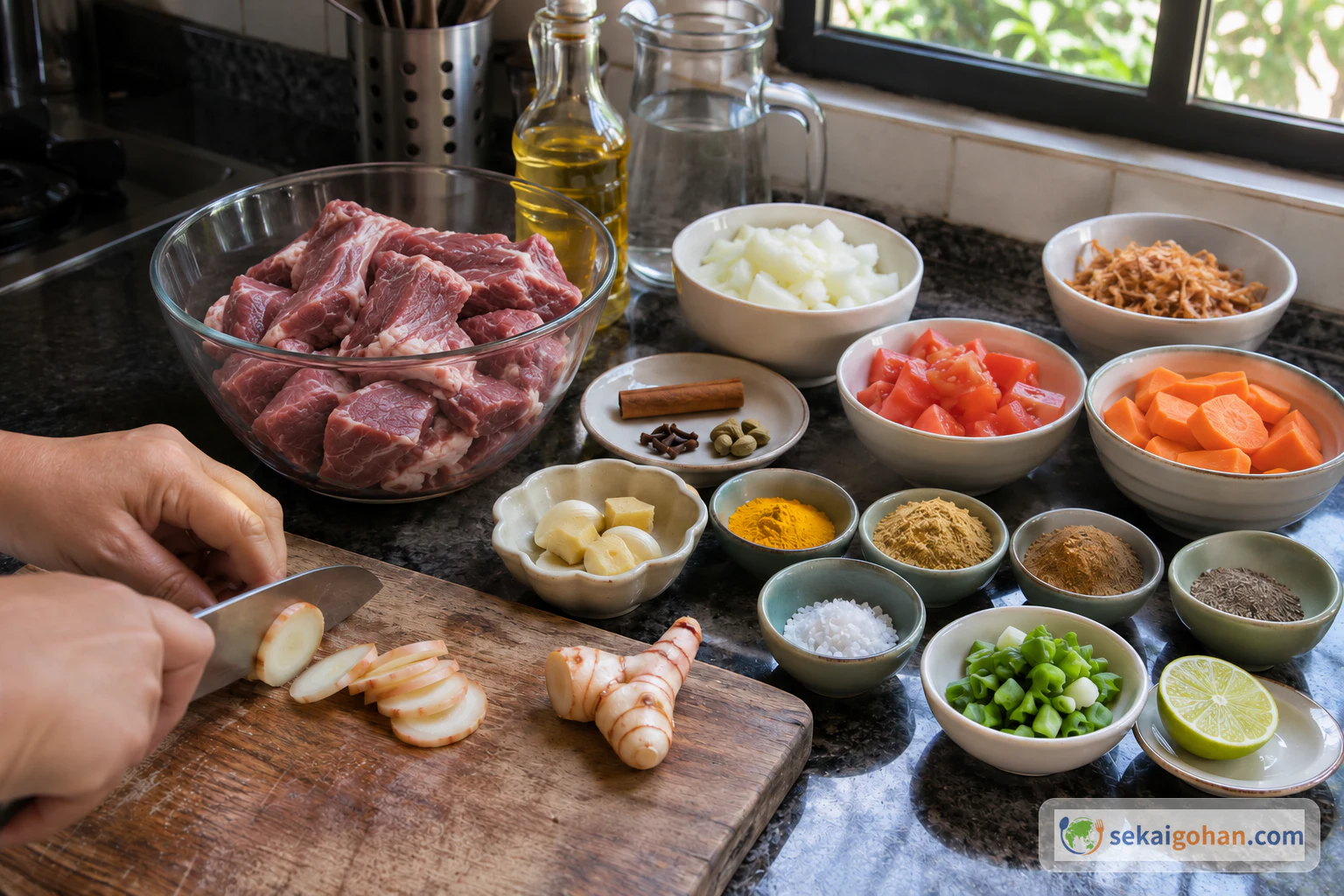
The ingredients for marak laid out in a home kitchen: oil, onion, raw goat, whole and ground spices, garlic, ginger, galangal, salt, carrots, tomatoes, spring onion, fried onion and lime
Everything for this single version of marak, with the vegetables and garnish kept aside for later

Equipment

  • Mortar and pestle, for grinding the paste
  • An ordinary soup pot with room for 1.5 quarts (1.5 L) of water plus the meat and vegetables
  • A wooden spoon or spatula for stirring
  • A ladle and serving bowls
  • A knife and cutting board for raw meat, and a separate clean set for the vegetables and lime

Choosing Goat, Galangal and Spices for Marak

Goat meat. Look for goat sold as food and cut for stewing. Our photos show boneless pieces. Bone-in goat works too, but the 1 lb (500 g) then includes bone, and there is no weight conversion between the two. Either way, judge doneness by the meat, not the clock.

Galangal. Use galangal (lengkuas). It is a different root from the ginger that is already in the paste, so extra ginger won't stand in for it.

Cardamom and pepper. The whole cardamom pods can be any kind you can find. Black or white ground pepper both work for the 1 sdt.

Fried onion and lime. Ready-made fried onion (bawang goreng) is fine. Indonesian jeruk nipis is a lime, not a lemon. Lemon shows up in other marak recipes, and it changes the finish.

For the packaged spices and the fried onion, check the flavor description, ingredient list and allergen labeling before you buy.

Raw meat hygiene

Do not taste the raw meat, or the pot while the meat is still raw. Use a separate board and knife for the raw goat, and don't use the utensils that touched raw meat for serving the finished soup.

Fixing Common Marak Problems

The order that matters

Cook the onion, the ground paste and the spices in oil first, so their fragrance is already in the pot when the water goes in. Then let the goat go soft at low heat, and add the vegetables only after the meat is tender.

Situation Likely cause What to do
The goat is still firm when you expected it to be done It needs more time at low heat; how much depends on the cut, the size of the pieces and your heat Keep simmering gently and check a piece again. Hold the vegetables back until the meat is tender
The soup tastes flat and you want more salt All the salt is in the paste Wait until the meat and vegetables are fully cooked, then taste before adding anything. Skip a second full measure of salt

Variations on Goat Marak

Neither swap comes with its own amounts or times, so cook by feel.

  • Lamb or mutton instead of goat. These meats soften at their own pace. Judge by the meat rather than by the time goat took.
  • Different spices. You can change the type of cardamom or the color of the pepper. Change the spice set itself, though, and the soup moves away from this version.

Frequently Asked Questions

How long does it take?

About 90 minutes in total. The meat is ready when it is tender, and that depends on the cut, the size of the pieces and your heat.

Does it really serve six?

The recipe makes 6 portions. That won't necessarily feed six adults if the soup is the whole main meal.

Why are the spoons written as sdm and sdt?

They are Indonesian measures: sendok makan (tablespoon) and sendok teh (teaspoon). There is no exact spoon volume behind them, so no milliliter or gram equivalents are listed.

Can I use a pressure cooker or stock?

This marak is made in an ordinary pot with plain water. Parboiling the meat and using stock belong to other marak recipes.

How long are the vegetables cooked at the end?

There is no set time. Heat them gently until they are cooked through and as soft as you like.
Sources