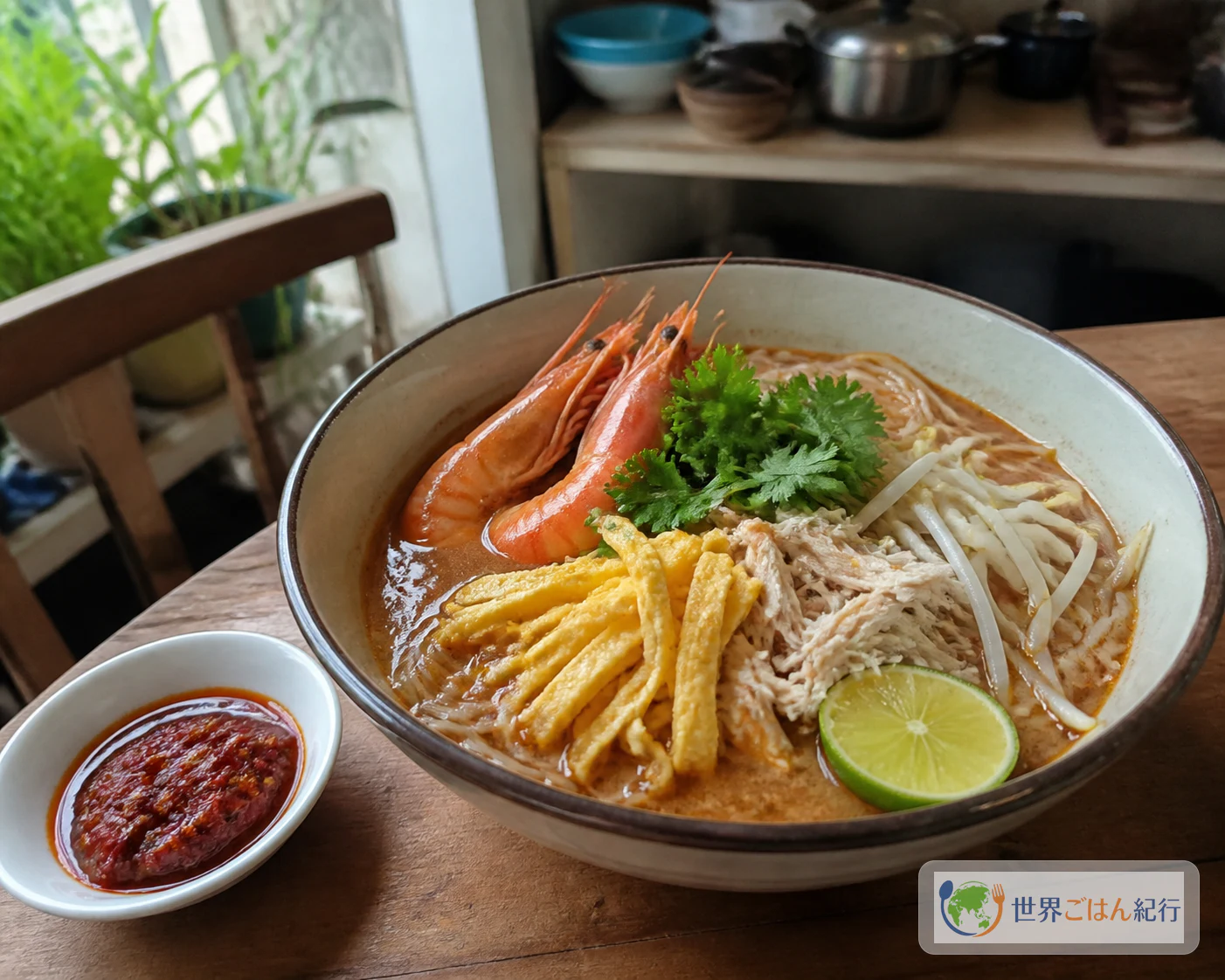
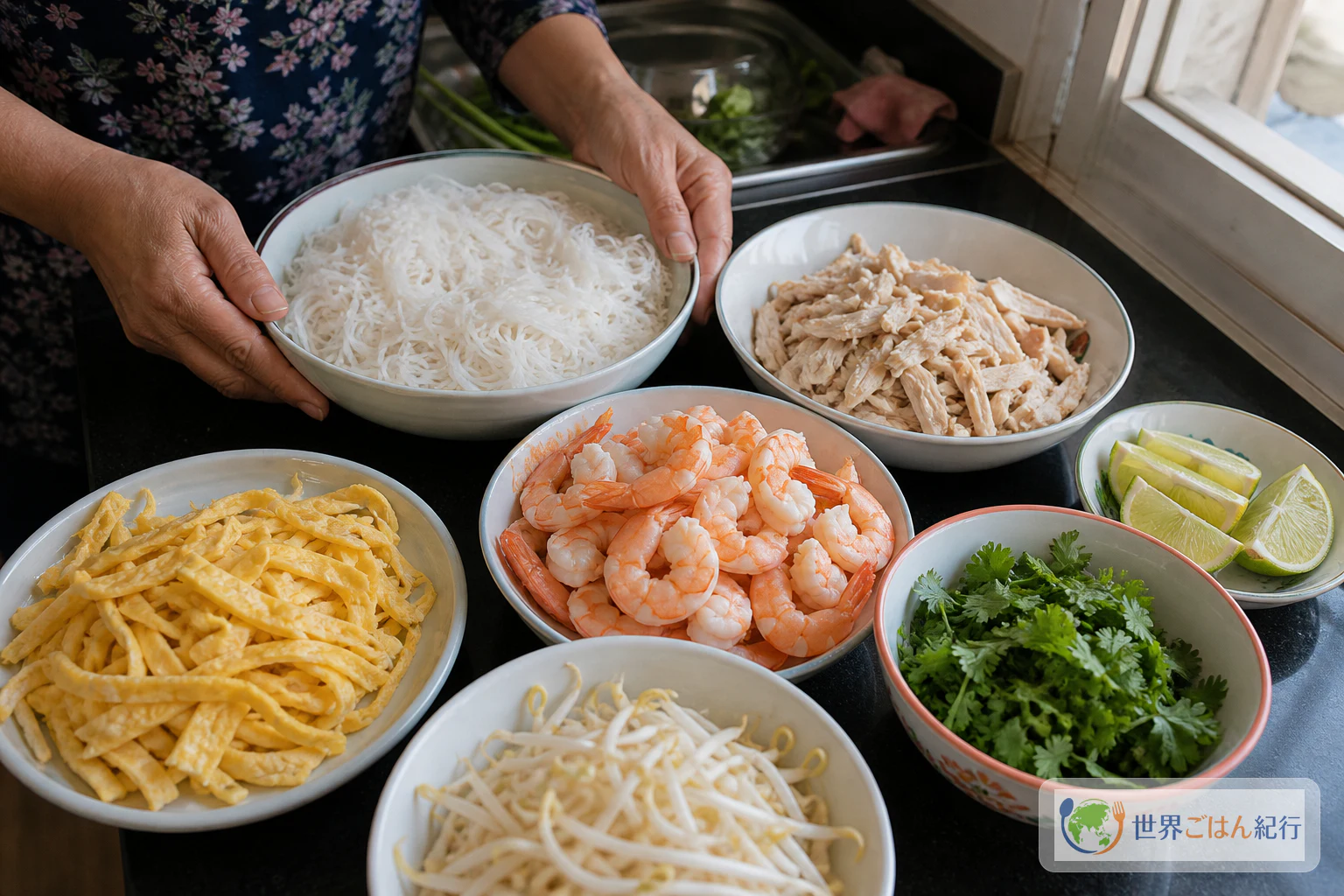
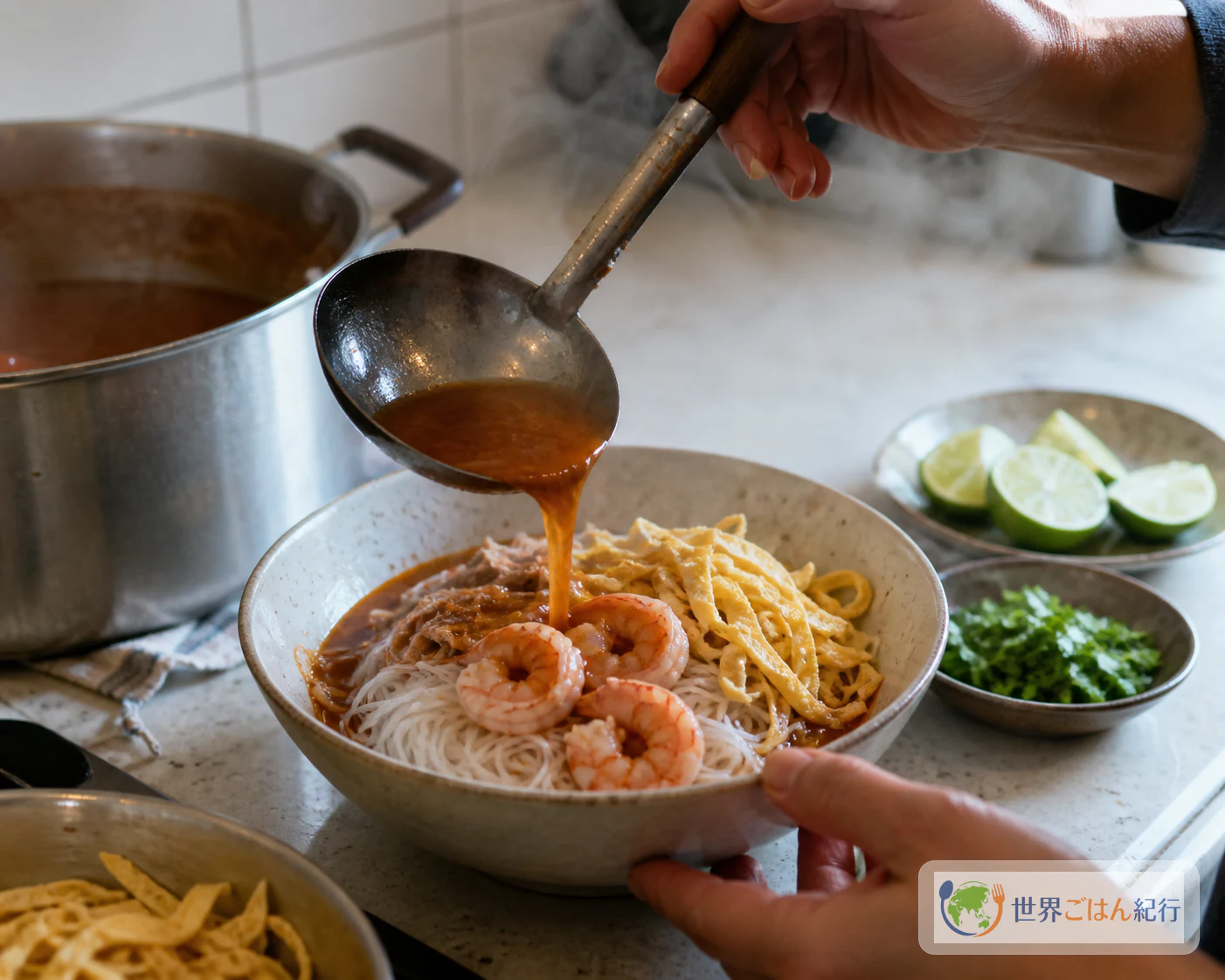
Steam rises from the bowl as hot, reddish-brown broth goes over a mound of rice noodles. It sinks slowly between the chicken, shrimp, thin strips of omelet and bean sprouts. You can smell garlic and lemongrass first, then the sweetness of simmered shrimp shells, and finally the roundness of coconut milk. This is Sarawak laksa (Laksa Sarawak), from the state of Sarawak in East Malaysia and one of Kuching's signature breakfasts. In one pot it builds the savoriness of shrimp and chicken, a spice paste and a small amount of coconut milk into a broth where sour, hot, savory, sweet and salty each come through clearly.
Sarawak laksa in Kuching
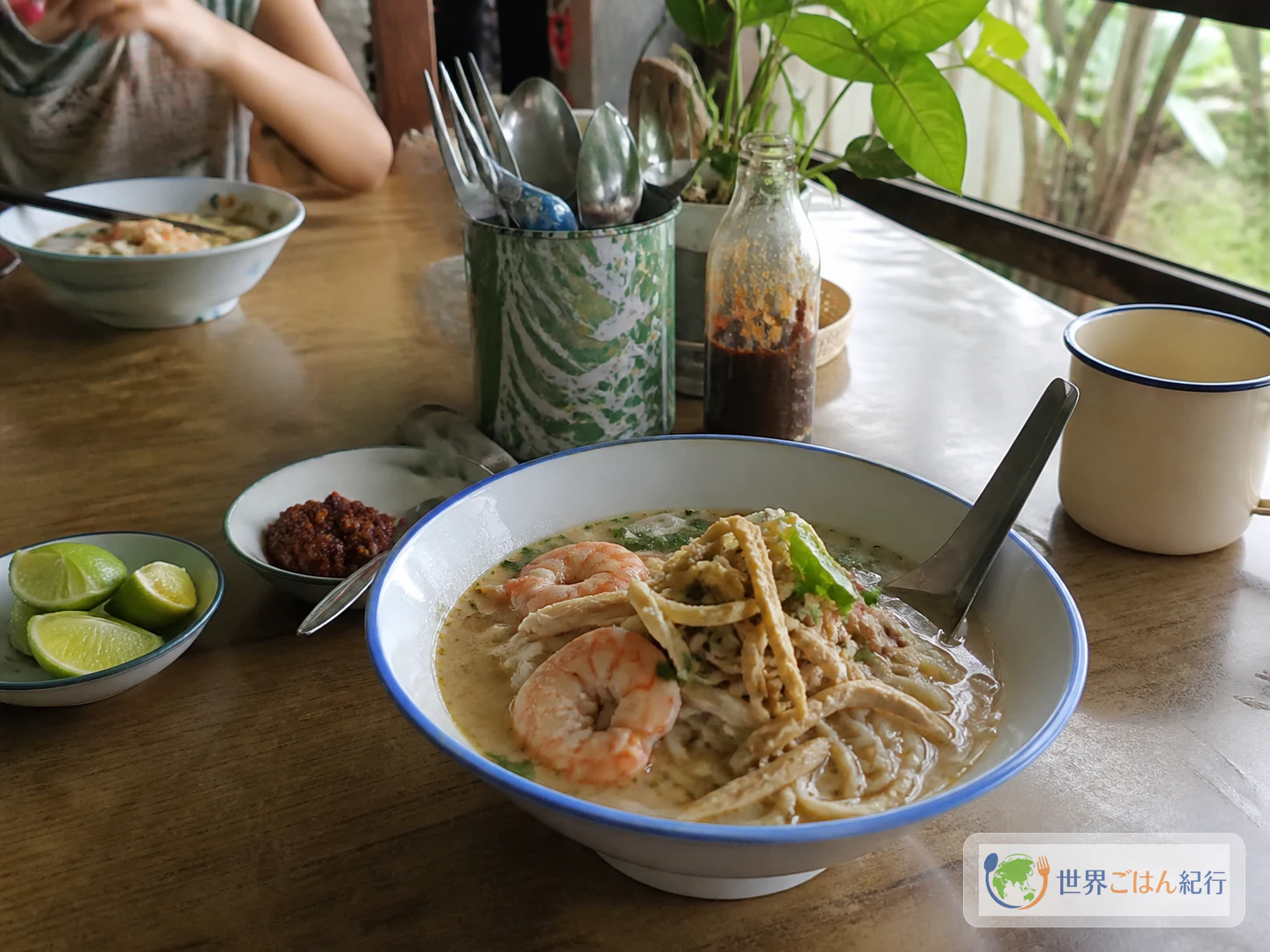
In Kuching, laksa is an everyday dish, not one made for tourists. People eat it at morning coffee shops and hawker stalls, with the noodles and toppings sunk into the soup. It shares breakfast duty with kolo mee as the city's signature morning dishes. No single community or seasoning can claim it, and it's hard to trace to one inventor. The flavor draws on Chinese, Malay and Peranakan cooking and on the other food cultures of Borneo, all meeting at the same breakfast table.
Each topping has its own job. The chicken makes the stock first and is shredded afterward. The shrimp go in at the end so they stay tender, and the egg is cooked into thin sheets and cut into fine strips. Bean sprouts, cilantro and lime lighten the rich soup, so they're doing more than decorating the bowl.
The paste can carry a sense of home, too. One student from Sarawak brought laksa paste to the UK and cooked it with rice noodles, shrimp, chicken, coconut milk, cilantro and bean sprouts, sharing the taste of home in an unfamiliar kitchen.
Sarawak laksa vs. Penang asam laksa
| Point of comparison | Sarawak laksa | Penang asam laksa |
|---|---|---|
| Base of the stock | Shrimp shells and shrimp, chicken stock | Fish stock |
| Sourness | Tamarind in the spice paste, lime on the side | Tamarind and fish broth come to the front |
| Noodles | Thin rice noodles, rice vermicelli | Thicker, round rice noodles |
| Toppings | Chicken, shrimp, omelet strips, bean sprouts, cilantro | Fish, vegetables, herbs |
| At the table | Add sambal and lime to taste | Enjoy the sour broth as it is |
The two dishes share a name and little else. Penang laksa is a fish and tamarind broth served with rice noodles, lime, cucumber, pineapple, mint and more, so swapping the paste won't turn one into the other. Use an asam laksa paste and you'll end up with a sour fish soup instead of a spicy coconut noodle soup. Keep this in mind when you shop: change the paste and you change the dish's region too.
Sarawak laksa has no single fixed recipe, and many people make it with paste bought locally. At home, you can use a ready-made Sarawak paste or make your own rempah (spice paste). The commercial paste is the quickest way to the flavor you'd find in Kuching. Still, make the paste from scratch at least once so you learn the order in which the aromas develop. Whichever you choose, three things matter most:
Turn the shrimp shells into stock, don't scorch the paste, and never let the coconut milk boil hard.
Ingredients (serves 4)
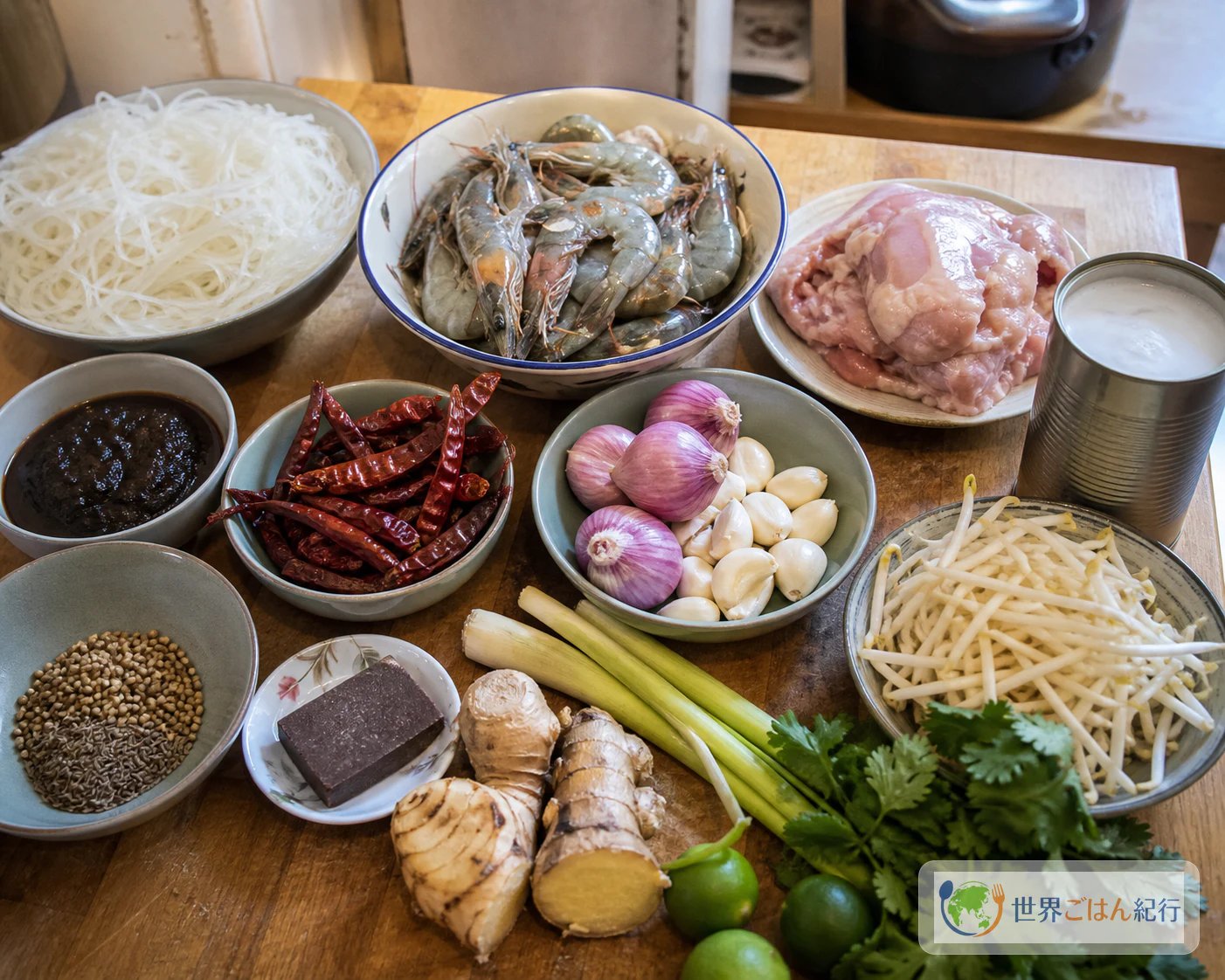
Dried rice noodles, bean sprouts and chicken are easy to find anywhere. The items worth seeking out are tamarind paste, whose sourness is hard to fake, unsweetened full-fat coconut milk, and galangal and belacan, which you'll find at Asian grocery stores or online.
You can substitute umeboshi (Japanese pickled plum) pulp for tamarind, but the plum's saltiness and fruity aroma come forward. If you're making it just once, it's fine to mix 15 g umeboshi pulp, 2 tsp (10 ml) lime juice and 5 g dark brown sugar to approximate 1 oz (30 g). If you cook Southeast Asian food regularly, a tamarind paste with a clearly labeled weight and ingredient list makes it easier to keep the sourness consistent from batch to batch.
If you open an in-date can of coconut milk and find the white solids have separated, warm it gently in the pot and they'll come together. There's no need to melt them over a water bath. Look for "unsweetened" and "regular" (not "light") on the label; a can of about 400 ml (13.5 fl oz) is the usual size. If you already have a can that fits, there's no need to buy a new one.
Belacan is a fermented shrimp seasoning. If you avoid shellfish, check the label and leave it out. Fish sauce can stand in for the saltiness, but the aroma of fermented shrimp won't come back, so treat the result as a different coconut noodle soup, not a shellfish-free Sarawak laksa.
Without a food processor, pound the aromatics a little at a time in a stone mortar. Some fiber can remain, but hard rings of lemongrass are unpleasant in the mouth, so finely chop the white part before adding it. A knife can also do the job if you're making it only once.
Ingredients and substitutes for Sarawak laksa
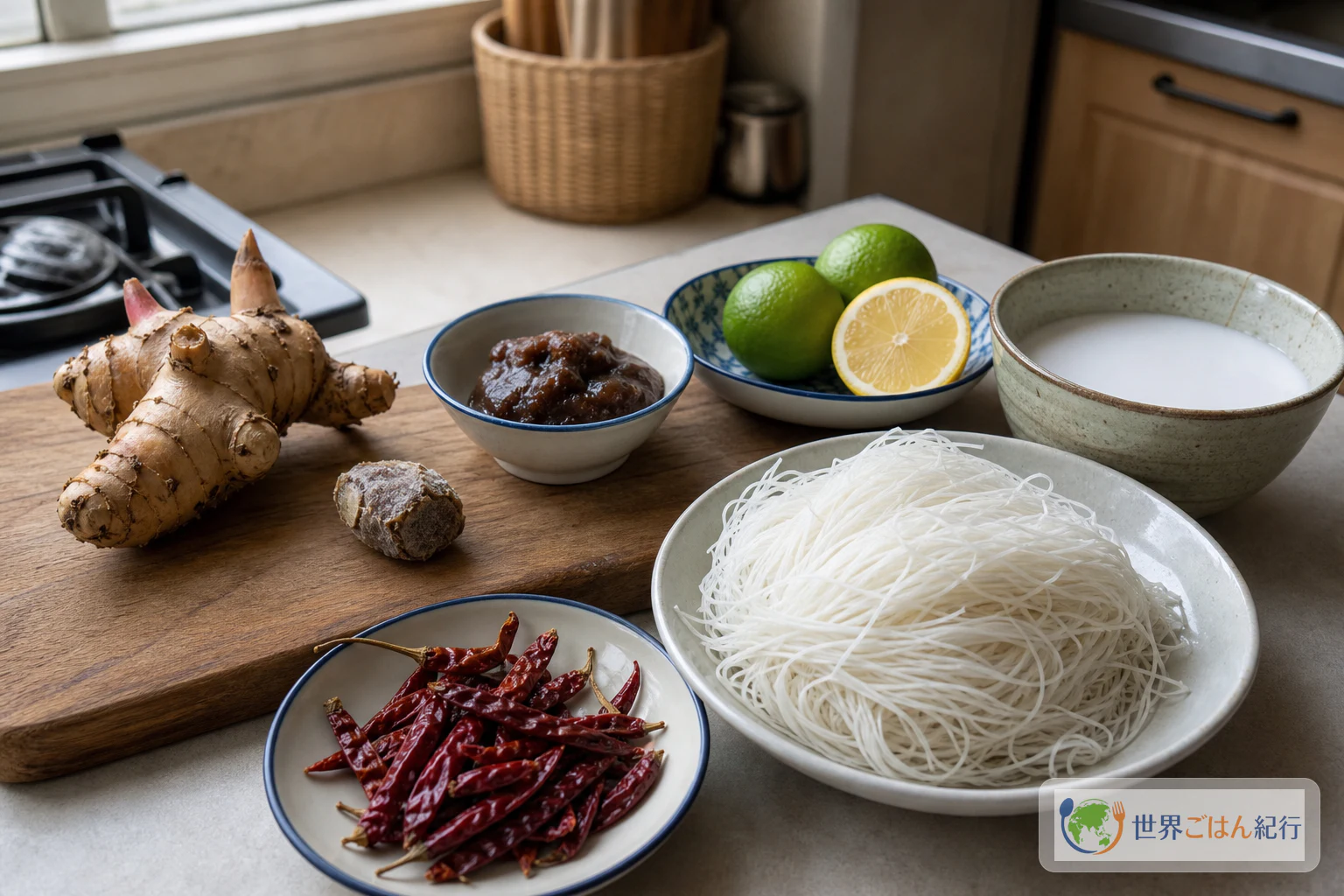
The key aromatics are galangal, lemongrass, tamarind, chiles, coriander and cumin. You can use substitutes for some of them, as long as the substitute still does that ingredient's job.
| Ingredient in question | Closer to the original | Easier option at home | How the flavor changes |
|---|---|---|---|
| Galangal | 20 g frozen or fresh galangal | 1 oz (30 g) ginger | The earthy, clean aroma weakens and ginger's heat comes forward |
| Belacan | 5 g fermented shrimp paste | Omit; add salt 1 g at a time | The fermented shrimp savoriness disappears and the broth tastes cleaner |
| Tamarind | 1 oz (30 g) paste | 15 g umeboshi pulp + 2 tsp (10 ml) lime + 5 g dark brown sugar | Adds the plum's saltiness and fruity aroma |
| Calamansi | Fresh calamansi | Lime, or lemon if you have none | Lime's aroma is short and sharp; lemon's sourness lingers longer |
| Thin rice noodles | Bee hoon, rice vermicelli | Choose rice noodles over glass noodles | Glass noodles are clear and slippery, with less rice aroma |
A jar labeled "laksa" won't necessarily be the right paste, because some products aren't made for the shrimp stock and tamarind of the Sarawak version. Thai red curry paste also has chiles and herbs, but it doesn't work as a substitute. Look for Sarawak, Kuching or Laksa Sarawak on the package, and check the dilution and ingredients.
Heat is easier to manage at the table than in the pot. Seed the dried chiles and serve sambal on the side so people who like it hot can add more. If you cut back on chiles and add extra coconut milk, though, the soup turns into a sweet, heavy curry noodle soup. To make it milder, keep the tamarind and shrimp stock and reduce only the chiles.
For a plant-based bowl, leave out both the shrimp and the chicken. Make a stock of dried shiitake and kombu, and top the noodles with fried tofu and fried eggplant. Without shrimp or belacan, the result is better described as a Sarawak-style coconut noodle soup than as Sarawak laksa.
Method
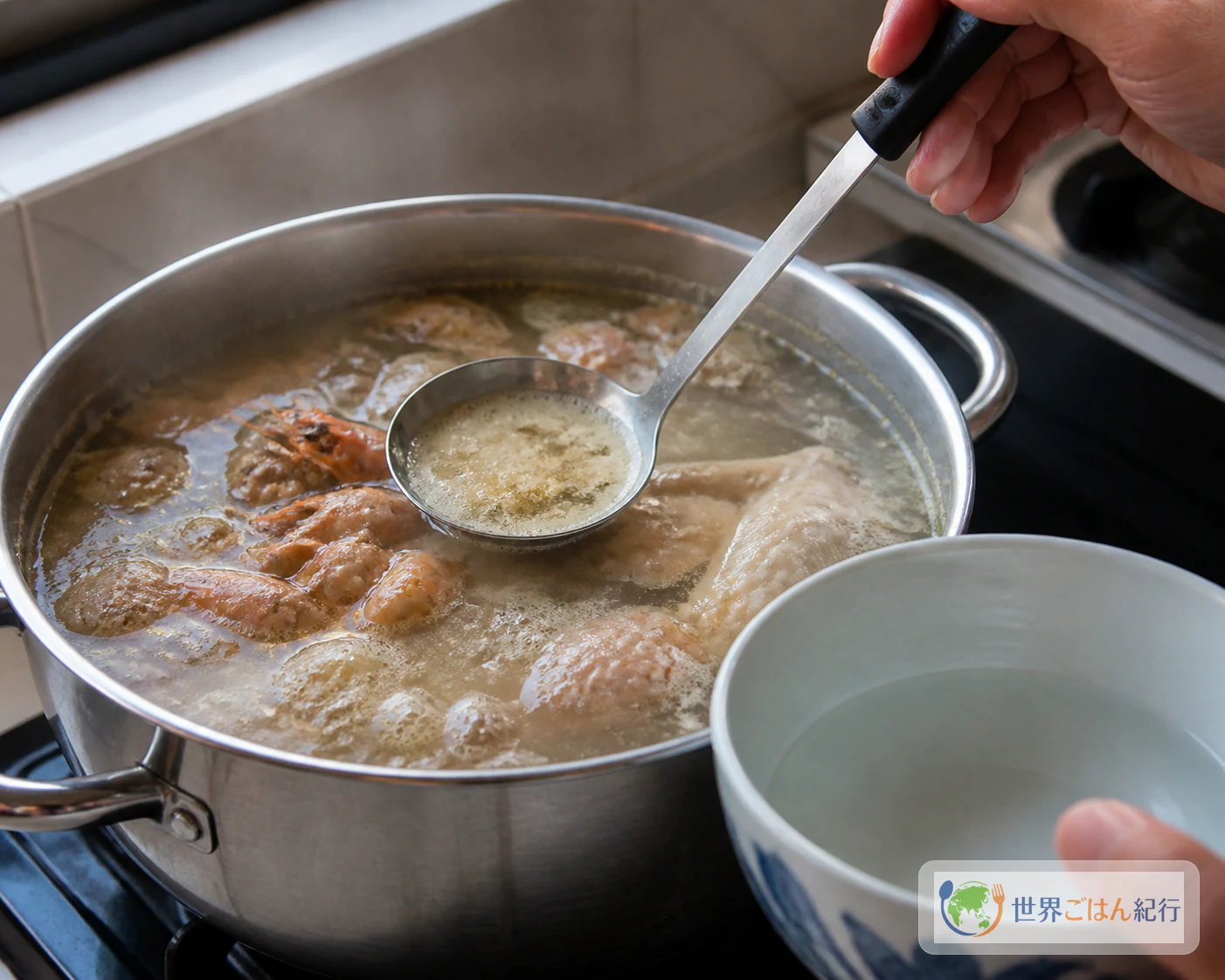
If you simmer the stock and the spice paste together in one pot from the start, the shrimp aroma turns muddy and the toasty notes from frying the paste fade. Use two pots: keep the stock at a gentle simmer, and develop the rempah slowly in oil.
Prep and stock (45 min)
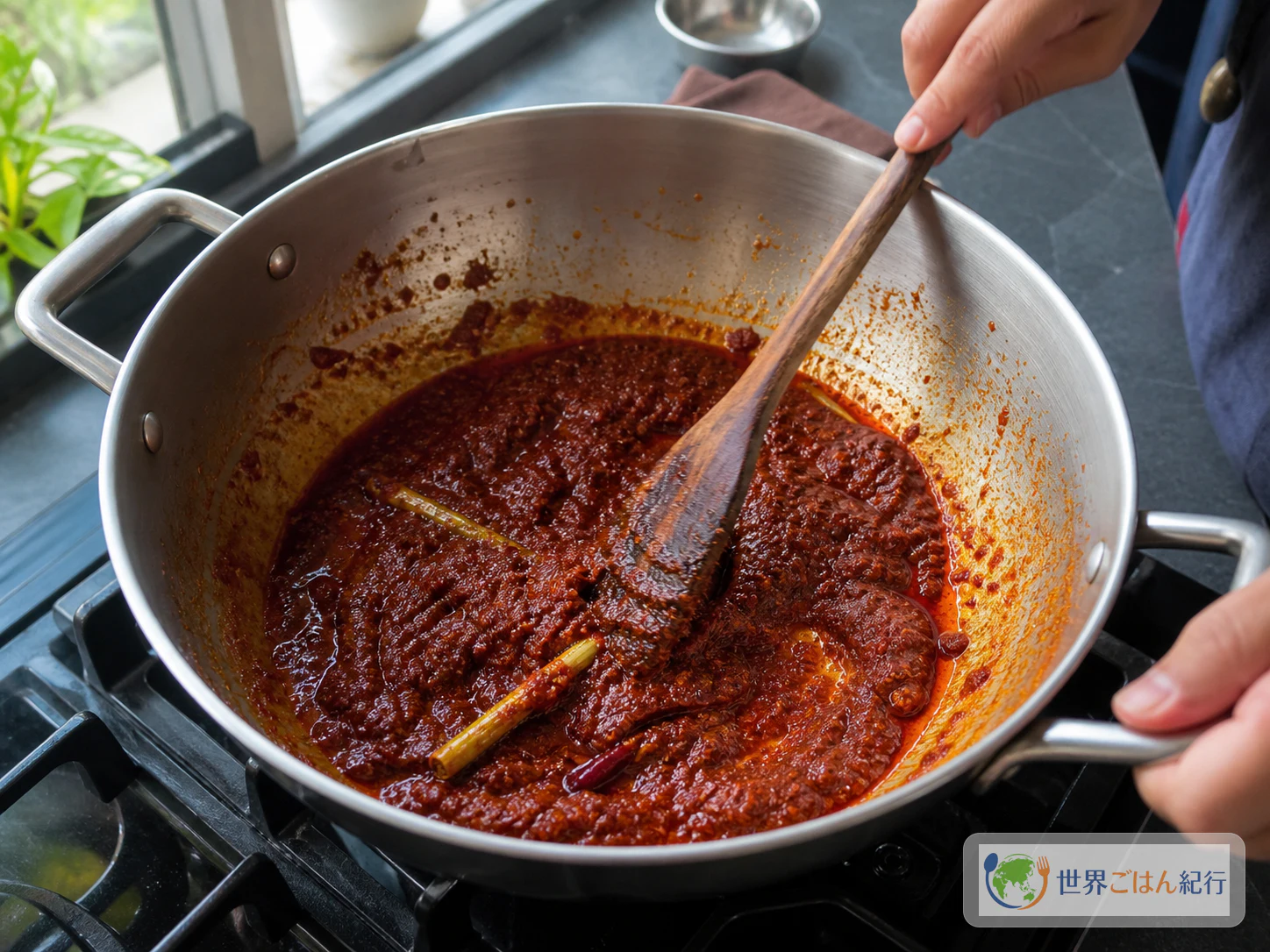
Fry the rempah (30 min)
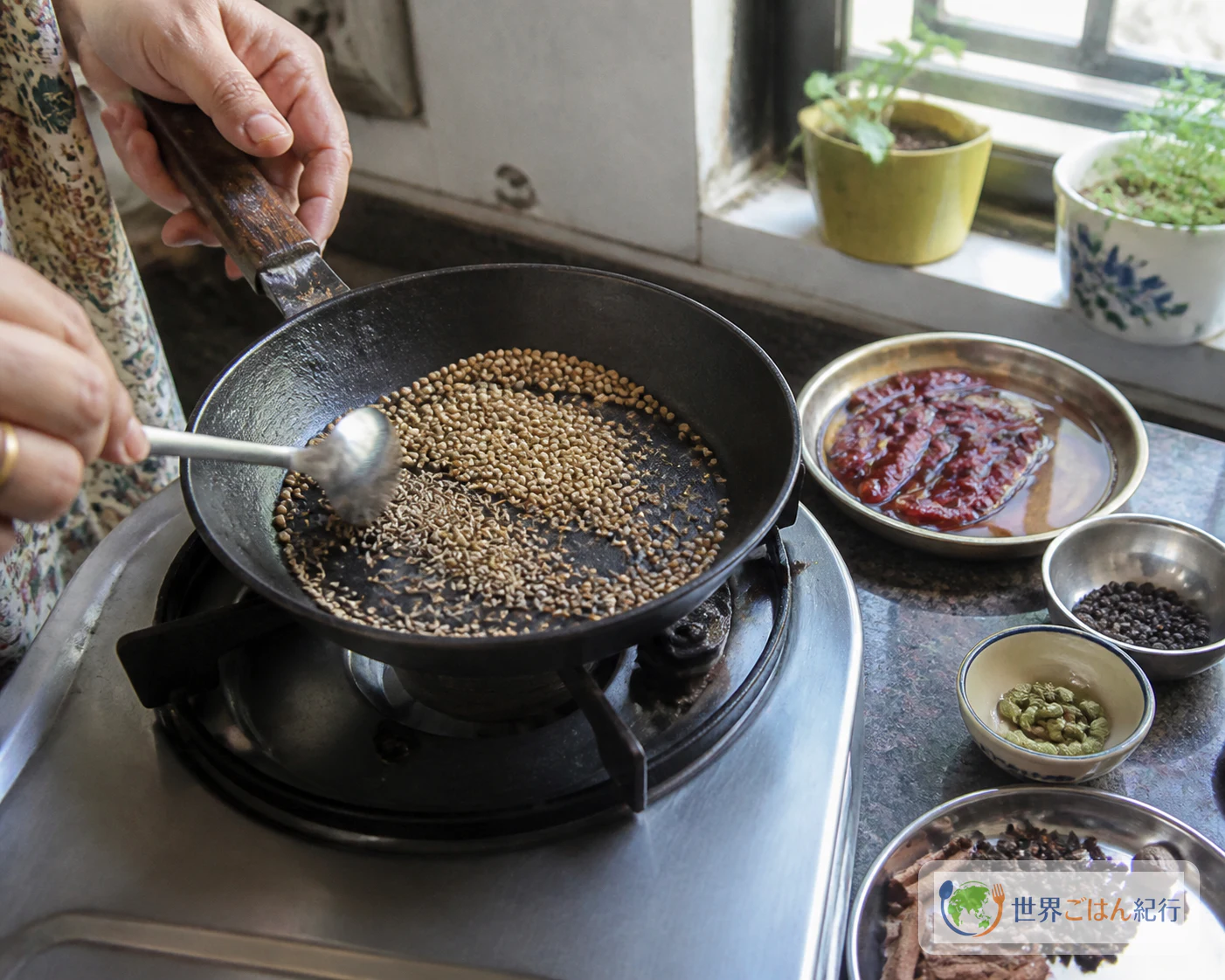
Put the drained soaked chiles, fresh chiles, red onion, garlic, ginger, galangal, lemongrass, tamarind, belacan, macadamia nuts and toasted spices in a food processor. Add just 2 to 3 tbsp water and blend into a coarse paste with no visible pieces. If it turns completely liquid it takes longer to fry, so stop when it falls slowly from a spoon.
Don't rush the rempah over high heat; fry it over medium-low heat for 15–20 minutes. When red oil seeps out at the edges of the pot and the raw smell of the onion and lemongrass is gone, it's done. If it burns, the whole soup turns bitter.
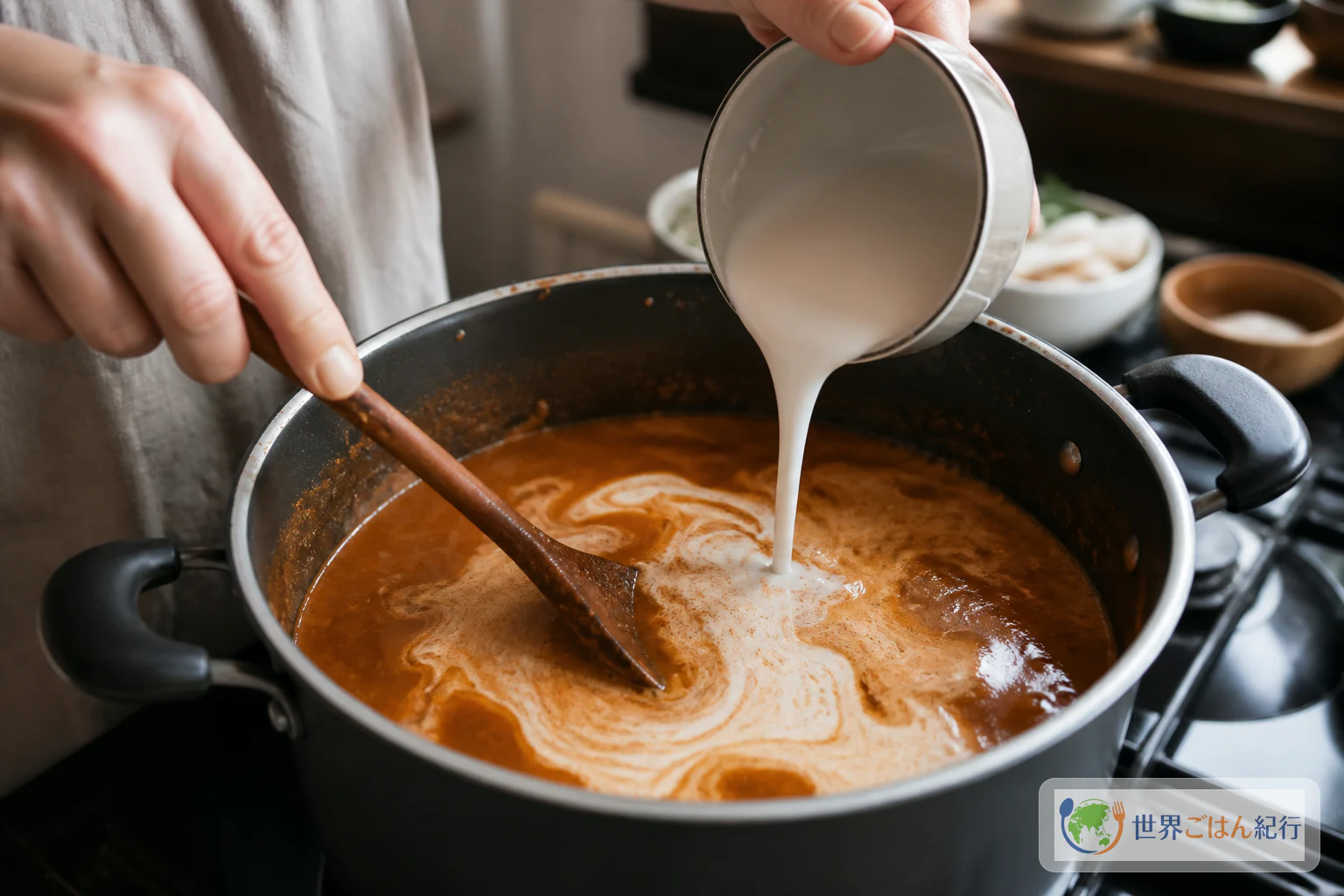
Turn it into soup and layer the flavors (20 min)
Finish in the bowl (5 min)
Fixing common Sarawak laksa problems
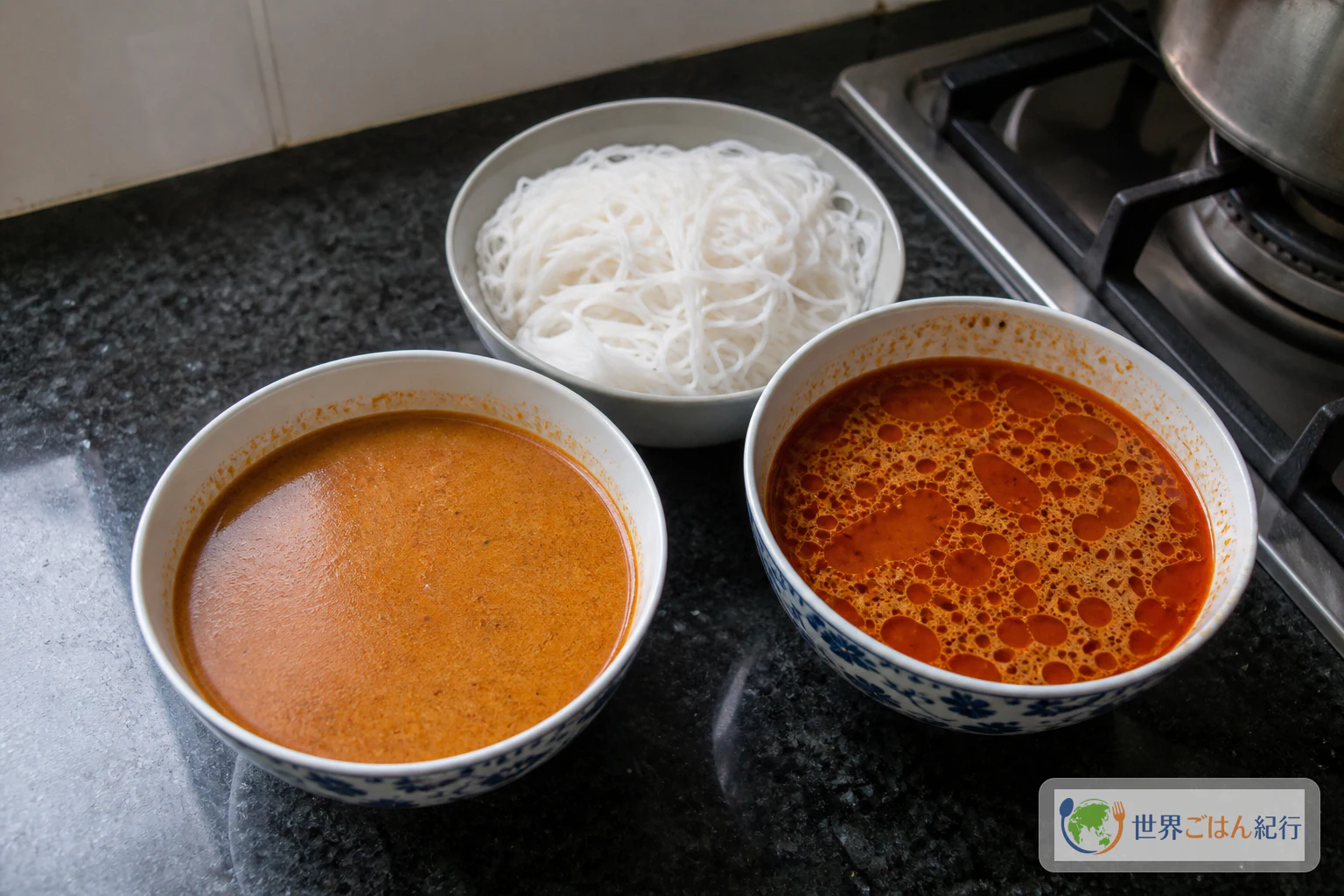
The rempah fries for a long time, and the moment when the aroma blooms is close to the moment when it burns. Watch the color at the bottom of the pot and listen to the sizzle as you adjust the heat, and you can catch most problems before they're beyond fixing.
| Problem | Main cause | Fix |
|---|---|---|
| The soup is bitter | The rempah scorched over high heat | If there's only a little black scorching, move the clear top layer to another pot and add ½ cup (100 ml) stock. If it's still bitter, start over |
| The oil and liquid separated | The coconut milk boiled hard | Turn off the heat, add warm stock 2 tbsp at a time and whisk. Reheat over low |
| Too sour | Concentrated tamarind, or too much | Add 2 tbsp (30 ml) coconut milk, 2 g dark brown sugar and 1 g salt to round it out a little at a time |
| The flavor is flat | No shrimp shells used, and the paste was fried briefly | Reduce ½ cup (100 ml) stock, and restore definition with a little belacan or 5 g tamarind rather than salt |
| The rice noodles are soft | Left too long in hot water, or kept in the soup | Next time, cook 1 minute less than the package time and keep them on a separate plate until serving |
| The shrimp are tough | Simmered too long in the soup pot | Next time, take them out as soon as they turn white and opaque. Chop tough shrimp finely for spring rolls or fried rice |
If the soup is thin, don't reach for potato starch. It adds body but changes the way the broth runs. Simmer the soup uncovered over low heat for 5 minutes instead, then check the sourness, saltiness and heat one at a time. Do all of this before the toppings go in, because reducing the pot afterward makes the shrimp and noodles tough.
Serving and storing Sarawak laksa
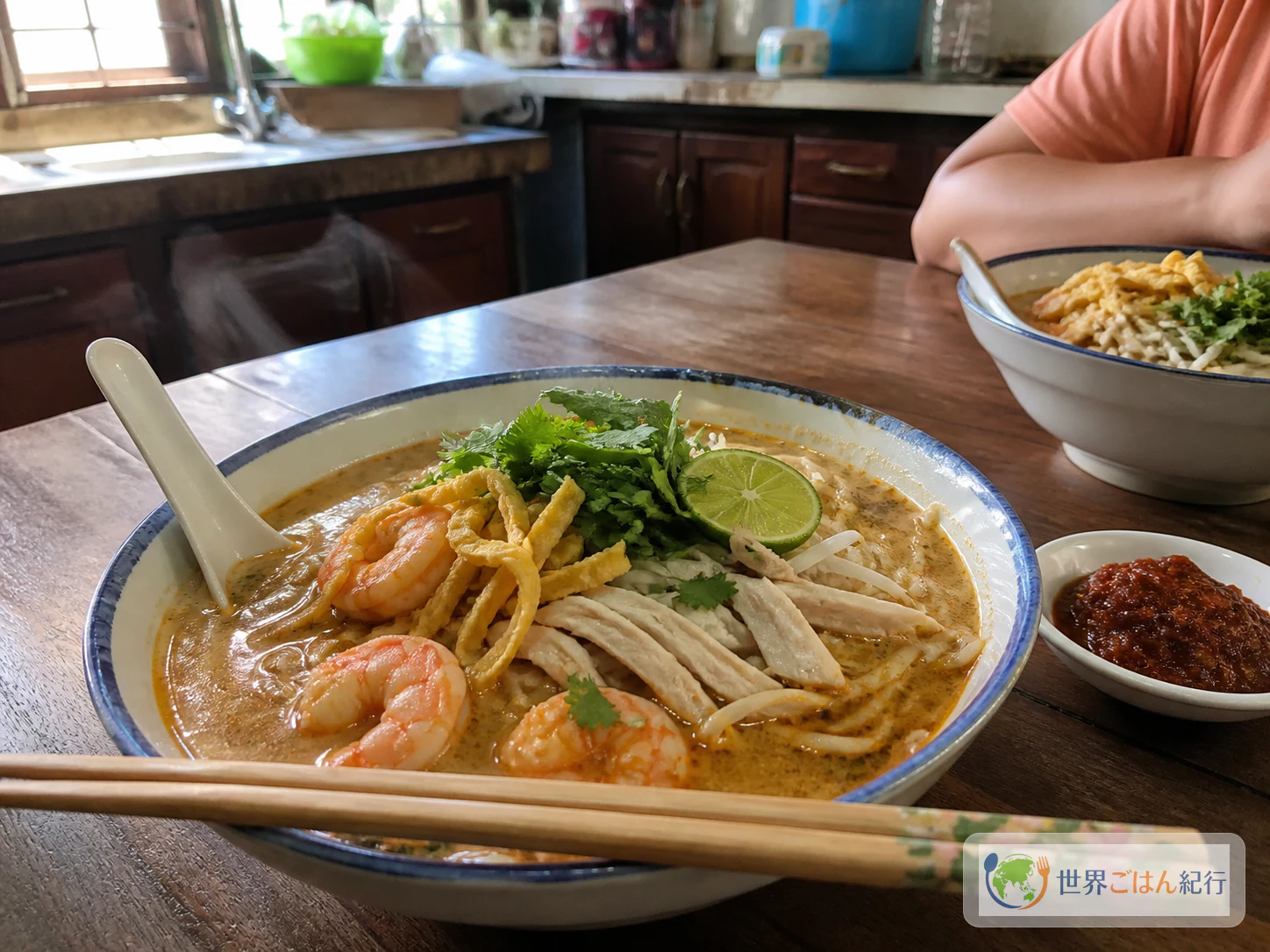
Sarawak laksa is assembled in the bowl. Put the rice noodles in first, arrange the chicken and shrimp so they show, and tuck the bean sprouts and omelet strips into the gaps. A final squeeze of lime brightens the oil-rich soup. To eat it the way people do in Kuching, put sambal, lime and cilantro on the table in small dishes. Keep the base soup mild and let everyone adjust their own bowl. It's easier than making all 4 servings equally hot, and it keeps breakfast relaxed.
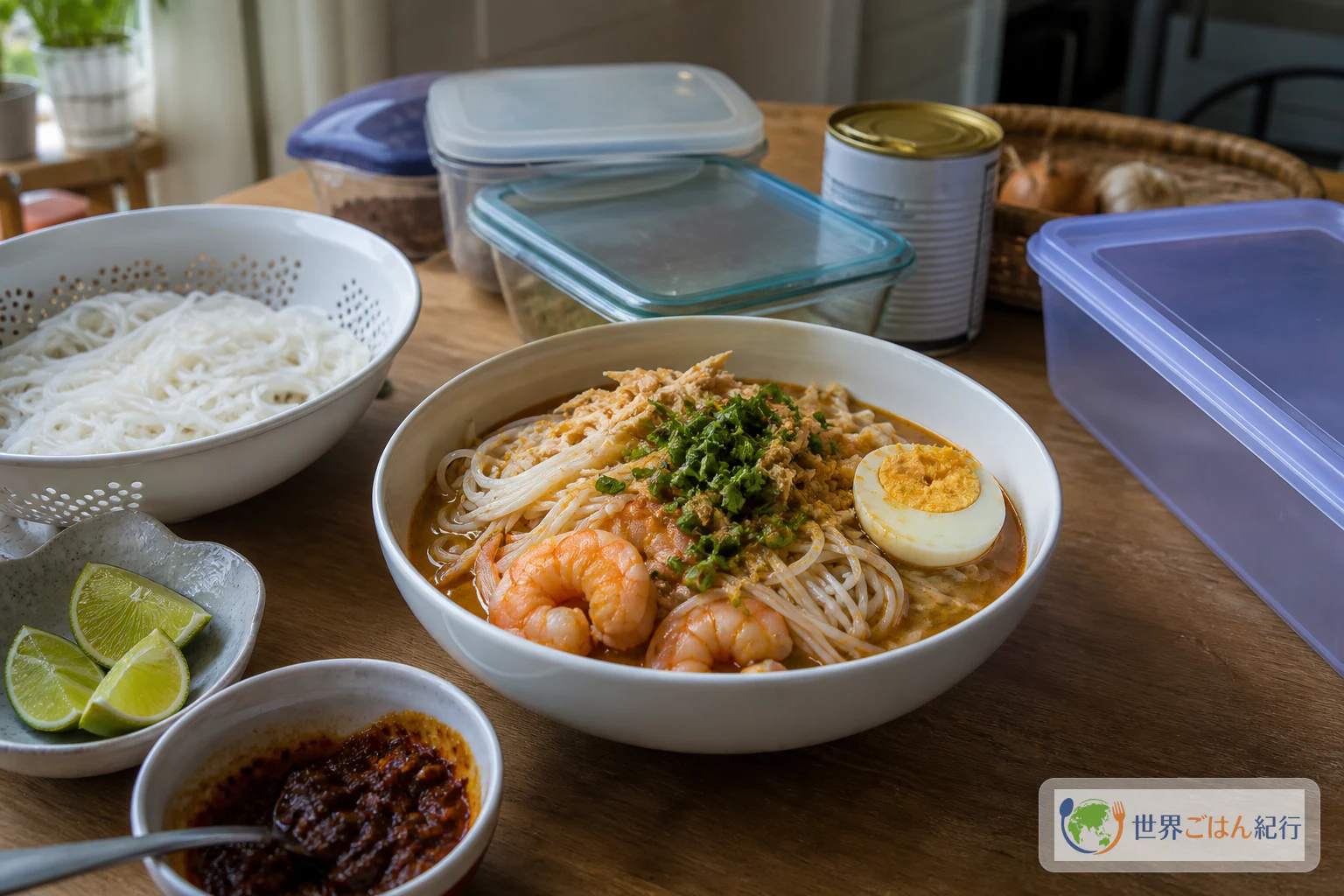
You can make the chicken and shrimp stock, the rempah and the shredded chicken the day before. Chill the rice noodles, bean sprouts, eggs and shrimp separately, and put everything together just before eating.
Cook the chicken all the way through to the center, and cook the shrimp until the flesh is white and opaque. Refrigerate make-ahead soup in small portions, and when reheating, heat it until it is piping hot throughout.
Store the soup, noodles and toppings in separate containers so the noodles and toppings keep their texture. Soup with meat or vegetables keeps 3–4 days in the refrigerator and 2–3 months in the freezer. Cook chicken to an internal temperature of 74°C (165°F) and shrimp until the flesh is white and opaque. Soup with coconut milk tends to separate as it cools, so reheat it over low heat without a hard boil until it's piping hot.
To round out a Malaysian table, serve it with nasi kerabu, which has a fresh, herbal sourness, or ayam pansuh, chicken cooked in bamboo. If you set it beside the more general Malaysian laksa, you'll see how much one dish name can change with fish, coconut or shrimp stock.
FAQ: ingredients and storage
Can I buy Sarawak laksa paste?
Yes. Look for Sarawak Laksa Paste or Laksa Sarawak Paste at Asian grocery stores or online. Brands and sizes change, so check the ingredients and dilution rather than trusting the name alone.
If I can't find galangal, can I use only ginger?
You can, but the aroma will change. Using 1 oz (30 g) ginger makes the soup hotter, so start with 25 g of tamarind and add more sourness at the end if it needs it. Even a little frozen galangal gets you closer to the local aroma than ginger alone.
The soup separated after adding coconut milk. Is it still safe to eat?
If the oil has only risen to the top, turn off the heat and stir in warm stock a little at a time until it comes back together. Separation alone doesn't make the soup unsafe, as long as it doesn't smell burnt and the chicken and shrimp are fully cooked. Next time, keep the soup below a hard boil once the coconut milk is in.
Can I make it without shrimp and belacan?
You can make a good plant-based soup with mushrooms, kombu and seared fried tofu, but it won't taste like Sarawak laksa. The shrimp stock and fermented shrimp are what give the dish its flavor. For a shellfish allergy, leave the belacan out completely rather than using less of it, and check your cookware and the labels on any commercial paste.
Can I use somen instead of rice noodles?
You can, but somen (thin Japanese wheat noodles) are softer and taste of wheat. For your first bowl, use bee hoon or rice vermicelli and cook them a little less than the package says. The hot soup will finish softening them.