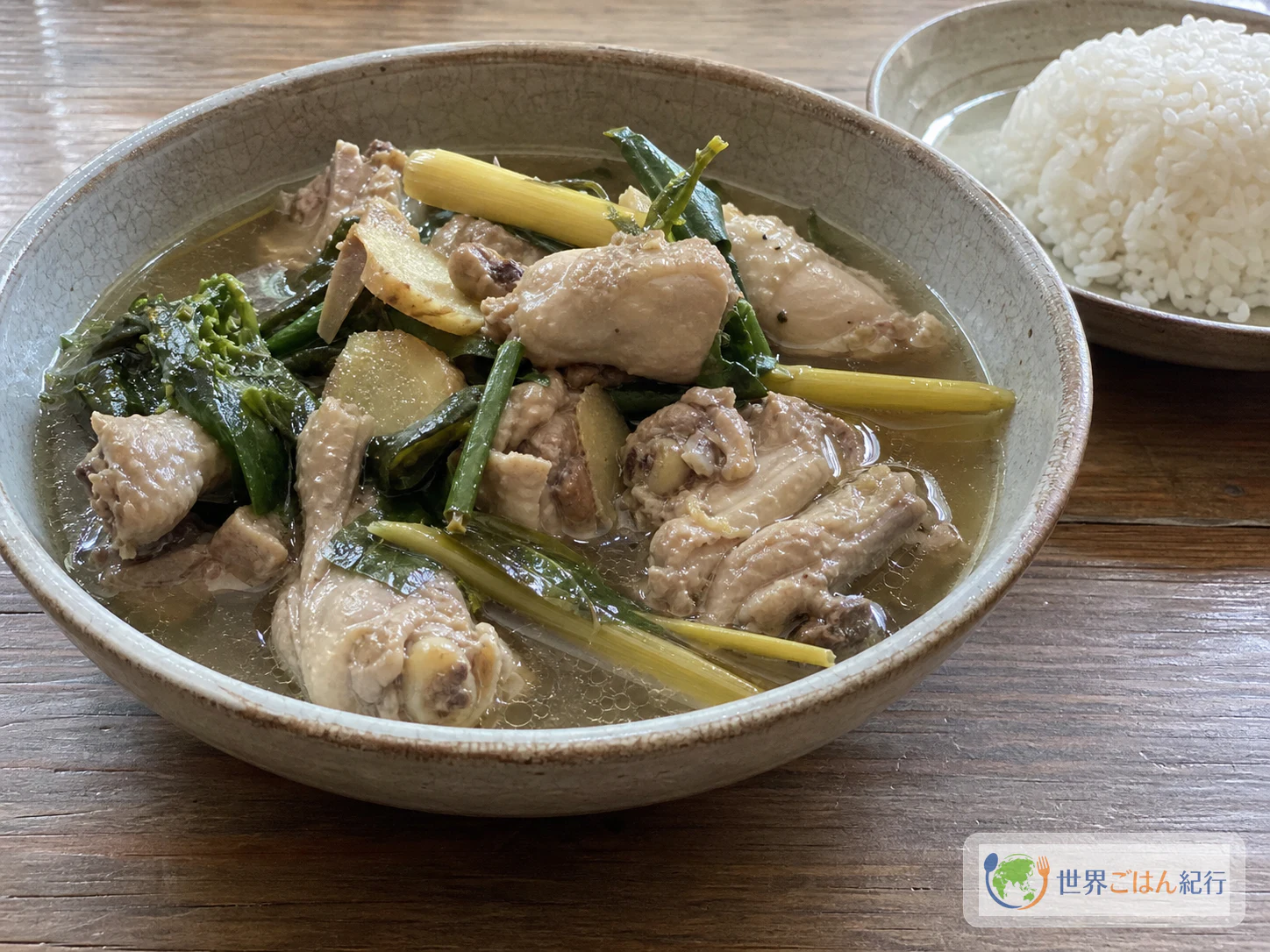
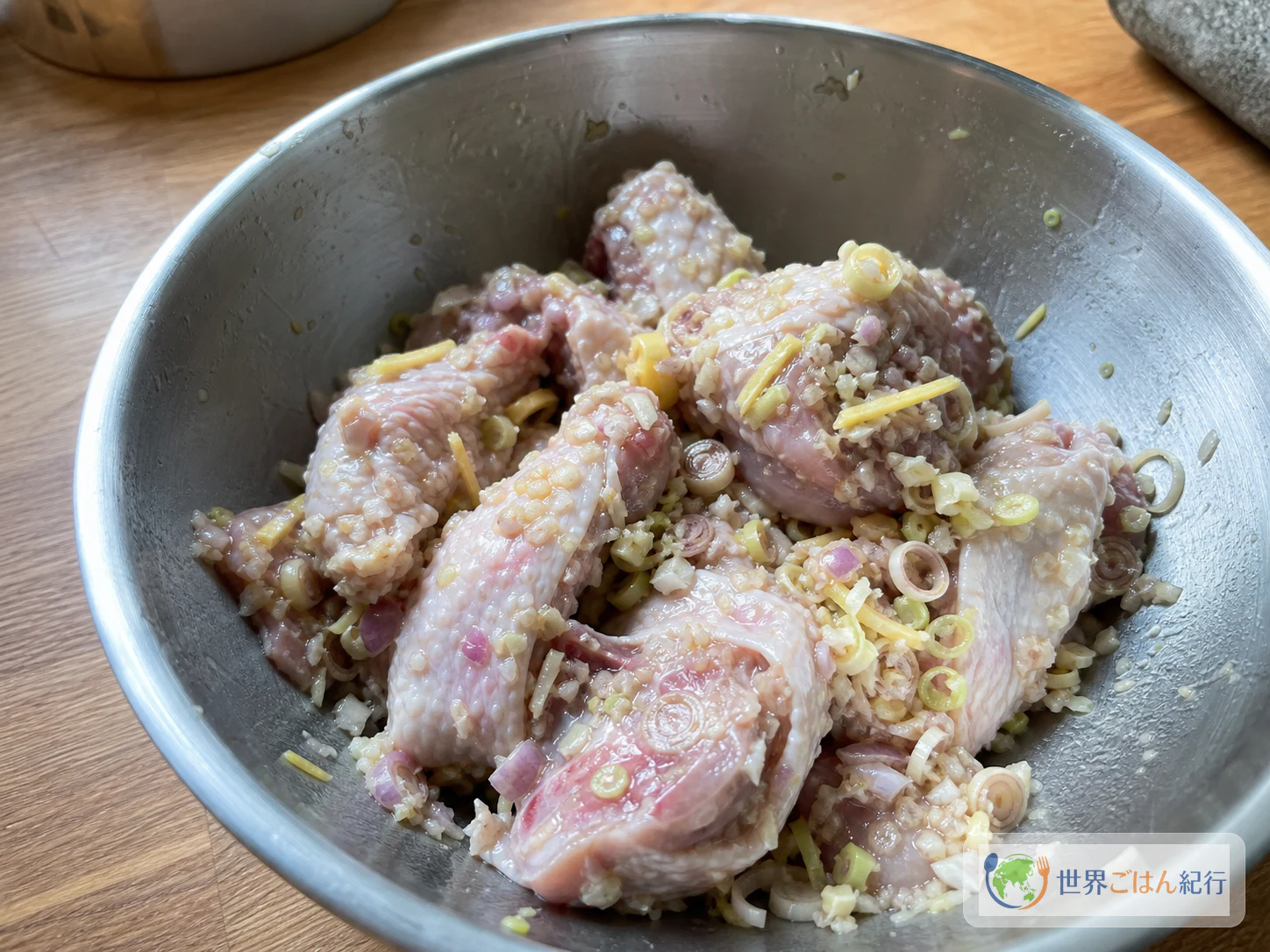
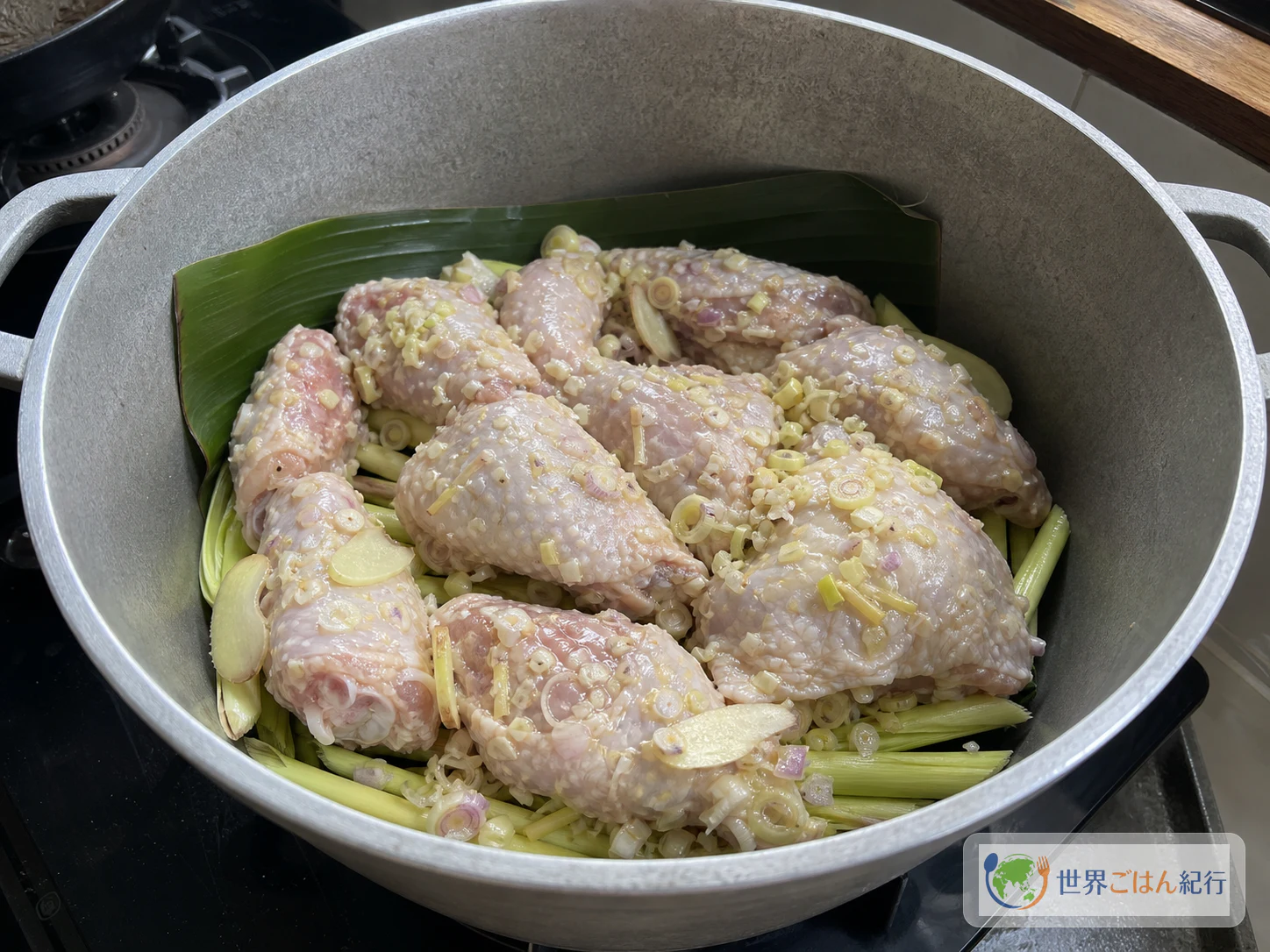
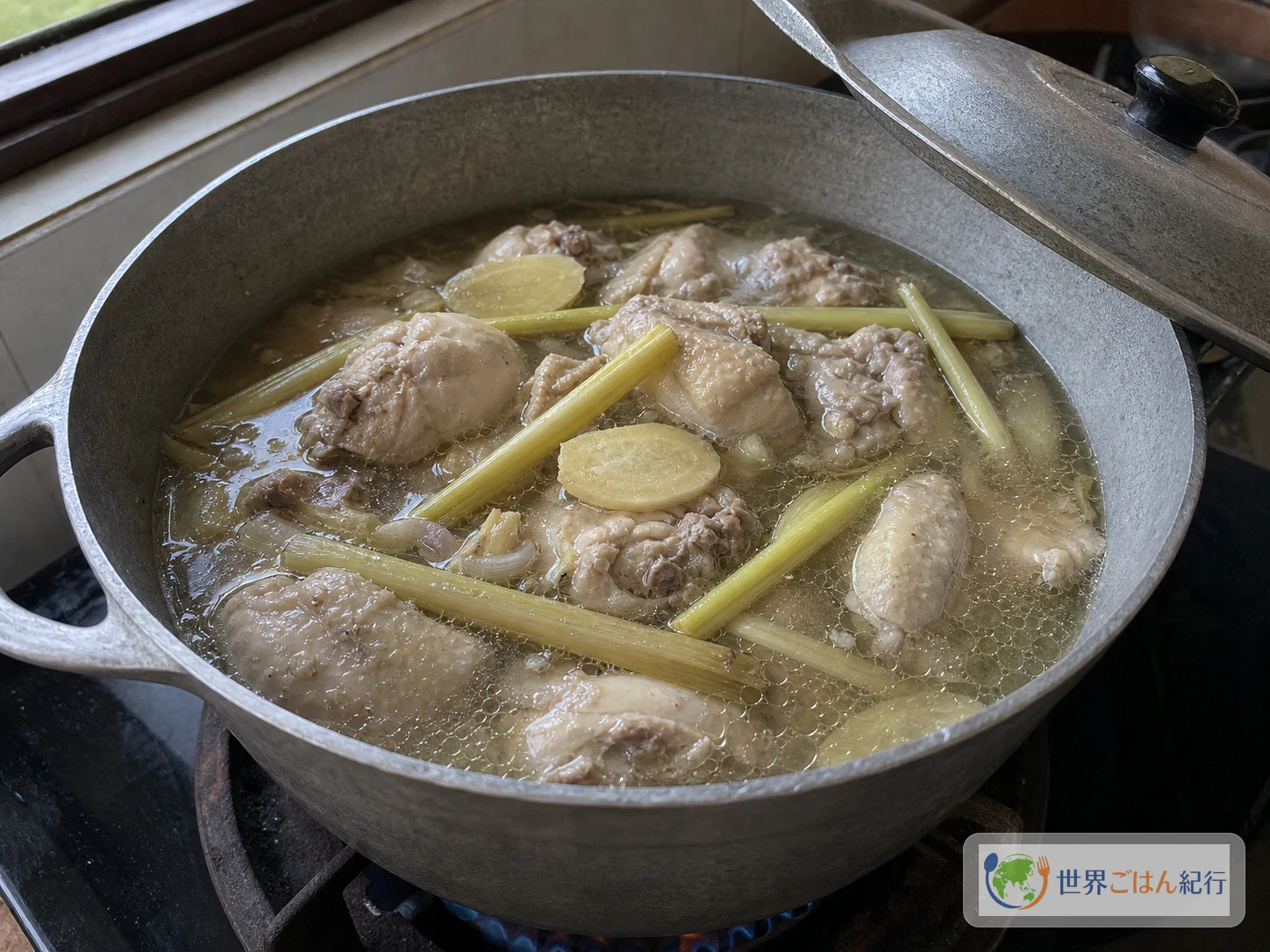
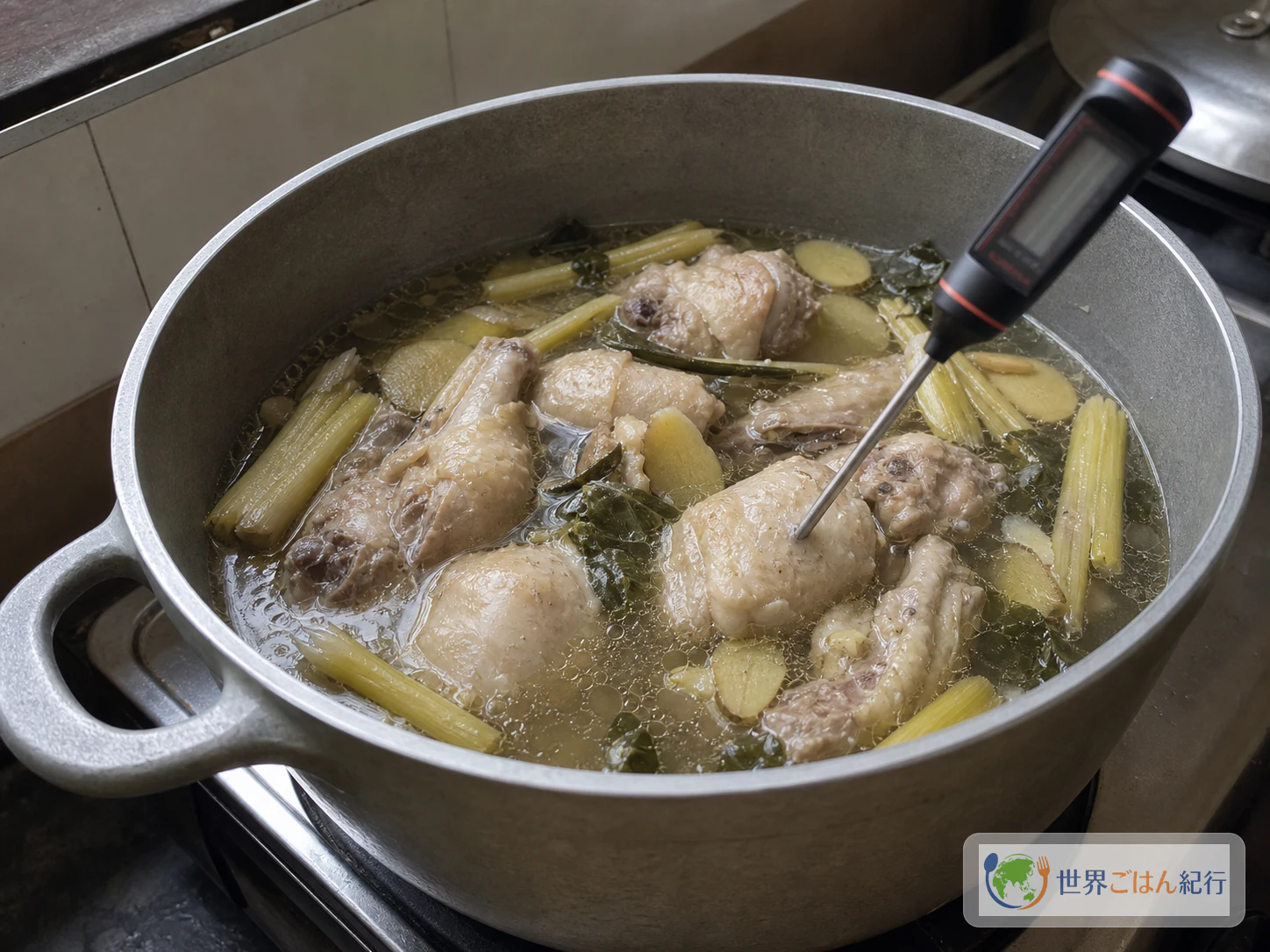
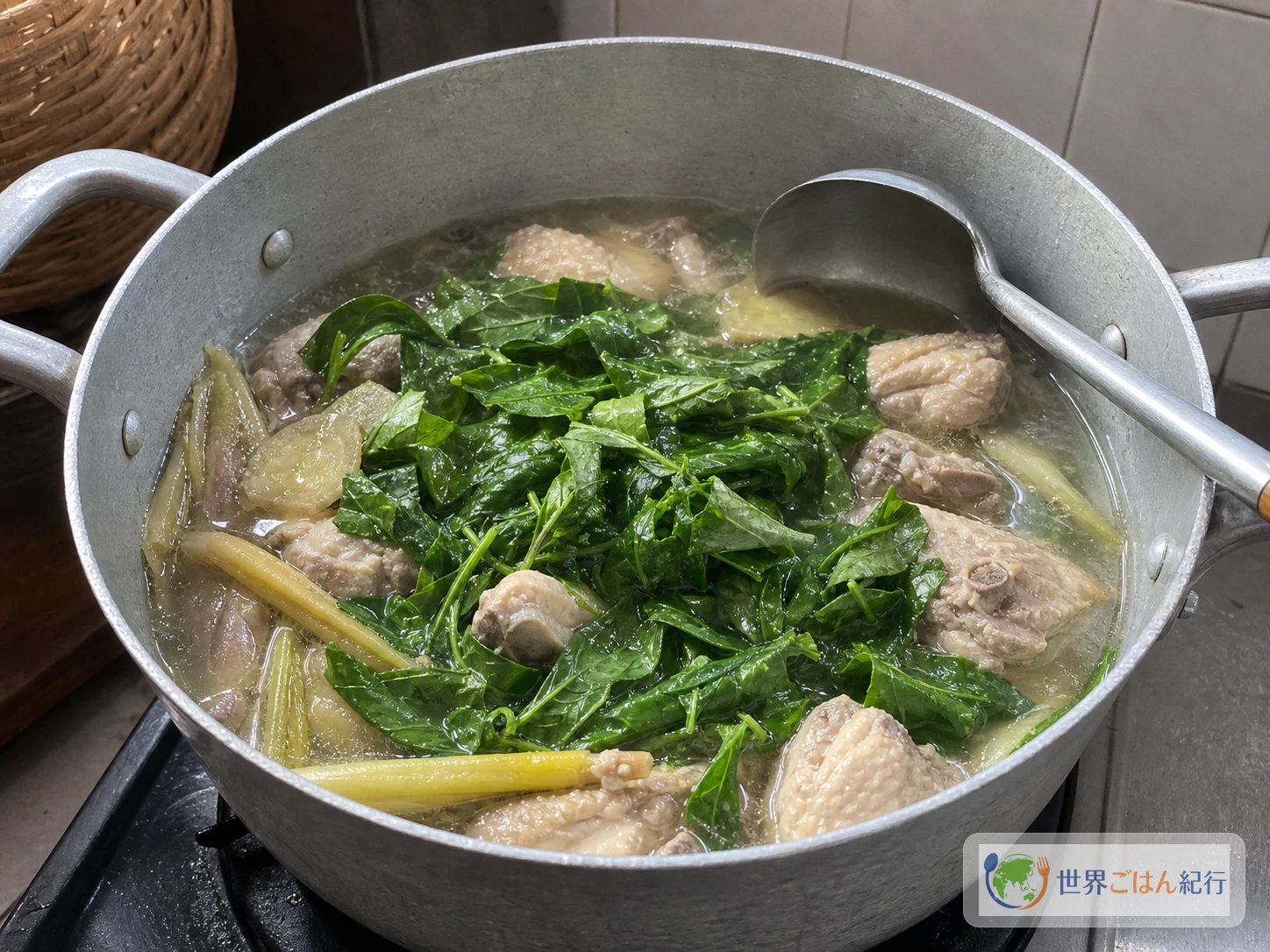
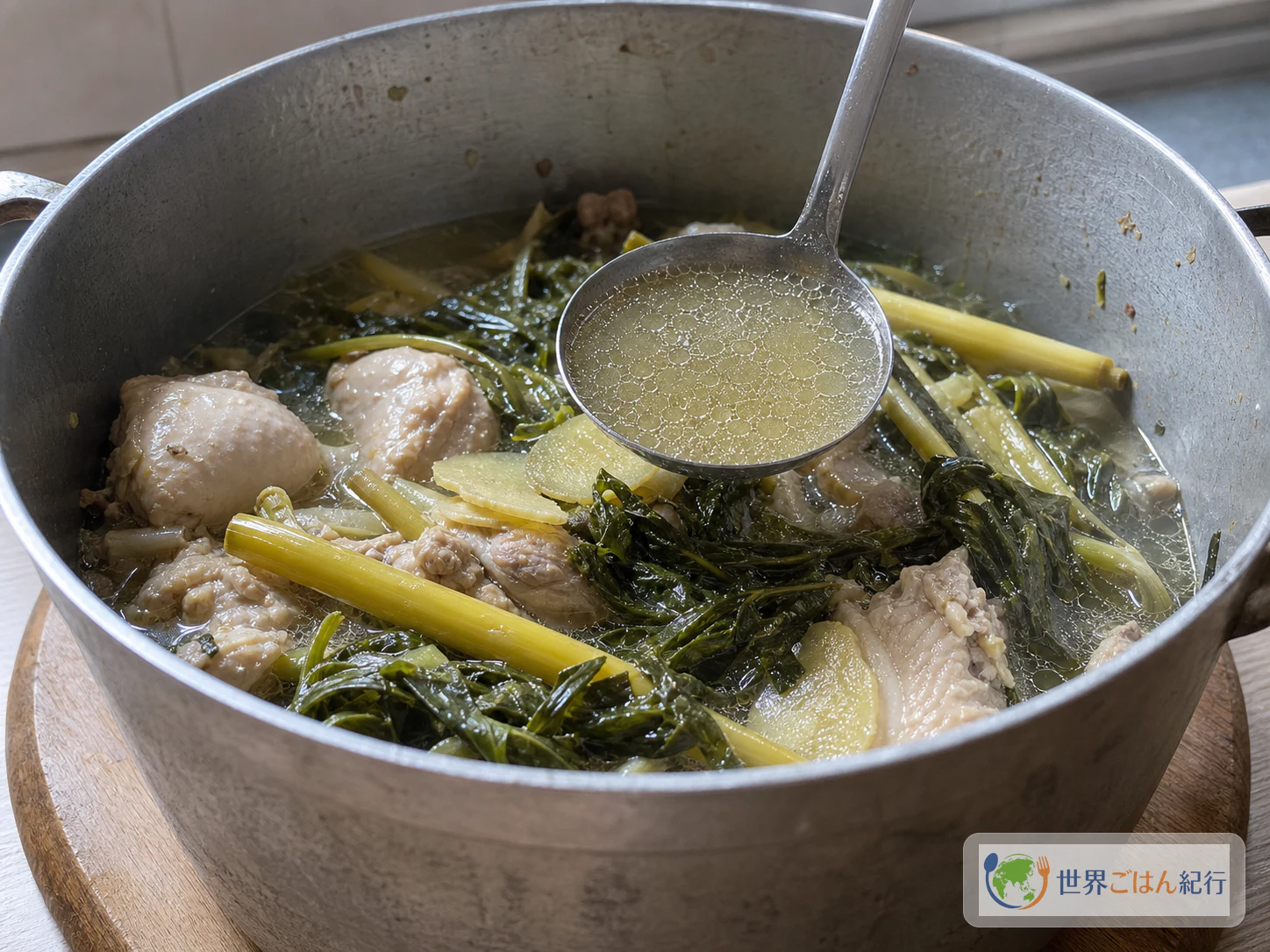
Lay crushed lemongrass and thin slices of ginger and galangal on the bottom of the pot, set the chicken on top, and the moment you lift the lid you know this is no ordinary pot of poached chicken. Behind the clear steam rise a grassy green note and an earthy, citrus-like fragrance. This is ayam pansuh, a bamboo-tube chicken from Sarawak, Malaysia. It has no showy sauce. Instead the aroma is trapped in the chicken's own broth, and the result is clean, savory and green-scented.
Ayam pansuh in Sarawak and at home
Ayam pansuh (also Manok pansoh) belongs to the food culture of the Dayak peoples, including the Iban. Chicken is packed into a bamboo tube with lemongrass, ginger and local leaves and steam-simmered beside a fire, a method handed down through everyday life. The scent of the bamboo itself is what gives the dish its character.
In Malay it is written Ayam pansuh, and in an Iban context Manok pansoh. Ayam means chicken, and pansuh or pansoh refers to a dish cooked in a bamboo tube.
Ayam pansuh doesn't lean on oil the way other Malaysian favorites do. In nasi lemak, coconut perfumes the rice, and laksa begins by frying a paste. Here you have chicken, aromatics, leaves, water and salt. With so few elements, how you cut, how you control the heat and whether the chicken is cooked through decide the result.
In a home kitchen, the bamboo tube is the hard part. Think of it as a long, narrow vessel for aroma, and replace it with a heavy pot, lemongrass and a little banana leaf. It won't be a true outdoor dish, but you can still bring the green fragrance of Sarawak cooking into the clear broth.
Try it only if you can get fresh bamboo that can be handled safely as food and have an environment where you can safely use fire outdoors. Wash the inside of the bamboo, use only pieces without cracks or mold, and cook until the chicken reaches 165°F (74°C) at the center. Do not use decorative bamboo from a home center, bamboo from your garden, bamboo that may have been chemically treated, or bamboo you found.
Ingredients (serves 4; building the aroma without bamboo)
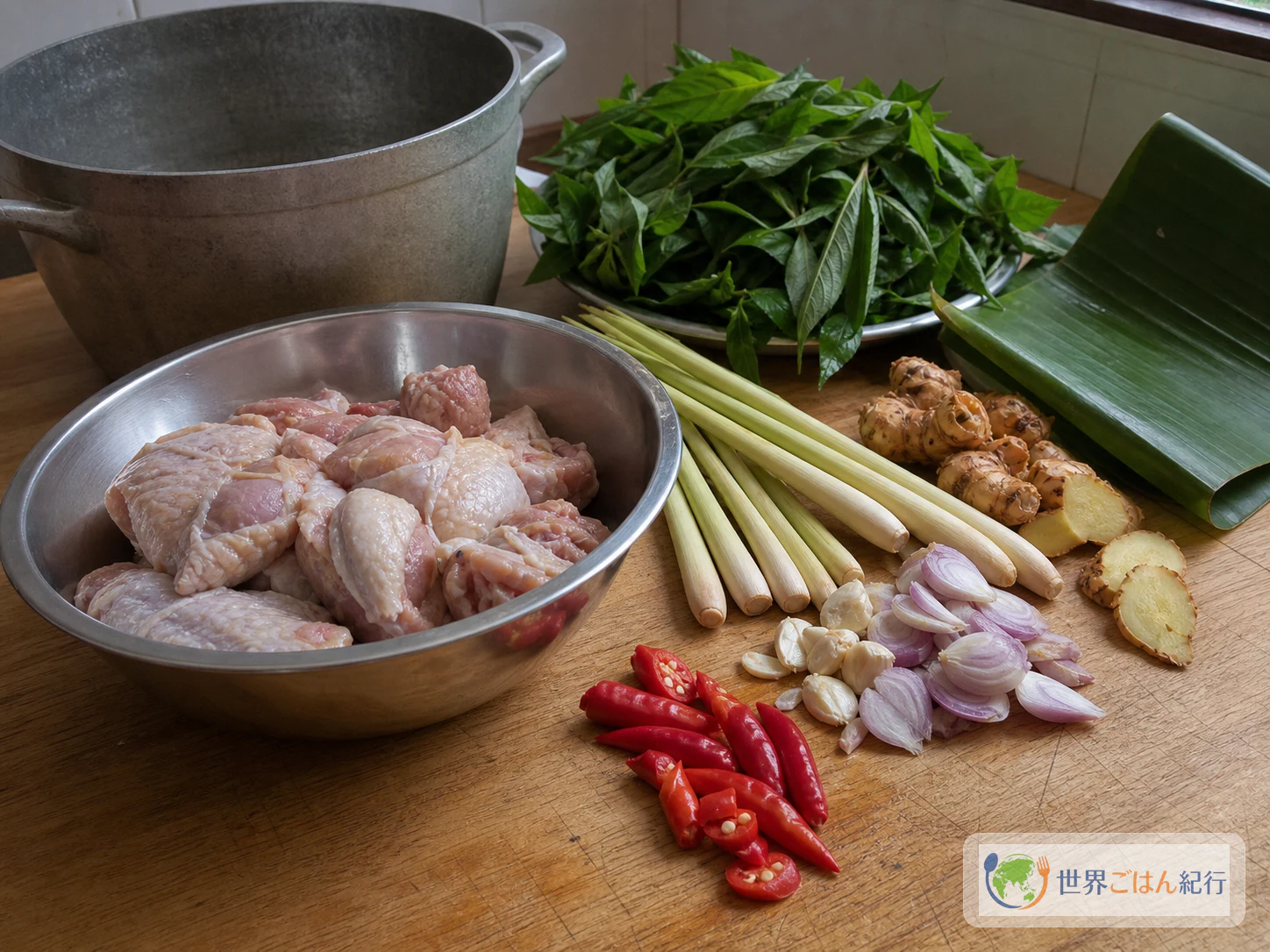
This amount is for eating as a main dish with white rice. Bone-in chicken gives broth easily, so even made in a pot in place of bamboo, the flavor doesn't turn thin. If you use boneless, shorten the simmering time and go a little lighter on salt at the end.
| Ingredient | Amount | Substitutes & notes |
|---|---|---|
| Bone-in chicken thighs or drumettes | 1.75 lb (750 g) | 1.5 lb (650 g) if boneless thighs. Check the core temperature |
| Salt | 1 1/3 tsp | 1 tsp for seasoning, 1/3 tsp to finish |
| White pepper | 1/3 tsp | Lighter in aroma than black pepper |
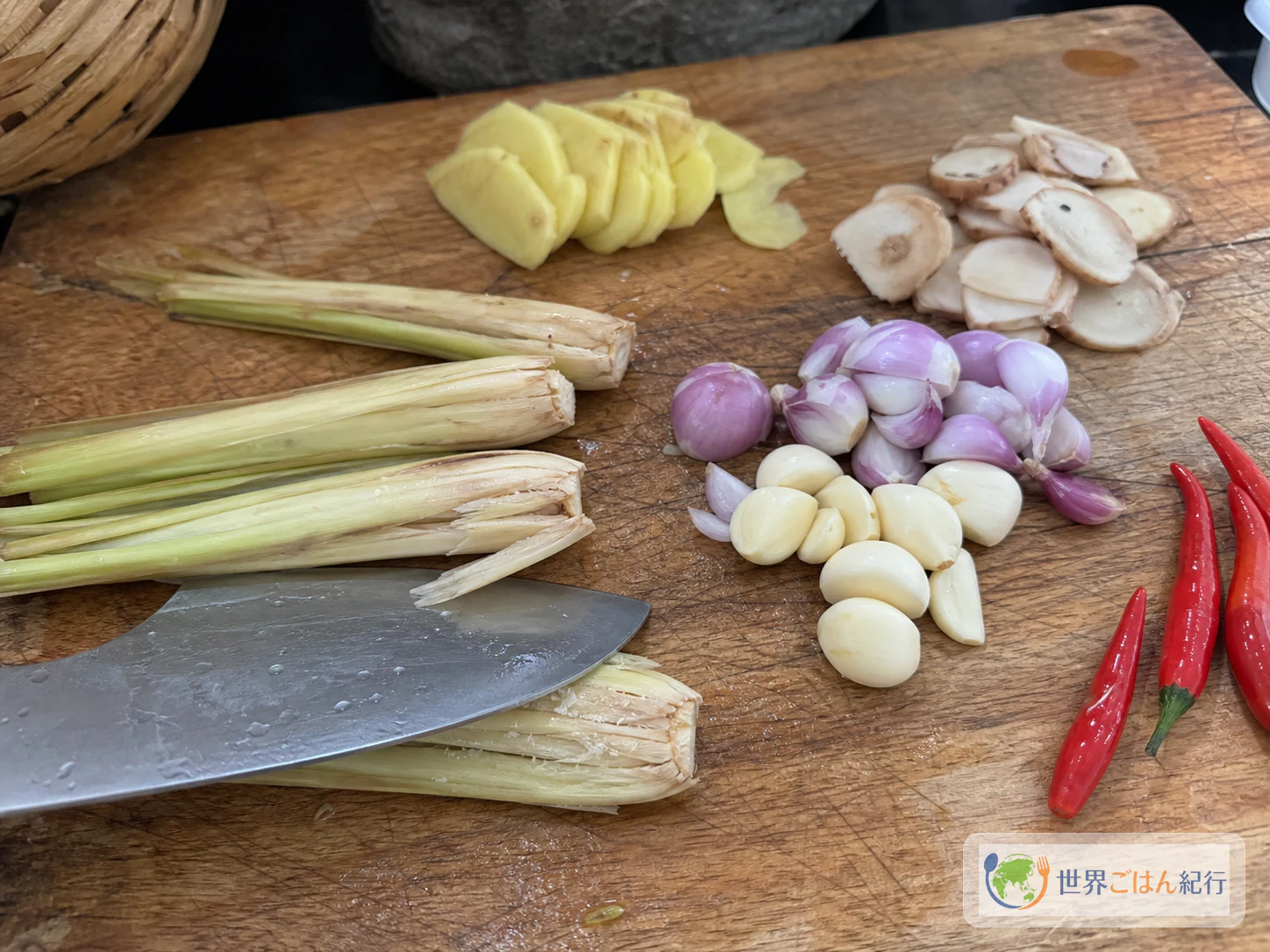
| Lemongrass | 3 stalks | Crush the bottom 4 inches (10 cm). 2 oz (60 g) if frozen |
| Ginger | 25 g | Sliced 0.125 inch (2 mm) thick |
| Galangal | 20 g | If unavailable, add 10 g ginger and a little lime zest |
| Red onion or small shallots | 4 oz (120 g) | Thinly sliced. 1/2 if using an ordinary onion |
| Garlic | 2 cloves | Thinly sliced. Keep it modest to bring the chicken broth forward |
| Red chili | 1 | Remove the seeds on days you want less heat |
| Fish sauce | 2 tsp | Helps approach the local saltiness. If left out, add 1/4 tsp more salt |
Broth and finishing
| Ingredient | Amount | Substitutes & notes |
|---|---|---|
| Water | 2 cups (450 ml) | Enough to come halfway up the chicken. Too much makes a thin soup |
| Banana leaf | 1 piece (about 10 inches (25 cm) square) | Only if you have it. Parchment gives no aroma but prevents scorching |
| Komatsuna | 5.5 oz (150 g) | A home substitute for the local tapioca leaves. 2.75 oz (80 g) if chrysanthemum greens, for a stronger aroma |
| Scallions | 2 | Cut on the diagonal |
| Lime | 1/2 | Squeeze a little at the table. Don't add to the simmer |
| Hot white rice | 4 servings | Jasmine rice is light in aroma and goes well |
How to replace the bamboo tube and local leaves
| Local element | Role | Realistic home solution | Effect on the result |
|---|---|---|---|
| Bamboo tube | Vessel for steam-simmering, green scent | Heavy pot, banana leaf if available | The bamboo scent is faint, but the aroma of the aromatics is trapped |
| Tapioca leaves | Bitterness and the aroma of leaves | Komatsuna, chrysanthemum greens, water spinach | Komatsuna is mild, chrysanthemum greens stronger in aroma |
| Bunga kantan | Floral, sour aroma | Leave out; a little lime at the table | Flavor is different, but it supplies the direction of sourness |
| Outdoor open fire | Warms the bamboo from outside | A pot over medium-low heat | No smoky aroma, but the moistness of the meat is kept |
| Whole chicken or free-range chicken | Broth and springiness | Bone-in thighs, drumettes | Easy to handle at home, and easy to check doneness |
Cassava or tapioca leaves are used in cooking in some regions, but there is no need for a home cook to use leaves whose origin is unknown. The role of the greens is to add a little bitterness and leaf fragrance to the chicken broth. Komatsuna is easy to eat; chrysanthemum greens give a stronger aroma.
Choosing ingredients for ayam pansuh
Chicken, ginger and komatsuna can be bought at a nearby supermarket. The things worth seeking out are lemongrass, galangal, fish sauce and an instant-read thermometer.
Lemongrass gives the dish its clearest aroma. Frozen stalks work well. Pick ones where you can see the thick base, and crush that base before using so the green scent passes into the broth.
Galangal adds a hard, citrus-like aroma that ginger can't quite stand in for. Any leftover can go into ayam betutu or tom kha gai.
Fish sauce steadies the saltiness and adds fermented depth to a version made without bamboo, so the chicken broth doesn't taste blurry. Leftovers will find a home in Thai or Vietnamese dishes. Because you don't simmer hard, which would drive off the aroma, a thermometer in the thickest part of the chicken lets you call doneness by number instead of guesswork.
Method (reproducing the bamboo scent in a pot)
When using a pot in place of bamboo, what matters is not letting the aroma escape. Rather than boiling hard and cooking briefly, set the chicken on top of the aromatics and steam-simmer it with a little water. Add the greens at the end and finish without clouding the aroma.
Ayam pansuh problems and fixes
| Problem | Cause | Fix |
|---|---|---|
| Soup is thin | Too much water, or made only with boneless meat | Remove the lid and reduce over low heat for 8 minutes, adding 1/4 tsp salt a little at a time |
| Chicken is tough | Boiled hard, simmered too long | Next time keep it at a gentle bubble. This time, rest it in the soup for 10 minutes |
| Aroma is weak | Lemongrass wasn't crushed | Before eating, add 1 crushed lemongrass stalk to the hot soup and let it steep for 5 minutes |
| Greens are limp | Added too early | Greens for the last 2 minutes only. Next time add them right before serving |
| Raw smell remains | Chicken was wet, or not enough seasoning | Pat dry before seasoning and coat the surface evenly with ginger and salt |
| No bamboo character | A pot gives little bamboo scent | Set the direction of aroma with banana leaf and lemongrass instead |
Serving and storing ayam pansuh
How it is eaten
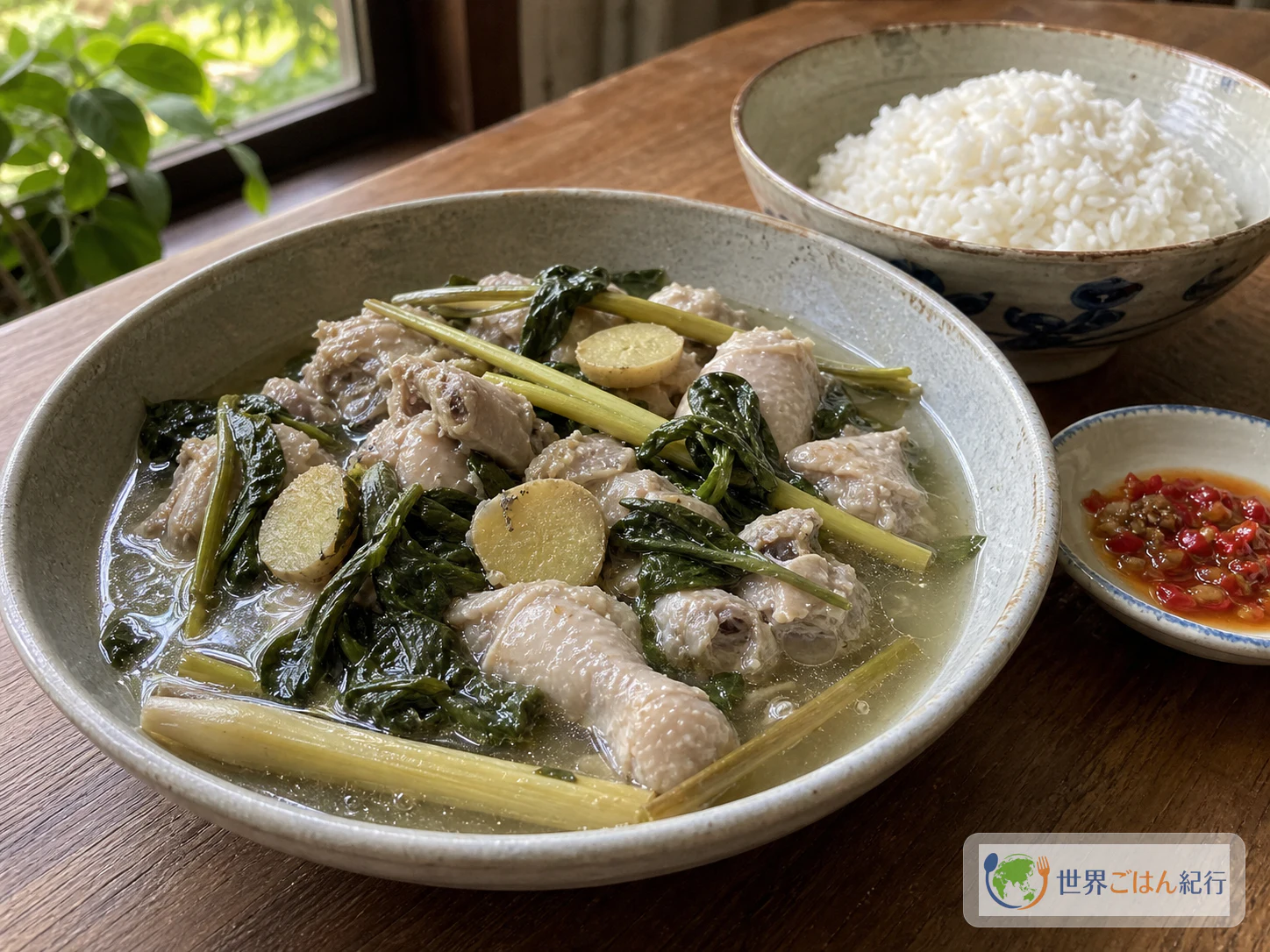
In Sarawak, ayam pansuh is sometimes made for celebrations and gatherings, with bamboo tubes set over an outdoor fire. At home, the simplest way to enjoy it is to ladle a little soup over white rice and eat the chicken pulled apart.
Unlike the oily toastiness of roti canai or the herbal soup of bak kut teh, ayam pansuh puts the clean aroma of its aromatics forward. Round out the meal with white rice, a light salad of cucumber and tomato and some greens stir-fried with little oil. Plain rice suits this clear soup better than nasi lemak, which is heavy with coconut. If you want a spicy side, put just a little sambal in a small dish.
Nutrition
| Guide per serving | Value |
|---|---|
| Energy | about 430 kcal |
| Protein | about 1.25 oz (36 g) |
| Fat | about 27 g |
| Carbohydrate | about 10 g |
| Fiber | about 3 g |
| Salt equivalent | about 3.2 g |
Since you drink the broth as is, the fat depends on how much skin you keep. For a lighter bowl, skim about 1 tbsp of oil from the surface after simmering. If you're eating it with rice, add salt a little at a time at the end.
Storage and reheating
Ayam pansuh keeps about 2 days in the refrigerator. Once it has cooled, move the chicken and soup together to a clean container and refrigerate as soon as possible. Greens lose color over time, so if you're making it ahead, add only half the greens in step 6 and the rest the next day.
Reheat in a small pot over low heat for 5 to 7 minutes. If there is little soup, add 2 tbsp water and warm it without boiling. In a microwave, heat for 1 minute 30 seconds at 600 W, stir once, then add 1 minute at a time. The greens and the lemongrass aroma suffer in the freezer, so freeze only the chicken and soup and use within 2 weeks.
On day two, a little black pepper brings the aroma back better than lime. Too much sourness sends the clear chicken broth in another direction, so keep lime to a few drops at the table.
Frequently asked questions
Can it still be called ayam pansuh without a bamboo tube?
The original is cooked in bamboo, and the tube explains the dish's name. In practice, though, lemongrass, galangal and banana leaf carry the aroma. The outdoor smoke and bamboo scent are weaker in a pot, but the idea of trapping a green fragrance in chicken broth remains.
Can I make it without lemongrass?
You can, but the dish changes a lot. Ginger and lime zest make a refreshing chicken soup, but without the green scent that belongs to ayam pansuh. Use lemongrass, even frozen.
Is fish sauce essential?
No. Salt alone works; the 2 tsp of fish sauce just adds a little savoriness. If you dislike the fish smell, leave it out and add 1/4 tsp more salt.
Can I make it with boneless chicken thighs?
Yes. Cut 1.5 lb (650 g) into large pieces, simmer for 18 minutes in step 4, and check doneness with step 5. The broth is lighter than with bone-in chicken, so instead of chicken stock, mix in 2 to 3 wing sections.
What if I want it spicy?
Serve chopped chili, lime and salt in a small dish rather than adding more chili to the pot. Making the whole pot hot hides the aroma of the lemongrass and galangal, so add the heat at the table.