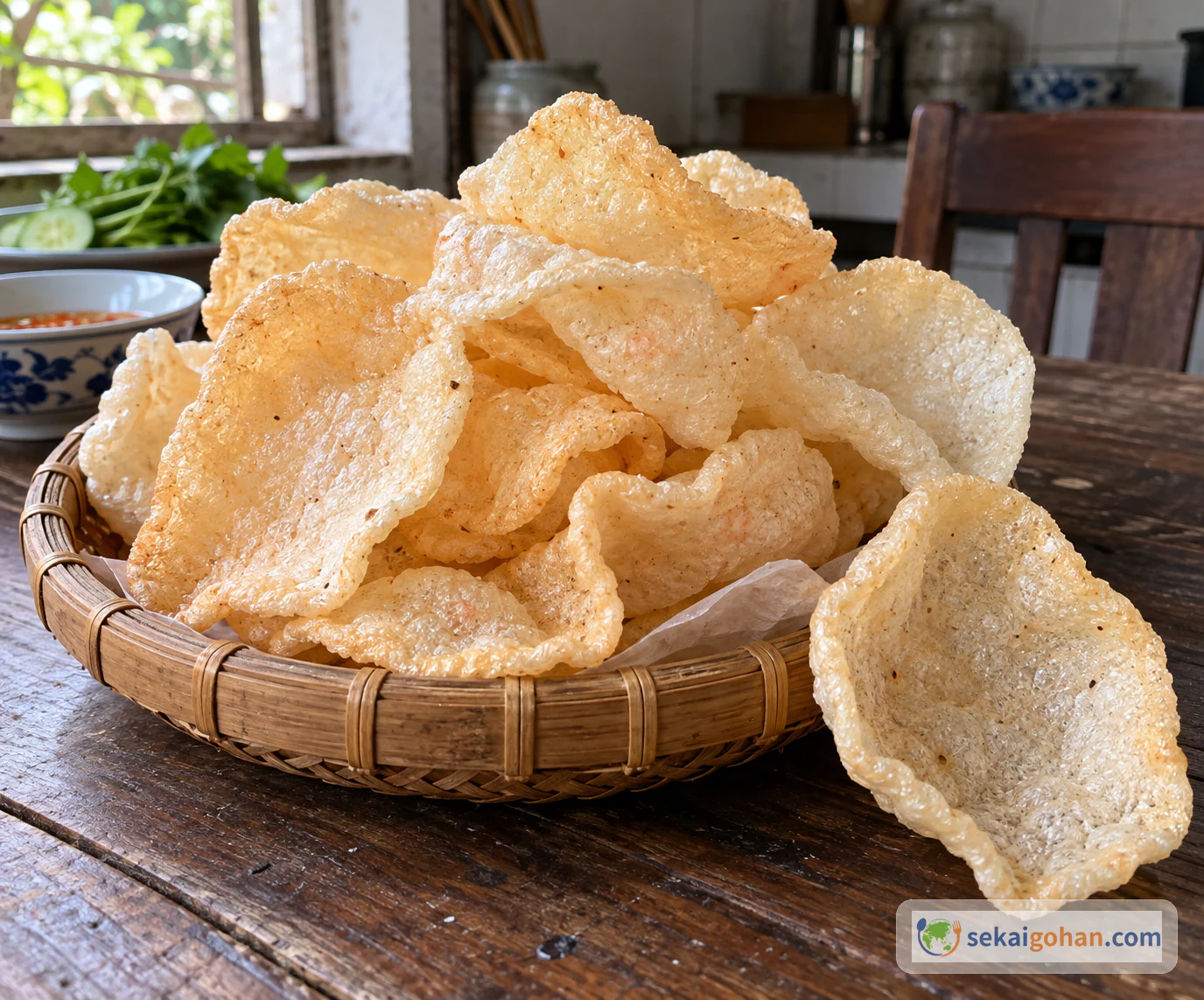
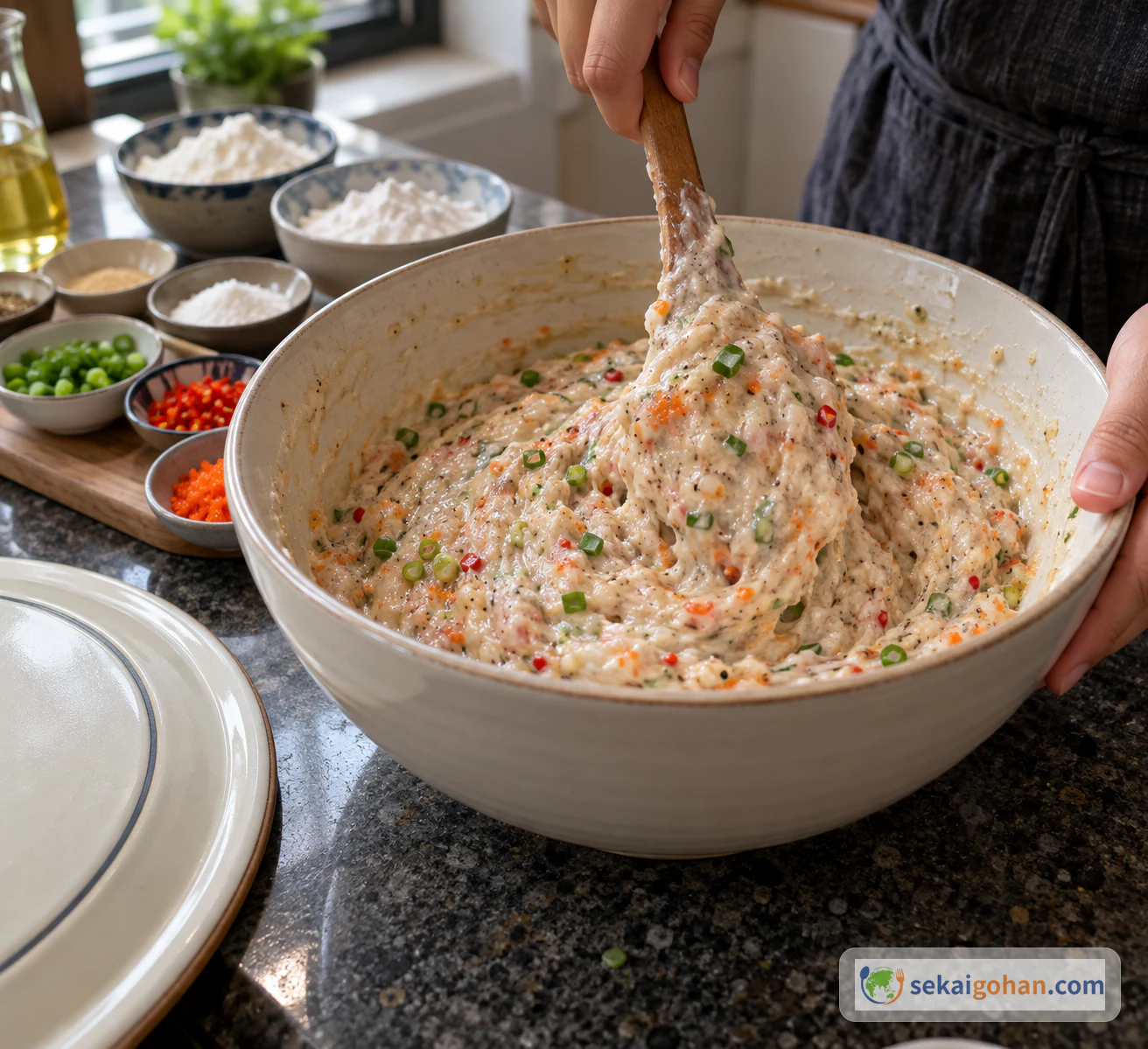
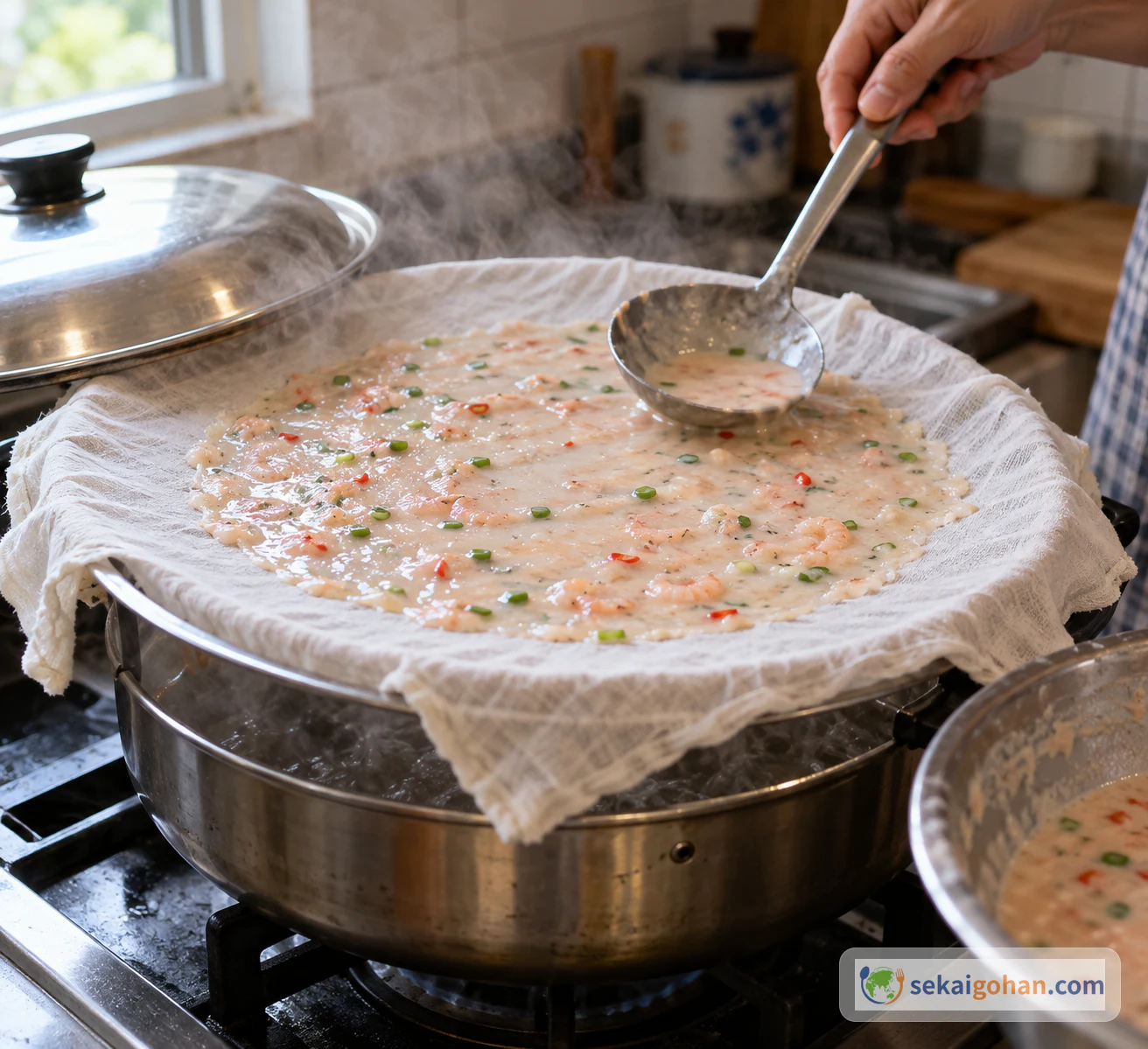
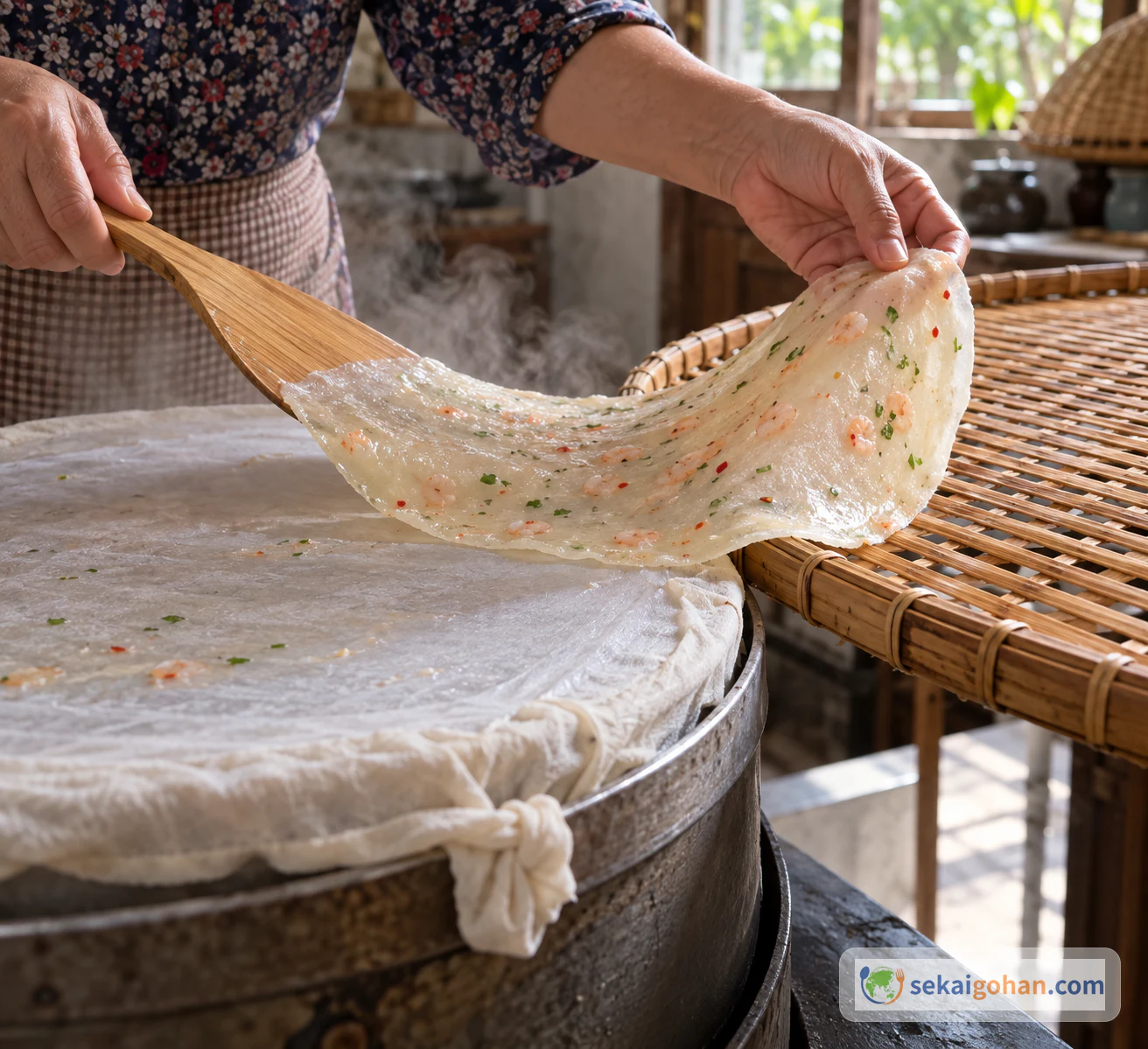
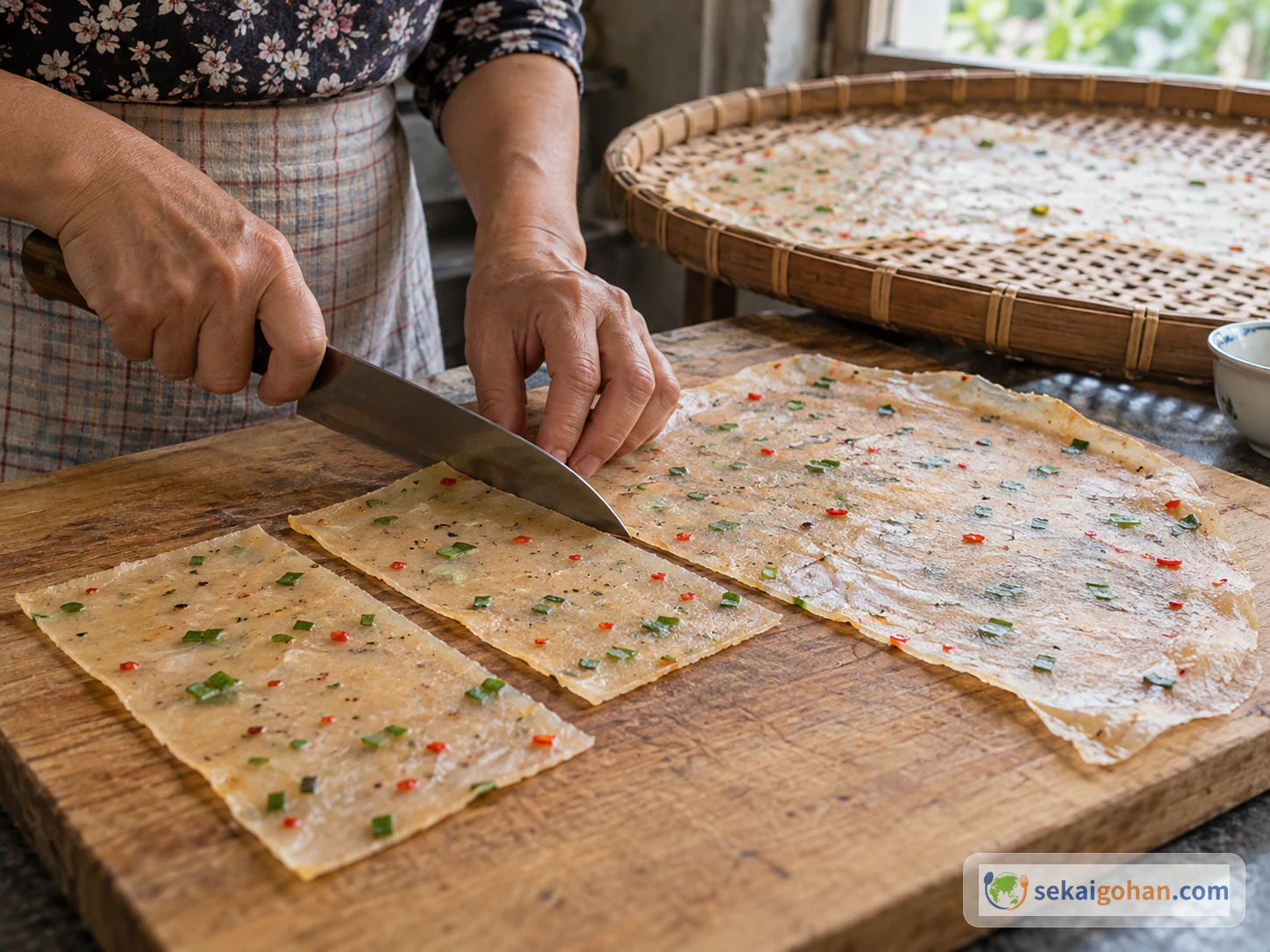
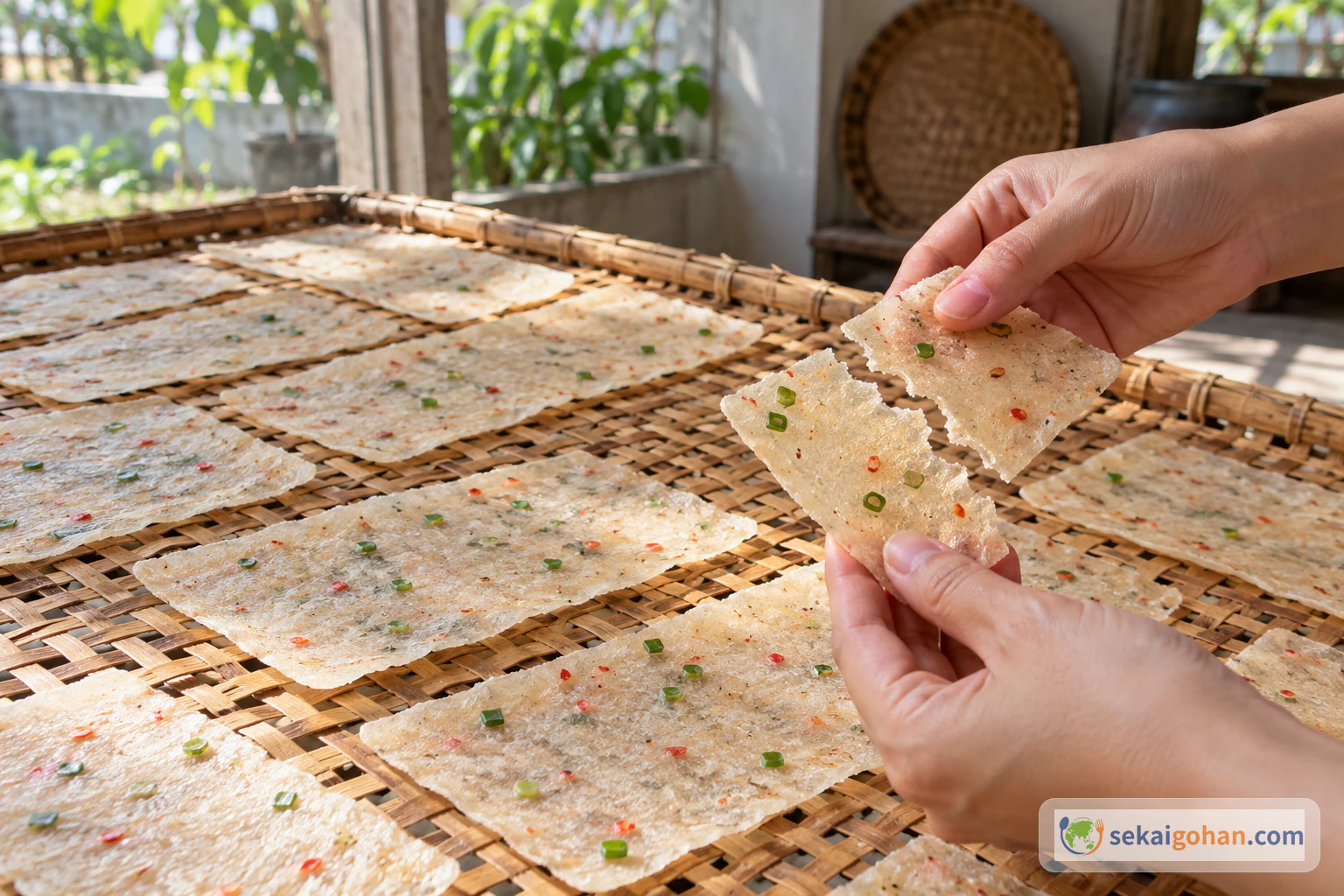
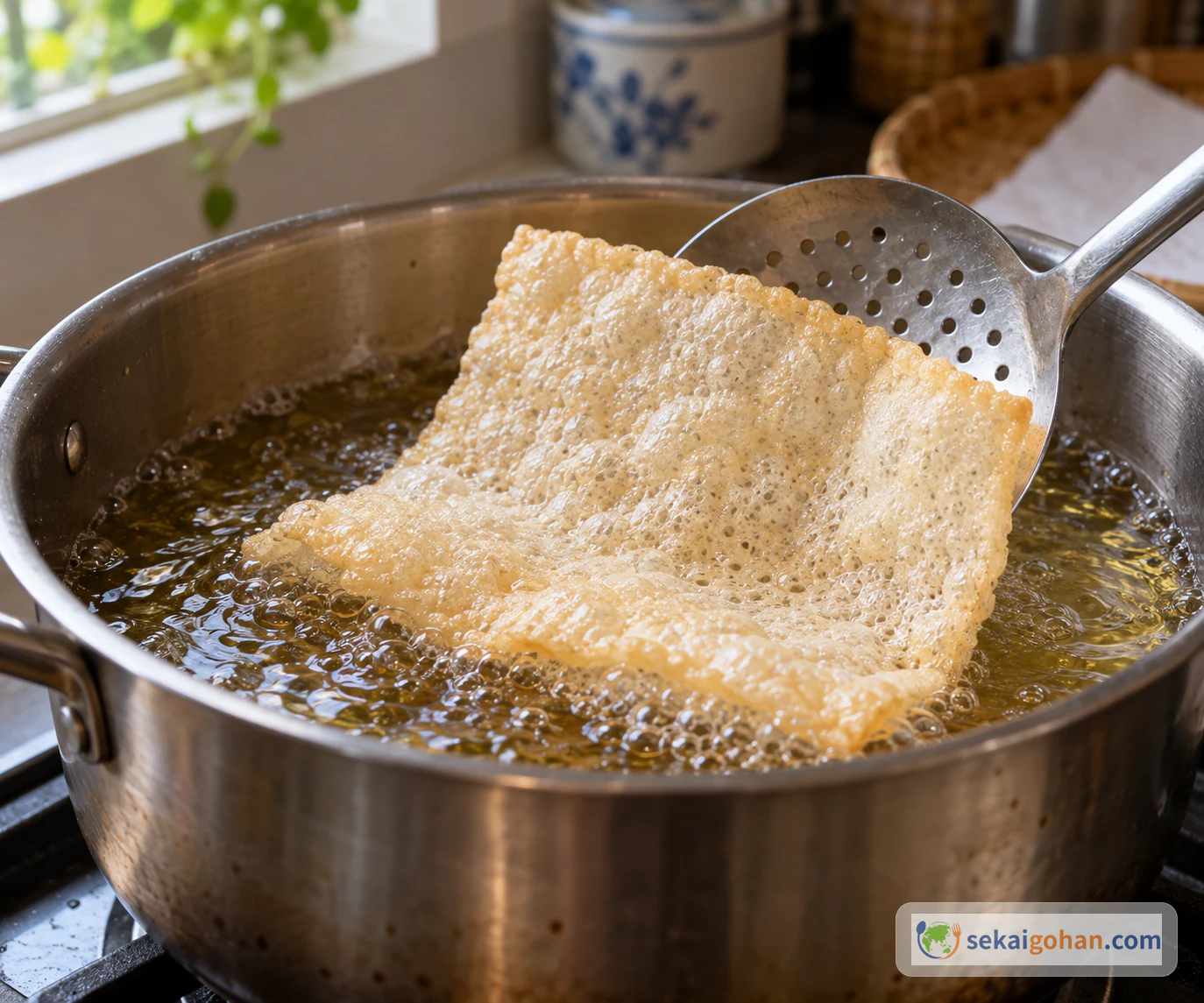
A ladle of shrimp batter spreads across a cloth stretched over a boiling pot. Once it's cooked, the thin sheet comes off on a bamboo knife and goes onto a bamboo rack to dry. Days later, a brittle piece drops into hot oil and swells into a light, airy cracker. Bánh phồng tôm is a Vietnamese shrimp cracker, and nearly all the work happens long before the frying. You fry the dried pieces only when you're ready to eat them.
Bánh Phồng Tôm and Its Methods
In Cà Mau, cooks traditionally shape bánh phồng tôm with a thin cloth and a bamboo knife. This recipe follows that method: thin sheets steamed on cloth, cut, then dried until they snap. Home cooks also make it other ways. Some steam a firmer dough in a log and slice it. Others mix tapioca starch, wheat flour and corn starch with shrimp, egg and seasonings, precook the shrimp, cook the batter in a pan, cut it while it's still soft and dry it in the sun.
Ho Chi Minh City set a local standard for this product in 1985. It defined the cracker as made from food flour, shrimp and seasonings, and it described round commercial crackers 1.5–2.0 mm thick that expand evenly when fried. It also set rules for packaging and dry storage. Those measurements are for factory crackers, so your hand-cut pieces don't need to match them. For more Vietnamese home cooking, visit our Vietnam page.
The recipe gives no yield, steaming time, drying time or temperature, frying temperature or time, or storage period. Keep the drying sheets and pieces clean and covered, away from dust and insects.
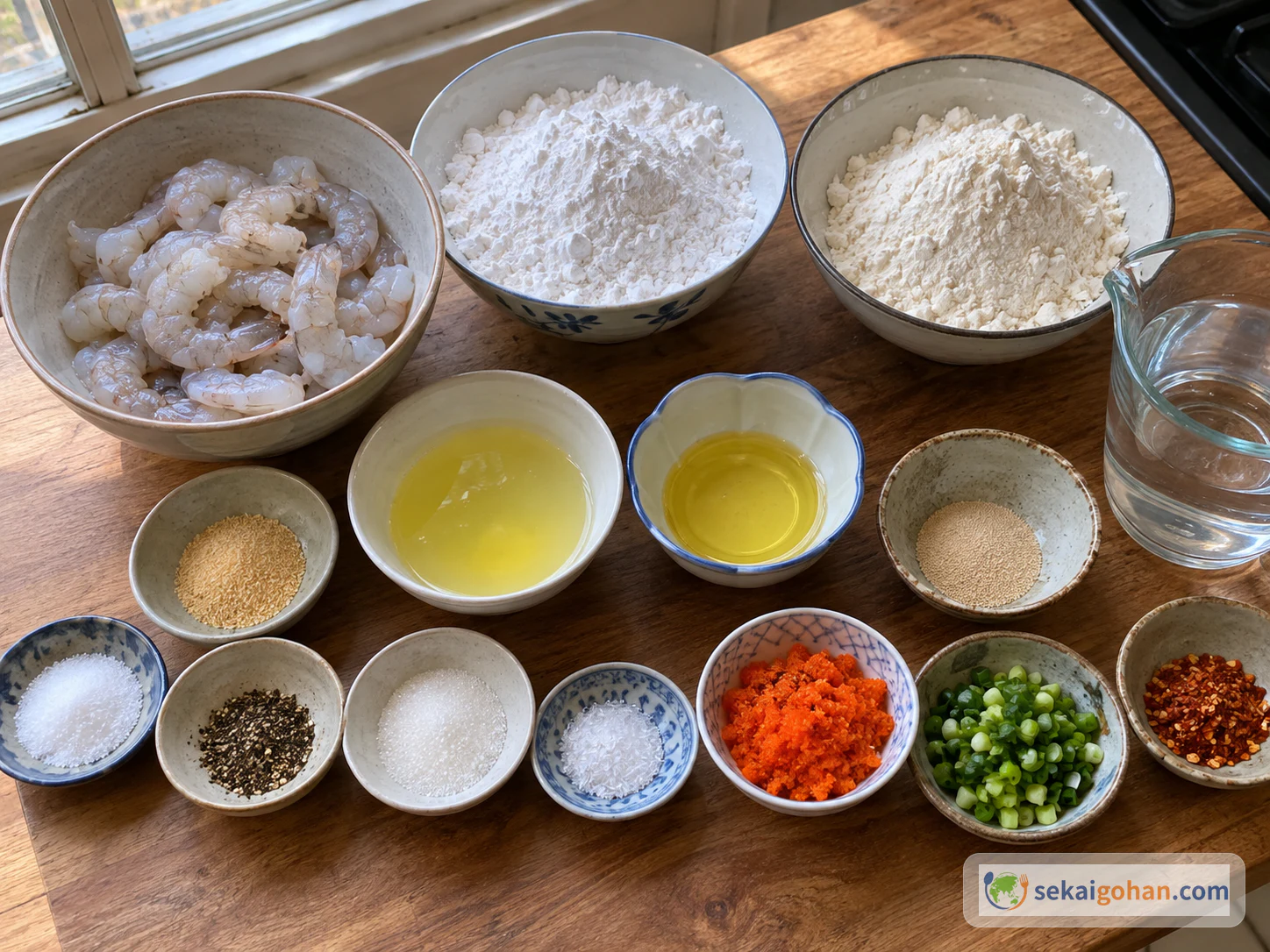
Ingredients for the Shrimp Batter
Equipment
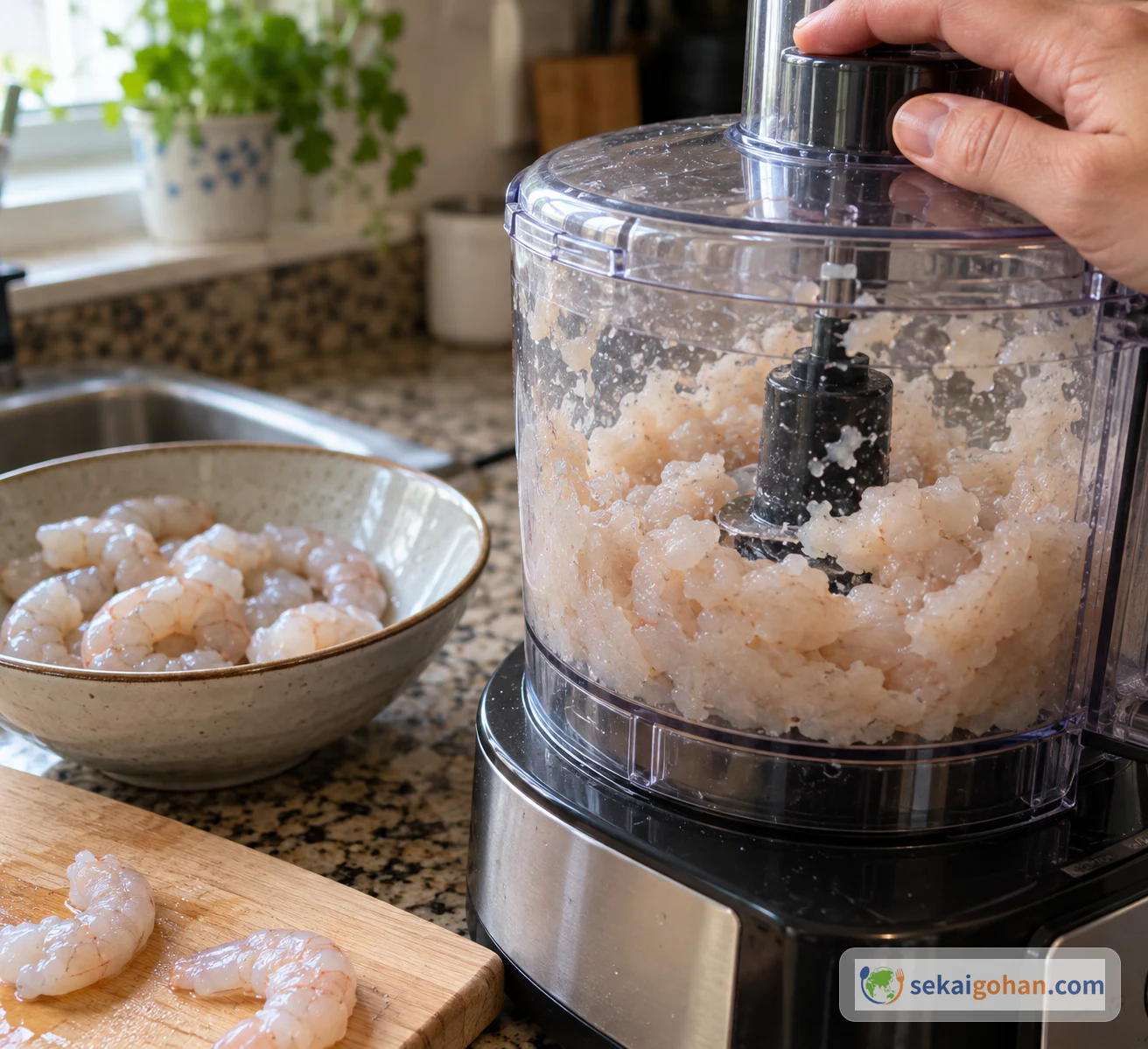
- Blender or food processor
- Large mixing bowl
- Pot with a lid
- Thin, clean cloth to stretch over the pot
- Ladle
- Bamboo knife
- Bamboo rack
- Cutting board and knife
- Food dehydrator, if you are not drying in the sun
- Airtight container
- Deep pot and slotted utensil for frying
Choosing Ingredients for Bánh Phồng Tôm
Cassava flour is the ingredient to check most carefully, so read the label before you buy. Tapioca starch, called bột năng in Vietnamese, may work, but make sure its label matches the cassava flour in this recipe. Potato starch and cornstarch make a different formula.
Use egg whites, not whole eggs. Garlic powder has no set fresh-garlic equivalent, so use the powder as written. Weigh the sea salt instead of measuring it by volume, because salt grains vary in size.
Shrimp roe is there for color. If you can't find it, leave it out and expect a paler cracker.
This recipe contains shrimp, egg and wheat. Check labels on the flours and seasonings for cross-contact information.
Troubleshooting Bánh Phồng Tôm
The one doneness test that matters is the snap at the end of drying. If a piece doesn't break cleanly between your fingers, it isn't ready for the oil.
| What you notice | Cause | What to do |
|---|---|---|
| A dried piece bends instead of snapping | It isn't dry enough yet | Keep drying and test again |
| Fried pieces have uneven texture or puff unevenly | Drying was incomplete or uneven | Test the remaining pieces for a clean snap before frying more |
| You aren't sure about the batter's thickness | The batter has no fixed consistency | Add water gradually, then steam one thin layer to see how it behaves before continuing |
| The sheet isn't cooked when you check it | It needs more time | Cover again and keep steaming until cooked |
| The crackers look paler than expected | The shrimp roe was left out, and it adds color | Enjoy them as they are, or add the pinch next time |
| Fried pieces curl into irregular shapes | Cut rectangles don't stay neat as they puff | No fix needed. A home batch doesn't have to look like round commercial crackers |
Serving, Storing and Variations
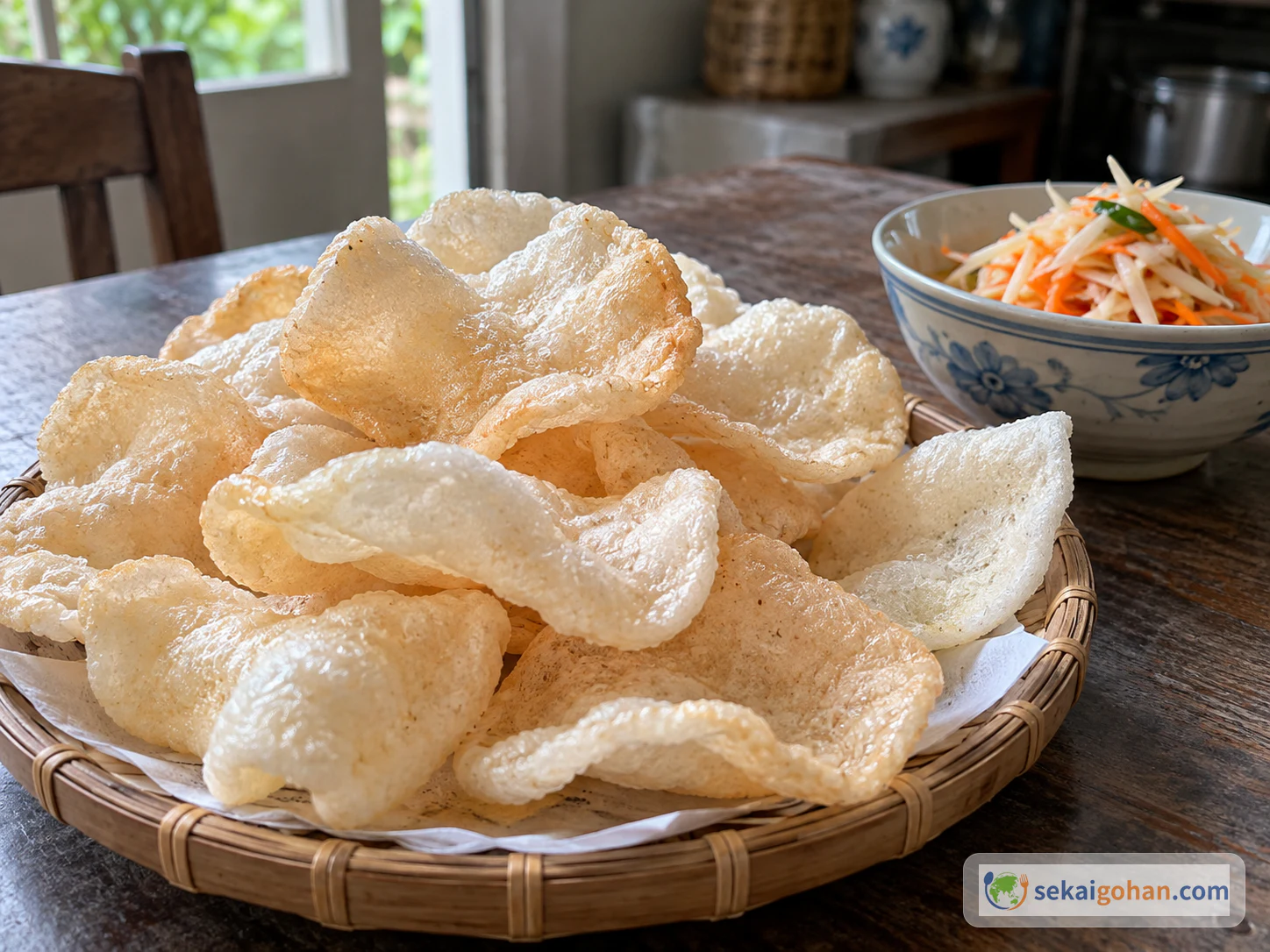
Fried shrimp crackers go well with Vietnamese salads (gỏi), and any salad you like will do. Keep the dried, unfried pieces in an airtight container and fry a handful whenever you want some.
A few changes are easy to make, though the result will differ slightly from the main recipe:
- No MSG: Leave it out. The recipe works without it.
- Less heat: Leave out the ground chilli. You'll lose its color as well.
- Food dehydrator instead of sun: Either one works. Follow your appliance's instructions and use the same snap test.
Frequently Asked Questions
How should I divide the water, and how hot should it be?
The recipe calls for about 1 litre of boiled water, plus splashes when blending the shrimp. It doesn't specify how to split it, what temperature to add it at, or how thick the batter should get. Add it gradually and use only as much as the batter needs.
What temperature and time should I use for drying?
Go by the snap test instead of a clock. The dryer setting of 60–70°C you may see elsewhere is for a different batter, so don't use it here.
How hot should the frying oil be?
Heat the oil until it's boiling hot. Fry one test piece first and watch how it puffs and colors before you add the rest.