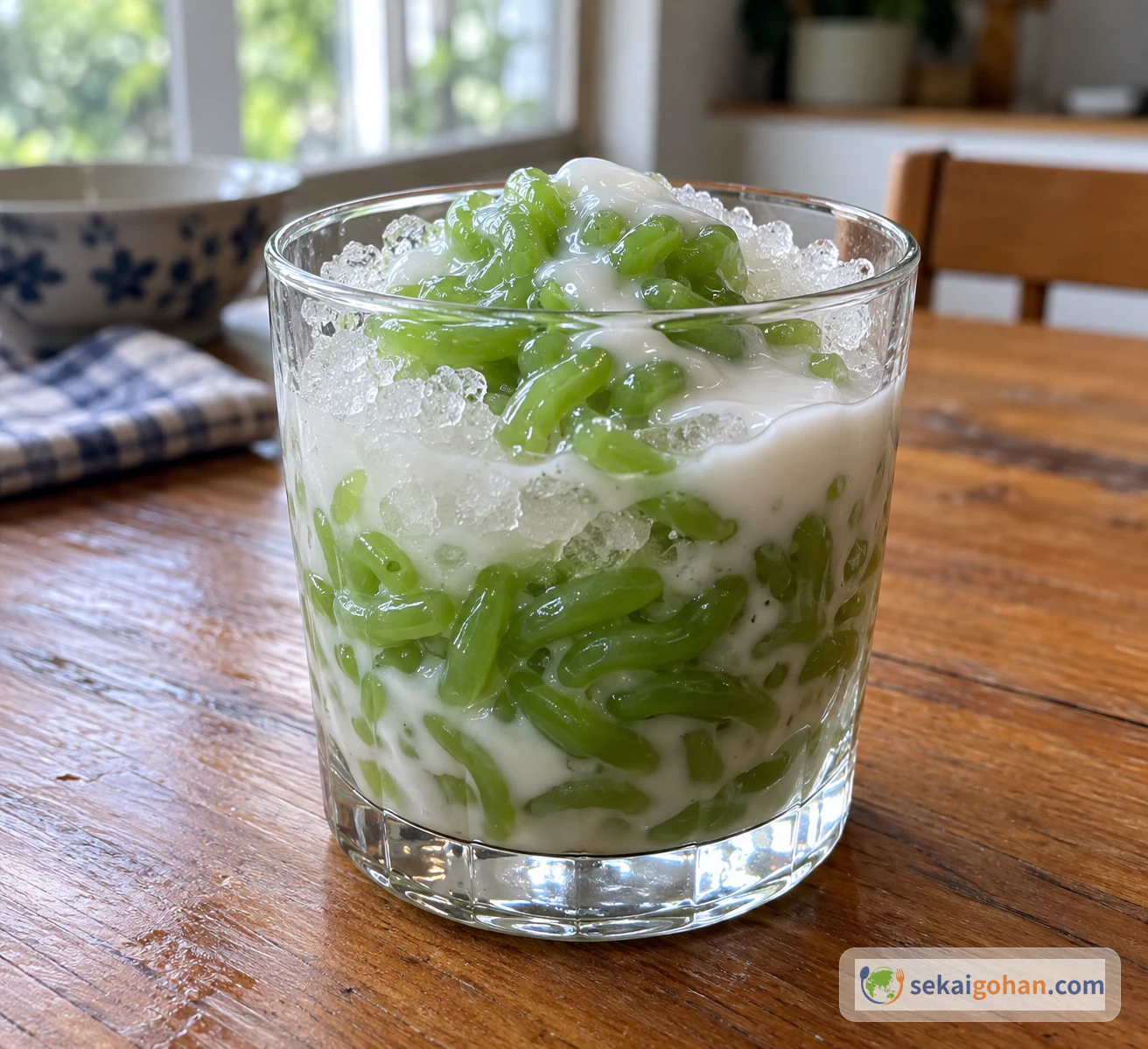
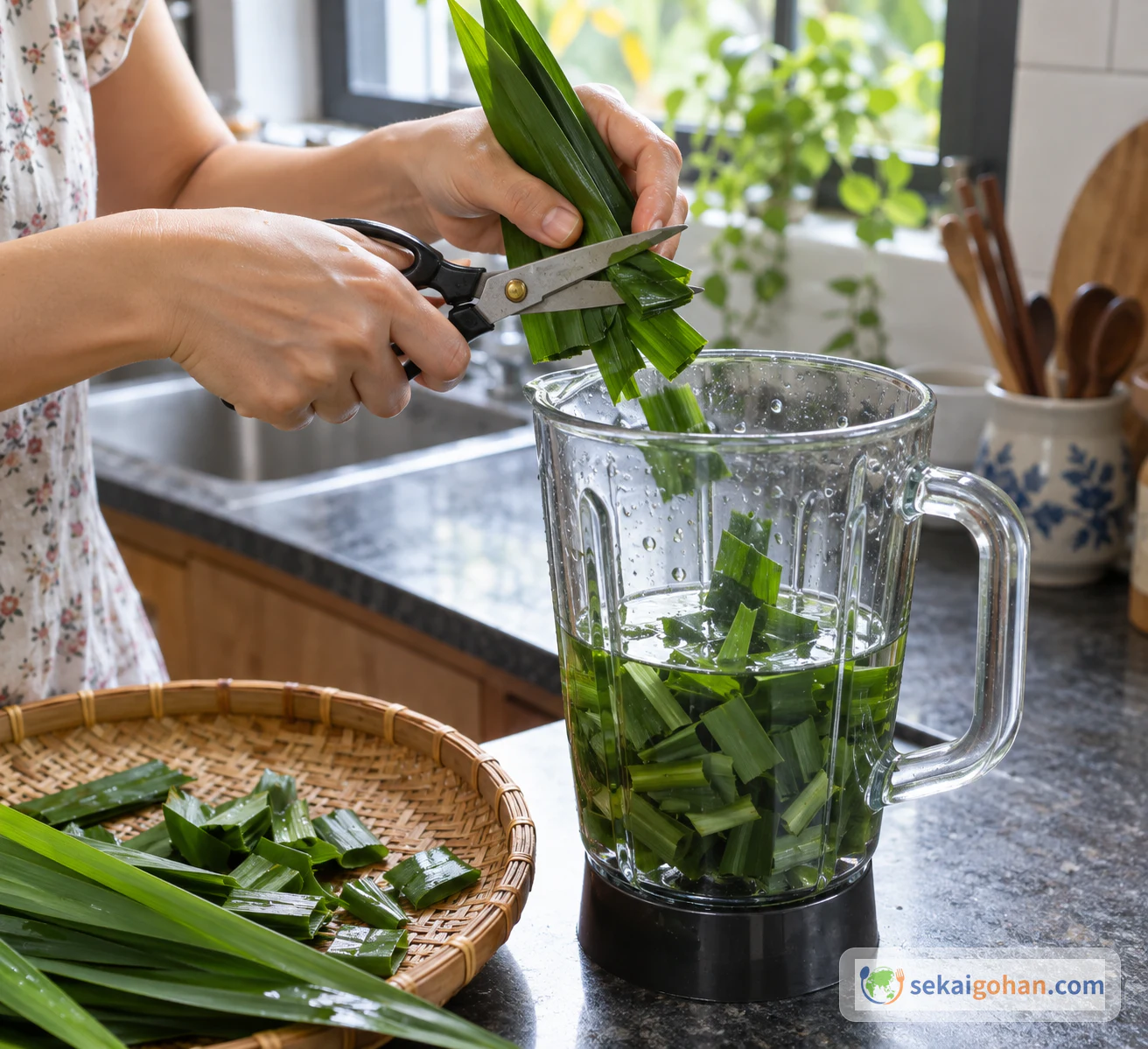
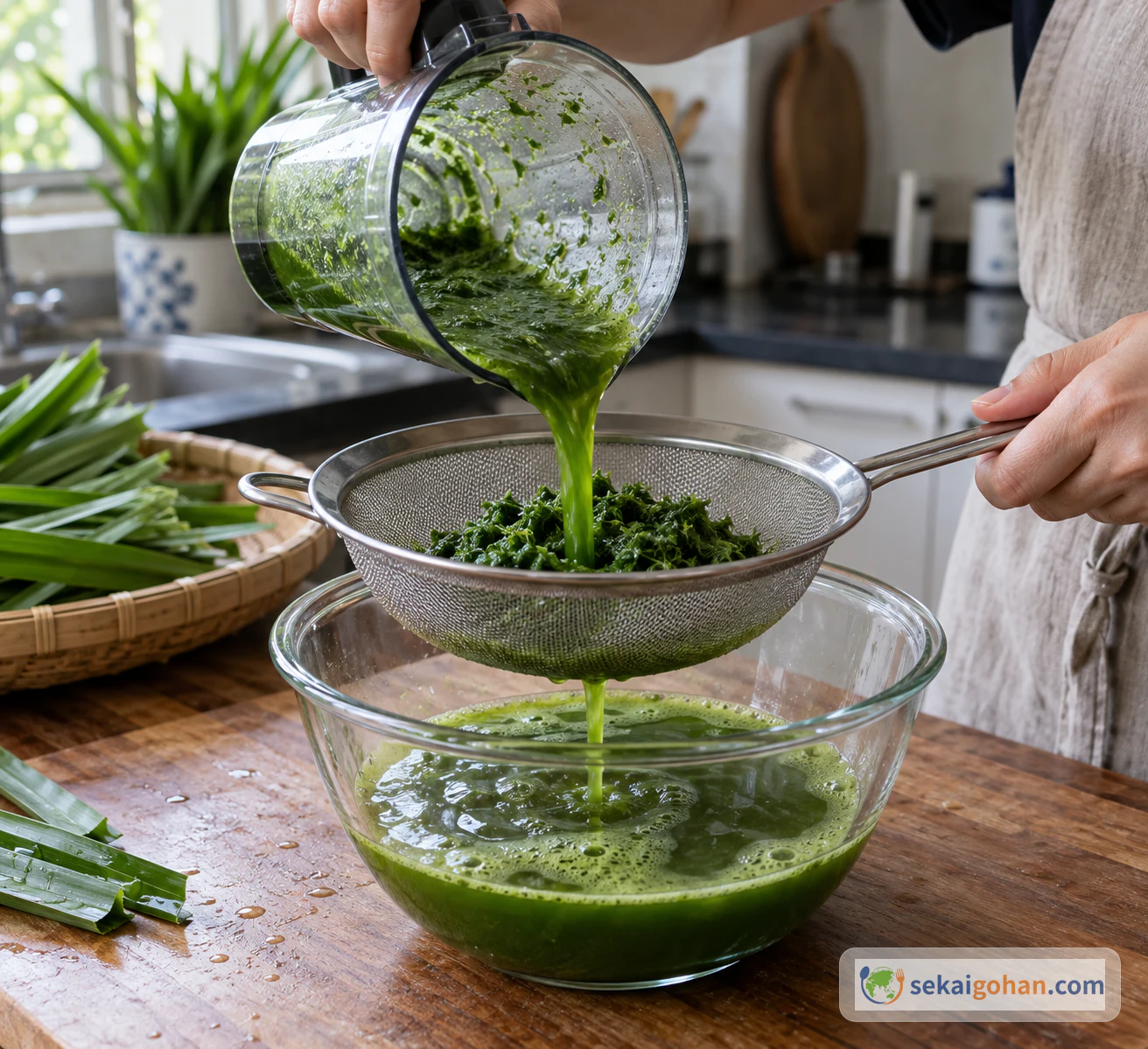
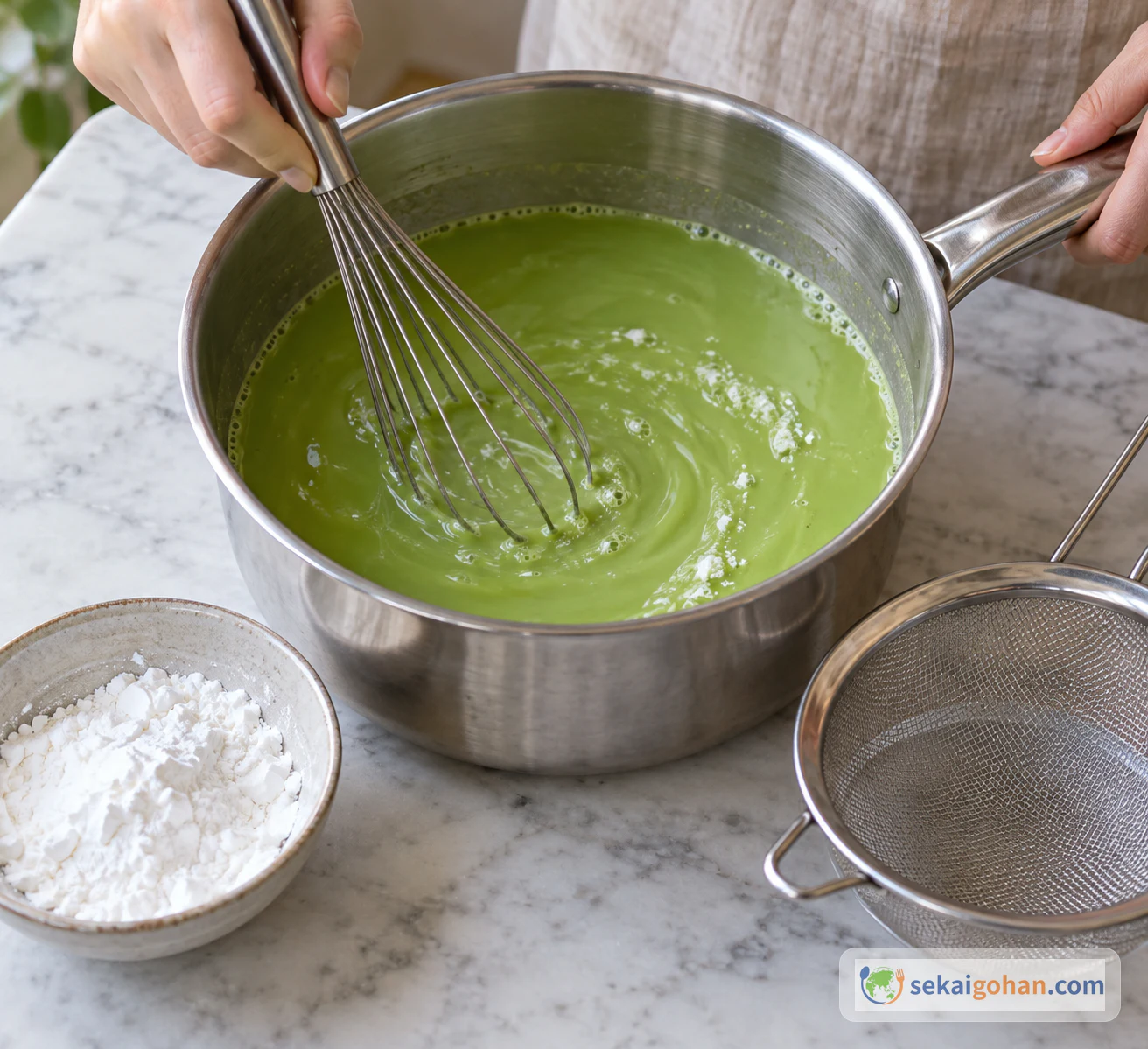
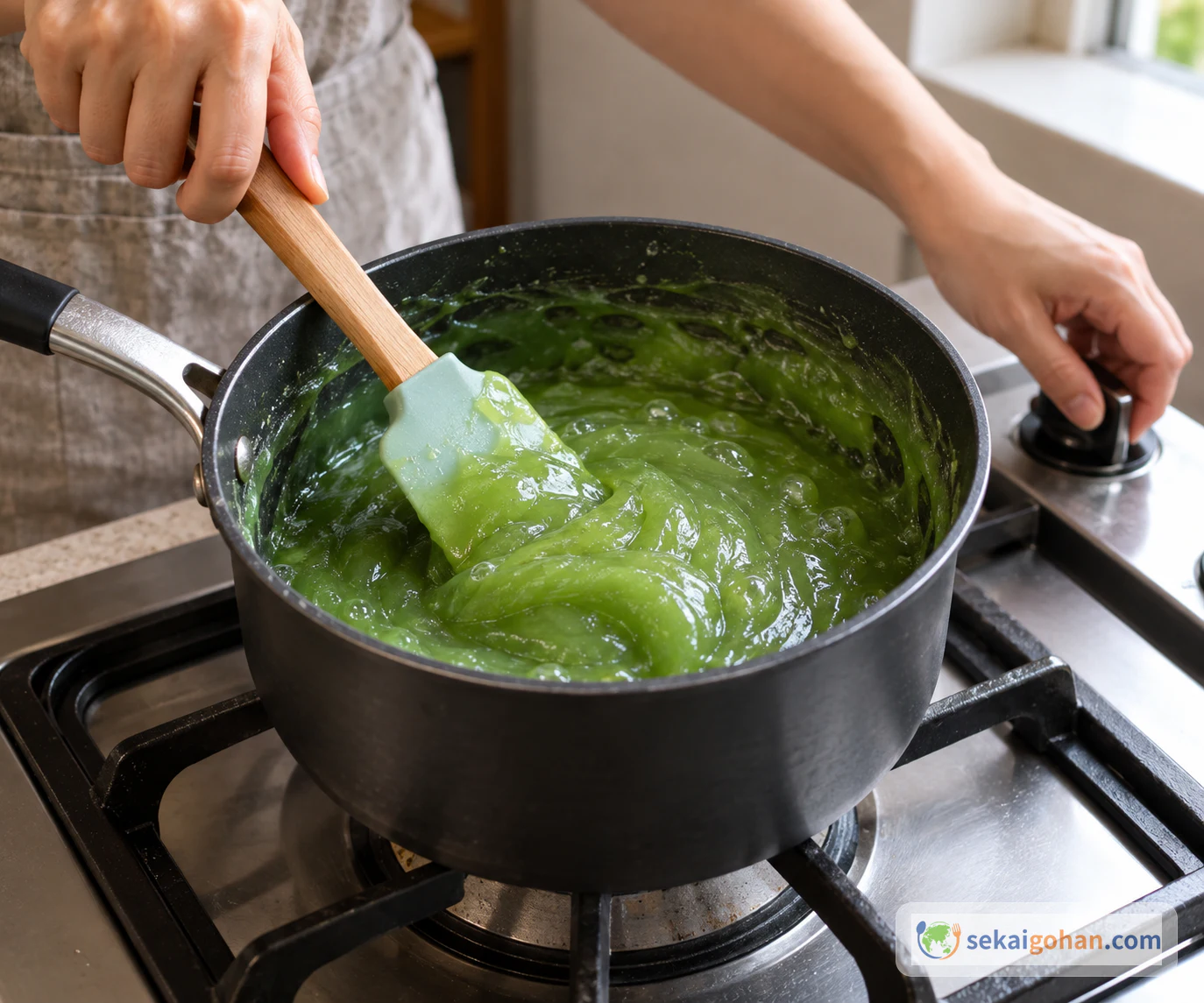
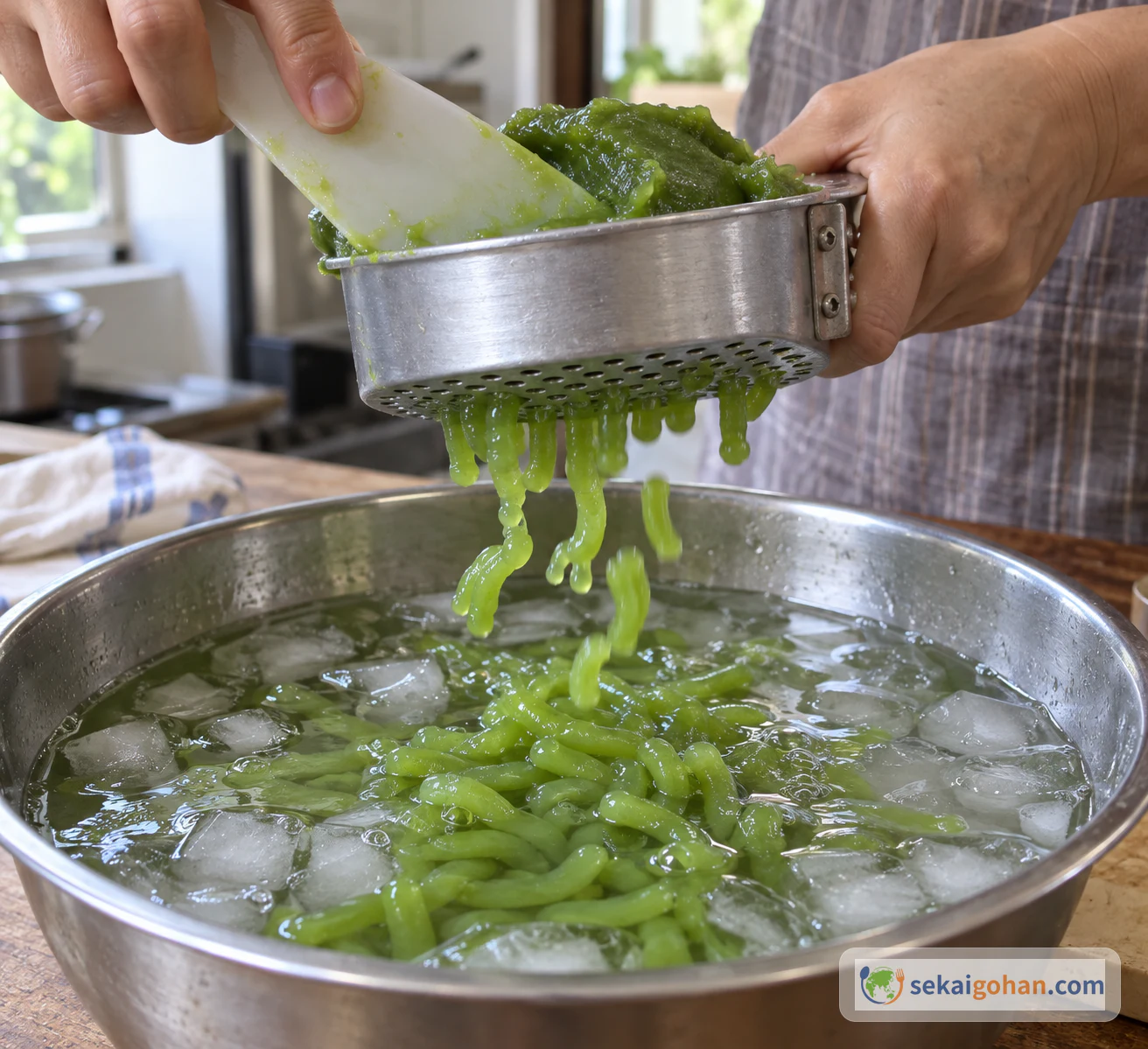
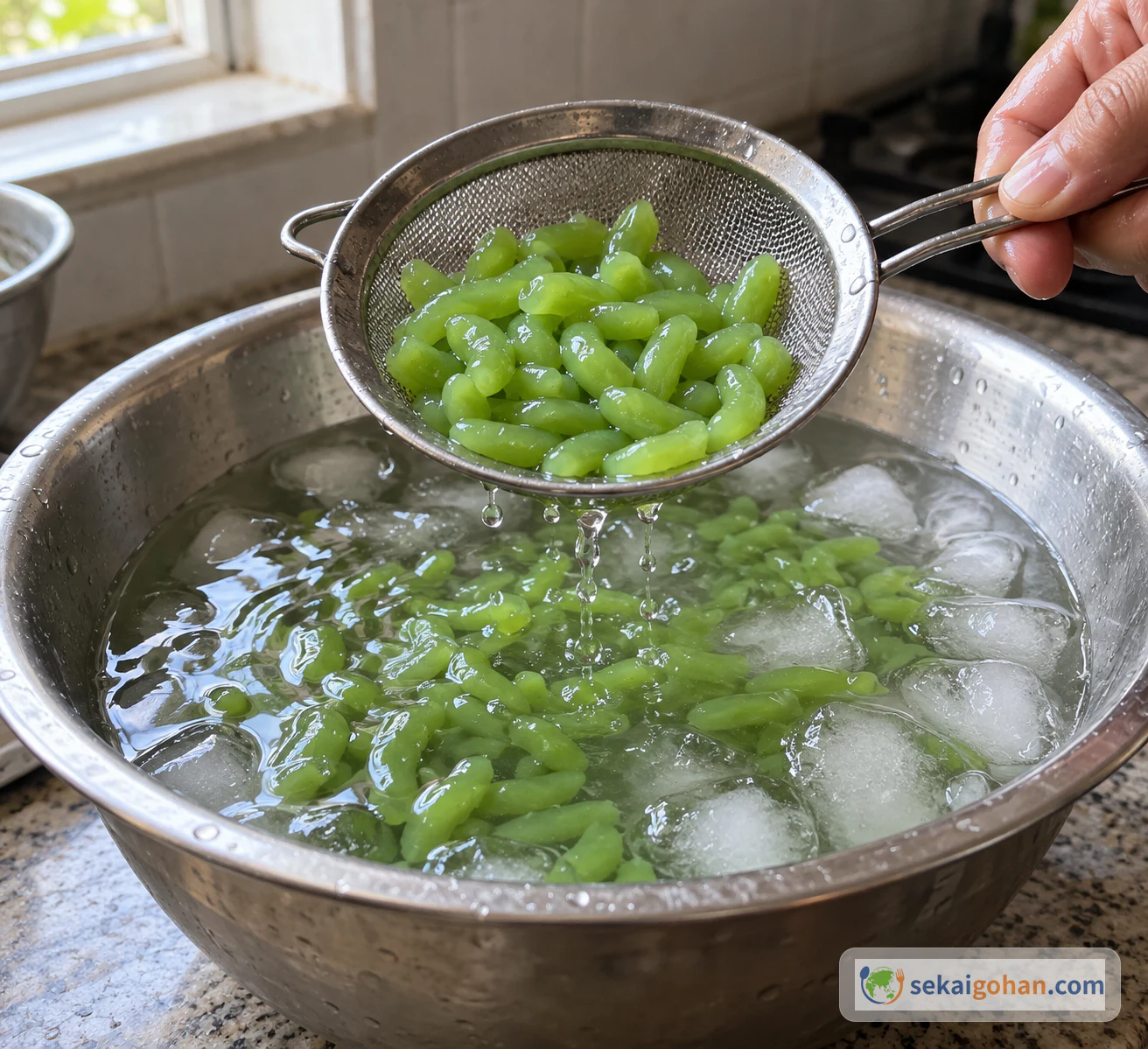
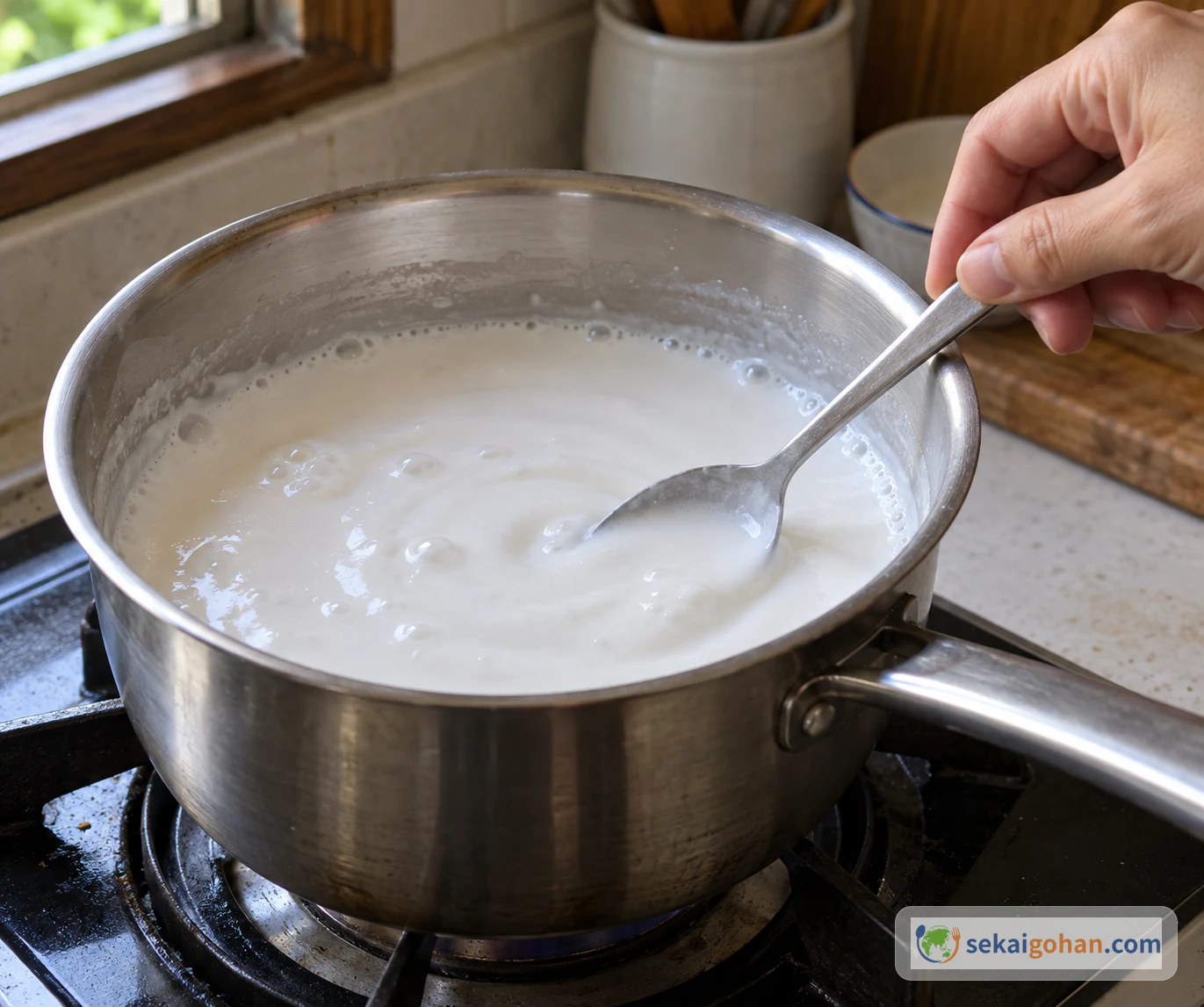
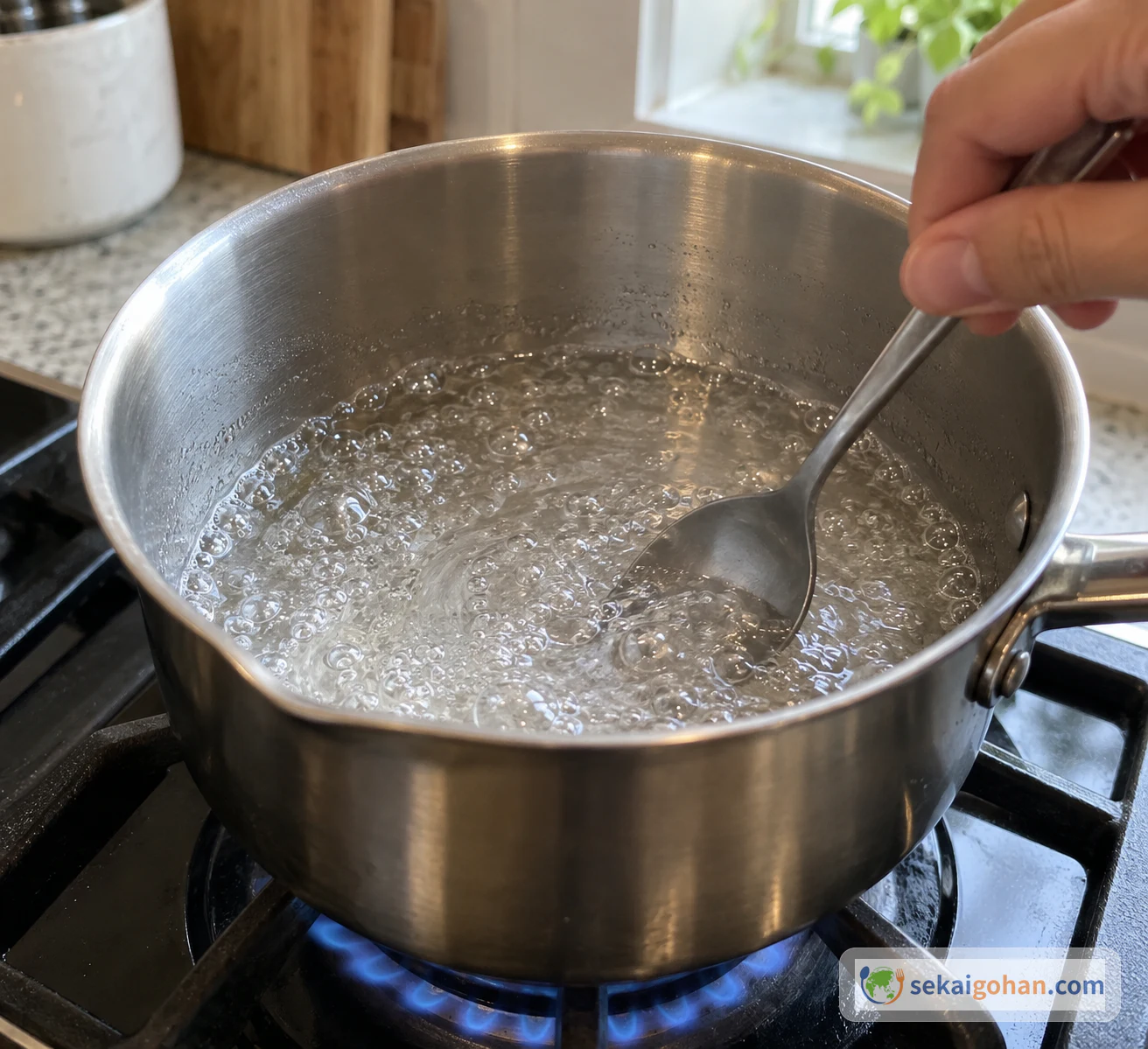
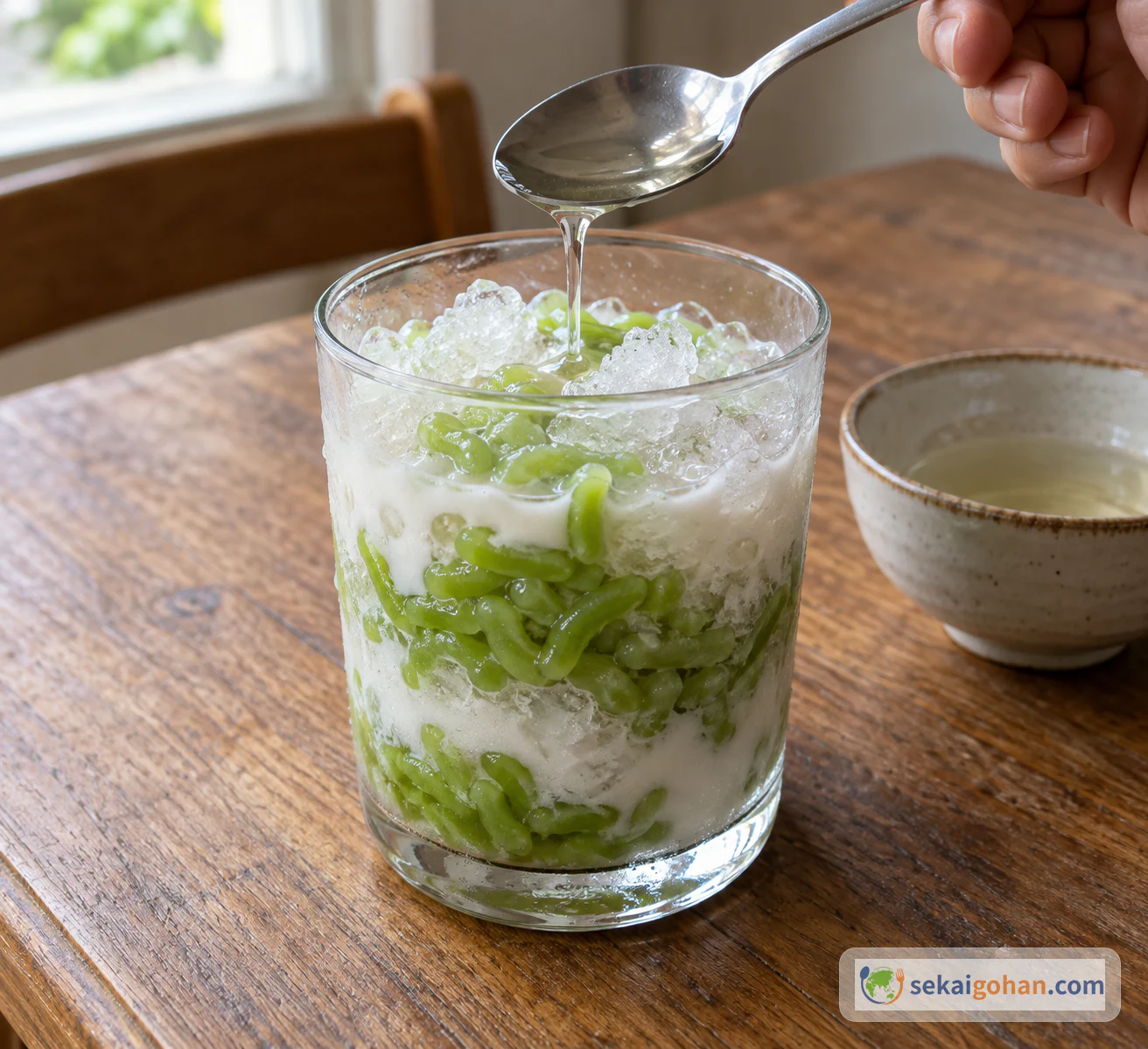
A glass of chè bánh lọt is built in layers: soft green strands at the bottom, white coconut sauce poured over them, sugar syrup added to taste, and crushed ice on top. Each part is made separately and only meets the others in the glass. The strands start as a just-boiled paste of pandan and starch, pressed through a perforated mold so it falls into cold water and firms into short, rounded, worm-like pieces. The pleasure is all in the contrast: soft, slippery strands, rich coconut sauce, a thin sweet syrup and crunchy ice.
Chè Bánh Lọt, a Cold Sweet from Southern Vietnam
Bánh lọt are short strands of cooked starch dough pushed through holes into cold water. Served cold with coconut sauce, syrup and ice, they become a chè, one of Vietnam's many sweets. The dish is associated with southern Vietnam and is known as a sweet of the Mekong Delta. For more dishes from the same country, see the Vietnam country page.
Cendol and lod chong are similar pressed-starch desserts from elsewhere in the region, but they are separate dishes. What makes chè bánh lọt itself is a flavored, pressed starch dough, served chilled with coconut and a sugar syrup.
Ingredients: Dough, Coconut Sauce and Syrup in Cups and Spoons
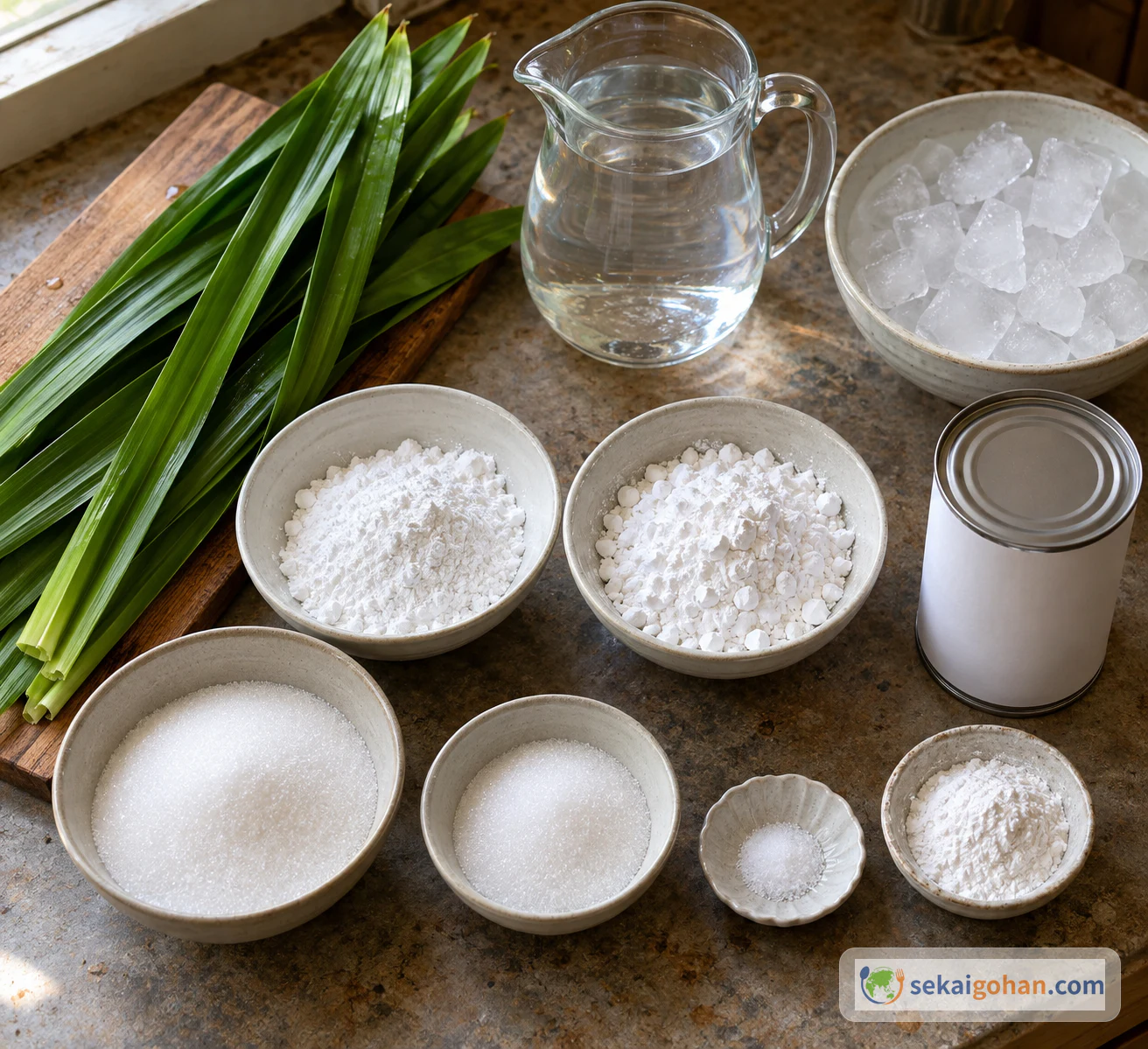
c means cup. Use one cup consistently for all the quantities marked "c".
You can also eat it with cooked red beans and mung beans, a serving called chè ba màu. The beans are optional and are not part of the base recipe.
Equipment
- Knife and cutting board for the pandan leaves
- Blender
- Fine-mesh sieve (used several times)
- Bowls for the strained pandan liquid
- Saucepan for the dough, and a spatula for stirring it continuously
- Perforated aluminum mold with small round holes (a bánh lọt press), or a perforated mold or potato ricer as an alternative
- Flat square or rectangular spatula for pushing the dough through the mold
- Wide bowl of cold water with ice, to set under the mold
- Strainer or colander for rinsing and draining the strands
- Two small saucepans for the coconut sauce and the syrup
- Serving glasses
Use tools that are meant for food contact. Press the dough with a flat square or rectangular spatula; the mold itself does not need to be square. A potato ricer can also press the batter into ice water, if you do not have a bánh lọt press.
Choosing the Starches for Bánh Lọt
This version is made with water chestnut starch and a little tapioca starch, colored and scented with fresh pandan leaves. Water chestnut starch and tapioca starch are two different ingredients, and you need both. Water chestnut starch is sold as bột củ năng, tapioca starch as bột năng; look for them at Asian or Vietnamese grocers, and check the ingredient line on the package to see which one you're buying.
Potato starch, cornstarch and other starches make a different dessert, so it's worth tracking down bột củ năng itself. The rice flour goes only into the coconut sauce, not the dough.
Method: Pandan Liquid, Hot Paste, Ice Water
Make the pandan liquid, dissolve the starches into it while it is cold, then cook it only until it boils and press it while it is still hot. Make the coconut sauce and syrup separately and keep them apart until serving.
Fixing Common Bánh Lọt Problems
| What you see | What to check | What to do |
|---|---|---|
| Bits of leaf in the dough | How well the pandan liquid was strained | Strain the pandan liquid several times, then strain again after adding the starch |
| Lumps in the cooked paste | Whether the starch fully dissolved before heating, and whether stirring stopped | Dissolve and strain while the mixture is cold, and stir continuously over medium heat |
| Paste catching on the bottom of the pan | Heat level and stirring | Use medium heat with constant stirring, and turn off the heat as soon as it boils |
| Paste hard to push through the mold | Whether it has cooled | Press the paste while it is hot, straight after cooking |
| Strands flat, ribbon-like or long instead of short and round | The tool you pressed through | Use a mold with small round holes; a ricer or other perforated mold can give a different shape |
| Syrup turned brown | Whether it was cooked past boiling | Bring only the sugar and water to a boil, and do not cook it down to a caramel |
Storing and Varying Chè Bánh Lọt
Refrigerate the rinsed, drained strands until serving. Once the coconut sauce and syrup have boiled, set them aside and keep them separate until you assemble the glasses.
Across kitchens the idea stays the same, green pressed strands with coconut and syrup, served cold, but the formulas change. Some cooks use mung bean or water chestnut starch as the main starch, in different quantities and with a different amount of sugar, and press the batter through a potato ricer into ice water. Another version makes two colors of dough from 7 oz (200 g) rice flour and 14 oz (400 g) tapioca flour, added in two portions, then steams and presses it. Each of these works best followed as its own recipe.
For a fuller glass, serve the strands with cooked red beans and mung beans. That serving is called chè ba màu.
Frequently Asked Questions
How big is the cup, and how large is the can?
The size isn't given. Use the same cup for every quantity marked "c", and use one can of coconut milk.
Do I need a special bánh lọt press?
The method uses a perforated aluminum mold with small round holes, plus a flat spatula. If you don't have one, a potato ricer or another perforated mold can be tried, though the strands may come out a different shape.