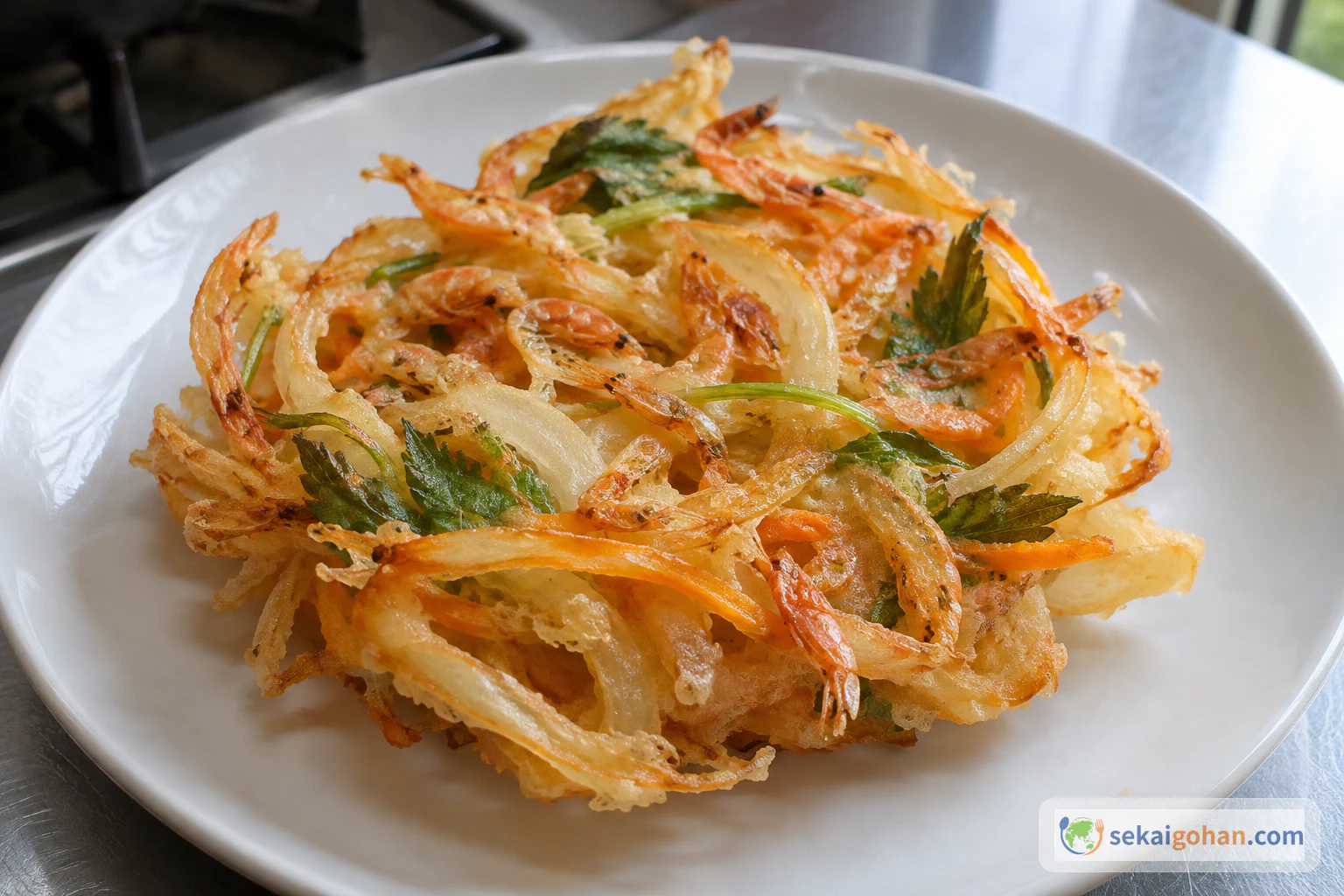
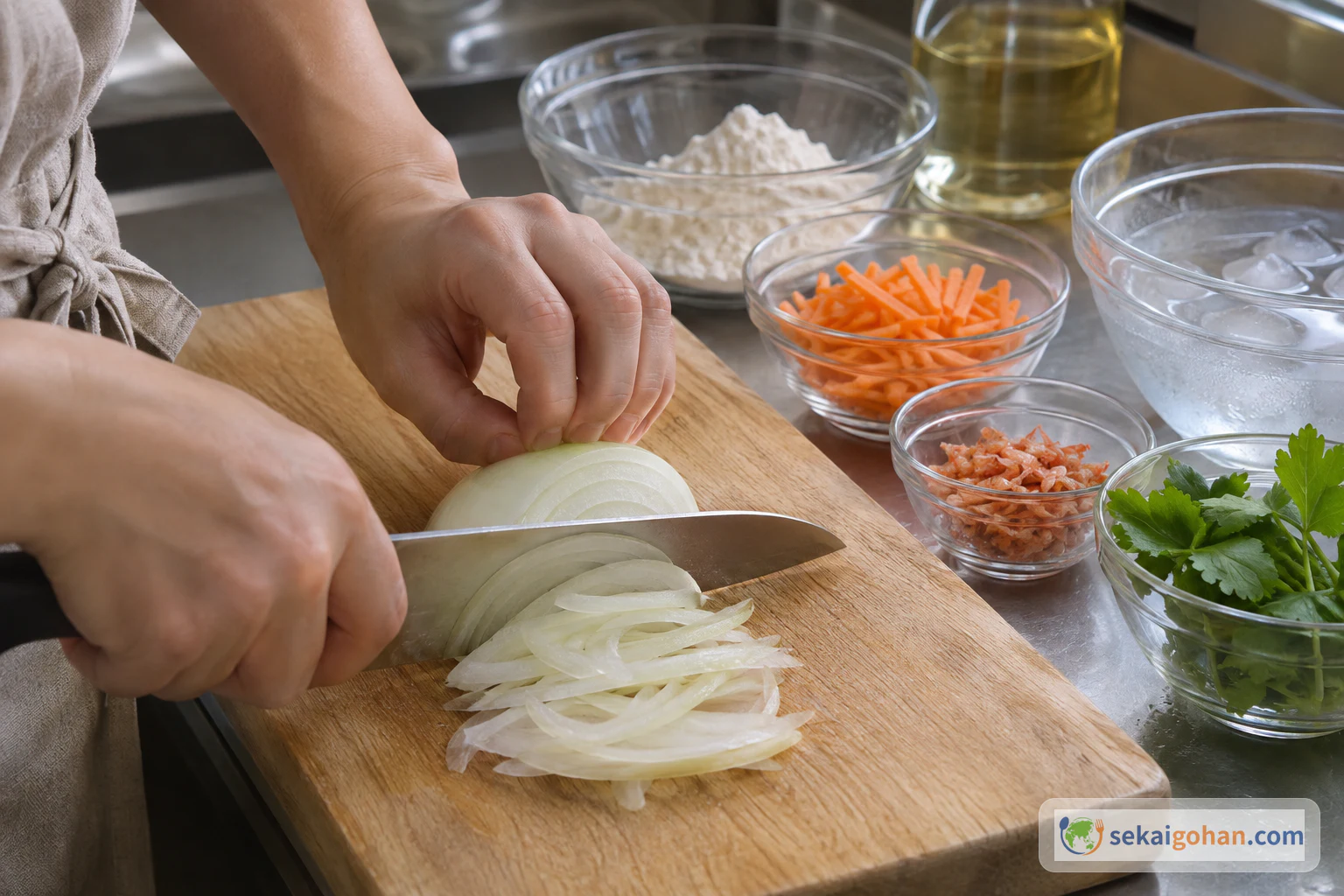
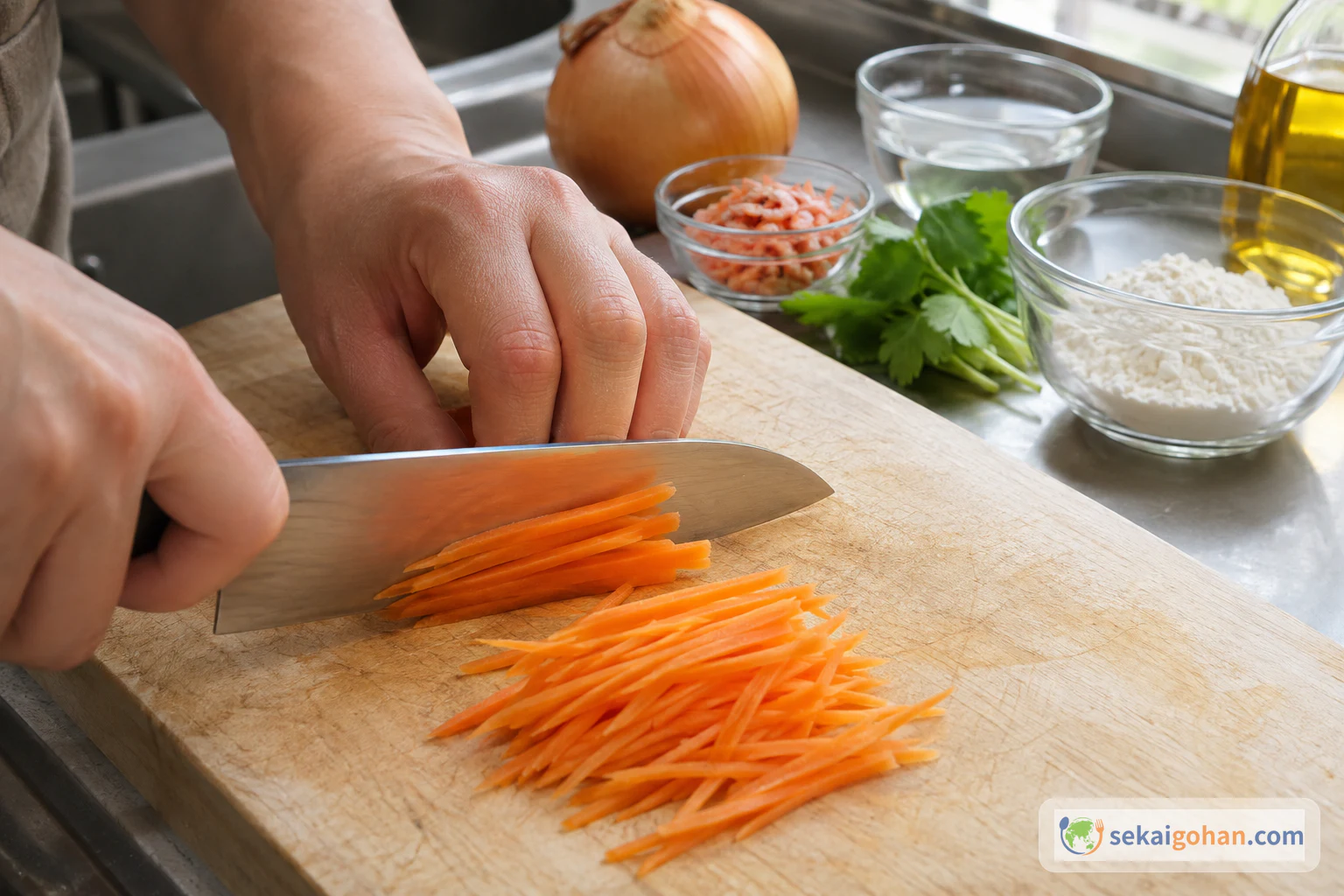
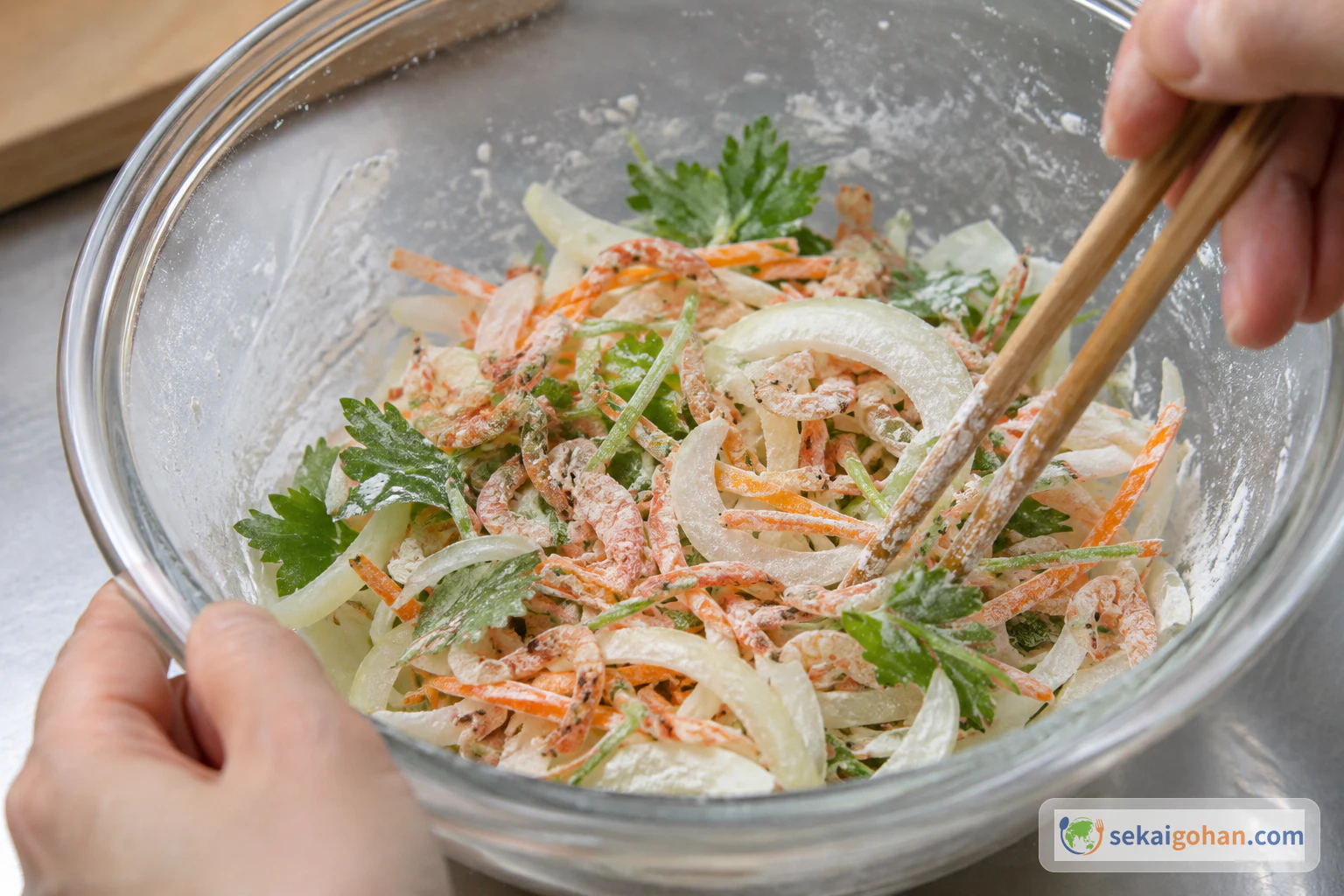
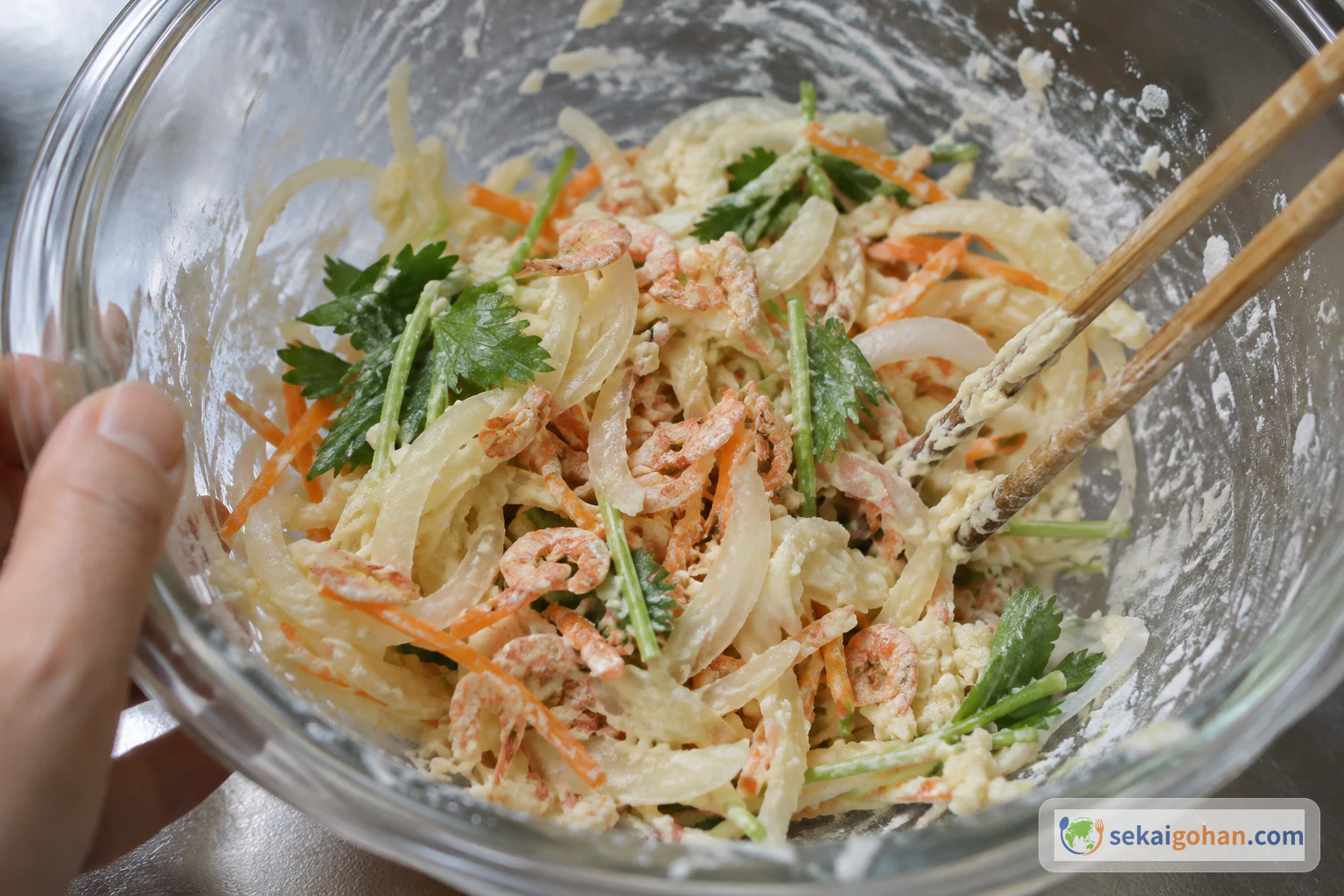
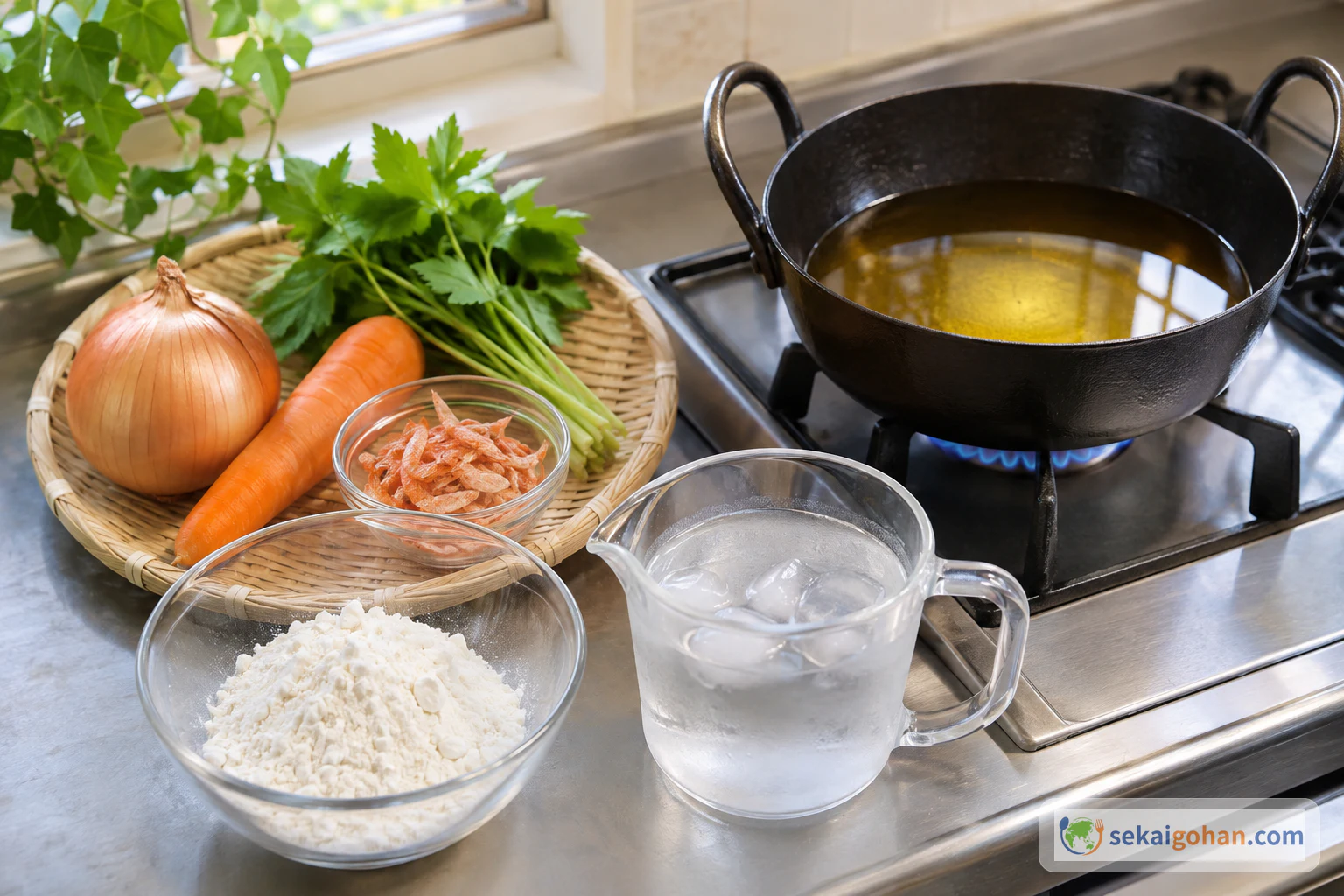
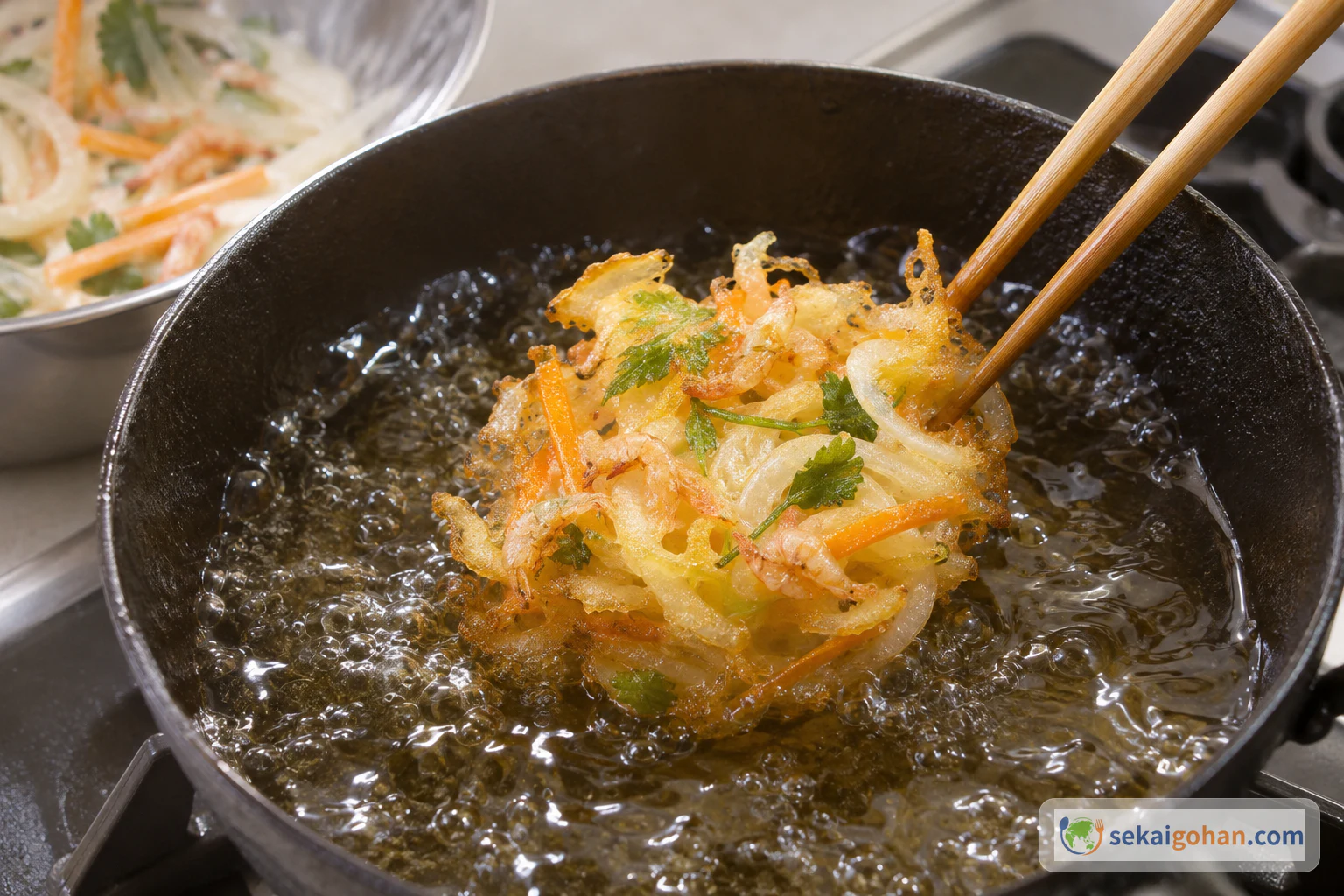
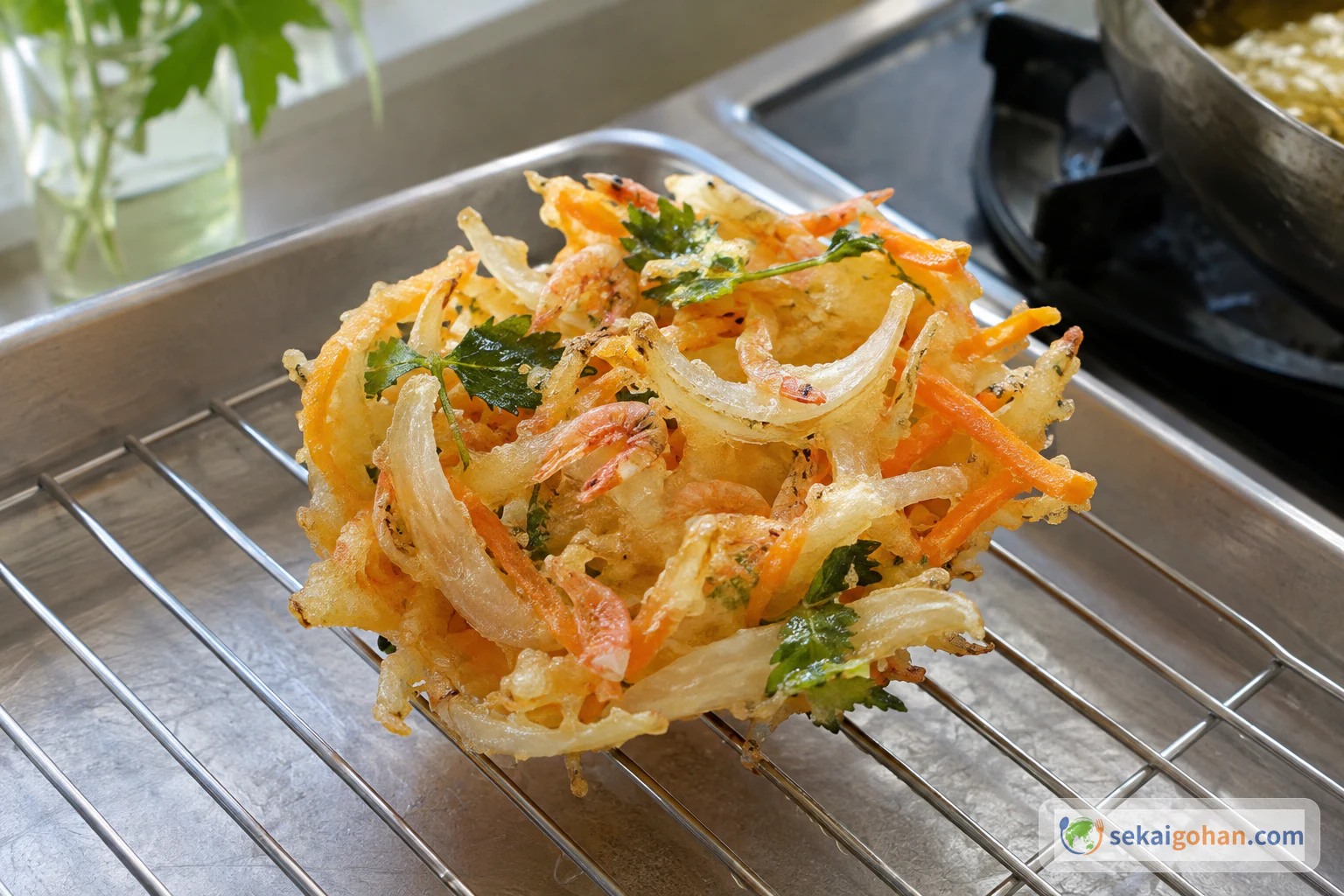
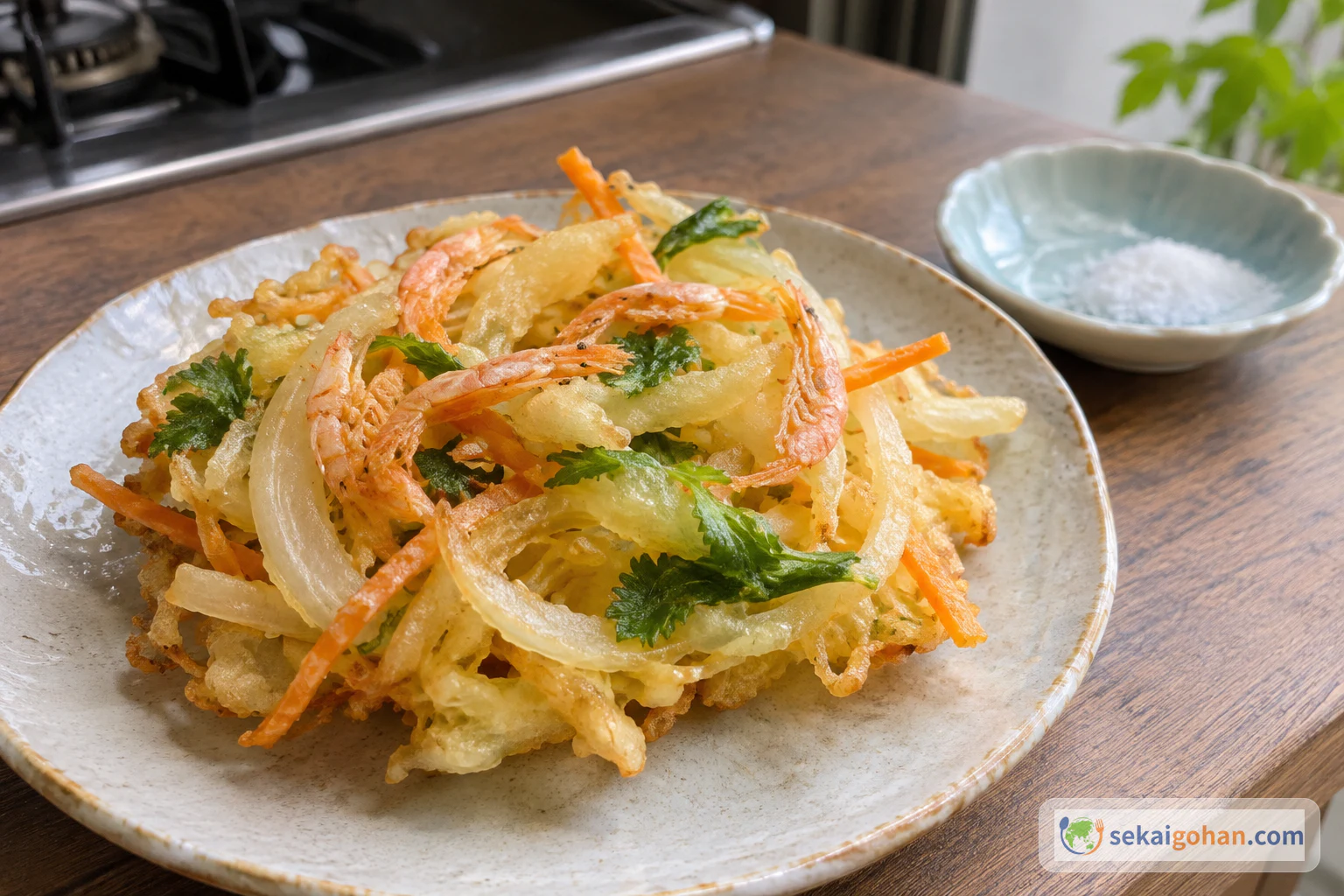
Picture a bowl of thinly sliced onion and fine carrot strips, flecked with tiny pink dried sakura shrimp and short lengths of green mitsuba. A dusting of flour, a little chilled water, a few light turns with chopsticks, and the strands begin to cling to one another. Lowered into hot oil, each spoonful spreads into a flat cluster that turns golden and crisp at the edges. That's kakiage (かき揚げ), a Japanese tempura where small ingredients fry together as one piece, held by just enough batter to bind them. This version serves 4, and for more dishes from the same table, see our Japanese food page.
What Kakiage Is and How It's Eaten
Ordinary tempura usually fries one ingredient per piece. Kakiage gathers many small pieces into one and fries them together into a flat shape. The batter works as a light binder rather than a thick coating, so you taste the strands of vegetable and the shrimp, not the flour.
In Japan, kakiage is eaten on its own with a little salt, set over rice as kakiage-don, or placed on a bowl of soba or udon. The ingredients follow the seasons, and in spring you'll find it made with wild mountain vegetables, bamboo shoots, fava beans or nanohana.
Ingredients (Serves 4)
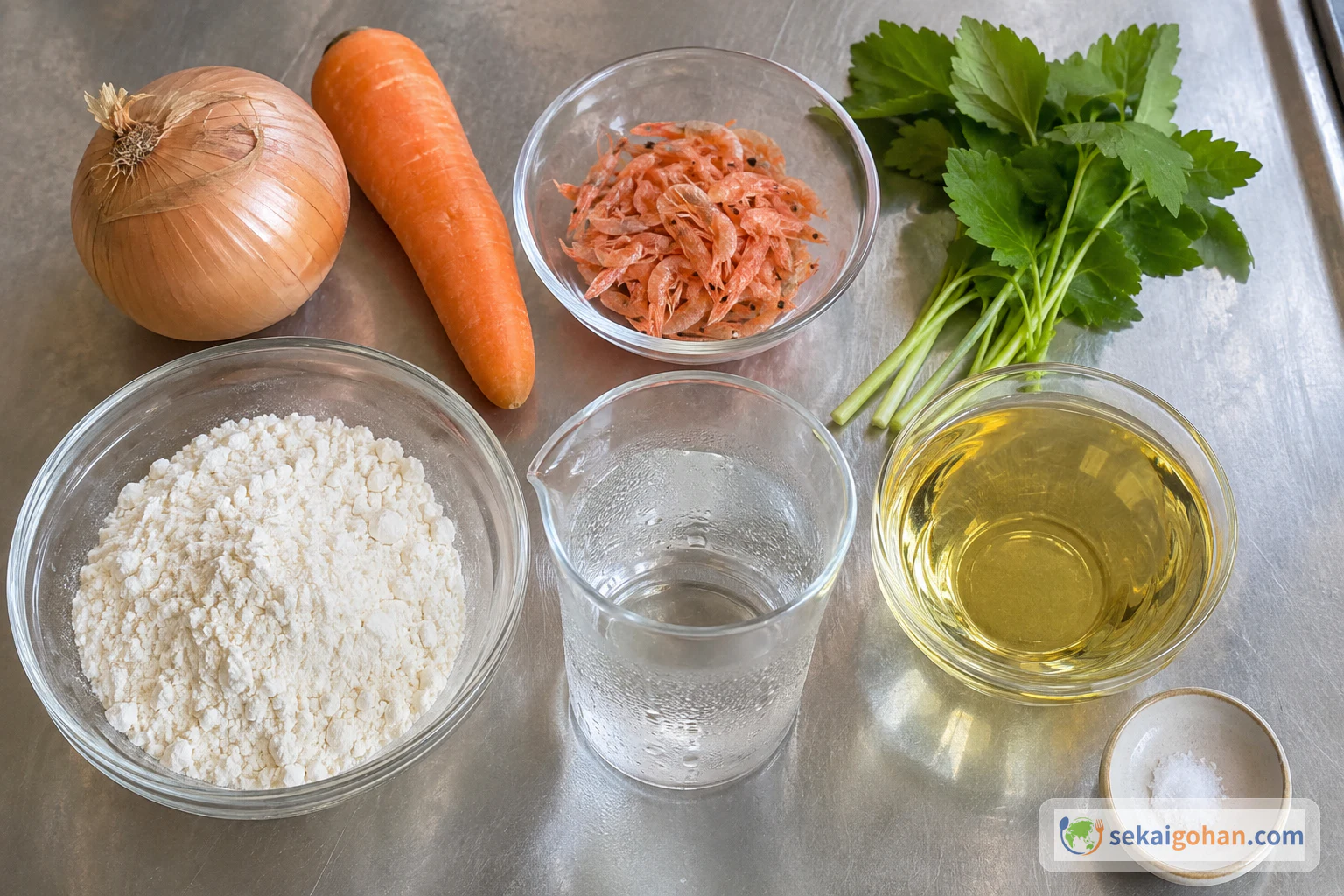
The flour, water and oil are judged by look as you go. Have extra chilled water and flour on hand so you can add a little at a time.
This kakiage contains wheat (flour) and crustacean shellfish (sakura shrimp). Check the labels on your flour and dried shrimp for allergen information.
Equipment
- Knife and cutting board
- Mixing bowl
- Cooking chopsticks or a spoon
- Deep pan for frying
- Slotted spoon
- Wire rack
Choosing Ingredients for Kakiage
Dried sakura shrimp define this version: small, dried, pink shrimp that bring aroma to the whole piece. Look for them at Japanese or East Asian grocers. Mitsuba is a Japanese herb with its own distinct aroma, and other greens will change the flavor of the dish.
An ordinary yellow onion is fine. New-season bulb onions (shin-tamanegi) carry more moisture and a different sharpness, so watch the batter closely when you add the water.
Flour: use soft wheat flour alone, with no egg, starch or tempura-flour mix. The flour, chilled water and frying oil are all added as needed, so go by how the batter and the finished piece look at each stage rather than by fixed ratios or frying times.
Method: Coat First, Then Add Water Little by Little
While frying, stay with the pan. If you must step away, turn off the heat first. If oil catches fire, never pour water on it.
Cut everything before the oil goes on, so you can give the pan your full attention once frying starts. Work in small batches and judge each stage by how the batter and the pieces look.
Fixing Common Kakiage Problems
Because the flour and water are judged by eye, most problems show up in the bowl before they reach the oil. It's worth a second look at the mixture before each batch.
| What you see | Likely reason | What to do |
|---|---|---|
| Dry flour still visible in the bowl | Not enough water yet | Add a little more chilled water and mix lightly again |
| The batter is smooth and runny | Too much water, or mixed too long | Hold off on more water. Next time, add it in smaller amounts and stop while small lumps remain |
| The cluster scatters in the oil | Lowered from too high, or not held while setting | Bring the portion right to the oil surface before releasing it, and hold it gently with chopsticks until the batter sets |
| The oil spits when portions go in | Wet vegetables, or portions dropped in quickly | Pat cut vegetables dry before coating them, and lower each portion slowly |
| The pieces are pale or soft | Taken out before they were done | Keep frying until cooked through and crisp |
| The finished pieces are oily | Not drained | Hold each piece over the pan to drip, then drain on a wire rack |
Stay with the pan while frying, and turn off the heat before stepping away. If oil in the pan catches fire, turn off the heat if you can do so safely, and never pour water on it.
Serving Kakiage and Seasonal Variations
Kakiage is at its best straight from the rack, with a little salt on the side, so make only what you'll eat and serve it fresh. It's just as good over rice as kakiage-don or on a bowl of soba or udon.
Spring vegetables like wild mountain vegetables, bamboo shoots, fava beans or nanohana each have their own moisture and cooking time, so cook them from a recipe written for them rather than adding them to this mixture. The same goes for seafood: raw shrimp, kobashira (small scallop adductors) or shirasu can replace dried shrimp, but not by swapping in the 2 tbsp directly.
Frequently Asked Questions
How many grams of flour and water should I use?
There are no set amounts. Coat the ingredients in flour first, then add chilled water a little at a time and mix lightly, stopping while small lumps remain. Those visual cues are your guide.
What oil temperature and frying time should I use?
Fry until the kakiage is cooked through and crisp, with golden edges. As a guide, fry thin-battered vegetable kakiage at about 325°F (160°C) and seafood kakiage at about 350°F (170°C). The bubbles and the way the pieces float will tell you when it's done.
Can I use tempura flour instead of soft wheat flour?
Yes, either works, but don't mix the two; the batter cues here are written for soft wheat flour. If you use a tempura-flour product, check its ingredients and allergen label, since they differ by product.
Do I have to use a ladle to shape the pieces?
A spoon or chopsticks work fine for gathering bite-size portions. A small ladle can help with shaping, but it's optional.