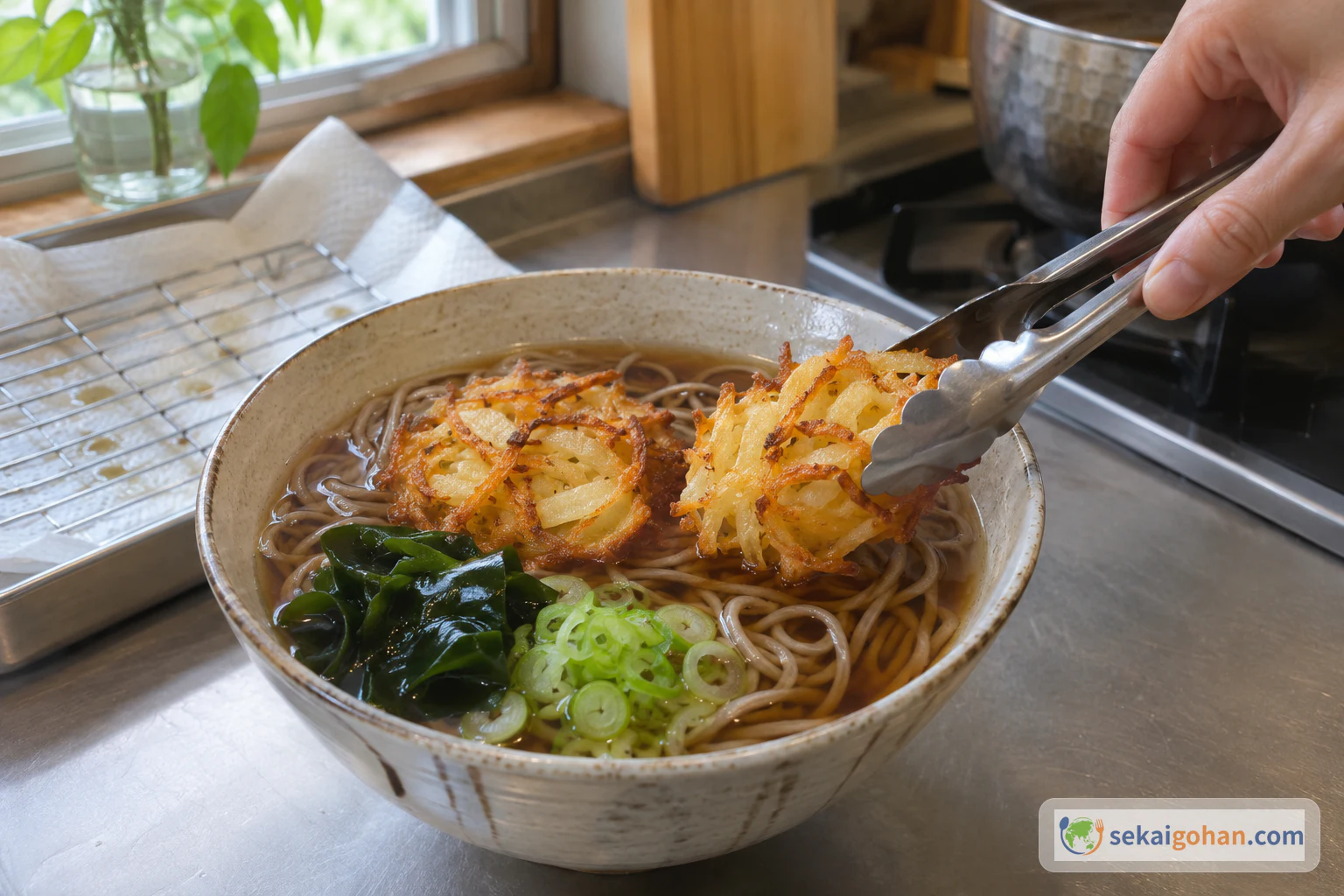
Korokke Soba: Hot Soba in Broth Topped with Potato Croquettes (コロッケそば)

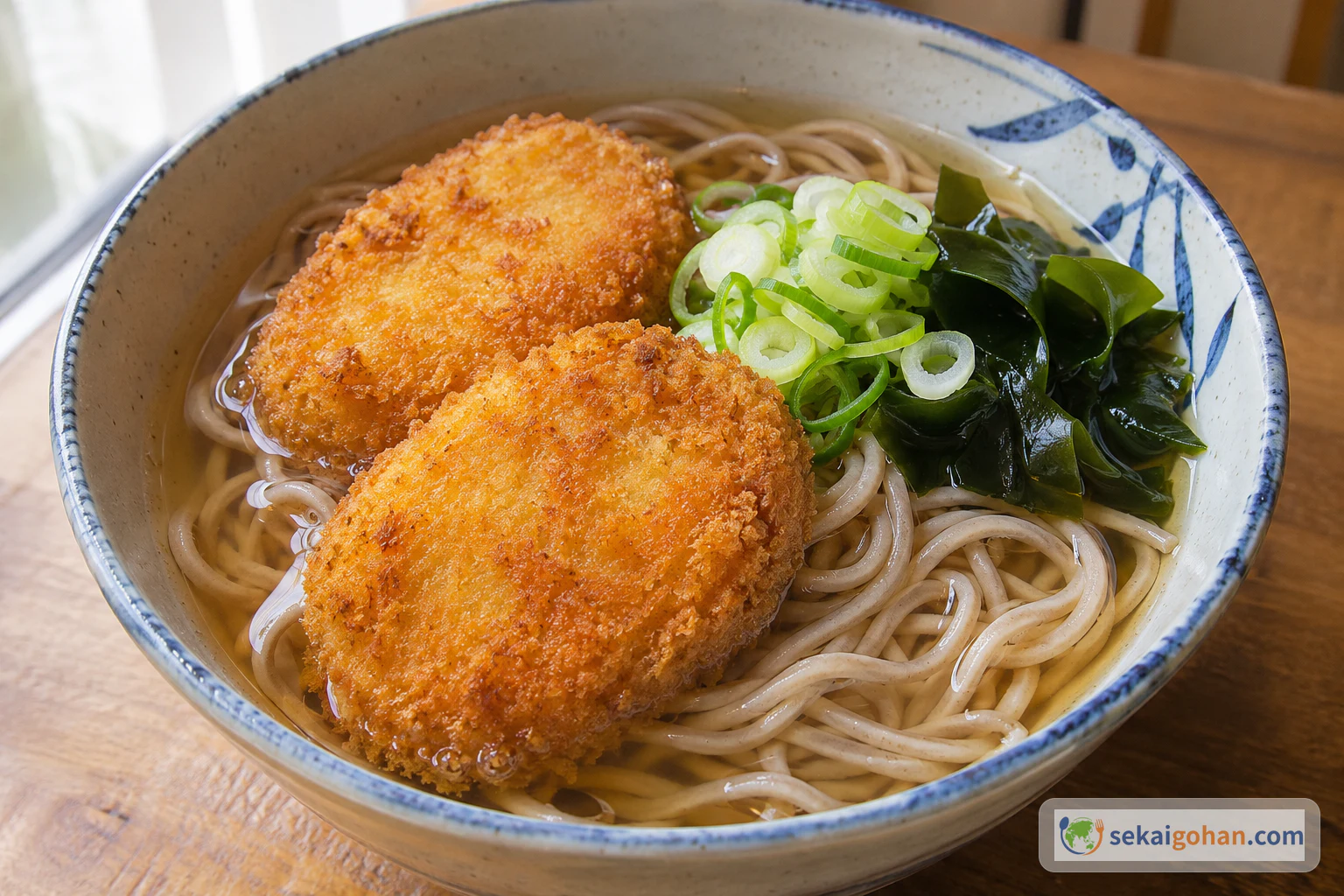
Korokke soba: two fried potato croquettes on a bowl of hot soba in broth
Serves
1 serving
Cuisine
Japanese

How to make korokke soba (コロッケそば), a single bowl of hot soba in white-dashi broth topped with two potato-and-onion croquettes. Covers amounts for one serving, the coating order, frying at 200°C until golden, when to place the croquettes so the coating behaves the way you want, and how this potato version differs from the chicken, yam and egg patty that shares the same name.

Cooking flow

Cooking steps

STEP11 / 8

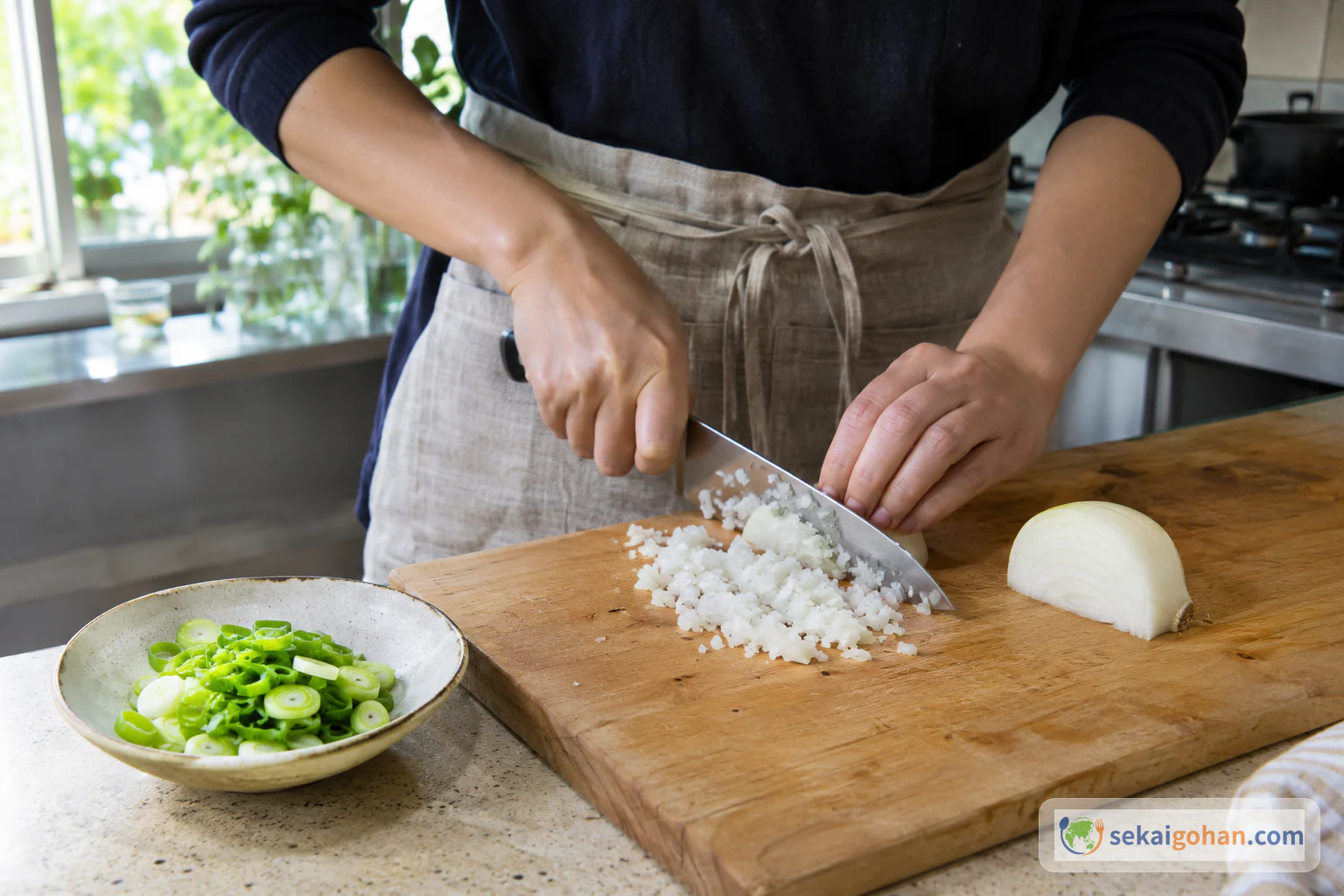
Cut the onion and long green onion, and set up two stations

Mincing onion, with the long green onion already sliced into thin rounds
Mince the onion; keep the sliced green onion aside for topping

Mince the onion. Slice the long green onion into thin rounds and set it aside for topping. Set up the pot of water for the soba and the frying station in separate places, so the noodle water stays well away from the hot oil.

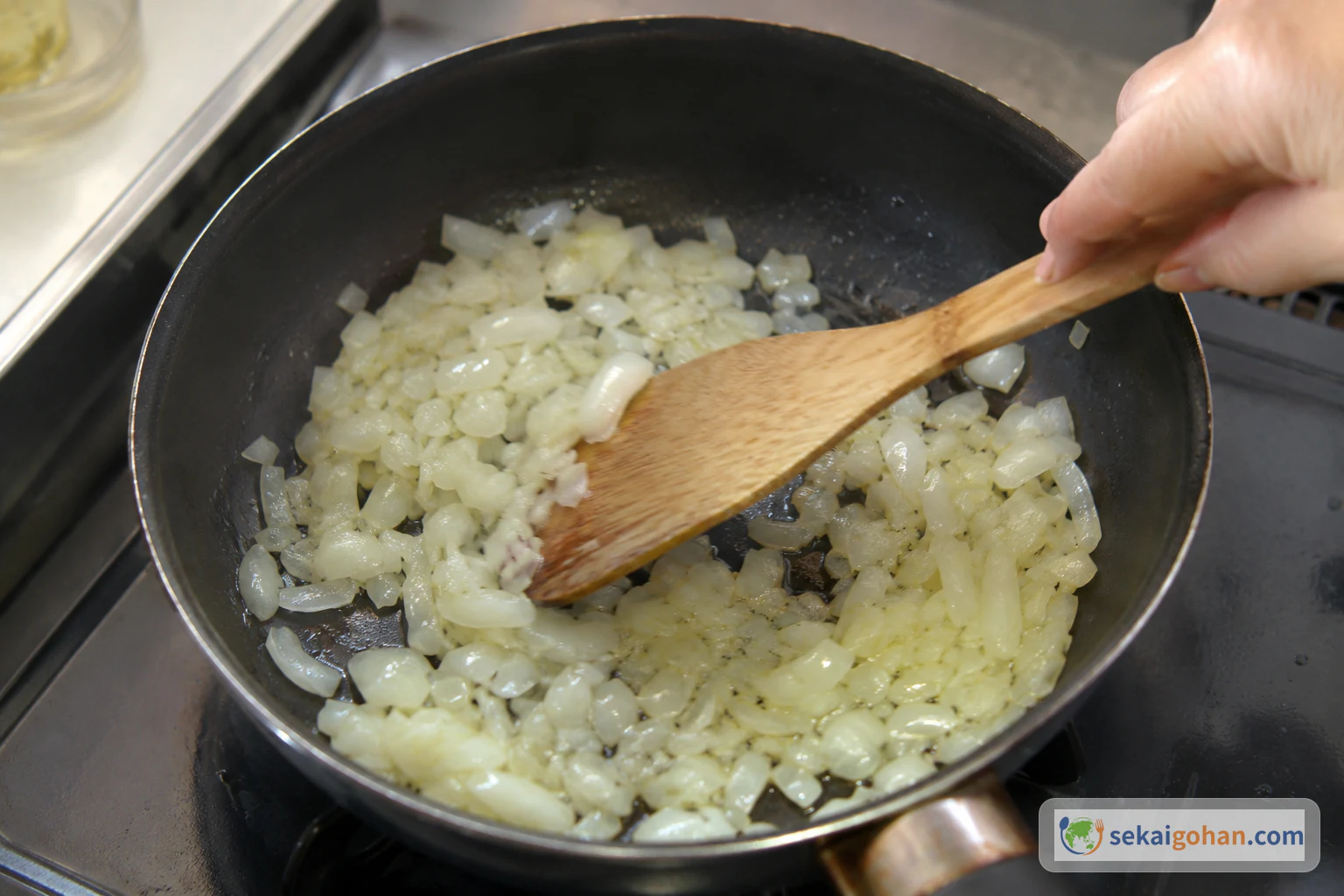
STEP22 / 8

Sauté the onion until soft

Sautéing minced onion in 1/2 tsp oil until soft
Cook the onion until soft, then let it cool slightly

Heat 1/2 tsp salad oil in a skillet and sauté the minced onion over medium heat until it turns soft. Let it cool slightly.

STEP33 / 8

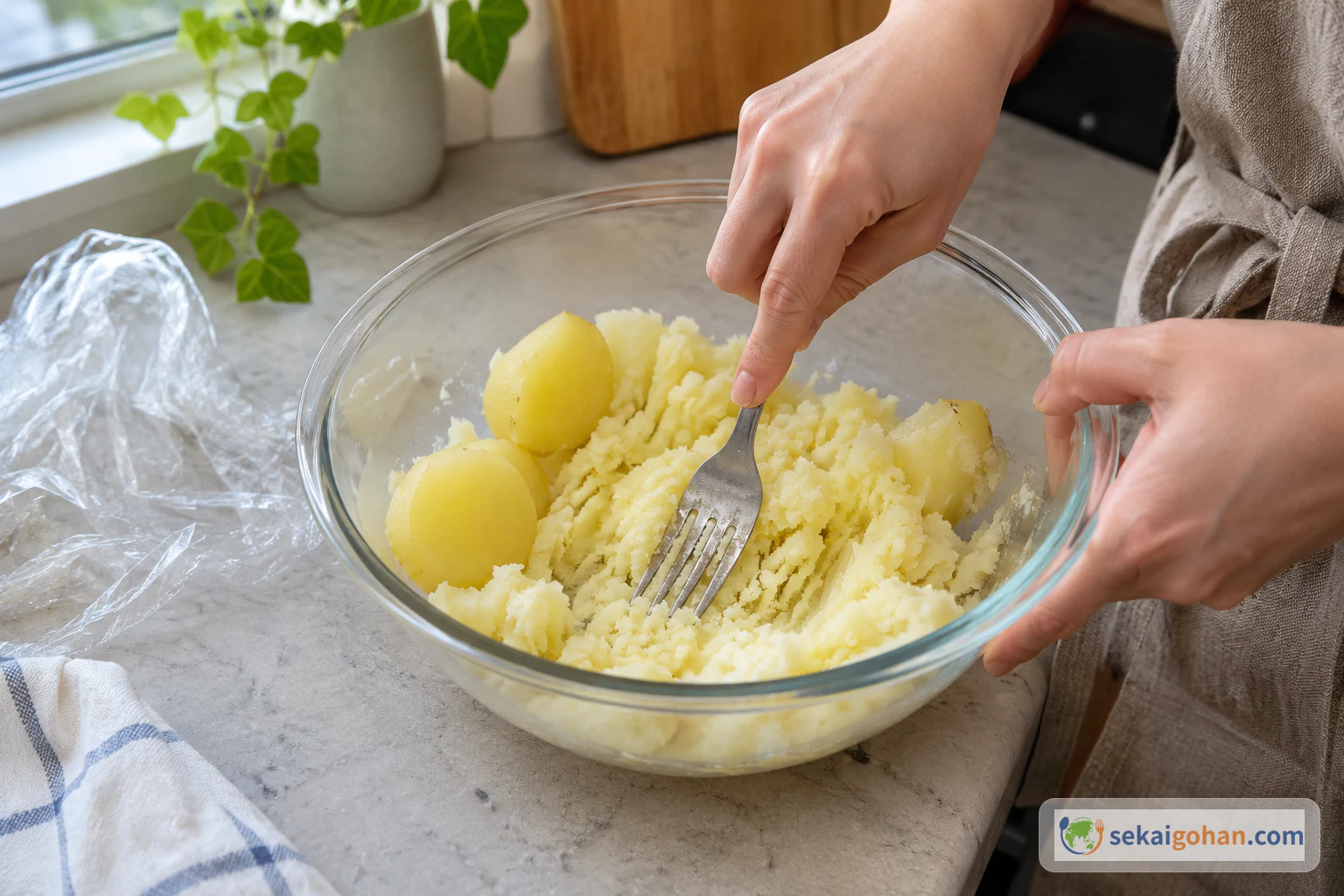
Microwave the potatoes and mash them while hot

Mashing microwave-softened potato with a fork while hot
Mash the potato while it is still hot

Remove the eyes from the potatoes and peel them. Put them in a heatproof bowl, cover loosely with plastic wrap and microwave at 500W for about 5 minutes, until soft enough that a fork slides in easily. While still hot, mash them with a fork, then let the mash cool slightly.

STEP44 / 8

Mix and shape two ovals

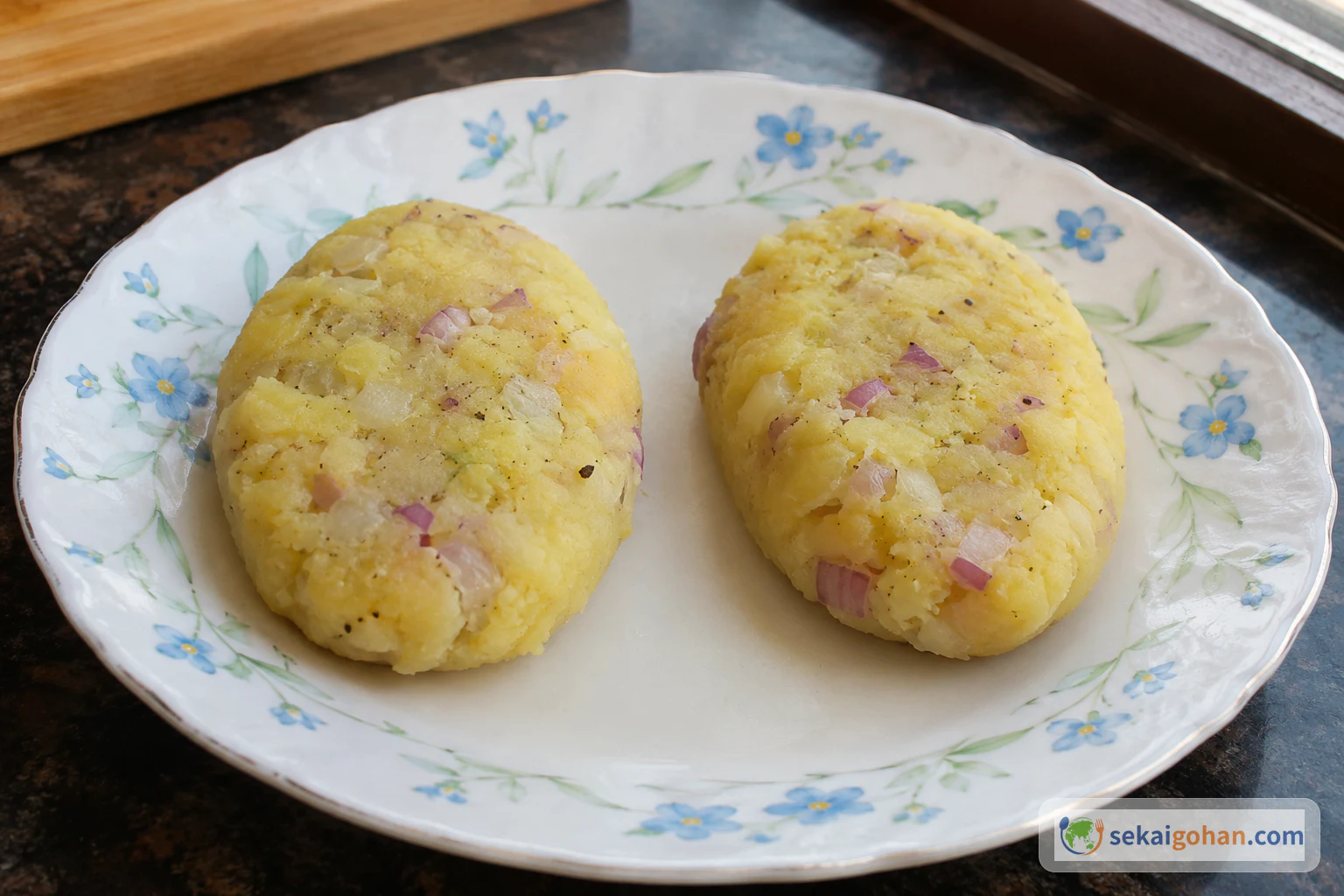
Two oval potato-and-onion patties shaped from the seasoned mash
Divide into two and shape into ovals

Add the sautéed onion and 1/4 tsp salt and pepper to the mashed potato and mix. Divide the mixture into two equal portions and shape each into an oval.

STEP55 / 8

Coat with flour, egg, then breadcrumbs

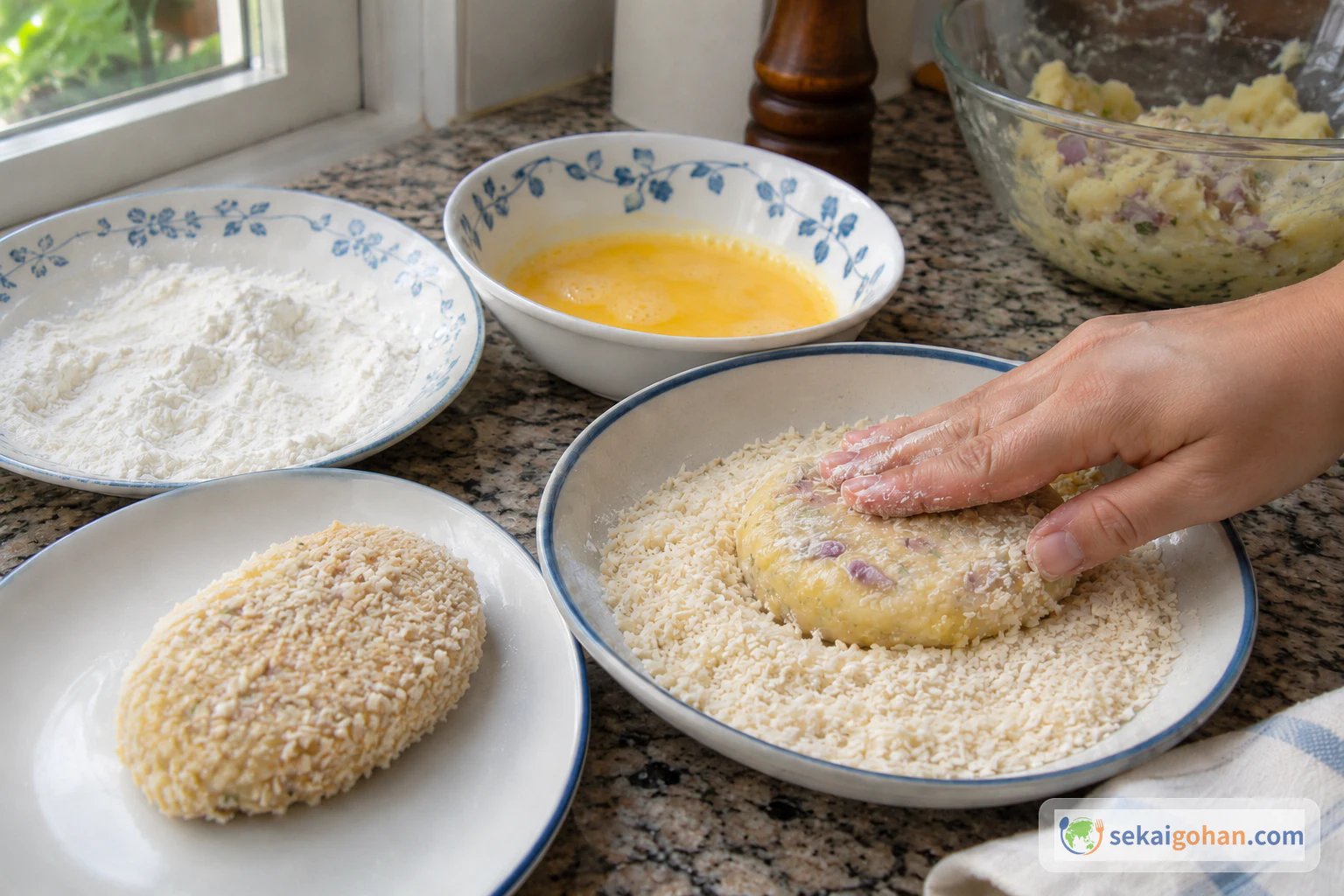
Coating the croquettes in flour, beaten egg and breadcrumbs, in that order
Flour, then egg, then breadcrumbs

Using 1 tbsp flour, 1 beaten egg and 2 tbsp breadcrumbs for the two patties, coat each patty in flour, then dip it in the egg, and finally press it into the breadcrumbs.

STEP66 / 8

Fry at 400°F (200°C) until golden

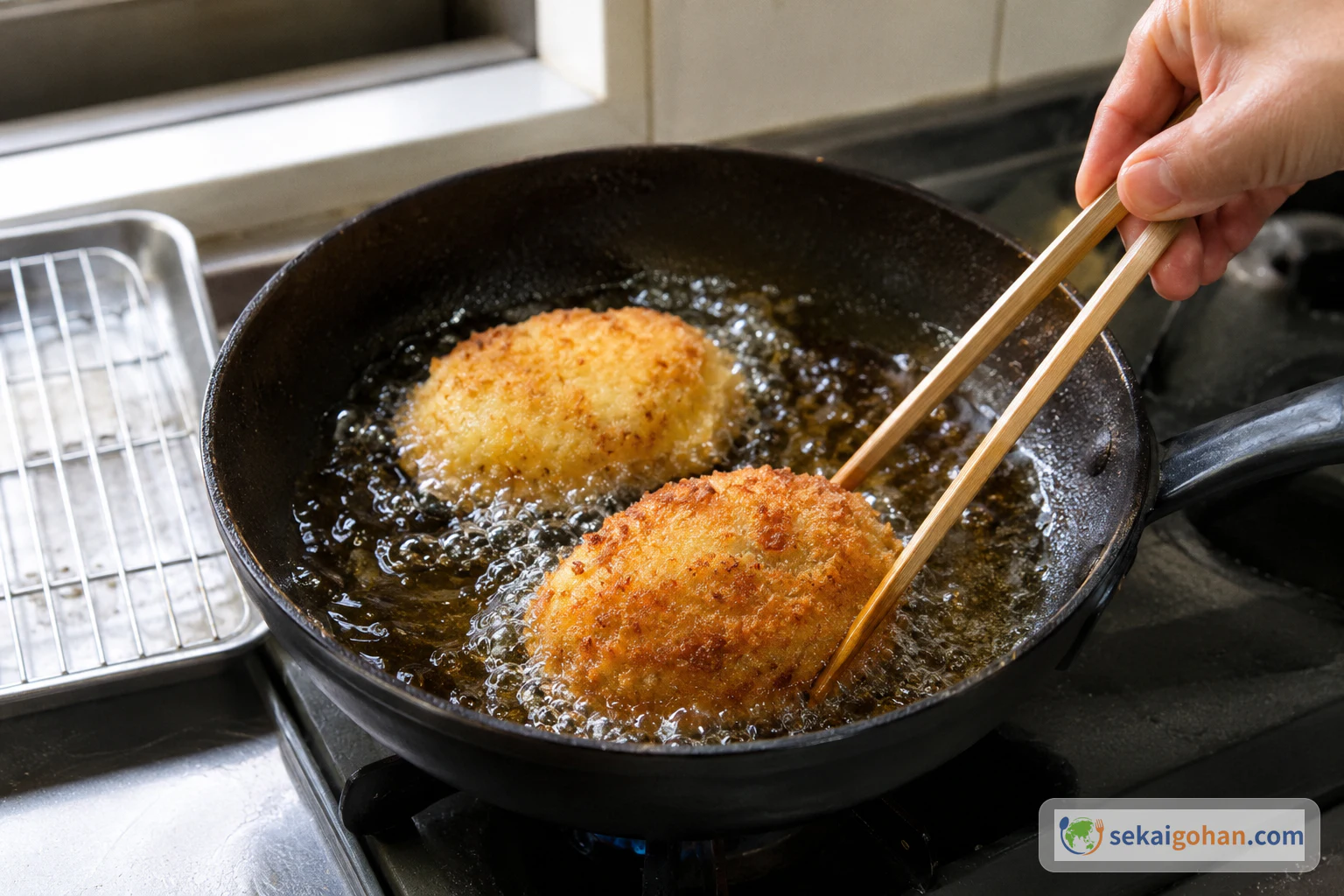
Frying the coated croquettes in 200°C oil until golden
Fry until golden, then drain well

Heat the frying oil to 400°F (200°C). Gently slide in the croquettes and fry until golden brown. Lift them onto a wire rack or draining tray and let the oil drain off. Stay at the pot the whole time you are frying, and keep water and wet ingredients away from the oil.

STEP77 / 8

Boil the soba and bring the broth to a boil

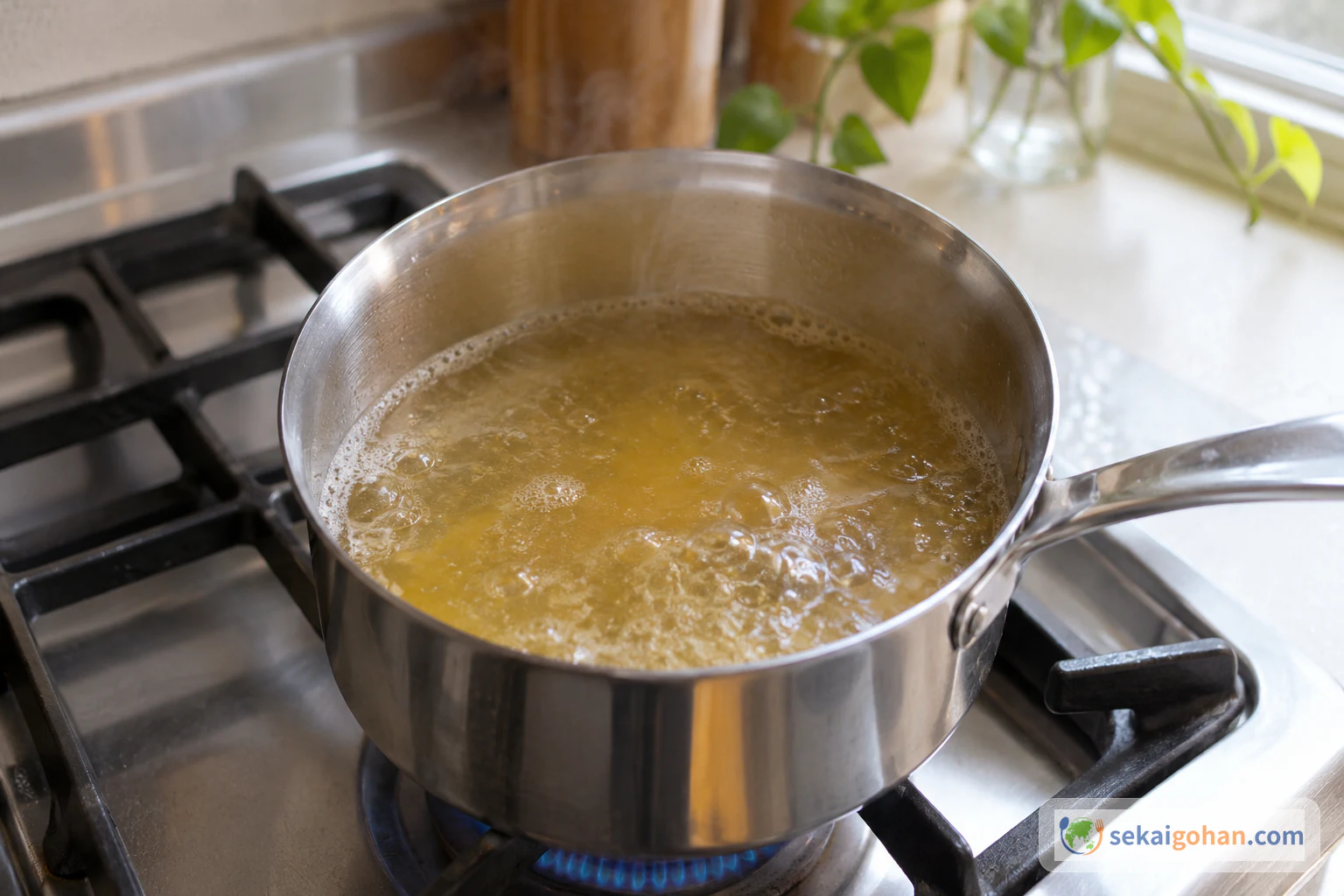
Broth of white dashi and water coming to a boil in a saucepan
The broth boils in its own pan; the soba is boiled separately according to the package

In a separate pot, boil the dried soba according to the package and drain it. In a saucepan, combine 2 tbsp (30 ml) white dashi and 1¼ cups (300 ml) water and bring it to a boil. You can do these alongside the frying, but don't leave the cooked noodles sitting in the broth for long.

STEP88 / 8

Assemble and serve right away

Placing a drained croquette on the bowl of soba, broth, wakame and green onion
The croquettes go on last, just before serving

Put the soba in a bowl and pour over the broth. Add the wakame and the long green onion, then place the two drained croquettes on top and serve right away. The coating takes up broth the longer it sits, so don't assemble the bowl early.

0 / 0
Ingredients

Ingredients

1 / 1

Ingredients

Ingredient Amount Role
Dried soba noodles (干しそば) 3.5 oz (100g) The noodles. Boil according to the package
Water for boiling the soba as needed For cooking the noodles
Potatoes (じゃがいも) 2 (7 oz / 200g total) The body of the croquettes. Peel and remove the eyes
Onion (玉ねぎ) 1/4 (1.75 oz / 50g) Minced and sautéed until soft, mixed into the potato
Salad oil (サラダ油) 1/2 tsp For sautéing the onion
Salt and pepper (塩こしょう) 1/4 tsp Seasoning for the croquette mixture
Soft wheat flour (薄力粉) 1 tbsp First layer of the coating
Beaten egg (溶き卵) 1 egg Second layer of the coating
Breadcrumbs (パン粉, panko) 2 tbsp Outer layer of the coating
Frying oil (揚げ油) as needed For frying the croquettes
White dashi (白だし) 2 tbsp (30 ml) Broth base
Water 1¼ cups (300 ml) Combined with the white dashi for the broth
Long green onion (長ねぎ) 2 inches (5 cm) Sliced into thin rounds for topping
Fresh wakame (生わかめ) 10g Topping, added when you assemble the bowl
0 / 0

A golden croquette lands on a bowl of steaming soba. At first the breadcrumb coating is crisp, but where it touches the broth it begins to soften and loosen, and as you eat, the potato inside slowly mingles with the noodles and the broth. That's korokke soba: hot soba in a light white-dashi broth, finished with long green onion and fresh wakame and crowned with two oval potato and onion croquettes. Eat it the moment it's made, so time things so the croquettes come out of the oil just as the noodles and broth are ready.

What Korokke Soba Is

Korokke soba is a croquette placed on kake soba, plain soba in hot broth. The version here is the potato type, the one commonly found at station soba stands: mashed potato and sautéed onion, breaded and fried. Croquettes came to Japan and spread as home cooking and as ready-made deli food, which goes a long way toward explaining how one ended up on a bowl of noodles.

The same name doesn't always mean the same topping, though. At Yoshida in Ginza, the "korokke" in korokke soba is a fried, tsukune-like patty of chicken bound with grated yam and egg, with different ingredients and a different texture from the potato kind. A dish of this name with a fried patty of chicken, yam and egg also appears in an essay from 1898.

If you want to see how this bowl sits among other dishes from the same country, browse more Japanese recipes. For another hot noodle bowl built on noodles and broth, compare tonkotsu ramen, and for another Western-style dish that settled into Japanese home cooking, see Japanese curry rice.

Ingredients (1 Serving, 2 Croquettes)
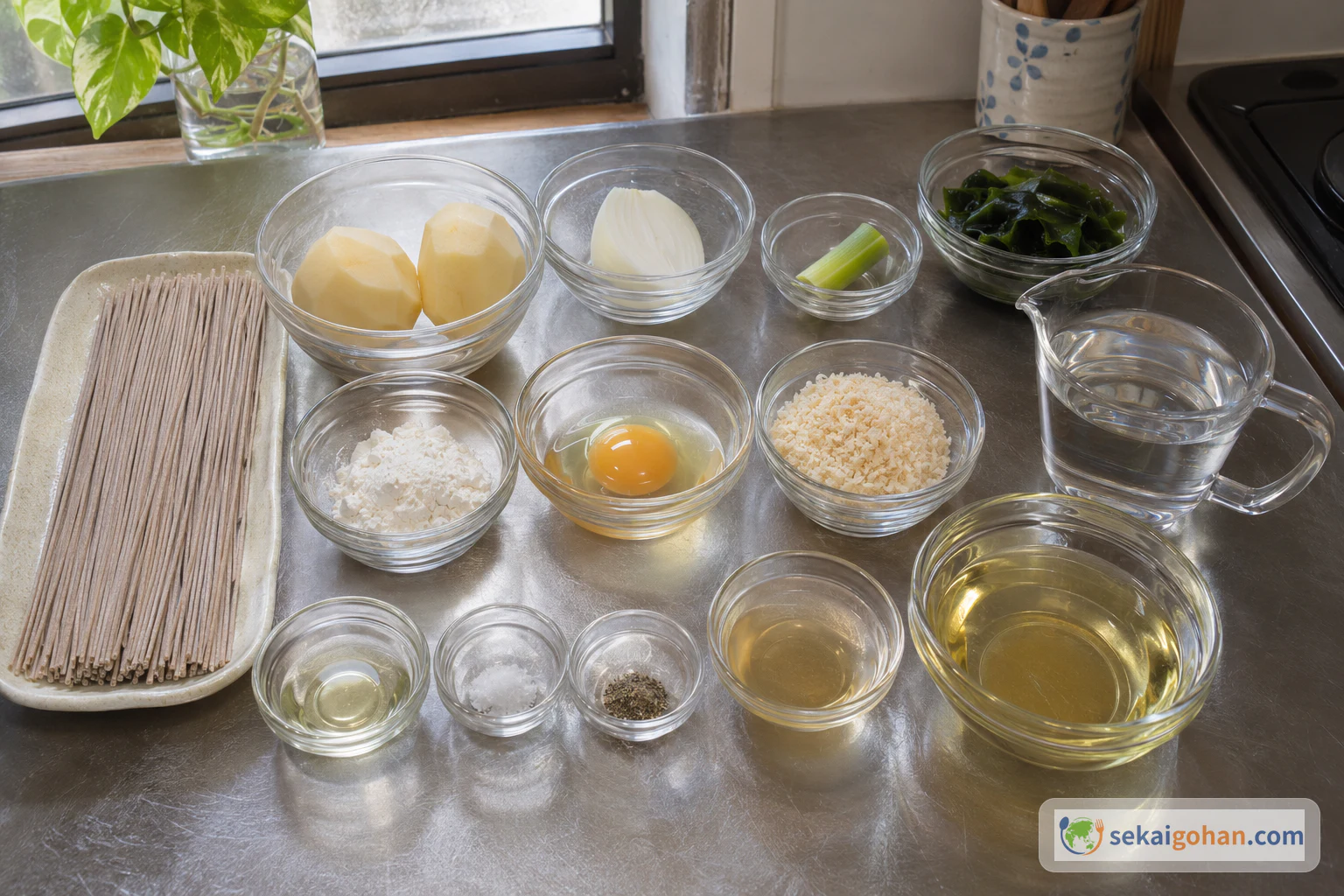
One serving of korokke soba ingredients: soba, potatoes, onion, coating ingredients, white dashi and garnishes
Keep the small amount of oil for the onion separate from the frying oil

The oil for sautéing the onion and the oil for frying are listed separately.

White dashi strength differs by product. If your bottle gives a different dilution, follow the label. Set aside any leftover flour, egg and breadcrumbs.

The wakame here is fresh wakame ready to eat, not dried weight. If you use a dried or salted product instead, prepare it as its package directs.

Allergens and frying safety

This dish contains buckwheat (soba), wheat (noodles and coating) and egg. Many dried soba noodles also contain wheat, and white dashi can contain fish, soy and other ingredients, so check the label on each product you buy.

While frying, never leave the pot. Water getting into hot oil can make it boil up violently and spatter, so pat off excess moisture and never drop wet ingredients into the oil. If the oil catches fire, never pour water on it.

Equipment

  • Knife and cutting board
  • Skillet for the onion
  • Heatproof bowl and plastic wrap
  • Microwave (500W setting)
  • Fork for mashing
  • Three shallow dishes for flour, egg and breadcrumbs
  • Deep pot for frying
  • Thermometer for the frying oil (optional)
  • Wire rack or draining tray
  • Chopsticks or tongs
  • Pot and colander for the soba
  • Saucepan for the broth
  • Serving bowl

Choosing Ingredients for Korokke Soba

Dried soba. Buckwheat and wheat content vary from brand to brand, so read the ingredient list, especially if anyone at the table has an allergy. Fresh soba works too; just cook it according to its own package rather than using the dried-noodle timing.

White dashi. This is the one ingredient where the bottle in your hand decides the amount. Start from 2 tbsp (30 ml) to 1¼ cups (300 ml) water, but if the label calls for a different ratio, follow the label.

Potatoes. No particular variety is required. Potatoes differ in moisture and in how floury they are, which changes how the mash feels and holds together, so judge the mixture by its texture rather than by the name on the bag.

Ready-made croquettes. If you'd rather not fry at home, a store-bought fried potato croquette makes a quick bowl. Reheat it the way the product's label directs and place it on top at the end.

Thermometer. A thermometer is optional, but it's the simplest way to check that the oil has reached 400°F (200°C). The color of the croquettes alone won't tell you the oil temperature.

How to Make Korokke Soba

Timing the bowl

Plan so the croquettes come out of the oil just as the noodles are drained and the broth has boiled. The croquette goes on last, right before serving.

Troubleshooting Korokke Soba

Problem Likely cause What to do
Patties are hard to shape or fall apart The mash or onion was still hot, or the potatoes were watery Let both cool slightly before mixing and shaping, and judge by how the mash holds together
Coating slips off in the oil Gaps in the flour or egg layer Coat the whole surface with flour, then egg, then press the breadcrumbs on firmly
Oil spatters Moisture on the croquettes or utensils Keep everything going into the oil dry, and keep the noodle water and broth away from the frying station
Croquettes color unevenly or slowly The oil is not at temperature Check the oil with a thermometer before frying
The croquette goes soggy before you eat It was placed on the bowl too early Place the croquettes last, right before serving, or serve them on the side
Broth tastes too strong or too weak White dashi strength varies by product Follow the dilution on your bottle's label

Serving Korokke Soba: Crisp or Soaked Through

How the croquette eats comes down to when you place it and how fast you eat. Right after it goes on, the coating above the broth stays crisp while the underside starts to soften. As the minutes pass, more of the coating takes up broth and loosens, and the potato begins to blend into the soup.

If you like the crunch, put the croquettes on at the very last moment and start with them. If you like the softened, broth-soaked version, let the bowl sit briefly before you dig in. Both are good, so it really is your call.

For the most control, serve the croquettes on a separate plate and dip them into the broth bite by bite. This is a serving choice rather than a traditional regional style.

Frequently Asked Questions

Can I make it ahead?

No, it's best freshly made. Fry, boil and assemble it right before you sit down to eat.

How long should the croquettes fry?

Fry in oil at 400°F (200°C) until the croquettes are golden brown. Keep water away from the hot oil, and never pour water on an oil fire.

What should I check when I substitute the soba or the white dashi?

Read the package labels. Check each product for buckwheat, wheat, egg and anything else that matters to you, and follow the dilution printed on your white dashi bottle.
Sources

  • Kurashiru, "コロッケそば 作り方・レシピ" (Korokke soba recipe). The one-serving recipe used for all amounts and steps: dried soba, potato-and-onion croquettes, coating order, frying at 200°C until golden, white dashi broth, assembly, the note that white dashi strength differs by product, and the recommendation to eat it freshly made. https://www.kurashiru.com/recipes/e4edb398-bf06-48fd-9214-d92675aeee34
  • GINZA OFFICIAL (Zen-Ginza-Kai), "よし田コロッケそば伝説" (The legend of Yoshida's korokke soba). Used only to distinguish the chicken, grated yam and egg patty at Yoshida in Ginza from the common potato type; not a source for the origin of potato korokke soba or for the recipe. https://www.ginza.jp/column/7130
  • Kodansha, "コロッケ蕎麦" in 和・洋・中・エスニック 世界の料理がわかる辞典, on Kotobank. Used for the definition of korokke soba as a croquette on kake soba and for its mention of a chicken, yam and egg version in an 1898 essay; this is a dictionary summary, and the essay itself was not consulted. https://kotobank.jp/word/%E3%81%93%E3%82%8D%E3%81%A4%E3%81%91%E8%95%8E%E9%BA%A6-1494899
  • Kazuo Asama (Hokuren), "ジャガイモ――コロッケ考" (Potatoes: thoughts on croquettes), Imoshin. A general article on croquettes in Japan and how potato moisture and texture affect the filling; not a source for korokke soba itself. https://imoshin.or.jp/imoshin-viewer/pdf/034014.pdf
  • National Research Institute of Fire and Disaster, Fire and Disaster Management Agency, "天ぷら油火災(消火器具)" (Tempura oil fires). Used for the dangers of water in hot oil, spattering from wet ingredients, and not pouring water on an oil fire; not a source for frying times or temperatures. https://nrifd.fdma.go.jp/public_info/faq/tenpura_shokaki/index.html
  • Consumer Affairs Agency, "食物アレルギー表示に関する情報" (Information on food allergy labeling). Used for the importance of checking allergen labels, including buckwheat, on packaged products such as dried soba and white dashi. https://www.caa.go.jp/policies/policy/food_labeling/food_sanitation/allergy/index.html