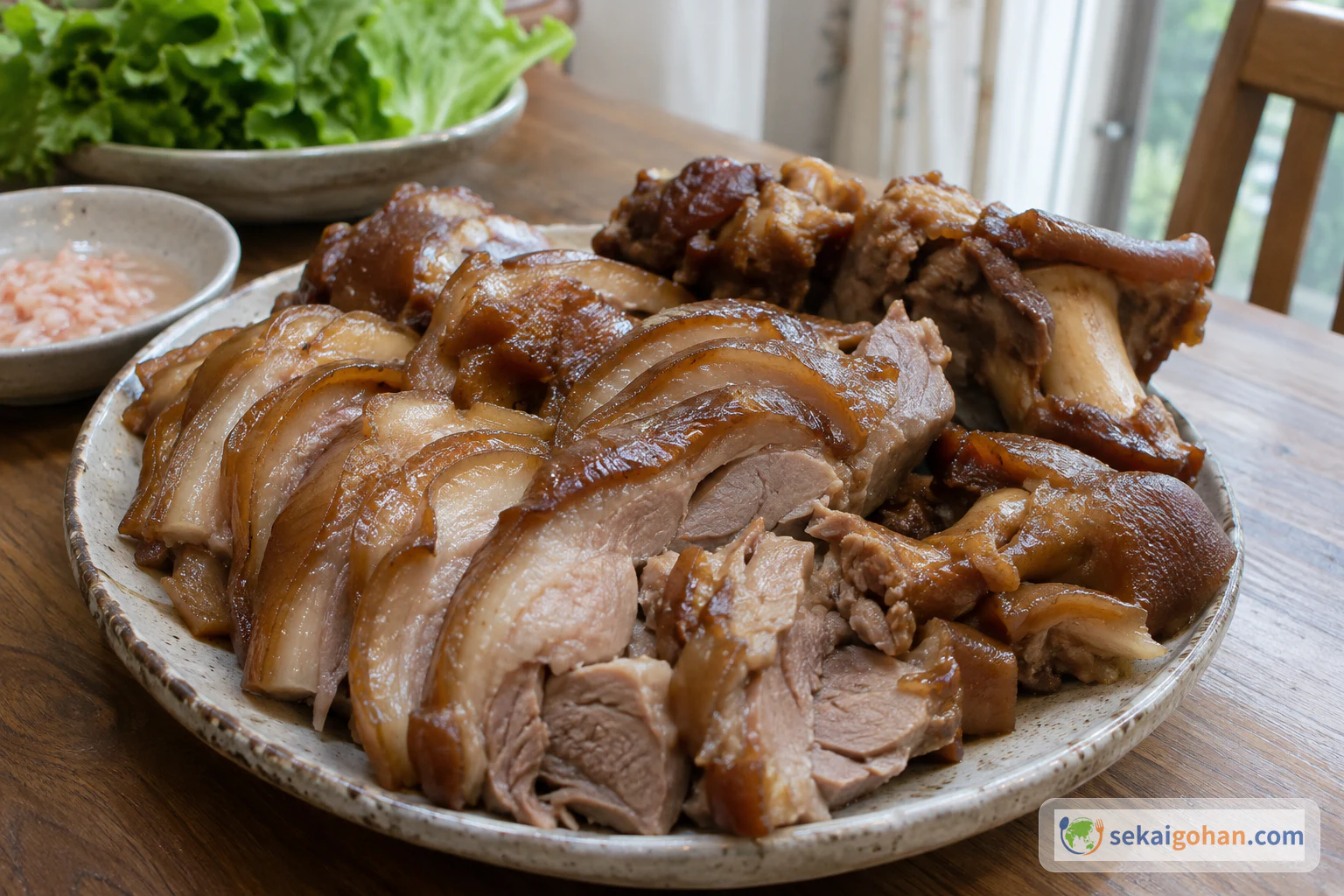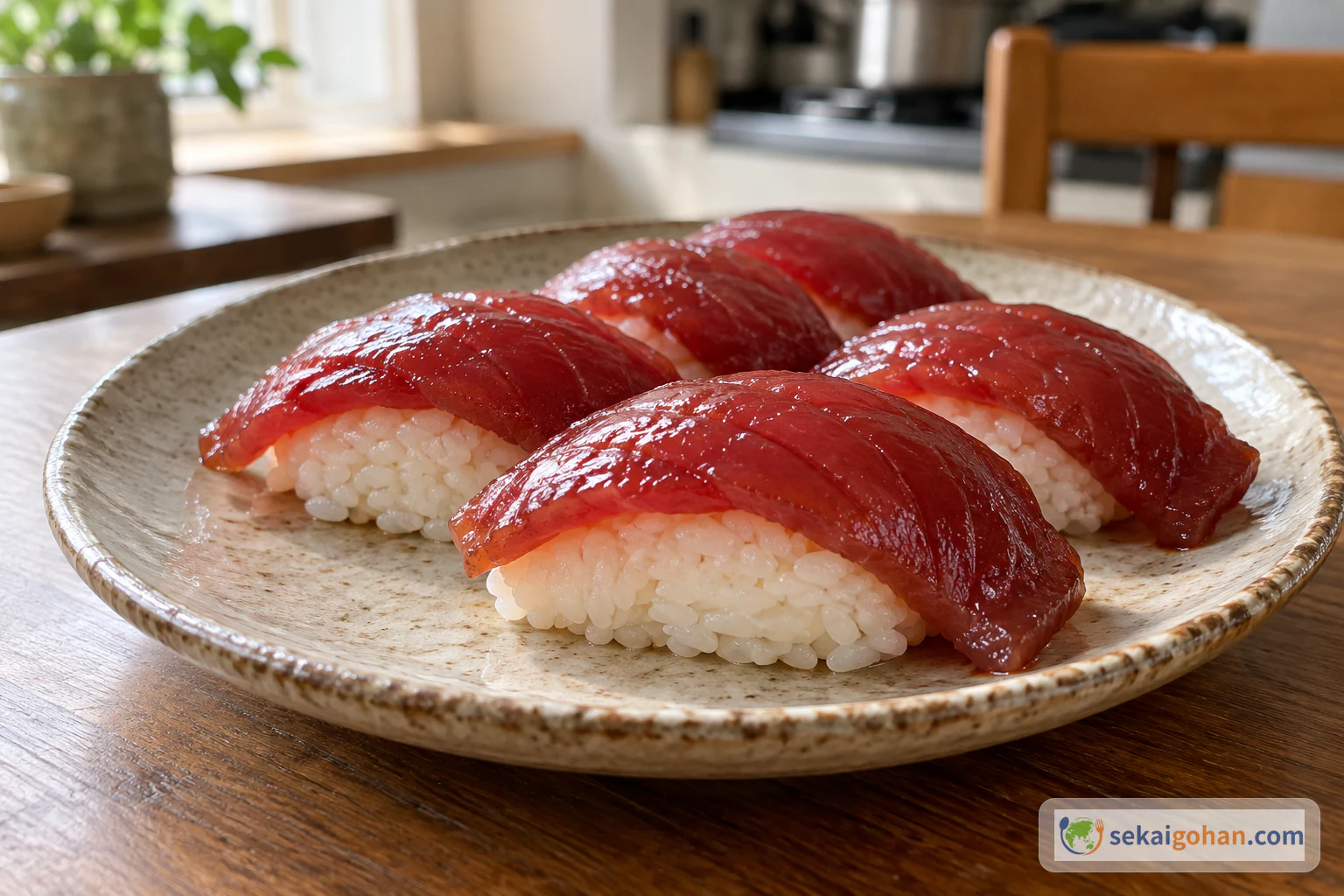
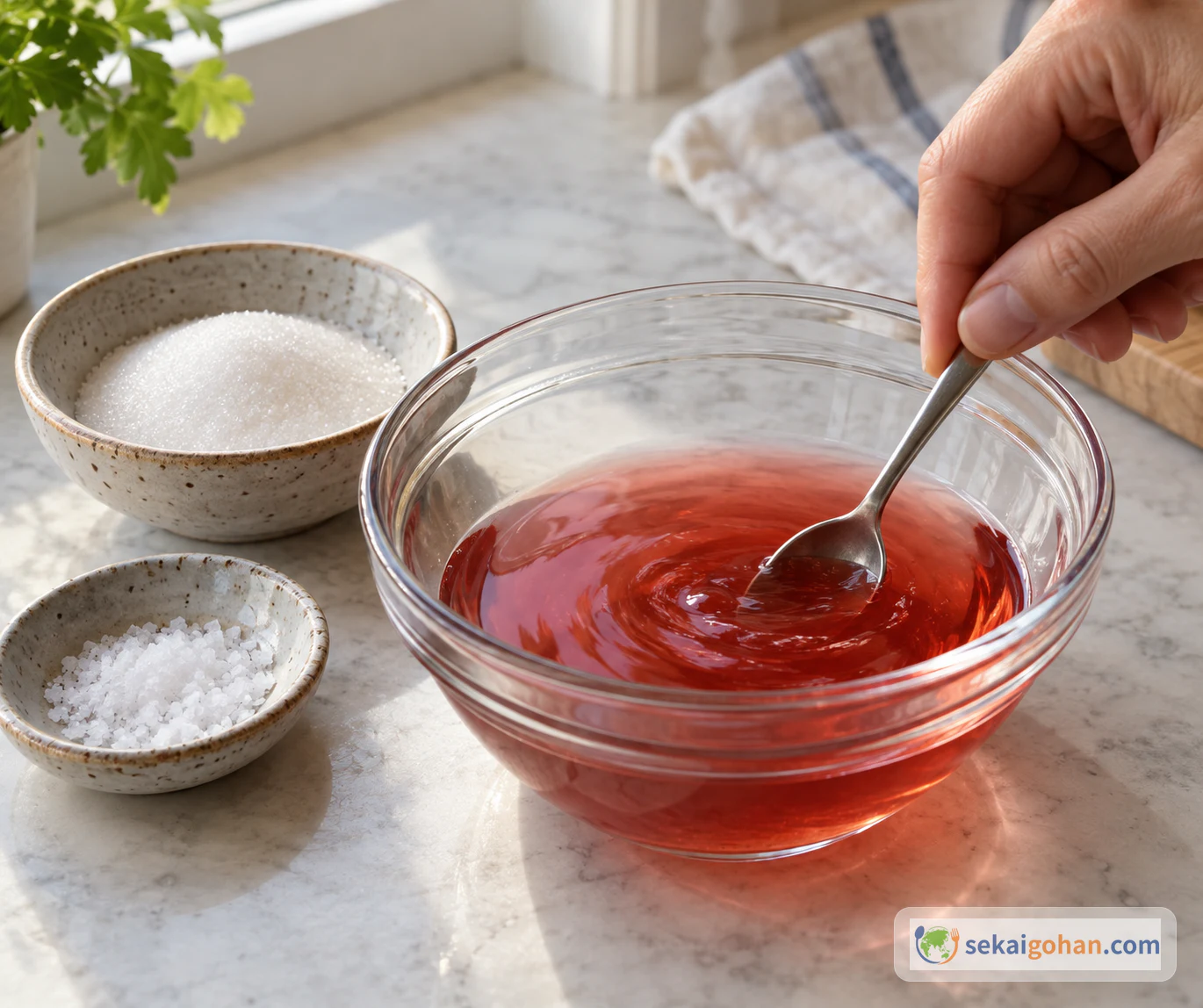
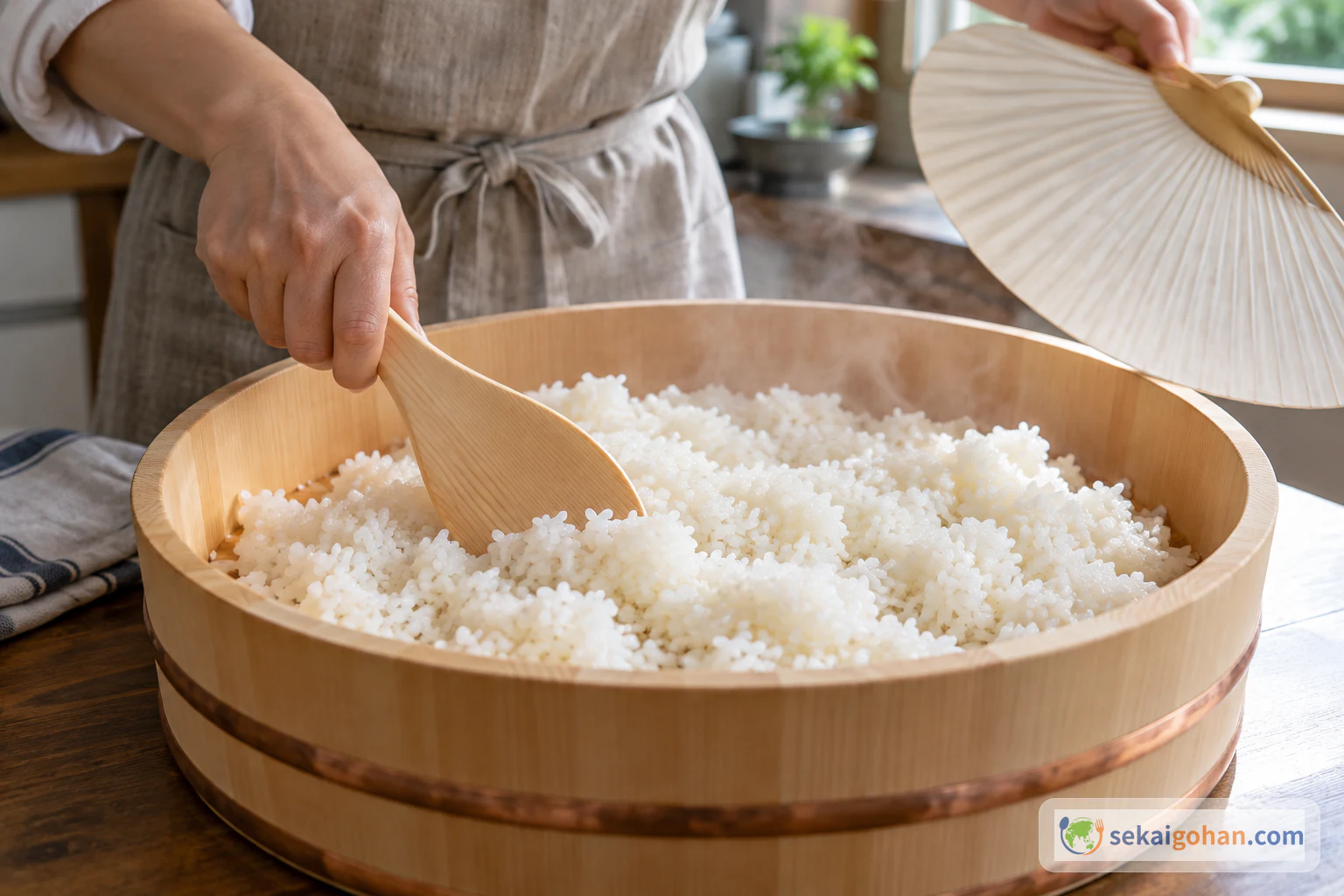
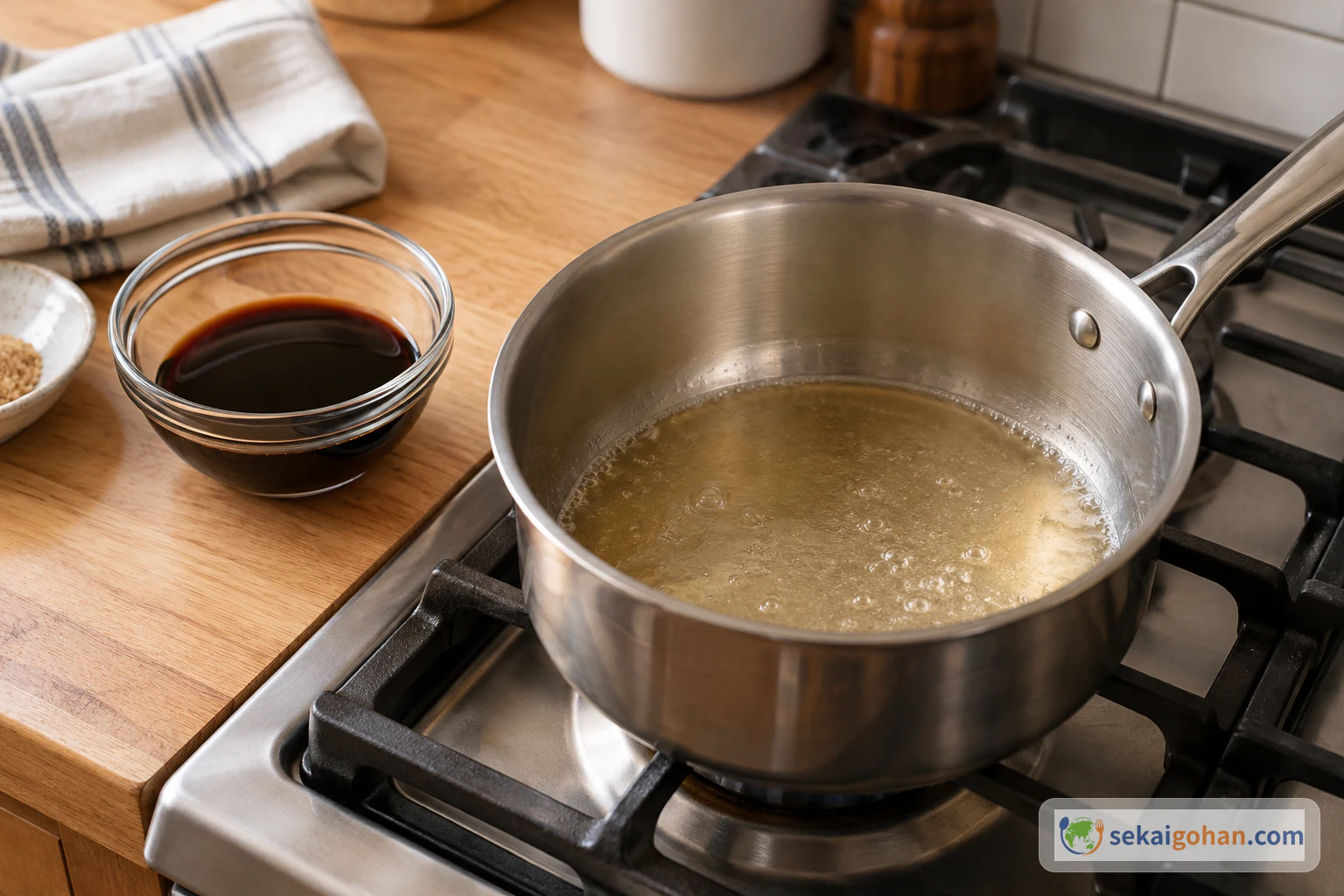
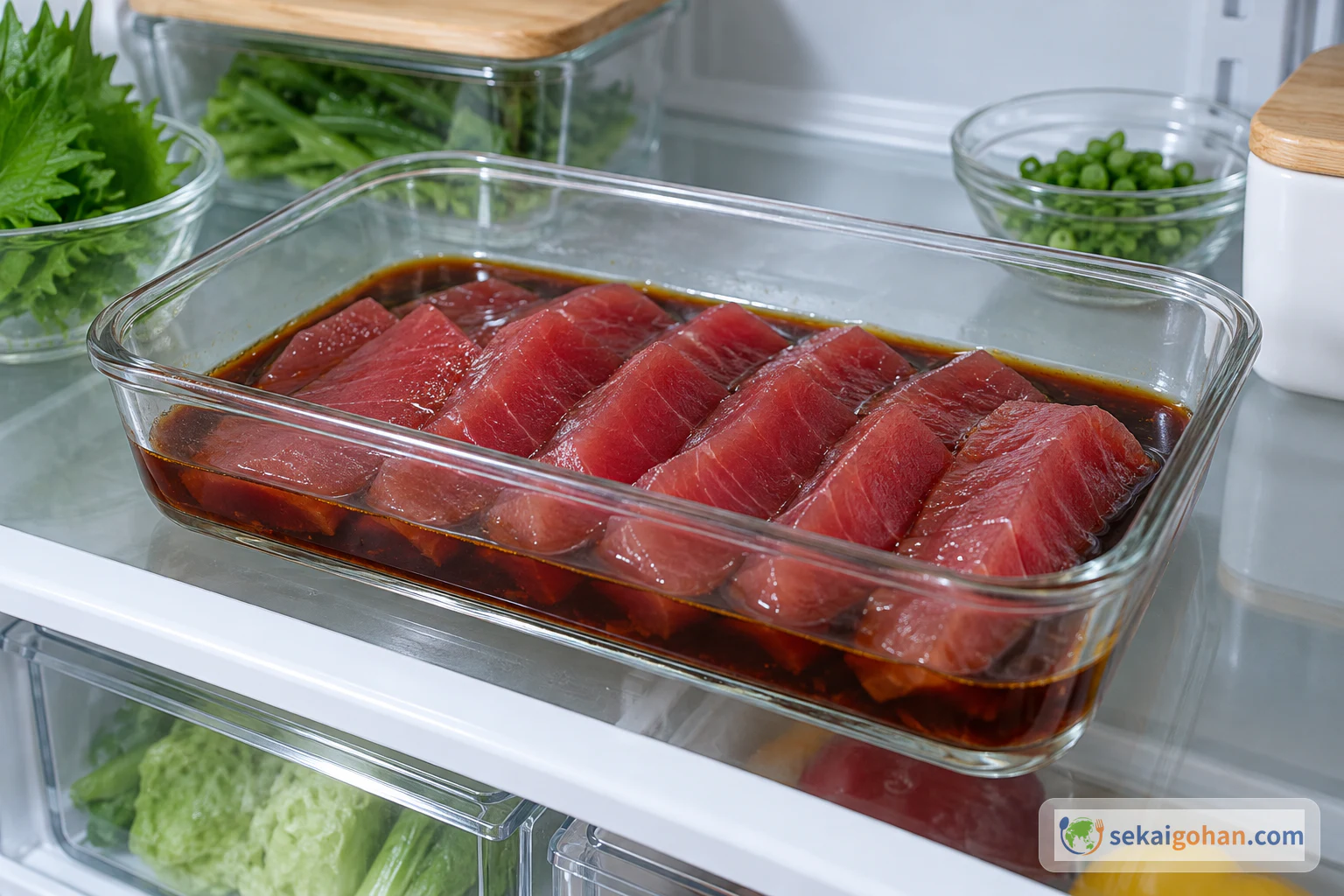
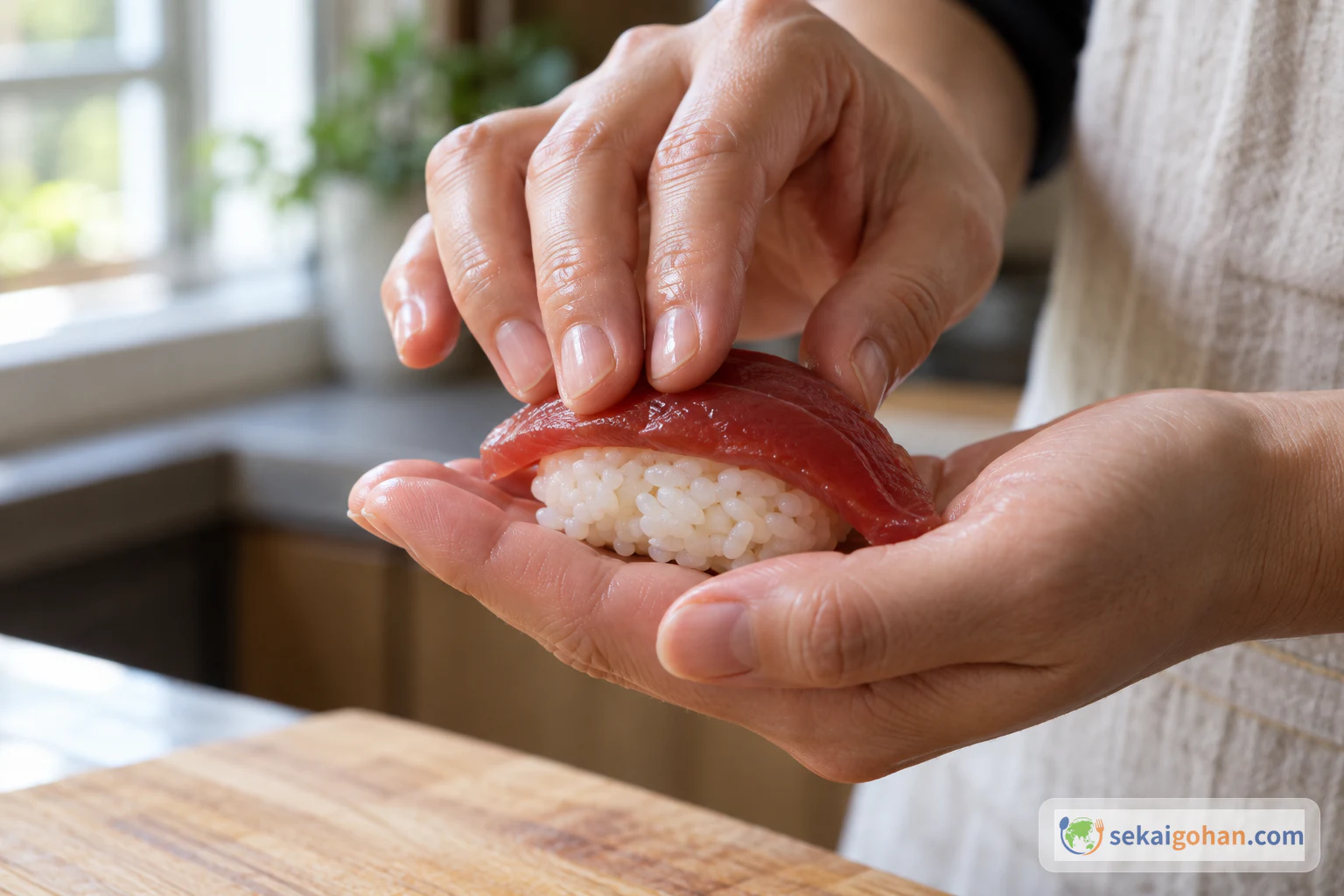
Glossy rice, seasoned while still hot and fanned until the grains shine but stay separate. On top, a slice of lean tuna that has spent a short time in a cooled soy-and-mirin tare. Each piece is shaped with a light hand, so it holds together without being packed into a block. This is home-style Tokyo nigiri: sushi rice seasoned with red vinegar and topped with zuke, marinated tuna. For more dishes from the same table, see Japan.
Tokyo Nigiri and the Edo-mae Tradition
The Many Forms of Sushi
Sushi is a whole family of forms: nigiri, rolled maki, hand rolls (temaki), chirashi scattered over a bowl, pressed sushi, narezushi, inari and more. Raw fish isn't even required. In Tokyo's Edo-mae tradition, many toppings are prepared before they meet the rice.
From Fermented Fish to Edo Street Food
Sushi began as narezushi, a preserved food of salted fish and rice in which the rice ferments and turns sour. Over time it changed through hayazushi ("quick sushi") and pressed sushi into nigiri. That fermented sourness is different from today's sushi vinegar, which is mixed into freshly cooked rice, and narezushi uses no seasoned vinegar in the modern sense.
By the late Edo period, nigiri was sold at street stalls in Edo, the city that became Tokyo. The rice under each topping was much larger than it is today, so a piece was closer to a filling snack than a delicate mouthful. Since then the attention has moved toward the topping, and the ways sushi is sold have multiplied.
Edo-mae Toppings
Edo-mae sushi is defined by more than red vinegar. It uses a range of preparations for toppings: curing fish, simmering, steaming, boiling, marinating in soy (zuke) and curing with kombu (kobujime). Simmered anago, steamed shrimp, tamagoyaki and cured fish all come from this way of working, and so does the marinated tuna here.
Beyond Tokyo, sushi spread across Japan and took in each region's own products, so forms and toppings differ from place to place.
Ingredients: Tokyo Nigiri for 3–4 Servings
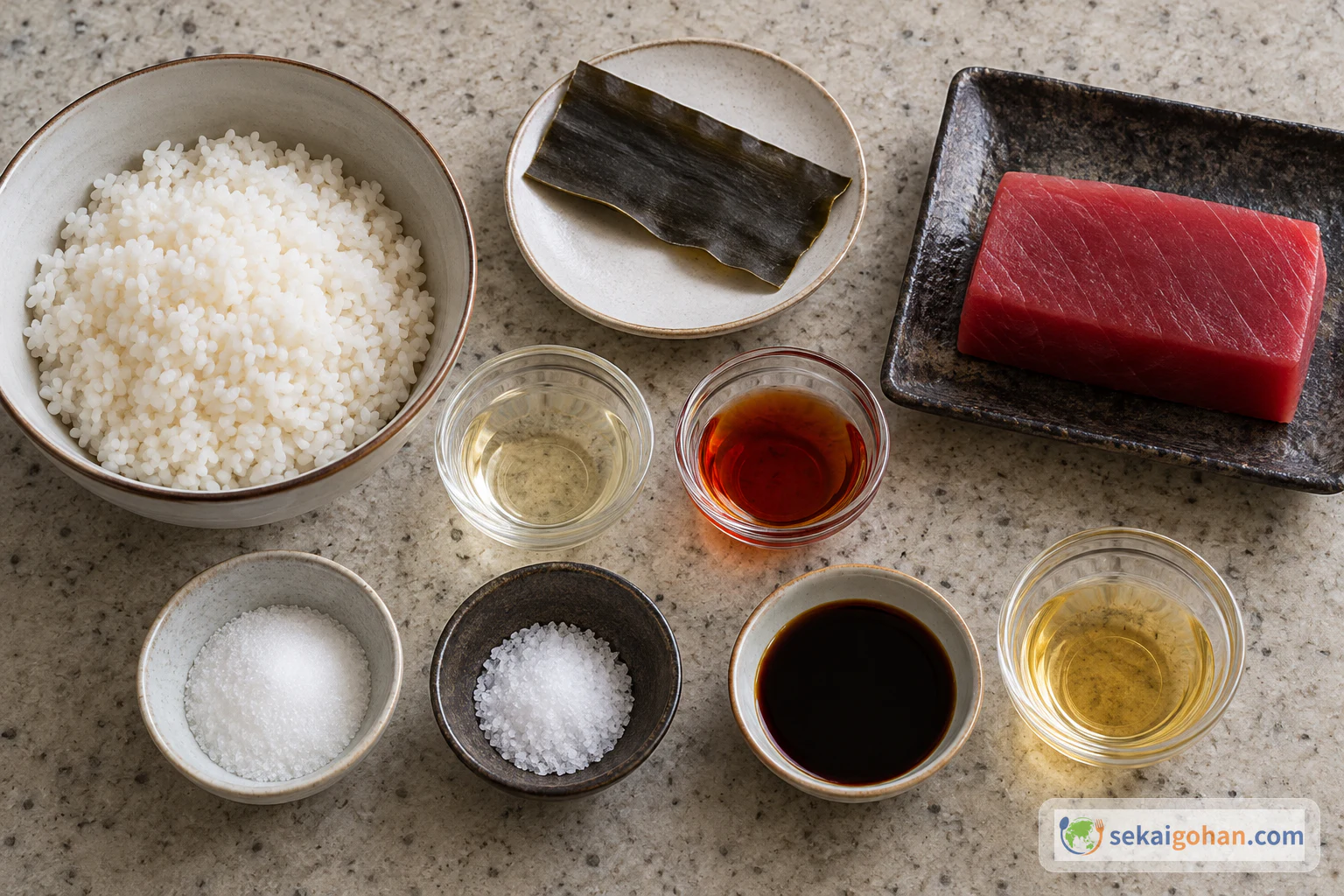
Rice is measured in gō, the Japanese rice-cooker cup (1 gō = 180 ml). The tuna is given as "1 saku," a trimmed block sold for sashimi.
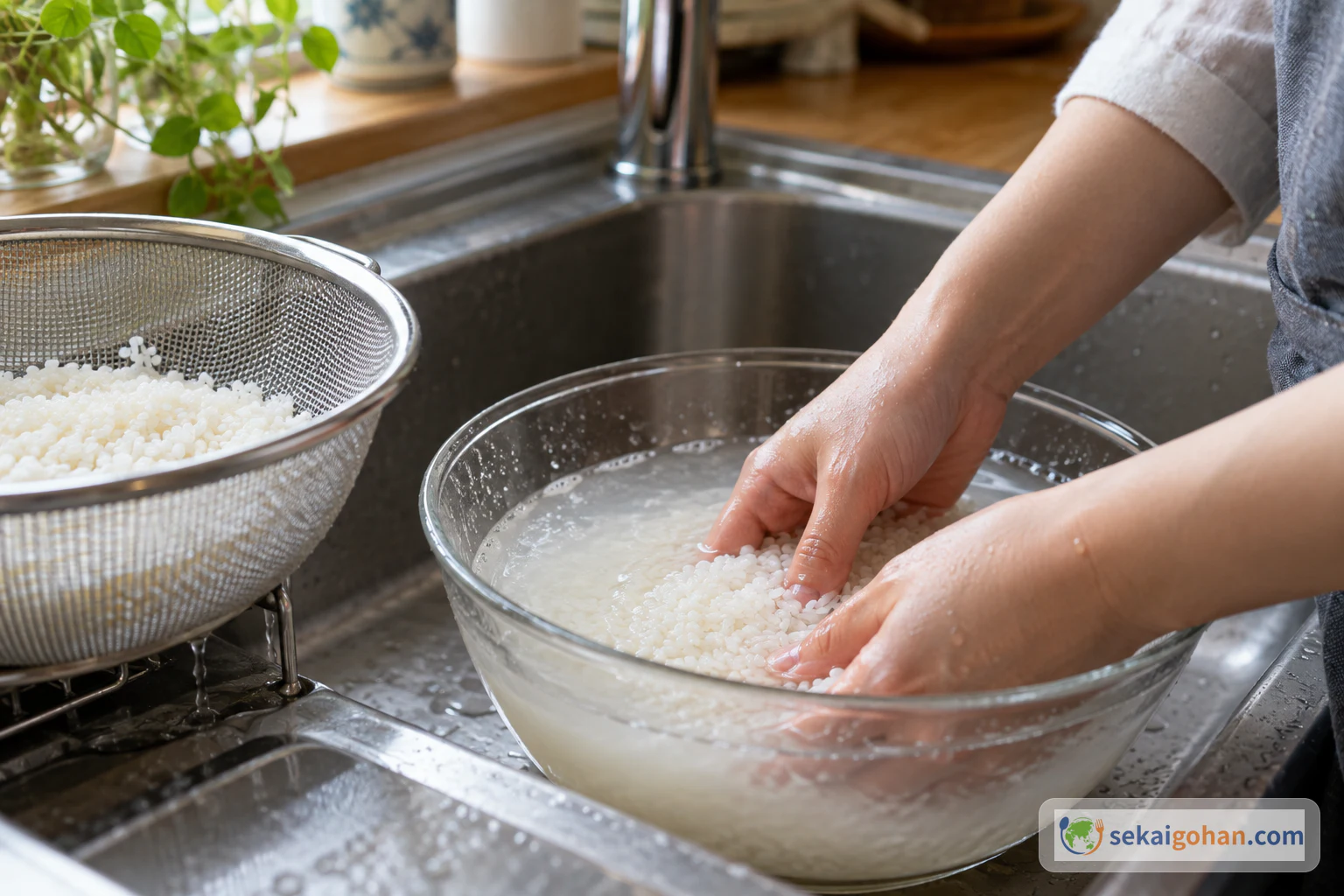
Keep some plain water on hand for the work: rinsing the rice, wiping the kombu, dampening a cloth, and, if you use it, a small bowl of water for your hands while shaping. This water is separate from the cooking water.
Dipping soy sauce for the table is separate too. Pour a fresh amount into a clean small dish when serving. Do not use the leftover from the 2 tbsp used in the marinade.
Equipment
- Bowl and fine-mesh sieve or colander for rinsing and draining rice
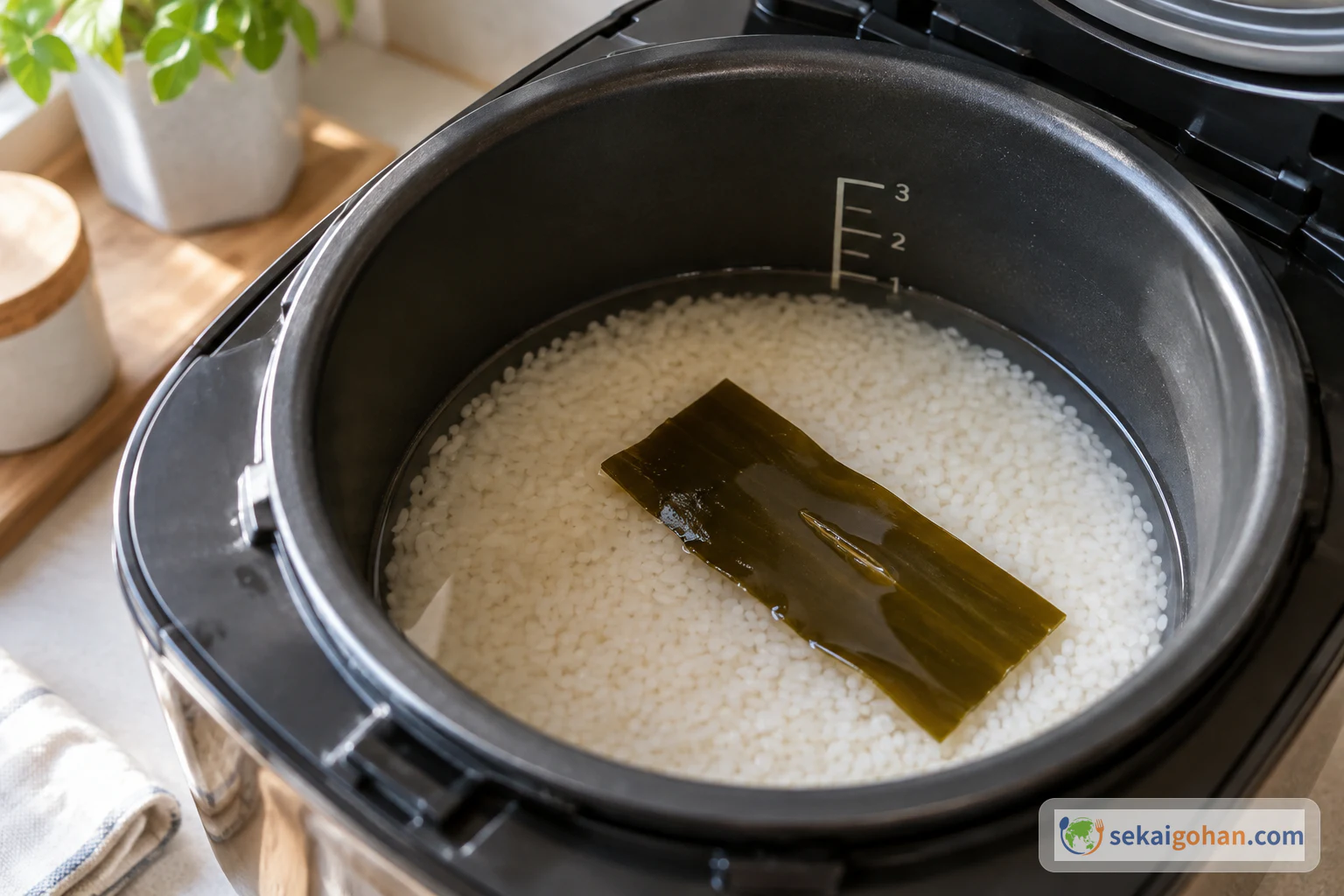
- Rice cooker with a marked inner pot
- Kitchen scissors (for slitting the kombu)
- Small bowl for the sushi vinegar
- Wooden sushi tub (hangiri) or a wide bowl
- Rice paddle (shamoji)
- Hand fan (uchiwa)
- Clean cloth, dampened and wrung out
- Small saucepan
- Sharp knife and cutting board for the tuna
- Shallow dish for marinating
- Measuring spoons and a rice measuring cup
Choosing Vinegar, Tuna and Seasonings for Nigiri
Red vinegar. Ordinary vinegar works if you can't find red vinegar. Use the same amount and method, but expect a different aroma; think of it as a substitute rather than an equivalent. Some sushi rice recipes use far more sugar, such as 2 tbsp for 2 gō of rice, while this one uses only 1/2 tsp.
Tuna. Buy a block sold for eating raw (sashimi grade) and keep it refrigerated from the moment you buy it. Look it over carefully before slicing instead of relying on the label alone.
Soy sauce and mirin. Use dark (koikuchi) soy sauce. Light (usukuchi) soy sauce changes both saltiness and color, so it isn't a one-to-one swap. Mirin-style seasonings are different products from mirin, and the mirin needs to be heated as the method describes.
Anisakis, a parasite found in some fish and seafood, can cause illness when the fish is eaten raw. Vinegar, salt, soy sauce and wasabi do not kill anisakis larvae, and neither does marinating in this soy-mirin tare. Choose fish sold for raw eating, check freshness when you buy, keep it refrigerated, and inspect it visually before use. Work with clean hands and clean tools. Sushi rice is not a preserved food and marinating does not make raw fish sterile.
For allergies, check product labels for fish, vinegar, soy sauce (some contain wheat and soy) and the ingredients of your mirin. Wash knives, boards and dishes that touched raw fish before using them for anything else.
Method: Firm Rice, Cool Tare, a Light Hand
Steps 1–4 make the sushi rice. Steps 5–6 make the tare and marinate the tuna. Step 7 brings them together. Shape only as many pieces as you will serve right away.
When the Sushi Rice or Shape Goes Wrong
| Condition | Likely cause | What to do |
|---|---|---|
| Rice is sticky and pasty | Stirred instead of sliced, or not fanned | Mix with a quick slicing motion and fan while turning the rice lightly |
| Rice is too soft to hold its shape | Water filled to the 2-gō line or above | Next time, keep the water a little below the line, and don't top it up after adding sake and kombu |
| Grains look crushed, piece feels dense | Pressed too hard when shaping | Press only enough for the piece to hold; let the fingers roll sideways rather than squeeze |
| Sushi rice tastes uneven | Sugar and salt not fully dissolved | Stir the sushi vinegar until clear before pouring it over the rice |
| Topping slides or the rice gets wet | Tuna not drained after marinating | Lift the slices out of the tare and let excess liquid drain off before shaping |
| Rice has an odd, flat taste | Kombu left in the rice or vinegar added to cooled rice | Remove the kombu first and season the rice while it is still hot |
Serving, Storage and Variations
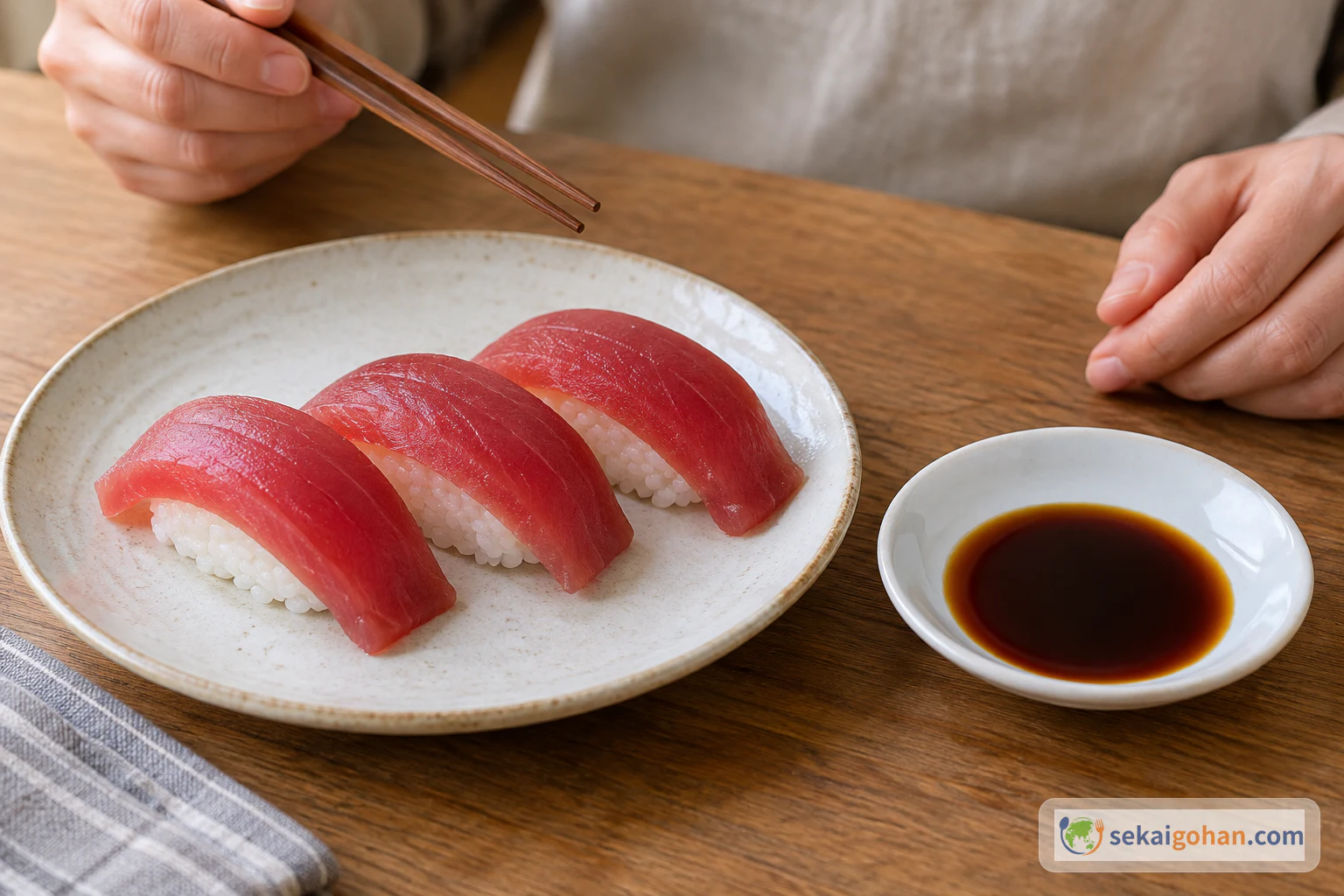
Serve the nigiri as soon as it is shaped, with fresh soy sauce in its own clean small dish. Eat it with chopsticks or your hands, and dip the topping, not the rice. Wasabi stays on the sushi rather than stirred into the soy sauce. Keep any unused tuna refrigerated.
Salmon sold for raw eating is a common modern topping. Marinate it for the same 10 minutes and follow the raw-fish cautions above in full. If you'd rather avoid raw fish altogether, cooked Edo-mae toppings such as simmered anago (sea eel) or steamed shrimp are the traditional route, and fish cured with vinegar or kombu belongs to the same tradition; each has its own amounts and steps. Hand rolls (temaki) need nori and their own fillings, so plan them as a separate dish.
Frequently Asked Questions
What is the difference between sushi and sashimi?
Most modern sushi forms combine vinegared rice with toppings or fillings; narezushi instead develops sourness through fermentation. Sashimi is sliced fish or seafood served without rice, and is a separate dish.
How do I keep sushi rice from getting sticky?
Season the rice while it is hot, mix with a quick slicing motion rather than stirring, and fan it while turning it lightly. Once it is glossy and the heat has eased, cover it with a damp, wrung-out cloth until you shape it.
Can I use the marinade as dipping sauce?
No. Pour fresh soy sauce into a clean small dish, and never use the marinade that touched raw tuna for dipping.
Does marinating make raw tuna safe?
No. Soy sauce, mirin, vinegar, salt and wasabi do not kill anisakis larvae. Safety depends on buying fish sold for raw eating, keeping it refrigerated, checking it visually, and working cleanly.
How many grams of tuna, and how many pieces does this make?
The tuna is given as one saku, with no weight or piece count. A saku varies in size, so the count varies too. Make as many pieces as your block and rice allow, shaping only what you will eat right away.