African Chicken: Macanese Spiced Roast Chicken with Peanut-Coconut Sauce (Galinha Africana)

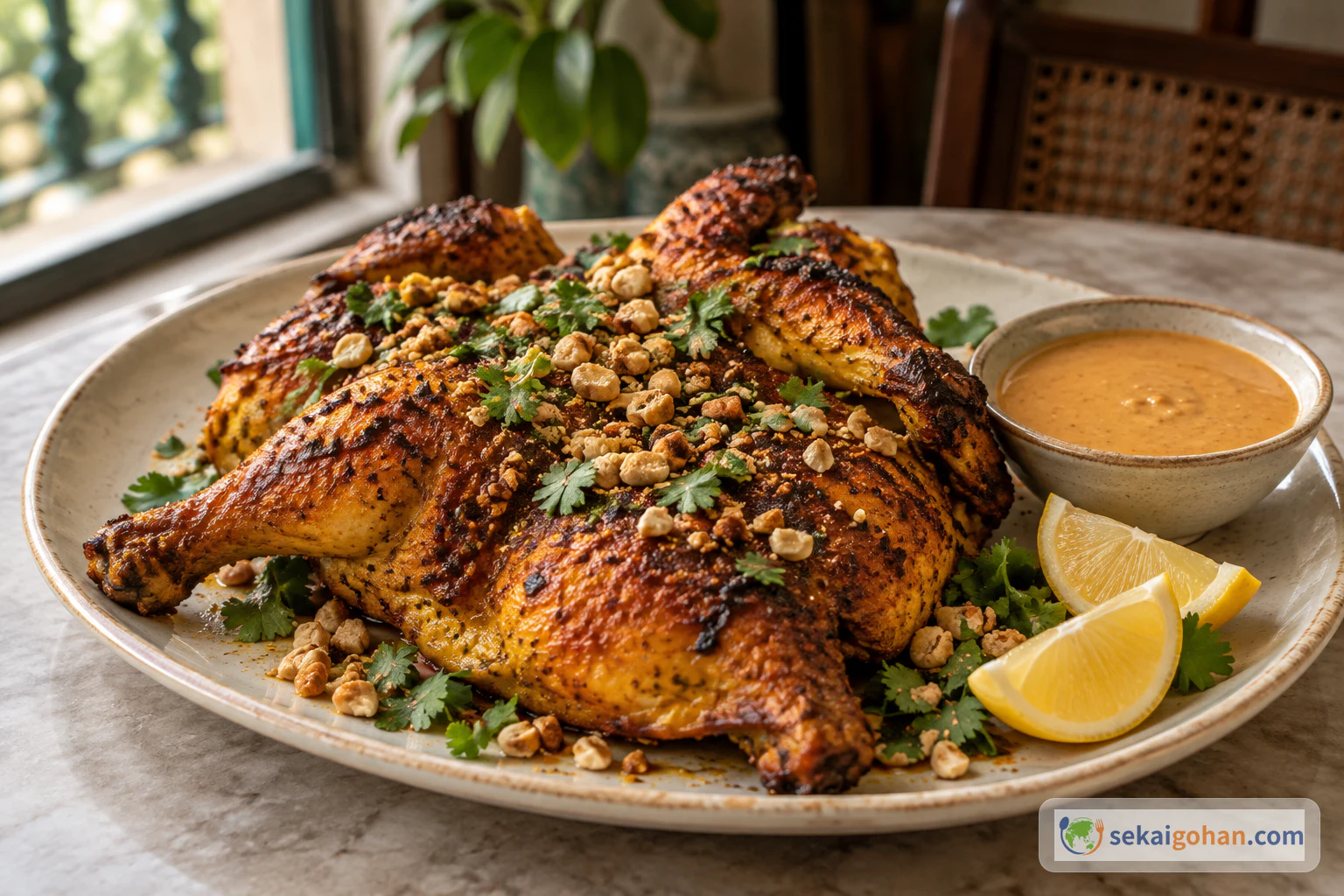
Macanese African chicken: a whole chicken roasted until the skin is browned, served with a peanut and coconut milk sauce
Serves
6 servings
Cuisine
Macanese

How to make Macanese African chicken (Galinha Africana): a flattened whole chicken marinated in spiced yogurt and roasted, served with a peanut, coconut milk and chili sauce on the side. Follows António M. Jorge da Silva's recreation, with the source amounts, safe roasting checks, and why the dish is Macanese rather than African.

Cooking flow

Cooking steps

STEP11 / 8

Sauté the onion, garlic and bay leaves

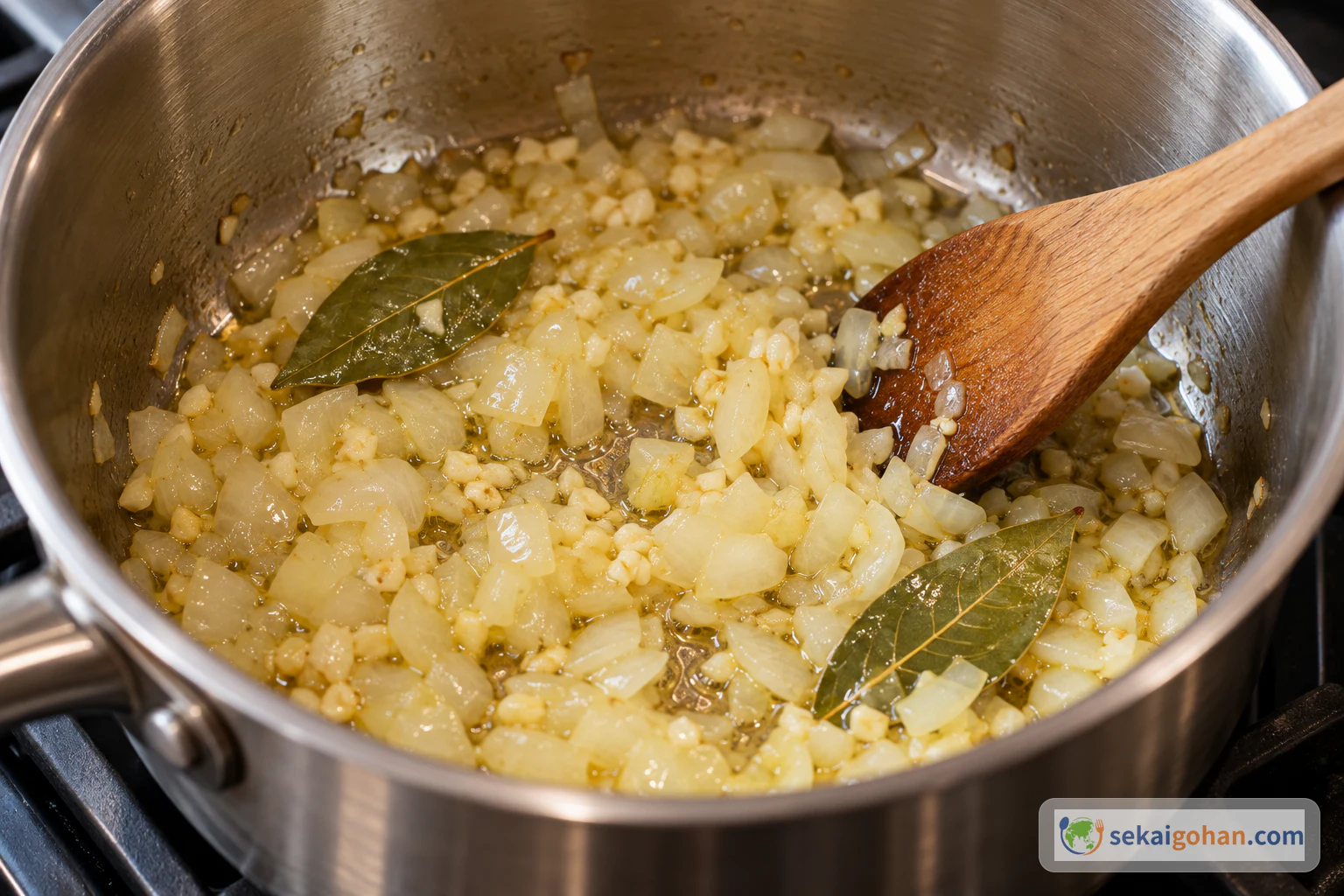
Onion, garlic and bay leaves sautéing in olive oil, the first stage of the sauce
Only the onion, garlic and bay leaves go in at this stage

From the sauce's 1/4 cup of olive oil, take about 15 ml (1 tbsp) and heat it in a saucepan. Add the chopped sweet onion, the 1 tsp of chopped garlic and the 2 bay leaves, and sauté until the onion is soft and translucent. Keep the rest of the sauce oil, about 45 ml, for step 3.

STEP22 / 8

Add the chilies, tomato paste, half the coconut milk and the Madeira

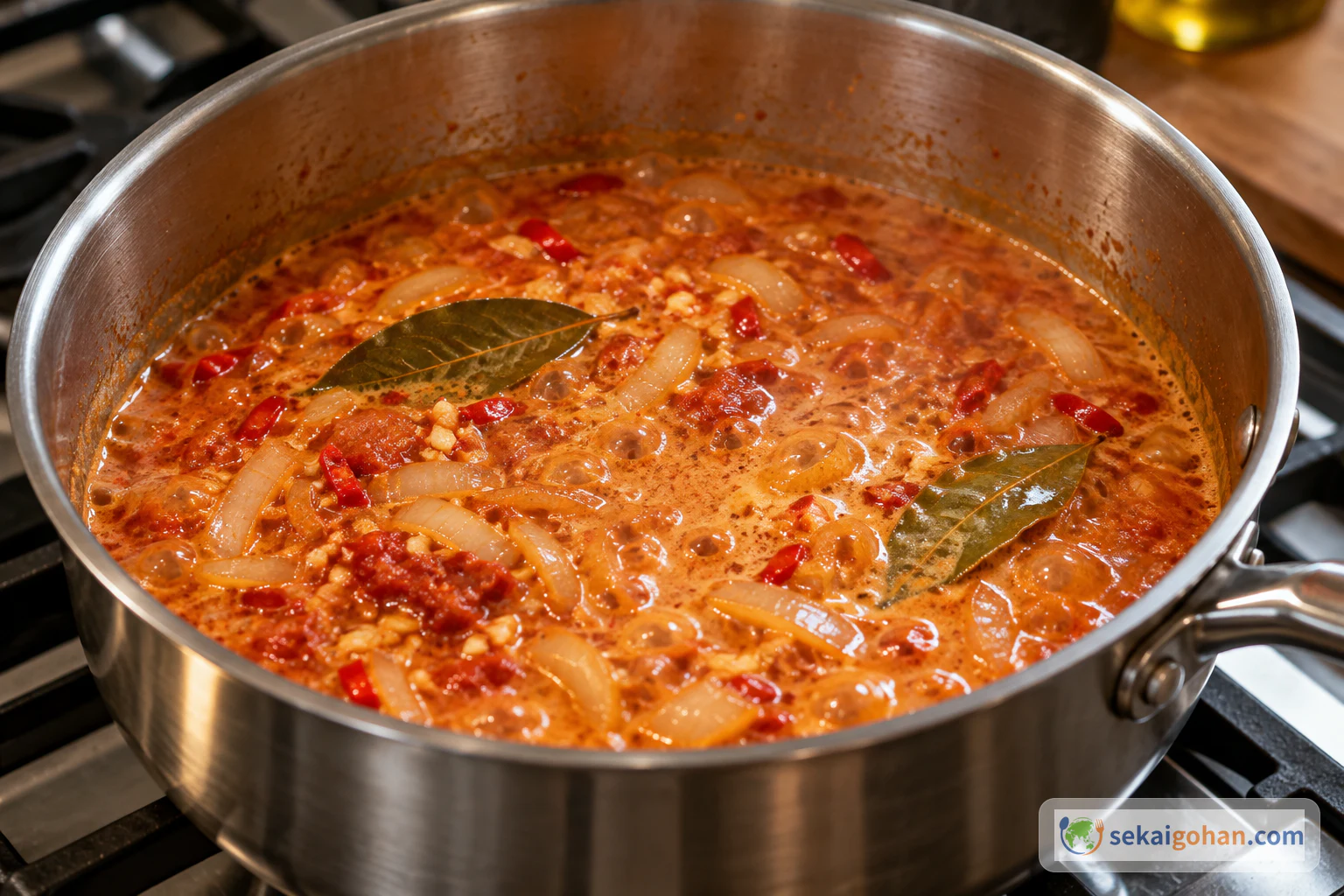
The African chicken sauce simmering with chilies, tomato paste and coconut milk
The bay leaves stay in until the sauce has cooled; the peanuts are not added yet

Add the 4 minced red chilies, the tomato paste, half of the coconut milk, the salt and the sweet Madeira. Bring to a boil, then lower the heat and simmer for about 2 minutes. Take it off the heat, let it cool, and remove the bay leaves.

STEP33 / 8

Blend with the peanuts, remaining oil and remaining coconut milk

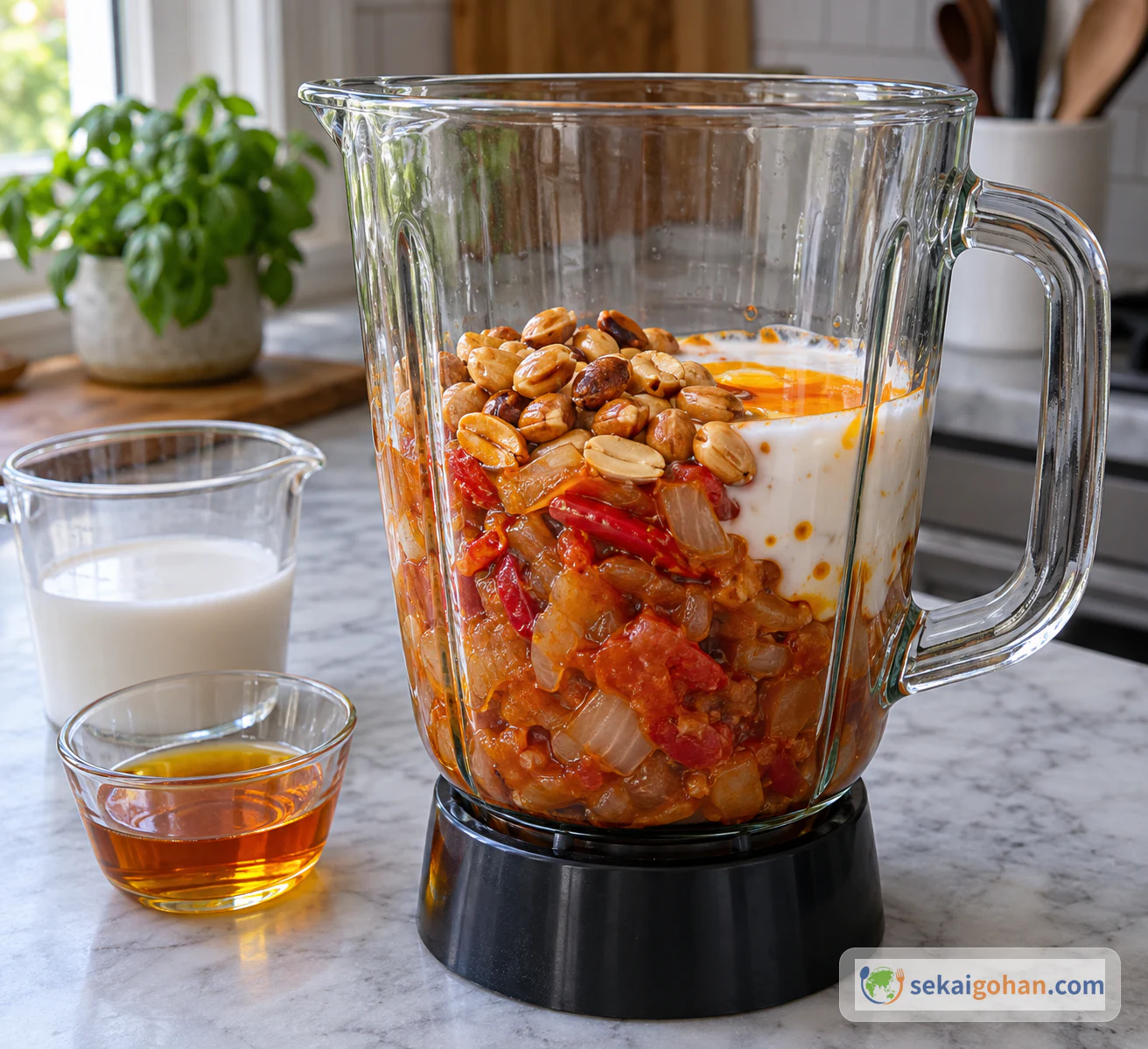
Sauce with peanuts, olive oil and the remaining coconut milk, ready to blend smooth
Blend only after the sauce has cooled and the bay leaves are out

Put the cooled sauce in the blender with the 1 cup of honey-roasted peanuts, the remaining sauce oil (about 45 ml) and the remaining coconut milk. Blend until smooth. Only blend the sauce once it has cooled, within your blender's temperature and capacity limits; do not seal and run hot sauce. Cool the prepared sauce promptly in a clean, shallow container and refrigerate it, covered, while the chicken marinates and roasts; do not leave it at room temperature for that waiting period. Keep it separate from the raw chicken, the marinade and any raw-meat tools, and serve it on the side.

STEP44 / 8

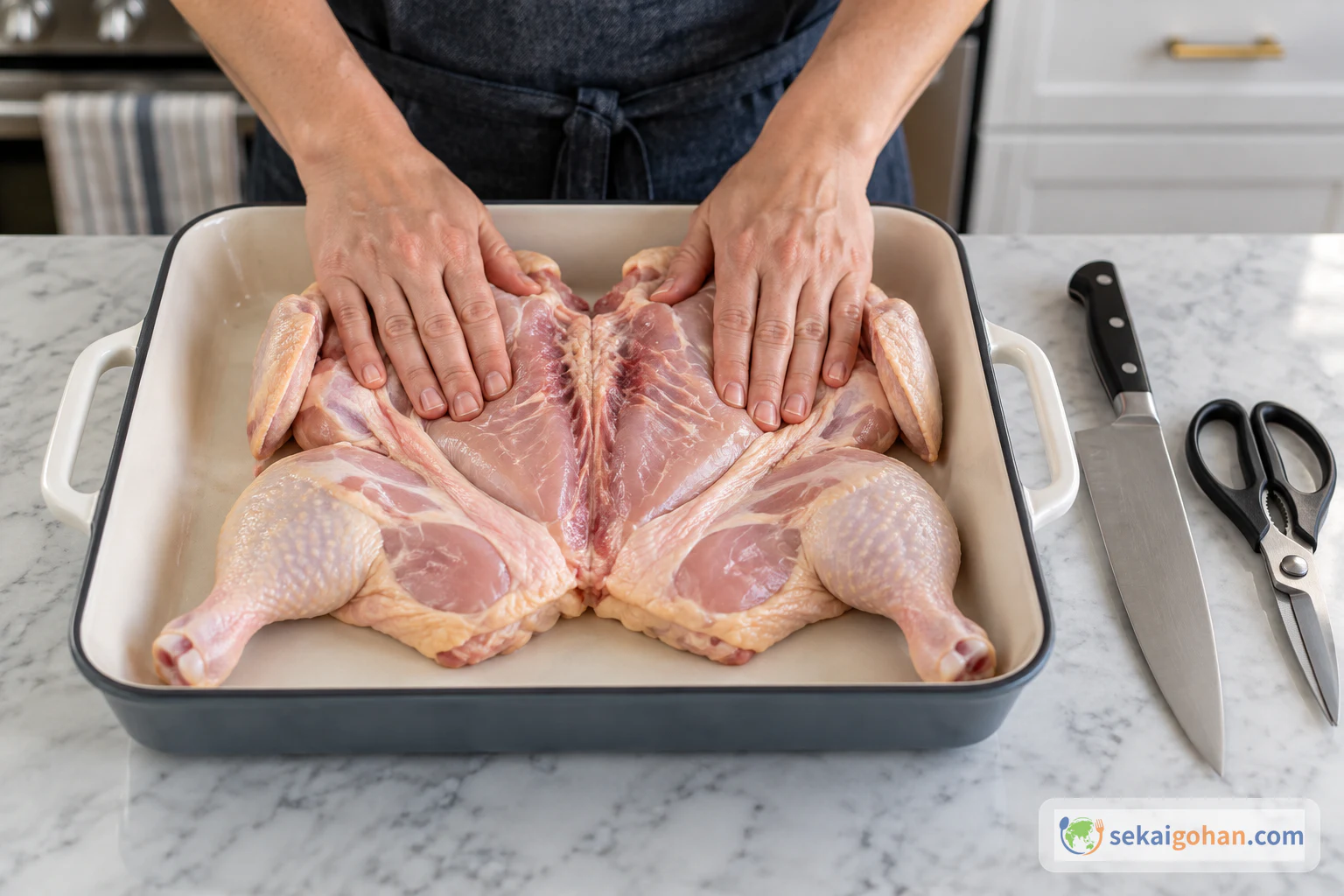
Pat the chicken dry and open it flat

A whole chicken opened from the back and flattened, still joined at the breastbone
Open from the back and keep both halves joined at the breastbone

Do not wash raw chicken, to avoid spreading contamination; instead, pat the surface dry with clean disposable paper towels.

Cut along the back to open the chicken, leaving the two halves attached at the breastbone, and press it flat. Cut away the breastbone cartilage so it lies as flat as possible. Place it skin-side down in an oven-safe metal roasting pan.

STEP55 / 8

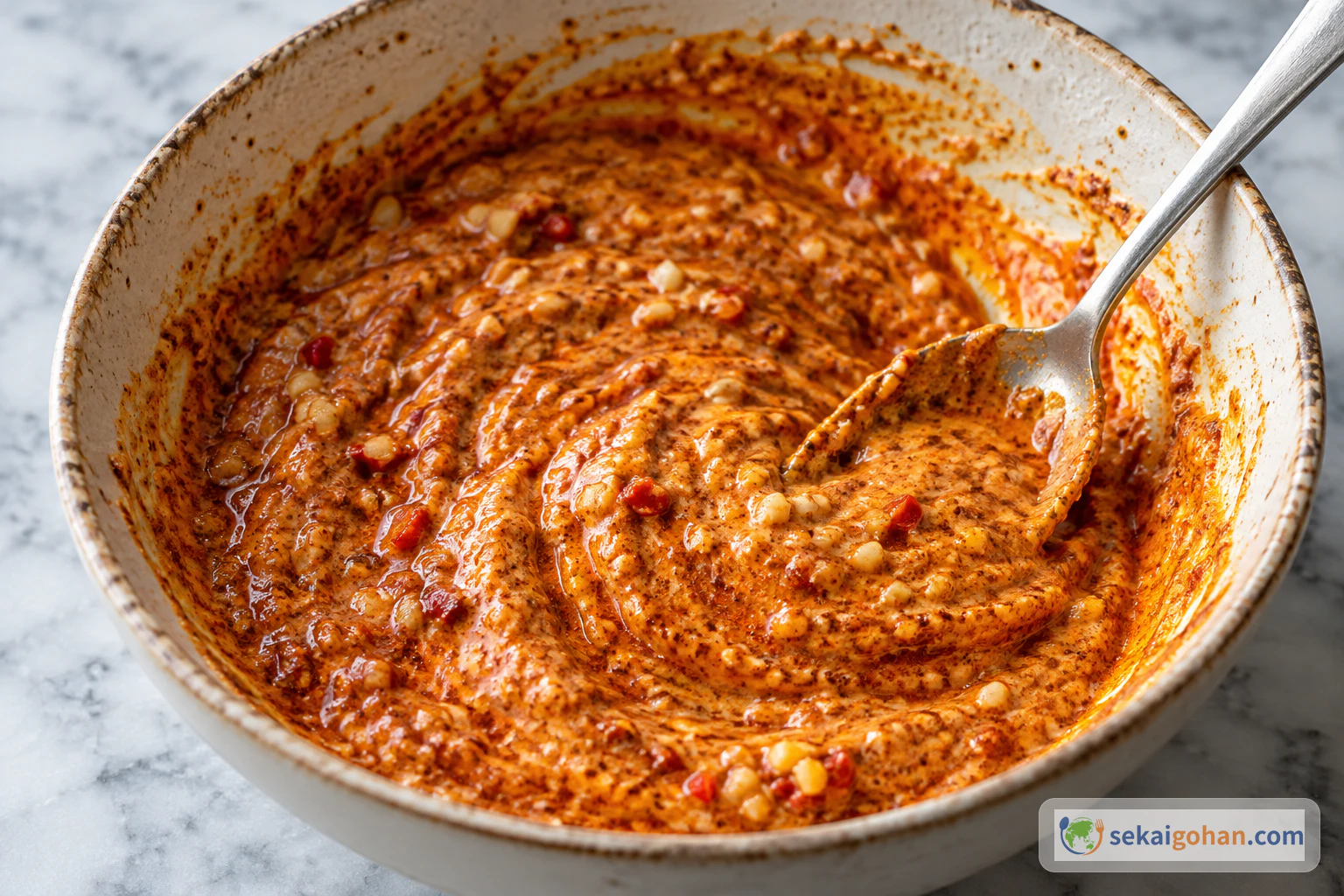
Make the marinade and coat the chicken

Marinade of turmeric and paprika mixed with yogurt, garlic and chilies
Mix the spices first, then add the yogurt, vinegar and oil

In a bowl, mix the turmeric, cumin, paprika, cayenne, 2 tsp of minced garlic, 2 minced red chilies and sea salt. Add the yogurt, then the white wine vinegar and the marinade's 1/4 cup of olive oil, and mix well.

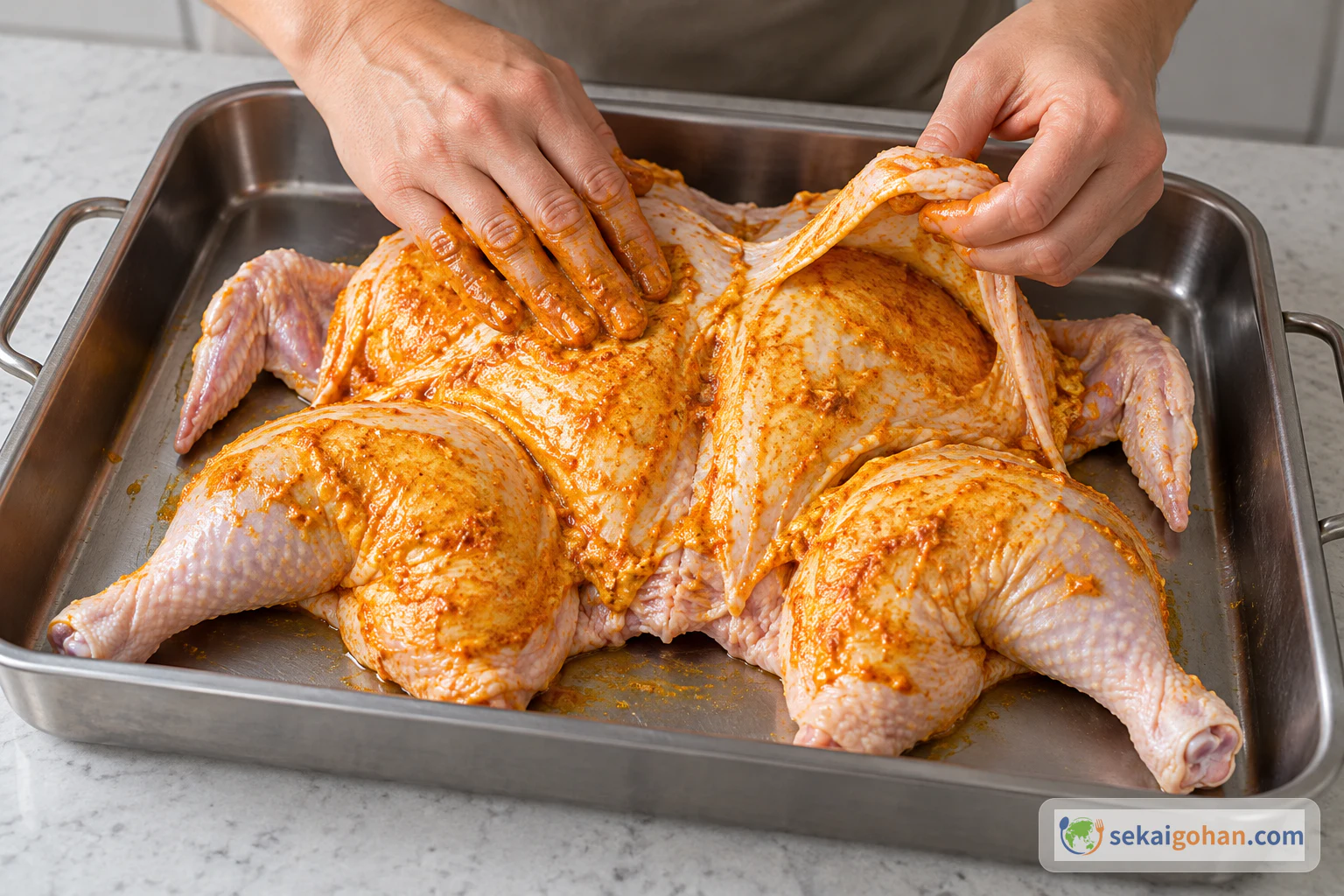
Spread the marinade over the whole meat side. On the skin side, lift the skin slightly without pulling it off hard, and spread the marinade underneath it too. Cover and refrigerate for at least 3 hours, preferably overnight.

Spreading the spiced yogurt marinade over the meat side and under the skin of the chicken
Loosen the skin gently and coat the meat beneath it
STEP66 / 8

Preheat the oven and keep the chicken chilled

STEP 6

Preheat the oven to 425°F (about 220°C). Don't take the chicken out about 30 minutes before roasting. Keep it covered in the refrigerator until the oven has finished preheating, then move straight to roasting in the metal pan. Do not put a chilled glass dish directly into a hot oven.

STEP77 / 8

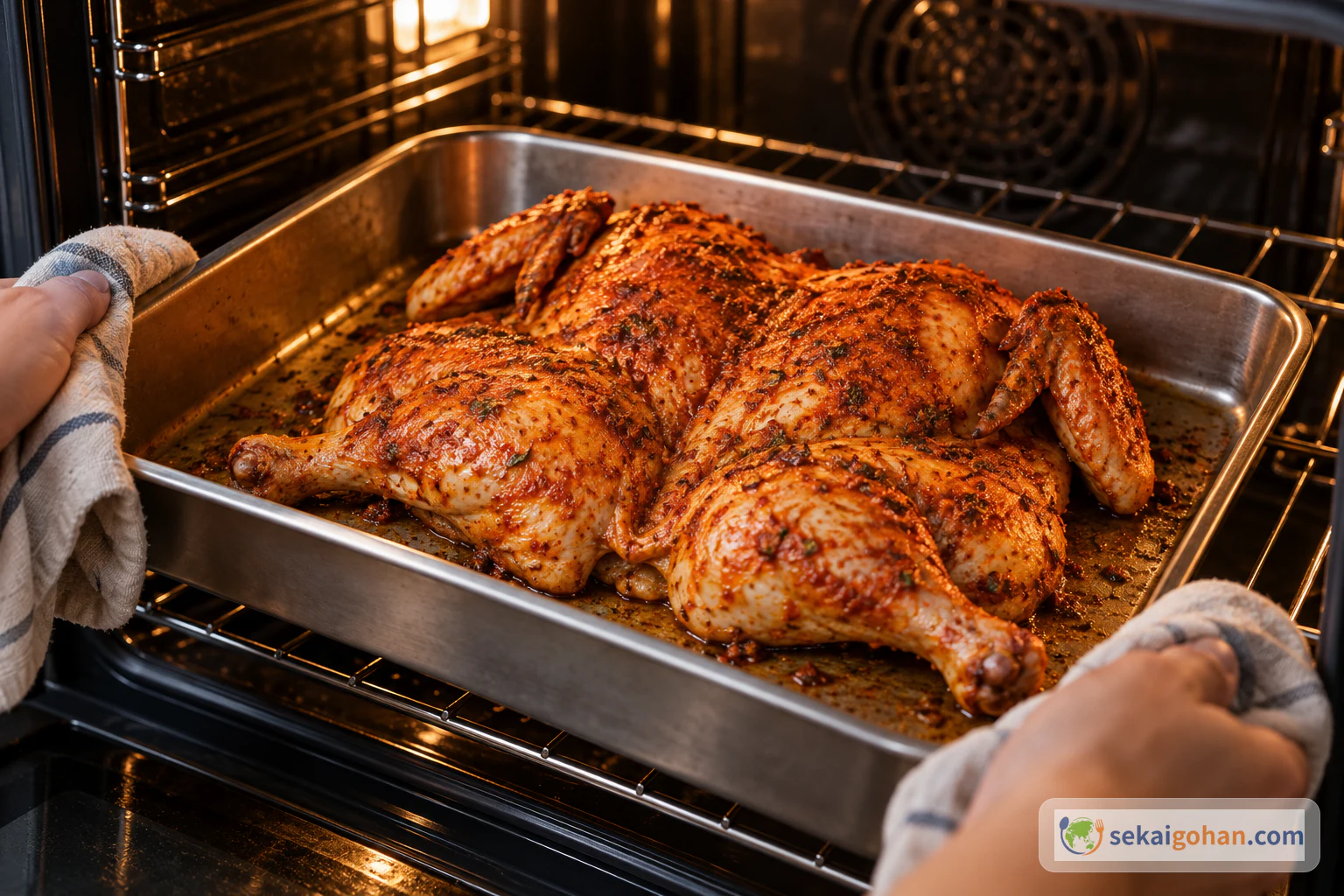
Roast skin-side up and check the center temperature

A whole chicken placed skin-side up in an oven-safe pan, starting to roast in the oven
The marinated chicken goes into the oven skin-side up, without any sauce on it

Turn the chicken skin-side up in the metal roasting pan and roast at 425°F (about 220°C) for about 45 minutes. The time depends on the size of the chicken and your oven, so check the temperature rather than the clock. Do not judge by color alone: insert a thermometer into the thickest part and make sure the center has reached at least 75°C and stays there for 1 minute. If it has not, keep roasting and check again. Do not baste with the sauce.

STEP88 / 8

Garnish and serve with the sauce on the side

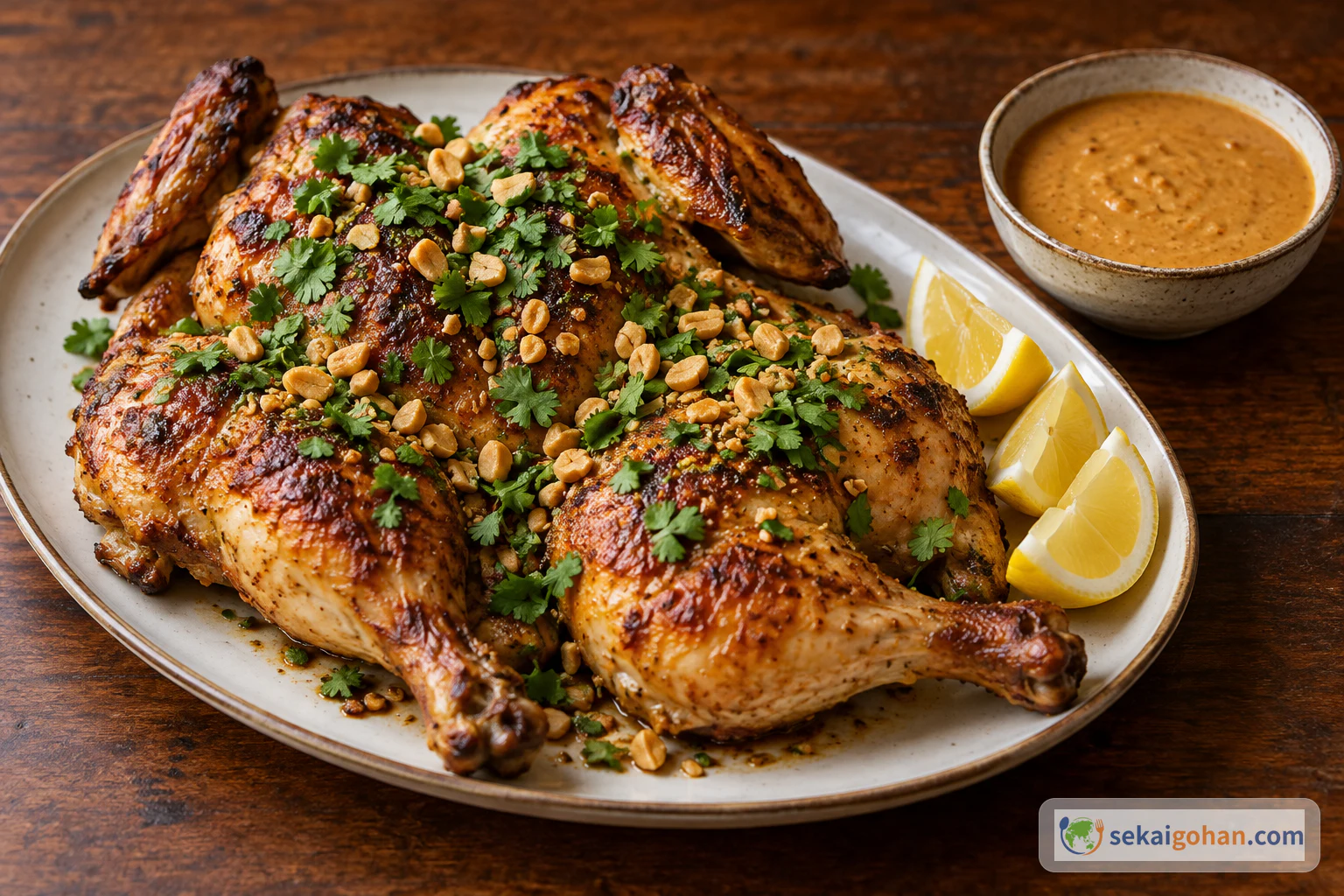
Roast chicken topped with cilantro and crushed peanuts, with lemon and the sauce on the side
Cilantro, ground peanuts and lemon are the only garnishes; the sauce comes on the side

Move the chicken to a clean serving platter. Scatter the chopped cilantro and the coarsely ground honey-roasted peanuts over it, and set the lemon wedges alongside. Serve the peanut-coconut sauce separately in its own bowl.

0 / 0
Ingredients

Ingredients

1 / 1

Ingredients

Ingredient Amount Role
Chicken 1 whole (or 8 chicken thighs) Main. Whole-bird option, used here
Ground turmeric 1/2 tsp Marinade: color and earthy aroma
Ground cumin 1/2 tsp Marinade: aroma
Paprika 2 tsp Marinade: red color
Cayenne pepper 1 tsp Marinade: heat
Garlic, minced 2 tsp Marinade
Red hot chilies, minced 2 Marinade: heat
Yogurt 1/2 cup Marinade: base that carries the spices
Sea salt 1 tsp Marinade
White wine vinegar 2 tsp Marinade: acidity
Olive oil (Portuguese olive oil) 1/4 cup Marinade only. Keep separate from the sauce oil
Sweet onion, chopped 1 Sauce: sweet base
Garlic, chopped 1 tsp Sauce
Red hot chilies, minced 4 Sauce: heat
Tomato paste 2 tsp Sauce
Honey-roasted peanuts 1 cup Sauce: blended in for body
Coconut milk 1 cup Sauce: added in two halves, one while simmering and one at blending
Sweet Madeira wine 1/4 cup Sauce
Bay leaves 2 Sauce: removed before blending
Olive oil (Portuguese olive oil) 1/4 cup Sauce only: about 15 ml for sautéing, the rest (about 45 ml) for blending
Sea salt 1 tsp, or to taste Sauce
Lemon, cut into wedges 1 Garnish
Cilantro, chopped 1 tbsp Garnish
Honey-roasted peanuts, coarsely ground 1/2 cup Garnish only. Separate from the sauce peanuts
0 / 0

A whole chicken lies flat on the platter, its skin deep red-gold from paprika and turmeric, scattered with chopped cilantro and coarsely ground honey-roasted peanuts. Lemon wedges sit beside it, and a small bowl holds a smooth, pale orange sauce of peanuts and coconut milk. This is Galinha Africana, also written Galinha à Africana and known in English as African chicken. It is a dish of the Macanese community of Macau: a spiced roast bird with a rich, gently hot sauce passed at the table.

Galinha Africana in Macau

The chicken is opened flat, coated in a yogurt marinade colored with turmeric and paprika, and roasted. The sauce of peanuts, coconut milk and red chili is served separately rather than brushed onto the bird, so each person adds as much as they like.

Despite the name, this is a Macanese dish, not a general "African" one. It is also a different dish from Galinha Cafreal, the Mozambican dish, and from Portuguese piri-piri chicken. In Macau the name covers several preparations, and versions with peanuts and tomato both exist today. Every restaurant and household makes its own.

Its origin is not settled. One widely repeated account credits a chef at the Pousada de Macau with creating it, and the dish is associated with the chef Américo Ângelo. Another story links it to travel to Portugal's African colonies, and connections to Mozambique and Goa are also discussed. No firm date or birthplace is known.

Ingredients (6 servings)
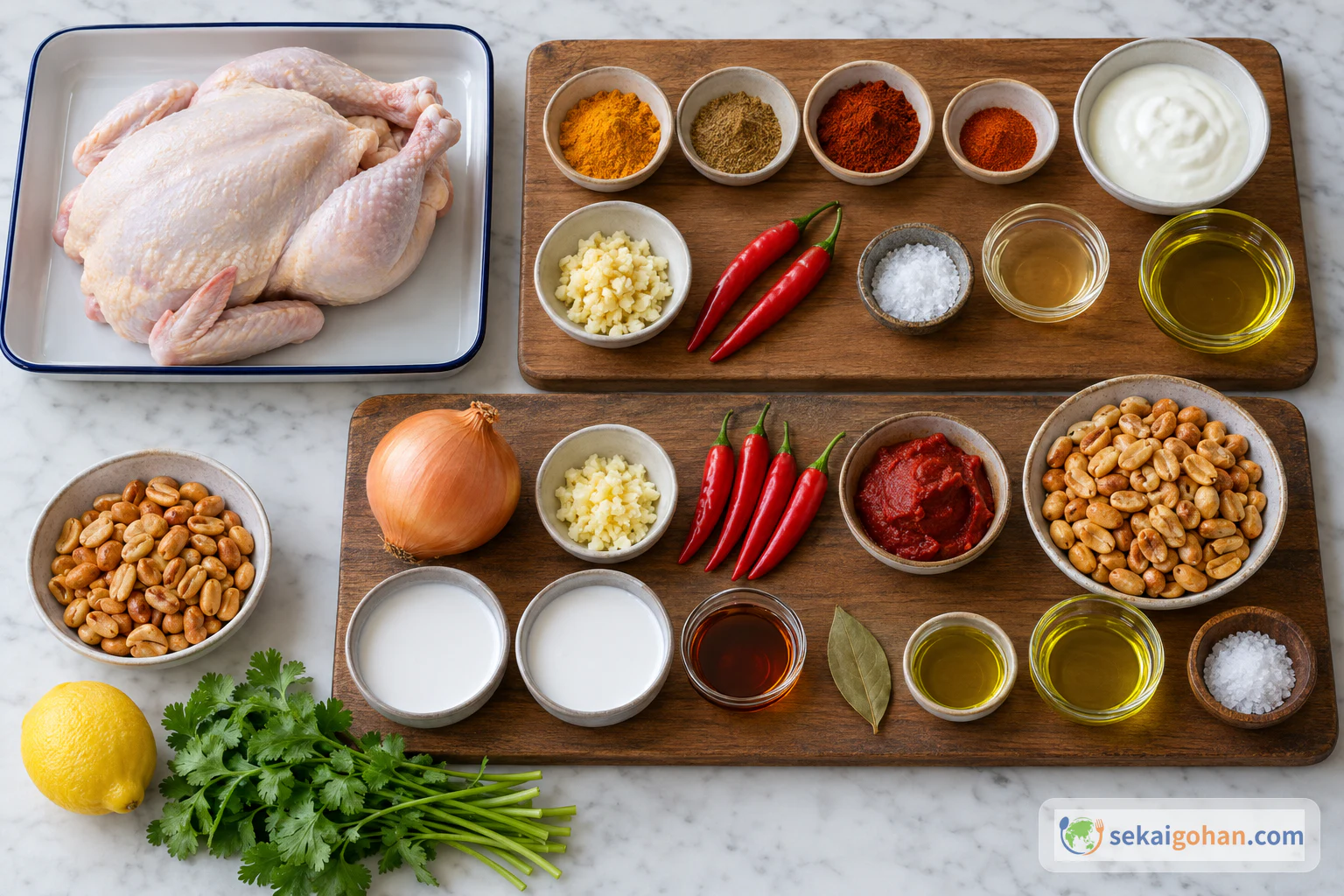
Ingredients for African chicken, including chicken, yogurt, chilies, spices, peanuts and coconut milk
Marinade and sauce ingredients are kept in separate groups, with the garnish set apart

Peanuts, olive oil and coconut milk each appear in more than one role, so each use has its own row.

Equipment

  • Kitchen shears or a boning knife, for opening the chicken
  • Oven-safe metal roasting pan
  • Saucepan
  • Blender
  • Instant-read thermometer
  • Clean disposable paper towels
  • Cutting board, containers and utensils kept only for raw chicken

Choosing Ingredients for African Chicken

How cup measures are read here

Here, 1 cup = 240 ml, 1 tbsp = 15 ml and 1 tsp = 5 ml. So 1/2 cup is 120 ml and 1/4 cup is 60 ml. These are volumes, not weights.

Two oils, two jobs. The marinade's 1/4 cup of olive oil goes only into the marinade. The sauce's 1/4 cup is all the oil the sauce gets: about 15 ml (1 tbsp) for sautéing and about 45 ml for blending.

Two portions of peanuts. The 1 cup of honey-roasted peanuts goes into the sauce, and the 1/2 cup is coarsely ground and scattered on top at the end.

Portuguese olive oil is the first choice, though an ordinary extra-virgin olive oil works with some difference in flavor. The heat of both chicken and sauce depends on the type and number of red chilies, so choose milder ones, or use fewer, if you want a gentler dish. The coconut milk and peanuts are essential here; without them you have a different recipe.

Allergens and honey

This recipe contains peanuts, milk (yogurt) and chicken. Honey-roasted peanuts are a processed product, so check the label for any other ingredients. Do not serve this dish to infants under 1 year old. Honey should not be given to babies under one, and cooking does not change that.

Method: Make the Sauce First, Then Marinate and Roast

Order of work

Steps 1–3 make the sauce, which is served on the side. Steps 4–5 prepare and marinate the chicken for at least 3 hours, preferably overnight. Steps 6–8 roast and finish. The sauce never goes onto the chicken during roasting.

Raw chicken hygiene

Keep the board, containers and utensils used for raw chicken separate from those used for other foods, including the finished sauce. Wash your hands and tools after handling raw chicken. Do not use the dishes or tools that touched raw or marinated chicken for the cooked chicken, and do not mix leftover marinade into the sauce, which is served without further heating.

Troubleshooting African Chicken

Ovens, chickens and chilies all vary, so trust a thermometer rather than the clock or the color of the skin.

Situation What to check or do
The skin is well browned at 45 minutes but the thickest part is below 167°F (75°C) Keep roasting and recheck until the center reaches at least 167°F (75°C) for 1 minute. Color is not a doneness test
The skin starts to tear while you apply the marinade Lift it only slightly and work the marinade underneath
The sauce is still hot when you are ready to blend Let it cool first, and stay within the blender's temperature and capacity limits
Leftover marinade in the bowl Discard it. Never add it to the sauce or use it as a dip
The dish was hotter than you wanted Next time, adjust the type and number of red chilies

Serving, Storing and Variations

Serve the chicken with grilled tomatoes and diced potatoes boiled with turmeric, with the lemon wedges and the bowl of sauce alongside.

For a quicker version, use 8 chicken thighs in place of a whole chicken. Check them the same way: at least 167°F (75°C) at the center for 1 minute.

Leftovers

Divide any leftovers into clean, shallow containers, cool them quickly and refrigerate. Reheat to 167°F (75°C) or above. This recipe has no tested storage time, so eat leftovers soon after cooling.

Frequently Asked Questions

Why not wash the chicken?

Washing raw chicken spreads contamination to the sink and nearby surfaces. Pat it dry with clean disposable paper towels instead.

Will 45 minutes at 425°F be enough?

Treat 45 minutes as a starting point. Put a thermometer in the thickest part and make sure it reaches at least 167°F (75°C) for 1 minute, roasting longer if needed.

Can babies eat this?

Do not give it to infants under 1 year old, because the honey-roasted peanuts contain honey, and cooking does not make it safe for them. The dish also contains peanuts and milk (yogurt).
Sources