Vepřo Knedlo Zelo: Czech Roast Pork with Bread Dumplings and Sauerkraut

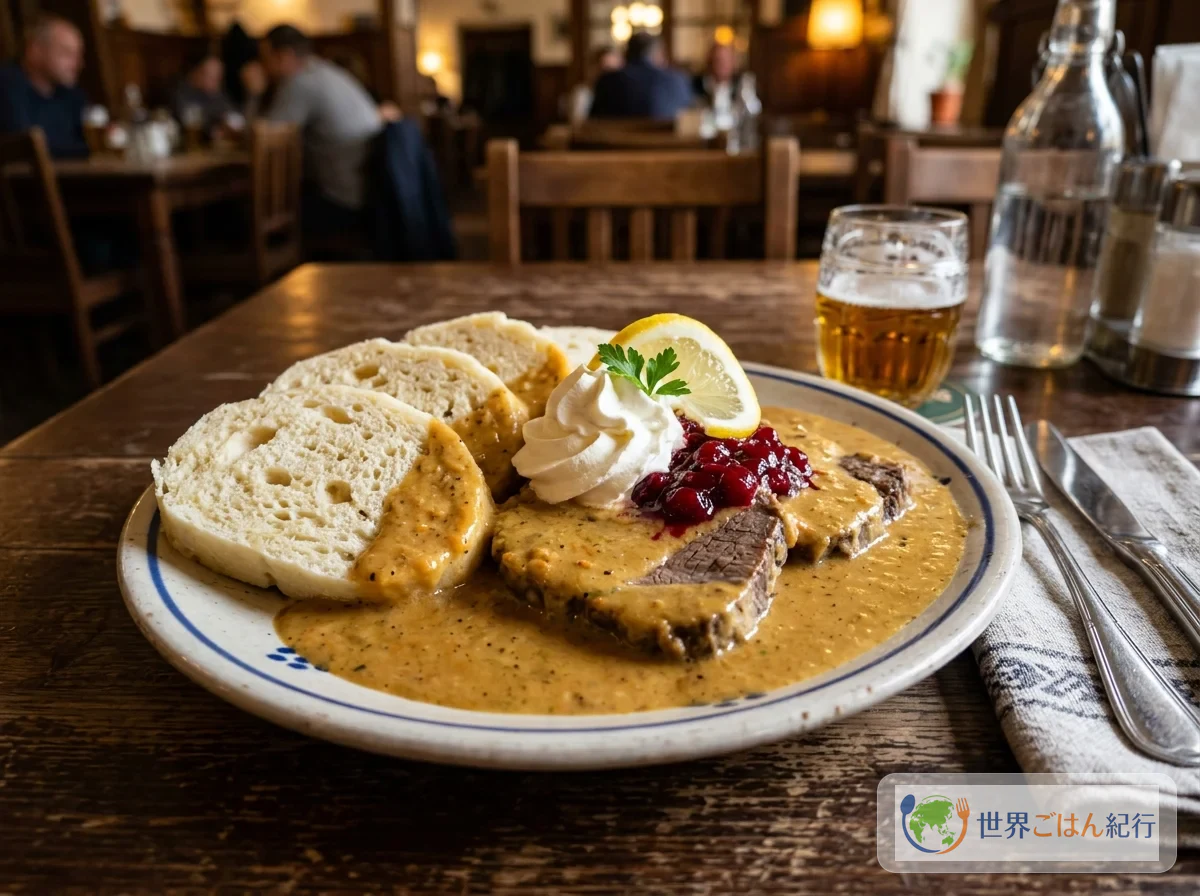
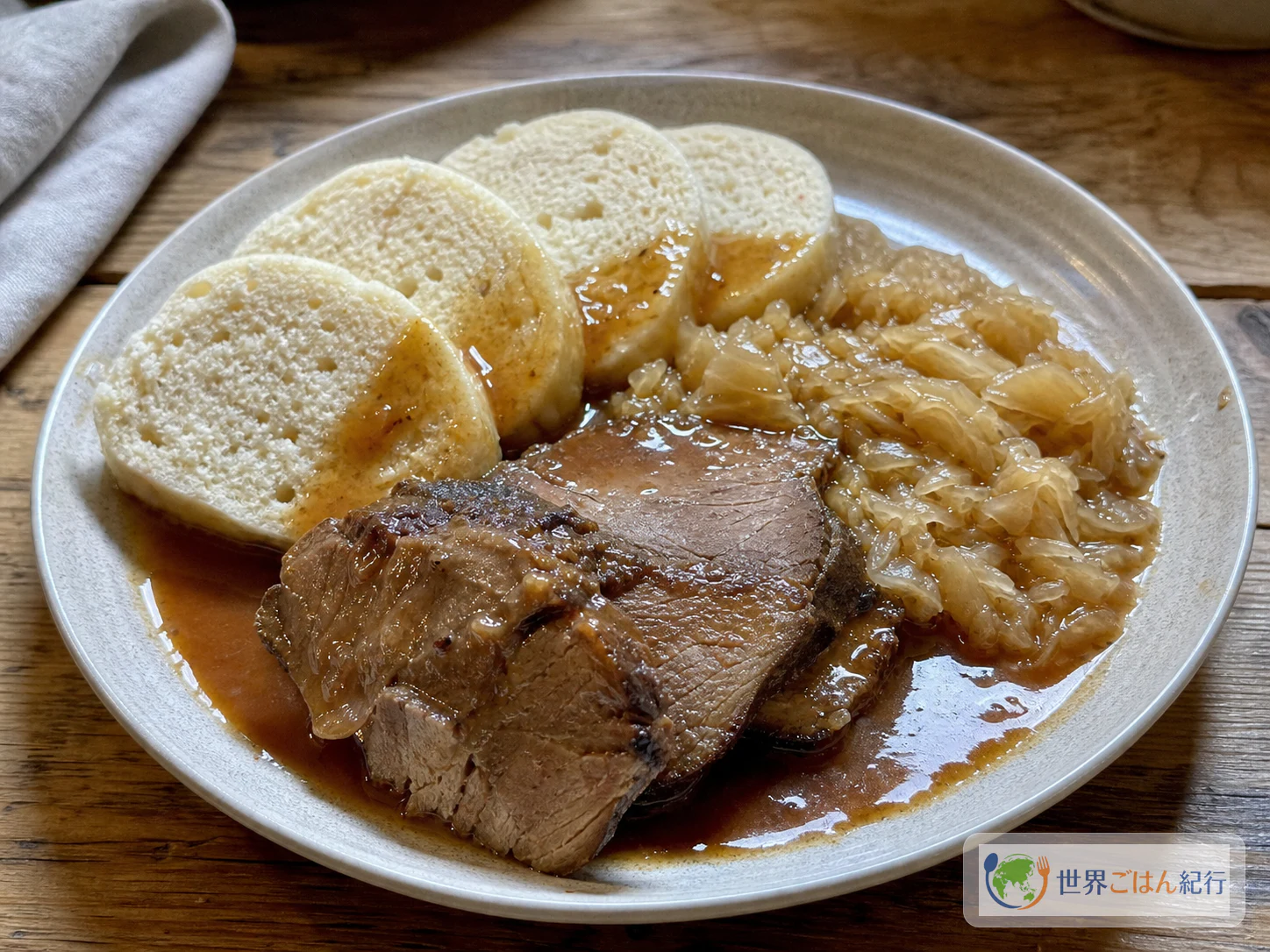
Czech vepřo knedlo zelo: roast pork, bread dumplings and sauerkraut on a plate
Prep
45 min
Cook
1 hr 55 min
Total
2 hr 40 min
Serves
4 servings
Level
Intermediate
Cuisine
Czech

Vepřo knedlo zelo is the Czech classic of roast pork, bread dumplings and sauerkraut. This guide covers the home-oven method with pork shoulder and jarred sauerkraut, heat control, storage, and how the dish is eaten in the Czech Republic.

Cooking flow

Cooking steps

STEP11 / 9

Season the pork with salt and aromatics

15 min

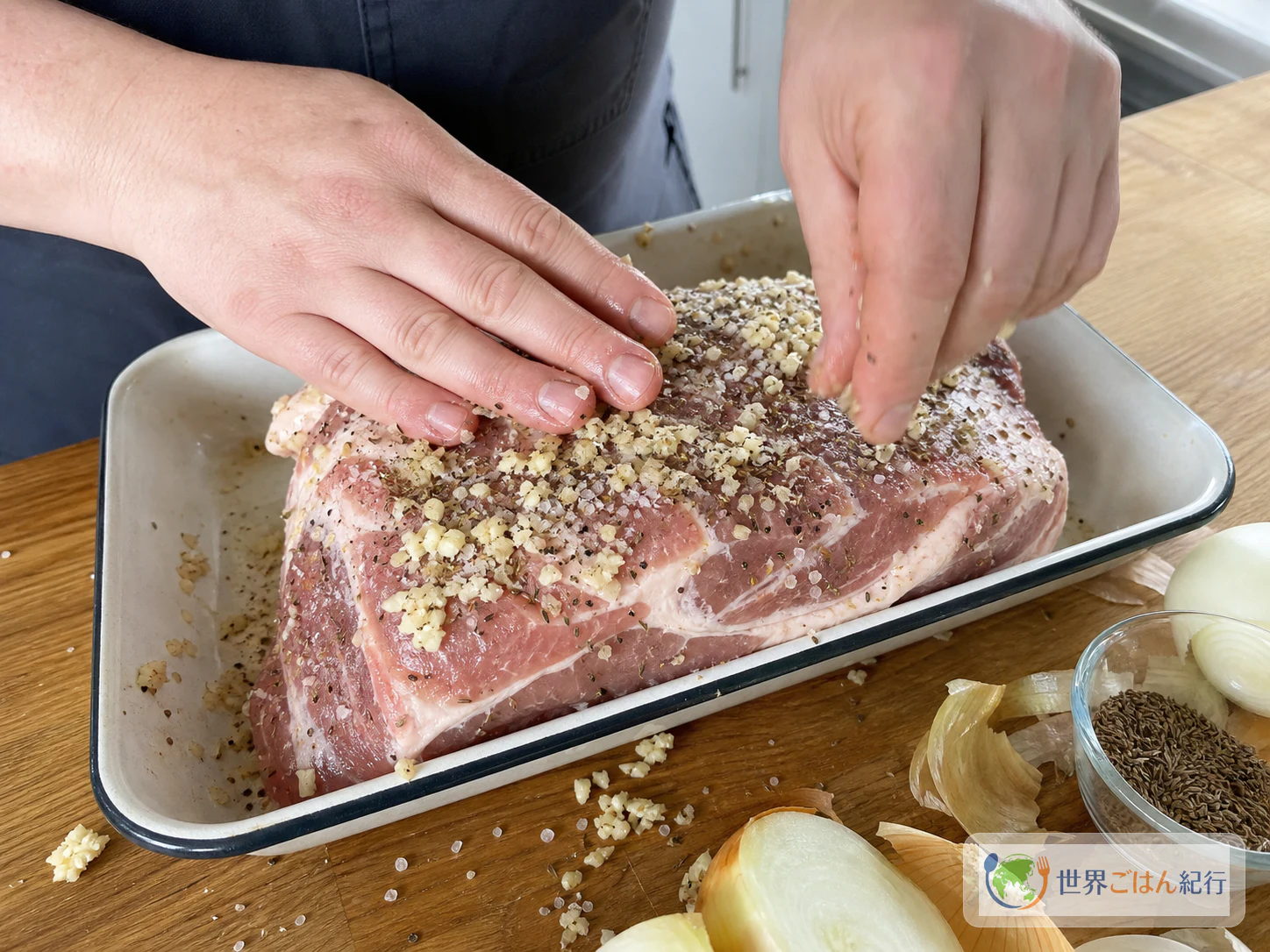
Rubbing garlic, salt and caraway into pork shoulder by hand
Press the salt and garlic into the surface of the meat and don't let the caraway clump in one spot

No heat needed. Wipe 1.5 lb (700 g) pork shoulder dry with paper towels, then rub it all over with 1 1/2 tsp salt, 1/2 tsp black pepper, 3 cloves of minced garlic and 1 tsp caraway. Press the seasoning in with your hands for about 2 minutes so the aroma reaches the thick side of the meat. Leave at room temperature for 15 minutes, until the salt has melted into the surface and the meat looks moist.

STEP22 / 9

Set the meat on onions and start roasting

10 min

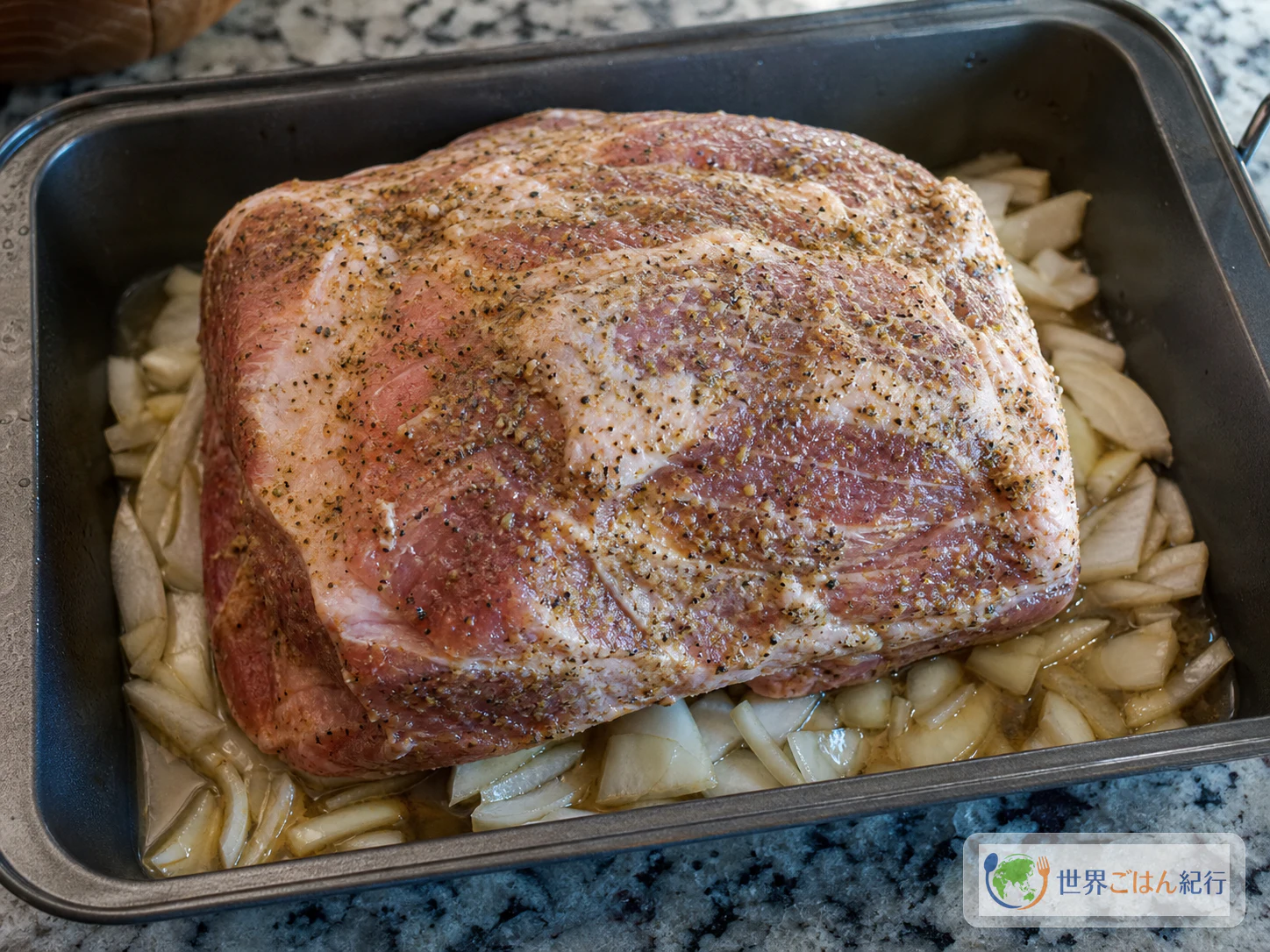
Setting seasoned pork shoulder on onions in a roasting pot
Don't soak the meat: set it on the onions and put it in the 180°C oven

Preheat the oven to 350°F (180°C). Thinly coat a heavy ovenproof pot or a deep baking tray with 1 tbsp lard and spread 1 onion cut 0.5 inches (1.5 cm) wide on it. Set the meat on top, fat side up, and pour ¾ cup (200 ml) water into the bottom of the pot. Keep the onions in a single layer under the meat. That keeps the meat out of the water and the surface from drying out, so the pan juices stay clear.

STEP33 / 9

Roast the pork and check the core temperature

70 min

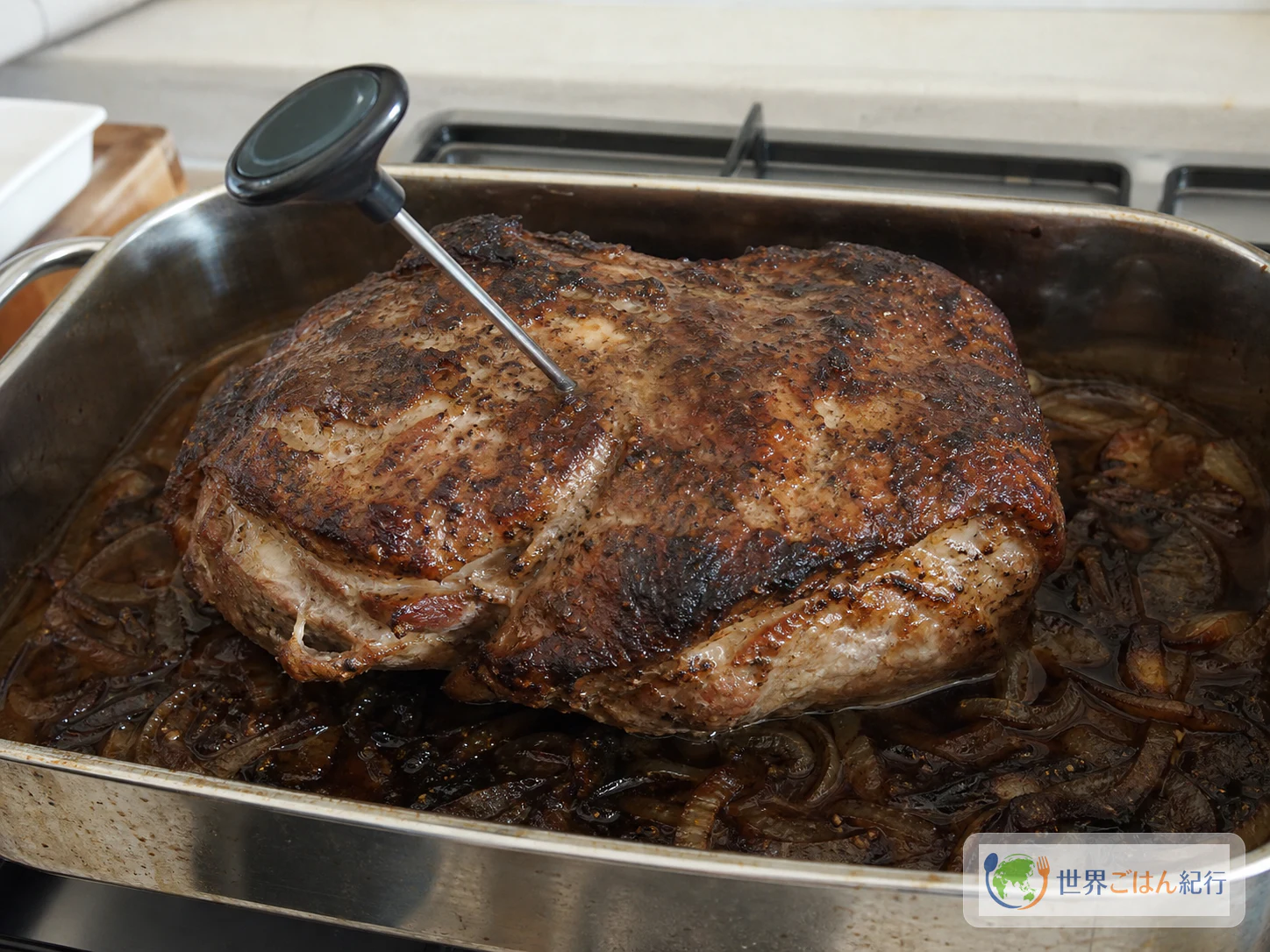
Checking doneness of the roast pork shoulder by inserting a core thermometer
Don't stop the pork by browning alone: check a core temperature of 70°C or higher before resting

Roast on the middle rack of a 350°F (180°C) oven for 55 minutes, then take it out and spoon the pan juices from the bottom over the meat. If the liquid has nearly cooked off and is close to burning, add 3.5 tbsp (50 ml) water. Roast another 10 to 15 minutes, then insert a core thermometer at an angle into the thick part and confirm 158°F (70°C) or higher. When the surface has a deep brown color and the juice from the hole is clear, let it rest.

STEP44 / 9

Make the dumpling dough

20 min

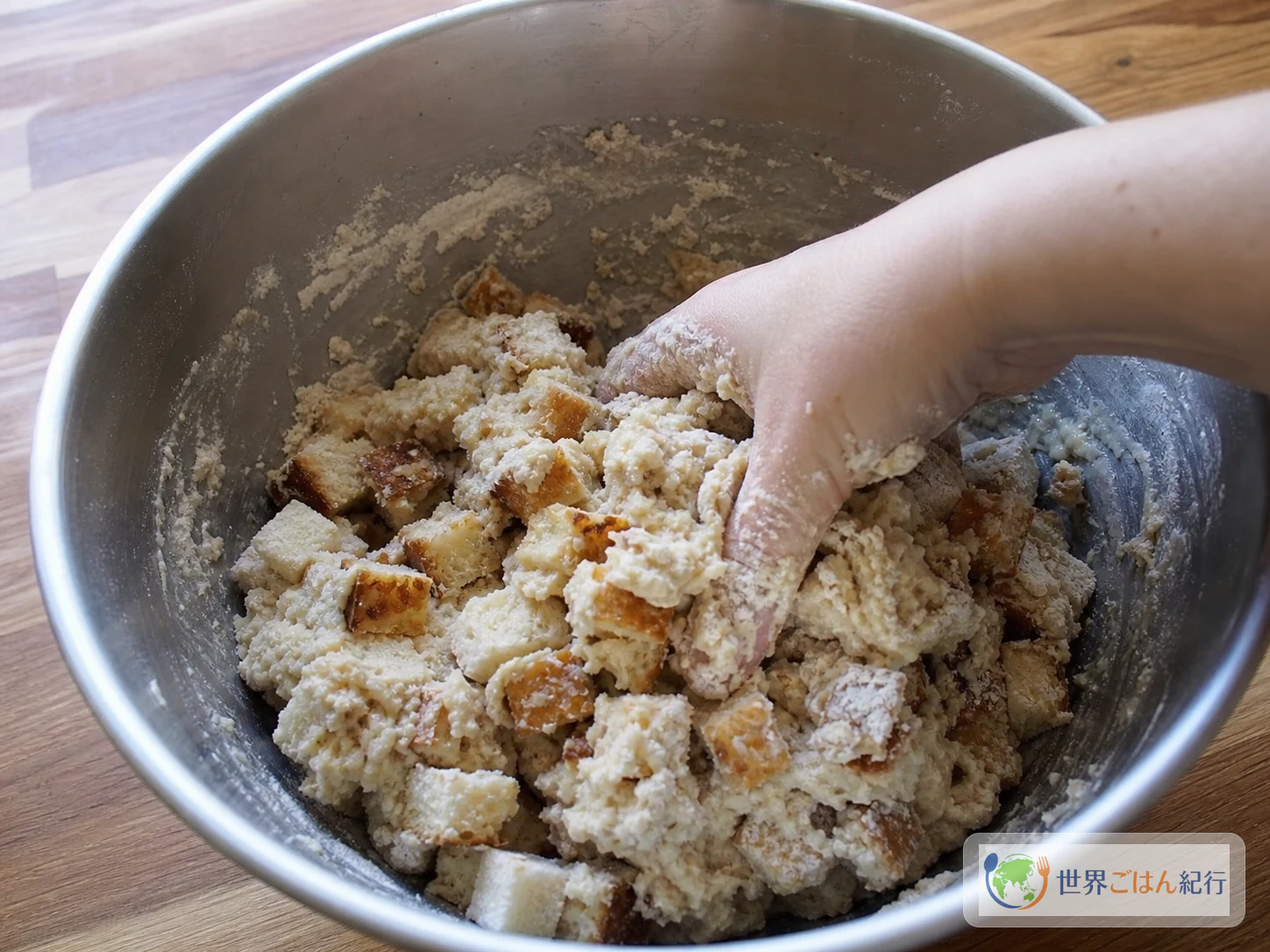
Kneading the dumpling dough with bread cubes in a bowl
When the bread cubes are scattered through the dough and the flouriness is gone, go on to proofing

In a bowl, mix 10 oz (280 g) bread flour, 1 tsp dry yeast and 1/2 tsp salt. Add ½ cup (150 ml) milk at about 95°F (35°C) and 1 egg, and mix by hand for 3 minutes until the floury look is gone. Add 2 oz (60 g) bread cut in 0.5 inches (1.5 cm) cubes and knead another 5 minutes, until the bread is scattered throughout. The dough should be a little firmer than an earlobe and should not stick to your hands.

STEP55 / 9

Shape into logs and boil

45 min

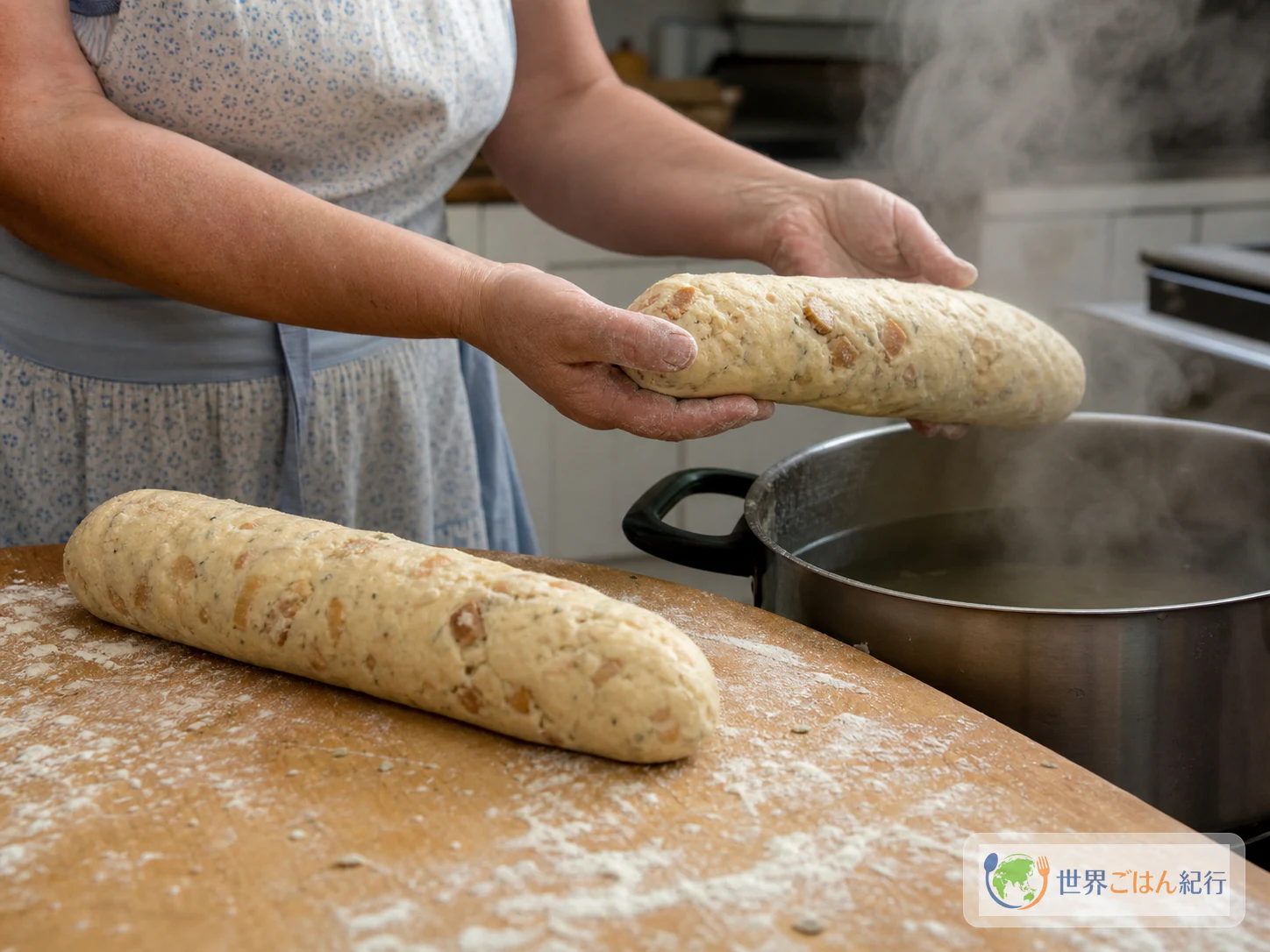
Moving the log-shaped dumpling dough into a steaming pot
Don't boil the water hard; keep it at a gentle simmer over medium-low and the dough is less likely to split

Shape the dough into a ball, return it to the bowl, cover with a damp cloth and let it rise for 30 minutes. When it has swelled to about 1.5 times, divide it in 2 and shape each piece on a floured board into a log 2.5 inches (6 cm) in diameter and 7 inches (18 cm) long. Bring 2 quarts (2 L) of water to a boil in a large pot, lower it to a gentle simmer over medium-low heat, and add the dough. Boil 20 minutes with the lid slightly ajar, rolling the logs over just once. They are done when the surface has swelled and springs slowly back when pressed with a finger.

STEP66 / 9

Braise the sauerkraut sweet and sour

25 min

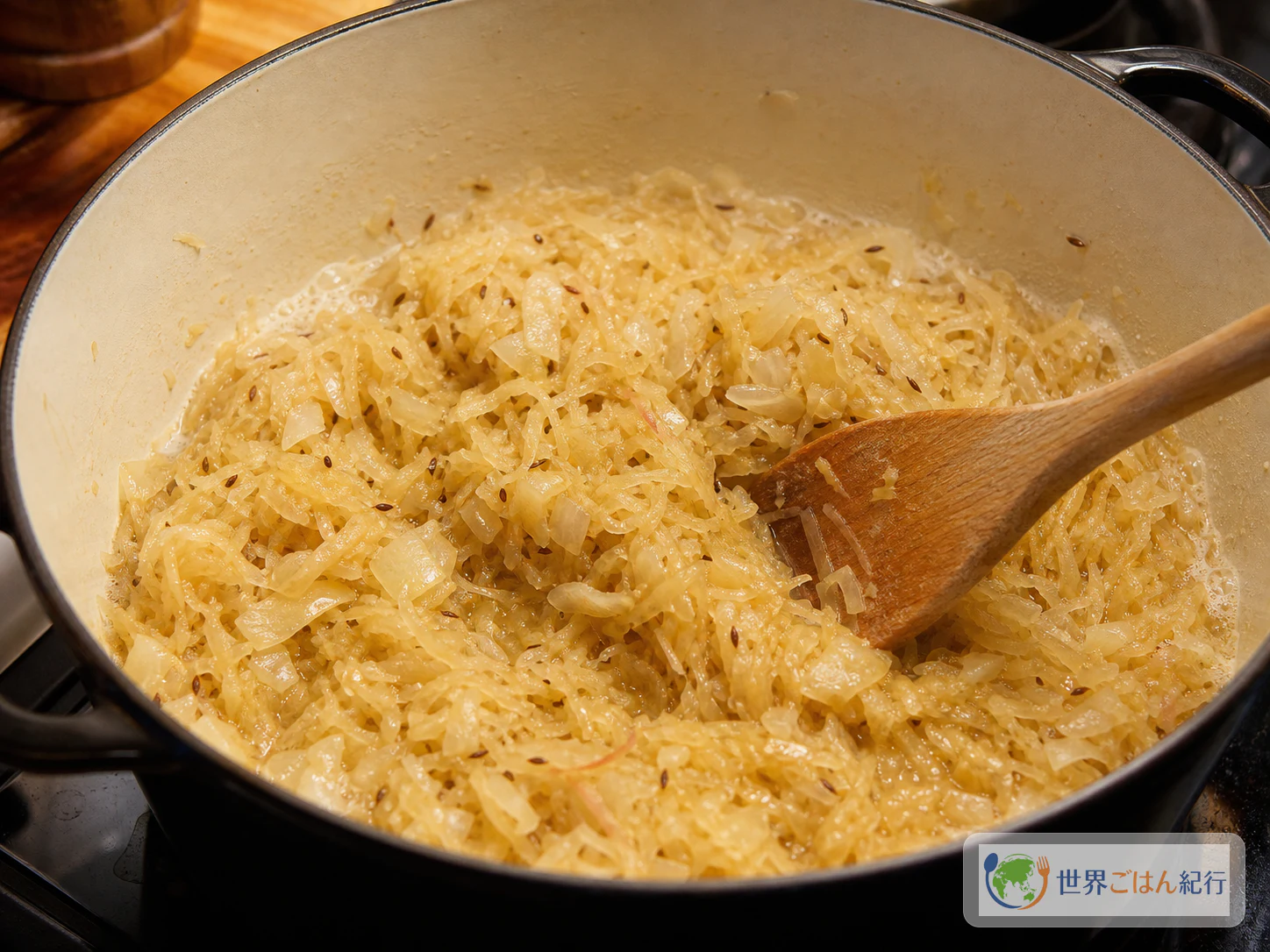
Simmering sauerkraut, onion, apple and caraway in a pot
Rinse half the sauerkraut and simmer over low heat to round off the sourness

Drain 1 lb (500 g) sauerkraut, rinse only half lightly with water and squeeze. Heat 1 tbsp lard in a pot over medium heat and sauté 1/2 coarsely chopped onion for 4 minutes. When the onion is translucent, add the sauerkraut, 3.5 oz (100 g) grated apple, 2 tsp sugar and 1/2 tsp caraway. Lower the heat and simmer 18 minutes, until the cabbage is a pale gold and about 3 tbsp of liquid is left in the bottom of the pot. Add 1 tbsp white wine vinegar only if the sourness is weak.

STEP77 / 9

Turn the pan juices into gravy

10 min

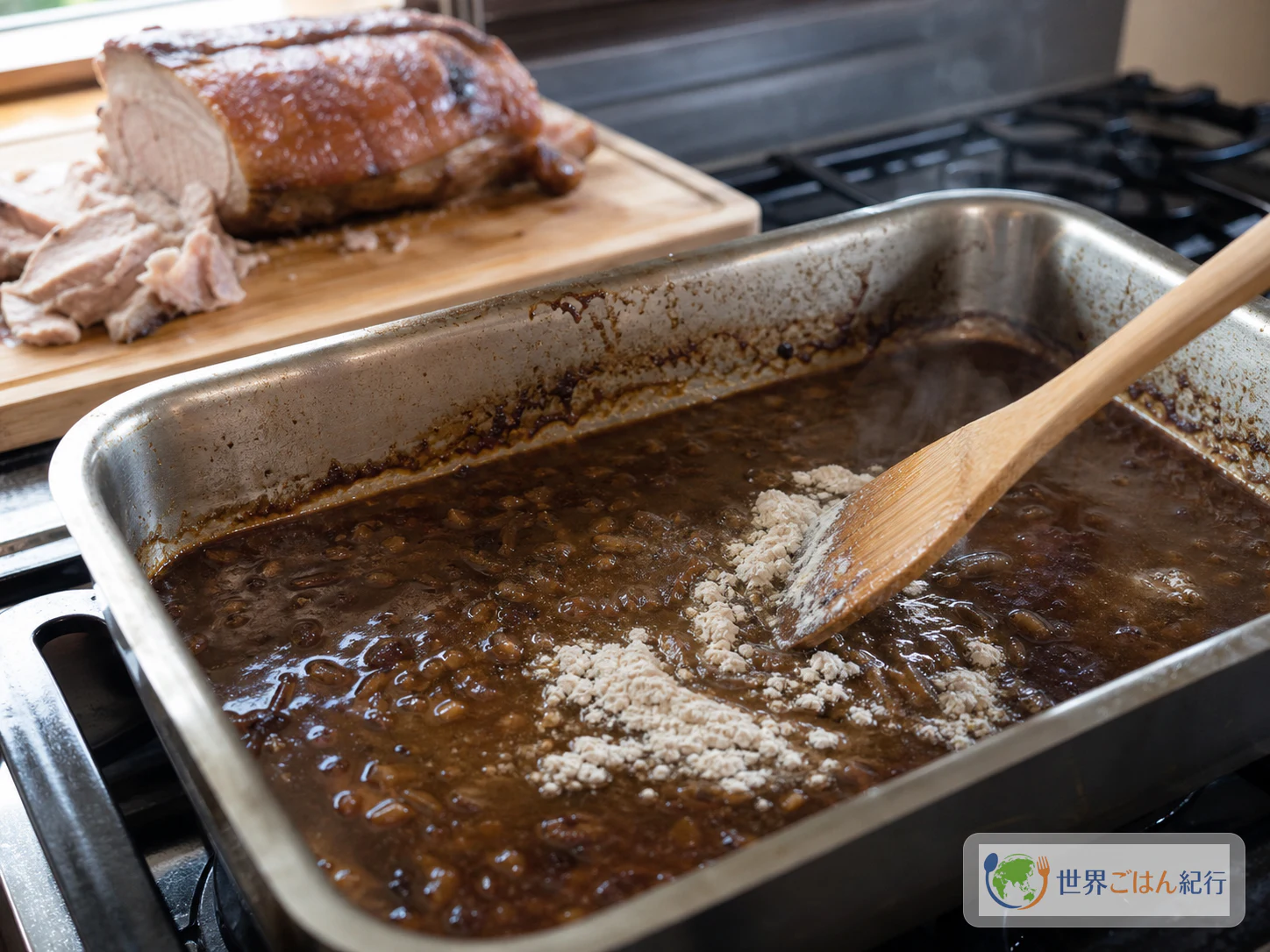
Making gravy by stirring flour into the onions and juices in the roasting pot
Stretch the brown flavor of the pan juices with water and thicken lightly with flour

Move the meat to a board, cover loosely with aluminum foil and rest it for 10 minutes. Put the roasting pot with its onions and pan juices over medium heat, sprinkle in 1 tbsp all-purpose flour and stir for 1 minute. When the floury look is gone, add ½ cup (150 ml) water or unsalted chicken stock a little at a time, loosening the brown, not burnt, bits on the bottom with a wooden spatula. Simmer over low heat for 4 minutes, and turn off the heat when it thickens enough to coat the back of a spoon thinly.

STEP88 / 9

Cut the dumplings with thread

5 min

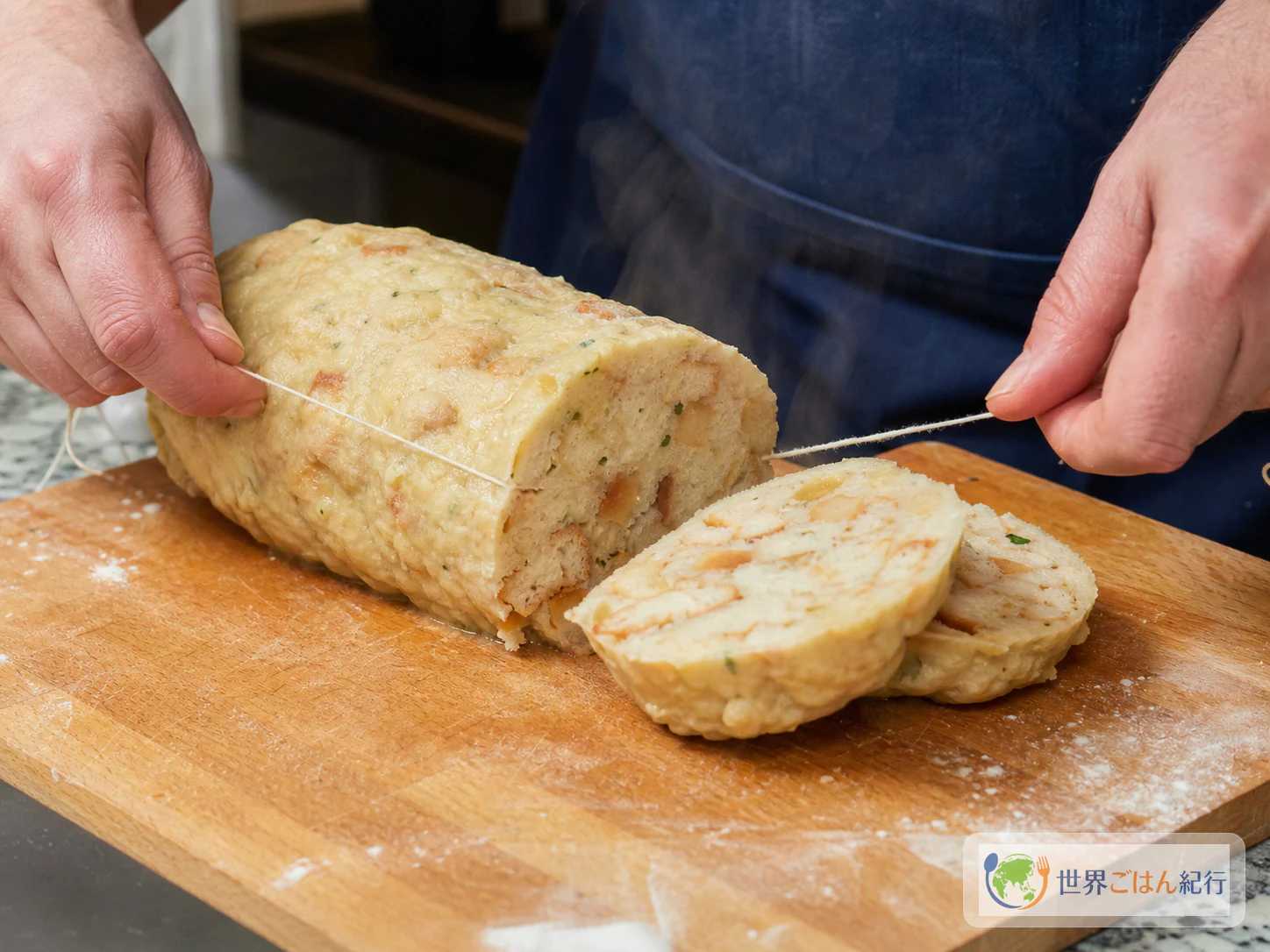
Cutting the dumpling log into 2 cm slices with cotton thread
Thread keeps the dumpling slices from being crushed and leaves holes to soak up the sauce

Set the boiled dumpling log on a board and loop clean cotton thread under it. At the point where the slice will be 1 inches (2 cm) thick, cross the two ends of the thread and pull toward you to cut. Pressing through with a knife tends to crush the cut face, so cutting with thread leaves the holes and gives a face that soaks up gravy easily. Once cut they dry out quickly, so cover with a cloth until you plate.

STEP99 / 9

Combine the three on the plate

5 min

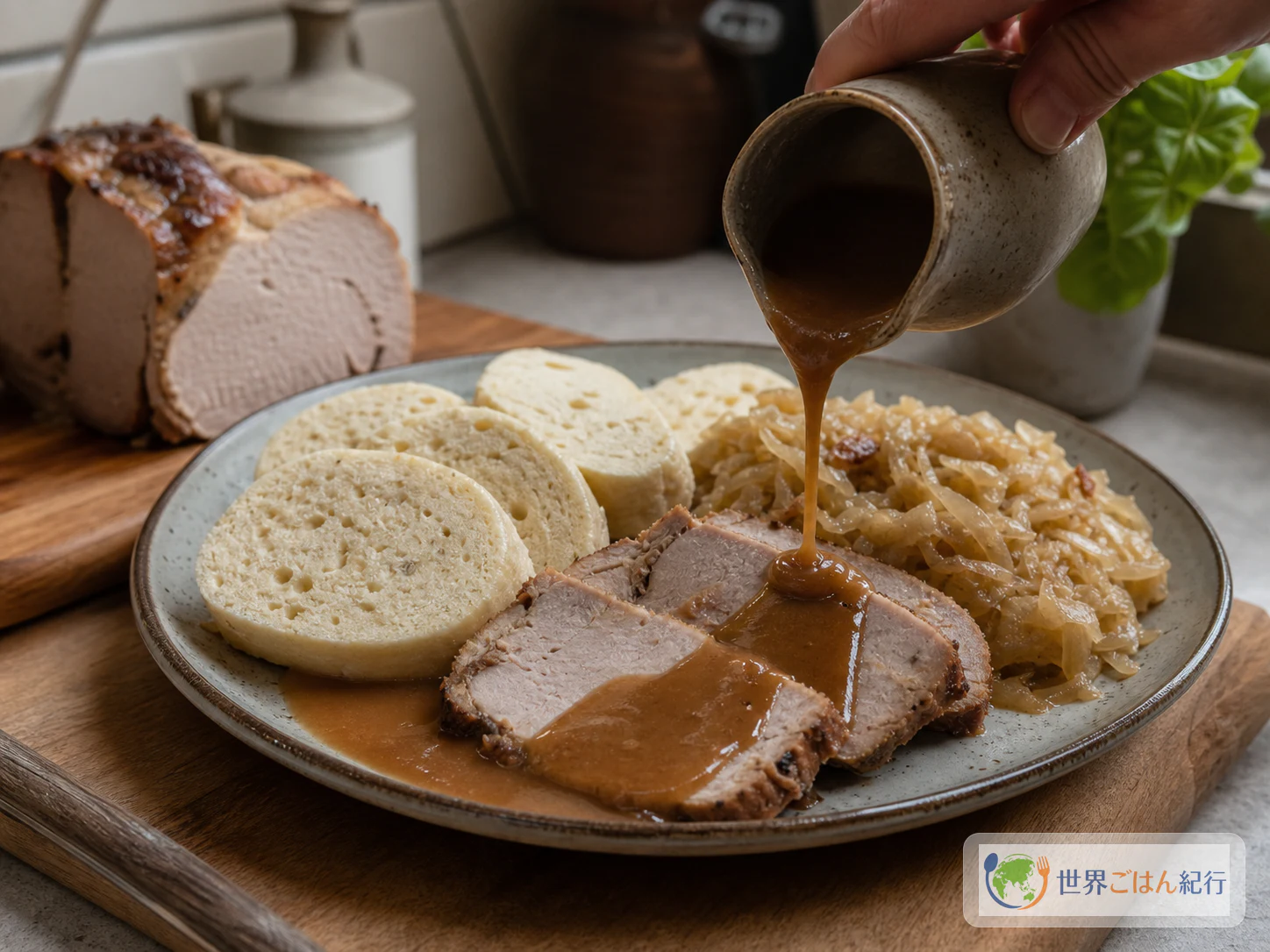
Plating pork, dumplings and sauerkraut with gravy over them
Place the pork, dumplings and sauerkraut separately and put the gravy mainly on the meat

Slice the rested pork across the grain 0.25 inch (7 mm) thick. Lay 2 or 3 slices of pork overlapping at the front of the plate, put 3 slices of dumpling beside it, and heap the sauerkraut on the other side. Spoon about 3 tbsp gravy over the meat and let it reach the dumplings only at the edge. If you cover everything with gravy the plate gets heavy, so keep the cabbage's sourness as you eat.

0 / 0
Ingredients

Ingredients

1 / 3

Roast pork

Ingredient Amount Substitutes & notes
Pork shoulder, in a block 1.5 lb (700 g) Shoulder beats leg, which has too little fat
Garlic 3 cloves Minced
Caraway seeds 1 tsp Leave out if you can't find them. Don't use cumin instead
Salt 1 1/2 tsp About 1.2% of the meat's weight
Black pepper 1/2 tsp Coarsely ground
Onion 1, 7 oz (200 g) Cut 0.5 inches (1.5 cm) wide
Lard or neutral oil 1 tbsp Lard gives the local flavor
Water ¾ cup (200 ml) For the pan juices
2 / 3

Dumplings

Ingredient Amount Substitutes & notes
Bread flour 10 oz (280 g) All-purpose flour alone makes them crumble more easily
Dry yeast 1 tsp (3 g) Instant yeast works, with no pre-fermenting needed
Milk ½ cup (150 ml) Warmed to about 95°F (35°C)
Egg 1 Medium size
Salt 1/2 tsp For the dough
Sandwich bread 1 slice, 2 oz (60 g) Cut into 0.5 inches (1.5 cm) cubes and dry lightly
Flour for dusting 2 tbsp For shaping
3 / 3

Sauerkraut and gravy

Ingredient Amount Substitutes & notes
Jarred sauerkraut 1 lb (500 g) Rinse only half
Apple 1/2, 3.5 oz (100 g) Grated
Onion 1/2, 3.5 oz (100 g) Coarsely chopped
White wine vinegar 1 tbsp Add only if the sourness is weak
Sugar 2 tsp Takes the edge off the sourness
Caraway seeds 1/2 tsp For the cabbage
Lard or neutral oil 1 tbsp For sautéing the cabbage
All-purpose flour 1 tbsp For the gravy
Water or unsalted chicken stock ½ cup (150 ml) To stretch the pan juices
Salt 1/4 tsp or more Adjust at the end
0 / 0

The pork comes out of the oven, and the smell of garlic and caraway reaches you first. Soft white bread dumplings go on one side of the plate, fermented cabbage with its sourness rounded off on the other, and gravy from the roasting pan goes over the lot. Vepřo knedlo zelo is the Czech plate of roast pork, dumplings and cabbage. The dumplings are neither bread nor rice; their job is to soak up the sauce. What makes the dish is the way the cabbage's sourness and the dumplings handle the fat of the roast pork. There is no difficult sauce to master.

Vepřo knedlo zelo in Czech cooking

The name is simply the plate: vepřo is pork, knedlo is the dumpling (knedlíky), zelo is cabbage. In the Czech Republic it's a Sunday lunch, a plate to eat with beer, and a staple of home-style restaurants. In eateries all three come together on one plate. There are no starters, just this plate and a beer.

Czech svíčková is the special-occasion dish, with a root-vegetable cream sauce. Vepřo knedlo zelo is far plainer. Like German Bayrisch Kraut and Estonian mulgikapsad, it relies on sour cabbage to lighten the fat of the meat.

Ingredients (serves 4)
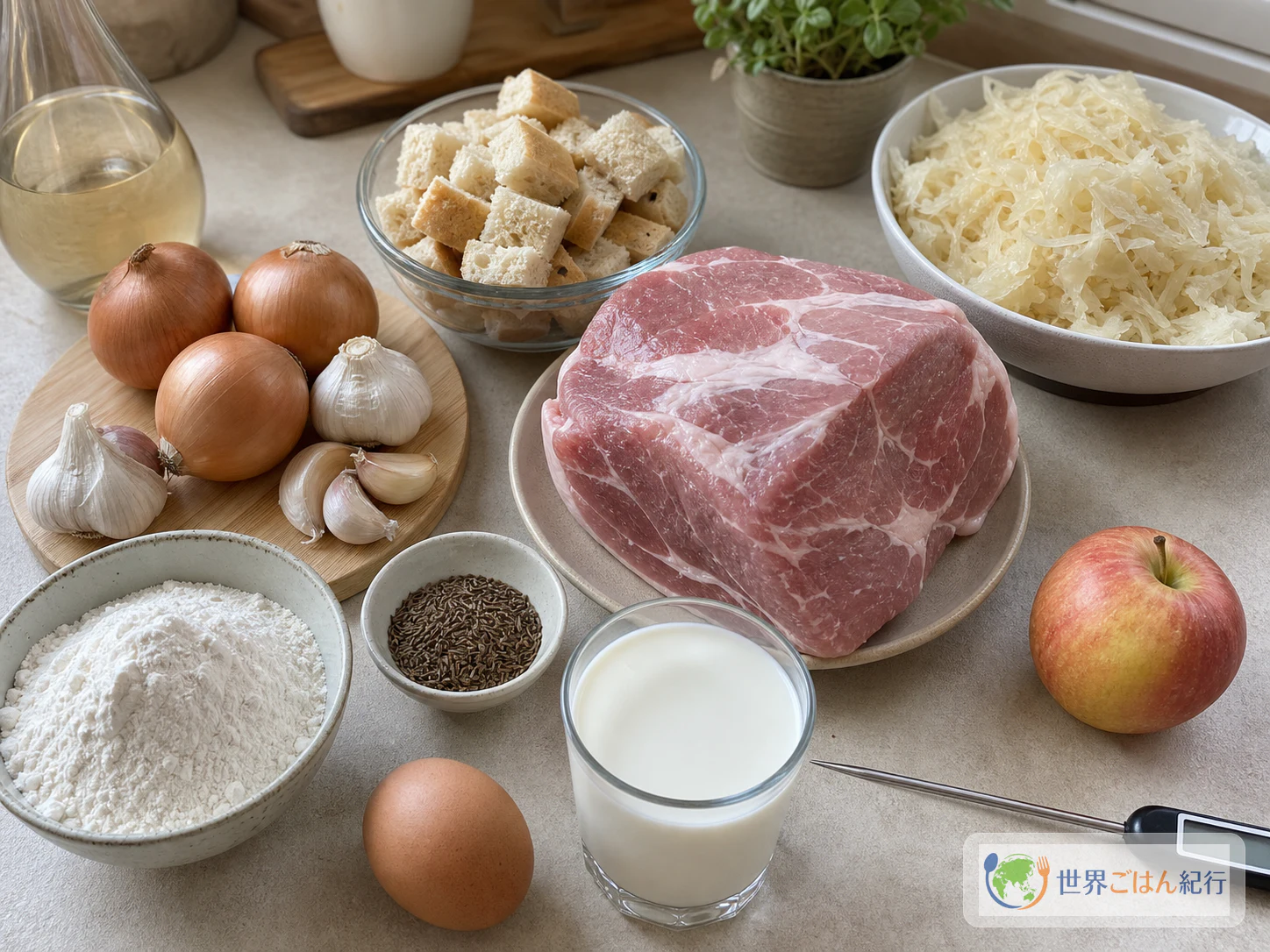
Ingredients laid out in a kitchen: pork shoulder, sauerkraut, caraway, bread, flour, egg and milk
Prepare the pork, dumplings and fermented cabbage as separate roles and it's easier to adjust the weight of the whole plate
Allergens and food safety

This dish contains wheat, egg, milk and pork. Sauerkraut's saltiness differs by brand, so rinse only half, taste it, then decide about the rest. For pork, aim for an internal temperature of 158°F (70°C) or higher, and don't judge doneness by browning alone.

Choosing ingredients for vepřo knedlo zelo
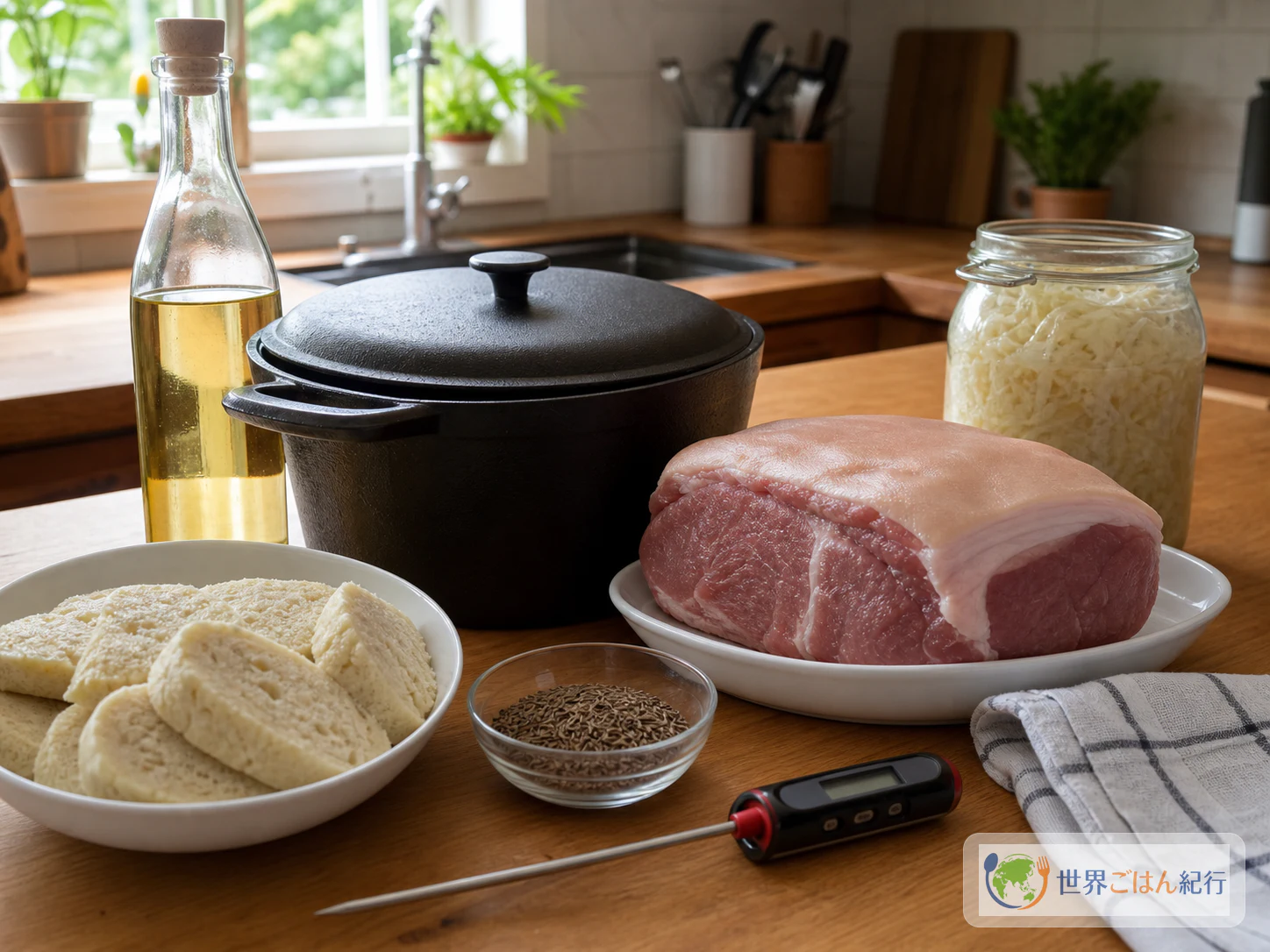
Shopping guide: white wine vinegar, a heavy pot, an instant-read thermometer, caraway and sauerkraut laid out in a kitchen
White wine vinegar for adjusting sourness, a heavy pot and a core thermometer are worth getting. The meat and flour can be bought anywhere

Meat, dumplings and cabbage

This dish doesn't need luxurious ingredients. Pork shoulder, jarred sauerkraut and ordinary wheat flour all work, and it tastes Czech once the meat, bread dumplings and sour cabbage share a plate.

Role What to keep A practical choice What changes
Meat A fatty piece close to pork shoulder or neck 1.5 lb (700 g) block of pork shoulder Leg meat alone gets dry
Aroma Garlic, caraway Look for 1 tsp caraway seeds Cumin pushes the aroma in another direction
Starch Bread dumplings of the houskové knedlíky type Make with bread flour and sandwich bread Store-bought bread makes them a little sweeter and homier
Sourness Braised cabbage of the dušené zelí type Rinse half of the jarred sauerkraut Keeps the cabbage from getting too sour
Sauce Roasting-pan gravy Bind onion and pan juices with flour A light gravy that stretches the meat juices, not a rich sauce

Vinegar, a heavy pot and a thermometer

Buy pork, flour, eggs and milk locally, where you can check freshness and price. Three things are worth hunting for. White wine vinegar evens out the sourness, a heavy pot keeps the roasting juices from burning, and a core thermometer shows when a block of meat is done. If you see caraway at a large supermarket or specialty food store, pick it up.

Use white wine vinegar when the sauerkraut is on the sweet side. Grain vinegar also works, but it tends to be sharper, so start with half the amount.

In a heavy pot, the roasting juices and onions turn into a savory fond rather than a burnt crust. If all you have is a thin baking tray, move the juices to a small pot after roasting to make the gravy.

Pork shoulder can be browned outside and still underdone in the center, so check the internal temperature the first time you make it.

Instructions

Start the pork first, counting its resting time, and make the dumplings and cabbage while it roasts. To serve everything hot at once, make the gravy while the meat rests and slice the dumplings last.

Common problems with vepřo knedlo zelo

At home, three things decide the result: cook the pork through, keep the dumplings light, and keep the sauerkraut pleasantly sour.

Problem Cause How to fix it next time
Dry meat Used leg meat, or overcooked Switch to shoulder, then rest it once the center reaches 158°F (70°C)
Gravy smells burnt You dissolved the black burnt bits on the bottom Avoid the black bits and use only the brown onions and pan juices
Dumplings are heavy The dough was too soft, or the water too strong Make the dough firmer than an earlobe and keep a gentle simmer over medium-low
Cabbage is too sour Used all the sauerkraut as it came Rinse half, and cook it with the apple and sugar from the start
Plate feels monotonous Too much gravy over everything Put it mainly on the meat and keep the cabbage's sourness

Serving and storing vepřo knedlo zelo

On the plate

Dumplings are a staple, but they don't take sauce the way white rice does. They're close to bread, and if they soak up too much they turn heavy. Let them pick up gravy a little at a time on the plate, and you taste the salty pork, the sour cabbage and the sweet dumpling one after another. The next day, slice leftover pork thin and eat it with reheated cabbage and bread.

For other sour Central European meat dishes, try Polish bigos. For dumplings with a texture closer to noodles, compare German Käsespätzle.

Storage and reheating

Store the pork, dumplings and sauerkraut separately. Slice the pork thin, put it in an airtight container with about 2 tbsp gravy and refrigerate for 2 days. Dumplings dry out easily, so wrap them in plastic wrap without stacking the cut faces and refrigerate 2 days. Sauerkraut keeps about 3 days in the refrigerator.

To reheat, warm the pork and gravy in a small pot over low heat for 4 minutes, or microwave 1 minute at 600 W, flip and give it another 30 seconds. Warm the dumplings in a steamer for 3 minutes, or under wet paper towels in the microwave for 30 seconds at 600 W. The cabbage goes in a small pot over low heat for 4 minutes, with 2 tsp water if the liquid runs short.

Frequently asked questions

Can I make it without caraway?

You can, but the Czech aroma will be weaker. Cumin pushes the flavor toward the Middle East or India, so the first time, leave the caraway out rather than muddle the flavor. Add a little more black pepper, and look for caraway next time.

Can I use store-bought bread instead of the dumplings?

You can, but it becomes a different meal. If you serve sandwich bread or baguette, make the gravy a little richer and dip the bread in it. For something closer to the local plate, boil dumplings; even simple ones make the meal more satisfying.

Can I use ordinary cabbage instead of sauerkraut?

You can, but the sourness will be weaker. To get close, cut 14 oz (400 g) ordinary cabbage 0.25 inch (5 mm) wide and simmer it 20 minutes with 2 tbsp white wine vinegar, 1/2 tsp salt and ½ cup (100 ml) water. It won't have the aroma of lactic fermentation, so mix in even just 7 oz (200 g) of jarred sauerkraut.

Which cut of pork suits it?

Shoulder is the most reliable. Belly is fatty and heavy, and leg dries out easily. If you use a loin block, shorten the roasting time by 10 minutes and stop when the center reaches 158°F (70°C).