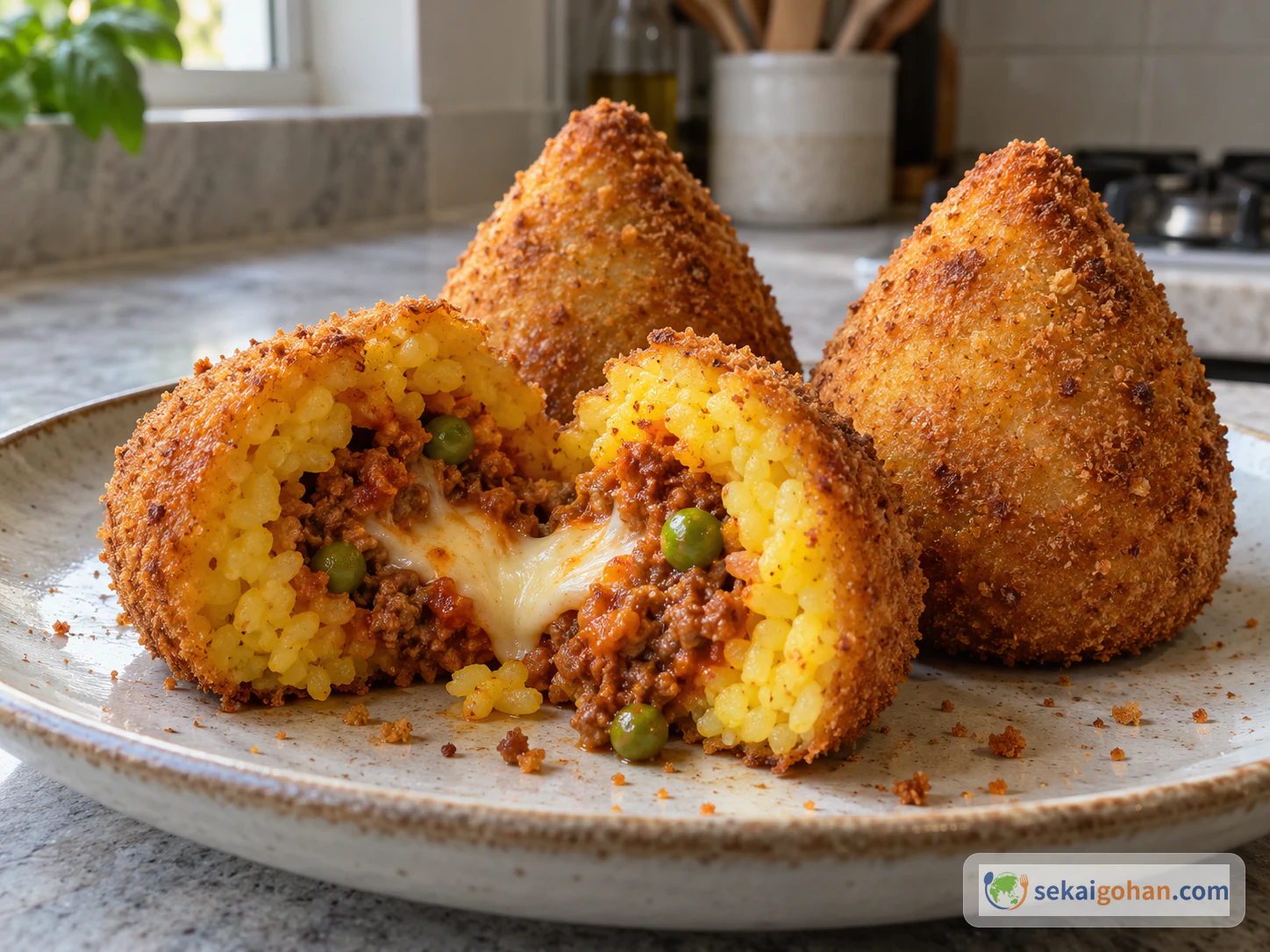
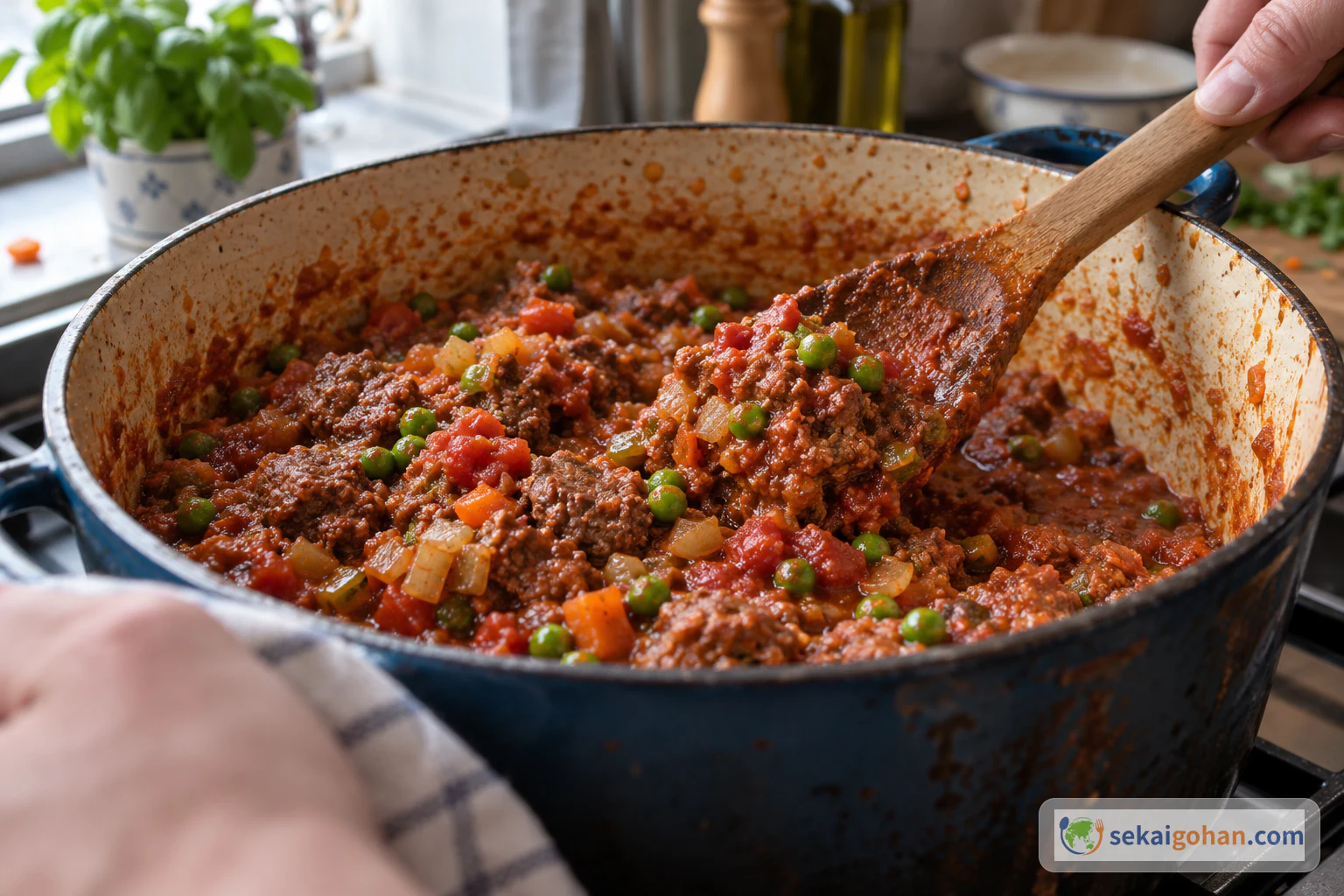
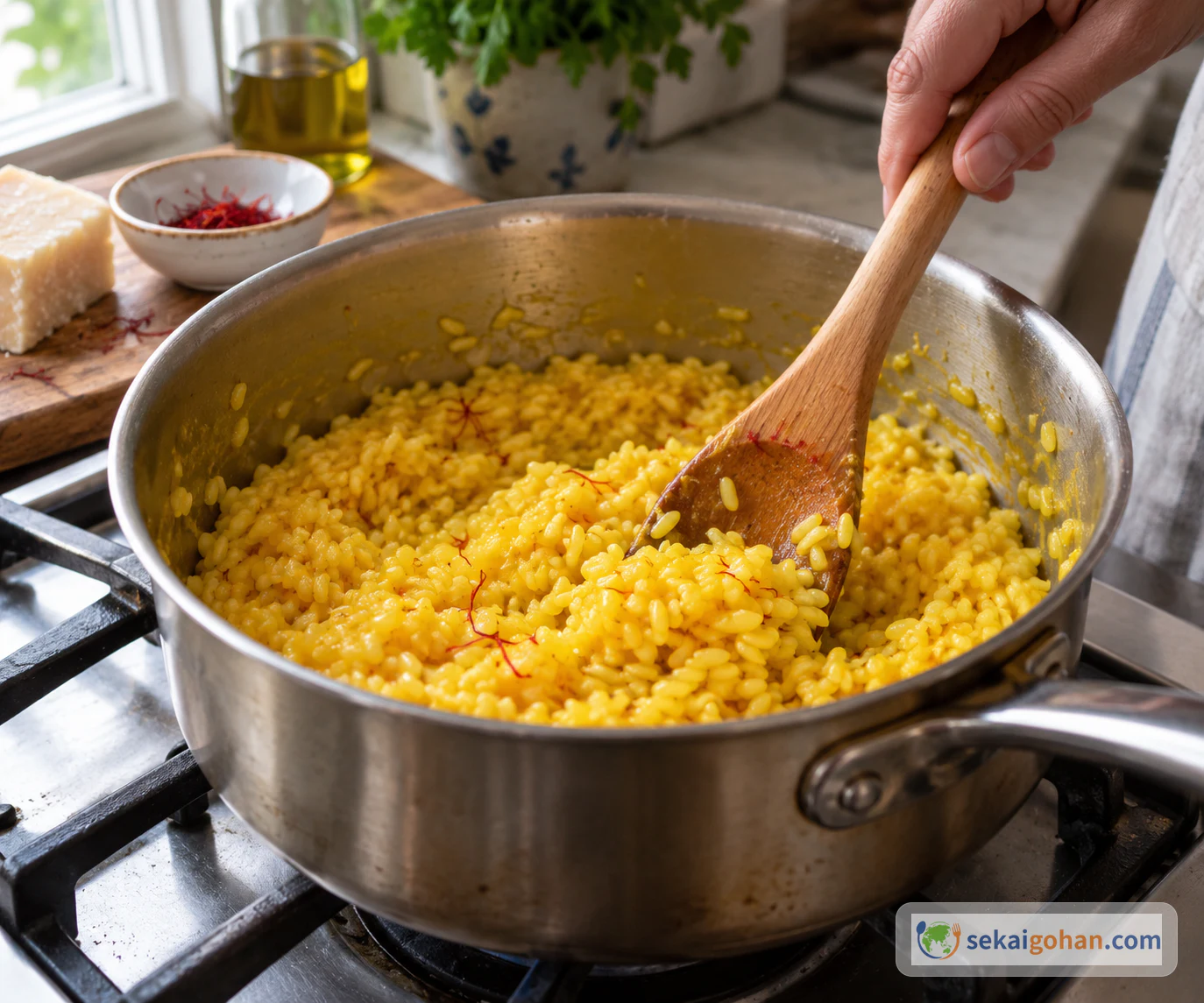
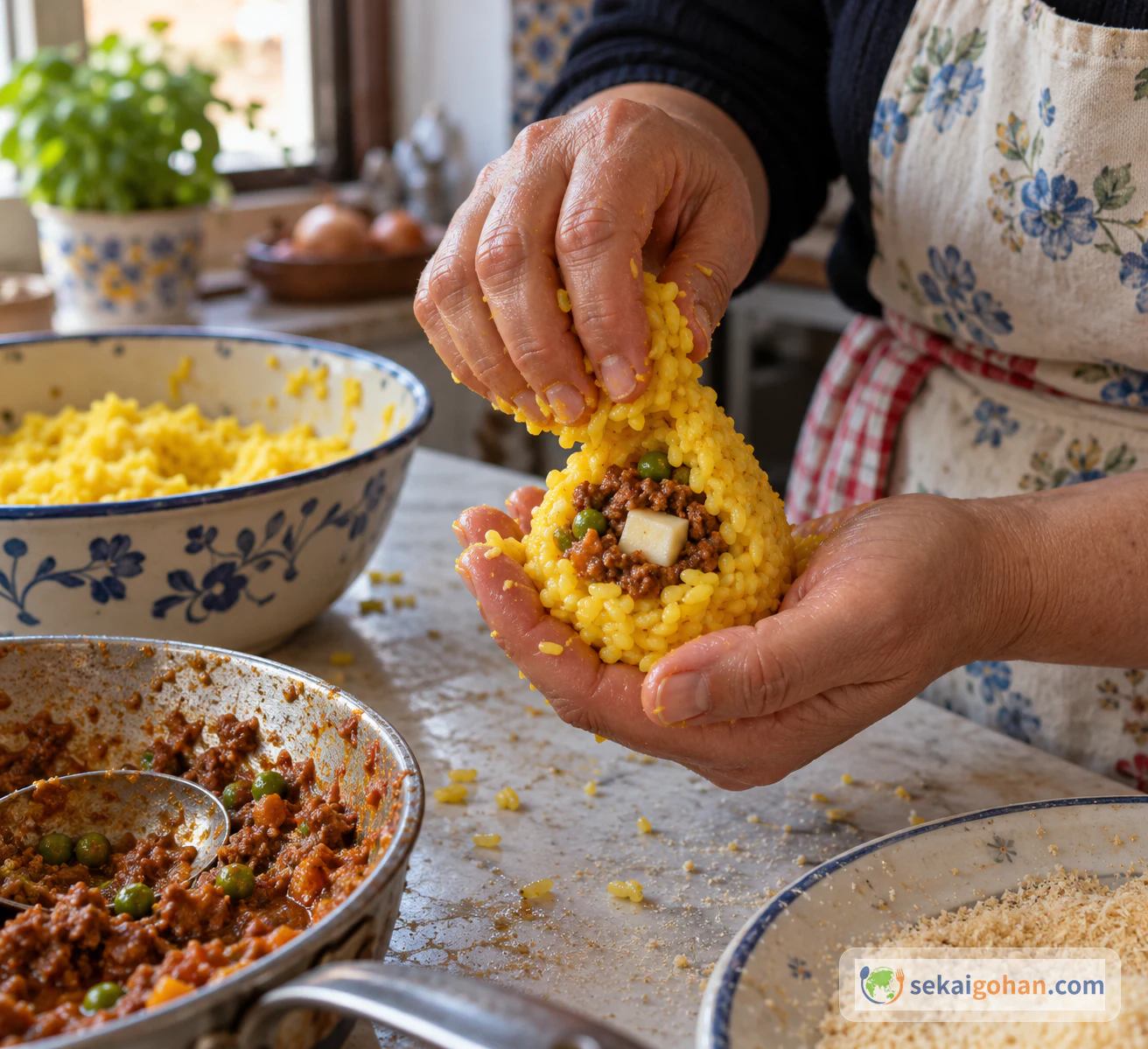
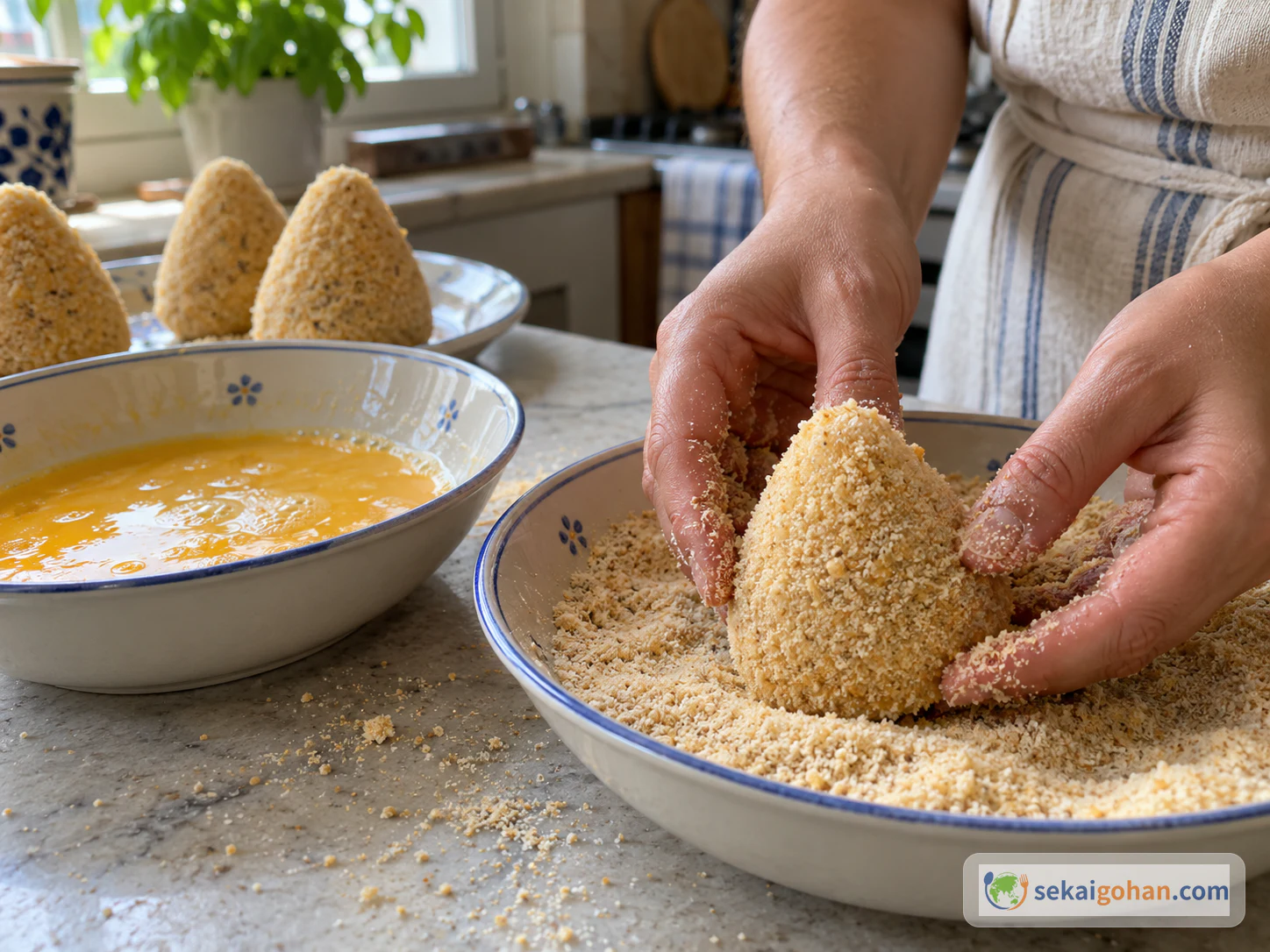
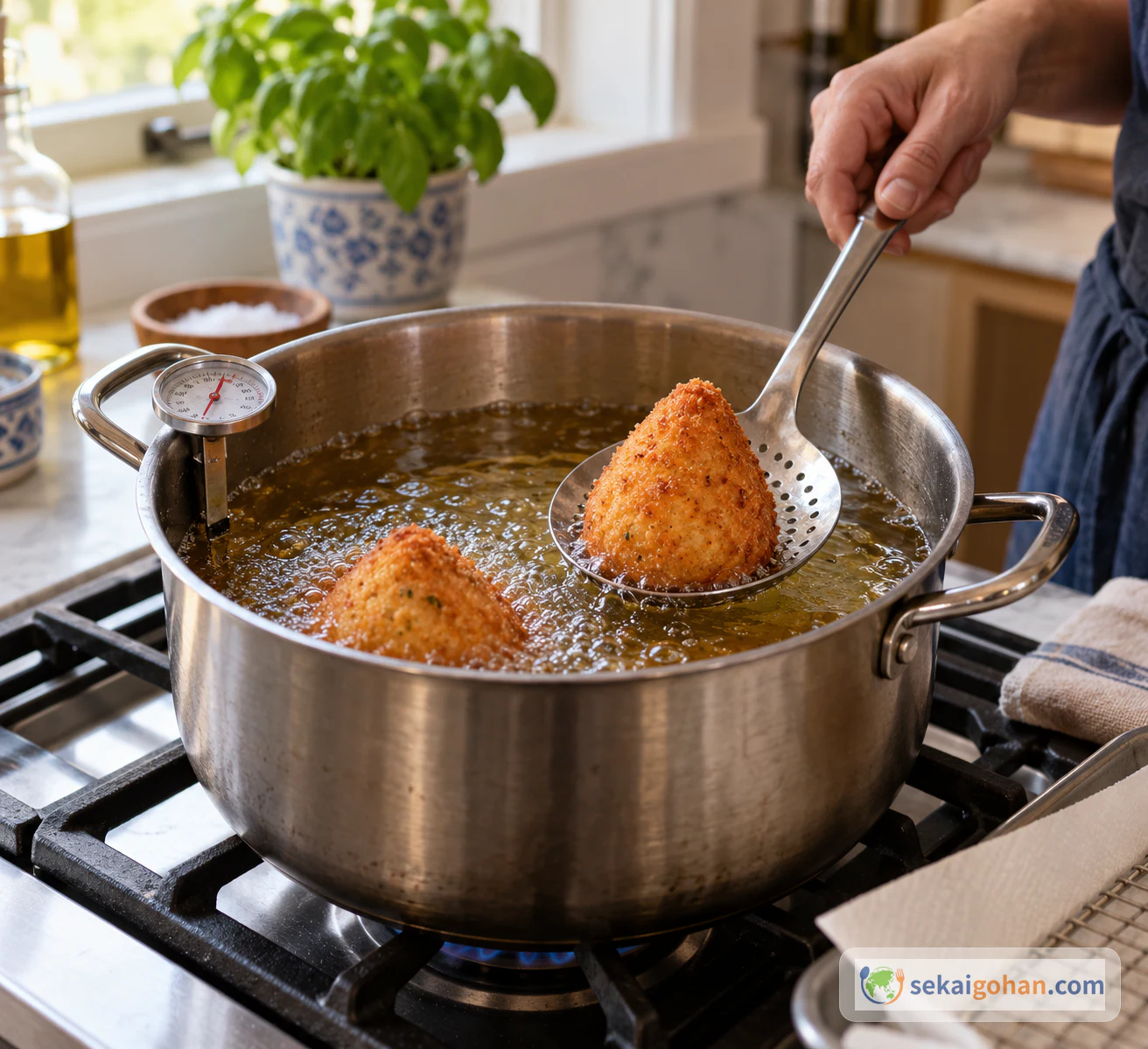
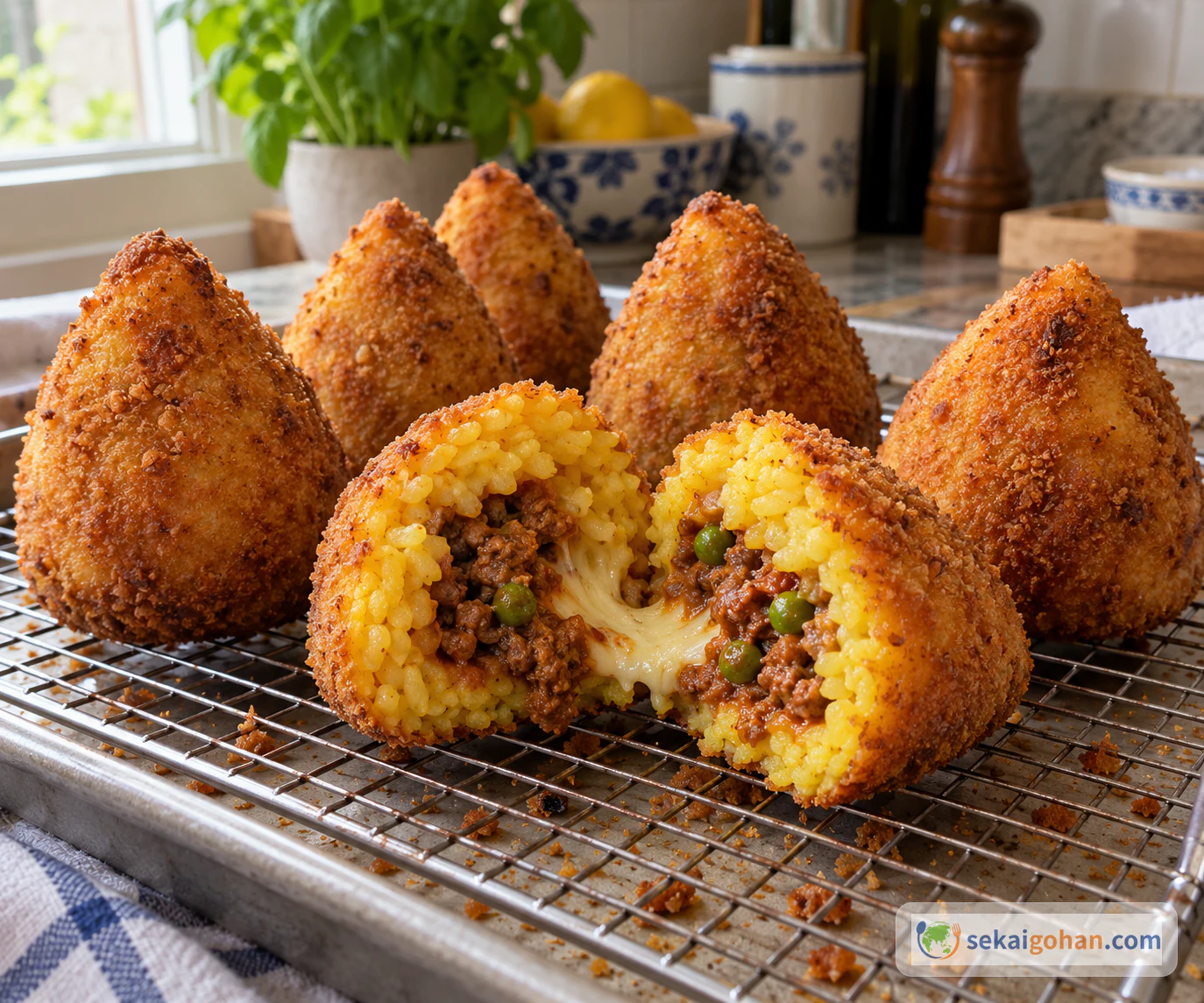
Cut one open and the compact, saffron-yellow rice gives way to dark beef ragù, a few peas and a thread of melted cheese. The outside is golden and crisp from a coat of flour, egg and breadcrumbs and a few minutes in hot oil. Arancini are Sicily's rice croquettes: rice cooked by absorption with saffron, enriched with butter and grated cheese, cooled until it holds a shape, then wrapped around a filling and fried. The name comes from arancia, Italian for orange, after the shape. The version here is the eastern-Sicilian cone, filled with beef ragù, peas and cheese.
Arancini in Sicily
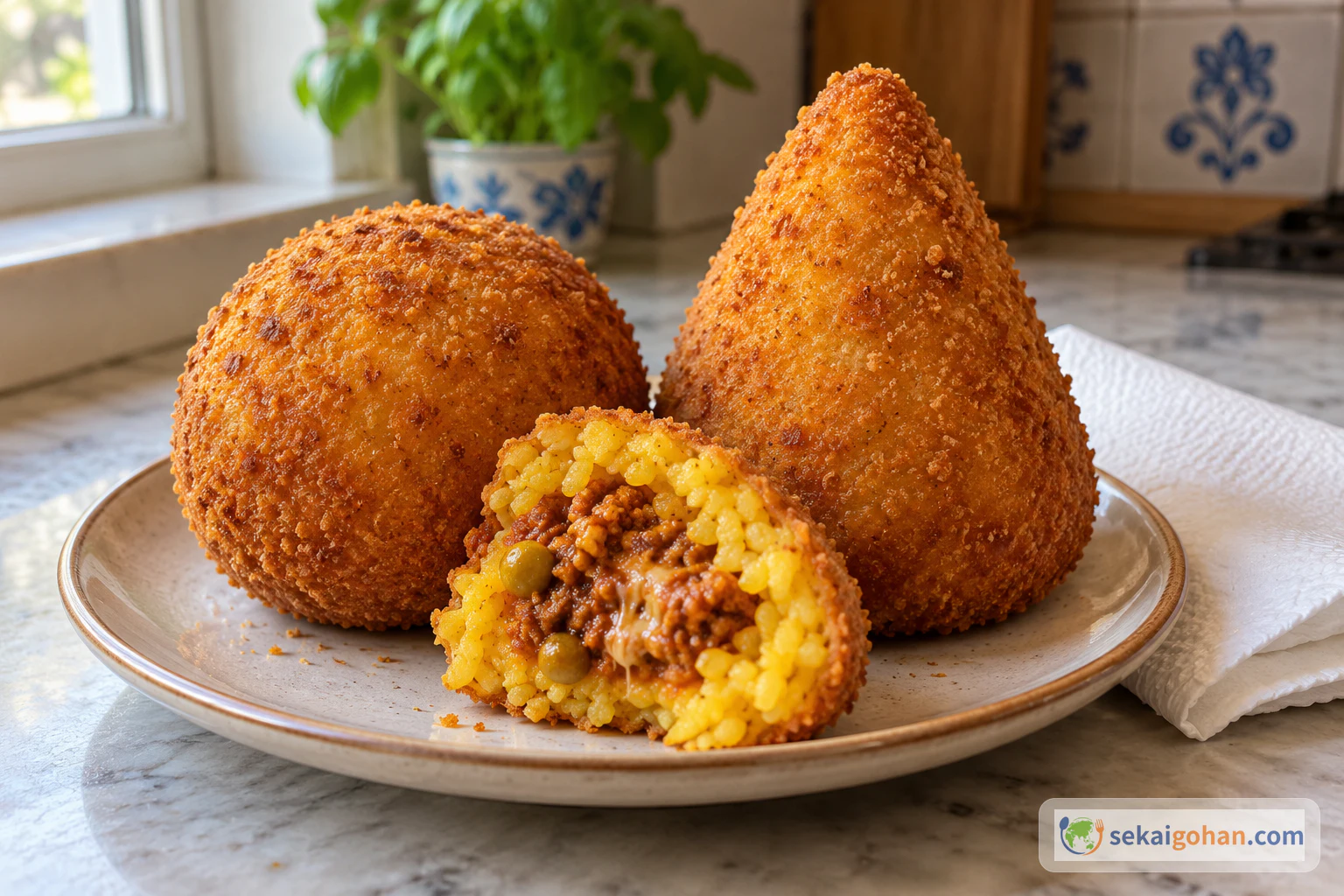
The name and the shape change as you cross the island. Around Palermo in western Sicily, you ask for an arancina (plural arancine) and get something round. Around Catania in eastern Sicily, the masculine arancino (plural arancini) is common, and it comes as a cone that many people see as echoing Mount Etna. In the southeast, usage is mixed. Most English-speaking cooks search for arancini, so that's the spelling used here.
In Sicily, arancini are a snack you buy, not a dish saved for a special day. You'll find them in bars, bakeries and rosticcerie, the shops that sell fried and baked savory food, and as street food, often handed over in paper and eaten on the spot.
Rice and saffron are linked to the Arab period in Sicily, and saffron rice dishes from that time are the likely forerunner of arancini. The filled, coated and fried croquette came later, though exactly when it took its current shape is unclear. One legend says arancini were invented for Frederick II as a portable food for hunting. Traditional fillings come in two families: one with ragù, as in this recipe, and one with butter, ham and béchamel.
Ingredients: Saffron Rice, Beef Ragù and a Crumb Coating
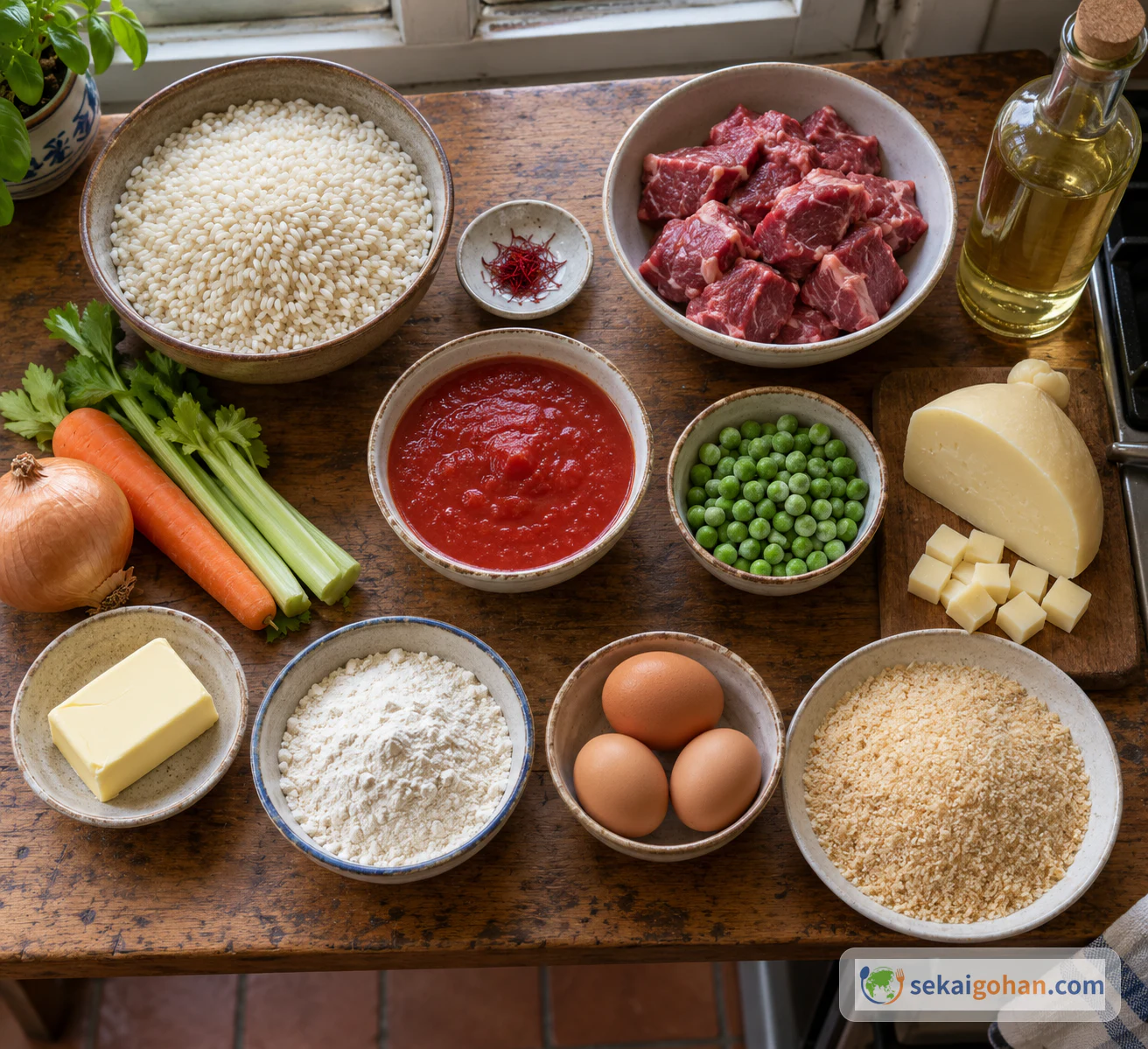
These amounts make about 8–10 medium arancini, depending on how thick you make the rice shell and how much filling goes into each piece. The soffritto vegetables and the wine are used as needed.
This recipe contains milk (butter, cheese), wheat (flour, breadcrumbs) and egg (coating). If you fry in peanut oil, it also involves peanut. When buying substitutes, read the ingredient label, and watch for cross-contact from shared oil and tools.
Choosing Ingredients for Arancini
Rice. Originario or Roma, traditional eastern-Sicilian varieties, are the first choice. Ordinary short-grain rice, including Japanese-style rice, is easier to find and works well, but its stickiness and absorption differ. Add the broth as the rice needs it and stop before the grains break down. Carnaroli is another option, with a different texture, so watch how much liquid it takes.
Saffron. Saffron is the aroma at the center of the rice. Turmeric gives a similar yellow but a different scent, so a turmeric version is a variation rather than a direct swap.
Cheese. If you can't find caciocavallo, use pecorino or aged provolone. Pecorino is saltier and sharper, so use less of it and go easy on other salt; provolone melts in a similar way, though its behavior depends on its age. Parmigiano gives a different flavor. For the center, a well-drained, low-moisture cheese works best. Shredded pizza cheese works too, though the aroma and the melted core change, and fresh mozzarella holds so much water that it needs thorough draining on paper and only a small amount.
Tomato, wine and celery. Unsalted tomato purée can replace passata, but ketchup's sweetness and spices change the ragù. Without alcohol, swap the wine for broth; the ragù's acidity and aroma will shift. Celery can be left out if you dislike it, though the soffritto loses some of its sweet aromatic base.
Breadcrumbs. Fine breadcrumbs give an even shell. Coarse panko-style crumbs make a crunchier, more jagged crust.
Where to shop. Short-grain rice, frozen peas, tomato purée, flour, breadcrumbs and rapeseed oil are ordinary supermarket items. Saffron and caciocavallo or pecorino are easier to find at an import grocer or online.
Equipment
- A deep, heavy saucepan for frying, deep enough for the oil to cover the arancini and to limit splattering
- A frying thermometer, to hold the oil at 350°F (170–175°C)
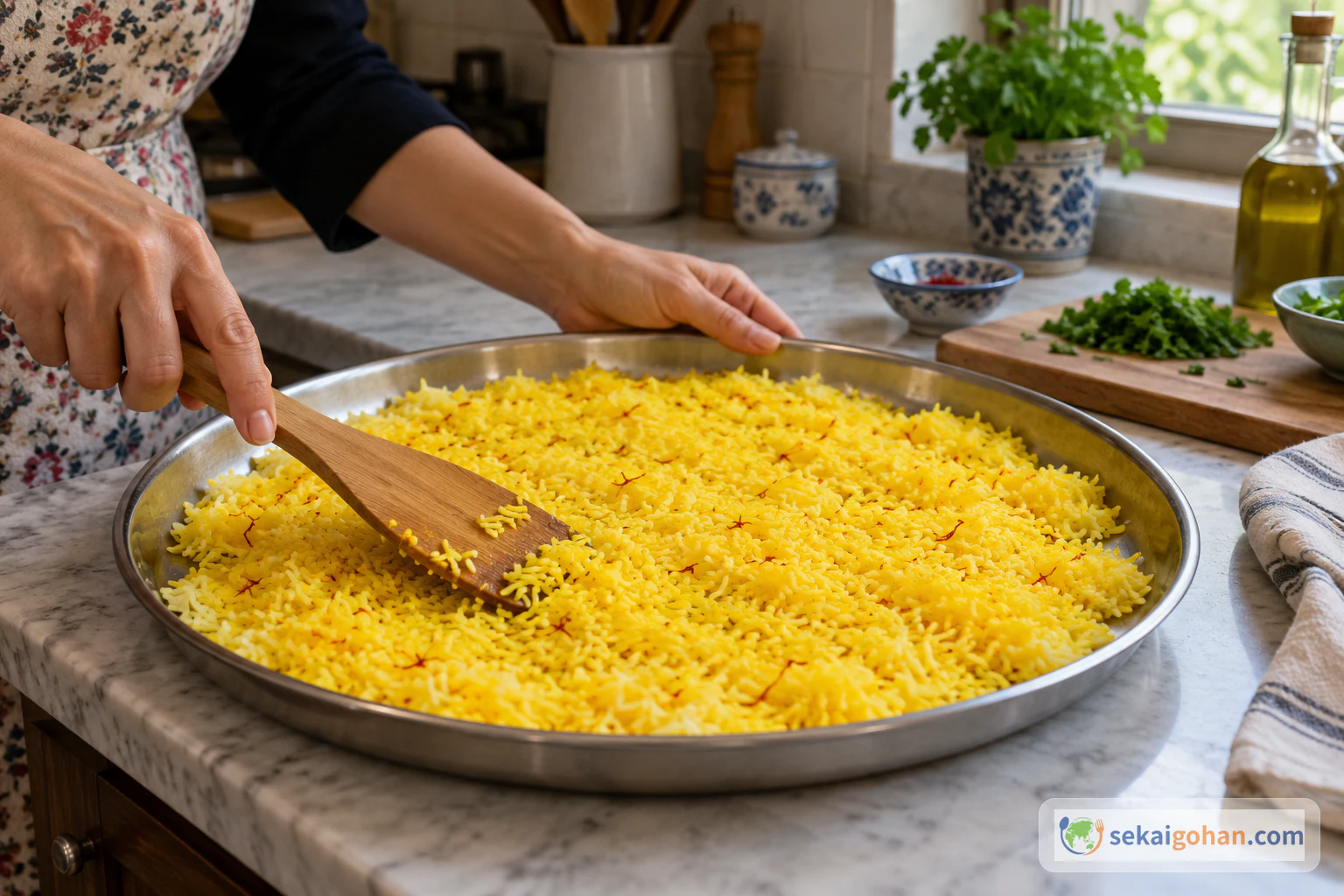
- A clean, shallow tray, to spread and cool the rice quickly
- A saucepan for the ragù and one for the rice
- A slotted spoon
- A wire rack set over a tray, for draining
- Three shallow bowls, for flour, egg and breadcrumbs
How to Make Sicilian Arancini
The ragù and the rice are made separately and both must be completely cold before shaping. Many cooks make the ragù ahead for this reason: a cold, thick filling and cold, firm rice are what make a cone you can shape and fry without it splitting.
Simmering time depends on the cut of meat and the pan. Judge the ragù by how it looks and behaves, not by the clock alone.
Arancini are best eaten freshly fried. If any are left over, refrigerate them promptly. Because they contain cooked rice, reheat them only once, and until they are hot all the way through.
Why Arancini Burst and How to Fix It
The filling is cold. The ragù does not run. The seam is fully closed. With an even coating and steady oil temperature, these checks help reduce splitting.
| Problem | Likely cause | What to adjust |
|---|---|---|
| Splits open in the oil | Ragù too wet, rice or filling still warm, too much filling, thin spot in the shell, seam not closed, gaps in the coating | Cook the ragù down further and chill it fully. Use less filling, close the seam into one continuous rice shell, and cover every gap with crumbs |
| Falls apart when shaped | Rice still warm or damp, a less sticky rice, too much cheese in the rice | Chill the rice thoroughly. Press it into shape gradually, a little pressure at a time |
| Outside darkens before the center is hot | Oil too hot, arancini too large | Bring the oil back to around 350°F (170°C), fry fewer at a time, and check that the center is hot |
| Greasy or soggy | Wet filling, lumpy coating, oil too cool, too many in the pot | Drain the filling well, coat thinly and evenly, keep the oil in range, and fry in small batches |
| Rice turns mushy with short-grain rice | All the broth added at once | Add broth gradually and stop as soon as the grains are tender with no hard core |
The causes of a burst overlap. A slightly loose ragù can hold if the rice is very cold and the shell thick and even, while a perfect ragù can still leak through a seam that was never closed. So when one splits, look at the opening: escaped filling points to a wet or overfilled center or an incomplete seam, and a tear in the rice points to a thin spot or an unclosed seam.
Arancini Variations
Every variation works on the same principle: a firm rice shell and a filling that isn't wet. Change the filling, not the logic.
- Al burro (butter style). A white filling of ham, mozzarella and a thick béchamel, one of the traditional families of filling. It brings more milk and wheat, and pork in place of beef.
- Alla Norma style. Fried eggplant, tomato and a salted, ricotta-type cheese. Cook the eggplant and tomato down so the filling stays thick.
- Pistachio. A variation from eastern Sicily that showcases pistachio aroma. It adds tree nuts, so label it clearly for anyone with a nut allergy.
- Meatless. A thick filling of mushrooms and beans in place of the beef ragù, a home adaptation rather than a traditional type.
- Small aperitivo size. Smaller cones fry faster, so shorten the frying, and still check that the color is even and the center is hot all the way through.
- Egg-free coating. Some Sicilian recipes and rosticcerie use a batter of flour and water before the breadcrumbs. If you avoid egg, use that batter in place of step 5's flour and egg rather than mixing the two methods. Wheat is still present.
Frequently Asked Questions
Can I make them with leftover risotto?
You can, and it's a handy home shortcut, but it behaves differently. Here the rice is cooked by absorption so it ends up compact and dry enough to shape. Risotto has looser liquid around the grains, so it acts differently in the hand and in the oil.
How do I stop arancini from bursting?
Use cold rice and a cold filling, cook the ragù down until it does not run, keep the filling small, close the seam completely, coat without gaps, and fry only one or two at a time so the oil stays at 350°F (170–175°C).
How should I handle the cooked rice safely?
Spread it thin on a clean, shallow tray as soon as it is cooked. Cover and refrigerate it within an hour, and use it within 24 hours. Keep it out of the pot, the rice cooker and off the counter overnight.
Which allergens are in arancini?
Milk, wheat and egg in the base recipe, plus peanut if you fry in peanut oil. Check labels on substitutes and be aware of cross-contact from shared oil and tools. The pistachio variation adds tree nuts, and the al burro variation adds pork.
Explore more dishes in Italian cuisine.